• Donate
  • Our Purpose
  • Contact Us
Executive Magazine
  • ISSUES
    • Current Issue
    • Past issues
  • BUSINESS
  • ECONOMICS & POLICY
  • OPINION
  • SPECIAL REPORTS
  • EXECUTIVE TALKS
  • MOVEMENTS
    • Change the image
    • Cannes lions
    • Transparency & accountability
    • ECONOMIC ROADMAP
    • Say No to Corruption
    • The Lebanon media development initiative
    • LPSN Policy Asks
    • Advocating the preservation of deposits
  • JOIN US
    • Join our movement
    • Attend our events
    • Receive updates
    • Connect with us
  • DONATE
Society

Rana Salam – Lebanon’s mistress of Pop Art

by Nathalie Rosa Bucher March 3, 2014
written by Nathalie Rosa Bucher

Rana Salam’s studio is a maze of colors, a veritable smorgasbord of Middle Eastern trinkets, icons, logos and visuals, ranging from old movie posters to funky packaging that bursts with creativity. In her shop on Abdel Wahab al-Inglizi, Abdel Nasser’s profile features on a retro tabletop and Um Kulthum adorns button pins. What Campbell’s tomato soup was to Warhol, Chiclets chewing gum is to Salam, a great fan of pop art who masterfully celebrates and elevates local cult brands and paraphernalia.

“Lebanon today is a mix of old and new, infused with nostalgia. It’s a mishmash. I’m trying to create it all the time … In London you have the [red] bus, iconic brands such as Marmite … I adapted the same formula to our culture, and made them into products.”

Since starting out in London where she obtained degrees from Central St. Martins and the Royal College of Art, Salam is considered one of the most celebrated designers who utilize Middle Eastern popular art and culture.

Asked what she considered the source of success for Rana Salam Design, she argues passion and her determination to change the perception of the Middle East. “It was very important to me to create something from the Middle East that spoke about [our] culture in a modern way. I put myself and my own investments in this brand. It’s not work, work is being with the kids, this [the studio] is where I come and play — it’s effortless,” she adds with a hearty laugh.

Salam has worked on a great variety of projects, including branding a children’s shop (Lola et moi, Beirut). She counts Bank Med among her clients, as well as musician Natasha Atlas, chocolatier Cocomaya, the Victoria and Albert Museum in London and the National Museum in Beirut. She created and executed the theme for local NGO Skoun’s 2010 gala: Plastik Fantastik. She has designed various cafes (such as Laziz in Hamra), created textile designs for Nada Debs’ Floating Stools, worked for local furniture designers Bokja Design, and designed invitations and a look book for Dubai’s Boutique 1.

Window to the future

Straight out of college, she was commissioned to create windows for Harvey Nichols’ summer collection. The vibrant colors and art works she’d commissioned by Armenian cinema poster artists back in Beirut mesmerized passersby as well as Paul Smith, who in 2000 asked her to design his Spring/Summer show invitation.[media-credit name=”Executive” align=”alignnone” width=”640″]rana-salam1[/media-credit]

Salam has since then managed to achieve what she had set out to do, namely to change the perception of the Middle East through the power of design. Her studio in Abdel Wahab al-Inglizi specializes in art direction, design and consultation for retail, product, print, hospitality and exhibitions, besides other commercial activities.

“The Harvey Nichols windows were the beginning of my visual identity. I did not know that it was going to anchor me in that look and feel,” Salam points out. “Only 10 years later did I realize that that’s what people want. I worried I’d be stuck in this style, but people love it. I do need to let people know that I do other things, that I’m also a good designer, good at branding.”

Salam started her label Mishmaoul six years ago. It consisted of 10 items, among them cushions, puffs, tea towels, aprons, place boards and paper cups. Ambivalent about the name, she is gradually phasing it out, replacing it with her own name.

“I had zero start-up capital and experienced a lot of pitfalls, made many mistakes and cash flow disasters,” she says, recalling the early days. “I didn’t know you had to market things up — you buy something, you sell it. I hadn’t even seen an Excel sheet at school. I advise the young generation to get some business acumen, to learn the lingo and the know-how even if you are an artist or creative.”

Salam’s friend Abed Bibi advised her on her business, urging her to triple her rates. “That’s when I started to make money and was able to hire people.” Bibi was the one business consultant she could call on and still advises her now, most recently about retainers. “Thanks to him, I was taught the art of business. You have to know your value, pricing, getting rid of the cronies.”

At present Salam employs two designers and an account manager, which, in her words, has transformed everything: “I don’t have to speak money with clients all the time, she has freed me up.”

“I’m a tough task master but good at motivating,” she says of her leadership style. “I encourage them to wander outside, to put music on and I am flexible about 9-to-5.”

Salam, who recently set up a Sarl, underlines the risk her business faces when employees move on and take work with them. “Copyright infringement is an issue for small and big brands,” she says. “I set a style, a trend that’s never existed; 20 years ago, I started a visual language for the Middle East that became electric. A lot of people capitalized on it.”

[media-credit name=”Executive” align=”alignnone” width=”640″]rana-salam3[/media-credit]

Salam’s current range includes cushions, place boards, cutting boards, paper cups, button pins, puffs, kitchen towels, iPhone 4 covers and more, available at her shop and in Jeddah, Dubai, Kuwait and Qatar.

Partying through the pain

Sales in Lebanon in 2013 amounted to 40 percent of the total, compared to sales abroad. Salam concedes that she needs to expand, particularly into the GCC, Australia, the US, and Europe, to tap into the Lebanese and Arab Diaspora.

When asked about the company’s performance in the past two years, Salam refers back to her time in London. “The show must go on, when things are bad that’s when you have to party! I threw an office party for £400 in my London office years ago. The time to be creative is when things are slow. It’s the best test for fear — you shouldn’t let it take over.” Besides a bad start to 2014, Rana Salam Design incurred a loss of 4.5 percent over the 2012/2013 year.

“The shop came out of this present situation — it’s the £400 party revisited,” she explains. “It’s our best form of marketing; instead of a billboard, the shop front is the billboard. I decided to spend the rent and use the exterior to put wild graphics and eye-catching visuals up. Then during Beirut Design Week it became a design museum and the actual space inside eventually became a permanent shop. It was an idea that grew into a real shop but first really it was just to promote the name.”

In addition, Salam makes extensive use of social media, notably Instagram but also Facebook, Twitter and her website, as well as her iconographic yellow Vespa that she uses to get through Beirut traffic. “I sell myself,” she says laughing.

With her former ties to England, she sources some materials there. “The fabric is printed there, shipped over and sewn together here. Our paper cups are done here. I’m all for using local production so when it’s possible to do it here, I will have it made here. I would love to expand but my weakness is distribution. I wish to do iPhone 5 covers but that will require an order of 10,000 … Quality and cost always are a concern.”

“We’re in an ongoing process of innovation, it’s an immediate process,” the designer explains. “I don’t really do prototypes — that requires money. You have to believe that you are spending forward, believe in slow rewards.”

The first collaboration between Bassem Fattouh and Salam has created Nostalgie d’Orient by Bassam Fattouh, to be launched in April.

She is unequivocal about her most  successful project to date: the book “The Secret Life of Syrian Lingerie — Intimacy and Design.” Salam teamed up with writer  Malu Halasa with whom she co-authored the book consisting of photo-essays and interviews after having received funding from Prince Claus Foundation. Though published five years ago it still draws wide and renewed interest given the situation in Syria. “There were many hidden results, it was a huge success.”


Correction: A previous version of this article incorrectly asserted that Salam started her Mishmaoul label 20 years ago instead of six and implied that the name had already been phased out — a continuing process. It also misidentified Skoun’s 2010 gala theme as ‘Shaabi Chic’ instead of ‘Plastik Fantastik’. Finally, it incorrectly placed Salam’s studio in Furn al-Hayek; it is located in Nasra. Our apologies.

March 3, 2014 0 comments
0 FacebookTwitterPinterestEmail
Last Word

35 years on: Marking the Iranian Revolution

by Gareth Smith March 3, 2014
written by Gareth Smith

When Iranian students first seized the American embassy in Tehran in November 1979, Foreign Minister Ebrahim Yazdi went to Ayatollah Ruhollah Khomeini for guidance and was told to “go and kick them out.” But when he had returned to Tehran from the Ayatollah’s residence in Qom, he heard on the radio that Khomeini had dubbed the embassy the “American spy den” and proclaimed a “second revolution.”

Whether diplomatic relations between Iran and the United States were still salvageable quickly became a moot point. Khomeini’s aim was likely to remove moderates, including Yazdi and Prime Minister Mehdi Bazargan, from government and introduce velayat-e faqih, his notion of clerical rule. Events sped on, with President Jimmy Carter’s botched rescue mission in April 1980 and Saddam Hussein’s invasion that September.

Tehran’s annual commemorations of the revolution tend to be a test of the mood in the Islamic Republic. And the 35th anniversary, marked on February 11, saw ‘principle-ists’, or fundamentalists, still chanting ‘Death to America’ and denouncing imperialism.

Exiled Iranians, many once supporters of the Shah, quickly asserted that this was the real face of the revolution. For them, Iran was deflected by clerics in 1979 from a path of modernization or even secularism.  The more extreme in their midst portray Islam as an Arab implant; they argue Iran is in long-term economic stagnation and advocate ‘regime change’ to restore a mythical pre-Islamic pluralism.

The reformist current within Iran has worked since Mohammad Khatami’s presidency to make ‘the system’ more inclusive. They argue that the track record of the Islamic Republic is poor, attacking curbs on political freedom and arbitrary acts of ‘justice,’ while acknowledging that, as under the Shah, Iran relies too greatly on oil revenues and tends to misspend them.

Yet they accept that in many respects, life for Iranians has improved since the revolution, especially with greater access to electricity and health care. The UNDP’s Human Development Index (HDI), measuring access to knowledge and standard of living, finds that between 1980 and 2012, Iran’s HDI increased by 67 percent, roughly double the global average.

Life expectancy at birth rose from 51 to 73. Expected years at school went up from 9 to 14.  By 2012, for every 100,000 live births, 21 women died from pregnancy-related causes compared to 47 in countries with a similar HDI ranking.

President Hassan Rouhani, elected last June on a platform of ‘moderation’, wants to protect such gains while curbing the revolution’s ideological excesses. Speaking to this year’s anniversary rally, Rouhani attacked sanctions as “brutal, illegal and wrong,” and criticized President Obama’s assertion that all options remained “on the table” in dealing with Iran. But Rouhani’s overall message was conciliatory and reflected his wish to improve the economy through diplomatic progress; he stressed the situation was “calmer,” with “more stability in the economy, socially and politically.”

The commemorations did reflect a changed political atmosphere since Rouhani’s election. Most reformists urged supporters to attend, ending a policy of staying away that goes back to the suppression of the Green Movement protests after the disputed 2009 presidential election. Some leading reformist figures turned out, including Hadi Khamenei, younger brother of the rahbar (‘leader’) Ayatollah Ali Khamenei, and Mohammad Reza Aref, the first vice president under President Mohammad Khatami.

The welcome was not warm from everyone. Some principle-ists used the celebrations to demand trials or even hanging of ‘seditionists’, meaning the leaders of the Green Movement, Mir-Hossein Mousavi and Mehdi Karroubi, who remain under house arrest.

The relationship between the reformists and the system remains a test of the Islamic Republic’s inclusivity. Rouhani’s first vice president Eshaq Jahangiri recently said that reformists are “not going to go away”, and that they need to “define their relationship” with the rahbar.

The bulk of the reformists are behind Rouhani, partly in the hope that he will release Mousavi and Karroubi. But the minimum quid pro quo for their freedom may be that they apologize, as the prosecutor-general Gholam-Hossein Mohseni-Eje’i suggested early last month.  And as a price for readmission to the fold, both Musavi and Karrubi may feel that such an act of repentance is too high.

March 3, 2014 0 comments
0 FacebookTwitterPinterestEmail
Comment

Let’s face facts – Lebanon is in a civil war

by Yasser Akkaoui March 3, 2014
written by Yasser Akkaoui

I think it may be time for the Lebanese to face facts ­ — we are now in a state of civil war. Time and time again when I have seen friends in recent weeks, there has been something of a familiar refrain: ‘the situation is bad, yes, but we are not there yet.’

It may not feel like a civil war from your office in Downtown Beirut, or Ashrafieh, or Hamra, but there has been more than the equivalent of a bomb per week in the first two months of 2014. Dozens have died as rival Lebanese (as well as Syrian and Palestinian) political groupings carry out tit-for-tat attacks and crackdowns. And those are just the successful ones. The security services have discovered a number of other explosive-rigged cars that sought to wreak havoc. If you don’t believe we are in a civil war, speak to the people of Dahiyeh, of Hermel, or of Akkar.

Our big savior, we were told, would be the new government. After a year of unnecessary infighting, our political classes have finally deemed it fit to form a Cabinet, run by Tammam Salam (seen above). And what a Cabinet it is.

If Lebanon is run by 13 princes, then this government has given them all new jewels. Nabih Berri, speaker of Parliament and the wiliest fox out there, has managed to get his protégé Ali Hassan Khalil into the Ministry of Finance. Anyone hoping for new transparency with where our money goes is likely to be sorely disappointed. Likewise, Future Movement stalwarts Nouhad Machnouk and Ashraf Rifi — now interior and justice ministers respectively — have been tasked with tackling the now extremist groups whose predecessors they tacitly supported for so long. And almost every other appointment smacks of cronyism — our political classes looking out for themselves when their people are desperate.

Faced with a growing wave of radical groups, moderates of all hues have been shifted into the minority. They have come together to form a government, but done little to form a united front.

I hope to be proved wrong, I really do. I hope that this new government will want to open up, change policies and implement necessary reforms to both protect our little nation and help it grow again.  What is really needed to drag the country back from the brink, away from extremism, is a new deal for the Lebanese — the kind that gives people a stake in their society. For that reason, we have again produced in these pages a series of meaningful, practical policy proposals for the government, inviting the insights of leading thinkers from all fields. If any of these new ministers wants to prove me wrong, let him or her not attack us, but prove to us their honesty through actions. Let them come and discuss the necessary reforms to move the country forward.

But I will not be getting my hopes up. And in the meantime, Executive will continue calling out our politicians’ dishonesty, corruption and nepotism — even during a civil war.

March 3, 2014 0 comments
0 FacebookTwitterPinterestEmail
The Buzz

Live fast, die young – do Arabs do it better?

by Thomas Schellen March 2, 2014
written by Thomas Schellen

The United Arab Emirates is the riskiest place in the world for getting killed in a road accident but only when compared with the statistical probability of dying from cancer, heart attack and stroke. New comparisons of leading causes of death by scientists at the University of Michigan Transportation Research Institute (UMTRI), show that the number of people dying in a car crash in the UAE is almost one in six of all fatalities related to four causes of death, namely – in scientific lingo – malignant neoplasm, ischaemic heart disease, cerebrovascular disease and road crashes.

Using five-year-old data from the World Health Organization, the UMTRI scientists compared the number of road accident fatalities to the three other leading causes of death around the world on a country level. They arrived at percentages that showed the Middle East looks prima facie like a barrel of untenable risks – to the point that the University of Michigan’s news department opined in a February 20 release, “The next time you go to Africa or the Middle East, you may want to stay off the roads.”

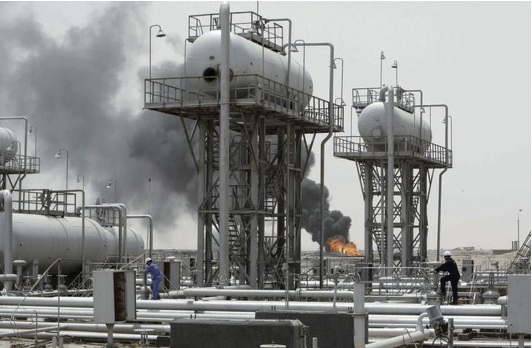
maproad

The release cited the new UMTRI research report’s findings that the UAE and Qatar, with 15.4 percent and 14 percent respectively, have the highest percentages among 193 countries for road fatalities out of the four causes of death, versus a world average of 2.1 percent. It added that of the 20 “worst” nations for this ratio, 12 are from the Middle East, while a dozen African nations are among the 25 countries with the highest fatality rates from road crashes per 100,000 people, along with 10 nations from the Middle East and Latin America.

A dig into the 45-page research paper uncovers further that people in Qatar are five times more likely to die in a road crash than from cerebrovascular disease such as brain embolisms or aneurisms. In terms of the list of countries with the highest percentage of road fatalities from all causes of death, the ten most affected countries indeed include six from the Middle East.

However, and it is a humongous however, the Middle East region stands out with a high ratio of road deaths among the fatalities by the leading causes of death not because of exorbitantly high road fatality rates but because of their low rates for other causes on the list. As the UMTRI paper notes timidly on its final page before references and appendices, “the United Arab Emirates and Qatar are the two countries where fatalities from road crashes represented the two highest percentages of fatalities from all causes. This is the case primarily because these two countries had the two lowest fatality rates from all causes. (Their rank order in terms of the fatality rate from road crashes was only the 32nd and 60th highest, respectively.)”

In other words, the ratios for road fatalities in these and two other countries in the Middle East are high because by 2008 counts, the countries had low incident rates of the diseases. Matter of fact, in the table showing the total number of deaths when adding up all four causes, the world average of 844 per 100,000 population reflects a range going from 1,717 in Chad at the high extreme to an absolute low of 141 in, yes, Qatar. On top of that, six of the eight countries with reported death counts below 400 per 100,000 in 2008, were in the Middle East: Qatar, UAE, Kuwait, Bahrain, Oman and Syria.

That does in my view not imply that the region is the place to live for having a much lower probability of being afflicted by one of the three killer diseases. Nor does it mean that roads in the UAE and elsewhere in the Middle East are low-risk.

To this observer, the study findings suggest primarily that more research on real medical incident rates and traffic-related deaths in the region is in order; that the young population profiles of GCC countries and the comparably low rates of fatalities from cancer, stroke and heart attacks are calls for caution and investment in wellness considering the oil-rich Arab nations’ high propensity for lifestyle diseases; and that much needs to be done to reduce the number of road crashes.

fatalityrates

The importance of the latter imperative is documented in the fact that five Middle Eastern nations are in a group of countries where the ratio of reported road fatalities is 50 percent or more above the global average of 18 per 100,000 population. These countries are Iran, Iraq, Yemen, Jordan, and Lebanon.

March 2, 2014 0 comments
0 FacebookTwitterPinterestEmail
Business

‘The startup cycle is finally taking off’

by Livia Murray & Joe Dyke February 28, 2014
written by Livia Murray & Joe Dyke

Omar Christidis is the founder and CEO of ArabNet, the leading online platform for everything startup and tech in the Arab world which hosts annual events in Dubai, Riyadh and Beirut. In anticipation of the ArabNet Beirut conference that will be held next week from March 4 to 6, Christidis spoke with Executive on ArabNet’s scalable business model, the Lebanese market’s strength and new developments within the startup space in Lebanon.


Does ArabNet fit the traditional Lebanese business model — where you test your product in Lebanon and then scale to the region?

I think that Lebanon has tremendous competitive advantage when it comes to the conference business. People love to come to Lebanon when times are good. If the political situation had not deteriorated the event could have grown to be much bigger here.

Expansion is definitely natural, and taking it to new markets — and the region’s biggest markets — is something that our attendees wanted.

Each event that we do has its own distinct character and leverages the strengths of the local market. The Saudi event we are holding is focused on the Saudi market, which is quite difficult to crack, so it’s much more local than any of our other events; it’s our only event in Arabic. We hold the entire event, from marketing to promotion to actual speeches, talks and panels, in Arabic. It’s also more focused on Arabic media.

The Dubai event is less focused on the entrepreneurial angle, and more focused on the big business angle. Dubai is all about big business, multinational corporations and industries. So the things that we do are around travel, tourism, education and healthcare. We also find that that’s the place where a lot of marketing and advertising budgets are located. Even if they are spending region-wide and managing brands region-wide, it’s usually centralized in Dubai.

If Saudi Arabia and Dubai focus on different things, what’s the focus for the Lebanon conference based on the Lebanese market?

We see Lebanon, Egypt, Jordan and the Levant as a production hub for content, development and design. If you’re sitting in Dubai and you’re running an agency, you’re most likely either sending your production to the Levant or India or Pakistan. But you’re most likely not doing it in-house in Dubai. The same goes for Saudi. We see an opportunity for this area to become a real production hub. We’ve got great talent, creative talent, we’ve got a good educational system and we’ve got competitive labor prices. There’s a very competitive value proposition there.

The other place we see Lebanon really shining is in the creative sectors. When it comes to fashion, for example, it’s pretty amazing how quickly some of these Lebanese designers have become renowned.

In terms of ArabNet’s business model, where are you taking it and how are you developing?

We’ve got our website where we write news and analysis about the web and mobile industry. And we’ve got a startup database which today holds more than 800 startups from around the Arab region; they’ve all posted themselves, which is a pretty amazing resource. We see an opportunity to grow that side of the business. We are investing more in it, and we see a lot of clients who are interested in engaging us in that side of the business as well.

How is Arabnet monetized?

Mostly through sponsorship and also fees for people to participate.

How much more profitable is the conference getting as the years go on?

We’re still in a phase where we are investing in the growth of the team and investing in new markets that are not immediately profitable. When you go into a new market, you have to build new relationships with partners and clients and attendees and all of these things. So we’re still in that growth phase.

There are a little over 40 companies announced to exhibit at ArabNet this year. How much has the conference grown in Lebanon?

I would expect it to be around the same size as last year. I don’t expect to see massive growth to be honest.

Has it been difficult to bring speakers from outside of Lebanon?

We’ve had some speakers who have declined because of the political situation. I expect that we will see less traffic from Saudi Arabia and the Gulf Cooperation Council in particular. Although we are still seeing people sign up from those countries, which is more than I expected.

But I anticipate the event will be slightly more local this year, although we are pushing really hard to continue to attract lots of people from outside the country. We definitely expect to see still a lot of people coming from Jordan and Egypt. Egypt particularly because its close, and they have a similar political and security situation there — it’s no different from home.

One huge boon for the ecosystem, which ArabNet has always promoted, are the partnerships between smaller startup companies and market leaders in ICT. Outside of ArabNet, how well is the Lebanese market fostering these partnerships?

We’re seeing a lot of Lebanese businessmen now investing in startups. People from traditional sectors, such as consulting and telecom, are now starting to invest in the next generation of startups. This is critical, because in Silicon Valley that’s one of the key things that builds this virtuous cycle. Successes invest in entrepreneurs who become successes that invest in entrepreneurs. I think that the Lebanese diaspora is playing a very key role in this today. Top consulting, media, advertising and telecom guys from around the region are investing directly into startups.

How recent is this phenomenon?

About a year to 18 months. Quite recent.

Last August, the central bank released a circular to incentivize banks investing in startups. Now that banks are starting to invest in venture capital funds that will be deployed into an ecosystem with a weak deal flow, should we be concerned about a venture capital bubble?

That has become a question of supply and demand. I think that a key challenge for the circular is that it allows investment into Lebanese startups alone, so there will be more inflation on the Lebanese deals because there are only so many startups that are going to come out of Lebanon. Hopefully this initiative will encourage more Lebanese to begin startups.

But I think we are also seeing a lot of new entrepreneurs, and moreover a different type of entrepreneur: those who are mid-30s, mid-career professionals, who worked in consulting, banking or advertising, left their day jobs, and are now starting their own businesses. They have contacts, money, relationships, and know how to sell and manage. These are more mature entrepreneurs who, in my opinion, are more likely to succeed.

I cannot imagine how a freshly-minted college graduate is going to understand not only how to build a business — to come up with an idea, and sell it to clients — but also how to close a deal if they’ve never even seen what a deal looks like. I think there is a myth of the 21-year-old entrepreneur that is not realistic.

February 28, 2014 0 comments
0 FacebookTwitterPinterestEmail
Finance

Merrill Lynch sees risk and opportunity in MENA

by Thomas Schellen February 28, 2014
written by Thomas Schellen

International investors have been shifting part of their attention from emerging markets to those classified as frontier markets. This attention is in the form of cash, mind you, and thus investment advisers have every reason to show their expertise in assessing frontier markets and their risk/reward potentials.

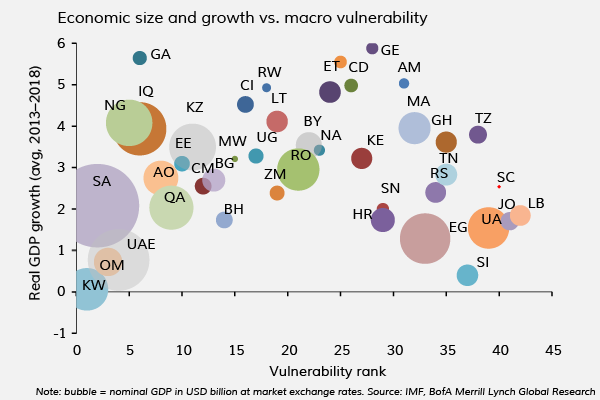
Bank of America’s Merrill Lynch this week did just that and published a primer on 42 frontier markets in Eastern Europe, Middle East and Africa (EEMEA). Of the 42 economies, the analysts highlighted six countries as offering the “best risk/reward,” among them four MENA countries: Saudi Arabia, Iraq, the United Arab Emirates and Qatar. The analysts determined that these were the best investment opportunities by correlating strong GDP growth projections and macro stability with a relatively large market size.

bubbles

On the bad end of the risk/reward map were countries offering low growth when compared with the risk. This quarter of the map included, from the MENA region, Egypt, Jordan and Lebanon. The operative term to define bad apples in the risk/reward map was macro vulnerability, based on five indicators for currency and fiscal risks and debts. Lebanon was named the riskiest country by macro vulnerability from all 42 economies.

Macro vulnerability, however, does not account for political risk, the report emphasized, due to possible dichotomies between macro vulnerability and political risk profiles of some countries. When adding political risk to the map, the UAE was situated right next to the term “best,” along with Qatar and Estonia.

The dark end of the adjusted equation found space for, unsurprisingly, Egypt and Lebanon. Although both countries were not in the lowest ranks for political risk – these were Nigeria, Angola and Democratic Republic of Congo – the combination of macro vulnerability and political risk earned Egypt and Lebanon their special mentions.

vulnvsgov

Frontier markets are understood as riskier places than emerging and developed markets. They can make up for that risk and some structural shortfalls by working harder on economic reform and by demonstrating a drive to increase productivity.

For future growth potentials in the report’s 42 countries, the Gulf Cooperation Council countries “dominate the top of the rankings, with five of the top 10 spots, thanks to low debt, high investment and savings rates, relatively low political risk and high competitiveness,” the report said.

For the final compilation of ranks under the “EEMEA frontier growth potential scorecard,” Merrill Lynch allocated top rank to Saudi Arabia, second rank to Qatar, third rank to Oman and fourth to Iraq. Ranks 39 to 42, the bottom four, were given to Egypt, Lebanon, Serbia and Ivory Coast.

The best things that the report had to say about Lebanon in its country-by-country briefs were references to the dynamism of the economy and to the “solid and liquid financial system.” The cautions were on the usual factors – impacts of the Syrian crisis and rising debt, but also a “cloudy” outlook “for much-needed reforms.”

February 28, 2014 0 comments
0 FacebookTwitterPinterestEmail
Business

PayPal is not coming to Lebanon

by Joe Dyke February 28, 2014
written by Joe Dyke

A year ago in Beirut, the then general manager of PayPal Middle East Elias Ghanem stood up at the Lebanese branch of the tech festival ArabNet and made an announcement that brought the conference to life.

Egypt, he said, would have PayPal within months. Lebanon would have it before the end of 2013. The crowd was excited, and the Middle Eastern blogosphere went wild over a declaration that had the potential to give a huge boost to Middle Eastern e-commerce.

Next week, the conference is due to start again. A year on, Egypt is now over six months into its PayPal experience — one that the company’s Middle East business development head Francis Barel describes as a “major success.”

The Lebanese launch, however, is not just stuck in the pipeline – it has been taken out of it altogether. Currently, Barel says, there are no specific plans to launch in Lebanon at all. “We are trying to expand to new territories and to other countries, but right now we don’t have specific targets for Lebanon,” he says.

PayPal, the world’s leading service managing online payments, is becoming increasingly ubiquitous. Owned by eBay, it is rapidly exploring new markets, with Barel saying they are currently present in 193 countries worldwide.

Yet Lebanon is not among them. Anyone in Lebanon wanting to buy goods or services via PayPal are not permitted to do so, and even those based in Lebanon with foreign bank accounts face problems. This is one of the reasons e-commerce has been so slow to catch on — according to a 2013 Ipsos poll, only 1.44 percent of Lebanon’s internet users (who make up 60 percent of the population) shop online.

Crossed wires?

Last year’s announcement raised hopes that the market would move forward but Barel insists it was a misunderstanding when Ghanem spoke. “There was a miscommunication — he mentioned that they were going to launch in Egypt soon and then someone asked him about Lebanon. He said that they were planning to come to Lebanon too, but didn’t give a specific timeline,” Barel says. “Because Egypt then launched so fast afterwards, people in Lebanon misunderstood the comments.”

For those in the room at the conference, Barel’s comments seemed somewhat strange. The video of the event appears fairly unequivocal, with Ghanem (starting at 0:59) saying, “PayPal today is across all the GCC; PayPal as well is across Morocco, Tunisia and Algeria. PayPal within 2013 will come to Egypt, will come to Lebanon.”

Indeed, even in a clarification email with Executive at the time, Barel stressed that there were plans afoot, but that Ghanem had perhaps overstated the speed. “We have said we’re planning to come to Lebanon in 2013 — so we’re hoping it will be by the end of the year, but it’s a long process,” he said at the time. Now even these plans appear to have been shelved.

Speaking to Executive yesterday, Barel refused to be drawn on specific reasons for this change in policy, stating merely that the company had other priorities right now but that they did still ultimately intend to open up to the Lebanese market.

Hurting businesses

Lebanese companies will be hoping they shift plans sooner rather than later. Cyril Hadji-Thomas, co-founder of Cedar Books — a leading book distribution company focusing on less common books — fears that the PayPal deal may, like many things in the country currently, have fallen victim to the political and security turmoil.

“The fact that PayPal is not here has a negative effect on our business and has for the last ten years,” he says, pointing to two main ways in which it undermines their work. “Firstly, those customers purchasing from abroad would have better secured transactions through PayPal and they don’t know or trust local payment gateways. Somehow it affects our ability to sell to them,” he says. “Sellers in China use PayPal. A lot of users trust it and they know that if there is something wrong with the payment they can do something about it.”

“The second drawback is the fact that PayPal works both ways — people can both buy and sell on it. [The lack of this] is maybe why there are so few successful [online] marketplaces in Lebanon.”

As Cedar Books has offices in the United States and Europe, they can use PayPal for many parts of the company, but for those products sold from Lebanon they use Bank Audi’s online payment gateway. While generally positive about the service, Hadji-Thomas says there are particular markets that Audi’s service suffers with. “We sell books in Arabic and French, so North Africa is a good potential market for us. But Bank Audi sometimes has issues with North Africa.”

The need for new online payment services in Lebanon (and the wider) Middle East is therefore great. Omar Christidis, founder of ArabNet, points out that among the talks at the 2014 conference next week will be a panel on new platforms in the region. Perhaps ironically, among the speakers will be Elias Ghanem — whose potential misspeak started the confusion over PayPal. Ghanem has since left the company to form Telr.com. It has not yet been launched, but indications are that it seeks to make online payments in the region easier.

February 28, 2014 15 comments
0 FacebookTwitterPinterestEmail
Real Estate

Lebanese real estate – things aren’t all bad

by Karim Makarem February 27, 2014
written by Karim Makarem

The stagnation that characterized the real estate market during 2012 continued throughout 2013. Bad? Perhaps.

Stagnation, however, is not regression, and that’s definitely a positive sign. While the market was indeed sluggish this past year, it has managed to remain relatively stable despite nearly a year without a government, a shrinking economy, growing security tensions across the country and a flood of over 930,000 Syrian refugees.

All in all, the slight reduction in real estate prices that took place in 2013 is a normal market reaction to a very opaque, unpredictable economic, political, and security situation.

The main real estate indicators continued to drop in 2013. There were 25 percent fewer construction permits in 2013 than in 2012 and the value of transactions dropped by 5 percent in the same period.

Strained market conditions, however, have an obvious negative impact on demand. Investors, who up until now had remained optimistic, find their outlook shaken by the prolonged economic stagnation. They are also taken aback by the prices that developers and property owners, seemingly oblivious to the changes in the market conditions, still post for their products.

This discrepancy between demand on the one hand and supply on the other is the real reason for market stagnation and the resulting drop in prices. Demand, in other words the people buying and renting apartments, offices, and retail units, is a reflection of economic realities.

Supply, represented by land owners and property developers, is usually more distanced from economic realities and therefore sellers tend to over-value their properties.

Prices are dictated by demand, however, which has been putting a downward pressure on prices.

Buyers and tenants indeed refuse to pay one penny above market value, aware that there is ample supply on the market and that they can shop around at their leisure.

This new dictate was first reflected in the drop in effective selling prices of new apartments.

Developers are much more flexible with their pricing than they were a few years ago, easily offering a discount of 5-10 percent. A serious buyer can even negotiate a discount of 15 percent, which was unheard of in 2011 or early 2012. The year 2013 was thus an ideal buyer’s market. Prospecting homeowners could take their time to look, compare, negotiate, and find the right product at its fair market value.

The residential rental market was more ambivalent. While rental values of small apartments (with budgets varying between $2,000-3,000 per month) remained stable, the rental values of large, luxurious apartments (with budgets varying between $4,000-6,000 per month) have dropped by between 10 to 15 percent.

Demand from Lebanese expatriates, foreign nationals, and well-to-do Syrian refugees is limited and insufficient to absorb all the stock available on the market.

The same is true for retail rentals. As many shop owners were driven out of business during the past several months, the number of vacant stores has continued to grow. Overall, retailers’ revenues dropped by 20-30 percent, and logic dictates that rental rates should follow suit.

Property owners were slow in adapting their prices to market realities, however, and it is only in the last few months that their asking prices have started to be more compatible with the financial potentials of their property.

Two real estate markets weathered the storm better than the above market segments: offices and land. The office market (both sale and rental) remains stable, despite the worsening economic situation, probably due to the very limited supply of good quality offices on the market.

Demand for high end offices has enticed developers into this new market niche. 2013 saw a surge in the development of modern office stock, offering large open spaces and parking, in new, more affordable areas, mainly in the capital’s eastern and northern suburbs (Sin el Fil, Antelias, Zalka, etc).

Another stable market is that of raw land in the capital. Prices of land have remained on a slight upward curve during the early months of 2013 and have stabilized in more recent months. They do not show any signs of dropping in the near future. This is due mainly to the scarcity of land, especially prime land, in municipal Beirut and its immediate surroundings.

The price of land outside Beirut has dropped slightly, mainly because prices had increased too sharply in earlier years. They had followed in the wake of the price hikes in Beirut but were unjustifiable and unsustainable within their regional context.

Although 2013 was a rather poor performer, it resisted the many disruptive and in some instances destructive events rather well. The performance of the real estate market in 2014 depends entirely on the political outlook this year will bring, which will translate either positively or negatively on the security and economic fronts. The creation of a new government bodes well, but the series of car bombings is likely to have a negative effect.

February 27, 2014 2 comments
0 FacebookTwitterPinterestEmail
Comment

The startup upstart

by Tara Nehme February 24, 2014
written by Tara Nehme

As he helped me gather my bags and wished me well, the taxi driver on my recent trip to the airport expressed hope that I was leaving for a short trip and would soon return home, because, he said, Lebanon depended on its youth to prosper. I didn’t know whether to be happy or sad — happy because I had just met one of few who still believed in this country or sad because he felt the need to tell me his bittersweet wish. While I had already planned a business trip to Dubai, it was expedited by the rise of the occasional bomb, a phenomenon someone cleverly compared to a game of Minesweeper recently. I was, for the first time in a long time, afraid to leave my home. But entrepreneurship is no desk job; it’s a networking and ‘drive around the city’ job. Just one month into what I was wishing to be a positive 2014, I needed to take a break from Beirut.

Though this trip is temporary, I, among thousands of others, feel the pull of the ‘brain drain’ our poor Lebanon has witnessed. No doubt about it, one of the many advantages of being the founder of an online startup is the ability to move and operate a business from almost anywhere. It wasn’t hard for me to come to Dubai; I just didn’t want it to be because I was fleeing home.

This past August Lebanon’s central bank issued a new policy, Circular 331, aimed at motivating commercial banks to invest in technology startups, venture capital firms and accelerators in the country. Three percent of the total amount of the roughly $13.5 billion in private capital held by commercial banks is to be invested. That’s a massive total of $405 million. As I settled into Dubai for the month, I could only hope that there would remain brains, ideas and drive for this money to be invested in.

Seven resolutions
It’s February and, notwithstanding the recent series of unfortunate events, I will stick to my original plan for this month’s column: describing my seven country-specific entrepreneurial New Year resolutions. By now most of us have forgotten the promises we had sworn to with conviction just a month earlier, so for every free-spirited Lebanese entrepreneur out there, some resolutions from me to you:

1. Get rid of the ‘bad customers’. They are everywhere, and in the Middle East, they overwhelm. If you dig deep into your customer database you will find and identify these annoying types and learn to differentiate them from the good customers. Focus on making those people happy in 2014 and acquiring more of them.

2. Enhance your appearance. I was browsing through the Facebook pages of Arab-based businesses and noticed that while some excel at their social media strategies, ensuring the quality of content is of global standards, others simply flail. It is important to engage your audience with quality content. If you operate in English, for example, and it isn’t your forte then find someone whose it is and get them on board.

3. Twist the bad into good. Safety aside, instead of blaming Lebanon for all the bad cards it has dealt you: innovate. If you figure out solutions when things aren’t going your way, you’ll be shocked to see how well you operate when times are smooth.
4. Give something back. The luxury of owning a business gives you the additional luxury of being able to do with it what you will. It’s not that difficult to do a little good in a country in need of so much. If you can’t think of anything specific, go to crowd-funding platform zoomaal.com and donate some money. There’s a library owner in desperate need of support to rebuild history.

5. Find a wisdom tree. I read an article recently that recommended finding the email address of the smartest person you know and asking them out for coffee. Arab success stories are all around us; find the humans behind them and capitalize on their experiences.

6. Support the new entrepreneurial wave. Being a mentor is just as important as finding one. If Circular 331 is going to be effective, there needs to be entrepreneurs in the making. We need a powerful community to maintain our own individual growth. Figure out a way to encourage the next wave of creators to join our boat.

7. Have a little faith. Whether you live in or outside Lebanon, have a little faith and miss it, always.

These are the seven resolutions I will use to keep me in check this year. Some of them will help me and others will hopefully help my country. Either way, working towards the positive will help us all while our beloved country awaits its fate.

February 24, 2014 1 comment
0 FacebookTwitterPinterestEmail
Real Estate

Waterfront City project launches in Dbayeh

by Tiziana Cauli February 18, 2014
written by Tiziana Cauli

Lebanon may be confronted with a challenging political and economic outlook, but this did not discourage two of the country’s biggest real estate developers from launching a joint venture for a business park in the outskirts of Beirut.

Dubai-based property firm Majid Al Futtaim (MAF) and contractor Societé Joseph Khoury et Fils Holding unveiled their plan on Monday for a business hub within their Waterfront City project in the northern Beirut suburb of Dbayeh.

“We believe that the wave of negativity the country is going through is not a reflection of the actual reality on the ground,” MAF’s senior project director Samer Bissat told Executive.

According to Bissat, Dbayeh has different potentials and needs than Beirut’s central district, which is currently facing a crisis in office property demand. “The situation in Dbayeh is reversed,” he says. “There is a lack of good quality office space and the feedback we had has shown us that we are putting our efforts in the right place.”

Bissat told Executive that one of the two buildings being launched at Monday’s event was already sold out, although he could not reveal to whom. In total the business park will constitute 12 buildings. He added that should the project attract the interest they expect, construction will start in around a year.

The scheme is expected to spread over an area of 30,000 square meters (sqm), 18,000 of which will be reserved for green and outdoor spaces. The total office surface is expected to reach around 60,000 sqm. The project, Bissat told an audience of business operators at the launch, will apply for international green certification with US rating system LEED.

According to Walid Raphael, general manager with Banque Libano-Française, a partner of Waterfront City, the project for a business park is coming just at the right time — despite the ongoing geopolitical and economic crisis.

“There are many signs of strong resilience,” he said. “The real estate sector especially showed signs of resilience.” Raphael said that he was convinced that although Lebanon’s property market is now a buyers’ one, the stability of prices for the past three years could be interpreted as a positive sign and the incentive program launched by the central bank to encourage real estate loans at a lower interest rate was proving helpful.

In this context, he said, the Waterfront City business park project will attract investors’ attention. “We have been witnessing a strong demand for state of the art offices,” he said.

Raphael addressed potential investors and other attendees at the launch of the project along with Malia Group’s chairman Jacques Sarraf and Fouad Zmokhol, head of the Lebanese Businessmen Association, in a panel moderated by media entrepreneur Ricardo Karam.


February 18, 2014 1 comment
0 FacebookTwitterPinterestEmail
  • 1
  • …
  • 213
  • 214
  • 215
  • 216
  • 217
  • …
  • 686

Latest Cover

About us

Since its first edition emerged on the newsstands in 1999, Executive Magazine has been dedicated to providing its readers with the most up-to-date local and regional business news. Executive is a monthly business magazine that offers readers in-depth analyses on the Lebanese world of commerce, covering all the major sectors – from banking, finance, and insurance to technology, tourism, hospitality, media, and retail.

  • Donate
  • Our Purpose
  • Contact Us

Sign up for our newsletter

    • Facebook
    • Twitter
    • Instagram
    • Linkedin
    • Youtube
    Executive Magazine
    • ISSUES
      • Current Issue
      • Past issues
    • BUSINESS
    • ECONOMICS & POLICY
    • OPINION
    • SPECIAL REPORTS
    • EXECUTIVE TALKS
    • MOVEMENTS
      • Change the image
      • Cannes lions
      • Transparency & accountability
      • ECONOMIC ROADMAP
      • Say No to Corruption
      • The Lebanon media development initiative
      • LPSN Policy Asks
      • Advocating the preservation of deposits
    • JOIN US
      • Join our movement
      • Attend our events
      • Receive updates
      • Connect with us
    • DONATE