• Donate
  • Our Purpose
  • Contact Us
Executive Magazine
  • ISSUES
    • Current Issue
    • Past issues
  • BUSINESS
  • ECONOMICS & POLICY
  • OPINION
  • SPECIAL REPORTS
  • EXECUTIVE TALKS
  • MOVEMENTS
    • Change the image
    • Cannes lions
    • Transparency & accountability
    • ECONOMIC ROADMAP
    • Say No to Corruption
    • The Lebanon media development initiative
    • LPSN Policy Asks
    • Advocating the preservation of deposits
  • JOIN US
    • Join our movement
    • Attend our events
    • Receive updates
    • Connect with us
  • DONATE
AnalysisFood EntrepreneurshipSpecial Report

Seeking exits from obtrusion

by Thomas Schellen January 1, 2023
written by Thomas Schellen

What can illustrate the relationship between the farmer and the banker in this country? To modify an old consultant joke to a Lebanese scenario, let us assume – purely for the sake of illustration – that a banking guru with decades of expertise in maintaining monetary immobility at the heart of the financial system, decides to depart from his impoverished neighbors by means of a trusty hot air balloon. His hypothetical rationale: our financial wizard thinks that such a balloon is an inconspicuous means of personal transportation which does not require an airport for takeoff, plus he has lots of skills in producing hot air. 

A magical fog surprises the maestro when he tries to cross the hills. The balloon drifts northeast in this dense fog and floats into the upper plains of the Baalbek-Hermel district where it gets entangled in an inactive power pylon. Then the fog breaks and the disoriented guru sees a farmer working in a field 40 feet below his aerial contraption. 

“Habibi, can you help me?” cries the guru from above. “Get me down and sell me your car. I will give you a Eurobond that is worth 20 times what you paid for that car!” The farmer shakes his head and continues with his potato harvest. The financier tries again. “Please, can you drive me across the border? I am a rich banker and can even give you a blank check.” The farmer shrugs. “At least tell me where I am exactly. I will pay you a million lira,” begs the banker. 

The farmer looks up and says: “It seems to me that you don’t know much. I am an honest man and we do honest work here in these fields, so I cannot take the risk of driving you. Also, I need my car to take these potatoes to Beirut where they sell today for two million lira per bag.” (Note: The scene plays out in the not-too-distant future.) 

“And where you are is in that little basket hanging way above my head. I tell you that for free,” the farmer concludes and continues with his work. 

An old chasm

The distance between Lebanon’s – currently very theoretical – top tiers of finance and – the very real – agricultural sector today does look insurmountable. But the access-to-finance chasm for rural investment needs has already been gaping wide for decades. It was composed in one sense of the conventional rift between those seeking after funding and those providing access to it, in exchange for collateral that they could understand and valorize. However, the gulf between lenders and farmers might have been deepest and widest in terms of mindsets and attitudes where prospective investees and the gatekeepers of lending and investments have for decades failed to find a common language and mutual comprehension. 

Illustrative of this mental and material chasm is the share of rural Lebanon in banking sector deposits. According to Banque du Liban figures cited by Bank Audi’s Lebanon Weekly Monitor for week 46 of 2022, the combined share of bank deposits by “region” rather than Mohafazat showed a heavily uneven concentration of two thirds of deposits in Beirut and its suburbs as of June 2022, juxtaposed at the other extreme with 5 percent of deposits in the Bekaa region. 

According to numbers in the 2020 Annual Report of the Association of Banks in Lebanon, the regional distribution of deposits shifted down by about 30 basis points in Beirut and its suburbs, and up by a mere 13 basis points in the Bekaa in 2020 when compared with 2019. In terms of bank loans, the values were even more divergent as the capital reported to have been the location of between 73 and 74 percent of all loans. The Bekaa was seeing the least lending activity in the country, only improving from 3.3 to 3.6 percent of credit that has been extended to borrowers in this region, which is stretched across several administrative Mohafazat, or governorates. 

The access-to-finance chasm has never been completely hopeless in the sense that funding and farming could never be paired. One can find 10 percent of loan allocations to agricultural projects in the portfolio of Bank du Liban-subsidized loans in the early phase of its, ultimately ill-fated, economic stimulus packages of the 2010s. Also, data from Kafalat, a local financial company, show that the loan guarantee corporation in its heyday engaged with agriculture sector lending as one of its constituent, but far from dominant activities. For the period between 2001 to 2016, Kafalat data show issuance of loans to agriculture in the billions of Lebanese pounds – when one billion pounds equaled approximately $667,000. To cite the values in 2016, subsidized interest medium- to long-term loans with Kafalat guarantees in that year comprised LL652 billion ($432.57 million) of which LL62 billion, or 9.5 percent, had been awarded to agricultural loan applications (versus LL590 billion to industry and tourism). 

In the context of access to finance by agriculture, one has to note further that the banking branch density in Lebanon has shown retail network growth as largely bypassing rural areas. One can see as proxy indication for the persistently underwhelming access to finance in the interest of agricultural development. Banking density – albeit on a long-term declining trajectory from 27 in 2004 to 20.3 in 2020 (the latest available data in a World Bank series on this indicator) in terms of branches per 100,000 adults, was in 2020 still nearly twice the global value of 10.8 and higher than reported national branch densities in both the MENA region (13.4) and high-income countries (18.5) – has since the 1990s been considered exorbitant in comparison with peer countries but at the same time notorious for being domestically unequal and tilted heavily in favor of the capital Beirut and its conurbation. 

The trends of concentration of deposits, loans, branches (also including ATMs) away from the Bekaa region and rural Lebanon have been consistent throughout the 2000s and 2010s. If historical access to finance and banking density in rural districts are further contextualized with soft infrastructures that facilitate the access to education for agricultural stakeholders, the conventional wisdom approach says that agriculture has an incredible amount of catching up to achieve with regard to both affordable financial capital and highly trained human capital. This need for closing the dual capital gap, which predated the collapse, has been highlighted in the past three years by the rising emphasis on building up the real economy. But it is also beyond question that commercial banks, which have lost the ability to lend, have since the start of the crisis been even less conduits for investments into agriculture, than before the banking collapse.  

Importance of new infrastructures

Soft infrastructures for the agricultural value chain in a regulated market environment will be anchored in clear property legislation and a tax regime which entail cooperative and usufruct provisions. In terms of labor law, agriculture has to be covered by state frameworks of labor regulations and social protections. 

Besides adequate legal infrastructure, [inlinetweet prefix=”” tweeter=”” suffix=””]state-supported education is recognized as another pillar in the enabling environment of the agricultural sector[/inlinetweet]. The breadth of the educational choices in a country with a focus on elevating its agricultural sector will necessarily extend from vocational training to technical schools and university-level programs on crop and soil management, and agricultural and environmental sciences. Flanking tertiary education, strong value-adding potential can be unlocked by improving the collaboration between academia and industry in matters of agriculture and food processing.

In any country, educational and human capital infrastructures are in rural areas, almost by definition in perpetual need of updating and upgrading. This development focus is on one hand, directed toward keeping the sector aligned with new insights and studies in the constantly progressing realm of agriculturally applied life sciences where the human understanding of nature remains forever incomplete. 

On the other hand, producer countries seeking to improve their agricultural exports have to constantly adjust to changing standards and requirements for internationally traded food stuffs and best practices. This latter challenge has long been a barrier standing large against Lebanese agricultural and agro-industrial exports to developed markets. 

Overcoming this barrier requires investing in technicians and testing labs on the part of institutions, plus nurturing of awareness and compliance on the producer side. Moreover, under the aim of increasing a country’s food security, capacity building in the supervisory framework and improving producer standards have to be correlated with efforts to reduce food wastage in the domestic market and increase nutritional literacy among local consumers. 

In this context, spreading awareness on nutritional values of food products and informing future Lebanese consumers about potentially harmful ingredients in popular snacks has this year become the chosen task of the Lebanese Association of Food Scientists and Technicians (LAFS), says Rana Cheaito, a food technician who has been coordinating the activities of LAFS since the mid-2010s, and recently was appointed as the head of this non-profit association. 

“We are a bridge between industrialists and scientists,” she explains. “Our objective this year is to do awareness campaigns on how to read labels attached to food products,” Cheaito tells Executive. In parallel to having initiated a reading-the-labels campaign in schools, LAFS continually interacts with very small businesses – micro-enterprises in food processing and people who make food products in their home kitchens – to build their awareness on good manufacturing practices and food safety, Cheaito says.

This public good of food security and the collaboration among stakeholders have been pursued by LAFS on the level of a volunteer-driven NGO since the organization’s establishment in 1999; and this task was primarily tackled through annual conferences. Over the years, there were several highlights in the organization’s interaction with public officials, but the collaboration with public institutions such as the ministries of industry, agriculture, and economy has yet to be solidified beyond statements and expressions of ministerial intent. However, it is notable that since the economic crisis the membership of LAFS has been subjected to brain-drain pressures; nearly half of its 18 members have taken up roles in academia or industry overseas.

Lebanese food security, in Cheaito’s view, can be improved significantly with a roadmap for agriculture sector strategies and investments, but it is a precondition that more food scientists are employed by both agro-industry and public sector. “We have recommended that food safety quality controls should be mandatory at every food [processing] firm,” she says, commenting that this recommendation, which was adopted by the Ministry of Economy and Trade in a statement at the LAFS annual conference of 2019, has yet to be transformed from an idea to reality. But according to her, this is not for want of trained technicians. “I can tell you that we have enough food scientists and experts, but we don’t have enough who are employed.”

Cheaito also concurs that there is a need to strengthen the pre- and post-harvest agricultural infrastructure of Lebanon with more testing laboratories. [inlinetweet prefix=”” tweeter=”” suffix=””]“We have the experts, the lands, and the produce, but we don’t have enough labs and testing materials,”[/inlinetweet] she says, adding that private sector investments and operational partnerships between the concerned ministries and academic institutions are the most realistic path.  

Back to finance

A general view shows a street hosting banks and financial institutions, known as Banks street, in Beirut Central District, Lebanon June 2, 2017. REUTERS/Jamal Saidi – RC1FE0E0BA40

The landscape in terms of soft infrastructures of education and resident expertise is in need of development, and the legislative and regulatory infrastructure for agricultural growth seems hardly sufficient, but today, the most deficient soft infrastructure remains access to finance. At the time of writing towards the end of 2022, when there is no bankable reversal in the Lebanese state’s presidential stupor yet, the state’s disability for enacting reforms and reaching agreements with all the International Monetary Fund (IMF), development finance institutions, Eurobond holders, domestic creditors, and depositors means that restoration of an access-to-finance capability and institutional infrastructure is not a rational near-term expectation for the agriculture or any other sector. 

From the start of the financial crisis until today, private sector actors have been diverting their business transactions away from local banks, while households have made the informal economy their habitat, and the direct channeling of foreign financial aid circumvented the state and the banks in favor of dealing with small initiatives led by civil society organizations. The latter shift toward unconventional financing on the basis of micro-economic partnerships between foreign donors and Lebanese civil society organizations and NGOs is especially prominent in agricultural and green development projects.

In terms of developing the agro-food economy, an orderly return of conventional banking or the occasionally proposed establishment of a state-owned agricultural bank, both presuppose banking reform. Moreover, there is consensus among financial analysts and strategists that recovery of investor’s trust and the hope to see the channeling of funds into Lebanon through commercial banks will remain confined to the realm of hopeless dreams until an IMF agreement is in place.  

Among few access-to-finance avenues that were not under complete capture by commercial banking, the microfinance sector, after the microcredit tradition of Mohammed Youus and the Grameen Bank initiative, has been rising in Lebanon since the early 2000s, albeit rather slowly by comparison with many developing economies. 

The oldest microfinance institution (MFI) in Lebanon which still is operating under an NGO status, is Al Majmoua. Formed in the 1990s with a mandate to serve low-income businesswomen, the organization evolved in the 2000s into a leading MFI providing microcredit to urban and rural women and men who were seeking to secure independent livelihoods. Lately, in the course of the financial and economic crisis of Lebanon, the organization has identified agricultural clients as a new priority target group, Al Majmoua’s executive director Youssef Fawaz tells Executive. 

“We have for more than 18 months [been] looking again into green financing and we also have been trying to be more involved with agricultural finance,” he says. An agreement testifying to the new orientation of Al Majmoua was signed in October with the multi-partner initiative WE4F; and the agreement will see the Lebanese MFI develop a financing product designed to help farmers obtain solar-powered irrigation systems. 

Before the crisis, Al Majmoua had expanded its client base to 90,000 borrowers – absent a license that would allow it to accept deposits – whom it served with a staff of nearly 1,000. The vast majority of these borrowers were not agriculturalists. “Our portfolio reflected the economic pie in the country, with a bias to women-led ventures. The bulk of micro-loans was in trade and services sectors, with ten percent or less in the agricultural sector,” Fawaz explains. 

In the crisis, the MFI’s headcount atrophied to about half of its pre-crisis staff of 450. Its deployable financial resources suffered the same fate as those of every funder. A large share of its funds in bank accounts were denominated in dollars and became inaccessible. Also, as the MFI shifted to receiving lira payments from its loan clients after demand for its credit dropped in the early phase of the crisis, it soon started to have difficulties in even accessing these lira in its accounts. “The funding has completely dried up. We have been in crisis mode for more than three years,” Fawaz says. 

Without mincing words, he describes the MFI’s financial and human capital conundrum, putting the financial capital need at $5 to $6 million. “We are in a difficult situation and need to start climbing again. The challenge is that to climb again seriously, we would need new capital to come in, so that we can again lend in dollars. My plea to whoever wants to listen is to help save the sector of microfinance,” Fawaz says, arguing further that Al Majmoua could leverage its proven track record as a financially sustainable microcredit provider with good prospects for delivering returns to investors. “Microfinance is a sector that can reach 100,000 clients in the most remote areas of the country from the north to the south and the eastern Bekaa. We have the scales, the track record, and the history and we have the human infrastructure,” he enthuses. 

On this, the hopeful side of its business Fawaz names two non-financial assets. The first is the observation that the MFI has recently noted a burgeoning recovery in people’s desire to borrow, and the second that the level of human capital has been preserved at a level where a rapid restart of the microcredit activity will be possible. The current staff level of “slightly less than 250 is still good and we remain relevant, as we have 32,000 clients,” Fawaz says.

He emphasizes that this level needs to be maintained in order to preserve Al Majmoua’s ability to re-engage clients in a coming economic recovery period with credit, technical assistance, and financial literacy training activities. “If experienced and skilled MFI workers were to be dismissed because of payroll difficulties, it will really be a missed opportunity for the period after the organized launch of a recovery strategy. I could lay off another 100 people tomorrow. But then, on the day when you decide that you want to reach 100,000 clients, it will again take us 15 years to get there.”

The fact that microfinance – when compared with commercial banking and larger-scale investment facilitations – is today a sector with outstanding reach potential for serving rural smallholders and micro-entrepreneurs in the agricultural economy, adds urgency to Al Majmoua’s social and economic appeal. 
January 1, 2023 0 comments
0 FacebookTwitterPinterestEmail
AnalysisFood EntrepreneurshipSpecial Report

Entrepreneurs to fight food insecurity

by Sasha Matar January 1, 2023
written by Sasha Matar

The future of local food security heavily relies on the arduous efforts of policymakers and decision-takers to develop a nationwide roadmap and save what is left of the agro-food sector at the macro-, meso-, and micro-levels. It was inevitable that the connected events of the Lebanese pound’s devaluation and US dollar shortage were going to have a detrimental impact on the largely dependent-on-imports sector. Agricultural imports account for more than 80 percent of food supply. The country does not only import food products but also a large proportion of agricultural inputs, like seeds, fertilizers, and pesticides. As a result, the agriculture and the food processing sector (agro-food sector) has been heavily impacted. But as the sector calls for help, the government has been failing to sufficiently respond, with the majority of the country’s remaining public resources being allocated to the industrial and financial sectors, according to a 2021 paper Agricultural Sector Review (ASR) by the Food and Agriculture Organization of the United Nations (FAO).

Since 2019, to contain a growing food security problem and in light of the government’s absence, private sector and international NGOs have stepped up to address farmers’ limited access to financing, poor infrastructure, the internationally-disrupted supply chain, and outdated farming practices. Long standing policy maker inadequacy, alongside the dysfunctional Circular 331 – introduced in 2013 to encourage Lebanese banks to invest in start-ups, incubators, accelerators and venture capital funds – has pushed local incubators and accelerators to design new strategies to scale up and accelerate growth of micro, small and medium-sized enterprises (MSMEs). This also includes start-ups in the idea or early stages, particularly those in the agriculture and the food processing sector.

Half a billion dollars in funding 

According to the ASR, a high informal employment rate has always been an obstacle to the growth of the agriculture sector. Only a small share – around 8 percent – of the total agriculture labor force is formally employed, according to a 2019 McKinsey paper. Over the past couple of years, incubators have dedicated a lot of efforts to revive rural and culinary tourism in the countryside and focus on formalizing employment. 

One notable ongoing program, funded by the German Federal Ministry for Economic Cooperation and Development, and implemented by Deutsche Gesellschaft für Internationale Zusammenarbeit in partnership with Berytech, is the Rural Entrepreneurs in Agri-Food program which aims to support businesses and startups in the sustainable rural economic development field. According to the Lebanon Agri-Food Initiatives Mapping and Gap Identification report developed by the Lebanon Reforestation Initiative, the current support for the sector reached more than $475 million. This support is channeled through international organizations such as the FAO, United Nations Development Program (UNDP), the World Food Program, the International Labour Organization, or through the World Bank and the European Union (EU). On the other hand, bilateral support to the agriculture sector is also provided by several countries like France, Germany, Italy, Holland, among others.

Berytech: Technical and business support in return for innovative solutions

Berytech designed the Agrytech program in early 2017 to provide financial, technical, and community support to start-ups and small to medium-sized enterprises (SMEs) with engineering and tech solutions across the agro-food value chain. Since then, the program is strengthening linkages among same-sector businesses. In response to the declining economy, in 2020 Berytech launched the Agri-Food and Cleantech (ACT) Smart Innovation Hub which aims to support innovation in the agro-food and energy industry for developing solutions around the increasingly present environmental and food security challenges.  Berytech also hopes the program will have a long term impact on the entrepreneurial scene, by proposing policy reforms and establishing a lobbying structure.

Soha Nasser, an agro-food specialist at Berytech and manager of the special edition of the Agrytech Accelerator Program, says that the aim behind the Agrytech program is to help turn the local economy from a service-based economy into a manufacturing-based economy. By organizing outreach activities such as ideathons and hackathons, in partnership with different universities, [inlinetweet prefix=”” tweeter=”” suffix=””]Berytech helps entrepreneurs from the agro-food sector turn their ideas into viable and investment-ready businesses.[/inlinetweet]

“The applicants for the special edition of the Agrytech Accelerator Program need to have a minimum viable product with a scalability potential beyond the local market and the potential to create sustainable job opportunities in the Lebanese market,” Nasser tells Executive. To grasp the situation of the market and define gaps, Berytech’s research and development department conducts a needs assessment survey.

Sector challenges

However, despite that the sector is becoming more appealing to young Lebanese entrepreneurs, Nasser concedes that sometimes they have a hard time finding the right talent, especially due to the emigration of skilled youth since the start of the crisis. Berytech identifies some of the areas facing the most challenges: farming, food-industry packaging and marketing, the rangelands and forestry, fishing and aquaculture, and the area of management support. Berytech encourages applicants under the Agrytech Hackathon and Accelerator Program to consider ideas for these fields as a top priority while conceiving their businesses. The main programs under the agriculture and food sector at Berytech are:

• The Agrytech program;

• Bestmedgrape: an EU-funded project that aims to help businesses turn their wine-making waste into health products;

• Transdairy: an EU-funded project that is enabling technological transfer among research, industry and SMEs applied to the dairy value chain;

• QOOT: an agro-food innovation cluster aiming to internationalize the local agro-food sector;

• The Future Agro Challenge: a global competition for food and agribusiness startups addressing national, regional, and global challenges.

Fair Trade Lebanon: Helping food processors meet local and international sales standards

Fair Trade Lebanon (FTL) is a local NGO created in 2006 with the aim to equip small producers and food processing cooperatives in rural regions with the needed skills to become export ready, through technical training and the acquisition of necessary certification to enter different markets. The local agro-food sector accounted for 11.7 percent of total exports, according to the last reported statistics in 2019, by the Investment Development Authority of Lebanon. 

FTL has three projects running consecutively:

• Support business innovation and enhance export for Lebanon (BIEEL): a project targeting local agro-food exporting SMEs to enhance exports by improving access to international markets, equipping businesses with the right certifications to meet international market standards, and providing alternative financing solutions or export-enhancing loans. The main financing institutes are Cedar Oxygen Fund, IM Capital, Crowdfarming, and Al Fanar.

• Shabake: works to strengthen the resilience of Lebanese civil society in order to improve crisis prevention and management programs, funded by the Agence Française de Developpement and implemented by Expertise France and FTL. One part of the project is supporting women’s food processing cooperatives in the Bekaa by providing them with technical and marketing training.

• MedArtSal: an EU-funded project focused on the sustainable management of salt harvesting and artisanal salt production along the Mediterranean, including in Italy, Spain, and Tunisia, as well as Lebanon.

Other accelerators and incubators like Smart ESA, Bloom, and Nucleus Ventures are not providing customized support for agro-food businesses in particular, but are working closely with different partners to tailor support for the increasing number of applicants in all sectors.

Bloom’s Personal and Professional Business Accelerator 

“Under the Lebanon Growth Accelerator (LGA) program, Bloom is collaborating with six other accelerators, to support 50 businesses and help create around 250 jobs locally,” Dara-Maria Mouracade, programs lead at Bloom, tells Executive. Among the 50 participants who benefited from Bloom’s support, Mouracade named nine businesses in the agro-food and agricultural inputs sector: Dooda Solutions, Garbaliser, Agro Cedrus, House of Lilies, Compost Baladi – Cultiva, SunCode, Del Libano, Melqart’s Forest, and Aquavita. According to Mouracade, Bloom, in partnership with local and regional accelerators, incubators, and funds provides mentorship programs for entrepreneurs to help them grow on a personal level all while supporting the growth of their businesses. The main challenges facing agriculture that Bloom wants to address under the LGA program are reducing the cost of imports, increasing access to finance, creating innovative ideas to outdated farming practices, and finding solutions to the disruptions in the agricultural value chain caused by the aftermath of Covid-19 and the current Russian-Ukrainian conflict.

Nucleus Venture: Connecting innovators to the world

“Nucleus Ventures (NV) does not have a specific program addressing the food security challenge. In partnership with Steve Wozniak, co-founder of Apple Inc., NV offers boot camps in the EMEA region [Europe, Middle East, Africa] and focuses on talent building for the most in-demand tech careers,” Farah Chamas, Beirut’s NV programs director, tells Executive. The crisis impacted the orientation of the support provided by the accelerator. “Before the crisis, NV adopted a sector-agnostic approach, which means that we were working with various businesses to solve the problems of multiple sectors. The crisis helped us become more sector-focused, we work on providing businesses with grants rather than convertible loans or other financial products and we prioritize working with SMEs in the renewable energy sector.”

In the energy sector, NV helps implement the Energy Innovation Hub program, co-funded by the EU and UNDP. Accelerators from Nucleus Ventures help businesses with growth potential and in securing deals with partners around the globe. Besides focusing on acceleration, NV helps upskill local talents through courses and programs. Under the multiple programs that NV is providing, beneficiaries in the agro-food sector include Bubble Kitchen, Aquavita, CaraBio, Suncode, and Partners with Sun.

Which program to choose?

Choosing the right accelerator program to match your business might leave you flummoxed, but the different outreach activities that accelerators launch online may help entrepreneurs anticipate what to expect. In addition, [inlinetweet prefix=”” tweeter=”” suffix=””]accelerators are working closely with universities to source talents and help conceptualize ideas at an early stage.[/inlinetweet] ESA’s Business School Accelerator, Smart ESA, customizes solutions for entrepreneurs from all sectors and provides different programs for businesses starting from the seed stage to the expansion stage.

However, despite the growing attractiveness of the agriculture sector among the emerging generation of entrepreneurs and the range of accelerator programs, there is also an issue of mismatch between the offer and the demand; sometimes the offer is not very much aligned with the demand. For instance, apple growers struggle to sell their high-quality fruit every harvesting season and still no concrete solution has been provided, on a governmental level or even from an innovative business approach. 

Global and local trends have been driving the need for innovation in the agriculture and food processing sector long before this year’s food security debate kicked off. Without a doubt, at this moment in time, with the increasing number of accelerators, incubators and enthusiastic participants, being a disruptor in the agro-food sector is critical to address the sector’s poor infrastructure, specifically with rising concerns over polluted water, food poisoning, and arbitrary decision making. 

January 1, 2023 0 comments
0 FacebookTwitterPinterestEmail
Food EntrepreneurshipFood EntrepreneurshipOverviewSpecial Report

Building food security entrepreneurially

by Thomas Schellen January 1, 2023
written by Thomas Schellen

An entrepreneurship ecosystem captures the essence of entrepreneurial energy in a cycle of economic life. For these energies to become manifest and productive, ecosystems need a constant supply of fresh and ambitious business-oriented minds which are equipped with unconventional ideas. Those will often be minds emerging from the tertiary education system, although the entrepreneurial spirit can just as well shine in self-taught enterprise builders who have fortified themselves with experiences and practical insights. 

In transforming talents into victors and disruptive ideas into success stories, the functioning of an entrepreneurship ecosystem will combine the benefits of a broad enabling environment with the effectiveness of nurturing units, namely the incubators and accelerators. Today these units are intrinsic to fast entrepreneurial processes of turning – in the culture of capitalism naturally and inevitably occurring – practical breakdowns of new business ideas into chains of development in which these ideas and human energies pivot from failing rapidly into improved iterations.

This is all economic theory until a country starts building its knowledge entrepreneurship ecosystem, a decades-spanning effort which in the case of the Lebanese one originated in the context of the early commercial internet at the end of the 20th century. This Lebanese tech and knowledge economy ecosystem emergence involved a period of gradual formation from the late 1990s into the early 2010s,  not a perfectly balanced growth spurt with a deliberate infusion of funds and intense human capital investments in the 2010s, but lately a pivot to a new and more organic development phase that began with the painful loss of most funding and disappearance of some ecosystem players in 2019-20. 

During the growth period of the 2010s – decisively induced by the famed Circular 331 of Banque du Liban, Lebanon’s central bank – the entrepreneurship ecosystem was tilted in favor of the “tech” component of technology-driven startups built around computer applications in education, health, advertising, communication, and finance (Healthtech, Adtech, Fintech, etc). With funding and equity deals for these startups hyped all too often beyond reasonable valuations, one would encounter several short-lived tech meteorites, or worse the occasional zombie venture, for each new star team and viable application. 

Already during the ecosystem’s formation phase, which saw software houses, wedding, auction, and online financial services sites feature prominently among its New Economy ventures, early ecommerce startup founders naturally had food on the top of their minds. Whereas plenty of online ventures of the Lebanese dot-com bubble days have long been forgotten, Karim Saikali’s website, buylebanese.com, is today a rare holdout venture from this era. Delivery of Lebanese food products to aficionados in the diaspora was driving Saikali’s business when the site went live in November 2000, embarking on an ecommerce journey that included periods where the founder would run the entire operation single handedly from his laptop while sitting at this or that Beirut café. 

Furthermore, notable agriculture and food related entrepreneurial brands were created during the 2010s, examples reported by this magazine include the niche consumer brands Taqa, Eshmoun, and The Good Thymes. Executive Magazine’s top 20 entrepreneurs list of November 2012, which was the most extensive one the magazine produced in a single year, featured one cooking/foodie site (Shahiya), one purveyor of organic food boxes (O’Box), and one olive-oil venture (Olivetrade/House of Zejd).

In the Lebanese tech entrepreneurship ecosystem of the 2010s, it was the default profile of a successful startup that penetration of markets other than Lebanon might shape a viable economic narrative out of a startup with a minimum viable product and local or better, regional, adherents. Although local job creation and knowledge economy focuses were deeply embedded into guidance force of Circular 331, the Lebanese entrepreneurship ecosystem by necessity of the small domestic market defied many high-blown expectations for job creation – which were incidentally not focused on rural growth but formulated in relation to the online tech services and urban ancillary realm.   

Emerging sub-trends

Under the pandemic scenario of 2020 and even more so under the purchase power and market constraints of the world after the Lebanese pound’s collapse, the trend of outward orientation of Lebanese tech startups intensified. The ecosystem witnessed the emergence of sub-trends; like the trend of moving to entrepreneurship nurturing environments found in Dubai, Paris, London, or anywhere outside of this country. Another accelerating shift saw startups keep part or all of their back office and development “kitchens” on virtual islands of connectivity in Beirut while seeking clients outside. 

A third sub-trend saw the thriving of platforms which focused on making Lebanon an outsourcing destination from which clients around the world could contract remote knowledge workers. Under a fourth sub-trend, ecosystem stakeholders were treated to a – in part domestically focused – surge in the number of advertising and ecommerce facilitators which delivered e-commerce platforms and market access strategies to local companies. This trend was based on the fact that local niche producers delved into operation of proprietary e-commerce platforms with focus on multiple target markets, among which the Lebanese market could be one – but did not have to be. 

It is out of this entrepreneurship diversification and ecosystem change that the acceleration and incubation tech ecosystem has also seen a new successful entrepreneurial economic DNA mixing pool (see story on accelerators and programs on page 86) come up where the gametes and zygotes of Lebanese agricultural entrepreneurship and innovative zest combine into agro-entrepreneurial ventures that seek to interact with markets in search of sustainable profits which contribute  to the recovery of the economy. 

In many cases, enterprises that arose out of [inlinetweet prefix=”” tweeter=”” suffix=””]the tech entrepreneurship ecosystem over the past 20 years did not generate as many jobs as hoped[/inlinetweet], but they created change impulses for the direction of the Lebanese services economy. By the same logic of fostering positive change, the agro-entrepreneurship generation in our 2022 lineup (see profiles on page 80 for a look into their diverse range) include agriculturally oriented ventures that have startup appeal but also new impulses to offer in the areas of agricultural production and rural livelihoods. 

Beacons of an entrepreneurship ecosystem that is inclusive of a strong agro-entrepreneurship component are observations that – partly under the impact of the pandemic and partly under the weight of the economic crisis – increasing numbers of university graduates and seasoned professionals have been rediscovering their village roots and been embarking on agro-entrepreneurial startups. Also of note is the outstanding vibrancy radiating from exhibitors at events focused on small green, innovative, and agrarian enterprises, from the legacy Horeca show in March of this year to the Vinifest and Green Innovation events of October.

Stakeholders interviewed by Executive during our investigation of the food value chain and food security situation of Lebanon emphasized that in an integrated system of agro-entrepreneurship, food exports will play a decisive role for Lebanese food security. They noted further that food exports require access to markets, which in the digital era will include proactive digital channels. 

In recent years, proliferating online platforms of Lebanese producers, and the locally based specialized ecommerce platforms or online shopping malls, have important roles to play in this regard. Interestingly, the Lebanese entrepreneurship landscape of ecommerce and marketing also includes online ventures that are focused on Europe, such as Brussels-based Key16/Seven Shelves and the North American market from within the United States. These startups could contribute to the invigoration of Lebanese exports, food sovereignty, and food security. An example whom Executive conversed with is Za’atar Road, which in 2020 embarked on bringing artisanal Lebanese agro-food products to high-end foodies and health-oriented consumers in developed North American markets. 

The curious case of the expatriate za’atarpreneur 

Founder and chief executive of Za’atar Road Maya Hachem says she conceived of the startup shortly after the August 4 Beirut port explosion in 2020. She soon found an investor who backed her to help young entrepreneurs and artisanal food product makers in Lebanon, while also latching onto trends for healthy food and benefit from the large number of health food stores in the United States. 

 After her business plan was hatched and presented to one or several US-based investors (in response to an interview question by Executive, Hachem declines to divulge details on her startup capital or investor base), she undertook an exploratory visit to Lebanon for sourcing of suitable products. Her sojourn of scouting rural Lebanon and talking to producers in villages across the country lasted three to four months and yielded several hundred prospective artisan food producers as prospective partners – a success which set the founder of Za’atar Road onto a track of heading straight into a significant barrier. 

“I had to hire a small team in Beirut to bring us all the samples that were then run by the food and drug administration (FDA) for checks and approval. This has been one of the most challenging parts of implementing the whole business model. Of the 452 artisans that I reached out to, I could only get approval for 62,” she tells Executive. 

After gaining FDA approvals, three containers with 400 different products were sourced and Hachem embarked further on her push to market. “We are only focusing on small productions and small batches from suppliers who meet the criteria and procedures for FDA approval,” she notes. 

Having internalized the insight that it is anything but easy to bring Lebanese products to the North American market, Za’atar Road’s Beirut-based supplies manager focused on securing the flow of small product batches to meet FDA requirements, while satisfying Hachem’s core business concept of not working with big names in Lebanon’s agro-industrial sector. 

In the meantime, even after the product range was set to companies that had business registrations in Lebanon and met the food safety, labeling and all other FDA standards, [inlinetweet prefix=”” tweeter=”” suffix=””]Hachem says she frequently worries about economic and infrastructure barriers in Lebanon which might obstruct her artisan suppliers’ ability to deliver products in the needed quantities.  [/inlinetweet]

“Our product range includes spices, olive oil, soaps, jams and honeys; we have a little bit of everything,” Hachem says. In her first round of product sourcing, she focused on artisanal food products, but the scope of Za’atar Road’s supplier search is now being widened to non-food products. 

The next business challenge on her path is the unpleasant duty to revise and rationalize the product range. In doing her trial to see what products work with the US consumer, “we experienced that some products do better than others. [Thus] we will by the end of this year have to decide which products and suppliers to strike from our range. If those suppliers can have a niche in another market, it will make more sense for them to sell their products there,” offering her rationale for what she describes as an upcoming hard decision. 

Over the year of 2022, her operation has expanded from an online-only platform with 400 SKUs and usage of an external ecommerce fulfillment center to wholesale relations with several gourmet stores in US urban population centers. “It has to be the right store, though. The idea is not to have our products anywhere and everywhere,” Hachem adds. She does not target the Middle Eastern communities in the US with Za’atar Road as much as fine-food stores in the upper market reaches. 

With regard to questions on financial aspects of Za’atar Road operations to date, she says that her Lebanese suppliers have so far been paid upfront in fresh dollars and her sourcing costs have been stable under this formula. As to figures that she is willing to disclose, Hachem says that Za’atar Road’s headcount has reached seven and names a revenue target of “around $5 million in the next two years.” Fundraising for more capital is on her agenda for a later stage of development. 

As Hachem notes, [inlinetweet prefix=”” tweeter=”” suffix=””]in recent years some household words in the Lebanese food culture have been adopted into US culture [/inlinetweet]or even become trendy in foodie circles. Many other terms, however, have yet much room to define a Lebanese niche in developed food cultures by which they would adequately represent the contributions and values of the culinary wealth of Lebanese lands. An integrated agro-entrepreneurship ecosystem that brings expatriate and local constituents together in demonstrating the diversity and depth of Lebanon’s culinary tradition, is hopeful on the two counts of helping in the reduction of food insecurity by the indirect path of improving exports, and contributing to real economy sustainability and food sovereignty. 


January 1, 2023 0 comments
0 FacebookTwitterPinterestEmail
Brand Voice

A Social Initiative by Coral Lebanon

by Coral Oil December 29, 2022
written by Coral Oil

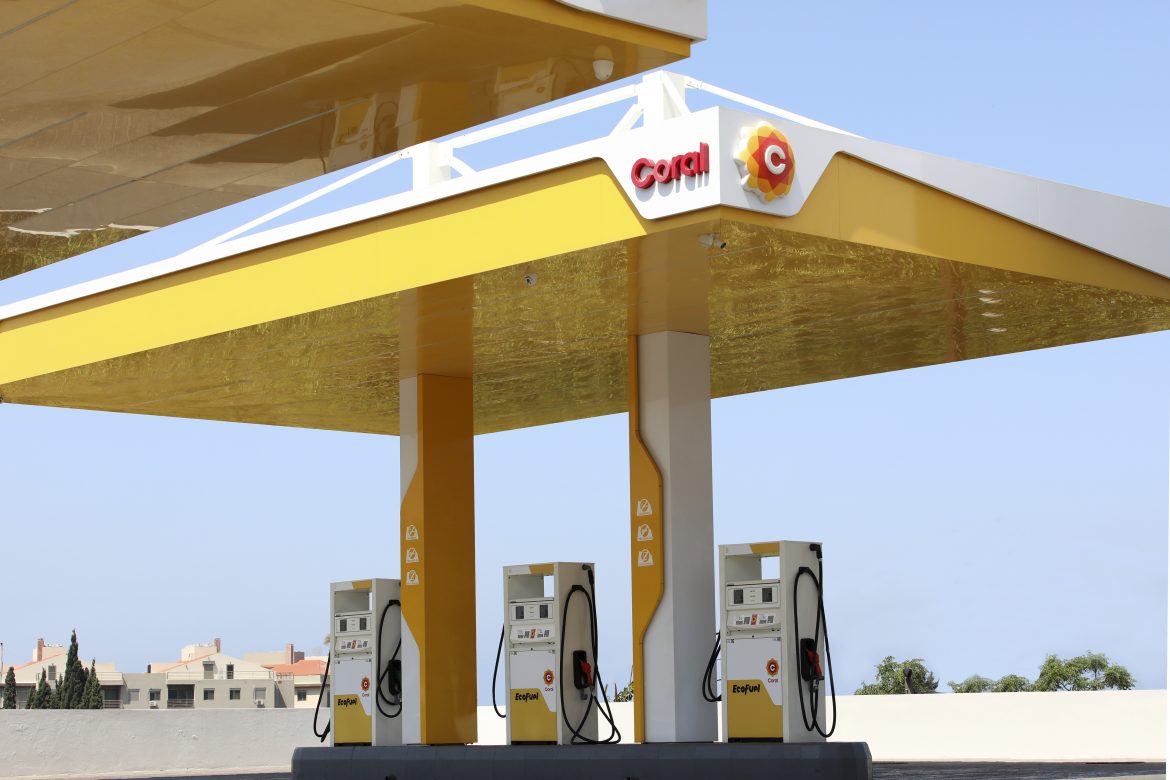
The Coral Oil Company Limited empowers education with scholarships provided for 350 students across 25 schools.

On the occasion of the 2022 end of year festive season, Coral led a corporate action consisting of providing 350 scholarships to students in a selection of 25 schools across Lebanon. The company donated in the hope of expressing its deep love to the country, especially with the acute and unprecedented crisis storming Lebanon. This social initiative is based on a corporate firm belief that there can be no greater gesture than ensuring children receive the education they deserve, and which is their absolute and most sacred right.

Coral profoundly believes that education lies at the core of every great society. As a company that is actively engaged in ensuring the wellbeing of its community, Coral actively supports students whose families have been severely affected by the unprecedented dire circumstances afflicting Lebanon, that is jeopardizing education, and consequently compromising the future of its young generations.

This initiative saw light thanks to the clear vision and dedication of the company’s founders, Oscar, Antonio, and Edgar Yamin, who decided to support education programs in Lebanon. They believe that education is not only a springboard for Lebanon’s future, but also an important and essential tool to ensure welfare of the future generations.

On this occasion, Coral chairman Mr. Oscar Yamin, indicated that “Investing in our children’s education, means investing in a brighter and safer tomorrow for the country. Coral believes that the active support of Lebanese youth today, constitutes an inevitable and obligatory path to the recovery of Lebanon.”

This thinking mirrors Coral’s corporate culture and values, the company having demonstrated over time its unwavering determination to stand by every Lebanese citizen and family.

It is worth mentioning that empowering education is part of a larger corporate social responsibility program undertaken by Coral, to support the Lebanese community. The company is also supporting the struggling medical facilities and other public service institutions to ensure medical and social support are provided to all and in all localities. Moreover, Coral constantly supports sports, emergency response organizations of all types, as well as creative, cultural, and artistic local talents. This ideology is anchored on the belief that those gestures and contributions to the Lebanese society, define the culture of today and actively shape that of our future generations. For Coral, Lebanon and the Lebanese people simply come first, and their prosperity and welfare will always be the company’s primary mission.

December 29, 2022 0 comments
0 FacebookTwitterPinterestEmail
Banking & Finance

Regional equity markets

by Executive Editors December 16, 2022
written by Executive Editors

Beirut SE  (One month)

Current year high: 1,200.49    Current year low: 705.56

During the buildup towards end of year revelry, excitement in Lebanon was largely reserved for street life and hospitality businesses. The Dubai World shock had an impact on the Beirut Stock Exchange but only by a dent of 2.5%, minor when compared with Gulf markets. Overall, the BSE was in tune with developing market trends in the Nov 18 to Dec 17 review period and the MSCI Lebanon index closed at 1,106.70 points on Dec 17, 3% lower from the start of the period. Trading volumes on the BSE contracted in December and the index moved sideways with a minimal downward bias in the second and third weeks of the month as investors were not seen to make major moves. Stocks of Lebanon’s major banks ended the review period in positive territory. The two share classes of real estate company Solidere closed near $24.50 on Dec 17, down about 5% from Nov 18 but up more than 45% when compared with the start of 2009.

Amman SE  (One month)

Current year high: 2,569.53    Current year low: 2,968.77

The general index of the Amman Stock Exchange closed at 2,598.23 points on December 17, representing a gain of merely half a percent from Nov 18. Sector indices showed insurance and industrial ending the review period better than the general index; the insurance sub-index climbed from Dec 8 and closed the Dec 17 session more than 9 percentage points above the general index. The industrial index had a low point on Dec 1 but closed the Dec 17 session 3.3% higher over the start of the review period. In the banking sector, the Dubai World experience stirred up concerns which affected Arab Bank with a 6.4% share price drop on Dec 2 but reassurances over the bank’s limited exposure to Dubai’s financing problems helped the ASE’s market cap leader. Arab Bank ended the review period 0.4% lower. Market volatility on the ASE was moderate at 13%.

Abu Dhabi SM  (One month)

Current year high: 3,239.74    Current year low: 2,136.64

The Abu Dhabi Securities Exchange had no place to hide and initially nowhere to go but down after the Dubai World bombshell. From Nov 25 to Dec 9, the ADX general index lost 15% before restoration of some optimism lifted the index to a close of 2,774.27 points on Dec 17, moderating the drop to 5.95% when compared with Nov 18. The insurance index was the only ADX sub-index to barely budge during the entire period and even achieve a modest gain. All other sectors were dragged lower; real estate and construction suffered the most and ended the period 11.3% and 17% down. Losers, representing all sectors, outnumbered gainers by a wide margin. Volatility exceeded 56%. National Bank of Fujairah was the best-performing stock, up 19.6% while Arkan Building Materials dropped the most, down 27.5%.

Dubai FM  (One month)

Current year high: 2,373.37    Current year low: 1,433.14

The graph of the Dubai Financial Market’s general index for the Nov 18 to Dec 17 period looks like a gorge from the fantasy movie Van Helsing, with a cut so steep and deep that V-shaped is an inadequate descriptor. The operative number for the period is 75% volatility and despite massive rebounds of key stocks after Dec 9, only a handful of listed companies actually passed through the horrific period without exuding unnecessary pain. By Dec 17, the sector index losses had moderated to the mid teens and the DFM index closed 12.48% down when compared with Nov 18. Dec 17 sickbay of stocks more than 15% lower than a month earlier included Arabtec Holding and Emirates NBD. Emaar Properties was a case study in partial share price recovery under direct impact of Dubai World while Air Arabia was an example for a scrip with intense trade volumes and volatility outside of the properties and developers loop.  

Kuwait SE  (One month)

Current year high: 8,438.80    Current year low: 6,391.50

The Kuwait Stock Exchange’s benchmark general index had one of its better phases for 2009 in the 30-day period from November 18, closing the period at 7104.30 on Dec 17 with a gain that was half a percentage point shy of 6%. The food, investments, and services sub-indices were the visible outperformers when compared with the general index while the industrial index, which showed the strongest dip south of all sectors in early December, regained its footing to close the period with a black zero. Volatility was notable but not excessive, at 16.8%. The vast majority of stocks ended the period higher. Among them, market cap leader Zain appreciated 15.2% to escape from a seasonal low but logistics firm Agility, which has been under pressure since early November, moved lower by 16% in the review period. August 2009-listed Thuraya Real Estate dropped 25.6% and financial services company National International Holding dived 30.5%.

Saudi Arabia SE  (One month)

Current year high: 6,568.47    Current year low: 4,130.01

Market inactivity on the Saudi Stock Exchange due to the religious observances of Eid al-Adha in the first part of the review period was followed by downward pressures in early December. These pressures, however, appeared to abate somewhat as the TASI’s close at 6,153.85 points on Dec 17 was 2.61% down when compared with Nov 18. Sector indices for the most part did not stray far from the general trend and all sectors ended the period in negative territory, with the spillover from the Dubai market named as broad impact factor. The two sectors that underperformed the market were hotels and tourism as well as insurance. The latter dropped sharply between Dec 6 and 13 in a slide that was not so much seen as linked to the Dubai World financing problem as it was attributed to a combination of profit taking and response to local insurers’ exposure to costs from the Nov 25 flood in Jeddah that caused extensive damages to properties.

Muscat SM  (One month)

Current year high: 6,762.94    Current year low: 4,223.63

In an overall downward sloping trajectory, the Muscat Securities Market’s response to the Dubai World panic occurred as a drop of about 330 points and immediate recovery of 320 points between Dec 7 and 14. Outside of this interruption, the trend was a 2.27% drop over 17 trading days between Nov 18 and Dec 20, when the MSM index closed at 6,243.49 points. Volatility was clocked at 22.9%, according to Zawya. The banking sector index underperformed the other sectors both during the intra-month trough and for the whole review period, closing 6.5% lower on Dec 20 when compared with Nov 18. In individual stocks, poultry was on the side of seasonal lows while confectionary seemed inspired, at least on paper as Sohar Poultry Company was reported by Zawya to be the period’s worst loser (minus 77%) and Oman Sweets Company, the strongest gainer (plus 120%). Both stocks appear to be very rarely traded. 

Bahrain SE  (One month)

Current year high: 1,851.30    Current year low: 1,413.81

The Bahrain Stock Exchange, somewhat predictably as it was the GCC exchange with the weakest index performance in 2009, showed less profit taking and panic symptoms than its neighbors during the review period and closed at 1,447.57 points on Dec 15, a third of a percent up when compared with Nov 18. Banking shares were the clear losers, down 6.1%, whereas the investment sector advanced 7.3% and was the best performer on the BSE in the short review period, something of a market irony given that this sector was the biggest loser on the Bahraini exchange for the year to date. At the bottom of performance charts for the review period, Gulf Finance House gave up 16.2%, other share price losers were Al Salam Bank, Nass Corporation, Ahli United Bank, and National Bank of Bahrain, losing from 10.3% to 6.1%.Al Baraka Banking Group topped the gainers for the period with a 64.7% climb, recovery-style after price weakening in October and November.  

Doha SM  (One month)

Current year high: 7,624.45    Current year low: 4,230.19

The Qatar Exchange experienced blunt force impact of the Dubai World crisis directly after the Eid al-Adha holidays. The general index, which took an 8.3% hit on Dec 1, recouped losses by Dec 7 but then saw further fluctuations to close the review period with a marginal gain of 0.6%. All sector indices stayed range bound with the general index but a slide at the end of the review period relegated the insurance sector to the role of underperformer and only sector to close Dec 16 in negative territory when compared with Nov 17. Insurance similarly was the weakest sector on the DSM for the year-to-date period, recording a 10.7% drop from the start of January. Volatility reached almost 40% in the review period and losing stocks outnumbered gainers but the net gains and losses were less pronounced than on neighboring bourses. Ezdan Real Estate was the top gainer at 8.6% while the biggest losses were recorded by Qatar General Insurance and Reinsurance.

Tunis SE  (One month)

Current year high: 4,244.46    Current year low: 2,887.25

The Tunisian Stock Exchange dipped lower in early December but otherwise appeared unperturbed by the worries that shook investors in the Gulf region. Closing at 4,215.37 points on Dec 16, the Tunindex added 2.7% from its close on Nov 18 and this gain took the market’s increase beyond 46% from the start of 2009. Market heavyweights Poulina Group Holding and Banque de Tunisie edged up by 2% and 4%, respectively, in the review period. Cement manufacturer Ciments de Bizerte, a recent market entrant, dropped 9.9% at the low end of the performance charts. Best gainer for the period was SIAME, a manufacturer of electrical gear. Its share price advanced 71.5%.  

Casablanca SE  (One month)

Current year high: 12,224.21  Current year low: 9,405.86

The Casablanca Stock Exchange stumbled visibly in the first week of December. The general index dropped 330 points between Nov 19 and Dec 4, dipping below the 10,000 points line for the first time since late January. The market, however, rebounded from this seasonal low by presumed Dubai contagion and closed at 10,386.67 points on Dec 17, representing a marginal gain of 0.5% from the start of the review period. Measured against the start of 2009, the Moroccan exchange is down 5%. Market cap leader Maroc Telecom recorded a minimal share price drop in the review period (down 0.2%) whereas largest bank and second strongest scrip, Attijariwafa Bank, lost 5.6%. The number three and four by market cap, lender Banque Marocaine du Commerce Exterieur and real estate firm CGI, contrasted this by being among the top gainers, advancing 18% and 13.6%, respectively.

Egypt CASE (One month)

Current year high: 7,249.55    Current year low: 3,389.31

The Egyptian Stock Exchange’s EGX 30 index added 3.3% in the 30-day review period and closed at 6,477.86 points on Dec 17. The impact of the Dubai World crisis on the EGX was sharp and cut a 500-point gash into the index graph between Nov 25 and Dec 3, resulting in 45% volatility in the review period. However, the Egyptian exchange diverged from most other regional markets by gaining in both the review period and for the year-to-date, where the Egyptian bourse’s gain exceeded 40% and was second only to the Tunisian exchange. This confirmed in the final weeks of 2009 that the EGX was the region’s only large stock market to perform better than the MSCI world index‘s 30% year-to-date gain although shooting up not quite as high as the Emerging Markets Index with its 72% rise to Dec 15. Notable gainers on the EGX in the review period were telecoms scrip Mobinil, up 25.2%, and Orascom Construction Industries, up 17.1%. 

December 16, 2022 0 comments
0 FacebookTwitterPinterestEmail
Special Report

Food Infrastructure and Innovation

by Thomas Schellen & Nicolas Rouhanna December 8, 2022
written by Thomas Schellen & Nicolas Rouhanna

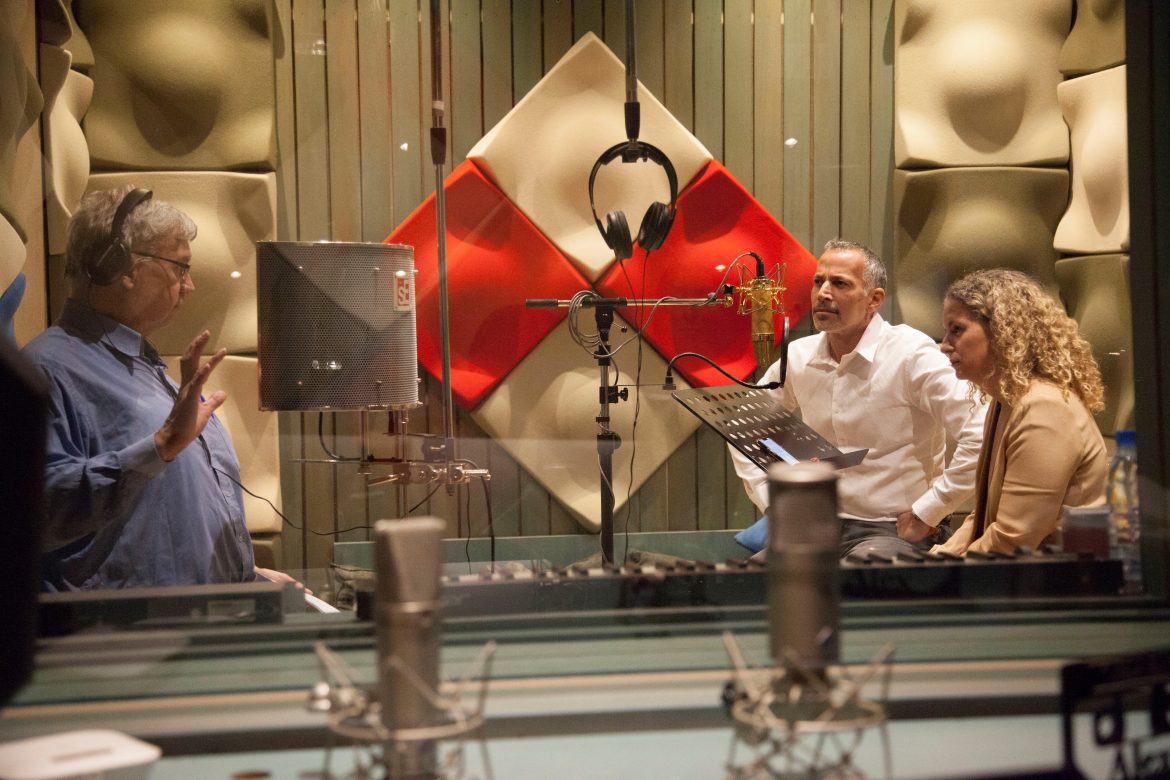
Access to finance is a major barrier to the development of infrastructure for the agriculture sector. Much needed Investment in general and agro-specific hard infrastructure along with soft infrastructure is vital for the sector to flourish.

Executive talks to Mrs. Michelle Mouracade the fund advisor at Alfanar and Mr. Nicolas Rouhana the Chairman & CEO of IM capital about the state of Lebanon’s food sector, and how this crucial part of soft infrastructure can be restored to full power. 

The podcast is sponsored by the Dutch Ministry of Foreign Affairs.

December 8, 2022 0 comments
0 FacebookTwitterPinterestEmail
Special Report

Agricultural entrepreneurship

by Thomas Schellen, Angie Meskawi & Lara ElKhoury December 7, 2022
written by Thomas Schellen, Angie Meskawi & Lara ElKhoury

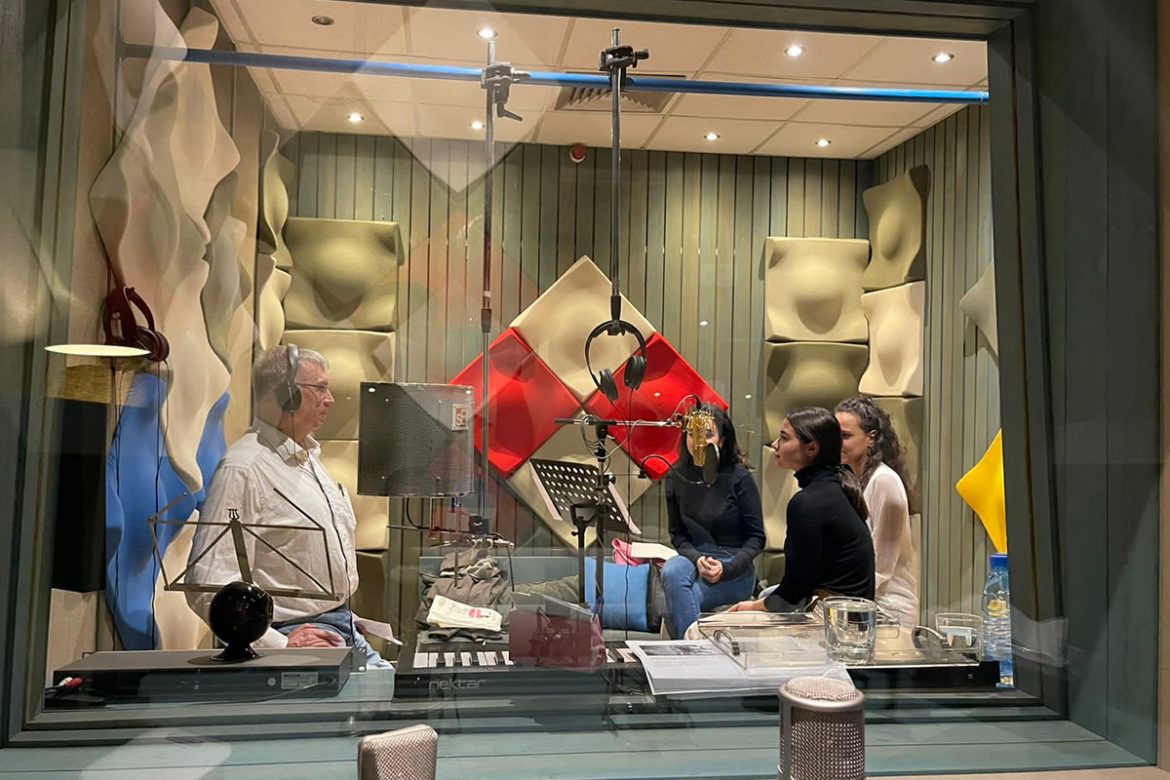
The importance of women-led startups is a no-brainer for entrepreneurial growth in every sector.

Executive talks to Mrs. Lara ElKhoury a Program manager at Berytech, Mrs. Angie Meskawi the founder of cheeserie and Mrs. Sarah Joseph the founder of Olive bio about the barriers and wins of female founders in prominent agricultural niches, and the contribution of agro-entrepreneurial startups to the economy.

December 7, 2022 0 comments
0 FacebookTwitterPinterestEmail
EventsExecutive newsExecutive Roundtables

Roundtable on agro-industry and agro-entrepreneurship

by Executive Editors December 6, 2022
written by Executive Editors

A discussion with experts from the agro-industry and agro-entrepreneurship fields organized by Executive Magazine and in partnership with Konrad-Adenauer-Stiftung. The roundtable explored development and acceleration start-up ventures, and heard the experiences of entreprenuers working in the sector.

December 6, 2022 0 comments
0 FacebookTwitterPinterestEmail
EventsExecutive newsExecutive Roundtables

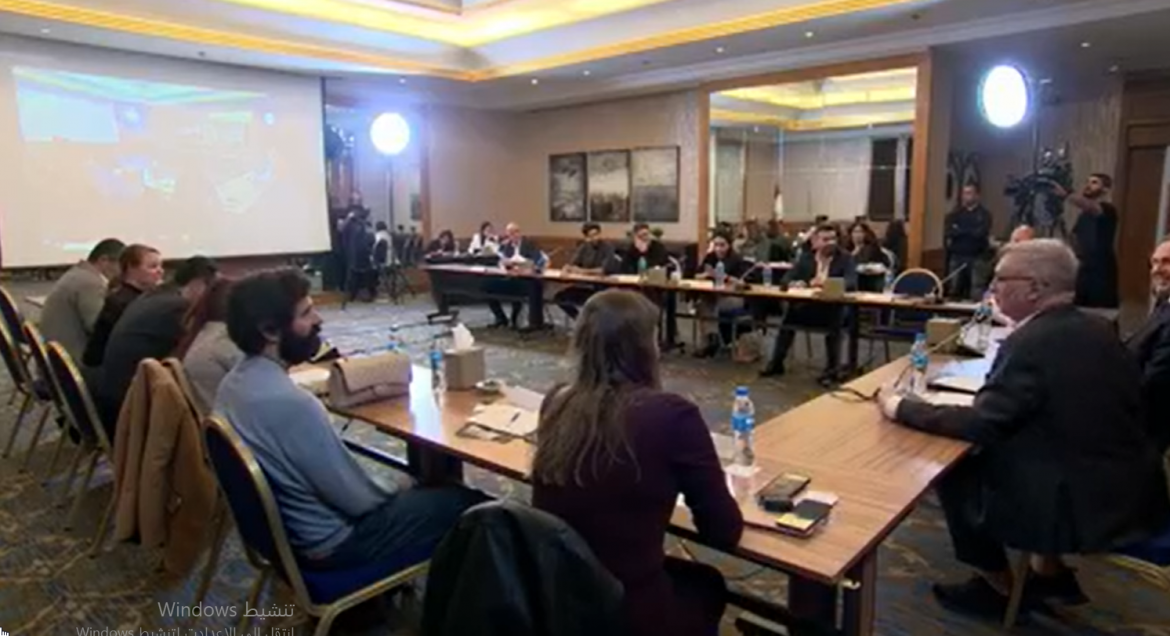
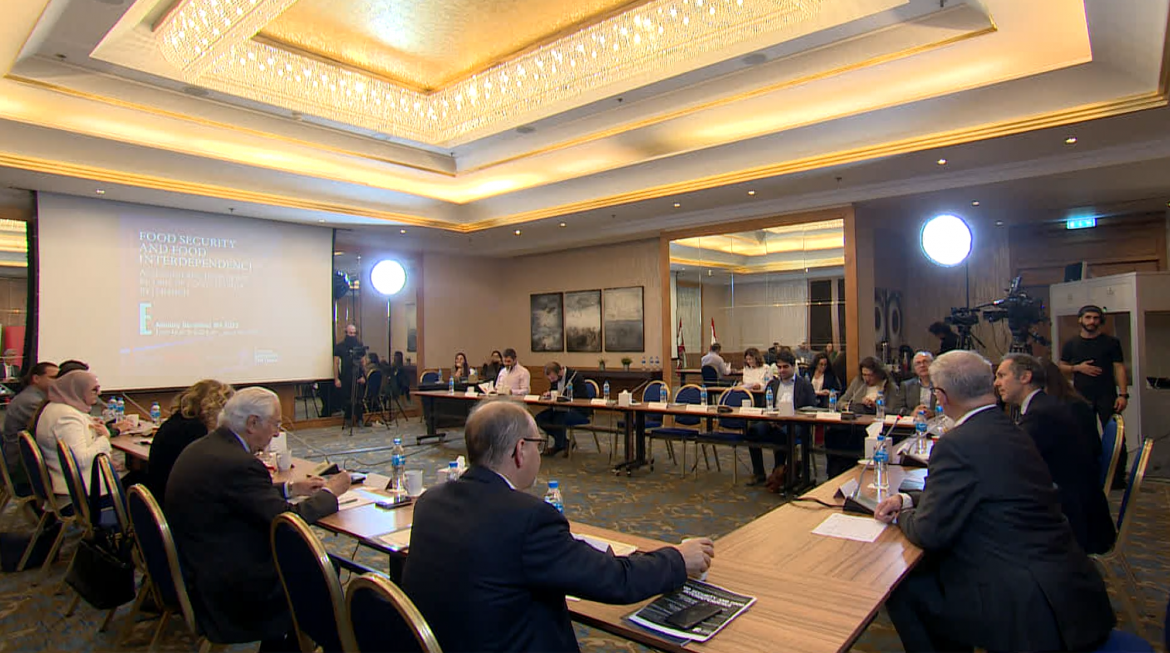
Roundtable on food sector

by Executive Editors December 5, 2022
written by Executive Editors

A discussion with experts from the food sector organized by Executive Magazine and in partnership with Konrad-Adenauer-Stiftung. The roundtable focused on the current state of food security in Lebanon and what improvements can be made concerning the country’s path to profitable food interdependence through agricultural and agro-industrial exports.

December 5, 2022 0 comments
0 FacebookTwitterPinterestEmail
Last Word

Cholera spread: a symptom of structural failures

by Department of Health Promotion & Community Health December 2, 2022
written by Department of Health Promotion & Community Health

Lebanon has been cholera-free since 1993. On October 6, 2022, that changed when the Ministry of Public Health reported two laboratory-confirmed cholera cases in the country’s northern region. Since then, the numbers of cases and deaths have increased at an alarming rate. The current situation according to the Lebanese Ministry of Public Health website on November 21 shows 20 cumulative deaths and 4,008 suspected and confirmed cases, 25 percent of which are among individuals 4 years of age and below. Cholera outbreaks are also reported in other countries in the region, including Syria and Iraq. Cholera is an acute rapidly dehydrating diarrheal infection caused by the ingestion of food or water contaminated with the bacterium Vibrio cholerae. It is strongly connected to inadequate sanitation.

Lebanon’s response to the outbreak so far has included launching the government’s emergency appeal requesting support from the international community to procure vaccines, medicines, and water test kits. The World Health Organization (WHO) secured 600,000 doses of cholera vaccine from the International Coordination Group to vaccinate all refugees and host communities aged 1 year and above. On a local level, residents received information through various media outlets on how to wash hands and mixed messages about how much chlorine to add to their water tanks. 

Unfortunately, this response has been far from addressing the root causes of the epidemic. Without addressing the underlying causes of the spread of cholera – old and dilapidated water and sanitation systems, and water privatization – behavioral interventions will have limited, if any impact in stopping the epidemic. By focusing on individual-level solutions, people and communities with limited resources are made responsible for managing and controlling the outbreak, instead of state institutions and international organizations. Overcrowding, and unsanitary living conditions in jails have long been root determinants of different types of infectious outbreaks globally since the 1800s, as have refugee camps and informal settlements. 

Decades of dirty water

For years, researchers have been raising the alarm about the poor water quality in Lebanon, especially in refugee settlements and impoverished areas. The country lacks a national wastewater strategy, leaving it up to local municipalities with limited resources and know-how. At the same time, rivers and lakes have been dumping grounds for industries for years. In 2021, UNICEF cautioned based on a focused study that the water situation in Lebanon is on the brink of collapse. Despite the large number of studies and consultations commissioned to resolve the water pollution in rivers, lakes and water bodies in Lebanon, very little has been achieved.

In the context of an economic crisis, political deadlock, and dwindling humanitarian funding, it is not surprising that access to clean water and sanitary services has deteriorated for a considerable portion of the population. The public sector water provides about three million people with water but considering the energy crisis, a large number of the population and one million refugees rely on alternative sources like water trucks, or private sources. This has created a fertile ground for waterborne diarrheal diseases to emerge, given that a major source of contamination is microbiological. This includes cholera. Cholera epidemics are signs of structural deficiencies; historically, cholera is an outcome of failed systems and services, which is a violation of the human right to safe water and sanitary conditions.

 To mitigate cholera, we do not need innovation. Instead, we need to learn from history – that the sanitation movement was critical to improving public health – and to go back to basics. No human being, whether citizen or refugee, should be deprived of the right to clean water and a healthy environment. Promoting individual hygiene behavior change – the only public health action undertaken by the state at this point while it waited for adequate number of vaccines to arrive – will only narrowly contribute to limiting the spread of transmission. Unless the government and high-level decision-makers actively work towards urgent waste water management, upgrading the public water supplies in Lebanon, the cholera outbreak will not be contained.

However, there is nothing so far in the government discourse which is showing any commitment to work on the systemic failings. We call on the government, municipalities, and United Nations’ agencies to direct urgent resources to water treatment plants and utilize the expertise already available in academic institutions to provide environmentally sound solutions, and prevent future outbreaks of other types of waterborne diseases. Improved water supply interventions alongside a focused cholera vaccination program are proven to be more likely to yield favorable public health outcomes than just a vaccination program alone.

December 2, 2022 0 comments
0 FacebookTwitterPinterestEmail
  • 1
  • …
  • 19
  • 20
  • 21
  • 22
  • 23
  • …
  • 707

Latest Cover

About us

Since its first edition emerged on the newsstands in 1999, Executive Magazine has been dedicated to providing its readers with the most up-to-date local and regional business news. Executive is a monthly business magazine that offers readers in-depth analyses on the Lebanese world of commerce, covering all the major sectors – from banking, finance, and insurance to technology, tourism, hospitality, media, and retail.

  • Donate
  • Our Purpose
  • Contact Us

Sign up for our newsletter

    • Facebook
    • Twitter
    • Instagram
    • Linkedin
    • Youtube
    Executive Magazine
    • ISSUES
      • Current Issue
      • Past issues
    • BUSINESS
    • ECONOMICS & POLICY
    • OPINION
    • SPECIAL REPORTS
    • EXECUTIVE TALKS
    • MOVEMENTS
      • Change the image
      • Cannes lions
      • Transparency & accountability
      • ECONOMIC ROADMAP
      • Say No to Corruption
      • The Lebanon media development initiative
      • LPSN Policy Asks
      • Advocating the preservation of deposits
    • JOIN US
      • Join our movement
      • Attend our events
      • Receive updates
      • Connect with us
    • DONATE