• Donate
  • Our Purpose
  • Contact Us
Executive Magazine
  • ISSUES
    • Current Issue
    • Past issues
  • BUSINESS
  • ECONOMICS & POLICY
  • OPINION
  • SPECIAL REPORTS
  • EXECUTIVE TALKS
  • MOVEMENTS
    • Change the image
    • Cannes lions
    • Transparency & accountability
    • ECONOMIC ROADMAP
    • Say No to Corruption
    • The Lebanon media development initiative
    • LPSN Policy Asks
    • Advocating the preservation of deposits
  • JOIN US
    • Join our movement
    • Attend our events
    • Receive updates
    • Connect with us
  • DONATE
AdvertisingSpecial Report

Tarek Daouk

by Thomas Schellen March 24, 2013
written by Thomas Schellen

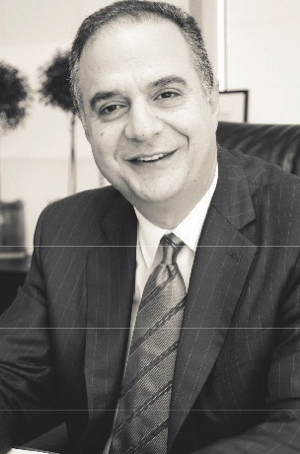
Starcom MediaVest Group (SMG) Middle East and North Africa is a regional bastion of media planning and research and part of the Paris-based Publicis Group. In 2012, it was regional market share leader in provision of media services according to Ipsos Stat.  Executive tracked down MENA Managing Director Tarek Daouk at SMG’s regional head office in Dubai Media City.   

  • One of the business hopes in 2012 was the digital sphere. Did growth of digital fulfill the aspirations of last year?

Yes, in terms of spend and revenue it was growing very fast. The biggest challenge that we have is either finding talent or readjusting our existing talents to handle the digital part.

How about the market’s receptiveness for digital offerings?

We are now at a stage where we don’t have to sell. Demand is coming; the issue is adapting to it and servicing it properly. 

  • You are part of a generation of more institutional managers in the regional media industry. What is your generation’s main contribution to developing the advertising and communications media ecosphere in the Middle East and North Africa?

Our key contribution is modernization. We are the middle generation that saw life before and after the [arrival of the] Internet. We are the bridge between the founders’ generation that established the industry and brought it to scale, and the generation that lives only since the Internet existed. This, although it differs from company to company, is also the generation that will hopefully see the 100 percent mergers of the family businesses into the multinationals.

  • So you are expecting scenarios to cease of multinational majorities and local minority shareholdings in MENA advertising groups?

Yes, at a moment in time when it fits the shareholders. For us [as SMG] we always had 100 percent corporate ownership. I am talking about my generation, where there are people like me in every single company, and some of them are probably the children of the founders, who are playing the same game of how to modernize and how to prepare for the day when they are 100 percent owned.

  • As the alignment between SMG and the global corporation has been progressing, has there also been an influx of Lebanese into the global organization?

Yes, we have several cases where some of us went to global roles. Our previous CEO, Filip Jabbour, is now the global head for business development for SMG worldwide. Filip moved from Dubai to take a global role and he is now based in Chicago. One of the reasons for this is that the emerging markets are the hope for the global companies. Emerging markets, and MENA playing a significant role among them, get attention. And if there is attention to the business, there will be attention to the people, and people who succeed will get global cases.

  • Do you expect that regional companies, when talking about clients, might become more active in communicating their brands and products from the region into global markets? Is it conceivable that a regional company could, for example, buy a spot in the Super Bowl in any of the coming years?

They don’t have to buy in the Super Bowl but some companies are expanding. Emirates [Airline] is a perfect example. It reflects the United Arab Emirates culture but it is a global company and it invests in markets that are important for it across the world.

  • Do you see a possibility for this outreach of institutions and state-affiliate companies to broaden into more industries?

The retail sector, specifically the entertainment sector in Dubai. The malls might start looking into this because you are seeing a significant influx                           of tourists.

  • What main difference do you see between the young Lebanese who enter into the regional ad industry today and your generation?

Among the millennial Lebanese who come into the regional ad industry today, I see more of them choosing not to enroll in big corporations and overall, a greater desire to do their own business. The ecosystem today is more favorable to entrepreneurship. It doesn’t mean all people are going that way, but the desire for entrepreneurship is much bigger than in my generation. I also think it is a natural trend in recessions that people are more determined to create their own opportunities.
March 24, 2013 0 comments
0 FacebookTwitterPinterestEmail
AdvertisingSpecial Report

Raja Trad

by Maya Sioufi March 24, 2013
written by Maya Sioufi

Raja Trad is one of the most distinguished executives in the region’s advertising industry, with more than 30 years of experience at American advertising agency Leo Burnett in the Middle East, the head of the Middle East for Publicis since 1991 and chief executive of Leo Burnett MENA since 2000. In Lebanon to attend the MENA Cristal Festival, Trad sat with Executive to discuss the state of the ad industry, the competition, the challenges and the trends going forward.

  • What is the advertising industry about today?

For me today, communication is about a surround system. It is creativity that will transform human behavior. It will connect with the heart, soul and mind of people. In my opinion, it has to be insightful [with respect to the] local culture, but even if it is not local, it doesn’t mean international awards won’t recognize it.

Advertising today is not what it used to be before. Clients expect you to do campaigns that will meet their objectives and the briefs they gave you. Also, we cannot ignore the power of social media. We realized things are changing and the whole media scene is evolving and we are preparing ourselves. We have to do what is right for our client.

  • What are the biggest challenges when it comes to the ad industry in the region?

One of the biggest challenges in the region is the lack of reliable research and data. In my opinion, it is getting better but we are not there yet. [Another challenge is] to be able to survive in these difficult times as clients want more and more, and want to pay less. It’s a challenge for ad agencies as quality comes at a price. We try to inform our clients that unless you recognize and put a price behind quality we are going to suffer as an industry. It is part of a global trend. What makes it more acute over here is the situation we are living in, it has created a sense of nervousness and some clients are in the mindset of wait and see what will happen in the region [before investing       in advertising]. 

  • How do you expect the advertising industry to perform this year?

For 2013, if anyone tells you it is visible, you have to challenge him or her. We are looking at 2013 in pieces and reviewing our forecast on a monthly basis. We hope 2013 will be a better year but I am not sure.

  • What will be the major trend in the advertising industry this year?

Mobile is going to be king, in my opinion. At the end of the day, we talk about screens and this screen is with us wherever we are, wherever we go. All the clients in the region are demanding it as well. If someone is not [offering campaigns on mobile] today, they are falling behind.

  • How are the smaller advertising agencies affecting competition?

Quality will prevail. There is room for everyone. The client has to recognize that he has to pay for the service he is getting and the creative product he is getting. At the end of the day, it is the clients’ call. In my opinion, there is room for everyone.

  • Why are Lebanese so prominent in this industry?

In this region, the ad industry started in Lebanon and traveled from Lebanon to the Gulf. Lebanese went to the Gulf, started their own agencies and prevailed because they took the industry there. Then came the multinational agencies which went into partnerships [with the local agencies], kept leaderships in place and that’s why you see Lebanese in key positions in the advertising industry. Now it is not only Lebanese though. You have recognized credible leaders of different nationalities. In Leo Burnett Dubai, there are 38 nationalities in one building. Things are changing.

  • What campaign are you proudest of so far?

I can’t choose one. We did the campaign for [Lebanese winemaker] Ksara now in Lebanon, and McDonalds in Dubai that was outstanding and recognized in many award shows. There is also [the campaign for] Fox Movies. It would be difficult to choose.

  • Where do you see yourself in five years?

Still challenging myself to keep walking, as there are no finish lines in life.

March 24, 2013 0 comments
0 FacebookTwitterPinterestEmail
Comment

Weaving the silk pipeline

by Riad Al-Khouri March 24, 2013
written by Riad Al-Khouri

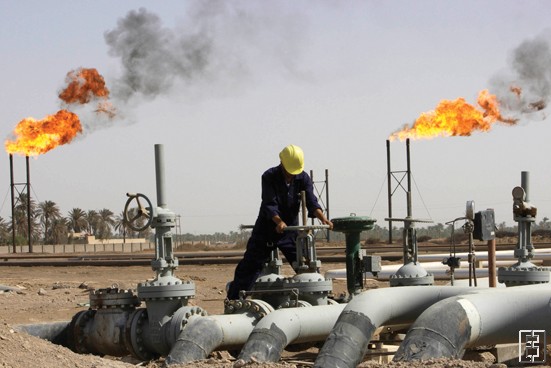
Since the American engagement in Iraq was downsized, other countries have continued to gain higher profiles there, and Iraq’s economic allegiances — and its resources — are being wooed by powers whose interests are in competition with those of the United States. Nothing demonstrates this change more dramatically than the state-owned China National Petroleum Corp (CNPC) acquisition of US oil giant ExxonMobil’s position in the West Qurna Phase 1 oilfield for $50 billion, one of the largest such energy deals ever made.

Beijing had become a big player in Iraq’s oil sector even before this transaction was announced in early February. CNPC, at the beginning of 2013, was jointly operating three fields producing 1.4 million barrels per day (b/d), more than half the country’s output. However, acquiring the new stake means that CNPC alone will soon account for 50 percent of Iraq’s crude production.

Beijing’s takeover of the Exxon concession came after a dispute between the Iraqi central government in Baghdad and the US oil company over its attempt to operate in both Kurdistan and the rest of Iraq. Already involved in the south of the country, Exxon was the first big oil company to sign an agreement with the autonomous Kurdistan Regional Government in Erbil, even after Baghdad had told the US giant that it couldn’t work with the Kurds and with the rest of Iraq at the      same time.

Beijing’s success in Iraq is partly based on its lower costs, with Chinese managers and engineers typically earning only 25 percent of the salaries paid by Western companies. Since Baghdad is giving foreign operators as little as a couple of dollars per barrel of crude produced, some Western firms like Chevron and Exxon are turning to the Kurds, who offer more lucrative production-sharing agreements.

Iraq’s output of crude is set to rise to more than 8 million b/d by 2030, 80 percent of which may go to China. To facilitate exporting Iraqi oil, the Chinese are engaged in various forms of infrastructure development, including pipelines. Regarding the latter, the China Petroleum Pipeline Company is reported to be favored to win a $650 million contract to build a pipeline linking Iraq’s southern oil fields to coastal storage depots. This new line with a wider diameter pipe will replace the existing outdated one, easing transport constriction and expanding oil export capacity. The new pipeline should be operational in early 2014, facilitating a planned increase in output in the targeted area from the current 230,000 b/d to around 400,000 b/d.

Nor are the Chinese the only Far Eastern players coming up in Iraq: the South Koreans are also busy with infrastructure and other work in the country. Among many other projects, South Korea is constructing a housing mega-complex of 100,000 units. And LS Industrial Systems, a leading South Korean manufacturer of electric components, won a $67 million contract to build a power distribution control center for the Iraqi government. Under the deal with Iraq’s Ministry of Electricity, the company will also later construct seven distribution control centers across the country. With this contract, LS Industrial has logged more than $106 million of new business in Iraq during the first few weeks of 2013.

Look for more such Far Eastern dynamism in Iraq this year and beyond, as the Chinese and others continue stepping into the Iraqi market with even greater force. On one level, this will be a purely economic phenomenon, simply meaning that more business is being done between Iraq and East Asia. The implications in geostrategic terms, however, could be even bigger, going beyond Iraq’s borders to impact other parts of the region. With Washington continuing to lose its appetite for involvement in the Middle East, a stronger Chinese position in the region could, for example, affect Syria and Iran, helping both to face Western pressure. Whatever the outcome of such a complex mix of business and politics in Iraq and regionally might be, the coming year is likely to be one of even greater flux than the one just past.

March 24, 2013 0 comments
0 FacebookTwitterPinterestEmail
Economics & PolicyLebanon's oil and gas

Mapping the petroleum administration

by Jeremy Arbid March 23, 2013
written by Jeremy Arbid

Lebanon’s progress to cultivate wealth from its offshore oil and gas resources has left us with more questions than answers. While the country will not extract any resources for at least five years, the agreements being negotiated in the next 12 months will determine whether Lebanon gets a good deal or not.

Over the course of six days, seven leading thinkers will discuss different aspects of the resources — from avoiding environmental destruction to how to spend the new wealth — each with the aim of helping provoke awareness about what is going on in this crucial period.

For our final segment, Jeremy Arbid discusses how the all-important Petroleum Administration was formed and the policy actors involved.

See also: Lebanon's Petroleum Administration makes a positive start

Avoiding a regional war over hydrocarbons

Transparency is not enough

Plan ahead to protect the environment

Will Lebanon's oil be Christian or Muslim?


Note: This article was written before the resignation of Lebanon's Prime Minister Najib Mikati on Friday. Though Mikati’s resignation will introduce new dynamics to the deal making coalition, it does not change how the interactions of key individuals have acted upon the petroleum file. Until a new Prime Minister is appointed this cabinet will stay on in a caretaker function. Once the Parliamentary elections are held a new cabinet will be formed with the next Minister of Energy and Water, to whom the Petroleum Administration reports. The makeup of the Petroleum Administration will not change because the members have been appointed to six-year terms, but the political influence exerted upon their work will be modified.


A key aspect of policymaking is identifying and defining a problem. In this case Lebanon's problem is how to exploit potential offshore resources and structure the administration of the petroleum sector in a way that reassures investors but, more importantly, satisfies the primary actors’ interests.

When a problem is defined, coalitions form to vie for the attention of public officials in decision-making positions. However in Lebanon, since the end of the civil war in 1990, the government has lacked the capacity for developing public policy. Rather, policies are made more on the basis of political deals than on planning and policy development.

A long decline

The collapse of the state during the civil war replaced the formal power centers within government institutions and put them with the de facto militias. Militia leaders, in an effort to command resources and deprive their rivals, began importing petroleum products at various points of entry. As examples, the Lebanese Forces controlled the port at Debaye, Amal held the oil refinery at Zahrani, and the Progressive Socialist Party improvised ports at Jieh and Khaldeh.

As such the number of companies importing petroleum products rose from five before the civil war to several dozen by its end. The government of Lebanon essentially legalized the importation of petroleum from a state monopoly to an oligarchy controlled by former warlords. In this way, the militias’ efforts of consolidating control over petroleum imports (but also other sectors of the economy) gained a sense of legitimacy and integrity, and returned predictability back to the economic system.  

The 1989 Taif agreements offered an opportunity to reinstate state sovereignty, but instead the redistribution of power was entrenched. Nowadays there are formal government entities but the actual power is not therein. There is some overlap, but where the real policy action is taking place, where the real policy actors are, is in some sort of a coalition. The interactions in creating policies or influencing policy direction is really an expression of the interests of the group rather than a political, factional, sectarian, confessional, or even ideological function.

By taking the vital Petroleum Administration (PA) as a unit of analysis, one can visualize how these actors are operating within the burgeoning petroleum sector. With a firm understanding of the Lebanese political environment, one can conclude a certain politicization of all government agencies, not limited to the PA. This politicization is, on one hand, attributed to fulfilling religious sect requirements when forming the entity, as well as placing the appropriately skilled individual for each position.

On the other hand, there is coercion amongst political actors in divvying control over appointed officials, i.e. which political entity an official is ultimately serving. The six positions on the Petroleum Administration are designated by sect – Shi’a, Sunni, Druze, Maronite, Greek Orthodox, Greek Catholic. The leading political parties and actors will certainly have had a role in determining their sects representatives. As such, the map below shows a rough understanding of how the PA is influenced.

As this map shows, there are a number of actors seeking to influence the PA's decisions, both through informal and formal channels.

Who else played a role?

Donor institutions have also had significant impact on the development of the petroleum sector. Primarily, these organizations work towards building capacity through financial and technical support within ministries or other government entities in Lebanon. The most notable institutions supporting progress on the petroleum issue come from of the United Nations Development Program (UNDP) and Norway’s Oil for Development program.

UNDP assisted the Ministry for Administrative Reform in the design of a human resources system, which was later used in the selection process for appointing the Petroleum Administration positions. UNDP generally has a significant impact on government institutions in providing institutional capacity and policy support. It has an indirect presence on the Petroleum Administration with two former associates filling involved: Wissam Zahabi was a UNDP appointee in the Office of the Prime Minister providing technical advice on energy-related issues; Walid Nasser held a long career within the UN system in strategic policymaking roles.

Norway’s Oil for Development program offered an eight-week training course held in Norway on petroleum policy and the management of petroleum resources in 2007. Other capacity-building training includes courses on legislation, data management, independent resource assessment, promotion and licensing round activities.

Both Wissam Zahabi and Gaby Daaboul benefited from this 2-month program. From a very early point, these two individuals were contributing to the development of the petroleum file. Zahabi, a carryover from the Prime Minister’s office since 2003, and Daaboul, a legal advisor and closely linked to Finance Minister Mohammad Safadi, were both instrumental in drafting the Offshore Petroleum Resources Law (OPRL) n. 132, and the Petroleum Activities Regulations (PAR) as well as many of the correlating decrees.

Other institutions, such as the World Bank, International Monetary Fund, and the Delegation of the European Union have instituted programs in the past related to energy by providing capacity building grants or loans and financing for energy-related infrastructure. These donor institutions will continue to work to take oil and gas into account in order to determine where to position themselves in the donor picture.

By taking the PA as a case study, we can start to assess the influences being placed upon the body and this can help us analysize what decisions they are likely to make.

March 23, 2013 0 comments
0 FacebookTwitterPinterestEmail
Comment

Resigned to realities

by Moe Ali Nayel March 23, 2013
written by Moe Ali Nayel

Prime Minister Najib Mikati announced his resignation Friday evening, thereby dissolving the current government.

Mikati must now present a written resignation to President Michel Sleiman; according to the constitution, his resignation announced from the Serail is still considered political, and therefore must take official status, and in this case, it is expected the president will asign him to continue as a caretaker Prime Minister until the formation of a new government.

Mikati had almost resigned twice before: first over the funding for the Special Tribunal for Lebanon (STL) and again following the assassination of intelligence chief Wissam al-Hassan last October.

This time he did not bluff. The primary reason cited for the resignation was the opposition within his own government to extend the term of Internal Security Forces chief Ashraf Rifi. “It is necessary for Major General Rifi to carry on with his duties in order to protect the Internal Security Forces institution,” Mikati said in a televised address to Lebanon last night.

Rifi, apart from being a prominent security personal, enjoys a strong popular base among Sunnis in Mikati’s home town Tripoli and further across the Lebanese Sunni landscape. He also has strong Saudi political support, and is a board member of the Naif Arab University for Security Sciences — run by Saudi Interior Minister Prince Mohammed ibn Naif ibn Abdul Aziz al-Saud. If Mikati had supported his March 8 allies decision not to extend Rifi’s term, in a political sense it would have been suicide, and perhaps in a business sense as well.

Whether Rifi was the real cause or merely the trigger, Lebanon has now lost a government that emerged two years ago out of a constitutional vacuum. Mikati headed a government led by March 8 that managed to form a majority thanks to Druze leader Walid Joumblat's political switch in 2011. For the last two years that government has kept close ties to the Syrian regime.

For Mikati, a recognizable Sunni leader, this closeness to Damascus has been politically damaging, with rivals in his home town of Tripoli touting him from day one as being a puppet of a Syrian-Iranian-Hezbollah axis.

The reality was more nuanced. Mikati was keen to promote himself internationally and distance himself from Syria. He has also consistently challenged his political allies, with notable successes including reaching a deal on funding the STL. However, in recent months the pressures on the current government from Saudi and American ambassadors has been growing. The Americans have been keen on removing Hezbollah from government after  Bulgaria accused the party of a bombing which killed seven Israelis last summer in the Black Sea city of Burgas.

The fall of this government will remove the only Arab state ally of the Syrian regime. At present Damascus will be loath to see a March 14 government emerge, backed by Saudi Arabia and the US.

The Saudis want a March 14 government that will be in full support of the Syrian opposition. As such all eyes are, again, on Joumblat — if he switches allegiances again, it will allow March 14 to to form the next government.

Speaking last night, Mikati said he hoped his resignation would be "an impetus for leaders to shoulder their responsibilities" — indeed, the responsibilities he has just shed.


Moe Ali Nayel is a freelance journalist based in Beirut

March 23, 2013 0 comments
0 FacebookTwitterPinterestEmail
Economics & PolicyLebanon's oil and gas

Investing the money well

by Paul Cochrane March 22, 2013
written by Paul Cochrane

Lebanon’s progress to cultivate wealth from its offshore oil and gas resources has left us with more questions than answers. While the country will not extract any resources for at least five years, the agreements being negotiated in the next 12 months will determine whether Lebanon gets a good deal or not.

Over the course of six days, seven leading thinkers will discuss different aspects of the resources — from avoiding environmental destruction to how to spend the new wealth — each with the aim of helping provoke awareness about what is going on in this crucial period.

For our sixth segment, Paul Cochrane analyses how best Lebanon should invest the profits from oil and gas.

See also: Lebanon's Petroleum Administration makes a positive start

Avoiding a regional war over hydrocarbons

Transparency is not enough

Plan ahead to protect the environment

Will Lebanon's oil be Christian or Muslim?


If Lebanon manages to tap its offshore hydrocarbon reserves, the multi-billion dollar question is what to do with the revenues. How much is Lebanon looking to gain? Well, David Rowlands, chief executive officer of prospector British Spectrum Geo which has been carrying out seismic surveys on the country’s offshore resources, told The Times on March 4 that the value of Lebanon's oil and gas could be as much as $140 billion. Others have put it at anywhere from $40 billion to over $70 billion – much depends of course on commodity prices. With Lebanon's GDP at $40 billion, and public debt at $58.7 billion, any petrodollars are a major boon for the country's troubled finances.

In the 2010 Offshore Petroleum Resources Law, it is stipulated that Lebanon must form a sovereign wealth fund (SWF) into which the net proceeds of the government’s revenues will be invested. However, the law is deliberately unclear about how the money will be used once it is in the fund – leaving final decisions dependent on later negotiations.

Early last year, Prime Minister Najib Mikati proposed that the SWF should initially be used to reduce the public debt from 135 percent of gross domestic product (GDP) to 60 percent, but it was unclear whether he had government support for the proposal.

Given the government's less than stellar reputation in spending public money, the crony capitalism-style deals with Lebanese banks in financing the country's debt over the decades at highly lucrative interest rates, and the lack of accountability and transparency within the political process, how best to run a SWF?

Ups and downs

The primary rationale behind a SWF is to ensure the revenues generated from natural resources are appropriately utilized for the present and future generations – money put into the fund is invested, profits are generated and returns can be saved or re-invested for the future. Yet there are both positive and negative sides to SWFs.

On the plus side a SWF can handle greater investment risk than the central bank, domestic investment will boost the local economy, and strategic global investments can ensure a degree of economic and political security for a country.

On the negative side, SWFs are notoriously opaque. In the rankings of oil-based SWFs, only Norway scores well in the SWF Institute's Linaburg-Maduell Transparency Index, and notably Norway is the only democracy in the top 10 SWFs by value. As critics have pointed out, SWFs are popular with authoritarian and semi-authoritarian governments because they don't have to be transparent or accountable. Furthermore, oil and gas producing countries do not necessarily become more transparent if they set up a fund, while some energy producers do not have SWFs at all, such as Iraq and Saudi Arabia.

With Lebanon ranked 128 out of 176 countries in Transparency International Corruption Perception Index 2012, with a score of 30 out of 100 (zero means highly corrupt), hopes for transparency in handling hydrocarbon revenues are dim.

The real danger is that becomes a political tool. In Lebanon's political system, whom controls what ministry and handles the finances is hotly disputed, and no parties really trust one another, so the dangers for managing the SWF are clear.

Where will money be invested domestically that does not benefit one political party, movement or region over another? And if the fund invests internationally, where and what to invest in? Say a March 8 government wants to invest in Iran. Would the March 14 movement accept that? Probably not. Imagine then, hypothetically, if March 14 unseated March 8, would investments in Iran then be transferred elsewhere, such as to Saudi Arabia.

Seeking neutrality

Perhaps a better approach would be to give Banque du Liban (BDL) – the country’s central bank – control over the SWF. The BDL has handled foreign reserves well – certainly gold, with Lebanon ranked 19th globally by the World Gold Council (WGC) this year.

But BDL, like all central banks globally, is also not known for its transparency. Additionally, the recent appointment of Ahmad Safa as an Executive Director at the BDL's Banking Control Commission raises concerns, as he was fingered by the United States Treasury for his role in the money laundering scandal that took down Lebanese Canadian Bank in 2011.

Perhaps the best initial strategy would be to pay off the debt, and invest heavily – possibly through public-private partnerships for added transparency – in the country's dilapidated infrastructure and institutions. Only once that money is spent would it be truly worthwhile debating how best to organize and run a SWF, and where it could invest domestically and globally.

Alternatively, another idea would be to pay off some of the debt and then use the SWF to buy more gold, which could be held partly in Beirut and elsewhere. By holding physical gold the country would be on a solid foundation in terms of reserves and, if needed, to go to the markets for financing, while in the local political context this would arguably reduce the chances of misuse of funds.

Furthermore, in a period of quantitative easing with the US Federal Reserve printing money – some $1 trillion is to be added to the Fed's balance sheet per year, according to Forbes – holding gold is a way to hedge against any devaluation in the world's reserve currency, the greenback, which is crucial for Lebanon, given two-thirds of all bank deposits are held in US dollars and the Lira pegged to the dollar.

Additionally, there has been a growing move in recent years by governments (the US excluded) to buy gold as a hedge against inflation and currency devaluation, with official holds surging from $2 trillion in 2000 to $12 trillion in 2012, according to the WGC. Indeed, last year, central bank gold purchases were up 17 percent on 2011, to 534.6 tons, the highest level of buying since 1964. While buying gold would not be a panacea for what to do with hydrocarbon revenues, it should be considered as an option in these trying economic times, certainly to diversify the government's portfolio as well as to prevent political bickering.

March 22, 2013 0 comments
0 FacebookTwitterPinterestEmail
The Buzz

Lebanon’s Prime Minister resigns

by Executive Staff March 22, 2013
written by Executive Staff

Lebanon's prime minister Najib Mikati has resigned, he has announced.

Mikati has been frustrated in recent weeks at the failure of the government to agree a strategy for the ongoing public sector strikes and the failure to renew the term of Internal Security Forces (ISF) head Major General Ashraf Rifi.

Mikati said he hoped his resignation would lead to a "gateway" to a solution.

He formed a government in June 2011, having been nominated as prime minister in January that year.

Shortly after the resignation, there were reports of fresh clashes in the northern Lebanese city of Tripoli.


More from The Daily Star, the BBC, and Reuters

March 22, 2013 0 comments
0 FacebookTwitterPinterestEmail
The Buzz

Morning briefing: 22 Mar 2013

by Executive Staff March 22, 2013
written by Executive Staff

Economics and Policy

PayPal will finally launch in Lebanon and Egypt in 2013, the general manager of the online payment gateway, Elias Ghanem, announced at the ArabNet conference on Thursday.

More from The Daily Star


Lebanese air traffic controllers seeking a pay rise halted flights at Beirut's international airport for four hours on Thursday as the cabinet met to discuss a new public worker salary scale.

More from Reuters


The vice president of South Sudan has hailed investment talks with the UAE this week as productive as his country looks to become Africa's newest economic centre.

More from The National


NGOs have accused Cyprus of a host of economic wrongdoings – as a tax haven, a hub for money laundering, and of financial opacity.

More from AFP


Moody’s Investors Service Thursday downgraded Egypt’s sovereign foreign currency credit rating to Caa1 from B3, citing unsettled political conditions, and said risks of a default have increased.

More from Reuters


Companies and Business

Global hospitality group Accor has announced plans to have a total of 100 hotels in the Middle East, with 25,000 rooms for guests.

More from Arabian Business


A rapidly increasing customer base helped mobile operator Viva Kuwait make an annual profit for the first time in 2012, four years after the Saudi Telecom Co (STC) affiliate launched services.

More from Reuters

March 22, 2013 0 comments
0 FacebookTwitterPinterestEmail
Economics & PolicyLebanon's oil and gas

Will Lebanon’s oil be Christian or Muslim?

by Malek Takieddine March 21, 2013
written by Malek Takieddine

Lebanon’s progress to cultivate wealth from its offshore oil and gas resources has left us with more questions than answers. While the country will not extract any resources for at least five years, the agreements being negotiated in the next 12 months will determine whether Lebanon gets a good deal or not.

Over the course of five days, seven leading thinkers will discuss different aspects of the resources — from avoiding environmental destruction to how to spend the new wealth — each with the aim of helping provoke awareness about what is going on in this crucial period.

For our fifth segment, legal expert Malek Takieddine discusses the danger that oil and gas will allow Lebanese politicians to maintain the failing sectarian system.

See also: Lebanon’s Petroleum Administration makes a positive start

Avoiding a regional war over hydrocarbons

Transparency is not enough

Plan ahead to protect the environment


The Lebanese oil and gas resources are a greasy fetus waiting to be born. This fetus might not know its own religion yet, but as soon as it is out of the few holes in the ground, it shall be baptized, circumcised and taught how to pray five times a day.

Most likely, however, Lebanon’s oil and gas baby will not appreciate these imposed religions, and it shall declare itself the messenger of an entirely new religion. Oil temples and gas synagogues will flourish across the country. Current Lebanese warlords will declare themselves the legitimate descendants of the oil prophet and tell the story of how their morals have been crucified on the dollar sign. Lebanese worshipers would be told that the oil prophet wants them to walk barefoot towards the oil and gas temples and to sacrifice themselves, their children and what is left of their dignity at the footsteps of the dollar sign.

This may seem like a bleak future should Lebanon’s expected oil and/or gas resources be discovered and produced in commercial quantities. We can never be certain but there are few indications that things will be any better than the state of the other (few) lucrative industries/sectors in Lebanon.

Lebanese warlords and influential politicians are rushing towards promoting their business subsidiaries to gain advantages in the oil and gas industry within the framework of friendly/favorable laws and regulations that their other subsidiaries have enacted. It is fair to predict that this situation shall continue even after the award of the exploration and production agreements (EPAs) to consortiums of international oil companies and, most likely, a few Lebanese partners. What will come after the award of the EPAs are subcontracts, a lot of them.

It is good that the Lebanese law requires that the revenue of the state from the oil and gas industry shall be deposited into a sovereign wealth fund; thus separating such valuable funds from the day-to-day balance sheet of the Lebanese government. However, even if the oil and gas funds are properly managed, allocated and invested, the state may incur large financial losses as a result of inefficient petroleum operations that might occur on certain projects and/or in some operational aspects.

Petroleum operations commonly require that the project’s operator rely on and supervise the work of service companies retained by subcontracts in consideration of large sums of money. These subcontracts can cover a wide range of services including the highly technical and risky (e.g. offshore drilling), the less technical yet critical (e.g. transportation of personnel and materials), and the non-technical (e.g. life support services).

In bidding to win such subcontracts, Lebanese service companies will be favored over non-Lebanese companies – provided that the terms and conditions they offer are equal to their foreign competitors (in industry terms this is know as ‘local content’). The dilemma we have here is that Lebanese business equals Lebanese politics. The question that arises is to what extent project operators under Lebanese EPAs would commit to local content requirements under the influence of political interest.

Additionally, if, god forbid, a Lebanese National Oil Company is established, would Lebanon be witnessing a replica of the heavily indebted Électricité du Liban (EDL)? Would such company become a large payroll organization hiring, by ‘wasta’ (informal connections) and for political gains, thousands of employees and consultants who do little work and/or are not suitably qualified? Would the coffers of such company become the checkbook of inefficient and opaque service contracts ready to recognize the competitive service of political allies?

In practice, should the current Lebanese political status quo remain in place, the local beneficiaries of Lebanon’s awaited oil and gas industry will have the financial capabilities to influence Lebanese voters directly or indirectly through actual or promises of employment, contracting opportunities, energy subsidies, and donations.

In light of this, perhaps it is actually understandable why Lebanese politicians would devote themselves to the new religion of oil. Lebanon’s oil and gas resources could be the miracle that sustains the current inefficient public governance system and help keep the people quiet while sectarian leaders maintain business as usual.


 Malek Takieddine is a Lebanese oil and gas lawyer who advises oil companies and international organization in Europe and Arab countries. He is based in Beirut and is managing partner at Al Jad Law Firm.


March 21, 2013 0 comments
0 FacebookTwitterPinterestEmail
Economics & Policy

A strategy to legalize civil marriage

by Rany Kassab, Zeina Loutfi & Ramsay G. Najjar March 21, 2013
written by Rany Kassab, Zeina Loutfi & Ramsay G. Najjar

Khouloud Sukkariyeh and Nidal Darwish, two seemingly ordinary people in love, became overnight the poster children for the fight to legalize civil marriage in Lebanon, an uphill fight the positive outcome of which is still far from assured.

Travel agencies, the clergy and even the municipalities of Nicosia and Larnaca can feel safe knowing that Lebanese of different religious denominations, persons of limited financial means and agnostics and atheists will still need to take the 40-minute flight to Cyprus (or alternatively the slightly longer flight to Turkey) to get married in a civil ceremony.

However, if well leveraged, what Sukkariyeh and Darwish were able to do has far-reaching ramifications that can have greater impact than finding a legal loophole that can easily be shut. To their credit, Sukkariyeh and Darwish succeeded in publicizing their case and in placing the issue on center stage, aided considerably by a social media frenzy that gave the topic momentum and forced the leaders of the country, whether political or religious, to take a stand on it. 

Yet, the challenge going forward is to sustain that momentum and not allow the issue to wither away and again be relegated to the ranks of a taboo or non-issue — as was the case when late President Hrawi brought it up in the 1990s. This is especially true considering that the political circumstances that helped propel the topic to the forefront, by turning it into a matter of political bickering, are arguably temporary. 

Evading elitism

Keeping the pressure on will thus require rethinking the approach to the issue from a more strategic perspective, particularly that any social media campaign, in the context of Lebanon, has its limitations, whether in terms of mobilizing a critical mass of supporters, influencing policymaking or avoiding seemingly preaching to the converted.

In fact, what has hampered efforts to really push through the agenda of separating church from state, or at least giving individuals the freedom to choose whether to be married in front of a clergyman or a notary, is the fact that the issue of civil marriage is still very much “elitist” and of concern to only a few, whereby it is discussed and debated among a handful of intellectuals or social activists and most Lebanese do not feel concerned about it. 

This is mainly because the discourse around civil marriage has been process-driven rather than being benefit-centric. Instead of focusing on the social, cultural, economic and even political benefits of allowing civil marriage, all the talk has been on how it would lead to numerous complications on areas such as inheritance, for instance, while concurrently shrinking the role (and some might say control) of religious institutions in the daily lives of citizens. Irrespective of whether the latter is true or desirable, it remains that the majority of Lebanese, out of religious fervor, cynicism, perceptions of the existence of more pressing priorities or demographic concerns and existential fears, continue to be neutral at best to the idea of legalizing civil marriage. 

Accordingly, if the proponents of civil marriage in Lebanon are to translate their recent breakthrough into an actual change in legislation, their focus should be on convincing their fellow countrymen of the benefits of such an option of marriage, prior to getting politicians on board. Any attempt to circumvent the need to build a popular base of support for the topic would surely lead to failure, as politicians would only endorse the issue if it is seen as enjoying significant public legitimacy and thus the “quintessential” political/electoral trade-off between having the support of constituents and that of the clergy is favorably tipped to the former.

In that regard, “social lobbying” should supersede any “political lobbying” strategy, whereby the case for civil marriage should be seen as a concern to all Lebanese by explaining to them what it would mean to them if civil weddings were to become the legal standard. It could reduce sectarianism and political tensions, promote social cohesion and genuine citizenship, having one law applied to all citizens regardless of their religious denominations, or lower the cost of marriage, among others.

Social lobbying, by definition, would require an all-inclusive effort in reaching out to all Lebanese, beyond simply to the receptive ears of the left-leaning and socially-progressive intelligentsia, by using all available communication channels in helping effect a paradigm shift in attitudes and perceptions through a focused, benefit-heavy argumentation and content.

While social media can help reach a certain segment of audiences, other mass-oriented channels to leverage could include an all-encompassing media campaign; television and radio shows; conferences and seminars; school and university meetings; media roundtables; articles and editorials in major publications; and a testimonial campaign by key opinion leaders, helping break the stigma or accusations of heresy for supporting civil marriage.  

Changing public perception

Social lobbying can effectively culminate, in a parliamentary elections year, by having all candidates take a clear stand in support or opposition to civil marriage, rendering the topic a central theme in their program, with constituents later holding them accountable if they ever win the much-coveted seat in Parliament. 

Traditions are hard to break, especially when they are fuelled by the fear of the unknown or of opening up a Pandora’s box. Yet, through a concerted effort in changing public perceptions and attitudes, on a national scale, “honor” killing, another practice long combated by the “elites”, was eventually outlawed in Lebanon too, leaving hope for the possibility that one day in the near future civil marriage could become a reality in the country.

In the end, the larger question remains whether we need to separate church and state, and whether doing so would be detrimental to people’s faith, as some proclaim. It can be argued that most countries that go through bloody civil wars eventually emerge at least with some gains on the political or social levels, as did the French after the revolution with the “Code Civil” and later in 1905 with the law on the separation of the church and state. One can wonder why after the long war in Lebanon, nearly nothing was achieved in terms of reforming the country’s governance system or establishing a new social contract between the state and its citizens.

Rany Kassab, Zeina Loutfi, & Ramsay  G. Najjar work for S2C

March 21, 2013 0 comments
0 FacebookTwitterPinterestEmail
  • 1
  • …
  • 271
  • 272
  • 273
  • 274
  • 275
  • …
  • 685

Latest Cover

About us

Since its first edition emerged on the newsstands in 1999, Executive Magazine has been dedicated to providing its readers with the most up-to-date local and regional business news. Executive is a monthly business magazine that offers readers in-depth analyses on the Lebanese world of commerce, covering all the major sectors – from banking, finance, and insurance to technology, tourism, hospitality, media, and retail.

  • Donate
  • Our Purpose
  • Contact Us

Sign up for our newsletter

[contact-form-7 id=”27812″ title=”FooterSubscription”]

  • Facebook
  • Twitter
  • Instagram
  • Linkedin
  • Youtube
Executive Magazine
  • ISSUES
    • Current Issue
    • Past issues
  • BUSINESS
  • ECONOMICS & POLICY
  • OPINION
  • SPECIAL REPORTS
  • EXECUTIVE TALKS
  • MOVEMENTS
    • Change the image
    • Cannes lions
    • Transparency & accountability
    • ECONOMIC ROADMAP
    • Say No to Corruption
    • The Lebanon media development initiative
    • LPSN Policy Asks
    • Advocating the preservation of deposits
  • JOIN US
    • Join our movement
    • Attend our events
    • Receive updates
    • Connect with us
  • DONATE