• Donate
  • Our Purpose
  • Contact Us
Executive Magazine
  • ISSUES
    • Current Issue
    • Past issues
  • BUSINESS
  • ECONOMICS & POLICY
  • OPINION
  • SPECIAL REPORTS
  • EXECUTIVE TALKS
  • MOVEMENTS
    • Change the image
    • Cannes lions
    • Transparency & accountability
    • ECONOMIC ROADMAP
    • Say No to Corruption
    • The Lebanon media development initiative
    • LPSN Policy Asks
    • Advocating the preservation of deposits
  • JOIN US
    • Join our movement
    • Attend our events
    • Receive updates
    • Connect with us
  • DONATE
The Buzz

Morning briefing: 13 Feb 2013

by Executive Staff February 13, 2013
written by Executive Staff

Economics

Bahrain’s economic growth is expected to pick up sharply this year on the back of a stronger oil sector, large industrial investments and a robust regional economy, the government said on Tuesday.

More from Reuters


Lebanon’s Central Bank governor has said he expects no unpleasant surprises for the country’s financial sector in 2013.

More from The Daily Star
 

A long-standing dispute over oil exports from the semi-autonomous Kurdistan region is delaying passage of Iraq's 2013 budget.

More from Iraq Oil Report


World oil demand will grow faster than previously thought in 2013, producer group OPEC said Tuesday, citing signs of a recovery in the world economy.

More from Reuters


Ratings agency Moody's cut Egypt's credit rating on Tuesday, citing doubts about its ability to secure International Monetary Fund support and the economic impact of a new round of political unrest.

More from Reuters


Companies

Bahrain Air, the country’s second airline, has closed down, blaming financial losses accrued as a result of “the unstable political and security situation in Bahrain”.

More from Arabian Business


Islamic financial institutions in Kuwait should hire enough personnel to ensure they comply with sharia standards, and work with the personnel in a transparent way, the country’s market watchdog said on Tuesday.

More from Reuters


Flydubai has announced net profit for 2012 of Dhs151.9 million ($41.4 million) the low cost carrier’s first profit in three years.

More from Gulf Business

February 13, 2013 0 comments
0 FacebookTwitterPinterestEmail
Finance

Time to buy Solidere

by Ziad Abou Jamra February 12, 2013
written by Ziad Abou Jamra

The current stock price of Solidere is hovering in the neighborhood of $13, far below its net asset value (NAV) estimated at $53, providing an interesting investment opportunity. In simple terms, Solidere is a real estate company that owns land, also referred to as a ‘land bank’ company. Consequently, investors who acquire Solidere shares are indirectly buying a piece of land. Land bank companies worldwide are traditionally valued using the NAV method.

The land of Solidere can be divided into two major categories: the waterfront area and the central district area. Prices of potential buildable square meters (sqm) in the former average around $4,700 sqm and around $3,000 sqm for the latter. Solidere still owns about 1.5 million sqm on the waterfront and about 400,000 sqm in the central district. Adding those to the company’s already existing buildings — the Beirut Souks as well as a share in the net equity of Solidere International among other assets — we arrive at a fair value of $53.

So what causes the current market price to be so far below its NAV? Market sentiment on Solidere shares is extremely negative due to the political turbulence both domestically and regionally. Consequently, short-term investors have bailed out of the shares. Further, selling pressure is reduced given that most investors who wanted to sell their shares have likely already done so. Long-term investors who see value in the real estate company are holding on to their shares and have been paid to wait through annual dividend distributions by the company.

Back in 2008, following the Doha agreement whereby Lebanese leaders agreed on steps to end months of political deadlock, positive sentiment soared and investors rushed into acquiring shares of Solidere. Over a short period of time the shares witnessed a rapid rise in price from the neighborhood of $30 to around $40. With market players getting greedy, all those who had wanted to buy had already done so, consequently drying up the demand and eventually turning the buyers into sellers with the shares in an almost steady decline since.

As Warren Buffett said, “When people get greedy I get scared, and when people get scared I get greedy.” Given that most of the bad news is already factored into Solidere’s share price at the current depressed levels, thereby greatly reducing the downside risk, I am convinced that deploying capital in the shares today could prove to be a good investment opportunity. The upside potential will be significant as the share price eventually gravitates towards its NAV.

What would make me more positive on this investment opportunity is if the board of directors of Solidere initiate a land-for-share sales scheme such as the one they undertook in 2004. This effectively allowed interested buyers of land in Solidere to partially pay the required down payment with shares of Solidere, which the company priced at a premium to the average market share price over a given number of previous trading days.

If reinstated today, a similar, albeit, extended and more significant scheme would serve several purposes. It would have all the benefits of a share buyback program — mainly indicating to the market that management believes the shares are undervalued — while leaving untouched the cash that such programs usually require companies to pay. It would also immediately motivate possibly hesitant land buyers to make a decision while the scheme lasted, thereby directly increasing demand for the shares and the land.

The current undervaluation of the shares should make such a “buyback” scheme a priority at this stage, since we cannot foresee a more appropriate immediate positive catalyst besides a solution to the current political turmoil in neighboring Syria. With or without such a scheme, acquiring Solidere shares today is an appealing investment opportunity.
 

Ziad Abou Jamra is the deputy general manager of Fidus, an affiliate of Societe Generale de Banque au Liban

February 12, 2013 2 comments
0 FacebookTwitterPinterestEmail
Comment

A tyrant’s tiptoe

by Nicholas Blanford February 12, 2013
written by Nicholas Blanford

There are growing indications that the regime of Syrian President Bashar al-Assad is using some form of chemical agent against areas held by the opposition.

Speculation has been rife for months that Syria’s arsenal of chemical weapons — thought to be one of the largest in the world — will be deployed against the opposition. United States President Barack Obama warned in August of last year that his administration’s “calculus” would change if the Syrian regime moved or used its chemical weapons, saying it would be “a red line” for the US.

See also: The Quick Guide to Chemical Weapons

WMDs in the Middle East

Chemical Overreaction

Since then, it has become evident that some of the Assad regime’s chemical weapons have at least been moved and it may be playing a cautious game of testing Washington’s “red lines” to see how much it can get away with. In early December, the regime fired Scud short-range ballistic missiles for the first time, targeting areas in northern Syria with warheads filled with high explosives. Given the relatively poor accuracy of Scuds, they are not the most effective weapons to employ against what is essentially an insurgency. But the launchings stirred concern in the West, mainly because Scuds are well-recognized as among the possible vehicles for delivering chemical munitions. Then in mid-December, the US and Russia reportedly sent stiff warnings to Syria after satellite imagery suggested that dozens of 500-pound aerial bombs were being loaded with chemical agents at a military base.

The latest apparent “red line” testing was the alleged use of a non-lethal chemical agent in Homs in December, a development that was investigated by US diplomats in Turkey and picked up by Foreign Policy magazine. 

While the US consul general in Istanbul reported that consulate staff could not say definitively whether chemical weapons had been used, a US official told Foreign Policy that Syrian contacts had made a “compelling case” that a gas known as ‘Agent 15’ was employed — an incapacitator that is not generally regarded as lethal. The US National Security Council downplayed the Foreign Policy report, however, saying it did not correspond to US intelligence assessments. There have been some further questions raised as to whether the gas allegedly used in Homs was Agent 15 or possibly a weaponized form of insecticide.

There have also been alleged uses of a similar chemical agent near the rebel-held town of Qusayr, eight kilometers northeast of the Lebanese border. During a night-time battle in mid-January in Jusiyah village just south of Qusayr, rebel fighters were incapacitated by some kind of smoke apparently released by a bomb dropped by a passing jet. The fighters were described as “paralyzed”, some were choking and most could not speak, according to other rebels who carried them away from the battle.

If the Assad regime were testing the waters by employing non-lethal incapacitating agents to judge the reaction of the West, then it would be grimly satisfied with the response. 

Despite the report from one of its own consulates and the widespread conviction among rebel fighters that chemical weapons have been used against them, Washington has chosen to play down the affair. The Obama administration has shown a reluctance to play a more active role in Syria since the beginning of the uprising. From a US domestic perspective, that hesitation is quite understandable. The US withdrew combat troops from Iraq a year ago and is presently drawing down in Afghanistan. The American people are more concerned about the economy and are sick to death of the Middle East. Obama was never going to wade into Syria during an election year and now wants to concentrate his second term’s foreign policy goals on the Asia-Pacific theater.

However, the past year has seen the struggle in Syria morph from an uprising by peaceful protesters against a repressive regime into essentially a Sunni-Shiite/Alawite civil war which has allowed Al Qaeda to establish a presence through groups like Jabhat Al Nusra. There are few good choices for the West in Syria, and given the evident reluctance to become more involved in shaping the country’s destiny, the door does not seem closed against the possibility that the Assad regime could up its chemical ante.


Nicholas Blanford is the Beirut-based correspondent for The Christian Science Monitor and The Times of London


February 12, 2013 0 comments
0 FacebookTwitterPinterestEmail
The Buzz

Morning briefing: 12 Feb 2013

by Executive Staff February 12, 2013
written by Executive Staff

Economics

Lebanon’s Finance Minister Mohammad Safadi has denied media allegations that he has proposed raising the value added tax from 10 to 12 percent.

More from The Daily Star


The United Arab Emirates attracted about AED30bn (US$8.2bn) of direct foreign investment last year, the UAE's prime minister said on Monday.

More from Reuters


The United States has urged Egypt to move fast to agree a loan deal with the IMF, reform its energy sector and guarantee investors against "arbitrary acts" to avert a deeper slide in its economy.

More from Reuters


Lebanon thwarted the largest ever cigarette smuggling attempt to Egypt in December, the Egyptian Embassy announced Monday.

More from The Daily Star


The Sudanese has government signed a Qatar-sponsored ceasefire with a splinter Darfur rebel group, Sudanese and Qatari state media said, raising hopes of an improvement in the economy there.

More from Reuters


Companies

Kuwait Energy says it is firmly fixed on pumping gas and finding oil in southern Iraq and will not risk aggravating Baghdad by seeking contentious deals with the northern autonomous region of Kurdistan.

More from Reuters


The number of containers handled by the Port of Beirut rose in January 2013 by 28.5 percent to reach 56,239 compared to the same month last year, according to the latest statistics.

More from The Daily Star


Oil companies that buy Saudi Arabian crude have not requested extra supply and sources in the kingdom say production policy is unchanged – indicating steady output despite a jump in prices to US$118 a barrel.

More from Reuters


Lebanon’s Banque BEMO S.A.L. has announced 2012 net profits of $5.3 million, down by 19.4 percent from $6.6 million in 2011. Net interest income amounted to $15.7 million in 2012, up by 42.3 percent.

More from The Daily Star

February 12, 2013 0 comments
0 FacebookTwitterPinterestEmail
Economics & Policy

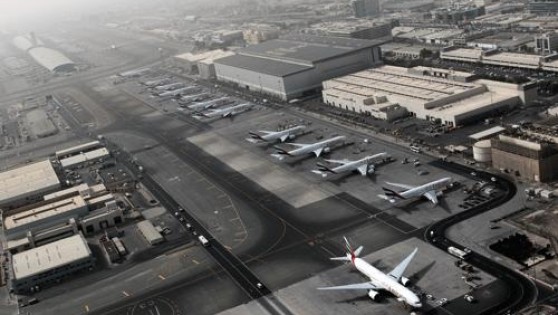
Sky’s the limit for aviation growth

by Fadi Majdalani, Alessandro Borgogna & Loenardo Monti February 12, 2013
written by Fadi Majdalani, Alessandro Borgogna & Loenardo Monti

Aircraft manufacturers must love the Gulf Cooperation Council (GCC) right now. In a time of global caution GCC countries keep filling the order books of many aircraft manufacturers. 

On the military side, Oman in December 2012 placed a $3.75 billion order for British-assembled Typhoon and Hawk planes. Saudi Arabia’s orders for military aircraft from the United States last year entailed 84 new F15 fighter jets and 84 upgrades, along with orders for assorted helicopters and transport aircraft.

In commercial aviation, low-cost and full-service carriers in the GCC have made large purchases of single-aisle airliners in recent years, in addition to making global headlines with mega-sized orders for 90 Airbus A380s by Emirates and 40 Boeing 787s by Etihad in the United Arab Emirates, plus 30 B787 orders by Qatar Air. 

The aggressive growth of GCC-based carriers and defense investments by regional governments are great news for aircraft manufacturers. Yet the most important development for aviation in the Middle East is not these big ticket orders. Far more significant for regional economic growth is the emergence of the GCC as a producer of aerospace products and provider of aviation services.

Booz & Company forecasts that the region’s air traffic, as part of a global trend, will double in volume during this decade. Next to the ongoing growth of GCC-based carriers into global aviation brands that compete in the top league of carriers, GCC countries are already investing in this trend by upgrading their airports — making them important stop-over points in international air traffic.

But two other trends also play very favorably to the region’s aviation ambitions. Recognizing the growing needs of commercial airlines and jet owners for on-the-ground services, the GCC is becoming an aviation supplier in its own right, providing maintenance, repair and overhaul (MRO) services for aircraft, components and subsystems. 

Moreover, the commercialization of space is set to dramatically change and enhance the aerospace industry over the next decade and Gulf countries are tapping into this new potential with significant investments. In aligning themselves with both trends, GCC states are opening up growth chances for new high-end employment and economic gains for the entire region. 

Remarkably for countries with little industrial background, the GCC states are entering aerospace and aviation sub-sectors such as manufacturing, geo-info services and space through such ventures as Mubadala Aerospace (which is involved in MRO and manufacturing), Virgin Galactic (which is planning a space port in Abu Dhabi) and Bayanat (which is offering commercial companies access to its 40-year-old military database).

These are important forays into a challenging industry where incumbent players in developed economies can easily stumble. If they are to thrive, however, the GCC’s aviation and aerospace sectors will need to build capabilities in three key areas: human capital, supply and production, and global reach. Focusing on these areas will allow GCC aviation and aerospace players to enter businesses in which they can establish a lasting presence and which will also help to broaden their national economic bases.

Building human capital

The aviation and aerospace industries are human capital intensive, demanding specialized skills and considerable knowledge of dealing with highly complex engineering systems that seamlessly work together to ensure the safety of passengers and aircraft in the sky. So while aerospace and aviation have tremendous capital costs, these industries cannot operate without engineers, technicians and support staff with advanced skill sets.

Expertise in these areas is in short supply in the GCC and the wider Middle East. The small number of experienced professionals, such as designers and engineers, has led to intense competition among industrial companies and academia.

GCC aviation and aerospace companies can take internal and external approaches to deepening their pool of talent. Developing and nurturing skilled staff internally is an important long-term option. Senior engineers often need seven to 10 years to train new or junior employees. This leaves significant gaps in the talent base over the short-term.

GCC aviation and aerospace players can fill the skills and expertise gap in the short-term from external sources. They can leverage their international industrial partnerships to gain skills and capabilities. 

GCC aviation and aerospace companies should also develop and display rewarding career paths that will attract high-quality staff. For instance, a career path tailored to high-knowledge middle-level managers might include defined career milestones, opportunities for international assignments and cross-functional activities.

Education also has an important role to play. For instance, in the UAE, the government and industry partners have already teamed up to establish several engineering programs and course majors at universities to match the region’s needs.

Enhancing supply chains and production

The global aviation and aerospace supply chain cannot keep up with the sector’s appetite for aircraft, a constraint that is preventing some airlines from growing, including those in the region. While most of the new demand for aircraft is coming from Asia — China alone needs 300 to 400 aircraft each year to keep pace with its demand — the Middle East is also an important buyer, requiring an estimated 100 aircraft per year for the next 20 years. More than 400 wide-body aircraft currently operate in the region.

This means that the global industry will face execution challenges, pushing up costs and forcing original equipment manufacturers (OEMs) to move toward a more global supply chain and manufacturing footprint. In order to capitalize on the global supply chain in aviation and aerospace, the GCC must also develop its supply chain and production proficiencies. Specifically, there is a trend toward consolidation in the supply chain. For example, United Technologies Corp recently purchased Goodrich in a $16.5 billion deal. This process of consolidation is forcing OEMs to understand where and how value is changing along the supply chain. OEMs therefore need to rethink their strategies to protect their value from further erosion.

OEMs can achieve this through partnerships, such as with emerging firms in the GCC, or more expensively through vertical integration. As an example, aerospace players in the region are seeking to secure access to key aircraft programs in the future and thereby secure stable, high-profile, expertise enhancing business — precisely the kind of international partnership that OEMs need.

Gaining global reach

GCC aviation players (such as those involved in MRO) also need global reach. A possible path for GCC companies aspiring to achieve leadership positions in the aerospace (i.e., aircraft and equipment manufacturing) value chain is to pursue long-term preferred risk-sharing partner positions with OEMs.

These partnerships require suppliers to invest in the development of aircraft programs to secure a share in the production of aircraft components. GCC firms can achieve this through direct contracts or through the acquisition of leading tier-one suppliers. By nurturing their relationships with the leading industry players and OEMs, emerging GCC suppliers will secure access not only to the aircraft development programs but also to new technology and new capabilities. This will in turn provide suppliers with the ability to achieve strong positioning and the means to build a sustainable business in the aerospace industry.

Achieving global reach also requires GCC players to emulate the ability of industry leaders to meet their clients’ needs, thereby placing them at the top-tier of service providers. It involves a capacity to capture the market whenever it is in an upswing and to have the skill to manage inevitable downturns. Emerging GCC aviation players can acquire global reach by joining international networks or acquiring companies in key international hubs. Both approaches will provide them the access they need to branch out overseas.

The aviation and aerospace industries have remarkable growth prospects, which GCC countries can take advantage of by building capabilities. These efforts will not only help the aviation and aerospace industries soar but also help promote the region’s national development goal of becoming high-value added, knowledge-based economies.

Fadi Majdalani and Alessandro Borgogna are partners, and Leonardo Monti a senior associate, at Booz & Company


February 12, 2013 0 comments
0 FacebookTwitterPinterestEmail
Comment

Mitigating the cost of supporting Assad

by Gareth Smith February 11, 2013
written by Gareth Smith

Ali Akbar Salehi is a shrewd man whose conduct of Iranian foreign policy since becoming foreign minister two years ago suggests diplomacy and courtesy can still exist in the region. But can it transform inauspicious circumstances?

Salehi’s visit to Cairo in January — when he saw both President Mohammed Morsi and Sheikh Ahmed al-Tayeb, grand sheikh of Al Azhar — saw him stress the need to calm Sunni-Shia tensions. Some were encouraged: after meeting Salehi, Bishop Tawadros, leader of Egypt’s 8 million Copts, praised Iran’s tolerance of Christians, Jews and Zoroastrians. 

Others were unimpressed. Government-aligned pens in Gulf Cooperation Council states, already scratching over the Egypt visit earlier in January of Qassem Suleimani, head of Iran’s Al Quds force, were soon scribbling fast. In Asharq Al Awsat, columnist Hamad al-Majid charged Salehi was spreading a “virus” in a “contaminated climate”. Gulf governments should reach out to Egypt’s new rulers, wrote Majid, and no longer maintain a distance from Hamas that had allowed Tehran to benefit from supporting the Palestinian group during Israel’s onslaught in November.

How far can Salehi’s diplomacy contain fallout from Syria, and the precipitating Sunni-Shia tensions across the region? Certainly, Iran’s foreign minister highlighted shared concerns over a conflict in which the United Nations says 60,000 have died in 21 months. But he did nothing tangible to bridge the differences in approach between Cairo and Tehran. Iran backed Syrian President Bashar al-Assad’s speech early last month, when he signaled his determination to fight on; Salehi himself called the speech a “comprehensive plan”. True, Tehran has called for a peace process, but not for the president to stand down first.

This is a core argument with Egypt, which alongside Turkey and Saudi Arabia has called for Assad to leave office as a precursor to reform. Hence Salehi’s arguments over rejecting foreign “interference” in Syria ­— code for anyone backing the rebels — and resisting Western attempts to stoke Sunni-Shia ill-feeling will not change the policy of Egypt, a mainly Sunni state that sympathizes with Assad’s largely Sunni opponents.

Iran’s support remains key to Assad. Its value was shown last month by his decision to free 2,000 detainees in exchange for 48 Iranians held by Syrian rebels: reportedly, Assad had refused similar deals for the release of his own soldiers, including Alawite officers.

But any influence Iran might exercise to moderate Assad’s approach will be restricted as the Syrian opposition becomes increasingly marked by a militant Sunnism hostile to Iran and even to Shi’ism. This is a vicious circle in which the Syrian opposition resents Iranian support, particularly military help for Assad’s regime. Muadh al-Khatib, chairman of the Syrian National Coalition of Revolutionary and Opposition Forces, last month flatly accused Tehran of a role in killing Syrians, adding that any country backing the regime would “pay a heavy price”.

While most Western analyses now believe Assad’s fall is a matter of time, Iran’s calculations are less clear. Some officials are hinting at the possibility of change, but this is limited. Hossein Amir-Abdollahian, a deputy foreign minister, suggested Assad’s speech outlined a path for the opposition to achieve their goals peacefully, but Amir-Abdollahian then stressed that Assad was “legally” president of Syria until 2014.

As long as the central disagreement with regional Sunni powers remains over Assad leaving power, nothing concrete can result from Salehi’s call for talks on Syria within the quartet — Saudi Arabia, Turkey, Egypt and Iran — brought together in September by President Morsi. Yet without progress in Syria, regional tensions will increase. Just as Salehi was in Cairo, eyebrows were raised in Tehran by the attendance of an Egyptian presidential assistant at a conference in the same city designed to raise support for the Arabs of Iran’s Khuzestan province. 

In remarks that typify Tehran’s view of the region, Alaeddin Boroujerdi, a leading parliamentarian, said the conference was organized by radical Salafis “led by countries such as Qatar and Saudi Arabia, and with the aim of preventing the expansion of ties and cooperation between Iran and Egypt”. Tehran is very sensitive to separatist inclinations among its population, half of which is not Persian (including Azeris, Kurds and Baluchis as well as Arabs). 

With Iran’s crude sales down 50 percent in a year due to stringent United States and European Union sanctions, this is no time to expect defeatist talk in Tehran. But the knock-on effects from Syria, already destabilizing Iraq, are raising the stakes all around.


Gareth Smyth has been reporting from around the Middle East for almost two decades and is the former Financial Times correspondent in Tehran


February 11, 2013 0 comments
0 FacebookTwitterPinterestEmail
The Buzz

Morning briefing:11 Feb 2013

by Executive Staff February 11, 2013
written by Executive Staff

Economics

Saudi Arabia may allow foreigners to invest directly in stocks in the next year, said John Burbank, founder of the $3.7 billion hedge fund Passport Capital LLC.

More from Bloomberg


Lebanon’s advertising spending outpaced GDP growth by increasing 4.5 percent in 2012, with online advertising posting 29 percent growth, ArabAd magazine reported in its annual survey.

More from The Daily Star


Egyptian consumer prices last month posted the biggest increase in more than two years after the pound weakened to a record and foreign reserves slid.

More from Bloomberg


Japan has offered to help Saudi Arabia build nuclear power stations to free up more oil for exports, Kyodo news agency reported on Sunday, but a visiting Japanese minister said he was not seeking a supply increase now.

More from Reuters


Salaries in the oil and gas sector soared across the Middle East last year, with Saudia Arabia, Bahrain, Oman and the United Arab Emirates recording some of the largest increases globally, according to an annual survey.

More from Arabian Business


Companies

Occupancy at Beirut’s top-end hotels fell to 54 percent in 2012, compared to 58 percent in 2011, according to the Ernst & Young Middle East hotel benchmark survey.

More from The Daily Star


Dubai’s Emaar Properties surged to a four-year high on Sunday as upbeat research reports from international banks bolstered demand from local and foreign investors, while oil price gains helped lift most Middle East markets.

More from Reuters


Akbar Al Baker, CEO of Qatar Airways, has been appointed as non-executive director on the board Heathrow Airport Holdings.

More from Arabian Business


Bank Muscat, Oman’s largest lender, expects its credit growth to be around 14-15 per cent this year, driven by high government spending and higher wages for local citizens, local media quoted its chief operating officer as saying.

More from Reuters


Credit Suisse’s top investment banker for Qatar has resigned, three banking sources said, in a move that comes as the Swiss bank tries to bolster operations in the Gulf state, home to its second-largest shareholder.

More from Reuters


February 11, 2013 0 comments
0 FacebookTwitterPinterestEmail
Economics & Policy

Powerless in a pipe dream

by Zak Brophy February 11, 2013
written by Zak Brophy

The oft-touted promise of great gas wealth under the sea floor off Lebanon’s coast has recently compelled the nation’s eyes toward the western horizon. There is a slowly growing sense of inevitability building around Lebanon’s potential hydrocarbon windfall, which was further accelerated by the appointment of the board for the Petroleum Administration in late 2012.  In the coming year Lebanon intends to open a tender round for the exploration and production agreements that will legally enable International Oil Companies (IOCs) to tap into the ocean floor in search of oil and gas. But this industry is a game of patience, and assuming there are commercially viable finds down there, no chips will likely be cashed for around seven to 10 years.
A sober assessment of how the country might benefit from access to this newfound resource requires a refocusing on the foundations that need to be laid. Even while teams of engineers are busy searching for hidden riches in the years to come, there is a gargantuan task back on shore, which may grab fewer headlines but is certainly no less important.

The challenge will be to implement major infrastructure developments that will enable Lebanon to wean itself off expensive fuel oil and diesel, and shift towards cheaper and cleaner natural gas, whether the explorations at sea prove successful or not.

See also: A beginner's guide to Lebanon's oil and gas

Governing our oil

“We need the natural gas now. The power plants need it now, the industry, the businesses. We cannot wait,” explains Saad Merhej, general manager of B.B. Energy, a global energy trading company with its management headquarters in Beirut. His sentiments reflect those of Neemat Frem, president of the Lebanese Association of Industrialists, who said in a 2012 interview with Executive that the benefits for Lebanese industries of shifting energy supply toward gas could “not be overstated”.


Clearly a better deal

Lebanon has long courted a policy of moving towards a greater reliance on gas but virtually no progress has been made. The primary motivation for such a shift is simply cheaper fuel and lower operation and maintenance costs, as Lebanon currently uses an expensive combination of heavy fuel oil and diesel to feed its electrical powerplants. The price of natural gas ranges from between $300 to $500 per ton, making it around a third cheaper than the price of heavy fuel oil (HFO), which is typically around $700 per ton and considerably cheaper than diesel, which trades for around $1,100 to $1,200 per ton. The gap in prices is only expected to increase in the future as crude prices rise with global economic growth.

The inefficient and expensive production of power in Lebanon is the third largest drain on the public coffers, after debt servicing and public sector wages. From January to August 2012 the total fuel bill for the national power utility, Électricité du Liban (EDL), was $1.45 billion, of which the Ministry of Finance covered 96 percent. Even if Lebanon has to import its gas, this burden on the state’s finances would be significantly reduced, and if offshore drilling proves successful then the fuel bill could potentially be self-financed altogether.

The savings on fuel costs are the easy sell but there are other benefits too. Natural gas has a burning capacity of 11,464 kilocalorie per kilogram (Kcal/kg), which is higher than fuel oil or gas oil, at 10,035 Kcal/kg and 10,350 Kcal/kg, respectively. This means more energy per unit, or essentially more bang for your buck. Natural gas turbines also have a longer life span and lower maintenance costs than other fuels, reducing long-term overheads. Finally, while burning natural gas contributes to greenhouse gas emissions and can’t be compared to carbon-free energy sources, it is nonetheless cleaner and more efficient than other hydrocarbon fuels such as diesel and HFO, and therefore has a lower environmental impact.

Previous pipe dreams

Although Lebanon has a long history of trying to move towards a greater reliance on gas, the fruits have been pitiful. “Politics, greed and discord are at the heart of our failures,” says Chafic Abi Said, who formerly held posts as director of studies at EDL and advisor to the Ministry of Energy and Water (MoEW).

The first major step towards bringing gas into Lebanon’s energy mix date back to the mid 1990s, when two combined-cycle turbines were bought for power plants at Beddawi in the north and Zahrani in the south. The turbines were meant to run on natural gas, but the policy makers had put the cart before the horse and once the turbines were operational, they found themselves without a secure and regular supply of gas. Consequently, light modifications were made to the turbines and they were converted to using more expensive and dirtier gas oil.

A number of pipe plans and import schemes for Lebanon were discussed but none of them made it off the ground in those early years. The Egyptians had planned to build a pipeline through the Mediterranean to Turkey and then into Europe, to which Lebanon hoped to establish a connection. However, the pipe was rerouted overland through Jordan and the Lebanese dreams were dashed.
In December 2001 the government signed a 20-year deal with Syria to import some 1.5 billion cubic meters per year of natural gas, at a price that was roughly two-thirds the existing cost of fuel imports for power production.

By 2005 a pipeline with a capacity of 3 million cubic meters per day was built connecting Syria’s gas infrastructure to the Beddawi plant in northern Lebanon and it finally seemed the gas tap could be turned on.

However, Syria reneged on the deal and — according to Abi Said, who had been party to the negotiations — blamed technical problems and then gave a “hazy answer”. In light of the assassination of former Prime Minister Rafiq Hariri and the subsequent withdrawal of Syrian troops from Lebanon many argue this was as much, if not more, politically motivated as it was technical. 

It was not until 2009 that natural gas entered into Lebanon’s energy mix when the 1,200 km Arab Gas Pipeline, linking Egypt’s natural gas facilities to Jordan, Israel, Syria and Lebanon, started supplying the region. It was a short-lived affair. The flow of gas was subject to frequent disruptions, first over pay disputes and then due to a series of explosions targeting Egyptian gas infrastructure in the Sinai. The last delivery of Egyptian gas to Lebanon was made in November 2010.

More recently plans have come to the fore to build a $10 billion pipeline through Iraq and Syria to enable the supply of Iranian gas to Lebanon’s power plants. Iran currently consumes almost all of the approximately 600 million cubic meters of gas it produces daily, but is hoping to double its production to export some 250 million cubic meters of gas per day in 2015 by developing a massive offshore gas field that it shares with Qatar. The odds, however, are stacked against this particular proposal being realized in full and the gas making it to Lebanon. In the first instance, it is hard to imagine the proposed pipeline making it past the Iraqi-Syrian border while the civil war next door burns unabated. What is more, even if the pipeline were to be completed, Iran’s influence in Lebanon is such a politically divisive topic that domestic opposition to a reliance on Iran for fuel security would surely be fierce.


L.N.G. Aborted

Lebanon’s ambitions to bring gas by overland pipelines to alleviate the burden of its decrepit power sector have clearly floundered, but an alternative plan is still very much on the table. “Liquid Natural Gas (LNG) is my preferred option, even if it is a bit more expensive,” explains Abi Said. “It gives you a strategic edge because you don’t rely on politics and you don’t rely on anybody.”  In 2010 the incumbent Minister of Energy and Water, Gebran Bassil, unveiled a policy paper for the electricity sector in which gas, and specifically LNG, feature prominently. With characteristic grandeur and unfettered optimism, his team’s strategy envisages a diversification of the fuel supply that will see gas increasing from zero percent of the fuel mix today to two-thirds by 2030, as well as an increase in the share of renewable energies to 12 percent.

While the ambitions are commendable, the means by which this minister hopes to achieve them are essentially old policies rehashed. The same questions over why projects that have resurfaced for nearly 20 years have not succeeded are still as relevant today.  “During the previous administration in 2006 we signed a memorandum of understanding (MOU) with the ministry including all the contractual agreements, such as cost, supply, location… Unfortunately politics got in the way,” says B.B. Energy’s Merhej. The company agreed to build a floating regasification storage unit (FRSU), which would have been able to receive and store LNG before turning it back into gas for delivery to the power plan at Zahrani. With a change of government came a reshuffling of the ministerial deck and the deal was scrapped. “We could have had it built by now and we would have saved hundreds of millions of dollars for the country,” laments Merhej.

This aborted attempt to open Lebanon up to the global LNG market is one of many such debacles.  Between 1996 and 1998 preliminary efforts were made to market LNG in Lebanon, most notably through a joint consortium of energy companies, consisting of France’s Elf, Italy’s Ansaldo and the United State’s Kellogg, yet the deal never came to fruition. Then in 2000, the Kellogg Brown & Root company completed a study on the installation of a terminal in Salaata, northern Lebanon, on EDL-owned land, where LNG would be imported, stored and regasified. Again, the proposal never made it beyond EDL or the MoEW.  In the following years other LNG proposals were pursued, including the B.B. Energy FRSU plant, but none saw the light of day.

A broken record

The current plans for the power sector outlined in the 2010 policy paper have revived many of these major infrastructure proposals that have been often debated and never realized. The two most important of these are an FRSU and a coastal gas pipeline to connect all of the power stations from Beddawi, north of Tripoli, to Tyre in the south.

“The pipeline is the backbone for the Lebanese coastal gas supply to the different power plants and eventually out to industrial and residential and commercial areas,” explains Zaher Sleiman, advisor to Minister Bassil. The ministry announced in December 2010 that it was ready to launch the gas pipeline tender, but a lack of foresight over how the government was going to pay the projected $450 million (LL675 billion) price tag precluded that from happening. “Due to the financial difficulties that the Lebanese government is facing, we have not been able to finance such a project,” concedes Sleiman.
If the minister’s plans for a significant gasification of Lebanon’s power sector — which involves building or converting all the power stations to make them gas compatible  and developing a gas pipe network to industrial, commercial and transport hubs — are to be realized, the coastal pipeline is essential. In April last year the Council of Ministers, Lebanon’s cabinet, agreed on a three-year program law that would enable the private sector to participate in the financing of the project. “Although this law has passed the Council of Ministers it still needs to be ratified in the Parliament, so unfortunately we are still not able to launch the project,” says Sleiman.

The other major component of the onshore gas strategy is the FRSU at Beddawi power plant, which would be the portal for LNG to enter into the Lebanese network. The ministry has been working with the consultancy firm Potten & Partners to devise an import strategy and Sleiman says that requests for proposals will be sent to pre-qualified companies in the first quarter of this year.

Show me the money

If, and it is a very big ‘if’, these infrastructure projects are actually realized then Lebanon will have the framework on which to build the functioning and well-supplied gas infrastructure that has eluded policy makers and technocrats for many years. However, many of the reasons for previous failures still exist today, which does little to inspire confidence. “This kind of infrastructure requires billions of dollars of investment over a number of years. There is no way the government can deliver this. They need to bring in private investment and enterprise,” says B.B. Energy’s Merhej.

Many industrialists and investors share these frustrations, having witnessed successive ministers at the helm of the energy sector flirt with the idea of greater involvement from private enterprise but never follow through.

In 2002, Law 462 was adopted with the intention of modernizing the electricity sector so that the government would set policy and strategy, the private sector would implement that strategy where possible and an independent regulator would oversee the private sector. However, more than a decade later private enterprise remains begrudgingly fenced out while the government oversees the continued demise of the country’s power sector; meanwhile, installed capacity almost stagnated from 2000 to 2009, increasing marginally from around 2,292 megawatts (MW) to 2,313 MW, amounting to an average growth rate of 0.25 percent during this period. Over the same period the average growth in net electricity consumption was in excess of 5 percent.

“[Law] 462 has been resisted by the ministers and the high officials within the MoEW because they say it removes part of their prerogatives,” explains Abi Said. Under the current arrangement, extensive power falls under the minister, giving him great influence, over areas such as the awarding of contracts and offers of employment.

Reforms that may in some way alter or weaken this grip, whether through establishing independent regulatory bodies or handing greater power to private enterprise, have been largely resisted. “They pay lip service to [greater private sector participation] but in reality they want the minister himself to decide to which company they outsource a particular function,” says Ziad Hayek, secretary general of the Higher Council for Privatization. “They don’t want to have an actual partnership with the private sector. They want to give the private sector some kind of modified version of a management contract or an outsourcing contract."

Beyond sector specific reforms, the passing of the public-private partnership (PPP) law would go a long way to enabling private capital and expertise to advance the gas infrastructure. “The problem is financing for the projects,” says the ministry’s Sleiman. “We need to approve the PPP. If you don’t have the money then let the private sector share in the investment and the profits of the project.”

The law, however, has ground to a halt in Parliament, effectively barring Lebanon’s banks from putting their vast wealth to work in the majority of infrastructure projects.

“What are the banks financing? Cars and flats, that’s what,” says Merhej. “I want them to finance industrial and infrastructure projects.”

It is not only cash, but also lack of continuity, that threatens the ministry’s ambitious plans.

“Every minister brings with him a team of advisors, neglecting the permanent employees, and then he prepares a plan for the electricity,” explains Abi Said. “The government stays for a couple of years and then they go before they can implement anything because they need the approval of the Council of Ministers or the Parliament. The new minister comes and starts afresh.”

The fate of B.B. Energy’s agreement with the ministry to develop an FRSU is a case in point and we see several years down the line that the ministry, under a new minister, is courting companies once again. One cannot help but wonder if the 2010 plan for the electricity sector is destined for a similar fate.

“We will be lucky if the minister comes from the same political side as his predecessor,” says Sleiman. “He can help him continue with the plan, as we saw in the telecommunications sector, and this is what we hope will happen here in the MoEW.”

Bad omens

The minister’s designs to develop the electricity sector, including the realization of an expansive onshore gas infrastructure, are comprehensive and ambitious. What is more, he clearly has some very talented and diligent workhorses pushing the policy forward.

But if the cabinet ministers and their political masters continue their resistance to meaningful participation of the private sector in infrastructure projects then the same problems that beset previous plans threaten to strike again. The government clearly does not have the financial wherewithal or political unity to deliver on its grand schemes. Partisans of one political party may keep hold of the reins at the ministry for one or two terms, but can they expect to see this through to 2030?
“The more you bring politics into infrastructure the more dysfunctional it becomes,” reasons Merhej. Unfortunately, resistance to the PPP legislation and the creation of regulatory bodies or commissions independent of the executive branch seems as strong as ever. That spells less cash, less transparency and less longevity for even the best laid plans.       


February 11, 2013 0 comments
0 FacebookTwitterPinterestEmail
The Buzz

Morning briefing: 8 Feb 2013

by Executive Staff February 8, 2013
written by Executive Staff

Economics

Iran, which fell two places to become India’s fourth-largest crude supplier last year, may lose $2.5 billion of revenue as global sanctions prompt the South Asian nation to reduce purchases.

More from Reuters


Foreign buyers helped Egypt’s index recover some of the previous session’s losses that had been sparked by the country’s foreign reserves slumping to critical levels, while Gulf markets were mixed in uneventful trading ahead of the weekend.

More from Reuters


The International Monetary Fund offered to provide assistance to Syrian refugees in Lebanon during Finance Minister Mohammad Safadi’s visit to Washington last week.

More from The Daily Star


Oman's government will limit the number of foreign workers and sharply raise the minimum wage for locals in a drive to increase employment of Omani citizens, state news agency ONA reported.

More from Reuters


Companies

HSBC will close the accounts of some Syrian nationals in the Middle East and North Africa, the bank said on Thursday, after heavy compliance costs made it unprofitable to deal with them.

More from Reuters


Profits at  Abu Dhabi Islamic Bank topped $207.9 million last year as it targeted growing its expatriate customer base.

More from The National


Lebanon’s Ministry of Telecommunications (MoT) will open a new branch in Jdeideh for Call Center International (CCI), the global outsourcing call center.

More from Business News Lebanon

February 8, 2013 0 comments
0 FacebookTwitterPinterestEmail
Business

Skydiving, awards and the future of advertising

by Maya Sioufi February 8, 2013
written by Maya Sioufi

After three days of high impact conferences, an epic storm and lots of snow, the eighth MENA Cristal Festival came to an end on Thursday. The festival, launched in 2005 by the organizers of the Cristal Festival Europe, recognizes the best advertising creations from different media as selected by juries of international and regional advertising professionals. But it also acts as a forum for advertising executives to share ideas, debate approaches and ponder the future of the industry.

Among the biggest attractions was the star guest. Having previously hosted former Soviet Union chief Mikhail Gorbachev and Wikipedia founder Jimmy Wales, the awards have a record of high-profile figures. This year the keynote speaker was Felix Baumgartner, the Austrian skydiver and BASE jumper who set the world record for skydiving an estimated 39 kilometers and breaking the sound barrier in October last year.

What, you might ask, does an athlete – albeit an incredibly brave one – have to do with advertising? Well while the event may have broken records and been a true representation of a human’s physical capacity, it was also an advertising spectacular – having been sponsored by Red Bull and streamed live on the internet.

“They say Felix did the jump, but its not just the jump; it’s the first and biggest operation of brand content ever done in the world because behind Felix is Red Bull and behind that is online video, YouTube, the new era of communication,” says Christian Cappe, director of the Cristal Festivals in an interview with Executive.

With a “Born to Fly” tattoo on this right arm, Felix described how it felt to free fall and break the speed of sound, how he signed death papers before going off for his endeavor, how his parents felt about his ambitions and what his future projects are. The Austrian also suggested his days of crazy stunts may be coming to an end as he plans on pursuing his dreams of becoming a helicopter pilot.

While Baumgartner took the headlines, there were also awards handed out to the Middle East’s advertising agencies and media companies during ceremonies held over two nights. Numerous awards were given in 13 categories, with FP7/RUH & Initiative, KSA, JWT Beirut and Impact BBDO Beirut among the winners. For advertising firms, Leo Burnett Beirut took the ad agency of the year award while JWT Beirut took ad network of the year.

Several senior executives in the advertising industry in the MENA region also gave speeches to a packed auditorium during the festival. CEO of Impact BBDO – one of the Middle East’s leading advertising agencies – Dani Richa compared his communication needs to his 13 year old daughter’s needs and suggested they are the same – from corresponding with friends to sharing photos to texting and calling yet only the means have changed.

Farid Chehab, Leo Burnett’s Beirut chairman, also held a highly anticipated presentation. Entitled “10 ways for 1 million returns”, Chehab presented 10 insights he claimed pertain to how people operate – from “people love to follow” to “people love to fight” – recommending that brands engage with people based on these insights.

Several other senior executives presented during the festival from the BBC’s Tom Bowman to Souheil Soueid, Google’s head of agencies MENA. An engaging panel discussion comprised of Roy Haddad, executive director of WPP MENA, Yasser Akkaoui, this magazine's chief editor, Michel Bou Abboud, general manager of Air France KLM Lebanon and Ahmad Nassef, Vice President and Managing Director of Yahoo Middle East and Africa debated the challenges for agencies and publishers aiming to create more engaging online advertising.

As the festival comes to an end and the sun comes up, advertising executives leave the mountains – some might be hitting the slopes ahead of another year of hard work in a challenging and evolving advertising industry.

In our March issue, Executive will be featuring a special report on Lebanese in the advertising industry.

February 8, 2013 0 comments
0 FacebookTwitterPinterestEmail
  • 1
  • …
  • 281
  • 282
  • 283
  • 284
  • 285
  • …
  • 683

Latest Cover

About us

Since its first edition emerged on the newsstands in 1999, Executive Magazine has been dedicated to providing its readers with the most up-to-date local and regional business news. Executive is a monthly business magazine that offers readers in-depth analyses on the Lebanese world of commerce, covering all the major sectors – from banking, finance, and insurance to technology, tourism, hospitality, media, and retail.

  • Donate
  • Our Purpose
  • Contact Us

Sign up for our newsletter

    • Facebook
    • Twitter
    • Instagram
    • Linkedin
    • Youtube
    Executive Magazine
    • ISSUES
      • Current Issue
      • Past issues
    • BUSINESS
    • ECONOMICS & POLICY
    • OPINION
    • SPECIAL REPORTS
    • EXECUTIVE TALKS
    • MOVEMENTS
      • Change the image
      • Cannes lions
      • Transparency & accountability
      • ECONOMIC ROADMAP
      • Say No to Corruption
      • The Lebanon media development initiative
      • LPSN Policy Asks
      • Advocating the preservation of deposits
    • JOIN US
      • Join our movement
      • Attend our events
      • Receive updates
      • Connect with us
    • DONATE