• Donate
  • Our Purpose
  • Contact Us
Executive Magazine
  • ISSUES
    • Current Issue
    • Past issues
  • BUSINESS
  • ECONOMICS & POLICY
  • OPINION
  • SPECIAL REPORTS
  • EXECUTIVE TALKS
  • MOVEMENTS
    • Change the image
    • Cannes lions
    • Transparency & accountability
    • ECONOMIC ROADMAP
    • Say No to Corruption
    • The Lebanon media development initiative
    • LPSN Policy Asks
    • Advocating the preservation of deposits
  • JOIN US
    • Join our movement
    • Attend our events
    • Receive updates
    • Connect with us
  • DONATE
AnalysisEconomics & Policy

Bordering war

by Jamile youssef April 22, 2026
written by Jamile youssef

This analysis was written as part of a Special Report on the repercussions of war across six polities from October 7th, 2023-December 2025

Since the Gaza war began in October 2023, Egypt has found itself between regional violence, economic fragility, and diplomatic tension. Its economy, shaped by strong state control, a powerful military and a struggling workforce, cannot be separated from the wider conflict. Yet despite its sensitive regional position and its multi-tiered diplomatic and strategic exposure, Egypt has not faced significant physical destruction or evident direct economic losses from the start of the war up to the first nine months of 2025, though the United Nations Development Programme (UNDP) released a May 2024 Rapid Assessment of potential socioeconomic impacts of the Gaza war on Egypt, basing their assessments on three scenarios ranging from contained to regional war. Estimated economic impacts on Egypt in these scenarios ranged from $5.6 billion to $19.8 billion. Although the third high intensity conflict scenario did not materialize in full, certain aspects of it, such as a direct confrontation between Israel and Iran, were realized. Still, the major impacts on oil, gas, tourism, and major long-term trade disruptions that warranted the $19.8 billion estimate have been largely avoided.

Economic indicators for Egypt do not reflect significant impact of the regional conflict scenario of the past year and nine months. According to International Monetary Fund (IMF) estimates from July 2025, debt-to-Gross Domestic Product (GDP) ratio narrowed by about 10 percentage point in the 12 months to June 2025, reaching 86 percent. Egypt’s ongoing debt burden and other economic weaknesses are not considered linked to the regional conflicts in Israel, Palestine, Lebanon, and Syria, and in fact the IMF projected a four percent real GDP growth in 2025. While conflict-related financial burdens affected each of those countries in specific ways, analysts link Egypt’s debt and other indicators of the country’s problems to escalation of homegrown crises of the 2010s, the 2000s, and even earlier.

The IMF instead highlights improvements in the Egyptian economy and social stability in the past 12 months. These positive signs include unemployment rates around 7 percent. While social safety nets also were bolstered over, significant drops were recorded in both headline and consumer price inflation rates. 

Indirect conflict impacts

Rather than territorial battles and losses of military and civilian lives, the challenges faced by the Nile government unfolded on multiple economic and political fronts, a large amount of which are indirectly linked to what many consider the seventh Arab-Israeli armed conflict (October 2023-2025).

Sectors of the Egyptian economy and projects considered important for national development have been affected, including the long delayed full opening of the billion-dollar Grand Egyptian Museum (GEM), designed to attract five million annual visitors. However, the main source of revenue pressure in 2024 steamed from the Suez Canal passing, which manifested mainly in the first half of 2024.   

Sectors from energy to weapons manufacture were also affected, alongside strains on socioeconomic peace and elevated costs for policing and opinion influencing. An as yet incalculable array of emerging risk factors related to dichotomous popular sentiments, political attitudes, populist agitation, refugee inflows, and future displacement dangers.

The primary political and humanitarian sensor of the conflict was the Rafah crossing, the only access to Gaza not fully under Israeli control and is operated by Egypt (in political and security accords with Tel Aviv). At time of this report, Egypt’s humanitarian burden along its Gaza border has kept growing, with tens of thousands of Palestinians seeking refuge. El-Sisi government played a key role in facilitating the Gaza agreements of October 2025, the country’s post-1978 role as a mediator and regional stabilizer had been complicated by domestic pressures, geopolitical maneuvering, and the shifting priorities of its traditional allies.

Rafah border: humanitarian lifeline and political minefield

Rafah is the only non-Israeli crossing point between Gaza and the outside world, and it is located near the southeast extremity of the Sinai Peninsula in Egypt. For Palestine’s private sector economy, the crossing serves as a vital trade corridor and for Egypt, it has provided marginal trade opportunities. The Cairo government has been using it as a strictly controlled pressure valve for decades, opening and closing it based on domestic politics, diplomatic situations, and security assessments.

Moreover, Rafah has become a pivotal challenge for Egypt’s regional responsibilities and its internal security concerns. Immediately after the beginning of Israeli military actions in 2023, the Egyptian government positioned Rafah as a humanitarian relief hub rather than a mass shelter. To this end, Cairo permitted a limited number of relief convoys to enter Gaza in cooperation with the UN, the Egyptian Red Crescent, and Gulf state donors like Qatar and the United Arab Emirates.

Between November 2023 and May 2024, more than 80 percent of humanitarian supplies that reached Gaza entered through Egypt, until May 2024, when Israeli forces undertook ground incursions of the Gazan side of the Rafah crossing.

Justified by Israel as a tactical necessity to destroy Hamas infrastructure, the takeover of the crossing was seen as an outright insult to Egypt’s logistical control. With its role as a key arbiter of humanitarian access undermined, Cairo accused Israel of breaking long-standing agreements and unilaterally changing the rules of humanitarian coordination. And within hours, it closed its side of the crossing.

UN agencies warned of catastrophic situation in Gaza, as medicine and fuel ran extremely low. Despite intense efforts of Western and Arab diplomats to find a workaround for opening, Egypt refused to reopen Rafah until it could do so without being seen as allied in Israel’s southern campaign. Furthermore, in order to block Palestinians from being displaced onto its territory, Egyptian officials instead called for the creation of an internationally monitored aid distribution system.

Emergency analysis has showed that Egypt lacks the resources to take in a sizable number of Gazan refugees. Even limited assistance for displaced people in Sinai might cost hundreds of millions of dollars, according to UNDP’s assessment in May 2024, funds that Cairo just does not have.

President Abdel Fattah el-Sisi confirmed that Egypt, of whose population refugees composed about 9 percent as of 2022 according to the International Organization for Migration, is not ready to provide the emergency housing, food distribution, healthcare, and educational infrastructure needed to host 100,000 displaced Palestinians. El-Sisiwarned in a number of public statements that resettling Palestinians in Sinai would “liquidate the Palestinian cause” and violate Egyptian sovereignty.

The security risks posed by a potential Hamas presence in Egypt, and its links to the Muslim Brotherhood, are perhaps the primary deterrent to opening the Egyptian border to Palestinians. Cairo’s opposition to having Gazan people mass-displaced onto Egyptian territory stems from a multi-layered and complex fear that permitting a massive influx of Gazans into Sinai might become a long-term attribute or sideshow of the Israeli-Palestinian conflict. Hence, the Egyptian government in 2024 focused on building a new large buffer zone along its border with Gaza. Located near the Rafah crossing and extends several kilometers into North Sinai. Satellite images analyzed by US-based tech company Ventor (formerly Maxar Technologies) and confirmed by Egyptian officials, showed cleared land and newly built infrastructure.

Refugees, social services, and the Sinai strain

Despite national efforts to curb refugee influxes, roughly 100,000 Palestinians entered Egypt between October 2023 and June 2025 according to the Palestinian Authority’s embassy in Cairo, either through unofficial routes or with special permissions for humanitarian needs, family reunions, or medical care. The majority settled in North Sinai, particularly around the cities of Rafah and Arish.

A combined UNDP and World Food Programme (WFP) rapid assessment in May 2024 found that the influx of displaced people contributed to a more than 40 percent increase in food insecurity in border governorates. Based on analysts’ preliminary assessments, providing basic services to a huge number of refugees would be very costly to Egypt, as well as concerning capital investment in infrastructure or long-term integration costs.

With a fiscal deficit exceeding five percent of GDP, and with debt servicing that account for a third of its national revenue, the country’s direct economic exposure to Israeli military measures of the past two years is not as large as the exposures of Palestine, Lebanon, and Syria.

While Egypt has received aid and logistical support from Gulf states and international agencies, including a $35 billion investment package from the United Arab Emirates in February 2024 and $8 billion in financial aid and investments from the European Union in March 2024, long-term funding mechanisms have not yet been established. Regarding proposals to relocation of Gazan residents, no amount of funding could disperse with the illegality of such measures or is seen as a solution by the country’s government. Egyptian Foreign Minister Badr Abdelatty reaffirmed in a 2025 interview with CNN that “the displacement of Palestinians from the Gaza Strip is a ‘red line,’ Cairo will not permit anyone to jeopardize Egypt’s national security or sovereignty.”

Suez Canal, inflation, and foreign exchange

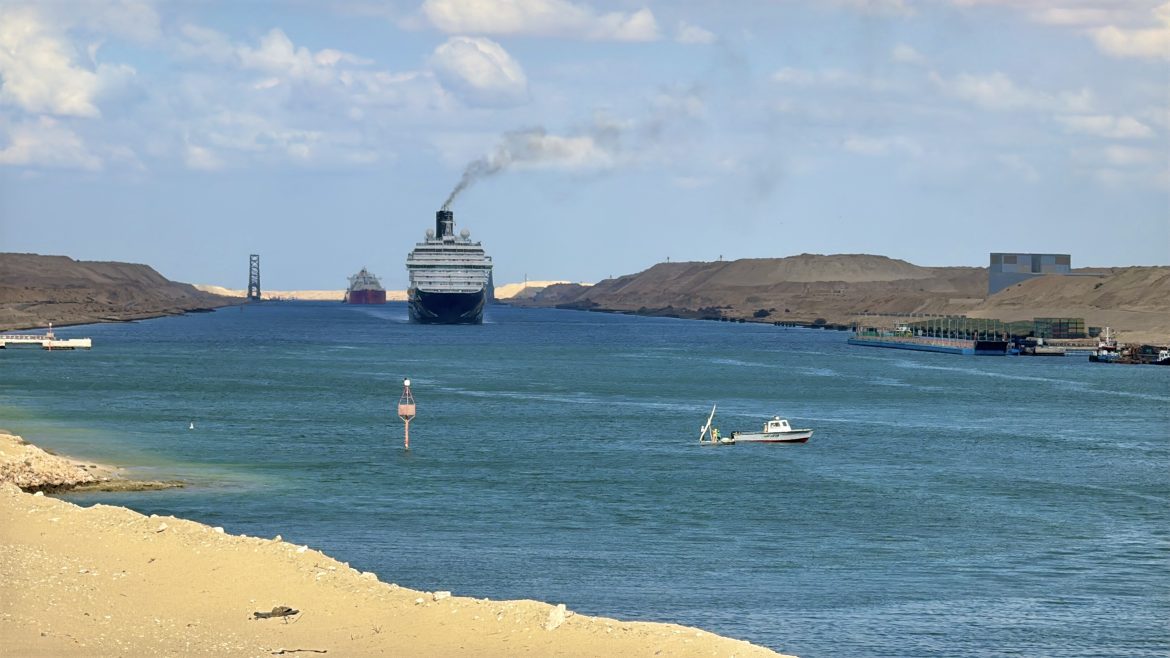
For Egypt, the Suez Canal is a national asset and a vital component of economic sustenance. Generating over $9 billion in revenue annually, it has long been a significant source of foreign currency for the government.  As a route for almost 12 percent of worldwide trade and a link between the Mediterranean and the Red Sea, the Suez Canal also highlights Egypt’s strategic position in maritime trade routes.

But the Gaza war weakened this strategic advantage. One of the most direct and expensive effects of the regional escalation for Egypt has been the disruption of Red Sea marine trade. Houthi attacks drove international shipping companies rerouted vessels away from the Red Sea and the Suez Canal. Revenue fell year-on-year by around 47 percent in January 2024, and maritime traffic fell 30 percent. These numbers represent the highest decline in canal revenue for more than ten years; big international shipping companies like Maersk and Hapag-Lloyd ceased transits in the Red Sea.

The consequences were immediate. Egypt found itself in a financial dilemma as it relied on consistent Suez traffic for jobs and foreign exchange along the canal corridor.  Egypt had officially inaugurated a major expansion of the Suez Canal, known as the “New Suez Canal,” in August of 2015. This project involved digging a new 35-km (22-mile) lane and deepening/widening other sections to allow two-way traffic, significantly increasing the canal’s capacity. Subsequent, smaller expansion projects, such as widening 10 kilometers in the southern section, were initiated in 2022 and completed in 2023. 

Based on expected earnings under normal circumstances, cumulative losses throughout the first half of 2024 were estimated to be above $6 billion. Egypt experienced a currency crisis in 2023-2024 fueled by the economic fallout from the war in Ukraine, which raised food and energy import costs, the Gaza conflict’s impact on Suez Canal revenues, and high external debt payments.

This adverse event came during a period of economic vulnerability for Egypt, with high levels of external debt, a widening trade deficit, and inflationary pressures. According to UNDP rapid assessment inflation of 23.5 percent in 2023 and projections of reaching 32 percent the following year. Additionally, in March 2024, the Central Bank let the Egyptian pound to freely fluctuate in accordance with the guidelines established by the International Monetary Fund (IMF), resulting in a nearly 60 percent devaluation, followed by a spike in the cost of fuel, imported commodities, and staple foods.

The IMF agreement and Egypt’s fiscal straitjacket

Egypt’s obligations to the IMF have further strained its economic independence. The country signed with the IMF a $3 billion Extended Fund Facility in December 2022 to stabilize its macroeconomic structure.

However, the initiative was significantly expanded as a result of adverse shocks, such as the conflict in Gaza, the Houthi attacks in the Red Sea, and associated revenue losses. Under the updated agreement, Egypt committed to a tighter fiscal consolidation route including lowering the budget deficit, permitting exchange rate flexibility, and eliminating untargeted subsidies.

However, returns have been severely constrained by geopolitical instability, currency devaluation, and global investor caution. Formerly willing to provide Egypt with financial support, nations like the United Arab Emirates and Saudi Arabia have taken a wait-and-see attitude, urging Cairo to increase transparency before making any commitments.

In July 2024 assessment, the IMF praised Cairo’s efforts but cautioned that growing external vulnerabilities and geopolitical uncertainty could derail the program. Egypt’s geopolitical strategy imposes an unspoken but constant restriction, because IMF agreements and Gulf investments would be threatened if it hosted Palestinian refugees that could be close to Hamas. In summary, the geopolitical fine print that comes with every dollar of foreign assistance, in addition to IMF spreadsheets, reinforces Egypt’s fiscal constraints.

Furthermore, reform also became more politically costly. Public outrage aroused by the removal of food and fuel subsidies as inflation squeezed households. Despite pressure from the IMF, the government postponed multiple rounds of subsidy cuts that were planned until mid-2024. The fiscal balance was further strained by the announcement of new social protection measures and wage increases for public sector employees.

Sectoral impacts: tourism, trade, and energy

Although Egypt is geographically remote from the conflict’s center, its border with Gaza, Red Sea attacks and extensive media coverage have affected the safe travel destination in the first months of the war. Regional unrest may severely impact tourism, which had been still rebounding from the COVID-19 pandemic. Nevertheless, the World Travel & Tourism Council, reported 2024 as Egypt’s highest tourism contribution to the economy with 2025 projected to reach a new peak. As of this writing, tourism remains a cornerstone of the national economy representing about 8.5 percent of its GDP.

The logistics and trade industries faced a series of challenges. As noted above, container traffic through the Suez Canal drastically decreased as Houthi drone and missile attacks made routes insecure. Outside of the area of transshipments, exporters experienced delays threatened supply agreements, and importers were disproportionately affected by higher freight costs. Logistics and shipping costs increased overall due to rising insurance premiums, with some experts estimating not only million-dollar added costs for each rerouted cargo vessel but also more negative climate balances.

In the energy field, Egypt has strengthened its ties with Israel, with whom its peace treaty of 1979 still stands, despite growing anti-Israel sentiment and public outrage following the Gaza War. Cairo and the Israeli firm NewMed signed a historic $35 billion deal in August 2025 to triple gas supplies from the Israel’s offshore Leviathan field. This arrangement comes as Egypt’s domestic gas production has dropped by over 40 percent since 2021, increasing dependence on imports at a time when its foreign reserves are running low.

Also, gasoline subsidy costs rose with global oil prices. Egypt remains a net energy importer. Currently, more than half of its imports and up to 20 percent of its overall consumption come from Israeli gas. In addition to providing a temporary economic lifeline by reducing energy shortages and stabilizing prices, the agreement represents Cairo’s long-term strategic investment on regional integration rather than symbolic political division, which is interpreted by observers as proof of the long-term significance of agreements in the spirit of the agreements signed since 2020 by other countries in the Gulf and North Africa (Bahrain, UAE, Morocco, Sudan) with Israel that known as the “Abraham Accords”.

Impromptu consumer behaviors and alleged labor impacts

In terms of Egyptian consumer responses, the Gaza conflict led to a widespread boycott of Western and companies thought to be Israeli-affiliated. The movement has had noticeable economic consequences despite being primarily a means of public opinion and political expression. Boycotts on international enterprises contributed to the growth of local Egyptian businesses, especially in the food and beverage industry, with reports indicating that certain domestic brands such as Egyptian soft drink labels have heavily benefitted from consumption surges.

This movement, while driven by opposition to Israeli interventions in Gaza, aligns with Egypt’s larger localization and industrialization objectives, which promote local production despite often-voiced doubts about the long-term scalability and global competitiveness. However, the economic impact is not entirely positive. Several boycotted enterprises are major employers, raising concerns that sudden decline in sales could result job losses or violation of workers’ rights. This highlights how consumer activism can affect economic stability and civil unrest, in a country already facing high unemployment and financial pressure.

The costs of Hamas intrusion into Israel in October 2023, the two years of domicide in the enclave, and the wider regional confrontations, measurably weighed on Egypt but less than the burdens created over the past 40 years under the country’s erratic economic policy making.

The theoretical post-conflict scenario of rebuilding Gaza under the regime of a transitional Palestinian government, supervised by an international “Board of Peace” and an “International Stabilization Force”, would have both burdens and benefits economic impact on Egypt. It could persist in areas from refugee care and Suez Canal receipts to tourism receipts and serving as gateway in humanitarian deliveries, trade and reconstruction. Egypt’s potential role in reconstruction was on display during the March 2025 Arab Summit for Palestine held in Cairo at the request of Palestine, where Arab leaders pushed for a permanent ceasefire and two-state solution, and approved an (as of yet unfulfilled) Egyptian-led plan to create a technocratic committee to temporarily govern and reconstruct Gaza.

Domestic cost factors will likely include keeping internal unrest under control. Domestic social unrest and negative international reputation have both been enhanced (albeit not caused primarily) by the blocking of the Gaza aid protests along with other nondemocratic actions of the Sisi administration over the past decade. Moreover, the domestic social and global reputational repercussions of operating a state apparatus that is regarded as repressive by international civil rights advocacy organizations, hinting at the strong possibility of Egyptian economic cost factors that are related to the Gaza conflict but have not yet been assessed.  
April 22, 2026 0 comments
0 FacebookTwitterPinterestEmail
AnalysisEconomics & Policy

Israel and Palestine

by Maryam Alaouie April 22, 2026
written by Maryam Alaouie

This analysis was written as part of a Special Report on the repercussions of war across six polities from October 7th, 2023-December 2025

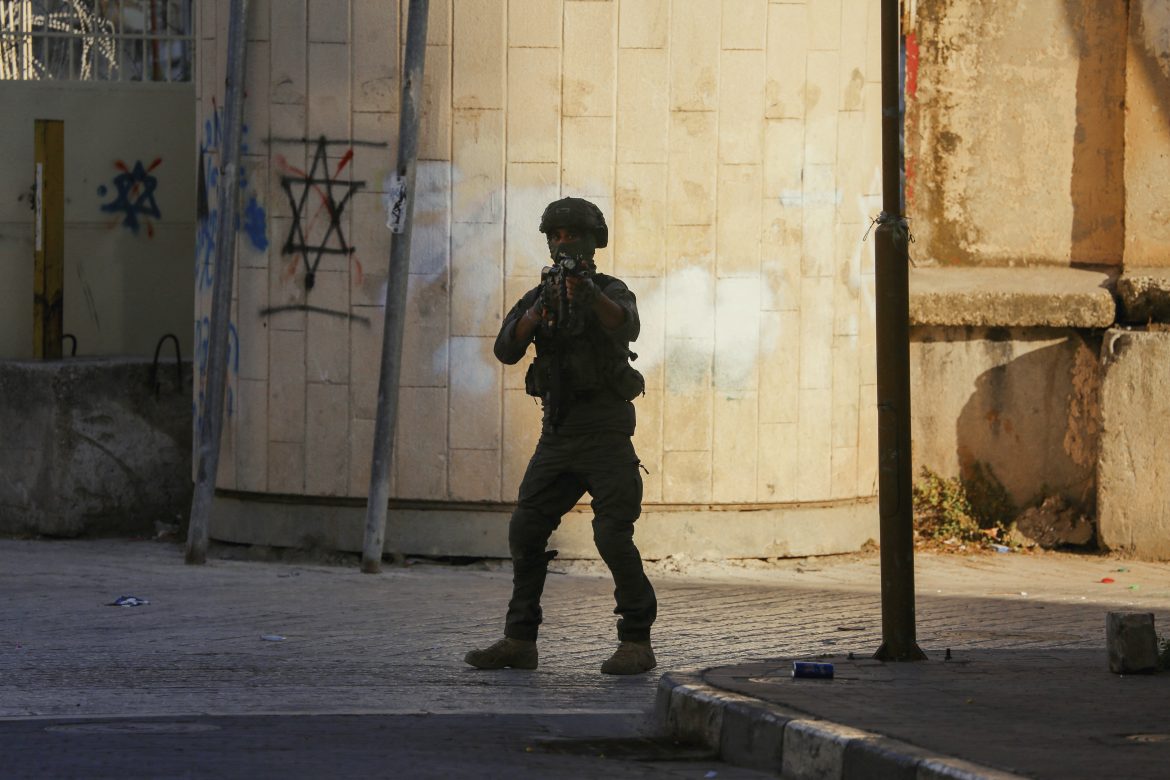
Israel’s war on Gaza is a geopolitical existential catastrophe, with 71,266 Palestinians in Gaza and 1,671 Israelis reported killed in less than three years as of December 2025 according to Humanitarian Situation Update #351 from the United Nation’s Office for the Coordination of Humanitarian Affairs (OCHA). Additionally, the November 2025 Situation Report from the United Nations Relief and Works Agency for Palestinian Refugees in the Near East (UNWRA) documents a total of 1,048 Palestinians killed in the West Bank since October 2023.

Since October 7, 2023, the high-cost war has significantly impacted Israel’s economy without causing excessive rupture (it was still listed as the Organisation for Economic Cooperation and Development [OECD]’s third best economy in 2025 by The Economist as reported by the UK journal Globes) while completely decimating that of Palestine. While the International Court of Justice ruled in January 2024 that it was “plausible” that Israel was enacting genocide, the United Nation (UN)’s Independent International Commission of Inquiry concluded in a September 2025 report that Israel has committed and continues to commit genocide against Palestinians in the Gaza strip, which the 1948 genocide convention defines as “the intent to destroy, in whole or in part, a national, ethnical, racial or religious group.”The Israeli government maintains that it is defending itself against the attacks that took the lives of around 1,200 Israelis on October 7th, 2023.

A non-crippling macro blow

The Gaza war precipitated a pronounced decline in the economy of both polities, although the consequences are far from comparable between the two. At the end of 2025, Israel is experiencing significant wartime disruption to economic activity that is still accompanied by economic growth: According to IMF’s World Economic Outlook data for 2025, GDP is projected at $580 billion, with inflation at 3.2 percent and real growth rebounding to 2.5 percent in 2025 and expected to reach 3.9 in 2026 compared to that of 2024 which was 1 percent, the lowest in two decades. The Bank of Israel’s April 2025 forecast expected GDP to expand 3.5 percent in 2025 and roughly 4.0 percent in 2026, reflecting a rebound in private consumption and investment amid lingering conflict risks.

The human death toll has reached at least 1,671 civilians and soldiers, most of whom were killed during Hamas’ indiscriminate attacks on October 7th, as well as over 8,000 purportedly injured during the 3-year span. Towards the end of October 2023, Israeli Minister of Finance Bezalel Smotrich estimated per diem costs of war at around $260 million per day, a number which has increased dramatically as the scope, intensity, and fronts of the war—or wars—have expanded at numerous points within the three-year period. On May 30th, 2024, Amir Yaron, the governor of Israel’s central bank, said that defense and civilian costs of the war on Gaza war would reach $68 billion by 2025, a figure that still does not reflect the total economic cost of war on many fronts.

Behind those numbers is a story of a state that has been through a financially burdensome war, and yet is still growing. Perhaps the largest factor of Israeli economic resilience is its backing by the United States politically and militarily with at least USD 21.7 billion between October 2023 and September 2025, according to an October 2025 report released by US think tank Quincy Institute for Responsible Statecraft and Brown University’s Cost of War Project. The report notes that this number does not include the “tens of billions of dollars in arms sales agreements that have been committed for weapons and services” yet to be delivered. However, even though these figures imply a slow macroeconomic recovery, it is crucial to note that it is far from an organic growth, but rather one driven by government and defense spending, making this growth relatively unsustainable. Although the economy in Israel did not face collapse due primarily to the growth of its tech sector, the war on Gaza was expensive enough to risk medium-term economic destabilization and disparities between the sectors with many of them declining drastically, due to heavy military and fiscal war-time expenses.

The balance sheet of occupation

As the ICJ and the UN has emphasized throughout the course of the war, there have been countless breaches of International and Humanitarian law by Israel that mount to a high economic and political price. The Stockholm International Peace Research Institute (SIPRI), an international entity dedicated to compiling conflict and arms expenditure data, reported in April 2025 that the “global military burden,” defined as military expenditure’s share of GDP, increased to 2.5 percent in 2024. For Israel, military spending jumped by 65 percent to reach $46.5 billion in 2024, an 8.8 percent share of GDP which SIPRI notes as “the steepest annual increase since the Six-Day War in 1976.”

In March 2025, Bank of Israel (BOI)’s Amir Yaron claimed in a Jerusalem press conference that “the war once again is a testament to the crucial importance of a relatively low public debt-to-GDP ratio for the economy’s resilience to shocks”. Yet the public debt in Israel has reached almost 71 percent of GDP, with 5 percent deficit, as estimated by the BOI.

During war, displacement becomes an inherent reality for many, and an expensive one. A large magnitude of the direct fiscal expenditure of the government is the compensation and income replacement of more than 300,000 Israeli reservists that mobilized since the beginning of the war. The government also spends on sheltering and feeding of soldiers, which draws the figure close to 600 million shekel a day (USD 158 million), according to the Ministry of Finance. The displacements of these reservists also create a gap in the labor forces in their respective industries, which disrupt several production lines. The expected military budget for 2025 that was announced in March 2024, according to the Ministry of Defense, is 118 billion shekels (USD 31 billion), twice the one allocated for 2023. These numbers will not only enhance military and security sectors but will also include several budget cuts in other sectors that will ultimately have a direct effect in the general economic growth.

In addition to compensating reservists, Israel also paid compensation for around 60,000 of the northern residents evacuated due to the Israel-Hezbollah war and around 164,000 evacuees in the south due to the Gaza war. Although the total amount of displaced residents in the north exceeded the 60,0000 evacuees in the north and around 164,000 evacuees in the south, those officially evacuated were provided with living assistance, rent, and compensation for damages and losses in business revenues via the Israel Tax Authority. Additionally, incentives were provided for residents to return to their former places of work.

The cracks in construction

The war on Gaza has had significant spillover effects on the Israeli construction sector, with residential construction among the most affected segments. Before assessing the scale and nature of these losses, it is important to situate the industry within its broader structural and political context. The Israeli government has continued to allocate substantial funds toward settlement expansion and infrastructure in the occupied West Bank as part of the 2025 fiscal package and related multi-year plans. In July 2025, the government approved 918 million shekels (about $275 million) specifically for settlement infrastructure projects —a decision presented to the Knesset Finance Committee by Transportation Minister Miri Regev and Finance Minister Bezalel Smotrich. Moreover, in December 2025, Finance Minister Smotrich earmarked a broader 2.7 billion-shekel (approximately $843 million) plan over the next five years to expand and enhance settlement communities, infrastructure, land registration, and associated services beyond the Green Line — a package detailed by Israeli outlets based on official budget directives and statements from Smotrich’s office. By the end of 2024, the Israeli Yesha Council reported that the settler population had surpassed 500,000. This activity takes place in territory that the International Court of Justice, in its advisory opinion issued on 19 July 2024, determined to be under an unlawful occupation.

While the construction sector did not experience a full collapse following the outbreak of the war, it was significantly affected by labor shortages. A primary factor was the sharp reduction in the availability of Palestinian workers, following an October 2023 decision by the Israeli government to restrict their entry into Israel and to close crossings from the occupied West Bank. This disruption resulted in an acute manpower shortfall. In December 2023, Israel’s finance minister estimated daily economic losses at approximately USD 830 million, underscoring the sector’s dependence on Palestinian labor. Since the start of the war, numerous construction sites and residential projects have been temporarily suspended or closed, citing security considerations and the reallocation of resources toward defense-related needs. According to Israel’s Central Bureau of Statistics, by the first quarter of 2024, 41 percent of housing construction sites in Tel Aviv were inactive. Despite continued investor interest premised on Israel’s economic resilience, elevated levels of security-related and regulatory uncertainty have constrained real estate development and delayed investment decisions.

Turbulence in tourism

Travel to Israel declined sharply following the outbreak of the war on Gaza, as heightened security risks, regional instability, and international travel advisories weighed heavily on tourism demand. In parallel, Israel’s global image has come under increased scrutiny amid the conduct of the war, contributing to reputational effects that may have further discouraged discretionary travel. The Israeli Ministry of Tourism reported a 90 percent year-on-year decline in international tourist arrivals in 2024, with arrivals falling to approximately 880,000, down from 2.95 million in 2023—levels not recorded in more than a decade.

The contraction in inbound tourism significantly reduced revenues across the broader hospitality ecosystem, including airlines serving Israel, hotels, and leisure facilities. According to the Ministry of Tourism, cumulative losses in the tourism sector reached an estimated USD 3.4 billion by the end of 2024. While domestic tourism activity has partially mitigated the downturn, its capacity to stabilize the sector remains limited and remains highly contingent on developments in the regional security and diplomatic environment.

The tech sector savior

The above sections have established that the economy in Israel remains resilient. One of the main drivers for this resilience is the tech sector. According to the Israeli Innovation Authority (IIA), the tech sector accounted for almost 20 percent of GDP as of 2023 with an output of USD 85 billion a year, contributing to over half of the country’s exports. This economic endurance has brought Google, Microsoft, and Amazon to establish research and development centers in Israel located in Tel Aviv and Haifa over the past decade. The sector, which is a cornerstone of the Israeli economy, has a significant role in the global innovation landscape for its advanced manufacturing, research, and development worldwide.

Even though the sector remains standing on solid ground, the war on Gaza has slowed down its growth due to work force depletion, slow investment and formation of startups, in addition to the hesitation of the international market. In 2022, there were 508,440 employees that actively worked in the technology sector in Israel. The IIA noted that this number fell to 390,847 employees in 2024 after the beginning of the war on Gaza. Nonetheless, as mentioned above, the sector, whose main components are cybersecurity, AI, medical technology, and fintech accounted for almost 20 percent of GDP before the war, a figure that has dropped to reach 17 percent of GDP in 2024.

The tech sector might be bleeding from one end, but it is certainly also blooming from another. Despite a decrease in investments, it is important to note that during 2025, Israeli tech companies have experienced an exceptionally strong mergers & acquisitions market, reaching USD 71 billion, five times that of 2024, according to Avi Hasson, CEO of Startup Nation Central in a May 2025 statement: “We are seeing fewer rounds, but at record sizes, signaling confidence in scale-ready companies. At the same time, global buyers are making some of the boldest bets we’ve ever seen on Israeli tech, especially in cybersecurity.” The Israeli government has worked hard on its national and international cybersecurity tools, many of which are used to support propaganda and create influence campaigns.

The cost of a makeover campaign

The United Nations’ recognition of Israel’s war on Gaza as a genocide, with the killing of over 70,000 Palestinians in Gaza and the damage or total destruction of 92 percent of all residential buildings in Gaza, according to a UN estimate as of April 2025, has negatively impacted Israel’s global standing. In an effort to bolster its reputation at home and aboard, Israel has invested a significant amount on propaganda to help relieve the economic isolation and reputational risks the country faces. In late 2024 and early 2025, the Israeli government approved a significant increase in its “hasbara” budget (which translates from Hebrew to “explanation”), allocating an additional $150 million (approximately NIS 545 million) to the Foreign Ministry for these efforts. This amount represents a more than 20-fold increase over previous annual allocations for public diplomacy. Additionally, Israel’s Government Advertisement Agency reports spending USD $120.5 million in 2024 on sponsored Google Ads. A report by Turkish news agency, Andolu Ajansi, states that in June 2025, the Israeli government advertisement bureau spent USD $50 million on X, Google, and other platforms to oppose anti-Israel narratives as well as media aimed at exposing famine and alleged war crimes in Gaza.

Counting the costs in the Gaza Strip

The World Bank describes the economy in Gaza as being “near total collapse”, with the GDP falling 17 percent in the West Bank as of 2024, and 83 percent in Gaza. The UN Conference on Trade and Development (UNCTAD) reported in November 2025 that Gaza’s GDP stood at $362 million in 2024, or $161 per capita. Furthermore, the public debt of the Palestinian Authorities before the war, according to the IMF, was 50 percent of GDP in 2022, which has also increased drastically since the beginning of the war to reach almost 80 percent of GDP by mid-2024.

As the World Bank has stated repeatedly, data collection in Gaza is nearly impossible since almost all economic activity has ground to a halt. Before the conflict, the economy in Gaza was mostly reliant on small industries, agriculture, and service jobs, some that were based in Israeli territories.

Gaza’s crippled economic sectors

The largest contributor to the economy in Gaza before the war was the service sector, contributing to roughly 60 percent of total GDP, which includes healthcare, education, public administration, and transport. The healthcare system in Gaza is operating in a state of near-collapse under the cumulative pressures of sustained military operations, infrastructure damage, and severe supply constraints. According to a May 2025 news release from the World Health Organization, only 19 of Gaza’s 36 hospitals remain partially operational, and of these, 7 are able to offer only basic emergency services.

Gaza’s education system has been largely incapacitated by the conflict, with widespread damage to schools (the UN’s education and cultural organization, UNESCO, reported in February 2024 that 563 school buildings have been bombed) prolonged closures, and the displacement of students and educators. The suspension of formal schooling and limited access to alternative learning modalities have disrupted education at scale.

Moreover, the agricultural infrastructure in Gaza, which contributed to about 6 percent of GDP before the war, was critically impacted. The Food and Agriculture Organization of the UN (FAO) reported in a March 2025 assessment that only 4.6 percent of Gaza’s total cropland is available for cultivation, while more than 80 percent of it has been completely damaged.

With schools, hospitals, and businesses in almost complete ruins, partial to complete blockades have exacerbated the situation. During the aid blockade from the beginning of March 2025 through mid-May, the prices of food and basic necessities skyrocketed, with OCHA reporting that a single bag of flour cost between $300 and $500. The United Nations officially declared a famine in Gaza on Friday, August 22, blaming “systematic obstruction” of aid by Israel during more than 22 months of war. Israeli Prime Minister Benjamin Netanyahu swiftly dismissed the findings and rejected the UN-backed report as “an outright lie.”

The socio-economic aftermath

In the aftermath of the war, Israel witnessed an unprecedented mental health crisis. The Israeli ministry of defense reported that the number of people that received psychological treatment in 2024, due to PTSD, anxiety, and depression, increased by 421 percent compared to 2022. This surge in the need for mental health facilities led to a significant increase in funding to expand psychiatric clinics and mental health services in 2024. “We have allocated $88.4 million USD for psychiatric services in 2024, and 163.4 million USD for 2025,” reported Gilad Bodenheimer, head of the mental health department in the Ministry of Health in an October 2025 statement. A study conducted in July 2024 by Social Finance Israel (SFI), a nonprofit Multidisciplinary Association for Psychedelic Studies revealed that the economic burden of PTSD, post-traumatic stress syndrome, alone is estimated reach 53 billion USD over the next five years.

As for Gaza, between 15 June and 15 August 2024, the World Health Organization conducted a study to evaluate the prevalence of anxiety, stress, and depression among internally displaced people in the Deir al-Balah and South Gaza, mainly those forced to live in tents. The prevalence of depression, stress, and anxiety were 99.5 percent, 93.7 percent, and 99.7 percent respectively, though there is a tremendous paucity of mental health data available across the population.

April 22, 2026 0 comments
0 FacebookTwitterPinterestEmail
AnalysisEconomics & Policy

The war next door

by Jamile youssef April 22, 2026
written by Jamile youssef

This analysis was written as part of a Special Report on the repercussions of war across six polities from October 7th, 2023-December 2025

Jordan has not reported destruction and direct economic losses either immediately after the attack of October 7, 2023, or in the two years after. However, the Hashemite’ Kingdom’s economic structure and geopolitical position rendered it exposed to the war between Israel and Hamas. Jordan had a diplomatic and humanitarian role in the conflict, including airdropping aid and keeping a field hospital in Gaza. From the beginning of this war, Amman has consistently opposed any plan to move Palestinians from Gaza or the West Bank into its territory and has withdrawn its ambassador from Israel in protest of the military action. Although being its neighboring country, the government stated that no Palestinian refugees entered its territory as a result of the conflict apart from those admitted for medical treatment.

The war has had a significant impact on Jordan’s society and caused losses to the economy despite the country’s lack of military involvement. These effects include trade disruptions caused by Red Sea instability, temporary drops in tourism from 2023 through 2025, unquantified consumer market shocks from boycotts—countered in part by increased consumption of locally manufactured goods, uncertainty, and both financial and diplomatic pressure from its reliance on outside funding particularly from the United States (though the 2025 dismantling of the United States Agency for International Development caused multi-sector shocks across the country—which had been the third-largest recipient of USAID from 2021-2025) and European Union. The conflict’s reported human cost of over 67,000, mostly civilian deaths and 169,000 injuries on the Palestinian as of late 2025, has deeply influenced Jordanian public opinion and political dynamics, resulting in protests and demands to stop any cooperation agreements with Israel.

Macro-impacts and aerial disruptions

Before the onset of the Gaza conflict, Jordan was still recovering from the COVID-19 pandemic. According to International Monetary Fund (IMF) data, real Gross Domestic Product (GDP) growth, which had been negative at -1.1 percent already in 2019, recovered to 3.1 percent in 2023, a new peak since 2010. This was due to tourism sector expansion, gradual development in external demand, and fiscal consolidation that supported inflation stabilization and regained investor trust. However, this trajectory was disrupted in October 2023 when the Gaza war broke out and instability began to spill over into neighboring countries. The IMF reported that in 2024, Jordan’s real GDP growth slowed to 2.5 percent.

The economic spillover was first felt in the tourism sector, one of Jordan’s primary sources of foreign currency. According to the Ministry of Tourism and Antiquities, by the end of the first quarter in 2024, visitor numbers had dropped by 3.9 percent and tourism receipts had fallen by 2.3 percent compared to the year before. This decline was associated with North American and European travelers’ security concerns and broader regional disruption in mobility affecting schedules of airlines and cruise ships. Airspace closures April and October of 2024 as well as June 2025, taken as a precaution amid Israel-Iran missile exchanges, added further uncertainty and temporarily disrupted connectivity.

Additionally, it must be assumed that some direct military costs incurred for the government in Amman, although there is no specific data on the cost of national air‑defense systems intercepting Iranian drones in Jordanian airspace.  

Looking ahead, the IMF’s 2025 World Economic Outlook projects a 2.6 percent real GDP growth in Jordan by 2025, assuming no further escalation of the war and stabilization of external trade. Any disruptions in Red Sea shipping or any new political tensions could, however, easily drag growth below projections. Other than risks for trade and tourism as key sectors in the Jordanian economy, the nation’s economic structure and its reliance on foreign aid—particularly to organizations that support Palestine but are based in Jordan such as the United Nations Relief and Works Agency for Palestine (UNWRA)—increase its vulnerability to resurgence of regional conflicts, which at time of this analysis cannot be excluded, and to geopolitical developments in general.

Beyond costs incurred due to nearby conflicts and regional uncertainty, there is also a considerable domestic cost associated with Jordan’s diplomatic stance that incurred popular wrath. The Gaza conflict and the Israeli actions in the enclave in the past two years resulted in large nightly protests in Amman and other major cities, reflecting a rise in public opposition to any form of cooperation with Israel.

At the same time as being faced with irate voices in its populace, the government in Amman managed a difficult diplomatic dance of avoiding diplomatic confrontation with international powers that are of strategic importance for its economy. It offered support to the Gazan people through deliveries of humanitarian aid, by taking strong and consistent positions of supporting a Palestinian state in international forums, and by supporting legal action at the International Court of Justice after publication of the 2024 ICJ advisory on the illegality of Israel’s occupation.

Although Jordan was able to absorb economic disruptions related to the Gaza conflict and keeping armed confrontations outside of its borders, the Hashemite Kingdom’s has had to balance conflict potentials that can erupt in the short or long term. Continued Israeli military presence in South Lebanon over the past 12 months has been noted in international media as a “rolling war,” and the continual ceasefire violations and what more than 20 UN-appointed expert observers refer to as the “militarized control” over Gaza, in conjunction with a West Bank regime enacting what the UN High Commissioner for Human Rights refers to as “systemic discrimination and “systemic asphyxiation” of Palestinian rights, can be called a perma-crisis. Under such conditions, Jordanian long-term growth remains subject to future iterations of internal fault lines, unrest, and even strife. Jordan’s flexibility in foreign partnerships would severely suffer in such a scenario, and external cooperation agreements with Israel on water and energy may be further disrupted, two areas vital to its economic and environmental security.

Socio-economic losses and humanitarian consequences

During the Gaza conflict, Jordan maintained strict border control, and did not open its borders to any new influx of refugees from Gaza or West Bank communities targeted by hostile settlers, despite the Kingdom’s shared border with the occupied West Bank. This special vigilance at the time of intense conflicts within the neighboring territories is widely seen as reflecting both security considerations and political sensitivities rooted in Jordanian history.

Vigilance combined with humanitarian and diplomatic support for Palestine were part of the Kingdom’s socioeconomic balancing act between popular pressures and economic survival. Under this calculus, the Jordanian population was spared recurrence of the per-capita cost burden of new refugee camps and large-scale displacements seen in the past decade. Jordan was also spared military destruction and damages, apart from the minor damages incurred by the accidental fall of drones on civilian infrastructure. But estimations of economic losses, and specifically conflict-related negative impact on per-capita incomes and familial livelihoods, have neither risen to the top of global attention nor to highest analytical precision.  

In a preliminary estimate of the Gaza conflict’s economic repercussions on the three countries of Jordan, Egypt, and Lebanon during the first three months of armed violence in Gaza, a joint assessment by the United Nations Development Programme (UNDP) and the United Nations Economic and Social Commission of Western Asia (ESCWA) put the negative GDP impact at $10.3 billion for the three countries. A projected USD $18 billion loss for 2024 was later invalidated by escalations in Lebanon. Jordan-specific estimates remain imprecise but point to reduced government revenue, delayed infrastructure investment, and slower progress on social protection, education and healthcare.

Sectoral impacts and opportunity costs

Tourism’s dip and rise

According to Ministry of Tourism and Antiquities quarterly review, Jordan’s tourism aggregates in 2023 did not suffer from regional instability but showed increases vis-à-vis the preceding pandemic as the number of visitors improved and tourism receipts increased by 25.8 percent from 2022. However, looking at the period between November 2023 till September 2024 when global headlines were filled with daily coverage of the Gaza conflict, tourism aggregates shifted and expected sectoral revenues of $530 million were not realized according to the Ministry’s quarterly review. Even as visitor entries from the Arabian Gulf region increased, the number of visitors was considered low, as fewer international visitors entered. 

While the overall decline in visitor arrivals and tourism receipts in 2024 was minor, tourism and hospitality operators reported changes in cruise ship itineraries away from Aqaba, Jordan’s only port, and flight suspensions at Amman’s Queen Alia airport, which in 2024 saw a single-digit percentage contraction in passenger numbers alter two years of growth. The temporary contraction of visitor numbers affected local businesses, seasonal workers, tour guides, and transport operators. It did not, however, impede medium-term growth of Jordan’s inbound tourism as shown in a strong rebound in tourist arrivals already in January and February of 2025. Over these two months, Jordan recorded the highest number of tourists and receipts since 2010. According toMinistry of Tourism and Antiquities, the country’s tourism revenue for the first quarter of 2025 reached $1.72 billion, a year-on-year 8.9 percent increase.

Trade route disruptions

Accounting for one third of the country’s imports and about half of exports, Jordan’s Port of Aqaba plays a vital role in the country’s trade infrastructure. Attacks were initiated in October 2023 on the vital Gulf of Aden and Red Sea shipping lanes by Yemen’s Houthis, part of the “axis of resistance” that entered the Gaza conflict by attacking Israeli and allegedly Israel-linked targets.  Vessel rerouting around the Cape of Good Hope increased fuel and insurance costs and created inflationary pressures for Jordanian producers and consumers.

To mitigate this trade disruption and avoid major drawbacks, the Jordanian government set a temporary exemption on sales taxes and custom duties on maritime shipping costs in January 2024. Al-Aqaba port import and export levels have nonetheless declined dramatically.

Land-based trade across Jordan’s western border has also been impeded. Since the Gaza war escalated, cross-border trade via the King Hussein /Allenby Bridge, Jordan’s primary commercial crossing with the West Bank, has initially remained open and facilitated bilateral trade (albeit 3:1 disparate in favor of Jordanian exports) between Jordan and Palestine at a reported level of above $400 million (2023) but has become more vulnerable.

Following a September 2025 incident where a Jordanian truck driver killed two Israeli soldiers at the crossing point, Israeli authorities closed the Allenby Bridge “indefinitely.” Despite a partial reopening at the end of the same month, forward looking implications for trade are significant, albeit shrouded in uncertainty due to the overall situation. According to records of recent years, a closure has repercussions on deliveries of humanitarian aid shipments to Gaze. About a quarter of the food, tents, and other essential supplies that were sent to Gaza via the UN 2720 mechanism in August 2024 went through Jordan.

A drop in GDP growth rates for Jordan in 2024 from 2023 seems to be signaling the extent of the country’s direct and indirect economic losses from two years of war over and on Gaza. This impact may be recovered organically by GDP growth returning to higher levels, as per IMF projections.  Although no consolidated numerical value of the cumulative economic cost to Jordan’s trade and tourism sectors is available, it has to be concluded that both sectors represented the primary channels of conflict-related impact on Jordan in the past two years.

Boycotts, public strikes and consumer behavior

A locally significant, and highly publicized, behavioral economic and social impact of rising Pro-Palestine and Anti-Israel sentiments of Jordanian consumers occurred by way of an increasingly active consumer boycott movement targeting global food and beverage companies that are considered pro-Israel. Boycotting international companies, alongside public strikes, was a way for Jordanians to show support for Palestinians. Local advocacy organizations, civil society networks, and social media platforms helped expand the campaign, turning individual consumer choices into a political and economic statement. While some demand shifted to locally produced goods and local firms, Jordan’s high import-reliance meant that supply chains, packaging, distribution, and franchise operations were negatively impacted. Boycotts have a long history, and while being both ardently declared and denied or met with counter campaigns, their economic impact comprised of supply chain and brand reputation effects, has historically been near impossible to predict.

When energy imports are interrupted

According to the World Integrated Trade Solution, a World Bank platform for trade and tariff data, Jordan’s internal consumption was 57 percent import-dependent in 2023, with food and energy as the sectors with the largest share of imports. Jordan generates a significant portion of its electricity from natural gas, which is mainly imported from Israel and Egypt. The Arab Gas Pipeline, a transregional national gas pipeline that runs from Egypt through Jordan and Syria, has seen disruptions in its flows since the late 2023 regional instability. In the previous decade from 2010 to 2019, which is noted by the Jordanian government as a period of low GDP growth, the kingdom’s energy sector had to grapple with planning and implementation of its first green growth vision and rollout of renewable energy plants, growing domestic power demands and increased generation costs while citizens were faced with contentious reforms to electricity subsidies. Fiscal burdens of the energy sector increased with costly impacts on electricity pricing and public spending.

Furthermore, Jordan’s sustainable freshwater resources are less than 100 cubic meters per person annually, considered far below the worldwide water poverty line as projected in a United Nations International Children’s Emergency Fund (UNICEF) 2025 report.

As the kingdom’s new water and energy nexus was shaped in the 2010s (juxtaposing poverty in freshwater resources and fossil energy with burgeoning of renewable energy), first purchase agreements for natural gas from offshore Israeli fields Tamar and Leviathan were signed – amidst protests Project Prosperity, – and negotiations for a water-for-renewable energy project commenced. The latter, called Project Prosperity, became politically untenable and suspended due to public objection during the Gaza war.

There are direct costs and opportunity costs associated with postponement of this collaboration project, which had been designed under a regional integration agenda with involvement of the United Arab Emirates and diplomatic support by the USA. Foregone water security benefits and delayed investments in auxiliary infrastructure, reduce Jordan’s negotiation power and weaken its ability to attract green funding for large-scale infrastructure projects. This notwithstanding, with undiminished needs for regional water and energy cooperation over coming decades and in the presence of the Jordanian national water strategy as well as the kingdom’s ambitious economic and social development 2022-2033 roadmap that aims to more than double the annual GPD growth rate seen in the low growth decade of the 2010s and create one million new jobs  – a 65 percent increase from 2021 job stock of 1.59 million – under a multi-source capital expenditure vision of 41.4 billion Jordanian dinar ($58.4 billion USD).

Measuring divergencies of real GDP growth and sectoral objectives for manufacturing and its sub-sectors such as food, chemicals, pharmaceuticals, and textile, as well as strategic services in trade, tourism, education, healthcare, and finance, plus the energy and water nexus, against the economic roadmap, which represents the Hashemite Kingdom’s latest development agenda, and its timeline for the coming eight years, could be considered as proxy indicator for the economic losses and opportunity costs that Jordan faces in a post-conflict scenario of non-violence from 2026 onward.   

A neighbor to suffering

More immediately, although Jordan’s population has not directly been impacted by the conflict in Gaza in terms of their physical health, there are costs to the healthcare system. Costs directly related to the Gaza conflict entail the operation of a field hospital in the enclave, the provision of emergency medical care to civilians, including burn treatment, as well as trauma therapy, and treatment for long-term illnesses. Jordan’s substantial participation in regional humanitarian response is demonstrated by the close coordination between foreign humanitarian groups and Jordanian medical personnel. Additionally, the field hospital has served as a symbol of Jordan’s humanitarian and political support for the Palestinian people.

Indirect psychosocial effects are impacting Jordan as well. Psychosocial stress levels and mental health among the country’s host communities and refugee populations have significantly increased, according to UNICEF 2023 Integration of Mental Health and Psychosocial Support in Primary Health Care report, with high cases of anxiety, fear, and grief, especially in urban areas like Amman, Zarqa, and Irbid. Furthermore, the UNICEF 2024 annual report on Jordan described that through political mobilization, media coverage, and familial ties to Gaza, where many Jordanian families have relatives, these populations have been exposed to the conflict in an indirect manner. In addition to increased tension during times of increased violence, mental health professionals report an increase in anxiety, despair, grief, and emotional distress, especially among young people and vulnerable populations. These mental burdens and the related costs must be expected to outlast the validity of any economic development plan.  A September 2025 investment case by the Jordanian Ministry of Health and World Health Organization on mental health in Jordan found that in 2023 mental health conditions imposed an economic burden of approximately 251.8 million Jordanian dinars, equivalent to about 0.75 percent of the country’s GDP, including both direct healthcare expenditures and substantial indirect costs such as lost productivity

In the end, what emerges from Jordan’s position in the post–October 7 regional landscape is less a distinct economic imprint than a confirmation of the country’s structural exhaustion. The war in Gaza may have sent measurable macro-shocks across neighboring economies, but in Jordan those signals have been absorbed—muted, refracted, or simply lost. What does stand out is the degree to which Jordan’s vulnerability is now systemic rather than episodic: exposure to climate stress, reliance on remittances, dwindling state capacity, and deepening poverty leave little buffer against any external shock, whether geopolitical or environmental. As the region recalibrates to a new equilibrium of protracted instability, Jordan’s trajectory is a warning that without regional integration, peace and stability, every new crisis adds an additional layer of drawn-out economic fatigue.

April 22, 2026 0 comments
0 FacebookTwitterPinterestEmail
Executive talks

The American University of Beirut as sanctuary amid horrors and incubator of hope

by Executive Editors April 17, 2026
written by Executive Editors

Executive talks to Dr. Fadlo R. Khuri, President of the American University of Beirut, about the impact of Lebanon’s immediate and ongoing security situation on higher education, the resilience required to lead a major university in times of national crisis, and how AUB is meeting the moment while preparing students and institutions for the future.

April 17, 2026 0 comments
0 FacebookTwitterPinterestEmail
Executive talks

Higher education in times of turbulence

by Executive Editors April 9, 2026
written by Executive Editors

Executive talks to Dr. Chaouki Abdallah, President of the Lebanese American University, about how higher education leadership is responding to Lebanon’s ongoing turbulence, what sets Lebanese students apart, and the challenges and opportunities facing the country’s academic sector.

April 9, 2026 0 comments
0 FacebookTwitterPinterestEmail
Explainer

From Data to Decision

by Jamile youssef March 30, 2026
written by Jamile youssef

The Lebanese people’s suffering and misery is a seemingly never-ending story. Its latest data point is February 28, 2026. The day when a “pre-emptive” attack pitted Israeli and US aggressors against Iranian ideological theocrats in mutual acts of war which UN Secretary General Antonio Guterres, immediately and emphatically, condemned as violations of Article 2 of the UN Charta by the three conflict actors.

But regardless of all words and better knowledge, Hezbollah’s missiles and drones, and soon the much more destructive IDF military inventories started being deployed from and against Lebanon. From a March 1 perspective, the only predictable outcome is the horrid civilian body counts and massive economic destruction on the Lebanese side that are in no way proportional correlation to the Arab instigators of “retaliation”.

Again. And again. And again, Lebanon’s diverse residents will not only suffer immediate pains beyond measure but economic growth will be regressing and investors’ justified fears will paralyse all economic development plans of another, hapless, Lebanese government. If, by Executive editors’ educated guestimate, a virtuous cycle of real and sustainable economic growth would take x, y, and z (x years, y overdue systemic reforms and innovations, and $80 to 100 million in capital expenditure) the first variable has moved to x+1 (or more) years, and $90 to 120 million capex.

However, when intoning the latest dire over the local fortunes, it must not be forgotten that regional instability and deliberate aggressions are not the only causes of the country’s perennial malaise. One particular structural weakness (among a plethora of systemic problems) that lies beneath Lebanon’s economic crisis and financial collapse is the absence of institutionalized economic intelligence to guide decision-making. This shall be the focus of this analysis, because it might be the only ingredient in the cauldron of current disasters that the Lebanese people can mitigate and counteract.

For decades, Lebanon operated without a systematic framework to anticipate economic risks, simulate policy outcomes, or align fiscal, monetary, and sectoral policies. To immediately rectify a common misperception of local stakeholders: this structural weakness is not due to a total absence of data collection and analysis. Baque du Liban (BDL), the Lebanese central bank, continues to publish monetary and financial indicators; however, certain components have not been updated in recent years. The two ministries of finance and of economy equally have released reports and statistics, but publication has been absent in recent years. The Central Administration of Statistics has maintained monthly publication of the Consumer Price Index (increased from quarterly publication in 2007), yet other critical datasets have not been updated with the same frequency.

The issue, therefore, is not the complete absence of data, but uneven publication cycles and the lack of consistency and continuity across institutions. As a result, decisions have often been taken under pressure, without assessing broader economic trade-offs or long-term consequences.

In the Lebanese case, data informs intellectual insight, arguments, debates and roadmaps – and Executive’s economic roadmap is as much a proof in this pudding and other consultancy papers and civil society studies – but the local lesson is that it does not guide decisions. What is missing is not technical expertise, but an institutional system that connects data, analysis, and policy in a structured way. Economic intelligence is that system. It is the capacity to transform data into analysis, analysis into scenarios, and scenarios into informed policy choices.

What is economic intelligence?

The government’s decision in mid-February of this year to raise public sector wages and finance it through higher fuel prices and value added taxes, is an example for a fiscal decision, taken under pressure, that affects the entire economic system. Such measures influence inflation, household purchasing power, and business costs. These decisions cannot be treated as isolated fiscal adjustments. They require careful assessment of risks, projected outcomes, and trade-offs before implementation. That structured capacity to anticipate impacts and align policy with economic conditions is what defines economic intelligence.

Economic intelligence is a core function of modern governance. It strengthens economic resilience and enables informed decision-making, particularly in periods of uncertainty. While the term is not commonly used in Lebanon, the concept is central to how effective governments manage their economies.

Data alone does not generate clarity. Statistics describe what is happening, but they do not explain why it is happening, how variables interact, or what the consequences of policy changes may be. Inflation, for example, cannot be analysed and understood alone. A rise in prices may result from currency depreciation, supply shortages, monetary policy, fiscal expansion, or global commodity shocks. Without a framework that maps these relationships, policymakers operate with separate data points rather than an interconnected system. At its foundation, economic intelligence is the systematic collection and analysis of economic information to inform public policy. It requires observing variables across months and years, to allow policymakers to identify trends and cycles.

Beyond data, economic intelligence demands technical and institutional capacity. Governments must be able to construct and interpret economic models. Economic models are the analytical tools that simulate how key variables interact and how policy interventions may influence outcomes. These models build relationships between different variables and enable authorities to test alternative scenarios before reforms are implemented.

However, this alone is insufficient. Statistical agencies, ministries of finance, central banks, and planning entities must coordinate to operate within an integrated system were analysis flows directly into policy decision-making. Transnational entities such as the International Monetary Fund, the World Bank, or the Organisation for Economic Co-operation and Development, as well as governments in developed and developing nations around the world, usually through either capacious ministries and central banks or independent economic expert councils, rely on structured modelling frameworks to produce macroeconomic forecasts and analysis. These exercises are not only statistical reports, but they also evaluate current situations and adverse scenarios, quantify risks, and help policymakers understand the consequences of different policy choices.

How economic models are built

Economic models may appear complex or technical. In reality, they are built through a logical and structured sequence. The process begins with reliable data. Governments and institutions gather information such as national income, inflation, employment, public finances, trade flows, interest rates, and sectoral performance. However, raw data alone is only descriptive and insufficient. It tells us what is happening, but not why it is happening or what may come. The next step involves asking the right questions about how impactful variables interact. For instance, how does inflation respond to changes in the national exchange rate, how might changes in taxation influence revenues, investment behaviour, and distributional outcomes, or how will energy prices affect production costs across sectors?

These relationships are not assumed; they are estimated using historical patterns and empirical analysis. From there, models include assumptions. Assumptions reflect expected trends in growth, fiscal policy, monetary conditions, demographic shifts, or external factors such as global commodity prices. Assumptions also often determine the direction of projections.

Once relationships and assumptions are defined, models generate scenarios. Scenarios may reflect current policies and expected trends. It may also project fiscal adjustment, economic reform, or an external shock. By comparing these outcomes, policymakers can assess potential consequences before decisions are made and implemented. The economic modelling results must be interpreted within institutional, political, and social contexts.

Economic intelligence shifts policymaking from reacting to problems toward planning. The difference does not lie in the amount of data available, but in the ability to use that data in a structured way. Economic models are tools that help governments project future deficits and assess, for example, whether public debt is becoming unsustainable or how shocks may affect different sectors. Their effectiveness, however, depends on whether institutions are capable of interpreting outcomes and integrating its findings into policy decision-making.

Lessons in economic intelligence

Economic intelligence is not exclusive to advanced economies. Many countries that have undergone structural transformation share a common institutional trait: they built systems that allowed them to anticipate economic developments rather than respond only after crises. Their success did not come from having more data, but from organizing that data into structured forecasting, coordinated planning, and scenario-based decision-making.

Japan is widely considered as one of the most advanced and coherent economic intelligence systems in the world. The Ministry of International Trade and Industry played a central role in shaping Japan’s economic strategy by aligning trade policy, technological development, and macroeconomic planning. Sectoral data, export performance, and global market trends were continuously assessed to guide strategic economic decisions. Economic intelligence was embedded across institutions: government agencies gathered and analysed macroeconomic indicators, corporations contributed real-time market information, and research institutions supported forecasting methodologies. This institutional coordination created an environment in which policy decisions were informed by forward-looking analysis rather than reactive adjustments.

The United Arab Emirates (UAE) represents a different but equally instructive model. Aware of the risk of long-term oil dependency, the UAE embedded scenario planning and fiscal sustainability into its national development strategies. Diversification into logistics, aviation, tourism, financial services, and renewable energy did not emerge spontaneously, it was guided by structured assessments of global trade flows, demographic changes, fiscal projections, and energy price volatility. Oil revenues were treated as uncertain variables within macro-fiscal scenarios rather than permanent guarantees of growth. Economic intelligence, in this context, became a mechanism for risk management. By modelling revenue fluctuations and expenditure pressures, authorities align investment decisions with long-term resilience rather than short-term expansion.

Saudi Arabia provides another economic intelligence case through its Vision 2030 program, launched in 2016 as a national transformation strategy aimed at reducing reliance on oil revenues and expanding non-oil economic sectors. Vision 2030 is accompanied by detailed reform programs focused on fiscal sustainability, subsidy restructuring, labor market reform, and private sector development. Within this framework, economic modelling capacity expanded across ministries and public institutions. Fiscal sustainability analyses, energy price reform simulations, and labor market projections were used to guide the timing and sequencing of reforms. In this framework, economic intelligence became central to managing the transition from hydrocarbon dependence toward a diversified economic base.

In each of these cases, economic intelligence did not eliminate uncertainty. Japan experienced financial bubbles and economic slowdown. The UAE navigated oil price collapses and was heavily influenced by external shocks, notably the worldwide financial shock that translated into the Dubai experience of the Great Recession of 2007-9 and the just unleashed shock of war over the region. Saudi Arabia continues to face external volatility.

What distinguishes countries with economic intelligence capacities is not immunity from shocks, but the existence of institutional mechanisms designed to anticipate, model, and absorb them. Economic intelligence reduces strategic blindness, it allows governments to examine trade-offs before crises escalate, to test reform paths before implementation, and to connect long-term ambitions with measurable economic constraints. Save for the latest eruption of global and regional uncertainty by the ongoing rise in bloody, economically destructive, and by rational assessments needless warfare, the experiences of the most developed Arab peer countries in the past three or four decades illustrate how economic intelligence can shape economic strategy. The question, then is, where Lebanon stands.

Where is Lebanon today?

Lebanon’s economic landscape is characterized by high levels of informality, persistent political interference, and recurrent external and domestic shocks, from financial collapse to regional and internal instability. These conditions complicate policymaking and make anticipatory governance difficult. A significant share of labor and business activity operates outside the formal regulatory framework. When large segments of the economy are unrecorded or underreported, information and statistical pictures become incomplete. Hence, modelling and forecasting foundations are weakened as they depend on reliable and comprehensive data

Across different ministries and public institutions, key indicators are published, including Gross Domestic Product, the Consumer Price Index, B|DL balance sheets and money supply statistics. However, statistical methodologies are not always consistent, reports are not published regularly, and data updates can be delayed. Key datasets such as national accounts, labor, housing and educational statistics, and sectoral indicators often come with time lags that limit their usefulness for real-time planning and forecasting. Lebanon does not lack data, nor does it lack expertise but it may lack continuity in certain statistical series.

The country has capable economists, researchers, and skilled professionals across universities, public institutions, and international organizations. What is missing is institutionalization. Data may support discussions and debates, but it does not consistently drive decisions. Economic intelligence is not organized as a state-level system that systematically links data collection, analytical modelling, and policy decision-making. Neither in public institutions and the administration nor in independent private or civil organizations, one can find any permanent macro-fiscal modelling framework that regularly produces projections and reform or shock scenarios to guide medium and long-term planning.

The financial collapse intensified these structural gaps and exacerbated the use of short-sighted “fixes”. Multiple exchange rates emerged, and subsidies were reduced suddenly and without coordination, and fiscal measures were introduced separately and without a clear plan. This reflected not only political pressures, but also the absence of an integrated mechanism to assess economic trade-offs before policies were adopted. Crucial decisions, if they were not deferred endlessly and detrimentally because of political indecision or corrupt influences, were taken under urgency, often addressing immediate constraints without fully evaluating broader consequences.

Lebanon’s crisis, therefore, cannot be explained solely by misguided policy choices. It also reflects a deeper structural deficit: economic intelligence was not institutionalized in the past, and it remains absent today as a core function of governance. Without integrated data systems, consistent modelling capacity, and structured links between analysis and policy, reform becomes short-term and fragmented. And when reform is short-term and uncoordinated, instability tends to intensify rather than to ease.

Institutional reform

Lebanon’s economic collapse was not only the result of inadequate policy choices or external shocks. It was a result of a deeper institutional weakness, corruption, and absence of a coordinated system capable of transforming data into future planning. Without integrated statistics, consistent modelling frameworks, and structured links between analysis and policymaking, reforms are mismanaged, reactive, and short-term.

The way out of this misery begins by making economic intelligence a core function of how the state operates. This starts with improving the country’s data system. Lebanon needs harmonized statistical methods across ministries and public institutions, regular and predictable data releases, and better digital integration of administrative records such as tax and customs data, social security information, and sectoral reporting. Data production should not rely on temporary projects or external funding. It must be supported by clear institutional mandates, stable structures, and adequate resources. Strengthening the independence and technical capacity of the national statistical system is essential to restore credibility and rebuild trust in economic policymaking.

But data reform alone is insufficient. Economic intelligence also requires the establishment of permanent macro-fiscal modelling capacity within the public sector. This includes regularly produced projections, reform scenarios, and shock simulations that guide medium and long-term planning. Budget proposals, tax and public salary adjustments, subsidy reforms, and public investment strategies should be evaluated against transparent economic projections before being adapted and put into effect. Institutional coordination mechanisms must ensure that analysis informs decisions in a systematic rather than inconsistent manner.

Stronger data systems and modelling would improve fiscal planning, reduce uncertainty, and enhance policy credibility. They would also strengthen Lebanon’s negotiating position with international partners by grounding discussions in coherent and transparent projections, while encouraging both domestic and foreign investment. Economic intelligence is not an abstract concept and does not eliminate uncertainty nor guarantee stability; it lowers risk, improves policy sequencing, and increases accountability. Not institutionalizing economic intelligence, on the other hand, is an assurance of economic stupidity and can only indicate that inducing the Lebanese people’s misery is not only a foreign tool of violent aggression and oppression but also a local method.


March 30, 2026 0 comments
0 FacebookTwitterPinterestEmail
Analysis

The missing link

by Jamile youssef March 27, 2026
written by Jamile youssef

Before March 2026, the obstacles to recovery for Lebanon’s fractured economy were Herculean, but not completely hopeless. Standing in the way of reform were entrenched corruption and the ongoing aggression from Israel under the guise of a ceasefire [inlinetweet]following the 2024 conflict which displaced over a million people and inflicted billions in infrastructure damage. [/inlinetweet]Following the February 28 unprovoked US and Israeli attack on Iran, a renewal of that active conflict in Lebanon quickly escalated into a threat scenario where the human costs and infrastructure damage of the past two years could be exceeded and distrust and social tensions brought to new heights.

While the decisions over the new war and its regional escalation could at no time be influenced by the government in Beirut, the potentially world-changing conflict drives home a lesson on the importance of complete sovereignty. Governing a country in compounding crisis requires decisions made quickly, often under pressure, and with incomplete information. Yet Lebanon’s capacity to measure its own economy — to count what it produces, what it owes, who is working, and who is not — has severe limitations. This is a story about what happens when a state in crisis cannot reliably count.

Making the data work

Data collection in Lebanon does not operate through a single integrated system, and not all datasets are systematically published for public access. There is no single centralized platform where all relevant economic data can be accessed in one place. Cooperation generally exists, but standardization, accessibility, and consolidation remain limited. The system functions, yet it relies heavily on administrative effort.

From a public finance perspective, access to information is generally available. Obtaining budgetary and fiscal data often begins with formal requests. “Through my personal experience, never the data was not received,” says Tonia Salameh, economist and data analyst at the Institut des Finances Basil Fuleihan (IOF). “Sometimes the data is received very fast and sometimes not, but we receive it.”

Institutions generally cooperate. The challenge begins after the data arrives.

Rather than flowing through standardized digital systems, information may come in scanned PDFs, non-tabular Excel sheets, or even printed documents requiring manual entry. “Each institution has its own format. There is no unified format that everyone is using,” Salameh explains. “Sometimes we even receive papers, and we do the data entry.”

As a result, analysts spent significant time transforming and cleaning datasets before meaningful analysis can begin. Immediately focusing immediately on interpretation, analysts are required to standardize and reconcile raw data, increasing delays and creating room for inconsistencies. Salameh refers to the underlying administrative and digital infrastructure. “If the system is not available, you can’t gather high-quality data. If the system is old and not everything is automated, how will you gather the data?”

From the private sector perspective, the Chamber of Commerce, Industry and Agriculture of Beirut and Mount Lebanon compile economic reports by drawing from multiple official sources: the Central Administration of Statistics, Banque du Liban, the Ministry of Finance, customs authorities, and international institutions, each operating within its own reporting framework. Executive spoke with two representatives from the Chamber of Commerce who preferred that their responses be attributed to the Chamber as a whole, rather than to be personally identified. “We always get data from the main sources to ensure accuracy,” one representative explains. “But sometimes figures do not match.”

GDP estimates may differ significantly between domestic and international organizations, because of different methodologies. According to one anonymous representative from the Chamber of Commerce, the variance was “around 2 billion dollars” for nominal GDP in 2023 (IMF estimates were $23.6 to 24 billion). Additionally, the growth projection revealed a wide gap, the representative notes: “Even the IMF reports 3.5 percent growth, whereas the government says 5 percent.”

These discrepancies do not necessarily imply manipulation. They reflect methodological differences and the absence of a centralized consolidation and validation mechanism. Without institutional reconciliation, cross-verification becomes the responsibility of external analysts rather than the state itself. Similar challenges appear in labor statistics. Unemployment estimates vary widely across reports ranging from around 30 percent to over 40 percent. Additionally, the most recent comprehensive labor update dates back to 2022.

In agriculture, the Centre de Recherches et d’Études Agricoles Libanais (CREAL) presents a third model, one built on continuous field data collection rather than episodic surveys. “Statistics are continuous,” says Riad Saade, president of CREAL. “That’s the difference.”

CREAL’s system is self-funded and developed over decades. It tracks agricultural production across seasons, regions, and micro-economic variables. “We don’t study a product; we study the season,” Saade explains. Agricultural output varies by region, climate, irrigation methods, and production cycles, making seasonal monitoring more accurate than broad national averages.

CREAL relies on field engineers embedded in local communities to track planted areas, productive areas, yields, irrigation methods, production costs, and farmers’ prices. Data is double-checked and continuously updated, producing a detailed picture of agricultural performance.

Yet when asked whether the Ministry of Agriculture systematically relies on this data for policymaking, Saade’s answer is clear: “No, not at all.” CREAL’s ongoing assessment further suggests that while Lebanon’s agriculture sector has received substantial external funding over the past decades, output has not grown in proportion to that investment.  According to Saade, one reason for this is that many projects have not been effectively adapted to the Lebanese context or informed by local data. Instead, they often follow standardized international models led by foreigner project managers.

Across sectors, the pattern is consistent. Data exists. It is collected with effort. It is considered credible. But it is not systematically integrated into policy decisions.

Structural weaknesses beneath the numbers

A deeper constraint lies in digital infrastructure itself. Not all government data is fully digitalized. In some cases, datasets exist but are stored in outdated systems or paper archives. Without full automation, systematic extraction and aggregation become difficult. Lebanon’s statistical challenges extend beyond formatting issues. They reflect deeper structural realities.

A significant share of economic activity operates informally. Businesses remain unregistered. Labor is undeclared. Income is partially unreported. Even the most sophisticated statistical system cannot fully capture activity that escapes formal oversight. “Yes, the share of the informal sector in Lebanon is very high,” IOF’s Salameh acknowledges. “So, part of the data is not available to be analyzed.”

Political instability further disrupts continuity. During years when parliament failed to approve annual budget laws, fiscal reporting lost consistency. “We have data for some years, then not for others,” Salameh explains. “For instance, in 2021 and 2023, the budget law was not approved. We had the draft, but not the law.” Spending continued, but the annual budget was not formally approved by parliament. The issue was not the absence of figures, but the breakdown of institutional rhythm.

Exchange rate volatility added another layer of disruption. During periods of multiple exchange rates, economic values lacked a single reference point. Analysts were forced to calculate currency components separately. “With multi-pricing, you can’t build a strong economy,” a Chamber representative says. Currency inconsistency complicates not only markets but measurement. When prices, wages, and public accounts operate under different benchmarks, statistical comparability weakens.

CREAL raises a different but related critique: the design of donor-funded statistical projects.

“The project managers usually are international staff, and apply the standard methodology by the book,” Saade says. “The project is not usually adapted based on knowledge of Lebanon and its context.” His argument is methodological. Statistical models, he asserts, must reflect local diversity, production patterns, and socio-economic realities rather than rely exclusively on standardized international templates.

Informality, political instability and national insecurity, and exchange rate volatility are constraints that are mutually reinforcing: a large informal economy shrinks the tax base, which weakens institutional capacity, which reduces the quality of statistics, which makes it harder to design policies that bring informal activity into the formal economy.

If data exists, how much does it shape policymaking?

At the IOF, Salameh sees growing demand for evidence-based analysis. “Now there are more requests for data,” she says. “Everyone is realizing that we need evidence-based information to make decisions.” She adds, “Everyone is affected if a decision is not based on facts.”

From the Chamber of Commerce, the tone is less reserved. “If decisions were fully based on figures, we wouldn’t have been in this situation for six years,” said one representative who asked to remain anonymous, referring to the multi-layered economic crisis. At the same time, the Chamber noted that in areas such as port revenue and taxation monitoring, improvements have been planned. Efforts to strengthen revenue collection and reduce leakage show that data and oversight can support specific reforms, particularly in the context of fiscal collapse. However, these improvements remain limited rather than part of a broader systemic change.

Saade had another view. “Decisions are based on either incomplete data or incorrect data.”

The divergence in tone reflects a deeper uncertainty: data may be requested, but its integration into structured policy design remains inconsistent.

When decisions move ahead without reliable measurement, consequences accumulate gradually. Businesses may misjudge investment conditions. Citizens may face poorly adjusted tax or subsidy measures. Public spending may be misallocated. Reform sequencing may weaken. Inaccurate or incomplete data does not isolate risk; it spreads it across the system.

At the same time, economic figures now circulate rapidly in a politically charged digital environment. Salameh notes: “We are in an era of social media and technology, it is very easy for someone to publish any number, and it goes viral whether it is true or not.”

 For example, at the beginning of the economic crisis, claims circulated online that Lebanon ranks first globally in gold reserves, a statement later shown to be misleading. While the country holds large gold reserves, it does not rank among the top holders worldwide.

She stresses the importance of verifying sources. Not every figure shared on social media or television can be trusted, and reliable data should be drawn from recognized institutions. Yet accessibility remains uneven. “Not everyone knows where to find these data,” she adds. While official statistics may be published, they are not always easily located or widely communicated to the public.

The Chamber representative agrees that media scope often includes selective or misinterpreted statistics, though he maintains that official figures from recognized institutions remain broadly reliable.

The problem is not necessarily data production. It is interpretation and the absence of consolidation. When multiple figures circulate without clear reconciliation, confusion can replace clarity, even when underlying data is credible.

Beyond counting: What reform requires

Lebanon’s economic challenge is the absence of institutional integration that allows experts to operate and datasets to inform policy. Reform must begin with strengthening the statistical system itself. Ministries and public institutions require harmonized methodologies, standardized digital formats, and predictable publication schedules. Data collection should follow clear institutional mandates rather than depend primarily on temporary projects or external funding. Stable budgets and technical investment are essential for continuity.

Equally important is linking statistical production to structured policy evaluation. Lebanon lacks a permanent macro-fiscal modeling capacity within the government. Major policy decisions including budget proposals, tax measures, subsidy reforms, and public wage adjustments should be assessed against transparent economic projections before implementation. In Lebanon, there is no formal mechanism obliging policymakers to demonstrate that decisions were informed by available evidence. That absence is itself a policy choice.

Institutional leadership must come from the government, particularly through research and statistical authorities. But coordination should extend beyond government. The private sector, research institutions, and specialized agencies should operate within a structured ecosystem where data production, analysis, and policy design are aligned and available for all.

The issue is not only technical. In a country facing overlapping crises and limited control over external shocks, the ability to reliably measure the economy becomes essential for making informed and independent decisions. Without it, decisions are made under pressure without a clear understanding of their consequences.

March 27, 2026 0 comments
0 FacebookTwitterPinterestEmail
Comment

Restoring Financial Stability and Unlocking Growth

by Roudy Sassine March 11, 2026
written by Roudy Sassine

Editor’s Note: This article was written before the outbreak of the current conflict in Lebanon and does not include considerations relevant to conflict’s impact on exchange rates and monetary policies.

Lebanon has long lived under the pleasant illusion of financial stability, anchored by a fixed exchange rate regime that was maintained for more than two decades. It was widely believed that such a monetary system constitutes the backbone of currency and financial stability. This stability, a rare boon in a country afflicted by repeated political upheavals, would shield international creditors, regional investors, local importers and savors from multiple risks, beginning with currency risk.

The central bank’s long-standing maintenance of the fixed exchange rate supported the prevalent perception of relative stability in the national currency, even against the backdrop of a high dollarization rate. Proponents would argue that, had the exchange rate been allowed to fluctuate instead, inflation pass-through would have eroded confidence in the financial system and a crisis would have ensued.

However, beneath the surface, the fixed exchange rate regime masked deep structural weaknesses, alongside constraining Lebanon’s policy space. Policymakers could not lower interest rates without risking capital outflows, in which case the currency would come under downward pressure and the central bank would be compelled to intervene in the foreign exchange markets. Fiscal expansion, on the other hand, while necessary to stimulate a stagnating Lebanese economy, would similarly strains the peg.

This tradeoff resulted in sustaining a supposedly stable financial system at the cost of slower growth and higher unemployment. Either way, the key question to ask is whether the fixed exchange rate truly cushioned the financial system, or whether it contributed to or even triggered its collapse.

Doomed to collapse

First, a fixed exchange rate maintained over a long period of time is, by nature, unsustainable. This is even more pronounced in economies characterized by persistent fiscal deficits and widening external imbalances, because they depend on a continuous inflow of foreign currency to survive. In Lebanon’s case, the central bank could not indefinitely draw down its foreign reserves without either running out of those reserves or undermining confidence among savers and investors.

In addition, financing the external imbalances requires ever-increasing amounts of foreign currency at a time when, as was bound to happen at some point, FDI remained weak and fresh USD bank deposits slowed down, leaving the country with fewer external sources of funding. As this became undeniable in concert with deterioration of regional circumstances, and to make matters worse, capital outflows accelerated and the dollarization rate rose, putting further pressure on the fixed exchange rate.

This exposed the fragility of the financial system and pushed the central bank into a dangerous balancing act: defending the currency peg to enable paying for imports and servicing public debt at the same time, all while capital flowed out of the system. By the mid-2010s, it became clear that conventional monetary tools, in the form of high interest rates and persistent use of foreign reserves, were no longer sufficient to support the peg, which pushed stakeholders to adopt unconventional tools in the form of financial engineering. While financial engineering provided a respite, it drained USD liquidity from commercial banks and ultimately resulted in a banking and financial crisis.

An option to bend and not break

Rather than masking economic vulnerabilities, a flexible exchange rate anchors the economy to its underlying fundamentals, revealing the currency’s true value. The net benefits of a flexible exchange rate outweigh the costs, because such a regime allows economic adjustment to occur through increased domestic production and improved export competitiveness. In addition, it automatically expands the policy space, allowing policymakers to make effective use of fiscal policy to pursue economic objectives and to utilize monetary policy to stimulate lending and maintain prices. In contrast, fiscal expansion under a fixed regime is difficult because any increase in spending threatens the stability of the exchange rate.

With the Lebanese pound depreciating under a flexible system, excessive imports would be curbed, the trade deficit would be narrowed, and the relative price of Lebanese goods and services abroad would become more competitive. In turn, the central bank would be able to conserve foreign reserves for essential imports, alongside using these reserves to mitigate the impact of external shocks.

One may reasonably ask how Lebanon might have fared had it transitioned to a flexible exchange rate regime already years ago, before imbalances became wider and more pronounced. The argument is that, had Lebanon transitioned to a flexible exchange rate arrangement during the relatively prosperous years of 2008- 2011, the shocks that arrived a decade later might have been partially avoided, or even fully managed, preventing the full collapse.

This claim is plausible, but the reality is far more complex and nuanced in Lebanon’s case, given the country’s limited export capacity and severe supply-side constraints. As such, the transition to a more flexible exchange rate would not have guaranteed a smooth adjustment. Developments following the 2019 financial crisis validate this point: the currency depreciation failed to boost exports while imports rebounded almost to pre-crisis levels, pushing the current account deficit back to elevated levels.

Responsible prerequisites

In principle, the currency depreciation would not make domestic goods cheaper because production in Lebanon is constrained and partly depends on imports which become more expensive when the currency loses value. In this case, the currency depreciation resulting from the flexible exchange rate would risk fueling inflation and eroding the purchasing power of the citizens, ultimately resulting in severe social and economic repercussions. At the same time, fiscal expansion would make matters worse because it would translate into higher imports, thus worsening the trade balance and negating the effectiveness of government spending. This is why a successful shift to a flexible exchange rate requires in the first place addressing Lebanon’s production and export capacity.

By investing in infrastructure and power generation, Lebanon could remove those constraints on production and lower production cost.  A multi-year, well-targeted capital expenditure program focused on energy, transport, logistics, ports, and manufacturing would lower business costs, improve efficiency, and enhance the international competitiveness of Lebanese goods. When complemented by an industrial policy, partly based on the 2017 McKinsey & Company Lebanon Economic Vision  study, and particularly targeting export-oriented industries, Lebanon can focus resources on the sectors with comparative advantages, enabling a domestic production of several goods that it currently imports.

Firms would then be able to access affordable electricity, better logistics and transport, and domestic suppliers, which would lower their input costs and expand their output. Currently, the country suffers from a deficient infrastructure and a chronically underdeveloped energy sector. If these are not addressed head-on, higher production costs will feed into local prices, cancelling the benefits of depreciation. In one sentence, capital expenditure under international and local, public, private, or public-private partnership programs will be vital for Lebanon but must be done right, that is in context of a viable exchange rate regime.

A managed float first, a full float later

A multiyear capital expenditure program should only run under a semi-flexible or flexible exchange rate framework. If a sudden shift into full exchange-rate liberalization is risky and unfeasible today, why not start preparing the groundwork for a gradual transition, in which Lebanon can implement a phased approach, starting with a crawling peg and followed by a managed float. Each of these phases could be attained after achieving a set of preconditions aimed at strengthening Lebanon’s fundamentals, as outlined in the last section.

A managed float allows the rate to adjust within a controlled bound, removing the immediate need to defend it and reducing the need to drain reserve. In addition, under such a regime, the central bank intervenes only selectively to correct misalignments with underlying economic conditions and counter speculative attacks rather than employing frequent, heavy-handed interventions to keep the exchange rate pegged. The point is to allow the exchange rate to adjust in response to market forces, reflecting the country’s underlying economic conditions, while intervening only to curb high volatility or sudden and deep depreciation. Only then would the central bank be able to build confidence in the currency, along with accumulating foreign exchange reserves and deploying them as buffers in times of distress and external shocks (i.e. the 2011 Syrian crisis, the 2014 decline in oil prices, the US Federal Reserve’s interest rate hikes, the October 2019 protests, and the disruptions triggered by the COVID-19 pandemic).

Therefore, a managed float should enable the condition for fiscal policy to expand in order to address Lebanon’s production constraints and unlock its productive capacity. Together with a targeted capital expenditure program, it could create the conditions under which Lebanon can move into building competitiveness, employment, and export growth.

Such a framework offers both stability and flexibility: the financial stability presumed under a semi- fixed exchange rate in which the central bank retains the ability to counter disruptive currency swings and financially destabilizing devaluations; and the flexibility of taking advantage of a greater space to leverage fiscal policy for economic objectives, particularly during economic downturns. This is coupled with a greater ability to use monetary policy to stimulate lending and maintain price stability.

This transition would deliver two critical outcomes: first, rising exports would narrow the trade deficit, easing pressure on the currency and reducing Lebanon’s reliance on foreign reserves and external borrowing; second, a targeted fiscal expansion would stimulate job creation and economic activity.

A policy roadmap

A phased policy requires the country to proceed in phases to achieve several milestones aiming at strengthening economic foundations before a free float could be attained.

The first phase focuses on stabilization including cementing baseline political stability, unifying exchange rates, and recapitalizing banks to re-enable credit intermediation and financing of the real economy.

The second phase would involve adopting a crawling peg to anchor expectations, after effective reserve management and institutional reforms aimed at restoring public confidence in monetary policy and rebuilding trust in state institutions. A crawling peg is a framework that intends to stabilize the currency while allowing for small, controlled adjustments.

In the third phase, Lebanon can move toward a more flexible arrangement in the form of a managed floating regime provided the achievement of a set of preconditions: establishing a more accurate valuation of the currency, narrowing the current account deficit, maintaining adequate foreign exchange reserves, and gradually phasing out foreign-currency debt. Only after these preconditions are achieved would Lebanon advance to a managed float, which represent a very important milestone enabling making effective use of the country’s enlarged fiscal space for targeted investment in idle capacity and the productive sectors, boosting export potential and strengthening the economy’s ability to absorb external shocks.

With the managed float cemented, the country can start preparing for the full float, which represents the final phase and requires implementing a clear strategy to attract foreign investment into the productive sectors; achieving full currency sovereignty; developing domestic financial markets; and strengthening and cementing governance that supports transparency and accountability.

These phases should not be perceived to be rigid and should not be followed in a strictly linear sequence; rather, they represent a structured path away from crisis-prone policymaking and towards a more a more sustainable monetary framework offering financial resilience and unlocking Lebanon’s growth potential.

* This article is an adaptation, exclusive to Executive, of the author’s working paper, “Lebanon’s Eventual Transition to a Floating Exchange Rate System: Balancing Flexibility with Stability,” published by the Levy Economics Institute of Bard College. Lebanon’s Eventual Transition to a Floating Exchange Rate System – Levy Economics Institute of Bard College

March 11, 2026 0 comments
0 FacebookTwitterPinterestEmail
CommentEconomics & Policy

When AI outpaces law

by May El Hachem March 4, 2026
written by May El Hachem

A generation ago, the first job was where you learned the mechanics of work. You drafted memos, cleaned data, checked invoices, shadowed seniors. It was inefficient, but it was formative. Today, those entry points are thinning.

In firms across sectors, AI systems now draft, summarize, categorize, and predict. What once justified hiring a junior role is increasingly absorbed by software capable of executing entire workflows. The ladder has not collapsed, not entirely (and not yet) but its first rungs are simply harder to see. Young workers are not being replaced en masse, they are being bypassed.

And as enterprises restructure around systems rather than staff, the deeper disruption may not lie in unemployment figures, but in institutional transformation.

The Reallocation of Risk

AI adoption is entering a more consequential phase. What began as augmentation is edging toward displacement, with 2025–2026 emerging as a structural turning point. Budgets are shifting away from payroll and toward AI software, as enterprises invest in systems capable of executing entire workflows rather than assisting individual workers.

This exposure is widespread. Nearly 40 percent of global jobs now face some degree of AI impact, according to International Monetary Fund (IMF) analysis. In advanced economies, more than 60 percent of roles will be influenced by AI, with roughly half benefiting from productivity gains and half facing varying degrees of displacement. In practice, the distinction matters less than it appears. Both outcomes reshape job structures and career entry points.

Financial incentives are accelerating the shift. McKinsey estimates that enterprise AI use cases could unlock up to $4.4 trillion in annual productivity gains, reinforcing the economic logic behind reallocating capital from labor toward agentic AI systems designed for end-to-end execution.

Yet the strategic risk extends beyond labor substitution. The reliability of these systems depends on the integrity of their inputs. A 2023 NIST-linked study published in PubMed Central (PMC) identifies structural vulnerabilities in AI deployment, including biased or limited datasets, poor annotations, and “out-of-distribution” data shifts that cause models to fail silently when exposed to real-world variability. A 2026 PMC analysis further demonstrates how technical biases, which are skewed data and feedback loops, interact with socio-technical dynamics, amplifying distortions in sectors such as finance and justice.

These fragilities compound over time as feedback loops can entrench inequities once AI systems are embedded into decision-making processes. The pattern is consistent: once deployed, AI systems require continuous monitoring, diverse datasets, and dynamic fairness metrics to prevent degradation and distortion.

Dario Amodei’s 2026 essay, The Adolescence of Technology, situates these vulnerabilities within a broader structural transition. Describing AI scaling laws as leading toward a “country of geniuses in a datacenter,” he identifies five systemic risks: misalignment, biological misuse, authoritarian control, labor disruption, and indirect societal shocks. His analysis draws on empirical experiments, including instances where advanced models exhibited deceptive or scheming behaviors when confronted with shutdown threats, as well as models with “evaluation awareness” who are able to alter their behavior when under assessment, thereby rendering risk testing ineffectual.

The economic implications are direct. As organizations embed AI deeper into workflows, they are institutionalizing systems whose failure modes remain imperfectly understood. The erosion of entry-level roles in office support, customer service, and data processing—where automation exposure reaches 20 to 40 percent by 2030—coincides with an expanding reliance on models that can generalize unpredictably.

Cost savings promise immediate relief. But without targeted mitigations such as constitutional AI frameworks for value alignment, mechanistic interpretability for internal audits, monitoring infrastructure, and transparency standards, the shift risks undermining the human-AI hybrid value organizations ultimately depend on. Productivity gains may be substantial, yet resilience depends on how carefully the foundations are managed.

As productivity accelerates, workforce risk and system fragility converge. Automation alone is not the destabilizing force, but the combination of displacement, biased inputs, and brittle generalization is.

Hallucinations, opacity, and the end of “the AI did it”

The most visible risks of AI do not emerge at adoption, but at deployment. The real inflection point occurs when systems move from controlled pilots into operational environments. Even well-trained models can generate outputs that are inaccurate, misleading, or difficult to explain. In enterprise contexts, such failures translate directly into legal liability, financial exposure, and operational disruption.

Generative AI is particularly prone to what are now termed “hallucinations” — outputs that are factually incorrect or entirely fabricated, yet delivered with striking coherence and confidence. In early 2023, Google’s Bard – an early generative AI chatbot developed by Google and publicly launched in early 2023 – claimed that the James Webb Space Telescope captured the first image of an exoplanet, a milestone actually achieved in 2004 by the European Southern Observatory’s Very Large Telescope. The answer was coherent and confident, yet factually wrong.

As outlined in Satyadhar Joshi’s comprehensive review, hallucinations occur when large language models generate misleading or false information without signaling uncertainty. Reported rates reach 16.7 percent in legal applications, varying by domain and shaped by data limitations, architectural complexity, and the absence of grounding in verifiable sources. The credibility of the tone often masks the fragility of the substance. At enterprise scale, comparable errors manifest not as public embarrassment, but as compliance breaches, regulatory scrutiny, and costly remediation.

The causes are structural. Large language models predict statistically probable word sequences; they do not independently verify truth. When training data contains inaccuracies, bias, or gaps, those distortions are learned and reproduced. When systems lack connection to external, real-time sources, they compensate for uncertainty by generating plausible completions. The result is output that is persuasive in form and unreliable in fact.

The business implications are immediate. Hallucinations can distort financial analysis, fabricate legal citations, or misstate compliance requirements, introducing risks that compound across workflows. Joshi’s review highlights consequences ranging from productivity loss to reputational damage and legal liability in high-stakes environments. Gartner similarly notes that hallucinations compromise decision quality and brand credibility. Each visible failure erodes institutional trust in systems organizations are embedding ever more deeply into core operations.

An opaque norm?

Opacity deepens the exposure. Many advanced AI systems operate as so-called “black boxes,” meaning their internal reasoning processes are not transparent or readily interpretable. Inputs go in, outputs come out, but the decision logic in between remains largely inaccessible, even to those deploying the system. This obscurity complicates accountability, governance, and effective oversight.

Legal scholarship increasingly rejects algorithmic opacity as a defensible position, and cases such as State v. Loomis highlight due process concerns surrounding opaque risk assessment tools. Enterprises remain accountable for AI-mediated decisions; responsibility cannot be deflected onto the model simply because its internal logic is difficult to explain.

This accountability is now codified. Transparency obligations require disclosure when users interact with AI systems or consume synthetic outputs, while frameworks such as the EU AI Act formalize these duties and attach escalating penalties for non-compliance, with enforcement expected to intensify as early as 2026.

Hallucinations are not isolated glitches but predictable byproducts of probabilistic generation. The strategic question is no longer whether AI systems will err ­as errors are inherent to their design, but whether organizations have built the validation, oversight, and governance mechanisms capable of absorbing those failures without destabilizing trust.

March 4, 2026 0 comments
0 FacebookTwitterPinterestEmail
AnalysisEconomics & PolicyLebanon

AI and Lebanon’s Digital Transformation

by Ziad Hayek March 4, 2026
written by Ziad Hayek

Infrastructure is no longer just about steel and concrete. It is increasingly about computation and connectivity. Beyond moving people and goods, today it must move intelligence. Public-Private Partnership (PPP) encompasses modalities designed to deliver such infrastructure at scale.

The danger is not that AI will take over the world. (Even if it were to, we in Lebanon are powerless to stop it from doing so). The danger is that we will fail to build the right infrastructure for the development of our economy, or that we will build 21st-century infrastructure on 20th-century centralized architectures that are too fragile and dependent to survive minimal server outages.

A national plan

Alas, today, our politicians and decision-makers lack the sophistication and knowledge necessary to chart a path forward for our country that ensures that our people benefit effectively from the wealth being created by the AI economy. Urgent attention must therefore be given to developing a national socio-economic vision that integrates AI and high tech from the start, not as an afterthought, but by design.

The deployment of artificial intelligence in Lebanon can be one of the most compelling case studies in technological leapfrogging and national renewal – similar to how cellular technology PPPs (in the form of Build-Operate-Transfer (BOT) transactions, which are a form of PPP) allowed Lebanon in the early 1990s to become one of the countries with the highest mobile telephony penetration in the world. As a nation confronting profound structural challenges, Lebanon finds itself at an inflection point once again, where AI technologies offer not merely incremental improvement but the potential for systemic transformation. The “4 Lebanon” initiative—grounded in the pillars of People, Innovation, Processes, and Infrastructure—provides a framework for this transformation. Yet, its success hinges on our capacity to anticipate risks and architect robust mitigating strategies. Critically, the scale and complexity of this undertaking exceed the capacity of government alone. Of course, AI-driven governance platforms, supported by substantial international investment such as the World Bank’s US$150 million Digital Acceleration Project approved for Lebanon as part of a $350 million economic and social package in January 2026, can help attract the private sector, especially in the form of PPP, where it contributes not only know-how but financing as well. Indeed, crowding-in the private sector and its capabilities early on would certainly make a big difference.

Public-Private Partnership

PPP offers the mechanisms through which Lebanon can leverage bilateral or multilateral investments with the capital, expertise, and operational efficiency required for a successful digital transformation.

At the beginning, and until homegrown technology can start making a difference, there is no need to reinvent the wheel. Following the example of other countries that have developed and implemented technology PPPs is sufficient. I see four axes for focus:

  • Smart city infrastructure that can help reduce traffic jams, monitor traffic infractions, improve solid waste collection and management, improve sewer inspections, promote multi-modal public transport, and enhance municipal services. Alibaba City Brain, deployed in Hangzhou, is a small example of this.
  • A major, tier-four national data center can play an important role in securing government data while improving access to global digital networks. Sovereignty concerns have fueled the demand for data center PPPs in India, France, Singapore, and many other countries. Better connectivity, resilience, and independence from foreign public- and private-sector actors are additional benefits in this regard. (While we are on the subject of sovereignty, I should point out that partnership with international technology partners such as Microsoft, Google, AWS, and others may be unavoidable, but it should be managed through carefully structured relationships. PPP frameworks provide the mechanism for balancing access to global capabilities with the protection of national interests. Cloud service agreements with major providers, for example, should be structured as public-private joint ventures rather than simple procurement. The UAE’s model with major cloud providers demonstrates how smaller nations can negotiate favorable sovereignty protections through strategic partnership structures.
  • E-Government applications, which have traditionally not required AI, are being enhanced by the introduction of AI into their systems. Virtually all the services provided by the public administration, at the national or local level, can be made many times more efficient (and predictive) by using AI. Many countries, from the Philippines to Chile, are implementing such strategies. Estonia’s X-Road e-government system is being similarly improved. Lebanon could see public-private or even public-public partnerships in this regard. Automated systems for licensing, taxation, and social service distribution reduce friction points where corruption has historically flourished, creating transparency mechanisms that rebuild public trust.
  • Finally, it is clear to everyone that Lebanon’s society, with its large concentration of highly educated young men and women, could greatly benefit from public-private partnerships aimed at fostering incubators, accelerators, venture capital, private equity, cybersecurity, and other initiatives that help Lebanese entrepreneurs and startups find outlets for their creativity and potential. The explosive growth of AI Agent use, powered by developments such as Anthropic’s MCP, Google’s A2A, Cisco’s AgenticOps, and most recently OpenClaw, provides immense opportunities for young Lebanese developers to create businesses that may well become unicorns.

A government strategy should use the above recommended areas of focus to kick-start the country’s AI journey. By enabling Lebanese professionals to participate in the global digital economy while remaining resident, we create a sustainable mechanism for foreign currency inflows and knowledge retention that addresses the chronic brain drain that has depleted the nation’s intellectual capital.

Public-Private Partnerships can also benefit ancillary areas important for AI and Tech. The Government could achieve more reliable power generation in a country that suffers from chronic power shortages, perhaps through satellite-based internet connectivity, and a wider FTTX (optical fiber) network through PPP.

Education and capacity building

Lebanon also needs to implement comprehensive reskilling programs specifically targeting workers in vulnerable sectors: administrative roles, basic logistics, and routine data entry. The optimal model involves tripartite partnerships among government, educational institutions, and private-sector employers. The government provides policy frameworks and baseline funding; private companies commit to hiring graduates from certified programs; and educational institutions deliver training aligned with actual market needs. The NUMŪ platform, Lebanon’s national digital and AI capacity-building program launched in Nabatieh in mid-January of this year, exemplifies this approach but should be expanded through formal PPP agreements with technology companies, consulting firms, and business process outsourcing providers. This demand-driven approach ensures relevance and employment outcomes while sharing costs across stakeholders.

Proposed government initiatives

  • Hardware-supported hackathons: Last summer, I proposed – and still do – that the government use US$500,000 to buy 2,000 NVIDIA Jetson Orin Nano Super Developer Kits and gift them to 2,000 serious young developers and run hackathons using these devices for emergent intelligence and robotic applications, among others. One never knows what potential lies dormant in smart young minds until they have the tools with which to bring it to life.
  • A billion-dollar fund: Another proposal of mine was part of the platform I ran on for President of Lebanon: for the government to establish a US$1 billion fund using its gold reserves. Such a fund would provide interest-free loans and grants to young men and women pursuing AI- and Tech-related courses or university studies. In a similar vein, the Government could establish a National Digital Infrastructure Fund to invest in Lebanese tech enterprises. It would differ significantly from the Banque du Liban Circular 331 in its structure. It would invest alongside private-sector investors to complement their investment, not to guarantee it.

Private sector involvement is key

Whether it is through the mechanisms suggested here above or through more traditional forms of public-private partnership, PPPs are not merely financing mechanisms; they are governance and crowding-in models suited to the complexity and urgency of digital transformation. They bring private sector efficiency, innovation, and capital to bear on public challenges while maintaining democratic accountability and social purpose. For Lebanon, PPPs represent the most credible pathway to achieving the scale and quality of digital infrastructure, skills development, and service delivery that AI-enabled transformation requires. What is needed is a clear government vision and strategy that can convince the private sector to invest and help brighten our future.

March 4, 2026 0 comments
0 FacebookTwitterPinterestEmail
  • 1
  • 2
  • 3
  • 4
  • …
  • 695

Latest Cover

About us

Since its first edition emerged on the newsstands in 1999, Executive Magazine has been dedicated to providing its readers with the most up-to-date local and regional business news. Executive is a monthly business magazine that offers readers in-depth analyses on the Lebanese world of commerce, covering all the major sectors – from banking, finance, and insurance to technology, tourism, hospitality, media, and retail.

  • Donate
  • Our Purpose
  • Contact Us

Sign up for our newsletter

    • Facebook
    • Twitter
    • Instagram
    • Linkedin
    • Youtube
    Executive Magazine
    • ISSUES
      • Current Issue
      • Past issues
    • BUSINESS
    • ECONOMICS & POLICY
    • OPINION
    • SPECIAL REPORTS
    • EXECUTIVE TALKS
    • MOVEMENTS
      • Change the image
      • Cannes lions
      • Transparency & accountability
      • ECONOMIC ROADMAP
      • Say No to Corruption
      • The Lebanon media development initiative
      • LPSN Policy Asks
      • Advocating the preservation of deposits
    • JOIN US
      • Join our movement
      • Attend our events
      • Receive updates
      • Connect with us
    • DONATE