• Donate
  • Our Purpose
  • Contact Us
Executive Magazine
  • ISSUES
    • Current Issue
    • Past issues
  • BUSINESS
  • ECONOMICS & POLICY
  • OPINION
  • SPECIAL REPORTS
  • EXECUTIVE TALKS
  • MOVEMENTS
    • Change the image
    • Cannes lions
    • Transparency & accountability
    • ECONOMIC ROADMAP
    • Say No to Corruption
    • The Lebanon media development initiative
    • LPSN Policy Asks
    • Advocating the preservation of deposits
  • JOIN US
    • Join our movement
    • Attend our events
    • Receive updates
    • Connect with us
  • DONATE
Finance

Private versus public exposure

by Maya Sioufi December 1, 2012
written by Maya Sioufi

With $42 billion tied up in loans to the private sector, accounting for 28 percent of commercial banks’ balance sheet, the dismal performance of the economy has banks reassessing their lending strategy.

“Banks are being flexible with some clients in terms of extending maturities,” says Ghassan Assaf, chairman of BBAC.  Anwar Jammal, chairman of Jammal Trust Bank, notes that, given the dismal tourism season, “We scrutinized lending to projects involving hotels and restaurants as any feasibility or payback program they give you needs to be revisited.” 

Loans in decline

For now, there has not been a significant rise in default rates, according to the chairmen of Lebanese banks that spoke with Executive, but if the deteriorating economic situation does not start improving soon, this scenario is bound to change. “Hopefully, we will have a smooth Christmas. It is important for tourism and for sectors linked to tourism,” says Saad Azhari, chairman of Blom Bank. 

The fatigued economy has not prevented banks from continuing  to extend their lending arm but the growth in lending has been declining in the past two years. “We are not lending to tourism and hospitality. We are lending to people who can export, unless it is something essential for the local market,” says Rami el-Nemr, chairman of First National Bank. For the first eight months of the year, banks lent an additional 6 percent to the private sector, down from an 11 percent increase in the same period last year and 17 percent in the same period in 2010. The private sector still swallows a larger share of banks’ lending capacity than the government — a strategy the banks have slowly been implementing in order to reduce their hefty exposure to the              country’s sovereign. 

While European banks knock on their governments’ doors for bailouts, in Lebanon the sovereign owes its local banks $30 billion as of August 2012, 20 percent of the banking sector’s balance sheet. But the growth in lending to the sovereign has been slowing — for the first eight months of the year it increased just 2 percent, following a 6 percent decrease in the same period of last year. 

As Executive went to print, Lebanon was still in the process of raising $2 billion in Eurobonds to refinance $1.5 billion worth of debt maturing in 2013, while using the rest for treasury expenditures. In June, the country issued Eurobonds worth another $2 billion for the early redemption of Lebanese lira treasury bills and two months prior to that, in April, $950 million worth of Eurobonds were issued. So if the latest issue goes according to plan, Lebanon would have raised a total of $5 billion in 2012, as it had originally planned at the beginning of the year. 

Balance the budget

Due to attractive interest rates, the government has been able to depend on the country’s banks to fund its expenses year after year — a situation that becomes less tenable as growth rates of deposits flowing into the banking sector drop (see overview page 88). 

Lebanon’s debt-to-gross domestic product ratio has been consistently falling: from a jaw dropping 180 percent in 2006 to around 130 percent today. With GDP no longer growing at the high single digit rates that were enjoyed in the past — as the year ends the IMF expects a 2 percent growth for 2012 — the debt component needs to come down for the ratio to continue   on falling. 

“I believe banks will exert pressure on the government to balance the budget,” says Assaf. With deposits unlikely to start flowing back into the banks’ vaults at supersonic rates any time soon, the sector will likely continue conservatively allocating its resources favoring the fatigued, yet more lucrative, private sector over the heavily indebted public sector; unless the well overdue reforms are implemented. 

“If reforms which should have started years ago are implemented, it will create opportunities; they have to happen one day,” says FNB’s Nemr. 


December 1, 2012 0 comments
0 FacebookTwitterPinterestEmail
The Buzz

Morning briefing: 30 Nov 2012

by Executive Staff November 30, 2012
written by Executive Staff

Economics

Oil prices are expected to fall slightly over the next year as high production feeds softening demand at a time of slowing global economic growth, a Reuters poll shows.

More from Reuters


Tension between Egypt’s Islamists and seculars after President Mohammad Morsi’s power grab risks spurring borrowing costs and delaying aid vital to economic recovery, Barclays Plc. and Beltone Financial Holding said.

More from Bloomberg


OPEC delegates say the 12-member group is expected to stick with an output target of 30 million barrels per day for 2013.

More from Reuters


Lebanese Prime Minister Najib Mikati and leading businessmen on Thursday joined calls to keep the Lebanese economy away from politics, warning that sharp differences and regional tensions have already dealt a severe blow to most economic sectors.

More from The Daily Star


Companies

UAE investors are increasingly turning to real estate as a preferred asset class, a new report by Friends Provident International said on Monday.

More from Arabian Business


Gulf Air's CEO, brought in to restructure the airline's operations in 2009, has resigned, the struggling Bahrain-based carrier has said.

More from Arabian Business


Abu Dhabi tourism chiefs have said hotels in the UAE capital posted their best ever October in terms of the number of guests.

More from Arabian Business


Politics

The UN General Assembly has voted overwhelmingly to recognize Palestine as a non-member observer state – a move strongly opposed by Israel and the US.

More from the BBC


November 30, 2012 0 comments
0 FacebookTwitterPinterestEmail
Economics & Policy

Offshore ineptitude

by Zak Brophy November 30, 2012
written by Zak Brophy

Lebanon entered 2012 with the resolute promise to tap “huge wealth” from offshore hydrocarbons. Determined to ride in the new year on a wave of applauding headlines, the Minister of Energy and Water Gebran Bassil announced the creation of the Petroleum Administration, paving the way for the sector’s evolution. 

In January the ministry announced that the board of the Petroleum Administration would be made public by the end of the month, the first licensing round for exploration launched within three months and the first contracts inked on paper by the end of the year. The bulk of the nation’s press obliged the minister, lauding a new page in Lebanon’s history, drunk on the promise of energy independence and untold wealth. However, as 2012 draws to a close the rhetoric rings hollow and the lofty plans remain stuck in the starting blocks. 

The initial clamor was not without some justification. The odds are stacked in favor of the prospect that Lebanon is sitting on a tidy offshore treasure trove. A 2010 report by the United States Geological Survey estimated an average of 1.7 billion barrels of recoverable oil and 3.5 trillion cubic meters of recoverable gas in the Levant Basin Province, a geological formation in the Eastern Mediterranean extending from Syria to the Sinai.  

What’s more, Israel and Cyprus have made impressive discoveries in recent years, which will have considerably whetted the appetite of international oil companies to tap into Lebanon’s seabed. In 2009, Tamar, a 237 billion-cubic-meter (BCM) gross natural gas field, was successfully drilled off the coast of Israel, and an additional 453 BCM of natural gas were discovered in the Leviathan field in late 2010 — the world’s largest deep water gas discovery in the last 10 years. In December 2011, the Cypriots tapped into what could amount to 226 BCM of natural gas in the Aphrodite field.

Sitting idle

Lebanon, meanwhile, has been left on the sidelines. “Israel’s and Cyprus’ relationship has been developing well, to the detriment of Lebanon,” says Malek Takieddine, a Lebanese lawyer specializing in the oil and gas industry. “The Ministry of Energy and Water wanted to pick up on the relationship with Cyprus but you need to have much more practical steps for that to happen, especially with regards to the appointment of the Petroleum [Administration] and the launching of the licensing round.”

In early July, industry bigwigs from around the globe came to the Lebanon International Petroleum Exploration Forum & Exhibition to see what the nation had to offer. The answer was sadly, not much. “Triggered by the success in Israel and Cyprus we cannot afford to idly sit by,” remarked Fadi Nader, advisor to the energy minister. Yet the impression was exactly that once the attendees had wafted through the hot air.  Minister Bassil promised the Petroleum Administration within a few weeks and then the Ministry of Finance gave a 45-minute presentation revealing pretty much nothing about the tax scheme to which prospective companies would have to adhere to.

While several International Oil Company representatives expressed a skeptical caution to Executive about the ability of Lebanon’s politicians to actually get moving, others have thrown in their lot and aligned themselves with local partners (only consortiums of three or more companies in an unincorporated joint venture can actually bid for tenders). For example the Scotland-based firm Cairn Energy has joined Cove Energy and Consolidated Contractors in anticipation of the race to the ocean floor.

The eleventh hour

Minister Bassil took the opportunity to score some local cheers by maintaining, “we will not compromise on our right to the full 860 square kilometers.” However, such grandstanding did little to inspire investor confidence and seriously irked the Americans, who had been working behind the scenes to negotiate a settlement to Lebanon and Israel’s disputed Exclusive Economic Zones (EEZs); Lebanon has since dismissed the proposal.

Having stumbled and tripped at every step of the way, there was little reason to anticipate the creation of the Petroleum Administration before the year was out. And then in true theatrical style Minister Bassil pulled the rabbit out of the hat at the 11th hour — actually the 11th month, with the government agreeing upon the six appointees in mid-November.

“The [Petroleum Administration] must now start preparing the acreage pre-qualifications and tenders and lay the groundwork for the production sharing agreements once the companies and the consortiums are short listed,” says independent energy consultant Roudi Baroudi. In short: Now the real work begins.

November 30, 2012 0 comments
0 FacebookTwitterPinterestEmail
Comment

After Ahmadinejad

by Gareth Smith November 30, 2012
written by Gareth Smith

As president of Iran, Mahmoud Ahmadinejad has been nothing if not controversial. Internationally, he has goaded the Israelis and their American allies with his views about the Jewish holocaust, while his government’s populist economic policies have stirred domestic controversy unknown since the 1979 Islamic Revolution.

But with a presidential election due next June, Ahmadinejad is well into his last year in office, given the two-term constitutional limit. The change will be welcomed by most of Iran’s establishment, including senior clerics and close associates of Ayatollah Ali Khamenei, the rahbar (leader).

The election comes at a crucial time, with tightening Western sanctions that have halved Iran’s oil exports to around 1.1 million barrels a day and have helped spark depreciation of the nation’s currency, the rial, that accelerated dramatically last month.

Khamenei will be keen to see the poll pass off peacefully and won by a less volatile figure than Ahmadinejad. But recent Iranian presidential elections have been unpredictable — Ahmadinejad’s victory in 2005 was a surprise, and his re-election in 2009 produced the largest street protests since the Revolution.

Iranian presidential elections are partly managed, firstly because the Guardian Council, a constitutional watchdog body, vets candidates. But Iran has weak political parties, and the voting system is almost haphazard; if no one wins 50 percent, the two best-placed candidates enter a run-off, and with many contenders — there were seven in 2005 — 20 percent or so of votes can take a candidate through.

For Khamenei, one priority will be to avoid a repeat of 2009, when reformist candidates alleged the poll was rigged and the suppression of street protests sent Iran into a period of tightened political control.

The Guardian Council may well bar reformist candidates, as it did in 2005 before Khamenei intervened to reinstate Mustafa Moein and Mohsen Mehrali-Zadeh. But it may concern the leader that blocking reformists, who might then call a boycott, would hardly restore the legitimacy the system lost in 2009.

It is widely expected, however, that the Guardian Council will bar Esfandiar Rahim Mashaei, or any other associate of Ahmadinejad. Mashaei has been at the center of Ahmadinejad’s tension with Khamenei — indeed the leader overruled the president in 2009 when he appointed Mashaei as first vice-president, instead appointing him chief of staff. Later spats over Ahmadinejad’s removal of the intelligence minister originated in the maneuvering of Mashaei, whom one senior cleric accused of sorcery. In any case, Ahmadinejad and Mashaei have failed to create a sustainable political current that could propel an Ahmadinejad ally into the president’s office. Their efforts to sponsor lists for local and parliamentary elections have fared poorly.

That suits Khamenei, whose priorities are a quiet election and a president with a safe pair of hands. The leader would like a new president to calm Iranian politics by mending relations with parliament, the leader’s office, senior clerics and the central bank. This might also improve economic management in the face of sanctions. It could also tighten co-ordination over the nuclear program between the presidency, the Supreme National Security Council and the leader’s office. Iran is open to compromise but has red lines over its ‘right’ to enrich uranium, and any agreement will require skillful negotiating, as well as carrying domestic opinion. Given the election’s importance, the media is already weighing up potential candidates. Ali Larijani, parliamentary speaker and establishment insider, is liked by Khamenei, but lacks charisma and won only 5.9 percent of the 2005 vote.

Mohsen Rezaie, Islamic Revolutionary Guards Corps (IRGC) commander from 1981 to 1997, has also been suggested. But he appeared in 2005 even less appealing than Larijani, and withdrew shortly before polling.

Other names bandied about are Gholam-Ali Haddad-Adel, former parliamentary speaker; Manuchehr Mottaki, former foreign minister, and Saeed Jalili, the security official who has led Iranian negotiators in talks over the nuclear program.

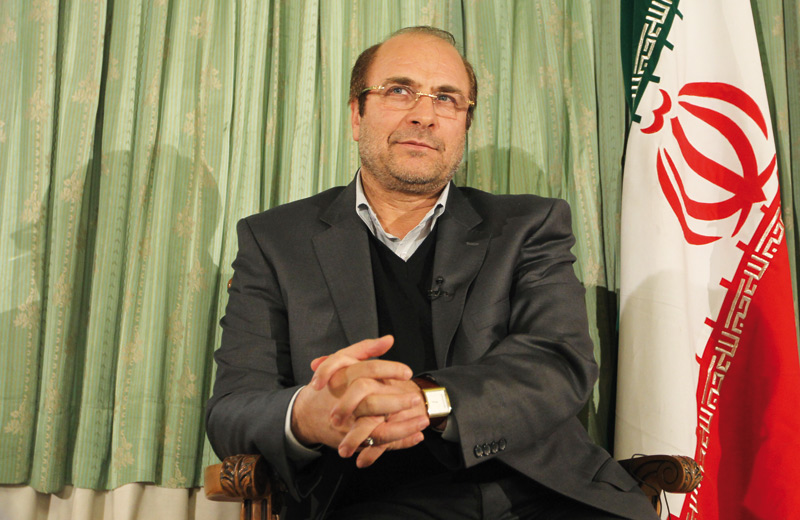
A more effective candidate could be the charismatic Mohammad-Bagher Ghalibaf, Tehran’s mayor since 2005 and a former senior IRGC officer, though he received only 13.9 percent of the vote in 2005. In an interview in September with the Italian newspaper Corriere della Sera, Ghalibaf spoke of “moderation” in foreign policy while keeping “firm lines” on “fundamental questions”; as well as diverting oil revenue from current spending into productive investment.

This is exactly what Khamenei needs. This far out from June 2013, Ghalibaf looks like the man to beat.


Gareth Smyth has reported from around the Middle East for almost two decades and is the former Financial Times correspondent for Tehran

November 30, 2012 0 comments
0 FacebookTwitterPinterestEmail
Comment

The Kurds quietly ascend

by Josh Wood November 30, 2012
written by Josh Wood

Past the sand berm marking the border between northern Iraq and northeastern Syria, a small military outpost sits amid the oil derricks that dot the parched landscape of this country at war. A few months ago, the flag of the Syrian regime flew here. Today, it is replaced with a green, yellow and red tricolor banner, flying above a few Kurdish fighters and a pickup truck with a mounted DShK machinegun. 

This is Kurdish land now, mostly.  


While the eyes of the world and the Assad regime turned to Aleppo this summer as fighting engulfed the city, Kurdish groups moved aggressively to wrest control of parts of their northeastern heartland in Syria’s Hassake province from the government, corralling the regime’s presence to a few towns and checkpoints along the highways. 


The endgame here for many is autonomy. Under Syria’s Baath Party, Arabization policies alienated the Kurds by limiting the use of their language, stripping many of citizenship and for the most part refusing to acknowledge that the ethnic group existed. Chronically mistreated, ignored and sitting on top of much of Syria’s oil (which generated some $4 billion in annual exports before the uprising and subsequent war), most feel entitled to a post-conflict deal that at least matches that of the Kurdistan Regional Government in Iraq, if not better.


And so they are getting ready: Signs are being changed from Arabic to Kurdish, local governments are being set up, armed forces are being trained. In Derek, which the regime called Al Malikiyah as part of its Arabization policies, there is a certain afterglow of liberation. One evening in late September, scores of youth gathered downtown cleaning the city’s streets, smiles on their faces as previously banned nationalistic Kurdish music blared through truck-mounted loudspeakers.


There is exuberance and hope here, but also danger. 


The Kurdish experience in Syria made many distrustful of those outside the community and there is a strong aversion to again submitting to Arab authority. The militias being readied here — most notably the Popular Protection Units or YPG — seem to be preparing themselves as much for a fight against President Bashar al-Assad’s forces as they are for a possible fight with the rebel Free Syrian Army, should it try to enter their territory.


While Kurdish groups are currently trying to stay on the sidelines of the conflict and are not attacking the remaining Assad forces, continued government occupation of the major oil fields in the Rmeilan area could bring the war to their doorsteps eventually.


There are also sharp internal divisions in Syrian-Kurdish politics. The Democratic Union Party — known by its Kurdish-language acronym PYD — is the most dominant party in Hassake. Despite publicly denying links to the militant Kurdistan Workers Party (PKK) in Turkey, offices of the Syrian group often feature portraits of PKK founder Abdullah Ocalan and Kurds martyred in battles against Ankara’s authority.


Opponents of the PYD — primarily those Syrian Kurds who identify with Massoud Barzani, president of Iraqi Kurdistan — accuse the group of working with the Assad regime, cracking down on dissent and ensuring PYD control of the area through its near monopoly on weapons. The PYD responds to its detractors — some of them not as hostile to the Free Syrian Army as they are — by calling them traitors.


In northeastern Syria, the PYD is currently able to keep dissenters confined to grumbling under their breath. But in Kurdish areas elsewhere in the country closer to the conflict — such as Aleppo’s Sheikh Maksoud neighborhood, the nearby town of Efrin and Kobane in Al Raqqa province — guns are easier to get a hold of and limited battles between Kurdish groups have already occurred.


The PYD’s alleged links to, and ideological inspiration from, the PKK also land the group in a tough spot regarding Turkey. The country’s prime minister, Tayyip Erdogan, has threatened to take action in Kurdish areas of Syria if Turkey deems that groups which have risen up there are a threat. Calls for autonomy on some level or another are also likely to be frowned upon by Turkey, a key supporter of Syria’s rebels, as it faces rising Kurdish dissent at home and increased fighting with the PKK in northern Iraq and southeastern Turkey this year.


For Kurdish groups in Syria to retain or expand the autonomy they have gained, it will likely entail a good deal of diplomatic brinkmanship and horse-trading — fail that, they will be at war.


Josh Wood is a regular contributor to The International Herald Tribune and Esquire Middle East


November 30, 2012 0 comments
0 FacebookTwitterPinterestEmail
The Buzz

Morning briefing: 29 Nov 2012

by Executive Staff November 29, 2012
written by Executive Staff

Economics

Gold ticked higher on Thursday, after suffering its biggest daily decline in nearly four weeks in the previous session, as the looming deadline for averting a US fiscal crisis kept investors on their toes.

More from Reuters


The Kurdistan Regional Government (KRG) has cut in half oil exports as producing companies grow increasingly worried that Baghdad will not honor the payment terms of an export deal struck in September.

More from Iraq Oil Report


The United Arab Emirates has "effectively closed the country's remaining forum for free speech" with a decree issued earlier this month that tightened the law on online dissent, Human Rights Watch said on Wednesday.

More from Arabian Business


Saudi Arabia and Sudan are seeking to start in 2014 deep-water mining of a Red Sea basin believed rich in gold and copper.

More from AME Info


Canada wants to return to level terms with the UAE on visa-entry requirements after it was dropped from the Emirates' free-visa system.

More from The National


Companies

TABCo Emirates, the UAE arm of the Kuwaiti holding company TABCo International Food Catering, plans to invest more than US$80m in expanding branches of US-branded food chain Elevation Burger in the UAE, Oman and Kuwait, its CEO has said.

More from Arabian Business


Zain Saudi extended the maturity of a SAR9 billion ($2.40 billion) Islamic loan for another 21 days on Wednesday, the fifth time the loss-making telecom operator has deferred payment.

More from Gulf Business


Kuwait's Environment Public Authority (EPA) has announced a plan to gradually switch to using shopping bags made of paper or bio-degradable material, as the Gulf country aims at zero plastic use by the year 2020.

More from AME Info


Net profits of insurance companies in Lebanon reached $111.4 million in 2011, up by 25.6 percent from a total of $88.7 million recorded in 2010, according to the Association of Insurance Companies in Lebanon.

More from The Daily Star

November 29, 2012 0 comments
0 FacebookTwitterPinterestEmail
Comment

High stakes on the border

by Nicholas Blanford November 28, 2012
written by Nicholas Blanford

At the end of 2011, it was still unclear whether or not Hezbollah was playing a direct role in assisting the regime of President Bashar al-Assad. Syrian refugees streaming into Lebanon had insisted since nearly the beginning of the uprising in March 2011 that Hezbollah and Iranian Revolutionary Guards were among the Syrian troops sniping at protesters from rooftops. But there was little hard evidence.

Adding to the skepticism was Hezbollah Secretary General Sayyed Hassan Nasrallah’s toned-down rhetoric on Syria around February and March 2012. Earlier, he had lambasted the West for seeking to oust Assad. Now, he was calling for dialogue and warning that continued violence would resolve nothing. Some diplomats and commentators took this to mean that Hezbollah was beginning to distance itself from a regime that seemed doomed.

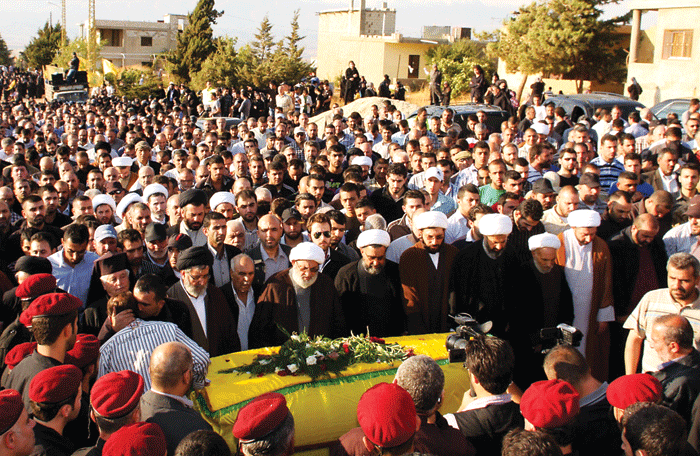
However, at the end of 2012, few would still cling to the notion that Hezbollah is uninvolved in the Syrian conflict. Throughout the summer, there were growing whispers within Shia circles about various Hezbollah units deployed across the border or of the bodies of dead combatants being repatriated for quiet burial. The death in early October of Ali Nassif, a veteran Hezbollah commander, finally spurred Nasrallah to admit that some Lebanese Shiites, including some Hezbollah men, were fighting to defend their homes just across the border which were coming under attack by armed opposition groups.

On a recent trip to the Hermel area in the northern Bekaa, there was little disguising Hezbollah’s activities. As shells exploded across the border and the crackle of small arms fire could be heard nearby, a column of what appeared to be Hezbollah vehicles (Sport Utility Vehicles, usually Grand Cherokees, with tinted windows and no license plates) and minibuses filled with young men thundered down a narrow road heading to the border 300 meters away. Other Hezbollah vehicles raced up and down the potholed roads of the area; fighters in uniform rode rally bikes while others stood on the roadside communicating with radios.

It appears that there is some unease within Hezbollah’s ranks, both at a leadership level and among the cadres, regarding their continued assistance to a regime that surely will founder at some point. However, the fate of the Assad regime is a strategic issue for Iran and as such Hezbollah does not have the latitude to make independent unilateral decisions.

Indeed, it is evident that siding with the Assad regime to the extent that Hezbollah has is actually detrimental to the party’s domestic political interests. Openly supporting Assad and battling Syrian Sunnis in the armed opposition is deepening the divide between Lebanese Shias and Sunnis. Many Lebanese Sunnis already harbor deep feelings of bitterness, resentment, humiliation and frustration toward Hezbollah, stemming from the May 2008 events to the collapse of the Saad Hariri government in January 2011.

For now, there appears to be little indication that Iran and Hezbollah intend to change their position on Syria. And a glance at the balance of power on the ground suggests that the Assad regime could continue to hold out for a while longer, even if a restoration of the pre-uprising status quo has become impossible. The Syrian army is being whittled down to a hard core of mainly Alawite troops replete with armor, artillery and air power. The army is supported by a Hezbollah-trained loyalist shabiha paramilitary force as well as Hezbollah combatants. The regime enjoys the continued logistical backing of Iran and diplomatic support of Russia and China. Collectively, that represents a fairly formidable front against a lightly-armed, ill-trained, poorly organized bunch of militias that lack strategic coordination. The recent signs of unity in Qatar among the external political opposition is an encouraging first step (if it lasts) but there remains a long uphill struggle before achieving a cohesive and effective political and military front against the Assad regime.

Even if the opposition can remove the Assad regime from Damascus, it does not necessarily signal the end of the conflict. Iran and its allies may still possess sufficient military might in Syria to perpetuate instability to ensure that no administration antithetical to Iranian interests can take over in Damascus. The Iranian plan (of which Hezbollah is a component) may not be geared so much to saving Assad, but looking to see what advantages can be accrued from a prolonged period of turmoil and civil strife.

Toppling the Assad regime may only be the end of the first gloomy chapter in a depressingly long book.


Nicholas Blanford is the Beirut-based correspondent for The Christian Science Monitor and The Times of London

November 28, 2012 0 comments
0 FacebookTwitterPinterestEmail
The Buzz

Morning briefing: 28 Nov 2012

by Executive Staff November 28, 2012
written by Executive Staff

Economics

Brent crude steadied at over US$110 per barrel on Wednesday, not far from a one-week low hit in the previous session, as investors nervously eyed talks to head off a looming fiscal disaster in the United States, the world's top oil consumer.

More from Reuters


Gold traded flat on Wednesday, after falling for two consecutive sessions, as the euphoria over a Greek debt deal fizzled out and investors shifted their focus to US negotiations to avert a looming fiscal disaster in the world's largest economy.

More from Arabian Business


The UAE economy is strong and is registering high growth rates in economic and social sectors, according to the country’s central bank governor, Sultan bin Nasser Al Suwaidi.

More from Gulf Business


Officials in the UAE are reviewing a draft commercial law that will allow 100 percent foreign ownership of some companies, Bloomberg reported, citing the undersecretary of the Abu Dhabi Department of Economic Development.

More from Arabian Business


Companies

Lebanon’s biggest bank, Bank Audi, will launch operations in Iraq next year and rival Byblos Bank is to enter the Libyan market as both contend with a flagging domestic economy

More from The Daily Star


Morocco would rather pursue a strategic partnership for Royal Air Maroc (RAM), with an airline from one of the Gulf states or beyond, than sell a stake in its flag carrier, government ministers has said.

More from Gulf Business


International Petroleum Investment Co (IPIC), the investment vehicle owned by the Abu Dhabi government, will price a $2.9 billion dual-currency bond, at tighter guidance than earlier indicated, due to strong demand.

More from Gulf Business


Ahli Bank, Qatar's seventh-largest listed bank, said on Wednesday that its strategic partner, Bahrain's Ahli United Bank, would sell nearly all its stake in the lender.

More from Arabian Business

November 28, 2012 0 comments
0 FacebookTwitterPinterestEmail
The Buzz

Morning briefing: 27 Nov 2012

by Executive Staff November 27, 2012
written by Executive Staff

Economics

Brent crude rose above $111 per barrel on Tuesday as optimism coursed through financial markets after Greece's international lenders reached a deal on a new debt target, although worries about a looming US fiscal crisis kept a lid on gains.

More from Reuters


Gold traded in a tight range above $1,748 an ounce on Tuesday, as traders moved to the sidelines after initially pushing up bullion by almost US$3 following a deal among Greece's international lenders to cut the country's long-term debt.

More from Reuters


Dubai’s economy expanded 4.1 per cent from a year earlier in the first half of this year, official data showed on Monday, indicating the Gulf’s main trade and financial hub is holding up well in a weak global environment.

More from Gulf Business


Qatar's sovereign wealth fund sold the last of the warrants it owns in Barclays on Monday, notching up a gain of more than £1.7bn ($2.7bn) from the controversial fundraising deal it struck with the bank four years ago.

More from Arabian Business


A large-scale public sector strike is expected across Lebanon on Tuesday organized by the Union Coordination Committee in protest against the government’s delay in finalizing the pay hike. 

More from The Daily Star


Companies

US private equity firm TPG has acquired truck and trailer parts distributor FleetPride from Bahrain's alternative asset manager Investcorp for over US$1bn, Investcorp said in a statement on Tuesday.

More from Arabian Business


Phase one of Dubai’s newly approved AED10bn (US2.7bn) entertainment and leisure development, which will include five theme parks based on movies and characters from Hollywood and Bollywood movies, will be completed in 2014, it has been confirmed.

More from Arabian Business


A quarter of the UAE hotel projects in the pipeline have been put on hold, while 54 per cent will be developed, according to a new study by property consultants Christie and Co.

More from Gulf Business


Dubai Group, part of the ruler of Dubai's personal empire, has cut half its staff of about 30 people as part of cost-cutting measures in its $10 billion restructuring, three sources told Reuters on Monday.

More from Arabian Business


A consortium including Samsung Engineering and Shanghai Electric have won an SR11.3bn ($3bn) deal to build a water desalination plant on the Red Sea coast of Saudi Arabia.

More from Arabian Business

November 27, 2012 0 comments
0 FacebookTwitterPinterestEmail
Economics & Policy

Aleppo: death from the skies

by Sam Tarling November 26, 2012
written by Sam Tarling
A woman holds her daughter as a Syrian air force jet bombs the streets surrounding her house in Aleppo’s Ahayderieh neighborhood [Executive/Sam Tarling]
The body of a child is carried from the rubble of a destroyed building after an aerial bombardment in Aleppo’s Ahayderieh neighborhood [Executive/Sam Tarling]
Residents load the body of a woman killed in an airstrike into a van as a government warplane circles overhead. In the background Free Syrian Army fighters fire futilely at the aircraft [Executive/Sam Tarling]
A man films a jet as it passes overhead shortly after it bombed a nearby house [Executive/Sam Tarling]
A Syrian air force jet drops a bomb on Aleppo. Moving across the skies unchallenged, the jets can strike at will anywhere in the city, with devastating effect [Executive/Sam Tarling]
Smoke rises as a rocket explodes on the eastern outskirts of Aleppo [Executive/Sam Tarling]
Civilians of Aleppo are watching their city being torn apart [Executive/Sam Tarling]
Two men inspect the damage after another Syrian air force attack on a residential apartment complex [Executive/Sam Tarling]
The debris of homes blown into the streets make some areas of Aleppo nearly impassable [Executive/Sam Tarling]
Queuing for bread at bakeries like this one in Aleppo can mean risking one’s life, as they have recently become targets for the Syrian air force [Executive/Sam Tarling]
Once a thriving hub for small business, heavy fighting between government troops and the rebels in Aleppo has destroy thousands of livelihoods [Executive/Sam Tarling]
One of the thousands of workshops blown apart in fighting between rebel fighters and regime soldiers [Executive/Sam Tarling]
Civilians are by far paying the heaviest toll in fighting between opposition and government forces in Aleppo. This single air strike in the Tariq Al Bab neighborhood destroyed six homes.
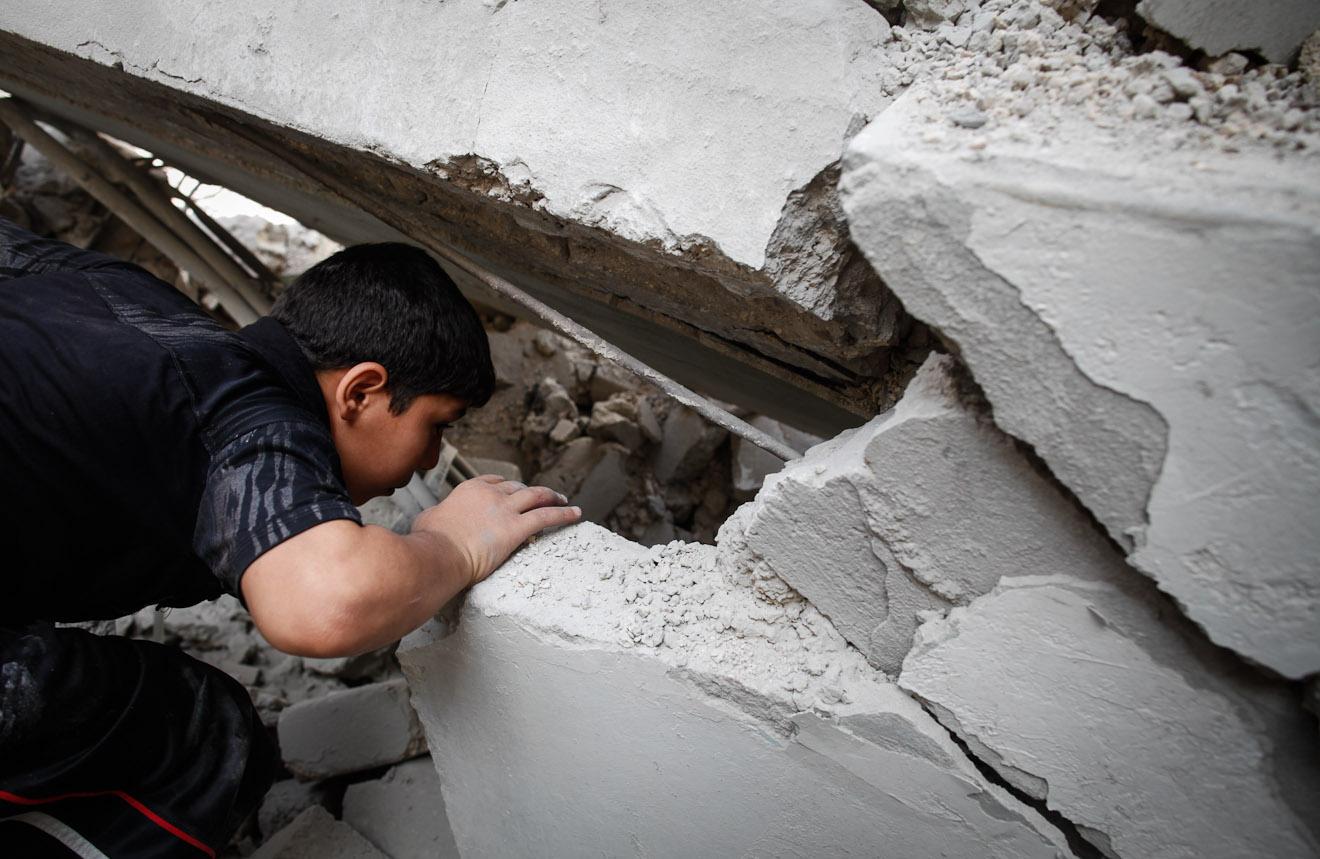
A boy takes a closer look at damaged caused when six houses were destroyed by an aerial bombardment Aleppo’s Tariq Al Bab neighborhood [Executive/Sam Tarling]
A so-called “barrel bomb” dropped from either a plane or helicopter fell through the top floors of this building and exploded on the ground floor, destroying the building and blowing out the walls in six surrounding homes in Aleppo’s Tariq Al Bab neighborhood [Executive/Sam Tarling]
A man weeps after returning to the site where his aunt, uncle, and five nieces and nephews were killed when an airstrike destroyed six homes in Aleppo’s Tariq Al Bab neighborhood [Executive/Sam Tarling]
On a bad day, the sheer volume of casualties causes hospitals to run out of space for the dead. Here, the body of a civilian who was killed by a sniper is left on the floor as doctors treat other patients who they still have a hope of saving, at the Dar a Shafaa hospital in Aleppo’s Tariq Al Bab neighborhood [Executive/Sam Tarling]
As the death toll of the conflict climbs, fresh graves are becoming ever more numerous in cemeteries around Aleppo [Executive/Sam Tarling]

Photoblog from the front lines of Syria’s biggest city

November 26, 2012 0 comments
0 FacebookTwitterPinterestEmail
  • 1
  • …
  • 299
  • 300
  • 301
  • 302
  • 303
  • …
  • 707

Latest Cover

About us

Since its first edition emerged on the newsstands in 1999, Executive Magazine has been dedicated to providing its readers with the most up-to-date local and regional business news. Executive is a monthly business magazine that offers readers in-depth analyses on the Lebanese world of commerce, covering all the major sectors – from banking, finance, and insurance to technology, tourism, hospitality, media, and retail.

  • Donate
  • Our Purpose
  • Contact Us

Sign up for our newsletter

    • Facebook
    • Twitter
    • Instagram
    • Linkedin
    • Youtube
    Executive Magazine
    • ISSUES
      • Current Issue
      • Past issues
    • BUSINESS
    • ECONOMICS & POLICY
    • OPINION
    • SPECIAL REPORTS
    • EXECUTIVE TALKS
    • MOVEMENTS
      • Change the image
      • Cannes lions
      • Transparency & accountability
      • ECONOMIC ROADMAP
      • Say No to Corruption
      • The Lebanon media development initiative
      • LPSN Policy Asks
      • Advocating the preservation of deposits
    • JOIN US
      • Join our movement
      • Attend our events
      • Receive updates
      • Connect with us
    • DONATE