• Donate
  • Our Purpose
  • Contact Us
Executive Magazine
  • ISSUES
    • Current Issue
    • Past issues
  • BUSINESS
  • ECONOMICS & POLICY
  • OPINION
  • SPECIAL REPORTS
  • EXECUTIVE TALKS
  • MOVEMENTS
    • Change the image
    • Cannes lions
    • Transparency & accountability
    • ECONOMIC ROADMAP
    • Say No to Corruption
    • The Lebanon media development initiative
    • LPSN Policy Asks
    • Advocating the preservation of deposits
  • JOIN US
    • Join our movement
    • Attend our events
    • Receive updates
    • Connect with us
  • DONATE
Real Estate

Facing a squeeze

by Jeff Neumann July 3, 2012
written by Jeff Neumann

Reading through our special report, you probably have a good idea of the challenges faced by the real estate sector over the past year. Data shows that demand for residential property is weakening across Lebanon and developers are coping with higher operating costs than before. How they adapt will determine how well they weather what some expect to be a prolonged downturn.

Overall construction costs in Lebanon were up in the first few months of 2012, due in part to the mandatory wage increase approved by the government in March. However, material costs have for the most part stayed at the same levels through the first five months of 2012. For instance, steel in Lebanon has remained at $750 per ton through June; Portland cement cost $102 per ton over the same time period.

permits


Shaving the fat

When asked about what is being done to cut costs, most developers declined to go into detail. The one exception, Karim Bassil, founder of BREI Real Estate Investment, offered a brief insight into his company’s operations. “The main thing is we’re reducing our overhead, we’re reducing our margins. We have already reduced our margins by 50 percent this year,” he says, describing the return generated from new income on a project. “We’re just not making the same kind of money that we were making before,” adds Bassil. “In Lebanon, when you plan something for, let’s say, 30 percent ARR (average rate of return), you end up with 20 percent of 70 percent ARR.”

Cement deliveries are also down this year by 4.2 percent — another obvious indicator of a slowdown in construction. This stings developers even more due to the fact that between 2005 and 2010, average annual deliveries increased by 11.2 percent. As an example of the many factors listed coming to a head, Bassil says that “on one of my projects in Beirut, instead of putting it around 20 percent ARR, we put it at 8 percent. This is because of politics, war and project delays — they all play a role in [reducing ARR].”

Through May, the total number of construction permits issued in Lebanon was down 9.3 percent from May 2011, according to data compiled by InfoPro. Also of note, construction area authorized by permits were down 12.5 percent from the same time last year.

Indeed, times are tight for the sector, forcing developers and contractors to consider all options. As Bassil puts it, “Personally, we’re doing everything to keep our business alive for better days to come.”

 

construction cost

 
This article was published as part of a special report in Executive's July 2012 issue


July 3, 2012 0 comments
0 FacebookTwitterPinterestEmail
Real Estate

Q&A – Solidere’s Mounir Douaidy

by Maya Sioufi July 3, 2012
written by Maya Sioufi
The company the Lebanese love to hate is Solidere, Lebanon’s largest developer tasked with rebuilding the Beirut Central District (BCD) after the civil war. While many enjoy sipping coffee by the yachts in Zaitunay Bay, Lebanon’s Porto Fino, and walking around in the Souks, still undergoing further expansion, and even jogging by the newly built marina, there are fears the company has gone beyond its mandate and is now competing with, instead of supporting, businesses and developers. For a better understanding of how the BCD operates, Executive sat with Mounir Douaidy, the general manager of Solidere. 
Solidere has signed contracts for several projects on the Waterfront district, among which are KidzMania and The One. These have been criticized as being illegal as they do not seem to be temporary structures as per the law? 

For 10 years, there was only BIEL (Beirut International Exhibition and Leisure center). A few years ago, we looked at one particular area starting from the entrance of BIEL all the way to the sea. We started with the Beirut Exhibition Center and along the same line, there will be The One (a night club owned by Skybar’s Sky management) and KidzMania (indoor theme park for children). These are temporary activities with seven-to eight-year contracts to create movement and attract people. We only receive rental income and have not taken stakes in the projects. Down the line, all these areas will be sold and developed. 

What will the waterfront district look like once permanent structures start being implemented? 

All the buildings on the frontline facing the park and the sea will be 40 meters high. There will be one or two towers there similar to the ones on the Corniche, such as the Four Seasons or the Platinum Tower. Heights on every lot will be different: some with heights of 52 meters, some with 75 meters and others even a little higher. Concentrations of high-rise buildings will be mainly in the central part of the reclaimed area and not the outside edges, which will be composed of low-rise buildings to catch the views. 

In a context of regional turmoil and lack of domestic stability, Solidere’s recently reported 2011 results saw revenues drop by 23 percent year-on-year to $296 million. How is 2012 looking so far?  

Last year, we did not sign a land sale deal until the fourth quarter when we signed four deals for $220 million, which constituted the main part of our revenues. So for 2012, I don’t know yet because we still have six months. All I can tell you is we are on the right track for sales because there is demand.

What changes have you seen in terms of demand? 

The negotiations to materialize a transaction are taking longer than usual. We have also had to break up bigger blocks into smaller units so that it becomes easier to sell these units. Finally, most of the investors looking to acquire land are, more and more, coming from Lebanon as opposed to the region. 

Solidere’s strategy has been to reduce its reliance on land sales by increasing rental income. Where do you stand on this? 

Our rental income, which stood at $50 million in 2011 up from $42 million 2010, is expected to reach $65 million by 2015 after the completion of several projects, namely the remaining component of the Souks with a cinema complex by the end of the year and a department store by 2015. Land sales will continue to be the main source of revenue over the next 10 to 15 years because we still have a significant inventory of land, mainly on the waterfront, valued at $7 billion at today’s prices. 

Given Solidere International (SI)’s exposure to countries in turmoil, where do you stand with your expansion plans outside of Lebanon? 

We were not impacted [by the turmoil] as we had not spent on anything yet because of the financial crisis. All we had to do was to restructure the projects. For example, Al Zorah project in the United Arab Emirates was reduced in size and changed from a mix used development to a touristic project. SI is now concentrating on identifying new markets and we think there are lucrative opportunities in Saudi Arabia where we already started one project for a tower in Jeddah and we have two to three projects in the making in Riyadh. 

Solidere is venturing into the restaurant business. Is this another way to reduce your reliance on land sales?

Any revenue from the restaurant business is immaterial relative to our activities. The whole idea [behind venturing into this line of business] is to allow the creation of outlets and restaurants of a certain caliber that we felt did not exist and would support the overall real estate development activity. We did it with Stay (fine dining restaurant) and Momo’s (Moroccan restaurant and bar). We brought in an operator and created an entity — a cooperation between Solidere and the operator — that would rent out the space and pay us rent. The operator runs the concept and Solidere co-manages with the operator. Solidere is not in hospitality: We don’t know how to do restaurants. We also did this with The Venue, the 1,000 square meter space used for exhibitions.

Your critics say that you are competing with the restaurant business. 

People keep saying Solidere is competing. We created these two ‘unique’ concepts that didn’t exist before so they will not compete with anything else that exists. Our intention is not to expand into this and step into the shoes of people doing this kind of business. We did this to give a push to the area, attract more people and promote cultural and artistic activities, and these restaurants came as part of this objective. If you look at the city center, there are tens of restaurants and outlets that have nothing to do with us. 

Are you also co-managing outlets in Zaitunay Bay? 

No. Zaitunay Bay is a little bit different. It is a joint venture with Stow Waterfront Development. Together we are executing Zaitunay Bay as a project made up of two parts. First is the restaurant part, only for lease, and the other part is a building composed of fully furnished small-to-medium sized apartments, which will be up for sale. 

Doesn’t this divert from Solidere’s strategy of focusing on rental income only?  

All the properties in our real estate portfolio so far were up for lease because the idea was to generate rental income and keep increasing it over the years. For this building, it was agreed with the partners that the apartments would be put up for sale as there would be higher ownership demand given the high prices, and we also wanted to recuperate our investment in the project and keep the restaurant leases to generate rental income. The building will also host a members club like the Automobile et Touring Club du Liban [ATCL] or the Golf Club, which will generate annual income.

Are you considering moving into the sale of apartments going forward? 

Until last year, the decision was not to sell any assets but going forward we are considering to slowly sell some assets. We started selling some of the Saifi apartments that were leased for the past 12 years. We are eventually offloading some of the stock of apartments as we have other apartments in Zokak El Blatt and Wadi Abou Jamil that are leased. Our new projects will come to replace some assets that we are selling. 

So the new projects will only be for lease? 

We recently got the permit to start another 20,000 square meter project in Saifi consisting of three small residential and one office building. We intend to sell the apartments of this project. We will not start offloading a huge quantity of assets. 

With demand moving to smaller sized apartments, aren’t developers having to adapt and provide smaller sized apartments too? 

All the stock on the market came from developments that started a few years ago. Future developers will be looking to smaller sized apartments but this will come after Solidere has finished selling these apartments. 

Wouldn’t the sale of apartments place you in competition with developers? 

We are not doing anything to compete with anybody in the market. We want to support other developers, complement their activities and not go in competition with them. We want developers to do well and become repeat developers. We are doing this on a very small scale and the size of the apartments we have been putting up for sale are small to medium sized, whereas developers have been selling medium- to-large sized apartments, so we are not competing with them.


This article was published as part of a special report in Executive's July 2012 issue

July 3, 2012 0 comments
0 FacebookTwitterPinterestEmail
Comment

The formula to fill football seats

by Thomas Schellen July 3, 2012
written by Thomas Schellen

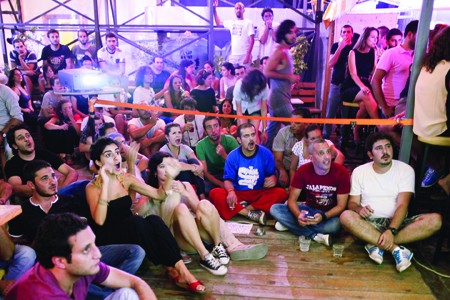
The Lebanese love for football warms my heart. The colors flying from windows, cars and street-corner stands during big tournaments like the Euro 2012 give me an emotional lift. The friendly coexistence of so many football allegiances — from England to Italy, France, Spain, Portugal and my native Germany — displayed this summer has a great pull on me. And what makes it even better is if you sit in a pub in Hamra, or a mall café in Ashrafieh, and fever with the action of your team while on the next table someone roots for the Dutch or Danes with the same enthusiasm. Great fun, happy competition.

But why do the public and private sector in Lebanon get the football economy so wrong?  By football economy, let it not mean the exploitation of the occasion by marketers with buy-this, win-that strategies. I am talking about the primary needs of the fan: A totem (flag, scarf) and a place to watch and eat.

Now, in a small redemption for the Lebanese private sector one has to say that today it is no problem to find a big screen — unlike the days when the over-sized Sports Café in Burj Al Ghazal was about the only place that sported them (and was unhealthily empty except during big games, which is likely why it eventually closed down). The supply of Beiruti venues where you can watch Euro 2012 today ranges from 10-foot screens in comfortable restaurants to a plasma in your nearest pasta joint.

Regrettably, these choices are not all real deals. When I sat with my black-red-gold-wearing son in one cozy restaurant on the day before the Euro opener, the friendly waitress volunteered an invitation to come back for the Euro, “but there is a LL25,000 cover charge.”

Then there was the eatery on the corner near my abode. They had hired a few 24-inch screens and had the place decked out by stringing up little flags. Pity that their stroke of decorative genius was marred by hanging the German flag upside-down, but they showed even greater foolishness when they demanded a minimum bill of LL20,000 per person. Fifty bucks for munching manakeesh while bearing with a case of football culture callowness?

So I stomped my German family fan legion of four up to the rooftop of ABC and hunkered down at a restaurant that had a giant screen, sharp-enough resolution, a fair crowd, and perfectly regular prices. Guess what? At the end of the first win by unserer Nationalmannschaft, or ‘our National Team’ as the Al Jazeera commentator yelled several times, I (expectedly) not only spent more than $50, I also decided to come back for the next two games — and happily consumed more as the German game kept improving.

What’s the moral of this musing? Simply, for you restauateurs, freedom stimulates consumption. Especially at a time when the insane cost-of-living spiral forcibly converts hordes of us average Joes into penny pinchers. Learn from the football economy that fair offers and a good atmosphere open up the most paranoid of pockets.

Now to the Lebanese football public sector economy. If the country ever wants to host a big tournament, it needs to invest now. No, not into refurbishing the stadia built for the Asian Cup finals that somehow happened here in 2000. Invest in the Lebanese team and in the national sports infrastructure of training and developing youngsters — and invest in building a culture of fair competitiveness through sports. It will do wonders for the economy overall.

Lebanon made it to the fourth round of the 2014 World Cup qualifiers, proving that the country has football talents, and the team can still claw farther. And being die schoenste Nebensache der Welt, roughly translated as ‘the nicest unimportant thing in the world’, football is an opportunity to think the unthinkable.

Poland and Ukraine have co-hosted Euro 2012, despite the challenges each of them faced. Half a century before the 2002 World Cup, it was exactly unthinkable for Japan and Korea to ever co-host a dinner party, let alone the world’s greatest spectator event.

It is unthinkable so think: If Lebanon were ever to succeed in co-hosting the World Cup in this century, it will not only make bigger history than even Qatar. It will absolutely need a team that is a result of long-term public sector investment in a competitive culture and great sports. Invest in the National Team today, yallah, government. Because nothing could be more embarrassing than hosting a World Cup and not make it, at least, to the second round.


THOMAS SCHELLEN is Executive’s MENA business editor

July 3, 2012 0 comments
0 FacebookTwitterPinterestEmail
Finance

Iraqi intrigue in Lebanon

by Mohanad Hage Ali July 3, 2012
written by Mohanad Hage Ali

Lebanon’s propensity to host political, media and financial players from around the region and beyond is well know. Its weak government, strict banking secrecy laws, open media landscape and plethora of rival political movements provide a welcome embrace for all and sundry. Among those to have set up shop here recently is an Iraqi outfit with an intriguing network of connections trailing back into the quagmire of Iraq’s troubled contemporary history.

The operations in question are a nascent TV station, Asia TV, and Al Bilad Islamic Bank, which opened a branch in Hamra in recent years. The lynchpin that joins the two enterprises is one Mr. Aras Karim Habib who is the chairman of the TV station and sits on the board of the bank (and was responsible for the opening of its Beirut branch). 


A shady past

Habib was chief intelligence officer for the Iraqi National Congress (INC) — the umbrella organization of opposition groups set up with American assistance after the 1991 Gulf War — as is documented in investigative journalist Aram Roston’s book, “Ahmad Chalabi; The Man Who Pushed America to War.” Roston also outlines how Habib was one of three principals for Boxswood Inc, a company established in the US by Chalabi through which the INC received funding from the American Defense Intelligence Agency.

It didn’t take long for Chalabi and Habib to fall from grace among certain elements of the US establishment after the 2003 invasion of Iraq, with a US intelligence official accusing Habib of passing intelligence to Iran, as was reported by the British daily the Guardian. In 2004 an arrest warrant was issued for Habib relating to his intelligence activities with the INC. Habib was not available for comment despite numerous requests by Executive.

Habib is now living in Beirut, and his connection to the Chalabi family continues; Al Bilad Islamic Bank was incorporated in Iraq in 2006 with Chalabi’s nephew, Issam al-Uzri as chairman. Issam’s son, Hussein al-Uzri, was the former chairman of the government-owned Trade Bank of Iraq (TBI), which was accused of corruption by the Iraqi government in June 2011, leading to the former chairman to flee the country, while his father left his position as chairman of Al Bilad two years ago.

The link between the two banks came to the fore following the award for “deal of the year” given by a trade magazine to Al Bilad in 2008 for being allocated a $100 million letter of credit by TBI. 
Habib set up the Beirut branch for Al Bilad, the bank’s 15th branch and the only one outside of Iraq, in Hamra in December 2010. “Habib was involved directly in establishing the bank in Lebanon and he is the coordinator between Iraq and Lebanon,” says Talal Kaissi, head of the Al Bilad’s Beirut branch.

The bank is set on expanding its operations in Lebanon, according to Kaissi, it has acquired a building in downtown Beirut facing Starco for $32.5 million. The building, which is still under construction, will be the new bank headquarters and the Hamra office will remain as a retail branch.

From banking to television

More recently Habib has ventured into Lebanon’s media mosaic with the establishment of Asia TV, which according to Kaissi “is a private business” of Habib’s (which Executive confirmed banks with Al Bilad). Entifadh Qanbar, Asia TV’s general manager, goes further saying Aras Karim Habib is the chairman of the station and explains, “I run the day to day operations and [Habib] sets the general direction.” Asia TV started broadcasting on March 5 and Qanbar says, “We are a pan-Arab TV station. We cover the Arab, Muslim world with an Iraqi taste. I want English, Persian, Turkish and perhaps Kurdish news broadcasts.”

The station is one of several new media enterprises in Lebanon that endeavour, in the words of Qanbar, “to counter the Gulf invasion in the region.” The coverage of the Arab uprisings, and in particular the Syrian crisis, has severely polarized the journalistic community in the region and the coverage from outlets that enjoy support from the seemingly bottomless pockets of the Gulf, such as Al Arabiya, Al Jazeera, Al Mustaqbal, Asharq Al Awsat, Al Hayat, An Nahar and many more has created a backlash. 

Among those providing an alternative discourse are several new TV stations such as Al Etejah, Al Maseera, Al Mayadeen, Iran’s Press TV and Asia TV. However, with the schisms running throughout the Middle East increasingly characterized by the rivalry between the Sunni monarchies in the Gulf and the Shia theocracy in Iran, charges have been made that these new outlets are nothing more than an Iranian-backed push into the Lebanese media landscape, thus further exacerbating tensions. 

The hand of Tehran?

Aletejah and Asia TV are members of the Tehran-based Islamic Radio and Television Union, Aletejah is connected to an Iraqi military outfit call the Hezbollah Brigades (not linked to the Lebanese militia-cum-political party), Almaseera is connected to the Shia Houthi rebels in Yemen and a recent report on France 24 created waves by bringing into question the independence of Al Mayadeen from the interests of the Iranian and the Syrian regimes. Asia TV’s Qanbar says that his station receives no support from Iran and asserts further, “We have never been told what to say on our station.”

The station’s output is guided by a particular Iraqi vision of the Middle East that is perhaps best encapsulated by one of their flagship shows, Qalb al Aalam, or Heart of the World. The program focuses on the historical, cultural, political and economic relationships between Turkey, Syria, Iraq and Iran. Qanbar expands on the relationship with Iran saying, “We are in the camp of the Iraqi’s. The Iraqi establishment, including Sunnis, Shias and Kurds, now all have good relations with Iran. What’s more, we have a strategic relationship with the United States. That is very disturbing to the countries of the Gulf.”


The ties that bind

The relationship between Habib and Qanbar is a long one and is entwined with their involvement with the INC and Ahmad Chalabi. Qanbar says that, “[Chalabi] is a good friend and I ask him for advice on some issues and he will give me very good advice that I will consider but I will not follow in the steps of Chalabi.” However, Qanbar has served as his long-term spokesman and his personal account on LinkedIn, the professional networking Internet site, lists his current status as “Advisor to Dr. Ahmad Chalabi.”

With the long-standing links between the three men it begs to be asked if Chalabi has any involvement in either the bank or the TV station. The Wall Street Journal recently quoted Chalabi as saying that he is considering joining the editorial board of Asia TV but Qanbar denies he has any role at the station, saying, “We get our funding from Iraq, from a group of businessmen and a group of individuals that want to counter the Gulf invasion of Iraq but Ahmad Chalabi is not one of them.” Furthermore Kaissi at Al Bilad also denies Ahmad Chalabi has any direct involvement in the bank’s affairs.

In any case as the media war in the region intensifies the Iraqi challenge to the “Gulf Invasion” has set up shop in Lebanon and looks set to stay.

July 3, 2012 1 comment
0 FacebookTwitterPinterestEmail
Economics & Policy

Beirut’s secret garden

by Nabila Rahhal July 3, 2012
written by Nabila Rahhal

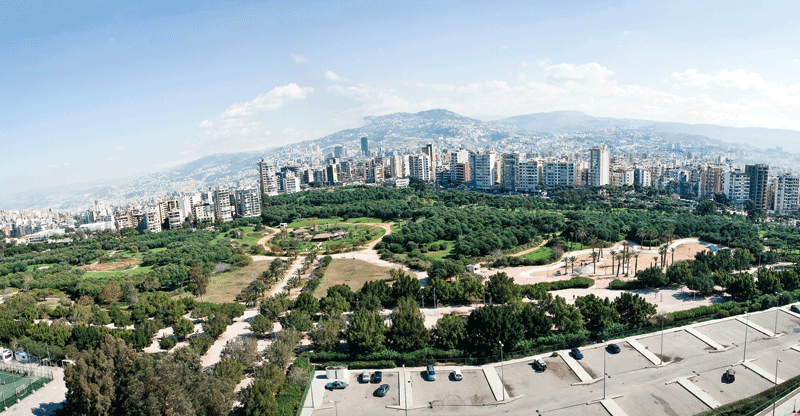
Many older residents of Lebanon’s capital have fond memories of the Horsh Beirut, of childhood games and family picnics in one of the city’s most beautiful parks. The current generation has no such memories. While the Horsh Beirut, also known as Horsh el Snawbar or Horsh El Eid, accounts for some 77 percent of the city’s green space, the municipality has kept it closed to the public for more than two decades; but if a growing number of civil society organizations are successful in their efforts, the gates may soon be open again. 

Among the many victims of the civil war was the Horsh, whose ancient pine trees were burned to cinders during an Israeli assault on the city in 1982. In 1992, the municipality of L’Ile De France, working with the Beirut municipality, funded the restoration of 90 percent of the park at a cost of $191,000, according to Bilal Hamad, president of Beirut Municipality, with the remaining 10 percent picked up by the municipality. Once completed, the municipalities of L’Ile De France and Beirut decided the park would remain shut for 10 years to allow the newly planted pine trees time to grow and mature, says Hamad.

Today — 20 years later — only 10 percent of the Horsh Beirut is open to the public; the remaining 90 percent is closed to all Lebanese citizens less than 35 years old, and even those older than 35 must hold an authorized permit from the municipality to access the park. This classification, says Hamad, is one he inherited from the previous municipality and does not “necessarily agree with.”

Nizar Sayghieh, a lawyer who has worked to reopen the park, says that according to common law, closing a space created for public use is illegal, and people have a right to access the park.

Hamad acknowledges that the park is a public space and that “it shouldn’t be closed.” He claims he wants to give it back to the people of Beirut but says he wants to be confident it will not get ruined by opening it haphazardly. Sayghieh counters that if the safety of the park is the concern, the municipality should use the ample funds it has to hire and train security guards.

Civil society in action

To obtain answers for the delay in reopening of the park, an NGO named Nahnoo organized a debate in February 2011, between Hamad, Nahnoo founding member Mohammad Ayoub, Sayghieh and Eric Bouvard, a representative of the municipality of the L’Ile De France in Beirut.

During the debate, says Ayoub, Hamad asked for a policy paper that would outline how best to manage the opening and maintenance of the park. Provided this was presented, continues Ayoub, Hamad promised that he would open the park by the end of 2012. While Hamad confirmed asking for the policy paper, he said that he didn’t mention a specific date but that he would love to open the park by the end of the year, provided that the necessary arrangements exist.

Nahnoo took up the president of the municipality’s challenge and, two months after the debate, provided him with a detailed policy paper outlining specific solutions to the possible obstacles preventing the park’s opening, such as security issues and fire hazards, says Ayoub.

Hamad praised the quality of the paper, adding that he had sent it to a committee within the municipality that will study it and give recommendations this month. Hamad also sent it to  L’Ile De France representatives for their input and, pending both, he will be calling for “a brainstorming workshop in his office within the next few weeks.”

“The purpose of this workshop is to come up with one final plan to be presented to a private company that will manage, protect and maintain the park,” says Hamad.

When asked if the municipality cannot afford to maintain the park themselves, Hamad said they can but if they could get a company to do it for them, then “why not?”

Questionable outsourcing

This has led others to cry foul, given the ample examples — such as the Beirut Central District — where private management of public land has proved controversial, to say the least.  “Giving the park to a private company could risk turning it into a resort of sorts where its very purpose of being a public and free space will be defeated, just like what is happening with our beaches,” says Sayghieh.

Hamad says this will not be the case as the municipality will retain ultimate authority over the park. He does admit, however, that there might be a nominal entry fee to make the people using it “feel a sense of responsibility.”

Hamad also mentions providing park users with access cards to the park so security catching people misusing the space can seize the cards, and deny violators further entry. He believes that this will be a good way to control those who might intentionally want to destroy the park.

Dima Boulad of Beirut Green Project, a local NGO also working on public green spaces,  says that while rules are certainly needed to protect the park, “We don’t need the rules to be so uptight that people aren’t able to enjoy the park experience anymore.” Boulad gives the example of the newly-opened Zaitunay Bay, which does not allow pets or eating in non-designated areas.

Nahnoo and other civil society organizations remain unsatisfied with the municipality’s evasive techniques and last month organized guerilla picnic protests at major intersections around Beirut, along with 12 other local NGOs also campaigning to the open the park.

Nahnoo’s Ayoub said that he fears the municipality is “coming up with excuses to delay the opening,” and is working with the other NGOs to pressure Hamad to set a clear target date for the opening. Hamad says he believes in the importance of public green spaces and has even launched a campaign, “Beirut is Amazing”  to renovate several public parks, such as Sanayeh Park and the Sioufi Gardens, starting this summer.

According to Hamad, a landscape artist has donated plans for the rehabilitation of Sanayeh, and the retail company Azadea has agreed to donate the needed funds for the project. The municipality is currently asking private donors, companies and NGOs to donate money or resources for the rehabilitation of the Beirut’s main parks and to add greenery to the  streets of Beirut, mainly on road islands and strips dividing the roads.

Notably absent from this campaign is Horsh Beirut. When asked about this, Hamad said that, Horsh Beirut, being the biggest park, requires a separate campaign. He concluded by saying of the Horsh “it is a jewel for the people of Beirut and we want to make sure it stays that way once we open it.”

Yet one wonders how valuable a jewel is when no one can see and appreciate its beauty. Until the park is opened, the children of Beirut will continue to grow up with memories of playing on hard concrete in narrow alleys, while the wide open greens of the Horsh lay in lonely silence.

July 3, 2012 1 comment
0 FacebookTwitterPinterestEmail
Business

The oil importers’ albatross

by Sami Halabi July 3, 2012
written by Sami Halabi

The perception of Lebanon’s oil importing companies as a cartel of money-making executives feeding off the backs of the people is an easy one to buy into, especially in an import-driven economy such as ours. But as any journalist knows, there are at least two sides to every story, if not many more.

“We are always accused of being people that are making fortunes, which is not true,” pleads Dania Nakad, general manager of Wardieh Holdings (Wardieh) — the self-proclaimed largest Lebanese-owned private sector oil company — and the recently appointed vice president of the Association of Petroleum Importing Companies (APIC), the industry’s lobbying body.

“During the war when the country was just a bunch of mafias and there was chaos everywhere you could say that the oil industry was a cartel, because there were two or three importers with control over the few ports,” she says, adding that such is not the case anymore.

Wardieh is probably best known in Lebanon for its gas stations, and the fact that it used to be owned by Exxon-Mobil before the later decided to exit the country. Yet the company does not own most of the stations that brandish their name.

Instead, Wardieh’s main revenues come from the import of petroleum and other oil derivatives ranging from diesel to petrochemicals. It signs supply contracts with gas station owners and finances the underground tankers and station equipment. While this has proved profitable for Wardieh, there have been a few hiccups.

Last year, a Wardieh gas station exploded near Beirut’s Adlieh district killing three and wounding 14 others. Nakad explains that the incident was a result of a panic-stricken owner, looking for his employee, turning on an electricity switch that had been shut off after fumes were detected in a storage area “that should not have been there."

The leaking underground tanker had been identified and subsequently filled with water for safety, but apparently this was not sufficient to prevent the incident. Nakad says that no charges were pressed because it was obvious where the fault was and “a few months later the station was up and running; we are still with them, them with us, but we lost Joseph,” says Nakad, referring to the station’s former owner.

Explosions aside, oil importers also have to take on significant credit with gas stations that pay post-factum while they pay their suppliers and the government in advance. “I have no protection. So what if I have a contract with a station? If he doesn't pay me I can sue him, go to court, spend a million years there and meanwhile he’ll have zeroed in his account and when the court tells him to pay, he’ll say he’s bankrupt, so what have you gained,” says Nakad. “If you want to be really smart you can steal a million dollars tomorrow and just sit in jail for three months! Honestly, this is the case today.”

Closing the pump

At present there are just 12 companies licensed to import oil into Lebanon. More players are not involved due to the large investment needed for storage, transport and infrastructure, coupled with the need for access to land on the seashore suitable for such an operation. 

Wardieh’s total assets, for example, are valued at $100 million, according to Nakad. She describes last year’s turnover as “excellent” and revealed to Executive that the company raked in revenues of “something like $340 million.” That is because oil prices stayed relatively stable throughout 2011. But now that oil prices are dropping again “since April we are witnessing another crash,” similar to that of 2008 when prices plunged from around $147 per barrel to below $50.

But with such revenue-to-asset ratios it’s little wonder that many say oil importers are running a racket. Oil importers have been accused of acting like an oligopoly and fixing prices. These companies bid for petroleum on the international market in groups in order to be able to buy up whole tankers, as opposed to half-tankers or less, thus allowing for better prices. Wardieh currently groups up with Total and IPT to bid for ships in the Lebanese market. Nakad denies that there is price fixing between the three large groups who usually engage in the bidding, but concedes, “In the absence of a government, the absence of a ministry and the absence of a strategy and policy, we do what we can to safeguard our basics.”

“At some stage ministers like to flex their muscles, and that applies to the current and previous ones who say ‘we want to import [gasoline]’. We tell them, ‘please do, we beg you to do it’,” says Nakad. “It would be better for us because then we wouldn't have to have all this expensive equipment, open up letters of credit for millions of dollars, and take the risk in a country where Israel can come tomorrow and bomb our facilities whenever they feel like it. Instead I would just simply go to the [government] refinery every day, as I do today with the gas oil [red diesel], and take my stock and sell it to market.” 

Caught red handed

At present the government only imports ‘red’ diesel — diesel with high parts per million (ppm) of sulfur, at around 500ppm — while the private sector imports ‘green’ diesel, at around 350ppm. Lebanon’s government-owned petroleum refineries have been out of commission since the Civil War, and perhaps that is a boon given the amount of corruption recently uncovered at their existing facilities.

At the beginning of the year, the government offered a one-month subsidy on red diesel, which removed the value added tax for distributors, the savings of which were passed on to end consumer. A report issued earlier this year by the Audit Court, Lebanon’s government spending oversight body, said that during the last days of the subsidy period government-run facilities in Tripoli and Zahrani continued to sell at the subsidized prize, with 101 of 215 licensed distributers of oil products suppling the red diesel on the last day of the subsidy. The distributors then sold the product at non-subsidized prices.

“I told one of the people who bought, ‘tomorrow morning if you are smart you go and take a credit note from all the people you sold to with the higher price because this will not pass and the files will be opened and heads will roll,” says Nakad. “Another calls me and says he made $50,000 [in profits off the deal], I told him go and sell at the lower price because I was sure that their will be a scandal. He thanked me a month later.”

The Audit Court eventually blamed the government, the consumer protection authority and the companies that made millions of dollars of profits but no one has yet been held accountable. “You think the guy at the door or the accountant makes the decision to extend working hours until after midnight,” she asked rhetorically. “When the big ones fall, it's the little ones that take the blame. The issue was cooled off and tucked away, not because there was a guy at the door who made a decision, there were big people behind it and if it gets to the courts they’ll find a scapegoat.” 

No margin for error

Even if things look good for oil companies, margins may not be as lucrative as one is inclined to believe. In 2002, the Lebanese government commissioned the international accounting firm PriceWaterhouseCoopers (PWC) to carry out an assessment of the pricing structure of petroleum in the country. The study suggested a structure whereby the oil importers would make a 5 percent profit margin on the cost of their product. Other elements included in the pricing structure were the government’s excise tax, currently at $2.67 per jerry can (20 liters) of 95-octane gasoline, value added tax (10 percent), insurance, additives and other costs to the consumer.

Since then, however, Nakad says they have had to incur further costs associated with increases in additives, operational expenditure, invested capital and others, such as a war risk premium that was imposed after the 2006 war with Israel, effectively bringing the margin to 3 percent of the cost of product. The three percent figure was also confirmed by another general manager of an oil importing company that spoke on condition of anonymity. “I dare anyone to identify one commercial sector that can do with 3 percent profits. The dikeneh [shopkeeper] next to your house won’t accept a margin of 3 percent,” says Nakad.

Nakad says that APIC commissioned PWC to do another study in 2010 to update the price structure, and the brief was presented to the previous and current Ministers of Energy and Water, who have not responded. That is why gas stations have gone on strike several times since, says Nakad, closing down gasoline supply in the country.

“You think the international names got out of Lebanon because they don't like the country or because of the weather?” she asks. “It’s not rewarding. Put the money in the bank. You get more and it’s secure!” 

A plausible solution for the industry, she says, would be for the government to crack down on the estimated 2,000 unlicensed stations in Lebanon and stop giving out new licenses to stations, which have reached some 5,000 across the nation. “We are not asking for the government to take [the PWC study] and just implement it, but do something in between, make a compromise.”

Nakad admits that if the companies got their way then consumers would bear the brunt of higher prices. “The awkward situation that we are in is that, whatever demand we have, it is going to be reflected on the end users because the government wants to maintain their income from the jerry can,” she says.  “But we are not supposed to be the financier of the cabinet. The government should not rely on gasoline, which is a consumer good, as a source of income because it is places the burden on the backs of the people.”

July 3, 2012 0 comments
0 FacebookTwitterPinterestEmail
Finance

INSEAD’s Professor Antonio Fatas

by Executive Staff June 26, 2012
written by Executive Staff

Professor Antonio Fatas, the Portuguese Council Chaired Professor of European Studies at the INSEAD business school discusses with Executive how the European sovereign debt crisis

June 26, 2012 0 comments
0 FacebookTwitterPinterestEmail
Finance

INSEAD’s Professor Theo Vermaele

by Executive Staff June 18, 2012
written by Executive Staff

Professor Theo Vermaelen, the Schroders Chaired Professor of International Finance and Asset Management at the INSEAD business school discusses with Executive how the ‘small people’ caused the 2008 financial crises, Facebook’s IPO flop and Lebanon’s conservative stance on derivatives trading on the sidelines of a recent conference titled ‘Challenges of the New World Economy: Are we in a Post Globalization Era?, at the Phoenicia in Beirut.

June 18, 2012 0 comments
0 FacebookTwitterPinterestEmail
Real Estate

Turning Lebanon’s heritage into art

by Zak Brophy June 12, 2012
written by Zak Brophy

A few months ago, Villa Paradiso in Beirut’s Gemayze district was another decaying old building in Lebanon’s capital. Now it has been turned into a vibrant art space

June 12, 2012 0 comments
0 FacebookTwitterPinterestEmail
Finance

Riad Salameh on Syria

by Executive Staff June 11, 2012
written by Executive Staff

Riad Salameh, governor of Bank du Liban, Lebanon’s central bank, discusses the banking sector’s exposure to the crises in Syria

June 11, 2012 0 comments
0 FacebookTwitterPinterestEmail
  • 1
  • …
  • 325
  • 326
  • 327
  • 328
  • 329
  • …
  • 687

Latest Cover

About us

Since its first edition emerged on the newsstands in 1999, Executive Magazine has been dedicated to providing its readers with the most up-to-date local and regional business news. Executive is a monthly business magazine that offers readers in-depth analyses on the Lebanese world of commerce, covering all the major sectors – from banking, finance, and insurance to technology, tourism, hospitality, media, and retail.

  • Donate
  • Our Purpose
  • Contact Us

Sign up for our newsletter

    • Facebook
    • Twitter
    • Instagram
    • Linkedin
    • Youtube
    Executive Magazine
    • ISSUES
      • Current Issue
      • Past issues
    • BUSINESS
    • ECONOMICS & POLICY
    • OPINION
    • SPECIAL REPORTS
    • EXECUTIVE TALKS
    • MOVEMENTS
      • Change the image
      • Cannes lions
      • Transparency & accountability
      • ECONOMIC ROADMAP
      • Say No to Corruption
      • The Lebanon media development initiative
      • LPSN Policy Asks
      • Advocating the preservation of deposits
    • JOIN US
      • Join our movement
      • Attend our events
      • Receive updates
      • Connect with us
    • DONATE