• Donate
  • Our Purpose
  • Contact Us
Executive Magazine
  • ISSUES
    • Current Issue
    • Past issues
  • BUSINESS
  • ECONOMICS & POLICY
  • OPINION
  • SPECIAL REPORTS
  • EXECUTIVE TALKS
  • MOVEMENTS
    • Change the image
    • Cannes lions
    • Transparency & accountability
    • ECONOMIC ROADMAP
    • Say No to Corruption
    • The Lebanon media development initiative
    • LPSN Policy Asks
    • Advocating the preservation of deposits
  • JOIN US
    • Join our movement
    • Attend our events
    • Receive updates
    • Connect with us
  • DONATE
Comment

Concepts of conception

by Thomas Schellen June 6, 2012
written by Thomas Schellen

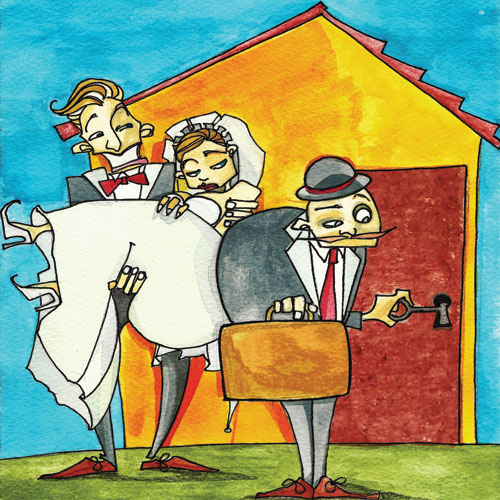
Without children, there is no society. Thus any society that seeks perpetuity will support the raising of children and in some form provide toward needs such as nutrition, education and medical care. But what about financing the beginning of life when the biological method has misfired? Should artificial conception be funded by society, whether through state provisions or via private health insurance? 

The issue is under debate in almost every society, including here in Lebanon. The debate revolves around advanced techniques in reproductive medicine, such as in-vitro fertilization (IVF), and it is charged with ideological, religious, cultural, demographic, financial, medical and bio-ethical aspects. But to bring the issue down to earth, the question that people ask if they desperately want a child is: “Why is IVF not paid for by health insurance?” Private providers, still behind the curve in terms of even maternity leave, are probably not the best place to start.  However, as the Lebanese state and its agencies have provided maternity-related medical care at overall rates of almost 95 percent in public hospitals, and more than 75 percent in private ones, it is a valid question for Lebanese society if the state shouldn’t fund IVF treatments for childless persons who want to conceive and cannot do so otherwise.  

Admittedly there are many aspects to this issue, but here we will look at IVF from a strictly economic perspective. On the simplest denominator, the fertility branch of the medical economy is a business activity that displays pronounced profit-seeking behaviors. It moreover is a market where there is a tight supply of qualified medical providers and a demand that is not only growing but also urgent, in the sense that a successful conception by IVF statistically requires numerous attempts and has to be accomplished before age 40 or 42, depending on local regulations. Attempts later in life have a dramatically reduced chance of sucess. The combination of desperate demand and a poorly regulated market opens the possibility for deception and abuse. This means that society needs to assume oversight of the supply side through precise operating standards that go beyond supervision of technical or medical competency, and of the market through a competent regulatory framework. Society must also decide what controls there must be over the demand side of fertility seekers. (An example of a country in our region that has been proactive on the issue and has departed from stonewalling against IVF was interestingly, the Islamic Republic of Iran.)  

Lebanese society, with its well known bent for ignoring the rule books, will need to very carefully regulate all three elements of supply, market, and demand side if it desires a platform where the pleas for children by the childless can be answered without opening the doors for unbearable supply-side corruption and market distortions.  There is another locale in the neighborhood that not only accepts IVF, but also claims to be the paradise of IVF. According to a May news article by Israeli writer Viva Sarah Press, the health ministry of Israel has announced that the number of babies conceived by IVF has risen to more than 4 percent of all births, and a 2011 story in the New York Times (NYT) called Israel “the world capital of in-vitro fertilization”. The practical factor driving Israel’s high rate of IVF treatments is that they are fully covered by the mandatory national health insurance. The rationale behind the societal willingness, according to the NYT story, was on one hand appreciation of family and on the other hand the desire to counter birth rates in Palestine.    

Political demographics aside, the fundamental issue is that life is not to be denied and that children are the greatest opportunity to fill it with meaning — Lebanese society needs to discuss where it stands on helping those who cannot have children.

June 6, 2012 0 comments
0 FacebookTwitterPinterestEmail
Economics & PolicyMonaco

Bechara el-Khoury & Mustapha el-Solh

by Maya Sioufi June 3, 2012
written by Maya Sioufi
The relationship between the principality of Monaco and Lebanon started developing from the independence of Lebanon under the rule of Bechara el-Khoury, Lebanon’s first president and Riad el-Solh, Lebanon’s first prime minister. Today, Lebanon’s consul in Monaco is Mustapha el-Solh, the great grand nephew of the first prime minister and Monaco’s consul in Lebanon is Bechara el-Khoury, the grandson of the first president. Executive sat with both consuls to discuss this enduring relationship between the two countries.
Bechara el-Khoury 

How would you describe the relationship between Lebanon and Monaco?

There has always been a consul of Monaco in Lebanon, ever since my grandfather was president, as we are riverains de la Méditerranée. The relationship has always been very good and now we couldn’t have it better. Mustapha el-Solh is very well connected and I am not badly connected either [laughs]. The access is easy. That is what is the most important in bilateral relationships. 

How many Monégasques are there in Lebanon? 

Three: Eric Bessone (director of sales and marketing middle east at Monaco’s Société des Bains de Mer), the wife of my father, and myself. My brothers and sisters also have the nationality but they live in Paris and so does prominenet Lebanese businessman Toufic Abou Khater. Those are all the Lebanese with a Monegasque nationality. 

What are the ongoing projects between Lebanon and Monaco? 

Monaco is cooperating to finance projects in Lebanon such as sea cleaning, planting cedars and a few health programs for the United Nations Relief and Works Agency (UNRWA). There is a non-governmental organization (NGO) called Les Amis du Liban, which distributes 250,000 to 300,000 euros ($320,000 to 380,000) per year to different sectors of activity. When Prince Albert II came two years ago on a state visit to Lebanon to see President Sleiman, we organized training for the Lebanese fire brigade to go to Monaco and be trained to deal with fires in towers, because they had no previous training and we have more and more towers. This program is still ongoing. We also have a Maronite priest who stays at the Monaco cathedral on a revolving three-year loan. We are always working on projects to improve the relationship between Monaco, Lebanon and the Middle East. 

Do you also represent the Middle East? 

My job is not just for Lebanon. It is also for the area because Prince Albert II knows I have relationships across the Middle East. Whenever he goes to the region, he takes me with him. We can attract a lot of Arab tourists to Monaco. There is potential for the Middle East clientele to come and develop projects in Monaco. 

Where are the investment opportunities in Monaco?

They are in real estate primarily. Also there is a law in Monaco which allows you to have worldwide revenues come in with no taxes and go out to pay your worldwide employees with no taxes, making it attractive for companies to set up an office in Monaco. That is why all the big ship owners are based in Monaco today. This is important because it is an enormous facility. Also there is no personal income tax in Monaco and a small corporate tax. 

What can Lebanon learn from success story of Monaco? 

Lebanon needs to attract more tourism. One of the strengths of Monaco is that every single day there is an event and there are conventions. Lebanon needs to do that too. Also, Monaco was promoting heavily the healthcare industry. This could be done in Lebanon. For instance,  Monaco has fantastic heart surgery unit. We have very good doctors so we [could] have more specialized centers. 

If you had to choose to live in either Lebanon or Monaco, where would you choose? 

Obviously, I was born in Lebanon and I carry a very famous name, but for my own personal choice I would live every day in Monaco. 

Mustapha El Solh 

As consul of Lebanon in Monaco, what does your role entail? 

The Lebanese consulate in Monaco is an honorary one and has existed since 1996.  We represent the interests of Lebanon across all sectors and we look after the interests of all the Lebanese residents in Monaco. We conduct all consular administrative services, such as passport renewals and visa issuance, and we organize many events throughout the year to promote Lebanon in Monaco. Last year, I organized the official trip of Prince Albert II to Lebanon with an economic delegation of 80 people during which many bilateral agreements were signed.  For example, four Lebanese TV stations signed distribution agreements with the local TV cable operator to transmit locally in Monaco. 

And as president of the Association of Consuls Honoraires de Monaco, what does your role entail? 

The Prince and the government of Monaco look highly to the consular corps for reinforcing the bilateral relationship between Monaco and the rest of the world; there are more than 80 consuls accredited in Monaco. In 2009, I was elected by all consuls in Monaco to become president for a five-year mandate. My main role in this post is to promote the consular function and most importantly to represent the interest of the consular corps during all the official events in Monaco.  

How strong is the current relationship between Lebanon and Monaco and how can it be further developed?

The relationship between the two countries is exceptional. In the past 20 years, there have been numerous agreements and exchange programs. On the economic side, companies have signed trade agreements allowing exchange of services and products (mainly in jewelry, insurance, shipping, etcetera). Major environmental agreements were executed between the two countries.  Bank Audi, Lebanon’s largest bank, opened a branch in Monaco two years ago.  A representative office for Monaco’s largest tourism and service company, the Société des Baines de Mer (SBM), opened in Beirut in 2010 and since then many cultural events have taken place in Beirut coming from Monaco.  

Do you have figures on how many Lebanese live in Monaco and how many visit Monaco per year?

There are more than 300 Lebanese living in Monaco and Lebanon features among the top 20 countries to visit Monaco. 

What can Lebanon learn from Monaco’s success story?

Up until the early 1970s, Lebanon used to be the success story of the whole Mediterranean basin. Whether for its touristic or financial infrastructure, Lebanon excelled in attracting visitors. Unfortunately, the civil war and the recent political turmoil impacted negatively Lebanon’s potential. On the other hand, Monaco always prioritized offering its residents and visitors a great experience and the principality has developed a sophisticated financial infrastructure with an absolutely secure environment. It manages the country as a large corporation and its general interest is to service a profitable and satisfactory business model. It also offers rich cultural programs including ballet, theatre, museums and art exhibitions. I strongly believe that once the political stability is regained in Lebanon, it would offer equivalent conditions and would become a key destination for people to reside throughout the year, as well as visit to discover the richness of our ‘patrie’.

How many years have you been living in Monaco? What do you like best about living in Monaco that you can’t find in Lebanon?

I have been in Monaco for 18 years and have been greatly welcomed by its society and people. The special thing about Monaco is that it is a cosmopolitan city but also maintains certain traditional and conservative habits. With time, Monaco grows on you due to the warmth and care of its citizens.

If you had to choose between living in Lebanon and Monaco, which country would you live in?

I left Lebanon almost 30 years ago and I have lived across many continents and cities. Lebanon has and will always be home. Monaco is a great place to live, it offers my family the best conditions and continues to be a second stable home.

June 3, 2012 0 comments
0 FacebookTwitterPinterestEmail
Economics & PolicyMonaco

The East floats into town

by Maya Sioufi June 3, 2012
written by Maya Sioufi

It is early May and the famous Place du Casino — wherein lies one of the world’s oldest gambling houses, the renowned Monte Carlo Casino — is overflowing with tourists. 

Californias, 911s  and Continental GTs line the casino entrance for tourists to gawk over and take the cliché Monte Carlo postcard shot beside overpriced luxurious wheels with the Monte Carlo casino behind: the ultimate photo of lavishness. 

The European sovereign debt crisis engulfing the principality’s neighbors does not seem to have reached Monaco, but the faces flocking to these alluring two square kilometers do seem to have changed, with Asian and Eastern Europeans tourists replacing Western European and American ones. 

A look at the recent financial results of the Société de Bains de Mer (SBM), Monaco’s biggest employer and the company behind some of the principality’s most prestigious assets, does not paint the same rosy picture as the Place du Casino. 

SBM is the main economic actor of the principality and its assets include fours hotels, among which are the famous Hotel de Paris and Hermitage hotel, five casinos, including the Monte Carlo Casino, 33 restaurants and bars, three spas and the legendary Jimmy’z night club, a celebrity hotspot. Being 70 percent owned by the state of Monaco and the ruling Grimaldi family, with the remaining stake listed on the Paris stock exchange, “the SBM and the state are almost one” says Bechara el-Khoury, consul of Monaco in Lebanon. 

As the financial crisis hit the pockets of tourists, the profits of the SBM reversed from 31 million euros ($39 million) in fiscal year 2006/2007 (ended March 31) to a 22 million euros ($28 million) loss for the fiscal year 2010/2011. Its stock price got hacked too, down some 50 percent from the start of the financial crisis. Year to date, it is down 10 percent (as of May 18). In response, the company reshuffled its management in November 2011, appointing a new chief executive who replaced the former CEO of nine years, creating a deputy CEO position and adopting a new strategy. 

Attracting new customers

Sitting at the cozy yet refined Bar American in the Hotel de Paris, Axel Hoppenot, marketing director at the SBM, talks through the new strategy, which aims to identify how to develop revenues and readdress the cost structure. He reveals that they have witnessed a pickup in activity so far this year. 

While the European sovereign debt crisis is still weighing on their results, Hoppenot is confident that the “engines of growth from the new markets will help the company overcome this difficult period.” He confirmed that there has been a focus on attracting new markets to Monaco, most notably focusing on Russia, Eastern Europe, Asia and the Middle East. 

To cater to the Middle East, the SBM opened a representative office in Beirut at the end of 2010, headed by Eric Bessone, from which the company aims to cover the region. According to Bessone, the role of the Beirut office is to present offers of leisure, business, and well-being from the 50 institutions of the Monégasque company. 

Currently, the Middle East accounts for approximately eight percent of their total hotel revenues and can reach up to 10 to 12 percent in the summer. The Middle Eastern clientele has increased in the past couple of years, adding some two to three percentage points, according to Hoppenot. He does, however, warn that this year will not be as solid due to Ramadan falling in the middle of summer. 

Bringing Monaco to Lebanon

The interest in the Middle East was most striking with the opening of Saadiyat Monte Carlo Beach Club in Abu Dhabi last year, SBM’s first venture outside of Monaco. 

“Today it is more complex to set up a business in European capitals as the entry cost is much higher, and because of quality control we can only set up in prime locations” says Hoppenot. “Abu Dhabi is, in the Middle East, one of our most important markets.” 

When asked if SBM was considering more investments in the region, Hoppenot stated that for now, given the economically challenging times, SBM is focusing on consolidating their current assets in order to ameliorate the quality of service. 

As for Lebanon, SBM has been focusing on bringing the glamour of Monaco closer to home. The aim is to “get closer to our guests and help organize ‘tailor made’ stays in Monte Carlo”, says Bessone. In 2011, SBM organized the exchange of DJs between Monte Carlo’s Jimmy’z and Beirut’s famed Sky Bar. This successful exchange will take place again this year. 

It also brought the Les Ballets de Monte Carlo’s “Cendrillon” to the Casino du Liban in November. This year, it organized the exchange of chefs between La Posta’s Maroun Chedid and Blue Bay’s Marcel Ravin, with two events occurring in April and May. 

“Many Lebanese love to visit Monaco and these events make them feel like they are in Monaco,” says Bessone, “at least for a night, until they visit again.”

June 3, 2012 0 comments
0 FacebookTwitterPinterestEmail
Economics & PolicyMonaco

Monaco’s book balancer

by Maya Sioufi June 3, 2012
written by Maya Sioufi

The principality of Monaco, renowned for its glamour, its “beautiful people”, its Grand Prix and its luxurious yachts, also boasts the highest gross national income per capita in the world — some $197,460, according to 2010 World Bank estimates. To better understand the dynamics behind this economic model, Executive travels to the city state in Southern France to sit with Italian Marco Piccinini, Monaco’s Minister of Finance and Economy, at his offices atop the famous Rock, Monaco’s old town. 

Initially, however, Piccinini seems more interested in hearing about Middle Eastern politics, as he spends the first 15 minutes asking questions about the Middle East. “Sorry if I am the one interviewing you” he says jokingly. Married to a Tunisian with whom he has one child, he is curious to understand the dynamics of the region.

When the tiny principality recently revealed its 2012 budget, it forecast balanced books for the year ahead, an envious feat for European neighbors struggling to restrain raging deficits. With 833 million euros ($1.06 billion) in both revenues and expenditures, it will be a turnaround on previous years. 

“We have experienced some budget deficit after the crisis, but already this year we are essentially ‘budget balanced’ and we will be back to a surplus in one to two years, maximum” says Piccinini. Unlike some of his European counterparts, raising taxes is not on his agenda. Piccinini says the aims are “cutting costs, investing in areas with better returns, moving resources from what brings nothing to what brings more.” 

Trying to be modest

Monaco boasts a mild taxation system. Famed for charging no personal income tax, it has attracted many “tax refugees” to its appealing shores. It also offers a mild corporate tax system, charging corporations a 33.3 percent tax rate if more than 25 percent of their revenues are generated from outside of the principality; otherwise, the rate is zero. 

“People ask me, ‘is your model with mild taxation sustainable?’ It can happen, because we never deviated for political or ideological reasons from our three pillars” says Piccinini. The three pillars of the economic and social model of Monaco are to have zero sovereign debt, to run a reserve fund covering four years of budget expenditures and to have a balanced budget with a possible budget surplus. “Our aim is to try to have a surplus which can be put away for difficult days,” he adds. 

But while Monaco’s relatively low tax environment becomes more appealing for businesses to come and set up shop, Piccinini stresses that the principality is not trying to compete with other tax havens. “We see ourselves more as a gateway to Europe for non-European investors. Taxes can be one of the elements but not the only element,” he says. 

Even with its hefty banking sector (deposits in Monaco’s banks total some 19 times the size of its economy), Piccinini says Monaco has no aspirations of being a global financial hub akin to London or New York. “Let’s be humble. We cannot pretend to reproduce, in less than two square kilometers, what other financial hubs have produced; banking has been developing very well but we don’t want to become a financial hub which may be exposed to the uncertainties of this business.” The deposits in Monegasque banks in those two-square kilometers amount to a 78.4 billion euros ($100 billion) as of end 2010, the most recent consolidated figures available. That’s equivalent to 65 percent of the total deposits held in Lebanese banks. “It is the size of a small to medium sized bank. Our goal is not to increase assets under management. We want to remain a reasonably sized banking platform,” says Piccinini. 

Attracting the MENA region

The minister also eludes to Lebanese and Middle Eastern financiers beginning to wet their feet in the Monegasque financial fodder. Lebanon’s Audi Bank set up a branch in Monaco in January 2010 and Qatar recently acquired KBL, a Luxembourg-based bank with a branch in the principality. And the Middle East’s venture into the principality does not end at the banking sector. “We have Middle Eastern people from many businesses here. The tourism, banking, shipping and industry sectors are all pillars of Monaco’s economy and in many of these areas, Middle East nationals are very active. The Prince dedicates every year an official visit to the Middle East,” says Piccinini. As for investment, he says that Middle Eastern clients are mainly interested in investing in Monaco’s real estate sectors, in incorporating family offices in the principality and in having a base in Monaco, which becomes their gateway to Europe.  

Monaco seeks to remain “attractive as an overall destination by being an interesting hub for the [European] region and also a place where one can enjoy life,” says Piccinini. “That’s the attractiveness of Monaco”.

June 3, 2012 0 comments
0 FacebookTwitterPinterestEmail
Society

Worthy prince to the king

by Michael Karam June 3, 2012
written by Michael Karam

Last month saw the launch of the Tudor “Ducati” Fastrider chronograph in Lebanon. Tudor has a standard Fastrider, but as the brand is Ducati’s global timing partner, a special edition watch was created. The event was a building block in the positioning of Tudor in the Lebanese market and an opportunity to acquaint consumers with some of the most exciting sports watches to emerge in recent years.

That said, Tudor is not yet a permanent dot on Lebanon’s consumer radar. The nation’s watch aficionados are, by and large, swayed by the more obvious brands — Rolex, Audemars Piguet, Panerai and Cartier to name a few — and many models, no matter how prestigious, are bought more for what they stand for rather than discernment. Indeed, as far as I am concerned, Tudor’s build quality and mechanism would leave at least two of the previously mentioned brands in the dust.

Ziad Annan, exclusive Lebanese agent for Tudor, and its more exalted parent company Rolex, would like to see a shift in how we choose our watches. “We have to reach a point where people are buying watches for quality rather than on reputation,” he sighs. He is passionate about craftsmanship and wants to convince consumers that it’s okay to say, “I like it. It’s a brilliant watch. I like it for what it is and I don’t care what people think.” Tudor is arguably the brand to start this switch in mindset. It used to be, rather unfairly, perceived as the poor man’s Rolex by those who did not know what they were talking about. But if we bought watches like we bought our cars, the Lebanese would already covet Tudor. Take the Volkswagen Touareg and the Porsche Cayenne. Both built on the same platform, but the Touareg is the more affordable. Few are the people who will avoid buying one because it is perceived as a more affordable Porsche. Yet there are many who will buy it precisely for that reason.

Rolex founder Hans Wilsdorf, who created the Tudor brand in 1946, had the same idea. He wanted to make an affordable and functional watch that was underpinned with the same standards of reliability set by Rolex. It was a savvy move in a post-war Europe that was defined in part by austerity — just the right market for a no-nonsense, dependable watch. 

The positioning was subtle but it spoke volumes. Rolex may have made iconic sports watches, but the brand was undeniably associated with luxury at a time when Europe was rebuilding. Tudor owners saw themselves as practical, understated people who nonetheless appreciated     quality. Tudor fitted their profile perfectly.

From Basel to Beirut

The current excitement surrounding Tudor stems from the brand’s decision to mine its vast sports legacy and alloy it with modern styling. The result is that Tudor has broken away from being a Rolex sub-brand. “The people at Rolex asked what the Tudor brand was all about,” explains Annan. “They opened the archives and they realized there was this enormous heritage.”

Indeed, the release of the Tudor Heritage Chrono at the annual Basel watch fair in 2010 was arguably the most significant milestone in the Tudor renaissance. Based on the 1970 Oysterdate Chronograph, and sold with a second strap made of tough seatbelt fabric, it sent a ripple of excitement through the watch world. Almost overnight, Oysterdates doubled in value, and the word on the street was that Tudor was taking chances that Rolex could not. The result was a brand that added a new and exhilarating dimension to the Rolex portfolio. Everyone was a winner.

So will the Lebanese consumer embrace Tudor? Well, it’s going up against the likes of Omega and Breitling, and some models will set the heart racing more than others. While the Pelagos still looks too much like a Rolex Submariner and the Advisor is a bit lost in terms of styling, I predict two models will lead the charge for Tudor this summer (Say you read it here first). The Heritage Chrono with its early 70s styling and the Black Bay Diver with a glorious garnet red bezel are surely contenders for retro design classics. Even the Fastrider, which is not my favorite, might become something of a must have for bikers.

Whatever happens, Tudor has moved out of the shadows and is a thrilling addition to the luxury watch constellation.


June 3, 2012 0 comments
0 FacebookTwitterPinterestEmail
The Buzz

A town stands tall

by Sam Tarling June 3, 2012
written by Sam Tarling

There's no call to prayer in Al Qusayr these days. It is not that the townsfolk have forgotten their faith, but rather the mosques have been blown full of holes, rubble and dust. The daily dawn call is a smatter of machine gun fire from the government checkpoints and the occasional percussive bass of an artillery round landing.
    
Here, as in other restive Syrian towns such as Homs, Rastan and Idlib, residents say their peaceful protest movement turned to armed resistance after facing a lethal crackdown from government forces. Now, some 15 months after the first demonstrators took to the streets, Al Qusayr is a town cut in two. The heads of the town’s family groups have elected a local council that is backed by numerous brigades of soldiers claiming membership in the ‘Free Syrian Army’, control roughly half of Al Qusayr and most of the surrounding countryside.
    
‘Normal’ life has come to a halt: the schools are all closed and only a handful of stores are open. It is almost as if the town were on an extended public holiday, except one marred by frequent, sporadic moments of extreme terror and violence.
    
“We spend all our time with our children in our houses,” says Abbas Muhebeddin, head of the town’s recently elected local coordination committee. “Everything has changed. We spend a long time with a our families but we cannot think, we cannot do anything, we cannot even teach them because we are thinking always [about] what will happen. You are always worried.”
    
Of a town once home to 50,000 residents, just some 10,000 remain, and more are leaving everyday. Some half of those that are left are effectively trapped, however, according to Muhebeddin, with their names on a government blacklist. Leaving the protection of Al Qusayr would put them at risk of being picked up by the Syrian regime’s security forces.
    
Inside the town, fear, death and hardship are never far away.
    
In the ground floor of what was until recently a residential property, a busy team of medics poke around inside the 30-centimeter gash they have cut into the chest of a man, shot by snipers positioned atop of the town’s actual hospital. One holds a table lamp to accompany the jerry-rigged operating light that hangs above, as an aging pump sucks fluids from the patient, through tubes, to splash into a bucket.
    
This is one of the lucky ones; doctor Kasem al-Zeim and his team are able to save him, unlike the some 200 other residents who now occupy a small martyrs’ cemetery on the edge of town.
    
“They haven’t killed everybody but every two, three days they kill one person,” says Muhebeddin. “It is a difficult time, we are living like we are living in jail.”

The cost of living
    
Prices of everyday goods have soared, such as petrol, which has increased by 300 percent. Cigarettes, food and drinks have all taken similar hikes. “All the food gets more expensive, only [human life] gets cheaper in Syria,” says Hussein, previously a clerk in the family construction firm who now puts his language skills to use helping visiting foreign journalists.
    
The local council controls the only diesel in town. Deliveries come with a hefty add-on of a 50,000 Syrian pound ($870) bribe to the mukhabarat (government intelligence agents), and are used sparingly for baking bread and powering street cleaning and electricity maintenance vehicles.
    
The local council also coordinates donations of money and goods, be it from wealthier residents, those who have left, expats or aid organizations, and distributes them to the most needy. “We purchase sugar, rice, bulgur wheat,” explains Muhebeddin. “We have more than 1,500 families we are spending for, arranging food, medicine, milk… We arrange everything for these people, even bread.”
    
According to Muhebeddin, on the other side of the fence it’s a bonanza.
    
“[The government soldiers] steal everything from the houses. At any checkpoint it is like a supermarket: you want a fridge, you want a washer… you want a tractor, you want a car, you want a motorcycle, you want a cylinder of gas, fridge, chairs, blankets, everything, carpet, everything is for sale.”
    
Muhebeddin claims that the stolen goods are taken to pro-regime neighborhoods and villages where they are sold-off cheap to the party faithful. “There, in the streets you can find a fridge that would cost 30,000 SYP for 2,000 SYP,” he says.

Yet despite the constant fear of death or arrest, scarcity of food and rocketing prices, residents of ‘free’ Al Qusayr say they wouldn’t turn back the clock for a second.

“Now, in this bad condition we are glad and we are happier than before because now we respect ourselves. Before we hadn’t any respect for ourselves because one person from the mukhabarat could take all this city out, like animals,” says Muhebeddin.

But the fate of Qusayr lies in larger hands than the residents who fought for their freedom.
    
While Dr Zeim says that the recent uprising in Syria’s industrial heartland of Aleppo is buying the town time, school teacher Fatima spells out the fragile nature of their situation: “[The regime] will not stop. The army is still here, we are surrounded. We can’t go out. All the men in our town are [wanted]. If they catch them they’ll be arrested and killed,” she says. “Now we’re coming to a more dangerous stage. Now we want to get rid of [Syrian President Bashar al-Assad]. We don’t want him, he is not our president.”
    
“We think that the time that is coming will be very dangerous,” says Fatima. “There is no safety in our town.”

June 3, 2012 0 comments
0 FacebookTwitterPinterestEmail
Society

Drunk on Success

by Nabila Rahhal June 3, 2012
written by Nabila Rahhal

"Take me, bring me to Hamra Street, tonight the party’s in Hamra Street,” sang Lebanese Jazz pioneer Khaled el-Habber in years past, and yet nowadays, the tune somehow rings true again. In the past three years, some dozen new restaurants and cafes have opened on Hamra Street and 32 new bars have opened on the parallel Makdessi Street. The impact has been profound, both in terms of its effect on real estate prices and on local Hamra residents, but in terms of crime and violence as well.

Hamra’s roots

The proximity of major universities, and hotels usually preferred by tourists on a budget, has historically given Hamra a reputation for being a laid-back party street. According to Michel Bekhazi, the current mukhtar (or ‘neighborhood administrator’) of Hamra, the 1950s were Hamra’s glory days. Back then, “international celebrities such as Brigitte Bardot and major local celebrities such as Sabah cruised the coffee parlors and theatres there. Opening nights at the Piccadilly Theater were highly anticipated events and one dared not even enter the theater’s street unless decked in their finest attire.” 

Longtime local residents Sami Nasr and Adel Nassar speak of growing up in Hamra in the 1960s and early 1970s when they used to play darts in the Captain’s Cabin with their American and British professors from the American University of Beirut. According to Nasr, “even then, the Hamra crowd was different than anywhere else in Lebanon. There were many foreigners, laid-back foreigners. The older generation mixing with the younger one and all of us having fun together.”  

But the civil war in 1975 replaced the sounds of the Hamra crowd with the sounds of rifles. After the war ended in 1990, according to Bekhazi, “You could count on two hands the number of cars that were seen on the street after 10 p.m.”  Then, in 2005, De Prague, a cross concept between a coffee shop and a bar, opened, and brought more people to Makdessi Street at night. It was followed by Le Rouge restaurant in 2007 and, “people seemed to remember Hamra again, at least for lunch and calm dinners,” says Nasr. 

However, it was the opening of Danny’s pub in 2009 in the Eldorado Alley between Hamra and Makdessi that really heralded the flourish of a new scene. “Before Danny’s, the Eldorado alleyway (next to De Prague), was nothing but a shortcut to Hamra with a little rundown hotel,” says real estate agent Elias Haddad, who has brokered the rent for many of the pubs on Makdessi. “The whole street has changed now, and even that little hotel is going to reopen.”   

On that same alleyway, Cristobal Colon, a restaurant bar, opened later the same year. According to managing partner Toni Rizk, “The alleyway was already showing potential, and we were confident that it was a safe investment to open there.” With their group’s established reputation on Monot Street (with ‘37 degrees’) and Gemmayzeh (with ‘Spoon’), and with Danny’s success, it was vote of confidence for other investors to consider Makdessi. This “vote of confidence” is referred to among economists as the economics of proximity: when a successful establishment causes other establishments to open around it, with the idea that the consumers in search for a certain item will find it easier to head to that area where multiple establishments offer this item. In this case, when one feels like having a drink, one could head to Makdessi and choose from the many pubs there.
 
The other side

Farther west, in another alleyway that connects Hamra to Makdessi, the situation is similar. Ferdinand opened its doors in January 2009 on an empty road. Ferdinand’s owner Mark Mouraccade says he chose the place because it was cozy and had an open and wide space, just what he was looking for his new concept.  

“Gemmayzeh and Monot had become too saturated, there was a huge reliance on valets, and the rent had become too expensive,” he said. “In Hamra, the rent, and the place itself were just right. In all honesty, we had no guarantees that the location would be appropriate, but we liked that Ferdinand was away from other places, it sort of made its own crowd.”  

Saadi Hakim of Bricks, one of the first establishments on Ferdinand’s end of the street, says that they chose this location because the rent on the De Prague end of Makdessi Street was already on the rise. But three years later, economics of proximity is again filling the area with new bars. Mouraccade does not believe that this is a good thing: “The whole street is now too crowded, rent has almost tripled and valets have been introduced when the beauty of Makdessi was that people walked from pub to pub.”

From a real estate angle, rent has indeed risen significantly. “Before 2009, a 25-square-meter place would cost you $500 in rent per year for the whole place,” says Haddad. “Now, a square meter would cost you between $1,000 and $1,500 per year.”

Mouraccade says that in 2009 rent was $300 per square meter annually, while now in 2012 it is not less that $800 to $1,000. He adds that while rents in Monot and Gemmayzeh took years to reach the heights they are at now, many places in Makdessi are now already starting with those high rents. A local grocery store recently sold out for $65,000 a year in rent, much to the chagrin of his customers. According to the owner, however, had he worked every day of the year, he would not have been able to raise that amount of money. 

This story is not unique in Hamra, and Kamal Jeryes, owner of the gadgets and odd items store “It’s Here”, says he lives in fear of the day he will be evicted and his shop will be turned into the latest pub. His fears may not be that unfounded, according to Haddad, who says that landowners are aware that alcohol sells much more than groceries or clothes ever will, and are willing to pay the high eviction fees for their current renters in order to make double that amount in rent in the years to come. According to Bekhazi, this change is uncontrollable as the money offered is just too tempting for some. Haddad, however, says that some owners are being too greedy and asking for unreasonable fees; he gives the example of the owner of a 30-square-meter, low ceiling supermarket asking $140,000 per year in rent. 

Haddad says that Makdessi is now saturated in terms of stores and that investors are now turning to old houses which they can renovate, like the old mukhtar Rubeiz’s house off Bliss Street, and the current location of February, El Dorado alleyway’s latest addition to the Hamra craze. 

The dark side

As with any concentrated area of pubs in Lebanon, local residents are bound to have issues with the changes in their neighborhood, and it is not unheard of for late-night partygoers to be drenched by a bucket of water tossed from several stories above by local residents unable to sleep. Many Hamra residents, however, seem to take a certain pride in Makdessi’s comeback, as according to Nasr: “We were once young and loud like them, it’s part of the fun in a night out. Besides, even for us, it is nice to have restaurants and cafes so close by, we can enjoy them too.” 

Another complaint cited by many is the issue of security — a concern highlighted last month after one person was wounded in a shooting in Eldorado Alley. According to Beetz’s bartender who has been working the street for some time, “the brawls in Hamra aren’t like your typical bar trouble because they often revolve around politics and comments made from members of different political parties.” 

According to Bekhazi, Makdessi Street has traditionally been the turf of the Syrian Social Nationalist Party (SSNP). When pubs started opening on the street, according to a Hamra pub owner, who wishes to remain anonymous for fear of having his business hurt, owners quickly learned that they had to buy their water reservoirs and electric power from SSNP-approved suppliers. All this was taken in stride by the bar owners at first, after all, such situations exist all over the world.

“It’s all part of the business and they do provide good services with little fuss,” said the source. According to Hakim, the situation escalated when “another local political party” tried to exert dominance on the street, wanting to start their own valet services there. In the meantime, clashes were occurring more frequently all over Makdessi.

Some like Haddad and Mouraccade say such ruckus is natural with the cheap and early ‘happy hours’, and so many students are drunk before dark. There are rumors, however, that the Amal Movement is looking to cause trouble for the SSNP on the street. Bekhazi confirmed that both parties were engaged in an altercation and spoke of how he was asked to intervene in a physical dispute between “local boys from the SSNP and Amal. I don’t usually interfere in such issues, but they are our boys.” 

The situation was dealt with quickly and SSNP now charges each bar $600 per month for ‘security services’. They have also started their own valet parking service at the beginning of Makdessi, according to the anonymous pub owner. The SSNP refuted any such claims, saying that it happened sometimes that a person hired for security purposes is an SSNP member, but that is merely a coincidence. A spokesperson for the SSNP also denied that there were ever any issues with the Amal Movement.

What’s next on tap

Forecasts regarding the future of Makdessi differ. Brick’s Hakim said that opportunist amatuer investments might be bitting off more than they can chew. “They miscalculated how much profit they can make, and are now being forced to shut down as they can’t afford the rent anymore. These turnovers will necessarily bring the rent down, which is good news for the more serious investors waiting to grow in Hamra,” he said. 

Mouraccade also believes Makdessi Street is in a period where these “amateurs” are somehow causing harm to the more serious establishments, through the customers they attract and their ways of competing, such as cherry-picking staff with offers of higher wages. He contends that in the long run, these pubs will be unable to keep up with the rent — especially with their higher staff costs — and will have to shut down eventually.

Haddad does not see rents dropping soon, saying that as long as there is high demand, costs will remain high. According to him, actual physical space in Makdessi is becoming a rare commodity but the turnover of the already opened bars keeps the investors interested. 

Whichever way the market goes, it is clear that the changes in Hamra are continuing. The neighborhood is singing a new tune at night — one that goes on well into the morning.

June 3, 2012 0 comments
0 FacebookTwitterPinterestEmail
Finance

A tough road to cross

by Maya Sioufi June 3, 2012
written by Maya Sioufi

Expect more sparkling wine in plastic cups than champagne in crystal flutes at the year-end parties of Lebanese banks. What were once soaring profits have now taken a beating on a sluggish domestic economy, ongoing turmoil in neighboring Syria and increasing international scrutiny and regulations. Add to this the uncertainties of the global economy and the party planners might just opt for Almaza instead.

After reporting double-digit profit growth from 2005 to 2010, profits declined by three percent in 2011 to end the year at $1.6 billion. 2012 has not been any better: Bank profits were $356 million in the first quarter, a four percent drop relative to the first period last year. “The level of profitability has been adversely affected by the operating environment; net interest margins [the difference between interest gained and paid out] are under pressure” says Marwan Barakat, chief economist at Bank Audi.

It’s not all gloom though. Deposits stood at some $120 billion — roughly three times the size of Lebanon’s gross domestic product — as of the end of March this year. After growing by 8 percent in 2011, they added another $2.5 billion in the first three months of the year, equating to 2.2 percent year-on-year growth. While that is a drop from the double-digit growth enjoyed in previous years, given the domestic, regional and global uncertainties, many still consider it respectable. Assets held by the banks tell a similar story. As of the end of the first quarter they stood at $145 billion, after growing by nine percent in 2011 and three percent in the first three months of the year.

That Syrian feeling
Part of the reason for this fall in performance is the reduction in the balance sheets of subsidiaries of Lebanese banks in Syria. There are currently seven banks in Lebanon with affiliated branches in Syria and their total assets have shrunk by 17 percent in 2011 to end the year at $6 billion, though accounting for no more than 4 percent of the total assets of the Lebanese banking sector. The net income from their Syrian operations amounted to a meager $37 million in 2011, only 2 percent of the total net income of the sector. “The focus of Syrian affiliates now is on risk management. They are adopting a wait and see approach,” says Nassib Ghobril, chief economist at Byblos Bank. “All profits made in Syria are going towards provisions so that banks can be on the safe side.”

The impact from Syria on the banking sector is not limited to the affiliates of Lebanese banks. As Lebanon and Syria’s economies are strongly intertwined, the uprising in Syria has taken its toil on investment, tourism and the import and export industry in Lebanon, thus adding an indirect strain on the banks.

“The banking sector is the only one exposed to all sectors of the economy as the banks lend to all sectors of the economy,” adds Ghobril. “So if there is a slowdown or disruption in any of the sectors, let alone all them together, it will impact the banks.”

Lebanon’s economy, which the International Monetary Fund (IMF) pegged at $39 billion for 2011, grew by just 1.5 percent last year, and is forecasted to grow 3 percent this year, according to the IMF. The prediction for 2012 seems optimistic, however, given that it relies on “strong domestic policies and an improved regional environment.” The lack of government reforms, the ongoing Syrian trouble and the spillover into Lebanon, as well as the summer tourism season at risk due to Gulf Arab countries issuing warnings to avoid travel to the country, will do little to inspire confidence that the IMF’s assumption will become reality.

Inside the vault
While the economy is still growing, the rate is anemic relative to the high single digit growth witnessed in previous years. Thus traditional banking is also being placed in a challenging position.

Loans to customers, while still at healthy levels — growing by 13 percent last year and another 4 percent in the first quarter of this year to hit just over $40 billion — have not been witnessing the same growth rate as in the boom years of 2009/2010, thus decreasing the net interest income of banks. Another source of banking income, the rates earned on their significant holding of treasury bills, are lower than in years past. However, they have seen their first rise in more than three years this year, moving up 50 basis points. The increase “has alleviated some pressure on operating conditions but not much,” says Barakat. The rates on Eurobonds increased slightly in 2011 — average yield increasing thirty basis points to 4.4 percent — but dropped again in the first quarter of the year to stand at 4.3 percent and remain at attractive levels for the government. International money markets are also extending record low rates, further constraining banks revenues. “We are highly liquid and our liquidity is primarily employed in OECD banks in advanced countries, which are offering record low rates putting pressure on spreads,” says Barakat.

Alpha Banks ranking
To maintain their margins, banks have had to gradually drop interest rates on deposits in the past couple of years. The monthly average rate reached 5.6 percent in December 2011, down from 7.2 percent in December 2008 on new or renewable Lebanese lira deposits, and 2.8 percent down from 3.3 percent in 2008 on US dollar deposits.

One example of an additional cost burden imposed by international regulators would be the compliance with the United States’ upcoming Foreign Account Tax Compliance Act (FATCA), which requires all foreign banks to disclose the balances of their American account holders to the US’s Internal Revenue Services (IRS) to allow the latter to impose global income taxes. This move will be the first of its kind in a sector that allows a foreign government to effectively break Lebanon’s long-standing banking secrecy. That will add a significant operations cost to banks, not to mention a possible withdrawal of some tax-dodgers who hid their cash behind Lebanon’s soon to be penetrated wall of secrecy.

“In the last few years, we invested heavily in software, people and training as the requirements [from regulators] increased substantially and this cost the bank significantly,” says Walid Raphael, chairman of Banque Libano Française. These additional overheads have both increased the cost of doing business  and stalled increase in income, thus bank profits are suffering.

“Lebanese banks are in a challenging environment because of the narrowing of margins and this will continue,” says Jean Riachi, chairman of FFA Private Bank. “It is the new normal and we need to get used to it. We can’t expect to have high returns on equity anymore.”

This article was published as a part of a special report in Executive’s June 2012 issue.

June 3, 2012 0 comments
0 FacebookTwitterPinterestEmail
Comment

Please General, do your job

by Sami Halabi June 3, 2012
written by Sami Halabi

In most nations civilian rule of the army is hallowed political ground; it ensures that the power of the gun cannot be used to overcome that of the ballot box. Yet in a country such as ours, where the army is neutered by the executive, our parliament holds virtually no power to implement the laws it rarely passes, citizens are detained and released on a whim from a zaim while those convicted of working for Israel are set free, the prospect of independent decision making by the army would seem ideal. 

As the Syrian situation spills over into Lebanon this summer (and probably the next), the issue of whether the army should act to preserve the ‘interests of national security’ without the meddling of politicians will likely come up again and again. Our official policy of ‘disassociation’ from that conflict is an obvious self defense mechanism that has, until recently, served the country relatively well (considering the alternative of getting caught up in what is probably already a civil war). 

But disassociation cannot be an exclusive concept; rather it need be an inclusive one. It must extend to internal actors on both sides that would use Syria as the fire to fuel their extremist interests if it is to have any chance of effectiveness in the months (and perhaps years) that we will have to deal with trouble across the border. Instead of retreating to the barracks when fighting breaks out, the military must act as it is legally mandated to and ‘disassociate’ itself from those who would see us dragged into the sectarian strife  across the border. 

Yet a rush to the militarization of decision-making sets a dangerous precedent that we need consider before we call for the army to set itself to purpose. The history of nations, including ours, is rife with examples of how a rush to ‘preserve the republic’ leads to an oppressive military state, something that will not provide an answer to the problems ailing the country.

Take for example of how military men cannot be counted upon to uphold civil rights. Our presidents that ascended from the ranks and file have done practically nothing to keep their oath to uphold the constitution, as it is breached almost as a matter of habit by the governments they preside over. Those ex-commanders who are regarded as pallbearers of the state, such as former president Fouad Chehab, can easily be singled out for creating the conditions (such as discrimination against Palestinians) that led to the civil war itself. 

Yet every so often those chief consensus commanders do serve a purpose. President Suleiman’s call for a resumption of National Dialogue to deal with the issue of arms, and specifically (but not exclusively) those of the resistance, represents a tilt toward reform. But it is still early days. 

We should not forget that by the end of the last National Dialogue sessions in 2010, the country was rife with jokes about what a sham the whole affair was, precisely because Hezbollah rejected the issue of a national defense strategy that encapsulated its arms. But now that Syria could go either way, or no way at all, Hezbollah seems ready to hedge its bets, otherwise Suleiman would not have announced his plea. 

And since the last dialogue sessions it has become blatantly obvious that the political class in Lebanon cannot deal with the everyday issues that plague the country because of their obsession with the issue of weapons, as if they are the reason the lights go out or outbound planes are filled with our brightest young minds. 

So amidst all that we are faced with today, the convergence of both internal and external factors presents us with a rare opportunity to overcome the hurdle of arms that has divided us. Any attempts to set preconditions by the opposition are merely play for time, something we are running out of fast. If the army can do its job without overstepping its boundaries and the resistance is truly genuine in its commitment to real dialogue, the Arab uprisings could, perhaps, finally have reached our shores. 

The only other option is to continue to slip into an increasingly sectarian conflict, and we all know what happened the last time we tried that.   

June 3, 2012 0 comments
0 FacebookTwitterPinterestEmail
Comment

Seeded by neglect

by Zak Brophy June 3, 2012
written by Zak Brophy

In late May, Lebanon’s northern city of Tripoli erupted into deadly violence with the shockwaves eventually spreading south onto the streets of Beirut. By the time the politicians, generals and sheikhs had scrambled together some semblance of order, more than a dozen people had been killed and the stability of the nation was shaken to its feeble core.

The collapse in security was, of course, intrinsically linked to the unremitting uprising in Syria and the shaft that it drives through the opposing camps within Lebanon. However, generations of economic neglect and the more recent political estrangement of much of the north have helped lay the foundations for the unrest we see today. 

During the most recent fighting in Tripoli I spent a couple of days with the residents-cum-combatants in the staunchly anti-Syrian regime neighborhood of Bab El Tabbeneh. With his new high-powered rifle lying nearby — his last one had overheated and broken due to the intensity of the past days fighting — one of the men told me, “If there was an economy here, then we would not have all of these problems. If people had jobs and opportunities and a future then they would forget all of this. Why would we care for fighting? We would forget it all.”

In the poverty-ridden suburbs of Tripoli such as Bab el Tabbeneh it is hard to see beyond the bullet-scarred buildings, tired markets and rubbish-strewn streets. But step back and look a degree deeper and the decaying facades of beautiful Ottoman era buildings hint to a more prosperous past; Tripoli’s prized position as a major trading hub was quashed by the French in favor of Beirut, starting a decline within the city that continues to this day.  

Regardless of the political, religious or ideological slant of the fighters they all agreed, without hesitation, that they had been forgotten by the state. One of the men quipped, “There is nothing here and this has been an intentional policy to keep the people poor so they have to beg for money and then they become reliant.”

This is compounded by the disintegration in faith given to the traditional Sunni leaders within many of these communities (Tripoli is roughly 85 percent Sunni Muslim). Fighter Abou Wadih told me, “They are all liars. If I go and ask the politicians for help they offer nothing, only when there are elections will they give, and then once in power they go.” 

Prime Minister Najib Mikati may be a Sunni from Tripoli who enjoys a certain degree of support from the more affluent middle classes, but among the bitter and poor men bearing arms he is seen as a shrewd businessman and a political opportunist who has set up camp with their enemy, Syrian President Bashar al-Assad.

As for Saad Hariri, who inherited his father’s business and political empire but not his personal gravitas or political acumen, his standing has been on a downward slide since his humiliation at the hands of Hezbollah and their allies in 2008. “When they killed us he stayed quiet because he likes only his pen and his laptop,” said Abou Wadih. I think its fair to say that the lads on the front lines don’t pay much heed to Hariri’s oft-quoted tweets from his salubrious abodes in Riyadh and Paris.

Tripoli has always been a bastion of Sunni Islam in Lebanon but having been cut economically adrift without a political rudder, it is the Islamic institutions, and more specifically the ultra-conservative Salafi sheikhs, who have sought to fill the leadership void. Sheikh Salam al-Refai is a leading Salafi preacher in Tripoli who told me that the people were looking more and more to religious leaders like him for direction, although he assured, “we don’t want to play a political role.” But in the absence of the institutions and representatives of the state their leadership cannot be anything but political. 

It was the Salafi-led groups leading the protests against the security services’ capturing of Islamist Shady Mawlawi and, even if the fighters hail from a range of persuasions, it is from the Salafi mosques that decisions are made as to when the guns ring out in Bab El Tabbeneh. 

Generations of abandonment have made dry tinder of northern Lebanon as fires from Syria burn across the border. 

June 3, 2012 0 comments
0 FacebookTwitterPinterestEmail
  • 1
  • …
  • 327
  • 328
  • 329
  • 330
  • 331
  • …
  • 686

Latest Cover

About us

Since its first edition emerged on the newsstands in 1999, Executive Magazine has been dedicated to providing its readers with the most up-to-date local and regional business news. Executive is a monthly business magazine that offers readers in-depth analyses on the Lebanese world of commerce, covering all the major sectors – from banking, finance, and insurance to technology, tourism, hospitality, media, and retail.

  • Donate
  • Our Purpose
  • Contact Us

Sign up for our newsletter

    • Facebook
    • Twitter
    • Instagram
    • Linkedin
    • Youtube
    Executive Magazine
    • ISSUES
      • Current Issue
      • Past issues
    • BUSINESS
    • ECONOMICS & POLICY
    • OPINION
    • SPECIAL REPORTS
    • EXECUTIVE TALKS
    • MOVEMENTS
      • Change the image
      • Cannes lions
      • Transparency & accountability
      • ECONOMIC ROADMAP
      • Say No to Corruption
      • The Lebanon media development initiative
      • LPSN Policy Asks
      • Advocating the preservation of deposits
    • JOIN US
      • Join our movement
      • Attend our events
      • Receive updates
      • Connect with us
    • DONATE