• Donate
  • Our Purpose
  • Contact Us
Executive Magazine
  • ISSUES
    • Current Issue
    • Past issues
  • BUSINESS
  • ECONOMICS & POLICY
  • OPINION
  • SPECIAL REPORTS
  • EXECUTIVE TALKS
  • MOVEMENTS
    • Change the image
    • Cannes lions
    • Transparency & accountability
    • ECONOMIC ROADMAP
    • Say No to Corruption
    • The Lebanon media development initiative
    • LPSN Policy Asks
    • Advocating the preservation of deposits
  • JOIN US
    • Join our movement
    • Attend our events
    • Receive updates
    • Connect with us
  • DONATE
Real estate

Solidere rides the real estate wave

by Nabil Makari April 2, 2021
written by Nabil Makari

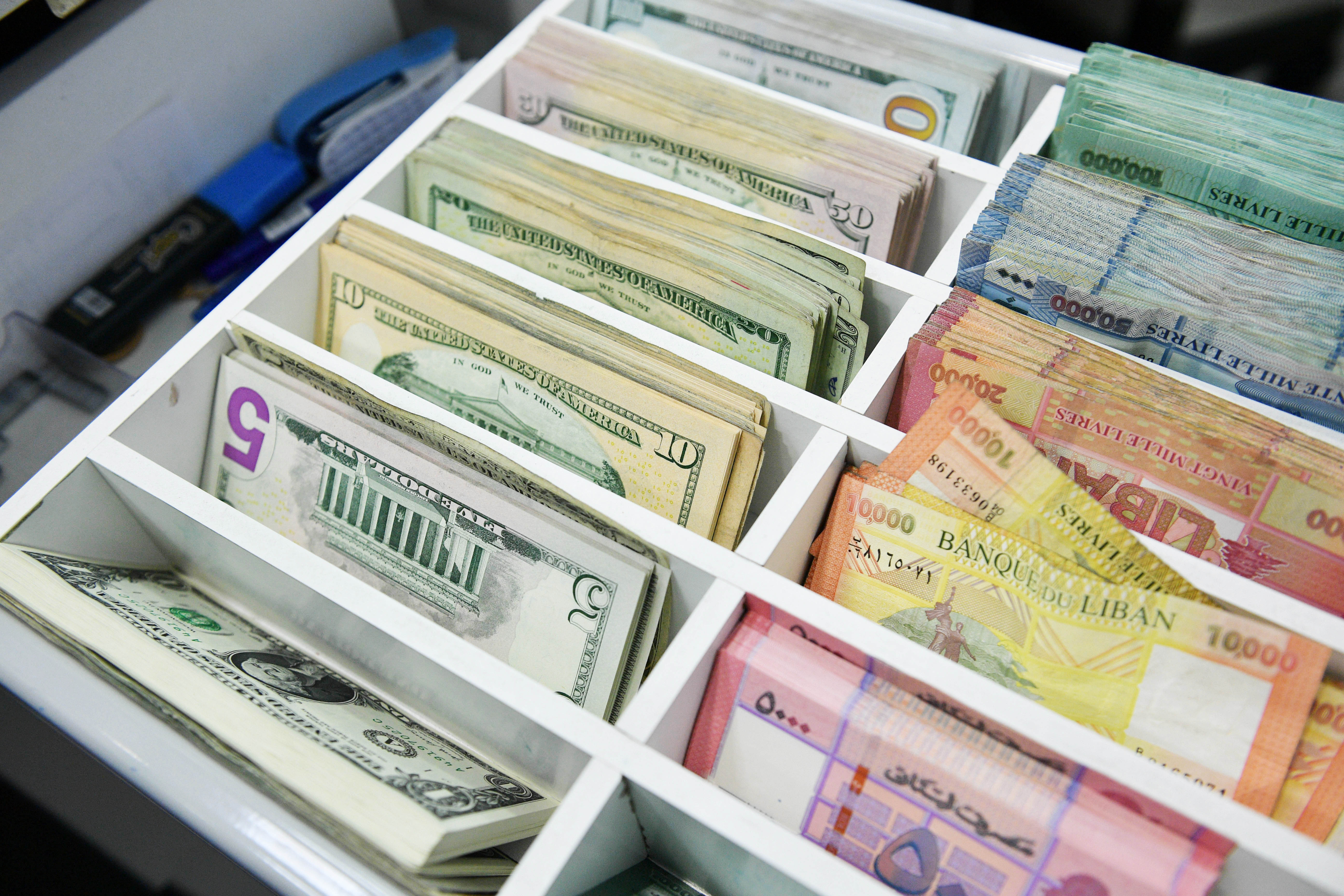
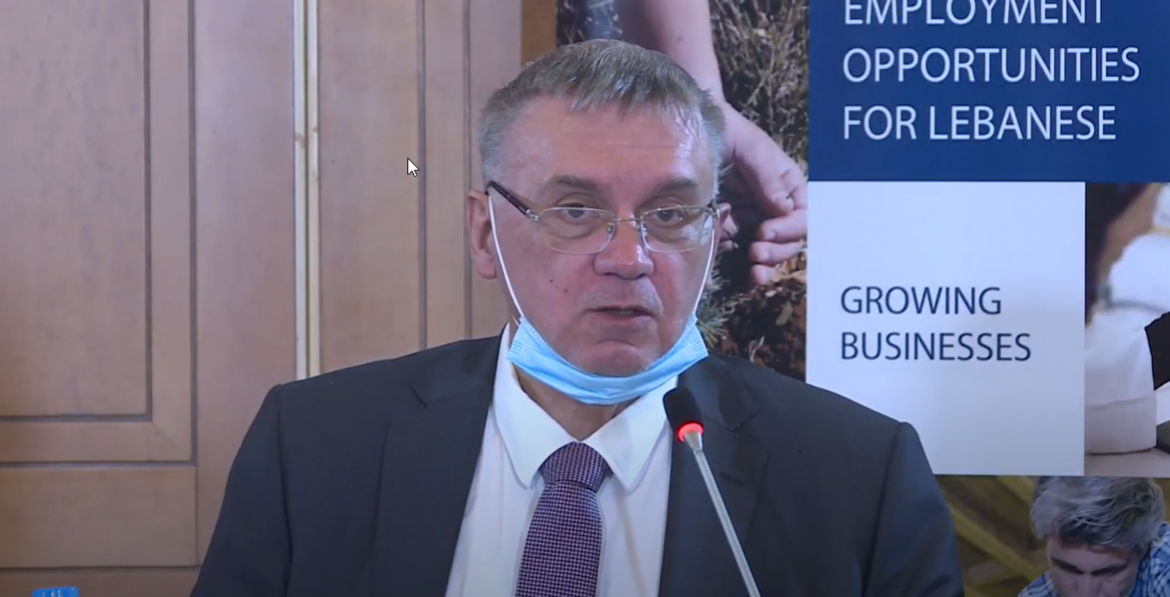
With Solidere having registered positive stock performance since the beginning of the economic crisis in Lebanon, and with Lebanese rushing to buy real estate in order to hedge against the depreciation of the Lebanese currency, Executive sat with Ziad Abou Jamra, Secretary of the Board of Directors at Solidere and Deputy General Manager, to talk about Solidere’s performance and the current state of real estate in Lebanon.

1. With regards to the August 4th explosion, what is your assessment of the damages caused to Solidere properties? Have any of these been covered by insurance?  How much of it is being repaired by Solidere?

The explosion that occurred on August 4, 2020, caused severe damages to our facilities. The insurance policies that we have cover all possible causes but they nevertheless need to pinpoint a cause before initiating reimbursement in our favor. We are not waiting for that to occur but have started the process out of pocket. Rebuilding will occur in phases. The momentum of the rebuilding effort will be directly correlated to the overall situation of Lebanon but will nevertheless occur in stable steps. We are mindful of the interest of both the shareholders as well as the merchants and residents of Downtown Beirut. As for the assessment of the damages, these have already been discussed in our board meetings but discussions are ongoing and the results will not be made public for the time being.

2. The share price of Solidere has gone up 140 percent between January 2017 and January 2021 (currently at USD 24 per A common share). What are for you the main drivers of this demand?

The following improved company fundamentals are the main drivers of demand for our stock:

Cash reserves in banks witnessed a substantial increase during the year 2020, enhancing the liquidity of the company and its ability to face its urgent and future challenges. Effectively speaking, and in case the dire economic situation persists for the long term, Solidere’s current liquidity can carry the company for the next four years if not more. This liquidity will be more than sufficient to cover salaries, taxes, maintenance expenses, and other potential unforeseen costs.

The company settled all outstanding bank loans and overdraft facilities during 2020, thereby bringing its interest expense down to zero. Moreover, the remaining non-interest bearing liabilities have dropped significantly.

A major cost cutting effort initiated in late 2018 successfully brought down the general and administrative expenses by almost 26 percent from around USD 30 million (income statement 2018) to around USD 22 million (income statement 2019).

Sales picked up dramatically in the years 2019 and 2020. This helped the company record a sizable profit in both years.

Devaluation of the national currency definitely gave a boost to sales, but a big chunk of the total sales were realized before the onset of the devaluation of the local currency and its aftermaths.

3. With regards to the current situation in Lebanon, should capital controls last, how would Solidere deal with this situation?

Capital controls have no effect on our operations, as they do not affect checks that are drawn locally or transfers that are conducted internally as such. Therefore the future of such controls, whether they become regulated or not, or whether stay in place or not, will have a minimal impact on Solidere.

4. How has Solidere readjusted to the current monetary paradigm in 2020? In what form and currencies have transactions been undertaken?

Our modus operandi has remained unchanged as we have sold plots before and after the crisis. All of these transactions occurred in local dollars. Now, as our situation has dramatically improved, we may opt to require a certain percentage of future transactions to be paid in fresh dollars but we have not yet reached a decision in this regard.

5. Overall, is it correct to say that Solidere’s share price has been a result of transactions in Lollars? How do you describe the share price in comparison to January 2019?

I have covered a part of this question in answers provided above. Suffice it to say that while the local dollar has aided the share price it was by no means the only factor in the significant improvement witnessed over the recent period.

6. Solidere is a company involved in high-end real estate. Would factors such as the currency depreciation that we have been seeing result in Solidere or other developers being interested in investing in high-end real estate?

Uncertainty about the future has driven ultra-high net worth investors with significant deposits in Lebanese banks to migrate losses by buying prime real estate. As Solidere has the best of the crop in this regard, it has stood to benefit the most from this demand.

7.  With regards to properties being sold by Solidere, can you tell us more what kind of real estate has seen the greatest demand in the past year? Offices? Apartments? Other?

We estimate that more than 90 percent of the value of the transactions were land-related, with Solidere having the lion’s share of total real estate transactions in the Beirut City Center.

8. What trends are you expecting for real estate? Will there be local or foreign buyers?

As long as the political situation remains dire, demand will predominantly remain local. Actually, demand may increase as the fear factor increases. Eventually, should a regional political settlement be reached, hopefully a long-lasting one, foreign buyers will return to Lebanon, consequently improving the inflow of fresh dollars and the value of real estate.

9. How much of the increase in overall real estate transactions do you attribute to transactions in the Beirut Central District? How do you explain the attractiveness of these areas despite the damages caused there due to the Beirut blast, protests and the economic downturn?

All the recent purchases can be described as long-term in nature. These are not investors looking to flip their newly acquired assets for a quick profit. Rather, these are investors whose primary aim is to park their funds in an asset class that will most probably provide the best alternative to protect the value of their money. They possibly aim to hold on to their real estate for at least five years until the situation witnesses a significant improvement, at which point they could possibly sell for fresh dollars. These investors are looking beyond the Beirut explosion, which, no matter how atrocious that was, remains a one-off event, the repercussions of which on the real estate market will dissipate over time. They are also looking beyond the protests. That is the main reason I believe that they are focusing on Beirut as it is the area most likely to recover first and fastest.

10. Overall, it is my impression that 2020 has been a good year for Solidere in terms of repairing your balance sheet and gaining traction for your stocks. Do you see this trend continuing in the near future? Taking into account Lebanon’s situation.

The positive trend should continue in the coming few years as our stock is still undervalued relative to its net asset value (NAV). In addition, should the situation at the macro and political level improve, Solidere would be one of the first companies that would directly benefit as life returns to normal to the downtown area. Ironically however, should the situation continue to deteriorate, this would translate into a rise in both the value of Solidere’s stake in Solidere International (assets outside Lebanon) as well as a rise in the value of its real estate portfolio as a whole as local dollars would rapidly lose their worth.

As can be seen from above, Solidere has positioned itself through recent actions on its part to benefit no matter what future developments may lay in store for Lebanon.
April 2, 2021 0 comments
0 FacebookTwitterPinterestEmail
EventsExecutive newsExecutive Roundtables

Roundtable 5 Technology And Knowledge Enterprises

by Executive Editors March 31, 2021
written by Executive Editors

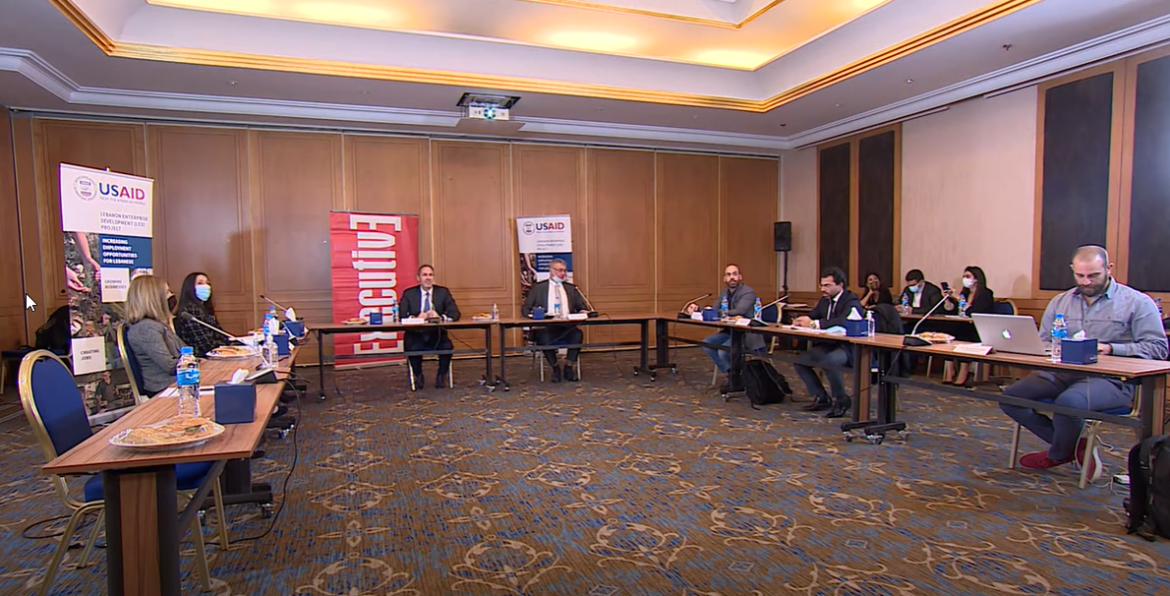
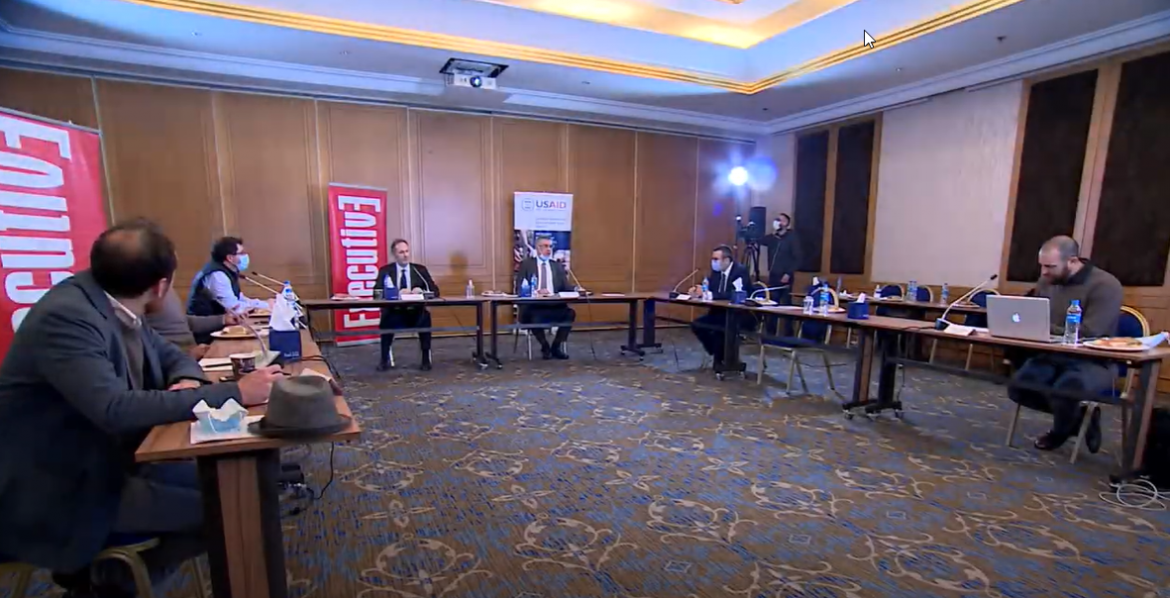
Part 5 in a series of 5 roundtable discussions on the future of Lebanese industries organized by Executive Magazine in partnership with the United States Agency for International Development under the Lebanon Enterprise Development (LED) project. The roundtable dealt with enhancing core strengths and specializations in the digitized knowledge economy landscape Date: March 31, 2021 – 6:00 PM – 8:00 PM

March 31, 2021 0 comments
0 FacebookTwitterPinterestEmail
EventsExecutive news

Roundtable 4 food & beverage and hospitality

by Executive Editors March 31, 2021
written by Executive Editors

Part 4 in a series of 5 roundtable discussions on the future of Lebanese industries organized by Executive Magazine in partnership with the United States Agency for International Development under the Lebanon Enterprise Development (LED) project. The roundtable dealt with aiming to export successful F&B concepts and develop job-creating quality hospitality ventures Date: March 31, 2021 – 3:00 PM – 5:00 PM

March 31, 2021 0 comments
0 FacebookTwitterPinterestEmail
EventsExecutive news

Roundtable 3 Media Publishing And Content Creation

by Executive Editors March 31, 2021
written by Executive Editors

Part 3 in a series of 5 roundtable discussions on the future of Lebanese industries organized by Executive Magazine in partnership with the United States Agency for International Development under the Lebanon Enterprise Development (LED) project. The roundtable dealt with taking media creativity ,integrity and professionalism to new heights of regional prominence Date: March 31, 2021 – 11:00 AM – 1:00 PM

March 31, 2021 0 comments
0 FacebookTwitterPinterestEmail
EventsExecutive news

Roundtable 2 Food Processing And Agro Industrial Production

by Executive Editors March 30, 2021
written by Executive Editors

Part 2 in a series of 5 roundtable discussions on the future of Lebanese industries organized by Executive Magazine in partnership with the United States Agency for International Development under the Lebanon Enterprise Development (LED) project. The roundtable dealt with helping the agro-food sector contribute to building a productive economic system Date: March 30, 2021 – 6:00 pm – 8:00 pm

March 30, 2021 0 comments
1 FacebookTwitterPinterestEmail
EventsExecutive news

Roundtable 1 Manufacturing

by Executive Editors March 30, 2021
written by Executive Editors

Part 1 in a series of 5 roundtable discussions on the future of Lebanese industries organized by Executive Magazine in partnership with the United States Agency for International Development under the Lebanon Enterprise Development (LED) project. The roundtable dealt with overcoming rising financial barriers by leveraging competitive skills and new labor cost advantages. Date: March 30, 2021 – 3:00pm – 5:00 pm

March 30, 2021 0 comments
6 FacebookTwitterPinterestEmail
Editorial

Do we dare?

by Yasser Akkaoui March 27, 2021
written by Yasser Akkaoui

Elephants are the epitome of power. These times of mystifying power tugs-of-war remind us that Lebanon’s economy has a fundamental right to security and stability. If you personally like the company of an elephant is thus secondary, as long as their power is wielded democratically.

The scary downside of this equation is that when out of control, an elephant in any room will be ruinously destructive. Without a harness, ours has been running loose for much too long. What is tricky is that we cannot mislabel, ostracize or kick it out, since years of indoctrination have engrained it in the identity of Lebanese individuals, families, and communities.

We understand that this elephant is part of our national mix of communities, we know its roots and doctrine, and we are well aware of the bloody path it has taken for forty years, rampaging both for and despite of Lebanon’s interests. But in all our awareness of this destructiveness and despite the track record that includes years of undermining the rule of law, flaunting the national sovereignty, amassing weapons and, lately, mastering cyber weapons and wielding them in cyberwars in support of Syrian and Iranian interests, we also recognize that harnessing the elephant will require a whisperer.

At this moment where we face a very real collapse of a nation, however, we cannot stand idly by the hijacking of Lebanese social causes or the continued destruction of our politics and future. Yes, the elephant is today more dangerously out of control than ever and has failed, along with the whole Lebanese establishment, to deliver on any promise to the people while doggedly warding off alternatives.

This ugly truth is unbearable, but it is time to face it. Look at our barren land, standstill mills, wasted youth and frightened eyes.

Elephants may arrogantly look down on roommates. But any would-be or real elephant in our room has to understand that Lebanon can no longer afford and will no more accept stampeding over its affairs and interests for the benefit of power-mad and bloodthirsty patrons.

March 27, 2021 0 comments
0 FacebookTwitterPinterestEmail
Entrepreneurship

Cedar Oxygen: a ventilator for Lebanese industrialists?

by Nabil Makari March 25, 2021
written by Nabil Makari

Established in early 2020 as a private initiative to address the pressing social and economic difficulties of the Lebanese industrial sector, Cedar Oxygen was later approached by the Lebanese central bank (BDL) which invested $175 million of financing in order to address the need of local industries. In light of the financial crisis in Lebanon and the depreciation of the Lira, which is making it more difficult for the Lebanese to import foreign goods, including raw materials, Executive sat down with Alexandre Harkous, Chairman and Managing Partner of Cedar Oxygen.

Could you please start by introducing yourself and telling us about your background?

I left Lebanon in 1985 and moved to France. I am an engineer, technology oriented, specialized in Finance. All my background is with banks, asset management and capital markets. Then I ventured into startups. I founded my first one, SIP, in 1996, and sold it in 1998 to a very big company in the UK, Mysis UK. For the following three years I was head of wealth and asset management at Deloitte, then my second startup was established in 2000, BI-SAM Technologies, which became a worldwide leader in wealth and asset management systems. Today, more than USD 15 trillion of assets under management use this system. This company was then sold in 2017 to FactSet [and relocated from the UK to Lebanon]. Why Lebanon? I am Lebanese […] I wanted to give back to Lebanon, and even wanted to come back and live in Lebanon. I had prepared everything in Beirut, then we started facing the problems we know. My objective was to help Lebanon and help the Lebanese youth in creating startups.

Could you expand on the genesis of Cedar Oxygen? How was it created? Were institutions such as the Lebanese central bank or expat organizations involved in the design?

[BDL] was talking to different fund managers and counterparties, including the Association of Lebanese Industrialists. The Governor [Riad Salameh] called me in January 2020 and we met. We discussed in length the problems that the industrialists were facing, their increasing need for liquidity as well as the foreign reserves situation and the subsidies issue. He asked me for my opinion. We import between 11 and 14 percent of GDP per year for the industrial sector. We import raw materials for USD 3 billion. We should have a way for industrialists to finance themselves which should be a closed circle.

The other idea was related to the FX, because industrialists selling to the domestic market will collect their money in LBP, and therefore we should have a solution to inject money in the fund in USD. He mentioned that he was talking to different parties. So we started the process in the end of January and early February. After a long procurement process and 11 different meetings, due diligence and compliance processes, our proposed solution (Fund and Digital Fintech Platform) was approved by the Governor and voted by the Central Council members

I had called different partners, from Moscow, Paris, and Beirut, and we worked hard during six weeks and presented this program in March. It has two legs: a fund (a pool of money), and a platform for peer-to-peer FX.

Were there any Lebanese expatriates involved in the process?

All the founding team members are expatriates. We hired a team of seven in Lebanon after we created the company. Today we have two structures, the back office in Paris and a front office team in Beirut.

Did any organization such as Lebanese International Financial Executives (LIFE) take part in this process?

The founding team seeded the initiative, then the BDL was the first anchor investor in the fund. Cedar Oxygen is a private initiative, founded by expatriates. I am a member of Life, and chairman of the technology pillar of LIFE today. Two other members of Cedar Oxygen are members of LIFE. This is how I contacted my partners. It is not a LIFE initiative but an initiative by LIFE members.

In the current situation, Lebanese enterprises are finding difficulties in accessing capital, in paying for imported materials (raw materials and machinery), and the need to activate exports. How will the Cedar Oxygen fund address these issues?

The journey ahead of us is long. We have a pool of capital and a FX platform. Now if you are an industrialist, you need to buy your raw materials let’s say from France or any other country, you can ask for a facility from Cedar Oxygen, you can import through the platform, which is digitalized, with a new way to treat the files. Given that we are in France, we will be talking to Coface and Euler Hermes to help structuring credit insurance for exports.

The process starts by collecting the data from applicants, studying the files, financial statements, and their financial situation. We have a credit team in the Beirut front office that collects and analyses the data, and creates a credit memo for an Investment Committee (IC). The IC is composed of five members; three of them are independent and two are not Lebanese. The idea was to avoid a conflict of interest. There is no decision made in Beirut with regard to how we allocate the funds. Any file we receive is treated in Beirut, a detailed memo is sent to the IC. Every week we have an IC, the vote has to be  unanimous for the file to be approved. Then we deploy the money and pay directly to the sellers of raw materials. The materials are then sent to Beirut.

How would you describe Cedar Oxygen’s business model? Would you qualify it as a private debt fund?

Yes, but for the moment it is not debt for capital expenditures or working capital. It is for buying raw materials. However we are talking to different development finance institutions (DFIs), and we hope to help more by deploying money for capital expenditures and working capital, this will help the industrialists augment their production, especially the exporters. Our target is to improve the balance of payments.

Will this include export support or export activation programs? (For example, participation in trade fairs among others)

You are aware that we have signed a memorandum of understanding with the Association of Lebanese Industrialists (ALI). We are working now with different economic attaches, either Lebanese or non-Lebanese, in different Lebanese embassies, but also the French Chamber of Commerce and the ALI. We are preparing a virtual trade fair for Lebanon that will be held in Paris on April 29 to promote the Made in Lebanon label. It will be the first virtual trade fair where we will expose real Made in Lebanon brands in Europe, and it will be our first occasion to show that.

Is Cedar Oxygen banking on specific key sectors for exports (for example agribusiness and key industries with competitive edges)?  

We are excluding jewelry, due to Know Your Customer (KYC) and Anti-Money Laundering (AML) problems. We were excluding oil because it is not raw materials. But we received a file today, a request for a company that is importing oil for industrial purposes and we will consider it. Other industries, agribusiness, of course, textiles, machinery, and other industries are all eligible.

You mentioned hoping to reach $400 million per fund. How are you segregating the funds?  

When I met Fady Gemayel, the president of the ALI, we were looking at the needs of the Lebanese Industries, and we came to the conclusion that if we reached this number, and we could roll it out once or twice a year, this would be enough to cover the initial demand. This was in February 2020. Afterwards, the government announced their default on Eurobonds, then resigned, then unfortunately the explosion at the port and the COVID-19 lockdown occurred, so we are trying to readapt our strategy to be pragmatic, especially as our stakeholders, the DFIs have two problems today: they have concerns about the political issues, and the country risk. We are trying to reach this amount as a target.

You mentioned before that you were hoping to reach a $2 billion a year financing. How are you segregating the funds?

We are allocating by sector. Our business strategy is to manage risks. We have to manage risks by sector, we will not concentrate our investment on a few sectors. We reallocate things differently, but we are still deploying. We cannot have more than 5 percent concentrated to a single borrower and no more than 30 percent concentration to a sector.

Industrialists have expressed interest. Are they mainly interested in the fund as potential borrowers or recipients? Or are there desires to be part of the financing? 

There is interest in borrowing from the fund, but we have received interest by some of them to invest in the fund. You can use money in the fund, but you cannot obtain any priority to borrow from the fund in that case, or receive any information on your competitors.  It’s a candid answer we need to give to those industrialists; it’s part of the communication.

When we created the IC, we were concerned to receive these calls from Beirut. I have one vote, even if I want to transfer money from the account I cannot sign alone. The signature is done not just by the chairman but also by two external managers that are partners in the corporate service agent that we work with who operate under Luxembourg jurisdiction. We are always under control by the IC for any money in and out.

Has potential funding interest been expressed by other sources? 

Industrialists are interested. DFIs were all interested, but with all that happened last year we have had ups and downs. Since the US elections we are seeing more interest from the American side. In Europe it’s more wait and see, as they wanted us to form our government. Now they are accelerating, since it’s a private initiative and for the private sector. I cannot tell you which country, but I had a meeting with the ambassador from a European country, and he mentioned the need to accelerate. We are accelerating with these DFIs without waiting for the government and waiting time.

In light of the political instability in Lebanon, do you believe Lebanese industries can thrive even if economic instability seems to have become the norm?  

We are looking into the private sector, and our contracts are under Luxembourg and UK laws, if they are under Lebanese law it’s for rare cases like mortgages and guarantees. All the investments are under the UK and Luxembourg laws.

Lebanon is unstable and has always been unstable. Unfortunately the good days of Lebanon are behind us for now, we should wait to get those good days again, and I am optimistic. But we can work without this, we should continue, otherwise we lose a lot of time.

We made studies about what happened in Italy, Germany, and France with regards to lockdowns for example, and we gave the Government the protocols applied there and told them not to lock down the industry, as it is a productive sector. We are trying to help. I don’t think we should be concerned about the government and the reforms; otherwise we lose a lot of time.

It’s an alternative system and an alternative fund; it’s even an alternative economy. It’s a private initiative. Investors have no leverage on us.

True, but Lebanon’s Ease of Doing Business rating is very low, industries are not hit by a lack of financing only, but also by issues related to infrastructure and regulatory issues (for example electricity outages and slow internet). Wouldn’t this be an impediment to the growth of the industrial sector?

Of course, but look, let’s be pragmatic, and let’s consider a moment that Cedar Oxygen was not established and that we are here to build something and come up with solutions. The banking sector won’t recover in the next 18 months, it will take years, and when we say years we say five years minimum. You don’t have a lot of financial solutions. If you wait for the government, who knows?

In my opinion, if we want to rebuild the country we need private initiative, direct to the consumer, direct to the industrialists, to people, to become productive. Cedar Oxygen is one initiative, but we can duplicate this. Even at Cedar Oxygen, we finance trade, but also what else can we do? We are considering Capital Expenditures. If we make our initiative successful, we can duplicate this to other sectors such as technology or agriculture.

You put a lot of emphasis on governance, principles; you have an investment committee with unanimous voting. Do you think you can help promote better governance standards?

That would be our aim. If you asked me this question two years ago I would have told you it’s difficult, due to the fact that Lebanese companies are family businesses, with strong connections. It’s a difficult mission to be honest. We are trying to talk to our industrialists but the road is long, they have to rebuild a lot of things. There are things we can’t address now like pollution or sanctions.

Today I am seeing people more open to equity investments, because they want to save their companies and jobs. I think that implementing new standards is an opportunity, and not just an economic one. It can promote best practices and gender equality, for example.

On our end, we have best practices implemented and corporate governance, including Environmental, Social and Governance (ESG) principles that we review with different experts and asset managers.

I feel I have to take on this mission, and fortunately I have a great team behind me. It was a learning curve. I was naïve when I came to Beirut, I learned a lot from that one year.

Note: We modified this text on March 26 and 27, 2021, based on clarifications from the interviewee, specifically in terms of Cedar Oxygen’s relationship with the Lebanese central bank, its internal structure, and its allocation of funds.

March 25, 2021 0 comments
0 FacebookTwitterPinterestEmail
Economics & Policy

Please hold for institutional reforms

by Nabil Makari March 23, 2021
written by Nabil Makari

Eight months after Beirut’s deadly port explosion, the French initiative seems a lost opportunity in need of resurrection. Post-blast, French President Emmanuel Macron was welcomed in the streets of Beirut on August 6, 2020, while overseeing damages, which was followed by a second visit less than a month later, on August 31, 2020. During his visit, he promised to initiate talks with donors and to come back to Lebanon to bring forward an initiative that would help alleviate Lebanon’s woes and unlock the Conference for Economic Development and Reform through Enterprises (CEDRE) money that had been once considered as a main pillar of Lebanon’s future economic revival. The CEDRE conference was held on April 6, 2018, in Paris, and had pledged USD 11 billion of infrastructure projects (The pledges include $10.2 billion in loans and $860 million in grants), on the condition of political and financial fiscal reforms: these never materialized. As of March 15, 2021, Macron has delayed sending an envoy to Lebanon, in a sign of frustration with the current political deadlock in Lebanon. 

The draft of the initiative was presented on Macron’s second visit to Lebanon on September 1, 2020 to Lebanese governing parties. In broad strokes, it called for: the need to establish an independent government of technocrats to tackle Lebanon’s economic needs; a forensic audit of the Lebanese Central Bank (BDL); a restructuring of Électricité du Liban (EDL)’s chronic deficits; reform of procurement laws; the need to implement laws guaranteeing an independent judiciary; in addition to a demand for legislative elections to be held within a year. This was followed by the nomination of ambassador Mustafa Adib to form a government on August 31, 2020. On September 26, the Prime Minister-designate resigned in the face of deadlocks in forming the government.

Macron, in a press conference held on September 27, 2020, lambasted the Lebanese political class and accused them of “collective betrayal.” Adib’s resignation as Prime Minister-designate, was followed by blockages preventing the formation of a new Government led by the new Prime Minister-designate Saad Hariri who was designated to form a government on October 22, 2020, and failed local mediations to resolve the political deadlock. For these reasons, it seems that any hope put in the former mandatory power’s proposal for Lebanon is now long gone. Nevertheless, as the government formation process is still ongoing, and with many hoping that said government of technocrats could still be formed, the question remains: could the French initiative be revived? And if so, would it help alleviate Lebanon’s woes?

An incomplete initiative?

The most important question in regards to the French initiative is whether it addresses Lebanon’s priority needs. Lebanon suffers from a default on its foreign-currency labeled sovereign debt, losses in the banking sector estimated at $44 billion according to a recent report from the World Bank, a depreciation of the Lebanese pound, and with ever rampant corruption. The French initiative, on the surface, does seem to address some of the main issues, such as EDL’s deficit, the losses at the BDL, and corruption, among others. Nevertheless, it is deemed insufficient according to many economic experts. According to Ziad Hayek, former secretary general of Lebanon’s High Council for Privatization and Public-Private Partnerships, the French initiative “touched on some of the most obvious things, some of which are not applicable anymore,” referencing the fact that the proposed reforms are outdated as they rely on assumptions from the CEDRE investment plan. According to him, the French initiative is too general and overlooks two main factors, the first of which is the lack of a coherent governmental economic strategy, and the second is that the plan seems to lack “a proper understanding of the play between economic, monetary and fiscal policies.”  

Indeed, overall, the French initiative seems to overlook key aspects regarding the lack of effective governance in Lebanon. Lebanon’s Ease of Doing Business Index rank is no. 143, it’s competitiveness index is 56,29 (ranked 88th worldwide), and it’s Fragile State Index is 84,9/120. This opinion is seconded by that of Mounir Rached, President of the Association of Lebanese Economists. “There is too much focus on general issues, but not enough on what needs to be done,” he says. According to him, Lebanon needs an economic roadmap, and precise measures to reform governance and boost the economy (issues that were addressed by Executive Magazine in its Economic Roadmaps 1.0, 2.0, 3.0 and 4.0).

Indeed, if anything, the French initiative does seem to lack details, as it focuses on some of the “main” issues affecting Lebanon from a deficit standpoint, and the audit of the BDL (to determine the exact losses of the institution), but has little to say about how to promote economic growth or on monetary policy.

The French initiative is also not clear concerning an overall economic strategy to get Lebanon’s economy back on track, instead of relying on the need to obtain funding from the International Monetary Fund (IMF) through negotiations. Though negotiations with the IMF, which are part of the measures mentioned in the French Initiative, have stalled, little has been done to revive such talks on the part of the executive branch in Lebanon.

With regards to EDL reform as proposed by the French Initiative, according to Hayek, the plan relies on many assumptions from the CEDRE investment plan, which needs to be reviewed in light of the current economic situation. He cites for example the need, mentioned in the French initiative, to build new power plants, “Serious thought should be given to distributed generation instead of building large power plants, because it would be difficult to attract proper large investor interest at this stage.” This is because large power plants require large foreign investments, whereas distributed generation is decentralized and adopts more flexible technologies that are located close to the load they serve, with more limited production capacities. 

Status quo

French President Macron, having postponed his visit to Lebanon originally planned for December 22, 2020 after contracting COVID-19, meant to send an envoy to Beirut (with no concrete date proposed yet). With new Prime Minister-designate Hariri’s consultations to form a government showing little to no progress since September, little has been done on the Lebanese political side to help advance the initiative. Indeed, bitter disputes regarding the formation of a technocratic government, with political parties arguing over cabinet portfolios, has frozen efforts to form a government, one of the main points of the French initiative to help restart the negotiations with the IMF and engage the necessary reforms. “We need a government,” says Rached, “and for now there is little sign of progress”.

The French initiative without the French?

The reforms proposed in the French initiative, though deemed incomplete, appear nevertheless to be necessary. The question remains then: would it be possible to engage in these reforms without French backing?

Such reforms are mostly local and do not require direct foreign assistance, since they could be the result of local governmental initiatives. Rached and Hayek both believe that the Lebanese are capable of implementing large parts of the French initiative, without the French, and see no reason to delay. Indeed, many of the recommendations mentioned in the initiative, such as ending EDL’s deficits, an audit of the BDL and others require only a political decision.

The decision seems to be, first and foremost, political, and the lack of decision-making in Lebanon is a result of ineffective governance. Since the cabinet of Prime Minister Hassan Diab resigned in the aftermath of the August 4 Beirut explosion, Lebanon has been without an effective government for the past six months, though the Diab cabinet is still acting as caretaker government, and efforts to permit the formation of a Hariri-led government, by time of this writing, did not appear to reach any conclusion. Without decision-making, Lebanon is not able to propose an effective economic roadmap and implement reforms, as takeover governments only tackle everyday business. The formation of a government would allow launching tenders to build power plants, reforming procurement laws and engaging in a BDL audit, all of which are part of the French initiative but also of any reform package that would be approved by the IMF. Another example of immediate measures to be taken is the need to liberalize the rate of the LBP, which has not even been mentioned by the French initiative but is appearing more and more as an economic necessity to avoid a depletion of BDL reserves (due to said reserves being used for subsidies) and to allow Lebanon to minimize its trade balance deficit.

In conclusion, the “French initiative” recommendations could very well be applied by a Lebanese government, but under current political governance, appears increasingly difficult. Meanwhile, with political deadlocks, it seems reforms will have to wait. According to  Hayek, the “French” initiative could be pursued without the French, but this could not be done anytime soon due to what he sees as a lack of parliamentary initiative, “If we get 20 new members of parliament from the civil society next elections, maybe we can change the dialogue towards implementing effective reforms.” 

Desperately seeking governance

The French initiative seems to have hit a dead end.The main hurdles in implementing needed reforms are primarily political. For example, a full audit of the BDL would require a law to be passed in parliament due to banking secrecy requirements (though it has lately been subject to debate regarding public entities’ accounts according to Caretaker Justice Minister Marie-Claude Najm). In addition, procurement reforms would need a law in parliament, as they do not follow international standards, according to Rached.

Still, the priority issue, according to Hayek, is the banking sector deposits labeled in USD. Whether this money has been spent is still the subject of ongoing debate, though most experts in banking deem it so. For Hayek, the only way to deal with this issue is to stimulate capital markets through the creation of a trust that would hold the assets of the state to eventually privatize those assets and list their shares on the Beirut Stock Exchange when market conditions improve. All of this would require laws to be passed in parliament.

The French initiative calls for elections to be held within one year from the initial proposal in August, which would require that most reforms be quickly implemented by current parties in power. 

Macron has delayed sending an envoy to Lebanon as of February 18, 2021. It remains to be seen if the local political deadlocks will be removed to help form a government and initiate reforms, to fully benefit from the hand extended to Lebanon by its old mandatory power. 

Overall, the economic solutions to Lebanon’s crisis do not seem to require as much foreign intervention as they do national willingness. The latter, sadly, is still subject to what observers deem to be political bickering, corruption and ineffective governance, which for the moment do not seem close to end. 

March 23, 2021 0 comments
0 FacebookTwitterPinterestEmail
Uncategorized

If the price is right…

by Andre Sleiman & Sabine El Hayek March 22, 2021
written by Andre Sleiman & Sabine El Hayek

Along with the reform of capital markets and the strengthening of judicial independence, the modernization of public procurement is on top of Lebanon’s reform agenda and a major condition to unlock international assistance. Public procurement is a fundamental economic activity for public authorities at both the central and the local levels, as it encourages the provision of high quality services in a cost-effective way. 

The massive uprisings of October 2019 and the unfolding financial meltdown may signal a wind of change: both the international community and the Lebanese people are demanding strict accountability and integrity requirements, but the challenge is considerable. Despite billions of dollars of aid and soft loans that were granted to Lebanon since the 1990s, the country’s infrastructure and the quality of public services remain among the poorest in the region. To many, the inefficiency of public spending is but one outcome of Lebanon’s institutionalized corruption, elite capture, and pork barrel politics. Moreover, not only have the oversight agencies been systematically weakened over the past years, but the many loopholes in Lebanon’s legal and regulatory framework also offer little prospects for better days without an overhaul of the public procurement system. If properly regulated, public procurement can restore confidence in the Lebanese business environment and attract foreign investors. But there is much more to public procurement than a way towards economic recovery: it is also about restoring trust in public institutions.

Are Lebanon’s laws paired with the mismanagement of public funds?

Lebanon’s current public procurement framework is a fragmented patchwork of various legal instruments consisting of the 1959 Tender Regulation Decree, the 1963 Public Accounting Law (PAL), and a flurry of other texts regulating exceptions and special procedures. Some municipalities follow the Accounting Principles in Municipalities and Unions of Municipalities Decree of 1982 while others are subject to the PAL. To make things even more complicated, some public establishments follow their own procurement system.

Lebanon’s outdated and heterogeneous legal framework, in addition to the multitude of stakeholders, make this activity highly vulnerable to corruption and clientelism. Public authorities have large discretion to resort to unjustified practices such as bid slicing. In other instances, municipal officials resort to vendor bills to reduce the length of bureaucratic procedures and delays for receiving approval from supervision authorities. DRI has assessed these issues at length to support current reform efforts.

According to a December 2020 report, the policy and regulatory functions of Lebanon’s procurement system are “inexistent, and the complaints review mechanism is weak and inefficient.” The quality of the procurement system was rated as “below average (48/100) compared to the rest of the world and to a number of MENA countries.” By all standards, Lebanon does not comply with international guidelines and agreements.

How to move toward a better public procurement system?

There is much hope to pass a public procurement reform bill that was submitted to Parliament in February 2020. The draft legislation lays the groundwork for a comprehensive and modern public procurement system that is aligned with international standards. Since last June, it has been discussed in consultation with key stakeholders. 

The OECD, the World Bank, and Democracy Reporting International are providing technical advice and guidance to this process. So far, the changes brought in by the draft law have been promising, but the successive lockdowns have considerably delayed progress.

In line with UNCITRAL standards and international good practices, the draft law places a premium on fairness and competition by strengthening competitive tendering and limiting the use of single-source procurement and treating all bidders equally. It also introduces a code of conduct, fosters transparency by leveraging technology to facilitate access to information in compliance with the 2017 Access to Information Law, promotes efficiency and effectiveness by ensuring value for money, and enhances accountability via control mechanisms throughout the procurement process including appropriate complaint and sanctions processes. 

For the quantum leap to happen, the law should be consolidated by a package of implementation decrees, Standard Bidding Documents, and a bold program for empowering oversight agencies. Only then can Lebanon correct its course towards public integrity and effective accountability.

March 22, 2021 0 comments
0 FacebookTwitterPinterestEmail
  • 1
  • …
  • 35
  • 36
  • 37
  • 38
  • 39
  • …
  • 689

Latest Cover

About us

Since its first edition emerged on the newsstands in 1999, Executive Magazine has been dedicated to providing its readers with the most up-to-date local and regional business news. Executive is a monthly business magazine that offers readers in-depth analyses on the Lebanese world of commerce, covering all the major sectors – from banking, finance, and insurance to technology, tourism, hospitality, media, and retail.

  • Donate
  • Our Purpose
  • Contact Us

Sign up for our newsletter

    • Facebook
    • Twitter
    • Instagram
    • Linkedin
    • Youtube
    Executive Magazine
    • ISSUES
      • Current Issue
      • Past issues
    • BUSINESS
    • ECONOMICS & POLICY
    • OPINION
    • SPECIAL REPORTS
    • EXECUTIVE TALKS
    • MOVEMENTS
      • Change the image
      • Cannes lions
      • Transparency & accountability
      • ECONOMIC ROADMAP
      • Say No to Corruption
      • The Lebanon media development initiative
      • LPSN Policy Asks
      • Advocating the preservation of deposits
    • JOIN US
      • Join our movement
      • Attend our events
      • Receive updates
      • Connect with us
    • DONATE