• Donate
  • Our Purpose
  • Contact Us
Executive Magazine
  • ISSUES
    • Current Issue
    • Past issues
  • BUSINESS
  • ECONOMICS & POLICY
  • OPINION
  • SPECIAL REPORTS
  • EXECUTIVE TALKS
  • MOVEMENTS
    • Change the image
    • Cannes lions
    • Transparency & accountability
    • ECONOMIC ROADMAP
    • Say No to Corruption
    • The Lebanon media development initiative
    • LPSN Policy Asks
    • Advocating the preservation of deposits
  • JOIN US
    • Join our movement
    • Attend our events
    • Receive updates
    • Connect with us
  • DONATE
EditorialOpinion

Lessons from our chaos

by Yasser Akkaoui June 16, 2021
written by Yasser Akkaoui

The Lebanese constitution is clear in laying down the principles of democratic governance and the
responsibility that those who wish to hold office have towards economic democracy, social equality,
human rights, and more. And yet, our daily reality is nothing if not a narrative of chaos.
Isn’t it ironic that we despair that our political leaders cannot agree on a government but we have no
greater wish than getting rid of our political corruption?


I don’t know if you agree with me but I hold true that we all, each in our own way, have to challenge the
chaos that is bringing us to our breaking points. For Executive, putting our shoulder to the wheel of
fighting chaos has meant holding industry roundtables and asking leaders in our economy: How can a
corporation preserve the value that it built over years of hard work, retain its talent and pursue
profitability in an environment where those in the highest political power have demonstrated their
disregard of all those principles?


Their answers and other lessons of the chaos experience of this year up to the present moment
encourage me to call your attention to three points of note and request your responses.


Lesson One: Economic democratic principles are built on contracts and agreements. The functioning of
such an economy needs all its participants’ adherence to policies and procedures. Public and private
institutions alike therefore must be accountable, honoring contracts, reporting to internal and external
auditors, and obeying legal and regulatory authorities that monitor and reinforce commitment to
governance standards and take to task all those who breach the law and violate stakeholders’ rights.
This is what builds trust, attracts capital, and nourishes innovation and trade.


Lesson Two: The ethical firm and the ethical state are more than assemblies of contracts and
agreements. They need purpose, and the ethical state must support the purpose of the ethical firm and
the ethical family, just as the ethical family and ethical firm have to meet their obligations to the state.
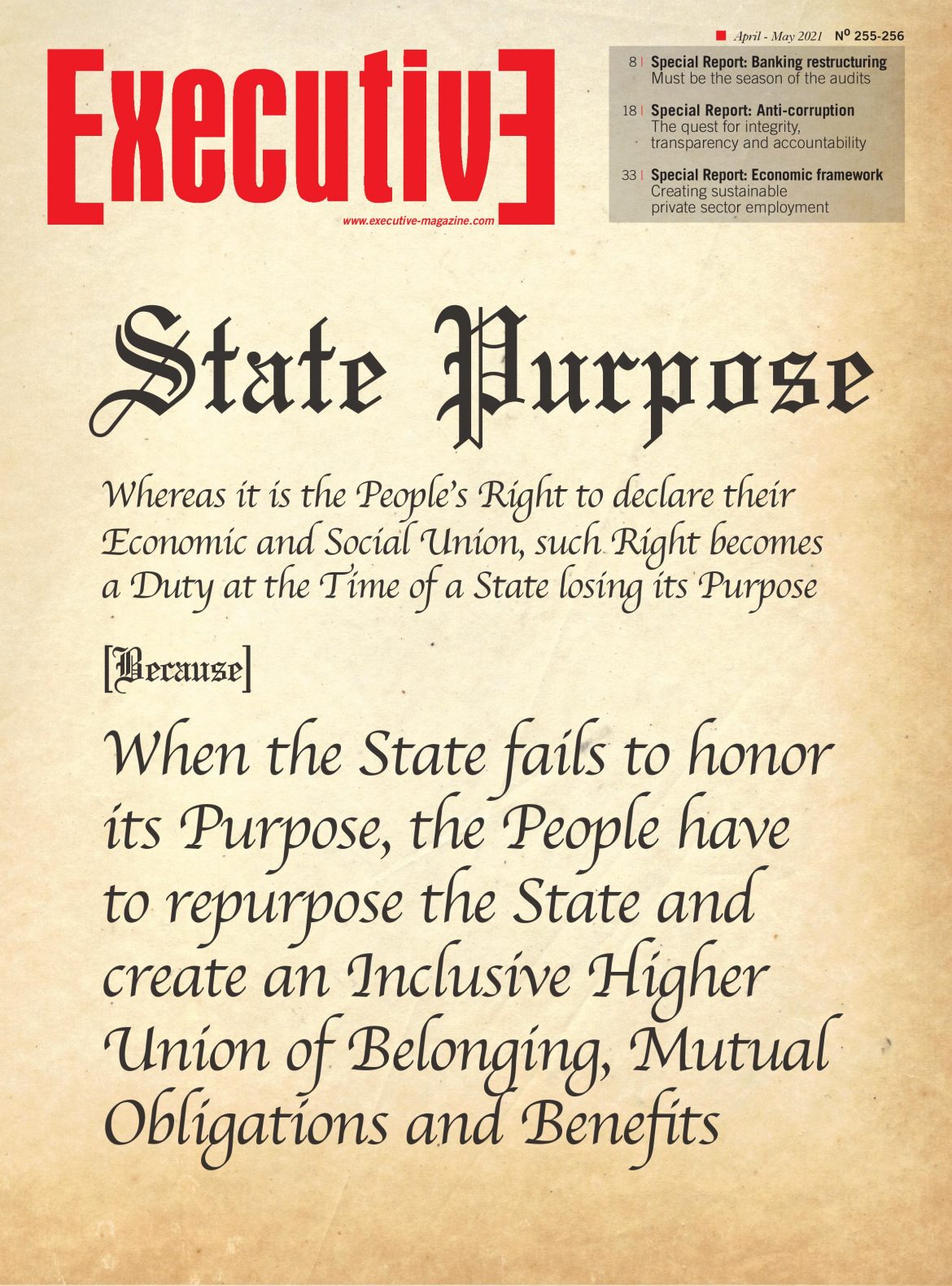
Lesson Three: When the state fails to honor its purpose, the people have to repurpose the state and
create an inclusive higher union of belonging, mutual obligations and benefits.


It is obvious that political systems will be degraded and fall into chaos if they produce public servants
that use the constitution as a tool to grab power and gain unfair advantages for themselves. They slide
down the slope of corruption, extracting economic value without adding any value in return. Pursuing
this model of constant depreciation, the culture of public corruption crowds out those who want to play
by the rules. Instead of being the agency of growth for private economic actors, such a broken public
system exhausts the remaining economic performers, be they employers or employees, consumers or
producers.


The Lebanese private enterprise can and must build its capacity to rise above the broken system. In an
increasingly connected and globalized world, the Lebanese private enterprise can and must evolve,
adapt, and persist in its pursuit of value creation. Its talents will always be recognized and valued for
their creativity and innovation.


June 16, 2021 0 comments
0 FacebookTwitterPinterestEmail
F&BQ&ASpecial Report

Pushing forward and outward

by Hadi Bou Chaaya June 15, 2021
written by Hadi Bou Chaaya

At a time when Lebanon is witnessing the most severe political, economic and even security crises, the ambitions of entrepreneurs in Lebanon refuse to surrender to this reality.

In this context, Anthony Maalouf, chairman and chief executive officer of ANT VENTURES International and vice president of the Lebanese Franchise Association (LFA), points to a number of factors that have prevented the progress of this sector, but lists initiatives taken to protect it and preserve human capital. In his opinion, the Summer season will be a promising one, unprecedented and prosperous for several reasons and factors.

There is no doubt that the hospitality and food sectors depend on basic factors, most notably tourism, which is its mainstay, which has declined due to several factors, which we will mention in the course of the interview. First of all, what is your assessment of the reality of the sector today?

Very difficult. I used to say, from experience, that this kind of industry, especially our type of industry (casual dining), is the most resilient in facing challenges and the fastest to recuperate. It is human behavior to go out and have coffee or drinks. So the problem now is how long the crisis will last. Entrepreneurs need to be patient and take a long breather, especially as there is a growing array of difficult and complex crises. Certainly, this crisis that we are living in today is the most difficult of all for many reasons.

If the situation remains unchanged and threatened with more difficulties, this will put additional pressure on you as entrepreneurs and as owners of the company?

In fact, the crisis can be divided into two main parts: the COVID-19 pandemic, which has exhausted the whole world and Lebanon of course, and the economic crisis that has afflicted Lebanon and is still draining it. With the COVID-19 pandemic beginning to recede, movement is gradually returning, especially since we have ventures abroad, specifically regionally. But at the local level, the crisis still exists, especially with the decline in purchasing power.

What are the most prominent political and economic factors that have prevented the sector from developing to a large extent?

There are many political and economic factors that hinder the progress of all economic sectors, especially our sector, which depends heavily on tourism and its multiple seasons. There is no doubt that the absence of political and security stability plays a fundamental role in the lack of progress in the economic sectors, in addition to the complete absence of the State and the absence of a medium- and long-term action plan and vision for the advancement of Lebanon and putting it on the right track to achieve prosperity, growth and success. Everyone knows that 70 percent or more of restaurants, cafes and tourism establishments have closed as a result of the crisis that began before the demonstrations of October 17, 2019, and worsened after that due to several factors. But in particular, and being affiliated with the Lebanese Franchise Association (LFA), we work on the principle of pushing the internal crisis abroad. This is what happened during the July 2006 war, when Lebanese businessmen went to open businesses abroad to protect their interests inside Lebanon. Today we are out again, otherwise we would not have been able to survive. For a large number of actors in various economic sectors, the emphasis is on individual initiative and starting again after every strong shock and constantly searching for solutions to problems and crises.

Several companies have witnessed the dismissal of a large number of their employees, and this certainly applies to your sector. How was this reflected on your performance in terms of service and the quality of the products you offer?

In fact, we had two options: to initiate layoffs between 30 and 40 percent and continue with the rest of the staff, or to reduce salaries and keep up to 75 percent of staff in some cases. Especially during the beginning of the crisis and in cases of complete lockdowns, we were not able to pay salaries. The good thing is that with the return of the dynamics of the franchising process, we decided to pump part of the financial returns from it to our branches in Lebanon, and we called it the “Currency Depreciation Correction Program” (CDC), as we were keen to raise wages and salaries between 35 and 40 percent to enable employees to pass this stage with minimal possible losses.

As for the quality of the products that we offer, the matter may not apply to us directly, but the hospitality, food and drink sectors suffer from it, as there is no longer a qualified workforce to manage the sector as a result of the terrible devaluation of the currency, which prompted some professionals to migrate in search of job opportunities that match their aspirations and the way of life that they were used to in the past. In fact, a large number of competent people migrated, especially to the Gulf countries, even if the offers they received were 50 percent less than what they were in the past.

Being an entrepreneur, what initiatives will you take, in terms of re-employment and job creation, to avoid a societal explosion? Starting with promoting abroad in search of promising markets that protect the survival of companies, and how will this be reflected in creating job opportunities for the Lebanese citizen?

We must definitely take steps in the interest of the workers. The simple solution is for most companies to increase sales as much as possible and cut costs to keep the business running. Personally, we pursued a policy of diversification, as we have entered into the coffee business and now we have the Caspresso brand that we sell to supermarkets. Therefore, we must diversify our business and distribute our workforce in popular branches in order to achieve a material return to remain resilient, as there are no other solutions for us. On the other hand, in regards to re-employment, we are constantly looking for qualified employees who have sufficient knowledge and experience to move forward in managing this sector and improving its services, knowing that we are looking for a long-term relationship, creating careers and offering salary packages that are in line with market requirements and maybe more. Our company has taken the initiative to improve the value of low wages due to the economic crisis, through the CDC program that allowed us to raise wages by 30 to 40 percent as an incentive for employee self-sufficiency and empowerment. We must continue to work to preserve our human resources.

In addition to the above, we redoubled efforts to open new branches in Baghdad, Iraq and Libya. This aligns with one of our primary areas of focus by giving employees career development opportunities that allow for the continuous advancement of our employees and senior positions. This gives us the opportunity to send our employees to work for our franchisees. We are also conducting training abroad, especially in countries that now have large branches such as Egypt and others, or at branches under opening, which allows us to send a team from Lebanon to provide staff with sufficient expertise, similar to what happened after the opening of our branch in Syria last December.

In short, we are working on correcting salaries and sending employees from Lebanon to our branches abroad to earn fresh dollars.

In light of the fluctuations in all world economies as a result of the COVID-19 pandemic. Is it possible to talk about future plans in the medium and long terms?

There is no doubt that the COVID-19 pandemic had severe economic and financial repercussions, and this was reflected in the countries in which we are active throughout some 40 branches, but with the beginning of the recovery we have witnessed a significant improvement gradually removing the lockdown, because people naturally like to go out to restaurants and cafes. It is true that all world economies have been affected by the crisis, but this has not significantly affected our business sectors.

What does Lebanon need today to revive the sector in terms of the necessary infrastructure?

The State has many duties that it must perform in terms of infrastructure, from electricity to the Internet, roads, bridges, tunnels and many other things. But I think that relying on the State to manage its simplest duties is a waste of time, especially since State institutions are completely absent. We are used to taking individual initiatives. I think that the summer season will witness unprecedented tourism activity for several reasons, most notably the depreciation of the Lebanese currency’s value, which will increase the appetite of tourists from different nationalities to come to Lebanon, as well as Lebanese expatriates. In the hope that a regional political settlement will be reached in the region to remove this uncertainty that burdens all sectors.

To what extent is the launch of new concepts in the world of hospitality and F&B in line with the markets you target? Is it permissible to talk about launching concepts specific to each market separately?

Certainly, and I will give you two examples of that, one local and the other regional.

At the local level, the Batroun region is witnessing a large and unprecedented turnout, similar to what the Faqra region witnessed about two years ago. Therefore, the products that we offer for a specific region differ from others in proportion to the demand.

At the regional level, we allocate special concepts for each country separately according to need and demand. There is always a launch of new concepts due to the continuous development that the world is witnessing; with the difference between generations, the requirements differ, so any new development that you present to people at the global level is considered promising if the requirements are met. 

June 15, 2021 0 comments
0 FacebookTwitterPinterestEmail
F&BSpecial Report

Planning the post-COVID19 feast

by Wissam Assouad June 14, 2021
written by Wissam Assouad

The fortunes of the Lebanese hotel industry and of enterprises in the hospitality sector have been entwined not only with the economic problems that erupted in late 2019 and coincided with the people’s outcry for systemic change when the Lebanese community took to the streets protesting yet another increase of taxes and demanding a change to their fragile status quo way of living. Losses of purchase power of the disenfranchised population and the demand for ousting corrupt decision makers in political class came together with the pandemic of COVID-19 and the physical destruction wreaked by the August 4, 2020, explosion at Beirut Port in a ruinous deluge that shook the hospitality sector of Lebanon from the bottom to the top.

The food & beverage and hospitality industry

The food & beverage business has always relied on tourism with its backbone being the internal Lebanese community purchasing power. Figures from the Ministry of Tourism show that 1,592,301 visitors entered Lebanon so far in 2017 (until October 2017) which energized the industry following a stagnant period.

Since 2017, the F&B industry has been on a slow decline, reaching its tipping point and rapid fall with the revolution in 2019, and then a bigger decline due to the COVID-19 pandemic in 2020. According to Yasser Akkaoui, Executive Magazine’s editor in chief, the F&B and hospitality industry “is reliant on physical contact, is reliant on physical movement, which puts you (the industry) at a specific risk that is beyond other industries. And of course the attractiveness of Lebanon to tourism has been diminishing in the last few years, not only because of COVID-19, pre-COVID, it has been impacted due to certain political and geopolitical lines that Lebanon has adopted, and of course because of the purchasing power and the economic situation which diminished the propensity of consumers to spend on restaurants.”

Maya Bekhazi Noun from the syndicate restaurant owners in Lebanon says that “It’s very important to note that the F&B business in Lebanon was at one point mainly sustaining on tourism, on tourists or, on Lebanese expats who would come to Lebanon to spend in Lebanon money; and people in Lebanon also, a lot of people used to. The spending power came also from families who used to send to their families money from the outside in order to spend.”

The main challenge the sector is facing, she explains, is one being faced across the Lebanese economy: the dollar liquidity crisis and increased price of the dollar in the unofficial foreign exchange market, which is impacting both the ability of businesses to secure necessary funds to pay importers and their bottom lines. “Today, as restaurant owners, we spend most of our day identifying which suppliers take Lebanese lira versus dollar or checks versus cash,” Bekhazi says. “Most of them are now asking for cash in dollars while very few of our customers are paying their restaurant bills in dollars anymore—and when they do it is by credit card, not cash. So, we are having to buy dollars at the market exchange rate, which can reach 2,400 Lebanese pounds to the dollar on some days, while as restaurants we follow the official rates of 1,515 Lebanese pounds on our POS.” She explains that restaurants cannot increase their prices by much for fear that consumers will no longer dine out, and so this is a losing situation for the sector (see Executive’s previous story Lebanon’s economic crisis weighs heavy on F&B outlets and hotels).

It takes a drastic approach and steps to revive an industry relying on physical and social contact. The political instability severely keeps impacting the internal Lebanese market and the purchasing capacity of the Lebanese community. Also, the tourism sector is struggling mostly in terms of safety in Lebanon due to political unrest; while travel restrictions due to the pandemic came in as the cherry on top of the downfall. 

Diving a bit deeper on the political side, the fluctuation of the Lebanese Lira is also seriously crippling the F&B industry and not helping the stability of the products and services offered to the public. While the official rate in the banks is still fixed, the market and organizations face a different reality buying much needed material and products with rates up to 15,000 Lebanese pounds per dollar. This instability continuously affects product and service prices which is showing a gradual increase in monetary value, and unfortunately a decline in the overall quality. Several brands and products have become scarce such as baby milk formula, medicines …etc.

“According to data tallied by the Chamber of Commerce, Industry and Agriculture of Beirut and Mount Lebanon (CCIA-BML), 280 food and beverages producers are presently registered as members of the CCIA-BML and employ a total of 17,149 employees according to an estimate based on the classification of companies in each category. Total registered capital, at incorporation, of these firms stands at around $290 million. The majority of producers, nearly 79 percent, are small and medium enterprises.”

Joumana Dammous, chief executive officer of Hospitality Services, voices her concern and optimism emphasizing that “it’s quite breathtaking, I mean it’s really, how can I say, it’s really very heartbreaking to see how difficult and how many challenges we all have to face, but as just said, we are, I think there’s something about us as people that makes the whole situation different, we react, we are proactive people, and if you will go through all of us, through each and every one of us, you’ll see we’re all creating new solutions, inaudible] events honestly, events have been totally devastated, have been totally disappeared from the equation at this time, we’ve been suffering as event organizers for the last year and we had to reinvent ourselves totally.”

What now?

To move forward, industry stakeholders have to collaborate on finding new and better ways to get the industry out of the slump. As Georges Ojeil, general manager of Four Seasons hotel in Beirut, puts it: “We are so proud of Lebanon, we are so proud of the people of Lebanon, and we will never be cheap. We are full of heritage, we are, you know, full of history, and then full of knowledge, and then even promoting Beirut as an accessible destination, this would bounce back eventually with time because we’re going through economic collapse that would eventually balance in some time when the demand would be here.”

The optimism is here, the Lebanese resilience is rooted in its culture and history. Our cuisine made it around the world with an astounding reputation mainly thanks to our large diaspora and to the attractive Lebanese tourism, culture and history.

Akkaoui’s approach to moving forward was in line with many of the participants at the roundtable. Looking forward to reviving and helping both the industry and the job market need a new and upgraded approach. “We need to look at how this disruption has impacted us. Lebanon has always been the country where we validate ourselves. Where young people or maybe less young people would also as entrepreneurs always venture into new concepts, and there was quite a turnover on these concepts, a lot of them succeeded, a lot of them grew in Lebanon and outside of Lebanon and we can name many.

And this is the biggest disruption, first Lebanon being this entrepreneurial hub where young people or concept developers would have the courage to go and launch their concepts out of Lebanon, refine them through user experience or consumer experience, and once they reach a certain maturity within the local market, it was time, and a guarantee for success outside of Lebanon, because the Lebanese consumer is sophisticated enough for them to take, to crash-test if you will, these concepts, that’s why somehow, if you succeed in Lebanon you can succeed anywhere else in the region, and so this is the first disruption.

So how do we make sure that these young entrepreneurs have, can still be incentivized to launch these concepts out of Lebanon? Does the consumer have the purchasing power to take these concepts for a test drive, if you want? So this is the second question we want to ask. Innovation, because also the Lebanese restaurateur has also been innovative, not only in the recipes, but also in the systems that they are using, and they are even innovative in the legal frameworks they use to export these concepts, so franchising.

Collaborating forward

First, we need to get the ball rolling, to find and act on initiatives that revive the Lebanese Industries. Following that step, there are many maneuvers and funding opportunities from the Lebanese diaspora and from NGOs such as the United States Agency for International Development (USAID).

“USAID has the partnership opportunity open for the actors of this sector and the associations including the restaurants association so we can invite you to propose your ideas for partnerships where we can put our resources together and bring some donor funding to support initiatives on the short term on the medium term and maybe later also on the longer term … we’ve mapped the stakeholders, we’ve mapped the chains, we’ve mapped the systems and we’ve put all the numbers that we had knowing that a lot of the statistics can be missing particularly the last 2 years but with the help of all the stakeholders I think we can help rebuild this together, put the baseline but especially put the plans for the future to regain the maximum share and the maximum growth that will support the economy of the country,” says Georges Frenn from USAID.

Involving the private sector to take part in the reforms of the F&B and hospitality sector is a must nowadays as Bekhazi mentions: “We can’t even prepare our own profit and loss statement with this current situation. However, all this is still a survival mode; what would make it a long-term recommendation would be definitely to have the private sector take some, a share in reforms, without reforms the whole sector would not be able to survive on the long term.”

“There’s always hope. There’s always hope, and as Lebanese we hope, hope is something that pulls us and drags us. So yes, there is hope but as everybody said, as we are all in this together we need to pass this moment, this very tough moment we are all facing in order to rebuild ourselves, and while we are doing that use this time to train our teams, to organize ourselves, to take this moment at the moment to be ready when things are better,” says Joumana Dammous emphasizing on the need to keep moving even in tough times like these. While the funding is scarce, we can focus our efforts on planning and strategizing, and when the opportunity knocks on our Lebanese doors, we will be ready to get into action.

Akkaoui’ vision falls in line with most of the participants in spreading hope and the call for action. His perspective is that “COVID-19 will release its grip on us most probably within the coming few months or early 2022 and this will be the right time to go out there maybe and seek investors or present to investors in order to invest in these concepts’ expansion outside of Lebanon. So I see these synergies and I see this is the perfect time to launch initiatives that allow entrepreneurs that have really invested a lot in the last few years in making sure and validate during which they validated their concepts, this is the right time to accompany them to help them creating a platform that we can share experiences that will allow them to capture a lot of these concepts.”

June 14, 2021 0 comments
10 FacebookTwitterPinterestEmail
Economics & PolicypolicySpecial Report

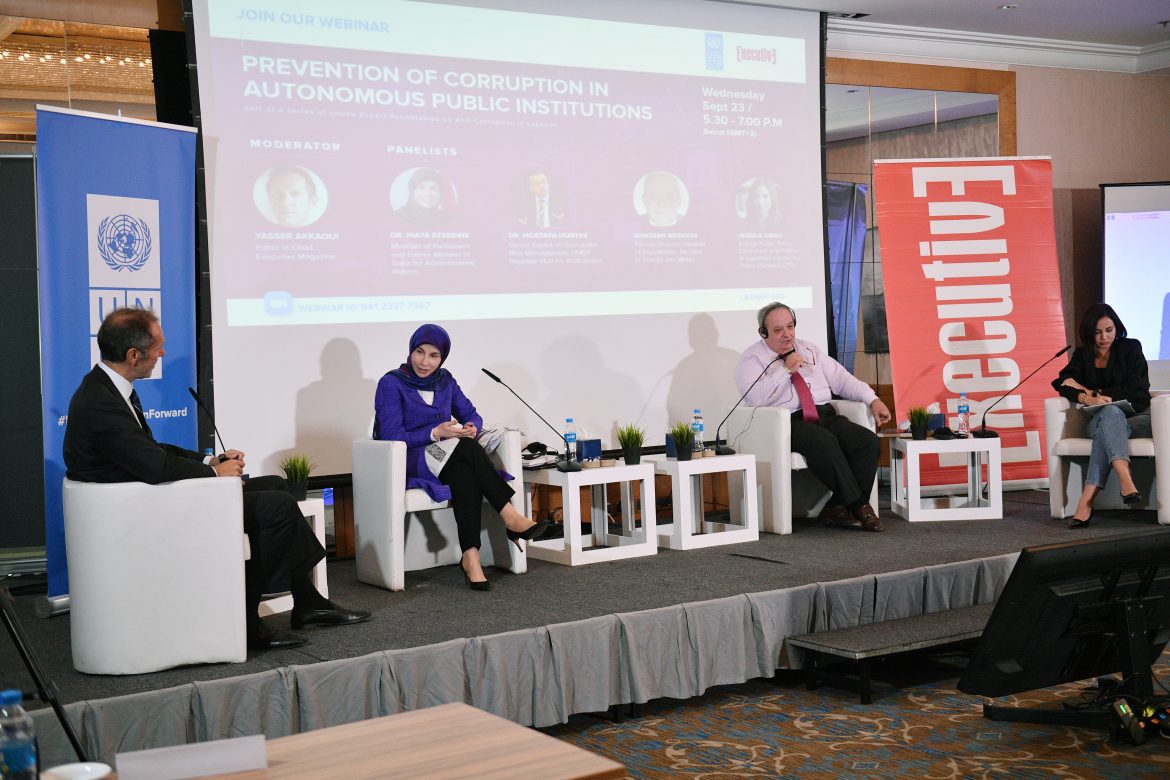
Prevention of corruption in autonomous public institutions

by Jessica Obeid June 10, 2021
written by Jessica Obeid
 

“You can’t build a great building on a weak foundation.” The same applies to institutions. Strong institutions are critical for crisis recovery and economic development. In Lebanon there are several autonomous institutions that, theoretically, were supposed to be shielded from political interference and improve sectorial performance. Yet, in practice, these institutions suffer from structural problems that have rendered them a vehicle for vested interests, leading to a reduction of the country’s competitiveness and a deterrence to investments.

 Autonomous public institutions, by design, should benefit from an independent decision-making process, autonomous employment and access to resources. These institutions’ characteristics have been largely defined by their post-civil war restructure. The then-governments attempted to expand the role of the public sector while developing the private sector. The linkages between business people and politicians increased as more financing was available within the private sector compared to the public sector. This has led to the emergence of ministers and public officials with private sector’s interests of profit-making while operating within public institutions – even autonomous ones.

This phenomenon is witnessed clearly in the health and power sectors. The focus of private profit on the provision of health services has exacerbated inequality and weakened public hospitals. In electricity, reforms have largely remained on paper and citizens perceive the national electricity utility, Electricité du Liban (EDL), as a symbol of corruption.

Structural defects

There are obvious trends in the Lebanese autonomous public institutions: weak governance, illusion of autonomy portrayed in the political involvement in these institutions, and lack of accountability.

Corruption arises when there is a level of autonomy and availability of resources, but there is also political meddling in decision-making and recruitment, compounded by an absence of mechanisms to promote responsibility and accountability for specific actions. The involvement of certain ministers in the institutions’ decisions results in further blurring of the autonomy and boundaries between the institutions and ministers. Autonomous employment also took a hit when it was modified by the Council of Ministers to require its approval for public employment and appointments. The absence of accountability is rooted in the structural gaps within the parent institution. These shortcomings span from the design to the implementation stage of these autonomous institutions and can be summarized by: 1) the opacity of mandates and functions of the institution; 2) the absence of or weakened regulatory oversight; and 3) flawed coordination in assessment and organization. As a rule of thumb, the ownership, board of directors, and management of the institution should be separated. When the lines become blurred between the owner or parent institution and the management entity of the autonomous institution, responsibility becomes scattered and answering to actions becomes impossible. This is further aggravated when there is the lack of an oversight entity that controls and monitors the performance of the relevant sector’s institutions. The parent entity then deviates from its mandates and designated role, leading the way to ministerial exertion of power over decision-making in the autonomous institutions, thus exposing the latter to vested interests and corruption. The end result is therefore institutional corruption and the eroding of citizens’ trust as these institutions increasingly appear to serve the private interests of government officials.

Botched reforms

As economic crises mount, the need for reforms multiplies as states can no longer afford the cost of the status quo, and as citizens turn more towards the public sector for service provision. However, reforms do not happen in a vacuum, and solid institutions are a prerequisite to enable the adoption and implementation of reforms. Following Lebanon’s protests in October 2019, and later the county’s first Eurobonds default in March 2020, calls for enhanced governance across all sectors have increased but were met with complete absence of political will for effective reforms. Instead, the country has witnessed the emergence of the “décor-reforms” that give the illusion that something is being changed without actual implications on the end result, which continues to be institutional corruption.

Nowhere is this more evident than in the electricity sector. In July 2020, the cabinet appointed an Electricité du Liban (EDL) board of directors, allegedly as one of the reform measures, following a 2-decade board vacuum. Yet, instead of hiring for expertise, credibility and independent thinking, the cabinet appointed the board based on sectarian and political affiliations. The first test of the board happened a few weeks later when the Beirut blast severely damaged the utility’s headquarters, leading to deaths, injuries, and the loss of the national control center and data, in the absence of digital records and archives. Instead of stepping up, the board remained in idle mode.

The chronic dominance of private interests in the healthcare sector and public hospitals also emphasizes the need for institutional reforms and digitization. Minor attempts to develop and invest in governmental hospitals resulted in shy improvements in the public access to healthcare. The investments were impaired by major institutional shortcomings including lack of monitoring and supervision and overall transparency, and weak recruitment criteria and administration. The absence of digital medical records for each patient further reduced the sector’s efficiency.

Moving Forward

Corruption has cost the country tremendous debt, in addition to the deterioration of the quality of life and overall competitiveness. Economic recovery and attraction of future capital will hinge on reducing corruption and improving institutional performance. Thus, commitment to a long-term robust transformation plan is urgent. These transformations are embedded in institutional reforms that start with the creation of independent oversight and regulatory bodies in order to define functions through multi-stakeholder representation. Oversight and regulatory bodies should integrate into a broader framework of reforms and therefore require political commitment. They should have financial autonomy as well as the authority and capacity to assess the quality of regulation, coordinate with stakeholders, and make independent decisions. Another major requirement for their successful performance is hiring independent professionals on the basis of competence and relevant qualifications. The institutional mandates should be clearly defined to mitigate the risks of bending stakeholders’ authorities and responsibilities. Many layers of functionality, expertise, regulatory, and human resources are required to design the detailed structures. The political appointee or relevant minister should have a definite role that limits political influence on a sector. The latter’s performance should be dictated by experts and should derive from solid policies, regulatory frameworks, and institutional structures, which would curb and control vested interests.

In order not to fall in the trap of previous shortcomings, putting in place adequate monitoring and accountability mechanisms is a critical factor for institutional reforms. Promoting these accountability mechanisms and transparency also entails citizens’ engagement. Not only is this necessary for improved sectoral performance and services, but also for ensuring a people-centered recovery. This is addressed in Lebanon’s Reform, Recovery and Reconstruction Framework of December 2020 which recommends implementing oversight mechanisms for assistance funds in order to promote transparency and accountability, and ensuring an effective enabling environment inclusive of non-governmental organizations at all the stages from consultation to monitoring[2].

The National Anti-Corruption strategy supports the sectoral reforms efforts through the provision of a practical roadmap and measurable indicators in its 7th outcome (preventive measures against corruption integrated at the sectoral level) in order to achieve a gradual integration of the institutionalized corruption prevention platform across sectors. The prevention plan can therefore be optimized and segregated into both the electricity and health sectors. This would allow the concentration of resources into focused areas, building capacities and developing mitigation plans relevant to the specific type of corruption and threat per sector[3].

There are no reforms without solid institutions and one cannot improve what is ignored. The starting point is to tackle the institutional structural woes and adopt a methodology for managing corruption risks. An assessment of these risks should be undertaken across the different processes of the autonomous institutions in order to determine and estimate the level of risks and analyze the enablers. The result would be an identification of the high-risks decision-points, thus enabling an optimal mitigation.

Jessica Obeid is an independent energy policy consultant


Disclaimer: The analysis, views and policy recommendations of this article do not necessarily reflect the views of the United Nations, including UNDP, or its Member States. The article is an independent piece commissioned by UNDP as a build up to the “Prevention of Corruption in Autonomous Public Institutions” webinar organized in partnership with Executive Magazine.

June 10, 2021 0 comments
0 FacebookTwitterPinterestEmail
Economics & PolicyQ&A

Keeping tabs on gender equality

by Thomas Schellen June 8, 2021
written by Thomas Schellen

Towards better inclusion of women across economic sectors

The quest for women’s inclusion in the Arab workplace has taken another step on the long journey to improving the role of women in the formal economy. The Center for Inclusive Business and Leadership (CIBL) at the end of March 2021 launched the first iteration of findings from its KIP Index (KIP originally was an abbreviation for Knowledge is Power, a two-year project on gender and sexuality that was launched in the 2010s at the American University of Beirut). The KIP Index website describes the new gauge as a “sector-based measure of women-inclusive policies and practices in local organizations” in countries of the Middle East and North Africa region. Executive had a virtual sit-down with Charlotte Karam, PhD, the founding director of CIBL.

What are the milestones and target dates that you want to achieve with the index?

Moving forward, our intention is to collect data every two years and expand the sample. We are hoping to track how things progress or digress. There is no point in collecting data except to do it over time so that you can be a companion with employers {encouraging them] to do better and hold themselves accountable. Given the changes in funding priorities, we are also trying to seek an endowment to support this work. So far, we have funding for the next iteration, which will start in 2022.

I think you obtained a fair amount of funding in 2019? This funding is committed and secure, right?

Yes. The first funding for the first iteration was a grant from the [United States’] Middle East Partnership Initiative for $1.5 million. For the second iteration it was a little bit less, but now we worked out the kinks and so it will be much easier to run.

Almost every newly launched index these days gives one the sense that there is an ideological framework behind it. Assuming that this is no different for the KIP Index, what is it that you intend to prove and what are your fail-safes so that you do not get false positive or false negative outcomes in line with whatever ideological expectation you might have?

Our intention in creating this index is very much ideologically based. I don’t want to sound too academic but I will say that our intention was [departing] from a post-colonial space. What I mean by that is that we want to gain control of our narrative from within the region so that we are able to compare and contrast between local realities […] without being forced to compare ourselves only to standards that are outside the region. Ideologically it really is about creating an indigenous Arab conversation that will move forward together in bringing ourselves to each other.

To the question about false positives, we had no expectation. We did not come in here with a hypothesis. When we developed the index we brought together people that worked in the area of economic empowerment in 11 countries. They are people working on the ground, they are largely [civil society organizations] or academic institutions that have been studying this area and [participating in] trainings. We brought them together and what is fundamental to our method and ideology is the idea of participation. One of the questions that we wanted to ask was who is [the index] benefiting, how does it benefit the local conversation, as opposed to a transnational conversation looking at us from afar. It is academically post-colonial and what we call feminist participatory action research. What guided us in terms of value was how to improve the lives of women who are working in today’s organizations and how to translate that into more inclusive and dignified HR systems.

What timeline or vision do you have about modifying deeply rooted behaviors of superiority in economic organizations that are usually associated with male attitudes?

For us it is not a question of male versus female. It is more about oppressive structures and about vulnerability. In our case, what we are trying to address with CIBL are the neoliberal structures of economics. Our CIBL story and journey started a long time ago but began officially a few years ago. It is a conversation with structure, a conversation with decision makers. We have hit something that is resonating with decision makers in Libya, in Lebanon, in Iraq – in these conflict areas, which is to say that we have to have a conversation about these oppressive structures and how to build more inclusive systems. This is going to help the community and there is also a business case. It will enable them to do business better. Thus when we were creating our training modules, we embedded the fundamental notions of social justice, although we are speaking to business audiences that do not often place social justice as their motivating or animating factor.

It is shocking to us how much this is resonating with [business leaders today], much better than it used to. This may be because, take Lebanese employers for example, they now, more than ever, realize [the problem of oppressive structures] and are fearing to be stuck in a system that is taking away their money. The banking system is collapsing, the State is collapsing, right? So it can now resonate when you start talking about vulnerability and oppressive structures.

To give one example [for the increased receptiveness of business leaders to our programs], based on the results of the KIP index, we, in partnership with Executive Education at OSB, have designed a mini-certification for executives in business across the eight countries [covered in the index] and put out a call [inviting them] to attend free four [training] modules in March of 2021 free of charge to receive this certification. In response to our call, we got 1,700 applicants of whom we chose 482. And these are c-suite or upper level managers, decision makers. They attended all of the program with this curriculum of seeing it from the other side and then going further [to discussing] what strategies you can actually implement in your workplace. It was very successful.

 During what time did you receive the 1,700 applications that you mentioned, and can this number be compared to a previous period when people applied for a similar program?

It was the first time that we did [this program] and designed something at CIBL that would be provided for free. We launched the advertising at the end of January; we filtered through them and did our selection in February and then the classes started. I have been doing executive education for 12 years and when we offer something for free, people will come. But [this was a program] that specifically focused on inclusive systems and [human resources], and on MENA. We do not talk about how you [address HR structures] in the United States and at multinationals. We talk about how you do it when you have no electricity and when there are protests outside [in your street].

As far as interest in this topic of HR structures and talking to decision makers, did you make particular observations as to breakdown per country?

We built the index [as] sector based, not country based. In terms of country groupings we use the World Bank classifications, thus we looked at resource rich and labor importing [countries as one group] and secondly at small and medium enterprises. We created two indices, so that we can capture women’s voices that are often ignored, and [this sub-index] speaks to, or mirrors the structural index that speaks to decision makers.

Changes in political empowerment sometimes seem to be very quick, being as they are based on the number of women elected to Parliaments and political office. Relative to that, the rate of change in economic positions and CEO level or senior professional empowerment seems to be much slower. Is the rate of change on the political level more of a quick burn and how deep and sustainable is the rate of change on the corporate level?

I feel that at least in the Arab region the rate of change in political representation of women comes with so many feudal and tribal ties so that a woman may be empowered one minute and the next will be gone. In the business sector, it is more sustainable, because once she is promoted up, she is there. The way of getting into those positions is very different and much less political or tribal. So I think they can’t really be compared in terms of the dynamics.

Another thing that I want to say is that in a lot of the [region’s] rich countries, there is state feminism, so [you see] these increases in international indices which are measuring who is working for internal security forces or who is working in the airport, or a public university administration. What we are measuring is the private sector, what businesses are doing, not what the government is doing. And this is a lot less regulated and not talked about.

Might there even be a question if state-owned or state-influenced enterprises differ from or influence genuine private sector employment behavior and how much hidden state feminism might be involved in the behavior of private employers? Might there be a blindspot on how much  private sector appreciation of women in their workforce is induced by state influence and how much it is appreciation in its own right?

This is an excellent point. You just gave me a topic for a new paper. This is a new angle that we should be asking about right now, about state intervention or state influence being infused into the private sector. Love it.

On the same day when you launched the KIP index on March 31, the World Economic Forum released their 2021 Global Gender Gap (GGG) Index. What do you think of the numbers that were presented there from the background of your expertise?

We did a comparative review of all the indicators that come out, actually there are 12 other transnational indices that are similar to the GGG Index. We see this as a nice backdrop to the work that we are trying to do but our whole motivation for doing this is in speaking back to these indices. How so? First of all, statistically speaking the weighting and the aggregating and the questions being asked – we are weighting them within the region and not weighting them based on an assumption that the global north is the benchmark. All the weighting statistically happens within the region. This is very important.

The second thing is that the vast majority of these indices collect and use the same data. They use national level data that is often collected by the government or in national level surveys. We are not doing this. We are asking HR managers within the organizations to report what [their organizations are] doing. This is a completely different data set. Our intention is to equip businesses to do differently within the business.

While there is no way in which one could disagree that gender advancement in the Middle East and North Africa is not top of the world, how relevant is it to compare an achievement within the Middle East to an achievement in the global north when even the achievements in those countries appear very fragile, as shown by this year’s GGG results suggesting that within just one year the distance to reaching parity jumped from about 100 years to over 136 years? Doesn’t one have to wonder about the resilience of the methodology used by an index such as GGG and the indicative value of numbers if considering how much they have changed in a single year?

I agree and often question the robustness and how it can switch from [ a gap of] 100 years to 137 years and so on. But my question is different. For me [the question comes from the fact] that on the past ten iterations of GGG or all the other [indices on gender issues], the Middle East has been ranked the lowest region in the world. We know that. Even if [a Middle Eastern country is shown in place] 130, or 140 or 170, wherever it is in the rankings, it has been that way for the past ten years. So what has the index done for us other than tell us that we are doing a shitty job?

What we need now is to measure something that is going to allow us to change things in a practical way, on the ground. This is the point of the [KIP] index. It measures specific practices to be able to change those practices, track them and learn from different practices that are happening at organizations. We know we are doing bad, but now what? These national-level indicators are not telling us [about the] now what. It is extremely important to [capture the voices of the people in an organization] and take that forward and create Hr and employer solutions for inclusion. The voices of women [in the organizations] matter in terms of HR structures and that is what we are trying to do.

But what if the senior decision maker in a company has no idea what the women in the company contribute to the overall performance and results?

Hence the need to track HR systems and what women are doing, how they achieve, what is happening within organizations in terms of recruitment, retention and promotion? This is the point of gender dis-aggregated data both in qualitative through their story telling narrative as well as structural through HR reporting on policies and processes

Can we expect a series of publications and papers out of CIBL that tell us about KIP Index findings over the coming five years or will you communicate this only in the form of twitter blurbs or slogans that circulate on social media?

Because we are academics, we are already in the process of writing academic pieces and we have a moral obligation and social justice obligation to turn into [action]. So we start with white papers that are already on our website and these have specific recommendations and then we are turning them into curricula and executive trainings which have already started. We are now working on academic publications and then intend to do video training, like animated videos. These are kind of key results, all targeted at decision makers.

The KIP index results and the methodology that we use in the KIP Index then is applied for funding of the SAWI project to Support and Accelerate Women’s Inclusion. [SAWI] is a five-year project, $6 million, to work with 80 employers in eight countries and partner with them on implementing some of the changes that were suggested through the KIP index. We are in the process of that and are just completing year one of this five year project.

Is Lebanon among the eight countries, and how many Lebanese employers are with you?

We have 10 Lebanese employers, 10 from each country, so 80 in total.

Did you have a lot of demand and interest from Lebanese employers to participate in the SAWI project?

Surprisingly, we did. We were not expecting it. For the Executive Education Training, we had a list of I think 300+ who wanted to attend the SAWI mini-certification program.

How many enterprise candidates did you have that you could select your 10 partner companies from?

We had a list of I think 300. [We] did not allow for applications. We had a list of people that were engaged with CIBL through our trainings and our webinars and from that community of CIBL. We tried very hard to have cross-sectional representation [in terms of company locations and sizes] so we selected the 10 together with our country partner, which is the Lebanese League for Women in Business [LLWB].

Did you do anything together with LLWB angel investor fund?

No. Up to this point we have shied away from working in the field of women-led entrepreneurship because we do not believe that it inherently means that you are doing inclusive systems just because you are a woman-led business. You could be the most oppressive and patriarchal [person]. But we are starting to look into investment, with a gender-lens investing project. That is part of the SAWI project.

Would you agree that a person having more or less of a social conscience is not determined by their sex but by whatever other factors?

Exactly. It is discriminating [to think that social conscience has something to do with gender]. It is not true. From our research, this is not the case. Because you are born a woman does not mean that you are more against oppression, or more inclusive.

One thing that we have seen from the pandemic experience, to quote once more the GGG, “the hardest hit sectors by lockdowns and rapid digitization are those where women are employed”. Would you say that this general finding applies also to the Middle East region, that the highest hit sectors by the corona recession were those with high female employment?

We didn’t collect data on that. But just in terms of my understanding of the region, one of the hardest hit sectors has been healthcare where women are frontliners. I would agree there. Also on banking, which is a feminized industry across the region at least at the lower levels, I would agree that it was hit hard because of the economic collapse in Iraq, Libya, and Yemen. The sanctions. But generally speaking, women have been hit the hardest across the board. One thing that people are not talking about but should be talking about is the increased burden of care work because children are at home […]. But [what creates new questions] is the whole idea of the dissolution of the work-life balance, the division between work and life which is now gone, and the idea that your office is now your home: what does that mean for new contracts from the employer perspective? What does it mean for employer responsibilities toward their employees who are now working from home, in terms of gender based violence and domestic abuse? How do we re-define this new era of engagement and paid labor?

The short-term repercussions of the pandemic shock on women have been noted and are very bad. This is of course highly speculative, but could the long-term outlook for women in the Arab world,, given their resilience and the ability of women in the MENA region to digest shocks perhaps better than their male counterparts, improve due to the pandemic shock? Would that be a remote possibility?

The way I would say it is that the history of survival under oppression, or the history of resilience and the skills of navigating that oppression, is equipping certain demographics, like women, to do better in this new era. It is an excellent question. Time will tell.

June 8, 2021 0 comments
2 FacebookTwitterPinterestEmail
Brand VoiceBusiness

Introducing the next-level virtual credit cards from Monty Mobile

by Monty Mobile June 3, 2021
written by Monty Mobile

In a global climate of patterns’ shifts towards digitization, Mountasser Hachem, chief executive officer and founder of Monty Mobile, entered the world of FinTech on solid grounds through innovative products revolutionizing financial concepts to introduce them into the Telecom industry and accompany modern high-tech trends.

Hassan Mansour, general manager at Monty Mobile gives the rundown on the company’s latest portfolio.

How is Monty Mobile revolutionizing mobile payments in the telecom industry?

Following Monty Mobile’s active role and commitment to integrate a wide community into the financial world through various aspects, we launched Monty Virtual Credit Card (MVCC). We are moving forward to implement virtual credit cards’ perception to the Telecom industry. Virtual cards are witnessing growing demands worldwide and are broadly recognized by numerous suppliers that accept any form of physical cards. With our MVCC, mobile operators can now provide their subscriber base with a virtual and digital service to make instantaneous online and electronic payments.

The economic environment today requires businesses and individuals to evolve and adopt technologies that contribute to increased efficiency and a better management of their daily lives, save time and streamline procedures. From now on, visiting traditional banks’ sites will not be a prerequisite anymore to access the MVCC.

What are the fundamental trends characterizing Monty Virtual Credit Card (MVCC) issuance compared to traditional virtual cards?

Virtual credit cards are not a new concept. However, the modernization stands at shifting and implementing this technology to Mobile Operators who will be managing and offering their subscribers this new line of product, thus conveying an original experience at their users’ hands. It is a new opportunity for the telecom industry to expand and strengthen its activity in FinTech services.

The MVCC   follows very simple issuance procedures easing the long norms and requirements imposed by any traditional bank. The process is transformed to a fully digitized chain. Based on a progressive subscribers’ statistics and behaviors analysis, MVCC is offered to eligible users based on an advanced credit scoring. Qualified clients are then embarked through a mobile application to fill a quick KYC form which is automatically redirected to a local bank for a full background scan and profile verification approval before access to our virtual card. This simplifies an entire old-fashioned course of visiting banks, opening numerous accounts, filling tons of forms and many endless procedures before receiving any credit facility.

What are the key features offered by Monty Virtual

Credit Card (MVCC)?

As a modern payment alternative, MVCC has many innovative features creating a secure, simple and straightforward experience. It allows users to complete their purchases from their smartphones instead of using physical cards. It can save the stress of carrying a wallet around. Fully digitized and stored in users’ devices, MVCC reduces risks of fraudulent crimes and thefts. It could even be locked from users’ devices in case they are concerned that their accounts have been compromised.

In addition, it could be complemented to any existing and new financial services or loyalty programs that operators intend to offer, thus aiming at creating improved incentive and better experience for their subscribers.

Why did Monty Mobile choose to enter the FinTech industry?

Today, FinTech is a sector experiencing exponential growth and witnessing exceptional flow of interests influencing many businesses from diverse industries and backgrounds. The future lies in this sector which complements many industries in their day-to-day operations. Fintech solutions are generating increased awareness by end-users and are becoming an inseparable part of their daily routines.

It is a challenge for us to seize this trend and create a bridge that links our industry as well as mobile operators’ needs to customize consumer needs. Thus, paving the way for development of new pioneering products and new market reach.  Even though mobile operators and FintTech originate from different environments, they complete each other to deliver new facilities for their clients and to expand the industry towards better prospects.

The banking sector is taking a new path worldwide. Given the population’s structural behavior change, a younger population is driving the demand for new approaches to tackle financial needs that go beyond traditional banking concepts. And this will not stop at this point. Rising initiatives for digital transformation of financial needs and the extensive use of smartphones are key factors to accelerate use of FinTech products.

Endless evolution and the desire to exceed our clients’ expectations shaped our foundation of sustained growth. With a resilient talented team, we cannot but expect outstanding outcomes.

June 3, 2021 0 comments
1 FacebookTwitterPinterestEmail
Economics & PolicyHealthcare

Novel Science Addresses Novel Virus

by Fadi Makki June 1, 2021
written by Fadi Makki

Applying behavioral strategies that utilize insights from psychology and behavioral economics while maintaining freedom of choice -otherwise known as ‘nudges’- have the potential to gently steer people towards greater adherence with COVID-19 lockdown measures. The overreliance on classical policy levers such as rewards and penalties has yielded suboptimal compliance rates because it assumes that people are rational. However, with limited success in enforcing lockdown measures, the pandemic has revealed deep behavioral roots underlying the lack of compliance which requires alternative policy tools.

A regional study that looked at the policy responses of 13 Middle Eastern countries in order to assess the effectiveness of stringency measures in managing the spread of the virus found risk perceptions to play a central role in compliance. The study used the stringency index from the Oxford COVID-19 Government Response Tracker, which is an aggregate of eight indicators on specific government responses, and the number of cases per day, which was used to measure each country’s enforcement capacity and the compliance of the public.  

It was recorded that in Lebanon there were significantly more violations by the end of May 2020, despite a lower stringency index, than in the beginning of May. The increase in violations began just as the government announced a reimposition of preventative measures following a resurgence of cases. However, the number of daily cases went up even more drastically after the period of renewed stringency which highlights the behavioral challenges to lockdown measures.

Behavioral economics challenges human “rationality” to help design interventions based on realistic understandings of human behavior and the behavioral barriers they face during COVID-19 lockdown measures. Several cognitive biases – systematic errors in judgements – prevent people from complying with rules mandating people not to leave their homes.

In the presence of such biases, risk perceptions can falter and change over time, which diminishes compliance with lockdown measures. Travel restrictions and enforced penalties do not address these cognitive shortcomings nor do they address inter-temporal risk perceptions which can influence adherence to stay-at-home orders. In addition, while conventional communication campaigns may be informative, they only add to the noise and do little to change behaviors.

These biases include “present bias”, whereby individuals place greater value on the “today,” but less so on the distant future.  This leads people to miss out on lucrative long-term benefits as they focus on myopic short-term ones which put them at risk. Individuals who do not adhere to strict lockdown measures focus on the immediate benefits of visiting families and friends while not appreciating the long-term health benefits of staying at home.

Another bias is “optimism bias” where individuals underestimate the probability of a negative event happening to them in the future. For example, people not adhering to lockdown measures may be aware of the risks of contracting COVID-19 but will underestimate the probability of being exposed to it.

In addition, human beings have “limited cognitive bandwidth” which affects their ability to objectively assess risks, particularly in high stress environments. Individuals who are experiencing financial hardships for example will be prioritizing food security and employment, leaving little mental bandwidth to assess the risks of not complying. In addition, the information overload people are bombarded with daily via social media and news outlets can have an additional strain on risk perceptions and decision making.

Integrating behavioral tools to counter the systematic errors in judgment is a viable alternative to the standard command and control regulations, which fail to address many of the cognitive barriers. Over the past few years, an increasing number of behavioral insights initiatives, also known as “Nudge Units”, were launched around the Middle East and have been employing behavioral techniques or “nudges” with astounding success.

Results from the stringency study indicate that people with higher risk perceptions tend to have a higher likelihood to comply with preventive behaviors, which suggests the importance of having individuals properly assess the risks of contracting COVID-19. This highlights the need to address the limited cognitive bandwidth people experience by finding ways to properly communicate these risks through behaviorally informed messages.

The study also found that people become less compliant the longer they spend undertaking compliance behaviors, which demonstrates the role of present bias and optimism bias as compliance measures drag on, and as behavioral fatigue sets in. 

In addition, a pilot survey that measured respondents’ rate of compliance over time and relative to their risk perceptions on COVID-19 found that participants were more compliant when their risk perceptions were higher. However, participants were less compliant the longer they spent undertaking these behaviors. These results suggest that people are less likely to comply to restrictions such as leaving their house and having access to public spaces. Data from Lebanon shows that cases can rise, even during lockdowns, the longer people are required to comply and get habituated to the disease which may also diminish risk perceptions.(Makki et al., 2020)

Thus stringency measures are more effective in lowering the number of daily infections if imposed for shorter periods. This is especially problematic overtime as people are less likely to comply the longer lockdown measures are enforced. Thus, quick and hard-line government lockdown measures are more effective in lowering the number of daily recorded cases, compared to more delayed, gradual responses.

So what are nudges that can work to overcome the cognitive biases inherent in people and improve risk perceptions in order to increase compliance?

A pilot study in Lebanon designed to increase self-reported compliance measures randomized participants into a control group, which received a generic survey, and a treatment group which included additional behaviorally informed survey messages. Participants in the treatment group received a nudge text in the survey describing how adhering to strict social distancing would help save the economy, which decreased the amount of times they left their homes by 41 percent compared to the control group. There are several reasons why this intervention had an impact on compliance rates which include the appeal of economic benefits for those who report higher self-interest and because it encourages feelings of collaboration, which can equally prompt individuals to adhere to lockdown restrictions.

Other nudges have also been employed during a large study which sampled UK and US participants to measure their impact on compliance and preventive behaviors in order to reduce the spread of COVID-19. Since these nudges worked for a specific demographic, they would have to be adapted and tested to see if they work in the Lebanese context. A letter condition was delivered to participants asking them to think about a person vulnerable to COVID-19 they know and who means a lot to them, and to write a letter to that person explaining that they will do everything that is necessary to stop the spread of the virus and to ensure this person survives the crisis. This nudge decreased the number of hours participants spent outside by 12.6 percent compared to the control condition. This nudge demonstrates that having individuals engage in an immersive exercise to think about a loved one, and inducing greater empathy and concern for others can change behavior.

An additional informational nudge presented hypothetical scenarios on violations with behavioral recommendations to prevent the spread of COVID-19, after which participants had to assess the appropriateness of the hypothetical violations and were then immediately provided with feedback on the accuracy of their answers to debunk some of the misconceptions they had regarding COVID-19. This informational nudge made participants less likely to allow their family members, friends or other people to visit them, which was statistically significant. Underlying the success of this nudge is inoculation theory that postulates an individual’s beliefs can be ‘psychologically vaccinated’ against persuasion or influence by exposing them to misinformation that is subsequently refuted. Thus the feedback participants received regarding the accuracy of their answers helped them develop the ability to debunk some of the misconceptions regarding the virus. An additional reason why this intervention may have been effective was because it helped mitigate optimism bias which reduces risk perceptions. 

Consistent with previous findings, these nudges are effective for people who start practicing social distancing recently and make them go outside less, however, they can have undesirable effects for those that have been complying for longer periods. This underscores the fact that a blanket approach to implementing behavioral interventions in a situation where many people already comply may not be meaningful and that delivering targeted nudges to subgroups of individuals, particularly to those that have only recently started to comply may have the greatest impact.

With many behavioral challenges underlying this pandemic, behavioral insights can bring small but measurable improvements to lockdown measures. This is particularly important given the diminishing authority of the state and their incapacity to enforce rules and regulations. With limited institutional capacity, additional nudges and behavioral policy levers will be required to address the cognitive biases affecting citizens to nudge them towards greater adherence. As the political crisis drags on and the country struggles to encourage citizens to get vaccinated, nudging can be particularly useful in addressing some of the cognitive biases and their overall hesitancy to get inoculated.

June 1, 2021 0 comments
2 FacebookTwitterPinterestEmail
Economics & PolicyReal estate

A house “divided” can bring profits

by Habib Chammas May 28, 2021
written by Habib Chammas

The current Lebanese financial and currency crises could be an opportunity for everyone to pool their fresh dollar funds and access real estate through crowdfunding. Not only will investors benefit from the drop of property prices in fresh dollars, but they will also put their money to work for them and earn both short term income and medium term capital gains.

The odd marriage of crowdfunding technology and the oldest form of investing appears to be getting along quite nicely and allowing investors to leverage investments in the global real estate market, diversify their portfolios to mitigate risk, and earn much better returns than stashing their money in saving accounts. The idea of making real estate transactions online had its doubts, but as more investors have been embracing the business model the real estate crowdfunding market value reached $8.3 billion in 2020, with the United States and Canada serving as the leading players (CrowdCrux).

In the current economic situation, real estate acquisition could attract more players from the Lebanese diaspora and those with access to fresh USD who are now able to buy goods, services, and assets (specifically real estate) at low price tags with their fresh dollars. With the threat of losing their savings in the banks, many Lebanese rallied towards the purchase of property using their lollars, which were accepted by those developers owing loans to the banks. This has pushed the property prices in lollars (USD bankers checks) irrationally high, while on the other hand, due to the devaluation of the value of the lollar as compared to the dollar, property prices dropped by 50 – 65 percent in fresh USD term, depending on the location and the property type. This represented a buying opportunity for vulture funds and anyone who has enough fresh dollars to afford to buy a property on their own.

Built-in protection for all parties

The global real estate crowdfunding market is on the rise. According to a publication by Facts & Factors (Dec 2020), the global market size will exceed $869 billion by 2027. That’s more than 100 times the size of the global market size of 2020, which translates to a compound annual growth rate (CAGR) of 18.96 percent. Using crowdfunding as a vehicle to invest in real estate, many of the platforms allow investors to start with as little as $500 without the need for a down payment of at least 20 percent of the property price, which is the practice with conventional real estate investing. This provides an opportunity for investors to diversify their investments and reduce their risk while earning good returns on their investments. It allows investors to be a part of deals that were previously unattainable to them. Residential properties are the primary source of real estate crowdfunding investments. These properties currently account for more than 50 percent of all crowdfunded real estate investments. Experts predict, however, that the growing commercial sector is likely to play a larger role in years to come. This could mean lucrative future gains for investors ready to support this particular high-risk, high reward play.

Real estate crowdfunding has come a long way since Fundrise launched its first project in 2012 in America and raised $350,000 from 175 people. With investors earning their dividend checks, more confidence was gained in the business model and the platform grew exponentially four years later with closing one project a week and raising more than half a million dollars a day, according to co-founder Ben Miller (CNBC). Eight years later in 2020, Fundrise has more than 150K active investors and has crowdfunded over $5.1 billion in real estate projects with more than $100 million net dividends earned by its investors. The industry is now full of success stories like these, with many platforms experiencing rapid growth. From their launch in March 2013 to October 2013, Realty Mogul’s cumulative investments rose from under $2 million to $8.07 million, with 23 properties under their belt. Two years later, they have now financed over 265 properties valued at over $600 million. Other platforms like Ground Breaker, Patch of Land, and Crowd Street among many others have their share of similar success stories.

The legal side of real estate crowdfunding is simple to set up and comes with built-in protection for all parties. Investors can invest small amounts of money in either the equity or debt of a real estate project to realize income. This can happen through a combination of rent, lease, or debt repayment, as well as from capital gains when the property is sold when its price appreciates over time.  The sponsor will propose an exit strategy at which the property will be sold at a profit and, which is usually within an estimated period of time, referred to as a term. But, if the target exit date so happens to be in the middle of a bear market, it may be prudent to keep holding and collecting rent until the cycle turns. Investors effectively become limited partners in the investment. Acquired properties are usually owned by a Limited Liability Company or a Limited Partnership with the sponsor participating as the General Partner or Manager and the investors participating as limited partners or passive members.

Governments leveraging real estate crowdfunding

Because of the integral role that real estate plays in the economy, major economies across the world have started looking for solutions to facilitate investing in real estate. As an investment model, real estate crowdfunding started in the US in 2012, and the Securities and Exchange Commission passed several regulations under the Jumpstart Our Business Startups (JOBS) Act that now allow both accredited and unaccredited investors an unprecedented opportunity to take part in online equity and debt investments, including investing in real estate in their own neighborhood and beyond. The European countries and Latin America followed suit and made real estate investment-based crowdfunding increasingly accessible to investors and project developers to boost this major pillar of their economies. From the investor’s point of view, it is not necessary to spend a large amount of money, thus assuming a little risk and allowing the investment to be diversified.

When it comes to the MENA region, this business model is rarely heard of, except in Dubai. While its legal system was not ready for real estate crowdfunding in 2016, Dubai’s real estate authority started working on a system that allows the issuance of “partial title deeds” that will give assurance to investors to engage in such schemes. The government has facilitated the registration of the acquired properties in the names of Special Purpose Vehicles (SPVs), which are legal entities that list the investors who crowdfunded the relevant projects as shareholders in the fund. SPVs benefit from a less complex application process, reduced registration and licensing fees, and are allowed to use their existing companies as the registered office of the SPV. An SPV also offers a range of advantages, including tax neutrality, no restrictions to foreign ownership, limited liability to the amount of the shareholders’ commitment to the company’s share capital, and a robust regulatory and legal system.

Founded in 2017, SmartCrowd became the UAE’s first real estate crowdfunding platform with an entry ticket of $1,400 per investor, thereby reducing barriers to an investable asset class that is out of reach for many. One year later, the company has completed approximately $1.5 million in transactions with individual investments ranging from $1,400 to $34,000). With the company outperforming the UAE’s real estate market returns by paying out multiple dividends with annual net returns ranging from 6.5% to 8%, it kept attracting more investors and it has completed more than $6 million in transactions in 2020, at a time when the real estate market dropped in the UAE as the pandemic was impacting the whole economy. The successful market entry of SmartCrowd opened the doors to other platforms, such as Ellington Properties and Stake, which launched in 2020 and started offering opportunities to invest in the UAE’s real estate market and take advantage of the attractive lower prices (35% lower than their 2014 peak values).

Fresh USD into the Lebanese economy?

If the purchase of real estate is made accessible to the Lebanese diaspora (specifically those who cannot afford to purchase property with their own funds) with crowdfunding, it will help the remittance of fresh dollars to the economy, which can help in mitigating the short supply of fresh dollars and the further devaluation of the Lebanese pound. Real estate crowdfunding allows all those transactions to take place online and through bank transfers, which provides transparency to the amount of fresh dollars being exchanged for the purchase of the real estate. As a side note, it would not make too much sense for lollar holders to convert them into fresh dollars and lose more than two-thirds of their lollars to purchase property in dollars. The recommended practice for lollar holders and who wish to purchase property is to look for rare buying opportunities (distressed deals) where the asking price in lollar is not inflated compared to 2019 prices.

The current Lebanese legal framework is a hurdle for real estate crowdfunding platforms to make property investing accessible to almost anyone. This limitation makes investing in real estate reserved to those who have the capital to scoop properties and benefit from opportunities.

Without a doubt, Lebanon’s real estate laws are outdated, as they were promulgated 90 years ago with no real updates or modifications that make the property registration process seamless, transparent and proof from being manipulated by corrupt front-end clerks. With great proven models from the west and the UAE, such reforms could (and should) be rolled out quickly by just “borrowing with pride.” At the same time, the outdated rental laws froze down thousands of properties since their promulgations and caused many buildings to deteriorate with time with no maintenance whatsoever since the landlords of such non-performing assets do not have any incentive to do that.

The business legal framework is also outdated and is not welcoming enough to entrepreneurs, both nationals or foreigners, to conduct business with minimum cost and setup hassle. Recent modifications were drafted, but the hurdles and obstacles for crowdfunding startups were not eliminated, but on the contrary, exacerbated, thus making it only accessible to large capitalists and financial institutions that can afford a capital of more than 1 billion Lebanese pounds. This drafted crowdfunding law applies to small and medium enterprises (SME) or startup companies aiming to get funded for their operations and traction by the general public with investments ranging from $500 to $10,000 in return for ownership of equities or shares in these companies.

In the absence of a law specifically drafted for real estate crowdfunding, the Capital Markets Authority (CMA) is treating Real Estate Crowdfunding (REC) startups as if they wish to get funded as a company by the general public, whereas the REC business model is about crowdfunding a portfolio of properties. This process is never-ending, when listed properties get funded, new ones will get listed on the crowdfunding platform to be made available for investors to pitch in. This gets more complicated the legal entities that will own a handful of properties to protect the investors’ ownerships are factored in. This will entail a capital of 1 billion Lebanese pounds for each legal entity that owns a small portfolio of properties. This is a hurdle for the REC business model. The fact the property will be owned by a legal entity, in which the investors own their respective shares, is a solid enough protection for investors.

There is a large potential for an influx of fresh dollars through fractional real estate ownership through crowdfunding. Although the capital flow will go through the banking system but it will eventually get parked in tangible real estate assets.

Habib Chammas

Founder of CasaBayt

May 28, 2021 0 comments
2 FacebookTwitterPinterestEmail
Brand VoiceBusiness

Is the future of tobacco smoke-free?

by Philip Morris Lebanon May 24, 2021
written by Philip Morris Lebanon

The strategy adopted by Philip Morris International (PMI) over the past decade certainly bears closer scrutiny, not least as a case study in how vision and perseverance sometimes pays off in the face of what seemed, at a shallow reading, overwhelming odds. While the company’s line of heated tobacco products, including the IQOS, hasn’t yet replaced conventional tobacco products, the new leadership, helmed by Jacek Olczak who was appointed chief executive officer on May 5, 2021, is determined to maintain its leading position and accelerate the company’s transformation to what it considers to be a less harmful risk-reduced – but not risk-free, it is worth underlining – alternative to traditional tobacco products, and, in his own words, to a “smoke-free future.”

PMI demonstrated how a company can manage through a combination of innovation and responsible commercialization to not only stay in business but also thrive in a highly competitive global market, and a challenging one to boot, where consumption of tobacco products is widely banned in indoor public spaces – as well as in an increasing number of outdoor venues – and access to advertising and sponsorship opportunities is virtually completely sealed off. Over the past decade, PMI has recognized the growing trend of vaping and other alternative smoking products, and has invested heavily in research and development in order to develop a portfolio of reduced-risk products for adult smokers. In an open letter on the occasion of his appointment, Olczak writes, “When I consider how PMI can contribute to this better future, one action stands above all others: Replace cigarettes as soon as possible with better alternatives for women and men who would otherwise continue to smoke.” The company’s ambitions encompass a future where smoke-free products would ultimately replace cigarettes products, improving the health quality of life for adults who would otherwise continue to smoke, society, the company and its shareholders.

Looking at figures, it seems that PMI’s decision to place its bets on smoke-free products, with the introduction of the IQOS in Nagoya, Japan, in 2014, was a judicious one after all. The IQOS has been approved for marketing in the US by the Food and Drug Administration (FDA) as a Modified Risk Tobacco Product (MRTP), finding that an exposure modification order for these products is appropriate to promote the public health. As at March 31, 2021, the geographical coverage of PMI’s smoke-free products, has extended to 66 markets worldwide, accounting for 28 percent of the company’s net revenues. Olczak played a significant role in this short span, leading PMI’s transformation from a primarily business-to-business company to an increasingly business-to-consumer company.

In February 2020, Beirut joined the string of cities in PMI’s expanding markets for smoke-free products when the IQOS was introduced in the country just prior to the COVID-19 pandemic. In a recent press release, Taylan Suer, PMI country manager for Lebanon, said: “Jacek has been driving PMI’s smoke-free transformation internationally, and his skills and expertise portend an exciting new chapter for PMI. In line with this vision, we introduced IQOS in Lebanon in February 2020. After 1 year of the launch, it is encouraging to see adult Lebanese smokers making the step towards leaving smoke behind and embracing a scientifically substantiated better alternative than continued smoking.” Lebanon has arguably long constituted an attractive market, albeit small in size, for various tobacco products in general, a legacy that endures despite rampant hyperinflation and a ban on smoking in indoor public spaces that came into effect in September 2011 – only a short six years after ratifying the Framework Convention on Tobacco Control (FCTC) that came into effect in 2005 – followed a year later by a national ban on all forms of advertising and sponsorship of tobacco products.

While PMI is confident that it is off to a good start and an equally good succession with its new leadership, it is still early to determine whether its ambition to widely commercialize smoke-free reduced-risk products and establish its domination over alternatives to conventional tobacco products is risk-free or certain. It is important to remember that a number of factors should be considered, not least of which are health concerns relating to the use of tobacco and other nicotine-containing products. Another significant risk, by PMI’s own admission and from its viewpoint, is a potentially diminished ability to convert adult smokers to smoke-free products. Narrowing the focus down to the Lebanese market once more, continued hyperinflation could delay more widespread adoption of PMI’s IQOS and smoke-free products, restricting it to a small number of consumers, although this would apply to other alternatives as well, and even consumers of conventional tobacco products – although attachment and addiction to cigarettes and the quasi-ubiquitous nargileh would contribute to preserving the market.

If the past decade or so of product innovation and disruption has taught the discerning observer anything, it is to reserve passing judgment until more user-generated data becomes available – and, in the case of smoking, until extensive medical studies are conducted – that would allow for product improvement and fine-tuning. With this in mind, Olczak writes: “Our greatest task is to always bring new thinking forward. To demonstrate through action, transparency, and verifiable proof points the integrity of our promises. And to work ceaselessly to forge partnerships with those who can accelerate the change we seek.”

Brand voice is the paid window that Executive provides to our corporate partners and the business community for sharing their views, insights and messages. Brand voice content has to comply with Executive’s content guidelines but is not under the magazine’s editorial responsibility or control.

This article is brought to you by Philip Morris Lebanon.

May 24, 2021 0 comments
0 FacebookTwitterPinterestEmail
EconomyOpinionSpecial Report

Lebanese industry: from productivity to prosperity

by Josiane Fahed-Sreih May 13, 2021
written by Josiane Fahed-Sreih

The Industrial sector in Lebanon is a major contributor to the Lebanese economy by employing a large number of workers, and by being the largest source of hard currency to the country especially after the major economic collapse and the scarcity of the dollar that started in 2019. The Industrial sector in Lebanon is becoming more and more innovative and sophisticated just like its counterparts in innovative countries, and will become one of the major sectors that will witness increasing investments. With the development of oil and gas and the reconstruction of Beirut after the August 4, 2020 explosion, the industrial sector is set to become more competitive and serve the needs of the country.


In 2018, the sector accounted for around 8 percent of GDP ($4.2 billion) and employed 20 percent of the local labor force (around 318,000 employees). There are over 4,700 industrial firms in Lebanon the largest
portion of which is in agro-food production (26 percent or 1,245 firms), followed by construction materials (12 percent) and chemical products (8 percent). Industrial exports stood at $3.5 billion in 2019, accounting for 95 percent of total Lebanese exports. The top five Lebanese industrial exports in 2019 were pearls and precious stones (41 percent), mechanical machinery (6 percent), electrical machinery and equipment (5 percent), plastics (4 percent), and essential oils and cosmetics (4 percent). Key export destinations in 2019 included Switzerland (30 percent), the United Arab Emirates (12 percent), Saudi Arabia (6 percent), Syria (5 percent), and Iraq (4 percent). The share of medium and high-tech manufactured exports of total manufactured exports had reached 21 percent in 2017, indicating promising technological capabilities in the sector, knowing that industrial permits increased by 16 percent from 375 in 2011 to 1,086 in 2018.

Knowing that Lebanon is part of several multilateral agreements, most notably the EU-Lebanon Association Agreement, the Taysir agreement, The European Free Trade Association (EFTA), the Greater Arab Free Trade Area (GAFTA), the US-Generalized System of Preferences (GSP) and others, this by itself is a trigger for open market competitiveness and for the sales of the locally produced products. The industrial sector will become more competitive if some of these measures can be taken. Therefore, I recommend the following:
1- Encouraging private-public sectors partnerships.
2- Encouraging cooperation with academia by developing programs that can position Lebanon at the forefront of innovation, such as green industries
3- Encouraging and supporting SME creation that would create jobs and position Lebanon as a pioneer in enterprise creation knowing that Lebanon’s workforce is highly educated and savvy, compared to other Middle Eastern and gulf countries.
4- Offering technical support through the development of programs that encourage manufacturing.
5- Providing tax incentives to encourage people to invest in manufacturing.
6- Lowering the cost of manufacturing on all fronts from energy to land costs.
7- Creating industrial zones where the cost of land and other costs are low.
8- Advancing the transition towards a green economy while reducing the numerous environmental risks lying
ahead and accelerating the shift away from carbon-intensive industrial production to more sustainable models.
9- Offering incentives to move to a green economy as per European circular economy developmental goals.

May 13, 2021 0 comments
0 FacebookTwitterPinterestEmail
  • 1
  • …
  • 33
  • 34
  • 35
  • 36
  • 37
  • …
  • 689

Latest Cover

About us

Since its first edition emerged on the newsstands in 1999, Executive Magazine has been dedicated to providing its readers with the most up-to-date local and regional business news. Executive is a monthly business magazine that offers readers in-depth analyses on the Lebanese world of commerce, covering all the major sectors – from banking, finance, and insurance to technology, tourism, hospitality, media, and retail.

  • Donate
  • Our Purpose
  • Contact Us

Sign up for our newsletter

    • Facebook
    • Twitter
    • Instagram
    • Linkedin
    • Youtube
    Executive Magazine
    • ISSUES
      • Current Issue
      • Past issues
    • BUSINESS
    • ECONOMICS & POLICY
    • OPINION
    • SPECIAL REPORTS
    • EXECUTIVE TALKS
    • MOVEMENTS
      • Change the image
      • Cannes lions
      • Transparency & accountability
      • ECONOMIC ROADMAP
      • Say No to Corruption
      • The Lebanon media development initiative
      • LPSN Policy Asks
      • Advocating the preservation of deposits
    • JOIN US
      • Join our movement
      • Attend our events
      • Receive updates
      • Connect with us
    • DONATE