• Donate
  • Our Purpose
  • Contact Us
Executive Magazine
  • ISSUES
    • Current Issue
    • Past issues
  • BUSINESS
  • ECONOMICS & POLICY
  • OPINION
  • SPECIAL REPORTS
  • EXECUTIVE TALKS
  • MOVEMENTS
    • Change the image
    • Cannes lions
    • Transparency & accountability
    • ECONOMIC ROADMAP
    • Say No to Corruption
    • The Lebanon media development initiative
    • LPSN Policy Asks
    • Advocating the preservation of deposits
  • JOIN US
    • Join our movement
    • Attend our events
    • Receive updates
    • Connect with us
  • DONATE
AdvertisingSpecial Report

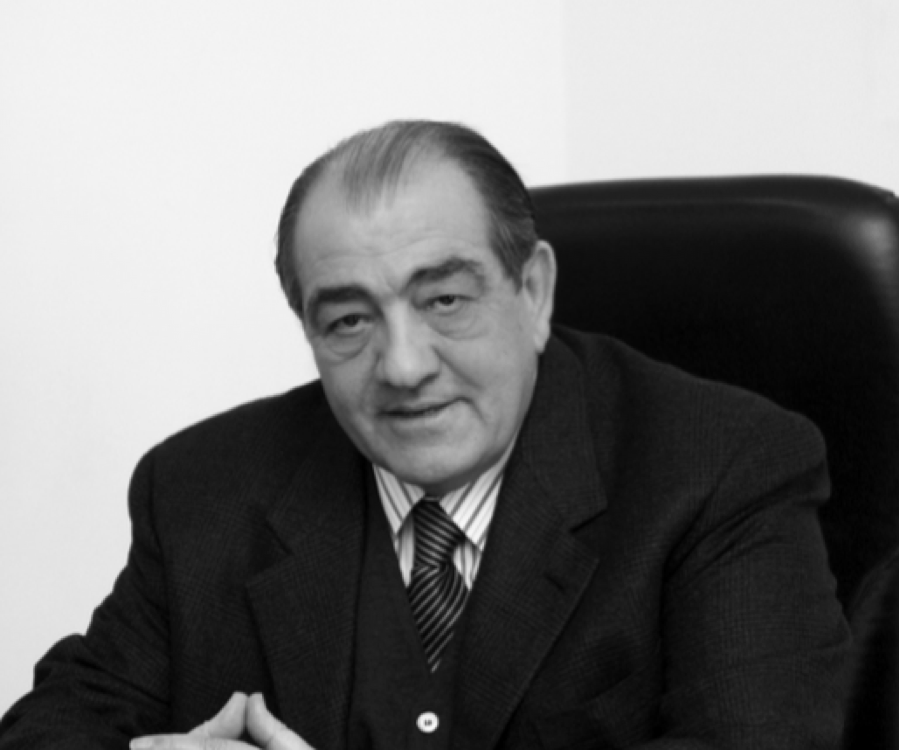
Ramzi Raad

by Executive Editors March 21, 2011
written by Executive Editors

Executive talked with Ramzi Raad, group chairman and chief executive officer of TBWA Raad, about stake holding by multinational groups, succession and new creative hubs.

  • What does the acquisition by global agencies mean for Lebanese advertising entrepreneurs in this region?

When I went into partnership with TBWA in 2000 they were very clear and said ‘we want to run agencies that we have majority stake in. If we don’t agree to that at this stage, it has to be gradual.’ [Eventually], Omnicom [majority owners of TBWA] wants full ownership wherever they go.

They allow you the privilege of having majority at the beginning but then the roles are reversed because it is part of their global policy. They own the work that they want you to develop. It is their brand that you are operating under and so on. It’s a fair deal at the end of the day.

  • What is the trade-off for you? What is the down and upside of giving up ownership?

It is a global game and these are the rules… Multinationals now own the whole communications industry. It is not only advertising — it is PR, relationship marketing, everything. You have options to remain independent. Independents are brilliant and growing but even the independents are catching a price and they are happy to sell.

  • What is in it for you?

It all depends on your age and what your aspirations in life are. From the beginning I said, even if I sell, by the totality of my stay I would like to have reached an active role in the management of TBWA Global and I keep striving toward that goal. If I don’t [achieve] it myself, I hope that one of my people will be able to do that. Because I know that we have enough talent, I know that we can play a valuable, active role.

  • As multinationals are increasing their stakes in the Middle East’s advertising industry, what will happen to its founders?

We did not see any of the multinationals send in an expat to manage a Middle Eastern group in the top position yet. Sooner or later this might happen. I answer the question in relation to myself. I know that I sooner or later will have to retire to let the younger generation take over. They need to do that. [However,] I don’t want to rest at this stage.

  • Does it keep you young to be in the fast-changing industry of advertising?

Surely. My wealth is not the success story; it is the campaigns that I have done. I love to talk about them and overhear the clients talking about all the successes and the campaigns that [I] have done. 

  • [The company’s new motto is ‘Disruption’.] How good is disruption and how disruptive is good?

It has worked. We adapted that concept here and tried to make a difference in the Middle East. We are being successful in that. You can’t say that all you need is disruption but we are very convinced that disruption is helping. You can’t be rigid in a world of communication like ours, where everything is changing, you have to continue changing.

  • How will your new creative hub in Abu Dhabi fit with this?

Four years ago, the government of Abu Dhabi made a commitment that it wanted to modernize and started launching a lot of projects. Those projects needed support. We had Etihad [Airlines] as a client; they were a door opener to the government departments and we picked up a lot of business. With a surge in business in Abu Dhabi, we felt that [it] deserves to have high-caliber creative talent. The fact that we had super-creative directors managing the Etihad business for the past four or five years, proved that it is worth the investment.

“My wealth is not the success story; it is the campaigns that I have done”
March 21, 2011 0 comments
0 FacebookTwitterPinterestEmail
AdvertisingSpecial Report

Edmond Moutran

by Executive Editors March 21, 2011
written by Executive Editors

Edmond Moutran is chairman and chief executive officer of Memac Ogilvy for the Middle East and North Africa. Considered one of the godfathers of the regional advertising industry, he sat down with Executive to discuss its future.

  • Are there any drawbacks to falling under the jurisdiction of international conglomerates such as WPP?

One example would be the situation where the international agency wants to run a world-wide campaign for a brand that will not be coherent with our market. It hasn’t happened with Ogilvy, but it has happened before with other agencies I have worked with; somebody in London or New York says ‘this is a worldwide campaign,’ you look at it and know that this is not going to work in the Arab world. I would not allow my client to waste money on a campaign that is not designed to succeed in this region because it’s not going to work. I have had some very heated arguments with some of the biggest, toughest agencies in the world because they tried to impose campaigns on the Middle East.

So yes, there are disadvantages. If you’re looking after a client and you have a great relationship and they take on a similar client somewhere else in the world — a big one — and you have to drop this small client because your head office has taken on a client with similar interests and they require exclusivity, that is a drawback.

But, to have an international name is vital for two reasons. First, clients like it. Second, young people like it. Young people coming out of universities want to work for the Leo Burnetts, the JWTs, the BBDOs. They don’t want to work for a small agency that’s not associated with an international one — it’s not sexy.

  • In the last 10 years we have seen an increased financial stake from the international names in the regional agencies. What do you say to people who don’t want to see you sell your shares?

This is a very interesting conversation — especially [given] the timing. I am on the verge of selling majority. It’s how you sell and it’s how involved you remain [that matters]. Today you have four giants in the world. Luckily for us, WPP is the biggest. That gives us clout. These companies will probably, within the next 10 years, own 90 percent of the [advertising] business in the world. These are huge companies that look after huge clients, which demand that these conglomerates have control. Why? The laws are changing. You have all sorts of regulations that these companies have to commit to the client that we will abide by worldwide. And then you come to a very important and vibrant place like the Middle East and these companies do not control the local companies. That is no longer acceptable to the international clients.

  • So now is the right time?

It’s not a matter of selling at the right time. [The international agencies] are under tremendous pressure. It is my understanding of that that made me accept to discuss giving Ogilvy the majority… I must allow my friends that I have served for 37 years to benefit from our success because without them I wouldn’t have had the success. Life is give and take. You can’t just take, take, take and then when your international friends need you you’re not there to give. This is not the Arab way of doing things.

This is why all of us — my generation — have discussed and agreed to sell majority.

There will be a lot more control. A lot more changes [will be] coming up, because all of a sudden it will be exactly the way [the international agencies] would like it, whether I like it or not… I honestly don’t think a network without an international name can survive, not against all the internationals.

“[Four] companies will probably, within the next 10 years, own 90 percent of the [advertising] business in the world”

March 21, 2011 0 comments
0 FacebookTwitterPinterestEmail
AdvertisingSpecial Report

Selling up to the man

by Executive Editors March 21, 2011
written by Executive Editors

The global advertising industry had what public relations writers might call a “stellar year.”  Nothing astral or astrophysical was involved, but the industry leaders’ 2010 results broadly outperformed expectations, validating the ad sector’s recovery from the tough year of 2009, which saw global ad spend contract by about $50 billion.

WPP, Omnicom, Publicis and Interpublic, the quartet of holding companies with the leading stakes in advertising both globally and in the Middle East and North Africa, have all gained according to key performance parameters (see results box) as the global advertising market last year increased 4.9 percent to an adspend of $450 billion, according to estimates by media agency ZenithOptimedia.

ZenithOptimedia, which is part of the Publicis Group, predicts in its current Advertising Expenditures Forecast that global advertising will reach $470 billion this year and exceed $520 billion in 2013. A similar research report by WPP-member company, GroupM, predicted in December that measured advertising expenditure worldwide will break the $500 billion mark in 2011. Advertisers in the Middle East confirm that the sector has rebounded across the region from the beating it took following the economic crisis of 2008 — which came at a time when the regional advertising industry was actually at the tail end of an overheating phase of nearly three years, during which expanding client demand had been driving agencies to fill staff positions with minimal considerations of long-term viability.

“When you grow that fast, you tend to stumble a little bit and make a few mistakes,” explained Tarek Miknas, chief executive officer of agency Fortune Promoseven. “You hire very quickly, you fill gaps very quickly, you need to run off to the next big thing.”

Cleansed by the crisis

The pendulum swung the other way in 2009, as the fallout of the economic crisis was reflected in global and regional advertisers’ slashed budgets. adspend took a dive across the Gulf Cooperation Council as things deteriorated to the point of wiping out the spending power of some real estate developers in Dubai. Sources in the industry told Executive that several agencies are still waiting for settlement of their accounts by certain developers.

Agencies had to restructure, said Dani Richa, CEO of Impact BBDO MENA, and agencies shifted staff to offices with growth, making 2009 “the rationalization and restructuring year.” During separate interviews at the MENA Cristal Festival in Lebanon in February, Richa and Miknas both confirmed that the industry saw layoffs and cost-cutting in 2009.

As Miknas described it, rationalization was a positive transformational step for the advertising sector. “You start thinking, how can I stretch my dollar the furthest? What is available for me to exploit and keep my margins healthy?” he said. Hiring decisions are today taken under less pressure, he added, “but we retain our best talent and are constantly trolling for the best you can get. Probably all agencies are.” According to Richa, the turnaround was swift, noting 2010 was a “good year.”

“We have gained new business and Dubai is bouncing back beautifully,” he said.

Dubai-based decision makers in the regional advertising industry share the view that the industry has experienced an important learning curve. Mohan Nambiar, CEO of MEC MENA, told Executive that managerial prudence suffered during the boom years but has returned. “I think we have all learned bitter lessons,” he said. “A lot of checks that were supposed to have been done were not done because we were all busy accumulating volume. There won’t be a repeat performance because we all learned from it.”

According to agency leaders and media rep companies, the rebound of 2010 has shown that advertising in the Middle East has become a resilient industry. 

However, the bottom line performance of the ad companies across the region cannot be easily gauged, at least not directly. Any local firm affiliated with one of the global advertising communications groups — and that is almost any firm of regional weight — is firmly committed to a “don’t-ask don’t-tell” approach with the public when it comes to actual advertising spend and industry performance in the region.

Global advertising industry growth projections by ZenithOptimedia say that the adspend in the Middle East over a five-year span will be part of a 24 percent increase across a collection of advertising markets. This respectable total increase, according to the research publication, will outperform increases of adspend in developed markets over the same period by between 14 and 19 percentage points.

Murky figures

One should note, however, that the adspend in the Middle East is based on gross estimates and not adjusted for inflation. Rather than being a Middle East and North Africa projection, the forecasted 24 percent spend increase is, moreover, for a potpourri of markets that include, beyond Arab MENA, Israel and 22 countries as socially diverse and as geographically distant as Luxembourg, Zimbabwe, Iceland and Myanmar.

From a local forecasting perspective for the MENA region, this grouping does not lend itself to what can be considered a meaningful frame of projections.

Regional forecasts for the Middle East — aside from having to be considered in light of economic and security risks related to the region’s latest experiences with popular political demands — are not as strong as ZenithOptimedia’s advertising growth forecasts for Latin America (26 percent), Central and Eastern Europe (31 percent) and Asia (36 percent — excluding Japan). By this projection, all regions other than developed markets are expected to best Middle Eastern growth in the next three years. 

But this does not mean the growth in Arab markets will be something to scoff at if companies here make things happen. Philip Jabbour, Starcom MediaVest MENA CEO, told Executive: “We are a service industry. Apart from always trying to invest in improving quality and getting more measurability, if we collectively focus on being able to drive value — offering a service and being remunerated for that — rather than making this a commodities business, then the industry will flourish.”

March 21, 2011 0 comments
0 FacebookTwitterPinterestEmail
Feature

Mongi Boughzala

by Executive Editors March 21, 2011
written by Executive Editors

Although Egypt, Bahrain and Libya largely pushed Tunisia out of the media spotlight in February, the story from the cradle of 2011’s wave of revolt remains unfinished. Executive asked Tunisian economist Mongi Boughzala of the University of Tunis El Manar about some of the outstanding issues facing Tunisia and the region after the fall of President Zine al-Abidine Ben Ali.

  • The poor economic situation facing many Tunisians was a driving force behind the revolution there. How do you see these conditions changing in the wake of the revolution?

The economic situation and the unemployment and all of those issues cannot be resolved in a few days or even a few months. They are the outcome of years of bad economic management. [But] if we stabilize the country politically and really achieve democratic transition then there is a very good future for Tunisia. 

  • Before the revolution, Tunisia had a reputation as being stable and a relatively good business environment. Are foreign investors leaving? Have any new ones come in?

New investors are not going to come in now. It’s obvious because even if they are happy with what happened they are going to have to wait and see because they want more stability. Luckily, so far there hasn’t been a massive outflow of capital — a few have left but not so many. It’s okay, I mean in terms of capital and investment and FDI [Foreign Direct Investment].  But some firms are not working as they used to because of the strikes and unrest. But massive investment? Not right now — the political situation needs to stabilize before we can reap the benefits.

  • After the fall of Ben Ali, protests have continued. When do you see things returning to normal?

It depends on how it is dealt with. The current government has been very clumsy in terms of communicating. It hasn’t had the mechanism and way of communicating with people — especially the youth. But I think we are coming to some sort of consensus, which is that maybe in five or six months there is going to be an election — not just for parliament, but also constitutional. This is something that a lot of people have been demanding, and it’s also something that most people agree on. My only fear is that people will not agree very quickly on which kind of transition government is now going to be put in place. We don’t have one voice; there are too many voices. 

  • How are Tunisians surviving economically right now with all of the disruptions?

Some are hurt. Especially those who have lost their jobs [because their] firms are not operating. A lot of people working in the informal sector are having trouble finding jobs because the economy has not returned to the normal level. Tourism is not functioning — certainly a lot of people are hurt and are losing their jobs because of that. Many economic activities are disrupted. But for the moment, it’s okay. It hasn’t been the main problem. The main problem is more on the political side — if we agree on a roadmap or agenda that has been accepted by the majority of the people, the people will start thinking of the future and building needed institutions. 

  • Do you think that Egypt — which overthrew its regime weeks after Tunisia did — is going to face similar problems in the near future?

Probably, yes. You know, there’s something good: it’s that the youth have awakened. They want change, they want a better country, they want a better situation, they want better governance and they require real change. This is a dilemma because it’s very hard to achieve the type of change they are asking for.  Something has to be done to convince them that it’s coming and they’re part of it. It’s up to them to do something about it – they shouldn’t just wait for the government to hand them what they want just like that. And I think Egyptians — the young ones — have started expressing this.

“We don’t have one voice; there are too many voices”

March 21, 2011 0 comments
0 FacebookTwitterPinterestEmail
Feature

A revolution underfoot

by Executive Editors March 21, 2011
written by Executive Editors

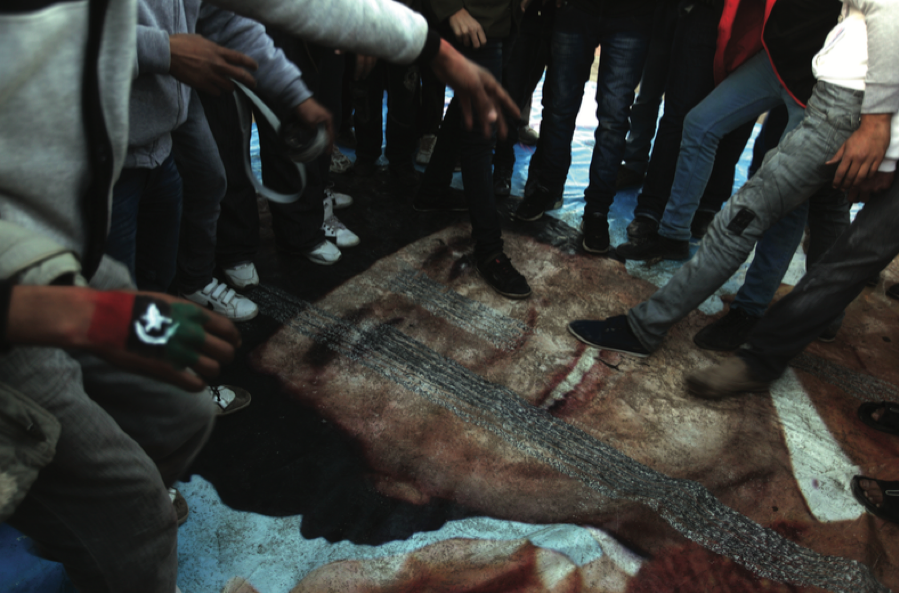
Revolutionaries had taken over much of Libya as February came to an end, stretching their control from the epicenter of the uprising in the eastern city of Benghazi to the outskirts of Tripoli in the west, with pro-government forces still holding the capital, several cities scattered around it and others in the south.

More than 2,000 people are thought to have been killed, many more wounded and tens-of-thousands have fled their homes in the first two weeks of the uprising against the 42-year reign of Colonel Muammar al-Qadhafi. The erratic and repressive ruler has been accused of deploying mercenaries, helicopter gunships and warplanes against mostly unarmed protesters.

Since the revolt began mid-February, scores of army personnel have also defected to the opposition, joining a growing armed insurrection in a confrontation that is ever more resembling a civil war. 

World leaders have called for Qadhafi to step down and threatened charges of crimes against humanity. The United Nations Security Council has imposed sanctions and many countries are freezing foreign assets associated with the regime and those of the Libyan Investment Authority, the country’s sovereign wealth fund, which alone are estimated at some $70 billion. Additionally, the regime-run Central Bank of Libya has $80 billion in foreign assets, according to the International Monetary Fund.

Though the United States and NATO allies were redeploying military assets to the area at the end of February and mulling the possibility of interceding, signs had appeared in Benghazi saying “No to foreign intervention — Libyan people can do it alone.” A consistent demand, however, of the Libyan opposition and human rights groups has been for the United Nations Security Council to impose a no-fly zone and deny Qadhafi the use of his air force to attack the anti-government side and resupply his troops — cited as key reasons why his forces have not been routed.

As foreign companies have been evacuating thousands of their workers, major oil companies were shutting down operations. Libya puts out 2.3 percent of the world’s oil and the country’s reserves — estimated at 44 billion barrels — are the largest in Africa. Libyan oil production was down 75 percent at the end of last month, according to the Wall Street Journal, and Brent crude pushed past $112 per barrel, rattling financial markets and threatening the global economic recovery.

For an on-the-ground perspective, Executive contacted Fatma Morayef, a researcher with Human Rights Watch who is normally based in Cairo but traveled to Libya to document the upheaval. She crossed the border on February 23 and spoke via telephone as she drove from Tobruk to Benghazi in the recently-liberated east of the country:

  • What’s the general situation in Tobruk now?

It’s very calm in Tobruk — there have been no problems with security for the past three days. Right now we can see the army patrolling and policing the street with people — when I say the army I mean individual members of the army who are working together with the informal [armed civilian] patrols. Everybody is really welcoming, especially when they realize we’re journalists and human rights people; everybody wants to talk about what happened. 

In Tobruk, [the uprising] started on the 15th and there were a lot of arrests [that day]. It didn’t see as much violence as Baida or Benghazi. People are still camped out in the main square downtown that used to be called Malik Aziz Square. They were saying ‘this is our Meydan Tahrir’ when they recognized my Egyptian accent. Everyone here is just saying ‘for the first time we feel free, we can talk to you and we just need for [Qadhafi] to go.’

  • How are supply levels holding up?

So far it’s okay, but the shops are still closed.  Today was the first day that some of the banks have opened so people can withdraw their salaries. But it’s all happening very informally. I was talking to some [people] who were very concerned going forward, talking about food supplies but also about the longer term because both Tobruk and Darna rely on desalination, which needs to be maintained for their farms. People are worried about how long this will last.

  • Are people optimistic about the situation?

They are feeling optimistic because they’re not scared. They’re feeling empowered. The welcoming of foreigners and journalists is partly due to the fact that they feel now that they can speak securely.

I’ve been on missions to Libya before and generally people who don’t know you will never speak to you because they’re freaked out by the reprisals of the state. I think the fact that internal security is no longer breathing down people’s necks here has changed the general mood and that has contributed to the sense of optimism.

People feel [here] that they have had a great victory and they liberated the east [of Libya], but everyone I’ve spoken to in Tripoli was very freaked out by what may come and also about the very strong security presence there.

  • When you crossed the border were Libyans fleeing the country along with foreigners?

There were some Libyan families but mostly just Egyptians. 

  • Is there a reason for that?  Do Libyans feel that eastern Libya is safe?

I think that’s part of it and some Libyans think ‘why would we leave? Our families are here.’ The Egyptians are leaving because they’re worried — they don’t know what’s going to come and all their families in Egypt are very worried.

It was quite endearing really because the Egyptian security — the people processing at the immigration point — when they heard my Egyptian accent they kept saying ‘be careful, it’s very dangerous’ because a lot of the Egyptians coming across the border have stories about having either witnessed or got caught up in violence.

Also, some of the Egyptians — not people I’ve spoken to, but I’ve heard this from other journalists and colleagues — have stories of being attacked themselves.

  • Is there cooperation between different opposition groups in different cities? Is there any leadership that is emerging?

No, I mean there is no formal opposition in Libya. All political parties are banned; it’s a crime to try to set up a political party. So right now it’s a very organic, popular uprising and rebellion.

  • What do people want going forward?

Right now they just want Qadhafi to leave because they’re still in the middle of the crisis.  People are happy but they’re still feeling insecure.

March 21, 2011 0 comments
0 FacebookTwitterPinterestEmail
Feature

The cost of a heavy hand

by Executive Editors March 21, 2011
written by Executive Editors

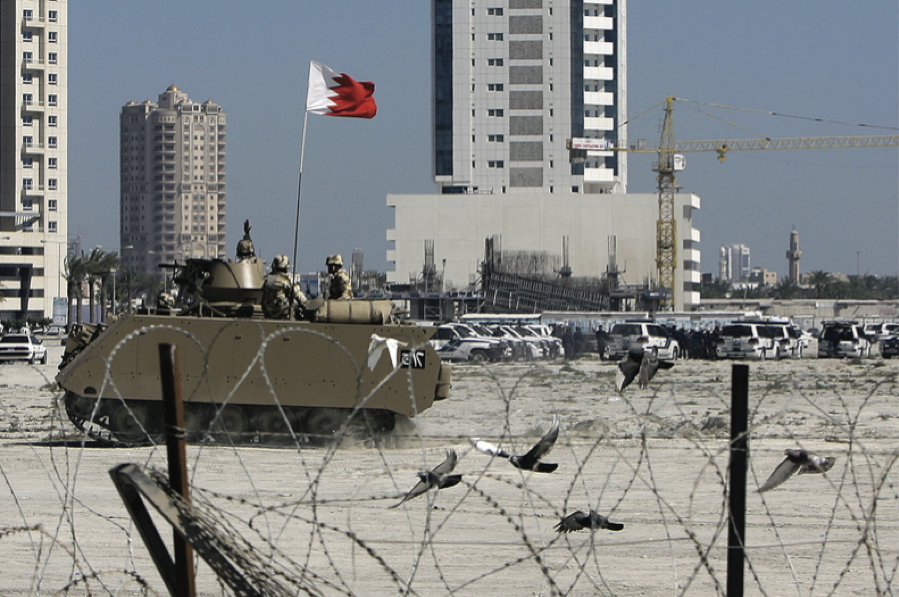
Bahrain is known more for its sleek steel and glass skyscrapers of high finance than the unpaved alleys of the disenfranchised tucked behind them. Indeed, the kingdom has worked hard to polish this veneer in recent years with a glossy international advertising campaign luring investors to “business friendly Bahrain.” But rosy adjectives were the first victims of the state security services’ repeated attempts to put down peaceful protests last month with truncheons, tear gas, rubber bullets and live ammunition, which left more than half a dozen dead and hundreds injured. 

While economic incentives such as the possibility of 100 percent foreign ownership of businesses, low taxes and easy access to Saudi Arabia and other Gulf markets are certainly draws for foreign investors, blood and tanks on the streets of Manama are not.

“If this [crisis] carries on, I’m sure it will have a more lasting effect,” said Salman Shaikh, the director of the Brookings Doha Center. “Right now, what I can say is that investor confidence is a little bit shaky.”

A diversification drive’s fender bender

Before the current turmoil, Bahrain had done an impressive job at putting out the right signals to foreign investors. In the 2011 Index of Economic Freedom published by the Heritage Foundation the country was ranked as the freest economy in the Middle East and 10th freest in the world. The International Finance Corporation ranked Bahrain as the 28th easiest place in the world to do business, putting the country behind only Saudi Arabia in the region and well ahead of the United Arab Emirates.

Bahrain’s rulers have long recognized that building a competitive business environment was necessary to diversify the government’s revenues away from hydrocarbon dependence and the economy away from relying on public spending. The public sector already employs some 25 percent of the workforce and is simply unable to absorb the 100,000 new jobseekers projected to enter the labor market over the next decade. This is coupled with the fact that at current extraction rates Bahrain’s oil reserves will be depleted in less than 20 years and oil production, refining and processing currently account for some 28 percent of gross domestic product.

The government has thus been actively promoting banking and finance as growth sectors and today they make up about a quarter of the economy. Unrest in Bahrain, however, creates doubt regarding the country’s stability; threatening its reputation and in turn its future as a destination for international capital and status as a financial center. As perhaps a worrying sign of things to come, the decision to cancel the annual Formula One season opener scheduled for March 13 is not just a blot on the country’s prestige; as major advertising and tourism draw its cancellation is anticipated to lose Bahrain $600 million in total revenue, according to the Abu Dhabi newspaper The National.

How blood makes markets queasy

The barbarism of Bahraini authorities seems to have directly contributed to the consternation the country is earning recently on international financial markets.

In the early hours of February 17, riot police descended on the Pearl roundabout where thousands of protesters were sleeping in a make-shift encampment; reports regarding the ensuing onslaught vary, but what is clear is that at least a handful were killed and hundreds were injured, with the authorities the next day again firing live ammunition into the funeral processions of those killed the night before, killing one and injuring more. Financial markets reacted swiftly: the cost of insuring Bahrain’s debt jumped 19 percent the day following the assault on the Pearl roundabout as the country’s five-year credit default swap spread hit an 18 month high of 310 basis points, according to Reuters. Three days later Standard and Poor’s (S&P) lowered its long and short-term credit ratings on Bahrain, its central bank, its Mumtalakat sovereign wealth fund, Ahli United Bank — Bahrain’s largest bank by market cap at $3.6 billion at end-February — and BMI Bank. S&P also issued a “CreditWatch negative” warning of a possible future downgrade for Bahrain’s Baraka Banking Group. Moody’s, which downgraded the kingdom’s sovereign rating last year, also announced it was concerned about the ongoing turmoil and was observing the situation closely. Fitch Ratings warned it may downgrade Bahrain’s credit ratings in the next few months if anti-government protests escalate.

In response, Central Bank Governor Rasheed al-Maraj publicly offered words of reassurance: “All financial transactions are at the normal level and the dinar continues to trade at the same level,” he said, adding that the monetary authority would provide banks all necessary support to facilitate banking operations.

“It is normal following any political or economic development that the credit rating agencies would review the ratings,” Maraj said. “However, we believe that the economic fundamentals of the kingdom of Bahrain remain strong and that the short-term economic and political developments should not entirely reflect on the review.” The Bahraini stock exchange, for its part, seemed to mirror Maraj’s sentiment — the market took some relatively minor hits as the protests began but as Executive went to print it appeared to have stabilized.

Root of the unrest

The principal source of instability in Bahrain is rooted in the country’s sectarian and socio-economic makeup: in a population of some 500,000 Bahrainis (not including the more than 200,000 expat workers also residing in the country), roughly seven in 10 are Shia Muslim, yet Bahrain is ruled by the Sunni al-Khalifa family and Sunnis have much greater affluence and influence in the country.

“If you compare the Sunni villages and the Shia villages, you will see how Shia villages are ignored,” says Nazeeha Saeed, a Bahraini journalist working for France 24 and Radio Monte Carlo. 

Bahrain’s Shia community have long felt politically and economically marginalized, unable to play any significant role in governance and regularly denied opportunities for professional advancement in both the public and private sector. For the Shia, such inequalities bring up questions of racism, but, Saeed says “[the Shia] don’t hate the Sunnis for that, they hate the government for that.”

Supporters of the protest movement say that Bahrain’s wealth has not been spread around evenly and that disparities in income appear across the country. “The middle class has been disappearing in Bahrain and the gap between the poor and the rich has been increasing,” says Amal Jaffar, a marketing executive in Manama.

Attempting to assuage resentment over economic disparities and dissuade protesters from taking to the street, the Bahraini monarchy announced in the week leading up to the first protest, on February 14, that it would hand out $2,600 to every Bahraini family as a gift.

The Bahraini government has been accused by protesters and observers of fueling divisions along sectarian lines, by portraying the mostly Shia protesters as a fifth column, loyal not to Bahrain but to Iran. “This is what the government is trying to tell the whole world and [to] make it happen, actually,” says Saeed. After Bahraini forces stormed the Pearl roundabout on February 17, the government defended their actions by claiming that the protesters were armed supporters of Hezbollah. These allegations were not corroborated by any independent sources.

A different tomorrow?

Following the failure of the heavy-handed crackdown, the government seems to have softened its stance, committing to talks with opposition leaders, allowing protestors to encamp again at Pearl roundabout, releasing dozens of political prisoners and pardoning Hassan Mushaima, the exiled leader of the Shia Haq opposition movement. As Executive went to print, questions over whether the government would make a genuine effort to reach a compromise remained unanswered. To some, the unprecedented protests in themselves signify that Bahrain is a changed country. “We [Brookings] think that Bahrain has already changed,” says Shaikh. “The question will be how much will this change the nature of the entire culture and the role of the ruling family?”

However the socio-political situation is addressed, whether “business friendly” Bahrain can repair the damage to its reputation is perhaps of equal, if not greater concern in the long run. Protracted negotiations over constitutional reform and accompanying demonstrations would undoubtedly wear on investor confidence, leading to an exit of foreign capital. This in turn would send the government’s economic diversification successes into regression — meaning a contraction of the private sector and increased unemployment — and an increase in Bahrain’s dependence on its hydrocarbon resources which, barring new finds, will run dry within the foreseeable future.

Less revenue would limit the government’s ability to fund its generous welfare programs and employ its expansive public service, introducing new fuel to the public’s discontent. Though both the United States — which bases it navy’s Fifth Fleet in Bahrain — and neighboring Saudi Arabia would likely step in to cover any shortfall in state funding, the increased influence of either of these countries over this island kingdom would be unlikely to sit well with the majority of Bahrainis.  

March 21, 2011 0 comments
0 FacebookTwitterPinterestEmail
Feature

The New Arab World

by Executive Editors March 21, 2011
written by Executive Editors

There is no going back. Recent months have severed the future from past precedent and brought about a fundamental shift in the Arab paradigm.

This month Executive examines some of the numerous facets of the historic events sweeping the Middle East and North Africa. Among the roots of the populist revolts are the economic reforms many MENA countries undertook to produced headline-grabbing growth and vast fortunes for the well-connected elite, while the poor and middle classes, left exposed to inflation, became ever more familiar with layoffs as privatized state institutions streamlined [see comment Upheaval and institutional capital].

Tunisia, having been the first to fall, is the forerunner navigating the amorphous uncertainty that comes with rebuilding nations. A month and a half after the euphoria of ousting President Zine el-Abidine Ben Ali from power, young Tunisians were returning to the streets demanding to see that the social inequities they rose up against are righted. 

“They want change, they want a better country, they want a better situation, they want better governance… it’s very hard to achieve the type of change they are asking for,” says Mongi Boughzala, an economist at the University of Tunis El Manar. “Something has to be done to convince them that it’s coming and they’re part of it.” [see interview Mongi Boughzala].

  Libya, at the other end of the revolutionary arc, had escalated into the most vicious and bloody of the uprisings yet by the end of February. With the situation fluid and developing by the moment, Executive asked how Libyans in the rebel-liberated east of the country were feeling out their first tastes of freedom [see interview A revolution underfoot]. 

In Egypt, the democracy movement, having toppled the heads of the regime, is now divided between combing through the remains of the state to piece back together a semblance of stability or remaking the country from its foundations up [see comment Changing of the guard]. Whichever they decide, it will be an absolute necessity to rebuild business confidence to spur private sector investment and create jobs. Weighing in Egypt’s favor going forward is its massive human capital; many regional business leaders see a market of more than 80 million potential customers as a fantastic expansion opportunity if the country develops — as Turkey has since the 1990s — into a stable, pro-business democracy that advances general living standards [see stories Excess Instability and Talkin’ ‘bout a Revolution].

Bahrain, by contrast, has a relatively tiny population base and has sought to diversify its economic future away from depleting oil reserves by developing itself into a regional financial hub with competitive advantages for investors. But the kingdom’s security forces effectively shot its moderate, “business friendly” reputation in the head in their savage attacks on peaceful protesters [see story The cost of a heavy hand]. This, coupled with the crackdown on political dissent — including mass arrests and torture allegations  — over the past year and more have left Bahrain looking like little more than a police state in a suit [see Last Word The pearl’s shine bloodied].

Across the Gulf, Iran has also been caught in the wake of the tidal wave that flowed from Tunisia, but here the two sides also battle for the narrative; the opposition Green Movement has found common cause with the pro-democracy Arab uprisings and been re-inspired into action, while at the same time Ayatollah Khamenei and supporters of President Mahmoud Ahmadinejad have claimed recent events are an Islamic awakening, equating them with the 1979 Iranian revolution that ushered in the Islamic republic [see comment Spinning a revolution].

In Yemen as well, hundreds of thousands have rallied to the populist uprisings, along with tens of thousands of others in Morocco, Algeria, Iraq and Oman. And watching the rapid advance of revolutions tear through the regional status quo that had been the pillar of their security strategy — especially in regard to Egypt and Jordan — Israeli leaders have been left reeling. 

“In the Arab world, there is no room for democracy,” said Israeli Major General Amos Gilead at a conference near Tel Aviv last month [see comment Israel’s preference for Arab oppression].

But what was the status quo is now dead, trampled beneath the feet of millions marching through the streets. And while it is yet far from certain that the freedom and democracy for which they have fought so hard await them at the end of this road, what is assured is that where they are going is radically different from the place they left.

Welcome to the new Arab World.

March 21, 2011 0 comments
0 FacebookTwitterPinterestEmail
Editorial

Revolt against flawed reform

by Yasser Akkaoui March 21, 2011
written by Yasser Akkaoui

Since the first revolts erupted in the region, economists in Executive’s research department have been busy number crunching, running regressions and trying to find correlations between raw economic data and current events.

In doing so, an interesting observation stood out: the first serious uprisings were in many ways a response to the recent economic liberalization measures undertaken in many parts of the Middle East and North Africa. Regimes across the region began introducing policy reforms in the last decade — some to try and save themselves from the winds of change that blew in following the Iraq and Afghanistan invasions, others to show that they were in line with global trends.

Although the reforms were welcome, their implementation was a reminder that everything we learned in “Economics in developing countries 101” was correct. The people in power and their nepotistic benefactors were already rich from milking the resources of their countries and monopolizing the main productive sectors; by the time the reforms were implemented, decades of bad policy prevented the people from benefiting from the new open systems. With the absence of human development programs and resources, they were shut out from the economic growth that followed.

But one good thing happened, and it has manifested itself in recent events; with more openness came more information, especially through the Internet. People became more aware of their social and economic situation. They caught the scent of what was preventing them from achieving their potential. Entrepreneurs empowered with ambition began to chip away at the barriers of red tape, bureaucracy and corruption standing in the way of their self-realization.

This year they saw an opportunity, and they seized it.

March 21, 2011 0 comments
0 FacebookTwitterPinterestEmail
Economics & Policy

Singing the praises of an oft-slighted OPEC

by Roudi Baroudi March 5, 2011
written by Roudi Baroudi


In September 2010, the Organization of the Petroleum Exporting Countries (OPEC) marked its 50th anniversary, but most of the world’s leading social, economic and environmental bodies did not join in the celebrations.

The milestone provided what should have been a fitting backdrop for recognition of the very real accomplishments of OPEC’s past and present and the role it is likely to play in the future. The organization’s resources and policies have evolved to the point where it is now an indispensable partner on multiple levels: its determination to maintain security of supply contributes to world economic stability, its dominant position in the energy industry gives it vital influence over measures to protect the environment, and closer coordination with it could help multilateral institutions to better serve human development around the globe.

Despite all that OPEC has done on these and other fronts, the organization’s contributions remain largely unheralded. The mainstream media typically dismisses the group as a crude (in both senses of the word) cartel. This unflattering assessment is broadly shared by everyone from individual consumers of oil products to the heads of states and major corporations.

OPEC’s image problems may stem from its own public relations. For far too long, the organization and its members have been both loath to accept blame for mistakes and, bizarrely, unwilling to trumpet successes. The result was a familiar one to anyone who studies the contemporary Arab world: those who refuse to define themselves are instead defined by various — often hostile — others.

An unfair reputation

OPEC was founded with the overall aim of liberating its member countries’ hydrocarbon assets from foreign domination, thereby making more of the proceeds from their sale available for promoting economic development, providing better education and healthcare for their populations and sharing the wealth with less fortunate peoples.

Admittedly, not all or even most of the organization’s member states have consistently pursued these goals with sufficient rigor. We all know the reputation of the “oil sheikh”, the spoiled prince who squanders millions on a luxurious lifestyle. For decades there was more than a grain of truth to the stereotype.

But it is not within OPEC’s purview to impose standards on the governance of sovereign member states or on the personal behavior of their rulers; its primary task, again, is to help them make more money from their primary natural resource, and in this it has succeeded beyond anyone’s expectations.

Recent years have witnessed a marked improvement in the handling of energy wealth, a fact demonstrated by the proliferation of massive development and infrastructure projects, tremendous improvements in areas such as education and healthcare, and by the gargantuan holdings accumulated by some countries’ sovereign wealth funds — Abu Dhabi’s alone, according to some estimates, is thought to control assets in the range of $1 trillion.

In addition, as the oil trade has matured, OPEC has sought to fulfill a regulatory function when possible and to ensure flows of supply and transparency in the petroleum trading system. Its efforts on these fronts flow through numerous channels, including its central role in the International Energy Forum and its support for the Joint Oil Data Initiative.

It undertakes these endeavors despite the risks attached to the heavy investments necessary to ensure the robustness and readiness of the entire supply chain. The maintenance of price levels that justify the running of such risks is a major reason why the world’s economies always have access to the fuel they need. And as OPEC frequently stresses, the sky-high rates for hydrocarbon products in many countries have little to do with its own practices.

Instead, they often stem from factors entirely outside OPEC’s control, including taxes levied in affluent consumer nations, the expansive profit margins of major oil companies based in several of the same countries, speculators who operate there and — it has to be said — the politico-military policies pursued by some Western governments in and around the world’s principal oil-producing region, the Middle East.

Despite OPEC efforts, global energy markets have suffered periodically from a lack of cooperation between the producing nations and the consuming ones, to the detriment of both, but at the same time it is OPEC who has actually done something to alleviate the repercussions of poor cooperation.

Far from being a one-trick pony concerned solely with its own commercial interests, OPEC increasingly attends to the long-term welfare of the consumer nations by, among other things, working for the development of an effective and coordinated energy framework and enabling exchanges on petroleum issues of common interest.

In the past two years, with much of the world economy suffering the after-effects of the global financial crisis, OPEC also was instrumental in limiting the damage and fueling the recovery: it raised output to keep prices reasonable, availed itself of existing spare capacity and accelerated programs for capacity expansion in order to discourage speculation and was always there to facilitate dialogue and cooperation.

After displacing the major international oil companies as the primary determinant of crude production, OPEC and its member states have become key players on the global economic stage. The organization is now a crucial interlocutor with bodies like the G8, the G20, and the European Commission, and it has begun to participate in efforts to combat poverty and environmental degradation.

Oil aid

Across the developing world, the OPEC Fund for International Development (OFID) uses its resources to provide significant financial and other resources to support social and economic projects and to ensure affordable energy prices for the poor. All told, the agency pledged more than $500 million in grants and soft loans over the past year. The scope of these funds ranges from the battle against HIV/AIDS to improving supplies of clean water to emergency humanitarian relief.

As of October 2010, OFID’s cumulative commitments to provide easy credit for public sector entities in less developed countries had reached almost $9 billion, more than $5.4 billion of which had already been disbursed.

On top of this, recent years have also seen OPEC get serious about protecting the environment. As climate change and other green issues have gained their rightful spot on the global agenda, the organization has begun to do its part.

In 2010 alone, for instance, OFID earmarked support for a variety of environmental causes, including grants for the International Conference on Food Security and Climate Change in Dry Areas in Amman, the 3rd Annual Conference of the Arab Forum for Environment and Development in Beirut, organic agriculture training in East Africa and an effort by Green Globe to train 300 campaigners tasked with raising awareness of environmental issues.

While accepting that the global energy mix will change in the coming decades, OPEC has been instrumental in supporting research aimed at reducing emissions in the here and now, especially carbon capture and sequestration technologies pioneered at the In Salah operation in central Algeria. It also has adopted active roles in multilateral groupings, including the World Bank’s Global Gas Flaring Reduction Partnership, as well as the International Energy Agency’s Greenhouse Gas Research and Development Program.

For the positive socioeconomic influences it exerts on today’s world, and for all of the prescient preparations it has begun to make for tomorrow’s — including measures to mitigate the effects of its members’ lifeblood — the group deserves some credit. Provided it gets better at explaining itself, it might even receive a few long-overdue cheers when its Diamond Anniversary rolls around in 2020.

March 5, 2011 0 comments
0 FacebookTwitterPinterestEmail
Society

Secret Affairs: a book by Mark Curtis

by Paul Cochrane March 3, 2011
written by Paul Cochrane


Britain has played a nefarious role in the Middle East’s history. We all know that London re-drew the region’s borders after World War I as part of a “divide and rule” strategy, but few are aware of Britain’s divisive and often contradictory efforts in the region that have remained a core part of its foreign policy. Instead, the United States and Israel tend to get all the “credit” when it comes to the dark arts of Machiavellian political subterfuge.

In ‘Secret Affairs: Britain’s Collusion with Radical Islam,’ author Mark Curtis uses declassified official documents and leaked reports to lay bare Britain’s policies of destabilization and the political-economic ties Britain developed to ensure energy security and financial co-dependence. What Curtis exposes is as damning to Britain as the WikiLeaks US embassy cables have been to Washington, revealing the decisions made away from public scrutiny and what really makes up official policy.

“It is clear that Britain has an interest in divide and rule in the Middle East. If it sounds conspiratorial, it is there, spelled out in the planning files,” Curtis told Executive.

Shady goings-on

‘Secret Affairs’ is an eye opening read that charts the beginnings of British collaboration with radical Islamic forces, a relationship that began during the occupation of India over 150 years ago, was used extensively post-1945 and continues to this day. Britain worked with Islamist groups, particularly the Muslim Brotherhood, and friendly authoritarian Islamic regimes in Egypt, Syria, Saudi Arabia, Iran, Iraq, Bosnia, Indonesia, Pakistan and Afghanistan to ensure that communism, nationalism, pan-Arabism and anti-Western policies didn’t take hold.

Britain would cultivate relationships on both sides of the political fence, showing a willingness to work with essentially anyone, whether the Mahaz-i-Milli Islam (National Islamic Front of Afghanistan), the Libyan Islamic Fighting Group or the ayatollahs in Iran, to achieve short-term goals, irrespective of the longer-term implications, in order to maintain a balance of power.

“In [my] analysis of British foreign policy, it is not all down to economics,” said Curtis. “The collaboration with Islamist groups in the Middle East has been about power status, to not be relegated to a bit player on the fringes. It has seen those groups as essential allies in a region where Britain has often lacked dependable allies. In a lot of the episodes where Britain collaborated with Islamic groups, it was essentially to do the dirty work that the US couldn’t do due to Congressional oversight and the fear of being found out.”

The dirty deeds include assassination attempts – for example on Egypt’s Gamal Abdel Nasser, Libya’s Muammar al-Qadhafi, and Lebanon’s late Ayatollah Mohammad Fadlallah – military assistance and the dissemination of propaganda tools, such as Korans and Islamic literature. British operatives also orchestrated “false flag” operations, such as the one in Iran in 1953 when mosques and public figures were attacked by agents and paid supporters appearing to be members of the communist Tudeh Party. British intelligence also worked in collaboration with Ayatollah Kashani, the mentor of Ayatollah Khomeini, to stir up sentiment against nationalist Prime Minister Muhammad Mossadiq.

Alongside maintaining its power status and ensuring energy security, Britain also worked to make sure oil-producing countries invested their petro-dollars in London to shore up the city’s global financial position. To do so, Britain needed to maintain its status as a power broker and to curry favor with regimes, regardless of the means. One example of this is the “fabricated invasion” of Kuwait by Iraq in 1958, during which Britain intervened to protect its newly-independent former colony against a threat that they had themselves concocted, as British files explicitly show. “Britain wanted to exaggerate the threat to Kuwait so [Britain] would continue its protection and Kuwait would keep investing revenues in the British banking system,” said Curtis.

Blow back

Such covert operations — all documented in ‘Secret Affairs’— have been just one part of Britain’s foreign policy that has gone against London’s purported democratic ideals. The backing of Islamist forces, and its hidden alliance with two chief state sponsors of radical Islam, Saudi Arabia —which has spent more than $50 billion to spread the Wahhabi brand of Islam around the world and is a major sponsor of Islamist groups — and Pakistan, have also had major negative repercussions.

By preventing independent and secular governments from coming to power in much of the Islamic world, Britain’s policies have nurtured the current socio-political malaise and resulted in what the late Chalmers Johnson famously termed “blow back,” when the very forces the West aided and abetted came back to bite the hand that once fed them. Curtis shows how Britain in the 1990s allowed Islamist groups to operate out of London, which they believed could be used to destabilize governments in, among other places, Syria, Iraq and Libya. This was possible through a ‘covenant of security’ between radical Islamists and the security services.

A former Cabinet Office intelligence analyst explained: “The long-standing British habit of providing refuge and welfare to Islamist extremists is on the unspoken assumption that if we give them a safe haven here they will not attack us on these shores.”

This pact meant Britain could keep tabs on such groups’ memberships and finances, and enabled British intelligence access to groups linked to militancy from Afghanistan to Yemen. Even Al Qaeda had an office, the Advice and Reformation Committee, in London until 1998.

Alongside the US and Saudi Arabia, Britain equipped and bankrolled Islamist groups in Afghanistan, Pakistan and Bosnia that were later involved in the September 11 attacks in the United States, terrorist attacks in Saudi Arabia, and the July 7, 2005 bombings in London. Indeed, as Curtis’s research shows, the history of the ongoing “war on terror” is rooted in covert support for the Afghani Mujahedin in its fight against the Soviets and for the terrorism infrastructure co-established with Pakistan’s notorious Inter Services Intelligence (ISI), which trained fighters for operations in Central Asia, India, Bosnia, the Middle East and elsewhere.

It also goes further back in time, to the British-backed partition of India in 1947, which led to the creation of the Islamic Republic of Pakistan and the current imbroglio in Kashmir. Curtis quotes former Indian Ambassador Narendra Sarila as saying, “Many of the roots of Islamic terrorism sweeping the world today lie buried in the partition of India.”

More than 60 years later, Britain is still using divide and rule as a strategy and is contending with the repercussions of what in many ways its foreign policy has created. “There is still this resort to rely on particular Islamist forces to achieve objectives, whether in Southern Iraq[post-2003], where Britain worked with Islamist forces and now [has] a de-facto working arrangement with the Taliban, in the sense that Britain is reliant on them for an honorable exit from Afghanistan,” said Curtis. In a previous book, Curtis called Britain’s foreign policy a “web of deceit.” In his latest, he has further shown how that web was spun and, crucially, how British foreign policy has anurtured global terrorism and instability.


March 3, 2011 0 comments
0 FacebookTwitterPinterestEmail
  • 1
  • …
  • 388
  • 389
  • 390
  • 391
  • 392
  • …
  • 696

Latest Cover

About us

Since its first edition emerged on the newsstands in 1999, Executive Magazine has been dedicated to providing its readers with the most up-to-date local and regional business news. Executive is a monthly business magazine that offers readers in-depth analyses on the Lebanese world of commerce, covering all the major sectors – from banking, finance, and insurance to technology, tourism, hospitality, media, and retail.

  • Donate
  • Our Purpose
  • Contact Us

Sign up for our newsletter

    • Facebook
    • Twitter
    • Instagram
    • Linkedin
    • Youtube
    Executive Magazine
    • ISSUES
      • Current Issue
      • Past issues
    • BUSINESS
    • ECONOMICS & POLICY
    • OPINION
    • SPECIAL REPORTS
    • EXECUTIVE TALKS
    • MOVEMENTS
      • Change the image
      • Cannes lions
      • Transparency & accountability
      • ECONOMIC ROADMAP
      • Say No to Corruption
      • The Lebanon media development initiative
      • LPSN Policy Asks
      • Advocating the preservation of deposits
    • JOIN US
      • Join our movement
      • Attend our events
      • Receive updates
      • Connect with us
    • DONATE