• Donate
  • Our Purpose
  • Contact Us
Executive Magazine
  • ISSUES
    • Current Issue
    • Past issues
  • BUSINESS
  • ECONOMICS & POLICY
  • OPINION
  • SPECIAL REPORTS
  • EXECUTIVE TALKS
  • MOVEMENTS
    • Change the image
    • Cannes lions
    • Transparency & accountability
    • ECONOMIC ROADMAP
    • Say No to Corruption
    • The Lebanon media development initiative
    • LPSN Policy Asks
    • Advocating the preservation of deposits
  • JOIN US
    • Join our movement
    • Attend our events
    • Receive updates
    • Connect with us
  • DONATE
Finance

An issue of trust

by Thomas Schellen December 3, 2010
written by Thomas Schellen


The Arab World’s 16 active stock markets’ combined market capitalization in the fourth quarter of 2010 amounted to substantially more than $900 billion, confirming that Middle East and North African (MENA) equity markets are an increasingly important force in regional economic development.

The performance was not all sunny, however. Market indices for member institutions of the Union of Arab Stock Exchanges (UASE) at the end of 2010 were visibly below their more optimistic days almost three years ago. Eagerness for listing companies has also dropped. New initial public offerings and trading debuts have been rare.

Although, or perhaps because, performance of Arab equities has been marred by the global financial crisis of 2008, the macroeconomic relevance of financial markets has become a topic demanding increasing attention.

Arab stock exchange operators have been feeling the need to do more than their bread-and-butter business of running trading rooms and electronic platforms and assuring smooth operations that comply with national regulations in each market.

Markets are to enter a “new era of collaboration and cooperation,” the chairman of the UASE, Suliman Alshahomy, said in October 2010 at the opening of the second UASE Annual Conference in Beirut.

The tenor of Arab stock market operators is a combination of needed improvements and regaining investor trust.

“Implementing principles of transparency of Arab markets is our main goal. We want to provide Arab investors with linking of all financial markets,” said Alshahomy.

The exchanges face a major challenge in restoring trust. According to UASE Secretary General Fadi Khalaf, “greed led us to a place where confidence in the market weakened.” Confidence may have been built over years, only to be lost in days, he added in a keynote speech to stock market operators and financial experts.

Still young at heart

The Arab stock exchanges are a young industry by the standards of the region’s financial sector, and even more so when compared with the 400-or-so-year history attributed to the business model of trading centers dedicated to the buying and selling of shares in something that is not physically present at the exchange.

Union of Arab Stock Exchanges member exchanges by year of establishment

Nominally, three Arab stock exchanges — in Egypt, Morocco and Lebanon — trace their incorporation back to the first half of the last century, with late 19th century commodities trading in Alexandria at the root of the region’s first bourse. The Kuwaiti and Tunisian exchanges date from the 1960s. The 11 others were decreed and went into operations between 1984 and 2009.

In the late 19th century, large-scale trading of Egyptian cotton export exploded, making for a furious start of bourse operations in the Middle East. The exchanges in Cairo and Alexandria boomed so much that the region’s first stock market crash in 1907 even played a role — by way of depleting British hard currency resources — in a financial confidence crisis in distant New York: the famous Knickerbocker Trust panic which ultimately led to the establishment of the Fed. 

However, the growth of Middle Eastern securities trading was stymied in the conflicts over the global political and social order that hit Arab economies in the 1950s. Until deep into the 1990s, the region’s bourses were impaired by inexperience, oil money that came too easy, ideological follies, anti-economical politics, wars and all the other Middle Eastern challenges of the 20th century.

Recent rough ride

Therefore, for all intents and purposes, it is fair to say that the industry of Arab bourse operators was only really formed in the last 20 years. It may be a surprise then that this young-but-important segment of financial market already needs a facelift. 

The need for instilling new confidence in the regional investor community is, naturally, related to the local impact of the 2008 crisis in global financial markets. Between summer 2008 and spring 2009, Arab investors saw the market value of their shares plummet at rates of more than 90 percent for some stocks and benchmark market indices in the region commonly lost 60 to 70 percent during the crisis. Of course, so did pretty much every investor community in most global markets.

With very few exceptions — one of them ironically an Arab bourse, the Tunis Stock Exchange — securities markets the world over dropped precipitously in the peak crisis period between September 2008 and March 2009, as institutional and individual investors alike were caught in the recession like the proverbial deer in the headlights.

But that was the past. By the third and fourth quarters in 2010, recovery ruled in virtually all stock markets. Herein lies the problem that has been confronting Arab bourse operators in 2010: the rate of recovery of the Arab markets’ averages was much slower than in peer emerging markets.

UASE Secretary General Fadi Khalaf, and UASE Chairman Suliman Alshahomy,  at the UASE Annual Conference in Beirut

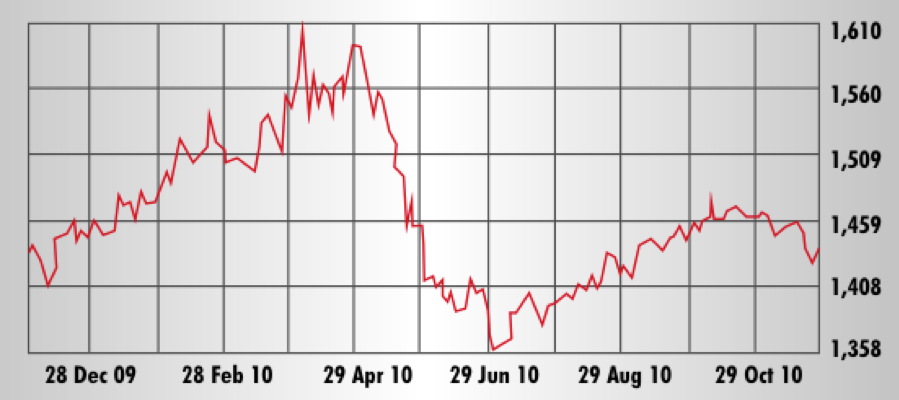
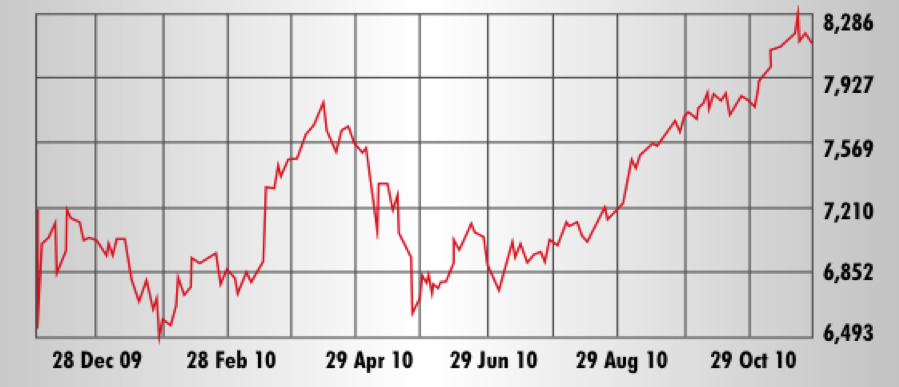
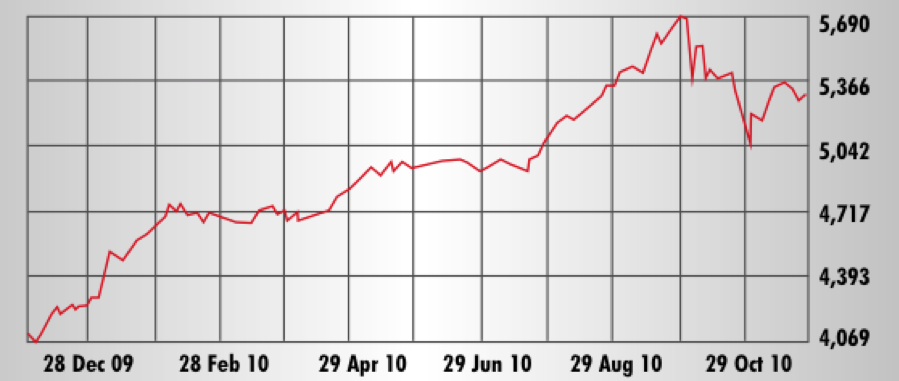
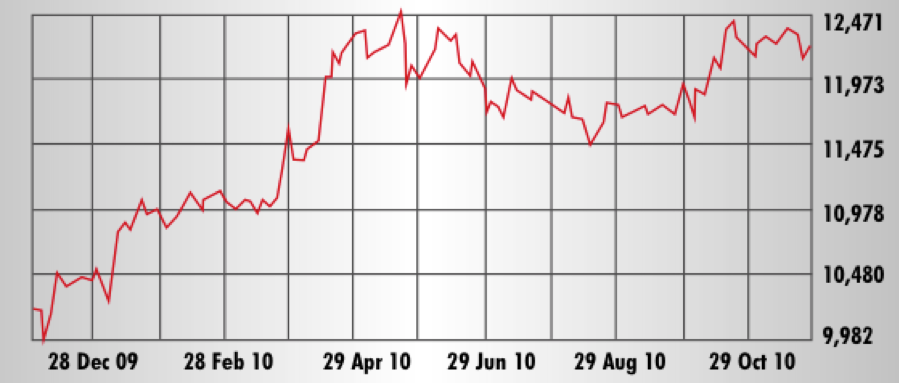
When compared with some developed and emerging markets in November 2010 —  26 months after the Lehman Brothers collapse heralded the financial crisis in world markets — a few numbers illustrate Arab investors’ lingering loss of confidence in their markets.

The Dow Jones Industrial Index, which crashed from nearly 12,000 points in mid-2008 to decade-lows in the 6,400 range by March 2009, had regained all ground by the fourth quarter of 2010, closing at mere 2 percent downward variation on November 15, 2010 when compared with July 1, 2008.

The United Kingdom’s FTSE 100 and Germany’s DAX, which each had dipped below 4,000 points in spring 2009, both quoted higher in mid-November 2010 than their respective levels in the summer of 2008. In Asia, where the Nikkei 225 was a laggard at about 25 percent down in the same comparison, the Hang Sang showed full recovery from 2008/2009 index losses in the third quarter of 2010.

In emerging markets, Standard & Poor’s BRIC 40 and Morgan Stanley’s MSCI Emerging Markets Index ascended in October 2010 for the first time above their values last recorded in July 2008. Looking at 2010’s top growth markets in stocks, the best gainers were all in emerging quarters. Exchanges in Indonesia, Chile, Argentina and Turkey not only added more than 40 percent to their indices in the 12 months ending October 2010, they each also scaled a new historic record in November 2010.

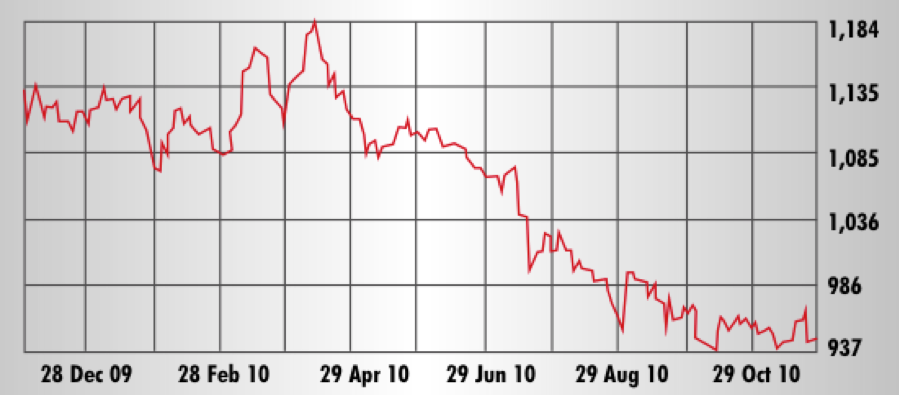
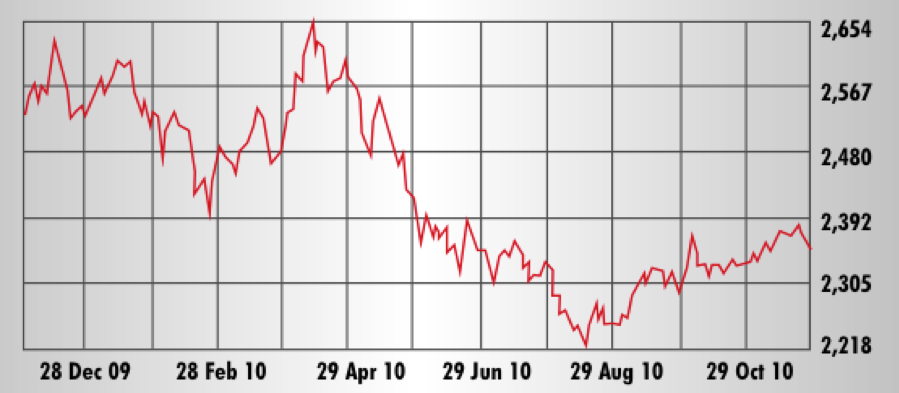
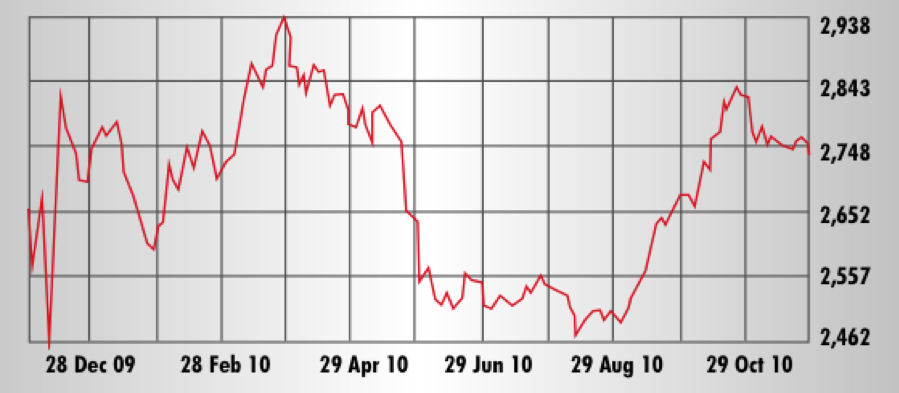
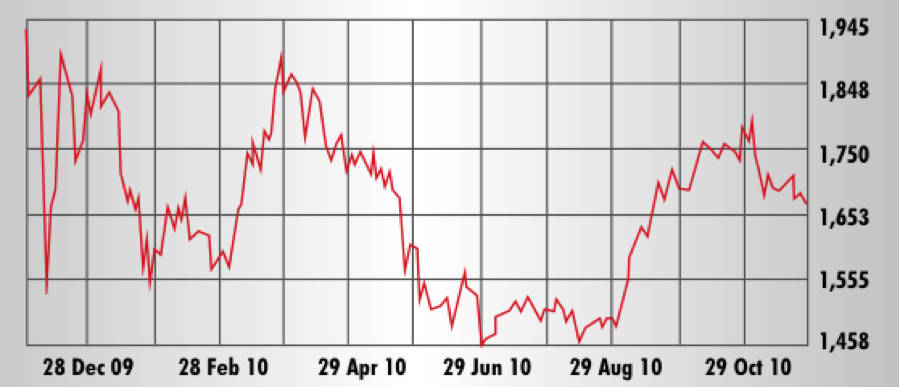
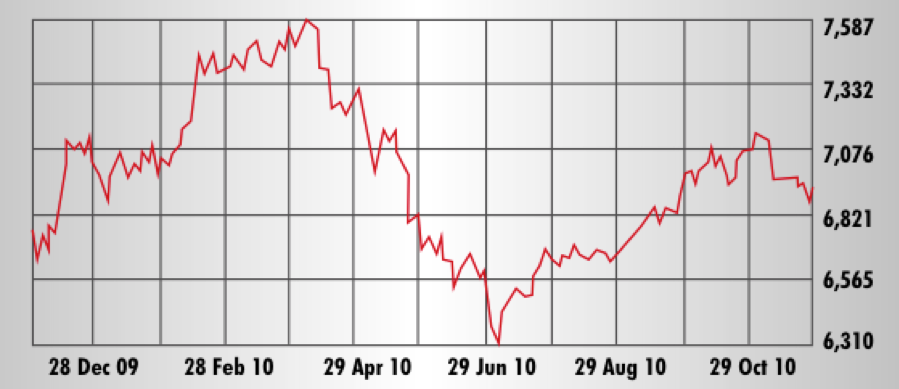
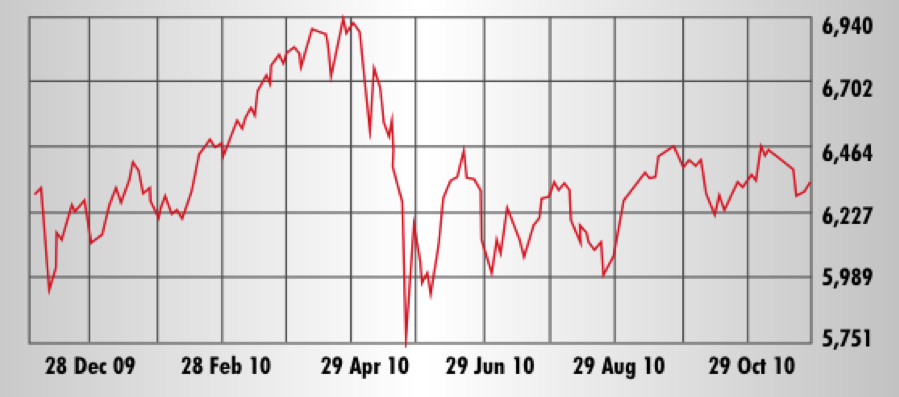
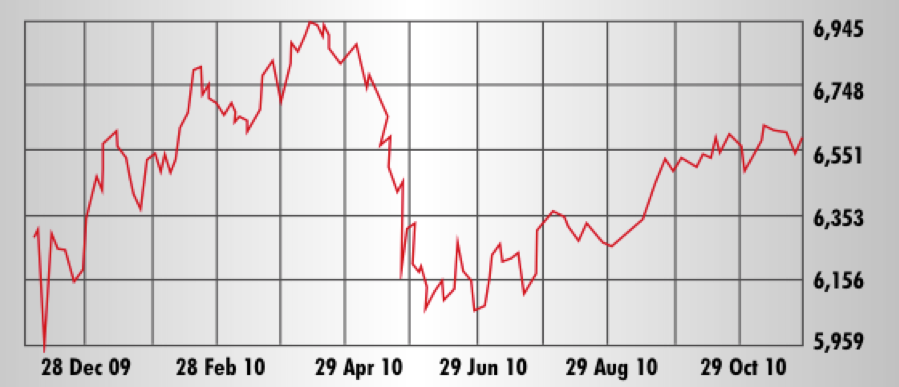
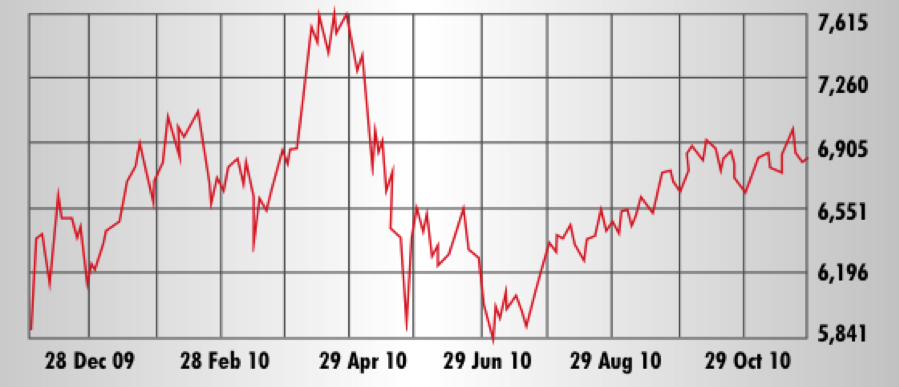
Of the four leading Arab exchanges by market capitalization, which accounted for approximately 70 percent of total market cap in MENA in autumn 2010, three benchmark indices — Saudi Arabia, Egypt and Qatar — were lower by 31 to 32 percent in November 2010 versus July 2008. The Kuwaiti bourse was even further behind, down 55 percent in its index over the same timeline.

The Middle East’s only exchange with a long track record that bucked the downtrend was the Tunis Stock Exchange; its Tunindex climbed 75 percent from July 1 2008 through November 15 2010.

Concentrated and diverse?

Besides the rebuilding of investor trust, the Arab exchanges face another challenge in taking their collaboration to the new levels envisioned by UASE for the coming decade. Experts and operators recognize that there are no strong merger prospects in the short term — save the possible exception of the two United Arab Emirates exchanges in Abu Dhabi and Dubai — and also know that regional securities markets will not be easy to align, given disparities between trading systems and regulatory standards.

According to a UASE survey of 14 member bourses, the sector has both a large diversity and a lot of concentration. The contradiction arises from the fact that market concentration is massive in terms of capitalization and even more so in terms of trade activity.

Tadawul, as the Saudi Stock Exchange (SSE) is best known, is the engine of all Arab shares trading. With 143 listed companies, the SSE hosts about 11 percent of the publicly traded firms in MENA — but these are larger companies and the market is more liquid than average in the region, accounting for up to 40 percent of market cap and even higher proportions of daily share movements by volume and value.

 Traders crowd the floor at the Kuwait Stock Exchange

Responses by Arab market operators to the UASE survey put the total number of investors in Arab stock markets at more than nine million, with the totals ranging from nearly 3.6 million in Saudi Arabia to 5,500 on the young Damascene bourse.

According to the UASE survey, Tadawul in mid 2010 accounted for 40.5 percent of market capitalization and captured more than 60 percent of trading activity, a statistic which, due to a technical issue precluding the Kuwait Stock Exchange’s timely response to the survey, did not include data for the Kuwait bourse. By contrast, five of the small exchanges represented only 1.5 percent of the region’s market cap combined.

A different set of disparities exists in the operational realities of Arab bourses. The UASE study found that half of the exchanges enjoy independence in regard to market trading, clearing and regulatory processes.

However, while 38 percent of the bourses today are nominally operating as private sector entities — mostly joint stock companies along with two listed companies — government control is still the daily reality for at least 80 percent of Arab bourses.

The resultant picture is one where Arab exchanges are fragmented in operational and structural terms, with a variety of international partnerships, technological platforms and methodologies in place. Regulatory frameworks are most advanced in the Gulf Cooperation Council but operators there are last in terms of independence. The state-centric organization of exchanges limits the options for development. “If we want to be a hub, we should start by being a listed company on the exchange. If the exchange is a private sector company, it becomes an option to merge or create a new entity. It is not possible today to dream of merging,” UASE’s chairman, Alshahomy, told Executive.

The upside is that Arab stock exchanges are maturing in the challenges they face and have become increasingly aware of their role in nurturing and diversifying economic development. Tadawul Chairman Abdullah Alsuweilmy told the recent UASE Annual Conference: “We are entrusted with enhancing the economies we belong to. That is very important.”

Proposals and objectives of UASE

Transparency is the word of the year for Arab stock market executives. When asked by Executive what defines a healthy stock exchange, four out of five exchange chairmen included “transparency” in their answer. Likewise, transparency, together with good regulation, has ranked in 2010 in the top tier of desirable qualities in discussions of the World Federation of Exchanges, the global alliance of bourse operators.

Market executives from around the MENA region shared a wide range of proposals at the 2010 Annual UASE Conference, as did the team from the Libyan Stock Market, which carried out the UASE member survey and evaluation as part of the country’s one-year term in chairing the federation in 2010. (The Union’s chairmanship is due to rotate to Qatar in 2011).

UASE has two immediate projects on its agenda before embarking on further development initiatives, said Secretary General Khalaf: to commence publication of reports on the Arab markets and to work on a benchmark index for the region. Further steps could include the creation of exchange-traded funds (ETF) that track the new regional index. An Arab index could generally be expected to enhance professional investor attention to the region’s stocks. But index creation is more than an exercise in calculation skills. 

Exchange inventory

“We have to start somewhere, which is the benchmark index. There are thousands of indices but the indices that survive are those done with international institutions,” Khalaf said, giving clear indication that the UASE doesn’t want to go it alone in deploying a regional index but rather has engaged in discussions to implement a partnership with one of the big global names in index formulation.  While a home-brewed index could be launched fairly quickly, working with a major partner could drag out the launch time for up to two years, though Khalaf admitted “I hope it will be faster.” 

The UASE upgraded its stature in 2009 with the establishment of a full-time elected secretary general and the positioning of annual conferences as high-caliber events to offer a forum for contributions to and from all members. For organizational development, UASE targets some expansion of the primary membership base, from 16 full members in 2009 to 23 at end of 2010, comprising 16 exchanges and seven clearinghouses.  New members expected to join shortly include Sudan’s Khartoum Stock Exchange and the Algerian exchange, hitherto a stock market in name only as it seemed to be one of the world’s least active trading places in the past decade. Membership on an associate level includes 23 brokerages.

But with the regional count of active brokerages standing at 650 firms, according to the UASE survey, and the brokerage sectors from a dozen countries severely underrepresented or not represented at all in the UASE membership, the organization appears to have a large opportunity to expand its ranks among market intermediaries.     

Khalaf emphasized that the federation will not change the fundamentals of how its members operate. “We play the same role that all stock exchanges play in their economies. We are a federation that groups all those exchanges and will not create something that the local exchanges didn’t create already,” he said.


December 3, 2010 0 comments
0 FacebookTwitterPinterestEmail
Finance

Beware the blind spot

by Thomas Schellen December 3, 2010
written by Thomas Schellen


Lebanon has long represented to Middle Eastern insurance operators what Eton stands for in relation to Anglo-Saxon education – it is one of the oldest insurance sectors in the region, has produced a substantial portion of the leading individuals in the industry and prides itself on containing some of the highest skill concentrations. And yet it has not seen the growth of which some of the Middle East’s other markets are boasting.  

Nominally — that is, based on assumptions that premiums growth for 2010 was similar to that estimated for 2009 — the total value of insurance premiums in Lebanon likely hit the $1 billion mark at some point in 2010.

Data from international reinsurance firm Swiss Re has pinned a “best in region” button on the lapel of Lebanon’s insurance penetration, calculated as the percentage of gross domestic product invested in insurance. Lebanon was judged to have the highest share of insurance-to-GDP in the Middle East and North Africa (MENA) in 2009, at 3.1 percent.

Lebanon has been a consistent regional leader in the MENA in terms of insurance penetration. Another area where the country’s insurance sector has been very consistent has, unfortunately, been its agonizing slowness in delivering numbers. Approaching the end of 2010, leaders in the national insurance industry were unable to give numbers for any of the current year’s three completed quarters; the industry is still waiting for concrete, audited numbers from the previous year.

The weaknesses in reporting sector figures has been around for decades and involves company failings as well as astounding tardiness by the insurance oversight entity, the Insurance Control Commission. 

The dearth of official numbers notwithstanding, the available informal indicators from the insurance companies say the growth of the sector in 2010, similar to the first 10 years of the century, has not been as strong as industry leaders had hoped. 

The positive element in the outlook for the Lebanese insurance sector lies in the good prospects for overall economic growth in the national economy. As the year 2010 has been setting a pace of better-than-predicted expansion — the latest forecasts by the International Monetary Fund say real GDP growth could exceed 8 percent in 2010 — insurance growth will likely follow.

But outside the perennial favorite investment target of real estate, investment and corporate growth strategies in Lebanon are highly sensitive to political tremors, and 2010 has been particularly volatile due to controversies surrounding the United Nations’ Special Tribunal for Lebanon’s investigation into the 2005 assassination of former Prime Minister Rafiq Hariri.

The politically-caused wait-and-see behavior of the corporate community has presumably impacted insurance spending in 2010, in addition to the long-standing fact that companies in Lebanon treat insurance as an inescapable protection tool to spend only the absolute minimum on. The practice of using insurance for corporate risk management has simply not taken root yet, leaving motor and health as the strongest lines in Lebanon’s non-life insurance premiums.

In the consumer sector, spending on car purchases has been quite good; retail lending has also increased in 2010. Both factors have positive implications for insurance premiums growth, but it also must be assumed that new motor policies have in some cases been underpriced under a variety of competitive offers by insurance sellers. 

To help the sector improve its bottom line, Lebanese insurance association ACAL has focused its efforts recently on curbing damaging practices in auto insurance and on enhancing the collective bargaining power of insurers in negotiations with hospitals and medical doctors, as a means to curb cost increases in the medical sector.

In other 2010 insurance news, one unsound operator, American Underwriters Group, was shut down by the ministry of economy and trade; but the removal of one firm is does little to consolidate a market where over 50 insurance companies serve a population of about four million. Perhaps the most notable takeover in the insurance game this year was the acquisition of Compagnie Libanaise D’Assurances by Zurich Middle East, a member of the Swiss Zurich Financial Group.

December 3, 2010 0 comments
0 FacebookTwitterPinterestEmail
Society

Q&A with Salam Rayes

by Josh Wood December 3, 2010
written by Josh Wood


Salam Rayes is the chief executive officer of the Ashrafieh-based St. George Hospital, one of Beirut’s oldest healthcare institutions. Executive sat down with Rayes for a frank discussion on the ailing state of healthcare in Lebanon.

E in last year’s Facts & Forecasts issue, Executive looked into how the National Social Security Fund and insurance were the biggest obstacles to the healthcare industry in Lebanon. 

Has anything changed?

Basically, there is no change — the problems are the same. The main problem is that the healthcare sector is fragmental and there is no policy or guidance to the sector. The private sector works on its own and the public sector works on its own. And the public sector is [really] public sectors — social security, the Ministry of Public Health, the armed forces. Each one has its own healthcare program and health coverage. And then again you have the insurance companies. Reimbursement is the main problem; it’s still a serious problem that is… jeopardizing the delivery of healthcare.

E In Lebanon, private hospitals are said to be much preferred over public hospitals — is this the case?

You’d be surprised. There are good government hospitals on the periphery, depending on the management. If you have good managers you have good hospitals. I can name two or three that are excellent hospitals on the periphery and people go to them. But in general what you are saying is correct [the majority of people go to private hospitals], but I hope that the government hospitals that are providing [good] healthcare to people are increasing.

E  What other problems are facing the healthcare sector in Lebanon?

Most universities graduate medical students who go abroad and never come back because of the way of life here. They have better opportunities [abroad] in whatever they specialize.

The human resources are not being attended to very well. There is a shortage of nurses, which has increased this past year because the nursing schools did not take the number that they usually enroll — most of them went below 50 percent [of normal enrollment]. And there are no schools for paramedics.

If you look at the financing as a problem, the human resources as another problem, updating your equipment is a third problem. And nobody gives a damn: if you don’t have the ‘X’ piece of equipment you’re not a good hospital and people stop at that.


E  Do you see any solutions to these problems?

I don’t think so. These problems have been accumulating over the past 100 years. Same problems, same mentality, same attitude. Solutions are all individually taken care of, not collectively: not as hospitals, not as [the] healthcare [sector], not as anything. Everybody solves his own problems and the one who solves them better is surviving better. It’s as simple as that.

I’ve been in the healthcare sector since 1965 and the same problems repeat themselves: reimbursement problems with the government, equipment, staffing, human resources, financing. Nothing has changed. Of course, the magnitude is different. I mean, we were worrying about $5 million and now we are worrying about $20 million or $25 million. 

Yet, the situation is not pessimistic because of individual efforts. You have doctors who go abroad and specialize and come back and keep on going back and forth to gain more experience and knowledge. They come and treat patients better simply because they want to do that. And communication is easier now so they can browse and find more information about modalities of treatments and so on.

So if you look at it and take it at face value, everything is fine.

E  Is it difficult staying competitive with so many hospitals and clinics popping up in Lebanon today?

We have good healthcare delivery — not in all hospitals but in quite a number of them. The practice of medicine has changed over the years. First of all, hospitals are divided into two main categories —either university-owned or church-owned as one main category and owned by individual doctors as another category. The majority of hospitals are small hospitals owned by individual doctors.

My competitor is no longer Hotel Dieu or AUH — it is the small hospital that has specialized in ‘X’ specialty. They have specialized in ophthalmology and they have good doctors there. So ‘X’ hospital is my competitor in ophthalmology, ‘Y’ hospital is my competitor in orthopedics. It’s not one place —it’s different hospitals now because there are good doctors practicing in small hospitals all over the place. So you cannot rank hospitals anymore —you can rank specialties if you want. Do we have a good specialist in neurosurgery in brain surgery, in spine surgery? They’re all over the country — in small hospitals not necessarily in big hospitals.

The disadvantage that they have in small hospitals is that they don’t treat the patient in totality — they treat him only for that specialty. If someone comes in for a spine problem and is diabetic and has a heart problem, they cannot treat him in that center, they have to get the specialist from other places. It’s only the big hospitals — the university hospitals — that have a general treatment of the patient in its totality.

E  In this setup, is it difficult for your hospital to attract specialists?

This is of course a major challenge. You see we have 200 doctors — they have seven. They have to worry about finding seven — I have to worry about finding 200 and about replacing the 200, so the magnitude is different.

E  Is the Ministry of Public Health responsive at all to the needs of the public or private healthcare sectors?

Yes and no. They are doing their best with the resources they have. I think that this minister is doing a lot better than previous ministers — after all he is a physician. The ones who were before him were just politicians. He’s definitely much better than what we had.

E  What do you believe the healthcare sector will start looking like in the near future?

More of the same — no major changes unless you get a Minister of Health who is willing to impose changes that will shape up the whole system.


December 3, 2010 0 comments
0 FacebookTwitterPinterestEmail
Finance

Exporting the excess

by Emma Cosgrove December 3, 2010
written by Emma Cosgrove


In a year where deadlines for global economic recovery were repeatedly pushed back like a teenager’s weekend curfew, Lebanon’s banks managed to sail through 2010 with relative ease. Commercial banks’ total assets climbed 10 percent year-on-year to $126.7 billion at the end of September, despite a slight falling off of capital inflows.

Deposits constituted 82 percent of the banks’ balance sheets, growing by 8.4 percent to reach $103.9 billion at the end of the third quarter. Ninety percent of that deposit growth was contributed by residents while, in line with capital inflows trends, new non-resident deposits shrank to 10 percent of the total, after constituting 28 percent over the same period in 2009.

Net profits increased by 37 percent in the first nine months of the year, but the real battle cry of the banking sector in 2010 was lending. Celebrated by Executives and analysts alike, lending at Lebanese banks saw a 19.2 percent rise in the first nine months of 2010 — growing from $28.4 billion at the end of 2009 to $33.8 billion at end-September 2010, representing year-on-year growth of 63 percent. Of this expansion, 84.5 percent of loans went to the domestic private sector.

Dollarization of lending has continued its downward trend spurred by incentives from Banque du Liban (BDL), Lebanon’s Central bank, which lifted reserve requirements on local currency lending to 60 percent of economic sectors. These circulars began in June of 2009 and have been extended until June of 2011. Dollarization of lending stood at 81.2 percent at the end of the third quarter.

However, despite obvious growth and apparent demand, Lebanese banks must still look outside the country to deploy their massive funds.

“It is indeed difficult to find use for all the funds we are receiving, so the only way to continue this expansion and to continue to grow our balance sheet is to continue to fund clients outside of the country,” said Walid Raphael, general manger of Banque Libano-Francaise to Executive in May.

As of the end of September, delinquent loans represented 4.3 percent of all lending: down from 5.7 percent in 2009.

Onward and outward

Excessive levels of liquidity and looming domestic stability risks caused banks to continue the suggested central bank strategy of opening branches and offices outside of Lebanon.

BDL Governor Riad Salameh

“The local Lebanese market is saturated with banking services, which made [BDL] eager to encourage banks, such as ourselves and others, to expand outside the local market,” said Chawki Badr, head of international expansion at Bank of Beirut and Arab Countries, to Executive in May. This trend is the continuing adherence to an intention expressed some years ago by BDL Governor Riad Salameh, which he said, in May, should be continued.

“Our objective here is to decrease the sensitivity of Lebanese banks to the Lebanese sovereign rating and also to have a sector that would enrich our balance of payments and provide opportunities for employment, because the Lebanese have skills in financial services and banking, and you can see them working everywhere in the world,” said Salameh.

Banks are limited to investing 50 percent of their funds abroad and Salameh has expressed that the goal is for 50 percent of bank revenues to soon come from abroad as well — an effort that will hopefully raise the credit ratings of Lebanese banks, which currently stand below investment grade as they are tied to the sovereign rating.

Lebanon
</p>
									            </div>
        </div>

		            <div class=

December 3, 2010 0 comments
0 FacebookTwitterPinterestEmail
Society

More serious than just ‘the sniffles’

by Josh Wood December 3, 2010
written by Josh Wood


Healthcare has long been a source of pride in Lebanon. Visitors from across the region come to its hospitals and clinics to go under the knife, be it for open-heart surgery or a nose job.

Today, the sector represents between 3 to 4 percent of the country’s gross domestic product, taking in close to $1 billion annually, according to Sleiman Haroun, president of the Syndicate of Private Hospitals and the head of Zalka’s Haroun Hospital. It is an industry that employs 25,000 people, of which 5,000 are doctors.

The World Health Organization’s 2010 World Health Report shows that Lebanon’s total spending on health decreased from 10.9 percent of gross domestic product in 2000 to 8.8 percent in 2007. Over those same years though, total per capita spending on health (taking purchasing price parity into account) jumped from $801 to $921 while government expenditure per capita went from $240 to $411. Both per capita examples are much higher than average in the Eastern Mediterranean Region (in which Lebanon is grouped) and even globally.

Despite these figures, there are signs that Lebanon’s healthcare sector is ailing rather than thriving. The number of hospital beds in the country has dropped from 10,000 to 8,000 over the past few years. Staff have been lured abroad by better salaries, leaving hospitals shorthanded. Government insurance programs, which cover the majority of Lebanese citizens, have piled unpaid bills on hospitals already crippled by debt.

And as the problems mount, many are becoming more and more pessimistic as to whether solutions will arrive. At the same time, however, some hospitals are finding ways to survive, despite the obstacles in their path.

Brain drain

Despite Lebanon’s longstanding reputation for top-notch healthcare in the region, much of the talent behind the country’s standing is being poached by foreign hospitals.

“We’re losing a lot of human resources – they’re traveling for better conditions [regarding] salaries and working hours,” says Haroun.

Nurses are in especially short supply. “We need around 20,000 and we only have 5,000” he says. In Lebanon, salaries for nurses start at around $670 per month, according to Haroun, while European recruiters bring salary offers for Lebanese nurses of around $3,300 per month.

The money is the key draw; a 2007 study on the migration of Lebanese nurses conducted by American University of Beirut (AUB) found that 57 percent of nurses who left Lebanon did so for financial reasons, while 42 percent saw better opportunities for professional development abroad.

“It’s been building up over the years, but last year and this year were catastrophic because we have witnessed some European countries recruiting nurses in quite an aggressive way,” says Haroun. One in five nurses leave Lebanon for either the Gulf, Europe or North America within two years of graduating from nursing school, according to the AUB report. Many would leave sooner, but foreign hospitals often require a minimum amount of actual hospital experience from prospective nurses, usually about one year.


“It’s a brain drain for us” says Dr. Huda Huijer, the director of AUB’s Rafiq Hariri School of Nursing. The shortage is becoming more and more visible. According to statistics released by the World Health Organization (WHO), Lebanon has one of the lowest ratios of nurses to population in the Middle East, placing it ahead of only Sudan, Morocco and Yemen.  The WHO numbers say that Lebanon has just more than one nurse per 1,000 citizens, though locally produced reports put that number at anywhere from one nurse per 567 citizens to one in 1,600. 

In 2010, the Order of Nurses in Lebanon — the syndicate for the profession — registered more than 8,600 members, up from just 7,000 in 2008. Not all of the nurses registered with the syndicate work nor are all of the nurses in the country registered, making it difficult to get a pulse on the actual situation. Still, the murky figures all point to a very obvious nursing shortage.

“Senior nurses are very few in many hospitals — we are always bringing in new people to be trained,” says Huijer.

To add to the difficulties presented by the lure of foreign jobs, Huijer claims that nursing schools around the country are not seeing the enrollment numbers that they should be. Part of the reason stems from a lack of understanding about the profession, she says, making it essential for nursing schools to actively recruit. Other essential staff such as paramedics are also in low numbers, leading to problems keeping emergency rooms running at full potential, according to those in the sector.

The good news is that while nurses may be hard to come by in Lebanon, the country’s 5,000 doctors are more than enough to meet demands, according to Haroun. While some doctors leave Lebanon initially after their training, they often return to the country to practice medicine later.

Skipping out on the bill

The biggest financial burden that Lebanese hospitals face is still nonpayment of bills by the government’s public health insurance schemes. According to the Syndicate of Private Hospitals, the government has now run up a debt of $700 million with the country’s hospitals. In 2009, Executive reported that the National Social Security Fund (NSSF) — which provides insurance for more than 1.3 million Lebanese — had $400 million in unpaid hospital bills. As the debt stands, it represents almost the entire amount of money generated by the country’s healthcare sector annually.

Specialist hospitals such as the Mother and Baby Welfare Clinic are proving increasingly popular with patients

Aside from the NSSF, many Lebanese fall under four other public insurance programs: some 1.5 million are covered under the Ministry of Public Health, 350,000 by the army, 195,000 in the Cooperative of Public Servants, 125,000 by the Internal Security Forces and 75,000 under municipalities and judges. The Syndicate of Private Hospitals estimates that government forms of insurance account for 80 percent of admissions.

Some 450,000 citizens have private insurance; these, and self-paying patients, have been essential for some hospitals to stay afloat as the NSSF digs itself deeper into debt. At the 200-bed St. George Hospital, about 45 percent of the patients hold a government form of insurance, 5 percent are self-paying and the remaining 50 percent have private insurance.

The hospital’s Chief Executive Officer Salam Rayes says that this has resulted in between $20 million and $25 million owed by the government. Still, the church and university-backed hospital has seemingly been doing well and has plans to fully open a new $65 million wing, doubling the hospital’s beds within three years. For other hospitals, the nonpayment can leave them unable to afford new equipment or hire staff, dulling their competitive edge.

“If you don’t have the ‘X’ piece of equipment, you’re not a good hospital. And people stop at that,” says Rayes.

Private vs. private

With a weak public health sector, private hospitals and clinics are generally the preferred choice for those who can afford them or have appropriate insurance. Private hospitals represent the majority of beds in the country and those who can afford to generally prefer them to the hospitals run by the Ministry of Public Health.

Rather than competing with the public healthcare sector, the private healthcare sector now competes within itself. A sharp rise in the number of specialized private clinics and hospitals — small outfits run by just a few doctors — over the years has presented a challenge to the established, larger hospitals in the country.

“My competitor is no longer Hotel Dieu or American University Hospital — it is the small hospital that has specialized in ‘X’ specialty,” says Rayes. “So ‘X’ hospital is my competitor in ophthalmology and ‘Y’ hospital is my competitor in orthopedics — it’s not one place, it’s different hospitals now because there are good doctors practicing in small hospitals.”

The advantage of big hospitals is that they can treat patients for a number of ailments rather than just one specialized area. To maintain a large hospital however, a diverse staff and new equipment are essential to keep an edge on the competition. With the ongoing public insurance crisis, such expenditures can be untenable without the funding of an outside institution.

In July 2009, Lebanese American University acquired Ashrafieh’s Rizk Hospital as part of a $120 million plan to widen the university’s scope of projects. Beirut’s other major university-affiliated hospitals include the American University Hospital, St. George Hospital (associated with Balamand University) and Hotel Dieu (Université St. Joseph).

Long-term recovery

There is little hope that the current state of the healthcare industry will be cured naturally or quickly.

“I’ve been in the healthcare sector since 1965 and the same problems repeat themselves,” says St. George’s Rayes. “Reimbursement problems with the government, equipment, staffing, human resources, financing — nothing has changed.”

The problems facing the healthcare industry today and the lack of any real government participation in tackling the problems as of yet means that hospitals have to adapt and take on their problems individually.

“Everybody solves his own problems. And the one who solves them better is surviving better — as simple as that,” he says.

Healthcare in 2010 was stagnant at best, showing little movement towards resolving the sector’s issues.

“We weren’t able to make any progress during the last year,” concedes Haroun.

With the reimbursement woes emanating from the mix of insurance schemes, much of the blame for the current state of Lebanon’s healthcare industry has fallen on the government. However, some critics have noted that the Minister of Health — Dr. Mohamad Jawad Khalifa — has been doing the best he can with relatively limited resources.

“I think that [Khalifa] is doing a lot better than previous ministers — after all he is a physician. The ones who were before him were just politicians,” says Rayes.

AUB School of Nursing’s Huijer — while admitting that the current nursing shortage is bad — believes that the situation could potentially be fixed if given the proper attention.

“The shortage can be remedied by improving the public image but also by improving the working conditions — and that’s what we keep telling our ministers,” she says. “They must really pay [nurses] better than what they are paying [now].”

For the healthcare industry’s problems to be solved though will require the active support and attention of the government. And, perhaps more importantly, a steady cash flow from the government’s coffers to clear its debt.

It is a frequently-diagnosed pathology among our politicians, however, to allow problems to degrade into terminal conditions before any sort of treatment is considered.

December 3, 2010 0 comments
0 FacebookTwitterPinterestEmail
Society

Kings of consumption

by Emma Cosgrove December 3, 2010
written by Emma Cosgrove

Branding may be an elusive concept to define, plan and execute, but a successful brand is easy to spot. To determine which brands are winning the battle for Lebanon, Executive commissioned a study with IPSOS research firm to determine the top five brands in major categories of consumer life.

We polled 501 people of all ages, vocations and education levels from Beirut proper and its major suburbs and after hundreds of phone calls and door-to-door visits, the results are in.

Banks

Among all banks that operate in the Lebanese market, which is the top bank, in your opinion?

Fashion

Among all the fashion stores and clothing outlets that you are aware of in the Lebanese market, please name your favorite store.

Malls

Among all of the malls that you are aware of in Lebanon please name your favorite mall.

Groceries

Among all the supermarkets that you are aware of in Lebanon please name your favorite supermarket.

Confectionary

Which company sells the best confectionary products in Lebanon?

University

Among all the universities in Lebanon, which is the top university, in your opinion?

Wine

Which company offers the best wine in Lebanon?

Home

Among all of the furniture and appliances stores that you are aware of in the Lebanese market please name your favorite store.

Juice

Which company offers the best juice in Lebanon?

Dairy

Which company sells the best dairy products in Lebanon?

Water

Which company offers the best water in Lebanon?

Source: IPSOS, EXECUTIVE

Sample size: 501

Margin of error: ± 4.3%

December 3, 2010 0 comments
0 FacebookTwitterPinterestEmail
Society

A bright future?

by Paul Cochrane December 3, 2010
written by Paul Cochrane


Lebanon’s industrial sector has overcome the odds stacked against it to have a surprisingly good 2010. Exports rose 32.6 percent to $2.56 billion as of the third quarter of 2010, up from $1.93 billion in the same period last year, according to figures from the Ministry of Industry. Imports of equipment and machinery were also up by 13.54 percent to $176 million, a healthy sign of cash being injected into one of Lebanon’s most neglected economic segments in terms of investment.

What was unusual about 2010 was that machinery and mechanical appliances topped the export list, at 21.21 percent, or $544 million, of the total, followed by exports of jewelry at 19.77 percent, or $507 million. In 2009, the country’s jewelers were the biggest exporters at 31.5 percent of the total.

“This year, Lebanese industrialists and entrepreneurs succeeded in overcoming internal instability, the global economic situation, the high cost of raw materials and unfavorable exchange rates,” said Charles Arbid, general manager of Rectangle Jaune and president of the Lebanese Franchise Association (LFA). “The rise in exports is also due to the development of certain markets and existing markets — the first destination is the Arab countries, but also toward Mediterranean countries, which have become an important target for exporters.”

Lebanon’s strong economic growth has also aided the sector, with domestic sales on the rise.

“Internal consumption is up, and there is demand for Lebanese products,” said Arbid. “It’s a maturity stage where on a technical level we’re strong enough and capable enough to produce the right products. There is definitely a lot of competition, but with production prices increasing in the Far East today, people are turning to easy-to-find products made here at a good price.” His company, Rectangle Jaune, experienced growth of 8 to 9 percent this year, “but it has been a huge effort to maintain this,” he conceded. Last year the clothing company had double-digit growth.

Attar Steel, which has an annual turnover of up to $5 million and is one of the top-10 Lebanese players in the industrial sector, recorded 25 percent growth this year in the Lebanese market, outdoing its typically buoyant business in Saudi Arabia.

“This year was better than 2009, and better than 2008. Lebanese sales were particularly good, as 2009 carried with it the terrible effects of [the political unrest of May] 2008,” said General Manager Hassan Attar. The company, which has a 12,000 square meter factory in the Bekaa with a staff of 40, produces 1,000 items, from light, perforated and embossed steel, to large steel doors and hangers for airports.

Evolution of industrial imports of equipment and machinery ($millions) and the evolution of industrial exports ($millions)

On-the-ground realities

At 9 percent of Lebanon’s gross domestic product, industry is an important employer and sector for the country, even if it is not living up to its full potential. “In general, Lebanese exports are getting better, and 2010 has been good for industry,” said Fadi Gemayel, chairman of Gemayel Freres and President of Libanpack. “That doesn’t mean we don’t have impediments, such as political instability, but we are growing and can grow more.”

Diana Menhem, a researcher on Lebanese industry, says the sector is being hindered by the high costs of labor, inputs and energy, and the “quasi-monopolistic behavior” of importers.  “What’s important in the end is that industrialists are not interested in developing their products — value-added is low and decreasing, as a World Bank World Development Indicators study shows,” she said. “Within that, what is more alarming is that the percentage of medium and high technology is really low. It’s because there is no incentive to improve their products and the government is not saying ‘we’ll help out and subsidize energy or exports.’”

While the World Bank study shows a gradual decline in value-added manufacturing as a percentage of GDP up to 2008, the LFA’s Arbid attributes the export increase in 2010 down to the industry having adopted value-added goods.

“There has been a definite increase in industrial exports, and that is due to the efforts of industrialists over the past decade to develop products and services with added value,” he said. “There has been a big effort in branding, something I’ve been fighting for with colleagues, for added value, and we are going toward specialized production.”

Pushing such value-added production is the LFA, whose membership has swelled by 50 over the past year to 120 companies, brands and concepts. “We have a powerful and influential association as many businesses are going towards the brand and franchise concept,” said Arbid.

Franchises include food producers, bakers, jewelers, services, beauty care and restaurants.

Libanpack is another example of adding value to Lebanese products, with its packaging facility set up two years ago as a non-profit organization to boost exports. Initially financed by the Swiss Development Agency, and given land facility by the Lebanese Industrialists Association, the facility now works with 50 companies.

“As industrialists we cannot narrow our competition on prices due to the cost structures in Lebanon, so we have to put forward our competence in other fields, such as value-added, packaging and design components,” said  Libanpack’s Gemayel. “Packaging is one of the contributing factors now to marketing goods, and Libanpack is a platform for those involved in packaging to add value to their exports. In that sense we have given small and medium-sized enterprises the tools to do this, to use the most advanced packaging material.”

The need for a plan

For Lebanese industry to push the proverbial envelope further, more action needs to come from the government.

“We need two things: a serious plan, as industry requires plans, and linkages between industry and human resources to carry out such plans,” said Menhem. “There are a lot of models we could use from countries such as Singapore, South Korea and China. In all these cases what these countries have is a large, well-funded industry ministry.”

Government investment could, in particular, be of great benefit to the agro-food industry; the Lebanese Farmers Syndicate reported that agriculture generated some $1.5 billion in gross revenues in 2009, but could generate $3.5 billion if there was sufficient cash pumped into infrastructure.

Attar Steel
</p>
									            </div>
        </div>

		            <div class=

December 3, 2010 0 comments
0 FacebookTwitterPinterestEmail
Society

Investing in the name

by Emma Cosgrove December 3, 2010
written by Emma Cosgrove


A company has a brand whether they want it or not” is a popular adage for explaining the importance of branding as a discipline. And, according to a recent survey conducted by local branding firm Brandcell entitled ‘The State of Brand Management in Lebanon,’ it is one that may need to be more explicitly communicated to Lebanese businesses, organizations and institutions.

“In Lebanon [branding] has become, by force, a need. But it hasn’t been easy and still it’s not easy. Branding is still largely misunderstood and unappreciated and very vague to the client,” said Abdo Saleh, executive design director at Brand Central. Brandcell’s survey polled 50 professionals — from marketing managers to chief executive officers to communications and public relations (PR) managers — to find out if they truly have a grasp of the illusive concept of branding and if it is properly integrated in both the perception and operations of their institutions.

City Mall - Lebanon

The study found that “although Lebanese marketers believe in the importance of branding and its influence on customer choice, they lack the full knowledge related to a brand’s economic value creation and to a brand’s relation to business strategy.”

Joumana Rizk, owner and managing director of Mirros Communication and Media Services, said that she was in the public relations (PR) game for over 10 years before she began recommending that her clients work with her company in addition to branding firms in order to create the best solutions and strategies.

“When we want to deal with PR or work on PR and communications we cannot take just one part and forget the other parts,” said Rizk. “PR has to be incorporated in a bigger strategy, which includes branding and communications and marketing. So of course when I discuss PR and communications with my clients, it has to be incorporated in a branding approach.”

Taanayel Dairy Brand - Lebanon 

In-house

There is only so much an outside PR professional or branding firm can do to make sure that a branding strategy permeates every level of an organization; something branding professionals insist is essential to ensuring the “authenticity” of a branding strategy. Though it is the job of the branding consultant to make sure that the brand identity and strategy chosen is organic to the institution, internal communication and the spreading of a branding philosophy throughout an organization ensure that the strategy is kept consistent and executed on every possible level.

“Its not a one way thing — it’s a chain. Everybody has to be involved,” said Rizk.

Only 31 percent of marketers in Lebanon think that their company’s employees have a good understanding of the core ideas of the brand identity, even though 73 percent of marketers survey their employees regarding their understanding of the brand, according to the Brandcell survey.

Branding Survey: Beirut, Lebanon

This indicates that 42 percent of marketers are aware that their branding strategies are not penetrating through the ranks, but have so far been unsuccessful in remedying the situation. 

The study notes that Lebanese marketers “need to devote more branding efforts especially to engage employees, have a more supportive management and have brands aligned with business strategy and operations.”

However, Saleh says that this disconnect is a common occurrence in organizations in highly developed markets as well.

“To be fair [this] can be found in developed markets — you would be surprised,” he said. “In very sophisticated markets and with very sophisticated companies you will still find those faults of understanding. That’s quite normal because it’s a very tricky discipline.”

Going into the metrics

One way to convince executives and even staff of the importance of an intimate knowledge of their own brand is by presenting it in terms of dollars and cents.

But this is yet another “tricky” task. While 80 percent of the marketers claim to measure the financial value of their brands and the return on brand equity generated by their efforts, only 40 percent of marketers claim to be aware of how brands create financial value for their organizations.

Supporting a theme of overconfidence, this paradox suggests that 40 percent of marketers are attempting to measure their brand’s financial value without truly grasping how this value is generated. This fact contributes to a widely acknowledged lack of standardization in return on brand equity and brand value metrics.

Branding survey cont...: Beirut, Lebanon

“Return on investment in branding is as elusive as the search in alchemy for the elixir of life,” said Saleh. “Every branding specialist worldwide and every marketing guru claims that they have formulated the right approach on how to financially prove the success or failure of branding… but you won’t find one standard today that most people are adopting. Everyone has their own and sometimes they are protected by a proprietary system claiming that they have the only answer.”

Yet another curious contradiction among marketers is their rock solid belief that their tactics are effective. Even though 92 percent of marketers say their branding is effective in influencing the choices customers make, only 71 percent of them claim to survey their customers about their brands. This leaves 21 percent of marketers believing that their efforts are working without bothering to be sure.

It is an issue of consistency and follow-through, which are the main roadblocks to truly effective branding and a particular problem in the local market. “Lebanese people are very good at creating concepts and ideas but they don’t sustain them properly. Our main problem is consistency,” said Albert Thoumy, head of communication strategy and development for Crepeaway. “We have good brands and good communication skills but we do not question ourselves enough to do something different, to apply high quality standards and to innovate,” he said in conjunction with Brandcell’s survey.

Important aspects of branding according to brand managers: Beirut, Lebanon

The evidence shows that this is not an industry at a crossroads, but simply a phase in a progression toward a mature branding market, though it may frustrate the experts waiting for their clients to catch up.

December 3, 2010 0 comments
0 FacebookTwitterPinterestEmail
Real Estate

Executive insight Sayfco Holding

by Chahe Yerevanian December 3, 2010
written by Chahe Yerevanian


In light of the strong price performance of the Lebanese real estate market during the last three years, a popular topic of discussion across the country has been whether we are in the middle of a market bubble. Are prices destined to fall, or is there truth to the old Lebanese proverb that land in Lebanon is as precious as gold?

As with any product or service, real estate prices will always be governed by the laws of supply and demand. In addition to increasing local demand, the real estate market in Lebanon also attracts buyers from the Lebanese expatriate community (which some estimates peg at as much as 15 million), and from wealthy Arabs. In a region mostly dominated by desert plains, Lebanon’s temperate climate, lively nightlife and diverse geography stand out like an oasis in the sands.

However, in the first nine months of 2010, sales to foreigners actually dropped by 0.7 percent relative to the same period last year, according to Bank Audi.

Strong end-user demand from both residents and non-residents, coupled with a limited land area, has driven increases in real estate valuations. The average value of property sold in Lebanon increased 28 percent in the first nine months. Some areas of Beirut, such as Downtown, Verdun, and Achrafieh, are especially sought-out but also have relatively low land availability; consequently, these areas have experienced the highest increases in value.

Spreading out

Given the sharp increase in price, which starts around $6,000 per square meter in downtown, demand has shifted to the suburbs of Beirut (such as the Metn) where prices are comparatively more affordable.

Again, once fair value is reached in these suburbs, the trend and demand will shift further out into the outer suburbs (Keserwan/Jbeil from one side and Aley/Chouf from the other side). As in the development of any country, high prices in the city center will displace local demand farther out to the periphery of the city. A crucial factor for this continued growth is the development of an adequate transportation infrastructure for residents to easily commute from these suburbs to their area of employment.

Finally, from a financial perspective, the key ingredient in past real estate bubbles around the world — debt-fueled speculation — is for the most part missing in the local market due largely to wise governance from Banque du Liban, Lebanon’s Central Bank. Given the regulatory limits on debt extended by banks for real estate construction, most major developers fund a majority of a project’s cost with equity and, to a lesser extent, cash proceeds from the pre-sales of apartments. Even credit facilities to the buyers of a residence are typically only extended if a substantial percentage of equity has been injected into the transaction.

These positive factors do not mean that prices will forever increase at double-digit rates in all areas, or that a slowdown in sales activity will never occur. Even with positive market dynamics, the type of supply must follow changes in buyer requirements or desires. For example, as real estate prices rise in Beirut, demand is increasingly shifting to smaller apartments (below 200-250 square meters), the typical market demand of major European cities. Periodically, political or security fears may also sometimes cause a temporary drop in sales volume. However, the long-term fundamentals of the real estate sector in Lebanon are sound. 

Given its distinctive cultural heritage, geography and the resilience of its people, there will always be strong demand for real estate in Lebanon from residents and non-residents alike. This demand, coupled with a relative scarcity of supply, will support prices in the long run. Monetary authorities in the United States and Europe may have the power to run their printing presses and to create dollars and euros at will, as they have recently shown, but God stopped creating land in Lebanon a long time ago.

December 3, 2010 0 comments
0 FacebookTwitterPinterestEmail
Comment

Betting on the Blue Line

by Nicholas Blanford December 3, 2010
written by Nicholas Blanford

You have to hand it to Khalil Abdullah, who must be the most optimistic businessman in Lebanon. He is currently putting the finishing touches on an extravagant Afro-Arabic style tourist resort on the bank of the Hasbani River, less than a mile upstream from the border with Israel.

This section of the Hasbani River cuts a narrow gorge through a grassy plain at the foot of the Shebaa Farms hills, flanked by dense oleander and eucalyptus trees. The Blue Line, the United Nations-demarcated boundary that corresponds to Lebanon’s southern border runs up the middle of the Hasbani at this point. If visitors to Abdullah’s resort swim to the far bank of the river, they will have entered Israeli-occupied Syria and risk being shot by Israeli troops. Indeed, when Abdullah began work on his project, Israeli troops would turn up on the cliff on the opposite bank and peer at him through binoculars.

Israel’s unease over Abdullah’s activities was probably due to concerns he was planning to pump water from the river. The Hasbani is one of three tributaries of the Jordan River that flows into the Sea of Galilee, Israel’s largest source of fresh water. Previous small-scale pumping schemes by the Lebanese government and local farmers have triggered uproars and even threats of war.

Furthermore, this section of the border is notoriously porous and a favorite location for cross-border smuggling, particularly narcotics. In 2007, two drug smugglers wearing Spanish United Nations Interim Force In Lebanon (UNIFIL) uniforms attempted to enter Israeli-occupied Syria near Abdullah’s resort by crawling through a storm drain. Unfortunately for them, Israeli troops had staked out one end and shot one of the two smugglers as he emerged.

The Alawite village of Ghajar, lying a mile north of Abdullah’s resort, has long been a conduit for cross-border smuggling. The Blue Line splits Ghajar so that the upper two-thirds fall inside Lebanon and the remainder in Israeli-occupied Syria. After Israel’s troop withdrawal from South Lebanon in 2000, Hezbollah set up a position in the northern part of the village from where they ran an intelligence operation inside Israel. Israeli troops occupied the area during the 2006 war and have remained there ever since to ensure Hezbollah cannot return.

In November, the Israeli government finally agreed to a UN-brokered compromise in which it will cease its military presence in northern Ghajar in exchange for UNIFIL and the Lebanese army maintaining a tight security cordon to prevent anyone from accessing the village from the northern side. There was an element of bloody-mindedness in Israel’s procrastination over Ghajar. The village is sealed off on the southern side anyway, with the only available access through a checkpoint manned by Israeli soldiers. Given the presence of the Lebanese army in the border district and UNIFIL’s cordon of fences, patrols and watchtowers, it is unlikely, if not impossible, for Hezbollah to return to the village as they did before 2006. 

However, there was a legal complication in that the residents, although Syrian nationals, have held Israeli citizenship since 1981. That meant that Israeli citizens technically would be living on Lebanese territory.

What would happen if one of them fell sick and needed an ambulance to take them to hospital, or if repairs needed to be conducted on a house in northern Ghajar? Could an Israeli doctor or electrician cross the Blue Line into Lebanon? The UN, Israel and, grudgingly, it seems, Lebanon, have agreed on a sensible compromise to return the situation to pre-2006 so that the residents can lead normal lives.  Ultimately, the curious case of Ghajar can only be fully resolved when the Israelis and Syrians strike a peace deal and Israel withdraws from Ghajar, the adjacent Shebaa Farms and the Golan Heights. However, Israel’s decision to finally adopt long-standing legislation mandating a national referendum to decide whether or not to end the occupation of Syrian territory and East Jerusalem has dimmed hopes of a resumption of peace talks and increased chances of war.

But the ever-optimistic Abdullah has an answer for that. A later phase of his project will see the construction of a 60-room hotel on the cliffs overlooking the Hasbani gorge and his resort: “Maybe they can hold future peace talks there. After all, it will be at the junction of the Lebanon, Syrian and Israeli borders.”

NICHOLAS BLANDFORD is the Beirut-based

correspondent for The Christian Science

Monitor and The Times of London


December 3, 2010 0 comments
0 FacebookTwitterPinterestEmail
  • 1
  • …
  • 396
  • 397
  • 398
  • 399
  • 400
  • …
  • 685

Latest Cover

About us

Since its first edition emerged on the newsstands in 1999, Executive Magazine has been dedicated to providing its readers with the most up-to-date local and regional business news. Executive is a monthly business magazine that offers readers in-depth analyses on the Lebanese world of commerce, covering all the major sectors – from banking, finance, and insurance to technology, tourism, hospitality, media, and retail.

  • Donate
  • Our Purpose
  • Contact Us

Sign up for our newsletter

[contact-form-7 id=”27812″ title=”FooterSubscription”]

  • Facebook
  • Twitter
  • Instagram
  • Linkedin
  • Youtube
Executive Magazine
  • ISSUES
    • Current Issue
    • Past issues
  • BUSINESS
  • ECONOMICS & POLICY
  • OPINION
  • SPECIAL REPORTS
  • EXECUTIVE TALKS
  • MOVEMENTS
    • Change the image
    • Cannes lions
    • Transparency & accountability
    • ECONOMIC ROADMAP
    • Say No to Corruption
    • The Lebanon media development initiative
    • LPSN Policy Asks
    • Advocating the preservation of deposits
  • JOIN US
    • Join our movement
    • Attend our events
    • Receive updates
    • Connect with us
  • DONATE