• Donate
  • Our Purpose
  • Contact Us
Executive Magazine
  • ISSUES
    • Current Issue
    • Past issues
  • BUSINESS
  • ECONOMICS & POLICY
  • OPINION
  • SPECIAL REPORTS
  • EXECUTIVE TALKS
  • MOVEMENTS
    • Change the image
    • Cannes lions
    • Transparency & accountability
    • ECONOMIC ROADMAP
    • Say No to Corruption
    • The Lebanon media development initiative
    • LPSN Policy Asks
    • Advocating the preservation of deposits
  • JOIN US
    • Join our movement
    • Attend our events
    • Receive updates
    • Connect with us
  • DONATE
Economics & Policy

Executive Insight – Booz & Co

by Ahmed Youssef, Chady Zein & Raymond Soueid October 24, 2010
written by Ahmed Youssef, Chady Zein & Raymond Soueid

Over the last decade, the state of private equity (PE) in the Middle East has gone from virtually nonexistent, to a booming prospect, to an industry facing a shakeup. In 2004, the region was home to just 26 funds, with a total of $3 billion under management; in 2010, 142 funds manage $34.5 billion.

The sector’s breakneck evolution has made it difficult for investors to get a clear picture of the industry’s underlying fundamentals, and they therefore have been understandably cautious about directing their funds to regional PE firms.

In fact, it is now becoming clear that the region’s heady growth over the last decade worked to cover up some critical weaknesses in the PE industry. Some issues are structural: Significant gaps remain in the region’s legal and regulatory frameworks and corporate governance requires development, as the influence of family-owned businesses may hinder corporate disclosure and limit transparency. Another challenge is the fact that PE firms in the region are still sitting on about $11 billion of unspent capital — much of which is contingent on the performance of previous funds.

Even if the appetite for PE investing were to return to the insatiable pace of 2006–2008 (around 70 transactions per year, with an average size of $30 million), it would take more than five years to deploy all of this capital. Considering that most firms average three to five years until they invest their funds, the mismatch could create significant pressure to invest quickly. The PE market in the Middle East would need to develop much faster in order to absorb the available capital.

In order to fulfill its potential and continue attracting global investment dollars, the industry will need to undergo some reform as it consolidates. PE firms that hope to operate in the Middle East should consider five key imperatives.

  • Develop an investment approach based on themes with staying power. Focusing on individual nations or sectors, as many firms outside the region do, might limit Middle East-focused PE firms’ pool of opportunities, thus restricting their ability to scale their assets with superior returns and in a reasonable time frame. Theme-based investments, by contrast, are built around economic trends and span numerous countries and sectors. For example, PE firms that focus on the theme of serving a growing and increasingly wealthy population will invest in sectors such as consumer and mortgage finance, real estate management, retail, and restaurants and leisure.
  • Tighten up risk management practices. PE firms will need to ensure that their portfolios are not over-concentrated. Naturally, this means that they should not be heavily skewed toward any single geography or sector. However, firms must also ensure that the companies in their portfolios are balanced between different stages of their development — i.e., between companies still in the growth stage that demand cash, and those that have achieved maturity and generate cash. Meeting this target is particularly problematic in the region, where many opportunities are at an early or greenfield stage. A better balance in the portfolio will create a hedge against the cyclicality of the business. In terms of individual deals, PE firms will need to practice more rigorous risk management before, during, and after each transaction.
  • Be an active owner. The robust economic growth that preceded the downturn allowed many companies in the region to chase top-line growth at the expense of working capital and profitability. Liquidity issues bubbled beneath the surface while the economy was booming, but rose to the top when the recession hit. These same companies are now struggling to get their house in order. Adopting the appropriate financing approach, anticipating a buildup of operational capabilities and strengthening relationships with key stakeholders and suppliers will require active oversight by existing PE backers, as leading firms KKR and Blackstone have demonstrated.
  • Deepen relationships with limited partners (LPs), especially institutional investors. Historically, the majority of LPs in the region were high-net-worth individuals. However, institutional investors now represent a more significant percentage of LPs — an important development for PE firms as they broaden their investor base. Firms should seek to strengthen relationships with institutional investors, whether regional or international, which are looking to make a play in the region. These may include banks, insurance companies, pension funds and others that have been adding private equity assets in hopes of achieving risk-adjusted returns beyond those possible in public equity markets. Deepening the relationship entails more rigorous relationship management, including continual reporting, and better understanding of the risk-return relationship that institutional investors seek. 
  • Build confidence through new fee structures and fund-raising approaches. Lowering entry fees will encourage investors to come on board and give fund managers the opportunity to prove their worth. Among limited partners globally, the standard “2 and 20” fee structure — in which firms take a management fee of 2 percent of the fund’s net asset value each year and a performance fee of 20 percent of the fund’s profit — has become a source of increasing dissatisfaction. Sensitive to investors’ concerns regarding these arrangements, some big PE firms around the world have lowered their management fees on committed but uninvested capital to 1.5 percent (and sometimes lower for LPs with large commitments); regional firms should consider doing the same. Another peculiarity is fundraising for specific opportunities — while cumbersome, this bespoke option appeals to investors and should be taken into account.

The region’s PE industry sprang up when equity prices were rising, and many local players enjoyed early success in the form of quick and profitable exits from investment positions. However, that dynamic soon reversed. Today, winning will not depend on timing or on external market factors; it will depend on more fundamental sources of value. As firms in the Middle East rebuild, they will need to do the basic things right: Identify sustainable investment ideas, create value within their portfolio companies, reduce their risks, and gain the trust of the best possible investment partners. These are things that will work, and remain important, in good times and in bad.

AHMED YOUSSEF is a principal, and CHADY ZEIN and RAYMOND SOUEID are senior associates at Booz & Company

October 24, 2010 0 comments
0 FacebookTwitterPinterestEmail
Economics & Policy

Turkish delight

by Executive Editors October 24, 2010
written by Executive Editors

After a summer in which equity preachers in the Middle East and North Africa found their faith tested by an absence of offerings, Oman’s first initial public offering (IPO) in two years is welcome news indeed. Nawras, the sultanate’s second mobile phone player, has opened for subscriptions to 40 percent of its capital in a month-long offering from September 15 to October 14, with the intent of raising between $471 million and $609 million. The wide range in projected IPO revenue is because the company is using book building to determine the issue price for the $260 million shares on offer, a first in Oman’s stock market history. This method of setting the issue price also gives Nawras greater ability to stir interest among international institutional investors, whereas the region’s other IPOs in the year to date were either inaccessible or short on attractiveness for international money.

But, for all the good signals the Nawras IPO sends regarding the vitality of the Muscat Stock Exchange, it is only a light drizzle after a drought and regional primary markets show only the vaguest promise for the fourth quarter. 

This dusty picture was reinforced by corporate talk around the Gulf from late September when executives of Bahrain’s aluminum smelter, Alba, and United Arab Emirate information technology retailer Axiom, independently from each other touted the possibility of going public in the not-too-distant future. So far in 2010, similar announcements of possible impending flotation have far outnumbered the subscription offers actually put in front of investors. This is not to say that IPOs were a bad idea this year. According to Zawya, the thin crop of 2010 market entrants in the MENA — 21 companies entering bourses in Riyadh, Damascus, Amman, Tunis and Cairo — has seen eight stocks achieve massive growth. By September 20, each of these stocks was quoted at least at twice their issue price.

The list of gainers was led by Egypt’s solitary debutant, juicer Juhayna, which in a little more than three months rose from its EGP 1 par value to EGP 5.49 per share, however the real gain margin was much lower than 450 percent. The actual issue price, which included a hefty EGP 3.66 premium, indicates a three-month return rate of 18 percent since flotation.

On September 20, Three of the new market entrants were quoted lower than at the close of their respective first trading days. One of these underperformers was the largest IPO offered in the first 36 weeks of 2010: Saudi urban developer Knowledge Economic City. Its share price range in September was 12 to 14 percent below the stock’s SAR 10 issue price.

But there is one stock market in the wider Middle East which this year has been outperforming the region and most other finance centers on earth. The Istanbul Stock Exchange’s ISE 100 index, which closed 2009 below 53,000 points, has recently raced from one peak to the next, closing September 22 at 64,479.14 points. After a hiatus in new listings throughout much of the past decade, 2010 has seen IPO announcements bloom on the ISE.

According to the exchange, 14 IPOs in the first half of 2010 raised $842 million, and the official ISE list of current IPO applicants just added its 10th hopeful issuer on September 20: retail group Kiler, which applied to offer 13.05 percent of post-IPO capital of $93.8 million.

Of the IPOs in the Turkish pipeline, almost half are related to real estate — a traditional favorite of the Middle Eastern investor. According to the Istanbul Stock Exchange, four GYOs (the acronym in Turkish for real estate investment trusts) are in the 2010 IPO pipeline, the largest of which is the Emlak Konut GYO with a capital of TRY 2.5 billion, (Emlak Konut is an affiliate of Turkey’s Housing Development Authority).

Another fund is being floated by Akfen Group, which is known internationally for, among other things, construction and operation of airports. The Akfen GYO, which received approval for its IPO on August 25, is a partner with France’s Accor Group in hotel developments in Turkey, Russia and the Commonwealth of Independent States. 

October 24, 2010 0 comments
0 FacebookTwitterPinterestEmail
Economics & Policy

For your information

by Executive Editors October 24, 2010
written by Executive Editors

Beirut’s runway hotspot

Air transport activity is continuing to grow, with figures released last month by the Beirut Rafiq Hariri International Airport showing passenger numbers in Lebanon increased by 11 percent year-on-year in the first eight months of 2010. The total number of passengers (arrivals, departures, transit) reached some 3,691,000, reflecting the 16.8 percent year-on-year growth in total flights, which reached 43,360. The national carrier, Middle East Airlines (MEA), constituted nearly a third of incoming flights with 12,545 of the total. Royal Jordanian followed with 1,932 flights, trailed by Etihad Airways (1,247), National Air Services (1,199), Emirates Airlines (1,168) and Turkish Airlines (994). The United Arab Emirates constituted the largest portion of flights to the country with 6,365, or 14.7 percent of the total.

In other airline news, Bloomberg reported last month that the governor of Banque du Liban, Lebanon’s central bank, Riad Salameh, has decided to indefinitely postpone the long awaited listing of a 25 percent share in MEA on the Beirut Stock Exchange. Salameh cited the Greek debt crisis and its ripple effects on Europe, a drop in oil prices and the lackluster performance of regional stock exchanges as the factors that dampened investor appetites for subscribing to new listings, and consequently led to his decision. MEA also announced last month that it signed an agreement with Brussels Airlines to serve 12 African locations via the Belgian capital.

Consumer price index advances

Figures released last month by the private Consultation and Research Institute (CRI) have shown that in the year-to-August the consumer price index (CPI) in Lebanon rose by 2.6 percent, despite deflation in the months of February, March, July and August. The Central Administration for Statistics (CAS), Lebanon’s official body for statistics, however said that the CPI actually increased 0.8 percent in August, a main component of which was rising food prices brought on by Ramadan and higher global food prices. According to CRI, on a year-to-year basis total CPI growth came in at 3.2 percent, which is similar to the official figure from CAS of 3.4 percent over the covered period. The two institutions often give different results.

Satisfied students

Lebanese university students and graduates seem to be comparatively happy with the level of education they are receiving, according to a survey released by the recruiting agency Bayt.com. A total of 83 percent of Lebanese survey respondents reported a high level of satisfaction with the education they received. The figure was topped by only one other country surveyed, Pakistan, with an 86 percent satisfaction level. Only five percent of Lebanese surveyed said they were dissatisfied with their level of college education. The lowest levels of satisfaction in the Middle East and North Africa were registered in Egypt and Syria with 51 and 52 percent of respondents, respectively, unsatisfied with their higher education. Lebanon took top spot in terms of those who were “very satisfied” with their education, at 38 percent. The survey also revealed that Lebanese expect their monthly salary to range between $1,501 and $3,000.

More big help for small enterprises

Funding for small and medium enterprises (SMEs) has continued to expand throughout the first eight months of the year. Kafalat loans — government guaranteed loans to SMEs — experienced annual growth in numbers totaling 43.5 percent in the year-to-August. The value of guarantees rose by 28.4 percent year-on-year in August from $88.8 million to $114.0 million. The average value of loans, however, fell to $118,000 over the same period, representing a 10.53 percent contraction. Some 45.6 percent of the loans during the first eight months of the year went to the agricultural sector, followed by industry (37.7 percent) and tourism (13.4 percent). Loans to Beirut and Mount Lebanon accounted for 47.6 percent of all loans in the year-to-August followed by South Lebanon and Nabatieh (21.3 percent), Bekaa (19.0 percent), and North Lebanon with 12 percent of the total. Last month the European Union also granted 15 million euros geared toward SMEs to Kafalat and Banque du Liban, Lebanon’s central bank.

Hotels hike profitability

Hotels are reaping the benefits as Beirut becomes more attractive to tourists. According to the global accounting firm Deloitte’s most recent report on hotel performance in the Middle East, in the year-to-July, Beirut posted the highest rise in average revenue per available room (revPAR), an industry measure of the hotel industry’s profitability. The rise represents the largest expansion in revPAR in cities throughout the Middle East at $164.90. That said, the occupancy rate at hotels in the city fell marginally by 2.6 percent to 68.4 percent in the first seven months of 2010. In the region as a whole, revPAR during the first seven months of this year has fallen by 8.8 percent to $120.40, with occupancy rates down 1.8 percent to 61.8 percent.

A ‘no’ from the WTO

The World Trade Organization (WTO) has said that it will not meet with Lebanon for an eighth round of ascension talks until the country gets serious about the process. The reason for the delay in ascension was identified by the WTO as being the non-implementation of the required procedures in various ministries and the apparent disinterest of parliament in enacting the laws needed to join the global trade body. The WTO also noted that Lebanon has made some progress on the bilateral front with many countries but would need to focus further on negotiations with the United States, the European Union, Turkey and Ukraine. The organization also stated that 70 percent of Lebanon’s services are already liberalized.

The Arab hand that gives

A World Bank report on Arab development funding has said that Arab countries contributed more than double the level of their Gross National Income requested as aid by the United Nations, and five times the average amount the countries in the Organization for Economic Cooperation and Development put forward. The report covers the period between 1973 and 2008 and identified total development assistance from the Arab world over that period at $272 billion, equivalent to 1.5 percent of Arab nations’ GNI. The lion’s share of development assistance came from three Gulf countries, which together offered over 90 percent of the total. Saudi Arabia had the highest share of the total with 63.65 percent, followed by Kuwait (16.29 percent) and the United Arab Emirates (11.54 percent). Over the entire period of the study, Syria was identified as the largest recipient garnering $33.6 billion dollars. However, during the most recent period (2000-2008) the West Bank and Gaza received the most assistance at some $1.6 billion, with Lebanon coming in second with $834 million.

Auto industry rolls along

Lebanon’s Association of Automobile Importers has stated that the industry is still cruising at a steady pace. During the first eight months of the year, new car sales in Lebanon increased 3 percent year-on-year, while sales in August fell by 9.58 percent to 2,906 new cars. In the year-to-August a total of 22,545 new cars hit the roads of Lebanon. Japanese cars lead the pack with 38.3 percent of all sales followed by Korean cars (31 percent), European cars (23.7 percent), American cars (6.2 percent) and Chinese cars (0.9 percent). The leading brand in the market was Kia with 4,224 sales in the year-to-August.

Global gauge of Arab sovereign wealth funds

 Arab Sovereign Wealth Funds (SWFs) hold 40 percent of assets under management (AUM) in the world’s top 38 SWFs, according to a  report published by Institutional Investor magazine. The survey was compiled from questionnaires filled out by the institutions, information from websites, and annual reports. Total AUM at Arab SWFs was some $1.5 trillion at the end of the first quarter of this year. The rankings included seven Arab SWFs and identified the Abu Dhabi Investment Authority as the largest SWF in the world, with an estimated $627 billion in AUM. In second place in the Arab world came the Saudi Arabian Monetary Agency (third globally) with $429 billion in AUM, followed by the Kuwait Investment Authority ($277 billion, sixth globally), the Libyan Investment Authority and the Qatar Investment Authority, each with $65 billion (12th globally) and Algeria’s Fond de Regulation des Recettes with $53.8 billion (14th globally).

October 24, 2010 0 comments
0 FacebookTwitterPinterestEmail
Real estate

Shaky or solid?

by Executive Editors October 24, 2010
written by Executive Editors

For savvy investors who jumped on the downtown train and bought off-plan properties in Beirut’s first high-rise towers, it isn’t uncommon to hear cigar lounge stories of 300 percent re-sale profits. Around 2005, prices per square meter hovered near $2,500 and the cost of construction was still relatively low, making Beirut cheaper than the capitals of Egypt, Syria and Jordan.

By 2009, prices in Beirut had jumped 250 percent. The average registered real estate sales value also showed a 47.2 percent increase in the first five months of 2010, according to a Bank Audi report in June, though most of these sales were likely initiated during the frenzied buying spree of 2009.

Nassib Ghobril, head of economic research and analysis at Byblos Bank, sees the hand of speculators in the meteoric price rises.

“Speculators have been increasingly active, especially in Beirut… the price increases cannot be justified only by demand,” he told Executive.

Given that most developers use their pre-sales to finance the bulk of their projects, problems can arise when a building is partially sold and construction has started, but then sales (and thus financing) dry up as the market cools, leaving the project at risk of stalling and investors out of pocket.

As of June, there were nearly 350 residential buildings under construction in Beirut, with the 24 in Beirut’s Central District (BCD) experiencing the most difficulty selling, according to Bank Audi’s report.

While this type of news has prompted some to wonder whether the golden property bubble may be about to burst, Emilio Khoury, owner of brokerage MetreKarre, said: “‘Bubble’ is a very big word. Prices are freezing and the market is adjusting… but there will always be demand,” especially for smaller luxury apartments of around 200 square meters in downtown or Ashrafieh.

Speculators? What speculators?

Many brokers and developers disagree with Ghobril, arguing that speculation is near zero in Lebanon, or at least it is so minimal that it does not affect property prices.

“Even if speculation accounts for 20 percent of the Beirut market, that… is only 10 percent of the whole real estate sector,” said Elie Harb, president of Coldwell Banker; therefore, short-term flipping does not significantly drive up prices. He added that Beirut prices have risen to appropriate levels, given the limited land area and intense demand by expatriates. The 500 or so flats being constructed now are nearly the last residential segments of the reconstruction.

As of the end of September, off-plan starting prices in downtown rang up at an average of $6,000 per square meter, largely due to the increase in land prices as plots run out, according to a source at Care Group, the real estate sales and marketing firm.

Patrick Geammal, chairman of Ascot Real Estate brokerage, said estimates are difficult to formulate without proper information. “In every large project in Lebanon, there are usually 10 to 20 associates that go into a project… if each one reserves one or two flats, they say in the beginning that half of the project has been sold, so to know how much was really sold [to end-users] is difficult to assess in Lebanon. Sometimes the same company resells to its own directors.”

Mireille Korab, head of sales and marketing at FFA Real Estate, says that resales mostly occur when there are no more units available in the project; at that point, the developer is nearly out of the picture, thus they have little information regarding the resale market — or, by association, the scope of speculation in Lebanon.

Although Georges Chehwane, chairman of real estate developers and marketers Plus Holdings, believes about half of the off-plan buyers in the BCD were not end-users, he argues that they are “hardly speculators,” particularly in comparison to the Dubai market at the height of its bubble in 2008. “In hindsight we know that 75 to 80 percent of those buying homes in Dubai were speculators,” he pointed out. These speculators only put down a 5 to 10 percent payment on pre-launch price tags before flipping the properties as prices rose — for those who got out before the party ended. 

“There is no speculation in Lebanon in terms of people who don’t have enough money to pay for the apartment,” said Chehwane. “There are some investors, yes, but these people have the full capacity to pay” between the pre-launch down payment and the time of project delivery, at which point they either rent out the property or sell it for gain.

Chehwane says this behavior is not risky like the speculators of Dubai, and in fact guarantees that speculation in Lebanon hovers around 1 or 2 percent of the market. Of the half-sold Plus towers under construction in downtown, he says 80 percent of the buyers are end users and 20 percent are investors. In September 2008 during the “aggressive pre-launch campaign,” investors made up 35 percent of the buyers.

As proof that resales emanate from investors and not speculators, Chehwane said “of the 60 units sold in Plus Towers 1 and 2, only one party applied for a bank loan,” and the contract obliges them to pay nearly 40 percent of the full unit price before reselling the unit, minimizing risk.

Others, such as Karim Bassil, chairman of Byblos Real Estate Investment, also said that while they have been approached by speculators, they try to limit speculative activity. Bassil said speculators account for only 1 percent of buyers in his residential projects in Faqra and Gemmayze.

Massaad Fares, founder of Prime Consult and president of the Real Estate Association of Lebanon, said he has not allowed the bulk sale of flats in the upcoming 50-story Sama tower in Ashrafieh, which is already 30 percent sold. He claims that units are being bought up entirely by end-users, and that the same is true for all of his project portfolios. So far all buyers in Sama tower are Lebanese (though some 65 percent reside outside the country) with the exception of one Gulf national.

One Lebanese investor wanted to buy three floors in the upcoming landmark tower in Ashrafieh, but Fares said he did not allow the sale, noting that there was no need to sell in bulk since the owner Fadi Antonios is well capitalized.

Like Harb, Fares believes speculation in the market is less than 10 percent and “only occurs in specific situations whereby the developer himself has promoted it in such a way.”

Geammal of Ascot Real Estate said speculation in Lebanon is mainly related to land, not apartments, but adds: “Some entrepreneurs have come to Lebanon with a ‘Dubai mentality’ where they encourage speculators by telling them to buy off-plan as an investment, without even seeing the flat, telling the buyer that he can sell it later for a 50 percent profit.”

“There is no speculation in Lebanon in terms of people who don’t have enough money to pay for the apartment. There are…investors, but these people have the full capacity to pay”

It’s all money in the end

Salim Tayssoun, chief executive officer of Ascot, rebuffed the idea that developers would refuse to sell to speculators: “I hardly think that anyone in Lebanon [would] reject a check because he thinks the buyer is a speculator and not an end-user.”

Chehwane took a similar line, saying that developers often claim not to deal with speculators “to give an impression that we are so sure of our project… that we choose our clients.”

Fares insisted that: “It’s not wrong or right… It’s another way of financing a project. As an economist, I have to say it depends on their financial situation to tell whether [selling to speculators] is wrong or right.”

Real estate investment reached $7 billion dollars in 2009, according to Bank Audi, and Fares claims only some $500 million of those transactions are somewhat speculative in nature. This, he argued, means speculation is not a problem for Lebanon’s economy. Indeed, re-sales keep the market stimulated, said Fares, adding that: “If the area becomes dead, there is no reference as to how much units are worth, because there’s no more buying or selling in that area, and the lack of transparency hurts everybody.”

The hotspots

Brokers say the most resale activity in the last two years occurred on Beirut’s downtown coastline, specifically in the vicinity of Marina Towers.

“I would do the same if I was in their position,” concedes Fares. “The people who bought there bought for very cheap prices, for $2,500 if bought at the time of launching, when there was so much hype because it was the first mega project… now the square meter is at $7,000 there.”

Christian Baz of Baz Real Estate is currently trying to re-sell three 300 square meter apartments in Ashrafieh’s Le Patio, still under construction, as their respective owners bought units during off-plan sales and now hope to make a 20 percent profit margin in their resale. With the starting price at $4,200 per square meter, each has an asking price of about $1.26 million and more for higher floors. The problem, he says, is that most buyers in today’s market stop well short of the million-dollar mark. Baz adds that in most high-profile towers under construction in Ashrafieh, 10 to 20 percent of the units bought are to be resold before the building is delivered to market.

Marcus Marktanner, assistant professor in the economics department at the American University of Beirut, suggested that the focus should be on the sustainability of speculation in the Beirut property market, rather than the actual amount of speculation taking place.

“Whenever in the history of Lebanon money flushed into the economy, it was because of speculation,” he said, adding that the current state of the housing market is sustainable because Lebanon is in the fortunate position of having high demand from wealthy buyers coupled with inelastic local supply. Marktanner added that those investors still in the market are more cautious and well capitalized enough to withstand the cooling period the market has recently entered.

Rachid Tawk, owner of Victoria real estate company, says the real problem is the influx of inexperienced builders who price units higher than they should be, rather than using legitimate market studies to price their projects. The oversaturation of builders resulted in an oversupply in the market, especially in Ashrafieh, and as a result, the market needs two to three years to reach stability between demand and supply.

October 24, 2010 0 comments
0 FacebookTwitterPinterestEmail
Real estate

For your information

by Executive Editors October 23, 2010
written by Executive Editors

Beirut’s retail rent soaring

The average retail rent in Beirut’s downtown district, at $551 per square meter per year, is higher than any other city in the Middle East, according to a September 20 report covering 269 global retail centers by Cushman & Wakefield titled “Main Streets Across the World 2010.” In comparison to Dubai, which has “far too many shops, not enough people and a recession,” Beirut has an undersupply and shops have high turnover, given the 2.5 million resident population, according to Mike Dunn who worked on the report.  The second most expensive retail center in the Middle East is Ramat Aviv in Tel Aviv, with average retail rent going for $505 per square meter per year, and the third is in Lebanon’s ABC Ashrafieh Mall, where the average rent is $479 per square meter per year. Whereas rental rates had dropped in Jordan, Bahrain, Qatar and the UAE, Lebanon was among the countries that showed some increase in demand, as well as Israel, Kuwait and Saudi Arabia. New York’s Fifth Avenue remains the world’s most expensive retail center, where rent hovers around $6,105 per square meter per year.

World’s most expensive flat sold

Brothers Christian and Nick Candy, who bought the famous Monaco home of Lebanese-born financier Edmond Safra in the early 2000s for a mere $15.8 million, have now sold the 5,334-square-meter flat for $308 million, making it the most expensive flat ever sold. The buyer, who is rumored to be Arab, snapped up the two-story penthouse in Monaco on a 97-year lease. Christian Candy, 36, revealed in a 2009 interview that he spent $41 million renovating the property, which includes 30 rooms, a highly secure panic room, a state of the art surveillance system, a media room and a spa with an infinity pool. Safra was 67 when he died in an arson fire in the flat in 1999.

Hefty housing for Beirut’s expatriates

For the first time, Beirut has ranked as the most expensive city in the Middle East in terms of rental housing prices for expatriates, shifting from its position at 28th place globally last year to 10th place this year, according to a survey by EuroCost International. The survey analyzes two and three-bedroom apartments of high quality in expatriate communities in 250 cities worldwide. This year also marks the first time that Beirut has glided into the top 20, surpassing Paris and Abu Dhabi. Bank Audi reports that the upward shift is partly due to “real estate speculation that has generated a strong increase in the supply of high quality housing.” It added that the fall in rental rates in other Arab cities helped push Beirut upwards on the list. Abu Dhabi, the only other Arab city in the top 20, fell from 11th to 12th place in the past year.

Ranking of most expensive cities (rental)

Source: EuroCost International

Jordanian expatriates boost housing

Jordan has seen a 14 percent surge in the number of apartments sold in the first eight months of this year compared to the same period last year, reaching 14,109, according to a Department of Land and Survey report. The report put the boost down to the stability of housing prices and the government’s recent exemptions on taxes and fees. Real estate trading expanded 26 percent during this eight month period, reaching 3.5 billion Jordanian dinars ($4.9 billion), but the report also mentioned that real estate-derived government revenues were 7 percent lower than in the same eight-month period in 2009, due to the halving of registration fees from 10 percent to 5 percent and the exemption of fees altogether on the first 150 square meters of any apartment of 300 square meters or less. Zuhair Omar, president of the Housing Investors Society, told the Jordan Times the surge was due to Jordanian expatriates returning home for the month of Ramadan and buying properties before returning to their countries of employment, mostly in the Gulf.

Saving the city’s spirit

“Lebanon considers itself a pioneer in everything, but when it comes to this we are way behind other Arab countries,” said Lebanon’s culture minister Salim Wardy to AFP, in regard to preserving heritage buildings in Lebanon. His remarks followed the September 25 march in Gemmayze, organized by the Save Beirut Heritage association, where hundreds protested at the neighborhood’s new high-rise construction sites. A consortium of heritage groups and activists held signs calling on the government to legally protect designated buildings that reflect Lebanese heritage. The scope of the problem is quantified by official figures, which according to The Daily Star, show that out of the 1,200 designated heritage buildings listed by the Ministry of Culture in 1995, only 400 remain standing today.

March organizer Georgio Guy Tarraf claims “several dozen” buildings will be destroyed by the end of 2010, adding, “It’s a massive shame to lose our heritage — we must all come together to fight this and stop developers evicting any more people or tearing down any more of our history.” According to Tarraf’s written statement, they plan to save Beirut’s heritage by, firstly, reforming the old rental law which would allow original owners to reclaim homes that have been rented out indefinitely to those paying below market rent rates. The group also plans to set up a “rehabilitation fund” to maintain historical districts by using tax revenue from new building permits. Thirdly, they are calling for proper zoning that would limit the height of new buildings in historical neighborhoods. A hotline has been set up to accept eye-witness reports of demolitions, which now require the minister’s signature.

Egyptian housing project under fire

A September 14 supreme court ruling in Egypt upheld a June 22 decision that effectively cancels the government’s sale of 33 million square meters of land to the Talaat Moustafa Group (TMG) Holding, Egypt’s largest listed property developer. The land was for the company’s Madinaty project, for which investors and homeowners have already bought units. The government’s New Urban Communities Authority received $2.3 billion in housing units in return for selling the land, which it should have sold at a public auction according to a 1998 Egyptian law. The deal was under fire as the firm was receiving unusual and first-of-a-kind exemptions on construction fees and free electricity, water and sewage utilities from the government, reported Bloomberg. The $3 billion housing project located on the outskirts of Cairo was supposed to provide homes for 600,000 and have a golf course and hotels. Finance Minister Youssef Boutros-Ghali said the government would come up with a solution to “preserve the rights of all the shareholders and buyers” in Madinaty, according to Reuters Africa. Egypt’s cabinet said it would scrap the original contract for TMG’s estimated $3 billion Madinaty project after a court ruled the deal was illegal, but would reallocate the same land to the firm in a new contract. Also in Cairo, a subsidiary of TMG announced September 1 that it had paid $145 million to buy the remaining 43.7 percent stake in Cairo’s Four Seasons Hotel, which it now wholly owns.

Turkey’s property eyeballed

Turkey is the best location for residential investment in Europe, according to Global Property Guide. The research firm says in its recent report that “property in Turkey is now substantially undervalued using all conventional metrics,” especially since it is the most visited place in Europe after Monaco and London. Low taxes, mortgage rates, and newly voted-in reforms have all given Turkey’s residential property market a boost. “The housing boom’s pre-conditions are repeating themselves in Turkey today,” said Matthew Montagu-Pollock, Global Property Guide publisher. From their height in June 2007, residential prices have fallen by 15 percent nominally, “although the drop may be closer to 30 to 70 percent, after adjustments for inflation,” according to the report. High-end property in Istanbul costs on average $3,210 per square meter, compared to $5,290 per square meter in Madrid and $19,400 per square meter in London.

October 23, 2010 0 comments
0 FacebookTwitterPinterestEmail
Banking & Finance

Money matters bulletin

by Executive Editors October 23, 2010
written by Executive Editors

Regional stock market indices

Regional currency rates

Saudi spending spree launches new lending

Saudi lenders are entering what a recently released Goldman Sachs  report called a “virtuous banking cycle,” as lending is due to be boosted by the country’s plans to increase infrastructure spending by more than 50 percent over the next five years, in addition to low consumer finance penetration, new legislation and attractive demographics. The report illustrated that this stimulus program will also lead to robust Saudi economic growth. Moreover, Goldman Sachs initiated coverage on Samba Financial Group, Saudi British Bank, Banque Saudi Fransi, and Arab National Bank with “buy” recommendations, and started with a “neutral” recommendation on Al Rajhi Bank and Riyad Bank.

Jordan Gate set for early 2011 completion

Bahrain-based Gulf Finance House (GFH) stated in early September 2010 that its Jordan Gate development project in Amman would be completed early next year. The news came after GFH signed a new agreement with Bayan Holding (Jordan Gate Company), Alhamad Company (the construction firm responsible for the project) and Hektar (a new investor). All told, the project will cost $300 million and consist of two 43-storey towers, one to serve as a hotel under Hilton operation and the other to be used for business offices and halls for meetings. The towers will be linked by a commercial podium featuring shops, entertainment centers and food courts. The project, says GFH, will be the largest construction development in Amman, and will support the Jordanian economy by providing world-class commercial infrastructure. GFH plans to further increase its capital by $300 million through issuing equity-linked convertible murabaha Islamic bonds, to be used for acquisitions and growth initiatives.

Oman cuts 2010 growth forecasts to 5%

The slower global economic recovery in recent months prompted Oman to revise its growth outlook for 2010 from 6.1 percent to 5 percent. This downgrade related to the anticipated crude oil price trend, which is expected to slip below $75 per barrel on the shortcomings of global demand. In 2009, 39.2 percent of Oman’s gross domestic product came from oil and gas exports, compared to an average of 43 percent in Saudi Arabia, Kuwait and Qatar. To try to mitigate this energy dependence, exposure to oil price fluctuations and to diversify government revenues, most Gulf countries have been adopting new tax regulations. For its part, Oman standardized its taxes on foreign and domestic companies in January, axing special rates for local firms. Income from petroleum sales was taxed at 55 percent, while tax on profits over $78,000 was set at 12 percent compared to 20 percent on adjusted profits in Saudi Arabia.

October 23, 2010 0 comments
0 FacebookTwitterPinterestEmail
Banking & Finance

Afaq Khan

by Executive Editors October 23, 2010
written by Executive Editors

News stories since the financial crisis have given mixed messages regarding the success or failure of Islamic banking in weathering the financial storm. Afaq Khan, chief executive officer of Standard Chartered Saadiq, the Islamic arm of Standard Chartered Bank, spoke with Executive to set the record straight.

  • Has confidence in Islamic financing tools and sukuks suffered in the last year or two?

No absolutely not. Sukuk issuance has slowed down but that is not a good [indication] that the confidence in the instrument has suffered. Sukuks are designed to raise medium-term capital for expansion. As the global economy has slowed down and some markets where we were seeing a lot of issuances have slowed down, the need for medium-term capital has also slowed down.

But the confidence in the instrument itself remains completely intact. I have not had one single conversation, whether with the investor or with the issuer or with the regulator or with the sharia board, that has raised any concern with the underlying product itself. So while it is correct that the issuance has gone down, the reason people are citing is completely wrong.

  • Is appetite for sukuks growing outside the Arab world?

It is directly related to the need for capital in any economy. Whether the need for capital has moved to Pakistan instead of Kuwait or to London instead of Japan, that is where the instrument [will be used]. It is a means to an end: a way to raise capital. First you have to find out if there are customers who want to raise capital. Then you have to find out if there are investors who would be interested in investing in the customer in that country, and that’s how sukuk take shape.

  • Is Islamic banking still being introduced in a lot of markets or is it institutionalized by now?

It’s not institutionalized by any means, but it’s progressing well. Every country is at a different stage; Singapore has passed an Islamic banking law, the United Kingdom has an Islamic banking law, Hong Kong is working on it, Korea is working on it. It’s a work in progress and it’s progressing well.

  • Do you have timelines or expectations for how fast it will grow and where you would like to be?

As a bank I do, but I am just one part of the industry. What we are trying to do is to start with the regulators and the policy makers to allow Islamic banking to operate in their country. Because Islamic banks don’t lend money and charge interest, they buy and sell — they trade. So if there is tax on each separate transaction, then the tax cost becomes quite onerous.

Once you have some understanding from the regulators that they will allow Islamic finance to operate in their economy and that it is transparent and it is part and parcel of their public policy, then you can develop the industry.

It takes time to open in new countries. That is the excitement of the job — you are creating something that does not exist. 

  • Islamic banks have both been lauded for resisting the affects of the financial crisis and criticized as being under-regulated and un-transparent. Which one is more accurate and how do you change that perception?

Well, the truth lies in the middle. The idea that Islamic banking is significantly better than commercial is a slight overstatement because, [regarding] the crisis that happened in North America and the contagion [that followed], of course Islamic banks were not in those geographies.

So there was no subprime for Islamic banks and there was no derivative trading for Islamic banks, sharia law wouldn’t allow it. So, we came out of the crisis much more solid because we were not active in those markets and we were not active in those products.

Now the other extreme is also incorrect, that sukuks are not transparent. Sukuks are completely transparent. They go through the same rating process. They have the same disclosure process as a commercial bond. The documentation is prepared by the same international law firms. So anybody who says that they are under-regulated is misinformed.

October 23, 2010 0 comments
0 FacebookTwitterPinterestEmail
Banking & Finance

For your information

by Executive Editors October 23, 2010
written by Executive Editors

Basel III and you

On September 12, central bank governors along with the 27 bank regulators on the Basel committee finalized the draft of the long-awaited Basel III regulations on bank capitalization. The rules are meant to better fortify banks against a financial crash so that they may survive crisis without government support. The regulations contain the following requirements:

  • Raise tier one capital from 4 percent to 6 percent by 2015.
  • Maintain a capitalization buffer of 2.5 percent by January 2016, with the penalty for noncompliance being restrictions by regulators on payouts such as dividends, share buybacks and bonuses.
  • Maintain common equity or loss-preventing capital buffer of 2.5 percent as soon as possible.
  • Define tier one capital as mainly common equity and retained earnings — deferred tax assets, mortgage-servicing rights and investments in financial institutions may be counted no more than 15 percent of the common equity component.
  • Cap overall leverage based on standards of each country.
  • Set common liquidity requirements for first time ever, mostly comprising sovereign debt.

Following the announcement, several regional central banks expressed their compliance with the regulations, which will be voted upon at the G-20 meeting in November.  Speaking about Lebanon’s preparedness to meet the regulations, Riad Salameh, governor of Banque du Liban, Lebanon’s central bank, said in a September 27 speech at the Standard Chartered Thought Leadership Bankers’ Conference: “Our banks have an average [tier one capital] ratio of over 6 percent. And therefore meeting the 7 percent [requirement] into the coming four to seven years as scheduled by Basel III. It is not going to be a problem for our banking sector.”

US probes Mideast money moves

A United States government investigation into possible money laundering between US and regional institutions began on September 27 in the US House of Representatives in a hearing entitled “A review of current and evolving trends in terrorism financing.” The House Committee on Financial Services will be investigating the movement of $1 trillion between institutions in the Middle East and the US taking place of the last six years. Financial institutions connected with the al-Gosaibi family will be included in the investigations as well as elements of the Saad Group, both of which defaulted on their debt last year and have been enmeshed in claims of fraud and theft against one another, according to The National. Bank of America is the only US institution yet to be mentioned as included in the inquiry. The bank is thought to have been the facilitator of transfers between the al-Gosaibi family and Maan al-Sanea of Saad.  Judges in both the US and the Cayman Islands have ruled that the disputes between the two parties must be resolved in Saudi Arabia. But this hearing could result in a US Justice Department investigation into transactions between the two. A source close to the al-Gosaibi family told The National: “In this investigation there will be three big questions: Where did the money come from? Where did it go? And where were the red flags? So much money moved through the US financial system from the Middle East and no one took any notice.”

Lebanon fuzzy on Iran sanctions

Conflicting information about statements made by Riad Salameh, governor of Banque du Liban (BDL), Lebanon’s central bank, regarding the most recent sanctions against Iran circulated through various media outlets last month. On September 7, Salameh told Bloomberg that “it is up to the Lebanese banks to act in accordance with their interests and be sure, if they have to make an operation, that it’s an operation that can’t be contested internationally.” He continued to say that the latest UN resolution “is very clear and we will respect it and make sure it is respected.” This contradicts a September 26 report from the state-owned Iranian IRNA news agency. According to the agency, Salameh told Iranian Ambassador Ghazanfar Roknabadi that BDL has no problem with continuing business between Iranian and Lebanese banks. Currently, Bank Saderat Iran is the only Iranian bank operating in Lebanon. “We welcome business with Iranian financial institutions,” IRNA reported Salameh as saying, with the agency adding that the comment first published by Bloomberg had been “distorted” to say that he was in favor of implementing sanctions when that is not the case.

A better ease of access

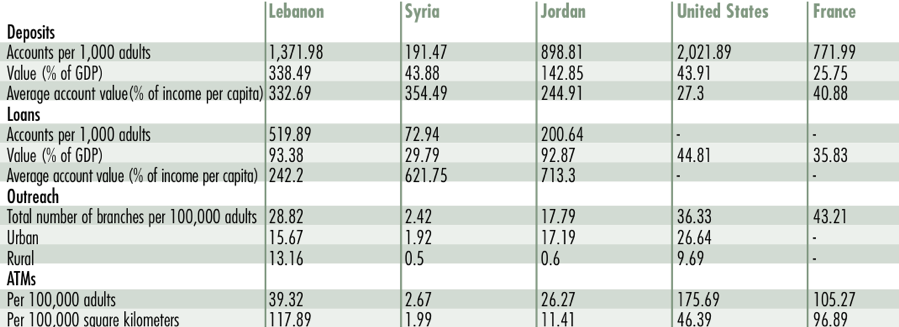
In a World Bank study of access to financial services entitled “Financial Access 2010,” Lebanon ranked highly in most parameters. In depositor accounts per 1,000 adults, Lebanon ranked 36 out of 142 countries studied, with 1,371.98 accounts per 1,000 adults. Deposits to GDP reached a ratio of 338.49 percent. In terms of loans, Lebanon ranked even higher at 17th with 519.89 accounts per 1,000 adults. The report also noted that Lebanon succeeded in 2009 in granting access to finance to small and medium enterprises by implementing consumer protection efforts. Per capita income worldwide saw a decline in 60 percent of the 142 countries covered. Both the deposits to GDP ratio and the loans to GDP ratio also dropped by 12 percent and 15 percent, respectively. The report noted that the number of ATMs has increased across the board due to the replacement of many branch operations with machines as a reaction to the global financial crisis.

Financial access

Source: World Bank, Credit Libanais Research Unit

Dubai’s credit drag

Once a leader in credit growth, Dubai is now accused of being a drag on the credit recovery process of the GCC, according to Adnan Yousif, chairman of the Union of Arab Banks. The banker told The National that Dubai’s credit growth forecast for next year has fallen behind the GCC’s expected 10 percent, with Dubai’s lending growth expected to be 8 percent in 2011. “Dubai cannot grow continually at a fast pace,” Yousif said. “What they achieved in five years in Dubai many countries can only do in 50 years.” Dubai’s spot as number one in the credit race will most likely be taken by Saudi Arabia, where the government is currently planning to spend its way out of the financial crisis with large and expensive infrastructure projects in the works. Dubai’s previously high credit growth rates, such as 44 percent in 2008, are the mark of an immature market and a developing economy. “It will be more mature than the accelerated highs of the past,” said John Tofarides, a banking analyst at Moody’s Investors Service to the newspaper. “It will be naturally below 10 percent.”

Reserves still climbing

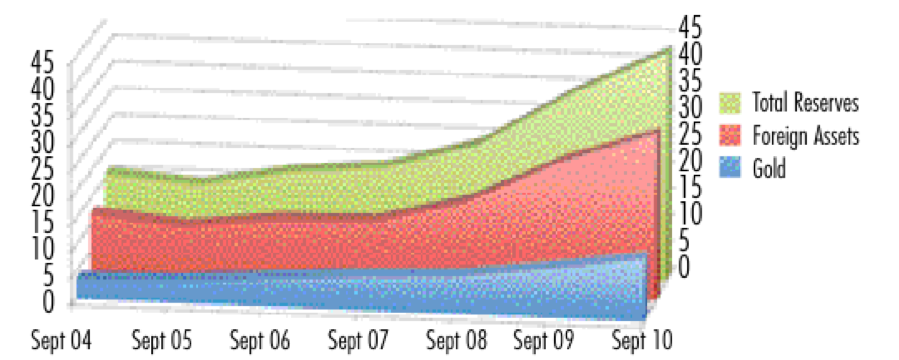
The reserves at Banque du Liban (BDL), Lebanon’s central bank, reached record highs in the first half of September, growing to $43.01 billion, up from $34.72 billion at mid-September last year. This sum is comprised mostly of $31.31 billion in foreign assets, up 22.77 percent from late 2009’s $25.5 billion. Credit Libanais attributes this growth to the increasing preference of Lebanese banking customers for the Lebanese lira, due to attractive interest rates on deposits and most loans, allowing BDL to absorb more US dollar liquidity. Dollarization of deposits in Lebanese banks stood at 62.17 percent at the end of July 2010, down from 65.77 percent one year earlier. The other factor making up the reserves is BDL’s stock of gold, as of mid-September estimated to be worth $11.7 billion, up by 26.93 percent.

October 23, 2010 0 comments
0 FacebookTwitterPinterestEmail
Feature

A day at the Races

by Executive Editors October 23, 2010
written by Executive Editors

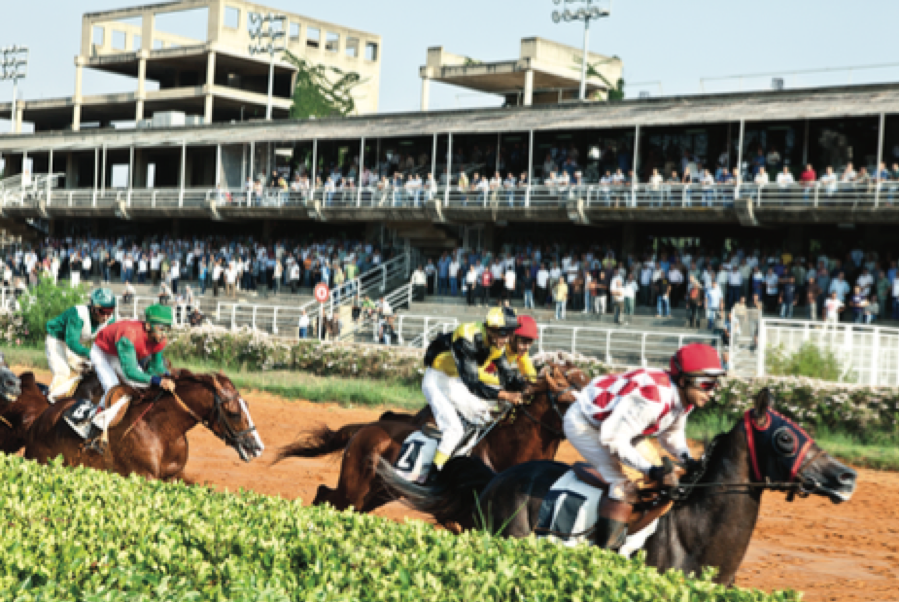
While a British day at the races is known for its champagne and women in outrageous headgear, a typical afternoon at the Beirut Hippodrome is a largely hatless, all-male affair. Each Saturday in summer and Sunday in winter these race aficionados gather at the walled track in between the National Museum and the residence of the French ambassador to Lebanon.

Every weekend six races take place, each with five to 10 competing horses bestowed with heroic names such as “Tiger of Lebanon,” “Son of the Sheikh,” “King of Horses” or “Symbol of Justice.” Before the race starts, they are paraded at the green behind the Hippodrome’s grandstand for the connoisseurs to check out the fitness of the competitors and pick their steed.

And they’re off…

While the horses are led to the track, the spectators head to the betting offices. Most will bet on the winner or the winner and runner-up in a single race, or in a combination of races whereby bets are placed on the number, not the name of the horse. The minimum bet is only LL 3,000, and while there is no official maximum bet, in reality the bets rarely exceed LL 100,000, as the Hippodrome’s limited betting volume produces a natural ceiling.

Just before the race starts, a near total silence descends on the stadium, which erupts in a cacophony of cries as soon as the horses fly out of the gates. One man placed a LL 10,000 bet on “6-2:” Horse No. 6 to win; 2 as runner-up. It was almost his lucky day. No. 6 dominated the race from start to finish. On the very last meter however, horse No. 2 was overtaken by horse No. 1. The man could not believe his eyes. He cursed with gusto before sinking into silence. Meanwhile, the lucky winners danced in front of the grandstand.

“I’ve been coming to the races since I was 18, for almost 60 years,” said another man inside the Hippodrome’s air-conditioned first class stand. “I love horses and I love horse racing. It’s like a drug, a weekly rush of adrenaline.”

Beirut horse racing has been organized by the Society for the Protection and Improvement of the Arabian Horse in Lebanon (SPARCA) — which also maintains the Hippodrome — since 1970. It is a non-profit organization recognized by international horse racing bodies. Furthermore, SPARCA is the keeper of the stud book for Lebanese horse racing, which among other things checks the horses’ paternity through DNA typing and marks them with micro chips.

In addition to organizing the local races, SPARCA signed an agreement with its counterpart France Galop to allow people at the Hippodrome to bet on horse racing in France. “We receive some 1,500 people per racing day,” said the Hippodrome’s General Manager Nabil Nasrallah. “The total volume of betting amounts to some $250,000 per week, with a peak of around $350,000 in the mid-1990s. Illegal bookmakers however, may make up to five times that amount. Many of Lebanon’s bigger players place their bets with them because they offer a discount of up to 35 percent in case of a loss, as well as credit facilities.”

The illegal bookies are able to offer such lucrative deals because they operate with minimal costs. They do not invest in the race track nor pay the prize money. In other words, they make money from horse racing, yet channel nothing back into the sector. Illegal bookies have long been a problem in Lebanon, yet were never a priority for Lebanese law enforcement. Why? Ask anyone at the Hippodrome and the answer will be the same: because the bookies are protected by the authorities.

According to article 62 of the 2001 budget law, the Beirut municipality, which owns the land, receives 5 percent of the Hippodrome’s betting income. Depending on the total volume of betting, the Ministry of Finance receives a progressive tax of 1 to 20 percent, which last year amounted to some 7 percent. SPARCA receives 15 percent, while the winning tickets divide the remaining amount.

“Racing horses is a luxury, like owning a football team. Currently, a horse owner, at best, may cover 25 percent of his costs”

For love, not money

SPARCA uses its 15 percent commission to maintain the Hippodrome, organize the races and pay the race winners prize money, which averages $2,000 per race. According to SPARCA’s statistics, Lebanon has close to 700 racehorses, some 350 of which are stabled at the Hippodrome, while there are some 600 horse breeders, mainly located in Akkar and the Bekaa Valley. It is estimated that, from breeder to jockey, around 3,000 families depend on horses and racing for their livelihood.

To a large extent, the sport is  kept alive by Lebanon’s stable owners, with Mounir Dabaghy, Michel Pharaon and Nabil de Freige the three kingpins of the trade. Having started in 1965 with just handful of horses, SPARCA Secretary Dabaghy currently has the country’s biggest stable with some 80 racehorses.

“I don’t breed horses, I buy them in Lebanon or Syria,” he said. “The average price for a one-and-half-year-old is some $5,000. It takes 1.5 years of preliminary training before the horse will run its first race. Including the cost of food, the salaries of trainers, jockeys and stable boys, training a horse costs an average of around $600 a month.”

His most famous horses are Mosleh, which won the Presidential Cup twice, followed by Ibn al-Zawat and Maazour, which each won it once. The Presidential Cup is Lebanon’s leading race with a prize of LL 10 million (nearly $7,000). The prize money is divided 70 percent to the winner, 20 percent to the runner-up and 10 percent to the second runner-up. The winning trainer and jockey each get a 10 percent commission, while the remainder flows in the pocket of the stable owner.

Does that make horse racing a profitable business? “Not at all,” Dabaghy said. “Breeding horses is an industry. Racing horses is a luxury, like owning a football team. Currently, a horse owner, at best, may cover 25 percent of his costs. One or two horses may actually make money, but the profit of a stable as a whole is zero, nil, zip.”

Nasrallah estimated that in order to give the industry a boost, the prize money should be upped to at least $5,000 per race. Bigger prizes would encourage more people to breed, raise and train horses, which would lead to more races and a bigger betting volume, which would enable SPARCA to pay bigger prizes, and so on. It would also allow the organization to renovate the Hippodrome.

The Hippodrome and the pine forest next door offer one of the few oases of greenery amid the dense urban jungle that is Beirut

A storied past

Interestingly, if everything had gone according to Ottoman plans, the Hippodrome would today be the beating heart of an extensive gambling and entertainment complex. Former Beirut mayor Kenaan Taher Bey granted a 50-year-concession to Alfred Sursock to develop such a complex in 1915.

Yet while the Hippodrome hosted its first races in 1918, the planned restaurants, cafés and cinema were never built, and World War One ended plans for a casino. The victorious French decided that the mansion south of the racetrack should become the residence of France’s representative to Lebanon rather than a gambling haven.

Much like Casino du Liban, the Hippodrome had its golden years in the 1950s and 1960s when the region’s blue-blooded and well-heeled would descend on Beirut for a day at the races. Famous regulars included the former Shah of Iran and King Hussein of Jordan. The Civil War brought an end to all that, even though the racetrack remained open during most of the conflict years and regularly served as a neutral meeting ground for representatives from all sides.

One of the darkest chapters in the Hippodrome’s history occurred in 1982, when the invading Israeli army blew up the arched Belle Epoch grandstand and burnt down the once extensive pine forest. Some 23 horses at the Hippodrome were killed during one particularly nasty spell of fighting, while more than 300 horses in the stables were trapped without food or water.

The incident produced perhaps the most effective display of diplomacy in 15 years of civil war. The current SPARCA president and a member of Parliament, Nabil de Freige, called then-Lebanese President Elias Sarkis, himself an ardent horse lover, who informed US mediator Philip Habib, who in turn contacted Israeli Prime Minister Menachem Begin: the next morning a five-hour ceasefire was in place which enabled SPARCA to relocate the horses.

A tough nut to crack

The Hippodrome had barely survived the war before it was confronted with a threat of a very different nature. In November 1989, Lebanon’s government announced a plan to demolish the racetrack to make way for a new presidential palace and an extensive complex of government buildings. Yet a series of public protests, including a much publicized sit-in by everyone from breeder to stable boy forced the government in January 1990 to shelve its ambitions. Racing resumed shortly after.

Today, there are no plans to concrete over the Hippodrome, but that does not mean its future is safe and sound. The track is in a prime location that property developers are no doubt eager to get their hands on.

It would be an eternal shame if that were to happen. The track and racing make up an essential part of the effort to safeguard the future of the Arabian horse, while the Hippodrome and the pine forest next door also offer one of the few oases of space and greenery amid the dense urban jungle that is Beirut.

A night at the Casino

A government cash-cow heads back toward its former glory

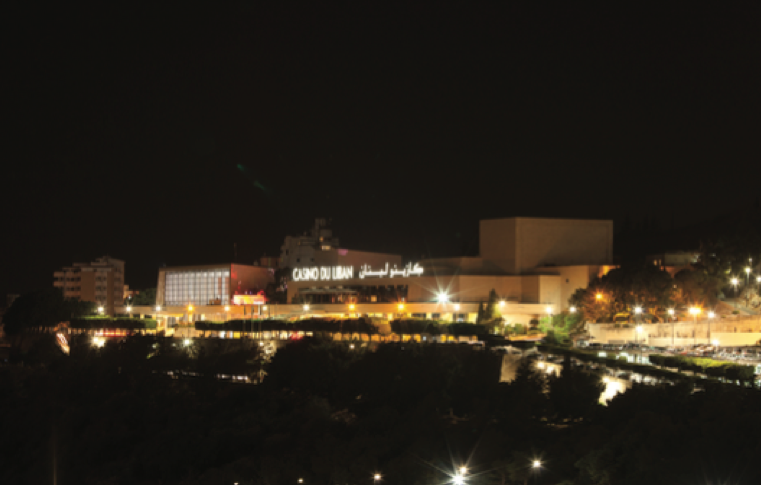
It is Saturday night and Casino du Liban (CDL) is packed. With a bucket of coins in one hand and, more often than not, a cigarette in the other, row after row of people try their luck on the machines in ‘Slots Palace.’ A regular cascade of coins brings relief to one and hope to all that the ‘big one’ is yet to come.

The International Room, opposite the Slots Palace, is home to both slot machines and table games, the most popular being roulette, blackjack and stud poker. It’s hard to find an empty seat to join the fray. At the blackjack table, a man in a white suit runs out of chips. He changes $500 worth with a fellow player and immediately puts all in on two hands of cards.

Winning one, loosing one, he bets all again, but is less lucky this time as the bank sweeps the table with 21. With his pockets $500 lighter in less than a minute, he decides to call it a day. A night at the casino can be fast and furious, and is never an affair for the faint-hearted.

Founded by presidential decree in 1957, CDL first opened its doors in 1959. It enjoys a monopoly on all Lebanese gambling, except horse racing, although it should be noted that Beirut in particular boasts numerous slot machine-filled “amusement centers.”

CDL is a privately owned concession company, albeit one with a significant public face. The biggest shareholder is the Intra Investment Company (IIC) — formerly known as Intra Bank — which holds a 51.87 percent stake. However, 35.16 percent and 10 percent of the IIC is owned by Banque du Liban, Lebanon’s central bank, and the Ministry of Finance, respectively.

The family-owned Abela Tourism Development Company owns a 14 percent stake in CDL, while the remainder of the shares are held by a number of other private investors. The Lebanese state is entitled to 40 percent of gross annual revenues, with the casino taking in some $250 million in recent years.

High stakes

Anyone reasonably well-dressed and older than 21 can enter the casino, with the exception of “government employees, military personnel and cashiers at banks or other commercial establishments.” A registration procedure, at least for the gaming tables, aims to make sure the guideline is implemented.

Home to nearly 500 slots machines and 60 gaming tables, the casino offers thrills — and disappointments — for all budgets. While one can play the slot machines for as little as LL 500, the minimum bet at the gaming tables is LL 10,000. This increases to LL 100,000 at the Cercle d’Or tables on the first floor. In addition, CDL is home to two private rooms for the so-called ‘high rollers’, where the minimum bet is often LL 250,000 or more.

“It is hard to define a high roller,” said CDL Marketing Manager Lara Hafez. “One player may lose $200,000 on the night but never come again, while another player looses only $10,000 but visits twice a week. We rather speak of a ‘good client:’ someone who visits regularly and at times may lose up to $30,000.”

Most of the casino’s gamblers operate on smaller budgets. While the average guest visits the casino for the entertainment of gambling, for a core group gambling becomes an obsession, one that can lead to financial and personal ruin.

“I used to go to the casino once a week to play horses on the slot machines,” said 35 year-old Jad. “For a while I regularly won up to $500 and I really thought I had figured it out. Then my luck turned and I started losing. But at first I couldn’t accept it. I thought if I keep playing, my luck will turn again, but it didn’t. I actually sold my car to continue playing, but after that I had nothing left, so I stopped.”

According to the American Psychiatric Association, pathological gambling is an impulse control disorder, a chronic and progressive mental illness. A gambling addiction shares many characteristics with a drug or alcohol addiction, such as preoccupation (to have gambling on one’s mind), tolerance (ever larger and more daring bets are needed to develop a rush) and lying (to hide the true extent of one’s habit). Addicts often value gambling above all else, including their relationships.

“My mother divorced my father because of his gambling habit,” said Eliane, a 43-year restaurant owner. “The thing that struck me most about his behavior was that, no matter how often or how much he lost, he always thought he was in control. He was convinced that, sooner or later, he would win because he ‘knew’ the game.”

Glory Days

A night at Casino du Liban is not per definition all about gambling. One can wine and dine with a view over Jounieh Bay or attend a show at the Salle des Ambassadeurs. CDL, like most casinos, defines itself an entertainment complex rather than a gambling firm.

A decade ago, some 70 percent of annual turnover stemmed from the gaming tables and 30 percent from the slot machines. Today they evenly make up some 95 percent of revenue. The remaining 5 percent stems from non-gaming activities, such as food, beverages and show tickets.

 Annually, CDL attracts an average of 300,000 visitors, some 70 percent of whom are Lebanese, while some 21 percent are from the wider Middle East and North Africa region. The remainder mainly come from the United States and Europe.

“In 2009, the ratio slightly changed,” said CDL’s Hafez. “The number of Lebanese customers decreased to 65 percent, while the number of MENA visitors increased to 27 percent, which is a reflection of the growing number of tourists coming to Lebanon.”

Over the years, the casino’s fortunes have reflected those of Lebanon. The casino experienced its golden years in the 1960s and early 1970s, when it rapidly rose to fame on the international gambling circuit and became a “must-see” attraction.

Photos hanging on the walls recall the glory days when Omar Sharif was a regular visitor, as were King Hussein of Jordan, Shah Mohammad Reza Pahlavi of Iran, Prince Albert of Monaco and Greek shipping billionaire Aristotle Onassis. These were also the days when CDL staged its own theatrical and musical productions, which could run for months on end.

The international clientele quickly vanished when the civil war broke out in 1975. The casino was damaged, yet by and large remained operational until 1989 when it was forced to close completely. It reopened in December 1996, thanks to a $50 million state injection.

Expansion

Today, CDL is once again the region’s leading “playground.” Not taking into account illegal casinos, its few competitors are located in Egypt, northern Cyprus and Greece. Syrians make up half of the casino’s foreign clientele, followed by Jordanians and Gulf nationals. While in recent years there has been a notable increase in Iraqi players, the number of Syrian gamblers is likely to decrease, as Damascus aims to open a casino of its own.

“CDL is looking at ways to attract more people from the region, from Turkey, Cyprus and Greece, yet as we nearly operate on full capacity, we need to expand first,” said Hafez. The same is true for attracting the region’s high rollers. While people from the Gulf states, for example, do visit the casino, most big players prefer to fly to more prestigious and high spending casinos in Monaco, London or Las Vegas, where they are welcomed with extensive junket programs.

“A junket program aims to reward players by reimbursing their expenses in terms of travel, accommodation, food and beverages,” said Hafez. “Of course, in return the player is required to commit to play at a certain level in terms of length, level and type of play.”

Like every casino, CDL has an extensive database in which clients are characterized in terms of visit frequency, the level of cash swap and the level of win and lose, but so far it has not offered junket programs.

Casino Du Liban’s new management team has been quiet regarding future plans. More gaming facilities and perhaps a hotel would seem to be the minimum conditions for future expansion. If it plays its cards right, CDL could put itself back on the international gambling map.

October 23, 2010 0 comments
0 FacebookTwitterPinterestEmail
Feature

Syndicate in the spotlight

by Executive Editors October 23, 2010
written by Executive Editors

An Executive journalist recently presented himself at the Parliament to request an interview, and was confronted by a guard who demanded to see his official press syndicate credentials.

The journalist laughed. “Have you ever seen the press syndicate?” he asked, referring to the elusive quasi-governmental body responsible for granting local journalists press cards.

 The soldier rolled his eyes and waved the journalist through. Though he may not have found the joke funny, he understood its punch line.

Very few Lebanese journalists carry official press cards, despite the fact that, according to the country’s 1962 Press Law, all journalists and editors must be organized within the Lebanese Press Syndicate. The syndicate is organized into the Press Association and Editors Association, both of which submit members to the 12-seat Press Council where most of the syndicate’s power is concentrated.

Theoretically, the syndicate grants press credentials, licenses periodicals, offers its members special services to facilitate their work and regulates the conduct of the press through its disciplinary committee, among other functions. However, journalists and editors from across Lebanon’s print media spectrum paint a far different picture of the reality of the situation.

As of 2008, only 1,086 journalists out of some 3,000 working in Lebanon belonged to the syndicate, according to the research company Information International.

“At present, if they were to apply the law, all the journalists who are not members would be prosecuted,” says Tony Mikhael, legal advisor to the Maharat Foundation, a media advocacy group. In a recent interview with Executive, Information Minister Tarek Mitri said: “I realize there is a problem [at the Association of Editors]… There are people who are members who should not be and people who are entitled to be members who are not.”

These problems are widely acknowledged, but there is less agreement as to why they exist.

“There is a decision in the syndicate to not let many people register. This is intentional,” said Mikhael, adding that the board aims to keep the numbers low and manageable so that, “they can control them and make sure that they vote for them. If all the journalists in Lebanon could enter [the Syndicate] their standing would be unsettled.”

Hassan Khalil, the publisher of Al Akhbar newspaper, says his publication is not active in the Syndicate because they view it as politicized and unrepresentative.

“We don’t see the Press Syndicate as an effective body,” he says. “The Syndicate, like any other body in Lebanon, reflects a mirror image of the political scene.”

Rumors abound of journalists being refused entry to the Syndicate on political and sectarian grounds, or being made to wait up to 10 years to finally get their credentials. However, Habib Chlouk, responsible editor at An Nahar and a member of the Press Council, argues that even if these stories are true, the Syndicate cannot be held solely responsible.

“The membership process is run by the membership committee which is made up of three branches: a representative of the Information Ministry, two representatives of the Press Association and two of the Editors Association — no one group can approve memberships without the consent of the other two,” he says. “Therefore, any problem that arises from approving memberships of certain individuals puts all three bodies at fault, and not just one.”

Even those who have managed to join over the years remain highly skeptical of the usefulness of their membership. “It took more than seven years, from the time I applied for membership [at the syndicate], to be issued a press card,” says Hayda Houssemi, chief of the business news desk at Al Mustaqbal newspaper. “It’s been a year now since I was told the card was ready, and I still haven’t gone to pick it up. I just think, what’s the point?”

Houssemi and other journalists say that although the syndicate offered concrete advantages in the past, today the benefits of membership are vague at best. According to Antoine Howayek, president of the Lebanese Press Club (an independent body), promises of discounted airfares, phone services and other allowances for the syndicate’s journalists have consistently failed to materialize. The syndicate has, until very recently, kept its business behind closed doors, disclosing almost nothing of its finances, internal decisions or governing laws. However, with the death of the president of the Association of Editors and founding member of the syndicate, Melhem Karam, on May 22, 2010, those doors have begun to rattle with the rising clamor of journalists, members and non-members alike, who see this moment as their best chance in decades to instigate reform.

Yet even with his passing, Karam’s influence can be felt; the syndicate he established, still under the direction of his inner circle, may well prove as obstinate to change today as it has for the last half-century.

“We don’t see the Press Syndicate as an effective body…[it] reflects a mirror image of the political scene”

A one-man show

The story of the Press Syndicate is inextricable from that of its founder. The driving force behind the syndicate’s establishment, Karam directed his organization as its president from the moment of its creation in 1962 to the moment of his death. Supporters have called his role in the syndicate paternal; critics term it dictatorial. Neither contests his nearly unilateral ability to influence the internal structure and operations of the organization.

“He was what you might call a one-man show,” said Baria Ahmar, a long-time Lebanese reporter currently freelancing for CNN. “I think in the end that’s what killed him: he simply would not delegate.”

According to sources close to the syndicate, Karam established the first Press Council, the syndicate’s ruling body, from a select group of loyalists, housing the group in a building he owned and instating himself as president. Over the next four decades or more, those same

administrators retained their seats with almost no alteration.  “Has there been any change to that original list? I think no,” said the Press Club’s Howayek. “Perhaps we have seen some members replaced for health reasons, others have passed away. But otherwise, I believe there has been very little change to the Council’s membership.”

According to its internal law — a document last amended in the early 1980s that looks like it was hammered out on a teletype machine — the syndicate must re-elect the council and president every three years. True to that law, every three years Karam and his already seated council members  would submit themselves for reelection. And each time, they would pass uncontested. Why, in more than 40 years, no individual or alternate list was ever submitted as a candidate is a matter for speculation.

Journalists interviewed by Executive assert that Karam’s influence was too strong, his presence too intimidating, for anyone to attempt to unseat him. Others claim that the syndicate prevented any possible contest by closing its doors during the brief period in which opposing candidates could declare their candidacy.

“In the past, the syndicate relied completely on its president’s [charisma], but we want to change that. We want to turn the syndicate into a real institution as opposed to being solely about the syndicate’s head,” said An Nahar’s Chlouk, who is in the running to replace Karam as the head of the Association of Editors. He also has plans to update the syndicate’s antiquated by-laws to include journalists working in online, TV and radio.

“In the past, the syndicate relied completely on its president’s [charisma] but we want to change that”]

By the press, for the press

The journalists and editors who make up the non-Council members of the syndicate have a single function within the body: it is their job to elect, at the end of each three year term, a new council and president of their choosing. They have yet to fully exercise the only power granted to them. But with Karam’s passing, many see this moment in time as their best chance since the syndicate’s inception to establish a truly representational body within the council.

At the moment, however, the ball remains in the council’s court. The internal law states that should the president of the council die or be compelled to forfeit his or her seat for any reason, the council has the power to appoint a new member to the vacant seat for the duration of his or her term. Critics fear that in the interim period before the new elections the council will use its powers to amend the law in such a way as to guarantee that current members retain their places indefinitely.  

“I met with the members of the syndicate earlier this month, and I challenged them to have the courage to resign, all of them,” said CNN’s Ahmar. “If they want to launch, as they claim, free and fair election reform in this body, which is very important, I challenge them to resign and call a general election. I want [each Council member] to be someone I elected, someone I can ask to do things, someone I can communicate with.”

Ahmar said that, for now, the Press Council is guaranteed an interim period of nine months before elections can be held. However, there may be other legal means of unseating the council before that term ends. The starkest of these is found in article 19 of the internal law which states: “No person who owns or manages a periodical shall hold a seat on the council, unless they choose to give up ownership or renounce their function prior to assuming the seat.”

A source following the debate, who chose to remain anonymous, said that, at this moment, as many as seven of the current 11 Council members are in violation of this clause, as they are either owners or managers of news outlets in Lebanon. Information Minister Tarek Mitri has voiced similar concerns about the appropriateness of owners and managers currently sitting on the Council.

Chlouk, however, who is both a member of the council and responsible editor at An Nahar, suggests that these concerns are misplaced. “It’s been like this for 40 years… When the General Assembly votes in that person’s favor by 99 percent, then that means that they approve of that person, despite what the by-laws say,” he says. “We may amend the by-laws when a new executive board is formed in a year and a half; maybe the amended by-laws would allow owners of publications and editors to run for positions on the executive board.”

Chlouk added that as they don’t get a salary from the syndicate, it’s essential for board members to have second jobs. Money, suggests Al Akhbar’s Khalil, is at the root of many of the problems of both the Syndicate and the wider media scene in Lebanon.

“The tragedy of the profession of the press is that journalists are meant to be the fourth estate, a pillar of society, but the salaries that they are paid make them exactly like the judges: vulnerable to be being manipulated by political forces,” he laments. “Money plays a pivotal role in the political persuasions of journalists.”

October 23, 2010 0 comments
0 FacebookTwitterPinterestEmail
  • 1
  • …
  • 403
  • 404
  • 405
  • 406
  • 407
  • …
  • 685

Latest Cover

About us

Since its first edition emerged on the newsstands in 1999, Executive Magazine has been dedicated to providing its readers with the most up-to-date local and regional business news. Executive is a monthly business magazine that offers readers in-depth analyses on the Lebanese world of commerce, covering all the major sectors – from banking, finance, and insurance to technology, tourism, hospitality, media, and retail.

  • Donate
  • Our Purpose
  • Contact Us

Sign up for our newsletter

[contact-form-7 id=”27812″ title=”FooterSubscription”]

  • Facebook
  • Twitter
  • Instagram
  • Linkedin
  • Youtube
Executive Magazine
  • ISSUES
    • Current Issue
    • Past issues
  • BUSINESS
  • ECONOMICS & POLICY
  • OPINION
  • SPECIAL REPORTS
  • EXECUTIVE TALKS
  • MOVEMENTS
    • Change the image
    • Cannes lions
    • Transparency & accountability
    • ECONOMIC ROADMAP
    • Say No to Corruption
    • The Lebanon media development initiative
    • LPSN Policy Asks
    • Advocating the preservation of deposits
  • JOIN US
    • Join our movement
    • Attend our events
    • Receive updates
    • Connect with us
  • DONATE