• Donate
  • Our Purpose
  • Contact Us
Executive Magazine
  • ISSUES
    • Current Issue
    • Past issues
  • BUSINESS
  • ECONOMICS & POLICY
  • OPINION
  • SPECIAL REPORTS
  • EXECUTIVE TALKS
  • MOVEMENTS
    • Change the image
    • Cannes lions
    • Transparency & accountability
    • ECONOMIC ROADMAP
    • Say No to Corruption
    • The Lebanon media development initiative
    • LPSN Policy Asks
    • Advocating the preservation of deposits
  • JOIN US
    • Join our movement
    • Attend our events
    • Receive updates
    • Connect with us
  • DONATE
Comment

Subsidy showdown

by Gareth Smith April 1, 2010
written by Gareth Smith

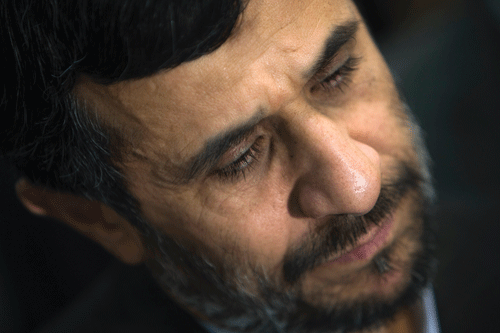
Iranian strategists have long wondered about an Islamic version of the Chinese model, which has achieved a 7 to 8 percent annual growth rate over 20 years, through easing state economic control under the Communist party’s political monopoly.

The crackdown on the reformist opposition since last year’s disputed presidential election — in which Mahmoud Ahmadinejad won a 63 percent landslide — will increase the attraction of China’s example. Iran may now be better placed for serious economic reform, with the aim of reaching the 8 percent growth envisaged by Tehran’s 2010-15 economic plan, rather than the paltry 2.2 percent forecast for 2010 by the World Bank.

Oil revenue in Iran has long pitted short-term consumption against the investment needed to finance growth. Hence, the problem with elections is that Iranians believe their country is much richer than it is and will vote for those who offer them their cut.

A friend in Tehran, now in prison, used to ask people how much they thought was their “share” of the oil wealth. The usual reply was in thousands of dollars, and he delighted in pricking the bubble by saying it was about $500 per year per adult.

Economist Djavad Salehi-Isfahani put the point differently last year, when he calculated the hypothetical per-person income of Iran’s oil and gas reserves of around 300 billion barrels, and oil-equivalent barrels, could be invested in a long-term trust fund offering 3 percent. This was at the top of the market, and yet the annual yield was $430 per person, declining over time as the population rose.

Such figures bear scant relation to the growing popular belief in Iran that oil wealth should improve people’s short-term lot. Ahmadinejad stormed to power in the 2005 presidential election promising not just a return to the egalitarianism of the 1979 Islamic Revolution, but to “put the oil money on the people’s sofreh” — the carpet or cloth on which poorer Iranians sit to eat lunch.

Yet in one of the most remarkable turnarounds in recent Iranian politics, Ahmadinejad subsequently came up with the first serious government plan to tackle the most damaging consequence of Iranians’ belief in their own wealth — the state’s annual commitment of between $50 billion and $100 billion to subsidize gasoline, electricity, bread and medicines.

Ahmadinejad’s scheme to phase out subsidies over five years and replace them with benefits targeted at the poor has put him at loggerheads with parliamentary deputies, conservative and reformist, who are loath to allow the president any discretionary spending. As much as half of the savings would be allocated to the “needy,” a difficult term to define even in economies far more developed and transparent than Iran. But after wrangling between the president and parliament, the Guardian Council, Iran’s constitutional watchdog, ruled in January there should be a new government body to receive and spend the saved money — putting it at least a step away from the president’s direct control.

In truth, many of Ahmadinejad’s opponents, inside and outside the country, are less interested in the reform plan’s potential success than in its potential to make the president unpopular. Removing subsidies could well stoke inflation and make millions of Iranians worse off in the short term. Without a broad political consensus, it is hard to see how such shock therapy could be initiated without the government falling prey to the kind of opportunistic political opposition that has stymied attempts to reform subsidies since the 1990s.

Conservatives around Ahmadinejad, supported by the supreme leader Ayatollah Ali Khamenei, now seek change. And why not? Shortly after Ahmadinejad’s 2005 election win, the reformist commentator Saeed Leylaz cited the dictum that China should adopt effective policies, whether “capitalist” or not. “The cat is finally catching mice,” Leylaz wrote, “and its color no longer matters.”

True, Ahmadinejad has shown little capacity to emulate the more subtle aspects of Chinese capitalism; privatizations have merely transferred assets to quasi-state-owned bodies. But if savings from universal subsidies can fund productive investment, then the longer-term benefits for the economy could include job creation and higher living standards. And those who had carry through the change might then benefit politically, and perhaps even be ready for more competitive elections.

GARETH SMYTH is the former Tehran correspondent for The Financial Times

April 1, 2010 0 comments
0 FacebookTwitterPinterestEmail
Comment

Genocide vs. geopolitics

by Peter Speetjens April 1, 2010
written by Peter Speetjens

Partly due to Europe’s reluctance to welcome Turkey as a full EU-member, Ankara has redirected its foreign policy toward the east, which in 2009 culminated in a flurry of protocols and trade agreements with countries such as Syria, Iraq and Iran.

Last month’s decisions, in the United States and Sweden, to recognize the Ottoman-era killings of Armenians as genocide will do little to seduce the Turks back into the Western realm.  On March 4, the US House Committee on Foreign Affairs (HCFA) passed a non-binding resolution to define the early 20th century massacres as genocide, which means the issue can now be brought to vote in the US House of Representatives. Shortly after, the Swedish parliament on March 11 voted in favor of declaring the mass killings genocide. So far, 23 countries worldwide have done so. 

According to HCFA Chairman Howard Berman, a vast majority of experts, academics and authorities in international law agree that the Armenian massacres constitute genocide.  Berman backed up his statement by pointing to the International Association of Genocide Scholars and Professor Yehuda Bauer of the Hebrew University in Jerusalem; the former concluded that “the historical record on the Armenian Genocide is unambiguous and documented by overwhelming evidence;” while the latter has said that “the Armenian Genocide is the closest parallel to the Holocaust.” Turkey admits the killings took place, yet denies they meet the legal requirements of “systematic planning” and “intent” to be able to define them as genocide. In protest against the two decisions, Ankara recalled its ambassadors to the US and Sweden.

Turkish Prime Minister Recep Erdogan furthermore warned that the HCFA decision could damage US-Turkey relations. “Let me say quite clearly that this resolution will not harm us,” Erdogan said on March 6. “But it will damage bilateral relations between countries, their interests and their visions for the future. We will not be the losers.”

The US military fears adopting the resolution may have dire consequences for its attempts to “pacify” Iraq. Turkey, a key Nato-member, currently allows the American army to use Turkish airports and air space to reach Iraq, while it is a public secret that without the consent of Ankara there would be no Iraqi Kurdistan.

US President Barack Obama and Secretary of State Hillary Clinton have declared their unhappiness about the decision, as it foiled their attempts to reconcile Turkey and Armenia, the latter being an increasingly important player in Washington’s foreign policy in the Caucasus following the disastrous 2008 Russia-Georgia War.

“There are currently 170,000 Armenians living in our country,” Erdogan told the BBC Turkish service. “Only 70,000 of them are Turkish citizens, but we are tolerating the remaining 100,000. If necessary, I may have to tell these 100,000 to go back to their country because they are not my citizens. I don’t have to keep them in my country." Interestingly, the HCFA adopted the resolution, despite intense lobbying by Turkey and at least six major corporations. According to Associated Press journalist Stephen Singer, BAE Systems, Goodrich, Northrop Grumman, Raytheon, United Technologies and Chevron spent $14 million in 2009 lobbying against recognition.

Chevron holds a major stake in an oil pipeline that crosses Turkey, while Raytheon has agreed to sell Stinger missile launcher systems to the Turkish army. Another major factor for the HCFA to adopt the resolution may have been the breakdown in relations between Turkey and Israel, following the latter’s Gaza invasion at the end of 2008 in which some 1,400 Palestinians died, mostly civilians, and 13 Israelis, 10 of which were soldiers. In the past, major Jewish and pro-Israel organizations in the US routinely lobbied against recognition of the Armenian genocide, fearing it might harm relations between Israel and its only major alley in the Middle East.

But Turkey has been one of the most vocal critics of Israel’s violent conduct in Gaza and this year the variety of groups that make up the Israeli lobby in Washington remained silent.

Still, all is not lost for Turkey, and Armenians around the world should not put their hopes too high. This is not the first time the HFCA have called upon US representatives to recognize the Armenian massacres as genocide, yet so far modern-day geopolitics have always prevailed over historical truth and justice.

PETER SPEETJENS is a Beirut-based journalist

April 1, 2010 0 comments
0 FacebookTwitterPinterestEmail
Society

Shelf space wars

by Joe Ayoub April 1, 2010
written by Joe Ayoub

There’s a shift going on in the retail world. Where once manufacturers competed against one another for consumer loyalty, today they face sharp competition  from retailers, the very places that stock their brands.

To give an example, there was a time when rivals such as Pepsi and Coca Cola viewed each other as their main competition, but today on the supermarket shelf the big two often stand beside a brand of soda bearing the retailer’s own label.

In the region we can see the phenomenon in supermarkets such as Monoprix or Spinneys, where consumers can find the retailer’s private label next to similar global brands.

In Europe generic label brands have won high profile recognition, but in the Middle East, retailers often adopt a more low-key approach to their store brands. This can make it hard for consumers to recognize the product’s origin and attributes, compounded further by weak marketing and communications.

At its origins, the private or own-label trend stemmed from the retailer’s desire to offer consumers a cheaper alternative to well-known brands. It wasn’t long, however, before the major brands took notice of the new competition and fought back by lowering their prices. As the gap narrowed, consumers soon reverted back to choosing their original, favorite brands.

For retailers this forced a rethink of the private label strategy. Instead they began to look for areas of dissatisfaction, spotting gaps that major brands were not filling.

Retailers are perfectly placed to understand their consumers’ needs, based on the fact that they interact with them daily and can actively monitor their purchasing habits. As retailers sought to close market gaps, they moved away from offering cheaper alternatives to delivering quality products at a similar price to major brands — and sometimes even higher. 

This represented a more customer-centric strategy on the part of the retailers, while at the same time providing them with a hook to lure customers through their doors; while manufacturers’ brands are available everywhere, private label brands are tied exclusively to one retailer, thus giving customers a reason to shop in a certain place over another. 

Although ‘own brands’ in many cases are helping retailers capture a greater market share than the high profile manufacturers, the initiative still requires several factors to achieve success. First, the retailer needs to have good knowledge of brand portfolio management to enable them to manage their brand alongside the other international brands stocked in store.

Secondly, strategic branding takes a retailer out of his purely retail role into the world of manufacturing, which necessitates an understanding of the manufacturing process, of how to deal directly with manufacturers and an awareness of issues such as supply management and quality control.

From a consumer point of view, the retailer has to create a product that offers added value. Simply sourcing a cheaper product with low quality will have a limited run of success; consumers will soon realize the product is not up to standards and return to their preferred brands. In essence, the retailer needs to think about how to develop a long-lasting consumer relationship through building value into the product at all levels, so that it can stand alone and compete in its relevant category.

The possible pitfalls are many, but can be avoided with the right advice and support that a strategic branding consultancy can provide. It is here that a retailer can receive advice on whether there is a gap in the market which needs filling, which category to enter, how to position the brand and how to construct it. The consultant can advise on a product’s name, logo, packaging and how to connect the private label with its potential target market.

While a private label initiative can reap rewards for retailers, it should be clear that this is not a quick fix solution if a store is doing less than well. However, a retailer that enjoys a good consumer relationship can find that with the right strategic branding advice, launching a private label can increase its brand equity, drive profits and create a new era of a stronger and more direct customer relationship.

April 1, 2010 0 comments
0 FacebookTwitterPinterestEmail
Society

Conquering the mutated face of censorship

by Mark Helou, Zeina Loutfi & Ramsay G. Najjar April 1, 2010
written by Mark Helou, Zeina Loutfi & Ramsay G. Najjar

Recently, the satellite providers Nilesat and Arabsat decided on a unilateral basis to block the Al Alam Arabic-speaking Iranian pro-government channel.

Without delving into the underlying causes which triggered it, one cannot but notice the zeal and passion with which a large number of journalists, intellectuals and politicians, often known for their opposition to the Iranian regime, have condemned this action, which they perceived as blind censorship. In fact, this comes as a true illustration of Voltaire’s “I disagree with what you say, but I shall defend to the death your right to say it.” Since the channel had not infringed any of the laws that regulate the media sector, the mechanisms that had led to this coercive situation were nothing but a reflection of the modern face of censorship: economic censorship.

Censorship is indeed a phenomenon as old as civilization itself, which has continuously evolved through a myriad of different forms throughout history, adapting to the changing political and social contexts, yet maintaining the invariable goal of controlling and limiting freedom of expression.

Plato, the very first documented thinker to have advocated censorship, has been criticized for his book ‘Republic,’ in which he called for the censoring of intellectual or artistic works that were deemed “dangerous for the spirit.” Around the same time, Socrates was condemned to kill himself by drinking poison as a punishment for his independence of thought, perceived as a menace by Athenian society.

In the following era, religions soon became the censors of reference on all levels by defining what God liked or disliked. This was followed by a more modern censorship, where raison d’état or ‘national security’ proved to be weapons of choice for promoting many forms of censorship, thus simply replacing God with the State. Another form of censorship, intimidation, strived to maintain citizens in a perpetual state of fear by making them feel constantly watched, thereby forcing them to practice self-censorship, as admirably illustrated by George Orwell’s novel “1984,” where the vigilant eye of Big Brother sees to it that citizens are well-behaving.

The free (re)press

But censorship did not only flourish during antiquity and the middle ages, it also managed to find its way into the Age of Enlightenment. Descartes’ “I think therefore I am,” which signified the emancipation of the individual by free-thinking, thus became an “I think for you,” hammered by all absolutist regimes, and even a “You are what I think,” in the most extreme cases.

As censorship adapts to the changing times, we are now confronted with its newest form — economic censorship, which is all the more dangerous and corrosive, as it can be exercised behind the scenes without any kind of institutional or legal framework to regulate it, with existing frameworks actually becoming tools to serve its purpose. As its name indicates, economic censorship takes advantage of a dominant position to exert financial and economic pressure on content producers, journalists or media outlets to influence the content they disseminate. The measure that was implemented by Nilesat and Arabsat perfectly illustrates this form of censorship, as it resulted from financial pressures being exerted by the funders to reach political objectives.

Economic censorship feeds on media outlets’ increased dependency on external sources of funding: with newspapers and magazines becoming overly dependent on advertising money for survival, they now constantly monitor their content to remain on good terms with their advertisers, which is nothing but another form of economic censorship in disguise. As an example, in 2007, a not-so-flattering book about celebrity fashion designer Karl Lagerfeld and the luxury sector in France was completely ignored by the French press. Since the luxury sector is a heavyweight advertiser in France, this silence was easily attributed to the fear of retaliation, which would have brought many media outlets to their knees.

Another example illustrating the power of economic censorship is the old canard that says that the Jewish lobby controls global media, one we are all familiar with, especially in this part of the world. Without venturing into far-fetched conspiracy theories, it is clear that this perception stems from the long-standing economic censorship practiced by many lobbies and pressure groups, which aims at influencing the content of media channels by using financial levers such as advertisement dollars or boycotting cultural products.

Economic censorship is all the more dangerous as it is far more subtle than its traditional self, which often relied on primitive and crude tools such as the outright banning of a publication or content. By comparison, economic censorship has forged itself a large palette of mechanisms covered by existing rules and regulations, such as imposing high custom fees to prevent the importation of a book or complicating at will the process of acquiring a filmmaking permit.

In a world where financial considerations have taken priority over other values such as freedom of expression and the right to know, we can rightfully fear that the economic form of censorship might actually be its ultimate stage and the prelude for a ‘formatted thinking’ society. This fear could be further justified by the increased consolidation witnessed in the media and culture sectors, which are now in the grip of a limited number of players.

Usurped by the internet

So has censorship finally won and are we entering an age where our thoughts, ideas and feelings will be dictated by invisible censors?

Fortunately, the answer is a big “No,” as the emergence of the internet has shaken all the foundations on which censorship has been relying throughout its existence. John Gilmore, an internet guru and freedom of speech activist, enunciated what has become known as Gilmore’s Law, which is directly inspired from the way the internet operates as a physical network: “The net interprets censorship as damage and routes around it.”

Just at the point when economic censorship had begun to endanger diversity and freedom of thought, the emergence of this super-medium with its social and file exchange networks, blogs, forums, download sites and chat rooms can be seen as the beginning of the end of all forms of censorship.

Today, it is practically impossible to keep an event under cover, distort the truth, silence a journalist, or ban an artistic work.

Even if one played the devil’s advocate and rightfully agreed that there are indeed certain voices that can constitute a potential threat to social well-being, it is not by silencing these voices that we can protect society. It is rather by immunizing citizens against destructive ideas, a feat that can only be accomplished by the dissemination of knowledge and access to uncensored information. The most likely teenager to say no to drugs is not the one who is unaware of their existence, but the one who is perfectly informed of their detrimental effects. Similarly, the success of mankind in protecting itself against viruses was not due to the elimination of these viruses, but to building an immunity that was acquired, precisely, from contact with these viruses through vaccination. By depriving society from the vaccines that information and knowledge represent, censorship does therefore nothing but expose it to all kinds of diseases and illnesses.

One cannot but feel a mix of bitterness and amusement when witnessing the persistent and desperate efforts of some governments that are still swimming against the tide by trying to maintain the grip of censorship over their citizens. Such futile attempts are bound to fail, and we will hopefully have the chance to witness during our lifetimes the complete demise of censorship in a world where each citizen will be able to think freely, and be heard in all corners of the globe.

April 1, 2010 0 comments
0 FacebookTwitterPinterestEmail
Comment

Neighborly negotiations

by Executive Staff April 1, 2010
written by Executive Staff


The Palestinian gunman, his face screwed up with rage, ran towards us, raising his AK-47 and yelled, “Get your hands up! Get your hands up!”

It was June 2007 and in the north of Lebanon, the Lebanese army and Fatah Al-Islam were in the early stages of a bloody battle at the Nahr Al-Bared Palestinian refugee camp — a confrontation that would last 106 days and leave 168 soldiers, over 200 militants and dozens of civilians dead.

The fighting in the north clearly had unnerved the Palestinian gunman. He was a guard at the entrance of a small military base at Ain Al-Bayda, near Kfar Zabad village in the Bekaa Valley, manned by the Popular Front for the Liberation of Palestine-General Command (PFLP-GC), a Damascus-backed radical faction. The PFLP-GC runs five small bases in Lebanon: Ain Al-Bayda, Wadi Heshmesh just north of the Bekaa village of Qussaya, Jabal Al-Maaysara on a lofty mountain plateau east of Qussaya, Sultan Yaacoub in the western Bekaa, and another at Naameh, 15 kilometers south of Beirut.

The PFLP-GC and Fatah Intifada, another Syrian-supported Palestinian group that also operates small camps north of Rashaya in the western Bekaa, were on high alert during the fighting in Nahr Al-Bared.

My two colleagues and I were forced to sit on the ground, our hands on our heads, for five minutes until the arrival of the guard’s boss, incongruously dressed in a purple shell suit. Calm and polite, he told us: “We are guests in this country and we are here in these bases only to help liberate Palestine.”

That incident occurred more than a year after the National Dialogue, the round-table forum grouping Lebanon’s top leaders, had agreed to shut down the Palestinian bases and ban arms carried by Palestinian militants outside the 12 established refugee camps. Nearly four years after that decision was reached, it has yet to be implemented. The Palestinian bases still exist, surrounded by Lebanese troops who prevent civilians and journalists from accessing them.

The issue of the Palestinian bases may well become salient again in the coming months, given the easing of tensions between Lebanon and Syria since the formation of the new government in Beirut in November, and the visit to Damascus by Prime Minister Saad Hariri in December, 2009.

Although both countries have undertaken the historic step of exchanging formal diplomatic relations with the opening of embassies in Beirut and Damascus, the pace of rapprochement will depend greatly on how Syria reacts to Lebanese requests for assistance in some key — but solvable — areas. The first is the fate of the PFLP-GC and Fatah Intifada bases, the second is a decision to begin the long-neglected delineation and demarcation of the border between the two countries.

It is evident that following the Nahr Al-Bared experience, the army has no taste for forcibly dismantling the Palestinian bases, even though in military terms it would be a much simpler task to shut the isolated rural outposts than weeding out Fatah Al-Islam’s die-hards from the cramped interior of a Palestinian refugee camp.

Furthermore, the PFLP-GC, in particular, is an ally of Hezbollah — these days serving almost as the Lebanese party’s private militia force, which adds an awkward political component to closing the bases.

In January, Abu Musa, the leader of Fatah Intifada, declared that he rejected the disarming of Palestinians outside the refugee camps and that the fate of their weapons was a matter to be decided among Palestinians.

Abu Musa’s rare press conference appears to have been an effort to hinder attempts to close the bases before they had even begun. Importantly, however, Abu Musa would not have made such a bold declaration without the knowledge of his hosts in Damascus. Syria has said that because the bases lie on Lebanese soil, it has no jurisdiction to have them closed. In reality, if Syria instructed the PFLP-GC and Fatah Intifada to dismantle their outposts and return to the refugee camps in Damascus or Beirut, they would do so quickly and with a minimum of fuss.

Damascus bridles against international pressure and tends to dig in its heels when lectured by the West. Whether Syria will show goodwill over the Palestinian bases, remains to be seen. But if it does it would win international praise at almost no tactical cost to itself.

There are indications that the United States will soon develop a more nuanced approach toward Lebanon, beyond the repeated calls for the implementation of Resolution 1701. The new track will focus on the border between Lebanon and Israel, probably in terms of seeking to extend the current calm along the Blue Line. But there will be other indirectly related issues the Americans will likely pursue, such as encouraging Lebanon and Syria to begin mapping and formalizing their joint border and closing down the Palestinian military bases.

How Syria responds to such calls will provide early indicators as to how the Lebanon-Syria relationship will unfold in the months ahead.

Nicholas Blanford is the Beirut-based

correspondent for The Christian Science Monitor

and The Times of London

April 1, 2010 0 comments
0 FacebookTwitterPinterestEmail
Society

Green light for eco cars

by Nadim Mehanna April 1, 2010
written by Nadim Mehanna

If there’s breaking news in the automotive world, chances are, you heard it in Geneva, Switzerland. For more than a century the city has played host to one of the world’s preeminent automotive exhibitions — the Geneva Motor Show — which in that time has featured almost every model of internal combustion-powered automobile to enter into mass production, as well as countless prototypes, concept cars and theoretical technologies.

It is the stage on which automotive giants and small-scale developers alike unveil their latest innovations and upcoming models. If you want to see into the future of the automotive industry, Geneva may offer your best glimpse; if the industry is taking a new direction, then the exhibition is your signpost. 

Brain beats brawn

This year, the name of the game was diversification, with established makers diverging from longstanding traditions. The appearance of the Volkswagen Touareg, alongside the Porsche Cayenne, indicates the ambitions of the two members of the Volkswagen Group to make their mark on the sports utility vehicle market; Lexus made a splash with its first supercar, the LFA, currently the second most expensive on the market; and Audi unveiled its long-anticipated RS5.

But the most interesting trends on display at the show were not innovations in bigger, faster, more powerful autos. They were the smart cars, the micro models, and above all, an emphasis on hybrid electric vehicles — cars that favor energy saving and fuel efficiency oversize or muscle.

The history of the hybrid is full of ups and downs. The advantage of hybrid vehicles — those that utilize multiple power sources — has been evident since the outset of auto manufacturing. Many different prototypes have entered the spotlight over the years: fuel cells —  which ultimately proved limited in scope; and hydrogen — much loved by environmentalists for its pure-water exhaust but ultimately unworkable due to the high energy cost of manufacturing the fuel.

In the end, electricity appears to have prevailed. The electric car is not a novel concept; the first prototypes competed with the earliest combustion engine models, before Henry Ford’s Model-T changed motoring forever in 1908.

The hybrid represents the best of both worlds: combustion and electric. Defined generally, hybrid electric vehicles employ a smaller version of the conventional internal combustion engine, supplemented by an electric powertrain. The car’s lithium-ion electric battery can be recharged either by plugging the car directly into an outlet or by a mechanism which traps the vehicle’s kinetic energy and converts it into electricity.

Shifting into efficiency

The car’s engine is the most common source of electricity generation, although increasingly, other forms of energy trapping such as regenerative braking systems are also making headway. An important aspect of hybrid vehicles is their ability to maximize energy use, which has led to the development of lighter, more streamlined bodies and more efficient engine design.

The number of new models and the industry-wide drive to design more energy-efficient vehicles shows that government incentives to reduce carbon emissions, as well as increased dialogue in the public sector on the drawbacks of reliance on fossil fuels, may be generating real results. The Kingdom of Jordan has begun voiding taxes on imported hybrid cars. Meanwhile, the United Arab Emirate’s many taxis are now electro-thermally motorized and the Roads and Transport Authority is encouraging makers to move in the green direction. Even luxury automakers have proved responsive; among the fleet of new hybrids featured at the exposition this year were prototypes from Porsche and Ferrari, neither of which had previously shown much willingness to diverge from their standards of high fossil fuel consumption.

A more electrifying market

The presence of a conceptual model does not necessarily herald an industry-wide turnaround. While it is commendable that manufacturers are willing to delve into the hybrid sector, a concept car is only a theoretical foray until it actually hits the market. But the niche is there, and has been widening over the course of the last 15 years. The first hybrid model, the Toyota Prius, was released in 1997. For the next five years, the world saw one new hybrid a year, sometimes carrying Toyota’s mark, sometimes that of Honda, Toyota’s biggest competitor in the hybrid market. In 2005, four new models were on the market, which grew into 10 in 2009. Projections for 2010 put the number of new hybrid models between 10 and 20.

There has not been a real challenge to the internal combustion engine since the first decades of the Twentieth Century, when early models of cars entirely powered by electricity, benzene and steam were phased out by the domination of fossil-fuels. But every era has its own challenges to meet, and as the dangers of greenhouse gas emissions become increasingly apparent, all sectors of the industry will need to shift their focus to more environmentally-friendly technologies if they are to garner public favor.

That a company like Ferrari should break with all standards of decorum and shed its customary red for a green body paint on its new hybrid is, perhaps, the best visual illustration that the shift has already begun. The beetle green HY-KERS two-seater, slumbering peacefully in the center of the Geneva Motor Show, looked almost ready to wake up.

NADIM MEHANNA is an automotive engineer and the pioneer of motoring on Middle Eastern television since 1992

April 1, 2010 0 comments
0 FacebookTwitterPinterestEmail
Economics & Policy

Regional equity markets

by Executive Editors March 27, 2010
written by Executive Editors

Beirut SE  (One month)

Current year high: 1,200.49    Current year low: 705.56

>  Review period: Closed: Feb19 – 1,099.12  Period change: 2.7%

BLOM Bank and developer Solidere’s two share classes drove the index gains, with improvements of 5.9%, 4% and 5%, respectively. On the downside of index movement, banks BEMO and BLC gave up 12.2% and 9.6%. Banks BLOM and Byblos reported full-year 2009 results to have improved 16.5% and 20% from 2008. Bank of Beirut posted a 15% profit improvement. Egyptian analyst house HC tipped BLOM and Byblos as buy opportunities and saw Bank Audi as a solid hold.

Amman SE  (One month)

Current year high: 2,968.77    Current year low: 2,396.28

> Review period: Closed: Feb 21 – 2,446.71 Period change: -3.1% 

ASE traders might be hoping to strike solid desert rock and gain footing for a rebound. On Feb 18, the index fell to 2423.80; its lowest reading in over five years, according to local media. This was compounded by an even steeper fall toward the end of the month. No sector ended the review period with growth; insurance was best, at .025% percent down. Industry and services dropped 3.7% and 3.4%, respectively. Gainers came from the smaller stocks. Of the five firms with market cap of more than $1 billion, the strongest were Jordan Telecom and lender HBTF with gains of 0.9% and 0.3%.

Abu Dhabi SM  (One month)

Current year high: 3,239.74    Current year low: 2,311.11

> Review period: Closed: Feb 21 – 2,754.68 Period change: 4.6%

With the media birds of prey circling over Dubai, the ADX weathered more winds of challenge, but recorded a black zero in performance when compared with the last session in 2009. Adding 8.4% and 7.7%, the consumer goods and telecoms indices led the advancers, while the real estate index, down 2.5%, was the single losing sector. Etisalat, the only ADX firm with more than $10 billion in market cap, climbed 7.7%, and Abu Dhabi Commercial Bank, up 24.3%, was the big cap stock with the best performance. It was a bad month for driving instructors: Emirates Driving Co plunged 18.7%.

Dubai FM  (One month)

Current year high: 2,373.37    Current year low: 1,490.02

> Review period: Closed: Feb 21 – 1,623.93 Period change: 2.1%

Another dismal month for the region’s most troubled performer for the year to date, down by 10% in 2010. Volatility topped 23% and the P/E ratio was a mere 9.15x. Real estate and utilities sub-indices ended the period lower. With the exception of a high-flying materials index, transport and banking were the cheeriest sectors. Negative news got the most press and a new oil find, trumpeted out as good news for the emirate, was met with skepticism. It seems the vultures with trust issues outnumber the noble falcons circling the Burj Khalifa. 

Kuwait SE  (One month)

Current year high: 8,371.10    Current year low: 6,391.50

> Review period: Closed: Feb 21 – 7,418.90 Period change: 5.6%

February’s trading supplied almost all of the KSE’s gains since the start of 2010. Real estate was flat. Insurance was the only sector to dip into the red during the review period. Up by over 9% each, food and banking indices represented the sectors that flavored the month positively. KSE heavy Zain Group said farewell to its visionary CEO, Saad al-Barrak, then announced a very profitable sales plan for its African assets. The latter move fueled a 44.4% share price gain for the stock in the review period.

Saudi Arabia SE  (One month)

Current year high: 6,568.47    Current year low: 4,130.01

> Review period: Closed: Feb 21 – 6,479.15 Period change: 3.6%

The Tadawul index of the SSE closed the review period up 5.8% on 12 months ago. The upside outlier was agriculture, at plus 5.3%. The investment sector fared worst at -1.2%. Weqaya Takaful, a firm that started trading last June, dropped 22%. Kingdom Holding was the top advancer, appreciating 55.6%. Insurance debutants, Buruj Cooperative and Gulf General, put in shooting star performances gaining 258% and 150%, respectively, when compared with their February trading starts.

Muscat SM  (One month)

Current year high: 6,798.17    Current year low: 4,575.99

> Review period: Closed: Feb 21 – 6,798.17 Period change: 4.1%

While not in the least likely to be a psychologically significant barrier, the Feb 21 close marked a new 12-month high for the MSM and the benchmark index’s strongest reading since November 2008. The MSM is the best performing GCC stock exchange for the year to date; its gain of 6.74% put it almost one percentage point ahead of the Saudi Stock Exchange The industrial index was the MSM’s lead performer in February, whereas the banking index trailed the general index for most of the period, closing about half a percentage point below the benchmark.

Bahrain SE  (One month)

Current year high: 1,681.28    Current year low: 1,413.28

> Review period: Close: Feb 21 – 1,513.45   Period change: 2.4%

Not a traditional contender in the Winter Olympics, the BSE seemed to try for some downhill-uphill action around the first week of the Vancouver Games before regaining a solid percent of index values. Of sector indices, insurance, banking, and services outperformed the general index last month; investments stalled and industry tanked. Top gainer of the period was Bahrain Kuwait Insurance, up 20%. Arab Banking Co. dived 23.2% in the review period. Gulf Finance House, the Sharia-compliant financial firm, reported a 2009 net loss of $728 million, mostly from non-cash provisions.

Doha SM  (One month)

Current year high: 7,624.45    Current year low: 4,230.19

> Review period: Closed: Feb 21 – 6,950.58  Period change: 5.98%

February saw redemption from the fall of January for the QSE index but still a drop of -0.1%, year to date. All sector indices were positive in February, with banking and industry gaining 7% and 6%, respectively. Services and insurance trailed slightly with gains of 3.3% and 3%, respectively. Market cap leader Ezdan Real Estate edged up just under 1% and Industries Qatar climbed 4.9%. Market watchers expect Qatar will be a good bet going forward, in anticipation of solid economic growth. 

Tunis SE  (One month)

Current year high: 4,743.05    Current year low: 3,059.18

> Review period: Closed: Feb 19 – 4,681.53 Period change: 0.8% 

Compared with December and January’s relentless ascent, the Tunindex checked its pace in February but remained the region’s best climber. The exchange’s three top gaining companies this month made for an eclectic manufacturing mix — Electrostar, an assembler and distributor of household electric and electronic goods, rose 24.7%; tire maker STIP advanced 21.7%. Third in the group with 21.1% was cement maker Ciments de Bizerte, which, until Feb 3, had been on a prolonged slide from its trading debut last October.

Casablanca SE  (One month)

Current year high: 11,729.86  Current year low: 9,99.756

> Review period: Closed: Feb 19 – 11,053.55           Period change: 1.1% 

Market cap leader Maroc Telecom traded sideways during the review period, ending on a slight downward bias. Leading bank Attijariwafa maintained an overall positive trajectory, climbing 5.2%. The exchange’s price to earnings reached 18.6x, making it the most expensive equities market among the Middle East and North African markets tracked on these pages. The Damascus Stock Exchange, which celebrates its first birthday in March and is not currently part of this markets roundup, reported a still higher P/E ratio of 21.2x.

Egypt CASE  (One month)

Current year high: 7,249.55    Current year low: 3,517.33

> Review period: Closed: Feb 21 – 6,708.45 Period change: -0.7% 

Egypt sees itself soaring with 2010 economic growth well above 5%, but the EGX 30 fell into a glide in the second part of February. EGX volatility of 22.2% was higher than other bourses in the region. The top double-digit gains were mainly seen by manufacturers, including chemicals and steel producers. Telecom Egypt and Orascom Telecom Holding, the bourse’s number two and three by market cap ended the period 6.8% and 8.1% higher, respectively. Top dog Orascom Construction Industries lost 6.2%.   

March 27, 2010 0 comments
0 FacebookTwitterPinterestEmail
Economics & Policy

Telecoms Trapped in inertia

by Executive Editors March 27, 2010
written by Executive Editors

Shame is a word used to describe the painful feeling arising from the consciousness of something dishonorable, improper or ridiculous. All of which seem to apply to Lebanon’s telecommunications sector — once the beacon of Middle Eastern telecommunications.

To get an idea of how far Lebanese telecommunications has fallen, a small case study can be considered. In January 1995, Lebanon was at the forefront of the regional telecom industry, with some 512,000 mobile subscribers and 612,000 land-line subscribers. At this time the United Arab Emirates had just introduced mobile telephony and had 737,000 fixed service subscribers, according to the International Telecommunications Union (ITU), the United Nations agency for telecommunications which works with governments and the private sector to promote best market practices. Last month, Etisalat, the UAE state-owned mobile telecom company announced that it had reached 100 million subscribers across the 18 countries in which it operates. Lebanon has just reached around 2.4 million subscribers, around half of the population. Fixed line penetration totaled only 750,000 in March 2009 according to the World Bank.

Riad Bahsoun, telecom expert at the ITU, said Lebanon might reach 100 percent market penetration in second-generation mobile telephony in 2014. That is just four years before the end of Global System for Mobile’s (GSM) generation lifecycle, the measure by which a technology can exist as relevant in a market. In other words, it will take Lebanon another four years to fully adopt what is, even now, relatively obsolete technology, and even that limited progress is nowhere near certain.

Bahsoun, previously identified by the media  as a contender for telecom minister, estimates that because best practices have not been followed in Lebanon since 1994, some 12,000 potential jobs have been lost and between $10 billion to $12 billion in revenue squandered. Last year Etisalat made $8.4 billion in revenues and reached a mobile penetration rate of over 200 percent in the UAE alone.

“We lost money, we lost chances, we lost jobs and we lost our dignity,” said Bahsoun.

According to the finance ministry, $1.36 billion was transferred to the treasury from the telecom sector’s surplus last year

What now?

Whatever the opportunities lost, one thing is for sure: the wholly government-owned and controlled sector has been making a pretty penny off its current pricing structure, which by far exceeds prices offered in neighboring countries.

According to Lebanon’s finance ministry, $1.36 billion was transferred to the national treasury from the telecom sector’s surplus last year, which exceeds the figure of $1.27 in revenues announced to the press by the telecom minister Charbel Nahas in February. The prices of bandwidth in Lebanon are also amongst the highest in the world, with one megabit per second (Mbps) of dedicated bandwidth costing consumers and businesses $1,350 per Mbps per month.

“If an Internet Service Provider (ISP) is located in Kuwait, Qatar, Bahrain, the UAE or Saudi Arabia, the cost [of dedicated bandwidth] is $100 per Mbps per month,” said George Jaber, director of business development and partnerships in the Middle East North Africa at TATA communications.

But it is not just government ownership that impedes the telecommunications sector from achieving rates of growth similar to neighboring countries. All decisions related to pricing and revenue sharing are decided upon by the 30 member Cabinet, comprising Lebanon’s fractious political elements, while the sector’s governance structure has facilitated political interference, allowed the public sector to maintain its grapple-hold, and made decision making a long and tiresome affair.

Thus, it’s little surprise that Abdulmenaim Youssef, the head of Lebanon’s incumbent public operator, Ogero, also heads the Directorate of Operations and Maintenance at the Ministry of Telecommunications (MOT), whose job it is to oversee Ogero’s operations. Youssef has held both positions for half a decade and cannot be removed from either without a cabinet decision.

The current Telecom Minister, Charbel Nahas, was handpicked by the opposition leader Michel Aoun in a long, drawn-out battle that held up the cabinet’s formation for five months. No one from the ministry, including both director generals and the minister, responded to

Executive’s repeated requests to comment.

“Ogero has the capacity today to offer more than two megabits per second. [They could offer] up to 4 Mbps, but they cannot do it because they do not have the tariff structure,” said Gaby Deek, president of the Professional Computer Association of Lebanon (PCA), a non-profit ICT association. The tariff structure cannot be put in place until agreed by the cabinet.

The issue becomes even more egregious when one considers that “half of government revenue from telecom last year was taxes,” according to Deek, who is also a member of the Lebanese Broadband Stakeholders Group, a local lobby group that pushes for broadband in Lebanon. Nahas has repeatedly stated that he seeks to separate commercial activities from taxes in the sector, but ultimately it is not his decision alone.

Change price, change structure

The only recent respite for the sector came in February 2009 when the cabinet decreased longstanding tariffs on mobile communications to levels that are still well outside of regional norms.

A recent World Bank report found that “these price reductions combined with MOT investments into mobile networks, together with the new management fee structure (which creates incentives to expand the subscriber base) have resulted in renewed marketing efforts by the managers of the two mobile service providers, a shift from pre-paid to post-paid subscribers, and recent increases in mobile penetration, yet there was no improvement in the quality of service to the consumers who are still suffering poor quality of service.”

The report also stated that a 10 percent increase in broadband penetration would result in gross domestic product growth between 1.2 percent and 1.5 percent “on a recurring basis.” 

The “new management fee structure” the World Bank refers to was an agreement between the Lebanese government and the country’s two mobile operators, Alfa and mtc touch, who currently manage the mobile networks. The yearly one-time renewable contracts had accorded Alfa $6.75 per subscriber and mtc $6.66 per subscriber, in tandem with an aggressive expansion plan implemented by the operators and the ministry. As Executive went to print, the expansion was still underway and a second phase “is being discussed with the MOT to increase capacity up to 1.7 million customers,” for each operator, said Claude Bassil, general manager of mtc touch. 

The MOT implemented a revenue sharing agreement with the operators for a period of six months, starting February 1, whereby each firm receives a monthly fee of $2.5 million plus 8.5 percent of revenues generated by the networks. The contracts can be renewed twice for a period of three months at a time.

“Since it is a revenue sharing model, the more revenues the MOT gets, the more revenues mtc touch gets,” said Bassil. “It is, however, more challenging than the previous model because then there was latent demand which we were capturing. But now we have to maximize revenues and increase ARPU [average revenue per user], which has never been easy anywhere in the world.”

Bassil’s company has repeatedly stated that it seeks to acquire a mobile license to own and operate their network, but this has not come to pass and Lebanon’s finance minister has stated to the media that privatization would not occur this year and was only a possibility in 2011.

“Until the privatization process is activated, we will do our best to continue managing MIC2 [the official name of mtc’s network],” said Bassil, who claims his company constitutes 57 percent of the mobile market. “Like any reasonable contract, the current management agreement allows for any party to request an adjustment or a review of certain conditions in case of major changes.”

Even though both mobile operators have expressed their continuing “commitment” to the Lebanese market, one can only wonder how long the operators will have the appetite to stay in a market while not being able to own their operations and set their own prices.

A new plan, sort of…

On the surface, not all the news coming out of the sector is disheartening. In late January, Minister Nahas presented a plan to raise the legal bandwidth in Lebanon from 2 Gigabits per second (Gbps) to 120 Gbps, a dramatic increase of Internet capacity in Lebanon. Lebanon’s total bandwidth is unknown due to the presence of grey and black market participants that make up “40 to 60 percent of the market,” according to Habib Torbey, head of the Lebanese Telecommunications Association (LTA). 

All of this will come at a cost. Nahas has stated that he and the finance ministry have agreed to spend $166 million on the expansion plan and include the figure in the next budget, which has yet to be approved by the Cabinet or by Parliament. Lebanon is also expecting to finally connect itself to the International Middle East Western Europe 3 (IMEWE3) network by May, according to the minster. A submarine cable extending from Tripoli to Alexandria, Egypt, would link Lebanon to the network and effectively allow the country to stop relying on Cyprus for an international Internet connection via the CADMOS cable.

Despite media reports stating that Lebanon’s bandwidth will increase to 30 Gbps upon connection, documents obtained by Executive show that the actual capacity of the cable is 300 Gbps upon connection and can increase to 3,840 Gbps. An official from one of the companies investing in the cable, who spoke on condition of anonymity, said that Ogero had invested some $45 million in the cable. The official also said that because Lebanon will only be connected via one of the three fiber pairs — a subdivision of a fiber optic cable — the initial capacity Lebanon will have access to is 120 Gbps, which can be upgraded later to 1.2 terabits per second.

Many in the country are welcoming the addition to Lebanon’s infrastructure, yet it is still “not enough to meet current demand, especially if we intend to have real broadband,” said Mahassen Ajam, commissioner of Lebanon’s Telecommunications Regulatory Authority (TRA).

The finance ministry could not confirm, however, either the cost of the expansion plan or that it did indeed include the IMEWE3 connection, as a spokesperson at the ministry said Ogero is given a lump sum each year to spend at its discretion. Moreover, several experts have contested the proposed timeframe for connecting Lebanon to the cable on technical grounds. 

Despite repeated requests to the press office at the telecom ministry for details on the expansion plan, none were forthcoming.

“They haven’t given us a single detail [either] which shows you that something is not right,” said Torbey who is also president of GlobalCom Data Services, which owns Inconet Data Management (IDM), one of Lebanon’s largest ISPs. “If we are not up to speed with the details, then that means that there is not much in terms of details.”

According to the PCA’s Deek, the expansion plan is comprised of 23 projects. Contacted directly by Executive, Imad Maatouk, a department head at the general directorate of construction and equipment at the telecom ministry, would not confirm how many projects comprised the expansion plan, but stated that the ministry was still “studying” the plan. Maatouk also explained that the ministry was still in the process of issuing the tender book and added that “the minister is an economist, so surely his budgeting will be based on things that are very clear.”

Nonetheless, the lack of information has led some to cry foul.

“Because of the inaccuracy of the design it plans to use, the telecom ministry will spend a minimum of $166 million on this project, while it can build a more advanced network for a maximum of $40 million,” said Bahsoun, who is also a member of the International Telecom Council of Lebanon (ITCL), a group of Lebanese nationals in the diaspora who are high-level telecom executives and lobby for best practices.

The cost of the project is also much higher than the $64 million scheme proposed by the last Telecom Minister, Gebran Bassil, in March 2009.

Youssef — the head of Ogero and the MOT’s directorate of operations and maintenance — and Minister Bassil (Michel Aoun’s Son-in-law) were at loggerheads over implementation of the $64 million project.

An intelligence briefing document from the office of the former telecom minister, dated August 27, 2009, obtained by Executive, states: “The project is opposed…by Dr. Youssef, but this everyone knows [sic].” The document also states that, “The managers who are in charge of implementation, Naji Andraos and Aurore Feghali are apparently deliberately delaying the implementation for political reasons.”

Notably, the $64 million plan did not include details regarding the technology, or cost, of the “access layer,” the final crucial link between the telecom infrastructure and the user. Similarly, the structure of the access layer in the current $166 million plan had yet to be finalized, according to Maatouk.

Regardless of what form the access layer will take, the gap in proposed spending is still significant and unexplained. “It makes a big different because up to three-fourths of the cost of the initial $64 million of what was being proposed was related to digging; now it is $166 million and no one knows why,” said Bahsoun.

He explained that in 2002 the ITU presented the Telecom Ministry with an national backbone plan that did not apply the traditional method of creating several “rings” on the national and metropolitan levels, but instead went from the customer to existing infrastructure while allowing a redundancy buffer to ensure continuous service.

“This is what specialists call the cost of ignorance and this explains the large gap between the two budgets for the same project,” said Bahsoun. “As we all know, ignorance indeed is very costly.”

Without proper information, no one knows for sure when Lebanon’s telecom troubles will start to clear. The only thing that is certain is that the longer the current situation persists, the more opportunities the country misses.

“You cannot imagine after the crash of Dubai, how many companies contacted us to evaluate the possibility of switching their headquarters to Beirut,” said Torbey. “The single obstacle that prevented them from doing so was the poor performance and high prices of telecom connections.”

Total bandwidth is unknown due to the presence of grey & black market participants that make up “40 to 60 percent of the market”

March 27, 2010 0 comments
0 FacebookTwitterPinterestEmail
Economics & Policy

For your information

by Executive Editors March 27, 2010
written by Executive Editors

The cost of Lebanon’s short ciruits

Electricity shortages in Lebanon cause the economy to lose a total of $5.75 billion every year, according to energy minister Gebran Bassil. The minister also announced that lower fuel oil prices meant the total losses of Lebanon’s state-owned electricity provider, Electricité du Liban (EDL), fell to $1 billion last year, from $1.86 billion in 2008. The minister said that EDL currently employs only 1,930 of the 3,097 full time staff it needs to operate effectively, and is losing 120 to 150 people yearly because of the legal retirement age. Government officials have stated that the average age of an EDL employee stands at around 58 years. Bassil also bemoaned the amount of investment made in the sector by the current and previous governments.“We have only invested $1.5 billion in the electricity sector over the past 18 years while many Arab countries spend this amount every year to upgrade their power stations,” he said, according to press reports. A recent International Monetary Fund working paper has stated that if electricity constraints were reduced to the world average, Lebanon’s economy would grow by 1 percent.

Central bank sitting on a mountain of gold

The World Gold Council (WGC), the global private information association for gold, has stated that Lebanon has the highest reserves of gold in all the Middle East and North Africa. At the end of 2009, Lebanon was registered as having $9.2 billion of gold reserves, making it the world’s 15th largest holder of gold. Lebanon’s reserves also made up 1.1 percent of the world’s total gold reserves at the end of last year, according to the WGC. Banque du Liban, Lebanon’s central bank, uses the gold reserves as a security against unexpected financial fluctuations and as an instrument to stave off any depreciation of the Lebanese lira. The Lebanese government has the official right to liquidate the gold, but most observers agree that the current policy of not selling the gold will continue. The gold reserves at the end of 2009 were equal to around 18 percent of the public debt, according to the finance ministry’s debt estimate, and some 28 percent of gross domestic product at the end of September 2009, as per the WGC.

Poland-Israel arms deal

Israel’s Rafael Advanced Defense Systems has inked a deal with Poland’s Bumar Group to provide manpower and resources for Israeli weapons manufacturing. The deal, said to be worth some $400 million, will result in the joint production of Spike missiles for drones and helicopter gunships. According to Poland’s defense minister Bogdan Klich, the Polish military will also acquire eight Aerostar Unmanned Aerial Vehicles (UAVs) from Israel’s Aeronautics for around $32 million. The UAV, or drone, has long been a key tool in the military arsenals of both the United States and Israel and is used extensively in Afghanistan, Pakistan and during the 2008/2009 Israeli attack on the Gaza strip. During the period between 1995 and 2009 more than 200 military activities, including joint training and information exchanges, were conducted between the Polish and Israeli armed forces, according to the Polish defense ministry cited in the French language monthly Le Monde Diplomatique.

Syria’s stable economic outlook

The impact of the global economic downturn on the Syrian economy has been “relatively limited,” according to a report released last month by the International Monetary Fund. “Overall real gross domestic product growth is estimated to have decelerated in 2009 by 1 percentage point to about 4 percent. This reflected a slight increase in oil production and a decline in non-oil real growth by 1.5 percentage points to about 4.5 percent over the course of the year. Lower growth in manufacturing, construction and services was partially offset by a moderate recovery in agriculture,” the report stated. Unemployment was seen to have risen to 11 percent in 2009, according to the IMF, after hovering around 8 to 10 percent over the past four years. Conversely, inflation registered at just 2.5 percent in 2009, on the back of falling commodity prices, after reaching levels of around 14 percent in 2008, according to the IMF’s analysis. The fund also estimated that the fiscal deficit widened by 2.5 percent of gross domestic product to 5.5 percent, but that this “was appropriate to mitigate the impact of the global crisis,” cautioning that “fiscal consolidation is necessary going forward.”

Lebanon B.O.P. $7.9 billion in 2009

According to figures released last month by the Banque du Liban, Lebanon’s central bank, the country achieved its highest ever balance of payments (BOP) surplus in 2009, boosted by several economic factors.

Lebanon registered a total BOP surplus of $7.9 billion last year. This was more than double the amount registered in 2008 as capital inflows reached $20.66 billion over the course of 2009 — an increase of 26.6 percent relative to 2008 — according to Bank Audi. Non-resident deposits in Lebanese banks hit $5.1 billion according to Audi, while remittances dropped marginally from $7.18 billion in 2008 to $7 billion in 2009, as per World Bank estimates. The relatively high BOP surplus is also a result of an increase in the net foreign assets of the central bank, reaching $8.69 billion in 2009, offsetting a decline of $794 million in net foreign assets held by banks and financial institutions over the covered period. The balance of trade deficit had reached $11.8 billion in the first 11 months of 2009, according to the Association of Banks in Lebanon.

Lebanon hungry for US goods

A report from the United States Department of Commerce released in February said that Lebanon has a favorable climate for investment, but that bureaucracy and political instability still present barriers. In its Country Commercial Guide for Lebanon, the commerce department noted that Lebanon was the 64th largest market for US exports in 2009, up four spots from 2008, and that in the first nine months of 2009 Lebanon imported $1.1 billion in US goods. The most imported US goods in Lebanon last year were vehicles ($521 million), mineral fuel and oil ($99 million) and machinery ($79 million), as well as electrical appliances and cereals ($26 million each). The report also predicted that the US share of the Lebanese auto market reached 16 percent in 2009. It noted that Lebanon has one of the best educational systems in the region, citing the number of students enrolled in universities inside and outside of the country. Information and communication technology pharmaceuticals, and insurance were identified as having the best business prospects by the US department.

News Corp buys into Rotana

A high-profile deal between Rupert Murdoc’s media conglomerate News Corp and Saudi billionaire Prince Alwaleed bin Talal was signed in late February. The deal will see News Corp, which already includes media giants such as The Wall Street Journal and the right-wing American news channel Fox News, acquire a 9.1 percent stake in Rotana Media Group for $70 million. The deal carries an option for News Corp to increase its share to 18.2 percent in the 18 months after the deal. Rotana already distributes Fox’s channels to the Arab world and has some of the most popular Arab pop stars on its books. Alwaleed’s investments, in particular his stake in Citigroup, took a battering during the financial crisis. Nonetheless, through Kingdom Holding (KH), Alwaleed already owns a 5.7 percent stake in News Corp, according to a statement KH made last year.

March 27, 2010 0 comments
0 FacebookTwitterPinterestEmail
Real estate

A time-line of towering prices

by Karim Makarem March 27, 2010
written by Karim Makarem

Recent real estate reports issued by both Lebanese and foreign publications have given, what we at Ramco consider, inaccurate data concerning residential property prices in Beirut. We therefore feel it is our responsibility to correct this misinformation with accurate data of our own on the evolution of prices of new apartments since 2005. In summary, our research department has found that over the last five years, prices have increased some 120 percent on the lower end and, on average, 150 percent at the higher end of price ranges.

Other major developments can be measured along the following timeline:

2005 & 2006

Despite the degradation of the political and security situation in the country, which saw numerous assassinations and a major war in the summer of 2006, the real estate market in Lebanon showed remarkable resilience. While demand may have seesawed during this time as a result of these events, the number of development projects increased, as did prices, which rose by about 20 percent each year.

2007

This period witnessed the most dynamic time for the market, partly spurred by a burgeoning demand from expatriate Lebanese. The price of construction during the period also increased. In conclusion, prices shot up some 30 to 40 percent. The value of a square meter surpassed, for the first time, the symbolic ceiling of $2,000 on the first floor in Clemenceau, Furn el-Hayek and Koreytem. Downtown stock was being sold at no less than $3,500 per square meter.

2008 & 2009

Within the context of a global economic crisis, the market in Beirut seemed mostly unaffected. The market witnessed a relative stability in prices after continued increases since 2005, compared to other regional capitals that at this time witnessed drops of as much as 50 percent in value. In Beirut, developers stood fast and did not succumb to panic, which saw prices rise by 10 percent to 20 percent in the first half of 2008 and remained stable throughout the rest of the year. At the start of 2009 prices rose again by 10 percent.

2010 (year to mid-February)

Since the end of 2009, the market has seen renewed activity. New stock prices have risen by 5 to 10 percent. The primary reason for this is the increase in the price of the buildable area. The result is that the up-market areas of Beirut no longer list anything at less than $3,000 to $3,500 per square meter.

The gap between these prices and that of the prices of stock in downtown has never been so small. Developers seem to have no qualms about asking for $5,000 per square meter in Verdun, Sursock and Georges Haimary Street. Although the luxury stock made up of large areas is proving difficult to shift, product that is tailored more to actual demand, such as apartments of 150 to 250 square meters, are witnessing a continued increase in prices.

Beirut property prices,February 2010

Karim Makarem is director at Ramco real estate advisors.

March 27, 2010 0 comments
0 FacebookTwitterPinterestEmail
  • 1
  • …
  • 425
  • 426
  • 427
  • 428
  • 429
  • …
  • 686

Latest Cover

About us

Since its first edition emerged on the newsstands in 1999, Executive Magazine has been dedicated to providing its readers with the most up-to-date local and regional business news. Executive is a monthly business magazine that offers readers in-depth analyses on the Lebanese world of commerce, covering all the major sectors – from banking, finance, and insurance to technology, tourism, hospitality, media, and retail.

  • Donate
  • Our Purpose
  • Contact Us

Sign up for our newsletter

    • Facebook
    • Twitter
    • Instagram
    • Linkedin
    • Youtube
    Executive Magazine
    • ISSUES
      • Current Issue
      • Past issues
    • BUSINESS
    • ECONOMICS & POLICY
    • OPINION
    • SPECIAL REPORTS
    • EXECUTIVE TALKS
    • MOVEMENTS
      • Change the image
      • Cannes lions
      • Transparency & accountability
      • ECONOMIC ROADMAP
      • Say No to Corruption
      • The Lebanon media development initiative
      • LPSN Policy Asks
      • Advocating the preservation of deposits
    • JOIN US
      • Join our movement
      • Attend our events
      • Receive updates
      • Connect with us
    • DONATE