• Donate
  • Our Purpose
  • Contact Us
Executive Magazine
  • ISSUES
    • Current Issue
    • Past issues
  • BUSINESS
  • ECONOMICS & POLICY
  • OPINION
  • SPECIAL REPORTS
  • EXECUTIVE TALKS
  • MOVEMENTS
    • Change the image
    • Cannes lions
    • Transparency & accountability
    • ECONOMIC ROADMAP
    • Say No to Corruption
    • The Lebanon media development initiative
    • LPSN Policy Asks
    • Advocating the preservation of deposits
  • JOIN US
    • Join our movement
    • Attend our events
    • Receive updates
    • Connect with us
  • DONATE
Banking

For your information

by Executive Staff November 26, 2009
written by Executive Staff

Lebanon 2009 GDP to increase 6 percent

Both Barclay’s Capital and Merrill Lynch released reports last month predicting Lebanon will see approximately 6 percent GDP growth in 2009. The reports said that deposit growth and a strong banking sector kept the country largely protected from the global financial crisis, but that political instability could significantly raise financial risks. Specifically, both reports stressed the importance of releasing the financial burden caused by Électricité du Liban, which accounts for nearly 55 percent of the country’s 2008 budget deficit. Further, the reports said privatization of the of the telecom sector would be an instrumental tool in bringing down the public debt. Barclays predicted that 2010 GDP growth will decrease to 5 percent while Merrill Lynch, whose 2009 prediction was 5.8 percent, predicted 4.5 percent growth for 2010.

UAE injection delayed

The United Arab Emirates finance ministry has delayed a previously planned $5.5 billion cash injection into banks after a committee from the finance ministry determined that the extra liquidity was unnecessary based on a review done in August, reported the Al-Bayan newspaper on October 15. The UAE finance ministry previously injected $6.8 billion into bank deposits on two separate occasions in 2008 in an effort to add much needed liquidity to the country’s banks. Despite the delay, Shayne Nelson, regional CEO for Standard Chartered Bank, said that the country is still facing an estimated $11 billion liquidity shortfall. This delayed injection would have been the third installment of the UAE Central Bank’s $19.1 billion financial rescue plan. The committee will soon complete another review based on financial indicators for September.

Egypt’s secondary bond market

Private brokerage firms in Egypt will soon be able to buy government bonds directly, after the Ministry of Finance approved the practice in what may be the beginnings of a secondary bond market in the country. The ministry has approved only one brokerage company, Cairo’s Beltone Capital, to allow resale on the secondary bond market, which will begin in the next one to two months. If this trial run is a success, experts expect that the generation of a fully active secondary bond market will take up to two years. Bonds are currently bought by banks and rarely resold. Opening the market will eventually decrease the cost of borrowing and may also increase foreign investment in the country. “Foreigners would like a more liquid market so they can get in a out quickly,” said Simon Kitchen of EFG-Hermes to Forbes. The Egyptian government is working with the World Bank and the International Finance Corporation to ensure that laws exist to keep this new market properly regulated.

NBK to fund Kuwait power plant

The National Bank of Kuwait, the largest lender in the country, announced on October 13, that it had arranged for Kuwait’s ministry of electricity and water a syndicated loan of  $2.65 billion to build a new combined gas cycle power plant. The exact amount of the loan has yet to be released, and NBK has not said which other local commercial banks are contributing. Contracts for the power plant were signed last month with the ministry of electricity and water, General Electric Co. and the South Korean company Hyundai Heavy Industries.

Consumer confidence falls again

Consumer confidence dropped for the second time in 2009 this month, according to the Consumer Confidence Index, a survey released in early October coordinated by job website Bayt.com and research group YouGov. The index for Lebanon slid 0.7 points, which was the only drop in the region for this quarter. Some 24 percent of Lebanese respondents to the survey feel that they are in a better financial situation than last year, while 30 percent said that their financial position was worse, while 34 percent felt that they had stayed financially the same. Despite current dissatisfaction, 40 percent of respondents believed that Lebanon’s economic situation would improve in the next year. All other countries in the region saw an increase in consumer confidence, with Kuwait’s index rising the most with a gain of 10 points from last quarter followed by the United Arab Emirates, with a 9.3-point increase.

Qatari SWF stake in local banks

The Qatar Investment Authority (QIA) will increase its capital in the country’s local banks in an effort to help the banks through the remainder of the financial crisis. According to October 8 media reports, the QIA will drop approximately $412 million into local banks before the end of the year. After this infusion of capital, the QIA will hold a 10 percent stake in local banks. The move is reportedly part of a government plan conceived last year to protect the local banks. The assets of the sovereign wealth fund were reported to be $228 billion as of the end of 2008, after losses of approximately $34 billion during that year.

Egyptian petrol gets loan

On October 12 it was reported that the Egyptian General Petroleum Company sewed up $900 million in bank loans. Contributing banks were invited to supply $100 million, with a margin of 350 basis points above the London interbank offered rate (Libor) and fees of 150 basis points with a tenor of 3.5 years, according to the Middle East Economic Digest. The Egyptian General Petroleum Corporation received a $300 million loan in December of 2008 with a one-year tenor.

Lira will dollar peg

Despite recent anxiety over the possible decline of the dollar, Central Bank Governor Riad Salameh said that Lebanon will not be making any changes to its highly dollarized economy.  “The Central Bank will maintain the Lebanese [lira] pegged to the US dollar and no change should be expected, unless the deposits at banks switch to another foreign currency by the free will of depositors,” said Salameh, in a speech at the 35th Interarab Cambist Association, a gathering of exchange rate experts and currency traders at the Phoenicia Intercontinental Hotel on October 23. According to Salameh, 60 percent of global Central Bank reserves are kept in US dollars, but this drops to 30 percent for “newly constituted” reserves. He further explained that the decline of the dollar has made the Lebanese lira sectors of the economy more competitive without causing inflation.

November 26, 2009 0 comments
0 FacebookTwitterPinterestEmail
Comment

The demographic time bomb

by Paul Cochrane November 26, 2009
written by Paul Cochrane

At the end of the summer holidays, children and young people across the Middle East and North  Africa (MENA) once again donned uniforms, packed satchels and headed to school, as more than a quarter of the region returned to class.

In Syria, a quarter of the country’s population, some 5.3 million people, are enrolled in schools, while 38 percent of Saudis, 46 percent of Yemenis, 31 percent of Jordanians and 31 percent of Egyptians are below 14 years of age. Altogether, half of the MENA’s (including Iran) 300-million-plus people are under 24 years old.

While all these kids are enrolled in school, there is no pressing socio-economic problem. But over the next decade as students graduate and want to enter the workplace, finding employment for them all will be difficult. Already the Middle East and North Africa have the highest unemployment rates in the world, at 9.4 percent and 10.3 percent, respectively, with unemployment expected to rise further this year, according to an International Labor Organization report.

According to UN projections, the MENA’s population will reach 430 million by 2020, of which 280 million are expected to be urbanites — already the three mega-cities of Tehran, Cairo and Baghdad are home to 25 percent of the region’s population. This rapid urbanization stresses infrastructure and exacerbates not only the employment problem, but other issues afflicting the MENA region to varying degrees, including political instability, food insufficiency, drought and energy shortfalls. Furthermore, a main pressure valve that used to keep some of these woes at bay — finding work abroad — has led to remittance reliance, a revenue stream that cannot be taken as a certainty.

The Gulf was once considered an employment paradise for the rest of the region, taking in millions of white and blue-collar workers. But given the economic contraction of the past year, the Gulf gold rush is not as robust as it once was, with workers laid off and remittances down. Moreover, the majority of expatriate workers in the Gulf are not Arabs but Asians. Some 1.5 million Egyptians, for instance, work in the Gulf, compared to 4.8 million Indians. Unless there is a pro-Arab employment policy, the Gulf cannot create enough jobs for the MENA’s burgeoning youth.

The viability of migrating outside the MENA region for employment is also questionable. Europe’s rapidly aging population will increasingly be leaving the workforce, but it is far from a given that this will lead Europeans to be more accommodating to large numbers of Arab job-seekers, whether they are ‘guest workers’ or given full citizenship. While many Europeans acknowledge that there will be a need for migrants to pick up the slack, there is also jingoistic concern about a ‘Eurabia’ developing.

The onus has to be on the MENA region’s public and private sectors to come up with viable solutions and programs. But what kind of model should they follow? Promoting more of the same 1970s-style American capitalism flaunted in the Gulf and elsewhere in the region, with its rampant consumption, large cars and excess is as undesirable as it is unattainable — and unsustainable.

Moreover, the Chicago school of economic theory, championed by the World Bank and the International Monetary Fund, has taken a serious battering, evidenced by rising unemployed in the West and the billions of dollars of taxpayers’ money used to bail out the financial sector. Economic growth is all well and good, but when surging growth is then followed by a staggering collapse, it’s two steps forwards and one step back.

Economic reform in the region is clearly needed, but the crux is in the implementation. For places like Syria, which has been reshaping its economy for the past decade, reforms have created jobs and opportunities, but the main beneficiaries have been the already well off — those able to invest funds into the new stock market and establish holding companies. Reforms benefit Syria’s elite, while the vast majority of the population has seen salaries remain stagnant as real estate prices and food costs have soared. It is a similar story throughout the MENA region, particularly in Egypt, Lebanon, Jordan, Saudi Arabia and Yemen.

One of the ways to shrink this widening disparity in income is through bolstering small and medium-sized enterprises, coupled with the micro financing that enables such ventures to happen. Improving education levels — to create ‘knowledge-based societies’ — implementing more progressive taxation regimes and population control are other components.

It has long been debated whether a more democratic MENA would be better able to surmount its sociological and political hurdles — an equally pressing issue, however, is how to defuse the demographic time-bomb the region is sitting on.

PAUL COCHRANE is the Middle East correspondent for the International News Service

November 26, 2009 0 comments
0 FacebookTwitterPinterestEmail
Comment

The battle for UNESCO

by Peter Speetjens November 26, 2009
written by Peter Speetjens

“Since wars begin in the minds of men, it is in the minds of men that the defenses of peace must be constructed” — thus is the noble aim of the United Nations Educational, Scientific and Cultural Organization (UNESCO). Unfortunately, here too strife and wars of words have been the order of the day, as was recently demonstrated by the election of UNESCO’s director general, a process that had all the characteristics of a dog fight.

Nine candidates were in the race to take over from Japan’s Koichiro Matsuura, who ruled for 10 years, despite having no track record whatsoever in terms of education, science or culture. The same could not be said for the Arab candidate, Farouk Hosni, who has been Egypt’s Minister of Culture for more than 20 years and is a relatively successful painter.

Hosni not only had the credentials. For once, thanks to intense lobbying by Egyptian President Hosni Mubarak, the Arab world stood as one behind Hosni. Add to that the promised support of the African Union and several European countries, and it should not come as a surprise that Hosni was the bookies’ favorite. Yet, it all went desperately wrong. The 58 members of UNESCO’s Executive Council in the final voting round opted for Irina Bokova, a relatively unknown 57-year-old diplomat, who, until last month, served as Bulgaria’s ambassador to France.  Interestingly, she had picked up only a handful of votes in the first voting rounds. It appears that intense lobbying took place between rounds, not in the least by David Killion, the American ambassador to UNESCO. Bokova finally won thanks to European and American support, as well as the sudden withdrawal — after three rounds of voting — of the main European and South American candidates. 

“It was clear that there was a conspiracy against me,” Hosni told reporters upon his return to Cairo. “There is a group of the world’s Jews who had a major influence in the elections and who were a serious threat to Egypt taking this position.” Those are harsh words by a no doubt very disappointed man, and Egypt’s media followed suit.  “America, Europe and the Jewish lobby brought down Farouk Hosni,” wrote Almasry Alyoum. “Farouk Hosni’s campaign was met with an uncivilized attack by Jewish intellectuals in France,” wrote Al-Ahram.

Now, there is an element of truth in these hotheaded comments. On May 22, a group of Jewish intellectuals led by the French pseudo-philosopher Bernard-Henri Levy and the American Nazi hunter Elie Wiesel, both well known for their unconditional love for Israel, published a letter in Le Monde, in which they called Hosni a dangerous man and a disgrace for the international community were he to be appointed.  The letter summed up a series of remarks Hosni made over the years, which are quite unfriendly towards Egypt’s Israeli neighbors and could be labeled anti-Semitic. For example, Hosni said on numerous occasions that Jews infiltrate the international media, and he once claimed that, if he ever found Israeli books on Egyptian shelves, he would burn them himself. He also called Israeli culture “inhuman and aggressive.” Seeing these remarks, and the media’s heightened attention, French and American diplomats simply could not be seen supporting Hosni.

However, if the Egyptian media had just a grain of independence left in them, they could have been a bit more critical. If Hosni truly believes there is an almighty Jewish media and lobby, could he not have been an inch more diplomatic? What’s more, the media could have partly blamed Hosni’s defeat on the schizophrenic state Egypt finds itself in.

It is common knowledge that Egyptian politicians make certain remarks for inner consumption only. Faced with a powerful Muslim-led opposition, a vast majority of the population opposed to normalized ties with Israel, as well as the country’s links to the United States; Mubarak & Co excel in speaking in two tongues, if only to ensure the billions of dollars in American aid coming their way.

Finally, one could wonder if Hosni, who as a long-serving member of the Egyptian regime is partly responsible for the country’s appalling human rights record and its severe censorship laws, is the right candidate for UNESCO’s top job.

On the other hand, if in a slightly cynical mood, the Egyptian media could for the same reasons argue that Hosni is in fact just perfect for the job, for UNESCO has been a mess for quite some years. In 1984, the US withdrew from the organization, quickly followed by its loyal lapdog Britain, which slashed the organization’s funds by about a third.

The US and the UK claimed the organization had been politicized. Or, as the ultra-conservative Heritage Foundation put it: UNESCO had become a communist hotbed. With US support, Japan’s Matsuura had the task to “restructure” the organization, which he did, only to leave behind an awful stench of deep-rooted corruption. Irina Bokova: good luck in the snake pit of world culture!

PETER SPEETJENS is a Beirut-based journalist

November 26, 2009 0 comments
0 FacebookTwitterPinterestEmail
Comment

Another oily affair in Iraq

by Ranj Alaaldin November 26, 2009
written by Ranj Alaaldin

Rich in culture, history and resources, the Kurdistan region of Iraq, long brutalized by the Baath government, enjoyed peace, stability and economic development in the aftermath of the 2003 invasion of Iraq. Known as the state within a state, or the “other” Iraq, the region holds an estimated 45 billion barrels of oil and equally colossal levels of gas.

Currently, however, there is no oil law that determines control and management over the country’s resources because of differences between the Kurdistan Regional Government (KRG) and the Baghdad government. The KRG opposes the yet-to-be passed draft oil law because it would require it to cede too much control to Baghdad. As a result, Iraq lacks the necessary regulatory and legal framework to instill confidence in foreign investors. The country desperately needs to upgrade its energy infrastructure and to ensure the country’s oil wealth is tapped to its full potential (Iraq currently exports little more than 2 million barrels of oil per day — less than what it was prior to 2003).

In accordance with what it considers its constitutional rights (under the Iraqi constitution, oil and gas ownership are not within the exclusive powers of Baghdad), the KRG has enacted its own oil law as disputes with Baghdad persist; it has signed — independently — more than 30 exploration and development deals. The federal government deems these illegal and void since they are enshrined in production-sharing agreements that give companies a stake in the crude they produce. Baghdad has, as a result, blacklisted those companies that independently enter agreements with the KRG. The oil ministry instead prefers to give a fee to companies; this, however, has discouraged investment since it gives oil companies no incentive to maximize output or compensation for the risks taken, and the Iraqi parliament itself has voiced its dissatisfaction with what it considers an unproductive model. Iraq’s Oil Minister, Hussain al-Shahristani, it should be noted, has been called to account for this by the Iraqi parliament and faces an interpolation in the coming weeks.

Back in June, however, Baghdad did allow the KRG to export oil from two fields in the Kurdish north (Tawke and Taq Taq), with all revenues being deposited and distributed on a per capita basis by the Baghdad government.

Although this might have seemed like a breakthrough at the time, it is now clear that the two governments are still at a standstill. Neither the KRG nor Baghdad have paid the foreign oil companies that operate those two fields.

To make matters worse, the KRG was recently embroiled in a dispute with the Oslo Stock Exchange and the Norwegian oil company DNO International (which operates the Tawke field).

DNO is one of many foreign oil companies that have signed contracts with the KRG to develop oil fields. However, DNO operations were suspended last month by the KRG as a result of a Norwegian regulatory investigation into the sale of $30 million-worth of DNO shares. Material published by the Oslo stock exchange suggested at the time that the KRG acted as a middleman for the transaction of those shares to Turkish oil firm Genel Enerji (which operates the Taq Taq field), through the use of a clearing account registered to KRG Natural Resources Minister Ashti Hawrami.

At the time, it was suggested that a personal account was used, and this led to intense media speculation that illicit personal gain may have been involved in the transaction. The KRG abruptly suspended DNO operations. Indeed, Baghdad was quick to jump on the opportunity and an Iraqi MP called for a committee to investigate the possibility of unlawful involvement by the resources minister.

It was, however, all too quick and opportunistic. The KRG and, specifically, Hawrami, were vindicated entirely after the Oslo Stock Exchange and HSBC released statements that made clear neither the KRG nor Hawrami were being investigated and that there was no wrongdoing on their part.

Although DNO operations were eventually restored, the damage was done. The tit-for-tat rhetoric and heated exchanges between the KRG and a corrupt and underperforming oil ministry in Baghdad, resulted in the suspension of all operations in the Kurdish north.

The Tawke and Taq Taq oilfields produced around 60,000 and 40,000 barrels per day, respectively. Even at $50 per barrel, these fields could jointly generate $5 million per day, and this is revenue Iraq desperately needs. Iraq has already had to slash its budget on countless occasions because of falling oil prices.

A recent oil auction saw only one bid being awarded to a foreign oil company, while the second bidding round has just been postponed; like everything else, the energy sector is currently in a state of stagnation. Perhaps once the national elections in January 2010 are out of the way, focus will turn on the outstanding disputes — oil being one of many — including Kirkuk and the centralisation and decentralisation of power. But based on past performance, the only certainty in Iraq is uncertainty.

Ranj Alaaldin is a Ph.D. candidate at the London School of Economics focusing on post-invasion Iraq

November 26, 2009 0 comments
0 FacebookTwitterPinterestEmail
Comment

Yemen approaches failed state

by Sami Halabi November 26, 2009
written by Sami Halabi

The summer months are usually quiet in the Arabian Gulf, the searing heat prompting expats and locals to pack their bags and head for greener, cooler pastures. But to those paying attention, a war has been raging since August. For several months now, the Yemeni army and rebel Huthi fighters, belonging to the Zaidi offshoot of Shiite Islam, have been engaged in a pitched battle with government forces, leaving tens of thousands displaced and hundreds more dead.

On October 14, Yemeni President Ali Abdullah Saleh pronounced to supporters that the northern rebels would be crushed “in the next few days.” Saleh, perhaps tongue in cheek, was careful to attach the archetypal Arab suffix “God willing” to the end of his statement.

This may prove a wise move given that the regime has little control over the mountainous north, where fighters with “conventional weapons” have already taken down a number of Yemeni air force planes. The offensive in the north, coined Operation Scorched Earth by the regime in Sanaa, leaves little to the imagination as to how Saleh intends to deal with his opponents.

Fighting has also broken out in the south, where separatist groups continue to prove a thorn in Sanaa’s eye. Also lurking in Yemen’s underworld are various “al Qaeda types” credited with the USS Cole attack in 2000, before the group became a household name. (Luckily for Saleh, the United States has been more than willing to assist him with the latter problem.)

Pouring fuel on the fire, there are those who are keen to portray the northern conflict as yet another manifestation of the increasing regional tensions between Sunnis and Shiites. In Yemen, this translates into a “proxy war” between Iran and Saudi Arabia, the latter backed by the US. However, the notion that the problem is merely religious is about as accurate as saying that the Lebanese Civil War was a simple Muslims-versus-Christians conflict.

The Zaidi sect is in practice surprisingly close to Sunni Islam, so much that it does not deem the Imam Ali or his descendants as quasi-divine entities. In fact, without the support of one of Yemen’s top Zaidi tribal chiefs, Sadiq al-Ahmar, the regime could hardly maintain its offensive in the north.

To comprehend the conflict’s root causes, one needn’t look further than the walls of Old Sanaa, where homeless, bare-chested men reside in unsanitary squalor, just a stones throw away from the central bank.

One of the world’s poorest countries, Yemen is without a doubt the economic black sheep of the Gulf. One-third of the country is unemployed and 40 percent live in poverty, which has doubled since the country’s unification in 1990.

Sanaa’s answer to these problems so far has been to cling to power by maintaining control over profitable economic sectors through patronage networks or direct ownership. Oil, gas, transport, finance, cement and foodstuffs are either government-owned or controlled, keeping a tight leash on the portion of the population that does have a job.

By 2018, however, Yemen’s oil revenue, from which it paid more than 75 percent of government expenditures last year, is expected to run dry. As a result, its ability to exercise this system of patronage over its economy will weaken. Even if liquid natural gas production, which began last month, does see exponential growth, the prospects for economic disaster are still in the cards.

To sidestep this outcome, Saleh’s regime will have to reverse its “scorched earth” policy, begin to negotiate, release its grappling hold on profitable sectors and enact an inclusive and progressive economic policy.

The US and Saudi Arabia could easily force Saleh in this direction given that the Yemeni government is now begging the Saudis for $2 billion to make up for a 75 percent drop in oil revenue in the first half of this year. For Saleh to change course, however, Iran will also have to cease its meddling and make good on its promise to mediate between the Yemeni president and the Huthis, albeit with a wink and a nudge from Washington and Riyadh. 

It all seems like a tall order. The alternative, however, is to let a country with a large and volatile array of extremist groups, situated on one of the world’s most strategic shipping routes, tear itself apart and become the Gulf’s only failed state. If that happens, the implications for the region would be far worse than the present crisis. In short, its time to stop fanning the flames of conflict and to start pouring water on a country that is ablaze.

Sami Halabi is a deputy editor at Executive Magazine

November 26, 2009 0 comments
0 FacebookTwitterPinterestEmail
Comment

Assessing the damage

by Gareth Smith November 26, 2009
written by Gareth Smith

The annual meetings of the International Monetary Fund and World Bank offer a relatively informal atmosphere for finance ministers, central bank governors and private sector executives to discuss the previous year and set a direction for the next. In Istanbul last month, the meetings reviewed a year of economic turmoil and vast change in government policies. Representatives from the Middle East recalled that the 2008 annual meetings in Washington occurred in a week when crude oil prices dropped 17 percent, the United Arab Emirates federal government guaranteed bank deposits and intra-bank lending and the Saudi stock exchange dropped to their lowest level in four years.

This year’s affair was far calmer. The broad consensus in Istanbul was that the worst was over and that the Middle East had survived the global crisis better than most of the world. Lebanon and Saudi Arabia were praised by many, including Mohsin Khan, the former regional IMF chief, for their conservative banking policies. “Both countries didn’t allow their banks to hold structured products, and this was a very smart move,” he told me. But whatever the successes they may claim for the past year, representatives in Istanbul acknowledged that major challenges remain, especially over unemployment and poverty.

The region already has relatively high jobless figures. The World Bank projects unemployment will rise by 25 percent in 2009 and 2010 in the Middle East and by 13 percent in North Africa, despite regional growth second only to Asia.

“The message, globally, is that, yes, there are signs of recovery, but it [the situation] hasn’t settled deeply,” said Shamshad Akhtar, the World Bank vice-president for the Middle East and North Africa (MENA). “We already had 20 million people unemployed [in MENA], and we have new entrants to the labor force [due to high population growth], so we have a problem.” The IMF’s Regional Economic Outlook, launched in Dubai on October 11, projects regional growth will fall from 5.4 percent in 2008 to 2 percent in 2009, before rebounding to 4.2 percent in 2010. A particular danger is that a disproportionate number of people, especially in Egypt and Morocco, live just above the $2-per-day income threshold for poverty, meaning the region cannot afford complacency over joblessness. This has been the major factor behind the World Bank’s increased lending in MENA from $1.8 billion in 2008 and 2009 to over $3 billion in 2009 to 2010. “Demand is steep,” said Akhtar. “Our clients need [to finance] reforms – and not just at the macro-level. Countries want to strengthen their financial structures, they want more microfinance. They want affordable mortgages and pension reform. They want to restructure social safety nets.”

The World Bank’s 2009: Economic Developments and Prospects, launched in Istanbul, drew attention to the opportunity presented by the economic crisis for governments to “ease infrastructure bottlenecks and restructure ineffective — yet expensive — subsidies programs.”

Iran is the clearest case, with around 30 percent of GDP going into subsidies. Egypt’s food and energy subsidies are around 30 percent of government spending and 10 percent of GDP, while in Morocco 90 percent of subsidies go to groups other than the poor.

At the macro-management level, the annual meetings generally endorsed the region’s approach to the economic crisis, although there was also a clear sense that governments had much left to assess in their performance.

The region’s monetary reaction to the crisis was “unprecedented,” especially in guarantees to banks, explained Khan, now senior fellow at the Peterson Institute for International Economics in Washington. “Back in 2007, there was a lot of worry about the inflation rate. There was talk of reining in monetary expansion, the revaluation of exchange rates…that has changed.”

Governments, much like in developed countries, have lowered interest rates as inflationary pressures have eased. Although inflation is considered a danger in Egypt — where the IMF projects a rise to 16.2 percent in 2009 from 11.7 percent in 2008 — representatives at Istanbul agreed it would not become a regional issue in the near future. Their greater fear is that the global economic recovery could falter and depress the price of oil.

In the Gulf Cooperation Council, fiscal policies — especially with the vast reserves of Abu Dhabi and Saudi Arabia — have been at the forefront of the response to the downturn. But many in Istanbul pointed out that fiscal stimuli have been less innovative than monetary changes, as several state infrastructure projects in the Gulf are already in the pipeline.

The shadow of politics, as ever, loomed over discussion at the annual meetings of the regional outlook. Both Saudi Arabia and the UAE moved quickly to squash a poorly-sourced story in The Independent that secret meetings were underway to abandon the dollar as the currency in which oil contracts are made.

But their anger at the report reflected a sense that the region can ill afford any further disruption — and that any serious sharpening of tensions, especially over Iran, could quickly upset a mood of cautious optimism.

GARETH SMYTH has reported from the Middle East since 1992, mainly for The Financial Times

November 26, 2009 0 comments
0 FacebookTwitterPinterestEmail
Comment

War in the shadows

by Nicholas Blanford November 26, 2009
written by Nicholas Blanford

Two mysterious explosions in suspected Hezbollah arms caches in the space of three months, and the discovery of Israeli electronic wire-tapping devices, provide rare glimpses into the covert intelligence war waged between Israel and Hezbollah. It is still unclear what caused the small explosion in a home in the southern village of Tayr Filsay on October 12, but the aftermath provided an opportunity for a propaganda skirmish between two masters of the art.

With the Lebanese media still buzzing about the source of the explosion and the number of casualties, the Israeli military released video footage shot by a pilotless drone, which it said showed Hezbollah men loading rockets into the backs of trucks.

Hezbollah then produced its own footage, claiming that the long rocket-shaped object seen in the Israeli video was nothing more than a rolled up steel shutter. In the absence of evidence either way, the outcome was inconclusive, with both sides accusing each other of violating United Nations Security Council Resolution 1701.

Still, the explosion in Tayr Filsay, coupled with the series of blasts that destroyed a building in Khirbet Selim in July, has Hezbollah’s cadres gossiping over the possibility that Israel is waging a sabotage campaign against the party’s facilities. No evidence has publicly emerged that Israel is conducting such a campaign, but that will not stop the speculation, especially if more buildings are blown up. Hezbollah and Israel have fought a clandestine intelligence war against each other for over two decades. Lebanese and Syrian military intelligence worked closely with Hezbollah in building spy rings inside Israel’s occupation zone in South Lebanon in the 1990s, even penetrating the upper ranks of the Israeli-backed South Lebanon Army militia.

One of the most celebrated intelligence stings involved Ramzi Nohra, a Christian drug smuggler from Ibl es-Saqi and an agent for Israeli intelligence until he switched sides in 1994. Nohra and his confederates helped abduct Ahmad Hallaq, who fought with the Syrian-backed Palestinian group As-Saiqa in the civil war, before being recruited by Israeli intelligence in the early 1990s. In 1994, Hallaq, on Israeli instructions, assassinated Fuad Mughniyah, the brother of the late Hezbollah military commander Imad Mughniyah. A year later Nohra, coordinating with Lebanese military intelligence, kidnapped Hallaq and handed him over to the Lebanese authorities.

From 2000, Nohra helped establish Hezbollah’s network of spies in northern Israel, using his old cross-border drug smuggling links. Lebanese hashish and heroin crossed into Israel in exchange for cash for Nohra and intelligence information, such as photographs of military positions, detailed maps of northern Israel and Israeli mobile phones for Hezbollah. The Israelis stepped up their own covert war against Hezbollah in 2002 when Meir Dagan was appointed head of the Mossad intelligence agency. Dagan was once described as “the old [Ariel] Sharon, less a few centimeters,” a reference to his gung-ho spirit and ruthlessness. Dagan’s appointment coincided with a string of assassinations in Lebanon. Four months after Dagan arrived at Mossad, Nohra was killed in a roadside bomb explosion in south Lebanon. In August 2003, Ali Saleh, a veteran Hezbollah militant, was killed in a car bomb explosion in southern Beirut. A year later, Ghaleb Awali, another senior Hezbollah combatant, was also killed in a car bomb assassination. The (probable) pinnacle of the Mossad assassination campaign was the killing of Imad Mughniyah in February 2008.

In the past three years, Israel appears to have redoubled its efforts to penetrate Hezbollah’s traditionally air-tight security, to compensate for its woeful intelligence failures during the July 2006 war. But Hezbollah’s counter-espionage branch and Lebanese security agencies have had some success, judging from the busting of multiple spy rings in Lebanon over the past year. The recent discoveries were reportedly due, mainly, to the efforts of the Internal Security Forces (ISF), which received hi-tech phone tapping equipment and advanced data processing computer programs from France. The equipment, according to a report in Le Figaro in October, was intended to assist the ISF in apprehending the killers of former premier Rafiq Hariri, but was used also to round up, according to the latest count, some 70 suspected agents working for Israel.

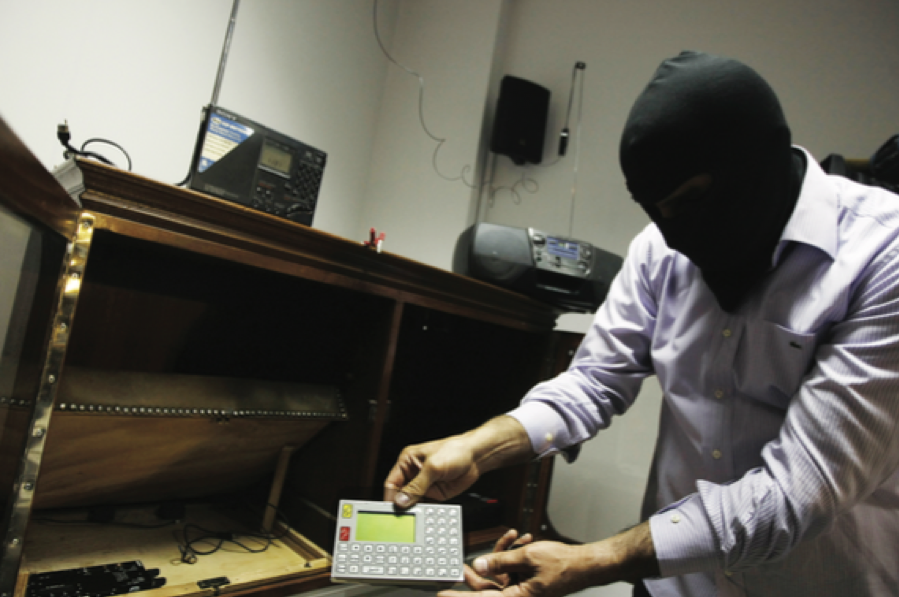
The latest development in this clandestine war came on October 18, when two explosions were heard in a wadi between the border villages of Houla and Meiss Al-Jabal. The two blasts reportedly destroyed two of three Israeli eavesdropping devices buried beside Hezbollah’s fiber-optic telecommunications cables. The Israelis blew them up by remote control after Hezbollah discovered the devices.

Hezbollah claimed a “major accomplishment” in discovering the Israeli devices, but it is reasonable to assume that where there is one (or three actually), there will be more. The covert war continues.

Nicholas Blanford is the Beirut-based correspondent for The Christian Science Monitor and The Times of London

November 26, 2009 0 comments
0 FacebookTwitterPinterestEmail
Editorial

$100 billion madness

by Yasser Akkaoui November 26, 2009
written by Yasser Akkaoui

As I write this editorial, the Middle East is preparing to arm itself with weaponry estimated to cost more than $100 billion over the next five years. This mini arms race in the Gulf is clearly in response to the heightened tensions surrounding Iran’s nuclear ambitions and the dawning realization that Tehran will acquire the technology to make an atomic bomb.

It is a policy born out of fear, and yet we know that it will end in either disaster or waste. In the event of any conflict, the armies of the Gulf Cooperation Council are unlikely to use their new-fangled hardware. They will be politely asked to stand aside as more experienced, and more muscular, interested parties step in. The odds are that the new kit will go to rust and the only winners will be those who made a fast, not to mention very big, buck out of supplying the weapons in the first place.

But let us consider the tidy sum that most analysts predict will be spent. With the GCC shelling out most of the $100 billion, it is quite simply a lot of money that could, and should, be spent on building-up the true brand equity of the Gulf. Until now at least, these nations have shown us what can be done when Arab countries channel their energies into non-conflict projects. While the rest of the region has wasted time, and lives, in pursuing the futile dream of kicking Israel into the sea, the GCC showed that they can demonstrate Arab dignity and influence by being economic powerhouses.

This new and armed vanity must therefore be curbed. Just think of how the other, less affluent nations will feel when they see money being squandered that could otherwise go towards education, health, or research and development. It verges on the morally criminal.

We assure you it is not the path of wisdom.

November 26, 2009 0 comments
0 FacebookTwitterPinterestEmail
Companies & Strategies

Joseph Ghossoub (Q&A)

by Executive Staff November 4, 2009
written by Executive Staff

Joseph Ghossoub is chairman and CEO of the MENACOM group and a pioneer in the advertising and communications industry. The former chairman and world president of the International Advertising Association, Ghossoub is also a Knight of the Order of the Cedar, Lebanon’s highest civilian honor. Last month, Ghoussob sat down with Executive for a candid and insightful talk about his group and the regional advertising industry.

E  Most estimates say that the advertising market in the region is down around 30 to 35 percent. Do you agree with this figure?

Yes I do. Definitely there has been a decrease in spending and there has been a lot of turmoil this year. As we stand today, if you compare figure-to-figure with last year, there is at least a 35 percent decrease in advertising expenditures.

E  Does this apply across the board or more so in places that have been hit harder, like Dubai?

It applies most particularly in Dubai and is marginally more or less the same in other areas. However, the Gulf area has been hit by no less than 30 to 35 percent as a whole. We can hardly tell where we will be at the end of the year, but from what we see, things have started to progress and it’s coming back again. It all depends on the results that are going to be posted in November by multinationals, banks and public companies. If they meet or are near expectations, there will be some confidence. If they are below expectations, we will hit a bump in the road that will result in the recovery phase coming in much later than it should.

E  So which industry budgets have you seen most affected by the downturn?

By the end of September and the beginning of October 2008, it was like you were in a room and somebody walked in and switched off the light. You had around 40 percent of the market based on real estate, around $400 million, that completely vanished. Everybody across the board reduced their spending and I mean everybody, including the automotive industry and most luxury items. In January and February, you hardly saw an ad in a newspaper. At that point things were on hold.

The first nine months of the year passed with a lot of hesitation, restructuring and overhaul. The past three months, however, have shown some good signs. In a month and a half, at the end of 2009, it will probably be the happiest moment of my life.

E  WPP Group bought into MENACOM with a majority share, so it looks like it is taking over. What we’ve heard about the Lebanese losing their foothold is in fact materializing…

Today, when these companies are contractually bound by a client worldwide, they have to service this client worldwide. A few years ago, affiliation was acceptable to the international client. Affiliations are no longer acceptable because after Enron, and everything that happened in the international markets, there are new compliance standards that all multinationals have to adhere to. So actually they are bound to be available in markets with a majority share, to be able to consolidate their figures and post them on the stock exchange.

At the same time, clients were asking them to become much more transparent in their dealings. It’s not taking over. If they wanted to take over they would have acquired 100 percent. If you look at what has taken place, they did not acquire 100 percent.

E  How much of MENACOM does it own?

WPP today owns 60 percent of the group, I own 20 percent and Talal Makdessi owns the rest.

E  So who is the chairman now?

I am.

E  But WPP can control the decision-making?

Of course. Bottom line is that today WPP has 60 percent and can decide whatever they want.

E  But you are still making the decisions?

As an appointed CEO, of course.

E  So WPP just has veto power if it ever needs it?

Actually they don’t. They don’t interfere at all. As long as you are running the show and you are doing the right thing and keeping them informed there is quite little interference.

E  So how was your one-on-one meeting to sit and talk openly with Talal Makdessi about the issues circulating in the press?

We met to discuss differences of  opinion and points of views that were just swirling around and prompted by gossip. I have always said one thing: ‘If there is a problem between me and Talal, I will solve it between me and Talal.’ As far as I am concerned, there is no problem between me and Talal. We had a meeting, most of the things were cleared up and things are fine.

E  But he was relieved of his executive duties?

Nobody relieved anybody. We signed the agreement with WPP on February 28, 2008, even though they came in as partners on January 1, 2007. When we signed [the agreement], I was appointed CEO and Talal signed a contract with the title of non-executive director. And I am underlining non-executive.

E  There have been statements that say the problem was mostly financial in light of the delayed payments from clients in the region. Was any of that part of it?

There is no financial problem. It was some misunderstanding that happened so that we don’t simplify things and say all this is nothing. It was like a game of Chinese whispers. It happened without us even having the chance to talk and not because we didn’t want to talk. It went from the first person to the next until it got to a point where all of a sudden people were shouting at each other. The issue got bigger and it reached a stage where at the end of the day I said: ‘What the hell is going on? Let’s sit down and see if there is a real problem.’ And when we sat there was no problem. Nobody wanted Talal to do anything he didn’t want to do and he did what he wanted.

E  So why did you change the name of the Group from THG to MENACOM last year?

Earlier this year I was sitting in my office and I received the first pamphlet of the Formula One race taking place in Abu Dhabi. [The pamphlet had another company’s logo on it with the name THG.] Then I asked myself, looking at another THG with a different pamphlet and different logo: ‘Who the hell is this? I don’t have this logo. Where is it coming from?’ And then you realize that this is not a small company. This is a company that runs sports and promotions worldwide and it wakes you up. These guys are next door! They are there in the market!

 Then we started doing some research and found out that there are many companies that have the name THG. You have THG holidays, THG telecommunications, THG libraries, THG steroids. THG steroids! In fact, THG does not really hold any equity or any assets in any of the companies [of the group].

We didn’t want to end up having to deal with litigation or in court for something we don’t hold as a registered trademark. So, after checking with WPP and with our lawyers about what can be done, we found that the best way around this was to forget about this name and register a trademark. Now MENACOM is a trademark for our company and if you look on Google you will only find one company.

E  Managing clients’ accounts during good days is different from managing them during a crisis. What kind of change is needed to accommodate for this?

Two things are diverging here because 10 or 15 years ago when it all started, it was about networks. Then networks became distributed and then after that came specialization of services. We used to call it integrated services, meaning all these companies work together. 

Suddenly these companies were no longer integrated. They had client lists, interests and bottom lines that were not the same. We are going to see a shift back to reintegration, but what kind of reintegration? This is where the real question is. And you’re not going to get it from me for free.

E  So when are you going to apply your new strategy?

At the beginning of next year. Probably in the first six months, the industry is going to see a lot of pitches because clients have different mindsets; clients have different needs, different requirements and different approaches to things.

If you look at the changes that have taken place over the past three to five years and the speed of transition that took place; just think that this is going to multiply by a factor of 10 if not 100 in the next year. It’s over. Things have been let loose. So what is going to happen in the future? Nobody knows and anyone who tells you that he does must be the most valuable person in the world.

November 4, 2009 0 comments
0 FacebookTwitterPinterestEmail
Capitalist Culture

Weaning off oil

by Michael Young November 3, 2009
written by Michael Young

When it comes to major political and economic policies in the Middle East, is the United States about to break a six decade-long habit?

That the question can be asked without provoking derision suggests that something is indeed changing in Washington and in the region. After World War II, a cornerstone of American policy in the Arab world was the protection of oil supplies. A quid pro quo was reached with Saudi Arabia: the US would militarily protect the kingdom and the Gulf in general, in exchange for which the Saudis would uphold stability in the oil markets, maintaining relatively cheap oil prices by using the kingdom’s enormous surplus capacity to regulate price and demand.

In recent years, however, particularly after the 9/11 attacks, Saudi Arabia’s image in the US has taken a dive. In the public eye, the kingdom was transformed from a long-term ally into a fount of Islamist fanaticism. This perception segued into a broader sense that the profits the Saudis reaped not only funded America’s enemies, but also confirmed how vulnerable the US was to fluctuations of an oil market in which Riyadh was a major player. This provoked American demands for “energy independence.”

Writing recently in Foreign Policy magazine, Saudi Prince Turki al-Faysal took issue with this mood. He described the “energy independence” slogan as “political posturing at its worst — a concept that is unrealistic, misguided, and ultimately harmful to energy-producing and consuming countries alike.” It was also shorthand “for arguing that the US has a dangerous reliance on… Saudi Arabia, which gets blamed for everything from global terrorism to high gasoline prices.”

Turki reminded his readers that Saudi Arabia holds about 25 percent of the world’s oil reserves and has the largest spare capacity globally, while no alternative energy source is available to run America’s economy. This situation only highlights the fact that “efforts spent proselytizing about energy independence should instead focus on acknowledging energy interdependence. Like it or not, the fates of the US and Saudi Arabia are connected and will remain so for decades to come.”

The prince was doubtless correct, but his protests only underlined how different the Saudi-American relationship is today, with politics as much a problem as economics. The Obama administration is preoccupied with disengagement from Iraq. This was Barack Obama’s priority as candidate, and little has changed since he took office. For the Saudis, whose priority is to contain a resurgent Iran, this American drawdown is worrisome.

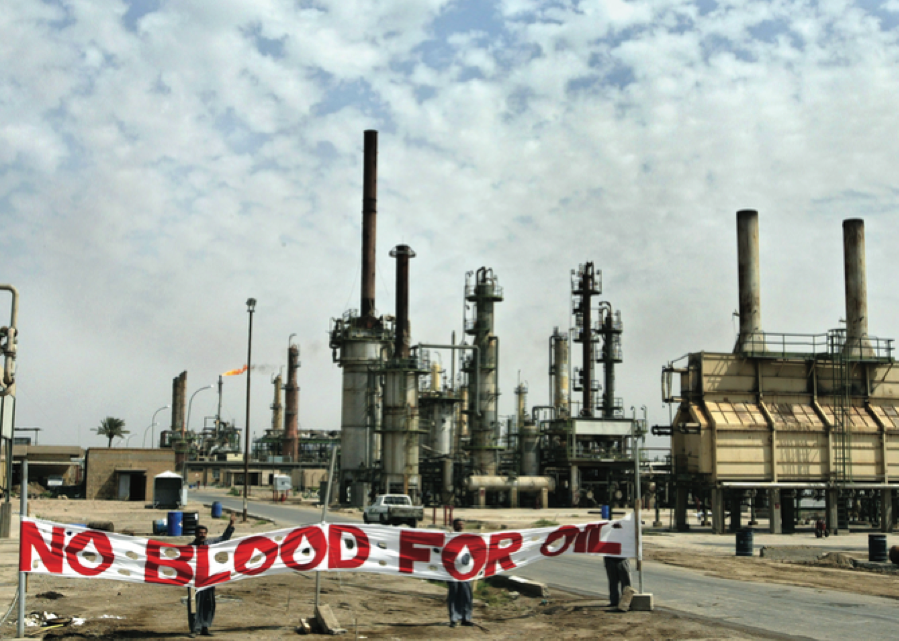
The Saudi regime remembers that in 1990 and 1991, the US deployed hundreds of thousands of soldiers to the kingdom to push the Iraqis out of occupied Kuwait. At the time, George H. W. Bush’s administration briefly linked this to protecting oil supplies, before anti-war protesters replied that they refused to trade “blood for oil.” But Washington’s clumsiness concealed a legitimate aim: preventing Iraq from imposing its hegemony on the Gulf. Today, as the Saudis watch the US eager to pull out from Iraq, they wonder who will prevent Iran from succeeding where Saddam failed.

The Obama administration has failed to answer that question. But on the specific issue of oil, some have tried to downplay Saudi importance by suggesting that oil should be treated as a neutral commodity — divorced from political commitments as the US secures alternative sources. Oil producers need to sell their oil, after all, and America is the largest consumer. Arrangements can be made.

Turki, however, sees oil as a political as much as an economic good, given how essential cheap oil is to the wellbeing of Western governments. We are heading toward a serious disconnect between Saudi and American perceptions if the Obama administration’s departure from Iraq plays out in Iran’s favor. In that case, Saudi Arabia’s autonomy on oil policy may gradually be called into question, while its rising sense of insecurity and other worries, such as the future of the regime, might push it to take steps that will have a profound impact on regional politics.

Hence, the notion of “de-politicizing” oil seems illusory, as would an American assumption that breaking away from Saudi Arabia could be effected with minimal negative consequences.

The answer to this conundrum is not obvious. The American strategy in the Middle East today, which involves greater political involvement complemented by a physical reduction in its forces, displeases the Saudis because they are not sure what US intentions are with respect to Iran. That means the Obama administration must articulate an unambiguous strategy, one either restating or convincingly replacing the postwar US-Saudi understanding. But the last word may be Turki’s: the US and Saudi Arabia are likely to remain connected for decades to come.

Michael Young

November 3, 2009 0 comments
0 FacebookTwitterPinterestEmail
  • 1
  • …
  • 442
  • 443
  • 444
  • 445
  • 446
  • …
  • 685

Latest Cover

About us

Since its first edition emerged on the newsstands in 1999, Executive Magazine has been dedicated to providing its readers with the most up-to-date local and regional business news. Executive is a monthly business magazine that offers readers in-depth analyses on the Lebanese world of commerce, covering all the major sectors – from banking, finance, and insurance to technology, tourism, hospitality, media, and retail.

  • Donate
  • Our Purpose
  • Contact Us

Sign up for our newsletter

[contact-form-7 id=”27812″ title=”FooterSubscription”]

  • Facebook
  • Twitter
  • Instagram
  • Linkedin
  • Youtube
Executive Magazine
  • ISSUES
    • Current Issue
    • Past issues
  • BUSINESS
  • ECONOMICS & POLICY
  • OPINION
  • SPECIAL REPORTS
  • EXECUTIVE TALKS
  • MOVEMENTS
    • Change the image
    • Cannes lions
    • Transparency & accountability
    • ECONOMIC ROADMAP
    • Say No to Corruption
    • The Lebanon media development initiative
    • LPSN Policy Asks
    • Advocating the preservation of deposits
  • JOIN US
    • Join our movement
    • Attend our events
    • Receive updates
    • Connect with us
  • DONATE