• Donate
  • Our Purpose
  • Contact Us
Executive Magazine
  • ISSUES
    • Current Issue
    • Past issues
  • BUSINESS
  • ECONOMICS & POLICY
  • OPINION
  • SPECIAL REPORTS
  • EXECUTIVE TALKS
  • MOVEMENTS
    • Change the image
    • Cannes lions
    • Transparency & accountability
    • ECONOMIC ROADMAP
    • Say No to Corruption
    • The Lebanon media development initiative
    • LPSN Policy Asks
    • Advocating the preservation of deposits
  • JOIN US
    • Join our movement
    • Attend our events
    • Receive updates
    • Connect with us
  • DONATE
Feature

Labor laments

by Executive Staff November 26, 2009
written by Executive Staff

How to solve the global financial crisis is naturally a hot topic, sparking innumerable talks, conferences and forums. The Middle East is no exception. But while certain countries in the region like to boast that the crisis has largely passed them by, delegates at the International Labor Organization’s (ILO) Arab Employment Forum (AEF) in Beirut last month pointed out that the Middle East already had a chronic employment problem well before the financial crisis struck.

Growth without jobs

The forum therefore had a degree of urgency about it, given the challenges the region faces and the world’s highest unemployment rates set to rise further, from an average of 9.4 percent  to as high as 11 percent this year, according to the ILO. Meanwhile, aggregate growth in the region is projected to drop 2 percent this year, rising to 4 percent in 2010.

Yet growth, as Ahmad Majdalani, the Palestinian Authority’s labor minister suggested, doesn’t always mean jobs, citing statistics of 5.4 percent growth regionally over the past three years but only 1.5 percent growth in job opportunities. Indeed, as the ILO’s Director General Juan Somavia said in his opening address, “the unemployment rate is only the tip of the iceberg.”

Somavia went on to blast the neo-liberal model of development as a “dysfunctional financial economy” that “privileged the short-term profit objectives of financial operators. The end result was globalization without a moral compass.”

The ILO has set itself the task of rectifying the structural weaknesses of the capitalist system, by being that seemingly mislaid moral compass for the workers of the world. The forum was also a platform for the ILO to plug the policy paper that came out of the International Labor Conference in Geneva in June: “Recovering from the crisis: A Global Jobs Pact.” The paper, which calls for, among other things, investment in the real economy, received “recognition” at the G20 summit in Pittsburgh in September, and it looks like the outcome of the AEF will also receive such coveted “recognition” by Arab governments. For while the forum had the majority of the Arab League’s labor ministries in attendance, and plenty of hand-wringing in speeches, the AEF was essentially all talk.

Ministries without clout

The comments of Jordan’s Labor Minister, Ghazi Shbeikat, suggested  why. In discussing the financial crisis, he said part of the problem stemmed from the region’s labor ministries not being brought into governmental discussions about the economy, and that employment was seen solely as a labor ministry issue.

“The crisis is an opportunity for a change in relations,” he said, “for labor ministries to make economic policies.”

Shbeikat made an important point in that not enough resources are allocated to labor ministries as opposed to the ministries of economy and finance. But if the other ministries were not letting labor ministries through the door before, would they now? Perhaps the region’s economy and finance ministries should have attended the forum, as well as high-level representatives of the private sector, the very people that have influence on economic policy.

Expatriate workers

Arab trade unions were also there in force, but they have witnessed a prolonged erosion of their strength, their ability to rally workers and their voice to advocate for labor rights. For the constructive change that the ILO wants, strong labor ministries and trade unions are essential.

Therein lies the crux of the problem: Will governments that are heavily influenced by the financial sector remove the leash that has held back labor ministries and unions? Realpolitik would suggest not, especially given union involvement in politics and the resulting strikes and demonstrations, which invariably send shivers down the spines of the more authoritarian regimes in the Middle East and North Africa.

Indeed, some of the policies that governments have implemented in response to the crisis suggest that the needed change is not afoot. For instance, Shbeikat said the Jordanian government has adopted an initiative to help workers at the Aqaba Special Economic Zone (SEZ) and Qualifying Industrial Zone (QIZ) buy apartments. While this could boost the real estate sector, what Shbeikat did not mention is that the majority of workers at the SEZ and QIZ are expatriates, and low paid ones at that. According to a 2009 US Defense Resources Management Institute paper, the number of jobs the QIZ created from 2001 to 2004 rose by 46 percent for local workers, while the ranks of expatriate workers rose 360 percent. So instead of boosting the number of local workers, which would curb unemployment, the government is advocating real estate purchases.

Measuring the crisis

Other suggestions at the forum were not so nonsensical, particularly from Talal Abu-Ghazaleh, chair of the United Nations Global Alliance for ICT and Development. He said the Arab world “doesn’t need intellectuals, businessmen or politicians, but experts in vocational work.” Ghazaleh added that to understand the scale of the region’s economic problems an Arab Statistics Agency is needed.  “We cannot measure the crisis if there are no measurements,” he said. A lot of benefit could come out of implementing these two ideas alone. As for the outcome of the forum, this will depend on whether labor ministries can punch above their weight to get policies the ILO is advocating in place.

November 26, 2009 0 comments
0 FacebookTwitterPinterestEmail
Feature

Naturally high

by Executive Staff November 26, 2009
written by Executive Staff

On October 12, the first commercial flight powered by fuel from natural gas took place. From London’s Gatwick airport, it took the Qatar Airways Airbus A340-600 some six hours flying time before landing at Doha International Airport.

Developed by Shell, the company building the world’s largest gas-to-liquids (GTL) plant in Qatar in conjunction with Qatar Petroleum, the fuel used to power the jet engines was a mix blend of GTL kerosene and conventional oil-based kerosene fuel, known as GTL Jet Fuel. The flight is a promising sign for the airline given that Qatar, which holds the third largest reserves of gas in the world, is set to become the world leader in GTL kerosene if production begins on schedule in 2012. Besides the commercial advantages of using the GTL blend, the fuel also emits less sulfur dioxide than its conventional cousin making it more eco-friendly.

Many analysts however doubt that the fuel will become an effective alternative to conventional jet fuel due to the high costs involved in its production process. According to JBC Energy, a Vienna-based energy consulting firm, GTL kerosene’s  potential by 2015 is some 40,000 barrels per day, equal to approximately 0.8 percent of global demand for jet fuel. Speaking to The Wall Street Journal, David Wech, head of research at JBC Energy, said that when the full life cycle emissions are taken into account, more CO2 is emitted than when conventional jet fuel is used. “GTL economics do simply not work out,” he noted.

Publicity stunt or not, with around 1 million tons of GTL kerosene planned to be pumped out of Qatari territory — enough to fly a commercial aircraft 500 million kilometers, according to Qatar Airways — the carrier looks like it still has a long way to go and more than enough fuel to get it there.

November 26, 2009 0 comments
0 FacebookTwitterPinterestEmail
Feature

A no-fly zone

by Executive Staff November 26, 2009
written by Executive Staff

It must rank as one of the quietest air shows in history. Despite event posters featuring a red-devil bi-wing stunt plane flying upside down, the blue sky above was clear — no helicopters, no planes and no screaming jet fighters performing the aerial acrobatics typically seen at international air shows. There weren’t even grounded aircraft at the exhibition, near though it was to the Damascus International Airport. The attraction that closest resembled aviation technology was an Iranian-made flight simulator tucked away in a corner.

Still, the first Syria Air Show International Aviation Technology Exhibition was a premiere event for the country. It signified that the Syrian aviation industry has made small but significant progress over the past few years, including the launch of two private airlines that broke the state-owned Syrian Arab Airlines’ (SAA) monopoly. United States President Barack Obama even extended an olive branch to Damascus, suggesting America may end sanctions against Syria’s aviation sector.

Nonetheless, the air show raised many a curious eyebrow. “I’m wondering: why have a show?” said Nabil Sukkar, managing director of the Syrian Consulting Bureau for Development and Investment. “Who is going to exhibit, as Syria is not buying planes?”

The post-sanctions horizon

Indeed, with American companies dominating the aviation sector worldwide, Syria is unable to purchase planes due to the sanctions and instead relies on leases and Russian- made aircraft. On the other hand, several company representatives said it was the potential of tapping into an essentially virgin market once sanctions are removed that prompted them to attend the air show.

“Syria’s not very commercial yet. We are here to feel out the market,” a spokeswoman for Moscow-based Sukhoi Civil Aircraft said. “We can’t sell in Syria as we have 10 percent American parts in our planes; it’s politics, and we don’t want to jeopardize sales elsewhere. But when the sanctions are lifted, [aviation companies] will flood in,” she added.

Sukhoi, however, was the only major international aviation player at the exhibit. Dominating half of the stands were Iranian aircraft, helicopter and aviation service companies, while the rest were made up of Syrian aviation companies, the Jordanian Royal Air Force, Jordanian pilot training academies and airport handling services from Bahrain and Egypt. Iran was over-represented, as it is in the same position as Syria when it comes to US aviation sanctions, with Syria one of the few countries Iran can viably market to.

State-owned Iranian Aviation Industries Organization (IAIO) manufactures cargo planes, small wing aircraft and civilian planes, developed in partnership with Ukrainian engineers to get around the ban on buying parts from Boeing and Airbus. Asked why the company was at the air show, Amin Salari, a member of IAIO’s board of directors, said: “It’s the first event in Syria so we had to be here.”

Other companies were of a similar mind. “We don’t provide services here yet, but we hope to and are looking to sell to private companies and individuals,” said Mohamad Khosravi, managing director of Tehran-based Navid Helicopter Services.

The presence of so many Iranian companies was perhaps indicative of the sentiment that US aviation sanctions will not end anytime soon. The Obama administration may have eased the embargo, with American companies now able to get a license for export to Syria, but so far none have. According to a well-placed source, Washington rejected an SAA request for Airbus planes.

“The US is basically saying they are easing exports, but the fact that SAA is going to [Russia’s] Tupolev [for two new aircraft] means Syria doesn’t believe this,” said Jihad Yazigi, editor of Syria Report. This was further evidenced when the US pressured Germany in late October to ground the engines of two SAA planes that were under repair, reducing the fleet to just three aircraft.

For Syria’s private airlines, Pearl Air (which has a 25 percent stake held by SAA) and Cham Wings, one of the air show’s sponsors, getting around the sanctions means leasing aircraft until they can “buy American,” said one executive off the record.  “It’s a double-edged sword, it affects us and the owner of the sanctions,” he said. “If sanctions were lifted, we’d buy more planes, technical training services, and have deals with maintenance companies. We would buy from America. Millions of dollars in deals could be made.”

The potential is certainly there, with Syria attracting a record 4 million plus tourists this year and more international carriers flying into the country.

“Services are really growing in tourism, investment and business travel, [like] private jets and VIP lounges,” said Marwan Hijazi of Sky Aviation Services. “Business is up for us in Syria.”

November 26, 2009 0 comments
0 FacebookTwitterPinterestEmail
Feature

An economy vexed

by Executive Staff November 26, 2009
written by Executive Staff

As recent international attention on Iran has focused on domestic unrest and talks over the nuclear program, the government now faces a major economic challenge.

Change is in the air. Inflation is at its lowest in many years, the Tehran stock exchange has handled its biggest ever privatization and parliament is discussing the phasing out of universal subsidies on everyday items like electricity, bread as well as medicines.

In a highly politicized country like Iran, commentators will assess such changes in terms of the country’s vulnerability to further international sanctions and whether they bolster or undermine the government of Mahmoud Ahmadinejad.

But the deeper issue, according to Djavad Salehi-Isfahani, economics professor at Virginia Tech University and an expert in development economics, is whether the government can channel resources away from consumption, including costly subsidies, towards the investment needed for economic growth.

To benefit more fully from having the world’s second highest combined reserves of oil and gas, Iran must resist popular pressure for “redistribution.”

Promises of a revolution

But this is far from easy. A “lack of transparency in government activity and the public’s naïve view of how the economic system works” means “the politics of redistribution trump those of growth,” Salehi-Isfahani wrote earlier this year.

Ahmadinejad famously promised in his 2005 election win to put oil money on the people’s sofreh [dining table]. But pressure to distribute oil wealth has long been fostered by the 1979 Revolution’s commitment to the mostazafin (the dispossessed) and has led successive governments to keep everyday items priced as low as possible.

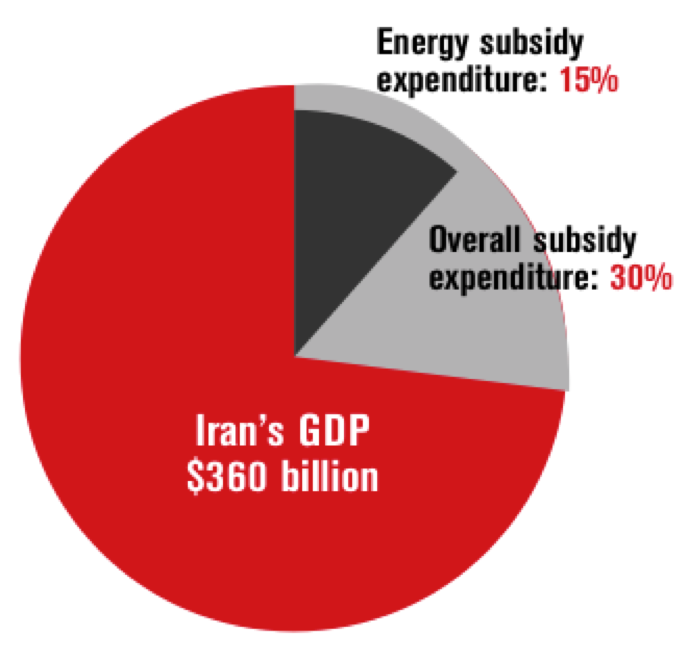
As a result, subsidies of gasoline and other forms of energy amount annually to $50 billion, or 15 percent of GDP. Overall subsidies are as high as $100 billion, or 30 percent of GDP.

The effects on growth are clear. While the Iranian economy has grown faster than most developing countries, it has not met the ambitious 8 percent target set by the country’s five-year plans.

Growth averaged 5.4 percent from 1996 to 2006, reached 7.8 percent in 2007 and then fell back with the world recession and weaker oil prices to 2.5 percent in 2008. The International Monetary Fund last month projected 1.5 percent growth this year and 2.2 percent in 2010.

This is not enough to provide jobs for all the baby-boomers, born in the Revolution’s early years, coming into the employment market. Officially unemployment is 12.5 percent, but many analysts say the real figure is much higher.

Salehi-Isfahani told Executive he was disappointed this year’s presidential election did not confront the challenge of increasing investment.

“I feel that redistribution has a greater hold on large sections of Iranian voters than I realized,” he said. “I had expected that after his [Ahmadinejad’s] failure to deliver [in his first term as president] that more people would turn away from populism. Instead, I heard many people say that he would have delivered on his promises [to redistribute wealth] had he been allowed to by the powers that be.”

For some years, there has been a consensus among Iran’s political class in favor of greater investment of oil revenues and the development of the private sector, especially through privatization. But in practice, politicians’ support has been lukewarm.

The previous government of Mohammad Khatami established a ringfenced Oil Stabilization Fund to collect windfall revenue, but both Khatami’s government and the parliament soon dipped into the fund to finance pet spending projects, often with an eye to elections. Under Ahmadinejad, the fund’s coffers have diminished further, to the point where its level is kept confidential.

Reducing subsidies

Progress has been slow on a privatization program launched under Khatami and given impetus by two rulings, in 2005 and 2006, from Ayatollah Ali Khamenei, the supreme leader, that 80 percent of the state sector be privatized.

Last month parliament began discussing the phasing out of subsidies. The move would be inflationary and will need careful management even though inflation fell to 9.3 percent in September this year — down from the 30 percent range topped in October 2008.

The discussion marks a shift from last year, when parliament threw out a similar plan from the Ahmadinejad government. Salehi-Isfahani feels the “political emergency” of unrest after June’s election has given the president more leeway. “The conservatives in the parliament are less likely to oppose him while he is under pressure from the reformists,” he said.

But liberalization and privatization are never straightforward in a country weaned on oil income with a powerful state and quasi-state sector.

The introduction of petrol rationing in 2007 was a state-led approach. Faced with escalating import bills — at the time, gasoline imports were 40 percent of consumption — Ahmadinejad avoided a market solution and chose to allocate motorists a set amount, through a smartcard, at a subsidized price equivalent to 10 cents a liter.

The move has been a relative success. “It has not reduced consumption in my judgment, but it has at least stopped a rise in consumption,” said Heydar Pourian, editor of the Tehran-based monthly, Iran Business.

Imports have fallen from 200,000 barrels per day (bpd) in 2007 to around 130,000 barrels bpd  — making the economy less vulnerable to the gasoline sanctions touted in the United States and Europe.

But reducing the costs of subsidies on electricity, bread and other items cannot be done through rationing, at least not without a costly expansion in bureaucracy. Hence, the government plans to replace subsidies with targeted benefits for the poor.

Middle class discontent

Whatever the longer term benefits for the economy, it will be a huge challenge for Ahmadinejad to manage the political fallout as everyone other than the poor faces the resulting price hikes.

Another problem with liberal economic reform is that it strengthens a middle class whose numbers are already swollen by the expansion of higher education under the Islamic Republic. Iran’s middle class is largely disenchanted with the government and was the backbone of the protests against June’s presidential election results.

“In the last 10 years the middle class has doubled in size while the ranks of the poor have shrunk by two thirds,” said Salehi-Isfahani. “Now the government finds itself in an adversarial position vis-a-vis the middle class, it may adopt policies inimical to their growth and transformation into a productive class. I can see the government move more in the direction of greater control of the economy with more policies aimed at redistribution, which generally hurt growth.”

Privatization is a massive test. Iran’s capital markets are weak, while foreign capital is restricted both by domestic law and US banking sanctions. And yet quasi-state bodies, buoyed with oil revenue, are relatively liquid.

The sale in late September of a 50 percent plus one share in the state-owned Telecommunications Corporation of Iran (TCI) was the largest in the history of the Tehran Stock Exchange (TSE) and raised eyebrows given the economic slowdown.

Iranian subsidies as a portion of 2009 GDP

Source: The Economist Intelligence Unit

Islamic revolutionary shareholders

The winning buyer, Etemad-e Mobin, is a consortium of three Iranian firms with varying degrees of experience in the sector. But government critics attacked the sale as an extension of control by the Islamic Revolutionary Guard Corps (IRGC).

After the IRGC’s role was raised in the Iranian parliament, it emerged from parliamentary speaker, Ali Larijani, and Finance Minister Shamseddin Hosseini, that some shares of the three companies were held by IRGC retirement funds.

The TCI sale illustrates how politics make economic reform harder. Iranian telecoms are a potentially lucrative market — cellular penetration is relatively low, for example, at 70 percent — but foreign investors are wary, because of sanctions and the suspicion of foreigners in Iran.

At the same time, IRGC pension funds hardly relish investing abroad, given the corps is targeted by sanctions and was designated a “terrorist” organization by the US Treasury in 2007.

The privatization program has tended to transfer assets from state ownership to quasi-state ownership or to powerful interests with links within the state sector, including social security funds. The IRGC is part of the mix, with its engineering arm already expanding in construction and energy.

“It’s hard to establish whether the growing economic role of the IRGC reflects a central plan or is the result of disparate groups, many with links to the IRGC, jockeying for position,” said David Butter, senior Middle East analyst at the London-based Economist Intelligence Unit.

A sign of how things might develop will come in November as Iran launches a $1.4 billion bond offer to meet a funding shortfall for the South Pars gas field. Despite the rich potential takings on offer in South Pars, international energy majors and western banks are shunning it because of US and UN sanctions.

The Iranian media has reported the bond will offer a 9 percent interest rate. If the bond finds takers domestically, or from Asia, then Iran will have cleared, or at least not fallen at, one of the many hurdles it faces.

November 26, 2009 0 comments
0 FacebookTwitterPinterestEmail
Banking

Money matters BLOMINVEST Bank

by Executive Staff November 26, 2009
written by Executive Staff

Regional stock market indices

Regional currency rates

GCC hydrocarbon projects at $690 billion

Despite the suspension or cancellation of 30 percent of the Gulf’s hydrocarbon projects, the Gulf Cooperation Council’s (GCC) oil, gas and petrochemicals construction market remains the most active in the world, with $690 billion of budgeted projects. Among 578 hydrocarbon projects in the GCC, 30 percent by value have been placed on hold or cancelled, with another 30 percent under construction and a further 40 percent in the pipeline. Earnings from the GCC oil, gas and petrochemicals sectors remain the largest among other sectors, constituting about 85 percent of the region’s export revenues. In addition, the demand for hydrocarbons and refined products is expected to pick up as the global economy pulls out of recession. Proleads Insight, a hydrocarbon consultancy firm, is projecting that by 2010, the cash flows in the GCC hydrocarbon markets will stabilize. But this is bound to deteriorate quickly if projects scheduled to start are not executed as planned by the start of next year.

GCC railway projects will reach $60 billion by 2010

As GCC countries witness substantial growth and develop rapidly, member countries have agreed to build railroad networks with a total estimated cost of more than $60 billion. These railroads will help boost cross border trade, cut freight costs and result in faster movement of cargo and passengers. Construction of a rail network that will link the six members of the GCC is expected to start in 2010, while expenses will be shared by the states. Moreover, the Union Railway Company in the UAE has an estimated $8.2 billion railway project that will connect all major cities in the Emirates with a track length of 1,400km. In Saudi Arabia, the Saudi Railway Organisation already provides freight services on three main lines totalling 1,018km, while there are plans to extend the network to the Red Sea port of Jeddah and eventually to the borders of Jordan, Yemen and Egypt.

Yemen seeks $2 billion bailout

The Arab world’s poorest country, Yemen, is seeking a $2 billion bailout from the region’s richest state, Saudi Arabia, to avert a cash crisis. The Yemeni government desperately needs money to pay for food and fuel imports after revenues from oil exports plummeted 75 percent in the first half of 2009. This drop in oil revenue comes after a decline of 26 percent in the country’s oil production and a large decrease in oil prices compared with the same period last year. In 2008, oil revenues paid for 75 percent of government expenditures and oil accounted for 96 percent of Yemen’s exports. In the first quarter of 2009, and in the wake of falling oil prices, the government’s oil revenues fell to $255 million, down 74 percent from $998 million in the same period the previous year. In May, the Central Bank of Yemen said it held $7.3 billion in foreign currency reserves, which would only be enough to cover the bill for food and fuel imports for the first nine months of 2009. By contrast, in 2004, Yemen’s foreign reserves of $5.7 billion were enough to pay for nearly 16 months of imports.

November 26, 2009 0 comments
0 FacebookTwitterPinterestEmail
Banking

Upping the stake

by Executive Staff November 26, 2009
written by Executive Staff

In mid-September, Arab media reported that the Gulf Cooperation Council countries were in talks with the World Bank about raising their capital contributions. This was confirmed by Senior Vice President and World Bank Group General Counsel Anne-Marie Leroy, who said the talks were meant to secure additional capital and would therefore increase the voting rights of the GCC, and that an announcement to this effect would be made in October.

But no announcement came. The World Bank may be in dire financial straits, according to statements made at the October World Bank Group and the International Monetary Fund meetings in Istanbul, but there is disagreement between developing countries and the bank’s biggest donors as to how soon more capital is needed, and where it should come from.

Representatives from both France and Great Britain, two of the bank’s largest contributors, said that they believe lending increases can go forward without additional capital. But World Bank President Robert Zoellick and representatives from many developing nations sounded the opposite note, predicting that without expedited gains in capital, the World Bank would have difficulty maintaining its current lending by the middle of 2010.

“The distribution of quotas should reflect the weights of its members in the world economy, which have changed substantially in view of the strong growth in dynamic emerging markets and developing countries,” said the G-20 leaders in a joint concluding statement after their Pittsburgh meetings in September.

Accordingly, capital increases would have to come from middle-income countries and not the now dominant West. In fact, the G-20 countries recommended that funding for the World Bank should shift by a measure of three percent toward credit-worthy developing countries and away from developed ones.

As it stands, the GCC voting block holds 3.88 percent of the total votes in the International Bank for Reconstruction and Development (IBRD), the oldest and largest lending arm of the World Bank Group, which provides relatively low interest loans to developing countries. It is these countries that were the most vocal in their call for more donor-money at the Istanbul meetings and it is this fund, the IBRD, that World Bank officials say needs new capital, and quickly.

A question of motivation

Both expert opinion and rhetoric from October’s World Bank Group-IMF meetings may point to the reasons why the GCC’s role in the World Bank will remain fixed while others’ will increase. Ibrahim Saif, secretary general of the Jordanian Economic and Social Council and expert in political economy, believes that GCC capital in the bank is holding steady, in part, because the countries themselves are not interested in playing a larger role in the global political scene.

“They are quite happy to just work while it’s happening and not get engaged with the rest of the world,” he said. “The BRIC [Brazil, Russia, India and China] were quite aggressive. I think they were very clear that they really wanted to increase their shares.”

Saif said that no such desire came from the GCC and thus no increase was made.

In November 2008 British Prime Minister Gordon Brown saw a “lukewarm reception” when he visited the Gulf and suggested that the GCC contribute “hundreds of millions” to IMF bailouts, said Gulf Research Center Chairman Abdulaziz Sager in an analysis piece. He said that any humanitarian or geo-political aspirations that the GCC may have held evaporated with the credit crisis.

Total World Bank lending by region: fiscal 2009

Share of $46.9 billion total

Source: World Bank

Total World Bank lending by theme: fiscal 2009

Share of $46.9 billion total

Source: World Bank

Total World Bank lending by sector: fiscal 2009

Share of $46.9 billion total

Source: World Bank

Singular ambition

On this issue of international contributions however, the GCC is not completely in agreement as Saudi Arabia’s role in both the World Bank and the IMF far exceeds its Gulf neighbors. GCC capital in the IBRD totals approximately $7.5 billion, and $5.4 billion of this, or 72 percent, comes from Saudi Arabia.

“Saudi Arabia wanted to play a role but Saudi Arabia is like a single player,” said Saif. “The other GCC countries are small and they don’t see the benefit of having more stake in the World Bank. It seems that they are quite satisfied with their current role.”

Saudi Arabia has been negotiating a sizeable additional contribution to the IMF, rumored at $10 billion.

“If you look at the track record of Saudi since the 70s you’ll see the willingness to support the IMF when others were unwilling or unable,” Muhammed al-Jasser, governor of the Saudi Arabian Monetary Authority, told The Wall Street Journal last month.

Al-Jasser also argued that contributions to the two international lenders should not necessarily be determined by GDP, as global financial prominence is a better gauge, which is particularly relevant to Saudi Arabia, as it is the most over-represented country in terms of the ratio of international donations to GDP.

Cool wind from the West

In addition to the speculated lack of desire for greater geo-political influence on the part of the GCC, large Western donors have also hinted their objections to a capital increase originating from the Gulf.

At a meeting of the World Bank’s development committee, United States Treasury Secretary Timothy Geithner said, “We will be seeking critical institutional reforms in any consideration of additional resources.”

Saif believes this statement would definitely apply to the GCC.

“It’s not new that the GCC countries over the last few years came under huge pressure to become more transparent about their budgeting and about their oil revenues and how they distribute them,” he said. “Secondly, they also came under pressure as far as their investments. They are not really willing to open their books.”

In fact, a lack of transparency in the Gulf’s financial sector has been blamed for the falsely high credit ratings given to the countries’ financial institutions, leading up to and even after the start of the global financial crisis.

More green in the spring

At the suggestion of the World Bank’s biggest donors, a formal review of the bank’s financial needs will take place in the spring of 2010 in order to address the World Bank’s proposal of an overall capital hike of $3 billion to $5 billion for the IBRD.

Saif, however, has doubts that this will change the role of the GCC.

“I think it will remain the same. I think that the GCC countries are not very eager and not very aggressive about increasing their weight in the World Bank,” he said.

World Bank officials declined to comment for this article.

November 26, 2009 0 comments
0 FacebookTwitterPinterestEmail
Banking

Lira overload

by Executive Staff November 26, 2009
written by Executive Staff

With deposits flowing in unabated, banks in Lebanon find themselves in an almost singular global position — they have an overabundance of liquidity.

“We definitely have an excess,” said Marwan Barakat, head of research at Bank Audi. “But this liquidity pays in difficult times, such as [those] we are passing through nowadays. Excessive liquidity has been paying for Lebanon.”

The Central Bank of Lebanon reported $14 billion in capital inflows for the first eight months of 2009, though some analysts contest this number. Bank Audi estimated that $5 billion of this amount were converted into Lebanese lira (LL) during the first half of 2009, gaining on the $8 billion worth of conversions for the whole of 2008.

Though total liquidity is not at its record high, it is the massive conversions into LL that have created an excess of liquidity in local currency, which could, eventually, become a burden if not properly handled.

“This is what I call an enviable problem for Lebanese banks,” said Nassib Ghobril, head of economic research and analysis at Byblos Bank. “Since the crisis started, banks around the world have tried to attract liquidity and they haven’t all succeeded. They’ve had to use government intervention and bailouts. [In Lebanon], the banks are the ones who have supported the government for a long time.”

Deposits have been converted into LL at unprecedented rates in recent years, with dollarization of deposits dropping from 77.3 percent in 2007 to 69.6 percent in 2008. That number is down to 65.5 percent today, according to Ghobril.

The sharp increase in LL deposits led to an overall increase in LL money supply of 8.8 percent for the first half of 2009, with the majority of this increase coming from LL savings deposits, which increased 18.5 percent during the same period.

Lebanon’s primary liquidity ratio at the end of 2008 was 51.5 percent of total deposits, which — compared to an average of 28 percent in the Middle East and North Africa region, 34 percent for emerging markets and 30 percent globally — puts Lebanon in a unique fiscal position.

“More than the number of inflows, the important thing is the balance of payments surplus — the difference between what is coming in and what is going out of the country,” said Barakat. According to the central bank, the balance of payments surplus was $4.8 billion over the first nine months of 2009, which is a record high for Lebanon.

Confidence into cash

These figures are the product of famously conservative practices on the part of Lebanese banks and prudent regulations by the central bank banning high-risk investments such as structured products and derivatives, which have kept the Lebanese banking sector relatively unaffected by the global credit crisis and spurred confidence in the local currency.

Increased confidence in the local currency has also been aided by an attractive interest rate spread. Interest rates on deposits in LL have hovered around 7 percent for the past two years, dropping from 7.23 percent in August of 2008 to 7 percent for the same month in 2009, while US dollar rates have dropped from the already low 3.55 percent in August 2008 to 3.18 percent in August 2009. In order to keep the spread from growing any further and to slow the rush of local currency conversions, the Association of Banks in Lebanon has recommended that banks cap their LL deposit rates at 7 percent.

“The trend was liquidity over profits, liquidity over expanding the balance sheet, liquidity to be on the safe side,” said Ghobril of the banks’ practices during the financial crisis.  

And Lebanon’s top banks have managed to turn a profit this year, a relative anomaly in today’s financial landscape. BLOM Bank has reported $138 million in profits, a 5.8 percent year-on-year increase. Bank Audi’s profits increased 1.9 percent from last year, totaling $133 million, and Byblos Bank saw 2 percent growth from last year with $64 million in profits.

But despite praise coming from international organizations and the media, this growth has slowed, and is predicted to continue on that declining trajectory without profitable outlets for capital.

Banking sector deposit rates

Source: Bank Audi

Banking sector dollarization ratios

Source: Bank Audi

Too much of a good thing

Though most bankers and economists would argue over the syntax of the situation — “It’s a challenge not a problem,” said Ghobril — the fact remains that Lebanese banks need to find a way to turn the staggering amount of liquidity into profit in order to afford the expense of such abundant deposits, given the high interest rates offered on them.

“Because so much of it is converted into Lebanese [lira] and there are no outlets, now the banks are rushing to buy treasury bills,” said Ghobril.

But treasury bills are becoming a less attractive outlet as yields steadily decrease. In fact, despite the stacks of capital stored at the banks and the few opportunities to capitalize on them, the treasury bills portfolio of Lebanon’s commercial banks decreased in the first half of 2009 by the equivalent of $1.09 billion.

The simple solution is for banks to lend more in LL. However, due to Lebanon’s unique financial nexus, increasing local currency lending is easier said than done.

“Interest rates cannot decline on their own because we have a high fiscal deficit, a high public debt and we have not done anything to reduce the public debt or the fiscal deficit,” said Ghobril. “As long as we have these structural deficits in addition to the lack of long term political stability, there is no way to reduce interest rates much further.”

Short-term fix

The Central Bank of Lebanon has made several efforts to provide the banks with outlets for their excess liquidity, but none have yet proved a lasting remedy.

Until early July, the central bank was issuing LL certificates of deposits (CDs), with banks particularly taking advantage of the high-yielding five-year variety. The return rate on the CDs dropped from 10.9 percent at the end of 2008 to 9.25 percent at the end of June 2009. After issuing the equivalent of $6 billion in CDs, issuance of the popular five-year category was suspended, possibly because the program became too expensive, with demand in 2008 doubling in only the first half of 2009.

The central bank then shifted its efforts and is now attempting to spur lending in local currency. With 57.8 percent of the public debt held by domestic commercial banks as of August this year, lending in local currency continues to be expensive and banks have struggled to lower interest rates in order to spur LL lending.

As of August, the LL lending rate was down 69 basis points from the same time last year, at 9.27 percent. US dollar lending rates stood at 7.05 percent in August, which is 12 basis points lower than August 2008.

Furthermore, banks are working against usual practice. As of June 2009, lending continued to see a dollarization rate of 85.4 percent, which has been the case since the beginning of the decade.

In addition to the unattractive LL lending rates, some argue that the worldwide tightening of purse strings has affected loan requests.

“It’s a demand problem. We have enough liquidity for sure. But, you need two people to dance,” said Makram Sader, secretary general of the Association of Banks in Lebanon.

In order to encourage banks to lower LL lending rates, the central bank lifted reserve requirements on certain loan categories beginning in late June. The reserve requirement exemptions mostly affect housing and education loans and represent what Bank Audi said is the central bank’s only remaining option to spur lending.

“Within this environment, the policy of subsidizing debtor interest rates in LL rises as the only plausible exit for the current distortions within the context of massive capital inflows and currency conversions,” said Bank Audi in a recent report.

“The initiative is to exempt Lebanese [lira] lending from reserve requirements to the extent of 60 percent,” said Barakat.

And the banks have responded with housing, personal, car and education loans in LL with interest rates around 5 percent for the first year.

Treasury bills yields

Source: Bank Audi

Looking to the long-term

In September, an International Monetary Fund working paper on the “Determinants of Bank Deposits” said that Lebanon’s “domestic commercial banks which, given their large existing exposure to government, are de facto captive in this system, in the sense that the viability of government finances and that of the banks’ balance sheets are mutually dependent.”

Analysts expressed confidence in the forecasted success of the central bank circulars to increase LL lending, but the limited categories for which reserve requirements have been lifted don’t allow for private sector development.

“It is yet increasingly wished that the central bank expands the relatively limited scopes of the circulars, said Bank Audi. As the aggregation of all such categories does not constitute the bulk of lending growth requirement in the coming couple of years,” said the report.

November 26, 2009 0 comments
0 FacebookTwitterPinterestEmail
Banking

Ghassan Moukheiber (Q&A)

by Executive Staff November 26, 2009
written by Executive Staff

Ghassan Moukheiber is a member of the Lebanese Parliament and president of the Lebanese chapter of the Global Organization of Parliamentarians Against Corruption. Moukheiber headed the legal drafting committee for the Bill on the Right of Access to Information, which was submitted to parliament before the June elections. He spoke with Executive about the bill’s philosophy and financial implications.

E  What rights of access to information do Lebanese citizens currently have?

Access to information exists in a number of scattered regulations. However, there are a number of areas that we [are] try[ing] to improve in the bill we submitted. There has been a publication issued by the Lebanese Transparency Association, mapping the various rights that already exist, which can be found in a multiplicity of laws. However, there are many hindrances because there is no clear understanding in the actual regulation that access to information should be ‘the principal’ and secrecy ‘the exception’, which was clearly stated in the bill.

To make access to information more practical, we have mandated automatic publication of information, which is not the case now. Except in very rare instances, we don’t have automatic publication of reports. The most important thing is that the law, as it currently exists, does not provide remedies if a civil servant of an administration does not provide the information. It remains a theoretical right. Therefore, it was very important to act on these various loopholes in the law, and to provide Lebanon with a new statute. But we need to complete the legislative work with whistleblower protection. And there, we have nothing. There are no provisions that promote the disclosure of facts and evidence related to corruption, and there’s nothing that can really protect whistleblowers.

E Under the bill, information that jeopardizes “financial and economic interests of the state and safety of the national currency” cannot be accessed by the public. How much will this restrict the public’s right to know about its financial institutions?

This drafting reflected a discussion within the drafting committee about information related to the reserve that is kept by the central bank. Whenever the disclosure of information can damage the financial economic interests and the integrity of the Lebanese currency, then it may not become subject to disclosure. And even such a determination is subject to scrutiny and appeal before the independent authority. It was felt by the drafting committee, and apparently also in line with international practice, that the principal is access. The exception is limited or non-authorized access and this is the case of limited access. We are introducing here a level of assessment and again, that is subject to appeal before the [proposed] independent anti-corruption authority.

E  Since the government’s finances in Lebanon are so closely linked to commercial banks, how can we combat banking secrecy on a public level?

It [the bill] cannot combat banking secrecy because banking secrecy is still something that is held by all Lebanese as something almost sacred. There has been a deviation from this secrecy by special provisions that relate to money laundering. Money laundering is covered by appropriate Lebanese legislation, albeit differently from whatever is done elsewhere. However, there is specific information from private banks that is public. Their statements of accounts must be published. The overall assets of the banks are also published.

I believe that in the particular area of banks, the bill has provided for the appropriate balance between the requirement to maintain banking secrecy and the requirements of the law to combat money-laundering, and the needs of the public to have the maximum information about everything, because this document applies mostly to the public sector.

E  What about campaign finance?

Campaign finance is regulated by the electoral law. Campaign finances are for individuals and therefore are not covered [by the bill]. Electoral law covers that and it has waved banking secrecy on special accounts, but I still believe that the electoral law is incomplete and insufficient to cover all the needs of campaign financing. But this is not to be covered here. I am of the opinion that the law as it was drafted is still incomplete, because a lot of its provisions could be circumvented by banking secrecy. We only lifted banking secrecy on the campaign account, which is insufficient because it is very easy for a campaigning candidate to circumvent that regulation. The second thing that needs to be regulated is party finance. But not everything can be covered by this particular bill, which focuses on the public sector and private institutions that are assimilated to the private sector.

E  The bill says that annual reports from government administrations must contain the costs of their activities. What about the financing of these?

No, because their purpose is to make available information without request. This particular article is relatively unusual in classical ‘access to information’ bills. But this follows an international trend and definitely a need that we have in Lebanon, and this is something that I have particularly pushed to include in the bill:  annual reports. In annual reports, the provisions are there to make sure that you don’t only have propaganda reports, because a number of ministries and independent authorities do publish annual reports, but they are used for their own public relations so they only show the nice side of what they did. But they never show the downside. What is it that they could not accomplish and why? These provisions are to make sure that not only do they publish reports, but this requires the reports to be candid. Private companies that are handling public services must come under public scrutiny. These privatized companies will still be required to publish annual reports made available to the public, including municipalities. What is important here is that we are also making municipalities subject to public scrutiny. Take, for example, a huge municipality such as Beirut, which is under no scrutiny whatsoever from the public at large. Their meetings are private. It seems that municipalities are black boxes.

E  How will the candidness of these reports be enforced?

Enforcement of the whole law is through appeals to the independent anti-corruption authority. The independent anti-corruption authority is granted the power to oversee and implement the bill through appeals, which are submitted by individuals. So an individual who feels that the bill was not implemented or feels that his right of access to information was violated can appeal to the authority and that authority could direct the administration to do its job. The independent authority is not a court, but in extreme cases, you could appeal to a court of competent jurisdiction to force an authority to do it.

It empowers citizens to act because they know. It is making information available. If a ministry, a privatized company or the central bank do not publish the reports according to standards first, they could be held to account by the independent authority. They could be reprimanded, named and blamed. Citizens could name them and blame them and politicians could use that because… we [would] have an obligation.

Today there is no such obligation. When you go to any ministry that publishes such reports you only see the good side of what they do: the rosy propaganda type of information. And what we try to understand in parliament, with little success, is really getting these public authorities to tell us why they could not do what they promised. Or why they could not implement their action plan for the year. So I believe that this bill is a beginning. It is not the end of the story.

E  The administration has the power to dismiss a request as arbitrary. How will this be determined?

It will become practice. If you can go and ask the government to provide you with a complete list of all the employees of the state, with their addresses and phone numbers, that could be legitimate, but there are things that could be abusive. Abuse is to be assessed on a case-by-case basis, and in all instances abuse will still be qualified by the independent authority. The quality of abuse is in my opinion directly related to what you will use the information for. As this is a case-by-case situation, it can only be left open. You cannot keep on asking for things just to clog up the administration with requests for information. It is a general principal of law that the access to any right is always limited by its abuse, whether it is by individual citizens or by the state.

November 26, 2009 0 comments
0 FacebookTwitterPinterestEmail
Banking

Bank Audi’s rising revenues

by Marwan Salem & Raya Freyha November 26, 2009
written by Marwan Salem & Raya Freyha

In a recently released report, FFA Private Bank initiated coverage on Bank Audi with a hold recommendation and a fair value estimate of $73.9 per share, implying a price-to-book ratio (P/B) 2009 of 1.39 and a price-to-earnings ratio (P/E) 2009 of 9.83.

The report pinpoints that Bank Audi has pursued an ambitious expansion strategy based on significant organic growth coupled with a series of mergers and acquisitions in light of the wave of consolidation witnessed by the Lebanese banking sector from the mid-1990s onwards. Thus, Bank Audi has rapidly grown to become the largest bank in terms of deposits, assets, loans and shareholders’ equity in Lebanon, where it operates the widest branch-network throughout the country.

Expansion

On the international front, Bank Audi, in the late 1970s, expanded its activities to Europe by establishing entities in Switzerland and France. In more recent years, Bank Audi has started building a strong regional franchise, as witnessed by 71 operating branches, 185,000 accounts and $3.3 billion in assets accumulated in only the last three years of activity. Currently the bank’s regional presence covers Jordan, Syria and Egypt where it provides comprehensive retail and commercial banking products, Qatar and Saudi Arabia where the bank is specialized in capital market activities and corporate and private banking, respectively, as well as Sudan and the United Arab Emirates. While Islamic banking is the core business of the bank in Sudan, Bank Audi operates in the UAE out of a representative office.

In the late 1990s, Bank Audi consolidated its universal banking profile, covering a large spectrum of banking services ranging from retail, commercial, investment and private banking to capital market activities, insurance and Islamic banking.

Looking ahead, Bank Audi’s strategic orientations on the domestic front revolve around strengthening its domestic franchise by consolidating its commercial banking franchise and corporate business relationships, further strengthening the retail banking coverage and franchise as well as developing private banking towards asset management. On the international level, Bank Audi aims to build a strong franchise in the Middle East and North Africa region, consolidating its presence in Europe and strengthening its existing coverage of the Lebanese diaspora in West Africa, Australia and Latin America.

Regarding the bank’s financial results, the report notes that Bank Audi demonstrated a strong performance in 2008, as well as during the first half of 2009, in spite of a severe downturn in global markets. Proving its resilience to the global financial turmoil, Bank Audi managed to increase its assets, customer base and earnings by 17.9 percent, 21 percent and 19 percent, respectively, in 2008 while maintaining adequate capitalization and liquidity levels. Results from the first half of 2009 reveal a growth of 3.4 percent in the loan portfolio and a substantial 11.6 percent increase in the customer base, sustaining the bank’s leading position in terms of loans and deposits. Net profit of $132.9 million was declared for the first half of 2009, indicating a 1.9 percent year-on-year increase in the bottom line results.

Spanning five years, forecasts predict Bank Audi will  witness strong growth in its balance sheet and will continue generating strong results, while capitalization levels remain sound. With an important part of total growth originating from the bank’s international expansion strategy, Bank Audi’s deposit expansion will remain sustained as mirrored by a compounded annual growth rate (CAGR) of 12.7 percent over the projection period, and will be the main driver behind the group’s balance sheet growth. As for the group’s lending activity, it is noted that loans and advances will increase by a CAGR standing at 12.38 percent for the whole projection period. This sustained growth pace is expected to be triggered by a significant rise in the contribution of newly established regional entities to consolidated activity, as well as by steadier economic environment on the domestic scene which would, in turn, lead to a surge in demand from the private sector.

Loans-to-deposits ratio

Source: FFA Private Bank

Also, the report highlights that potential pressure on the economic environment could lead to a slight deterioration of asset quality in the context of a significant growth of the loan portfolio. However, this risk should be mitigated by the bank’s strict risk management.

Despite a substantial improvement in the bank’s cost-efficiency in 2008 and the first half of 2009, the report noted that Bank Audi’s cost-to-income ratio is still considered high, owing to the bank’s aggressive expansionary policy in addition to a heavy cost structure. The analysis concludes that Bank Audi will witness a faster pace in revenue growth compared to cost growth, which would lead to a gradual decrease in the cost-to-income ratio from 54.96 percent in 2009 to 45.72 percent by the end of the projection period.

Cost-to-income ratio

Source: FFA Private Bank

Triggered by solid growth in the bank’s balance sheet and a tighter cost control policy, and supported by a potential improvement in the overall market conditions and higher interest spreads, as downward pressures on the London interbank offered rate (Libor) ease, the net income figure is expected to move from $238 million in 2008, to $497 million in 2013, underlying a CAGR of 15.9 percent.

This surge in earnings will have a direct impact on profitability ratios. Thus, the return on average equity is expected to move from 12.9 percent in 2008, to 16.8 percent in 2013, while the return on average assets, which stood at 1.24 percent in 2008, should move towards 1.38 percent by 2013. 

Net income and growth rates

Source: FFA Private Bank

Marwan Salem is the head of research & advisory and RAYA FREYHA is a financial analyst at FFA Private Bank

November 26, 2009 0 comments
0 FacebookTwitterPinterestEmail
Banking

Lebanon’s real estate sector attracts FDI

by Fadlo Choueiri November 26, 2009
written by Fadlo Choueiri

According to the Foreign Direct Investment Report prepared by the Economic and Social Commission for Western Asia (ESCWA), Lebanon is categorized as a “smaller high performing economy” in terms of Foreign Direct Investment (FDI) attraction. Lebanon ranks in the second category alongside Bahrain, Jordan, Oman and Qatar. The first category (high performing countries) includes Egypt, Saudi Arabia and the United Arab Emirates, while the third category (below potential economies) is comprised of Kuwait, Syria, Palestine and Yemen.

Lebanon’s FDI inflows have been on a roller-coaster trend over the last years, with Arab FDI inflows contributing around 95.90 percent and 97.67 percent of total 2006 and 2007 FDI respectively, according to the Investment Development Authority of Lebanon (IDAL).  

Lebanon’s FDI/GDP ratio is considered one of the highest in the ESCWA region, outpacing the average regional FDI/GDP ratio by 5.99 percent in 2006.

According to IDAL, the breakdown of FDI inflows for the year 2008 reveals that the bulk of Lebanon’s FDI is geared towards the real estate and residential sectors, followed by the services sector with respective contribution stakes of 68.62 percent and 24 percent.

In mid-September 2009, the United Nations Conference on Trade and Development published the 2009 World Investment Report according to which Lebanon managed to post a staggering 32.04 percent increase in FDI inflows during the year 2008, notwithstanding the global credit crunch, which saw global FDI inflows shrink by 14.22 percent. More particularly, global FDI inflows fell from $1.98 trillion in 2007 to $1.7 trillion in 2008 and are expected to sink below the $1.2 trillion mark in 2009 on the back of the global financial crisis, which drained some major FDI resources.

The West Asia region, however, revealed a 16.29 percent surge in FDI inflows to $90.26 billion in 2008 from $77.61 billion in 2007, fueled by a 57.18 percent growth in FDI to Saudi Arabia of $38.22 billion. Lebanon was no exception, recording the fourth largest growth in the West Asia region, with FDI inflows burgeoning to $3.61 billion in 2008 from $2.73 billion in 2007, propelled by FDI inflows to the real estate sector. Globally, the United States remained the major destination for FDI inflows in 2008 ($316.11 billion), followed by France ($117.51 billion), China ($108.31 billion), the United Kingdom ($96.94 billion) and the Russian Federation ($70.32 billion).

On the annual change front, the Russian Federation and China emerged as the biggest gainers among economic giants, with respective FDI growth rates of 27.69 percent and 29.68 percent, implying a change in FDI destinations from developed economies to emerging markets.

The following section highlights some investment incentives offered by the Lebanese government for projects that accentuate economic growth, including but not limited to:

  • No restrictions on foreign investments in Lebanon. However, real estate investments in Lebanon by foreigners are capped at 3,000 square meters in the aggregate.
  • No restrictions on the transfer of money into or out of the country (free capital mobility).
  • No cap on foreign ownership in a Lebanese company.
  • An investment made in Lebanon can benefit from the risk mitigation advantage offered by the Inter-Arab Investment Guarantee Corporation and the National Institute for the Guarantee of Deposits, which guarantee inter-Arab and national investments up to a certain extent.
  • Projects benefiting from a “package deal contract” between the investors and the Lebanese government, as defined by the IDAL, will be fully exempt from taxes on profits and dividend distribution for a period of 10 years, in addition to a maximum 50 percent reduction in permit fees for construction works binding said projects.
  • Package deal projects in agreement with the Lebanese government (as represented by the IDAL) will also benefit from lower work and residence permit fees, and an exemption on land registrations fees. It is worth noting that the IDAL provided support for projects worth $150 million in 2007, pointing to some $3.485 billion of Arab investments in Lebanon, up from $2.2 billion in 2006.
  • A reduction in customs to 2 percent on the import of machinery, equipment, spare parts and building materials binding the startup of a new manufacturing plant.
  • A reduction in customs on imported raw materials in the agricultural sector to 2 percent.
  • Imported hotel equipment and travel agencies’ transportation buses are exempt from custom duties provided they meet certain criteria.
  • Investment promotion agreements signed between Lebanon and other governments support and sponsor investments in Lebanon and facilitate a business climate while protecting promoters from illegal or unethical proceedings. Such agreements strive to equip investors in Lebanon with a fair and equitable working environment while compensating for any losses incurred and offering the freedom to repatriate capital.
  • Lebanon’s fiscal system protects investors from double taxation by netting out any taxes incurred on investments in Lebanon from compulsory taxes borne by the foreign investor in his country of origin.

Fadlo Choueiri is head of corporate finance & advisory at Credit Libanais Investment Bank

November 26, 2009 0 comments
0 FacebookTwitterPinterestEmail
  • 1
  • …
  • 441
  • 442
  • 443
  • 444
  • 445
  • …
  • 685

Latest Cover

About us

Since its first edition emerged on the newsstands in 1999, Executive Magazine has been dedicated to providing its readers with the most up-to-date local and regional business news. Executive is a monthly business magazine that offers readers in-depth analyses on the Lebanese world of commerce, covering all the major sectors – from banking, finance, and insurance to technology, tourism, hospitality, media, and retail.

  • Donate
  • Our Purpose
  • Contact Us

Sign up for our newsletter

[contact-form-7 id=”27812″ title=”FooterSubscription”]

  • Facebook
  • Twitter
  • Instagram
  • Linkedin
  • Youtube
Executive Magazine
  • ISSUES
    • Current Issue
    • Past issues
  • BUSINESS
  • ECONOMICS & POLICY
  • OPINION
  • SPECIAL REPORTS
  • EXECUTIVE TALKS
  • MOVEMENTS
    • Change the image
    • Cannes lions
    • Transparency & accountability
    • ECONOMIC ROADMAP
    • Say No to Corruption
    • The Lebanon media development initiative
    • LPSN Policy Asks
    • Advocating the preservation of deposits
  • JOIN US
    • Join our movement
    • Attend our events
    • Receive updates
    • Connect with us
  • DONATE