• Donate
  • Our Purpose
  • Contact Us
Executive Magazine
  • ISSUES
    • Current Issue
    • Past issues
  • BUSINESS
  • ECONOMICS & POLICY
  • OPINION
  • SPECIAL REPORTS
  • EXECUTIVE TALKS
  • MOVEMENTS
    • Change the image
    • Cannes lions
    • Transparency & accountability
    • ECONOMIC ROADMAP
    • Say No to Corruption
    • The Lebanon media development initiative
    • LPSN Policy Asks
    • Advocating the preservation of deposits
  • JOIN US
    • Join our movement
    • Attend our events
    • Receive updates
    • Connect with us
  • DONATE
Capitalist Culture

Lebanon – A state of patronage

by Michael Young August 3, 2009
written by Michael Young

In the first weeks of trying to form a government, the prime minister-designate, Saad Hariri, reportedly held meetings to see how he and his ministers might affect economic reform. It was a brave step, one that was much-needed. However, the complexity of Lebanese patronage networks makes serious reform efforts almost impossible to implement.

When Rafiq Hariri took office in 1992, his method of dealing with patronage was to establish government bodies that he attached to the prime minister’s office, in order to circumvent ministries controlled by his political adversaries. In this way he hoped to fast-track decision making by avoiding the laborious process of negotiating every step with his rivals. He also centralized all reconstruction policy in his own hands. This had two contrary consequences: It doubtless accelerated decisions, which is why Hariri was able to rebuild so much so quickly. Yet by avoiding deep reform of the public bureaucracy, his method only weakened the state further, exacerbating the dysfunctional nature of the ministries and hardening their roles as founts of partisan patronage. 

Patronage is more than just doing favors for one’s political or social clients. It represents a vast array of services and favors that vary depending on who is providing them, where they are provided and for whom. Patronage has created a vicious circle: since the state is unable to provide many services the Lebanese demand, the population becomes reliant on services provided by politicians or political parties, delegitimizing the state for citizens, who then bestow that legitimacy on political representatives. 

The bulk of patronage in Lebanon involves politicians acting as a link between the state and citizens. Political heavyweights usually supplement this with private patronage, affirming how little they differentiate between public and private matters. For some groups, let’s say Hezbollah and to a lesser extent the Hariri family, there is an additional dimension few can match: the direct distribution of foreign funding to meet local needs. Throughout the 1990s, Rafiq Hariri was a conduit for Saudi aid to his electorate, while Hezbollah helps its supporters from what is widely believed to be Iranian money, or money from supporters abroad.   

The obstacle to economic and financial reform is that the state has become an instrument to advance personal political agendas. This is demonstrated at several levels. Employment is one of the simplest forms of patronage — the placement of political clients in the public bureaucracy, to serve the politicians or parties who placed them there, in exchange for enjoying the advantages of a regular salary and job security. This is the principal reason why Lebanon has never been able to bring about bureaucratic reform, and why the state has had to bear the increasingly onerous burden of a bloated, inefficient bureaucracy.

Virtually all political forces in Lebanon are guilty of placing their people in the administration, even if they differ over how it is done. Some will insist that their clients sit for entry examinations; others are less discerning; in the absence of administrative reform, everyone has an interest in taking maximal advantage of the state. 

Another form of patronage is for politicians to mediate on behalf of clients in their administrative and legal dealings with the state. What makes this type of patronage interesting is that it is less “feudal” in nature; it satisfies specific needs, often the needs of businesses or enterprises, so that the measure of the patron is effectiveness, not belonging to an established family.

A third form of patronage is to intervene on behalf of one’s clients to facilitate their access to state services. Many are the health ministers who have treated their region for free on the ministry’s payroll. The same thing can be said of the social affairs, agriculture, public works, and other “service” ministries, which, depending on which government is in place, will favor specific groups, often to shape future electoral outcomes.

The list can go on, and the reality is that with patronage so intimately tied to one’s political power and survival, it is all but impossible to advance a project to substantially reduce it. For example, when Walid Jumblatt declared that he opposed privatization in the new government, he was doing more than stating a position of principle; he was claiming his share of the patronage pie, one he feared might be reduced given that his present parliamentary bloc is smaller than it was in the previous government.

Circumventing bureaucracy, as Rafiq Hariri did, can work. But it is expensive, unsustainable and is one reason among others why Lebanon’s public debt grew so quickly in the 1990s. Economic reform is a nice idea, but it is best applied in the margins where it is more easily achievable. We would be naïve to assume the economic system can be overhauled when politics are played as they are.    

Michael Young  

August 3, 2009 0 comments
0 FacebookTwitterPinterestEmail
Lebanon

Art – Creativity’s capital

by Executive Staff August 3, 2009
written by Executive Staff

Beirut explodes every now and then, often with tragic consequences. This past year, though, Lebanon witnessed a different and welcome kind of explosion: that of its contemporary arts scene. The opening of the Beirut Art Center, along with several smaller galleries such as The Running Horse – Contemporary Art Space and the Maqam Art Gallery, signals the development of Lebanon’s historically vibrant art market into a regional cultural center different from, but no less important than, the commerce-heavy hub of the United Arab Emirates.

“It’s a completely different new market here,” said Joy Mardini, the manager at Naila Kunigk’s Espace Kettaneh Kunigk, the Beirut sister gallery of Munich’s Galerie Tanit. “It’s booming, in parallel with Dubai, Abu Dhabi, and Qatar,” Mardini said, referencing the major arts institutions and fairs that have opened, or are planning to open, in the Gulf.

The international auction house Christie’s opened a salesroom in Dubai in 2006, kicking off with an inaugural sale in May of that year. The opening was significant because it was the first auction in the Middle East of international and contemporary art in Christie’s history, and the first time the auction house featured a modern and contemporary Arab and Iranian art section. The auction pulled in over $2.2 million, and subsequent auctions set records for artists including the Lebanese painter Paul Guiragossian, whose “Le Grand Marché” sold for $230,500 in October 2008, a world auction record for him. In March of this year, rival auction house Sotheby’s held its first Middle East auction at its new Doha office.

Art Dubai, a fair that now features 70 galleries, more than a quarter of which are based in the Middle East, launched in March 2006. The Sharjah Biennial also held its ninth edition in March, and several museums including a Louvre and a Guggenheim are scheduled to open in the region within the next decade.

Although the recently constructed infrastructure in the Gulf has had ripple effects in Lebanon, local Lebanese art brokers distinguish between the bubble that, by most accounts, has burst in the Gulf, and Lebanon’s steadily evolving art market.

Creativity’s costs
Natalie Khoury, director of the Beirut branch of Hamburg’s Galerie Sfeir-Semler for the past four years, said this is reflected in retail prices, which have grown at an even pace, in contrast to some of the record-setting prices achieved at recent auctions in the Gulf.

“[Now]they’re almost the same, and have been growing with the reputation of the artists,” she said in reference to Beirut’s prices vis-à-vis the Gulf. “We never had speculation like with the Iranians. The Lebanese artists established their careers very slowly and in a very balanced way.”

“Prices have increased, but not drastically. The prices have evolved with the careers of the artists,” she said.

Fadi Mogabgab, of the Fadi Mogabgab Gallery in Gemmayze, has been selling art in Lebanon for over 15 years, first alongside his sister Alice Mogabgab’s namesake gallery, and later on his own. He attributes the relative stability of the market to the distinct nature of his mostly local clientele.

“Because here in Lebanon we have culture and taste, people are very demanding,” he explained. “They are not necessarily following the trends of the big auction houses.”

Lebanese artist and collector Elias Maamari agrees.

“Today anyone with two pennies to rub together is buying and calling themselves an art collector. As soon as you have more paintings than walls, you’re a collector,” he noted.

Maamari, who trained as an architect, has also entered the art market through the other side of the looking glass, as an artist. His first publicly displayed piece, a cold cathode and rusting steel sculpture called “You are here for now,” was shown at the Scope Art Fair during Art Basel this year in Switzerland. It was priced at $78,290, but price, he said, can and should be irrelevant.

“You can buy art for $5,” said Maamari. “And sometimes that’s the most interesting stuff.”
More interesting to note, he said, is the relationship between the financial industry and the art market.

“They’re in bed together. They have to be. Look at the people collecting art today. The big collectors in Turkey, Russia — they’re a very small minority of individuals, and they’re the wealthy captains of industry, as they were historically,” Maamari said, citing the Frick Collection, which is housed in a museum in New York.

In Lebanon, though, there is an emerging group of young collectors, who, along with major Western arts institutions, are prying the market wide open.

Khoury of Sfeir-Semler gallery sells pieces to museums such as the Museum of Modern Art in New York, and the Hamburger Bahnhof in Berlin. As far as private collectors are concerned, she said most of them live outside Lebanon, but are Lebanese. While corporate collections are still not a major factor in their business, they are reaching new regional buyers through fairs like Art Dubai.

The art appeal
A 29-year-old New York-based Palestinian-American collector who often purchases art from Sfeir-Semler gallery on her trips to Lebanon told Executive that despite the frenzy in the Gulf, she has observed the prices of her favorite Lebanese artists, such as Walid Raad, remaining fairly reasonable.

“You’ve seen maybe a 20 percent increase in value over the past few years,” she said. “It’s not like it’s doubled in value. There have been fluctuations in Dubai, excitement and hope, but none of those galleries represent the famous Lebanese artists.”

Saleh Barakat, who says his Agial Gallery in Hamra was the first to open in Beirut after the civil war, remembers that when he started, “Only old rich people and relatively established collectors came to this gallery.”

“Now it’s much younger people [who are buying],” he said. “I think it has to do with the evolution of the economy; with the e-economy, and telecoms, these industries make young people richer.”

“The market evolves, collectors evolve, and I am evolving,” he continued. In addition to promoting young, emerging artists at Agial, his newest project, Maqam Art Gallery, is exclusively focused on Lebanese modern art. It opened in early 2009 with a show of Lebanese landscape paintings.

“The international light is only on contemporary art” from the region, said Barakat. “They are completely neglecting Lebanese modern art.”
Jim Quilty, a journalist for The Daily Star who has covered the regional art scene for the last decade, says the art market is a “fickle thing.”

“It’s about trends, what’s new, what’s sexy,” he said. “People become aware of an artist or two artists that hail from a certain region, and PR takes over, and it becomes ‘a thing.’ Artists can be working unrecognized for years and years, and then the PR people take over and decide that something exists.”

Local flourish
Although it may be a passing fad, the international appetite for Middle Eastern art, as manifested by shows like the Saatchi Gallery’s “Unveiled” in London, is nonetheless encouraging local arts initiatives to flourish.

Sandra Dagher, a co-founder along with artist Lamia Joreige of the Beirut Art Center, a non-profit gallery that opened this year in the city’s Karantina district, acknowledges the link between her institution and the commercial galleries that operate nearby.

“Even though the space is totally non-commercial, it’s an advantage for artists to make exhibitions in a center like this, and could raise their prices,” Dagher said. Dagher, who ran the avant-garde gallery Espace SD from 2000 until 2007, found the non-profit model more workable for her vision of promoting contemporary art.

“I realized that to be able to help with production of less commercial art, I didn’t want to depend on commercial issues,” she said. “When you want to be sustainable and dependable, you shouldn’t be a private company.”

The center is funded by private individual donations, a few corporate sponsors, and organizations like the Prince Claus Fund of the Netherlands. A bookshop and café produce additional revenue, and as Dagher said, the massive, airy space is also available to rent for events.

Her disappointment with the commercialism of the Lebanese art market was echoed by some gallerists, who complain that it is often difficult to sell some of the newer media, such as installations and video, in the local market.

Twenty-three-year-old Lea Sednaoui, who opened the Running Horse gallery in Karantina, said that often buyers are reluctant to spend big on an unknown name.

“They need to know what they’re buying,” she said. Nonetheless, she has had relative success with her two first shows, one of the Swedish painter Sigrid Glöerselt, and another of Lebanese photographer Karim Joreige. Joreige’s show was already more than halfway sold out as Executive went to print.

Sfeir-Semler’s Khoury agreed that pedigree plays a role, citing one popular conceptual artist whose work is part of major museum collections.
“A lot of people are asking about established Lebanese artists, i.e. Walid Raad. We sell a lot of Walid Raad. When people want to buy contemporary art from Middle East, he’s one of the artists they want to buy.”

She also cited medium as a factor, which in an era of large-scale installation and video work, may be problematic.

“Generally, videos are really hard to sell,” Khoury said. “It’s much easier to sell photography and painting.”

Barakat agrees that the big names are the easiest to sell, but this phenomenon is normal.
“Of course in every part of the world you have super stars and less established artists. Here it’s [conceptual artist] Walid Raad, [painter] Nabil Nahas, [painter] Ayman Baalbecki,” he says. The works of the latter two are both available through his galleries.

Fadi Mogabgab, though, insists that Lebanese have an open mind when it comes to art.
“I have sold things here I couldn’t sell to the French public,” he said. “Here they are more curious. They want something artistic, not just to match the carpets.”

As Elias Maamari points out, art has “a lot to do with money and very little to do with good taste… Money is the universal currency and good taste is very subjective.”

August 3, 2009 0 comments
0 FacebookTwitterPinterestEmail
Lebanon

Rest & recreation – The beach life

by Executive Staff August 3, 2009
written by Executive Staff

It’s an obvious business proposition: buy beach front property, wait for the sun to come out, and charge $20 a day for entry. And from mid-July through September, as long as there is heat to beat, Lebanon’s beach clubs are packed with tanned, oily bodies frying themselves to golden perfection.

As competition for customers intensifies, beach club owners are offering new, innovative incentives and programs to lure clients to their particular strip of sand. Furthermore, some are adding facilities to make their clubs year-round destinations, maximizing profit on some of Lebanon’s most expensive beach front property.

Club Senses in Kaslik sits near the coastal highway, 20 minutes from Beirut, drawing customers from the capital and nearby towns who want a quick escape from the urban heat. It’s a massive black building, with several floors of gym equipment, 40 exercise classes per week, an indoor pool with panoramic view and a large spa. While there is no beach access, it has two swimming pools, one of them for children. Last year, the pools were only for members of the gym, who pay a monthly ($165), quarterly ($462), half-yearly ($890) or yearly ($1,788) membership fee to use the equipment and take classes.

This year, the club’s management opened up the pool area for non-members. Although open for only a year, according to Shyrine Yaghi, Communication Manager at Club Senses, the laid-back, somewhat New Age feel proved extremely popular, especially with local Lebanese.

“Tourists are more likely to go to touristic cities,” she said. “But at Club Senses, it’s more like a resort. We’re not promoting it as the city of Kaslik. Last year we had a good experience with the beach club, so this year we’ve developed more space and a certain strategy to contain the 600 to 700 people who come on the weekends.”

In Byblos, Eddé Sands, one of Lebanon’s favorite beach resorts, is upping the ante, faced with increasing competition from places like Club Senses. In addition to their tropical outdoor spa, Eddé Sands opened an Ayurvedic spa this past year, the first of its kind in the country. Two Indian doctors trained in Ayurveda, an Indian science of healing, offer treatments, massages and consultations for specific ailments.

Eddé Sands is also looking to capitalize on the exclusivity angle, offering for the first time a silver “Presidential” tier membership, which for $1,430 comes with a host of benefits, such as free massages, free meals for two at all of the resort’s dining outlets, and a 15 percent discount at the spas. The regular purple ($411) and gold ($847) memberships are also now offered for families, rather than just individuals. And instead of one entrance for everyone, Eddé Sands also split the experience in two, with a VIP entrance that goes directly to the cabanas, bungalows and circular VIP pool, and a separate entrance for families and day-pass beach goers.

Like Club Senses, Eddé Sands is looking to make the resort a year-round destination. The memberships, which used to be valid until the end of September, are now valid through the end of the year. A massive new ballroom, over 700 square meters and seating up to 640 people, will host weddings and parties all year long. The resort’s traditional Lebanese restaurant, Layal al-Zaman, was the scene of New Year’s and Valentine’s Day parties last year, and can be kept open for winter dining.

Then there’s the beach club that’s opening this winter. Hotel Byblos-sur-Mer, owned by Alexy Karim, is set to re-open around Christmas this year, so he can catch some holiday tourists or Lebanese on a trip back home who are looking to spend a few days by the sea and explore Byblos’ old town. Located at the edge of the port and built in 1964, it ironically had its heyday during the civil war years, when many Beirut residents left for the relative peace of Byblos. But then the capital came back to life, with its new downtown and fancy hotels, and Byblos was, as Karim puts it, “forgotten.” He is looking to bring the hotel back to its former glory minus, of course, the circumstances that made it so popular.

Karim is also the owner of Dar l’Azrak, a seafood restaurant perched on a cliff in the town of Amchit, south of Batroun. With seven years in the seasonal food and beverage industry, he is keen to move onto a project with a slightly longer window of opportunity.

“We work all year just to make these three months,” he says, referring to the high summer season. Karim shudders to think of the summer of 2006, and calls 2008, when Lebanon’s government was pieced together just a month before the season began, “sort of a miracle.”

The four-story hotel will have 22 suites, eight rooms and a massive rooftop presidential suite with a 400 square meter terrace. Room rates will begin at around $200 for a 30 square meter deluxe room, and will climb into the thousands for the 160 square meter presidential suite. With high-speed Internet and two conference rooms, as well as a small spa on the third floor, Karim hopes to make it a corporate destination during the low season.

“There are two hard months, February and March. We have a low season like everyone else, when we will focus on corporate things, seminars,” he says. “But after February and March, you have Easter, and then springtime comes,” at which point he expects business to take off.

For summer 2010, he’s planning a beach club and pool just across the road from the hotel. Comprising 2,000 square meters, the U-shaped outdoor area sits just adjacent to the port. A finger of land that juts into the Mediterranean will house a seafood restaurant, also called Dar l’Azrak, and the rest of the little strip of coast will have a lounge pool, deck and snack bar.

“I’d rather give my guests nice clean water to swim in the sea than focus on a big pool,” says Karim, referring to a plan to pipe the hotel’s wastewater back into the municipal system for treatment, rather than letting it run into the sea. At the other side of the U is a raised wooden deck; this area will turn into a bar and lounge once the sun sets.

“It’s not wild like Eddé Sands, more of a chill out place, with jazz, blues, Cuban music. You can moor your boat and come spend the day, and then continue your evening after dinner at the lounge,” he explained. Guests will also be able to catch music from the Byblos Festival, whose stage is on the other side of the port.

“We’re targeting not teenagers but executives. Young executives,” said Karim, who is in his late 40s, “like me.”

The phased opening will help him iron out any kinks in what is his largest project to date, while not missing any of the seasons.

“I could have opened the beach this year,” he said, “but the hotel would not be done. I like to fix one thing at a time.”

“When you open it, that’s the hardest thing,” Karim continued. “It takes you two or three years to adapt, upgrading everything yourself. This way, we can fix any problems during the low season stages.”

August 3, 2009 0 comments
0 FacebookTwitterPinterestEmail
Lebanon

Telecom – Dialed with good intentions

by Executive Staff August 3, 2009
written by Executive Staff

Lebanon’s telecommunications industry has seen some progress in the last year, mainly due to efforts aimed at reforming the sector. One of the most positive developments is that Law 431 has actually begun to be applied. The law, in theory, lays out a roadmap for how the telecommunications sector should be reformed by giving it a corporate style structure, the goal of which is to prepare the sector for possible privatization.

Law 431 also created an entity responsible for carrying out and overseeing the reforms, called the Telecom Regulatory Authority (TRA). Recently the TRA’s mandate has put it in conflict with the Ministry of Telecommunications, with both sides struggling to assert their authority over the regulation of the telecom industry. It doesn’t help that the ministry and the authority appear to be backed by parties from opposing sides of the country’s political divide.

The conflict came to a head earlier this year when the TRA made two decisions that the ministry perceived as overstepping its mandate.

Simply called “Decision Number 1,” the TRA ordered that all mobile numbers for MTC start with the prefix “71” and all numbers for Alfa would start with “72.” The point of the decision was to shed light on the actual cost of calls between networks, since it’s more expensive to call an Alfa number from an MTC Touch phone, or vice versa, than to call a number on the same network.

“Decision Number 1 gives transparency to the end-users and makes it easier to know whether they are calling a subscriber who is on the same network or on a different network, because there is a difference in terms of tariffs,” said Kamal Shehadi, chairman of the TRA.

Also included in “Decision Number 1” was a TRA order to issue one million mobile numbers to each of the two mobile network operators. The decision went directly against the ministry’s policy of approving and handing out numbers for MTC and Alfa in batches of 100,000, thus giving the ministry control over the amount of mobile numbers in the market and keeping the operators on a tight leash. The Ministry of Telecommunications contested both parts of “Decision Number 1” on grounds that the TRA was overstepping its authority, and Alfa went ahead and started issuing 71 numbers. The Ministry of Telecommunication and Alfa declined to comment for this article.

The dispute was brought before Lebanon’s highest court, the Shura council, and in mid-July the court issued a ruling backing the TRA decision. The court said that under Law 431 the TRA was within its legal mandate to issue “Decision Number 1.”

The allocation of the numbers is part of the implementation of a “National Numbering Plan (NNP).” The numbering plan would, in theory, allow for better management of the mobile networks, and is part of the planned reforms of the sector. But the numbering plan’s budget comes from government coffers, and is called the “numbering fee.”

The second decision made by the Shura council was to suspend the implementation of the numbering fee that would be paid to the TRA to implement the national numbering plan. In May, the current care-taker Telecommunications Minister Gebran Bassil issued a policy paper for the plan, where he envisioned the TRA to be “guided to work on an NNP,” thus outlining his support for the plan but not allocating the task to the TRA.

If Bassil’s policy paper is anything to go by it seems that these decisions won’t be the last points of contention between the minister  and the TRA. The section of the paper that deals with the TRA uses language that asserts the ministry’s authority over the TRA. The paper then states that the “TRA is bound to fulfill all its duties and responsibilities under the minister’s supervision, following all ‘general rules for the Regulation of Telecommunications Services in Lebanon’ set out by the minister.”

While all this may seem like the TRA and the ministry are in a state of perpetual tug-of-war, Shehadi insists that this is not the case.

“This is not a turf war,” he said. “The TRA’s position is based on its desire to have a full partnership between the TRA and the Ministry of Telecommunications… based on the law and the respect of the TRA’s independence.”

Liban Telecom
Liban Telecom is intended to be a government-owned body with a corporate framework that eventually replaces the telecommunications ministry. According to Bassil’s policy paper, when launched, 40 percent of Liban Telecom shares will be offered to the Lebanese public (33 percent minimum) through an initial public offering in the Beirut Stock Exchange.

“The delay in establishing Liban Telecom is creating a delay for the overall package of reforms that is called for in law 431,” Shehadi said.

For this to happen, however, a new cabinet will first have to ratify the decision — and this cabinet has yet to be formed.

August 3, 2009 0 comments
0 FacebookTwitterPinterestEmail
Executive Insights

The Lebanese banks‘ 2008 report card

by Marwan Salem August 1, 2009
written by Marwan Salem

In July, I authored a report for FFA Private Bank titled “The Lebanese banking sector 2008,” which examined the Lebanese banks’ fundamentals, performance, financial strength and the challenges the sector faces going forward.

The report pinpoints that the Lebanese banking sector has steadily grown over the years relative to the size of the domestic economy, having amassed assets in excess of 327 percent of Lebanon’s gross domestic product amidst ongoing deposit inflows. The increase was driven by several comparative advantages, including a banking secrecy law, a skilled workforce, a relatively stable currency and high yields on local and foreign currency compared to peer countries. The strict regulatory framework and conservative policies set by the central bank that shielded Lebanese banks from exposure to toxic assets and structured products also helped considerably.

Over the past decade, the Lebanese banking landscape has changed significantly, moving from a highly competitive and fragmented environment to an asset consolidation environment. The period also witnessed the expansion of Lebanese banks on the regional scene.

Banks’ balance sheets suggest that Lebanese banks are “deposit-rich banks,” as they are funded mainly through customer deposits, which accounted for about 83 percent of total liabilities and shareholders’ equity during 2008. But the asset allocation also reflects the large exposure to sovereign debt, with more than 50 percent of the assets made up of government and central bank paper, mirroring the fact that the Lebanese banking sector is acting as the backbone of the economy, providing funding for its sovereign debt by accumulating customer deposits.

The report noted that the Lebanese banking sector has demonstrated remarkable growth over the years despite the persistent political instability and the global financial crisis that surged in 2008, proving its resilience to external turmoil. Initially, customer deposits were bolstered by the inflow of wealth following the civil war and by the ample petrodollar liquidity in the region that flowed into the sector in the aftermath of the September 11, 2001 events in the United States.

More recently, deposit growth was triggered by the Lebanese banking sector emerging as a safe haven for depositors in light of the prudent policies set by the central bank and the attractive interest rates on deposits compared to regional peers. In 2008, the sector added $10.5 billion in deposits, implying a 15.6 percent year-on-year growth rate. The dollarization rate dropped from 77.3 percent in December 2007 to 69.6 percent in December 2008, highlighting the renewed confidence in the Lebanese currency and the economy as a whole. Supported by solid economic activity and steadied by a stable political situation, loans growth recovered in the last two years and lending grew at a compound annual growth rate of 17.3 percent between fiscal year 2007 and fiscal year 2008, compared to a rate of 0.63 percent between 2000 and 2006.

The Lebanese banking sector has reported regular growth in profits across a seven-year track. In recent years, profitability was favored by an increasing contribution of regional entities to the sector’s income, a recovery in lending activity and improving cost-to-income ratio. As a result of a further diversification of the Lebanese banks’ business lines, non-interest income has witnessed significant growth in the past few years, but remains underdeveloped relative to the net interest income, which accounts for 69 percent of the sector’s total income.

Thus, the performance of Lebanese banks is closely linked to the interest spread between the cost of funding and yields on uses of funds. Prospects for sustained profitability will depend on the maintenance of growth in earnings within the context of international interest rate contraction. The banking sector will also need to attract additional deposits from operations abroad as regional economies slow.

But the FFA report also states that the Lebanese banking sector is growing without any detriment to its financial position and asset quality. Banks’ asset quality improved during the political and security difficulties of the last few years; loan portfolios also showed strong growth. The Lebanese banks also enjoy very high liquidity levels, while banks around the globe suffered from the severe liquidity crisis. But most importantly, Lebanese commercial banks are solidly capitalized, as witnessed by their capital adequacy ratio standing at 11.23 percent, significantly above the 8 percent required by the Basel II committee.

The immediate risks facing the Lebanese banking sector remain limited given its ability to counterbalance the adverse effect of the global financial crisis. The positive factors include ongoing deposit inflows, increasing oil prices and the political and security improvements following the parliamentary elections in June.

But the FFA report notes that Lebanese banks are faced with two key risks. First, their high exposure to the sovereign debt in light of the fragile political environment. The second risk is the highly uncertain political and security environment in which they operate. According to the report, the immunity of the Lebanese banking sector is correlated to the consolidation of the recent domestic achievements; they include the economic growth recovery and the decline in government debt ratios.

Marwan Salem is head of research & advisory at FFA Private Bank

The authors of Executive Insights have been invited by this magazine to offer their professional opinions and analysis to you, the reader. Executive Magazine does not endorse the analysis of Insight authors, nor should the Insights be interpreted as reflecting the views or opinions of Executive or its editorial staff.

August 1, 2009 0 comments
0 FacebookTwitterPinterestEmail
Executive Insights

Market matrimony

by Dima Itani & Ramsay G. Najjar August 1, 2009
written by Dima Itani & Ramsay G. Najjar

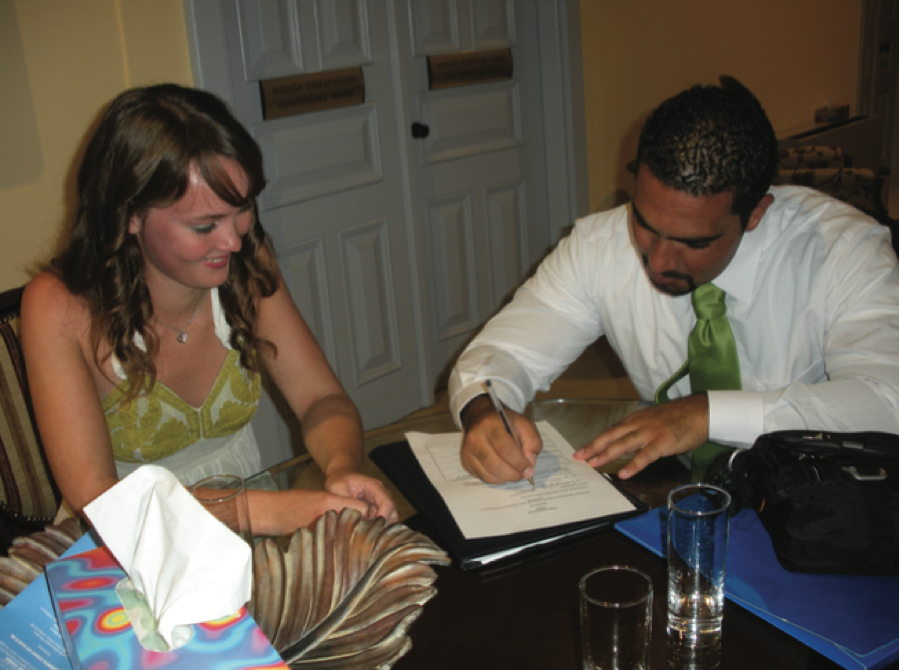
The wedding season has arrived this summer, which means not only fireworks, flowers, beautiful designer gowns, tuxedos and people spending half their salaries on wedding lists, but also pairs of souls bound for life, for better or for worse, for richer or for poorer, in sickness and in health.

For better or for worse is not always easy. Marriages that last a lifetime need an extra dose of planning, a sprinkle of good faith and a pinch of foresight. Just like human beings, corporate organizations make vows to their stakeholders and decide to engage in a long term union, expecting the beautiful and glowing life “à deux,” only to realize it takes more than love to make a marriage successful.

When people are engaged they are eager to show their finest and most admirable qualities and behavior. They are enthusiastic to confirm to their soul mate that they have all the outstanding qualities and the most favorable persona. They are both excited to discover their shared values and beliefs. In fact, they are building their image as the best future husband and wife. They are striving to capture the other person’s heart in a way that ensures they could never think of marrying someone else.

This period of courtship is similar to when a company first enters into a new venture, whether establishing itself on the market or launching new products and services. During this crucial period, the company’s main objective is to build a particular brand image that would ultimately attract its targeted stakeholders. These can include employees, customers, suppliers, investors and the general public. Employees, for example, will only join a company if they can identify themselves with its image. This brand image is the most important asset for the company as it establishes its personality and differentiates it from the competition. A meticulous branding strategy driven by the company’s aspired image should therefore be developed at the first stage of a new venture, serving as the basis of future relationships with different stakeholders.

‘Getting to know each other’ soon leads to popping the question and a marriage proposal to the woman, or more commonly today, the man of one’s dreams. Similarly, a company backed with a meticulous brand image “proposes” to its stakeholders by asking them to invest, be employed, become clients or join the company. For this “engagement” to take place, the man and woman, or in another case, the company and its stakeholders, should share the same values. This is absolutely crucial before plunging into marriage or partnership. Values are what make up the core of a person or an organization. These are the beliefs, principles and standards which they abide by in each and every aspect of life or business.

Having established a set of values and gotten engaged, it is now time to talk about marriage. A couple should at this stage discuss and plan their future together. Two independent human beings are about to take a step forward and make vows to be together for the rest of their lives. These two people in love should now project a vision of their life together. Just like that, a company plans a union with its stakeholders. At this stage, a couple should discuss the potential of raising a family together. Similarly, a company should project how it will stand in the next five years or so, clearly defining its vision and objectives, and then communicating these to its stakeholders. All actions and initiatives that follow should be aligned in order to ensure that the mission is being applied and the vision reached.

When the big day comes, two people become bound for life. After the rosy pre-wedding period and the beautiful reception, real life, with all its ups and downs, begins. No matter how strong love is, a marriage cannot survive or succeed without transparency, a vertebra in the backbone of marriage which keeps a couple together. It is essential to remain transparent about all emotional issues, financial matters and future plans, whether communicating with one’s partner or stakeholders. A company, like a husband or wife, must provide timely and accurate information to its stakeholders and communicate as frequently as possible through two-way communication mechanisms. Open communication is the key to avoiding potential negative attacks and ascertains the company’s credibility.

Another vertebra is consistency in image and substance. One day of “I Love You’s” followed by another day of the cold shoulder makes a marriage rocky. A couple should maintain a level of consistency in the way they deal with and react to each other. Following the same logic, a company committed to its stakeholders should abide by a high level of consistency and avoid any kind of schizophrenia in its image and business conduct. As such, the company should adopt a clear communication strategy which ensures alignment and consistency across all messages.

However, consistency does not necessarily suggest routine and predictable behavior. Communication between a husband and his wife can be translated into various gestures of appreciation. Some of these gestures can cost a foot, arm and a leg while others can be extremely easy on the pocket. One husband can express his love to his wife by buying expensive jewelry; another can opt for the low-cost option and leave small post-its all over the house or write cute notes on the bathroom mirror.

There are innumerable channels that can convey a person’s or a company’s message to a specific audience. These channels can range in price, but the key is to achieve cost efficiency by using the best channel for the particular message. For example, instead of launching an expensive advertising campaign, a company might only need targeted ongoing initiatives like viral videos, round-table meetings, editorials and articles. Diversification in communication helps avoid routine and preserves the impact of a communication message.

On the other hand, no matter how diversified the communication between a couple, all marriages are exposed to crises. These crises can emerge when many small issues remain unresolved and the smallest argument, regardless of its importance, becomes the straw that breaks a camel’s back. A person can avoid these crises by solving all issues before they accumulate and by knowing what irritates their spouse.

Crises in the corporate world can emerge in the same way as in marriage, and can also be avoided by the same crisis management logic. Just like in marriages, crises that are not resolved in the corporate world can lead to a “divorce” and can have damaging repercussions on the company’s image, reputation and financial equity. Establishing an effective crisis management mechanism, just like going through marriage guidance counseling, can address and mitigate crises through effective communication messages and initiatives. Moreover, these crises can be avoided altogether through preemptive measures that primordially consist of a solid communication strategy that can provide a company’s image with a shield of immunity against any potential negativity. Additionally, in the unforeseen and much unwanted event of a “divorce,” a good communication strategy would spare the two parties deep or irrevocable injury, whereby they decide to separate but still remain on good terms.

As psychologist Michael Cavanagh once said, communication in a love relationship is like an intravenous feeding tube that is attached to each partner. The relationship flourishes when nutrients flow through the tube; it turns toxic when poison is fed through it, and becomes anemic when little or nothing flows through it. Similarly, the amorous relationship between a corporate organization and its stakeholders requires just the right amount of “nutritious” communication in order for it to thrive happily ever after.

Dima Itani & Ramsay G. Najjar
S2C

The authors of Executive Insights have been invited by this magazine to offer their professional opinions and analysis to you, the reader. Executive Magazine does not endorse the analysis of Insight authors, nor should the Insights be interpreted as reflecting the views or opinions of Executive or its editorial staff.

August 1, 2009 0 comments
0 FacebookTwitterPinterestEmail
Executive Insights

How to lead the ‘King of Pop’

by Tommy Weir August 1, 2009
written by Tommy Weir

This past month, as the world mourned Michael Jackson’s untimely death, we remembered the great times he gave us over the years and the impact he had on us. Jacko, King of Pop, MJ — no matter what name you call him by, Michael will be a part of our memories and his music will continue to brighten our days when we hear it. We will cherish our memories of trying to moonwalk; of mimicking him by wearing a single glove or white socks; or of attempting to imitate the Thriller dance. Michael helped to shape generations all around the world.

As I watched the news and relived younger days through the music videos, or short-films as Michael called them, a question popped into my mind: “What can we learn about leadership from Michael Jackson?”

We can look through the lyrics of his songs to see if any give us leadership insights, which they do. But there is a much more important lesson we can learn from the King of Pop.

The first lesson can be found by asking, “How would you have gone about managing Michael Jackson?” How well do you think you would have done? To determine this, let’s consider the facts about Michael Jackson. As you read them try to not to reminisce, rather think about what you would have done and how you would have reacted if you were leading him.

The facts

• By the 1980s he had become infinitely more popular than his brotherly group, The Jackson 5.

• Michael holds the record for the most Grammys won in one year: he won eight in 1984.

• He popularized the “moonwalk” and created a dance movement.

• He has sold hundreds of million albums worldwide.

• He dated Brooke Shields and married Lisa Marie Presley.

• He was the first solo artist to generate four top ten hits on the Billboard charts off of one album, “Off the Wall.”

• He was the first artist to generate seven top 10 hits (US) on one album, “Thriller.”

• He was the only artist in history to generate five “#1 hits” (US) from one album, “Bad.”

• “Thriller” is the best-selling album of all time: in excess of 100 million copies sold worldwide.

• “Dangerous” is Michael’s second best-selling album of all time, with more than 30 million copies sold worldwide.

• “Bad” is Michael’s third most successful album, with 30 million copies sold worldwide.

To summarize, MJ was a musical prodigy who was born to be a solo success. At a young age, his singing and dancing talents were amazingly mature and he soon became the dominant figure of an entire industry, entertaining audiences for nearly his whole life. He was one of a kind, a real superstar.

The reactions

So, what would you do if you had to manage Michael Jackson? After working with over 700 chief executive officers in the Middle East (2,000 worldwide), let me share an insight into what most leaders would do.

Most leaders would
• Try to make him normal: Leaders habitually fail when it comes to making a superstar.

• Get jealous: Leaders do not like to share the stage nor do they do well with followers who are more popular than they are.

• Try to make him a team player: Leaders focus on group performance rather than maximizing solo success, which in the case of Michael was inevitable.

• Avoid controversy: Leaders do not like controversy or bizarre behavior, which makes him a consistent target for scandal-making and criticism. Jackson frequently drew controversy.

When it comes to managing a superstar like Michael Jackson, most leaders think it would be awesome, but in reality they would try to change the superstar, get jealous, not trust him, try to make him normal and ultimately try to get rid of or destroy him.

What leaders should do?

When someone has unmatched talent like Michael, a leader needs to discover how to use it for the whole organization to win. This means they cannot fall into the trap of jealousy. The leader has to accept the eccentric behavior, as this craziness is what allows the superstar to do things that others don’t even dream of (the source of their stardom). It also means that the leader will most likely be overshadowed and, if not, will need to step out of the spotlight. But in the end, there will be success.

By not managing a “Michael Jackson” type properly, a leader will lose record sales and maybe even screw up the biggest-selling album of all time, “Thriller.” Remember, people who are destined for greatness will make it with or without you.

So are you ready to manage Michael Jackson?

Tommy Weir is managing director of leadership solutions at Kenexa
 

August 1, 2009 0 comments
0 FacebookTwitterPinterestEmail
Comment

The bubble’s jagged edge

by Paul Cochrane August 1, 2009
written by Paul Cochrane

Reporters have to watch where they point their cameras as the UAE cracks down on media

For business journalists, writing about the Gulf from 2004 to 2008 was often a repetitive process. Regardless of the sector being covered, the opening paragraph would invariably have a growth figure in the double digits, and the projection for the next year would also be a very healthy one. Every year was a record year, or so it seemed.

The global financial crisis in the autumn of 2008 dimmed the Gulf Cooperation Council’s business fortunes, flipping that opening paragraph to negative double digits or growth in the low single digits, depending on the sector. This change was welcomed by many business journalists, if only to spice up their writing, but of course not by the business community.

The reasons behind strong growth can be easily explained, but a downturn and a serious contraction in revenues requires a different explanation, and it was time for journalists to start asking hard questions — at least it should have been time to play hardball.

However, just as the crisis was beginning to bite, the government of the United Arab Emirates introduced a draft media law in January to update the archaic 1980 law. Media outlets quickly understood the ramifications of the proposed rules, which include article 32, whereby journalists can be fined up to $1.3 million for “disparaging” government officials, members of the royal family or Islam, and article 33, which fines journalists up to $136,000 for harming the nation’s image and reporting “misleading” information on the economy.

Given such fines, way beyond the financial means of most journalists and media outlets, how could hacks ask hard questions? And how could journalists report on companies and firms that were in trouble but directly linked to royal families? It is a clear Catch-22 situation: journalists want to do their job, and the public and investors have the right to know about financial shenanigans, but to do so could come with a hefty price tag, and if you can’t cough it up, it’s a stint behind bars in the debtors’ jail.

The whole notion of transparency became a mockery, and the depth of the financial crisis’ impact was barely debated in the media, at least not in the UAE and the other GCC countries, where media laws are similarly draconian.

How ingrained such self-censorship is among Gulf journalists was evident in the headlines and articles in the aftermath of the bomb Dubai World dropped on global markets by announcing a standstill in billions of dollars of debt repayments. The Gulf News gushed across its front page: “Government intervention to ensure commercial success,” the Abu Dhabi-owned The National downplayed the impact with the headline: “A silver lining in Dubai World,” and the Khaleej Times espoused optimism with: “Restructuring ‘A Sensible Business Decision.’” Elsewhere, papers’ headlines were of “castles in the sand,” “Dubai in turmoil,” and “Bombshell decision has severely damaged Dubai’s reputation.”

But while papers outside the region can tell it as it is, reporting on what has already been reported can even be a risky business in the rest of the Middle East.

In one case, a UAE-based journalist wrote an article on the new media law for the American University of Cairo’s (AUC) Arab Media & Society (AMS) website. In it, she referred to a case in May where British daily The Independent ran a story about a case of fraud in which a Dubai developer showed investors photographs of buildings under construction, but were in fact photos of another project. The investors demanded a refund, but until now they have not been reimbursed.

The developer is the Al Fajer Group, run by Sheikh Maktoum bin Hasher Al Maktoum, who is the nephew of Dubai’s ruler. For citing — not breaking — this story, the Maktoum’s threatened to sue AUC.

What this case highlights is the lengths to which the UAE will go to try and rein in negative media coverage. Furthermore, the case has warded off necessary reporting on dubious tactics by developers, which damage the reputation of the real estate sector at the very time when the sector is suffering, with real estate prices down 50 percent in Dubai from their 2008 peak, and investment bank Union de Banques Suisses projecting in November that it could take up to 10 years for the sector to bounce back.

The last thing the sector should want in such a tenuous climate is jittery investors. As an Al Fajer investor told The Independent, “This is going to define my faith in the country. If I’m dealt with correctly, great. But at the moment, it’s not going that way. We’re in the witching hour now.”

That witching hour extends to media coverage, transparency in economic data and whether firms connected to the royal family are being unfairly assisted and bailed out at the expense of ‘ordinary’ companies trying to compete in a supposedly free market. As for us business journalists, reporting on the Gulf is certainly keeping us on our toes as we cover, or indeed cover up, the Gulf’s (mis)fortunes, and try to avoid getting fined a lifetime’s salary in the process.

PAUL COCHRANE is the Middle East correspondent for the International News Service

August 1, 2009 0 comments
0 FacebookTwitterPinterestEmail
Lebanon

Architecture – Lest we forget

by Executive Staff August 1, 2009
written by Executive Staff

On the corner of Beirut’s Sodeco crossing stands one of the city’s most emblematic buildings, one that epitomizes both the city’s history and the ravages of the Lebanese Civil War.

The Barakat building is one of the last standing war-torn structures around the center of Beirut, a symbol of the city’s progress and architectural heritage. The building’s construction began in 1924 under the watchful eye of Youssef Aftimos, one of Lebanon’s most famous architects, who also designed Beirut’s municipal building. The first two stories of the four-story building were built out of stone because concrete had yet to be widely used in construction. By 1932, concrete was all the rage, and two more floors were built, making the building one of the first, and last, remaining structures in the city built in this fashion.

Barakat is actually two buildings conjoined together, with much of the space between them consisting of a wide void that gives almost every room a view onto the street — including the rear rooms. This architectural peculiarity gained the building much acclaim as a piece of avante-garde architecture, blending Art Deco and Ottoman styles. But because the building commanded a strategic position on one of the major fault lines of the Lebanese Civil War, the Green Line, it became a premier fighting position in 1975. Christian militiamen built reinforced sniper positions in the rear of the house, away from the windows, and the building’s architecture gave them a near 180 degree view of Sodeco square and beyond. Sitting in their concrete and sandbagged sniper nests, militiamen had a line of fire to  Basta, Ras al-Nabaa, the French Embassy on Damascus road, and nearly to the Hippodrome and the Beirut Museum of Antiquities.

Saving the past
After the civil war ended, the building’s owners, the Barakat family, decided to tear it down in order to sell the land that by then had become prime real estate. In 1997, as the building was being demolished to make room for a new real estate project, one activist decided to try to save the building.

“By a stroke of luck I saw it,” says Mona Hallak, an architect and preservation activist who spearheaded the campaign to save the Barakat building. “After five days of a heavy press campaign, it made such a fuss that the minister of culture became embarrassed and suspended [the destruction] verbally.”

The verbal suspension took a total of nine years to materialize into an official government decree to renovate the Barakat building to house the “Museum of Memory.” The building was purchased by the Beirut municipality for some $3 million from the Barakat family.
Since then the building has stood idle and may well have remained as such if it were not for Lebanon’s former colonial rulers.

“The French are agreeing with us preservation activists and pushing this project along,” says Hallak, who is also on the scientific committee that is coordinating between the various stakeholders of the project. The municipality of Paris has assigned a delegation comprised of a restorer, an architect and a museum curator to provide “technical assistance” to the Beirut municipality.

The delegation was scheduled to make its first trip to Lebanon in 2006 but had to cancel that, and several subsequent visits, because of  armed conflict and political turmoil in the country. They finally made it in November 2008, helping Beirut municipality to choose an architect to devise a program for the project.

“We pushed for an architectural competition [but] we didn’t get it,” says Hallak. “[The Beirut municipality] listed an architect and it’s now in the process of being approved.”
The French embassy in Beirut was not available to comment on the issue.

So far, it’s not clear what “memories” the Museum of Memory will house. Some want the bullet-riddled building to be cleaned up and restored, like in Beirut’s central district, and the museum to focus on the capital’s ancient history. Other say the building should be left as it is, with bullet holes and blown out walls incorporated into a museum that would document the history of the civil war.

Without a solid program and vision in place, the museum’s content cannot be finalized because restoration efforts will need to take the contextual elements on display into consideration. Nonetheless, the municipality insists that things are on the right track.

 Ralph Eid, head of the committee at the municipality that is overseeing the project, says an architect has not been announced due to an “administrative procedure” and the announcement should be made “in about a month.” According to Eid, the project, which he estimated to cost around $6 million, was open to public submission to which “only six people submitted proposals.”

Today the building is wrapped in a massive plastic banner that serves as advertising space to promote everything from instant coffee to the ruling March 14 coalition’s recent election victory. Eid says the decision to post ads was made in order to “save money” through a deal with an advertising firm — he declined to name the company — whereby they would erect the scaffolding in exchange for “25 to 35 percent of the space to be used for advertising.” He says the advertising will be removed soon.

When reconstruction comes
As for the actual construction of the project, Eid believes that the first cornerstone could be laid in six months and it would be “fair to say” that the project will be completed by 2012. But this may be “too optimistic,” says Hallak. Supposing the architect that has been chosen is commissioned and comes up with a program that satisfies all the stakeholders, the contracts must then be put out to tender and only when a contractor has been chosen can work begin. Moreover, the clock is ticking: any government decree that is not implemented within eight years of it being issued can be overturned, meaning the original owners can lobby to get it back, still a real possibility given the project is expected to be completed one year after the eight year grace period.

It seems that the constant delays are once again threatening the project’s implementation. Hallak says without a place to recall the horrors of the civil war, the Lebanese risk returning to the bloodletting of darker days.

“This city has not attempted on a public level to deal with the issue or do any kind of reconciliation,” says Hallak. “This building will initiate a process that, if not initiated, means my sons or your sons will fall back into war. If you don’t deal with it, it is going to come back.”

August 1, 2009 0 comments
0 FacebookTwitterPinterestEmail
Finance

Bank BEMO – Samih Saadeh (Q&A)

by Soraya Darghous August 1, 2009
written by Soraya Darghous

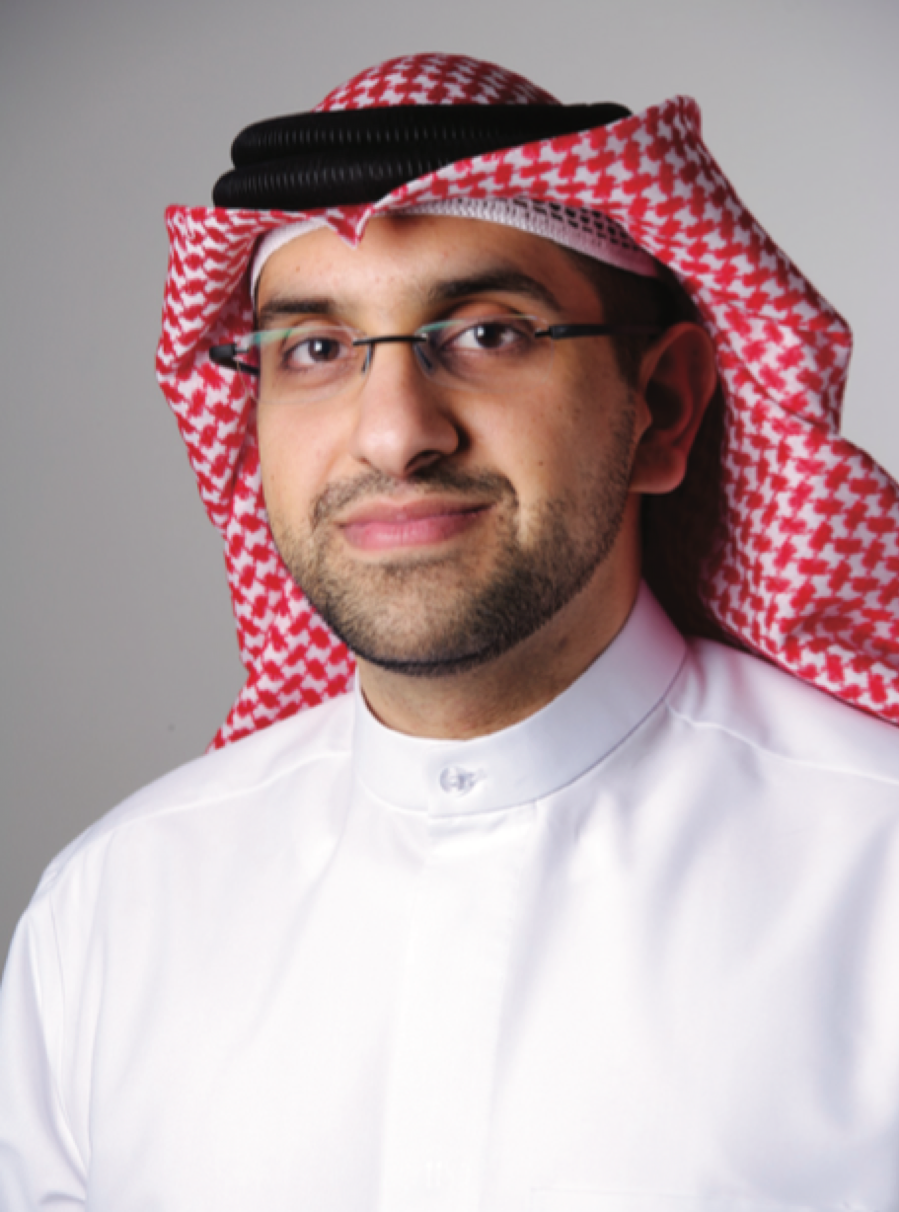
Samih Saadeh is general manager of Lebanon’s 18th largest bank, Banque BEMO, and has been with the bank since 2003. He started working in the banking industry in 1978 and has been a senior executive at American Express Bank-Beirut, Bank of Beirut and ABN AMRO Bank.
Bank BEMO has total assets of $1.05 billion, and if the bank’s Syrian affiliate is included, some $3 billion. In the first half of 2009, the bank’s total assets grew by 15.6 percent.  Executive sat down with Saadeh to talk about his bank’s success and gain insight into the role smaller banks play in Lebanon today.

Samih Saadeh

E As a medium sized “beta” bank, how does your strategy differ from an alpha bank? What are the top priorities on your agenda?

This is a board decision, it’s the oversight of the bank. We compare our private banking to Bank Audi Saradar sometimes, yes, [but] on a smaller case though, because they have larger capital and client base. Certainly when you have a universal bank you have a larger client base, which allows you to make more money and to be more exposed.

What we’re trying to do on a smaller scale is have a boutique bank, instead of having a universal bank. I respect everybody’s strategy, I probably agree with other’s strategy sometimes — because it’s faster to make money and grow — and you come to BEMO and you see it’s very little and a bit slower.

If you want to be a private bank in this country, you really have to have political stability. If people want to believe in putting money with you, you don’t have to rely on the locals. I hope one day the political stability arrives, but this is one of the missing links in the chain to complete the services of Lebanon as a financial center. All of the potential that Lebanon has is not prospering because of the political instability. People want to trust this bank in 10 or 20 years, and this is what we are betting on. We want to build this; we want to complete this closed chain in Lebanon.

E Now, how to survive? Bank Audi, for example, has built a lot of things around their vision and one of them is private banking.
Corporate banking and retail banking need a lot of capital. You need to either open capital or get other investors. Private banking, in reality, doesn’t need a lot of capital. It needs a lot of know-how, conservatism and trust.

E What kind of customers do you cater to?
We as BEMO have a different strategy than Lebanese banks. We don’t want to play volume. We would like to grow, certainly, but if you want to grow you have to have large capital and to possibly go into retail banking. You also have to have a strategic vision for the bank, which allows you to be like any other bank. In Beirut, we’re very specialized. Our motto is ‘corporate and private banking.’ We don’t do retail banking — we do to an extent though.

Recently we started to buy some Lebanese government sovereign paper. If you want to collect deposits and you don’t put it in a sovereign bank, you have to lend it. You are bound by ratios as well, on how much you lend. There is a limitation to how large we can grow in volume. So we always look at how much we can grow in fee income, not how much we can grow in volume. Even if I get a large deposit today, I lose a lot of money. Either you put it in the government, outside, or with the central bank. Even if the central bank pays for you half a point — you lose a lot of money.

Originally Lebanese banks collected deposits — they lent around 50 percent and placed with the government and the central bank up to 55 percent. We, on the contrary, have 25 percent with the central bank, and with the government we have 3 percent to 5 percent, not more. This is why growth is a limitation to us. If you compare us to the rest, we are a beta bank in volume, but our strategy forbids us from being an alpha bank, even if we wanted to.

E How has the bank’s strategy changed since the global financial crisis struck and now after?
Banque BEMO has always had the strategy to grow to be a private bank whereby we would be acting as a financial advisor for every high net worth individual throughout their life — no matter what stage they are in. If you want to act as a financial advisor, you need to build the reputation. Building this reputation takes decades actually. We’re building on the heritage the Obegi family has, for the last 50 years. Now we have another decade to work on, to earn this trust from the people. Also, we use a business model of relationships. That means every client has his own financial advisor or relationship manager.

When the financial crisis came — and this is an approach to private banking — people stopped dealing and we make a lot of money on people making deals. So part of our income was hurt… Now, it’s catching up, thank God, the trust is starting to be rebuilt. People are getting into the market.

On the corporate side, we didn’t suffer at all. We had a certain amount of money lent, and we had lent it. In percentage, we are the highest lent bank to corporates in the country. We are lending around 45 percent of our total assets to corporates. We don’t go into the government too much.

Private banking income was a little bit on a standstill. We hope that it will catch up again.
We didn’t change our strategy, it stayed the same… we just weren’t aggressive in pursuing it in the last year. But the board decided that strategically this is what they want. They want to stay as a private, corporate bank.

E Since the financial crisis, how has your advice to your clients changed? What are the most common investments you tell them to make?
Frankly it’s not easy to let them come back. Everybody lost, depending on the extent of the loss — nobody can claim they didn’t lose… If they bought their portfolios five, 10 years ago or two years ago they probably didn’t lose — the starting point is most important [factor]. We are inviting them to come back because the markets are starting to pick up, there’s a lot of opportunity. But, be prudent at least. You have the safe investments, if you go into medical and commodities. There are aggressive and risky investments like financials. Depends on your profile. We always split our client base into categories.

E Recently, the International Monetary Fund said Lebanon’s economy could grow much faster than their previous projection of 4 percent. But, the IMF emphasized that the top priority for Lebanese banks should be dealing with the public debt. What is your take on this?
This is quite a thorny issue. Who is right? Imagine if the banks didn’t give money; what would have happened? Also, imagine that we didn’t have this flagship of the economy — the banking sector — nobody would have heard of it. The economy is built on the financial sector.

Certainly, the financial sector is benefitting from lending to the government, but it’s also to the benefit of all stakeholders. We were saved from the financial crisis because our debt was local. Lebanese banks cannot stop financing the government; it’s in their interest now.
For me, the public debt is the least thing we should worry about. If we spent the same time talking about the debt on increasing productivity, the GDP of the country would soar.

Recently, Lebanon’s GDP increased to $33 billion; it could be $50 billion! This year we have a growth of 6 percent, when everyone else around the world is suffering negative growth. Imagine if there was political stability; the growth could be far higher.
Debt is not a problem as long as you generate productivity!

August 1, 2009 0 comments
0 FacebookTwitterPinterestEmail
  • 1
  • …
  • 455
  • 456
  • 457
  • 458
  • 459
  • …
  • 687

Latest Cover

About us

Since its first edition emerged on the newsstands in 1999, Executive Magazine has been dedicated to providing its readers with the most up-to-date local and regional business news. Executive is a monthly business magazine that offers readers in-depth analyses on the Lebanese world of commerce, covering all the major sectors – from banking, finance, and insurance to technology, tourism, hospitality, media, and retail.

  • Donate
  • Our Purpose
  • Contact Us

Sign up for our newsletter

    • Facebook
    • Twitter
    • Instagram
    • Linkedin
    • Youtube
    Executive Magazine
    • ISSUES
      • Current Issue
      • Past issues
    • BUSINESS
    • ECONOMICS & POLICY
    • OPINION
    • SPECIAL REPORTS
    • EXECUTIVE TALKS
    • MOVEMENTS
      • Change the image
      • Cannes lions
      • Transparency & accountability
      • ECONOMIC ROADMAP
      • Say No to Corruption
      • The Lebanon media development initiative
      • LPSN Policy Asks
      • Advocating the preservation of deposits
    • JOIN US
      • Join our movement
      • Attend our events
      • Receive updates
      • Connect with us
    • DONATE