• Donate
  • Our Purpose
  • Contact Us
Executive Magazine
  • ISSUES
    • Current Issue
    • Past issues
  • BUSINESS
  • ECONOMICS & POLICY
  • OPINION
  • SPECIAL REPORTS
  • EXECUTIVE TALKS
  • MOVEMENTS
    • Change the image
    • Cannes lions
    • Transparency & accountability
    • ECONOMIC ROADMAP
    • Say No to Corruption
    • The Lebanon media development initiative
    • LPSN Policy Asks
    • Advocating the preservation of deposits
  • JOIN US
    • Join our movement
    • Attend our events
    • Receive updates
    • Connect with us
  • DONATE
Comment

Defective democracy

by Norbert Schiller March 3, 2009
written by Norbert Schiller

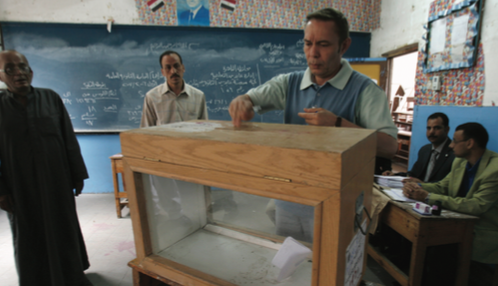
Over the past quarter century, I have witnessed countless presidential and parliamentary elections in the Middle East and North Africa. I cannot remember one that went off without voter intimidation, violence or vote rigging. In fact, every time an election is announced it almost seems as though the country holding it is preparing for war. The military is mobilized and placed on high alert; buildings housing radio and television stations as well as government offices become armed fortresses and a feeling of doom grips the nation.

As a journalist, I have had rough times covering elections in the region. I have been arrested by police on multiple occasions. In one well documented case, during the 2000 parliamentary elections in Egypt, I was beaten up and had all my photographic equipment smashed to pieces. Thugs, or ‘baltaguiya’, hired by Egypt’s ruling National Democratic Party (NDP), accosted me as I was leaving a polling station in the center of Cairo and threw me to the ground, while taking all my equipment from me. If this had happened in a dark alley it would be one thing, but the attack took place in broad daylight right in front of roughly two-dozen armed police there to protect the polling station. After getting up, I called for the policemen’s help. But all I got from the senior officer on the scene was a denial that any such attack had occurred.
Since I moved to the Middle East, there have been seven presidential elections in the United States. Each president that has come to power during this period, except for Obama, has either served the maximum two terms or was defeated after his first four years in office. Over the last 25 years, elections in the US have been free of violence, intimidation and vote rigging. The only major hiccup occurred in 2000, when votes in Florida had to be recounted by hand because of irregularities with the vote counting machines. In the end, the problem was settled in a civil manner by the Supreme Court.
Presidential elections in the US have almost a festive mood about them. They come every four years like clockwork just before Thanksgiving and right in step with the holiday season. When it’s all over there is a period of reconciliation when all Americans — Democrats, Republicans and Independents — unite knowing full well that the system put in place by the founding fathers over 200 years ago, is still alive and well.
In most instances, elections in the Arab world are anything but festive, and elections for the highest office have proven to be nothing but a farce. Of the 22 member nations in the Arab League there are eight monarchies that don’t even pretend to be democratic. When it comes to the appointment of the highest office, they just appoint the next of kin to the throne. Then there are the so-called democracies. Egypt’s Mohammed Hosni Mubarak has been in office for almost 30 years, since Anwar Sadat was assassinated in 1981. The vast majority of Egyptians have known no other head of state. Sure, he has held countless referendums, many of which I covered, but the outcome of these referendums has always been the same. Take the 2005 election, the only time in Egypt’s history that a presidential election was contested by another candidate. In the end, Mubarak took 88.6 percent of the votes and the challenger, Ayman Nour, not only lost the election but was sentenced to five years in jail for supposedly “forging powers of attorney” to secure the formation of the his political party, al-Ghad — a charge he vehemently denies. Last month, he was mysteriously released after serving three years.
In many Arab countries, democracy equals a referendum, a mechanism used by autocratic regimes to appease Western calls for democratic reforms. In reality, a referendum is nothing more than an approval rating, which rarely dips below 90 percent. Besides Egypt, referendums are popular practice in Syria, Tunisia, and Yemen.
Algeria experimented with the democratic process, but when the FIS (Front Islamique du Salut) was set to win a parliamentary majority in 1992, the military stepped in and annulled the election. The military’s action sent the country into chaos and civil war for the better part of the decade, killing an estimated 100,000 people.
Lebanon knows a thing or two about chaos and when elections are held there is always a lingering fear that the country will disintegrate once again into civil war. The next elections are scheduled for June 2009 and since they were announced almost six months ago, it is as if lines are already being drawn. Chances are that nothing major will happen, but if the fragile sectarian balance is altered, nobody knows what may happen.
America’s presidential electoral system is imperfect, but it has been tested for more than 200 years. A valid complaint is how a country with such a diverse population can have only two major political parties. Despite this flaw, with every new administration there is a major change in policy that has worldwide repercussions. Let’s all hope this new administration will repair the damage done by the last and once again shine the light on the democratic process. As one friend so appropriately put it, “not an abomination, rather an Obama nation!”

Norbert schiller is a Dubai-based photo-journalist and writer

March 3, 2009 0 comments
0 FacebookTwitterPinterestEmail
Executive Insights

Value creation within the pale of crisis

by Mahmoud El Ali March 3, 2009
written by Mahmoud El Ali

The spillover of the current financial crisis into the main economy is fast raising the specter of a global recession. A natural reaction is for companies to batten down their hatches in anticipation of the coming storm. But natural reactions are not always the ideal ones. Companies that cut investments and headcount in previous recessions have found to their cost that they could not respond to the upturn when better times came.
It is the brave and the leaders who take advantage of temporary downturns to invest, retool and regroup. It is the Warren Buffets, who start buying when the market is down, that will emerge stronger.
In October, research firm Gartner revised its 2009 global IT spending growth forecast from 5.8 percent to 2.3 percent but also maintained that, despite reduced growth, recession in IT spending is unlikely. The research firm noted that the industry has remained fundamentally strong, with replacement cycles in emerging regions and technology shifts, such as renewed interest in cloud computing, helping to sustain the industry through the tough times.
One could argue that delaying IT and networking investment until an upturn is the most logical move in this age of uncertainty, but enterprises could — and should — see this period as an opportunity to pursue IT expansion. Organizations should be searching for higher value solutions to help them drive efficiency now while they prepare for better days. Now is the time to leverage the availability of more cost-effective equipment and support.
If anything, the current financial crisis is helping to usher in the next cycle of networking that research firm IDC calls “flight to value,” a phase when customers re- evaluate their IT and working investments based on a number of factors, including technological pervasiveness, flexibility, sustainability and pricing.

Linking the value chain
Such re-evaluation will inevitably take us back to fundamentals, and that is to the basic IT infrastructure, or what could be termed as ‘infostructure.’ That infostructure is the corporate network that today has become the central nervous system for enterprises. However, much has changed in this past decade. The corporate network today links not just its software and hardware, but also its ‘heartware’ — employees, customers, partners, distributors and other stakeholders. By linking the creators of value, the network becomes the company’s own value chain. Indeed, it would not be an exaggeration if we were to say that ‘the network is the company’.

Network value creation
Viewing the corporate network as the company’s central nervous system can create a paradigm shift from the network as a cost center to the network as a mission- critical creator of value. Organizations are discovering the economic advantages of converging their various communications systems into a single network infrastructure. They are deploying IP telephony and increasingly, video over IP on their networks, thus saving on the costs of maintaining two separate network infrastructures. Others are deploying video over IP as a backbone for their security surveillance systems. ‘One network, many services’ has become the new clarion call.

Beyond cost savings
Perilous times such as these invite critical re- examinations of investment portfolios. IT investments will not be excluded. As mentioned earlier, such re-evaluations must include IT not as a cost center but as a creator of business value. It’s not just about cost savings. The ‘flight to value’ should not be confined to acquiring lower-cost alternatives. Rather, this is a good opportunity to look at how much each investment dollar can be stretched. Companies can translate the lower costs they enjoy on a network upgrade into a bigger redundant network. By acquiring additional network switches on the same budget, they can create a redundant network and ensure uninterrupted operations for their business activities.
Another important aspect of IT investments is long-term investment protection, which often relates to the issue of open systems and standards. Most network solutions today are open, but it can be argued that some are more open than others. A network infrastructure that creates interoperability problems with other vendors’ equipment, or one that locks you in with one vendor, cannot be considered open. It is also an investment that may not be fully protected. A truly open network architecture must enable and support other third-party solutions, as well as the development of open-system plug-ins. Investment protection must also include future-proofing your network infrastructure to support new and emerging services. Again, the full support of industry standards, as well as the vendor’s active involvement in the development of those standards, will be critical in protecting your network investments for the long term. These are hard but interesting times for many companies, but for discerning managers this is an excellent opportunity to create new value from your network investments.

Mahmoud El Ali is general manager, Middle East and North Africa for 3Com

March 3, 2009 0 comments
0 FacebookTwitterPinterestEmail
Executive Insights

Dialing into customer-centricity in telecom expansion

by Hilal Halaoui & Adel Belcaid March 3, 2009
written by Hilal Halaoui & Adel Belcaid

Over the last few years, Middle Eastern governments have significantly opened up their telecommunications markets and broken up the monopolies of their state-owned, historic operators. Spectrum licenses were awarded at record prices and the new entrants engaged in head-to-head competition with the incumbents. As a result, mobile penetration soared and rapidly exceeded the psychological limit of 100 percent in many markets. In Saudi Arabia, for instance, mobile penetration was hovering around 30 percent in 2003. In 2008, it quadrupled to 120 percent according to Booz & Company analysis. While this spectacular growth brought countless benefits and choices to the end-users, it does mean today that mobile subscriber acquisition in the mainstream market has become a more difficult challenge. Thus, to achieve the growth and returns their shareholders have come to expect, leading Middle Eastern mobile operators have essentially pursued a two-pronged approach: on the one hand, they want to maximize the value capture from their domestic markets and defend their positions; on the other hand, those who can afford to are seeking additional growth in foreign, less penetrated markets.

While international expansion comes with an evident load of challenges that several Middle Eastern players are facing for the first time, maximizing value capture in the domestic market is, perhaps unexpectedly, no less challenging. It requires mobile operators to pursue, also for the first time, smaller niche segments, which typically crave customized value propositions and are usually ill-served by the generic, one-size-fits-all offerings that prevail in the mainstream markets.

Answering the call
Successfully pursuing niche segments is no small task for most operators in the region. It requires major discontinuities in just about every aspect of their business: strategy, branding, technology, organization structure, human resources, corporate culture… no area is spared! But mobile operators will find comfort in convergence, which comes with just the right toolkit to make them relevant to niche markets, at least from a technology point of view. Indeed, the convergence of media, fixed and mobile communications is making it possible for mobile operators to keep growing through customized value propositions targeting different customer segments. Mobile content is witnessing exponential growth and technology innovations, such as IMS (IP Multimedia System), promise superior and unprecedented user experiences centered around convergence. These game- changing technology developments are disruptive enough to not only bring niches within “business-case-proof” reach of mobile operators, but also to re-invent the mass market game and effectively turn it into a long tail of niches and segments, each with their own needs and wants and each with their own willingness to pay.
This is nothing short of a revolution in the mobile communications space and could mean a vast blue ocean of opportunities for players able to take advantage of them and augers well for the industry as a whole. Indeed, mobile operators stand to reap the benefits of price discrimination, service bundling and content differentiation, and the move away from cut-throat price competition that is characteristic of a mature or declining industry.
To make the most of this technology-driven opportunity and durably rejuvenate their domestic markets, regional mobile operators must first develop strategies aimed to firmly and unequivocally embrace convergence and its ‘customer first’ corollary. Their strategic intent should be to further their customer intimacy and understanding, to leverage the new technology-driven capabilities of convergence to come up with pertinent and multi-platform offerings that customers are willing to pay for. They should aim to provide integrated, end-to-end solutions that grow their shares of the customer wallet and reduce churn by increasing switching costs to customers. Next and foremost, regional mobile operators need to embark in major organization restructurings, moving away from product-centric organization and towards customer-centric structures. They should organize around well-defined customer segments while preserving any scale or scope advantages they might be deriving from their legacy structures.
A notable example of such restructuring is the Saudi Telecom Company (STC), who was among the first industry heavyweights to embark in a major structural transformation sparked by its FORWARD corporate strategy. At the heart of the FORWARD strategy lies the customer, whether an individual, a small business or a large corporation. To execute its ambitious corporate strategy, STC adopted a customer-centric structure that centered around four business units: personal, home, enterprise and wholesale, each of which is focused on a broad segment of the market and has profit and loss responsibility. These market-facing units are all supported by horizontal functions such as network and shared services. Concurrently, and to support the structural transformation and durably instilled in the minds of customers and employees alike, STC conducted a major re-branding exercise that aimed at affirming its new customer-centric direction and signaling to all stake-holders the completion of its 10-year long transformation from a public ministry of the Saudi government to an agile, market-oriented telecom heavyweight.

A corporate lifestyle choice
But customer-centricity does not stop at level one of a mobile operator’s organization structure. On the contrary, it can go far into levels two, three and beyond. Functions such as marketing, sales and customer care can be entirely structured around customer segments with product teams virtually absent. Customer-centricity can also turn into a corporate “lifestyle” as far as organization structure is concerned, with customer-centric inter-BU processes and one-stop-shop windows between downstream and upstream units.
In sum, customer-centricity clearly comes in different shades and shapes and the key organizational question for any mobile operator CEO should be: How customer-centric does my structure need to be? To answer this question, mobile operators need to understand the markets they operate in, including the mass and niche components. They also need to understand their capabilities, existing and envisioned. In the former, they should have a very good understanding of market segmentation and assess the appetite of each segment for service and product customization. In the latter, they should assess their ability to offer integrated solutions and accurately address the customization needs of their target segments. In both, they should strike the right balance between supply and demand and come up with an organizational structure that is tailored with just the right dose of a customer-centricity and realism to implement it.

Hilal halaoui is a principal and ADEL BELCAID an associate at Booz & Company

March 3, 2009 0 comments
0 FacebookTwitterPinterestEmail
Comment

Strengthened by sanctions

by Gareth Smith March 1, 2009
written by Gareth Smith

When Iran introduced gasoline rationing in 2007, Ehud Olmert, then Israeli prime minister, said the torching of some Tehran gas stations showed “economic sanctions are working increasingly well.” Threats to blockade Tehran’s gasoline imports brought rebellious Iranians to the streets and the Islamic Republic to its knees. But the more things change, the more they stay the same. Since 2007, there have been two more rounds of United Nations sanctions, far tighter United States sanctions and a European Union ban on investment in Iran’s energy sector. 

And yet Iran’s nuclear program is further advanced, Mahmoud Ahmadinejad is still president and Ayatollah Ali Khamenei is still the supreme leader.

Iran’s reformists have long pointed out that sanctions strengthen the very people they are supposedly designed to undermine, enhancing the role of the state and its various agencies. US President Barack Obama was elected with a pledge to “engage” Iran, but once in office strengthened the sanctions regime developed under President George W. Bush, on the grounds it may push Iran to abandon its nuclear program. Many Obama supporters say this is the only alternative to military action — hence those who back sanctions need to show they are “working” or come up with new ideas for sanctions that will “work” better.

The saga of gasoline imports shows the pattern all too well. It was fear of sanctions — rather than, say, the chronic air pollution in Tehran — that led Ahmadinejad’s government to introduce gasoline rationing in 2007. Politicians had long dragged their feet over increasing the price of fuel from a subsidized price of 9 cents a liter, despite a consequent demand for gasoline that Iran’s own refineries were unable to supply.

When rationing was introduced in 2007, the allocation of cheap petrol was 100 liters a week, with motorists paying a higher price for any extra. The ration stayed at this level for three years, but was reduced to 80 liters at the beginning of the current Iranian year (in March) and to 60 liters in June, despite the usually higher consumption of the summer holiday period. During the summer, oil minister Masoud Mir-Kazemi put production at 44.5 million liters per day and imports at 20 million liters.

At the time of rationing, consumption was 75 million liters per day and appears to have fallen 14 percent to 64.5 million, while imports — 35 million liters daily back in 2007 — have fallen from 47 percent of consumption to 31 percent. A report in August from the Paris-based International Energy Agency forecast a 75 percent fall in the cost of Iran’s gasoline imports within five years, partly through opening new refineries and curbs in consumption. Incrediblely, the National Iranian Oil Company announced at the end of last month that a sudden 40 percent jump in domestic production had allowed the country to actually begin exporting gasoline, having covered domestic demand.

As production has increased and consumption has fallen, the sources of supply that have made up the difference have also shifted. Oil traders such as Glencore, Trafigura and Vitol, and companies such as Total and Shell began to end gasoline sales earlier this year as talk of sanctions increased. But the gap left by Western companies has been filled by Turkish refiner Tupras and state-owned Chinese companies including Sinopec.

Chinese companies have supplied around half of Iran’s gasoline imports in recent months, and there have even been reports that the Russian oil giant Lukoil, despite its substantial US retail operation, has resumed sales to Iran in a partnership with China’s Zhuhai Zhenrong. All this despite Lloyd’s of London — which has 15 to 20 percent of world marine insurance — announcing in July it would not insure or reinsure gasoline shipments to Iran. Iran’s trading partners and neighbors lack sympathy with the American approach, arguing sanctions should relate solely to Tehran’s nuclear and missile programs. The new UN measures passed in June blocked assets of individuals and entities allegedly involved in proliferation, whereas EU and US sanctions go much further. Washington’s financial sanctions seek to block from the US market not just Iranian businesses but third parties with significant dealings in Iran’s energy and financial sectors.

Widespread resentment at the US approach aids Iran’s search for partners willing to continue or expand trade. As one Iranian economist recently told me: “I actually believe Ahmadinejad likes sanctions. They help make him the underdog, standing up for his country’s rights against a superpower behaving unfairly.”

March 1, 2009 0 comments
0 FacebookTwitterPinterestEmail
Economics & Policy

Shaking up the system

by Sami Halabi March 1, 2009
written by Sami Halabi

Until recently, thelabor laws of the United Arab Emirates seemed as stationary as the tectonicplates under the Arabian Gulf. Those plates seldom shift, but when they do the result is earth shattering.

The new laborregulations in the UAE may not be as dramatic, but they do have the potentialto shake up the country’s antiquated employment market.

The regulations came inlate December in the form of a ministerial decree, an edict from the laborministry that is not actually a piece of legislation. As Executive went topress, an official document had not been posted by the labor ministry, but theminister of labor had made radio and press announcements.

Perhaps the mostsignificant reform is that workers looking to change jobs will no longer need a“no-objection certificate” (NOC) from their former employer, without whichworkers were previously barred from taking up new employment for a ‘coolingoff’ period of six months.

But this regulation doesnot apply equally to all; a classification system has been put in place tocategorize workers according to their qualifications. Those with universitydegrees or a management position can move to new jobs without the NOC, buteveryone else must remain in their jobs for two years (as opposed to theprevious three-year validity of labor cards) before they may change theiremployer.

The measure to reducethe duration of labor cards to two years is expected to save private sectoremployers $184 million in costs incurred by the defaulted contracts of the 70percent of employees that left before the three-year period. According to arecent poll of workers in the UAE by Bayt.com, a recruitment and job researchcompany, 24 percent of workers stay in their position for a period of two yearsand only 21 percent stay for all three.  

“The recent UAE Ministryof Labor announcements are set to give more freedom to employees to switch jobswithout the previously… imposed six months ban and the required no-objectionletters from employers,” said Amer Zureikat, vice president of sales atBayt.com. “We see this as an attempt to not only attract more talent to thecountry but also to promote flexibility and transparency at the workplace —which was deemed ‘very’ important by 72 percent of UAE participants in a recentBayt.com poll.”

Local jobs for localpeople

That added flexibilitymight well be stymied, however, by the inclusion of another regulation in thereforms that seeks to increase the level of UAE nationals in the private sectorto 15 percent. Currently the private sector workforce is less than 1 percentEmirati, with most locals preferring to be employed in the public sector, whichin 2008 saw a low of 54.5 percent of employees being Emirati, reaching to 60.9percent in April 2010, according to recently released official figures. It hadbeen reported that the 15 percent target was to be hit by July, but officialsfrom the International Labor Organization (ILO) told Executive this was not thecase.

Other reforms includelowering the minimum working age to 16, while imposing tough regulations onwhich type of work can be practiced by minors. Expats are also now allowed toofficially take on a second part-time job or part-time work, which applies topeople with spouse visas as well. Six-month work visas are also to become parfor the course.

While the internationallabor community has lauded these measures, the UAE still has much more to do tofall in line with international standards. According to the ILO, the countrystill does not have any legal representation in the form of unions orcollectives, and these regulations are not expected to cover the tens ofthousands of workers in the free zones.

UAE labor law alsoleaves out domestic labor, which therefore excludes an estimated 300,000 to500,000 domestic workers.

If these issues, alongwith the kafeel, or guarantor, system are reformed in the future, perhaps thenthe changes really could be viewed as a tectonic shift in policy as opposed toan aftershock from the financial crisis.  


March 1, 2009 0 comments
0 FacebookTwitterPinterestEmail
Economics & Policy

Expat largesse

by Austin Mackell March 1, 2009
written by Austin Mackell


During the first quarter of 2009, Lebanon braced itself for a steep fall in remittances. The logic held that the global financial crisis would severely affect remittance inflows from outside the country,  as Lebanese working abroad saw their own budgets tighten. The Lebanese government even prepared its 2009 budget proposal, which was never ratified, “on a very strict assumption of a 20 percent decrease in the level of remittances,” according to Lebanon’s Minister of Economics and Trade Mohammad Safadi.

It was a reasonable fear since, according to the International Monetary Fund, 70 percent of Lebanon’s remittance inflows are from the Gulf Cooperation Council and the United States, both of which were badly exposed to the crisis.

A few months into 2009, however, a less gloomy picture emerged with the IMF predicting a drop in remittances of 12 to 15 percent. Today the picture has brightened further, with Safadi saying that the predicted decline “has not yet materialized,” and pointing out that Standard & Poor’s ratings agency, who had expressed concerns that a fall in remittances could hurt Lebanon’s ability to pay its debts, had actually improved Lebanon’s credit rating.

In fact, in November 2009 the World Bank released its updated figures predicting that Lebanon would only experience a 2.5 percent drop, from $7.18 billion to $7 billion in remittance inflows for the year as a whole.

Projecting in the dark

The numbers are even more significant considering Lebanon’s remittance to gross domestic product ratio has also dropped, from 24.8 percent of GDP, using official figures, to a projected 21.4 percent, according to data provided by the World Bank, the IMF and Bank Audi.

The decrease can be attributed to the IMF’s forecast that Lebanon’s GDP will grow by 7 percent to reach $32.7 billion by the end of 2009. It should be noted, however, that many debate the methodology used to calculate Lebanon’s GDP [see page 58]. The Economist Intelligence Unit, for instance, expects Lebanon’s GDP to grow at a rate of 5.1 percent to reach a total of $30.2 billion by the end of 2009, resulting in markedly different figures.

Nassib Ghobril, head of research and analysis at Byblos Bank, is quick to point out the inexact nature of such predictions. “[At this stage] they’re not even forecasts, they’re expectations,” he says. “It’s very difficult to put your finger on a forecast given the lack of regular data… there simply are no figures since the end of 2008, and that’s exactly where we need greater transparency from the authorities.”

Ghobril frequently bemoans this lack of information.

“There are no remittance figures from local authorities here,” he says. “In Jordan,  we have figures on remittances every month.”

Ghobril sees this lack of information as a major problem given how important remittances are to the economy, and he advocates that it be addressed immediately.

When contacted by Executive, the Banque du Liban, Lebanon’s central bank, said that they publish remittance results quarterly on their website. However, as Executive went to press, no data for 2009 had been published.

Not yet a science

The significance of remittances to development and world capital flows only became a fashionable part of economic calculations in the last decade, so even the figures that are released are somewhat questionable. 


“The calculation of remittances is not a science yet,” says Ghobril. He points out that there are major methodological issues not yet settled. For example, the World Bank includes deposits (as opposed to transfers) of less than $10,000 made by expatriates into Lebanese banks in its calculations of remittances, despite the fact that in many cases these expatriates may simply be taking advantage of Lebanese banks’ high interest rates to maximize their savings and not directly contributing to actual economic activity.

The decision to include these deposits was part of a shift in the World Bank’s method for calculating remittances in 2003.

That year the World Bank reported that Lebanon received around around $4.7 billion in remittances, nearly doubling the 2002 figure of $2.5 billion — a jump Ghobril asserts was more a result of the change in methodology than an actual increase.

There has not been major methodological change since then, however, meaning that the growth from $4.7 billion in 2004 to $7.18 billion last year can be regarded as an authentic increase. The IMF also recently suggested including remittances in Lebanon’s GDP, which would significantly improve its debt-to-GDP ratio.

Uncertain inflows

As around $1.4 billion per month continue to flow into Lebanon’s banking sector from abroad, many believe that remittances must be doing well. It is also possible though that, in these uncertain economic times, a significant amount of this money is arriving from investors who have turned to Lebanon’s trusted banking sector as a safehaven to stash their cash, rather than true remittances, which would be Lebanese sending money home to be spent.

Kamal Hamdan, economist and managing director of the Consultation and Research Institute, says that a significant though unknown part of this year’s figure can be attributed to the liquidation of fixed and non-fixed assets from non-resident Lebanese.

“You liquidate once and for all so I don’t know if this $7 billion is a sign of strength or rather an ultimatum,” says Hamdan. He expects, however, that remittances will remain relatively steady in terms of their ratio to GDP “because a decrease of a few percentage points is not enough to affect its weight with respect to GDP.”  

Another (and perhaps more meaningful) indicator that remittances can be expected to stay fairly stable is the lack of an influx of returning expatriates, tens of thousands of whom were predicted to return home as a result of the crisis — though in Hamdan’s view, the absence of repatriation figures constitutes “the worst example of the lack of accurate data.”

There was “no reversal of the brain drain phenomenon witnessed so far, despite the fact that local demand for skilled labor has been rising,” says Safadi. 

While this return of talented expats would have presented positive opportunities, the fact that it hasn’t occurred also has a positive dynamic, as it means that those who have lost their jobs have likely taken up other employment, or moved from city to city or country to country seeking work in markets where wages are high and from which they can continue to send remittances.“We didn’t see thousands of Lebanese returning here, so that means they’re still working somewhere,” says Ghobril. 

Perhaps the strongest indicator of the continued strength of remittances, however, is data coming from the remittance sending countries. Saudi central bank data estimates that total remittances — to all countries — from Saudi Arabia reached $15 billion in the first eight months of 2009, an increase of 12 percent compared to 2008.

While this growth, probably fueled by the kingdom’s massive development plan, is a slowdown from the 26.7 percent growth in remittances that took place between 2007 and 2008, it certainly paints a brighter picture than many predicted when the financial crisis first kicked off. 

Resilient but not immune

Other Gulf states have also dug into their remarkably deep pockets and ploughed ahead with their own long-term strategies for infrastructure development. This was reflected in the IMF’s Regional Economic Outlook report for October 2009, which said that counter-cyclical government spending had helped protect economies in the Middle East from the worst effects of the global economic downturn.

Overall, according to the World Bank’s latest data, outward remittance flows from the Gulf have dropped only 3 percent this year relative to last year. Remittances from the Gulf to other countries in the Middle East have dropped from $34 billion to $32.2 billion, according to data from the World Bank, IMF and Bank Audi, and the IMF outlook report predicts that remittances will stabilize at $34 billion next year and grow to $36 billion in 2011.

However, there are negative signs as well. In Jordan, (where data on remittances is more readily available than in Lebanon) there has been a decline of 6 percent in remittance inflows, and Egypt, the biggest recipient of remittances in the region, has announced a decline of 8.8 percent.There are reasons to believe that remittances from the US may have suffered a more serious decline, with remittances to Mexico having dropped 15 percent year-on-year in the year to August, as reported by The Wall Street Journal.

With the region expecting to have a better year in 2010 and the US officially out of a recession, there is reason to be optimistic.

However, as Ghobirl says: “There is no way not to be effected…The Lebanese economy has shown that it is insulated from the crisis but not isolated. It is resilient but not immune.”

March 1, 2009 0 comments
0 FacebookTwitterPinterestEmail
Business

Sayfco Holding

by Nada Nohra March 1, 2009
written by Nada Nohra

Cache Yerevanian, chairman of Sayfco Holding

Good news for middle income house seekers searching for affordable apartments: Sayfco Holding, the Lebanon-based high-end real estate developer is going back to its roots, said Chahe Yerevanian, Sayfco’s chairman. After having abandoned the middle income market for many years, the company is planning to launch  a new housing project in Jdeideh (Metn) this month for mid-range budgets.

‘Abraj Jdeideh’ will feature five 15-storey towers and will include apartments ranging from 122 square meters, which will be priced at $140,000, to 166 square meters — priced at $180,000. Sayfco is not planning to stop developing luxurious housing projects, but is now entering a new market, which is projected to be healthier in the forthcoming years.

“Luxury [demand] will stop for a while because of the economic crisis. The prices [of high-end apartments] will never go down, but I think luxury will stop having a quick turnover,” said Yerevanian. Sayfco has finalized the plans and is waiting for the permits to come through in order to launch the project. Construction will start by the end of this year or beginning 2010 and will take around two years.

From politics to real estate

Even though Sayfco has not been involved in middle-income housing for some years now, this segment was the sole target of the company when it was first created. Ara Yerevanian, Chahe’s father, took the challenge upon himself, when he was elected a member of the Lebanese parliament in the 1950s, to provide housing for the middle income market, something which the government failed to do. He established ‘Ara Yerevanian Establishment’ and began building 200 to 300-unit residential developments,  priced at around $30,000 per unit. When the Lebanese Civil War began, the family immigrated to Canada and started conducting its business there until they returned in 1995. The company was then renamed Ara Yerevanian & Sons. In 2000, Chahe took over the leadership of the company and started targeting Gulf Cooperation Council  (GCC) clients, while also entering higher market segments.

“I foresaw that the luxury market is going to have a boom, so instead of building apartments for $100,000 to $150,000, we went up to half a million and from there we went to Clouds [Faqra Club]— 11 villas for $5 million each,” said Yerevanian.

In 2004, Ara Yerevanian & Sons was substituted with Sayfco Holding and all its subsidiaries were created: Sayfco Development, Sayfco Brokerage, Sayfco Financing, Marina Hills, Villa des Roches and Ahlam Lands. This move was the first step to restructuring Sayfco and turning it into a corporate entity, rather than a family business.

“I believe family businesses do not last more than two generations… once the kids and the cousins meet, and the wives come in, the company is gone,” said Yerevanian. Therefore, potentially, the management of Sayfco will be separated from its ownership and when Yerevanian retires, a non-family member may take his place. “This is how I see the future of Sayfco,” said Yerevanian.

Sayfco Holding
</p>
									            </div>
        </div>

		            <div class=

March 1, 2009 0 comments
0 FacebookTwitterPinterestEmail
Financial Indicators

Global economic data

by Executive Staff February 22, 2009
written by Executive Staff

CLIs signal deep slowdown in OECD area and major non-OECD member economiesn OECD Composite Leading Indicators (CLIs) for November 2008 point to deep slowdowns in the major seven economies and in major non-OECD member economies, particularly China, India and Russia. The following outlines the extent of these slowdowns:

  • The CLI for the OECD area decreased 1.3 points in November 2008 and was 7.3 points lower than in November 2007.
  • The CLI for the United States fell 1.7 point in November, 8.7 points lower than a year ago.
  • The Euro area’s CLI dropped 1.1 points in November, and was 7.6 points lower than a year ago.
  • In November, the CLI for Japan decreased 1.6 points, and was 5.5 points lower than a year ago.
  • The CLI for the United Kingdom fell 0.6 points in November 2008 and was 6.7 points lower than a year ago.
  • The CLI for Canada fell 1.2 points in November and was 6.1 points lower than a year ago.
  • For France, the CLI decreased 0.8 point in November and was 5.7 points lower than a year ago.
  • The CLI for Germany fell  2.0 points in November and was 10.7 points lower than a year ago.
  • For Italy, the CLI fell 0.2 point in November and stood 5.0 points lower than a year ago.
  • The CLI for China decreased 3.1 points in November 2008 and was 12.9 points lower than a year ago.
  • The CLI for India fell  1.2 point in November 2008 and was 7.6 points lower than in November 2007.
  • The CLI for Russia decreased 4.3 points in November and was 13.8 points lower than a year ago.
  • In November 2008 the CLI for Brazil dropped 1.1 point and was 2.9 points lower than a year ago.

Strong slowdown in the OECD area

Strong slowdown in the United States

Strong slowdown in the Euro area

Strong slowdown in China

Strong slowdown in the United Kingdom

Strong slowdown in Canada

Strong slowdown in France

Strong slowdown in Germany

Strong slowdown in Italy

Strong slowdown in Japan

Strong slowdown in India

Strong slowdown in Russia

Downturn in Brazil

  • The above graphs show each country’s growth cycle outlook based on the CLI, which attempts to indicate turning points in economic activity approximately six months in advance. Shaded areas represent observed growth cycle downswings (measured from peak to trough) in the reference series (economic activity).
February 22, 2009 0 comments
0 FacebookTwitterPinterestEmail
Financial Indicators

Regional equity markets

by Executive Staff February 22, 2009
written by Executive Staff

Beirut SE  (1 month)

Current Year High: 1,629.74           Current Year Low: 724.04

  • The Beirut Stock Exchange ended the review period with low trade volumes as the BLOM Stock Index closed the January 23 session at 1,114.77 points, down 5.3 percent from the start of 2009. Shares of real estate firm Solidere recorded limited price movements in the $16 range throughout January, whereas banking sector stocks BLOM and Audi came under some selling pressure. Although the Lebanese banks have been regarded as largely impervious to the calamities experienced by financial institutions in most other countries, the two largest banks on the Beirut bourse traded lower by 5 percent to 10 percent in the first weeks of 2009. Political and security concerns, which intruded upon the country in January through the Gaza invasion and its potential implications on Lebanon, are known as depressants for trade on the BSE, whose wishes for good fortunes in 2009 are likely to depend predominantly on internal stability, regional economics and international progress in solving conflicts in this part of the world.  

Amman SE  (1 month)

Current Year High: 5,043.72             Current Year Low: 2,561.30

  • The Amman Stock Exchange Index closed at 2,677.03 points on January 22, trading lower in the first weeks of 2009 but only at a minor net loss of 2.95 percent from the start of the year. When measured against the first trading session on January 4, the trajectories of the four official sub-indices on the ASE showed industrial and banking sectors underperform the general index by 5.5 percent and 3.5 percent, respectively, to January 22, while services and insurance did better than the general index by small margins. Jordan’s parliament started debating the issue of legislating stronger supervision of financial intermediaries, most specifically foreign exchange companies whose dabbling in brokerage last year had caused problems. Arab Bank started the year under pressure, weakening 12.7 percent between January 4 and January 22. Mining firms Arab Potash Co. and Jordan Phosphate Mines Co. dropped 6.5 percent and 8.4 percent, respectively, in the same period. With a price to earnings ratio of 14.78 times as per Zawya calculations, the ASE is in the top tier of share valuations across the MENA region at this time.

Abu Dhabi SM  (1 month)

Current Year High: 5,148.49             Current Year Low: 2,136.64

  • The Abu Dhabi Securities Exchange index closed at a 52-week low of 2,136.64 points on January 22, 10.6 percent down from the start of 2009. At first glance, the ADX has moved in step with its smaller neighbor, the Dubai Financial Market. Both waded through troughs in the last two weeks of 2008, both reached relative highs at the end of the first week in 2009 and both have weakened since. Real estate, banking and finance sub-indices accounted for the ADX descent, with a notable difference to the DFM in that Dubai’s banking values performed better than the investment companies tracked by a separate sub-index. Analysts have many arguments about Abu Dhabi’s real estate outlook being more robust than Dubai’s, but in the review period the ADX real estate sector index dropped more than its DFM counterpart. While much fuss had been made in the past three months about the differences between the two emirates, in early 2009 their bourses point to them being on the same macroeconomic team.

Dubai FM  (1 month)

Current Year High: 5,960.16             Current Year Low: 1,462.11

  • The Dubai Financial Market closed at 1,472.82 points on January 22, representing a drop of 10 percent from the start of 2009. Real estate and construction stocks have been through the mill again last month as the concerns and often highly emotional decisions of investors continued to drive the market. Emaar Properties, Union Properties and Arabtec Holding were among the companies hit by selling pressure. Arabtec traded at $0.29 and Emaar at $0.51 on January 22, both down in the 90 percent range from their 2008 highs. On macroeconomic turf, forecasters of banks such as Standard Chartered revised their forecasts for the Dubai economy even lower than their views had been around October, in the previous round of prediction making. Standard Chartered in January dared an estimate of 0.5 percent real GDP growth for Dubai in 2009. Sector-wise, the emirate appears to have developed a collective over-sensitivity to bad real estate predictions, just as it had seemed oblivious to all warnings of potential bubbles and downsides of property markets until spring of last year.

Kuwait SE  (1 month)

Current Year High: 15,654.80            Current Year Low: 6,496.80

  • The index of the Kuwait Stock Exchange moved south, in daily increments, during the January 1 to January 22 review period. Its close at 6496.80 points on January 22 indicated a new 52-week low as well as a 16.5 percent drop from the start of the year. In international and regional context, the KSE underperformed the Dow but was not far from the MSCI Arabian Markets, which also exhibited strong downward pressure in the same period, with a drop of near 17 percent. In terms of sectors, real estate, investments and banking underperformed the KSE general index by between 4 and 7 percentage points. Besides worries about oil prices in the massively energy export-dependent country, punches to the securities market came in the form of news that Investment Dar (TID) and Global Investment House had been hit by problems. TID, overexposed on the debt side, slumped 62.75 in the review period. Global, whose shares similarly lost more than half of their value, had defaulted on close to $3 billion in debt obligations but in mid-January was given 60 days to find a solution. The company could also bask in being winner of an award as “Best Islamic Fund Manager,” according to a January 22 press release.

Saudi Arabia SE  (1 month)

Current Year High: 10,351.03            Current Year Low: 4,264.52

  • The Saudi Stock Exchange’s Tasi fared like a man with mild stomach flu in the middle of a GCC epidemic of markets diarrhea. Closing at 4,556.80 points on January 21, the Tasi was down 5.13 percent from the opening of its first session in the year. Results season has cast increasingly darker shadows from the middle of the month. The big bad earnings day on the SSE was January 20 when market leader Sabic presented its astoundingly low Q4, 2008 net profit of $90 million — representing a drop of 95 percent from Q4, 2007 and undercutting analyst expectations for the last quarter by around $800 million. The company attributed the change in net profit to global weakening of demand for its products. Sabic’s share price lost around 21 percent from January 1 to January 21; theoretically, similar to many other stocks in MENA, Sabic is now a total bargain. Another massive downward surprise came from food conglomerate Savola, whose shares plummeted by close to 30 percent over some 15 days before and just after the company announced a Q4 loss of $124 million because of provisioning related to deterioration in the value of its investment portfolio. 

Muscat SM  (1 month)

Current Year High: 12,109.10            Current Year Low: 4,223.63

  • The Muscat Securities Market just doesn’t get the full attention of international analysts, and there aren’t really many opinions to choose from why the MSM index dropped 19 percent from January 1 to January 22, to a close at 4,405.43 points. Banking stocks were the most obvious culprits in the downtrend; while Bank Dhofar achieved a seven percent price gain during the review period, its peers Bank Muscat and National Bank of Oman traded at the other end of the price development spectrum and saw their share prices drop 25.5 percent and 33 percent, respectively. Jazeera Steel was the market’s worst performer, with share price losses of almost 47 percent, presumably linked to the weakening demand expectations for steel pipes. An international analyst opined that Oman would face economic pressures in 2009 due to the falling oil price and its comparatively low amount of oil resources.   

Bahrain SE  (1 month)

Current Year High: 2,902.68             Current Year Low: 1,660.05

  • The Bahrain Stock Exchange Index closed at 1,660.05 on January 22. This reading also represented a new 52-week low, as the KSE recorded on the same day, but the drop from the start of 2009 for the BSE was a comparatively benign eight percent. The BSE might even boast of doing better than the Dow these days, if only the tiny bourse were not light years behind the size of a major stock exchange. By sectors, the banking and investment sub-indices were the BSE’s downward drivers, while hotels, insurance, industry, and services kept their noses pretty much above water. Market cap leader Batelco could report a modest increase in its annual results to $276.4 million net profit for 2008; its fourth-quarter results in 2008 appeared to be in line with the overall earnings development. Batelco shares gained less than one percent in the review period, meaning the company was among the BSE’s best performers in the year to date.

Doha SM  (1 month)

Current Year High: 12,627.32            Current Year Low: 4,589.76

  • Qatar was the least fortuitous securities market in the GCC in the early weeks of 2009. The Doha Securities Market index closed at 4815.02 points on January 22, down 30 percent from the start of the year. Note that making a fresh start doesn’t mean that things go well from the first minute. All investors and market augers who might have hoped that 2009, either from the get-go on January 1 or from the Obama presidential oath on January 20, would see global financial markets blessed by a magical Oz factor have the counter proof: the most-watched US index performed unimpressively during inauguration week and even dropped below 8,000 points on inauguration day. When measured against its first active day in 2009, the Dow gave up 10 percent by market close on January 22. Of all GCC exchanges, only the Saudi and Bahraini ones performed better than the Dow in the New Year, while Qatar came in abysmally. One wonders why the DSM underperformed every market in sight, but Doha-based analysts don’t appear unified on the issue quite yet: some experts explained the slide as catching-up with peers, while one investment firm simply called a one-week, 14 percent drop “a mixed performance.” 

Tunis SE  (1 month)

Current Year High: 3,418.13             Current Year Low: 2,648.43

  • The Tunindex accomplished a gain of 2.41 percent from January 1 to January 23 when it closed at 2,959.66 points. With its economic and political profile that is more removed from oil export prices and from the Near Eastern conflict, the Tunis Stock Exchange started the year under the conditions of a positive disconnect from regional and global share price trends. Poulina Group Holding, which since its entry to the exchange in September of last year is the TSE’s strongest company by market capitalization, shed 5.63 percent in the review period. Banque de Tunisie, the exchange’s strongest bank, ended the period 1.8 percent higher. According to ratios computed by Zawya, the Tunisian bourse saw 8.69 percent volatility in January trading and its price to earnings ratio stood at 11.58 times at the end of the review period.

Casablanca SE  (1 month)

Current Year High: 14,925.99            Current Year Low: 9,405.86

  • The Casablanca Stock Exchange opened the year with a sudden and strong slide of nearly 1,600 points that resulted in a two-year low of 9,405.86 points when 2009 was just a week old. The index then regained 450 points and closed its January 23 session at 9,979.81, down 5.6 percent from the January 2 session. The CSE’s market cap leader, Maroc Telecom, saw some volatility and experienced a net drop of 5.4 percent in the review period; the company announced positive results for both the fourth quarter of 2008 and the entire year on January 19. Its net profit for 2008 grew 7.2 percent to $3.5 billion. The real estate group Addoha and the conglomerate ONA Holding were among the weaker performers in the review period, registering share price losses of around 15 percent each.

Egypt CASE (1 month)

Current Year High: 11,935.67            Current Year Low: 3,643.34

  • With the start of 2009, the Egyptian bourse headed straight into another tunnel with only the slightest glimpse of light around after the year’s first full three weeks of trading. When measured from the January 4 year-opening session until its January 22 close, the CASE 30 Index dropped 19.1 percent and only just moved up a notch from a two-month low in the final session of the review period. It closed the day at 3,810.18 points. Local market analysts and brokers pointed to regional and international conditions, saying that the Cairo and Alexandria Exchanges were affected by heavy selling from regional investors; the analysts added they saw nothing wrong with the domestic market that would explain the above-average downward pressure. Orascom family heavyweights Orascom Telecom Holding and Orascom Construction Industries shed around 24 percent apiece from the start of the year. Manufacturing firm El Sewedy Cables took a steeper fall and lost over 30 percent.
February 22, 2009 0 comments
0 FacebookTwitterPinterestEmail
Finance

Money Matters by BLOMINVEST Bank

by Executive Staff February 22, 2009
written by Executive Staff

Regional stock market indices

Regional currency rates

Algeria connects Spain to gas pipeline

Medgaz, the international natural gas consortium of five companies, completed the process of laying pipeline between Algeria and Spain. The 210 kilometer distance separating the coasts of the two countries is now connected by a 61 centimeter diameter subterranean pipeline. The pipeline that is laid at depths of up to 2,160 meter is projected to transport 8 billion cubic meters of natural gas per year between Spain and Algeria. The project that cost $1.27 billion was signed in August 2000 and will start transporting gas before the second half of 2009.

Oman to develop airports’ maintenance facilities

The Middle East maintenance, repair and overhaul (MRO) sector was worth $2.2 billion last year and is expected to grow by 70 percent to $3.4 billion over the next 10 years. The Omani government is participating in this growth with issuing tenders for contracts to design and supervise the construction of two new maintenance facilities at Muscat and Salalah airports. The Transport and Communication Ministry is continuing the expansion scheme at the two airports by planning a maintenance, repair and overhaul facility for both sites. The project has an objective for enhancing the Omani aviation services capabilities and developing the country’s transport and tourism infrastructure.

Morocco’s inflation hits five-year high

Inflation in Morocco has reached its highest level in five years. Prices increased by 3.9 percent in 2008, compared with an inflation of 2 percent in 2007. The rise in food prices was the main factor, with food inflation at 6.8 percent, while non-food inflation was just 1.4 percent. It is worth noting that Morocco’s underlying inflation, which excludes commodities such as diesel that are subsidized by the government, grew by 4.5 percent and is higher than the overall inflation. Rabat recorded an inflation rate of 4.9 percent, Tangier and Casablanca’s inflation were 4.5 percent and 4.1 percent respectively. On the other hand, unemployment in 2008 is projected to hit 9.5 percent, down from 9.75 percent in 2007, with a labor force of 11.3 million. Furthermore, in 2008, Morocco’s main exports of phosphate rock increased by 168 percent over 2007 to $5.66 billion with a price of $409 per ton in the third quarter of 2008.

February 22, 2009 0 comments
0 FacebookTwitterPinterestEmail
  • 1
  • …
  • 481
  • 482
  • 483
  • 484
  • 485
  • …
  • 686

Latest Cover

About us

Since its first edition emerged on the newsstands in 1999, Executive Magazine has been dedicated to providing its readers with the most up-to-date local and regional business news. Executive is a monthly business magazine that offers readers in-depth analyses on the Lebanese world of commerce, covering all the major sectors – from banking, finance, and insurance to technology, tourism, hospitality, media, and retail.

  • Donate
  • Our Purpose
  • Contact Us

Sign up for our newsletter

    • Facebook
    • Twitter
    • Instagram
    • Linkedin
    • Youtube
    Executive Magazine
    • ISSUES
      • Current Issue
      • Past issues
    • BUSINESS
    • ECONOMICS & POLICY
    • OPINION
    • SPECIAL REPORTS
    • EXECUTIVE TALKS
    • MOVEMENTS
      • Change the image
      • Cannes lions
      • Transparency & accountability
      • ECONOMIC ROADMAP
      • Say No to Corruption
      • The Lebanon media development initiative
      • LPSN Policy Asks
      • Advocating the preservation of deposits
    • JOIN US
      • Join our movement
      • Attend our events
      • Receive updates
      • Connect with us
    • DONATE