• Donate
  • Our Purpose
  • Contact Us
Executive Magazine
  • ISSUES
    • Current Issue
    • Past issues
  • BUSINESS
  • ECONOMICS & POLICY
  • OPINION
  • SPECIAL REPORTS
  • EXECUTIVE TALKS
  • MOVEMENTS
    • Change the image
    • Cannes lions
    • Transparency & accountability
    • ECONOMIC ROADMAP
    • Say No to Corruption
    • The Lebanon media development initiative
    • LPSN Policy Asks
    • Advocating the preservation of deposits
  • JOIN US
    • Join our movement
    • Attend our events
    • Receive updates
    • Connect with us
  • DONATE
AnalysisEconomics & Policy

A simple question

by Executive Editors April 24, 2026
written by Executive Editors

The comparatively simple question of this analytical overview, which ardently aims to avoid falling for any side’s propaganda in the latest Arab-Israeli armed conflict since 1948, is an economic one. Does war, in the sense of armed conflict between states or state and quasi-state actors, pay in the 21st century in the short, medium, or long term?

This is a question of simplicity and even brutality – the best and most detailed economic balance sheet of any conflict is blatantly unable to capture and translate into quantifiable data the human price of a single collateral casualty, killed child, father, mother, or nonagenarian. Despite the topic’s apparently narrow scope, diving below the surface of the question and examining the seventh Israeli-Arab armed conflict through the lens of long-term implications reveals an incredibly complicated endeavor.

This is to say that it looks neigh impossible to undertake a full profit and loss accounting of the conflict that ensnared Israel, Palestine, Lebanon, Syria, Jordan, and Egypt on the horrible day of October 7, 2023 and exploded into uncountable horrors over the following two years until the supposed outbreak of good will in the Gaza Declaration of October 2025 and its ratification by the UN Security Council (UNSC) in its resolution 2803 on November 17 of this year.

An obvious first obstacle to such accounting is the fact that data are not only incomplete but also still in flux. While the flow of aggressions and atrocities has receded in recent months, destruction and violations of human life, health, and dignity are still wrought against individuals and families are ongoing as of this writing.

A correlated second obstacle to full accounting of conflict impacts is deliberate data opacity. The true extent of physical destruction and damages inflicted upon them has not been disclosed by several of the involved governments and non-state actors. Moreover, military expenditures on all sides are secretive at least in parts and undisclosed in realms such as information warfare, global online opinion manipulation, cyber-aggression and -defense, and traditional propaganda.

Uncertainty moreover defines real expectations and questions of future economic repercussions – and even upside risks through increased demand for “successful” weapons systems in international markets – from legal judgements and reputational and popular backlash. This uncertainty affects the estimation of costs of their conflict behavior to Israel more than the other polities under consideration.

A universal human impact factor, for which no exclusionary myths or pseudo-scientific fake narratives work, is the vulnerability of our species to mental trauma and anguish, with likely lengthy and costly detriments from the individual level to the global community. How productivity and peaceability will be restored for individuals who suffered life-altering injuries but perhaps are afflicted even more by issues from controlling anger to carrying lasting fears and psychological scars, is not really a question for which the study of wars in distant or recent centuries has ready answers. 

Fundamental questions on the economics of war, post-conflict reconstruction, and opportunity cost of war – the non-allocation of funds to trade development, integration of supply chains and production chains, joint efforts in mitigating external risks, or adjacent strategic services sectors from tourism to culture that would have good return on investment –are impossible to answer predictively.

In terms of modern game theory, the world has become accustomed to evaluating economic and societal behaviors in terms of win-lose, win-win, win-win-win, and lose-lose outcomes. Win-lose, or zero-sum scenarios, run counter to the human propensity for reciprocal altruism and building of economic alliances with mutual benefits. Thus, productive individuals and even states have a strong taste for systems that facilitate growth such as seen in the 30 years following World War II or the 20 years of the great moderation at the end of the 20th century.  

However, systems and models that have been developed during such periods, including existing economic models of leading international financial institutions (IFIs) of Bretton Woods heritage, have not been constructed with a view to global armed conflict. Other than for trade wars and commercial confrontations between and within states, they do not seem conceptually primed for evaluation of armed interstate conflict impacts or reversing the economic and societal burdens of war in a geographic context. This limits the value of consulting the wisdom of an IFI for understanding the real cost of the current conflagration in the Middle East.

BOX

Cloudy mirrors of regional economic dynamics

Regrettably, the protracted and intense conflict experiences of all polities in the region, first among them Syria, Palestine, and Lebanon but also Egypt, Jordan, and Israel, are not mirrored well – or perhaps not at all – in the world’s go-to source for economic data and opinions, the World Bank Group (WB) and the International Monetary Fund (IMF).

The most recent IMF regional economic outlook for the Middle East, Pakistan, Caucasus, and Central Asia MENAP CCA does cover only four of the polities that Executive has been looking at, and those only partially and in disjointed descriptions. The latter dichotomy starts with definitions. In terms of country groupings, the IMF lists Egypt, Jordan, Lebanon, and Syria (as Syrian Arab Republic) under the sub-category of MENA countries. What most of the world today calls Palestine is labeled WBG by the IMF, for West Bank and Gaza. Israel, on the other hand is not covered in the regional economic outlook at all.

By analytical groupings, Egypt, Jordan, Lebanon, and WBG are listed as oil importing, emerging market and middle-income economies (EM&MIs). Syria, on the other hand, is listed as an oil-importing low-income country (LIC). Lebanon, Syria, and WBG are additionally noted as both fragile and conflict-affected states. For information on Israel, one has to consult another IMF publication, the World Economic Outlook, where the self-declared Jewish and democratic state is found in the category of “other advanced economies”, 17 jurisdictions that are not part of the G7 and Euro areas (but among which Israel is the sole country located in the Middle East).  

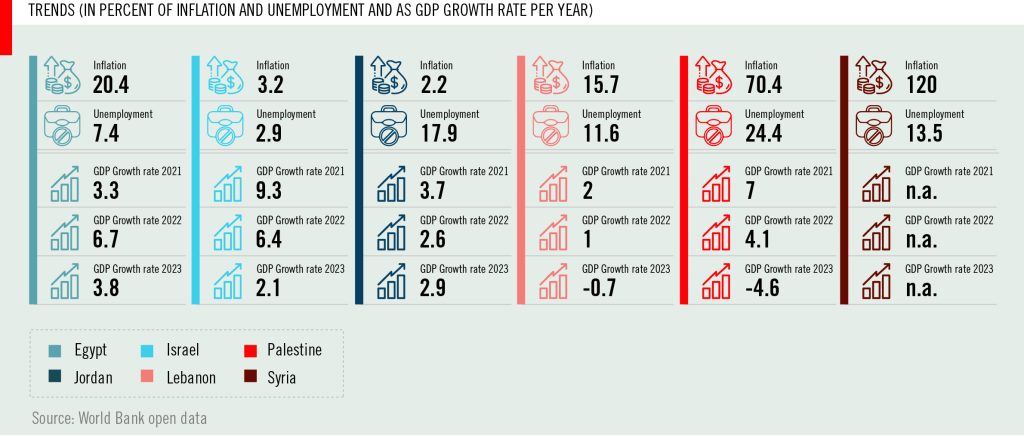
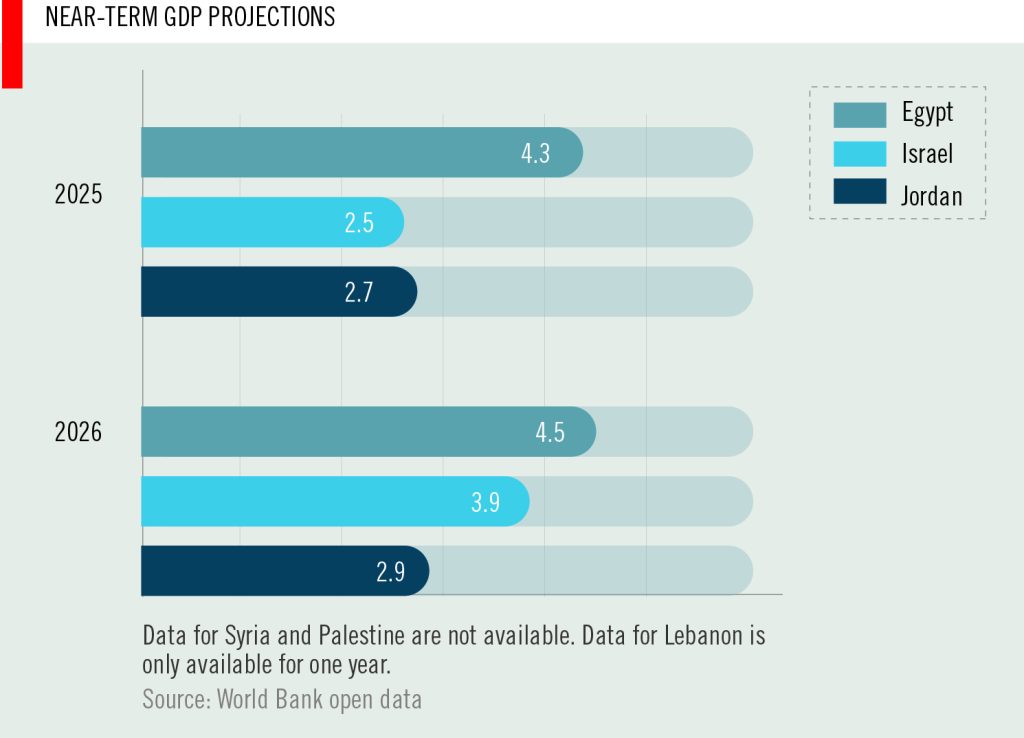
Apart from these curious distinctions that fly in the face of geographic and socio-historic realities, the headline data recorded, estimated, and projected on the six polities and their economies are incomplete and inconclusive. Real GDP growth data for 2024, 25, and 26 for Israel can be found in the World Economic Outlook but, under the IMF’s logic, not in the regional economic outlook. Data sets for Jordan and Egypt are available for these three years. However, Syria’s economic fates are not reflected in GDP growth data and these data for Lebanon and WBG are displayed only for 2024. This leaves a void of three data points for Syria and two each for Lebanon and WBG, meaning seven out of eighteen data points, with the additional caveat that forward looking data are uncertain.

Researching correlations of economic and political trends, mutual influences, gaps in regional trade and integration, or differing impacts of armed conflict of differently grouped economies under the IMF lens is far from easy. Counterintuitive to the region’s heavy conflict experience between 2023 and 25, the IMF regional outlook posits that the economic performance of the region has been “generally robust in 2025“ and opens its first of two chapters by reiterating that regional economies have  “shown resilience so far in 2025”, despite global uncertainty and tensions that included “a short-lived” conflict between Israel and Iran in June.

END BOX

Uncertainty and risks

The IMF says in its latest regional outlook – first chapter – that “GDP growth in the MENAP region is projected to strengthen in 2025 at a faster pace than anticipated in May”. As for risks, it cites primarily fiscal, monetary, economic and geoeconomic as well as climate risks and policy weaknesses for countries in the entire region. The report mentions, although not in a prominent manner, that geopolitical tensions remain a main risk for regional economies, with a specific acute risk of renewed escalation of the Iran-Israel conflict and the danger that “the unresolved Gaza crisis could undermine regional economic and trade stability to a greater extent than currently assumed in the baseline.”

A second chapter of the regional outlook highlights findings from a spring 2024 regional outlook: that in the MENAP and CCA regions, “output per capita remains, on average, about 10 percent below its pre-conflict trend a decade after the start of a severe conflict”. The chapter seeks to academically add to the discussion of factors that can be drivers of post-conflict recovery and advocates for “macroeconomic stabilization efforts, financing, including international support measures, and structural policies”. The chapter helpfully states that “boosting the chances of a successful post-conflict recovery requires a comprehensive strategy, calibrated to economy-specific circumstances” and cites the importance of further research. 

The IMF’s sedate approach differs from papers by the World Bank that raised the ‘question of Palestine” in December 2024. Decrying the conflict’s “catastrophic impact on the Palestinian economy” the World Bank estimated the GDP contraction in 2024 at 26 percent and said that all sectors in Palestine had been severely affected, “with construction, manufacturing, services, and trade experiencing the most significant declines”. To address the country’s deep economic crisis and avert a socioeconomic collapse and further worsening of poverty “will require several critical and urgent actions from the Palestinian Authority, the government of Israel and the international community.”

Assessments without clear solutions 

A wider assessment of the regional conflict landscape comes from the Armed Conflict Location and Event Data (ACLED) academic project and NGO, although these data offer no more insights into the economics of the conflict and eventual post-conflict economic solutions than the World Bank’s brief reference to Palestine’s national economy.

The intensity of conflict – tracked by ACLED – in 2024 saw Palestine as the polity suffering the largest impact of conflict in the world as analyzed under four categories of deadliness, diffusion, fragmentation, and danger. Syria and Lebanon were ranked in third and seventh place of most-afflicted locations. This ranking shows Syria as being 30 places higher in the ranking of conflict intensity than Israel. Egypt and Jordan were found less affected by further wide margins, at ranks above 70 and 100.

In the organization’s 2025 conflict index, Palestine and Syria were still ranked in first and third position for total conflict exposure. Lebanon dropped out of the top ten most conflict intense counties to a still very high total conflict intensity ranking of 19, Jordan and Israel also dropped further, but Egypt’s ranking indicated a slight increase in conflict intensity. According to ACLED, the conflict profiles of Eastern Mediterranean countries were embedded in a global conflict landscape where “high levels of conflict became the new normal”.

From a statistical analysis perspective, however, the conflict intensity in the region does not translate into a measure of the recent Israeli-Gaza conflagration’s economic dimension and the impairments of national productivity in countries affected by IDF actions. Similarly, the economic repercussions of the latest conflict in Palestine are not reflected in global analyses by the Australia-based Institute’s for Economy and Peace (IEP) which found in the 2025 Global Peace Index that the economic impact of violence across the world was equivalent to 11.6 percent of global economic activity.

IEP, which observes global peacefulness and this year rung the alarm over 17 years of incrementally declining global peacefulness, assesses the economic impact of violence per country based on numerous factors that extend beyond armed conflict impacts. Syria and Palestine are shown as two of the countries with the highest economic cost of violence as share of GDP in 24, stating this cost at 33.97 and 19.42 percent. This perspective, while indicative of the overall economic burden of violence to a polity in purchase-power-parity terms, is of limited utility for assessing the actual cost of the 2023 – 24 war and the October 7, 2023 terror incursion from Gaza into Israel.

Propaganda and war economics

It is undeniable that the propaganda, information warfare, and cybernetic dimension of militaristic and militant opinionating in the latest Middle East conflict involving Israelis and Arabs looms larger than at earlier times of warfare in history. Within the discourses of six polities covered in this report, debates of social constructs and partisan words of mass destruction from genocide to anti-Semitism have been embedding into the minds everywhere in reach of communication technology.

Deep fault lines and towering needs

Measuring and comparing economies in their geographic environments and also in their peer groups is standard practice for entities from the World Bank Group to the World Economic Forum. However, no reports of IFIs and global economic think tanks seem to offer analyses on the long-term cost and opportunity costs of regional conflicts.

Additionally, there were no uniform causes behind economic downturns and ultra-deep recessions in three of the territories. The economy of Gaza, but not of Palestine, was wiped out by bombings and ground intrusions between October 2023 and the October 2025 ceasefire (and the erasure continued in the month after the ceasefire); Palestine in its entirety nonetheless suffered an estimated GDP contraction of 26 percent in 2024.

The neighboring Lebanese economy, which took an estimated $6.5 billion dollar hit in war destructions and damages in 2024 and saw its GDP drop 7.5 percent, suffered its more severe meltdown – cumulatively estimated 38 percent of GDP for three years – starting from 2019 and entirely due to factors that were not prima facie caused by external conflicts. But it furthermore suffered impacts of undetermined magnitude from the peace waged by Israel in 2025. 

The causes of the Syrian meltdown include economic sanctions, devastation from internal conflicts with the militants of the Islamic State (ISIL), and the corrupt politics and oppressive system of Assad dynasty rule from 1971 until December 2024. The need of rebuilding destructed infrastructure and real estate assets that were incurred due to internal strife between 2012 and 2018 was already estimated at $100 to 300 billion (in the Lebanon Economic Vision document of consultancy McKinsey).

The recent World Bank “conservative best estimate” of $216 billion cost of restoring physical assets – infrastructure and building assets – with a cited possible upside margin of another $129 billion, sounds like a safer bet for an analyst without skin in the game than for an imaginary master contractor who would enter a bid for the project.  War impacts on Jordan and Egypt by contrast were indirect and concentrated in indirect impacts on shipping via the Red Sea – to Jordan through the Gulf of Aqaba and for Egypt because of rerouting of vessels away from its Suez Canal.

Impediments to tourism were less severe for both countries than for Palestine, Lebanon, and Israel. Other than that, by the feeble amount of data that are fully transparent, the cost of warfare for Israel was minor in terms of suffered destruction yet economically poignant in terms of economic losses incurred because of military duty obligations of many Israeli citizens and because of ordnance and weapons systems that had to be restocked after their use in defense, retaliatory sorties and punitive air raids directed at Gaza, Lebanon, Iran, Syria, and Yemen. 

Fortunetelling for six polities

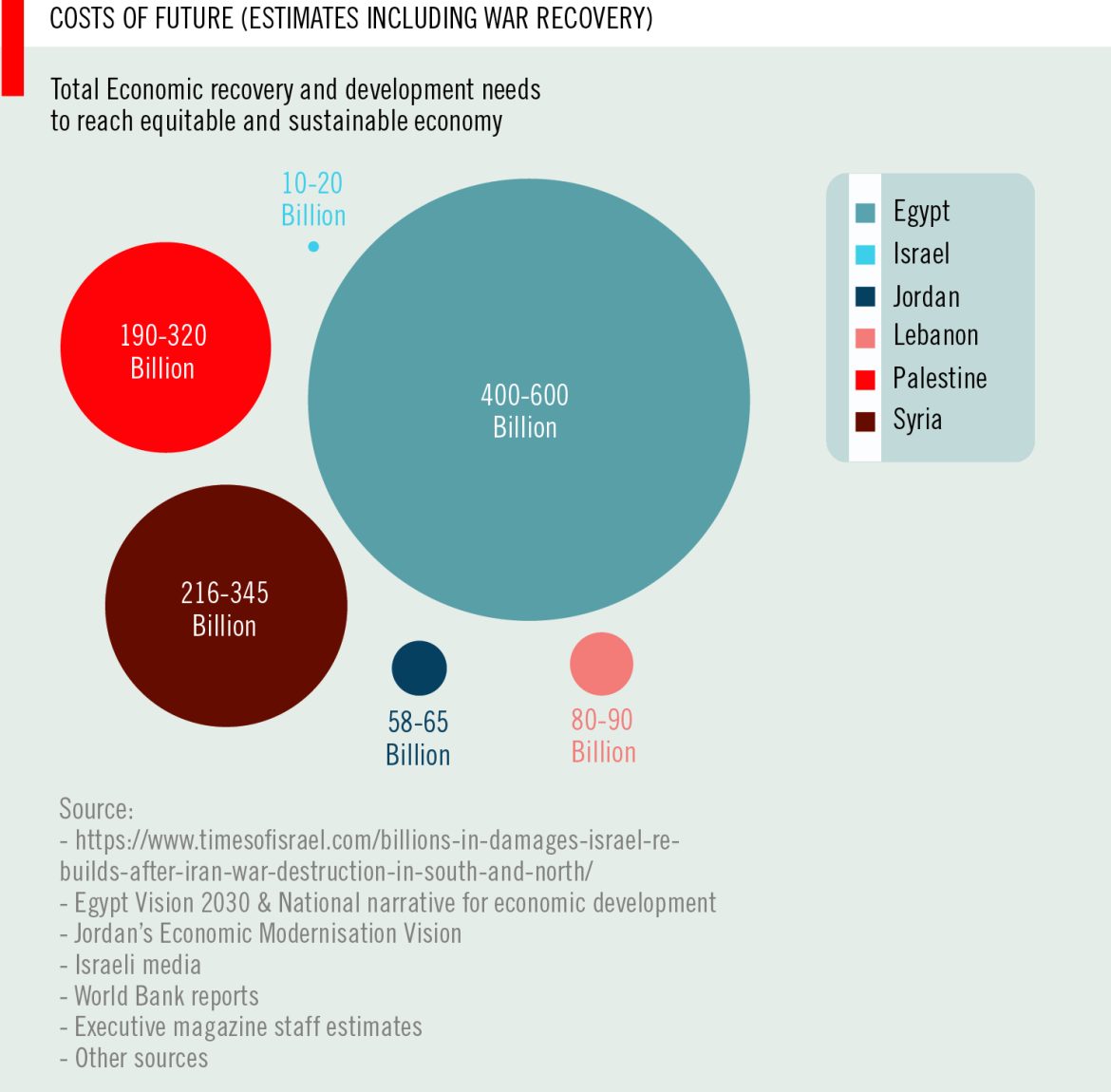
The economic future of the six polities is murky with more downside than upside risks for five of them and obfuscated with perceived upside risk for one of them. The cost of economic salvation – that is, the price tag of investments that would elevate Egypt, Syria, Lebanon, Jordan, and Palestine into a higher tier of income, employment, productivity, social safety and ecological sustainability – could range anywhere from one to three times their collective annual GDP estimated for 2024.

In numbers, that means costs of one trillion dollars are entirely in the realm of the economically, socially, and environmentally needed. Investment potentials, preliminary World Bank assessments, and rose-colored national plans suggest that a low-ball estimate of salvatory cost would exceed Syrian and Palestinian GDP each by multiples – estimated $214 billion for Syria and $70 billion for Palestine, versus estimated 2024 GDP values of $22 and 14 billion.

In Jordan and Egypt, current national development ambitions will require, at least, the equivalent of one-time national GDP in 2025, $58 versus 53 billion in Jordan and $400 billion (estimated by observers and consultants) versus $389 billion in Egypt. In Lebanon, the economic rebirth would require about two times to two-and-a-half times GDP of the current production of goods and services (including informal activities), if one assumes that the total price tag would be $80 to $90 billion and de-facto GDP for 2025 is more than $40 billion instead of the internationally cited $25 to 30 billion.

The five polities’ hunger for funding over a decade (or two or more) could be as low as $820 billion. Their real need for investments, however, could well range anywhere from one to 1.5 percent of global GDP, putting the need firmly above one trillion dollars. In this, the region’s fragile state of investment deprivation is not unlike the situation of a starving person who cannot dare to overeat if they want to regain their sustenance. But the source of sustenance – needed investments possibly worth more than a year of national GDP – is uncertain in the best imagination and laden with past failures of mobilizing needed amounts, whether from taxes, international financial institutions, friendly states, private sources, or as hybrid public-private partnerships.  

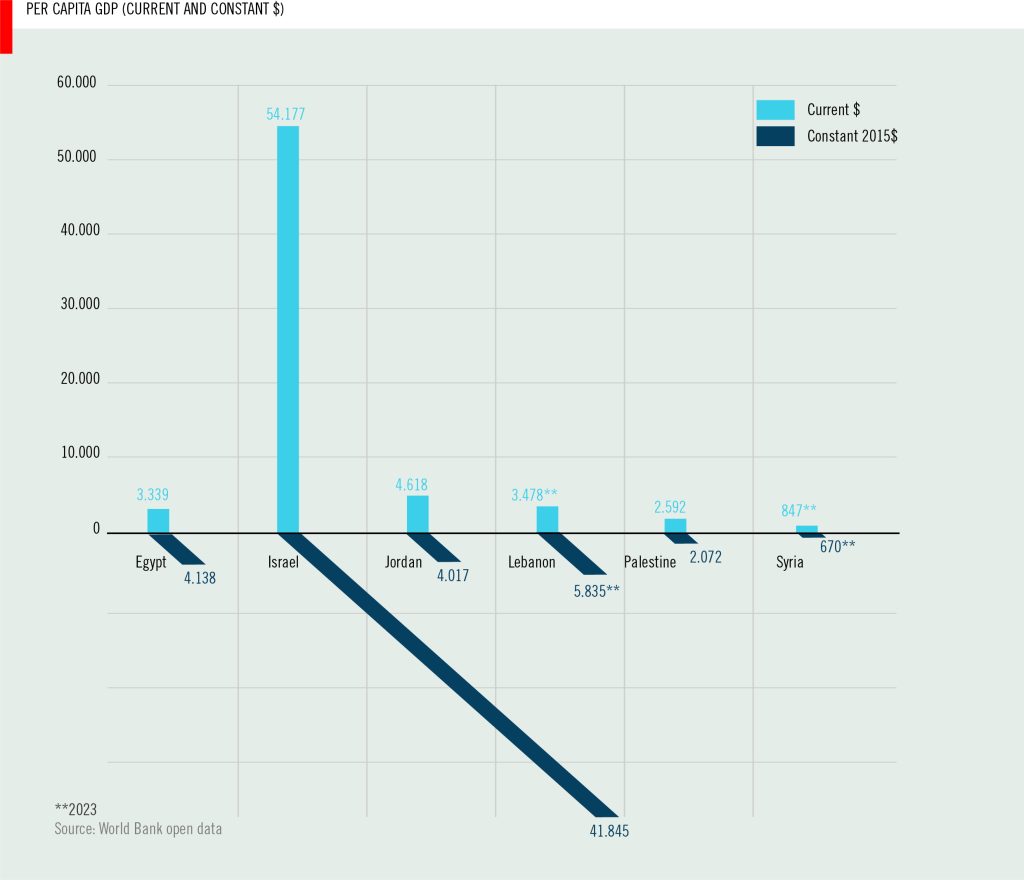
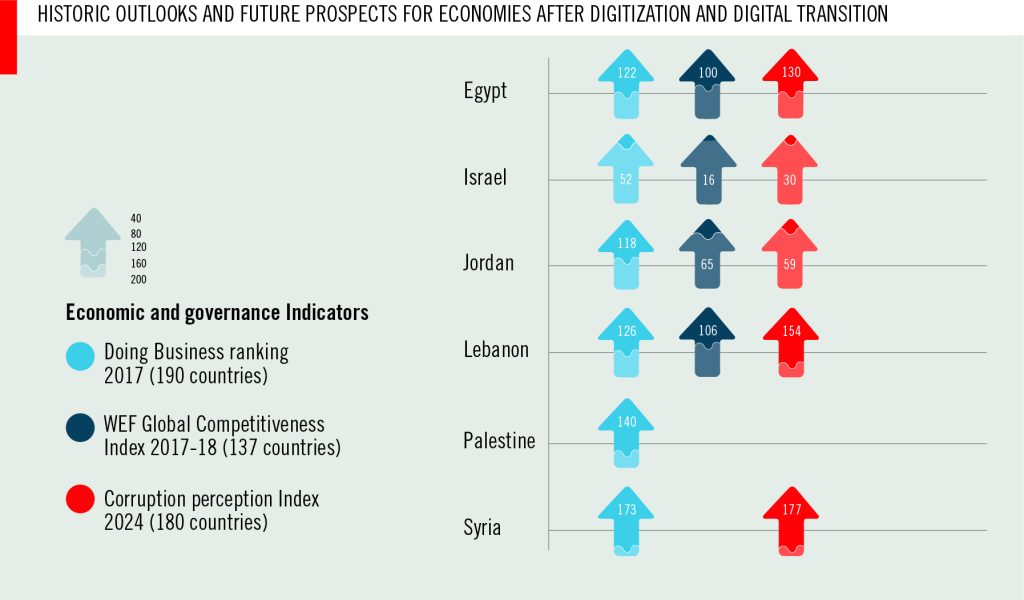
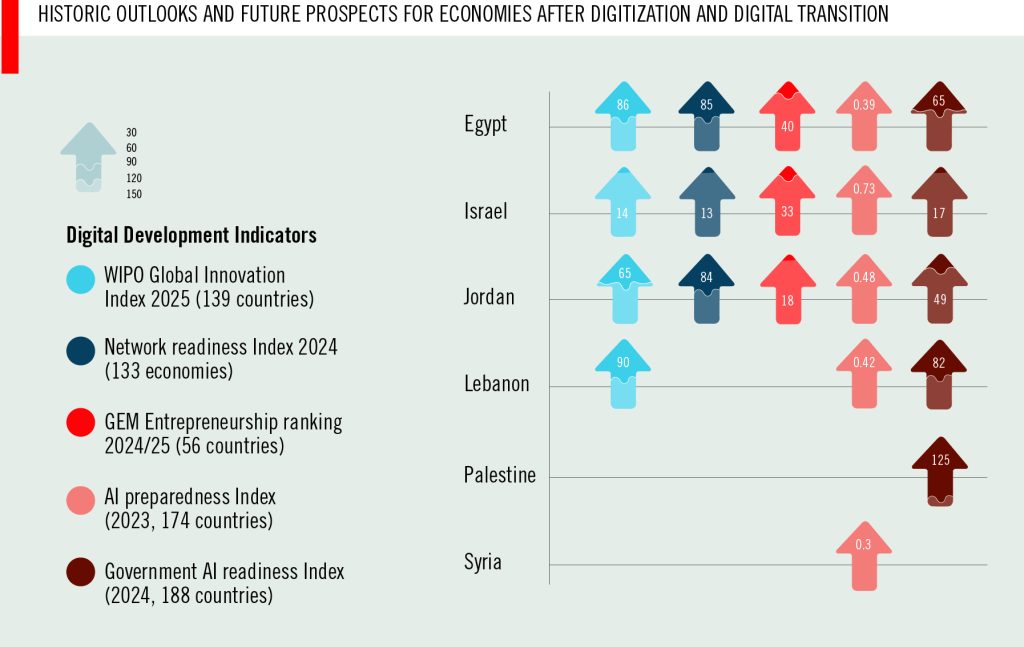
Moreover, sweeping visions such as the Jordanian and Egyptian ongoing national development concepts have been researched and drawn up in the 2010s, as evident from frequent citations and references to the World Bank Doing Business series and the World Economic Forum’s Global Competitiveness Report and Index. Newer determinants of crucial economic potentials, metrics focusing on factors such as AI readiness and AI governance, are not part of the argumentation for investing in any of the Arab polities under purview. Matter of fact, all geo-economic indexes and rankings, whenever developed, show Israel in decidedly more enviable positions than its neighbors.   

For Israel, the headline development equation is much different. With national GDP of $540 billion according to World Bank open data, the Jewish state has not seen a single year of GDP contractions since 1966, except for the pandemic year of 2020. By any numerical comparison to the regional neighbors, Israel is indeed in a different category of wealth and income, of technology adoption and industrial advancement, and of readiness for the digital age.

In this arithmetic, the economic outcome of the past 80 years is undeniably a zero-sum game, with Israel as the indisputable entry in the win column of the conflict balance sheets, including the balance sheet of the most recent conflagration. The idea of turning this win-lose constellation into a win-win reality of Middle Eastern economic integration in a frame of social, religious, and cultural peace has for the past five decades been pursued with willful blindness for the economic baselines of power. The investment needs for reaching a regional integration offering growth benefits to all its polities  seems still utopian in light of political and security requirements.

The other option, that the obvious win-lose status quo is hiding a lose-lose future reality of immeasurable cultural and mental health cost, plus societal, climate and environmental repercussions that are to the detriment of the entire capitalist civilization is nothing but a speculation void of appeal under the proposition of reciprocal altruism. Similarly speculative is the idea that the changes of automation, where people leave the thinking to the machines for their superior processors, and further digitization will reverse the curse of this Faustian civilization’s and its protagonists’ unending search for knowledge, money, and power into a fascination with and quest for spirit, compassion, sustainability, and reciprocal altruism.  

April 24, 2026 0 comments
0 FacebookTwitterPinterestEmail
AnalysisEconomics & Policy

Healing in the ruins

by Haya Ahmed Hijazi April 22, 2026
written by Haya Ahmed Hijazi

In Gaza’s hospitals, the daily struggle for life is inseparable from the fight to manage scarce resources and staff numbers, and to find innovative solutions within impossible constraints. Doctors, nurses, paramedics and support staff are compelled to act simultaneously as caregivers, administrators and problem-solvers in an environment where every decision is weighted by both clinical urgency and economic limitation.

A healthcare system tested to its limits

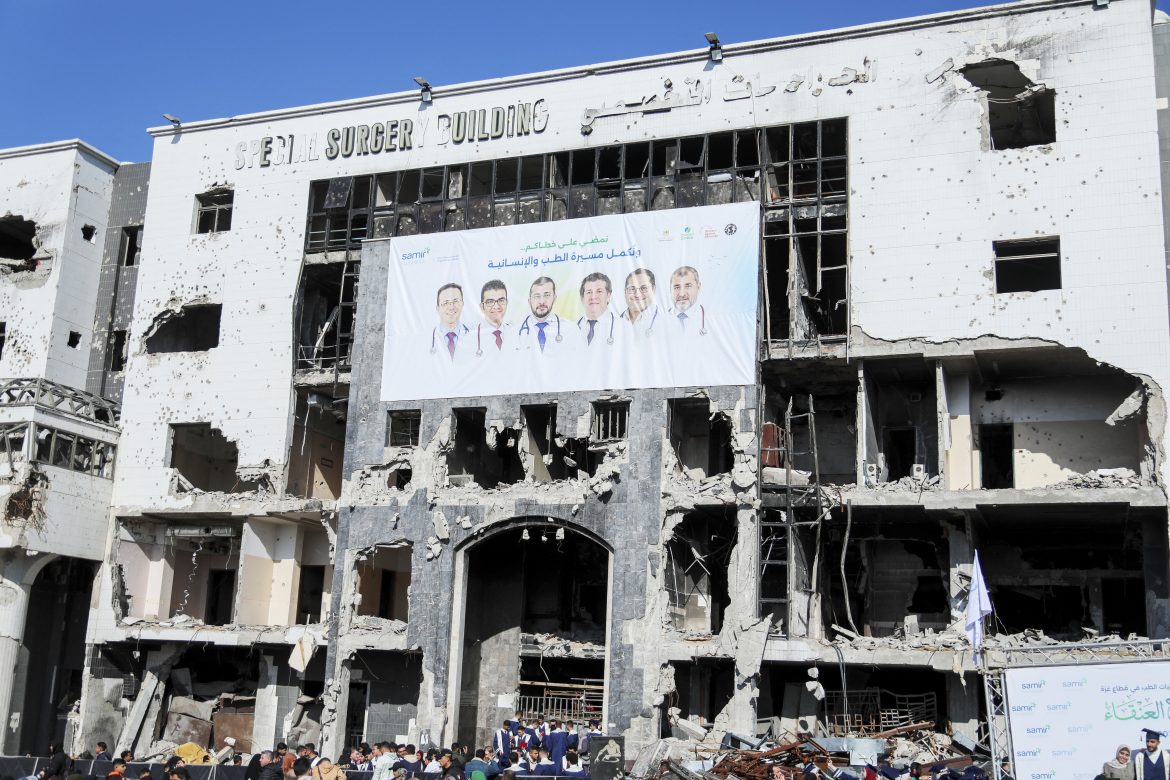
According to a situation report released in mid-October 2025 by The United Nations’ Office for the Coordination of Humanitarian Affairs, 14 out of Gaza’s 36 hospitals, 10 out of 16 field hospitals and 64 out of 181 primary healthcare centres are only partially functional. Private hospitals have closed and public hospitals operate at less than 30 percent of their capacity. By the end of September 2025, Gaza’s Ministry of Health reported that 55 percent of essential medicine, 66 percent of essential consumables and 68 percent of laboratory reagents were completely out of stock. Despite the latest ceasefire, restrictions on the amount of aid trucks crossing the border—Al Jazeera reported that only half of the necessary trucks were permitted entrance as of October 15th, and the ones entering did not carry many essential supplies—mean that medical supplies are still not reaching hospitals.

28-year-old Dr. Ali Mohammed Ziyad Al-Batta is a fourth-year urology doctor at Al Nasser Complex in South Gaza. As hundreds of thousands of Gazans were displaced from their homes in the north to the south of the Strip over the course of the two-year war, hospitals like Al Nasser Complex became a lifeline to more patients than they could accommodate. Operating the Khan Younis-based hospital became increasingly difficult amid overcrowding and a shortage of medical supplies. Doctors found themselves having to ration out pain relief medication.

Al-Batta says the announcement of a ceasefire has done little to change the disastrous circumstances he and his colleagues face every day at the hospital.

“It’s been two years of us trying to serve our people with the simplest of means,” he says. “The number of those with long-term injuries remains high; these patients require follow-up and restorative surgeries. Currently, they are waiting for the Rafah border to reopen in order to leave Gaza to receive medical treatment. For many of Gaza’s sick and injured, Rafah border has become a final glimmer of hope.”

Unpaid healthcare workers

Gaza’s economic collapse—UNCTAD, the UN’s trade and development agency, reported an 81 percent contraction in the last quarter of 2023 alone—compounds the challenges hospitals and healthcare facilities face. Dr Al-Batta is among those that have chosen to volunteer their services to preserve life and prevent the healthcare system from complete annihilation. “It has been two years since I was last paid a salary,” he says.

30-year-old nurse Khalid Abu Hasnain who works in the Emergency Department at Al Aqsa Martyrs’ Hospital in Deir El Balah, Central Gaza, is one of the luckier ones. He gets paid a small stipend of $300 a month, despite working shifts that exceed 12 hours. Responsible for both his own daughter and his orphaned nieces and nephews, Abu Hasnain says the money is barely enough to buy milk and does not cover his travel expenses, but he keeps going.

“The war has destroyed everything — homes, families, and futures — even our healthcare sector,” he says. “Doctors and nurses are working without equipment, without salaries and without rest. Yet, we are trying to prove that humanity does not die, even amid the rubble. We can’t abandon the patients.”

Making medical supplies stretch

With the limited availability and flow of cash, healthcare workers have created an informal health economy, sharing and bartering medical supplies, recycling disposables and sharing resources across hospital departments. In some instances, doctors report having to dilute medication to make supplies stretch. 38-year-old Dr. Nadia Hamdan works as a gynaecologist at Al-Shifa Medical Complex in North Gaza. Before the war, Al Shifa Medical Complex in the Rimal neighborhood of Gaza City was Gaza’s largest hospital. After suffering repeated bombing and a ground incursion which left it half-ruined, the hospital now runs limited services, including a makeshift outpatients department and emergency ward.

On top of treating her female patients, Dr Hamdan says she has the additional burden of finding new ways to be resourceful with the limited medical supplies and equipment on offer. Being able to just practice medicine is now a luxury.

 “Oxygen runs out, sterile gauze is absent and essential medications are limited,” she says. “We disinfect and reuse instruments because electricity is unreliable and the generator cannot power all equipment. Every patient encounter is also a management exercise — we ration, prioritize and improvise constantly.”

Harbouring innovation and technology

Adapting through the use of innovation and technology is essential for the survival of Gaza’s fragile healthcare system. Solar panels, improvised incubators and remote training reduce costs and sustain operations. Medical students assist under supervision and NGOs provide healthcare workers with workshops on resilience, resource management and multi-role competencies. Doctors and healthcare workers utilise social media and digital platforms to carry out consultations or fundraising efforts.

“We cannot wait for suppliers,” says Ahmed Barakat, a bio medical technician at the European Hospital in South Gaza. “Spare parts are unavailable, so we improvise. Sometimes we use a 3D printer to print replacement parts, or we repurpose older equipment or repair machinery with locally sourced materials. Each solution saves money and prevents further strain on the health system.”

Hospitals struggling to operate in the absence of fuel and electricity

Before the war, 57-year-old Dr Naji Al-Qarshli used to work as an obstetrician and gynecologist at Kamal Adwan Hospital in Beit Lahia, North Gaza. He was displaced to the west of North Gaza after the area he lived in was completely destroyed, where he now works at the Patient Friend’s Benevolent Society Hospital.

Patient Friend’s Benevolent Society Hospital has now become the Gaza Strip’s main maternity and pediatric hospital according to an interview that Medical Aid for Palestinians conducted with its medical director in March of 2025. Dr Al-Qarshli and his colleagues work tirelessly to treat a neverending stream of women who go there to give birth. It is also one of only a few remaining hospitals in Gaza to have a NICU (neonatal intensive care unit). At the height of the war, Dr Al-Qarshli says maternity wards were being transformed into multi-use emergency rooms for the injured, alongside those who had come to give birth.

“When the electricity cut, we delivered babies by the light of our cell phones, searching for sterile gloves as if we were hunting for treasure,” he shares. “Our psychological state deteriorated, we lost a lot of weight and we were treating patients in a state of panic. Many of our pregnant patients arrived to the hospital after hours of walking, having been displaced from their homes. We were trying to preserve the lives of mothers and fetuses amidst an unforgiving reality.”

During a neonatal emergency, Barakat of European Hospital recalls being among staff that had to manually ventilate infants in order to keep them alive because the generator had stopped working.

 “At 3am one morning, an incubator failed. We manually ventilated infants before the generator died. Hospitals rely on ten hours of full power daily; at night, many units become non-functional, impacting both health outcomes and operational budgets.”

From full-time gynecologist to volunteer medic: How Gaza’s war forced me to adapt


During the past six months, I personally lived and worked across North and South Gaza, experiencing both displacement and professional upheaval. My private gynaecology clinic was destroyed in the bombardment. I pivoted to volunteer work in public hospitals and field clinics, where demand exceeded available resources.

To reach women unable to travel to hospitals, I launched remote consultations via social media platforms, providing guidance and follow-up care. This digital approach functioned as both a clinical lifeline and an economic solution, extending limited resources without adding infrastructure costs.

Recognizing the ongoing material and financial scarcity, I established a free medical tent supported by online fundraising campaigns. Donations funded essential medications, medical supplies and operational logistics, creating a micro-healthcare economy sustained by community contributions and volunteer hours.

Maintaining services amid destroyed infrastructure, unpaid staff and scarce resources demanded strategic allocation, financial ingenuity and creative problem-solving. Through volunteer coordination, digital outreach and fundraising, I was able to continue delivering critical care to pregnant and nursing women, mitigating economic loss and sustaining the fragile healthcare ecosystem in Gaza.

Economic resilience at the heart of Gaza’s healthcare system

Gaza’s healthcare system today illustrates the inseparable link between economic resilience and medical care. Each ward, each procedure and each hour worked by a volunteer is not only a clinical intervention but also a strategic economic decision. Hospitals operate as micro-economies, where budgeting, resource allocation and improvisation determine survival both for patients and for the system itself.

Sustaining Gaza’s healthcare requires more than humanitarian aid. It demands structured economic planning, local manufacturing and coordinated community support. Investing in staff, creating emergency financial reserves and training multi-skilled personnel not only secures health outcomes but also strengthens the broader economy.

Ultimately, the story of Gaza’s healthcare system is a story of human ingenuity at the intersection of crisis, health and economy. The resilience demonstrated by healthcare workers, volunteers and communities proves in my experience of the past three years, that even amidst profound economic collapse, strategic innovation and human dedication can sustain life, preserve livelihoods and build a foundation for a more robust, self-reliant healthcare system.

April 22, 2026 0 comments
0 FacebookTwitterPinterestEmail
Economics & PolicyQ&A

An economy of future peace

by Executive Editors April 22, 2026
written by Executive Editors

In terms of number estimates, what do you see as the total cost of Lebanon’s recovery from war damages and economic meltdown, and what would you say the opportunity costs of conflict (the foregone development in Lebanon, Israel-Palestine, Jordan, Egypt, and Syria because of money spent on military expenses) were?

PS: Obviously for Lebanon there’s the immediate cost of the devastation and destruction over the last two years relating to the war, which is estimated at around USD $11 billion. And then of course there’s the entire collapse of 2019, USD $70 billion losses and so on, but that’s a broader perspective. In terms of opportunity costs in the region, the countries that were affected—obviously Lebanon, obviously the Palestinian economy—very devasted. The Jordanian, UAE, Saudi [states] were not involved in the war so they did not have huge opportunity costs in that sense. Egypt had significant losses because of the Houthis and their attacks on the Red Sea. So Egypt was a significant loser as well. Syria was already shut down as an economy and is hoping to recover. I’m not sure it shut down even more, but their situation is different.

The main point [for Lebanon] here is that Lebanon’s economy has suffered for over 50 years from having an active front with Israel. It’s good to look back between 1949 and 1967-68. Lebanon had an armistice agreement with Israel. There was no military activity across the border and obviously Lebanon saw a tremendous boom, tremendous investment in the 50’s and the first two thirds of the 60’s. That was really the golden age. The armistice agreement held and there was really no active front with Israel. Then beginning in ‘68 and then the Cairo Agreement in ’69, the PLO (Palestinian Liberation Organization) opened a front from Lebanon on Israel and that started [a period of] over 50 years in which Lebanon was a front, an arena. Where Arab countries—Syria and Egypt initially, and then others, Libya and others, and eventually Iran used Lebanon as a front against Israel. So from ’68-’69 up until 2024-2025, going on up until today, you can see the enormous cost of Lebanon being an active front. So from the early 70s, then the collapse of the mid-70s, and what we’ve seen in the last decades, really an inability to fully recover after the war. And then further losses along the way in the past years.

There’s no doubt that ending the state of war and [entering] a cessation of hostilities would be a very important turning point.

What is your assessment of the direct talks that started in Naqoura?

PS: The talks on the border through the mechanism right now are a very important symbolic step. Right now they’re quite limited conversations relating to the cessation of hostilities agreement, relating to Lebanon wanting to secure an Israeli withdrawal from south Lebanon, wanting to return captives that are in Israel to Lebanon, wanting to stop Israeli attacks inside Lebanon. On the Israeli side they want to see that the area south of the Litani is completely free of Hezbollah weapons and fighting capacity. They want clarity on what the plan is north of the Litani. That’s the scope of the talks right now, quite narrow in that sense. Broader talks would have to await a different time or different system.

How long could the process take?

PS: It’s hard to say how long the process could take, but it’s possible to say that the process might fail because Israel has very clear demands on Lebanon which include the disarmament of Hezbollah. How urgently they press that demand if Lebanon cannot fully disarm Hezbollah in the near future, Israel might say well the talks are off. Lebanon has demands on Israel to withdraw from five points, stop its attacks on Lebanon and so forth. One can see from Israeli officials that they don’t seem to be in a mood to give those concessions so we will see what the talks bring. Maybe there will be positive surprises but they do look difficult for now. The risk of a continued war or significant escalation maybe is postponed a bit but is still there.

What are the risks and benefits? Are there economc benefits that came from peace agreements between Israel and Jordan or Israel and Egypt?

PS: It’s important to know that the peace agreements or the Abraham Accords are first and foremost political agreements in the sense that Egypt on its side obviously wanted to get the Sinai back, which is a huge success for it. They could not afford to remain in open warfare with Israel. That’s the essence of the agreement. Egypt and Israel did not develop significant economic agreements; that was not the Egyptian point. They maintained sort of a cold peace as it were. Jordan as well did not want to be in a state of war with Israel. That would be very costly for it. So for both countries, Egypt and Jordan, they know that if they make peace with Israel they get tremendous US support. Effectively guarantees of US support because the US would be pleased with them and the pro-Israel lobby in the US would vouch for them, would support them. So by making peace with Israel they lock in US support.

What have been the GDP gains of the Abraham accords over the past five years to the initial signatory countries, what could the economic gains be for Leb and would the Abraham Accords be the only way for reaching such outcomes?

PS: On the economic gains on the Abraham Accords I don’t have significant data, I’m not an economist, but again when you look at the four countries that signed the Abraham Accords they did it for largely political and security reasons. The UAE wanted to cement its strategic relationship with the US. They wanted Israeli support in Washington, particularly to push through its F-45 deals and other major agreements it wants to build with the US, leading up to the recent agreements on Artificial Intelligence. So again, making peace with Israel the UAE gets tremendous US support indefinitely. Bahrain similarly in a very precarious security situation—high risk from Iran—absolutely needs deep US support. So that again was one of the main reasons there. Morocco wanted US support for its claim on the Western Sahara. They got it; that was its main advantage. Morocco has no security concerns with Israel. And on the case of the fourth country, Sudan, they wanted to get off the tariff list from the US and that is indeed what happened. So the main reasons were mainly political, security and so on. Of the four, the UAE does look at economic benefits more than the others. It had maintained a very warm normalization with Israel until October 7th. And there’s investments going back and forth—maybe not huge, but the UAE certainly does see high tech and research and other advanced technology partnerships as well as security partnerships in high tech security issues between the UAE and Israel.

For the others, Bahrain, Morocco, Sudan –of course Sudan is in civil war—but they don’t have any major economic gains.

In terms of possible effects for Lebanon, I would say two things. If Lebanon was able simply to reestablish the armistice with Israel or even a cessation of hostilities that is permanent and the Lebanese Army fully took over the country, Hezbollah no longer puts the country at risk or is disarmed, and regional investors and global investors really see Lebanon as now stable, sovereign and secure, that would definitely be a huge economic boost for Lebanon. Obviously provided also that Lebanon went through the [necessary] banking reforms so that the system would be functioning. The first scenario is to go back to the status quo before 1967. There was huge investment, and you could reap huge benefits. If one went into an Abraham Accords with Israel, you would get huge benefits. One benefit is that Lebanon would be no longer a country at war, no longer a risky place. Investors would feel confident, but also you would get the benefit of exchanges with one of the biggest economies in the Middle East, the Israeli economy. That could be in many sectors—information, technology, tourism, real estate, agriculture. There’s no doubt that there would be benefits. What the numbers would be is hard to say.

This interview was conducted via Whatsapp voice notes

Paul Salem is a senior fellow and former president of the Middle East Institute

April 22, 2026 0 comments
0 FacebookTwitterPinterestEmail
AnalysisEconomics & Policy

Lebanon’s strategic sectors

by Marie Murray April 22, 2026
written by Marie Murray

This analysis was written as part of a Special Report on the repercussions of war across six polities from October 7th, 2023-December 2025

Two narrative strands of economic disintegration and destruction have been woven into a, very much negatively biased, tale of Lebanon’s battered national identity. The dominant strand is the meltdown of liquidity, finance, jobs, the formal economy, livelihoods, old-age savings and social security, partially rooted in the allegedly intentional “Ponzi Scheme” formed in the country’s highest politico-financial-oligopolistic echelons as far back as the 1990s. The junior but even more virulent strand of the narrative is willful destruction of Lebanese assets and infliction of economic losses that has been estimated at been $14 billion as of spring 2025, with detrimental violations of Lebanese sovereignty that have been continuing up to the time of this report, one year after a ceasefire agreement which remains quite fragile due to near-daily violations by Israel.

The immense detriment of wartime destruction and ongoing violations to Lebanon and Lebanese livelihoods, reflected in contraction of GDP by 6.4 percent in 2024, is still only a fraction of the economic losses from homegrown systemic mismanagement and self-harm. If one accepts the idea of a combined 33 percent GDP drop in 2020 and 2021, one can estimate the recovery need as $20 billion in economic productivity and multiples of this amount for restoration of destroyed popular wealth. Restitution of the latter is imaginable in this magnitude only if the state accepts the responsibility for its liabilities owed, via the central bank and commercial banks, to savers. Without public sector accountability, the destroyed financial wealth of the very few, the previously influential, and the vast headcount of triply poor sods that have worked and saved for one to four or more decades, can be transcribed into a debt mountain whose elimination is facilitated by “haircuts” after monetary value depreciation to the tune of 99 percent.  

The economic equation of Lebanon has thus seen a forced, and exceedingly brutal, correction that shifted the formula away from a rentier system under impetus of cronyism, excessive debt finance of public consumption and private consumerism, and capex paucity in a narrow services envelop dominated by banking. Overbalancing the policy focus in direction of the real economy was a fleeting attempt of a short-lived administration that was instituted in January 2020 and was aborted in the aftermath of the Beirut Blast shock and resignation of the council of ministers under premier Hassan Diab.

Looking out over ruins

Lebanon’s economic outlook remains acutely fragile as the country absorbs the compounded shocks of prolonged financial collapse and conflict-related destruction. According to the World Bank’s Rapid Damage and Needs Assessment (RDNA), the total economic cost of the conflict is estimated at approximately US$14 billion, comprising US$6.8 billion in physical damage and US$7.2 billion in economic losses stemming from disrupted activity, reduced productivity, and service interruptions. Importantly, these figures are explicitly conservative: the RDNA covers a 26-month assessment period and does not include damages or losses incurred during 2025, implying that the true economic toll is already materially higher than reported. Recovery needs, estimated at $11 billion pre-2025, can be combined with existing crisis-era public debts of over $70 billion for a cumulative estimate reaching between $80-$90 billion.

At the macroeconomic level, the conflict has sharply deteriorated growth dynamics. The RDNA estimates GDP to have contracted by 7.1 percent in 2024 (70 basis points over the latest central bank estimates), compared to the year’s pre-conflict expectations of marginal growth, pushing Lebanon’s cumulative output loss since 2019 to 40 percent. This contraction reflects both direct conflict disruptions and the erosion of already-weakened demand, investment, and labor market conditions. With fiscal space virtually exhausted and monetary stability still fragile, near-term growth prospects remain tightly constrained by reconstruction capacity and external financing availability.

Sectoral impacts reveal a highly asymmetric damage profile. Housing and civil infrastructure account for roughly two-thirds of total physical damage, or around US$4.6 billion, driven by the destruction or partial damage of tens of thousands of housing units, particularly in southern districts. Beyond the immediate humanitarian implications, housing damage represents a long-term drag on household wealth, labor mobility, and domestic demand, while placing significant pressure on reconstruction financing needs relative to other sectors.

Economic losses are most pronounced in three sectors that the WB’s RDNA—undertaken “rapidly” after all—aggregates into one group: commerce, industry, and tourism. The RDNA estimates sectoral losses of approximately US$3.4 billion, reflecting sharp declines in tourism inflows, retail and wholesale trade disruptions, factory shutdowns, and weakened professional services activity. These losses, spatially concentrated in Beirut, Nabatiyeh, and Tyre, indicate how war has disrupted Lebanon’s primary commercial nodes and urban service economies rather than remaining confined to frontline areas.

Conflict-related damage to transport and logistics infrastructure, including nearly 930 kilometers of affected roads, compounds these losses by weakening inter-regional connectivity and raising transaction costs across the economy. Meanwhile, agriculture and food systems—though accounting for a smaller share of physical damage—have suffered over US$1 billion in losses by end of 2024—certainly a far higher number following a full year of near-daily attacks in the south and Bekaa/Hermel regions specifically due to destroyed crops, livestock losses, and farmer displacement.

Regionally, the South and Nabatiyeh governorates are reported as the most heavily impacted in both damage and loss terms, while Mount Lebanon and Beirut bear substantial indirect economic losses due to their concentration of services, trade, and tourism activity. The geographic distribution of impacts include both localized physical destruction alongside nationwide economic reverberations.

With the current pivot to assurance of sovereignty and security under an internationally tested model of the state’s control over territory and monopoly over violence, which has been initiated in early 2025 and reached the point of implementing direct diplomacy in the search of coexistence with neighbors Israel and Syria in December, comes an imperative to reshape the economic sectors not so much in their macroeconomic order but their governance and development orientation.

Whereas rebuilding of the financial services sector remains as cornerstone requirement in the economy, it is not yet at the stage where unity of policy visions and acceptance of liabilities has matured to the level of facilitating quick growth. Doubts over the state’s sincerity and the reformist government’s effectiveness were raised by impressions of unrealistic promises and ministerial drag, from some ministers down.

Other sectors, such as the political economy of state-owned enterprises, is also in need of agreeing on a secure policy and legal foundation. In actuality, there does not appear to be a single sector in the country that isn’t in need of investments and rebuilding, new direction, and reform.

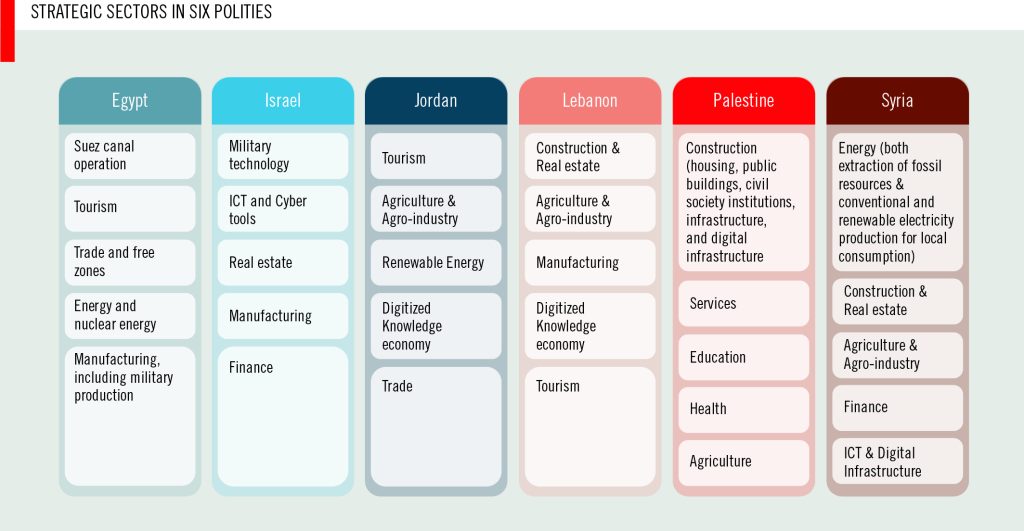
But sectors that appear deemed strategic development priorities for private and public stakeholders at the end of 2025 are reconstruction and construction of infrastructures and real estate focused on productive and productively taxed real estate up to the level of urbanity design under a governance direction of climate impact mitigation and sustainability that is aligned with the country’s climate and environmental protection goals (which includes the energy sector); the digital transition and tech sector inclusive of the creative and cultural industries (CCI); niches in manufacturing that range from tech and pharma to healthy beauty products; agriculture and the agro-food industry, and tourism in a regional integration context.

The mix of strategic sectors is new but not rooted in long-existing strengths of the Lebanese economy. More than ever before, however, it demands wise balancing between capital investment in the real economy and development of the services economy. A binding component, or glue, needs to come from the entrepreneurship ecosystem that needs to recover further after falling into paralysis early during the economic and social crisis.

Construction & urban development

The property sector, which is foundational to the concepts of wealth and security and which since the pre-industrial age ranks with trade and agriculture as pillars of societal sustenance and stability, was distorted by wars and disorder in the past century. Unregulated and poorly managed urbanization turned once-charming cities into hardly sustainable behemoths, traffic corridors into productivity barriers and many rural villages into eyesores.

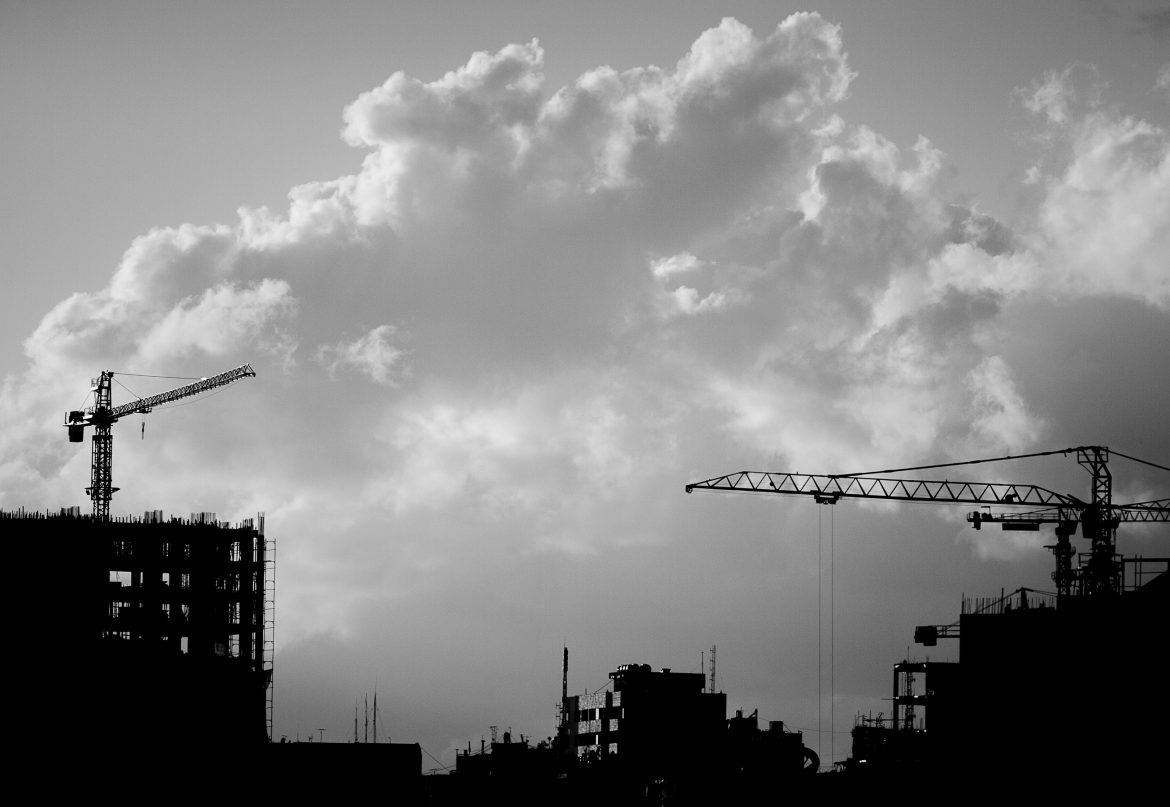
The latest war on Lebanon – which caused more than $4.6 billion in damages and destruction of residential dwellings – and the growing understanding of climate, environmental, and social risks have led to a new turn in the role of Lebanon’s highly urbanized property fabric. Construction, real estate and urban development has been turned into a meta-sector that is vital for recovery of livelihoods and restoration of social fabrics, for property and infrastructure development under environmental and climate as well as social, heritage preservation, and economic productivity priorities.

This multi-faceted sector, augmented with sustainability is critical for rebuilding residential dwellings that have been destroyed and damaged in Lebanon and Syria over the past two and the past 14 years (the need for building reconstruction in Syria was estimated at 100 to 300 billion USD already in 2018), for cleaning and recycling rubble left by 2024 and 2025 Israeli aggressions, for implementing infrastructures from external gateways to road and utility networks, for turning the cityscapes of Beirut, Triploi, and Sidon into urban productivity hubs, and for making Lebanese cities climate-proof.

Digitalized knowledge economy

Another strategic meta-activity for Lebanon (and the entire region) covers the category of the digital knowledge economy, which entails information technology sectors (software and hardware), cultural and creative industries (CCI), and adjacent fields of automation and machine learning.

Attempts to roll out ICT, regulate the sector, or foster tech startup companies by encouraging an entrepreneurship ecosystem, remained fragile and vulnerable throughout the 1990s and 2000s. Until Banque du Liban (BDL), the central bank, stepped in with a financing support package – known as Circular 331 – in 2012, the country’s entrepreneurship ecosystem and the tech startups that are vital for the sector were not seeing much strategic government support.

The knowledge economy thrust by BDL into the national economy spotlight sputtered and nearly stopped with the onset of the troubled 2020s. As Kamal Shehadih, the minister of displaced and minister of state at the recently declared office for the Ministry for Information Technology and Artificial Intelligence (MITAI), told an inaugural Beirut AI Summit in November, tech startup investments that had been worth about $500 under BDL Circular 331 up to 2019 dropped $5 million in the last five years. This explains the paradox of a sector that has shaped many entrepreneurial ventures – the usual high portion of failures but also some astonishing success stories – over some three decades.

Aims of the new ministry include innovation partnerships with academic institutions, seeing tripling of tertiary education graduates with AI-relevant skills to 10,000 by 2030, and a digital tech contribution to Lebanese GDP at around 10 percent. A sector that has become intertwined with expectations of increasing AI usage is moreover the media and creative production sphere. Cultural and creative industries, or CCI, could according to several well-known CCI stakeholders rise to contribute similar percentages to Lebanese GDP as before the economic crisis when almost 5 percent of GDP came from companies and individuals with cultural and creative profiles.

Whereas direct and indirect war impacts on the knowledge economy were not as high as impacts on the housing and agricultural sectors, economic losses were recorded for education and thus implied for human capital formation but the negative effects of the economic crisis years, including the Covid dampener, must be regarded to number multiples of the war Lebanon was subjected to in 2024.

The demises of startups that suddenly saw their funding vanish, destruction of banking links, outmigration of creatives and tech talents, relocation or withdrawal of ecosystem players, forced cancellation of festivals, foregone income because of performers’ staying away, detriments in the urban quality of life and increased inability to attract needed specialists, breakdown of advertising income and cultural and commercial sponsorships, temporary creativity impairments of mentally anguished singers, designers, poets, producers, and hyper-sensitive editors, and other economic detriments were all reported from the tech entrepreneurial and CCI spheres, with no complete assessment of cumulative losses and long-term economic effects.

Whatever the expectations and projections are in the broad landscape ranging from arts and crafts to digital services and machine learning, and whatever downside risks, intellectual property ambiguities, and implosion possibilities of a new global to local tech bubble are, the local tech sector and digital empowerment of Lebanon is the primary, and broad, field that has to be included in any strategic economic growth plan, with stable institutional provisions for supporting the confluence of real and services economies, public policy and regulatory development and oversight, and top-notch requisite skills development through academia.

Agriculture and Agro-industry

Being a breadbasket of old and a culinary basket of Mediterranean cuisine are two beacons that signal the economic importance of the real economy fundamental of agriculture and agro-industry in Lebanon – beyond all concerns over equitable access to balanced nutrients under food security paradigms. The war impact on agriculture, especially small operators and artisanal processors, was brutal.

Judging by 2025 discussions among sector stakeholders, the progress of the sector in matters ranging from reduction of food loss and food waste to circularity, quality testing, and improved alignment with international market standards, and thus sustainability of agricultural production and exportability of agro-food products, may be glacial. But the importance of improving sector formality and productivity in context of the right to dignified work, the water-energy-food nexus, the availability, quality, and rapidity of testing, etcetera, becomes only more urgent with each season where achievements in the agro-food sector’s regulatory, environment, social, and economic matters are absent or sub-par.

Manufacturing niches

The knowledge of manufacturing industry’s crucial function in an internationally competitive economy is present in Lebanon – at least among industrialists, the venture capital community, and concerned international agencies such as UNIDO and UNDP. While economies of scale are illusory in the small country, the complexity of the Lebanese economy and the entrepreneurial ingenuity open doors for growth in non-agro-industry niches such as healthy cosmetics, pharmaceuticals, select chemicals, prefabricated housing units, and specialized IT. 

The destruction of manufacturing plants during the 2024 war was manageable, even as economic losses did accumulate through forced company displacements and temporary closures. However, the sector’s mettle was already at a peak because of industrialists’ extensive resilience training by the barrage of hard lessons that had been running for decades of governmental ill-treatment and corruption and been escalated by many notches in the economic crisis years. 

Regionally fortified tourism

Tourism is vital for the next phase of Lebanon’s economic development. Based on the country’s natural and cultural savoir vivre appeal of the 1960s, the hospitality sector was nonetheless a no-brainer as development focus from the moment that the 16-year Lebanese conflict was superseded by (relative and deceptive) calm and reconstruction attempts under administrations led by the late Prime Minister Rafic Hairiri.

But it was a strategic sector in a disjointed form, being as important for GDP and livelihoods as it was underrepresented in strategic policy considerations and malnourished in terms of governmental coordination and promotional efforts. Externally, it was curtailed by shifting demand factors in narrow source markets for regional, religious, cultural, and expatriate holidaymakers.

Repetitive conflict impacts on the sector came from heavy disturbances of peace and threats of terror in the Levant and also from concerning events as far away as Egyptian destinations on the Red Sea and the Anatolian Rivera. The tourism impact of the 2023-24 conflagrations confirmed the sector’s vulnerability to security problems with a vengeance, even as Beirut airport remained operational.

Still, even during the economic crisis years of 2022 and 2023, the seasonal expatriate Lebanese and other visitor inflows were life buoys for the economy. This notwithstanding, neither a satisfactory budget allocation nor a coherent strategy for tourism was evident from the reformist government of 2025.

Hospitality sector representatives from the start of 2025 told Executive once again of the opportunity, albeit thus far not visibly improved or better monetized during the course of the year, that regional integration of destinations and attractions as well as improved alignment of cultural, religious, green, blue, rural and MICE (meetings, incentives, conferences & exhibitions) offerings in both national and cross-border terms.

All in all, global tourism expectations for the digital era point to still more quantitative growth and activities that cross into trillion-dollar territory by start of the next decade. Lebanon may well remain a tourism dwarf when compared with MENA markets like Turkey and Egypt and the giant destination countries to the north of the Mediterranean. This baseline, however, only affirms the importance of hospitality as the country’s paradigmatic services industry and makes investments into the sector’s quality and diversity paramount for Lebanon.

Moreover, the systemic, social and economic, weaknesses that have begun to inform the global tourism trade drive home the message that this country needs more than fancy tourism strategy documents. It needs not only safety and regional calm but also regional integration of offerings and, above all, a sustainable and environmentally responsible development direction.

April 22, 2026 0 comments
0 FacebookTwitterPinterestEmail
AnalysisEconomics & Policy

Syria’s precarious reawakening

by Maryam Alaouie April 22, 2026
written by Maryam Alaouie

In the attempt to assess the regional economic reverberations echoing out from two years of conflict triggered on October 7, 2023, Syria stands apart as somewhat of an outlier. Given that in the year 2023, the country was not only twelve years deep in civil conflict but had also become a battleground by proxy for battling external nations, it is nearly impossible to separate direct macro-economic impacts of the Gaza war from the economic shocks of over a decade of conflict, out-migration, and a crippling international sanctions regime.

The event that snowballed into far more impactful economic changes, namely the fall of the Bashar al Assad regime, the rise of al- Nusra Front founder and Hay’at Tahrir al Sham leader Abu Mohammad Jolani-turned-President Ahmad al Sharaa, and the partial lifting of the 2019 Caesar Act Sanctions by the US, is separate from but certainly not unrelated to the regional fallout post- October 7. Syria’s astonishing regime shift was spurred by shifting internal and external political conditions. But attempting to trace the steps of which action was orchestrated by which party on which timeline, and as a result of which other event leads one quickly into mirky territory that is speculative at best and can veer towards conspiracy at worst. What is clear is that the weakening of Hezbollah during its war with Israel, particularly in Israel’s open war phase on alleged Hezbollah targets in Lebanon from September-November 2024, weakened the Syrian regime and created opportunity for Assad’s ousting and the fall of his regime during an eleven-day period that culminated on December 8, 2025.

On that day, eleven days after a ceasefire was declared in Lebanon, Israel broke the 1974 Disengagement Agreement and invaded southern Syria from the occupied Golan Heights in a seizure dubbed by Netanyahu as a “temporary buffer zone.” The expanded occupied territory includes the strategic high point of Mount Hermon, or Jabal al Sheikh, which also supplies water to Damascus via the Fijeh spring and Barada river. Both are strategic freshwater sources that moreover dropped to critical lows due to a 2024 drought, resulting in detrimental effects for 70 percent of Damascus water according to an August 2025 drought report by the International Federation of the Red Cross. Nonetheless, the restitution of Jabal al Sheikh to Syrian control seems not to be intended. On November 26, 2025, Israeli Minister of Defense, Yisrael Katz, stated that, “We will not withdraw from Mount Hermon and we will not leave Syria,” and the Israeli prime minister reiterated in February 2025 that “we will not allow Syrian army forces to enter the region south of Damascus.” On top of its seizure of Damascus’ main water source in course of its presumed fortification of its security and economic positions, Israel has been conducting a one-sided air campaign against targets in Syria, which it intensified on December 9, 2025, with approximately 350 airstrikes over a 48-hour period, devastating strategic infrastructure, destroying weapons stockpiles, airbases, missile depots, and naval facilities.

No way to go but up?

Syria’s post-conflict economic outlook is defined by a very weak starting point and a narrow path to recovery. After an estimated 1.5 percent contraction in 2024, Gross National Product (GDP) is projected to grow by just 1 percent in 2025, according to the World Bank’s June 2025 macro-fiscal assessment. This growth is just a drop in the bucket in needing to offset a cumulative GDP loss exceeding 50 percent since 2010. According to this same report, extreme poverty is rising, public services continue to deteriorate, and Gross National Income (GNI) per capita has fallen to roughly $830 USD, placing Syria among the world’s poorest economies.

Although the World Bank estimates a GDP loss of about $800 billion USD over a decade of conflict, the United Nations Development Programme (UNDP)’s February 2025 report on the impact of conflict in Syria estimated an economic and financial loss of $923 billion USD by the end of 2024. The World Bank’s “conservative” estimate for reconstruction costs accumulated between 2014 and 2024 comes to $216 billion USD. The fiscal position is deeply strained: budget deficits hover around 6 percent of GDP and public revenues remain depressed. External public debt, which is unreported but owed primarily to Iran and Russia, has climbed to over 100 percent of GDP, leaving the state with almost no fiscal space. In May 2025, Saudi Arabia and Qatar paid off Syria’s $15.5 million USD outstanding debt to the World Bank, prompting the global finance institution to recommence engagement with Syria. In June 2025, the World Bank approved a $146 million USD grant to rehabilitate Syria’s electricity network.

Entrenched informality, continued security risks, and war-era illicit networks such as the addictive drug trade hinder the revival of formal economic activity and deter private investment. The transitional regime led by President Ahmed al Sharaa has brought both economic optimism as well as a good deal of uncertainty and fear.

Sprees of violent clashes—such as the bloody March 2025 clashes in Latakia between Alawite populations and Sharaa’s transitional government forces that killed around 2000, or the June 2025 suicide bombing at a Damascus church that killed 25—have called into question whether the regime can bring about a positive new chapter for all Syrians. The April 2025 clashes between Syrian forces and members of the Druze community outside Damascus—ignited by what later seemed to be a misunderstanding—and the July 2025 clashes in Latakia between Bedouin tribes, Syrian forces and Druze which resulted in the deaths of over 1000 as reported by the UK-based Syrian Observatory for Human Rights, many of them Druze civilians, were seized as a intervention pretext by Israel, prompting air strikes and statements justifying continued occupation and retaliation.

 In May 2025, US President Donald Trump issued a waiver that eased the sanctions imposed by the Caesar Syria Civilian Protection Act of 2019 (which he had signed into law during his first term), and then extended the same waiver during Sharaa’s November 2025 visit to Washington. International investors—particularly multilateral partnerships—have shown a cautious optimism towards embarking on infrastructure rehabilitation projects, while the return of displaced Syrians could expand the labor force and boost domestic consumption. The Syria Report, an economic database for Syria, reported in November 2025 that Syrian Minister of Finance Yisr Barnieh predicts a 12 to 15 percent GDP growth in the next few years.

However, without political stabilization, large-scale reconstruction funding, and structural reforms, the projected recovery will remain shallow, and per-capita income is unlikely to rise meaningfully in the medium term.

The human toll of Israeli escalations and the “Campaign Between Wars”

Since the beginning of the war on Gaza, Israel has escalated their military aggressions in Syria, turning it into a key proxy battleground of Israeli-Iranian confrontation. According to the Syrian Observatory for Human Rights (SOHR), Israel has attacked Syria 104 times between October 10, 2023 and August 15, 2024, many of which targeted military interests linked to Iran and Lebanon-based militias. The attacks targeted military research centers, weapon storages, and Iranian bases, during which 259 combatants were killed and 147 were injured, mostly Iranian-backed Syrian combatants and members of Lebanese resistance group Hezbollah.

One of the major attacks towards the end of 2024 destroyed a missile production factory in Masyaf, on September 8, with 27 reported casualties. The second severe Israeli intrusion in this period was the Palmyra airstrike on November 20, with a recorded death toll of 108 civilians. In July 2025, Israel targeted the Syrian Defense Ministry headquarters in Damascus. Cumulatively, SOHR reported a total of 95 Israeli strikes in Syria from the beginning of 2025 through August, and by November 2025, this number has reached over 1000. Israel’s latest attack as of this writing killed 13 in Beit Jinn on November 28 in an attack purportedly targeting Jamaa al-Islamiya, the Lebanese branch of the Muslim brotherhood, which itself claims is not active outside Lebanon.

Israel’s strategic doctrine of conducting limited targeted operations in Syria, instead of a full-scale war is a part of their well-documented war campaign Mivtzot Bein-Milhamot (MABAM), translated from Hebrew to the ‘campaign between the wars’. Through this strategy of covert and overt operations that hover below the level of full-scale war, Israel tries to degrade the capabilities of its adversaries by attacking targets viewed as operational or military threats.

Even though this campaign reflects a strategy of selected attacks, its economic implications have been major on the economy, disrupting several already fragile sectors.

Given the 2025 convergence of a new, and in economic terms still little-tested government, removal of sanctions that had been crippling the Syrian real economy and legal economy, and a rush of development contracts in critical energy, transport, and trade infrastructure that cannot yet be assessed for their efficacy and resistance to corruption, other distortions and disruptions by armed conflict, outlooks for legitimate developments of strategic economic sectors are mired in uncertainty. Sectors that appear crucial for national development are in the short to medium term agriculture and legal agro-industry, energy, transport, and infrastructure. In the medium to longer term, critical assets to be developed are human capital – through repatriation but more fundamentally through new educational institutions, and digital capacities.

The creation of a tech sector and digital infrastructure, named by Abdulsalam Haykal, the Minister of Communications and Information Technology, Syria’s “Digital Silk Road,” would according to media reports from November 2025 mean deploying a 4,500-kilometer network of fiber-optic lines and submarine cables seeking to establish the country as the Middle East’s alternative international data corridor. The national backbone cost alone is estimated by Haykal at up to $500 million. 

No longer Captagon central

For well over a decade, Syrian export revenues have been boosted by, and in recent years largely consisted of, illegal drugs chemically produced from easy-to-synthesize, cheap components. Latest after the beginning of the civil war in Syria, sanctions and economic isolation created a vacuum that fostered the production of fenethylline, a psychostimulant drug that is widely prohibited and best known by the discontinued brand name Captagon. Consumption and production is concentrated in the Middle East region, with major consumption in countries that get supplied by Syrian producers, some of whom were reportedly linked to the state during the rule of Bashar Al Assad.

According to the World Bank’s 2024 report, the total market value of Captagon was between USD 1.9 billion to USD 5.6 billion a year, almost equal to the country’s acknowledged GDP in 2023. Being a minor illegal drug business turned into a pillar of Syria’s Bashar al-Assad war economy, and the production and distribution of Captagon generated USD 1.8 billion a year in revenue, the report states.

However, after the fall of the Assad regime, the reality around Syria’s Captagon empire changed drastically. In June 2025 the new Interior Minister, Anas Khattab, stated that all labs that were responsible for producing Captagon were confiscated and permanently seized. However, Syrian local media reports signal that the trade has not fully ended, but is still actively operating in northern Syria, in the areas that are outside full central control, indicating that it has been fragmented and decentralized rather than eliminated entirely. In March 2025, Iraqi authorities published a statement claiming to have confiscated 1.1 tons of Captagon smuggled into Iraq from Syria through Turkiye.

Thus, while weakened and losing its prominent status as the major former regime-funder, production is still continuing in areas out of state control and smuggling routes remain. Agricultural production and agro-industry, the historic backbone of Syria’s real economy and key sector for growth of legal growth and exports, are targeted for rebuilding after having been massively impaired in more than a decade of internal violence and displacement.    

Energy sector lit up by attacks and investments

The energy sector, including production of electricity, is strategic for Syrian reconstruction. After more than 14 years of civil war, internal conflicts, and Israeli aggressions, Syria’s electricity network has collapsed, with most energy infrastructure left in ruins. Syria produces around 2,200 megawatts (MW) of electricity, though its electricity needs come to about 7,000 MW. This has left millions of families dependent on expensive private generators for their essential electricity needs.

In the World Bank’s 2017 ‘The Toll of War’ report, it was stated that nearly two-thirds of water treatment plants and half of all pumping stations had been destroyed. The report proves that the water infrastructure in Syria was already fragile during the civil war, and completely collapsed in recent years. In 2025, the United Nations Development Programme (UNPD) reported that 50 percent of the country’s entire infrastructure has been “destroyed and rendered dysfunctional” due to internal conflicts and Israeli attacks on water sites.

Ghassan Al-Zamel, Syria’s minister of electricity from 2022 to 24, estimated the sector as having suffered direct losses of $40 billion and indirect losses at $80 billion. More than half of the country’s electrical grid has been rendered inoperative through the continuous destruction of power plants and transmission lines. The crisis was intensified by gas and fuel shortages. “The Ministry requires 23 million cubic meters of gas daily but receives only 6.5 million,” he said in a May 2024 interview with Arabic News. As of 2025, major assets including the Alouk Water Station and Tishreen Dam were reported out of service, thus causing a great disruption to water supply.

Having consolidated the electricity ministry and two other ministries into a single entity, the Ministry of Energy, in March of 2025, the Syrian government signed a $7 billion USD electricity deal with a consortium of companies from Qatar, Turkiye, and the US. According to the Ministry of Energy, the deal will see the development of four combined-cycle gas turbine power plants in Deir al Zur, Homs, and Hama, plus a 1000 megawatts solar power project in southern Syria. The agreement is expected to result in 5000 megawatts of capacity for generating electricity from natural gas (80 percent) and solar energy. The following month, the Syria Electricity Emergency Project, the World Bank’s $146 million USD project aimed at rebuilding Syria’s electricity networks and rehabilitating connectivity with Turkiye and Jordan, was approved.

Extraction of oil and gas is a part of Syria’s strategic energy sector that, due to resource degradation or exhaustion, had been diminishing in value long before the country’s internal unrest erupted into civil war. In 2010, before the start of the civil war, the US Energy Information Administration had reported that Syria’s oil and gas sectors had accounted for a fourth of its revenues. From 2010 until 2024, Syria’s oil production dropped by over 75 percent, according to the World Bank’s 2024 fiscal report.

But new signs of life in Syria’s oil production—and international entities who want a share in it—are evident in 2025. According to media reports from November, the Ministry of Energy is stepping up efforts to attract foreign investment, holding discussions with U.S. energy giant Chevron and signing Memorandums of Understanding with ConocoPhillips and US-based gas and Renewable Energy specialist company Novaterra Energy to both rehabilitate existing gas assets and explore new fields. The outreach extends beyond U.S. firms: UAE-based Dana Gas has also signed an MoU for natural-gas exploration, while Serbia’s Elixir Group is positioning itself to enter the phosphate sector. Taken together, these moves reflect Damascus’ push to revive its weakened extractives industry amid prolonged infrastructure damage and ongoing economic strain.

 New openings: Tartous Port and Damascus Airport

The sector of aerial and maritime transport is another vital component of Syria’s recovery and development strategy. Even though the rapid regime change caused a fragmented political landscape in the country, it opened new investment opportunities with the goal of stabilizing vital services that were disrupted during times of conflict.

One of these deals is that of the Tartous Port, a deal the Government of Dubai media office called ‘a major milestone’. The 30-year concession deal between Syria and UAE-based company DP World, includes a planned USD 800 million investment, one of the largest investments in Syria in recent years. The agreement was signed in July and DP World commenced activity in November with the transfer of a tugboat.

The country’s other gateway of maritime transport, Latakia, has in May 2025 seen a partnership agreement between French (with Syrian roots) shipping giant CMA CGM and the Syrian state about developing the container terminal in this port that is located some 90 kilometers to the north of Tartous. The agreement, consisting of an initial €30 million investment and a quick follow-up commitment of €200 million agreed on in August, wrote further news through a 20 percent buy-in of Abu Dhabi-owned AD Port. The company will have a 30-year concession as operator of the Latakia container terminal.

Through an international consortium led by UCC Holding, a Qatari-based electricity, concessions and construction company, the General Authority of Civil Aviation in the Syrian Arab Republic signed a $4 billion USD contract in August 2025 for the development, construction, and expansion of the Damascus International Airport. With the participation of Cengiz Insaat of Turkey and Assets Investments of the US, the airport’s capacity is projected to increase to 31 million passengers annually, as reported by online trade publication SaudiGulf Projects. In addition to that, the investment will potentially provide more than 90,000 direct and indirect job opportunities in the fields of construction, engineering, logistic trade, air operations, and hospitality.

Return migration and a slow comeback for education

During the civil war, 6.1 million Syrians fled from the Assad regime according to a December 2024 UNHCR report, while as of 2025, 7.4 million remain internally displaced. Furthermore, the fall of the regime in December 2024, marks a qualitative shift: hundreds of thousands to a million of Syrians have returned to Syria since December 2024. According to UNHCR’s Flash Update from November 8th, 2025, 1.2 million Syrians have returned from outside the country since December 2024, mostly from Turkiye, Lebanon and Jordan, while over 1.9 million internally displaced Syrians have returned to their “places of origin or intended return.” The main cities of return were Aleppo, Damascus, rural Damascus, and Idlib.

In another report conducted by UNHCR summarizing refugee movements in June 2025, records that there have been new arrivals from Syria to Lebanon, indicating there has been waves of migration in both directions, in part due to the waves of violence including the March 2025 Latakia massacres of Syrian Alawites.

Reintegration of returning refugees and exiles is a humongous task that is crucial for the infusion of new skills and vigor into the Syrian economy. The bigger challenge, however, is reengineering and developing educational infrastructures and institutions. In 2025, Syria’s education sector is straining under the compounded weight of infrastructure loss, displacement, and chronic underinvestment. An estimated 4.2 million students returned to classrooms for the 2025–2026 school year, according to reporting on nationwide enrollment trends, yet this recovery masks the scale of structural damage.

Of roughly 19,400 schools that existed before the war, around 7,900 remain partially or completely destroyed, leaving nearly 40 percent of educational facilities unusable. UNICEF estimates that 2.4 million school-age children are still out of school, a figure that underscores the depth of the learning crisis. Despite these gaps, UN agencies have expanded emergency education responses: UNICEF reports supporting 458,000 children in 2025 through formal schooling, accelerated learning, early childhood programs, and catch-up initiatives, while UNESCO training programs have reached more than 600 teachers and school leaders to improve school safety and inclusivity. The result is a sector showing signs of reactivation but still defined by uneven access, inadequate infrastructure, and heavy dependence on international support.

185,000 square kilometers of guarded optimism

Syria’s new chapter is unfolding under extraordinary strain. The fall of the Assad regime created openings for investment, reconstruction, and a reshaping of state institutions, yet these opportunities are repeatedly undercut by persistent external attacks and repeated internal clashes, fragmented governance, and the enduring weight of economic collapse. First-year achievements of the new Damascene government include diplomatic breakthroughs with Arab partner countries, Europe, and the US. First-year cooperation and investment agreements, however, will have to prove their resilience to unfavorable terms of public-private partnerships and multi-decade operator concessions, not to mention the exorbitant challenge of activating international investment and financial lifelines. Whether Syria can shift from survival to genuine reconstruction depends not only on political stabilization and sustained external support, but on its ability to rebuild public trust, restore basic services, and integrate millions of displaced Syrians back into an economy that has been hollowed out for more than a decade.

April 22, 2026 0 comments
0 FacebookTwitterPinterestEmail
AnalysisEconomics & Policy

Bordering war

by Jamile youssef April 22, 2026
written by Jamile youssef

This analysis was written as part of a Special Report on the repercussions of war across six polities from October 7th, 2023-December 2025

Since the Gaza war began in October 2023, Egypt has found itself between regional violence, economic fragility, and diplomatic tension. Its economy, shaped by strong state control, a powerful military and a struggling workforce, cannot be separated from the wider conflict. Yet despite its sensitive regional position and its multi-tiered diplomatic and strategic exposure, Egypt has not faced significant physical destruction or evident direct economic losses from the start of the war up to the first nine months of 2025, though the United Nations Development Programme (UNDP) released a May 2024 Rapid Assessment of potential socioeconomic impacts of the Gaza war on Egypt, basing their assessments on three scenarios ranging from contained to regional war. Estimated economic impacts on Egypt in these scenarios ranged from $5.6 billion to $19.8 billion. Although the third high intensity conflict scenario did not materialize in full, certain aspects of it, such as a direct confrontation between Israel and Iran, were realized. Still, the major impacts on oil, gas, tourism, and major long-term trade disruptions that warranted the $19.8 billion estimate have been largely avoided.

Economic indicators for Egypt do not reflect significant impact of the regional conflict scenario of the past year and nine months. According to International Monetary Fund (IMF) estimates from July 2025, debt-to-Gross Domestic Product (GDP) ratio narrowed by about 10 percentage point in the 12 months to June 2025, reaching 86 percent. Egypt’s ongoing debt burden and other economic weaknesses are not considered linked to the regional conflicts in Israel, Palestine, Lebanon, and Syria, and in fact the IMF projected a four percent real GDP growth in 2025. While conflict-related financial burdens affected each of those countries in specific ways, analysts link Egypt’s debt and other indicators of the country’s problems to escalation of homegrown crises of the 2010s, the 2000s, and even earlier.

The IMF instead highlights improvements in the Egyptian economy and social stability in the past 12 months. These positive signs include unemployment rates around 7 percent. While social safety nets also were bolstered over, significant drops were recorded in both headline and consumer price inflation rates. 

Indirect conflict impacts

Rather than territorial battles and losses of military and civilian lives, the challenges faced by the Nile government unfolded on multiple economic and political fronts, a large amount of which are indirectly linked to what many consider the seventh Arab-Israeli armed conflict (October 2023-2025).

Sectors of the Egyptian economy and projects considered important for national development have been affected, including the long delayed full opening of the billion-dollar Grand Egyptian Museum (GEM), designed to attract five million annual visitors. However, the main source of revenue pressure in 2024 steamed from the Suez Canal passing, which manifested mainly in the first half of 2024.   

Sectors from energy to weapons manufacture were also affected, alongside strains on socioeconomic peace and elevated costs for policing and opinion influencing. An as yet incalculable array of emerging risk factors related to dichotomous popular sentiments, political attitudes, populist agitation, refugee inflows, and future displacement dangers.

The primary political and humanitarian sensor of the conflict was the Rafah crossing, the only access to Gaza not fully under Israeli control and is operated by Egypt (in political and security accords with Tel Aviv). At time of this report, Egypt’s humanitarian burden along its Gaza border has kept growing, with tens of thousands of Palestinians seeking refuge. El-Sisi government played a key role in facilitating the Gaza agreements of October 2025, the country’s post-1978 role as a mediator and regional stabilizer had been complicated by domestic pressures, geopolitical maneuvering, and the shifting priorities of its traditional allies.

Rafah border: humanitarian lifeline and political minefield

Rafah is the only non-Israeli crossing point between Gaza and the outside world, and it is located near the southeast extremity of the Sinai Peninsula in Egypt. For Palestine’s private sector economy, the crossing serves as a vital trade corridor and for Egypt, it has provided marginal trade opportunities. The Cairo government has been using it as a strictly controlled pressure valve for decades, opening and closing it based on domestic politics, diplomatic situations, and security assessments.

Moreover, Rafah has become a pivotal challenge for Egypt’s regional responsibilities and its internal security concerns. Immediately after the beginning of Israeli military actions in 2023, the Egyptian government positioned Rafah as a humanitarian relief hub rather than a mass shelter. To this end, Cairo permitted a limited number of relief convoys to enter Gaza in cooperation with the UN, the Egyptian Red Crescent, and Gulf state donors like Qatar and the United Arab Emirates.

Between November 2023 and May 2024, more than 80 percent of humanitarian supplies that reached Gaza entered through Egypt, until May 2024, when Israeli forces undertook ground incursions of the Gazan side of the Rafah crossing.

Justified by Israel as a tactical necessity to destroy Hamas infrastructure, the takeover of the crossing was seen as an outright insult to Egypt’s logistical control. With its role as a key arbiter of humanitarian access undermined, Cairo accused Israel of breaking long-standing agreements and unilaterally changing the rules of humanitarian coordination. And within hours, it closed its side of the crossing.

UN agencies warned of catastrophic situation in Gaza, as medicine and fuel ran extremely low. Despite intense efforts of Western and Arab diplomats to find a workaround for opening, Egypt refused to reopen Rafah until it could do so without being seen as allied in Israel’s southern campaign. Furthermore, in order to block Palestinians from being displaced onto its territory, Egyptian officials instead called for the creation of an internationally monitored aid distribution system.

Emergency analysis has showed that Egypt lacks the resources to take in a sizable number of Gazan refugees. Even limited assistance for displaced people in Sinai might cost hundreds of millions of dollars, according to UNDP’s assessment in May 2024, funds that Cairo just does not have.

President Abdel Fattah el-Sisi confirmed that Egypt, of whose population refugees composed about 9 percent as of 2022 according to the International Organization for Migration, is not ready to provide the emergency housing, food distribution, healthcare, and educational infrastructure needed to host 100,000 displaced Palestinians. El-Sisiwarned in a number of public statements that resettling Palestinians in Sinai would “liquidate the Palestinian cause” and violate Egyptian sovereignty.

The security risks posed by a potential Hamas presence in Egypt, and its links to the Muslim Brotherhood, are perhaps the primary deterrent to opening the Egyptian border to Palestinians. Cairo’s opposition to having Gazan people mass-displaced onto Egyptian territory stems from a multi-layered and complex fear that permitting a massive influx of Gazans into Sinai might become a long-term attribute or sideshow of the Israeli-Palestinian conflict. Hence, the Egyptian government in 2024 focused on building a new large buffer zone along its border with Gaza. Located near the Rafah crossing and extends several kilometers into North Sinai. Satellite images analyzed by US-based tech company Ventor (formerly Maxar Technologies) and confirmed by Egyptian officials, showed cleared land and newly built infrastructure.

Refugees, social services, and the Sinai strain

Despite national efforts to curb refugee influxes, roughly 100,000 Palestinians entered Egypt between October 2023 and June 2025 according to the Palestinian Authority’s embassy in Cairo, either through unofficial routes or with special permissions for humanitarian needs, family reunions, or medical care. The majority settled in North Sinai, particularly around the cities of Rafah and Arish.

A combined UNDP and World Food Programme (WFP) rapid assessment in May 2024 found that the influx of displaced people contributed to a more than 40 percent increase in food insecurity in border governorates. Based on analysts’ preliminary assessments, providing basic services to a huge number of refugees would be very costly to Egypt, as well as concerning capital investment in infrastructure or long-term integration costs.

With a fiscal deficit exceeding five percent of GDP, and with debt servicing that account for a third of its national revenue, the country’s direct economic exposure to Israeli military measures of the past two years is not as large as the exposures of Palestine, Lebanon, and Syria.

While Egypt has received aid and logistical support from Gulf states and international agencies, including a $35 billion investment package from the United Arab Emirates in February 2024 and $8 billion in financial aid and investments from the European Union in March 2024, long-term funding mechanisms have not yet been established. Regarding proposals to relocation of Gazan residents, no amount of funding could disperse with the illegality of such measures or is seen as a solution by the country’s government. Egyptian Foreign Minister Badr Abdelatty reaffirmed in a 2025 interview with CNN that “the displacement of Palestinians from the Gaza Strip is a ‘red line,’ Cairo will not permit anyone to jeopardize Egypt’s national security or sovereignty.”

Suez Canal, inflation, and foreign exchange

For Egypt, the Suez Canal is a national asset and a vital component of economic sustenance. Generating over $9 billion in revenue annually, it has long been a significant source of foreign currency for the government.  As a route for almost 12 percent of worldwide trade and a link between the Mediterranean and the Red Sea, the Suez Canal also highlights Egypt’s strategic position in maritime trade routes.

But the Gaza war weakened this strategic advantage. One of the most direct and expensive effects of the regional escalation for Egypt has been the disruption of Red Sea marine trade. Houthi attacks drove international shipping companies rerouted vessels away from the Red Sea and the Suez Canal. Revenue fell year-on-year by around 47 percent in January 2024, and maritime traffic fell 30 percent. These numbers represent the highest decline in canal revenue for more than ten years; big international shipping companies like Maersk and Hapag-Lloyd ceased transits in the Red Sea.

The consequences were immediate. Egypt found itself in a financial dilemma as it relied on consistent Suez traffic for jobs and foreign exchange along the canal corridor.  Egypt had officially inaugurated a major expansion of the Suez Canal, known as the “New Suez Canal,” in August of 2015. This project involved digging a new 35-km (22-mile) lane and deepening/widening other sections to allow two-way traffic, significantly increasing the canal’s capacity. Subsequent, smaller expansion projects, such as widening 10 kilometers in the southern section, were initiated in 2022 and completed in 2023. 

Based on expected earnings under normal circumstances, cumulative losses throughout the first half of 2024 were estimated to be above $6 billion. Egypt experienced a currency crisis in 2023-2024 fueled by the economic fallout from the war in Ukraine, which raised food and energy import costs, the Gaza conflict’s impact on Suez Canal revenues, and high external debt payments.

This adverse event came during a period of economic vulnerability for Egypt, with high levels of external debt, a widening trade deficit, and inflationary pressures. According to UNDP rapid assessment inflation of 23.5 percent in 2023 and projections of reaching 32 percent the following year. Additionally, in March 2024, the Central Bank let the Egyptian pound to freely fluctuate in accordance with the guidelines established by the International Monetary Fund (IMF), resulting in a nearly 60 percent devaluation, followed by a spike in the cost of fuel, imported commodities, and staple foods.

The IMF agreement and Egypt’s fiscal straitjacket

Egypt’s obligations to the IMF have further strained its economic independence. The country signed with the IMF a $3 billion Extended Fund Facility in December 2022 to stabilize its macroeconomic structure.

However, the initiative was significantly expanded as a result of adverse shocks, such as the conflict in Gaza, the Houthi attacks in the Red Sea, and associated revenue losses. Under the updated agreement, Egypt committed to a tighter fiscal consolidation route including lowering the budget deficit, permitting exchange rate flexibility, and eliminating untargeted subsidies.

However, returns have been severely constrained by geopolitical instability, currency devaluation, and global investor caution. Formerly willing to provide Egypt with financial support, nations like the United Arab Emirates and Saudi Arabia have taken a wait-and-see attitude, urging Cairo to increase transparency before making any commitments.

In July 2024 assessment, the IMF praised Cairo’s efforts but cautioned that growing external vulnerabilities and geopolitical uncertainty could derail the program. Egypt’s geopolitical strategy imposes an unspoken but constant restriction, because IMF agreements and Gulf investments would be threatened if it hosted Palestinian refugees that could be close to Hamas. In summary, the geopolitical fine print that comes with every dollar of foreign assistance, in addition to IMF spreadsheets, reinforces Egypt’s fiscal constraints.

Furthermore, reform also became more politically costly. Public outrage aroused by the removal of food and fuel subsidies as inflation squeezed households. Despite pressure from the IMF, the government postponed multiple rounds of subsidy cuts that were planned until mid-2024. The fiscal balance was further strained by the announcement of new social protection measures and wage increases for public sector employees.

Sectoral impacts: tourism, trade, and energy

Although Egypt is geographically remote from the conflict’s center, its border with Gaza, Red Sea attacks and extensive media coverage have affected the safe travel destination in the first months of the war. Regional unrest may severely impact tourism, which had been still rebounding from the COVID-19 pandemic. Nevertheless, the World Travel & Tourism Council, reported 2024 as Egypt’s highest tourism contribution to the economy with 2025 projected to reach a new peak. As of this writing, tourism remains a cornerstone of the national economy representing about 8.5 percent of its GDP.

The logistics and trade industries faced a series of challenges. As noted above, container traffic through the Suez Canal drastically decreased as Houthi drone and missile attacks made routes insecure. Outside of the area of transshipments, exporters experienced delays threatened supply agreements, and importers were disproportionately affected by higher freight costs. Logistics and shipping costs increased overall due to rising insurance premiums, with some experts estimating not only million-dollar added costs for each rerouted cargo vessel but also more negative climate balances.

In the energy field, Egypt has strengthened its ties with Israel, with whom its peace treaty of 1979 still stands, despite growing anti-Israel sentiment and public outrage following the Gaza War. Cairo and the Israeli firm NewMed signed a historic $35 billion deal in August 2025 to triple gas supplies from the Israel’s offshore Leviathan field. This arrangement comes as Egypt’s domestic gas production has dropped by over 40 percent since 2021, increasing dependence on imports at a time when its foreign reserves are running low.

Also, gasoline subsidy costs rose with global oil prices. Egypt remains a net energy importer. Currently, more than half of its imports and up to 20 percent of its overall consumption come from Israeli gas. In addition to providing a temporary economic lifeline by reducing energy shortages and stabilizing prices, the agreement represents Cairo’s long-term strategic investment on regional integration rather than symbolic political division, which is interpreted by observers as proof of the long-term significance of agreements in the spirit of the agreements signed since 2020 by other countries in the Gulf and North Africa (Bahrain, UAE, Morocco, Sudan) with Israel that known as the “Abraham Accords”.

Impromptu consumer behaviors and alleged labor impacts

In terms of Egyptian consumer responses, the Gaza conflict led to a widespread boycott of Western and companies thought to be Israeli-affiliated. The movement has had noticeable economic consequences despite being primarily a means of public opinion and political expression. Boycotts on international enterprises contributed to the growth of local Egyptian businesses, especially in the food and beverage industry, with reports indicating that certain domestic brands such as Egyptian soft drink labels have heavily benefitted from consumption surges.

This movement, while driven by opposition to Israeli interventions in Gaza, aligns with Egypt’s larger localization and industrialization objectives, which promote local production despite often-voiced doubts about the long-term scalability and global competitiveness. However, the economic impact is not entirely positive. Several boycotted enterprises are major employers, raising concerns that sudden decline in sales could result job losses or violation of workers’ rights. This highlights how consumer activism can affect economic stability and civil unrest, in a country already facing high unemployment and financial pressure.

The costs of Hamas intrusion into Israel in October 2023, the two years of domicide in the enclave, and the wider regional confrontations, measurably weighed on Egypt but less than the burdens created over the past 40 years under the country’s erratic economic policy making.

The theoretical post-conflict scenario of rebuilding Gaza under the regime of a transitional Palestinian government, supervised by an international “Board of Peace” and an “International Stabilization Force”, would have both burdens and benefits economic impact on Egypt. It could persist in areas from refugee care and Suez Canal receipts to tourism receipts and serving as gateway in humanitarian deliveries, trade and reconstruction. Egypt’s potential role in reconstruction was on display during the March 2025 Arab Summit for Palestine held in Cairo at the request of Palestine, where Arab leaders pushed for a permanent ceasefire and two-state solution, and approved an (as of yet unfulfilled) Egyptian-led plan to create a technocratic committee to temporarily govern and reconstruct Gaza.

Domestic cost factors will likely include keeping internal unrest under control. Domestic social unrest and negative international reputation have both been enhanced (albeit not caused primarily) by the blocking of the Gaza aid protests along with other nondemocratic actions of the Sisi administration over the past decade. Moreover, the domestic social and global reputational repercussions of operating a state apparatus that is regarded as repressive by international civil rights advocacy organizations, hinting at the strong possibility of Egyptian economic cost factors that are related to the Gaza conflict but have not yet been assessed.  

April 22, 2026 0 comments
0 FacebookTwitterPinterestEmail
AnalysisEconomics & Policy

Israel and Palestine

by Maryam Alaouie April 22, 2026
written by Maryam Alaouie

This analysis was written as part of a Special Report on the repercussions of war across six polities from October 7th, 2023-December 2025

Israel’s war on Gaza is a geopolitical existential catastrophe, with 71,266 Palestinians in Gaza and 1,671 Israelis reported killed in less than three years as of December 2025 according to Humanitarian Situation Update #351 from the United Nation’s Office for the Coordination of Humanitarian Affairs (OCHA). Additionally, the November 2025 Situation Report from the United Nations Relief and Works Agency for Palestinian Refugees in the Near East (UNWRA) documents a total of 1,048 Palestinians killed in the West Bank since October 2023.

Since October 7, 2023, the high-cost war has significantly impacted Israel’s economy without causing excessive rupture (it was still listed as the Organisation for Economic Cooperation and Development [OECD]’s third best economy in 2025 by The Economist as reported by the UK journal Globes) while completely decimating that of Palestine. While the International Court of Justice ruled in January 2024 that it was “plausible” that Israel was enacting genocide, the United Nation (UN)’s Independent International Commission of Inquiry concluded in a September 2025 report that Israel has committed and continues to commit genocide against Palestinians in the Gaza strip, which the 1948 genocide convention defines as “the intent to destroy, in whole or in part, a national, ethnical, racial or religious group.”The Israeli government maintains that it is defending itself against the attacks that took the lives of around 1,200 Israelis on October 7th, 2023.

A non-crippling macro blow

The Gaza war precipitated a pronounced decline in the economy of both polities, although the consequences are far from comparable between the two. At the end of 2025, Israel is experiencing significant wartime disruption to economic activity that is still accompanied by economic growth: According to IMF’s World Economic Outlook data for 2025, GDP is projected at $580 billion, with inflation at 3.2 percent and real growth rebounding to 2.5 percent in 2025 and expected to reach 3.9 in 2026 compared to that of 2024 which was 1 percent, the lowest in two decades. The Bank of Israel’s April 2025 forecast expected GDP to expand 3.5 percent in 2025 and roughly 4.0 percent in 2026, reflecting a rebound in private consumption and investment amid lingering conflict risks.

The human death toll has reached at least 1,671 civilians and soldiers, most of whom were killed during Hamas’ indiscriminate attacks on October 7th, as well as over 8,000 purportedly injured during the 3-year span. Towards the end of October 2023, Israeli Minister of Finance Bezalel Smotrich estimated per diem costs of war at around $260 million per day, a number which has increased dramatically as the scope, intensity, and fronts of the war—or wars—have expanded at numerous points within the three-year period. On May 30th, 2024, Amir Yaron, the governor of Israel’s central bank, said that defense and civilian costs of the war on Gaza war would reach $68 billion by 2025, a figure that still does not reflect the total economic cost of war on many fronts.

Behind those numbers is a story of a state that has been through a financially burdensome war, and yet is still growing. Perhaps the largest factor of Israeli economic resilience is its backing by the United States politically and militarily with at least USD 21.7 billion between October 2023 and September 2025, according to an October 2025 report released by US think tank Quincy Institute for Responsible Statecraft and Brown University’s Cost of War Project. The report notes that this number does not include the “tens of billions of dollars in arms sales agreements that have been committed for weapons and services” yet to be delivered. However, even though these figures imply a slow macroeconomic recovery, it is crucial to note that it is far from an organic growth, but rather one driven by government and defense spending, making this growth relatively unsustainable. Although the economy in Israel did not face collapse due primarily to the growth of its tech sector, the war on Gaza was expensive enough to risk medium-term economic destabilization and disparities between the sectors with many of them declining drastically, due to heavy military and fiscal war-time expenses.

The balance sheet of occupation

As the ICJ and the UN has emphasized throughout the course of the war, there have been countless breaches of International and Humanitarian law by Israel that mount to a high economic and political price. The Stockholm International Peace Research Institute (SIPRI), an international entity dedicated to compiling conflict and arms expenditure data, reported in April 2025 that the “global military burden,” defined as military expenditure’s share of GDP, increased to 2.5 percent in 2024. For Israel, military spending jumped by 65 percent to reach $46.5 billion in 2024, an 8.8 percent share of GDP which SIPRI notes as “the steepest annual increase since the Six-Day War in 1976.”

In March 2025, Bank of Israel (BOI)’s Amir Yaron claimed in a Jerusalem press conference that “the war once again is a testament to the crucial importance of a relatively low public debt-to-GDP ratio for the economy’s resilience to shocks”. Yet the public debt in Israel has reached almost 71 percent of GDP, with 5 percent deficit, as estimated by the BOI.

During war, displacement becomes an inherent reality for many, and an expensive one. A large magnitude of the direct fiscal expenditure of the government is the compensation and income replacement of more than 300,000 Israeli reservists that mobilized since the beginning of the war. The government also spends on sheltering and feeding of soldiers, which draws the figure close to 600 million shekel a day (USD 158 million), according to the Ministry of Finance. The displacements of these reservists also create a gap in the labor forces in their respective industries, which disrupt several production lines. The expected military budget for 2025 that was announced in March 2024, according to the Ministry of Defense, is 118 billion shekels (USD 31 billion), twice the one allocated for 2023. These numbers will not only enhance military and security sectors but will also include several budget cuts in other sectors that will ultimately have a direct effect in the general economic growth.

In addition to compensating reservists, Israel also paid compensation for around 60,000 of the northern residents evacuated due to the Israel-Hezbollah war and around 164,000 evacuees in the south due to the Gaza war. Although the total amount of displaced residents in the north exceeded the 60,0000 evacuees in the north and around 164,000 evacuees in the south, those officially evacuated were provided with living assistance, rent, and compensation for damages and losses in business revenues via the Israel Tax Authority. Additionally, incentives were provided for residents to return to their former places of work.

The cracks in construction

The war on Gaza has had significant spillover effects on the Israeli construction sector, with residential construction among the most affected segments. Before assessing the scale and nature of these losses, it is important to situate the industry within its broader structural and political context. The Israeli government has continued to allocate substantial funds toward settlement expansion and infrastructure in the occupied West Bank as part of the 2025 fiscal package and related multi-year plans. In July 2025, the government approved 918 million shekels (about $275 million) specifically for settlement infrastructure projects —a decision presented to the Knesset Finance Committee by Transportation Minister Miri Regev and Finance Minister Bezalel Smotrich. Moreover, in December 2025, Finance Minister Smotrich earmarked a broader 2.7 billion-shekel (approximately $843 million) plan over the next five years to expand and enhance settlement communities, infrastructure, land registration, and associated services beyond the Green Line — a package detailed by Israeli outlets based on official budget directives and statements from Smotrich’s office. By the end of 2024, the Israeli Yesha Council reported that the settler population had surpassed 500,000. This activity takes place in territory that the International Court of Justice, in its advisory opinion issued on 19 July 2024, determined to be under an unlawful occupation.

While the construction sector did not experience a full collapse following the outbreak of the war, it was significantly affected by labor shortages. A primary factor was the sharp reduction in the availability of Palestinian workers, following an October 2023 decision by the Israeli government to restrict their entry into Israel and to close crossings from the occupied West Bank. This disruption resulted in an acute manpower shortfall. In December 2023, Israel’s finance minister estimated daily economic losses at approximately USD 830 million, underscoring the sector’s dependence on Palestinian labor. Since the start of the war, numerous construction sites and residential projects have been temporarily suspended or closed, citing security considerations and the reallocation of resources toward defense-related needs. According to Israel’s Central Bureau of Statistics, by the first quarter of 2024, 41 percent of housing construction sites in Tel Aviv were inactive. Despite continued investor interest premised on Israel’s economic resilience, elevated levels of security-related and regulatory uncertainty have constrained real estate development and delayed investment decisions.

Turbulence in tourism

Travel to Israel declined sharply following the outbreak of the war on Gaza, as heightened security risks, regional instability, and international travel advisories weighed heavily on tourism demand. In parallel, Israel’s global image has come under increased scrutiny amid the conduct of the war, contributing to reputational effects that may have further discouraged discretionary travel. The Israeli Ministry of Tourism reported a 90 percent year-on-year decline in international tourist arrivals in 2024, with arrivals falling to approximately 880,000, down from 2.95 million in 2023—levels not recorded in more than a decade.

The contraction in inbound tourism significantly reduced revenues across the broader hospitality ecosystem, including airlines serving Israel, hotels, and leisure facilities. According to the Ministry of Tourism, cumulative losses in the tourism sector reached an estimated USD 3.4 billion by the end of 2024. While domestic tourism activity has partially mitigated the downturn, its capacity to stabilize the sector remains limited and remains highly contingent on developments in the regional security and diplomatic environment.

The tech sector savior

The above sections have established that the economy in Israel remains resilient. One of the main drivers for this resilience is the tech sector. According to the Israeli Innovation Authority (IIA), the tech sector accounted for almost 20 percent of GDP as of 2023 with an output of USD 85 billion a year, contributing to over half of the country’s exports. This economic endurance has brought Google, Microsoft, and Amazon to establish research and development centers in Israel located in Tel Aviv and Haifa over the past decade. The sector, which is a cornerstone of the Israeli economy, has a significant role in the global innovation landscape for its advanced manufacturing, research, and development worldwide.

Even though the sector remains standing on solid ground, the war on Gaza has slowed down its growth due to work force depletion, slow investment and formation of startups, in addition to the hesitation of the international market. In 2022, there were 508,440 employees that actively worked in the technology sector in Israel. The IIA noted that this number fell to 390,847 employees in 2024 after the beginning of the war on Gaza. Nonetheless, as mentioned above, the sector, whose main components are cybersecurity, AI, medical technology, and fintech accounted for almost 20 percent of GDP before the war, a figure that has dropped to reach 17 percent of GDP in 2024.

The tech sector might be bleeding from one end, but it is certainly also blooming from another. Despite a decrease in investments, it is important to note that during 2025, Israeli tech companies have experienced an exceptionally strong mergers & acquisitions market, reaching USD 71 billion, five times that of 2024, according to Avi Hasson, CEO of Startup Nation Central in a May 2025 statement: “We are seeing fewer rounds, but at record sizes, signaling confidence in scale-ready companies. At the same time, global buyers are making some of the boldest bets we’ve ever seen on Israeli tech, especially in cybersecurity.” The Israeli government has worked hard on its national and international cybersecurity tools, many of which are used to support propaganda and create influence campaigns.

The cost of a makeover campaign

The United Nations’ recognition of Israel’s war on Gaza as a genocide, with the killing of over 70,000 Palestinians in Gaza and the damage or total destruction of 92 percent of all residential buildings in Gaza, according to a UN estimate as of April 2025, has negatively impacted Israel’s global standing. In an effort to bolster its reputation at home and aboard, Israel has invested a significant amount on propaganda to help relieve the economic isolation and reputational risks the country faces. In late 2024 and early 2025, the Israeli government approved a significant increase in its “hasbara” budget (which translates from Hebrew to “explanation”), allocating an additional $150 million (approximately NIS 545 million) to the Foreign Ministry for these efforts. This amount represents a more than 20-fold increase over previous annual allocations for public diplomacy. Additionally, Israel’s Government Advertisement Agency reports spending USD $120.5 million in 2024 on sponsored Google Ads. A report by Turkish news agency, Andolu Ajansi, states that in June 2025, the Israeli government advertisement bureau spent USD $50 million on X, Google, and other platforms to oppose anti-Israel narratives as well as media aimed at exposing famine and alleged war crimes in Gaza.

Counting the costs in the Gaza Strip

The World Bank describes the economy in Gaza as being “near total collapse”, with the GDP falling 17 percent in the West Bank as of 2024, and 83 percent in Gaza. The UN Conference on Trade and Development (UNCTAD) reported in November 2025 that Gaza’s GDP stood at $362 million in 2024, or $161 per capita. Furthermore, the public debt of the Palestinian Authorities before the war, according to the IMF, was 50 percent of GDP in 2022, which has also increased drastically since the beginning of the war to reach almost 80 percent of GDP by mid-2024.

As the World Bank has stated repeatedly, data collection in Gaza is nearly impossible since almost all economic activity has ground to a halt. Before the conflict, the economy in Gaza was mostly reliant on small industries, agriculture, and service jobs, some that were based in Israeli territories.

Gaza’s crippled economic sectors

The largest contributor to the economy in Gaza before the war was the service sector, contributing to roughly 60 percent of total GDP, which includes healthcare, education, public administration, and transport. The healthcare system in Gaza is operating in a state of near-collapse under the cumulative pressures of sustained military operations, infrastructure damage, and severe supply constraints. According to a May 2025 news release from the World Health Organization, only 19 of Gaza’s 36 hospitals remain partially operational, and of these, 7 are able to offer only basic emergency services.

Gaza’s education system has been largely incapacitated by the conflict, with widespread damage to schools (the UN’s education and cultural organization, UNESCO, reported in February 2024 that 563 school buildings have been bombed) prolonged closures, and the displacement of students and educators. The suspension of formal schooling and limited access to alternative learning modalities have disrupted education at scale.

Moreover, the agricultural infrastructure in Gaza, which contributed to about 6 percent of GDP before the war, was critically impacted. The Food and Agriculture Organization of the UN (FAO) reported in a March 2025 assessment that only 4.6 percent of Gaza’s total cropland is available for cultivation, while more than 80 percent of it has been completely damaged.

With schools, hospitals, and businesses in almost complete ruins, partial to complete blockades have exacerbated the situation. During the aid blockade from the beginning of March 2025 through mid-May, the prices of food and basic necessities skyrocketed, with OCHA reporting that a single bag of flour cost between $300 and $500. The United Nations officially declared a famine in Gaza on Friday, August 22, blaming “systematic obstruction” of aid by Israel during more than 22 months of war. Israeli Prime Minister Benjamin Netanyahu swiftly dismissed the findings and rejected the UN-backed report as “an outright lie.”

The socio-economic aftermath

In the aftermath of the war, Israel witnessed an unprecedented mental health crisis. The Israeli ministry of defense reported that the number of people that received psychological treatment in 2024, due to PTSD, anxiety, and depression, increased by 421 percent compared to 2022. This surge in the need for mental health facilities led to a significant increase in funding to expand psychiatric clinics and mental health services in 2024. “We have allocated $88.4 million USD for psychiatric services in 2024, and 163.4 million USD for 2025,” reported Gilad Bodenheimer, head of the mental health department in the Ministry of Health in an October 2025 statement. A study conducted in July 2024 by Social Finance Israel (SFI), a nonprofit Multidisciplinary Association for Psychedelic Studies revealed that the economic burden of PTSD, post-traumatic stress syndrome, alone is estimated reach 53 billion USD over the next five years.

As for Gaza, between 15 June and 15 August 2024, the World Health Organization conducted a study to evaluate the prevalence of anxiety, stress, and depression among internally displaced people in the Deir al-Balah and South Gaza, mainly those forced to live in tents. The prevalence of depression, stress, and anxiety were 99.5 percent, 93.7 percent, and 99.7 percent respectively, though there is a tremendous paucity of mental health data available across the population.

April 22, 2026 0 comments
0 FacebookTwitterPinterestEmail
AnalysisEconomics & Policy

The war next door

by Jamile youssef April 22, 2026
written by Jamile youssef

This analysis was written as part of a Special Report on the repercussions of war across six polities from October 7th, 2023-December 2025

Jordan has not reported destruction and direct economic losses either immediately after the attack of October 7, 2023, or in the two years after. However, the Hashemite’ Kingdom’s economic structure and geopolitical position rendered it exposed to the war between Israel and Hamas. Jordan had a diplomatic and humanitarian role in the conflict, including airdropping aid and keeping a field hospital in Gaza. From the beginning of this war, Amman has consistently opposed any plan to move Palestinians from Gaza or the West Bank into its territory and has withdrawn its ambassador from Israel in protest of the military action. Although being its neighboring country, the government stated that no Palestinian refugees entered its territory as a result of the conflict apart from those admitted for medical treatment.

The war has had a significant impact on Jordan’s society and caused losses to the economy despite the country’s lack of military involvement. These effects include trade disruptions caused by Red Sea instability, temporary drops in tourism from 2023 through 2025, unquantified consumer market shocks from boycotts—countered in part by increased consumption of locally manufactured goods, uncertainty, and both financial and diplomatic pressure from its reliance on outside funding particularly from the United States (though the 2025 dismantling of the United States Agency for International Development caused multi-sector shocks across the country—which had been the third-largest recipient of USAID from 2021-2025) and European Union. The conflict’s reported human cost of over 67,000, mostly civilian deaths and 169,000 injuries on the Palestinian as of late 2025, has deeply influenced Jordanian public opinion and political dynamics, resulting in protests and demands to stop any cooperation agreements with Israel.

Macro-impacts and aerial disruptions

Before the onset of the Gaza conflict, Jordan was still recovering from the COVID-19 pandemic. According to International Monetary Fund (IMF) data, real Gross Domestic Product (GDP) growth, which had been negative at -1.1 percent already in 2019, recovered to 3.1 percent in 2023, a new peak since 2010. This was due to tourism sector expansion, gradual development in external demand, and fiscal consolidation that supported inflation stabilization and regained investor trust. However, this trajectory was disrupted in October 2023 when the Gaza war broke out and instability began to spill over into neighboring countries. The IMF reported that in 2024, Jordan’s real GDP growth slowed to 2.5 percent.

The economic spillover was first felt in the tourism sector, one of Jordan’s primary sources of foreign currency. According to the Ministry of Tourism and Antiquities, by the end of the first quarter in 2024, visitor numbers had dropped by 3.9 percent and tourism receipts had fallen by 2.3 percent compared to the year before. This decline was associated with North American and European travelers’ security concerns and broader regional disruption in mobility affecting schedules of airlines and cruise ships. Airspace closures April and October of 2024 as well as June 2025, taken as a precaution amid Israel-Iran missile exchanges, added further uncertainty and temporarily disrupted connectivity.

Additionally, it must be assumed that some direct military costs incurred for the government in Amman, although there is no specific data on the cost of national air‑defense systems intercepting Iranian drones in Jordanian airspace.  

Looking ahead, the IMF’s 2025 World Economic Outlook projects a 2.6 percent real GDP growth in Jordan by 2025, assuming no further escalation of the war and stabilization of external trade. Any disruptions in Red Sea shipping or any new political tensions could, however, easily drag growth below projections. Other than risks for trade and tourism as key sectors in the Jordanian economy, the nation’s economic structure and its reliance on foreign aid—particularly to organizations that support Palestine but are based in Jordan such as the United Nations Relief and Works Agency for Palestine (UNWRA)—increase its vulnerability to resurgence of regional conflicts, which at time of this analysis cannot be excluded, and to geopolitical developments in general.

Beyond costs incurred due to nearby conflicts and regional uncertainty, there is also a considerable domestic cost associated with Jordan’s diplomatic stance that incurred popular wrath. The Gaza conflict and the Israeli actions in the enclave in the past two years resulted in large nightly protests in Amman and other major cities, reflecting a rise in public opposition to any form of cooperation with Israel.

At the same time as being faced with irate voices in its populace, the government in Amman managed a difficult diplomatic dance of avoiding diplomatic confrontation with international powers that are of strategic importance for its economy. It offered support to the Gazan people through deliveries of humanitarian aid, by taking strong and consistent positions of supporting a Palestinian state in international forums, and by supporting legal action at the International Court of Justice after publication of the 2024 ICJ advisory on the illegality of Israel’s occupation.

Although Jordan was able to absorb economic disruptions related to the Gaza conflict and keeping armed confrontations outside of its borders, the Hashemite Kingdom’s has had to balance conflict potentials that can erupt in the short or long term. Continued Israeli military presence in South Lebanon over the past 12 months has been noted in international media as a “rolling war,” and the continual ceasefire violations and what more than 20 UN-appointed expert observers refer to as the “militarized control” over Gaza, in conjunction with a West Bank regime enacting what the UN High Commissioner for Human Rights refers to as “systemic discrimination and “systemic asphyxiation” of Palestinian rights, can be called a perma-crisis. Under such conditions, Jordanian long-term growth remains subject to future iterations of internal fault lines, unrest, and even strife. Jordan’s flexibility in foreign partnerships would severely suffer in such a scenario, and external cooperation agreements with Israel on water and energy may be further disrupted, two areas vital to its economic and environmental security.

Socio-economic losses and humanitarian consequences

During the Gaza conflict, Jordan maintained strict border control, and did not open its borders to any new influx of refugees from Gaza or West Bank communities targeted by hostile settlers, despite the Kingdom’s shared border with the occupied West Bank. This special vigilance at the time of intense conflicts within the neighboring territories is widely seen as reflecting both security considerations and political sensitivities rooted in Jordanian history.

Vigilance combined with humanitarian and diplomatic support for Palestine were part of the Kingdom’s socioeconomic balancing act between popular pressures and economic survival. Under this calculus, the Jordanian population was spared recurrence of the per-capita cost burden of new refugee camps and large-scale displacements seen in the past decade. Jordan was also spared military destruction and damages, apart from the minor damages incurred by the accidental fall of drones on civilian infrastructure. But estimations of economic losses, and specifically conflict-related negative impact on per-capita incomes and familial livelihoods, have neither risen to the top of global attention nor to highest analytical precision.  

In a preliminary estimate of the Gaza conflict’s economic repercussions on the three countries of Jordan, Egypt, and Lebanon during the first three months of armed violence in Gaza, a joint assessment by the United Nations Development Programme (UNDP) and the United Nations Economic and Social Commission of Western Asia (ESCWA) put the negative GDP impact at $10.3 billion for the three countries. A projected USD $18 billion loss for 2024 was later invalidated by escalations in Lebanon. Jordan-specific estimates remain imprecise but point to reduced government revenue, delayed infrastructure investment, and slower progress on social protection, education and healthcare.

Sectoral impacts and opportunity costs

Tourism’s dip and rise

According to Ministry of Tourism and Antiquities quarterly review, Jordan’s tourism aggregates in 2023 did not suffer from regional instability but showed increases vis-à-vis the preceding pandemic as the number of visitors improved and tourism receipts increased by 25.8 percent from 2022. However, looking at the period between November 2023 till September 2024 when global headlines were filled with daily coverage of the Gaza conflict, tourism aggregates shifted and expected sectoral revenues of $530 million were not realized according to the Ministry’s quarterly review. Even as visitor entries from the Arabian Gulf region increased, the number of visitors was considered low, as fewer international visitors entered. 

While the overall decline in visitor arrivals and tourism receipts in 2024 was minor, tourism and hospitality operators reported changes in cruise ship itineraries away from Aqaba, Jordan’s only port, and flight suspensions at Amman’s Queen Alia airport, which in 2024 saw a single-digit percentage contraction in passenger numbers alter two years of growth. The temporary contraction of visitor numbers affected local businesses, seasonal workers, tour guides, and transport operators. It did not, however, impede medium-term growth of Jordan’s inbound tourism as shown in a strong rebound in tourist arrivals already in January and February of 2025. Over these two months, Jordan recorded the highest number of tourists and receipts since 2010. According toMinistry of Tourism and Antiquities, the country’s tourism revenue for the first quarter of 2025 reached $1.72 billion, a year-on-year 8.9 percent increase.

Trade route disruptions

Accounting for one third of the country’s imports and about half of exports, Jordan’s Port of Aqaba plays a vital role in the country’s trade infrastructure. Attacks were initiated in October 2023 on the vital Gulf of Aden and Red Sea shipping lanes by Yemen’s Houthis, part of the “axis of resistance” that entered the Gaza conflict by attacking Israeli and allegedly Israel-linked targets.  Vessel rerouting around the Cape of Good Hope increased fuel and insurance costs and created inflationary pressures for Jordanian producers and consumers.

To mitigate this trade disruption and avoid major drawbacks, the Jordanian government set a temporary exemption on sales taxes and custom duties on maritime shipping costs in January 2024. Al-Aqaba port import and export levels have nonetheless declined dramatically.

Land-based trade across Jordan’s western border has also been impeded. Since the Gaza war escalated, cross-border trade via the King Hussein /Allenby Bridge, Jordan’s primary commercial crossing with the West Bank, has initially remained open and facilitated bilateral trade (albeit 3:1 disparate in favor of Jordanian exports) between Jordan and Palestine at a reported level of above $400 million (2023) but has become more vulnerable.

Following a September 2025 incident where a Jordanian truck driver killed two Israeli soldiers at the crossing point, Israeli authorities closed the Allenby Bridge “indefinitely.” Despite a partial reopening at the end of the same month, forward looking implications for trade are significant, albeit shrouded in uncertainty due to the overall situation. According to records of recent years, a closure has repercussions on deliveries of humanitarian aid shipments to Gaze. About a quarter of the food, tents, and other essential supplies that were sent to Gaza via the UN 2720 mechanism in August 2024 went through Jordan.

A drop in GDP growth rates for Jordan in 2024 from 2023 seems to be signaling the extent of the country’s direct and indirect economic losses from two years of war over and on Gaza. This impact may be recovered organically by GDP growth returning to higher levels, as per IMF projections.  Although no consolidated numerical value of the cumulative economic cost to Jordan’s trade and tourism sectors is available, it has to be concluded that both sectors represented the primary channels of conflict-related impact on Jordan in the past two years.

Boycotts, public strikes and consumer behavior

A locally significant, and highly publicized, behavioral economic and social impact of rising Pro-Palestine and Anti-Israel sentiments of Jordanian consumers occurred by way of an increasingly active consumer boycott movement targeting global food and beverage companies that are considered pro-Israel. Boycotting international companies, alongside public strikes, was a way for Jordanians to show support for Palestinians. Local advocacy organizations, civil society networks, and social media platforms helped expand the campaign, turning individual consumer choices into a political and economic statement. While some demand shifted to locally produced goods and local firms, Jordan’s high import-reliance meant that supply chains, packaging, distribution, and franchise operations were negatively impacted. Boycotts have a long history, and while being both ardently declared and denied or met with counter campaigns, their economic impact comprised of supply chain and brand reputation effects, has historically been near impossible to predict.

When energy imports are interrupted

According to the World Integrated Trade Solution, a World Bank platform for trade and tariff data, Jordan’s internal consumption was 57 percent import-dependent in 2023, with food and energy as the sectors with the largest share of imports. Jordan generates a significant portion of its electricity from natural gas, which is mainly imported from Israel and Egypt. The Arab Gas Pipeline, a transregional national gas pipeline that runs from Egypt through Jordan and Syria, has seen disruptions in its flows since the late 2023 regional instability. In the previous decade from 2010 to 2019, which is noted by the Jordanian government as a period of low GDP growth, the kingdom’s energy sector had to grapple with planning and implementation of its first green growth vision and rollout of renewable energy plants, growing domestic power demands and increased generation costs while citizens were faced with contentious reforms to electricity subsidies. Fiscal burdens of the energy sector increased with costly impacts on electricity pricing and public spending.

Furthermore, Jordan’s sustainable freshwater resources are less than 100 cubic meters per person annually, considered far below the worldwide water poverty line as projected in a United Nations International Children’s Emergency Fund (UNICEF) 2025 report.

As the kingdom’s new water and energy nexus was shaped in the 2010s (juxtaposing poverty in freshwater resources and fossil energy with burgeoning of renewable energy), first purchase agreements for natural gas from offshore Israeli fields Tamar and Leviathan were signed – amidst protests Project Prosperity, – and negotiations for a water-for-renewable energy project commenced. The latter, called Project Prosperity, became politically untenable and suspended due to public objection during the Gaza war.

There are direct costs and opportunity costs associated with postponement of this collaboration project, which had been designed under a regional integration agenda with involvement of the United Arab Emirates and diplomatic support by the USA. Foregone water security benefits and delayed investments in auxiliary infrastructure, reduce Jordan’s negotiation power and weaken its ability to attract green funding for large-scale infrastructure projects. This notwithstanding, with undiminished needs for regional water and energy cooperation over coming decades and in the presence of the Jordanian national water strategy as well as the kingdom’s ambitious economic and social development 2022-2033 roadmap that aims to more than double the annual GPD growth rate seen in the low growth decade of the 2010s and create one million new jobs  – a 65 percent increase from 2021 job stock of 1.59 million – under a multi-source capital expenditure vision of 41.4 billion Jordanian dinar ($58.4 billion USD).

Measuring divergencies of real GDP growth and sectoral objectives for manufacturing and its sub-sectors such as food, chemicals, pharmaceuticals, and textile, as well as strategic services in trade, tourism, education, healthcare, and finance, plus the energy and water nexus, against the economic roadmap, which represents the Hashemite Kingdom’s latest development agenda, and its timeline for the coming eight years, could be considered as proxy indicator for the economic losses and opportunity costs that Jordan faces in a post-conflict scenario of non-violence from 2026 onward.   

A neighbor to suffering

More immediately, although Jordan’s population has not directly been impacted by the conflict in Gaza in terms of their physical health, there are costs to the healthcare system. Costs directly related to the Gaza conflict entail the operation of a field hospital in the enclave, the provision of emergency medical care to civilians, including burn treatment, as well as trauma therapy, and treatment for long-term illnesses. Jordan’s substantial participation in regional humanitarian response is demonstrated by the close coordination between foreign humanitarian groups and Jordanian medical personnel. Additionally, the field hospital has served as a symbol of Jordan’s humanitarian and political support for the Palestinian people.

Indirect psychosocial effects are impacting Jordan as well. Psychosocial stress levels and mental health among the country’s host communities and refugee populations have significantly increased, according to UNICEF 2023 Integration of Mental Health and Psychosocial Support in Primary Health Care report, with high cases of anxiety, fear, and grief, especially in urban areas like Amman, Zarqa, and Irbid. Furthermore, the UNICEF 2024 annual report on Jordan described that through political mobilization, media coverage, and familial ties to Gaza, where many Jordanian families have relatives, these populations have been exposed to the conflict in an indirect manner. In addition to increased tension during times of increased violence, mental health professionals report an increase in anxiety, despair, grief, and emotional distress, especially among young people and vulnerable populations. These mental burdens and the related costs must be expected to outlast the validity of any economic development plan.  A September 2025 investment case by the Jordanian Ministry of Health and World Health Organization on mental health in Jordan found that in 2023 mental health conditions imposed an economic burden of approximately 251.8 million Jordanian dinars, equivalent to about 0.75 percent of the country’s GDP, including both direct healthcare expenditures and substantial indirect costs such as lost productivity

In the end, what emerges from Jordan’s position in the post–October 7 regional landscape is less a distinct economic imprint than a confirmation of the country’s structural exhaustion. The war in Gaza may have sent measurable macro-shocks across neighboring economies, but in Jordan those signals have been absorbed—muted, refracted, or simply lost. What does stand out is the degree to which Jordan’s vulnerability is now systemic rather than episodic: exposure to climate stress, reliance on remittances, dwindling state capacity, and deepening poverty leave little buffer against any external shock, whether geopolitical or environmental. As the region recalibrates to a new equilibrium of protracted instability, Jordan’s trajectory is a warning that without regional integration, peace and stability, every new crisis adds an additional layer of drawn-out economic fatigue.

April 22, 2026 0 comments
0 FacebookTwitterPinterestEmail
Executive talks

The American University of Beirut as sanctuary amid horrors and incubator of hope

by Executive Editors April 17, 2026
written by Executive Editors

Executive talks to Dr. Fadlo R. Khuri, President of the American University of Beirut, about the impact of Lebanon’s immediate and ongoing security situation on higher education, the resilience required to lead a major university in times of national crisis, and how AUB is meeting the moment while preparing students and institutions for the future.

April 17, 2026 0 comments
0 FacebookTwitterPinterestEmail
Executive talks

Higher education in times of turbulence

by Executive Editors April 9, 2026
written by Executive Editors

Executive talks to Dr. Chaouki Abdallah, President of the Lebanese American University, about how higher education leadership is responding to Lebanon’s ongoing turbulence, what sets Lebanese students apart, and the challenges and opportunities facing the country’s academic sector.

April 9, 2026 0 comments
0 FacebookTwitterPinterestEmail
  • 1
  • 2
  • 3
  • …
  • 685

Brand Voice

  • THE MANY MYTHS AROUND SMOKE-FREE ALTERNATIVES

    November 3, 2025

Stay Informed

Facebook Twitter Instagram Linkedin Youtube

About us

Since its first edition emerged on the newsstands in 1999, Executive Magazine has been dedicated to providing its readers with the most up-to-date local and regional business news. Executive is a monthly business magazine that offers readers in-depth analyses on the Lebanese world of commerce, covering all the major sectors – from banking, finance, and insurance to technology, tourism, hospitality, media, and retail.

  • Donate
  • Our Purpose
  • Contact Us

Sign up for our newsletter

[contact-form-7 id=”27812″ title=”FooterSubscription”]

  • Facebook
  • Twitter
  • Instagram
  • Linkedin
  • Youtube
Executive Magazine
  • ISSUES
    • Current Issue
    • Past issues
  • BUSINESS
  • ECONOMICS & POLICY
  • OPINION
  • SPECIAL REPORTS
  • EXECUTIVE TALKS
  • MOVEMENTS
    • Change the image
    • Cannes lions
    • Transparency & accountability
    • ECONOMIC ROADMAP
    • Say No to Corruption
    • The Lebanon media development initiative
    • LPSN Policy Asks
    • Advocating the preservation of deposits
  • JOIN US
    • Join our movement
    • Attend our events
    • Receive updates
    • Connect with us
  • DONATE