• Donate
  • Our Purpose
  • Contact Us
Executive Magazine
  • ISSUES
    • Current Issue
    • Past issues
  • BUSINESS
  • ECONOMICS & POLICY
  • OPINION
  • SPECIAL REPORTS
  • EXECUTIVE TALKS
  • MOVEMENTS
    • Change the image
    • Cannes lions
    • Transparency & accountability
    • ECONOMIC ROADMAP
    • Say No to Corruption
    • The Lebanon media development initiative
    • LPSN Policy Asks
    • Advocating the preservation of deposits
  • JOIN US
    • Join our movement
    • Attend our events
    • Receive updates
    • Connect with us
  • DONATE
Real estate

Lebanon – A boom where others bust

by Executive Staff December 3, 2008
written by Executive Staff

If one thinks about how political unrest might damage the real estate sector in a country and then looks at the demand and price figures in Lebanon, there is a sense of awe, if not confusion. “You cannot follow your textbook in real estate in Lebanon,” said Elie Harb, president of Coldwell Banker. “Comparing Lebanon to my knowledge in different markets … here the opposite always happens. What drives markets? Why does the real estate market go up? What is the trend and what do you follow? It does not apply in Lebanon.” Harb also explained that whenever there is political instability in Lebanon, prices do not go down, but only stabilize. Whenever people start to buy again, prices soar. With that in mind, all the political turmoil that the country has faced did not lower prices, but will a world financial crisis also fail to do so?

Prices
Two to three years ago, prices were increasing by around 30% per year on average, said Karim Makarem, director at RAMCO. He added that this year, prices in the first seven to eight months have increased by around 40% and it is expected that the average growth in prices will be from 40- 50% by the end of 2008. “There was a type of craziness and rush for increasing prices that did not follow a logical pattern … Potentially, it is dangerous for the economy,” he asserted.
Although property prices escalated in all Lebanese areas, some prime locations in Beirut witnessed a hefty increase reaching $3,500 and $4,500 per square meter in Gemmayze and Verdun, respectively, compared to $1,000 and $2,000 back in 2004. Prices even increased in Tripoli where in some places a square meter of land is now sold for $2,000.
There are several reasons for this increase, but what all experts agree on is that the main driver is the ongoing demand of Lebanese expatriates for real estate, while supply was finding a hard time keeping pace. During the first half of 2008, people thought that the price boom surpassed rational boundaries and this subject became an important part of people’s daily discussions. The price explosion is ascribed to many factors, the most important being the Doha Accord and construction costs.

Rising demand
The property boom that Lebanon has witnessed in the last couple of years is attributed to the Lebanese expatriates who represent around 85% of the real estate market. Makarem called them “the new middle class of Lebanon.” He explained that Lebanon had lost its old middle class during the civil war, and that people who are going to the Gulf, while leaving their families here, still have strong ties with the country. As a result, this new middle class that is working hard to make money would prefer buying property in their home country rather than anywhere else.
Moreover, “we do not have a lot of availability,” according to Abdallah Hayek, chairman of the Hayek Group. “The country is too small. The area of Beirut is around 18 million square meters, while in Riyadh it is 450 million square meters and in Cairo 312 million square meters.” Thus, low supply coupled with rising demand had a major effect on prices.
One turning point that led to this rush was the Doha Accord signed in May 2008. The market witnessed a minor slowdown during May because of the internal military conflicts and regained its propulsion after the accord was signed. Christian Baz, the owner of Baz Real Estate, explained that before the agreement, many people were on stand-by, waiting to see what will happen. When the agreement was signed, they rushed to buy property since the political situation had stabilized. Consequently, sellers started to increase their prices even before buyers came. “After Doha, the word was also spread among foreign companies, so now the demand started to increase for offices,” he added. Bank Audi’s economic report stated that around 15% of the increase in price took place in June, immediately after the Doha Accord.
Additionally, Antoine El Khoury, general manager at Byblos Real Estate Investment Office, believes that expatriates were holding on to their money since 2006, waiting for political turbulence to calm, thus post-Doha demand to acquire real estate surged. “We believe that the demand witnessed at the end of 2007 and beginning of 2008 was the pent-up demand since the 2006 July War,” he said.
The increase in construction costs created a buzz in the market and most sellers used it as an excuse for boosting property prices. However, opposed to what people might think, the effect of construction material cost on this year’s end product price rise is minor. “The rise in construction cost contributed to the rise in prices. But, if we were in 2000 or 2001 and we had this sudden increase in construction costs while demand was lower, we would not have seen this rise in prices, so it is mainly about the demand,” explained Chahe Yerevian, chairman and general manager of SAYFCO. He added that had the prices risen mainly because of the construction costs, it would not have happened so fast.
During the first half of this year, the rush in demand drove the number of property sales transactions to increase by 23.7% year-on-year, according to an economic report by Bank Audi. Moreover, the number of sales operations to foreigners rose by 8% in the first half compared to the same period in 2007 and totaled 721 operations out of 34,995. Construction permits, which are a main indicator of the real estate activity, also rose by 25.4% from the same period of the previous year. Cement deliveries also saw a month-on-month increase in accordance to the construction activity. In the first four months of this year, they grew by 8.3% and then witnessed a drop by more than 38% in May due the political unrest. Consequently, the first five months of 2008 recorded a 3% lower cement delivery than the same period in 2007.

During crisis
Since the beginning of the global financial crisis there has been a slowdown in demand as a large portion of Lebanese expatriates living in the US are likely to be impacted by recession. “We have seen a slowdown in the number of requests for new properties or flats in the last two months,” said Makarem, adding that “expatriates are uncertain of their own future, they do not know if they are going to be in a job in two, four, or six months, [and] until end buyers feel safe about their future, they won’t start buying again.”
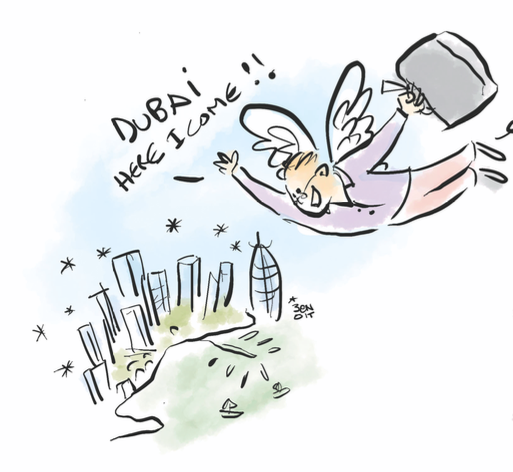
“My Dubai phone has stopped ringing and no one is buying now,” said Baz. A number of expatriates who had been planning to purchase property in Lebanon, have now postponed their investments waiting to see what will happen abroad. He also explained that some of these expatriates might even sell their property in Lebanon depending on how severely they have been hit by the crisis. Although this outlook is rather gloomy, it cannot be denied that this global crisis has been going on for quite a while and the final effect on foreign markets, especially in the US and the Gulf, is yet to be discovered.

Banks
The fact that the Lebanese banking system is one of the most solid in the world largely contributes to the benign effect of the crisis on the country. A large proportion of Lebanese buying real estate rely on bank loans. Contrary to the UAE, where banks are tightening credit causing demand to decrease, “it seems that there is no risk that a liquidity crisis will occur in Lebanon and so we will still see banks providing buyers with housing loans,” said El Khoury. Although the Lebanese central bank issued a new directive on July 21, 2008, stating that banks should not extend real estate loans whose values exceed 60% of the desired property or real estate projects under construction, there is no concern that it might affect demand. It mainly targets speculators since it exempts housing loans intended for the acquisition of a first home, those extended by the housing bank, as well as loans extended by the Public Housing Institute and those allocated to army volunteers. The directive also states that any bank who fails to abide by these stipulations will be reported by the Banking Control Council to the central bank and will then be subject to penalties.

Expectations
Since a slowdown in demand has already started to take place, real estate experts said that prices started to stabilize rather than decrease. This is good for the market since it will slow down the excessive inflation and ultimately avoid the burst of a real estate bubble. “Perhaps what is happening in the world economy worked in our favor slightly, since it made everyone realize that there needs to be a logic in everything we do,” said Makarem.
El Khoury thinks that the Lebanese market will soon cope with the situation and regain its original strength. “I believe that the prices will now become more stable for a few months as I do expect the market to regain its activity once the global crisis and the new market conditions are stable again,” he said.
Hayek expects prices to remain stable until March 2009. “There will be dramatic changes in the global market but the flow of funds and capital to Lebanon will carry on. More money in banks will lead to higher lending [and] real estate prices will begin to rise again next spring,” he said. He also explained that the next parliamentary elections will be accompanied by an increased confidence in democratic rule and therefore a rise in foreign direct investment as well.
Another way to look at the effects of the crisis is to predict that investors who still have some money would rather invest in the Lebanese real estate than in other financial instruments that might be risky. “The real estate sector always maintained its robustness [and] I believe that maybe this crisis will let a lot of Gulf investors and Lebanese expatriates inject their equity into the Lebanese real estate sector which they see now as a safe haven. If security prevails … it will be another opportunity to let investors invest in a more secure and stable industry, which is Lebanese real estate,” said Yerevian.
Harb agrees that Gulf investors who invested already in Lebanon will not retreat even if they are significantly affected by the financial crisis and therefore this market segment, even if small, will not be disturbed. “If an Arab investor invests $1 million in Lebanon, it means that he has billions abroad. If he invests $1 billion, it means he has trillions back home,” he asserted.
Thus, while some might direct their funds to a ‘safer’ Lebanon, others might not have funds to direct at all. Expatriates and investors are sitting tight and waiting for the global recession to slow down. Moreover, while buyers are waiting for the Lebanese real estate prices to drop, sellers refuse to lower their prices either because of greed or other psychological boundaries. So what will prevail? Will Lebanese real estate prices experience their first dramatic fall or will we be benefitting from a market correction? “We have faith in the Lebanese real estate sector that has proven its resiliency to the very severe crises we have faced during previous years,” said El Khoury. While experts hold optimistic expectations, these answers are yet to be discovered since it all depends on the length of the current global crisis and the ability of the Lebanese real estate sector to cope with its consequences.

December 3, 2008 0 comments
0 FacebookTwitterPinterestEmail
Insurance

Overview – The health of insurance

by Executive Staff December 3, 2008
written by Executive Staff

The introduction of mandatory insurance legislation by regional governments is seen by many in the industry as the major driver of the regional insurance industry, especially in the GCC. “When you have mandatory insurance in a line of business coupled with first time buyers, they become accustomed to the idea of purchasing insurance and therefore this enhances insurance awareness and increases demand,” said Farid Chedid, managing director at Chedid Re.

Elie Nasnas, director general of AXA Middle East, agreed: “Mandatory insurance expands insurance awareness and this is a positive factor attributed to the growth of insurance penetration … I think the trend is here and insurance is becoming more and more a priority in people’s lives, especially in personal lines.”
Traditionally, the most prevalent forms of personal insurance in the region have been health and motor insurance and this is expected to continue. “The priorities in 2009 will definitely be medical and motor insurance,” said Nasnas.
Thomas Schellen, publishing editor at Zawya Dow Jones, concurred with this idea, saying “The major driver of the regional insurance growth is the phasing in of legal requirements for mandatory insurance in terms of health and motor.”

Health runs ahead
While mandatory motor insurance has been a staple of the regional insurance industry for some time, it is the introduction of mandatory health insurance schemes for expatriates in the GCC that have driven regional growth in 2008, a trend that looks set to continue in 2009.
In line with its role as the regional insurance leader in terms of insurance volume, the UAE began to impose mandatory health insurance legislation for expatriate workers — approximately 70% of the UAE population — in Abu Dhabi in 2006-2007. In June 2008, Dubai announced its plans for mandatory health insurance to be phased in, beginning on January 1, 2009.
“It will be compulsory for everyone and will be largely employer or sponsor funded,” said Qadhi Saeed al Murooshid, director general of the Dubai Health Authority (DHA), who announced the plan. In 2006 Saudi Arabia had already enacted legislation that imposed mandatory health insurance coverage for expatriate workers in companies employing over 500 people. The scope of this legislation was expanded in 2008 to include expatriate workers in companies that have less than 50 employees. Bahrain also looks set to enact similar legislation to that of Saudi Arabia in 2009 but is still working at streamlining the process. Moreover, the nature of expatriate immigration in itself is helping to increase awareness and penetration in the region.
“When there is an expatriate population in the region, they bring with them certain insurance awareness and expectations,” said Chedid. “Those that come from advanced economies have certain standards that they are used to, and will not really work without the satisfactions of those standards,” Schellen added.
The concept of mandatory insurance has also had a direct effect on the management and direction of regional companies in 2008. Companies in the region are increasingly positioning their resources and product models towards meeting the increased demands that come part and parcel with mandatory insurance. As Chedid pointed out, “When you have regulation that makes insurance compulsory, this automatically creates demand and makes it easier for insurance companies to sell and distribute their products.”
Yet, “[mandatory insurance] is moving in slower than expected because companies have had a certain resistance to it because of higher costs,” Schellen said. Add a global financial crisis that has had a direct effect on the leveraging of many core industries in the region such as real estate, and one is left with a situation where money is tighter and companies are less able to spend money on new expenses, such as insurance — a restriction that governments may take into consideration when the time comes to enact mandatory insurance requirements.
“Governments might postpone mandatory insurance due to the overall economic crisis but it will continue,” said Michael Bitzer, CEO of Daman. However, others disagree and say that, as the need for health insurance becomes greater, regional governments and companies are compelled to address the problem of low health insurance coverage in the region — even if it costs their economies during a global economic slowdown. “I think that mandatory insurance for healthcare is a must for regional governments to provide security for their populations, so I think they will not postpone it,” Nasnas claimed, “I think they will go ahead with it.”

Oil and insurance, not a natural mix
While mandatory health insurance is being enacted in the oil-rich countries of the Gulf, it is still not the case that these countries are most insured in terms of penetration rates and number of insurance operators. The correlation between oil revenues, higher disposable income, and penetration rates that applies to almost every industry in the region does not necessarily carry over into the insurance industry.
“The overall business growth will develop not necessarily as close to the oil price as some of the other economic indicators,” Schellen said. The best example of this scenario is Lebanon, a country with no direct oil revenues that touts over four dozen on-shore insurance providers, while Qatar had only six at the onset of 2008, according to Swiss Re and Zawya.
Furthermore, the highest regional penetration rates occur in countries located in the Levant and North Africa rather than the oil-rich Gulf, with Lebanon (3.4%), Morocco (3.4%) and Jordan (2.6%) leading the pack in insurance coverage in 2008. This phenomenon can be explained by the nature of oil and non-oil-rich economies in the region. To begin with, the economies of Lebanon, Jordan, and Morocco are much smaller than those of oil-rich nations and are not able to provide the same level of social security to their citizens that oil-rich nations do. This, in turn, creates a greater need for private insurance. “You cannot rely on the government. People have to take care of themselves,” Bitzer said. Moreover, due to the demographic nature of the Levantine and North African countries, there is a larger percentage of middle class citizens who are essential to retail insurance growth. “To have higher penetration, you have to have a larger middle-class society,” Nasnas explained. Indeed, higher disposable income in GCC countries has in many ways had an adverse effect on regional insurance penetration. “The level of wealth in these [oil-rich] countries is so high that many people don’t need insurance,” said Bitzer. This, however, looks set to change in the long run as a consequence of the natural growth of larger middle-class populations, which go hand-in-hand with the composition of emerging markets.

Takaful
Another aspect of the regional insurance industry that is increasing penetration rates is the evolution of takaful as a viable option for many consumers in the region. The concept of takaful and family takaful as an alternative to conventional insurance models emerged about a decade ago and has allowed regional populations who previously shunned insurance — in particular life insurance — to enter the market without worrying about the ethical constraints associated with Islam.
“There is a concept that life insurance is against Islam and now with takaful there is a huge niche market and a lot of potential, which will re-enhance life insurance in the region,” Nasnas pointed out. “In some places in the region we have an extremely low penetration in life insurance, so there is a lot to be done in terms of takaful. If [takaful providers] concentrate on the virgin market, there is a huge amount of potential.”
This year, 2008 saw a huge increase in the number of takaful operators, as the industry of Islamic finance continues to become embedded in its natural environment. “The increase in the number of insurers in general and most specifically in takaful and Islamic insurance companies is really driving the demand for insurance — at least on the personal insurance level,” said Chedid. “Takaful companies are playing a major role in developing insurance penetration and improving insurance density throughout the region. It is increasing market awareness and improving the acceptance of insurance by local individuals.
Others are more reserved in their expectations for takaful as a real threat to conventional insurers or even a significant factor for increasing insurance penetration in the region. “People have not bought takaful as the big new thing that would make them buy insurance,” said Schellen. According to the analyst, many takaful consumers are already sold on the idea of insurance and are switch- over consumers as opposed to consumers who came around to the idea of insurance once takaful made it religiously acceptable for them to do so.
In the end, however, penetration rates will need to increase naturally due to the budding demographic nature of the region as a whole and the real needs that will eventually become the mainstay of the regional insurance industry. The need to maintain a long-term perspective is nothing new to many of the developing economies in the region. The Gulf states in particular have been keen to implement infrastructure projects across business sectors in order to ensure long term growth and sustainability.

Needs to address
The nature of the insurance industry in the region predicates a pressing and natural need to begin to address the low penetration rates before it is too late. According to the United Nations, the population of individuals in the MENA region who are over 60 years old will increase dramatically, reaching one-third of the population in some countries compared to single-digit percentages prevalent today. This shift in regional demographics logically necessitates life insurance penetration rates increase in countries such as Saudi Arabia, where they were as low as 0.0% as a percentage of GDP in the third quarter of 2008, according to BMI’s research.
“Right now we are the region of the world with the highest formation of families and one of the highest shares of youth as a percentage of total population. Thirty years down the road we won’t have that, so by 2040 or 2050 we will have significant portions of populations that are over 65 and now is the time to start preparing for this,” said Schellen. Indeed the ‘growing up’ of the region has already begun to take place and the feeling is that this will naturally cause an increase in demand for services like insurance. “We are not at the stage yet where the industry is booming, but we should expect a boom in coming years because of the demographics of the region,” Chedid predicted. Hopefully that boom will occur before it is too late to care for the increasing number of senior citizens who could become an economic burden, rather than a well-cared-for blessing.

December 3, 2008 0 comments
0 FacebookTwitterPinterestEmail
Comment

A stitch of an industry

by Riad Al-Khouri December 3, 2008
written by Riad Al-Khouri

In the 21st century, the problems of Arab industrial exports have been aggravated by more open markets. In particular, the region’s textile and clothing (T&C) industry is in flux, with strength and consolidation of the market position of some producers — notably Egypt and Jordan — and the decline of others, including Lebanon.
As a result of the Middle East peace process, Jordanian and Egyptian manufacturers have obtained a favorable status in the lucrative American market through the Qualifying Industrial Zone (QIZ) agreements, which have been instrumental in boosting their exports of clothing to the US. Jordan in particular has seen its garment sector expand rapidly over the past decade under QIZ agreements.
Since the mid-1990s Jordan began a more open trade and investment policy, negotiating a QIZ trade accord with Israel and the United States — among other agreements made with individual countries or trade blocs, not to mention accession to the World Trade Organization. This has resulted in expansion of Jordanian exports, especially garment sales to the US, which have soared under QIZ. However, this overlooks the issue of backward linkages fostered between assembly operations and the domestic economy and the extent of technology transfer. QIZ is a boost to exports and new jobs, but the zones still rely on foreign workers and on importing a large share of intermediate inputs. QIZs have offered little by way of the industrial transformation they are designed to promote. Clustering is also something that has yet to occur in Jordanian QIZs. The key notion here is that a company’s productivity is higher if it belongs to a geographic cluster of interconnected companies and institutions in a particular field (e.g. California’s Silicon Valley in the information technology sector).
Can Jordan’s QIZs facilitate industrial transformation? QIZs have to be conceived and implemented in the context of an overall export and investment promotion strategy of the government. QIZs were not introduced as a coherent part of Jordan’s trade policy, though QIZ privileges being later granted to Egypt have pressed Jordanian policymakers to take a closer look. Had the whole approach to QIZs been better planned and implemented from the beginning, it is possible that better backward linkages and technology transfer could have taken place.
Lebanon provides a sharp contrast. Whatever else may be going on in the Lebanese economy, industry has been faced with major challenges in the past decade or so and these are likely to grow. The country’s T&C sector in particular is suffering from regional and international competition. As late as 1995, new T&C factories were being licensed in respectable numbers. In that year, the sector saw 28 new plants being set up, creating close to 300 new jobs, but the trend soon reversed. In the mid-90s, the Lebanese T&C sector included over 3,600 factories. Today the figure is under 600. The total T&C workforce in 1994 was over 22,000, but has now fallen to less than 7,000, while output in that year was $428 million compared to a figure now of less than $177 million. Exports have also stagnated. In 1996, they stood at $92 million or close to 13% of the country’s industrial sales abroad. By 2006, the comparable figures had fallen to $87 million and about 4%. By contrast, in that year Jordan’s QIZ exports to the US were around a whopping $1 billion.
Until the civil war started in 1975, Lebanese industrial products, including T&C, competed relatively well in foreign markets, especially in regional Arab economies. However, the immense destruction suffered during the war badly affected the manufacturing sector, with many factories (including T&C) damaged or destroyed and with production capacity reduced to an estimated quarter of the pre-war level.
In late 1990, when Lebanon began to emerge from the civil war, the impact of the Gulf crisis, which broke out in summer of that year, produced another setback for Lebanese industrial exports. Before the crisis, the Gulf had alone accounted for about half the total merchandise exports of Lebanon, including much of T&C sales, with the major markets then being Saudi Arabia and Kuwait. The civil war and the Gulf crisis had the effect of exposing the weakness of Lebanese business practices based on mere ‘selling’ of products to quasi-captive Arab markets, rather than marketing on the basis of quality, product differentiation and competitiveness. Can the Lebanese get out of this mentality and genuinely compete? The example of Jordan is not encouraging. Faced with competition from Egypt, QIZ exports have gone down in the past couple of years. Confronted with a different set of problems, both countries’ T&C sectors have to compete to survive, a message that is only slowly getting through to them.

Riad al Khouri is co-founder and principal of KryosAdvisors and senior fellow at the William Davidson Institute at the University of Michigan, Ann Arbor.

December 3, 2008 0 comments
0 FacebookTwitterPinterestEmail
Banking

The ethical shield of Islamic finance

by Abdel-Maoula Chaar December 3, 2008
written by Abdel-Maoula Chaar

The global economy has entered an era of deep and dire straits. All over the world, heads of states and officials are talking about lower economic growth rates than previously announced. Some are even predicting negative growth. Obviously, some dark days are ahead of us but at least there is still a system left! In fact, during the first days of the crisis, experts were questioning the possibility of the financial crash leading to a general collapse of the world economic order. The main priority of the responsible parties at that time was to avoid a complete financial meltdown. They evidently succeeded and now their main concern is to try and minimize the effects of the crisis and to make sure that a crisis of this nature will not occur again.

In pursuit of this objective, governments, central banks, regulating agencies and similar entities are trying to set the new rules of the game and put into place systems that will force players to abide by the new regulations. In this search for a way out, some specialists see the Islamic financial system as very appealing. It seems to be relatively shielded from the type of financial crisis the world is currently going through.

Islamic banks and funds are suffering from the international situation and although the stock markets of the countries using mainly Islamic financial techniques dropped like all their international counterparts, there are not yet any major Islamic financial institutions drifting and in need of an outside intervention to avoid bankruptcy. Some analysts are highlighting this situation and using it as an argument to affirm the eminence of the Islamic financial system. For them, the proper solution to the crisis rests in the implementation of the Islamic financial system — i.e. the rules of the sharia. They argue that the subprime crisis that triggered the financial debacle cannot possibly happen in a sharia-based system because the transactions that were involved broke almost all of sharia’s main prohibitions: the use of interest rate (riba), ignorance by one of the parties of some parameters of the situation (jahala) leading to incomplete information and ambiguity (gharar), speculation (qimar) and one party benefiting from the hardship of another (bay al-mudar).

Besides all the cultural obstacles, the main limit to the implementation of Islamic financial rules as an ultimate solution to the crisis resides in the effectiveness of such a measure. Following each major economic crisis, sets of rules and procedures were created and enforced to avoid the recurrence of such tragedies. Yet they have never been ultimate solutions. Each time, a new crisis would emerge a few years or even decades after the implementation of the new rules due to loopholes left by the legislators. In fact, the solution is not related to rules and laws per se, but to a change of mindset as regulations are the reification of philosophical beliefs. Hence, the stakes of the crises are not only financial, and this facet of the situation was highlighted last month by President George W. Bush who affirmed that the present turmoil should not be considered the result of a failure of the capitalist system.
The fact that a president feels the urge to make such a declaration tends to prove that an increasing number of people are linking the multiplication of economic and financial crises with the ethics of capitalism. The central tenet of the contemporary financial system is the absolute right of the individual to maximize his benefits. Under such a framework, the system of subprimes is logical and normal. But this cannot take place in a sharia-based system, as it uses as a benchmark the benefit (maslaha) of the financial and economic operations for all stakeholders. This principle stems out of the belief that God entrusted the world to man who must manage it for the best benefit of everyone (istikhlaf).

This very brief comparison between the roots of the two financial systems seems to support the thought that Islamic finance might be the path to a sounder financial system. The problem with this line of reasoning is its aspect, à la Huntington, that divides the world along cultural fronts; one party being ‘better’ than the other and meant to replace its ‘opponent’. Moreover, it blurs any possible perspective of dynamic relations between the two fields and it leaves submission and confrontation schemes as the only possible models of interaction between Islamic and Western finance. Yet some links seem obvious. Islamic finance is already using Western techniques, while part of the decisions taken recently by world regulators resembles some rules of Islamic finance. In fact, Western financial technical know-how is undeniable, while Islamic finance just proved that its ethics may shield the system from its own excesses. Hence, cooperation and cross- fertilization appears the most logical configuration between the two to ease the frequency and the consequences of financial crises.

ABDEL-MAOULA CHAAR is Islamic finance project manager at Ecole Supérieure des Affaires

December 3, 2008 0 comments
0 FacebookTwitterPinterestEmail
Real estate

The components of the most resilient market in the region

by Karim Makarem December 3, 2008
written by Karim Makarem

Price increases for the Lebanese real estate market are not expected for the remainder of this year, in fact the buzzwords have become stability and correction. But we must not forget that the real estate sector in 2008 has been very buoyant overall. Prices in the first half of the year rose around 40% on average and two to three years prior to that, there were also year-on-year price increases averaging 30%. The main factors for the increase in prices since 2005 have been rising construction costs, expectations, financing options and most importantly demand.

Since the economic crisis began in September 2008, we have seen a slowdown in the number of requests for new properties. In turn, prices have stabilized and for certain over-priced developments, a correction is underway, bringing them in line with the market. Whether developers are passing on reduced construction costs or simply revising their profit expectations to a more realistic level, it is both a healthy and necessary correction. Demand, however, can be explained by better understanding its source.
In our experience, the majority of buyers have been predominantly Lebanese, and expatriate Lebanese in particular. Lebanon’s expats have become the new middle class, which was lost during the civil war. Many in this fast growing community earn significant monthly salaries and have helped boost the real estate market in Lebanon. You can probably see a correlation between the number of Lebanese immigrants to the Gulf and the increase in prices over the last few years. Add to that the factor of high loan to value house loans, a recent phenomenon in Lebanon, and the demand for property grew, sustained mainly by its own nationals.
When the crisis hit outside of the US, job uncertainty and losses in the stock markets froze some of the demand from expats. Therefore, the full extent of the slowdown in demand will be partly dictated by the numbers affected and general confidence levels.
One factor that will cushion the effects of the financial crisis and its consequences is the high equity to debt ratio in Lebanon, which has meant that:
1. Banks are not witnessing the customer defaults of their overseas counterparts
2. Developers and landowners, many of whom have limited exposure to debt do not have to slash prices to appease the banks
3. Pre-mortgage day end-users have very limited liabilities if any, due to the lack of access to debt at the time
4. The great majority of recent, highly geared end-users are bound to be safe as is the case anywhere else.

Regulating stability
Recently the central bank suggested limiting the level of loans to value ratio to 60:40, which is another reason why there might have been a little bit of a slowdown in demand. There are a number of factors, ranging from the decision of the central bank to market sentiment, which has reduced demand. All of these somehow came together and have created a situation which is in fact healthy in that it has put an end to reckless pricing.
Another cushioning effect has been the lack of speculators in the property sector. Speculation such as what we witnessed in some parts of the Gulf is less common here, most likely because of the political instability that has kept those investors away. Perhaps then our political instability has served us positively for once.
In fact, the instability in Lebanon has taught us much and inadvertently inspires confidence for the future of the property sector. If the political assassinations, demonstrations, unrest and civil strife occurred hand-in- hand with an average 30% per annum increase in prices, then we must hope for the best in what is surely the most resilient real estate market in the region. We must count ourselves lucky that several factors have come into play at the same time to help us overcome what are difficult times for many.

Karim Makarem is the director of Ramco Real Estate Advisors

December 3, 2008 0 comments
0 FacebookTwitterPinterestEmail
Economy & Finance

Fidus – Mahmoud Ezzedine (Q&A)

by Executive Staff December 3, 2008
written by Executive Staff

Established in 1994, Fidus is one of the oldest financial institutions in Lebanon. It acts as a brokerage house subsidiary for Société Générale de Banque au Liban (SGBL). Fidus already extends its services to affiliates in Syria and Cyprus, in addition to its soon to be opened branch in Jordan. Fidus will also be present in Canada in 2009 and its next step will be a presence in Geneva by 2010. Fidus offers brokerage and advisory services, derivatives, structured products, mutual funds and alternative investments, as well as fixed income securities. Executive spoke to Mahmoud Ezzedine, director of the private banking department.

E How is Fidus structured?
There are several layers. We are composed of three main departments. First is the private banking and wealth management. Second is the trading and capital markets. Third is the structured products and funds department. Every portfolio that we have at Fidus is looked after by these three departments. Furthermore, Fidus operates on all financial instruments. That means we have an open architecture on all our structured products, funds and hedge funds. Our trading desk covers all major international financial markets, including the GCC. We have a futures and commodities desk, plus an FX desk and a fixed income desk.

E The global financial markets are currently fraught with risk. How do you deal with risk?
We have stringent risk controls. We do not have an investment division and we don’t do any proprietary trading. We only act on behalf of clients and we don’t take positions on our books. This is why we have no exposure to the subprime crisis. We have no exposure, as a company, to anything that affects the economy.

E Are your clients exposed to the crisis?
Unfortunately, all over the world, all asset classes have suffered tremendously in this crisis, no matter what clients were exposed to. Almost everyone incurred losses, except some clients who were short on some markets and on some assets. Taking that into consideration, our clients reacted well given the amplitude of the crisis. Some of them took advantage of some low pricing and increased their exposure by averaging at very interesting levels, yet most of them cut their losses early enough. We are still confident that our clients, with time, will again build interesting portfolios and have some good returns in the coming year.

E Do you believe that there are good valuations on the market currently?
There are lots of good valuations on the market but we are not comfortable going and buying aggressively because the volatility is still too high. That’s our only worry. When volatility goes down we can advise our clients to go in. Having said that, we always tell our clients, ‘you can never time the market.’ If you are a long-term investor, you have to ride the waves. These days, people are shifting from buying stocks into buying trackers like ETFs, which track indices. On the other hand, we have witnessed lately a big appetite on the credit markets. Investors are aggressively buying defensive bonds that have been yielding above average returns, more than 9%.

E Given the current market conditions, what do you think the prognosis is for mergers and acquisitions?
We will see more M&A activity after this crisis. Bigger banks will be buying smaller banks, bigger corporations buying smaller corporations and so forth. There will be lots of consolidation in the market place.

E What are your expectations for 2009?
We are working more and more on our positioning and on our product offerings. We will be opening another branch outside Lebanon. We are recruiting more people. Our private banking scene is expanding, enabling us to have more in-depth analysis on the level of products flow. This will help us to prepare our clients for new investment themes.

E Do you think the financial crisis will have an affect on your business for 2009?
The financial crisis will have a direct effect on our business but we hope it won’t last for a long period of time. We have witnessed more investor confidence in Lebanon with foreign investors, especially those from the Middle-East.


December 3, 2008 0 comments
0 FacebookTwitterPinterestEmail
By Invitation

Company-customer communication in times of crisis

by Joumana Brihi & Ramsay G. Najjar December 3, 2008
written by Joumana Brihi & Ramsay G. Najjar

If we add to the current economic conditions consumers’ ‘panicky’, erratic behaviors and the spread of rumors triggered by such reactions, then we might better understand the worsening of the crisis and the gloomy outlook of years to come. The truth is that people’s behaviors are largely driven by the need to be safe, because, like Mark Twain described it back in his day, “the average man does not like trouble and danger.”

Driven by the natural inclination to run towards safety and ‘follow the herd,’ consumers at the early stages of the financial crisis seemed to have found refuge in safe deposit boxes, convinced that their money would be safer inside the box, a story that made the cover of Time Magazine. The tendency to overreact in the face of uncertainty is also likely to drive the behavior of many companies in times like these, causing them to slash communication efforts. In fact, it has been proven historically that investing in brand building during crises brings significantly higher returns than taking the Draconian measure of cutting off communication altogether.
Even for those who choose to carry on communicating, many may translate their struggle for survival into hard-sell communication and aggressive discount promotions, which often look like desperate attempts to generate ‘quick wins’ in terms of sales. This approach may in fact further dampen consumer confidence, since it could strike consumers as yet another apprehensive reaction that can only justify and further exacerbate their own fears, in addition to which it is very likely to have a negative impact on the image and brand equity of corporations.
In fact, the first thing that companies need to do is to ‘reshuffle’ their priorities in light of the crisis and for their communication efforts to reflect this reshuffling. Companies cannot therefore continue to communicate the way they did during times of economic prosperity and thus need to rethink their approach to communication. During times of crisis, the chief priority for companies becomes simply to ‘keep going’ and to overcome the challenge of maintaining their customer loyalty, while also struggling to survive in a world where consumerism is declining sharply and the population is increasingly risk averse. So how can corporations successfully achieve this through communication?
One of the most effective approaches may well be to render communication more personal and ‘reassuring’ in order to demonstrate a true understanding of customers’ concerns and expectations in dark times. The focus should therefore be centered on the consumer, with a shift from ‘mass communication’ to more personalized communication that reflects the companies’ caring attitude and aims at creating long-term bonds and a sense of partnership with their customers. The bottom line is that corporations should be able to convince their customers that they care about their welfare and comfort more than they care about their own profit margins and that they are willing to sacrifice their profits in order to address their customers’ needs. The underlying message is also that in times like these, corporations need their customers more than ever before in order to survive.
Another important practice, which in fact goes hand in hand with the personalization of messages and demonstrated care for customers, is for companies to further emphasize quality and value for money, as well as any ‘economical’ solutions that they can offer to their customers. This should be mainly driven by the realization that customers have truly ‘tightened their belts’ and that they will start to think twice before purchasing a product or service. An example of a corporation that is trying to leverage the ‘value for money’ proposition is Walt Disney in its recent television commercials for its famous musical Mary Poppins, showcasing members of the audience saying, “So well worth the money, and the uplifting of the spirit in these difficult times.”
Companies may also need to start realizing the need for a ‘back-to-basics’ approach to communication. Rather than ‘promising the moon’ to their customers, they might therefore need to dust off old books and focus on the basic attributes of their products and services — using non-gimmicky communication that offers customers exactly what they need rather than overstated messages that promise to “bring the world to their doorstep.” This back- to-basics approach could be the answer for many in the most troubled sectors, such as banking, vying to regain the public’s confidence in their capacity to provide them with basic ‘safety’. An example of a bank that is trying to do that is the State Bank of India which published an advertisement in October 2008 merely reading, “Fixed Deposit: No Volatility, All Safety.”
Which organizations will show that they are made to last will very much be determined by their capacity to endure this crisis. Those that succeed in adapting their communication strategies based on a good understanding of consumers’ psyche will certainly remain competitive, while others may find it a lot more difficult to readjust and to climb back down the profitability ladder. Companies that used to make billions are now losing billions, but like Kipling said: “If you can meet with triumph and disaster and treat those two imposters just the same… yours is the earth and everything that’s in it.” The moral is that today’s corporations need to show some resilience and to carry on communicating in good and bad times alike.

Joumana Brihi & Ramsay G. Najjar S2C

December 3, 2008 0 comments
0 FacebookTwitterPinterestEmail
Banking

Lebanon – Dr. Francois S. Bassil

by Executive Staff December 3, 2008
written by Executive Staff

Executive Magazine spoke with Dr. François S. Bassil, general manager at Byblos Bank and president of the Association of Banks in Lebanon, for his views on the Lebanese banking sector in the current global financial conditions.

E How do you see the current and future economic situation of Lebanon in view of domestic and global developments?

The Lebanese economy has demonstrated its resilience in the face of a series of political shocks since 2005, but it also missed many opportunities and could not take full advantage of the economic boom in the states of the Gulf Cooperation Council and the unprecedented level of liquidity in the region during that period. The Lebanese economy grew by 7.4% in 2004, its highest growth level in the previous 10 years, so the system demonstrated that it has competitive advantages and that the economy can attract capital, tourists, foreign companies and talent. But due to deteriorating security and political uncertainties in the country, the economy could not fulfill its potential and grew by only 1% in 2005, and it did not post any growth in 2006 because of the July War and expanded by just 4% in 2007. But all indicators point to unmistakable signs of improvement in economic activity in Lebanon since the Doha Accord this May that saw the end of the downtown sit-in, the reopening of parliament, the election of a new Lebanese president, the formation of a national unity cabinet and the overall reactivation of public institutions after a long period of paralysis.
These developments helped improve the country’s economic outlook, which increased investor sentiment and improved consumer confidence. In turn, this has revived economic activity as best illustrated by a very successful tourism season that saw the number of incoming tourists to Lebanon rise by 29% and the number of passengers at Hariri International Airport jump by 17.5% in the first eight months of the year, while occupancy rates at Beirut hotels reached 91% in August. Further, the coincident indicator, an index of economic activity in Lebanon, rose by 12% year-on-year in August, reflecting the revival of economic activity. Also, the balance of payments posted a surplus of $2.2 billion in the first nine months of the year compared to a surplus of $580 million in the same period last year, reflecting an increase in capital inflows. Further, the central bank’s assets in foreign currency increased by $4.2 billion, or 29%, in the five months since the Doha Accord to reach a record high $18.4 billion on October 15, 2008.

The improvement of these and other indicators illustrate the positive impact of the political developments on the economy. As such, several organizations changed their growth forecasts for the country. For example, the International Monetary Fund projects real GDP growth at 6% in 2008, up from 3% last April, and forecasts a 5% growth in 2009. Similarly, the Economist Intelligence Unit revised upwards its economic growth forecast since the Doha Accord to 4.2% in 2008 and 3.1% in 2009 from -0.7% for 2008 and 0.5% in 2009 previously. In parallel, rating agency Standard & Poor’s upgraded its long-term sovereign credit ratings for Lebanon to ‘B-’ from ‘CCC+’ and maintained the outlook at ‘stable’ due to the easing of political tensions and the reduction in the government’s near-term financing risks. Capital Intelligence revised its outlook on Lebanon’s ratings to ‘stable’ from ‘negative’, while Fitch Ratings and Moody’s Investors Service affirmed the country’s sovereign ratings.
During this entire period of political instability and uncertainty, Lebanon’s financial authorities managed to contain the fiscal deficit and the growth of the public debt, as the fiscal deficit declined from 11.5% of GDP in 2006 to 10.3% in 2007. Similarly, the public debt regressed from 178% of GDP at end-2005 to 177% of GDP at end-2006 and 171% of GDP at the end of 2007. Also, the national currency remained stable throughout the past three years, while monetary authorities demonstrated their ability to defend the currency and maintain the stability of the Lebanese pound. But at the same time, we have missed several opportunities to improve the investment climate and the business environment in the country. For example, most of the structural reforms necessary to reduce the public debt have yet to be implemented, such as the privatization of the mobile licenses and the crucial reform of the electricity sector. Also, the prevailing political conditions did not allow the country to benefit from the high level of liquidity in the region to increase foreign direct investment. So authorities should make financial and economic issues their priority and let political decisions serve these priorities, rather than the other way around. We need to help ourselves in order for others, including our friends in the region and around the world, to help us.

E Byblos Bank issued $200 million in preferred shares in 2008. How will the proceeds be used? Are the political and security conditions in the country favorable for such issuance?

The share offering constituted the largest issuance of preferred shares by a Lebanese bank so far in 2008, and reflected the confidence of investors in the Lebanese banking sector in general and in the vision and strategy of the Byblos Bank Group in particular. Proceeds will be used for general funding purposes, including strengthening the bank’s capital structure, external growth and development of investment banking activities, among others. The preferred shares are non-cumulative, redeemable and subject to a call option by the bank starting in 2013 and for each subsequent year. Holders of the Series 2008 Preferred Shares will receive $8 annually per share in dividends.
In November 2007, the bank raised $200 million from the issuance of a convertible bond. The issuance took place amid challenging political circumstances and a difficult period in the country’s history, while the issuance of the preferred shares took place shortly after the normalization of the political situation. In both cases, Byblos Bank demonstrated that it is possible to attract funds to a transparent, well-managed institution that has a clear vision and strategy backed by an executable expansion plan. Still, the ability of Lebanese banks and companies in general to attract funds would improve significantly with an improved macroeconomic environment, sustainable GDP growth, declining public finance ratios, increased stability, implementation of structural reforms [etc.].

E How would you evaluate the global fiancial crisis? What effect will it have on the Arab world, and Lebanon in particular?

The world is facing a financial crisis of unprecedented proportions. What started as defaults on mortgages in the United States evolved into a liquidity crisis, then a solvency crisis and spread to the rest of the world to become a global confidence crisis, while it looks like it is gradually also becoming an economic crisis. Authorities in advanced economies have committed a total of $2 trillion to support their banking and financial sectors, while the International Monetary Fund is stepping up its efforts to help emerging market economies that are facing difficulties. The crisis affected stock markets as well, with estimated losses of about $30 trillion in market capitalization around the world so far. Further, it looks like major advanced economies will enter into a period of economic slowdown. So one key factor is to restore confidence in the global financial system, as the longer the volatility and uncertainty in global markets, the longer it will take to restore confidence in the credit and equity markets and the longer it will take to restore a high level of global economic growth.

The Arab economies, especially the economies of the GCC, are not isolated from the rest of the world. So the crisis has been felt regionally, reflected in part by a significant drop in Arab stock markets. But monetary and financial authorities in key Gulf economies have taken preventive measures to ensure liquidity in the system. Also, the GCC has wisely used its oil revenues and continues to post fiscal and current account surpluses. In addition, the region has very large foreign reserves and its foreign assets are estimated at about $2 trillion. So the region is capable of weathering the crisis, but there is no doubt that Arab financial markets are feeling its impact. However, the GCC is one of the most important economic blocs, not only in emerging markets but across the world. So the expected stability of this economic bloc will be a key to restore global confidence and stability.

December 3, 2008 0 comments
0 FacebookTwitterPinterestEmail
Real estate

Dubai‘s foundations mature

by Iseeb Rehman December 3, 2008
written by Iseeb Rehman

The decline in global property prices has started to seep into Dubai, although it’s arguable that this is a short- term correction born as a direct result of the world credit crisis and the speculative nature of investors. No one can deny the fundamental strengths of Dubai in terms of tourism, trade, real estate investment and as a potential financial power house of the Middle East.

The knock-on effect has been the pace of off-plan sales, which have inevitably slowed in recent weeks, although property that is completed or close to handover is still very much in demand and interestingly has seen minimal impact in pricing. Statistically the ratio of investors to end-users was originally 60:40. We have witnessed a turnaround, which is positive for the market as now we are seeing real buyers enter the market and purchasing for personal use.
The UAE market as we see it today is simply in a lull period. However, Dubai as we know is a global fusion metropolis. The current global economic crisis could yet become a bonus to the UAE, which can offer alternative support to investors as its banks are safe, liquidity is available and personal debt (in global terms) is at a minimum level. This is supported by the fact that Abu Dhabi is the federal capital of the UAE and Dubai is central to the continued success of the country.
Current investment opportunities in Dubai are appealing and I predict that in six months to one year prices will have stabilized at 2006 and 2007 values. In addition, the range of legislation implemented over the last year by RERA and the Land Department has provided transparency and stability to the market, which in turn will become attractive to international institutions when rebuilding their balance sheets. Dubai, in short, is in a period of transition where it has begun as an infant market and is developing to be both a professional and established one, as is everything else that is growing with it.
Of course, there are several specific factors that have helped shield Dubai from global market turmoil. For one, Dubai has firmly established itself as a highly marketable global brand, with its potential to maximize the business value of investors being among its biggest brand attractions. One hundred percent foreign ownership, zero personal and corporate taxation, state-of-the-art infrastructure, fast employee visa processing, full repatriation of capital — these are just a few popular incentives that define the conducive investment landscape of the emirate. Its massive investments to develop its air, sea and land transport facilities, which have transformed Dubai into one of the most highly accessible destinations in the world, have also helped accelerate Dubai’s reputation across global markets. With a strong transport sector, Dubai continues to drive more business and investment traffic into the emirate.
The combination of widespread infrastructure development, strategic location and proactive government policies has likewise cultivated a unique environment that breeds creativity, ingenuity, professional excellence and high technology — all of which are associated with the Dubai brand.
The message is thus clear: Dubai is a mature, yet highly dynamic investment destination. Mature, because Dubai has successfully incorporated key measures that ensure sustainability and long-term growth, e.g. gradually removing speculators from the real estate market and replacing them with longer-term investors and end-users. Ultimately, it is its dynamism reinforced by its resilient character and mature outlook that continues to enable Dubai to harness growth opportunities as they come, regardless of the circumstances.

Iseeb Rehman is managing director of Sherwoods Independent Property Consultants.

December 3, 2008 0 comments
0 FacebookTwitterPinterestEmail
Economy & Finance

MENA – 2009 to tally the toll

by Executive Staff December 3, 2008
written by Executive Staff

The year 2008 will forever be remembered for bringing the global financial system to the brink of total collapse. “When I predicted earlier this year that we were facing the worst financial crisis since the 1930s, I did not anticipate that conditions would deteriorate so badly,” said George Soros, the billionaire American financial speculator, aptly capturing the scale of the global financial crisis in the New York Review of Books. Soros went on to warn that, “a deep recession is now inevitable and the possibility of a depression cannot be ruled out.” Thus, globally 2009 will be dominated by the repercussions of the financial crisis.

How the global financial crisis will impact the Middle East is still unclear and analysts expect the full implications to slowly emerge over the next year. Already there has been a dramatic drop in the price of oil, real estate in the GCC has been shaken, investor confidence rocked and stock markets in the region have shown a volatility similar to those in the major financial centers throughout the globe. Yet, concomitantly the Middle East has so far appeared to have navigated itself away from the most severe aspects of the financial crisis, as seen in the West. The economic fundamentals of the GCC are seen by analysts to be strong and able to withhold the continued onslaught from the outside.
As vice-president of MENA Capital Ziad Maalouf explained, “The banks have strong fundamentals in the GCC because the governments are behind them with their huge reserves and have shown in the crisis that they are willing to act to support the banks if need be. In the UAE we have already seen this [the central bank of the UAE introduced a $14 billion liquidity support facility].” In addition, the GCC governments have given a 100% guarantee on all bank deposits. The economic fundamentals in the Gulf became so strong primarily because of the huge surpluses obtained over the last few years due to record oil prices. Thus, stated Faisal Hasan, head of research at Global Investment House, “The governments of the region have saved 70% of their surplus oil revenues over the past five years and sovereign wealth funds in the MENA region have over $1.5 trillion at their disposal.”

Those with oil and those without
The current account surpluses of oil exporting countries are expected to reach 25% of GDP in 2008, according to the IMF. Thus, the economic fundamentals of the GCC are expected to be strong enough for growth to continue in 2009. For non-oil exporting countries next year is going to be very difficult. Amjad Ahmed, CEO of Investment and Merchant Banking at NBK Capital, said that Egypt and Turkey in particular are going to have a hard time as both these countries’ growths have relied on the inflows of foreign direct investment from the GCC and with the financial crisis, “FDI from the Gulf will be significantly reduced.”
The GCC states, while having the surplus liquidity to overcome the crisis, still had to face significant impacts on their economies. “Gulf stock markets have shed $160 billion of their total value during the first couple of weeks of the financial crisis, the Saudi All Share Index fell 17% and the Dubai Stock Market posted a 22.5% loss … several Arab sovereign funds incurred substantial losses as well on their worldwide portfolios,” said Fadlo Choueiri, head of research at Credit Libanais.
Exactly how much was lost by these SWFs is, unfortunately, guess work because of a complete lack of transparency. Jad Chaaban, acting president of the Lebanese Economic Association, warned that, “There are a lot of rumors that major sovereign funds [from the region] lost major amounts of cash in the US, but we don’t have numbers. But it has impacted the risk perception of investors.” This lack of transparency should be a cause for concern as it was a deficiency in transparency and regulation that caused the global financial near-meltdown.
While the economic fundamentals have been important in convincing investors and analysts that the GCC will be able to weather the financial hurricane, timing has also been essential in keeping the worst affects of the crisis at bay. As Ziad Abou Jamra, director of the Trading Desk at FIDUS, explained, “Lending standards were just starting to deteriorate in the GCC area when the crisis started overseas, which created a timely opportunity for GCC banks to adjust and halt all risky lending. US banks, on the other hand, were giving out loans with zero down payments, no documentation, and zero interest rates for the first two years [i.e. subprime loans].” Further to this, Hasan claimed, there was “weaker integration of MENA’s financial sector with those of the US and Europe. There were also improvements in MENA’s financial fundamentals over the last decade, including better fiscal and monetary management, more open regimes with more flexible exchange rates, and better debt and financial management that has reduced exposure to international capital markets.”
The independence of the GCC from the international financial system is contested. Choueiri said that there has been increased integration of the region into the world economy, “evidenced by some 89.18% correlation between the GCC 200 index and the Dow Jones Industrial Average during the period between September 7 and October 20,” adding “it is inevitable for government authorities in the region to implement stiffer regulation on banks and sovereign funds.”
The most significant implication of the 2008 global financial crisis on the region is likely the substantial hits that many individual investors took as, according to Ahmed, “their investment portfolios left them exposed to what happened in Europe and the US.”
It will not be until sometime next year that the extent to which individual investors in the GCC have been affected will be clear, but sentiment in the market suggests it was significant. What is maybe more significant is the advice that brokers are giving their clients, which is being repeated across the region and the globe. “We are telling our clients to liquidate some of their investments and move to safer types of products and we have re-initiated two structures that give more protection to our clients. So we are trying to protect our clients by investing in these structures instead of going straight into the market,” Ezzedine said.
It appears that 2009 will be a hard year for capitalists in the region. “Cash is scarce, many high net worth individuals lost substantial sums of money, the financial crisis has hit the ability to fundraise for Private Equity firms such as ours in the region,” said Gilles de Clerck, senior manager of Capital Trust.

The Lebanese great escape?
In Lebanon, 2008 will be remembered as the year of Riad Salameh, governor of the Banque du Lebanon, the country’s central bank. Many people in the sector believe he helped Lebanon escape the financial crisis’ worst effects. Ezzedine said that “Lebanese banking will not be affected [by the global financial crisis] because we do traditional banking in Lebanon, which means none of the Lebanese banks were allowed to invest in any of those derivatives that caused the crisis. This was because Riad Salameh saw this crisis occurring because of the over-leverage of properties and he saw the cycles and possibilities of a bubble bursting that would affect the whole financial system.”
Thus, miraculously, the financial crisis even brought an improvement to Lebanon’s economic situation. According to

Oil
Oil prices reached a record $147.27 per barrel on July 11 of this year and, according to the IMF, oil and gas exports will amount to an estimated $1.1 trillion in 2008, up from $700 billion in 2007. Analysts are putting this record price down to massive speculation on oil and the subsequent drop to $51, at the time Executive went to print, appears to confirm this view. “These speculators were buying every small dip in prices and the rally continued, which eventually led to the final blow off and $148-per-barrel prices. This latest drop in oil prices will definitely be a big negative for speculation in the region (lower liquidity) and will definitely lead to lower GDP growth levels,” said Ziad Abou Jamra, director of the trading desk at FIDUS. However, while speculation was no doubt a major cause of declining prices, the global financial crisis is now also causing a serious hemorrhage in demand. The uncertainty over what will happen to oil in 2009 has even led Goldman Sachs to close their recommendations for oil. Future markets expect oil to average $102 a barrel during 2009- 2013 on a cumulative basis, giving the region a projected fiscal revenue of $5.6 trillion over the five-year period, compared to $1.8 trillion during 2003-2007.
Sentiment among analysts in the region regarding the oil price is relatively upbeat, despite the uncertainty. As Faisal Hasan, head of research at Global Investment House, stated, “Trade balances and balance of payments are likely to remain positive… The sharp decline in oil prices will reduce the consolidated external current account surplus of the GCC countries by almost half, but still it will remain positive.” Most analysts in the region are remaining confident mainly because they believe that for most of 2008 oil was overpriced and they expect oil prices to stabilize at $60-70 per barrel next year, which will still be above the average $47 per barrel needed for the GCC to achieve a fiscal balance. Amjad Ahmed, CEO of Investment and Merchant Banking for NBK Capital, said that although the market is fluctuating a lot, “growth in India and China will ensure that oil is maintained at the $60-70 mark.”
Nonetheless, the continued dive in oil prices is not promising and the decision by Goldman Sachs to close their recommendations for oil pricing illustrates the uncertainty in the market. This is further accentuated by the fact that the continued slide in oil prices has occurred in the context of two production cuts by OPEC, Fadlo Choueiri, head of research for Credit Libanais, pointed out. However, Abou Jamra countered that, “speculators loved buying oil at around $150 and now they hate it at around $50. Betting against speculators is usually a winning proposition.”

Antoun Samya, a research analyst at BLOMINVEST, there has been an inflow of $8 billion into Lebanese banks from Arabs and expatriate Lebanese. “Lebanon is currently seen as a safe haven by high net worth individuals,” Samya said. However, negative impacts of the crisis in Lebanon are expected to be felt in 2009, despite the IMF estimating growth to reach 5% in real GDP. In Ezzedine’s view, “negative impacts have begun to appear and on the real estate side, some projects have been slowed down… also a slowdown in remittances from abroad will occur.”

2009: Wait and see
The economic fundamentals of the GCC are facing their biggest test yet and 2009 will be a year of continued questioning of these fundamentals. Analysts are quietly confident that there is enough liquidity in the region to escape any severe economic crisis in the GCC, but simultaneously there is nervousness as the full implications of the crisis in the region are still unclear. Oil prices continued their decline to the crucial $50 mark and the existing confidence is fragile. The coming year will be a long one and the start of an even longer recovery period for the global financial system. The age of conspicuous consumption is over.

December 3, 2008 0 comments
0 FacebookTwitterPinterestEmail
  • 1
  • …
  • 493
  • 494
  • 495
  • 496
  • 497
  • …
  • 685

Latest Cover

About us

Since its first edition emerged on the newsstands in 1999, Executive Magazine has been dedicated to providing its readers with the most up-to-date local and regional business news. Executive is a monthly business magazine that offers readers in-depth analyses on the Lebanese world of commerce, covering all the major sectors – from banking, finance, and insurance to technology, tourism, hospitality, media, and retail.

  • Donate
  • Our Purpose
  • Contact Us

Sign up for our newsletter

[contact-form-7 id=”27812″ title=”FooterSubscription”]

  • Facebook
  • Twitter
  • Instagram
  • Linkedin
  • Youtube
Executive Magazine
  • ISSUES
    • Current Issue
    • Past issues
  • BUSINESS
  • ECONOMICS & POLICY
  • OPINION
  • SPECIAL REPORTS
  • EXECUTIVE TALKS
  • MOVEMENTS
    • Change the image
    • Cannes lions
    • Transparency & accountability
    • ECONOMIC ROADMAP
    • Say No to Corruption
    • The Lebanon media development initiative
    • LPSN Policy Asks
    • Advocating the preservation of deposits
  • JOIN US
    • Join our movement
    • Attend our events
    • Receive updates
    • Connect with us
  • DONATE