• Donate
  • Our Purpose
  • Contact Us
Executive Magazine
  • ISSUES
    • Current Issue
    • Past issues
  • BUSINESS
  • ECONOMICS & POLICY
  • OPINION
  • SPECIAL REPORTS
  • EXECUTIVE TALKS
  • MOVEMENTS
    • Change the image
    • Cannes lions
    • Transparency & accountability
    • ECONOMIC ROADMAP
    • Say No to Corruption
    • The Lebanon media development initiative
    • LPSN Policy Asks
    • Advocating the preservation of deposits
  • JOIN US
    • Join our movement
    • Attend our events
    • Receive updates
    • Connect with us
  • DONATE
Banking

Saudi Arabia – Kingdom holds the fort

by Executive Staff December 3, 2008
written by Executive Staff

The ongoing global financial crisis has had limited effects on the Saudi banking sector. Fighting through recent years — with the 2006 stock market crash and a bullish year in 2007 — Saudi banks in 2008 have “performed relatively well,” noted Murad Ansari, vice president at EFG-Hermes KSA. Saudi banks are not immune to the global troubles, but they are definitely less exposed than other banks around the world, especially since “almost 86% of total assets of the banking sector are invested in domestic assets,” as described in a recent EFG-Hermes report.

Due to their low exposure to international credit, equity, and property markets, Saudi banks have been able to insulate themselves from the storm of the international crisis. And thus, according to EFG-Hermes, “Saudi banks are relatively well positioned to weather the impact of the ongoing financial turmoil.” Also sheltering Saudi banks from the global chaos is the minimal exposure they have to equities and real estate. “Over the last 12 months,” contends EFG-Hermes, “rising cash reserve requirements of the central bank coupled with strong loan growth has meant that most of the banks have reduced their exposure to international assets.”
While most of the top banks reported mixed quarterly results, “overall the listed Saudi banks (nine month profitability) recorded [a year-on-year] increase of 1.6%”, said Global Investment House. The Saudi central bank has voiced willingness to help the kingdom’s banks if necessary, by injecting a proposed $40 billion of liquidity into the financial institutions. As of now, the central bank is yet to pour funds into the banking sector but, theoretically, by pumping liquidity into the banks, the central bank could buffer the consequences created by the financial distress, whilst guaranteeing bank deposits to boost confidence levels. Nonetheless, EFG-Hermes disclosed, “the central bank has lowered the cash reserve requirements of commercial banks by 300 basis points, freeing up an estimated SAR10 billion [$2.7 billion] in liquidity that had been with the central bank in cash reserves.”

What crisis?
According to Ansari, even though the growth rates in neighboring countries, such as the UAE and Qatar, have surpassed those of the kingdom, the balance sheets of Saudi Arabia’s banks have grown at an impressive 28% thus far this year. Third quarter results for 2008 show that the crisis has only affected selected banks and not the system in its entirety. EFG-Hermes also asserted, “Banks which had relatively higher asset exposure to North America and had higher investment equities have seen the impact in their 3Q 2008 results. However, even in [those cases], the impact has not been significant enough to wipe out profits.” Thus, even with a few dips in some banks’ profitability, such occurrences were not significant enough to lower confidence levels across the sector.
EFG-Hermes indicated a couple of “medium term challenges” confronting the Saudi banking sector. First and foremost, Saudi banks will have to face “arranging required funding to finance the aggressive domestic investment plan.” Secondly, they will have to figure out “funding to smaller corporate clients/sole proprietorships where owners can potentially have exposure to international equity markets.” However, such obstacles are not believed to be strong enough to weigh down earnings in the form of credit provisions for the sector.
The pivotal drivers of banking sector growth, as outlined by Ansari, are the corporate credit demand, an increase in government spending as well as expansions by large corporations and a surge in the demand from smaller corporations. The liquidity of the Saudi banking sector has also helped it stay afloat and perform decently. Hamad Saud Al Sayari, governor of the Saudi central bank, concurred, saying that the local banks are “highly liquid” and possess “good capital adequacy.” The total deposit growth by the third quarter of this year “surged by 9% [quarter-on-quarter] compared to 1% in [the second quarter of 2008] despite the fears of an outflow of funds following reduced speculation on the de-pegging of the Saudi Riyal to the US Dollar,” EFG-Hermes observed.

Forecasts
For the most part, the Saudi banking sector is predicted to slow in 2009. Ansari feels there are two sides to the story in 2009, assets and liabilities. Believing banks should be “extra cautious” now on the asset side, the VP outlined that the “financial viability of projects, and hence asset quality, will once again become the prime concerns for banks.” In terms of liabilities, banks are likely to seek new options to raise funds, and thus deposit mobilization will be a chief concern for the kingdom’s banking sector next year. Although such issues were present in 2008, Ansari reckoned that their relative importance in 2009 is “likely to increase significantly.” Overall, even at a slower pace, the Saudi banking sector is predicted to perform well next year. While the kingdom’s banks are not likely to face a “total meltdown,” Ansari feels that “the overall environment requires banks to be more prudent while lending.”

December 3, 2008 0 comments
0 FacebookTwitterPinterestEmail
Tourism

Lebanon – Vacation of the state

by Executive Staff December 3, 2008
written by Executive Staff

Lebanese officials are the kings of temporary fixes. For years now government employees have turned a blind eye on infrastructural problems plaguing the country’s various economic sectors. The Lebanese tourism sector is no exception.

According to Mohamad Chamsedine of Information International, before the civil war Lebanon boasted some 362 hotels with 28,000 beds. Today only 124 hotels with 8,000 beds remain. Figures vary, however, from one source to another. Pierre Achkar, head of the Lebanese Hotel Association, puts the number of rooms available in Lebanon at about 20,000 with 6,000 rooms in the Beirut region alone, of which 3,000 are in five-star hotels.
Inaccurate hotel classification is also a problem for industry players in a country where international norms are often not met by establishments, especially ones located outside Beirut. “We have requested a review of the norms and regulations adopted by the hotel industry,” Achkar said, explaining that many of the establishments that had obtained their classification before the civil war do not exist anymore, while others have not been renovated in years. As he pointed out, “This type of information is impossible to gather in the absence of proper inspections by the Ministry of Tourism, which unfortunately has neither the budget nor the technical staff necessary for such a task.” Inspectors usually develop their knowledge about international standards by training in international hotels, a process that is long and costly.

Standardized criteria
According to Norms 2000, published by the Swiss Society of Hotel Keepers and the Stanford Research Institute, norms are granted according to the infrastructure, the service and level of specialization. Among the characteristics featured for hotel infrastructure requirements are size of rooms, polyglot reception, breakfast buffet, mini-bar and room service. “The condition of the building, room equipment and décor definitely affect ratings,” said Achkar.
In luxury hotels around the world, quality of service remains the linchpin of the industry. As Achkar explained, “As an example, one can usually compare quality of service by taking a look at the number of employees a hotel has. Some hotels in Lebanon run 100 rooms with a staff of 150, while a 72-room hotel might be managed with 220 employees. The number of employees, reflecting in its turn on the quality of service rendered, makes the difference between a five-star hotel and others.”
Achkar added that over the last few years the hotel sector has evolved with the emergence of boutique hotels, which may only have 30 bedrooms and a small pool but are providing a five-star service. “The focus today is on quality instead of the actual facility,” insisted the hotelier. For Chamsedine, Lebanese hotels certainly have a competitive advantage relative to neighboring countries, despite the lower investments poured into the sector.
So how does this affect the hotel landscape in the country? There are more three and four-star hotels than five-star facilities in Beirut, but the latter have more capacity in terms of number of rooms than three and four- star hotels combined. Compared to neighboring Syria, five- star hotels are also more numerous. According to Chamsedine, over the last five years, a number of five- star hotels opened in Lebanon, while only one set up shop in Syria.
Achkar pointed out, however, that the three and four- star hotels outside the Beirut region do not generally correspond to international standards. Around the capital, the biggest concentration of hotels is in the Kesrouan and Metn regions of Mount Lebanon.
Many underlying problems related to infrastructure, electricity, social security and obtaining permits also plague the hotel industry. Often, regions far from the capital may not offer sufficient sources of entertainment for tourists who look for shopping areas, restaurants and pubs. Other problems pinpointed by Nada Sardouk, general director at the Ministry of Tourism, is the underdevelopment of certain areas in terms of road infrastructure, which she said is usually the responsibility of the local administration or municipality.
For Chamsedine, another difficulty faced by the tourism industry resides in the frequent power cuts, which reflect on hotel expenses. Soaring oil prices have weighed heavily on hotel balance sheets with establishments having to buy fuel for their electrical generators. High expenses are also tied to social security, accounting for up to 23.5% of employees’ salaries paid directly by the employer, according to Chamsedine.

Other challenges
Major cities such as Saida and Tripoli also have an insufficient number of venues relative to their population and are not properly promoted by tour operators. Other problems reside in slow permit procedures, which may require up to a year due to red tape caused by the involvement of multiple parties whether the municipality, or the ministries of tourism and development.
How does the restaurant industry, one of the backbones of Lebanon’s tourism sector, fare in the presence of so many challenges? Paul Ariss, president of the Syndicate of Restaurant and Café Owners, believes it is very difficult to estimate the number of restaurants in Lebanon as the last serious national survey performed by the Ministry of Tourism was done in 1997 and has not been updated since. “We believe that there are more than 6,000 restaurants, cafés, pubs, night clubs, discotheques of all types, in all of the Lebanese mohafazats. This figure excludes, however, catering companies and snack vendors, which do not offer seating arrangements,” he said. Some 60- 70% of such venues are operational all year long, while the rest are run seasonally. Greater Beirut (including Antelias and Dbayeh) boasts 55% of all Lebanese restaurants, the rest being divided into 15% each for Mount Lebanon (Kesrouan, Metn, Aley and Chouf), northern and southern Lebanon, while the Bekaa has the remaining 5%.
Ratings applied to the restaurant industry are, as with hotels, quite blurry since most have not been revamped since the 1960s. “The number of stars provided to every institution traditionally depends on various criteria such as the size of the space, the operational space, the décor, the furniture and equipment, etc. This rating is purely administrative and no ‘gastronomy’ ratings, such as the Guide Michelin or Gault & Millaut, adopted in France, are available in Lebanon,” Ariss added.
The restaurant industry currently employs about 50,000 people, of which 35-40,000 are permanent staff. The percentage of Lebanese nationals employed hovers over 90%, which is much higher than in others sectors such as industry and agriculture. This should give food for thought to state officials, in order to find new ways to further develop such a vital sector.

December 3, 2008 0 comments
0 FacebookTwitterPinterestEmail
Private Equity

Financial crisis survival guide

by Imad Ghandour December 3, 2008
written by Imad Ghandour

It was another sunny day as I climbed towards the base camp of the majestic Mount Everest on September 15, with a few distant clouds lingering on the horizon. I never expected that this date, when Lehmann Brothers fell in bankruptcy, would mark one of the sharpest economic turning points in history and the commencement of an economic tumble never before experienced in our lifetime.

It would be foolhardy to try to assess the impact of the financial crisis on our region or on our business of private equity. Doing projections and predictions is a fruitless intellectual exercise at this point. Prophecies of yesterday are proven by tomorrow.
Private equity players are reacting to the crisis in various ways and styles. Some have sized-up the crisis incorrectly and invested in what turned to be bottomless financial companies like Washington Mutual, where a private equity house saw $2 billion wiped out in no time. But most players are being very cautious, while recognizing that good deals done in the next year or two may yield exceptionally high returns.
Yet the immediate focus is on the health of existing portfolio companies. As an active shareholder, PE teams are monitoring their portfolio companies very closely and are more focused on the health of their existing companies than on closing new deals. Liquidity in particular is monitored very closely, sometimes on a weekly basis.
The three priorities that have made the most sense to me so far are the following:
1. Increase productivity: It is the best positive reaction to survive the crisis. Corporations need to strive to make optimum use of their resources, both human and capital. Staff productivity has to be pushed even further, without necessarily meaning layoffs. If 1,000 employees are needed to carry $100 million of sales, then management should be focusing on how to sell $150 million with the same workforce. In some sectors where the pie has shrunk considerably, like construction, layoffs are necessary.
2. Preserve liquidity: Cash has proven to be one of the scarcest resources today and it is expected to remain so in the future. Preserving liquidity is a priority over growth. One company in our portfolio, for example, is only accepting projects that are cash flow positive and is turning down projects from clients that do not have acceptable credit worthiness.
3.Survival is a priority: Major corporations around the globe are focusing on survival — just witness the freefall of the world’s largest bank Citigroup — and that should be the focus of portfolio companies. Burdening the company with additional obligations needs to be avoided as much as possible.
Over the medium-term, deal valuation will decrease substantially. It may take owners of private companies some time to adjust to the new realities. But in the next few months, owners of such companies will realize that they are competing for a very limited pool of capital and as such they will have to value their companies accordingly.
More importantly, new investments and valuations have to take into account the scenario of declining earnings and revenues. The nice graphs that have all revenues and profits pointing upward will be seriously challenged by investment committees, as well as real life.
The light at the end of the tunnel is that the survivors will be stronger when the world begins doing business again. Private equity players that weather this storm and invest prudently will see their portfolio value grow substantially as the world economy emerges from its long, cold winter.

Imad Ghandour is chairman of the Information & Statistics Committee – Gulf Venture Capital Association.

December 3, 2008 0 comments
0 FacebookTwitterPinterestEmail
Comment

Mr. Iran sinks with oil’s prices

by Gareth Smith December 3, 2008
written by Gareth Smith

Change in the White House looms as Washington’s political class senses that the old adversary Iran is more open to pressure. There is a tempting parallel with the collapse of the Soviet Union, when a period of high oil prices encouraged the Communist state to overextend fiscally and politically, making it vulnerable when prices fell.

A timely IMF Regional Economic Outlook, released in October, calculated Iran needs an average annual oil price above $90 per barrel (on the fund’s own benchmark) to avoid a budget deficit in 2008. Ramin Pashaifam, an Iranian central bank vice governor, said last month the economy faced “big problems” if Iranian oil — typically selling 10% under the main benchmarks — remained below $60 per barrel for the rest of the Iranian year.
The falling price of oil — remember it was near $150 in July — is a serious challenge for President Mahmoud Ahmadinejad, who faces re-election in June 2009. Critics charge that Ahmadinejad has squandered oil revenue during the good years and left the state coffers bare.
Quite how bare is hard to tell. Iran still has a cushion, with foreign reserves held at the central bank estimated at just under $82 billion in March 2008.
But the Oil Stabilization Fund (OSF), designed to collect and store windfall oil revenues for difficult times, looks threadbare. Even before Ahmadinejad, it was customary for the president or parliament to raid the OSF for pet projects, but Ahmadinejad has used the fund to finance a welter of commitments made largely on his high- profile tours around the country.
The president is hardly the man to lead Iran towards belt-tightening. From his election in 2005, Ahmadinejad encouraged popular expectation with his slogan of putting “oil money on the people’s sofreh [dining cloth].”
But what remains in the OSF has become a mystery, with the president warning that speculation equals treason. Shamseddin Hosseini, the economy minister, claimed in early November that the fund contained $25 billion, a figure doubted by economists both in Iran and internationally who put the OSF as low as $5 billion. In any case, the lines between the OSF and the budget have become very blurred.
Declining oil revenue is also reducing banking liquidity. Facing a government-imposed lending rate well below inflation of 30%, the country’s 17 state and private banks are struggling to raise capital, and the largest — Melli, Saderat and Sepah – have been hit by UN sanctions over their alleged links with Iran’s nuclear and missile programs.
Ahmadinejad has admitted there has been abuse of loans and promised a crackdown. But banks simply lack the capacity to assess or monitor subsidized lending, while their resources are drained by lending rates of 12% — only 2% of which is covered by the government.
Not only the bankers are restive. A strike by bazaar merchants had led the government to postpone introducing VAT, and an increasingly assertive parliament in October impeached the interior minister for falsely claiming a degree from Oxford University.
As far as re-election goes, Ahmadinejad has history on his side. Every president of the Islamic Republic with the exception of the first, Abolhassan Banisadr, has won a second term.
With six months left to go, he is the only clear candidate. Former president Mohammad Khatami is pondering standing just four years after he left office with his reputation in tatters. Many of Khatami’s allies believe he is the reformist best placed to defeat Ahmadinejad, which in itself betrays the reformists’ weakness. Mehdi Karrubi, leader of the reformist National Trust party, has said he will not run against Khatami.
Moderate conservatives also await Khatami’s decision. Akbar Hashemi Rafsanjani, former president and current head of the Experts Assembly, is privately encouraging Khatami to run — which means Hassan Rouhani, the former top security official close to Rafsanjani, is delaying his own decision.
Another contender may be Mohammad Bagher Ghalibaf, the mayor of Tehran, who attracted over 4 million votes in the 2005 election running as a conservative modernizer.
While the economy will dominate the election, the international situation is a secondary factor. Ahmadinejad has helped elevate Iran’s nuclear program into a matter of national pride, and there is widespread hope in the country that Barack Obama may be open to reconciliation.
Ahmadinejad wrote to Obama on his victory, but a warmer reaction has come from the reformists, with Khatami saying, days before the US poll, that it might open the way for “new efforts to establish relations.”
Controlling any dialogue with the US, and gaining credit for any success in improving relations, is as much a matter for factional conflict as the economy. Ayatollah Ali Khamenei has already signaled his fear of infighting, warning that “some candidates have launched their [presidential] campaigns hastily, distracting … attention from the country’s main issues.”
For Ayatollah Ali Khamenei, custodian-in-chief of the 1979 Islamic Revolution, things may be moving just a little too fast.

Gareth Smyth recently returned to London after seven years in Lebanon and four in Iran. He has worked mainly for the Financial Times in 15 years reporting on the Middle East.

December 3, 2008 0 comments
0 FacebookTwitterPinterestEmail
Banking

Kuwait – A sinking ship in the fleet

by Executive Staff December 3, 2008
written by Executive Staff

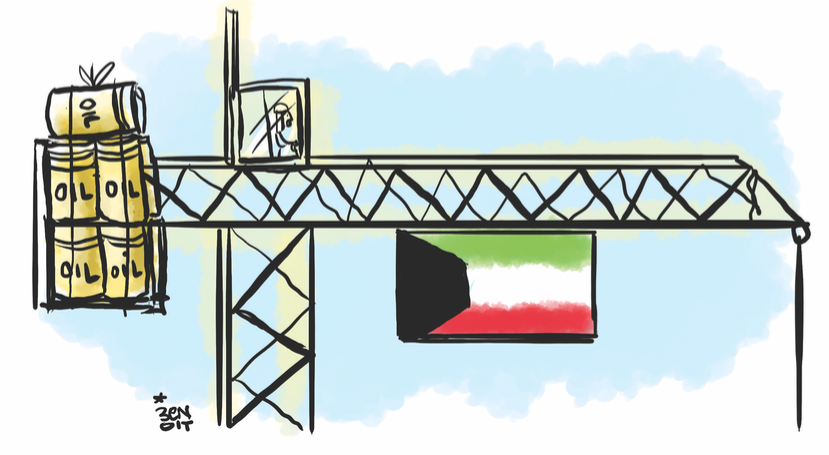
The Kuwaiti banking sector has learned a great lesson in the immediate aftermath of the global crisis. Financial challenges began in the third quarter, when the central bank decided to increase banks’ reserve requirements. This stipulation limited liquidity and curbed inflation, which had reached an approximate 10.7% by July 2008 — almost 100% higher than 12 months before, when it stood at 5.6%. Global Investment House (GIH) reported that in the first nine months of 2008 profitability of the listed banking sector grew by 14% year-on-year. This was somewhat lower than GIH’s expectations of 16% but, with limited exposure to the infectious subprime crisis, Kuwaiti banks have stayed “relatively immune to the worst that the sub-prime mortgage crisis and what the ensuing debacle had to offer,” GIH said. Aftershocks of the sinking global markets took quite a toll on the Kuwaiti bourse, “which has lost substantial ground as yet,” noted GIH, “with little hope for any sudden respite.” Unfortunately, local banks that procure significant amounts of their bottom- lines from capital gains on investment securities are the ones who have been most affected by the circumstances.

Health in question
In October 2008, Moody’s credit rating agency registered doubt about the health of the Kuwaiti banking sector, due to fears of exposure to dwindling house prices as well as local equity markets. But the surpluses generated by record high oil prices earlier this year have kept the sector going. Kuwait’s economy is undiversified as more than half of its GDP hails from oil-related activities. This high dependency on oil and Kuwaiti banks’ high exposure to a shrinking property market are the main reasons why Moody’s gave the Kuwaiti banking sector a “stable to negative rating” in the fall. However, the credit rating agency’s recent report underlined that the overall operating climate within the banking system was “strong” because oil prices with net interest margins were also vigorous. Lending opportunities, however, are poor, leaving banks subject to real estate and construction sectors. For 2008, most of Kuwait’s top banks performed quite well, with the exception of Gulf Bank.
National Bank of Kuwait made up the highest contribution to the banking sector’s profitability, reporting a rise of 11% year-on-year by the end of the third quarter. Having the second largest contribution to the sector’s profitability, Kuwait Financial House exhibited results of 25% year-on-year growth. The Commercial Bank of Kuwait, the last of the three contributing musketeers, reported an earnings growth of 14% year-on-year in the first nine months of 2008. Gulf Bank regrettably reported negative earnings of 18% year-on-year for the same period, being the only bank in the country to do so. While most of the sector’s banks have not incurred unsustainable losses, they all witnessed one of its largest lenders, Gulf Bank, lose $1.4 billion as of October 2008.

That sinking feeling
Initially, the bank insisted it had only lost a few million dollars, but after an in-depth investigation by auditors and the central bank, the truth came out. This momentous loss has practically eliminated the bank’s Tier 1 capital. The worst development in this episode occurred on October 26 when the central bank was forced to step in and indefinitely suspend the bank’s trading on the Kuwait Stock Exchange (KSE). The lender explained that the losses were made up of “financial derivatives for its customers’ account, trading in financial instruments, as well as the provisions of loan and investment portfolios.” The money will now be recovered via an emergency capital subscription — the bank will issue 1,250 shares at a premium value of 200 fils ($0.73), permitting current shareholders first pick. The remaining unsold shares will be bought by the country’s sovereign wealth fund, the Kuwait Investment Authority. The bank’s old board has resigned and a new board will be elected on December 2, 2008. After the bailout of the bank, the Kuwaiti government ensured all deposits, while cautioning that concerns prevail over the well-being of the country’s banking sector. Such comments have not boosted customers’ confidence levels, as many have panicked and withdrawn large amounts of cash from their Gulf Bank accounts. While the bank’s operations have continued, its shares on the KSE have remained suspended until its restructuring is stabilized. However, Saleem Abdelaziz Al-Sabah, governor of the central bank, believes the Gulf Bank chaos is “under control.” But such obscurity has done next to nothing to restore investor confidence levels in the bourse. Around one quarter of the 200 listed companies on the KSE have dropped below 100 fils ($0.37) per share, driving confidence levels down across all sectors, including the country’s banking sector. Many feel that a lack of confidence — backed by a lack of transparency — is at the root of the crisis. Kuwait’s banks will need to tighten regulations and know when and where to invest better. While the Kuwaiti economy gets back on track in the next few months, banks are hoping to continue to perform relatively well, given the insipid financial conditions.

December 3, 2008 0 comments
0 FacebookTwitterPinterestEmail
Real estate

GCC – Building green kingdoms

by Executive Staff December 3, 2008
written by Executive Staff

Even though the ‘green building’ trend is still embryonic in the GCC, a growing number of property developers as well as governments are realizing the environmental, social and economic benefits associated with the initiative. Green buildings are designed to reduce the overall impact of buildings on human health and the environment by efficiently using energy, water and other resources. They also aim to protect tenants’ health, improving employee productivity and reducing waste, pollution and environmental degradation. The lack of knowledge about sustainable technology awareness in developing countries, as well as the low cost of gas and oil, had previously made them reluctant to adopt these measures. In the last couple of years, with the high level of liquidity and the booming construction industry, this has changed. Increasing awareness has resulted in many projects across the GCC, as well as new laws that oblige developers to adopt more environmentally friendly measures in their developments.

Abu Dhabi
As part of Plan Abu Dhabi 2030, the Emirates’ capital is intending to enact the world’s toughest green building standards, the Estidama Program (, Arabic for “sustainability”). Every building in the emirate has to abide by these standards and sanctions will be imposed on developers who flaunt the law. Additionally, Abu Dhabi’s planning council has the right to refuse building permits to any developments that fall short. The aim of the program is to cut the use of water by 30% and energy by 20%, in turn earning Abu Dhabi the title of the Middle East’s green capital within 15 to 20 years.
Abu Dhabi is also planning to deliver the world’s greenest city — Masdar City. The six square kilometer development — capable of housing around 50,000 residents and 1,500 businesses — will be the world’s first zero- pollution, zero-waste city. Construction is expected to start in 2009 and take 10 years. Some of the numerous sustainability features in the city are that all energy will be renewable — solar, power, wind, waste to energy — and that it will be car-free, as people will go around in electric light rail systems that will be linked to the center of Abu Dhabi.
Other green projects are being initiated as well, such as a mixed-use environmentally friendly project launched by Connection Real Estate in the Abu Dhabi Towers that comprises luxury apartments and commercial property.

Dubai
In July 2006, the Emirates Green Building Council (Emirates GBC) was formed with the goal of advancing green building principles for protecting the environment and ensuring sustainability in the UAE. Currently, a new regulation concerning green building practices will be implemented in Dubai by January 2009. Under the new law, all owners of residential and commercial buildings in Dubai must abide by the internationally recognized environmentally friendly specifications. This new regulation aims to make all property developments to be environmentally friendly in five to 10 years.
Many developers have already started implementing green building standards. For example, Dubai Properties is promoting these strategies in both Jumeirah Beach Residence and Business Bay, where energy sufficient measures are employed as well as water saving methods, district cooling systems, double cavity walls and centralized garbage collection.
Moreover, the new headquarters of Dubiotech, scheduled for completion in 2009, is set to be one of the world’s largest green buildings. The Leadership in Energy and Environmental Design (LEED) certified 22-story headquarters and laboratory buildings will include a center for biotechnology education and research. It will comprise two connected buildings oriented to maximize day- lighting and views, while minimizing solar gain. Additionally, it will also incorporate a 46,500 square meter animal reserve for indigenous conservation and wildlife protection.

Qatar
By the middle of 2010, Doha is set to get its first ‘green building’ designed to achieve the LEED certification. The Dubai Towers – Doha, developed by Sama Duba, will adopt the latest technologies such as the state- of-art green techniques to help reduce water and energy needs, as well as to minimize waste and pollution.
The new Energy City Qatar (ECQ), in which the construction of buildings should begin towards late 2009 and early 2010, is planning to host only green buildings within its boundaries. ECQ plans to obtain the LEED rating from the US Green Building Council by 2010. All buildings in ECQ are to be powered only by alternative energy sources, such as wind or solar energy. Additionally, the construction materials used will be environment-friendly, ensuring minimal consumption of oil and gas with minimal carbon emission. Moreover, the buildings are to be designed to ensure that sufficient natural light would be available. ECQ also hosted a campaign on November 19, including a seminar on green building design and emphasizing the importance of green properties.

Bahrain
Bahrain is also moving towards sustainable developments and has started to build eco-friendly buildings like the Bahrain World Trade Center in Manama, a 50-story complex containing two identical towers that rise over 240 meters in height. It features three giant wind turbines connecting the two towers, officially making it the first building in the world to feature this kind of technology at this scale. The turbines provide 11-15% of the power for the two towers.
RealCAPITA, the Bahrain-based real estate investment company founded the concept of green buildings by establishing an exclusive sponsorship to the Green Building Council of Bahrain. It is also developing the Amwaj Gateway, which is the first project in Bahrain to obtain a ‘green building certificate’ through adopting the LEED criteria for new constructions.
As the green building trend continues to develop, it is expected that more of these projects will be introduced over the next number of years. Although this enthusiasm is gaining steam in the Gulf countries, others in the region are still far behind, either due to the lack of awareness or shortage of liquidity. Hopefully these countries will also consider adopting eco-friendly standards soon enough to reduce environmental damage in their communities and to ensure long-term sustainability.

December 3, 2008 0 comments
0 FacebookTwitterPinterestEmail
Insurance

MENA – The underwriting tow

by Executive Staff December 3, 2008
written by Executive Staff

The underwriting division of the regional insurance industry is expected to expand substantially over the next year, as companies reeling from the effects of the global financial crisis concentrate more on their core business of writing risks rather than on the increasingly dismal investment side of the industry, which has already given the industry quite a beating. “In 2008 the poor results are due to [losses in] investment income,” said Farid Chedid, managing director at Chedid Re. “What we are expecting is that because of poor investment income and the negative investment environment in general, insurers and reinsurers will to look to increase their underwriting profits to sustain all the damage that was created by the global financial crisis. Hence, we are expecting more profits on the insurance [underwriting] side.”

Changing direction
But even if regional companies are intent on a paradigm shift in priorities from investment to underwriting, the transition will take time and, as the saying goes, time is money. “I think the trend will be that we will go back to technical profitability and not concentrate too much on the financial income aspect of the insurance business,” averred Elie Nasnas, director general of AXA Middle East. “It’s a medium-term trend and it will not happen overnight.”
Governments in the region have been keen to push mandatory insurance requirements but are viewed by many in the industry as lacking the foresight to encourage voluntary insurance, such as life insurance, through regulatory reform and by raising individual awareness levels of their populations by offering incentives to first-time insurance buyers. But in terms of incentives, “[governments] want to do it and they are afraid to do it. We need tax incentives to enhance the potential of the life insurance sector,” said Nasnas. This job has now been left to the companies themselves who, while keen to increase awareness, can only do so much in an environment that is not yet conducive to increasing insurance awareness across the region. The notion that the long-term benefits of insurance growth and awareness will outweigh the short-term costs of providing incentives to local populations seems to evade regional governments. Thomas Schellen, publishing editor and researcher at Zawya Dow Jones, said “Understanding that providing incentives to increase insurance penetration, even though it costs money now, will be more beneficial to both the state and the individual is a major problem.”

On the business side
Traditional regional coverage areas associated with the energy sector will remain strong. “The many challenges facing the energy sector in the Middle East also constitute great opportunities for long-term, diversified and innovative (re)insurance players,” wrote Loredana Mazzoleni Neglén, director of Europe, Middle East and Africa at Swiss Re IRI’s Energy & Power Industry Practice, in Middle East Insurance Review. “The region’s massive oil and gas projects will fuel the engine of its growth, particularly in the Gulf states, and (re)insurance will be an important catalyst to support this undeniable potential and boost the Middle East’s economies in the upcoming years,” she continued. However, the recent fall in oil price is seen as a real impediment to insurance growth because of the effect that decreasing prices will have on disposable income in the region. According to Chedid, “If you have a drop in oil prices, there is a slowdown in the regional economy […] Therefore, with less disposable income there will be less demand for insurance.”
Areas such as real-estate development have also seen promising growth rates in 2008 and look to continue into 2009. “Products related to urban development, where the Middle East is now establishing itself as a world leader — from the drawing board to final implementation, city building and the Middle Eastern drive to develop new urban identity modules — come with specific insurance needs that will have a stronger role,” Schellen said. Nevertheless, this growth should be taken with a grain of salt as these areas are expected to see a contraction in 2009 due to the high leveraging of the regional real estate sector coupled with the global financial crisis, in particular in places like Dubai where the real estate industry has been one of the cornerstones of economic development in recent years.
“Prices have gone down [in the real estate sector] and projects are delayed due to the fact that the economy in Dubai is based on real estate,” said Michael Bitzer, CEO of Daman. “There will be an impact on the GDP and then indirectly on the insurance sector.” Moreover, a looming real estate crisis brought on by the global financial crisis could have dire consequences for the insurance industry as well as the regional economy.
“I think the worst thing that can happen in the region is to have a real estate crisis,” said Chedid. “For insurance companies it immediately has a negative impact. If the real estate industry is in trouble, they will be looking to save on risk management.”
Overall, the business segment of the regional insurance industry is set to decrease in line with the contraction of regional and global economies. The focus for the next few years will have to be on retail underwriting and companies will look to improve their product offerings and cut costs in order to stay competitive in the regional market.
“Companies will start to think in terms of the bottom line and concentrate on technical underwriting as well as practice further cost cutting,” Nasnas said. This is good news for retail consumers who can expect better products and services from their insurance providers in 2009 and beyond, even though companies will increasingly feel the crunch. “Clients will expect the same level of service if not more and companies will have to cut their costs accordingly,” Nasnas concluded.

December 3, 2008 0 comments
0 FacebookTwitterPinterestEmail
Comment

The Arab brand

by Paul Cochrane December 3, 2008
written by Paul Cochrane

The Middle East as a region has a ‘brand image’ problem. War, terrorism and — in the words of a soon-to-be- departing US president — evil, are terms that still abound in the generalized view of the region. Although the Gulf countries are getting double digit marks for growth, tell people in Europe or the Americas that you’ve just been in Lebanon/Syria/Iran/Jordan etc. and the response is invariably, “Oh, isn’t it dangerous there?”

There is always a short or long answer to this. But based on the past year, outside of Iraq and the Palestinian Territories, there has been remarkably little to brand the Middle East as any more of a hot spot for war, terrorism or evil than most other parts of the world.
The region has arguably been the victim of its own craven desire for publicity — at once complaining of skewered coverage, yet getting proportionally more coverage than other places. The region’s geostrategic importance, energy and the role of Israel all play their part in this, but this over exposure of the ‘dangerous’ images of the Middle East has taken its toll on brand perception.
Compare this image to that of say Brazil, where people associate the country with samba, football and sunshine, yet in terms of street crime and robbery Brazil is far more dangerous than the majority of Arab streets, whether in the day or after dark. Equally Europe, the strongest of regional brands, has had its share of terrorism, and the chances of being mugged in Barcelona or pick-pocketed in London are exponentially higher than in Beirut or Aleppo.
Or take India, riding high on a brand image of an ascendant power in the region and the world, destined to take on China. While this may happen with India expanding its nuclear capabilities, a still-strong economy despite the global financial turbulence, and a gigantic domestic market, what has hardly dented brand India over the past year, at least internationally, is the spate of bomb blasts and attacks that have rocked the country.
This includes last month’s battles in Mumbai and the 63 bomb blasts in seven states over the previous eight months. As Executive went to print there were more than 100 dead in Mumbai, with security forces still skirmishing with pockets of armed extremists in the city. Between 2004 and 2008, there have been at least 25 major bomb attacks and hundreds of smaller incidents. Such violence has been carried out by Islamist groups, separatists and, in what has recently come to light, also by right-wing Hindu groups.
India ranks in the top three globally outside of war zones for terrorist attacks, yet if you tell people you’ve been to India, they respond with a type of concern typical of India’s brand, “Oh, isn’t it so dirty and poor?” — a far cry from the concern voiced when people hear you’ve been to the Middle East.
This is India’s challenge, as many recognize, yet it has not overly affected its global image. And while many countries in the Middle East face the same issues, there is also the impression of the petrodollars and glitz of the Gulf. The Middle East clearly has a mixed brand image, given the economic discrepancies between the GCC and the Levant.
Although tourism, a major part of a country or region’s brand image, is relatively strong, the association or a one-off terror attack alone is enough to make non-Arab tourists cancel their trips. When I visited Luxor in Egypt a year after the attacks on tourists in 1997, there was hardly a visitor; good for me but not the local economy. Egypt and Jordan saw a massive drop in tourists following September 11, 2001. Lebanon has also been quiet following the July War. And while Syria’s numbers have surged in recent years, the tourists are 75% Gulf Arabs.
But although India might not be doing that well in the foreign tourism stakes, only getting 3.5 million visitors a year — paltry in relation to its population and the 6 million Dubai gets, the 11 million that visit Egypt or Syria’s 4 million – people don’t call off their vacation because of a bomb blast.
It is time for the Middle East to start putting another image of itself across to the world to disassociate itself from the terrorism that does happen and portray all the positives that make the region such a wonderful place to visit and live in. There is no easy solution to this in the face of media portrayals, but that can also be used to the region’s advantage too, for there is a great deal of interest in the Middle East. There is also the talent and brains to achieve this. Above all it will take belief in the region, at the micro, country level as well as at the macro for this to happen. Brand India appears to have a strong belief in its future, and so should the Middle East.

PAUL COCHRANE is a freelance journalist. He is currently in the Indian subcontinent.

December 3, 2008 0 comments
0 FacebookTwitterPinterestEmail
Banking

Charles P.S. Hall – Q&A

by Executive Staff December 3, 2008
written by Executive Staff

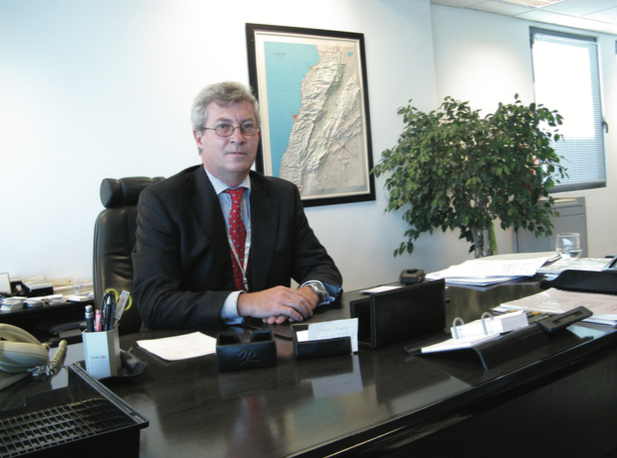
Executive sat down for an exclusive interview with Charles P.S. Hall, CEO of HSBC Lebanon, to discuss the current prosperity of the Lebanese banking sector, the regional sector’s performance in 2008 and prospects for 2009.

E Looking back at 2008, how did the Lebanese banking sector perform?
The Lebanese banking sector has actually been very resilient. I think the central bank can take a huge amount of comfort from that.
The most drastic accounts are what has happened recently, with the global credit market drying up and the fact that Lebanese banks have been very prudent in managing to escape the worst of it. As you know, they benefit substantially from inflows of money. I think there is the perception that the Lebanese banking system has weathered the storm and is therefore continuing to attract deposits, which have been flowing in. I understand in many cases that some of the private bankers have switched into Lebanese pounds, which yield a much higher rate than US- dollars. So as long as that premium exists in terms of the Lebanese pound, you’re probably going to see continued inflows of money, which benefits the economy and that benefits the government when it comes to capital raising exercises such as issuing more Eurobonds that have financed the country’s economic side of things.

E Why do you think the Lebanese banking sector is doing so well even after the global financial crisis?
Well, in fact the Lebanese banking sector is doing nothing new. It’s just continuing the prudent approach it has taken in the past. It’s just that the model has worked and nothing has really changed. The Lebanese banks have not had the same problems that the foreign banks have had, the business models are very, very different. You look at some of the UK banks; for every $100 they were taking in, they were lending out $1,200 — something’s going to have to give. The Lebanese banks are very well capitalized and they don’t have that type of liquidity problem.

E Would you say that the Lebanese banks have benefited from the global financial crisis, or is to too early to tell?
Oh, they have clearly benefited, especially in terms of the inflow of funds.

E Do you think the Lebanese banking sector’s current prosperity will continue into 2009?
I see no indication why it shouldn’t. I suppose there are a couple of issues that might arise. If you look at a number of other countries that are in real difficulty, they’ve actually had to price their sovereign debt, their government debt, well above 9%. You look at somewhere like Iceland, they’ve had to actually price their debt at over 20% to attract inflows of funds. There is no indication at the moment that the government here is going to have to compete with those markets and they’ve got a large enough Lebanese diaspora that feels that Lebanon is very much a part of their own and will continue to support it. So, I don’t see any problems in the short-term. In the longer term, the government is going to have to address the debt level… but at the moment I don’t see any problems with that, as there are such large inflows of funds to support it. As long as the political stability remains here — or some sort of political status quo — then I think Lebanon is probably as well placed, or better placed, then many countries.

E Credit Suisse predicts Lebanon’s GDP to rise a mere 3% this year and 4% in 2009 – whereas the IMF forecasts a 6% GDP rise for 2009. Which forecast do you think is more accurate, and why?
Well, I think all bets are off at the moment, because we just don’t know what’s going to happen. Lebanon is part of the global economy anyway, whether we like it or not, and is not going to be immune from the flow of trade in either direction. Lebanese are descendants of the Phoenicians, the world’s greatest traders, so without actually knowing how the trade flows are going to evolve, we can get some sort of idea at the moment from our trade finance business… we’re finding, actually, still that the flows of trade are very healthy, but at some point it is bound to be affected. So I just don’t have a feel as to how the GDP will look, but I would err on probably the more conservative side now. When the Credit Suisse report was written, things were very different.

E Do you think Lebanese banks will continue expanding regionally to help them grow?
Audi, BLOM, all the major banks have. I think the [recently broken deal between EFG-Hermes and Bank Audi] was a sensible move, because they couldn’t agree on a price and in the current markets you just don’t know what’s happening. Audi is a very well run bank and I think it was very prudent, because you just don’t know what the exposure of the other bank was going to be. They’ve probably done their due diligence and I can’t really comment on that. But, I know the central bank has actively encouraged the major Lebanese banks to diversify outside Lebanon to make sure their eggs were not all in one basket. You’ve seen Audi expand dramatically into Egypt and into a number of other countries too. Syria has been a major one for them. I think it’s been very prudent for them to do that.

E What role would you say regulation plays in protecting banks? Do you think Lebanese banks are less affected by the current crisis than GCC banks due to tighter regulations set by the Lebanese central bank?
Yes, I think that is absolutely right. Lebanon has actually exported bankers for many, many years within the levels of HSBC — the person that runs HSBC in the Middle East is Lebanese, the head of global banking markets in the whole of HSBC Group, is Lebanese… So I think the Lebanese are probably some of the smartest people when it comes to running banks, and the central bank here, well, as you know Riad Salameh was voted Governor of the Year in 2006. Some people have said to me that some of the regulations have been draconian, but that has actually paid off. The exposure by banks to these credit default swaps is negligible. Now that’s not to say that these instruments are not useful, they have their use, but they’ve been abused. I was talking to one Lebanese banker and he said that the treasury department of this major bank didn’t understand these particular instruments… and because they didn’t understand it, they didn’t actually buy them. That says something of the management of those banks. So yes, the central bank has a very clear role with regard to regulation and has been central towards making sure that the economy has benefited because the government and the banks are essential and they need each other and they have been a success for Lebanon.

E How would you explain the $7.7 billion — up from $6.6 billion in 2007 — inflow of bank deposits into Lebanese banks in just the first nine months of 2008?
Well, a lot of it has to do with the booming property market as people are actually shifting money into Lebanon. We’ve seen it, we’ve had a 250% increase in our home lending. If you take that across the whole banking sector, and I know it wouldn’t have been as much in terms of percentage increase, but if you take that kind of thing into account then you can see fairly quickly that the lending side for property has attracted a lot of funds, mainly from the Gulf and the Lebanese diaspora. I’d say that is the main factor, certainly for the first nine months. But also, people are repatriating money. A lot of people have emigrated out of Lebanon into the Gulf and are bringing their money back.

E Was the Lebanese banking sector affected by the May events?
It was interesting actually, I was here at the time and I met a few customers. In fact, as the problems were happening I was down in our trade finance area and there was a customer bringing in a letter of credit. When I was talking to him about it he said, “These things happen, life goes on!” We detected, obviously, a slowing down for a couple of days, but then there was a pent-up demand and business was back to normal. In fact, actually, there was a sort of sense of euphoria after the events and people went into a sort of a holiday mode thinking all their troubles had been sorted out — it was really quite bizarre.


December 3, 2008 0 comments
0 FacebookTwitterPinterestEmail
Real estate

Kuwait – Fuel to build

by Executive Staff December 3, 2008
written by Executive Staff

Kuwait accounts for about 10% of the world’s oil reserves and has benefitted from recent high oil prices, as well as political stability and economic growth. Yet the country plans to diversify its economy away from the oil sector to include infrastructure, tourism and construction. Still, the construction sector contributes only 6% to the nation’s economy, while the oil sector accounts for 55% of GDP, 95% of expatriate revenues and 80% of government income, according to the Oxford Business Group (OBG). The country is far behind its neighboring economies in terms of growth in the property market, mainly due to the lack of transparency on real estate information, lack of trading savy among investors, lack of regulations, restriction of foreign ownership and scarcity of lending facilities.

According to the National Bank of Kuwait (NBK), 2008 has not been very prosperous as the first nine months of the year witnessed a 28% drop in real estate sales compared to the same period in 2007. The number of transactions also fell by 32%. The decline in sales occurred mostly in residential property — which accounts for around 80% of market activity — with value and unit sales declining by 36% and 38%, respectively.
Poor government regulations and a massive bureaucracy have caused local investors to focus on foreign investment rather than expanding domestic supply. Moreover, according to the Kuwaiti Financial Center (Markaz), high land prices are restraining growth in the real estate sector by decreasing demand and making new developments less affordable.
Expatriates, who account for 68% of the total population, are still not allowed to own real estate, thus holding back the flow of investment and inducing expatriates to search for better opportunities in other Gulf countries. In October, the cabinet announced it plans to allow GCC nationals to own land and property in an effort to open up the sector and encourage foreign investment.
According to OBG, in the next five years around $8 billion of private investment and $3 billion of government investment is expected to come into the sector. Some of the major projects include Gailakha Island, Bubiyan Island, Project Kuwait, Khairan and Arifijian residential projects. Overall, new construction is expected to reach $129 billion in 2010.


December 3, 2008 0 comments
0 FacebookTwitterPinterestEmail
  • 1
  • …
  • 494
  • 495
  • 496
  • 497
  • 498
  • …
  • 685

Latest Cover

About us

Since its first edition emerged on the newsstands in 1999, Executive Magazine has been dedicated to providing its readers with the most up-to-date local and regional business news. Executive is a monthly business magazine that offers readers in-depth analyses on the Lebanese world of commerce, covering all the major sectors – from banking, finance, and insurance to technology, tourism, hospitality, media, and retail.

  • Donate
  • Our Purpose
  • Contact Us

Sign up for our newsletter

[contact-form-7 id=”27812″ title=”FooterSubscription”]

  • Facebook
  • Twitter
  • Instagram
  • Linkedin
  • Youtube
Executive Magazine
  • ISSUES
    • Current Issue
    • Past issues
  • BUSINESS
  • ECONOMICS & POLICY
  • OPINION
  • SPECIAL REPORTS
  • EXECUTIVE TALKS
  • MOVEMENTS
    • Change the image
    • Cannes lions
    • Transparency & accountability
    • ECONOMIC ROADMAP
    • Say No to Corruption
    • The Lebanon media development initiative
    • LPSN Policy Asks
    • Advocating the preservation of deposits
  • JOIN US
    • Join our movement
    • Attend our events
    • Receive updates
    • Connect with us
  • DONATE