• Donate
  • Our Purpose
  • Contact Us
Executive Magazine
  • ISSUES
    • Current Issue
    • Past issues
  • BUSINESS
  • ECONOMICS & POLICY
  • OPINION
  • SPECIAL REPORTS
  • EXECUTIVE TALKS
  • MOVEMENTS
    • Change the image
    • Cannes lions
    • Transparency & accountability
    • ECONOMIC ROADMAP
    • Say No to Corruption
    • The Lebanon media development initiative
    • LPSN Policy Asks
    • Advocating the preservation of deposits
  • JOIN US
    • Join our movement
    • Attend our events
    • Receive updates
    • Connect with us
  • DONATE
LeadersOpinion

Lebanon faces growing unemployment

by Executive Editors March 5, 2020
written by Executive Editors

The last study on unemployment in Lebanon—conducted by Lebanon’s Central Administration of Statistics (CAS) in partnership with the International Labor Organization in 2018- 2019—revealed a general unemployment rate of 11.4 percent, reaching as high as 23.3 percent for youth. In light of the past few months, there can be no doubt that these percentages have worsened.

The country is facing an economic crisis characterized by the untethering of the lira to the dollar in the parallel exchange market and restrictive banking policies, with measures against transferring money abroad and extending credit facilities being the most damaging to businesses. These factors have taken their toll on Lebanese businesses, many of which had already been suffering under less than optimal economic conditions over the last few years. As the crisis unfolded over the past five months, many business owners and managers have reduced the salaries and working hours of their employees, with some even resorting to firing staff in order to cut costs.

It is clear from media reports, to talks around the dinner table, to the chatter on social media that lower pay and unemployment are becoming real concerns for many Lebanese. Estimates regarding unemployment from business owners and CEOs of companies that Executive spoke with confirm that they have reduced the salaries of their employees by percentage increments or laid them off.

But while we know anecdotally that Lebanon is in the beginnings of an unemployment crisis, what we don’t know yet is its scale. A press release by the Syndicate of Owners of Restaurants, Nightclubs, Cafes and Patisseries says that 25,000 of the 150,000 employees in the hospitality and tourism sector have been laid off since September 2019, while online restaurant directory Zomato monitors the number of F&B outlets that open and close on any given month, recording a net loss of 142 in January alone, both of which help to quantify the issue to a degree. But this is only one sector of the many that make up the Lebanese economy.

For all the other sectors, precious little data on current unemployment rates exist. Compounding the problem is the fact that migrant workers and the estimated 55 percent of working Lebanese who are informally employed (according to a CAS study) are not counted as part of Lebanon’s official or formal labor force, although they are an integral part of it. This risks skewing any data gathered rather than giving us results that are indicative of the actual scale of unemployment in Lebanon.

If we have any hope of dealing with this crisis, we must first understand how big it is. At the end of November last year and again at the end of January this year, Lebanese research firm InfoPro carried out a survey with 300 companies, and found that the total number of jobs lost since October was 220,000. But without examining the methodology behind their study, it is hard to know if these 300 companies are actually representative or whether there is any account for informal and migrant workers.

In a country with no unemployment benefits and fragile social security nets, an unemployment crisis has grave implications that would have long lasting damaging effects not only on the economy but on the very social fabric of the country. If the situation continues as is, the World Bank warns that already high unemployment will rise and the country’s poverty rate could reach 50 percent. For those who are employed in the informal economy, they do not even have the arguable luxury of being covered by the National Social Security Fund (NSSF) nor do they have the law to protect them if their employers decide to arbitrarily terminate them. The same goes for migrant workers who have already been suffering under the kafala system. Due to the current financial situation, migrant workers are increasingly being paid their salaries in Lebanese lira instead of dollars—if they get paid at all—and so their already low salary is taking a double hit, first by being paid in lira and again when converting these lira to dollar in the black market in order to send them home. There is no telling how drastic the impact of such an unemployment crisis will be on those marginalized segments of the labor force.

The Ministry of Labor (MoL) must work with CAS to quantify the current labor problem in Lebanon, across all segments. Being equipped with reliable and recent figures on unemployment rates, including which sectors have experienced the most layoffs and in which areas of Lebanon, is the base from which the ministry can then begin to tackle the problem. Only with this information would the ministry be able to work with stakeholders to develop a targeted action plan that could contain the worst effects of the labor crisis and create new employment opportunities for the Lebanese labor force.

As part of this plan, the MoL should start with itself and acknowledge that it needs a reboot if it is to have any hope of containing this crisis. According to Legal Agenda lawyer Karim Nammour, the MoL lacks enough inspectors to be able to adequately cover the businesses that submit requests for restructuring or laying off employees, as is required by law. Labor courts, meanwhile, are overwhelmed, with cases taking an three and a half years when they should take three months. There is much to address, a difficult task during the current financial crisis of the country but nonetheless a necessary one.

The MoL should also develop and widely disseminate a campaign that would make labor laws clear to both employers and employees, particularly on the steps to take to renegotiate pay or lay off employees to due to financial constraints. That way business owners can no longer hide behind their ignorance of the law and employees will be empowered to not make decisions based out of fear or lack of clarity.

The MoL needs to apply more stringent measures and controls that would guarantee that companies register all their employees. Only through this measure would all employees be registered with the NSSF—the only social safety net Lebanon has. Employment in the informal economy should also be discouraged and limited as more employers register their employees and allow them the full benefit of the labor law; here a plan with clear deliverables and a timeline is needed.

If and once these measures are followed—and the worse effects of the labor problem is contained—the MoL should work with other ministries to set up plans that would revitalize Lebanon’s economy and create new job opportunities. There are several economic rescue plans that have been developed over the past few months—including Executive’s own Economic Roadmap—that can be used as a starting point for the government.

What will bring all this together—what is still seemingly lacking to date—is serious and sincere political will to take the steps and measures that would get Lebanon back on track. Civic society and private sector individuals can come up with the best laid plans, but if the state does not choose to adopt them they will go nowhere.

Here, we call for the alternative labor unions and associations that have formed to be the voice of Lebanon’s workers and pressure the MoL into adopting the measures outlined. They should be relentless in their efforts to get the MoL to take the labor crisis seriously. The time for wait and see is long over. Only through action will we pull ourselves out of this crisis.

March 5, 2020 0 comments
0 FacebookTwitterPinterestEmail
EditorialOpinion

The virus within

by Yasser Akkaoui March 4, 2020
written by Yasser Akkaoui

The situation has become even more surreal. We have a government that is totally disconnected from reality. No matter how many American passports the cabinet collectively has, this government is still undeniably perceived by the international community as a Hezbollah, Amal, and Aounist government, backed by Iran, Syria, and Russia.

Meanwhile, this government’s attempts to create committees, hold consultative sessions, and form economic rescue plans have unfortunately been overshadowed by the backseat driving of the usual political players. These old hands are still trying to exert their control. The appointments at the Banking Control Commission, among other key positions within government, are testament to that.

The people are still calling for early parliamentary elections, while they wait in vain for any sign that corruption has been given the importance it deserves. For all the lip service, since the Lebanese took to the streets to demand accountability from all their politicians over four months ago, by now there has not been a single indictment nor any investigation by our judiciary into any person involved in corrupt practices.

As the economic crisis deepens, people’s worries have turned inward. The productivity and the purchasing power of the Lebanese are being eroded. This will only generate a more anxious, more vulnerable, and more easily manipulated populace. Coupled with the panic around the first wave of coronavirus cases in Lebanon, the atmosphere in the country is tense.

No matter how much human nature is constrained, at some point our fears, our anger, our desperation will come bursting out of us. This can be devastating on an individual level, nationwide the consequences are unthinkable. The economic pressures, the collective anxiety, the job losses, the pay cuts, the price hikes, the food and medicine shortages, the fear of a pandemic—people can only take so much.

In October we danced in the streets, we celebrated our new-found voice, our solidarity in the face of a system that worked for the few at the expense of the many. If things do not change, if we continue on the path of self-destruction, people will once again take to the streets—and this time there will be no dancing.

Time for change is running out. To those still playing the same old political game I say this: Beware the revolution of the hungry.

March 4, 2020 0 comments
0 FacebookTwitterPinterestEmail
Coronavirus AnalysisEconomics & PolicyHealthcareOpinion

Why coronavirus in Lebanon is no reason to panic

by Khalil Diab February 27, 2020
written by Khalil Diab

A video shared on Twitter by Sky News Arabia’s Larissa Aoun shows an adult, clad in full protective gear, spraying an unknown substance over school age children as they walk in line into their school. Aoun notes in her tweet that spraying alcohol or chlorine will have no effect on viruses already in your system, but can be harmful in of themselves, particularly to mucous membranes such as the eyes and the mouth.

Since the announcement on February 21 that the first case of the novel coronavirus had been discovered in Lebanon, reactions have skewed toward the panicked and misinformed, with some Lebanese donning surgical masks or gloves in public, and the more extreme case as cited above.

This is not to say that the novel coronavirus—officially known as severe acute respiratory syndrome coronavirus 2 (SARS-CoV-2), the disease of which is called COVID-19—should not be treated seriously. Since it was first discovered at the end of last year in Wuhan, China, COVID-19 has spread to 48 countries, and, at the time of writing, there have been 82,166 cases diagnosed worldwide, 2,804 deaths, and 32,832 recoveries. The World Health Organization (WHO) declared COVID-19 as a global health emergency at the end of January.

With seven cases of coronavirus confirmed locally in February and more likely in the near future, it is important to separate the myths from the reality and make sure that reactions to the virus are based on facts rather than fears.

What is a coronavirus?

Coronaviruses are a family of viruses that more often than not cause nothing worse than a regular cold in humans. Certain strains of coronavirus, however, can evolve and become more dangerous. Examples of coronaviruses that evolved into a more severe and deadly strain include Severe Acute Respiratory Distress Syndrome (SARS), which emerged in 2003 in China, and Middle East Respiratory Virus (MERS), which emerged in 2014 in Saudi Arabia. This new strain of coronavirus is another example that can cause a more severe illness than the common cold.

Timeline on the discovery and initial spread of COVID-19

December 26: Four unusual cases of pneumonia were noticed by Dr. Jixian Zhang in Wuhan, the capital of the Hubei Province in China.

December 27: Dr Zhang reported the cases to the local Center for Disease Control.

December 28: Another three cases were detected.

December 31: The national Chinese Center for Disease Control and the WHO were made aware of the virus.

January 1: The Huanan fish market was closed due to suspicion the virus started there. 

January 7: COVID-19 was identified.

January 13: Testing kits became available.

January 23: Due to the rapid spread of cases, Wuhan was declared under quarantine with no travel in or out the city.

January 24: Another 15 Chinese cities were placed under quarantine

January 30: The WHO declared “a public health emergency of international concern.” 

When was the first case of COVID-19 reported in Lebanon?

The first case of coronavirus was confirmed in Lebanon on February 21. A female passenger had arrived the night before on a plane from Qom, Iran. All passengers on the plane had been screened on arrival by officials from the health ministry after Iran had reported its own cases of COVID-19. The woman in question had tested positive for cold symptoms and had been transferred to Rafik Hariri University Hospital with a suspected case of coronavirus. A second case was confirmed on February 26, another passenger on the plane. This was followed by a third on February 27, an Iranian male who flew from Iran in three days prior; a fourth on February 28, the first case of local transmission; and a further three cases through contact with infected patients on February 29.

Can hospitals in Lebanon house COVID-19 infected patients?

Currently all confirmed and suspected cases of COVID-19 in Lebanon are to be isolated at Rafik Hariri University Hospital. No other hospital is allowed to keep patients with the disease at this time. The WHO helped set up the quarantine department at the hospital, and it was reported on February 26 that the head of the health committee in Parliament, Assem Araju, said that Lebanon has asked the WHO for help establishing similar quarantines across Lebanon.

How does it spread?

The virus can be spread from person to person through a variety of ways. If an infected person coughs or sneezes near you this can put you at risk. It can also spread through objects or surfaces that have been touched by an infected person, if you touch these and then your own face, especially by rubbing your eyes or putting your fingers in your mouth.

What are the symptoms of COVID-19?

You can carry the disease from two to 14 days before you develop any symptoms. In most people (81 percent), the symptoms are mild, including a cough, shortness of breath, and a low grade fever that increases over time. For others, symptoms can be more severe, or even critical, requiring hospital admission.

How would I know if I have COVID-19 and who would I report my symptoms to?

If you develop cold or flu-like symptoms and have been to China or another endemic country in the past 14 days, or have been in close contact with someone who visited these countries, then you should report your symptoms to your doctor right away.

How is COVID-19 diagnosed?

Typically, a doctor or lab technician takes a swab from your throat or a blood sample and then sends it for a polymerase chain reaction (PCR) test in the lab. This identifies whether COVID-19 DNA is present.

What is the available treatment?

If you receive a positive diagnosis of COVID-19, you will be placed in isolation for the duration of your symptoms. So far, treatment is mostly supportive as there is currently no cure for the disease. In severe and critical cases, admission to the intensive care unit may be necessary and you may be placed on an artificial respirator.
There are ongoing studies on several drugs as potential treatments for COVID-19. Chloroquine, an anti-malarial drug, is showing promise in a study in China.

Is COVID-19 dangerous?

The death rate from the disease so far is between 2.3 to 2.7 percent of infected cases, meaning for every 1,000 people infected by COVID-19, 23 die due to the virus (although these numbers may change). What is important to note, however, is that most people infected by COVID-19 suffer symptoms very similar to a common cold—81 out of every 100 people infected. In children under the age of nine, no deaths from COVID-19 have been reported. Those more at risk seem to be the elderly and those with underlying conditions. The death rate increases to 8 percent in people aged 70 to 79, and to 14.8 percent in people aged 80 and above. People with diabetes and heart disease are also at increased risk of death. Those who die after contracting COVID-19 usually develop pneumonia (an infection in their lungs). But it bears repeating, for the vast majority of those infected, the death rate is very low.

What can I do to avoid contracting or passing on the infection?

  • If you have the infection, always wear a mask when around people.
  • If you are caring for somebody who has the infection who is not wearing a mask, wear an N95 mask (the model used when caring for or around people with tuberculosis).
  • Frequent hand washing preferably with soap and water for at least 20 seconds is recommended, especially when touching surfaces that could be infected. A sanitizer with an alcohol content of more than 65 percent may also be used. If your hands are dirty, however, always use soap and water.
  • Frequently wipe surfaces that could be infected with an environmentally friendly disinfectant.

Should I wear a mask in public?

There is no reason whatsoever to wear a mask in public. The risk of infection in outside spaces is low, and a regular mask will still allow particles to pass through the sides. Bear in mind that the availability of masks is limited at this time. Hoarding masks at home may limit the availability of masks in pharmacies and at hospitals. If healthcare workers taking care of sick patients are unable to secure their own supplies, this could put them at risk.

Wearing an N95 mask (see box) would certainly be effective, but it is not necessary and it makes it hard for you to breathe.

Should I travel on a plane? If so, should I wear a mask on the plane?

The risk associated with airplane travel is similar to that of train or bus travel. In fact, some people say that the HEPA filters on airplanes may help prevent a viral infection. Regarding mask use on an airplane, the same caveat applies, it may not be effective as the virus can still enter through the sides. Sitting within one to two rows of somebody who is coughing and sneezing leads to the highest risk of infection. Surfaces are the biggest risk. Try to wipe the back pockets of airplane seats with sanitary wipes before touching the airline magazine and regularly wash your hands.

Why close schools? If they reopen should I send my children?

At this time in Lebanon, there is no COVID-19 epidemic. Seven cases were reported in February, and the education ministry made the decision on February 28 to close all schools and universities until March 8. On the face of it, this decision was perhaps unnecessary at this time. If reopened on March 9 there are precautions schools should certainly take, such as disinfecting surfaces frequently touched by students on a daily basis. Any student who has recently been to a country with an epidemic may be asked to self-quarantine for 14 days, likewise students with cold symptoms should stay home until these resolve. But bear in mind the risk of infection in children is very low.

The important thing to remember is to remain calm and rational in face of COVID-19. While this virus has to be taken seriously, there is no need for widespread panic. Be careful with the information you come across online or through others. It easy for misinformation and rumors to spread as people allow their fears to cloud their judgement. The best advice would be to follow that given by your doctors or the health ministry and make sure to wash your hands frequently and thoroughly when interacting with others and public spaces.

This article was updated to reflect the decision of the Ministry of Education and Higher Education to close all schools and universities in Lebanon until March 8. The number of cases of coronavirus cited within the article are valid up to end February. This is an ongoing situation and numbers will rise.

February 27, 2020 0 comments
0 FacebookTwitterPinterestEmail
Economics & PolicyEurobondsOpinionQ&A

Q&A with Nassib Ghobril on Lebanon’s eurobonds

by Executive Editors February 26, 2020
written by Executive Editors

Lebanon is due to make a $1.2 billion principal eurobond payment on March 9, with opinions divided on whether to pay or put in place a plan to restructure the debt.

As part of our coverage, Executive spoke via telephone with Nassib Ghobril, chief economist of the Byblos Bank Group, to find out why he is in favor of Lebanon paying the dollar eurobonds due this year.

There has been a fierce public debate on the issue of whether or not Lebanon should pay or default on its upcoming eurobond dollar payments in March. Is it correct you are part of a minority who believe it should be paid?

I’m a part of the silent majority who believes it should be paid.

What is your reasoning behind that?

First of all, we have very little time left between now and the date the eurobond is due. And we have taken too little time to address this issue. From the experience of other countries, when you have a situation like this you start setting things in motion at least six months in advance, not two weeks in advance. 

Second, the authorities should have known this was coming long before even six months ago, because at the end of 2018 the Ministry of Finance, on behalf of the government, asked the central bank to cover all the maturing eurobonds and the interest payments accrued on them in 2019, which the central bank did. So they knew at the beginning of 2019 that they had an issue to deal with, which is the inability of the government to pay its eurobonds back then—because it’s not the responsibility of the central bank to do this. 

Third, when the national protests started on October 17 the government simply disappeared. Instead of forming a crisis cell to address this and other urgent issues it just disappeared. [Even] when the government resigned it did not form a crisis cell. [Then] the political procrastination to designate a prime minister and the formation of the government took all this time—it’s only two weeks ago that the new government received its vote of confidence—so we are very late in the game for not paying or considering other options. 

Fourth, it’s not true that we don’t have the resources, and [there is] this misleading notion that we have to choose between financing the imports of basic goods and paying the eurobonds. This is misleading because the central bank already has declared several months ago that it has liquidity for the importers of basic goods.

Fifth, we have enough resources, contrary to what is being said, to pay the eurobonds. For instance, last week Fitch Ratings issued a detailed report saying that the central bank has enough foreign currency reserves to cover all the maturing eurobonds between now and the end of 2021. But, the report added that because of political pressures this option is highly unlikely and unrealistic.

The central bank also has a lot of resources nobody is talking about. The central bank has $15 billion in gold reserves and we have been saying we cannot touch the gold reserves because these are assets to use in crisis—what more do we need than the current crisis to consider, not selling the gold, but at least utilizing those assets through securitization, or collateral, or through other means. The central bank also has a portfolio of real estate at about $2.5-3 billion conservatively, and that could also be considered to cover, not the eurobond payment, but at least to inject liquidity in the market. The Lebanese state also has a huge portfolio of real estate assets, to name just one of the state’s multiple assets.

Between the gold and real estate at the central bank you have around $18 billion in sitting assets, non-performing assets, that can be used to help—whether to inject liquidity into the market or to cover the payments of the eurobonds.

Do you think that a restructuring of the debt will be inevitable?

I’m advocating the payment [of the March eurobond]. We have to choose the least costly option for the economy, the financial system, and depositors, and the least costly option for me is paying. I hope they realize what a debt restructuring, or a disorderly default, or even an orderly default means for the country. And I hope this is being studied carefully, otherwise we are jumping into the unknown. If you think we are in an ambiguous situation now, the alternative could be much worse.

At this stage, so late in the game, paying the maturing eurobond is the least costly option.

Isn’t there an option to ask for a grace period to make these negotiations?

You cannot go that route because you cannot go back. Whether you have an orderly default, or a disorderly default, or suspension of payment, you are jeopardizing the reputation, credibility, and historic track record of the state meeting its obligations. Unfortunately I see this has been taken lightly because I believe that this rush toward the other option is a way to avoid in-depth structural reforms.

The main three international ratings agencies, S&P, Moodys, and Fitch all came out in February and said to some extent that restructuring or non-payment is virtually certain, so is there not a degree to which the reputation has already taken a hit and most actors are thinking that this is something that is inevitable down the line?

They are saying it is inevitable and they downgraded because we have senior politicians who have publicly declared that this is the best option. But this is a very risky road that we are taking, especially since such a decision could have been avoided—the whole crisis could have been avoided. The decision to default can and should still be avoided. We are taking the easy road, we are not even trying to see the alternatives.

I came up with the gold reserves and the real estate portfolio of the central bank as examples, I am sure there are other ways to cover the shortage of liquidity in the market until structural reforms are in place. My concern is that this rush toward debt restructuring or defaulting is a way to avoid the deep structural reforms that the economy needs. Usually countries start with structural reforms and when there is no other alternative they move to debt rescheduling or restructuring. We are going directly to the riskiest possible solution and we haven’t even tried reforms. We have a track record of not implementing reforms.

The last round of reforms that Lebanon agreed to undertake was at the CEDRE investment conference in April 2018, in exchange for which the country would have unlocked $11 billion in loans/grant from the international community. These reforms have not materialized in the almost two years since, do you think that the political will for reform exists?

No I don’t think it exists seriously. Despite all the good will of the current ministers and the team they have formed, I don’t think there is real will for in-depth structural reforms. But I sincerely hope that they prove me wrong.

So isn’t there a risk that if we do what you are saying and pay to maintain Lebanon’s reputation and use gold reserves or other avenues that we are just delaying a default along the line because these structural reforms won’t happen?

Defaulting would—from the optic of the political class or most of it—prevent or avoid in-depth structural reforms that would affect their base.

But what I am saying first of all is that reaching that decision should be the very last resort. We need to have a comprehensive, credible reform plan with clear priorities that includes a medium-term fiscal framework, whose goal is to reduce public finance imbalances and therefore reduce the deficit-to-GDP ratio and the public debit-to-GDP ratio for the medium term. Before getting into debt restructuring, we need to put together this plan and I don’t think there is enough time to start implementing it prior to the March 9 deadline.

Second, after we start implementing reforms and we show credibility, and all options are exhausted on the reform front, then we can see if we can continue to afford the debt or not.

Many of the comments pieces that are circulating are engaging with the eurobonds issue from a purely economic lens, with no acknowledgement of the political nature of the bond decision. In your opinion, how much can this be a question of pure economics and much it is by necessity a political game with lots of divergent international interests involved?

International interests are an excuse. The best way to prevent international or foreign interference in Lebanon is to have a strong economy, public finances that are healthy, and an economy that is functioning properly—and this can only happen through reforms.

Since 2002, there hasn’t been real political will across the board to implement reforms because reforms are viewed as a zero-sum game in political terms by political parties. If the authorities are serious about reforms they shouldn’t spend their energy blaming the banking sector for all the problems we are facing today—they are avoiding taking responsibility.

One way to avoid a worsening of the situation is to try to reach an agreement with the IMF through its various programs. It doesn’t have to be a stand by agreement it could be a precautionary credit line that the government can use if it needs to.

Because of the track record of not implementing reforms, today the current authorities do not have the credibility. I’m not taking about international credibility, I’m taking about local credibility. The people don’t believe them, the private sector doesn’t believe them—until they see concrete things happen. So in order to put in discipline and show a sense of urgency in the implementation of reforms—and more importantly to show there is political will to implement reforms—the option should be there on the table to take our reform plans and submit it to the IMF and try to negotiate a package that can be satisfactory for both sides.

If we discover that the conditions or the requests of the IMF are detrimental to the Lebanese citizen, then we should say no, we should pull out. If we find out that there is a hidden political agenda as some parties are concerned about, then we should pull out.

Do you think there are any lessons to be learned for Lebanon from the recent experience of Argentina with the IMF?

No I don’t compare with Argentina. But I would say that overall that if a country defaults and goes to the IMF and has international support, the Argentina experience shows that you need domestic political will and leadership to implement reforms. You need domestic buy-in.

How worried should Lebanon be about the possibility of vulture funds?

We should be worried about the lack of a sense of urgency from the political class, the sense of denial about the gravity of the crisis and measures needed to get out of it that we have been seeing, at least since October 17. [Despite] all the speeches, all the promises, the formation of the new government, the committees, there hasn’t been a single measure taken yet.

Regardless of where analysts seem to fall on issue of whether to pay the eurobonds or not there seems to be an agreement that a haircut on deposits is inevitable, and by and large a consensus that such a haircut should be targeted toward larger deposit holders. What is your view on the inevitability of a haircut and how to distribute it across depositors?

They are taking the easy way out. They want the banking sector and the depositors to pay the price of their errors and lack of urgency and lack of political will to implement reforms. The priority should be to protect depositors, regardless of the size of their deposits. Large depositors who earned their money legitimately and through hard work deserve to have their money protected, just like every small depositor.

My opinion is that we need to pay the eurobonds now, which is a less costly road, not continue to procrastinate. It should be the last time we get so close to a maturing bond and be in this confusing situation and indecision. It should be an incentive to put together a clear, comprehensive, credible program and rescue plan and start implementing it immediately.

We have a maturity in April and a maturity in June and I believe we should pay those as well because the next maturity is in April 2021, a $2 billion maturing bond in 2021. So we have time to show we are serious about implementing reforms and we want to salvage the economy.

This interview has been condensed and edited for clarity. The views expressed are those of the interviewee and do not necessary reflect the editorial policy of Executive Magazine. 

February 26, 2020 0 comments
0 FacebookTwitterPinterestEmail
Economics & PolicyEurobondsOpinion

The case for Lebanon restructuring its debt

by Mohammad al-Akkaoui February 21, 2020
written by Mohammad al-Akkaoui

Lebanon’s economic vulnerabilities are on full display. Investors and other stakeholders have lost confidence in the Lebanese financial system, triggering an existential economic crisis. In short, Lebanon’s future is jeopardized by three intertwined crises of sustainability with regard to the public debt, the current account deficit, and the financial sector. As such, resolving Lebanon’s crisis requires a full-blown multifaceted stabilization and reform plan initiated by restructuring the stock of public debt.

Restructuring Lebanon’s stock of public debt is inevitable since it has exceeded the economy’s capacity to service it. Expected to be at around $90 billion—and assuming it can be refinanced at 7 percent over seven years—the stock of debt will demand roughly $19 billion in maturities and coupons annually, or around one third of 2018’s GDP. This high level of debt service is not a new phenomenon and governments have sustained it from borrowing from the market and building on top of the existing debt stock.

Over the years, these governments were repeatedly warned over the unsustainable nature of their stock of public debt and the need for fiscal adjustment to bring their finances back on track. These calls, however, were ignored, and repeated government deficits have led to today’s crisis. In 2016, when it was clear that kicking the can was no longer an option, there was no effort undertaken to curb down expenditure. Instead, the Ministry of Finance (MoF) started funding itself via off-market deals with Banque du Liban (BDL), Lebanon’s central bank. This process has greatly impacted BDL’s balance sheet and magnified the extent of Lebanon’s ongoing crisis. The sovereign’s debt is only half the story—BDL’s hidden debt is the other half.

As a result of the negative net foreign exchange position (the difference between the assets and liabilities held in foreign currency) at BDL, Lebanon’s financial situation has deteriorated greatly since 2016, and the long-lived tradition of debt rollover is no longer an option. Debt restructuring is needed to avoid a disorderly default. Economic literature proposes that for developing countries the stock of sovereign debt should be brought down to around 60 to 80 percent of GDP. Given that Lebanon’s institutional fragility hinders its ability to generate budget surpluses, the lower part of that range is the most advisable. To reach this target, a large restructuring effort is needed, which bondholders will only agree to if a credible medium-term expenditure framework is presented with the needed checks and balances. Given that the first eurobonds payments are due on March 9, this would necessitate a grace period to work out the plan to restructure. 

Such a plan would need to be drafted by a credible government that would rely on the assistance and support of multilateral organizations to secure its financing gap. Once the plan is accepted by bondholders they would be offered a “menu” of options such as reducing principal and/or interest payments while keeping the same maturity dates, or extending maturities. A combination of these is also an option. The leading principal should be that all creditors are asked to give the same net present value reduction, meaning a reduction in the current value of their debt after discounting its opportunity cost over time. Once the negotiations are successfully concluded, the Lebanese government would exchange the existing stock of eurobonds with the newly negotiated ones. These new bonds could also include warrants that Lebanon would only pay if it reached its growth targets.

In short, restructuring Lebanon’s public debt is not a daunting task on the face of things, but nonetheless requires a massive shift in how the government conducts itself in order to secure a good deal for the country. The 2020 budget was a missed opportunity in this regard. It is now time for the government to roll up its sleeves and proceed immediately to negotiating a debt restructuring plan as part of a credible, fair, and comprehensive macroeconomic-fiscal-financial-banking plan, one that can garner the needed international support and financing and regain the confidence of the Lebanese people.

The views and opinions expressed in this article are those of the author/s and do not necessarily reflect the editorial views of Executive Magazine. This is the first article on the question of eurobonds payment, with the intent to share differing opinons from experts prior to the March 9 deadline.

February 21, 2020 0 comments
0 FacebookTwitterPinterestEmail
Lebanon UprisingPhoto blog

In pictures: Protests against the new government

by Greg Demarque February 13, 2020
written by Greg Demarque

On Tuesday, February 11, Downtown Beirut saw clashes between security forces and hundreds of protesters who had gathered to block access to Parliament ahead of a vote of confidence on the new government.

Several rounds of clashes between protesters and police resulted in the injuries of 373 people, 45 of whom were taken to hospital for treatment according to the Red Cross.

Parliament passed the vote of confidence in Prime Minister Hassan Diab’s government later that evening.

February 13, 2020 0 comments
0 FacebookTwitterPinterestEmail
Lebanon UprisingPhoto blog

In pictures: Day 101 of the uprising

by Greg Demarque February 13, 2020
written by Greg Demarque

On Saturday January 25, protesters came back out in the hundreds to mark over 100 days of the Lebanese uprising, with marches held throughout the city congregating in Downtown Beirut. As the day wore on, as had been the case in previous weekends in January, the evening was characterized by clashes between riot police and protesters and heavy use of tear gas.

Protesters gather outside the Association of Lebanese Banks building in Downtown Beirut on Saturday January 25.
On the march, demonstrators head toward Martyr’s Square in Downtown Beirut on Saturday January 25.
Day 101 of Lebanon's protests, Saturday January 25.
Protesters attack barricades in front of the Grand Serail, in central Beirut on Saturday January 25.
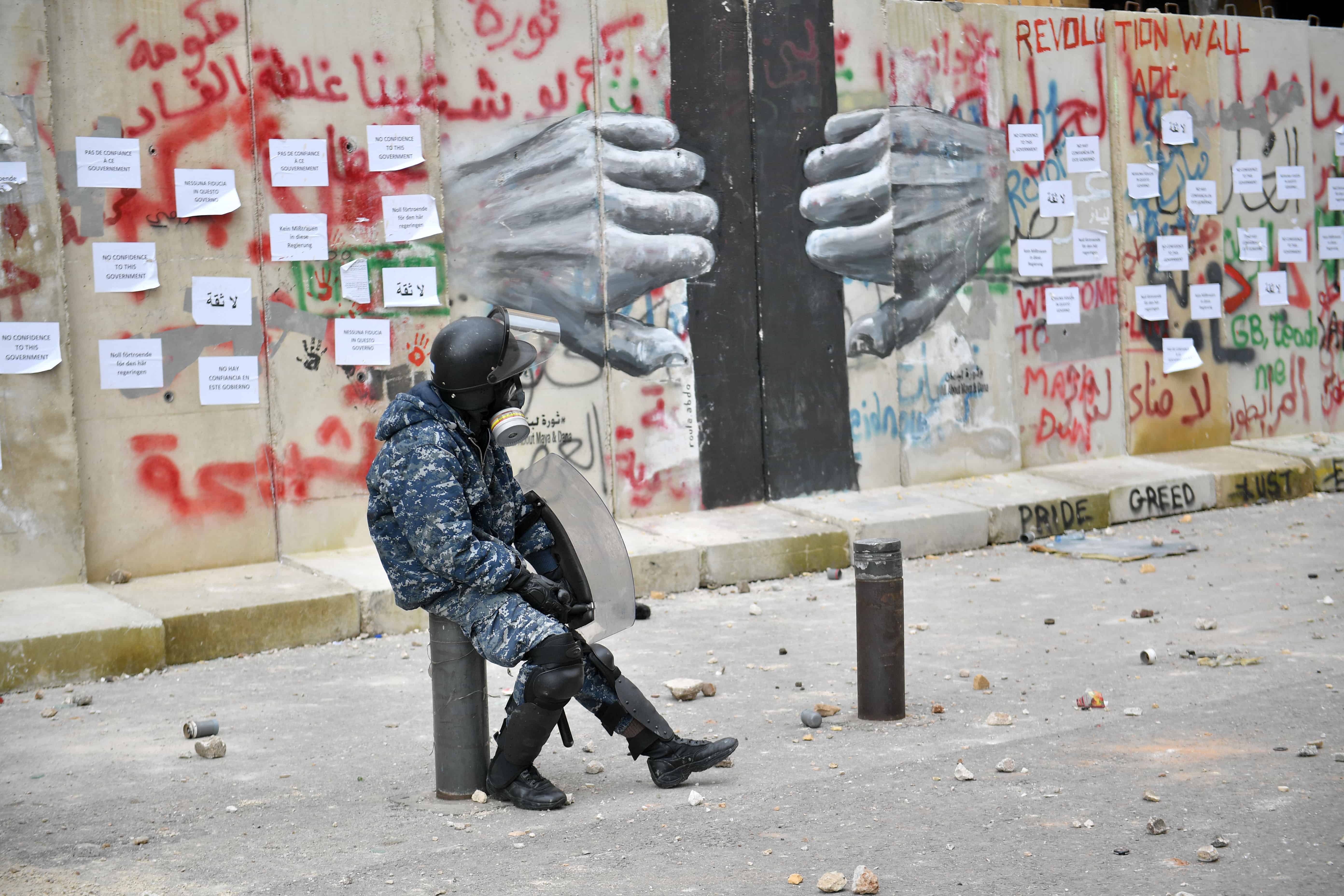
Riot police huddle together in central Beirut, on Saturday January 25.
Demonstrators launch fireworks toward the riot police in front of Le Gray Hotel, in Downtown Beirut on Saturday January 25.

February 13, 2020 0 comments
3 FacebookTwitterPinterestEmail
Last WordOpinion

Those responsible for attacks on the press must be held accountable

by Roula Mikhael February 7, 2020
written by Roula Mikhael

Journalists were among the most active in documenting the Lebanese protests, according to our Lebanon Protests open-data platform. This role has put members of the press at risk, with attacks on media spiking in mid-January—the SKeyes Center for Media and Cultural Freedom identified over 20 violations against media between January 14 – 20, raising the total number of violations to 75 since the protests began on October 17, 2019.

This popular uprising is revolutionary because it exceeded the prevalent ceiling of freedom of expression and broke through the barrier of fear over prosecution—almost as if the streets wanted to destroy the image of politicians because they could not remove them from power.

Criticism has become a daily discourse for protesters. One achievement has been how traditional media has opened up to activists and protestors—criticism of political elites that would have been censored by default prior to the protests now regularly appears on air. This has changed the public discourse, with blame for the ongoing financial crisis and the impoverishment of the country and its people laid firmly at the door of a political elite, accused of selfishness, corruption, and inefficiency.

However, this high ceiling of criticism has come at a price. As the protests continued, the frequency of street violence increased, and the reaction of the security forces has been documented as disproportionate and oppressive. Instead of being protected while covering the protests, journalists have become a target of repression and assault.

January 15 marked a dangerous shift, with previously unseen levels of violence against both protesters and the media. Riot police were filmed as they attacked dozens of journalists and photographers in front of Helou barracks in Beirut that were there to cover protests taking place in solidarity with 59 detainees who were arrested the night before during clashes in Hamra. Journalists, clearly identified as such, were trying to protect their cameras while fighting off illegal attacks on their person. Journalists were not only beaten, some were also arrested, including journalists from Reuters, MTV, Al Jadeed TV, and Executive’s photographer, French national Greg Demarque. All were released the next day.

On January 18, several journalists and photographers were also injured while covering the confrontations between demonstrators and the security forces in Downtown Beirut. The next day, also in Downtown, journalists covering the protests were hit by rubber bullets. Al-Jazeera reporter Ihab Al-Aqdi was shot in the leg, while an Al-Jadeed cameraman, Mohammed al-Samra was shot in the hand and taken to hospital for treatment.

Violations and attacks on media by security forces have not only been extensively documented, but have taken place despite these journalists being clearly identifiable as press. Press have also been attacked by civilians while covering protests in areas or crowds that are hostile either to the presence of media in general or to certain media outlets, such as the attacks against press during clashes on the ring. Some members of the press have been subject to cyber bullying campaigns and doxxing in attempts to intimidate them; notably two female journalists were the targets of bullying campaigns via the use of abusive hashtags and verbal harassment online.

The media are doing their professional duty on the front lines of these protests, it is paramount that they receive the protection necessary to do their job. Following the attacks on journalists outside Helou barracks, then-interior minister Raya el-Hassan apologized and assured that an investigation would take place and those responsible held accountable. This needs to happen—and not behind closed doors. It is not acceptable to condemn attacks against the press while abdicating responsibility. All investigations into violations by security forces must be held transparently and perpetrators held publicly accountable.

Beyond guaranteeing freedom of the press and accountability for those who violate it, there needs to be a broader understanding of how Lebanon has changed. The barrier against freedom of expression that has been torn down by these protests must not be rebuilt. Instead, the state must address the issues surrounding Lebanon’s defamation laws, which criminalize citizens for speaking their minds and have no defense in truth. Freedoms won through these revolts must not be lost, and pressure must be maintained to ensure that Lebanon adopts and protects the highest international standards when it comes to rights to protest and freedom of expression.

February 7, 2020 0 comments
0 FacebookTwitterPinterestEmail
EntrepreneurshipOpinion

Going virtual to survive Lebanon’s financial crisis

by Maria Frangieh February 7, 2020
written by Maria Frangieh

IN BRIEF

  • The virtual working model benefits employers and employees.
  • It has the potential to foster decentralized economic growth.
  • It can be a shield for businesses in times of crisis.

The political crisis in Lebanon has compounded an economic crisis that has been looming in the shadows for decades. News of business closures, salary reductions, and layoffs are added worry to Lebanese already struggling under the burden of the ongoing liquidity and financial crisis. Without urgent reforms, the economy is at risk of experiencing a deep recession.

Adapt to survive

The current—and potential—consequences of these twin crises are catastrophic, especially to Lebanese businesses. In order to survive, companies must reduce their expenditures. Unfortunately, the first instinct in these circumstances is to lay off employees—this will only further damage the economy in the long run.

Instead, companies must adapt to survive. This is where the virtual model can play a huge role. A virtual business conducts all or most of its business via the internet, eliminating the challenges faced with office costs, with geographically unattainable talent, and with scarce cash flow. There is a growing body of evidence to suggest that, if adopted correctly, the virtual model can be both productive and lucrative. Advanced digital and IT transformation strategies have led internationally to success for a diversity of companies such as Dell, Articulate, and Buffer. In Lebanon, however, companies are not yet embracing this change. With the current crisis, they may be forced to.

Adopting a remote working model has mutual benefits for employees and business owners. The latter can save on their costs—electricity, internet, rent, office supplies, and talent retention—as well as gain more flexibility in their business management, while the former can save on fuel, time spent in traffic, food, and professional wardrobe costs, and can have an economic advantage over colleagues who are reporting to the office. In Lebanon’s case, current instabilities will have a reduced impact on businesses adopting a virtual model as employees will be able to continue to work unaffected by road closures from the ongoing protests.

The virtual model also has the potential to influence on the country-wide economic level, as towns outside of Beirut could benefit from flows of income and investment. Virtual working allows employees to stay in their hometowns rather than migrate to the capital, and their spending and investments in these towns, if at a large enough scale, could help foster a decentralized boost that would contribute to Lebanon’s economic growth.

Can it work?

Going virtual is a big change that requires time and effort. If implemented correctly, this model can help businesses survive during difficult times.

Not all businesses can operate remotely, however, and for those that can, there are varying levels of difficulty making the shift to a virtual operation. If a business has a clear organizational structure and tasks lists, the shift can be smoother. On the other hand, businesses with complex organizational structures that are not able to remotely access their files will have a hard time.

The virtual model also requires the use of web tools to manage virtual teams. These tools are already available on the majority of laptops. Companies can also purchase more sophisticated tools as part of their fixed costs.

Successfully virtualizing a company’s infrastructure and operations is also heavily reliant on the team. As businesses strive for a complete reform, one of the biggest impediments is finding employees with the right skillsets.

A final, and key, factor is trust. Managers should earn their team’s trust by providing them with the right tools, training, and space to thrive.

Employees should also demonstrate their commitment through an organized and timely workflow. It is only by combining all these elements that a business can become a virtual success.

As Lebanon races against time to avoid an economic crash, companies should take measures to protect themselves and their employees. The virtual model could be the armor that shields a business from financial catastrophe. It can also play a part in revitalizing the economy outside of Beirut.

February 7, 2020 0 comments
0 FacebookTwitterPinterestEmail
EntrepreneurshipOpinion

How Lebanese entrepreneurs can survive the liquidity crisis

by Roxana Mohammadian-Molina February 7, 2020
written by Roxana Mohammadian-Molina

IN BRIEF

  • The liquidity crisis requires immediate attention and will likely result in an IMF program, with consequences for poorer Lebanese.
  • In the short term, an IMF-backed loan program would need to create a specialized fund to promote the local private sector and entrepreneurship.
  • In the long term, the government needs to foster relationships between itself, the education sector, and businesses to help promote entrepreneurial growth.

Right now, the challenge every Lebanese entrepreneur is facing is the liquidity crisis. A two-speed approach is required: 1) a set of short-term policy measures to tackle the urgency of the funding gap left by the liquidity crisis, and 2) more medium- to long-term policy measures that are focused on building and strengthening the Lebanese entrepreneurship ecosystem.

Emergency crisis management

As the outlook continues to deteriorate for Lebanon, the newly appointed finance minister Ghazi Wazni said late January that Lebanon needed foreign aid to save it from an “unprecedented” situation that had forced people to “beg for dollars” at the banks and fear for their deposits. The scene looks set for an International Monetary Fund (IMF)-backed program for Lebanon, bringing to mind the example of Egypt. Analysts, observers, and international financial institutions alike have hailed Egypt for tough economic reforms tied to a three-year, $12 billion loan program with the IMF, agreed to in late 2016. The reforms included devaluing the Egyptian pound by about half, relaxing the exchange rate regime to let the currency float freely, cutting energy subsidies, and introducing a value-added tax (VAT). Those changes have reduced the country’s current account deficit, inflation, and unemployment—thus strengthening the national currency. In its fifth and final review of Egypt’s economic reform program completed in July 2019, the Executive Board of the IMF said that “the macroeconomic situation has improved markedly since 2016, supported by the authorities’ strong ownership of their reform program and decisive upfront policy actions. Critical macroeconomic reforms have been successful in correcting large external and domestic imbalances, achieving macroeconomic stabilization and a recovery in growth and employment, and putting public debt on a clearly declining trajectory.” The IMF further noted that the outlook for Egypt’s economy remains favorable.

In Lebanon’s case, given the urgency of the liquidity crisis, any reform that comes along with an IMF-backed loan program would need to address the liquidity requirements of entrepreneurs and SMEs

Yet, Egypt’s robust IMF-backed structural reform program that has helped steady the economy has also been accompanied by an increase in inequality and poverty. Indeed, while macroeconomic indicators have drastically improved, measures such as price increase of basic foods like bread, milk, and lentils, as well as slashing fuel subsidies, which meant an increase in the price to consumers of gasoline, diesel, kerosene, and fuel oil, have left many of Egypt’s nearly 100 million citizens under increased economic strain and struggling to make ends meet. According to Egypt’s Central Agency for Public Mobilization and Statistics, 32.5 percent of Egyptians lived below the poverty line in 2018—up from 27.8 percent in 2015. This darker side of the IMF’s help programs was also visible in a 2019 loan agreement with Ecuador that called for an enormous tightening of the country’s national budget—about 6 percent of GDP over the next three years. It does not bode well for the more than 25 percent of the Lebanese citizens who live in poverty that an IMF-backed program will most likely include raising taxes that fall disproportionately on Lebanon’s poorest citizens while making cuts to the already thin public investment.

In Lebanon’s case, given the urgency of the liquidity crisis, any reform that comes along with an IMF-backed loan program would need to address the liquidity requirements of entrepreneurs and SMEs—95 percent of companies in the country are SMEs, which account for 50 percent of employment. One such short-term emergency crisis management solution is the creation of an entrepreneurship fund or loan to promote the local private sector and entrepreneurship. The IMF has been very vocal about the importance of private sector investment in creating jobs and achieving strong growth, particularly in the MENA region. Once again, Egypt’s example comes to mind. In 2015, Egypt received a $1 billion loan from the World Bank in order to support the country’s small businesses and entrepreneurial sector and pave the way for new job opportunities. That was followed by annual loans worth $3.15 billion from the bank between 2015 and 2017 to help Egypt’s economic reform program and local business development.

This IMF-backed entrepreneurship fund should also go hand in hand with reform policies to make it easier to start and manage a business, policies that tackle the complex and burdensome regulations in Lebanon that have historically held back investment and, hence, job creation and growth. Both the IMF and the World Bank have traditionally been very vocal about the fact that enhancing accessibility to finances, and promoting entrepreneurship and transparency in tax filings and government procurement would allow independent small businesses to thrive and establish new opportunities.

Build and strengthen the ecosystem

Once the short-term crisis is over, and the country is hopefully on the right track to recovery and growth, there are long-term challenges to building a strong entrepreneurship ecosystem that need to be targeted. Within that, government interventions need to be carefully crafted to be limited to improving the environment that surrounds startups. In short, the government’s role is to optimize conditions for entrepreneurs. It is difficult to point to any entrepreneurial ecosystem that has risen through direct government intervention, yet many successful entrepreneurial ecosystems and innovation districts, such as the UK’s Silicon Corridor or Spain’s 22@Barcelona project, have been assisted by governments that are entrepreneurial at the level of policy, legislation, permit authorization, purchasing, infrastructure investments, education, and coaching.

In some regions, such as the GCC, public policy to enhance access to finance has included the creation of regional VC funds, usually taking a hybrid form in which both public and private sector money is combined under private sector management. Yet, this approach has come under criticism for mixed results, with some observers noting the impact on the ability of purely private sector VC funds to raise money in those countries. Furthermore, the focus on risk capital neglects the fact that only a small minority of startups use this financing channel, at least in the early stages. Instead, encouraging the creation of a well-regulated peer-to-peer lending system is more effective as it provides seed and start-up capital and its trust-based nature means that investors typically invest in businesses that are close to home (see article in Executive’s September edition). It is also important to point out that ultimately, it was the liquidity crisis of 2008 that led the way to the creation of the alternative lending sector, peer-to-peer lending, and crowdfunding in the US and Europe.

Ultimately, however, a well-organized interaction between education, business, and government is an important key to success.

As part of the medium- to long-term strategies to build on and strengthen the Lebanese entrepreneurship ecosystem, special attention needs to be paid to policies by stakeholders such as the government, the central bank, and the Banking Control Commission of Lebanon that can foster connections between the different players within entrepreneurial ecosystems. For example, professional networking organizations, such as the Lebanese International Finance Executives (LIFE), entrepreneurship clubs, VC-backed groups, professional associations, and diaspora associations. Lebanon has already seen the emergence of organizations that have sought to build bridges between different entrepreneurial actors through the creation of communities of practice or entrepreneurial networks, such as Berytech, SPEED@BDD, the UK Lebanon Tech Hub, and AltCity—all of which have provided mechanisms for entrepreneurs in the knowledge economy to experiment, improve, and scale up.

Ultimately, however, a well-organized interaction between education, business, and government is an important key to success. This can be done through the effective provision of support to entrepreneurs during the pre-startup, startup, and early post-startup stages. In particular, public sector and university-led business accelerators and incubators have the opportunity to provide startups with advice, networking opportunities, and finance in order to help foster these fledgling ventures.

February 7, 2020 0 comments
0 FacebookTwitterPinterestEmail
  • 1
  • …
  • 52
  • 53
  • 54
  • 55
  • 56
  • …
  • 707

Latest Cover

About us

Since its first edition emerged on the newsstands in 1999, Executive Magazine has been dedicated to providing its readers with the most up-to-date local and regional business news. Executive is a monthly business magazine that offers readers in-depth analyses on the Lebanese world of commerce, covering all the major sectors – from banking, finance, and insurance to technology, tourism, hospitality, media, and retail.

  • Donate
  • Our Purpose
  • Contact Us

Sign up for our newsletter

    • Facebook
    • Twitter
    • Instagram
    • Linkedin
    • Youtube
    Executive Magazine
    • ISSUES
      • Current Issue
      • Past issues
    • BUSINESS
    • ECONOMICS & POLICY
    • OPINION
    • SPECIAL REPORTS
    • EXECUTIVE TALKS
    • MOVEMENTS
      • Change the image
      • Cannes lions
      • Transparency & accountability
      • ECONOMIC ROADMAP
      • Say No to Corruption
      • The Lebanon media development initiative
      • LPSN Policy Asks
      • Advocating the preservation of deposits
    • JOIN US
      • Join our movement
      • Attend our events
      • Receive updates
      • Connect with us
    • DONATE