• Donate
  • Our Purpose
  • Contact Us
Executive Magazine
  • ISSUES
    • Current Issue
    • Past issues
  • BUSINESS
  • ECONOMICS & POLICY
  • OPINION
  • SPECIAL REPORTS
  • EXECUTIVE TALKS
  • MOVEMENTS
    • Change the image
    • Cannes lions
    • Transparency & accountability
    • ECONOMIC ROADMAP
    • Say No to Corruption
    • The Lebanon media development initiative
    • LPSN Policy Asks
    • Advocating the preservation of deposits
  • JOIN US
    • Join our movement
    • Attend our events
    • Receive updates
    • Connect with us
  • DONATE
GCC

Bahrain Refined prosperity

by Executive Contributor December 30, 2007
written by Executive Contributor

Bahrain follows the trend of other Gulf countries, including strong economic growth, worrisome inflation, and a vision towards economic diversification to non-oil sectors. The strength of Bahrain’s economy comes from continued price increases of oil. Price rises in the commodity brought the government’s budget from the red in 2005, at a deficit of $556.3 million, to a surplus of $686 million. Rigorous diversification efforts have lowered Bahrain’s dependence on oil, relative to other GCC economies, but oil price rises have blurred the contributions of non-oil sectors to the economy.

In addition to oil production, Bahrain plans to maintain its place as a regional refiner of crude oil. According to the Oxford Business Group (OBG), “currently, Bahrain’s sole refinery has a capacity to process 250,000 barrels per day (BPD), though less than 20% of this comes from the kingdom’s own fields, with the vast majority of crude coming from nearby Saudi Arabia through a single 54 km long pipeline.” Current projects aimed at expanding storage capacity and oil infrastructure carry an estimated value of $1.2 billion

the third largest contributor to gdp is the manufacturing sector which contributed 13%

Regional banking hub

After the oil and gas sector, the highest contributor to the country’s GDP is the banking and financial institution sector. The country is growing as a regional hub for banks wanting to tap into Middle Eastern markets, according to a report by Global Investment House. Total banking system assets grew by 26.1% from 2002 to 2006. Net foreign assets of the banking system increased 9.1% from 2005, to remain at $6.41 billion by the end of 2006.

According to Arab Press Digest, a group of businessman and companies from GCC countries plan to establish an international Islamic bank with $2 billion in initial capital. The new bank, United Islamic International Bank, will be one of the largest in the Gulf.

The third largest contributor to GDP is the manufacturing sector, which contributed 13% to the country’s GDP in 2005, from a contribution of 10.6% in 2004. Global Investment House uses this as evidence that diversification efforts are “bearing fruits.”

Building infrastructure

Much of the government’s diversification effort has focused not only on directly building up non-oil industries, but facilitating growth in the sectors through infrastructure improvement efforts, most of which were implemented with the intent to strengthen the country’s manufacturing and service sector base. Bahrain’s fiscal prudence has led to Standard & Poor’s (S&P) upgrade of Bahrain’s foreign currency debt rating to “A” from the lower level of “A-”, according to Bahrain Tribune.

The Arab Press Digest also reported that Bahrain has no plans to revalue their currencies relative to the dollar, even though other GCC economies are citing the need to form a common currency union among themselves. Bahrain’s neighbors cite two main harms of a dollar peg, including the loss of sovereignty over monetary policies as Gulf central banks follow the lead of the US in setting interest rates in addition to inflation, which is partially attributed to the peg and the increasingly feeble dollar.

According to Global Investment House, foreign companies are attracted to Bahrain for its “geographic environment, well-regulated authorities and low cost factor in setting up operations.” The group’s report maintains a positive outlook and notes Bahrain’s main challenges as continued diversification efforts into more labor intensive activities and further easing of the economy’s dependence on oil.

Partially-soiled by a report from Transparency International suggesting a rise in Bahrain’s corruption, the Sultanate responded quickly to allegations of corruption, according to the OBG, which reported that “Crown Prince Sheikh al-Khalifa declared at the beginning of October that the fight against corruption had to be made a priority and that no one, not even government ministers, would be spared if implicated in malpractice.”

Continued adherence to transparency, and a will to improve industries and attract foreign investors will support Bahrain’s efforts to maintain strong economic performance.

December 30, 2007 0 comments
0 FacebookTwitterPinterestEmail
GCCUncategorized

Kuwait Basking in success

by Executive Contributor December 30, 2007
written by Executive Contributor

Much like other Gulf economies, Kuwait is experiencing an economic boom attributed to rising world oil prices. However, the country differs from Bahrain, Oman, and Qatar in that it has not pushed as formally for economic diversification. Rather than hedge against oil dependence, it appears Kuwait is basking in its oil wealth. Kuwait’s citizenry remains optimistic.

According to research conducted by the Kuwait Economic Society, 64% of Kuwaitis surveyed worry most about the high cost of living. The high cost of living is a worry for companies also, especially those in the real estate sector or financial institutions. Kuwait’s real estate market has experienced rising prices due to land scarcity, with Kuwait’s housing and real estate market recording 1% growth during the third quarter of 2007, according to a report by Kuwait Finance House. The growth comes from construction surges in residential, office, and retail space, especially within Kuwait’s capital, Kuwait City.

Growth dependent on oil markets

The Central Bank of Kuwait (CBK) reported on the continued growth the country enjoys, thanks to its domestic oil production and growing international oil prices. Measured at current prices, Kuwait’s GDP grew by 25.8% in 2006, down from 39.7% growth in 2005. The CBK notes that 70.1% of GDP growth during 2006 reflects the positive developments in world oil markets, including price and production increases. For 2006, the oil sector’s value increased by 25.9%, compared with 60.2% in 2005.

In addition to crude production and refining, Kuwait is set to expand its oil sector through large-scale petrochemical projects. One project noted by the Oxford Business Group (OBG) is EQUATE Petrochemical Company’s launch of the $2.5 billion EQUATE 2 chemical plant. The plant plans to export petrochemical products that sell near $500/barrel, instead of the lesser price of $80/barrel for crude oil, according to EQUATE spokesman Mohammed Gharib Hatem.

Relative to the oil sector, non-oil sector growth decelerated in 2006 to 14.5%, down from 20.2% in 2005. Financial institutions contributed the highest portion to non-oil sector growth, rising 68.1% in 2006, up from 37.3% in 2006. .

Kuwait also performed well in the Global Competitiveness Report (GCR), which listed the economy as the most competitive of those in the Gulf Cooperation Council (GCC) from 2007-2008. The GCR rated Kuwait’s macroeconomic stability as the best in the world, due to oil-fueled budget surpluses and high savings rate from the country’s prudence in reinvesting oil surpluses.

the gcr rated kuwait’s macroeconomic stability as the best in the world

Money supply increasing

Kuwait has also found itself worrying less about inflation, regardless of its economic boom. The CPI experienced decelerated growth in 2006, registering only 3.1%, compared with 4.1% in 2005, attributed to decelerating growth in basic goods and services prices.

Although Kuwait is enjoying growth without burdensome inflation, numbers may change in the future. The rapid rise in domestic liquidity from the country’s oil bonanza pushed up Kuwait’s broad money supply. Both phenomenons are attributable to increased credit available to domestic sectors.

However, the government has taken active steps to counter inflationary pressures induced by the dollar peg, from which most other Gulf economies suffer. By shifting the Kuwaiti dinar’s peg against the dollar from 292 fils to 289.14 fils/dollar in 2006, for a 1% decrease, the Central Bank of Kuwait preempted further decline in the dollar’s value, staving off continued loss experienced by those with unchanged pegs to the dollar.

Thanks to Kuwait’s growth and reform, in addition to well-structured banking arena, external investments abroad are on the rise, accelerating by 53.2% in 2006 from  a rise in asset values invested by institutions abroad.

Less optimistically, Kuwait continued the regional trend of poor performance in its stock markets. Figures of the Kuwait Stock Exchange (KSE) experienced a downtrend during 2006, including a decline of total value of traded shares by 39.2% and decline in transactions by 24%. Although Kuwait presents a favorable macroeconomic environment, KSE-listed companies experienced a decline in net profits and government resistance to continue with some projects managed by KSE companies.

December 30, 2007 0 comments
0 FacebookTwitterPinterestEmail
GCC

Saudi Arabia Making the grade

by Executive Contributor December 30, 2007
written by Executive Contributor

Barring an unprecedented and wholly non-expectable immense natural catastrophe and the slightly greater probabilities of another Middle East war or massive occurrences of domestic or imported terrorism, the outlook for Saudi Arabia’s development in 2008 is for another year of very significant growth. 

It is an absolute no-brainer that a country that derives about half of its GDP and four-fifths of its government revenues from oil and is the world’s leading producer of the commodity will thrive at a time when the barrel sells at close to double what this country needs for its fiscal sustenance — and the oil price outlook for the next few years is for no drop below this break-even point.

Tasks for 2008

That is not to say that Saudi Arabia won’t see a surge in challenges, which in the next 12 months could expand beyond the habitual challenges of properly managing oil production, diversifying the economy and creating employment to meet the needs of the kingdom’s young populace. Tasks which the Saudi decision makers will have to succeed in are: Making good on regulatory improvements, opening the enigmatic market, and controlling the dollar trap. The investment buzz words include petrochemicals, railroads, utilities, telecommunications, industrial cities, general construction, tourism, and education; add question marks under the headers environment, Saudization, regional politics, and international reputation.

In the second year after the kingdom’s accession to the World Trade Organization, Saudi Arabia got an exceedingly positive grade from the World Bank Group’s lectern in the master class on the right way of conducting business on the global playing field. According to the Doing Business 2008 score card by World Bank and International Finance Corporation, Saudi Arabia was among the world’s top 10 achievers for improvements of their business climate in 2007 and now is one of the 25 countries with the most business-friendly regulations on issues such as starting and operating an enterprise, trade and taxation, dispute settlements, and also the ease of winding down a business.   

Reforms cited by the World Bank and IFC as reasons for the improvement in the Saudi business climate included a reduction in the time for setting up a business to 15 days from 39 days, the establishment of a credit bureau for the commercial sector, abolition of a minimum capital requirement as multiple of per-capita GDP, and improvements in import/export procedures.

Saudi Arabia has initiated or announced further reform steps including plans to professionalize and partly privatize its stock market and revamp its index structures. In longer term moves, King Abdullah also recently took forward reforms of the judiciary and stipulated important details of the kingdom’s new succession planning procedures.  

The innovations and reforms notwithstanding, the existential wheels of the Saudi economy are the same that they were in 1998 when then Crown Prince Abdullah made the first bold public statements on the kingdom’s need to diversify away from oil dependency.

The two main wheels in the national assets chamber are hydrocarbons and population growth. However, where these wheels had been spinning in a rather contradictory motion in the last phase of the 20th century under conditions of slow oil revenues and high population growth, the increased speed of the oil wheel in the past seven years has reversed the deficit tendency of the kingdom’s finances and is advancing the probability of turning Saudi Arabia’s domestic labor pool into the long-term resource that it ought to be instead of a cost factor weighing heavy on fiscal situation. The success of this economic sea change will depend on the success of the education and economic reform steps that are ranked top on the current Saudi agenda. 

Shrinking debt burden

The magnitude of the virtuous collaboration of the two economic wheels in Saudi Arabia emerges in the correlation of revenues and education investments. In 1999, national debt had climbed to 115% of GDP because of the high social costs (and a few military expenditures) that had burdened the coffers in the period of low oil prices which hit bottom in the $15 range in 1998.

As the oil price picked up in the new millennium, the kingdom could reduce its debt to 28% of GDP by the start of 2007 while boosting budget allocations to education and qualification measures. For the two years of 2006 and 2007, the total funding allocated to human resources development reached $49 billion and a flood of new schools and colleges was devised.

Whereas the forecast for total nominal GDP and oil revenues anticipates a slight contraction in the year totals for 2007, the debt burden is expected to shrink further to less than 25% of GDP. Real GDP growth is expected at 3.6% to 3.8% for 2007 with an improvement to possibly 5.8% in 2008. Non-oil GDP increases of up to 7% have been forecasted for 2007 and 2008. Inflation pressures are expected to increase from around 3.5% in 2007 to 4% or more in 2008 but will be less than in other GCC countries.

However, perception of the kingdom’s socioeconomic outlook would be seriously distorted if one reviews solely capacity developments on the production side of oil and petrochemicals or industrial goods. Population matters are the country’s real story. The demographics of Saudi Arabia forecast a net population gain of 4.5 million people between 2007 and 2015.

With a projected 29.3 million inhabitants by 2015, the country’s population increase and total labor force will be considerably less than the respective increases and totals in Turkey and Egypt, not to mention Pakistan and India across the Gulf which will add 27 and 143 million persons to their population bases in the next seven years. 

At the same time, Saudi Arabia’s demographic rise in the oil age signifies a nine time multiplying of the population between the baseline year 1950 and 2015, a ratio that exceeds the growth rates in most other countries. With so much increase concentrated in a short period and given the national circumstances of high energy needs due to climate conditions and shortages of easily available fresh water, it becomes very clear why Saudi Arabia is bound to face challenges on its socioeconomic path in the next two decades.

Growing importance

Seeing these factors on one hand and the cultural parameters of an expansion-oriented religious mindset on the other, the role of Saudi Arabia is one of a medium to long-term player destined to seek a position of strength and growing civilizational, economic, and technological importance in the Middle East and Western Asia.

On the short-term horizon, the performance of the Saudi economy in 2007/2008 is based on corporate earnings that improved in the second half of 2007 and are expected to be strong in 2008, on robust consumer confidence that will be reflected in spending growth for 2007, albeit at a lesser rate than in the record retail spending growth year of 2006, and on the continued course of expansionary government spending on infrastructure, industrial, and social investments. 

The reinvestments of Saudi wealth at present and in the coming years are staggered at a volume of $350 billion in oil and gas, petrochemicals, water and power, industry, and construction. Construction of six new economic cities is targeted with a price expectation in the range of $100 billion, which almost looks understated considering the scope of the planned urban realms and the creation of jobs for more than a million people.

Putting the number of jobs under development into perspective, Saudi statistics said the country’s private sector workforce was around 5.5 million persons in 2005. But almost 90% of the labor force are foreigners while the current unemployment rates of nationals in the kingdom (officially 6.9% in 2005 with an increase to over 9% in 2006) are surprisingly high for a country in the middle of a boom cycle which moreover has been pursuing its avowed Saudization campaign for preferential employment of citizens for at least a decade. 

At the junction of 2007 and 2008, the Saudi Stock Exchange is a good proposition for playing catch-up with the bourses of the other member countries in the Cooperation Council of Arab Countries in the Gulf. Although the sentiment among regional analysts has been for the greater part of 2007 that the correction phase of Arab emerging bourses was winding down, the Tadawul Index stayed sluggish for most of the year and on some mid-October days was a tad negative when compared with the start of the year. Retail investors who had been burned worse than most neighbors in the correction of 2006 were slower than these neighbors in returning to the stock game. The SSE started what could become a local bull march in November of 2007, though, and valuations suggested in November that the SSE has some of the Gulf’s most attractive price plays to offer. 

The sub-sectors with the strongest gains to the end of November were insurance — an outlier in more than one way as the sector supplied a big chunk of the year’s primary market action and the newly listed companies started trading on a wave of speculative interest from retail investors — followed by agriculture and industrial stocks. Banking, cement, and telecom values on the other hand are regarded by a number of analysts as sectors where 2008 could see quite good gains.

To keep the dollar peg or not

A fashionable debate in the third and fourth quarters of 2007 is the dollar peg of the riyal and other GCC currencies. Will Saudi Arabia revalue the riyal, or perhaps switch its peg from the dollar to a currency basket? One aspect of this issue is the plan for a GCC economic and monetary union, which has been put on the agenda for 2010.

The balance of currencies is important for a monetary union and the EU’s pioneering acts in building the euro zone have shown an example of firmly aligning currencies in preparation for the step — but it is not unperceivable that the union could come even if some central banks take a slow step away from the dollar peg. However, the while the GCC union is still verbally on the table, the indications of actual implementation on the 2010 timeline are rather weak and ahead of a GCC meeting in Qatar in early December 2007, the political, institutional, and other nation-level obstacles to the step seemed larger than the currency issue.   

The second specter raised in conjunction with the dollar peg is that of imported inflation and self-coercion into following the Federal Reserve’s monetary policies. Analysts have taken differing views in this debate: some regional investment researchers, such as EFG-Hermes, reasoned that prioritizing of domestic concerns in determining of interest rates will be likely to change the Saudi approach away from following the Fed and eventually could lead to increased currency flexibility in the medium term; by contrast, analyst views from inside the Saudi economy seem to be leaning toward continuity of the monetary status quo that has served the kingdom for 21 years. The SABB financial group wrote in its fourth quarter economic report for 2007, “we continue to believe firmly that the Saudi riyal is not going to be revalued.”

Beyond the monetary issues, Saudi Arabia faces a definite need to assert its role as economic value producer and viable business location on the international map. This is where the improvements in the regulations for foreign direct investments and economic participation of non-citizens are crucial. The political perception of Saudi Arabia in Western populations is marred by negative image factors on women’s and human rights, perceived shortfalls in tolerance and individual freedoms, and, in general terms, substantial cultural distance.  

In the past, the cultural distance to developed countries stayed in place while the economic interaction happened in the oil sector through trade and joint ventures with a few corporate partners. Intensification of trade ties and funds flows has occurred on all levels in 2007 from outgoing remittances by foreign workers and heightened investments in global petrochemicals in Europe, the Far East, and the US through the state-backed petrochemicals giant SABIC which expanded its existing international operations and bought GE Plastics n a strategic move. In parallel, the Saudi aim is to attract foreign direct investments into the kingdom at a much greater rate — talk is of luring in $80 billion within 10 or 20 years.

Business leaders with experience in Saudi Arabia advise patience in expecting the implementation of reforms and changes. It would be naïve and dangerous to assume that the kingdom would shape shift into a society molded after the wishes of its economic partners in the developed countries. The question is if the reform impetus will be sufficiently strong to change the hermetic Saudi economy of the past into a hermeneutic state exemplary of a third millennium Islamic national identity and of the new Arab role in the global community. 

From the side of Saudi interests, it is clear that this fortuitous ratio of oil revenues and current account surpluses will not stay as strong as it can be expected for the seven years starting in 2002 and lasting into 2008 or a perhaps a little more. The global economy will not stay on a broad expansion course forever, and the country wants to be ready when the oil price cycle swings again.

December 30, 2007 0 comments
0 FacebookTwitterPinterestEmail
CommentComment

Off the people, buy the people

by Riad Al-Khouri December 30, 2007
written by Riad Al-Khouri

The past year appears to have been a good one for Jordan; was the same true regarding the well-being of average Jordanians? On the positive side, the country continues opening up to the rest of the region and the world economy. This can be felt in the boardrooms of Amman — though to a lesser extent on the street — and was confirmed by Jordan ranking a phenomenal ninth globally (and first among Arab states) in the Globalization Index for 2007, released last month. Developed by Foreign Policy magazine (published by the Carnegie Endowment for International Peace) in collaboration with consultants A.T. Kearney, the index measured economic, personal, technological, and political integration in 72 countries accounting for 97% of world gross domestic product and 88% of the earth‘s population. The index looks at 12 variables in four baskets: economic integration, personal contact, technological connectivity, and political engagement. Jordan led all of the index’s Arab countries, among which Morocco was 40th worldwide, Tunisia 46th, Saudi Arabia 52nd, Egypt 55th, and Algeria 70th.

In the political dimension, Jordan topped the countries covered by the index, and did well in the personal sphere and in economic integration. A look at Jordan’s foreign partnership agreements confirms the latter element. It is the only Arab country that simultaneously has free trade with the United States, a partnership accord with the European Union, a Qualifying Industrial Zone arrangement with Israel and the US, and membership of the Agadir agreement to facilitate trade among Arab states and the EU. These arrangements put Jordan firmly inside the Western economic and political sphere, but the kingdom also boasts a widening range of links with other countries, as well as membership in international bodies such as the World Trade Organization.

However, in the index’s technological dimension, the country ranked 50th, in stark contrast to other indicators. This combination of high marks in some areas and a dismal showing in another typifies the contradictions in Jordanian life today, which became even more apparent in 2007. For all its development, Jordan still has a way to go in assuring sustainable development, cutting unemployment, and reducing poverty. Given the continuing Jordanian real estate boom, the influx of Gulf and foreign capital into the country, and the presence in the kingdom of hundreds of thousands of Iraqis who are mainly not poor, Jordan may this year have evolved more than at any other time in the past half-century. Yet underneath, the country’s traditional core remains.

Among many other spheres, this traditionalism reflects in the country’s parliament as seen once again this year when Jordanians elected a new Chamber of Deputies, comprised of 110 members from 45 electoral districts. Although political parties and movements participated, they won few seats due to the country’s tribal fabric, and Jordan’s electoral law, which adopts the uninominal principle — voting for a single candidate only, rather than for a list, even when the electoral district (as most do) has more than one seat. Vote buying is also important and helps plutocrats win elections. (The government does not deny the existence of such a phenomenon, only saying that the media has exaggerated it.) As a result, the outcome of the November 2007 elections was similar to those of others since 1993, with tribal and traditional figures continuing to dominate, even as globalization sweeps through the country with greater force than ever. 

Examples of this contradiction are apparent in Amman: In the midst of dramatic construction activity and demographic growth, the Jordanian capital is acquiring a modern veneer that hides its traditional fabric. Among many other features of globalization, branding is a feature of daily life in Amman, with massive advertising spending on new or existing brands. However, many of these products are imported, a phenomenon which, coupled with weak exports, exacerbates the country‘s chronic trade gap. In that respect, the latest figures available for the kingdom’s foreign trade are not encouraging. Although the value of exports increased by over 11% during the first nine months of the year compared to the same period in 2006, the much larger figure for imports rose close to 12%, resulting in an increase in the already yawning trade deficit by more than 12%.

In sum, given this volatile mixture of rapid but sometimes superficial development coupled with entrenched traditionalism and a shaky economic base, I predict that in 2008 many Jordanians will continue to feel left behind in the country’s surge toward globalization. The new government formed after the elections must keep the social lid on, especially with fuel price hikes coming from the elimination of subsidies. That will be tough going, but with the US and Israel underwriting the country’s stability, Jordan next year will probably stay the course. Anyway, watch this space.

December 30, 2007 0 comments
0 FacebookTwitterPinterestEmail
Banking & Finance

IPO Watch

by Executive Contributor December 2, 2007
written by Executive Contributor

Top 10 IPOs for the Region in 2007

1. DP World

UAE, Transport

$2.822 billion, 17% equity offered

Lead Manager: Deutsche Bank

2. Development Bank

Saudi Arabia, Financial Services

$2.807 billion, 70% equity offered

Lead Manager: Samba Financial Group

3. Saudi Kayan Petrochemical

Saudi Arabia, Oil and Gas

$1.8 billion, 45% equity offered

Lead Manager: Samba Financial Group

4. Deyaar Development

Saudi Arabia, Oil and Gas

$882.59 million, 55% equity offered

Lead Manager: Millennium Finance Corporation

5. Kingdom Holding

Saudi Arabia, Financial Services

$860.91 million, 5% equity offered

Lead Manager: Samba Financial Group

6. Air Arabia

UAE, Transport

$713.03 million, 55% equity offered

Lead Manager: SHUAA Capital

7 Jabal Omar Development

Saudi Arabia, Real Estate

$537.01 million, 30% equity offered

Lead Manager: Bank Al Bilad

8. Compagnie Generale Immobiliere

Morocco, Real Estate

$430.97 million, 20% equity offered

Lead Manager: CDG Capital

9. Talaat Mostafa Group

Egypt, Conglomerates

$412.36 million, 10% equity offered

Lead Manager: Hermes Holding Company

10. Al Khalijj Commercial Bank

Qatar, Financial Services

$337.99 million, 17% equity offered

Lead Manager: Commercialbank

Year in review and what’s ahead for 2008

Top 10 IPOs for the Region in 2008

1. Saudi Mobile Telecommunications

Saudi Arabia, Telecoms and IT

$1.5 billion, 40% equity offered

Lead Manager: Banque Saudi Fransi

2. EgyptAir Airlines Holding

Egypt, Transport

$1 billion, 20% equity offered

Lead Manager: Goldman Sachs

3. United International Bank

Bahrain, Financial Services

$800 million, 40% equity offered

Lead Manager: Global House Company

4. International Petroleum Investment Company

UAE, Financial Services

$544.57 million

5 Power and Water Utility Company

for Jubail and Yanbu

Saudi Arabia, Power and Utilities

$466.6 million, 30% equity offered

6. DEPA United Group

UAE, Construction

$400 million

Lead Manager: Morgan Stanley — UBS

7. Prince Abdul Aziz Bin Musaed Economic City

Saudi Arabia, Real Estate

$399.9 million, 30% equity offered

Lead Manager: Deutsche Bank

8. Damas Jewellery

UAE, Consumer Goods

$272.32 million, 25% equity offered

Lead Manager: HSBC Financial Services

(Middle East)

9. Chemanol

Saudi Arabia, Oil and Gas

$200 million, 50% equity offered

Lead Manager: Samba Financial Group

10. Future Pipe Group

UAE, Basic Materials

$108.9 million

Lead Manager: SHUAA Capital

Initial public offerings in the region 2007-2008

The average values for IPOs in the region are expected to grow in 2008, indicating a strong willingness for private or state-owned enterprises to go public and expand into new markets. The highest rises in average IPO value are expected in Bahrain, which is set to rise from $69.48 million per IPO in 2007 to $425 million per IPO in 2008, and Egypt, with an expected rise to $1 billion per IPO in 2008, from $209.55 million per IPO in 2007. United International Bank is preparing to sell 40% of its ownership to investors in Bahrain in the coming year, while EgyptAir Airlines Holding is offering 20% of its equity to investors

Gulf countries expect the most IPOs in 2008. Leading the way in the Gulf is Saudi Arabia, which plans to host 26 IPOs, followed by the UAE at 19, and Bahrain with 3 deals expected. Elsewhere in the region, Syria plans to handle 4 IPOs in 2008, trailed by Egypt and Jordan, both of which expect to host 3 deals.

Regional IPO growth remains hot. The most active sectors for IPOs are headed by financial services, oil and gas, real estate, and transport. Much of the growth in Jordan, Saudi Arabia, and the UAE is fuelled by increased activity in the financial sector, where firms are seeking to expose themselves to investors and increase credit access to fund expansion into new markets

December 2, 2007 0 comments
0 FacebookTwitterPinterestEmail
North Africa

Nadim Ghantous General Manager Byblos Bank Africa

by Executive Contributor December 2, 2007
written by Executive Contributor

E What made Byblos Bank decide to expand into Sudan?

Byblos Bank has had a 30-year relationship with Sudan. We never had any problems and it was a good experience. The chairman is familiar with Sudan, which made a big difference in our approach. In 2001/02 there were signs of the country opening up and encouragement from the Central Bank, prompting Byblos Bank to become the first foreign bank in Sudan. In September 2003, we opened in Sudan. Byblos Bank Africa was supported by the OPEC Fund for International Development, which has a 20% stake in the bank, 10% is held by the Islamic Corporation for Development (100% owned by the Islamic Development Bank, IDB), 5% by a Sudanese family, and the other 65% by Byblos Bank Beirut.

E What has been the experience in Sudan so far? Has it been a success?

It was nothing less than a full success. We came at the right time and were able to actively participate in the economic growth of Sudan by providing financing needs to local corporations, offering efficient banking services. We are the only bank that is open until 4:30 p.m. We have foreign currencies available at all times. We provide yearly credit facilities, rather than transaction-by-transaction. We have dedicated staff for corporate and retail banking, who are there to serve our clients.

E What are the quantitative results?

We now have 4,000 clients, out of which 1,000 are companies. Most NGOs, diplomats, and foreign companies bank with us. Our assets now stand at $225 million, coming from a starting capital of $12 million in 2003 that had been increased to $25 million in 2005. And this is coming all from one location — our headquarters and branch.

E What difficulties has Byblos Bank encountered? How has it responded?

The main challenge was to build up a working team. In early 2004, our team consisted of 14 people: five expats from Beirut and nine Sudanese. Today, there are still five expats, but 60 Sudanese. We were able to find young men and women who today are among the best in the industry in Sudan. We looked for Sudanese working in the Gulf who wanted to return. We found young men and women, enthusiastic and ambitious Sudanese eager to learn, with good ethical backgrounds. Our employees undergo on-the-job training here and at the Byblos Bank headquarters in Beirut, where they focus mainly on customer service, risk awareness, and IT-banking.

E How does the banking sector in Sudan differ from others in the region? What are its characteristics?

Sudan is unique in that the banking sector is purely Islamic in the North and only recently conventional in the South, where only one bank operates. It is a very interesting system, similar to investment banking whereby the bank partners up with the client in the project or business, or buys goods on their behalf and resells it to them — at a profit, of course. On the other hand, customers also partner up with banks for investment deposits, whereby they share with the bank in the profits by the loan portfolios, as well as the risks.

sudan is unique in that the banking sector

is purely islamic in the north and only

recently conventional in the south

Another characteristic is that Sudan has a very strong central bank, probably the strongest in the region, that has proven to have excellent skills in good times and bad, managing the liquidity fluctuations, changing the currency — which was done perfectly, controlling local banks, and swiftly getting directly involved where needed.

E What are the challenges facing the banking & finance sector in Sudan?

They lie mainly in coping with future liquidity requirements when the economy will really boom. Another one is to achieve a faster turnover of financial investments.

E What are the medium- and long-term goals of Byblos Bank in Sudan?

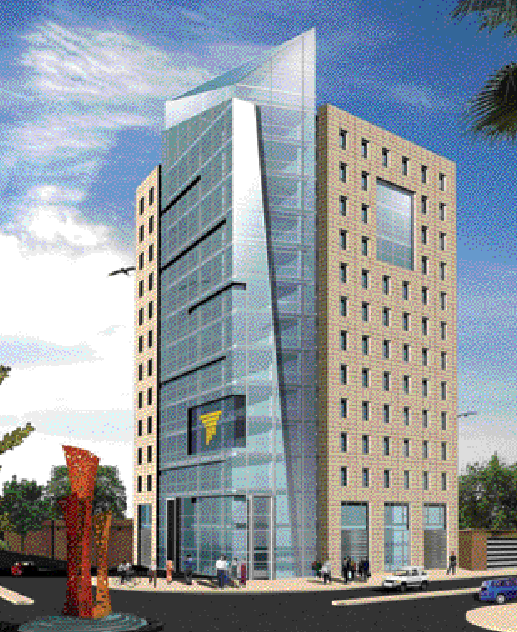
Our slogan is “Your bank for life” and therefore we are here to stay indefinitely. We started to branch out in the Khartoum area by building our new HQ — a 14-floor mixed-use tower — in the center of town on Baladiya and Meknemr streets, and another branch close to the industrial zone in Khartoum, North Bahri. This branch will be finished in September 2008 and the headquarters in 2009.

E What products is Byblos Bank offering in Sudan? Which ones are successful and why?

We offer regular services for individual and corporate banking, trade finance, capital expenditure financing, investment deposits, export loans, raw material loans, car loans, housing loans, etc. All are successful because the bank provides swift and efficient service with strong liquidity available at all times and personalized service, as well as tailor-made solutions.

E How does Byblos Bank evaluate the overall economic and business climate in Sudan? Where does Byblos Bank see the country moving over the next years? The basic requirement for any investment is physical security and this is one feature in Sudan that the country can be proud of — it is absolutely safe. The Sudanese people are very welcoming and very courteous, which facilitates a lot of interaction and the solving of problems. Certain ministries are strongly encouraging foreign investment. The country is slowly moving towards more of a consumer society, as can be seen by the number of cars and consumer electronics sold, or supermarkets and restaurants. We do expect a surge

December 2, 2007 0 comments
0 FacebookTwitterPinterestEmail
By Invitation

Web 2.0: Profiting from the threat

by Jad Hajj December 1, 2007
written by Jad Hajj

Web 2.0 — the second generation of web-based services and communities that emphasize online collaboration, networking and user-created content — is growing at a phenomenal pace. A recent Booz Allen Hamilton study shows just how prevalent this interactive consumer behavior has become and puts to rest any notion that social networkers are all 17-year-old boys or that “average people” don’t read Weblogs. The study found that 50% of all internet users frequent social media sites, and that more than half of the visitors to MySpace, the notoriously youth-oriented social networking site, are 25 or older.

Among the many activities taking place on new technology platforms, such as blogs, wikis, podcasts and online communication pit stops, is one that should particularly pique the interest of corporate managers: More and more, consumers are sharing their opinions about products, services and the behavior of companies. What this means for business is not always clear, but most executives have a sense that their company must respond to this phenomenon. They’re just not sure what to do or how to begin.

One useful approach is to frame the issue as a challenge: How do internet-based social media change the marketing environment for companies? We have identified three ways that the internet is altering the landscape, along with the hidden opportunities in each.

Companies are no longer solely in control of their message

Corporations are unable to rely on traditional one-way methods of communication to reach and influence consumers. Web 2.0 has turbocharged the whole notion of “word-of-mouth,” circumventing traditional marketing by letting individuals talk directly to each other about their passions, their buying preferences and their pet peeves. Hence, instead of trying to control the message, companies should focus on joining in these conversations. Web 2.0 offers limitless opportunities for companies to engage their customers in meaningful dialogues and learn exactly what they’ve wanted to know all along: precisely what their consumers think about their products and brand. Companies can begin at sites like Technorati.com to find out what is being said about them online and respond to postings about their products or services or addressing concerns as warranted. And they can begin generating conversations themselves by creating their own blogs, as Sun CEO Jonathan Schwartz has done with Jonathan’s Blog.

Web 2.0 is fragmenting marketing channels

The explosion of blogs and social networking sites — some 100,000 new blogs launch daily — is breaking already-fragmented marketing channels into even tinier pieces. Visitors to the web no longer start at large portals like Yahoo or MSN; rather, they go straight to niche communities and websites catering to their specific interests. But fragmentation has its upside, offering companies a shortcut to highly desirable demographic groups. Want to get the attention of professionals with an average of 15 years of experience? Try LinkedIn.com. Moreover, establishing a brand presence on online channels costs a fraction of what it does in traditional media channels. And it allows companies to leverage “consumer evangelists” — those customers who, once captured, undertake their own word-of-mouth marketing campaigns and help a company’s customer base evolve.

In addition, companies can take advantage of fragmented channels to perform targeted, inexpensive product research — partly because customers are already using these channels to describe what they love and loathe about companies’ offerings. Companies that collect and analyze this data can use it to improve and shorten product development cycles, which in turn can lead to increased predictability of product successes.

Web 2.0 offers a bullhorn for consumer complaints

Learn from computer maker Dell’s mistake: In 2005, it ignored a single blogger’s complaint about its poor customer service that eventually reached traditional media outlets such as the Wall Street Journal and the New York Times. In the months that followed, Dell’s customer satisfaction rating, market share and share price in the United States all plummeted.

Rather than ignoring — or fearing — criticism generated in Web 2.0 forums, companies should seize Web 2.0 tools to respond. For example, when frustrated JetBlue customers launched a blog recounting the hours that the airline left them stranded on the tarmac during a February 2007 storm, JetBlue responded with a video apology from its CEO on YouTube. The video was viewed 40,000 times in its first seven days online, during which time JetBlue received thousands of supportive e-mails from consumers. In addition, JetBlue was praised by blogger pundits for successfully incorporating social media into crisis communications.

Social media need not set off a panic. Although companies can no longer count on the power of one-way messaging, it’s also important to realize that new platforms carry new potential benefits. Furthermore, building competency with the new platforms is not an option; it’s a requirement. In the interactive context, traditional marketing campaigns are no longer enough; getting the desired message to the target audience takes vigilance and constant adjustment to the fast-changing communications landscape.

Jad Hajj is an associate for Booz Allen Hamilton in Dubai.


December 1, 2007 0 comments
0 FacebookTwitterPinterestEmail
By Invitation

Muscling the Mideast music market

by John Defterios December 1, 2007
written by John Defterios

It took us a half hour to drive from Sheikh Zayed Road in the center of Dubai to the Al-Quoz Industrial Area where you’ll find the headquarters of Arab Media Group or AMG. Their three-letter acronym will soon have a very familiar three-letter brand running right along side it, MTV.

The one you know is celebrating the launch of its 60th channel this weekend, 53 of those outside the United States. The other, AMG, gets a chance overnight to play in the big leagues of global media, with its 10-year partnership agreement.

A great deal has been said already ahead of the launch, but let me boil it down into three headlines:

MTV is ready to enter a market of 50 music channels in the region. Their lead music channel will be built around Hip Hop and two-thirds of the population in the Arab World is under the age of 25, so there is room to grow.

What is equally important but often overlooked in the excitement about edgy programming and the rush for advertising dollars, or in this case dirhams, is what I call the third ‘D’, dialogue.

MTV sees itself as something much more than music television. It is a platform for debate to discuss drugs, health issues and can be a great vehicle to exchange cultures, music and ideas. Bill Clinton and Tony Blair jumped into MTV town hall meetings for the same reason advertisers choose this platform, to reach youth in their space.Bill Roedy, MTV’s global ambassador since 1989, not only gets excited about rap music emerging out of Saudi Arabia, but the potential to break down barriers. “I think often there are stereotypical views about the Middle East,” Roedy says, “And this will give us a chance to reflect this great culture and what I think is going to be a great product.”

His counter-part in the venture, Abdullatif al-Sayegh the 30-something CEO of AMG, did the interview with me in the traditional Arab tobb, against the MTV graffiti studio backdrop. He talks about listening to the Arab youth and engaging them through entertainment.

“Just go with the language they understand, with the language that they believe in, with the way that they can understand you better. I am sure we can fill a lot of gaps between the West and the Arab World if we do this.”

Sounds worthy, but possible. How about the backlash against the message coming from what is clearly a western brand? Not a problem. The Virgin Music Store we went into was filled with a mix of Arab and western expatriate youth, thumbing through the latest offerings and perusing New York Yankee baseball caps. Downstairs in the shopping mall, teenagers and their parents lined up at Starbucks to get their iced lattes and blended fruit drinks.

So the lesson we may all learn out of the latest launch of MTV, is that many on the streets of the Middle East may not agree with US policies in the region, but they do trust American brands and what they stand for — openness, edginess, and can we say it? Being hip.

John Defterios is the host of “CNN Marketplace Middle East,” a new weekly business program dedicated to the latest financial news and figures from across the Middle Eastern region.


December 1, 2007 0 comments
0 FacebookTwitterPinterestEmail
By Invitation

A random blip or a future trend?

by Imad Ghandour December 1, 2007
written by Imad Ghandour

Zawya Private Equity Monitor released last month its statistics for investments and fund raising for the first nine months of 2007.

Problems in fund raising?

The funds raised in the first nine months have increased by 20% from $1.9 billion in 2006 to $2.3 billion in 2007. Great news — at first glance.

However, the $2.3 billion includes $1.2 billion raised by Abraaj’s Infrastructure and Growth Capital Fund, and conceals the untold truth that many funds are struggling to raise money. The easy money days of 2005 and 2006 seem to be over.

Despite headline news of oil hitting $100 a barrel and the excess liquidity in the region, many private equity houses are unable to close their funds. A leading regional private equity firm that was successful in raising several funds and has billions of dollars under management have closed its latest fund only a third of its target of $1 billion. Another regional investment bank, targeting $150 million, have barely reached a third of that amount after one year of fund raising. Only two of many stories.

New comers to the business sailed even worse than the rest. I now have a long list of funds that were announced in 2005 and 2006 and have still not closed. Chances are, they will never close.

I was not sure if this is a result of a glut in the liquidity flow, a pause for investors to think if private equity works, or actually a reasonable evolution of the industry. Liquidity may have shrank in the first few months of this year as interest rates rose (this is now being reversed) and oil prices dropped in the first quarter to around $50 (that now seems as the distant past). You can also argue that investors have poured billions in 2005 and 2006, and now they wanted to see some returns before pumping more cash in new funds.

The fact is, those funds that have established a track record, like HSBC Private Equity, found no problem raising another fund despite the (mildly) adverse conditions. Investors are not shy from investing, but they are betting on funds with solid track records.

Signs of a maturing industry? Let’s see the last quarter of the year before we make a final judgment.

Jordan — a role model

UAE has consistently — at least since Zawya and GVCA has started to compile these statistics in 2005 — been ranked as the prime destination for private equity investment. No surprises here. UAE houses 75% of all private equity fund managers, so it is easy for fund managers to invest in the neighbor next door. UAE is also the second largest economy in the region, and one of the most competitive (I am now lost with a dozen competitiveness indexes being churned out every year).

I was surprised (again) to find Jordan being ranked number two. The only explanation I have found so far is that Jordan is one of the most stable and open economies. Despite its small size, Jordan is offering real opportunities for private equity.

I was surprised (again) to find Saudi Arabia sharing the fourth place with Bahrain. The largest economy in the Middle East is outdone by UAE, Jordan, Egypt, and Bahrain. Not a surprise based on the same analysis above. Despite its vast potential and immense number of opportunities, private equity investors are not excited to invest in the opaque kingdom.

A wake up call for the investment promotion agencies that vigorously publicize their country’s competitiveness: private equity investment is probably the best reliable measure of how attractive any economy is to private capital. This category of investors will diligently and objectively balance the risks, obstacles, laws, growth, rewards, etc., in every economy and investment opportunity. They are the only one of those “competitive index publishers” who put their money where their mouth is. Food for thought for the region’s governments.

Imad Ghandour is Head of Strategy& Research, Gulf Capital and Board Member of theGulf Venture Capital Association.


December 1, 2007 0 comments
0 FacebookTwitterPinterestEmail
Capitalist Culture

Freedom – Into oblivion

by Michael Young December 1, 2007
written by Michael Young

Just when it seemed that things couldn’t get worse for capitalist culture in the Middle East, we now have to absorb the backward blow of a dismal 2007. The region is more than ever trapped in enmity, pushing the advance of free minds and markets further into oblivion; Lebanon is facing a sustained threat to what remains of the 2005 Independence Intifada, with the increasing likelihood that Syria will re-impose some form of hegemony in the coming years; and 2008 is looking very much like it will only exacerbate the tensions of this past year.

So much for your Christmas cheer. Complicating matters is the price of oil. It’s moving inexorably upwards, helping the likes of Iran, Russia, and others who have a vested interest in seeing the United States remove itself from Iraq and downgrade its power in the region. Whatever the merits or demerits of such ambitions, they are sure to make Washington angrier and more frustrated than it already is in the Middle East, so that some form of conflict is likelier. And where there is conflict, liberty withers.

As one observer put it so well, while crises in much of the world tend to unblock situations and create new opportunities, those in the Middle East only make things worse. The tectonic plates of the region lock further, so that the probable outcome is a major new earthquake.

Everywhere, on one side of the regional divide or the other, the matter of liberty is being ignored. If the Middle East is facing a new cold war, as the New York Times columnist Thomas Friedman has argued, then on one side of this partition you have Iran, Syria, Hizbullah and Hamas; on the other you have the mostly Sunni-led Arab states, particularly Saudi Arabia, Egypt, and Jordan, backed by the United States. While all the parties disagree on quite a lot of things, the net impact of their degenerating struggle, and an unmentioned point of agreement between them, is that now is not the time to allow democrats to be empowered, or even to allow civil society to display new vitality.

In Iran, for example, where society presents the greatest opportunity for a liberal breakthrough in the region, the prospect of a war between the US and Iran can only be nefarious for liberty. Not only would most Iranians probably rally to the side of their state, no matter how oppressive, a conflict would give that state even greater means to control the society.

In Syria, the issue of liberty is not even being seriously discussed. President Bashar al-Assad has stifled civil society much as his father did, and the brief “Damascus spring” is a distant memory. The regime is bolstered by an improving economic situation, thanks to Iraqi refugee money, Arab investments, and Iranian funding. Syria remains vulnerable, however, as its oil reserves are almost finished and investment moods can quickly change. But for the moment Assad is stronger than he has been in years, and his people are torn between apathy toward a system that forever seems to be going nowhere and fear of what the regime’s departure might bring. Worse, the international community refuses to create new options by working on strengthening Syria’s democratic forces. It accepts the idea that it’s either Assad or chaos, and in so doing fortifies the regime.

In fact, Assad has shown just how far he is willing to go by trying to return to Lebanon in one way or another. The Syrians, in coordination with an undemocratic Hizbullah, have provoked chaos in Lebanon in order to turn themselves into the inevitable interlocutor on the country’s future. When France recently engaged Syria on the Lebanese presidential election, that strategy seemed to be working. A liberal space was opened up in Lebanon in 2005. Is it about to be closed again because of Western foolishness?

On the other side, too, liberty is largely a figment of the imagination. The Egyptian president, Hosni Mubarak, is focused on his own succession, particularly ensuring that his son takes over power. There can be no democracy when the prevailing vision is of a republican monarchy. And the regime is hitting out everywhere, with even youthful bloggers being tossed into jail and tortured. Saudi Arabia is little better, with its participatory system in congenital lockdown. What freedom there is happens behind closed doors, with the regime alarmed by a rising Iran and an Iraq that might at any moment destabilize the kingdom.

One can go on. 2005 was supposed to be the year of grand democratic transformation in the Middle East. Partly it was; but it was also a trigger that autocratic regimes in the region needed to circle the wagons and ensure that liberty would be suffocated in the egg. Free minds are flat-lining in the region, and that’s not going to change anytime soon.


December 1, 2007 0 comments
0 FacebookTwitterPinterestEmail
  • 1
  • …
  • 552
  • 553
  • 554
  • 555
  • 556
  • …
  • 688

Latest Cover

About us

Since its first edition emerged on the newsstands in 1999, Executive Magazine has been dedicated to providing its readers with the most up-to-date local and regional business news. Executive is a monthly business magazine that offers readers in-depth analyses on the Lebanese world of commerce, covering all the major sectors – from banking, finance, and insurance to technology, tourism, hospitality, media, and retail.

  • Donate
  • Our Purpose
  • Contact Us

Sign up for our newsletter

    • Facebook
    • Twitter
    • Instagram
    • Linkedin
    • Youtube
    Executive Magazine
    • ISSUES
      • Current Issue
      • Past issues
    • BUSINESS
    • ECONOMICS & POLICY
    • OPINION
    • SPECIAL REPORTS
    • EXECUTIVE TALKS
    • MOVEMENTS
      • Change the image
      • Cannes lions
      • Transparency & accountability
      • ECONOMIC ROADMAP
      • Say No to Corruption
      • The Lebanon media development initiative
      • LPSN Policy Asks
      • Advocating the preservation of deposits
    • JOIN US
      • Join our movement
      • Attend our events
      • Receive updates
      • Connect with us
    • DONATE