• Donate
  • Our Purpose
  • Contact Us
Executive Magazine
  • ISSUES
    • Current Issue
    • Past issues
  • BUSINESS
  • ECONOMICS & POLICY
  • OPINION
  • SPECIAL REPORTS
  • EXECUTIVE TALKS
  • MOVEMENTS
    • Change the image
    • Cannes lions
    • Transparency & accountability
    • ECONOMIC ROADMAP
    • Say No to Corruption
    • The Lebanon media development initiative
    • LPSN Policy Asks
    • Advocating the preservation of deposits
  • JOIN US
    • Join our movement
    • Attend our events
    • Receive updates
    • Connect with us
  • DONATE
North Africa

Tunisia gearing For transport

by Executive Staff March 22, 2007
written by Executive Staff

Middle-Eastern giants Qatar Airways and Emirates have both started operations in Tunisia, and the opening of several new routes connecting Tunis with Europe and West Africa is scheduled in 2007. Karthago and Nouvelair, the two national private companies, are in talks to prepare an alliance which might take the form of a full-fledged merger. Both companies are anticipating local and foreign competition to heat up, as the authorities are pushing the open-skies policy forward.

The construction of the Enfidha airport will change the landscape even more.The call for tender procedure is due to end soon, with many foreign companies competing for the contract. The government has entered a Build-Operate-Transfer deal, with foreign partners footing the bill on construction and maintenance expense in exchange for commercial exploitation of the site for an agreed period. This new airport, which should be completed in 2009, will initially handle 5-7 million passengers per year, with a potential for much more. The necessity for a new airport in the region is clear. The Monastir airport carried over 4 million passengers in 2006, while the Tunis airport, although it has not yet reached its peak capacity, should see much more activity in the coming years. Tunis-Carthage is ideally located to become a regional hub connecting Europe, Africa and the Middle East. In the future, Tunis-Carthage will handle regular traffic routes, while the Enfidha airport will mostly be used for charter flights.

Land challenges

Meanwhile, land transportation is facing serious challenges. At a recent parliamentary debate, a member of parliament characterized inter-urban passenger transport as “chaotic”, despite the ongoing overhaul of the road infrastructure, and called for an upgrading program in the sector. The recent liberalization of several inter-urban bus routes should add more flexibility to the current system. However, “louages,” fast intercity minibuses emblematic of Tunisian road travel, should continue to represent a large share of the business.

The railroad network, which has long suffered from neglect and remains relatively undeveloped, is also slated for an overhaul. Indeed, the 11th development plan labels railroad transport as a “strategic option” and spending on railroad infrastructure is set to boom in the 2007-11 period. Indeed, $1.3 billion is earmarked for railroad infrastructure, more than twice the amount spent during the previous five-year plan. No new lines are planned, but existing railroads will be upgraded, and some of them doubled, allowing for two-way simultaneous traffic. Work on the Tunis-Ghardimaou and Tunis-Kalâa Khasba lines is already under way. Additionally, a series of feasibility studies will be launched to determine whether closed-down lines should be reopened, or new ones built. The acquisition of more carriages is also planned.

Public urban transportation capacities are also being reinforced.  The 11th development plan provides for the extension of the network covering the greater Tunis area. Feasibility studies are also underway for the Sfax and Sousse areas, and the construction of the first urban rail networks outside Tunis could start soon. The greater Tunis area is clearly prioritized as the ever-increasing number of cars, a growing population and an increasingly stretched-out city have combined to create an intractable traffic problem. Work to extend the city’s existing tramway system to the Mourouj and Manouba suburban areas has begun, and other lines are slated for extension or rehabilitation. Private operators will be running 22 bus lines and the city is in the process of renewing and modernizing its bus fleet.

The Rapid Rail Network

Work has yet to begin on the plan’s crown jewel, the Rapid Rail Network (RFR) which, when completed in 2021, will boast an impressive 85 km of railroad and as many as 55 trains. At a projected cost of $2.29 billion, out of which $700 million has already been earmarked for the 2007-2011 period, the RFR project is one of the country’s most expensive projects. While part of the project will be directly financed by the state, authorities hope to cover most of the expense by issuing state-guaranteed bonds.

Finally, details are emerging on the construction of a deepwater commercial port, also to be located in Enfidha. An estimated 97% of Tunisia’s trade travels by sea, and as a result, Tunisia’s seven existing harbors are facing saturation. In addition, those aging ports, located in urban areas, are impeding easy expansion. For all these reasons, it has become necessary to build a new-generation port able to handle most of the container and bulk cargo traffic. Technical studies are still underway, with the construction slated to begin in 2009 and spread over three phases. When completed in 2023, the Enfidha port will boast a 3,600m container dock, a 1,300m bulk freight dock, and will be 18 meters deep, accommodating much larger ships than current ports allow.
March 22, 2007 0 comments
0 FacebookTwitterPinterestEmail
North Africa

Algeria-Russia ties increase

by Executive Staff March 22, 2007
written by Executive Staff

Figures released this week by the national center for information and statistics show that Algeria registered a record trade surplus of $31.82 billion in 2006, an increase of some 24% over 2005.

This impressive back-to-back performance is mainly due to the strong increase in the value of hydrocarbon exports, alongside a very slight increase in imports.

This growth has been accompanied by ever-increasing demand from the global market, and Algeria is reaping the benefit. In fact, hydrocarbon exports increased in value by 14.77%, reaching a total of $51.75 billion. Hydrocarbons once again accounted for 97.98% of the country’s total exports. Non-hydrocarbon exports made up the remaining 2.02% of the total export volume, with a value of $1.07 billion, despite significant public spending and state efforts to boost its share.

Algeria’s principal exports markets were the US ($14.04 billion), Italy ($8.98 billion), Spain ($5.52 billion), and France ($4.33 billion), while its principal suppliers were France ($4.32 billion), Italy ($1.85 billion), China ($1.7 billion), Germany ($1.46 billion) and the US ($1.41 billion).

Despite its rapidly growing economy, Russia has not yet evolved as a major purchaser or supplier of Algerian goods, although the country has taken some important steps of late to enter the local market. Indeed, after Gazprom, Russia’s biggest company, and Lukoil, who signed a memorandum of understanding during the summer with Sonatrach, it is now the turn of Rosneft and Stroytransgaz to join the fray. Lukoil has even declared that Algeria is to become one of its “priority countries” in its plans for international business development and expansion.

Civilian nuclear program in the works

In fact, last week, Russian Minister for Energy Viktor Khristenko, accompanied by top-level staff from Gazprom, Lukoil and Rosneft, met with his Algerian counterpart Chakib Khelil in Algiers to sign a memorandum of cooperation and understanding in the energy sector. This agreement will extend to the fields of nuclear energy and electricity.

Last November, during the annual Energy Week, Khelil took the opportunity to announce Algeria’s intention to develop a civilian nuclear energy program to generate electricity. He confirmed that Algeria possessed considerable uranium deposits which the country plans to make use of to increase electricity production in the long term. To dispel any fears over Algeria’s proposed nuclear plans, he added that foreign firms would be directly involved in the process through strategic partnerships.

However, the EU is concerned by the Algerian-Russian relationship getting closer and has pledged to monitor the situation closely. The two countries are the EU’s biggest suppliers of natural gas.

No new OPEC alliance

The Algerian and Russian ministers of energy were quick to comment on concerns over a possible Organization of Petroleum Exporting Countries (OPEC)-like alliance developing between the two countries. As Khelil explained, “There cannot be an OPEC of gas, because there is no global gas market but a segmented market divided between Asia, Europe and America.” Finally, he said, “There is no daily trading open to speculation, like the oil market, because gas is sold on long term contracts, of at least 25 years.” Khristenko added, “This agreement will contribute greatly to the stability of the international energy market and reinforce global energy security.”

Russian energy companies Rosneft and Stroytransgaz plan to invest significant amounts in Algeria, said Rosneft’s Vice President Nikolai Borisenko. Khelil confirmed the companies’ plans, referring to a current field of operations, the Block 245 South exploration project in Illizi, a natural gas field in eastern Algeria, which could cost as much as $4 billion to develop.

Algeria, Russia and Norway are the main suppliers of natural gas for the EU. Algeria and Russia supply 62 billion cubic meters (to be increased to 85 billion cubic meters by 2010) and 160 billion cubic meters per annum, respectively. Last year, Algeria backtracked on plans to allow foreign firms to produce oil independent of Sonatrach. Algeria seems intent on maintaining its influence in global natural gas markets for years to come and is willing to forge strategic agreements with major global players to do so. Conversely, as these new deals move ahead, Russia looks set to swiftly advance up the list of Algeria’s major trading partners.

March 22, 2007 0 comments
0 FacebookTwitterPinterestEmail
North Africa

Morocco-Senegal ties expand

by Executive Staff March 22, 2007
written by Executive Staff

Morocco has moved to deepen integration with West Africa, participating in the first conference with the West-African Economic and Monetary Union (WAEMU).

The meeting in late January highlighted the growing regional influence of the North African kingdom, which has been aggressively pursuing investments in Senegal as well as other sub-Saharan economies. It also paved the way for a flurry of investment interest on the part of Moroccan businessmen in its aftermath.

Organized by the Moroccan business association CGEM (Confédération Générale des Entreprises du Maroc) and the Senegalese association CNP (Conseil National du Patronat), the two-day meeting analyzed means of increasing the level of trade driven by the private sector in fields as diverse as financial services and infrastructure development. The WAEMU zone represents an attractive market of close to 74 million potential consumers in Benin, Burkina-Faso, Guinée-Bissau, Ivory Coast, Mali, Niger, Senegal and Togo, all united by a single currency, the franc CFA.

As a new outlet for business networking, the Dakar forum is set to become a permanent feature in Morocco’s relations with the region, intensifying the growing rate of south-south trade.

“I am convinced that this movement must be amplified in the most diverse fields,” Moroccan Prime Minister Driss Jettou told the Dakar forum, “including banking and insurance, transport, tourism, manufacturing, fishing, agriculture, urbanism and infrastructure.”

Since the accession to the throne of King Mohammed VI, trade between Morocco and Senegal has accelerated to over $55 million in 2006, making Senegal the largest trading partner of Morocco within the WAEMU region.

Trade between the two countries is, however, slanted in favor of Morocco, with Senegal revealing a 30% deficit in 2006. Moroccan companies have indeed taken a strategic position in Senegal in recent years. The Moroccan public electricity agency, the Office National de l’Electricité, has taken a stake in the Senegalese electricity company SENELEC, while Royal Air Maroc is a substantial shareholder in Air Senegal.

Meanwhile Attijariwafa bank, a poster child for Moroccan investments in West Africa, has set up a branch in Dakar, as well as taking a 67% controlling stake in the Senegalo-Tunisian Bank which already has 6% market share in Senegal.

Its aim is to become one of the “model banks of West Africa” according to its President, Boubker Jaï. Through its wave of acquisitions, the bank is set to become the third-largest network in Senegal this year, once it integrates the 19 branches of the network.

Similarly, BMCE bank has been present in Senegal since 2004. “BMCE’s strategy is to use our subsidiary in Senegal as a platform for our regional expansion,” Kamal Bouayad, director delegate of BMCE, said. “In fact, the opening of one of our satellites in Yaoundé, Cameroon, and the upcoming opening of one in Libreville in Gabon, is a perfect example of this.”

Alongside this, the construction consortium formed by the two Moroccan companies Sintram and Houar is in the process of building a 225 kilometer road between the Senegalese towns of Linguère and Matam. The Moroccan-Emirati Development Company also has ambitions of entering Senegal in its search of new markets further south.

Morocco’s interest in Senegalese opportunities are so diverse that West Africa Pharma, a subsidiary of the Moroccan pharmaceutical company Sothema, is finalizing its new factory in Dakar, which should be operational by March this year. The international utilities group Veolia is also involved in an environmental clean-up project in the outskirts of Dakar.

Wishing to position Dakar as the point of entry for Moroccan goods flowing into West Africa, Senegalese President Abdoulaye Wade has sought to attract Moroccan investments for the construction of a container terminal in the port of Dakar. Already chronically lacking space, the existing Dakar port has witnessed a doubling of traffic between 1995 and 2005, growing from 5 million tons a year to 10 million.

Meanwhile, members of the CGEM also signalled their interest in managing the 40 kilometer highway being constructed between the Senegalese towns of Dakar and Diamniadio, which is being partly funded by the African Development Bank. Given that such large infrastructure projects have not brought a return on investment for at least 15 years, Jettou emphasized that Morocco was positioning itself as a long-term partner for Senegal and the broader region.

Transport was also high on the agenda, as the project of a road from Rabat to Dakar via Nouakchott is being studied. At the level of maritime transport, the two lines Tanger-Dakar and Tanger-Nouakchott-Dakar have been deemed so successful that the idea of an extension to the port of Cotonou in Benin was floated at the forum. Not waiting for this, Moroccan transport companies such as CET and COMANAV have already launched operations in Senegal, with the former creating a subsidiary CET Dakar.

March 22, 2007 0 comments
0 FacebookTwitterPinterestEmail
North Africa

Cairo hopes for new golden age

by Executive Staff March 15, 2007
written by Executive Staff

On January 24, Egypt took a major stride towards revitalizing the country’s long dormant gold mining industry. In a memorandum of understanding signed by Petroleum Minister Sameh Fahmy on behalf of the Egyptian government and the International Finance Corporation (IFC), the private arm of the World Bank Group (WBG), Cairo committed itself to radically overhaul legislation governing gold mining.

The existing legislation had made it almost impossible for foreign interests to play a part in the mining industry, limiting gold mining activities for holdings. The laws as they presently stand require profit sharing by those involved, and were tailored more to limited private operations rather than large-scale excavation, in the modern sense.

Egypt is considered to have major untapped reserves of gold but lacks the expertise to extract the ore. Moreover, modern mining techniques require massive investment, something local miners are not in a position to provide.

This is expected to change when the new legislation is in place, bringing with it foreign investment that could see up to $10 billion worth of ore make its way into the international market annually, a figure that would represent 10% to 12% of Egypt’s present GDP.

Need to reinvent the industry

According to Fahmy, the decision to rewrite the existing laws was essential if Egypt was to reinvent its age-old gold mining industry.

This is a very important step in restructuring the sector, which has huge potential, he said following the signing ceremony. The current legislation could not sustain the restructuring efforts.

Under the terms of the agreement, the IFC will provide technical assistance to Cairo to jointly undertake a review and reform of Egypt’s mining laws, regulations, and taxation regime for the sector.

Records show that gold was extracted in Egypt at least 6,000 years ago, and the country is still littered with the debris of ancient mines, for long more of interest to archaeologists than miners. Most of the known mines were played out as much as 2,000 years ago. However, with Cairo planning to have its new laws in place before the end of the year, Egypt is looking to pave the way for a new golden era.

There are two foreign firms active in the sector at the moment, both of them Australian. Centamin Mining, founded by an Australian-Egyptian family, has reported proven finds in excess of 7.7 million ounces of gold. Exploration work being carried out is expected to further extend this. Currently, Centamin, which was granted licenses to excavate in 2002 through its wholly owned subsidiary Pharaoh Gold Mines NL, is active at three sites, Sukari, Barramiya and Abu Marawat/Hamama in the Eastern Desert, though it is mainly concentrating its efforts at Sukari.

The IFC is playing a lead role in re-establishing the Egyptian mining industry, having agreed in May 2006 to invest $2 million into the Australian mining firm Gippsland Limited, which has the rights to explore eight areas with potential gold deposits located in the Wadi Allaqi region of south-eastern Egypt.

The investment was in line with the WBG’s Country Assistance Strategy for Egypt covering the period 2006 to 2009 to support the twin objectives of the Egyptian government to achieve high and sustainable growth and alleviating poverty and income disparity. The government’s strategy to achieve these goals is through facilitating private sector development, boosting the provision of public services and promoting equity.

The IFC’s regional manager, Gulrez Hoda, said that Egypt’s opening up of its mining industry could have a major impact on the economy.

Egypt’s mining sector has outstanding potential, Hoda said. An improved policy framework, which clearly defines procedures for private investors, will help attract new investments and improve the country’s economy.

March 15, 2007 0 comments
0 FacebookTwitterPinterestEmail
North Africa

New wind blowing in Egypt, Sinai

by Executive Staff March 15, 2007
written by Executive Staff

Egypt is stepping up its program of developing renewable energy sources as part of its plan to reduce reliance on fossil fuels, with wind energy being one of the favored options.

With Egypt’s electricity demands rising by 7% annually and the country’s fossil fuel reserves having a limited life span, Cairo has increasingly been looking to a future without oil and gas on tap to feed its energy needs.

The announcement late last year that Egypt was to resurrect its long-dormant civil nuclear energy program, with plans to have a nuclear power station operating within 10 years and others to follow, was a major part of the program.

However, while the government’s plans for nuclear power and a call by President Hosni Mubarak on September 21 for the peaceful use of nuclear energy made headlines, especially in the West, the proposal was only part of a wider push to find alternatives to fossil fuels. Most reports glossed over Mubarak’s statement at the closing session of the ruling National Democratic Party congress that Egypt needed to “benefit from sources of new and renewable energy” as well as nuclear.

Wind farms contract awarded

The latest step in this search for alternatives came at the beginning of February, when Egypt’s New and Renewable Energy Authority (NREA) announced it had awarded a $365 million contract to Spanish firm Gamesa Corporacion Tecnologia to equip two wind farms at Zafarana on the Red Sea. Under the order, Gamesa will provide 284 turbines with 850 kw generators, with construction due to begin in the first half of 2008.

The NREA, a division of the Ministry of Electricity and Energy established in 1986, has the task of identifying and developing potential alternative energy sources. Egypt has set a long-range target of meeting a minimum of 3% of its electricity needs from renewable energy resources by the year 2010 and up to 14% by 2022.

Studies undertaken by the NREA have shown that Egypt’s Suez Gulf region is one of the most advantaged in the world for the production of wind electricity, with the potential for wind farms to generate 20,000 MW of power. This, according to Samir Hassan, NREA’s chairman, is the equivalent of Egypt’s present requirements.

Today, 86% of Egypt’s electricity is supplied by thermal power stations, most of them gas-fired, with hydroelectric power plants on the Nile generating another 13% and other sources such as wind and solar providing the rest. The NREA plans to have installations with the capacity to generate 1050 MW by 2012 and 5000 MW by 2022.

Egypt’s current main wind energy plant is also located at Zafarana. It began operations in 2001 and, thanks to a number of extensions, 322 turbines now dot the landscape over an area of 150 km2. It was built with the support of Germany, Japan, Denmark and Spain.

The Zafarana project feeds into the national energy grid and the farm saves approximately 190,000 tons of fuel annually, resulting in a reduction of CO2 emissions by about 450,000 tons. Given that Egypt’s energy sector is responsible for 39% of the estimated 120 million tons of carbon dioxide emissions each year, wind power has increasingly clean credentials.

Huge potential for wind

According to Anhar Hejazi, a member of the Economic and Social Commission for Western Asia (ESCWA), wind power in Egypt and the region has huge potential.

Speaking at an ESCWA conference on energy issues in Doha on February 4, Hejazi said that Egypt served as an example for the use of alternative energy.

“There are experiences in the region that are very promising such as in Egypt, where 240 MW is provided by wind power and which is connected to a grid. Plans are afoot to increase the capacity to 850 MW,” she said.

While the NREA is the lead agency for wind energy, there is room for private enterprises to get into action. A number of Egyptian firms already provide wind turbines for private use, mainly on farms and small industry sites. However, with the Egyptian government’s long-standing plan to open up the electricity generation and distribution sector to private operators, opportunities are expected to arise for non-state wind farmers.

Of course, Egypt’s alternative electricity program does not just consist of wind power, with solar energy being another option. Egypt is constructing a solar powered station capable of turning out 150MW of electricity at Kuraymat, funded through a $97 million loan from the Japan Bank for International Cooperation.

While the NREA’s plans for wind energy are modest over the coming years, the necessity for an alternative to fossil fuels will drive the sector forward. With the cost of establishing wind farms gradually falling as new technology comes on line, Egypt’s wind driven energy industry could strike a blow for alternative energy.

March 15, 2007 0 comments
0 FacebookTwitterPinterestEmail
GCC

Qatar to double the size of its fleet for liquified gas products

by Executive Staff March 15, 2007
written by Executive Staff

The Qatar Gas Transport Company, better known as Nakilat, is on course to become the owner of the world’s largest and most modern fleet of liquid natural gas (LNG) carriers, with its existing fleet to be more than doubled.

In early 2007, Faisal al-Suwaidi, Nakilat’s vice president, announced the company planned to have a fleet of 60 vessels by 2010, 46 of them being LNG carriers and the remainder for transporting liquefied petroleum gas (LPG). The program foresees Nakilat owning 28 of the 60 tankers outright and having an average stake of 54% in the other ships. The entire acquisition has been valued at $15 billion, with Nakilat’s input being $11.5 billion.

According to al-Suwaidi, initial plans to limit the company’s ownership levels in the new vessels to between 30% and 60% had been scrapped in order to maximize shareholders’ returns.

Last year, Qatar has announced plans to become the world’s largest single supplier of natural gas by 2011, when a series of new fields are set to come on line. By that date, Qatar expects to be producing 77 million tons annually, four times its present rate of production. The massive expansion program being undertaken by Nakilat is both timed to be completed by that date and to allow for Qatar to maximize returns from its exports.

Within a week of unveiling the plans, Nakilat announced it had placed contracts with two South Korean shipyards for the construction of eight new vessels, four QFlex and four QMax, the latter being the largest LNG carriers afloat, with a capacity of 266,000 cubic meters. The last of the new carriers, to be built by Daewoo Shipbuilding and Marine Engineering and Samsung Heavy Industries, are scheduled to be delivered by the end of 2010, with the eight-ship deal having a price tag of more than $1 billion.

The new orders are just the latest in a series made by Nakilat in the past year. In total, the company or its subsidiaries have 25 LNG carriers either on the stocks or the order books of major shipyards, valued at $7.5 billion.

Nakilat is already a major player in the shipping world, having an average 43% stake in 29 LNG carriers, many of which are in service on routes between Qatar and its clients, mainly in Asia.

Cash call takes some by surprise

To help fund the expansion, Nakilat has called on all of its shareholders to pay in the remaining 50% value of their issued shares by February 15, a move that will bring in $750 million.

Though the cash call took some shareholders by surprise, it had been announced three years ago, when Nakilat had its initial public offering (IPO), that all shares would need to be paid in by early 2007.

Much of the funding for the expansion program is to come through loans raised on the international market. At the end of 2006, Nakilat announced its wholly-owned subsidiary, Nakilat Inc, had floated loans of around $4.3 billion to fund the construction of 16 of the new LNG vessels, with plans to raise another $3.3 billion in a second round in 2007.

Away from building up its fleet, Nakilat is also looking to the future in other areas. Late last year, Nakilat and Shell International Trading and Shipping Company signed an agreement that will see Shell provide a range of shipping services to the Qatari firm. Under the deal, set to run for 25 years, Shell will manage the growing fleet and provide training to allow Nakilat to develop its own LNG ship management company. Operational management of the fleet is to be passed to Nakilat within 12 years.

Shell, which is in partnership with Qatar Petroleum in a number of the country’s gas fields, was chosen because Nakilat needed a partner with experience in the sector, al-Suwaidi said on November 20 when announcing the deal.

It is also planning to develop a large maintenance, repair and construction facility at the port of Ras Laffan, from where much of Qatar’s gas exports will be conducted.

March 15, 2007 0 comments
0 FacebookTwitterPinterestEmail
GCC

Privatization in Kuwait slows

by Executive Staff March 15, 2007
written by Executive Staff

The Kuwaiti economy has seen many successes over the years, with the massive expansion of the energy sector, the diversification of the country’s economic base and the moves to become a financial hub in the Middle East. However, one story that does not rank highly among the list of achievements is Kuwait’s privatization program.

Even before Iraq’s invasion of Kuwait in 1990, there were draft plans to privatize some public holdings, though these were put on the backburner after the war as the state struggled to put the country and its economy, especially the crucial energy sector, back in working order. This was followed by initial moves in the mid-1990s to launch a privatization program.

In 2004, the government approved a privatization program, based on previous plans, that took in major sell offs in the telecommunications, energy, postal, shipping interests, ports and utilities sectors. However, few of these ambitious proposals have translated into results.

The Kuwaiti privatization program has been hindered on many fronts, not least of which has been opposition within the country’s parliament. Though the legislature has passed laws to facilitate the sale of state assets, there has been no sense of urgency in pushing the program ahead. Furthermore, successive parliaments have shown a willingness to bind any privatization with the requirement that guarantees be included to ensure that there will be no job losses suffered by Kuwaiti nationals after the transfer into private hands and that the public be protected from any significant price rises.

Restrictions discourage ownership

Given that a number of Kuwait state-owned enterprises operate at a loss or provide their services at a subsidized rate, as is the case with the electricity sector, these caveats would prove to be something of a disincentive to new owners seeking to restructure and indeed earn a profit.

There has been some progress however. The state has privatized the majority of the 120 petrol stations it owned, along with the state-owned lubrication oils plant and the coke smelter operations in 2004.

Prior to this, the state managed to sell most of the shares it had in 62 companies it acquired to assist creditors following the collapse of the unofficial stock market in 1982.

One firm that has long been touted for full or at least partial privatization is the country’s national carrier, the Kuwait Airlines Company (KAC), the first airline set up by an Arab state. For many years a money-loser, the state-owned airline has suffered from underinvestment and growing competition, both from international carriers and more recently from local outfit Jazeera Airways.

In announcing KAC’s 2006 results in late December, which saw 30% in losses from the 2005 figure of $80.9 million to $56.6 million, Sheikh Talal Mubarak Al Sabah, the airline’s chairman, took the opportunity to again call for a move towards privatization.

KAC needed to be transformed from a state company to one that could work in line with commercial laws and allow it to compete with other companies in the private sector, Al Sabah said.

However, while all but stalled, there is a renewed push to give the privatization program new life. On January 23, Rashid al-Tabtabaei, the undersecretary of the Ministry of Commerce and Industry, said that privatization was necessary for Kuwait, and that there needed to be competition within the private sector in order to create a balance in terms of costs of services.

The private sector led the economic development movement, while the public sector was responsible for monitoring and follow ups, al-Tabtabaei said during a seminar conducted by the Kuwait Association of Accountants and Auditors.

Plans to privatize some telecoms

The Ministry of Communications has plans to privatize some of its operations, in an effort to improve services, which have been the subject of much criticism. On January 4, Abdulaziz al-Osaimi, the ministry undersecretary, said that a number of proposals had been submitted to the cabinet recommending the privatization of the postal service.

Freeing the postal sector from government bureaucracy and intervention could only be of benefit in the long-term, he said.

In May 2006, Hani Hussain, the chief executive of Kuwait Petroleum Corporation, said they were seriously looking at having an initial public offering (IPO) to float 20% of shares in a new petroleum refinery, which is due to be completed by 2010.

“We are looking at the best ways of doing that and we are talking to several parties about doing it,” he said at the time. “This is something we are very keen to do.”

March 15, 2007 0 comments
0 FacebookTwitterPinterestEmail
GCC

Culture, family and history big draws in Sharjah

by Executive Staff March 15, 2007
written by Executive Staff

Sharjah has set its sights on grabbing a larger share of the region’s tourism potential and developing infrastructure and facilities.

On February 4, the Sharjah Commerce and Tourism Development Authority (SCTDA) announced plans to raise the emirate’s profile as a tourism destination, including taking part in tourism expos and increasing advertising exposure.

According to Mohamed al-Noman, the general director of the SCTDA, recent achievements such as the doubling of arrivals in the past few years have served as a spur for further expansion in the tourism sector, which is expected to have a flow-on effect for the rest of Sharjah’s economy.

“At a time when tourism has become a significant source of income for Sharjah, the emirate is seeking to further develop projects including mega-villages and cities that will attract visitors from all over the world,” he said. “In addition to this, the marketing campaigns across local, regional and international media will further help in promoting the Emirate.”

Sharjah has worked to position itself as a niche tourism destination, not so much trying to take on big players in the region such as Dubai, but instead seeking to specialize in certain key sub-sectors of the industry.

In particular, Sharjah has promoted itself as a family, nature and cultural destination, combining a slower pace of life with sand—of the beach and desert variety—adventure tourism, and the art and history of the ancient region.

“Sharjah has made a special name in the domain of tourism, for the tourists and visitors that arrive every year,” al-Noman said. “Our success is the result of our emphasis on culture, heritage and family.”

Obviously the strategy has been successful, with foreign tourist numbers topping the 1 million mark last year, well up on the 400,000 of just three years before. It also has an appeal far beyond the region, with two thirds of Sharjah’s tourists coming from countries other than those in the Gulf, with Russia and the Commonwealth of Independent States contributing some 150,000 visitors.

However, while focusing on family and cultural tourism, Sharjah is also moving into the fast lane, with a number of major up-market tourism resort centers. One of these, the Nujoom Islands project, has a budget of $18 billion and when completed in 2010, will encompass four hotel complexes, residential areas and retail centers, along with the now almost obligatory golf course.

Another facet of modern tourism that Sharjah is increasingly looking to develop is meetings, incentives, conventions and exhibitions (MICE), a sub-sector that the emirate is now well equipped to cater to with its improved international transport links and high class venues such as the Sharjah Expo Center.

Indicative of the growth of Sharjah’s tourism industry is the success of Air Arabia, the region’s first budget airline. The Sharjah-based carrier recorded a $27.51 million net profit for 2006, a 222% increase over the previous year’s result. The jump in profits was built on a 54% rise in passenger numbers, with Air Arabia carrying 1.76 million travellers in 2006.

Such has been the success of the airline, which started operations in late 2003 with just two aircraft, that it has announced it will go public, offering 55% of its shares, the balance being retained by the state. Funds raised from the initial public offering will be used to finance a major expansion program, which will see 25 new aircraft added to the existing fleet of nine planes.

In 2006, Air Arabia added Istanbul, Kabul, Mumbai, Jaipur, Nagpur, Kochi, Chennai Thiruvananthapuram, Kathmandu, Latakia and Armenia to its destination list.

The growth of Air Arabia has also been reflected on the increased activity at Sharjah’s international airport, which logged more than 40,000 flights and in excess of 3 million arrivals and departures. With other airlines adding Sharjah to their routes, the airport has announced a further expansion, coming soon after the addition of new passenger lounges and duty free outlets.

March 15, 2007 0 comments
0 FacebookTwitterPinterestEmail
GCC

Bahrain real estate taking off

by Executive Staff March 15, 2007
written by Executive Staff

Much like other members of the Gulf Cooperation Council (GCC), Bahrain is in the midst of a construction boom. However, Bahrain has become a particularly attractive alternative to other markets in the region that are already saturated. Furthermore, the kingdom has made legal changes to allow foreign ownership in some projects.

Surge of activity

Recent weeks, in particular, have seen a surge of activity in the sector. Abu Dhabi Investment House (ADIH) unveiled its $100 million Sunset Hills project in Bahrain. The mixed-use development will have villas, townhouses, apartments, and a retail component. It will be located adjacent to ADIH’s $1 billion Al-Areen project, and cover 47,000 m2 with a built up area of 56,000 m2. In addition, Marina West, Bahrain’s first residential beachfront community, launched its sales initiative for the development’s luxury freehold residences in the 75,000 m2 gated community.

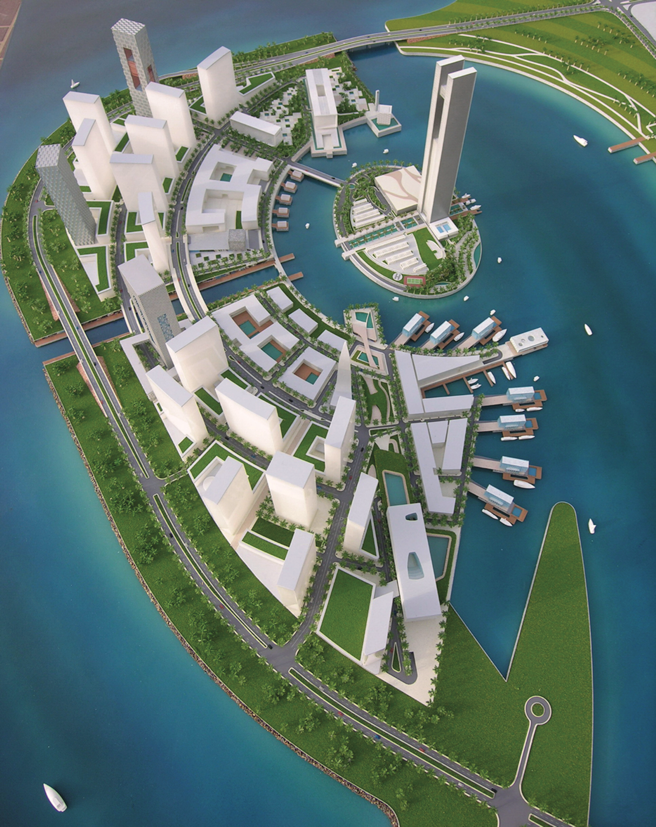
In addition, there has been tangible progress in Bahrain’s ongoing real estate projects. The first phase of the Bahrain Financial Harbor, the Financial Center, is progressing ahead of schedule and by the end of last month nearly 92% of work had been completed. Moreover, Abu Dhabi Investment House recently announced that piling work on its $90 million development, Lagoon Bahrain, will be finished in March. The Lagoon, part of Amwaj Islands off the coast of Muharraq, will be made up of eight low-rise buildings for high-end consumer retail, leisure and food and beverage outlets. Covering a total land area of 55,000 m2, the development is due for completion in September.

On February 7, the kingdom played host to a three-day forum to review the sector’s current boom and future prospects. It aimed to study factors behind the real estate boom in GCC countries, analyze future prospects, explore means of averting problems hindering the sector’s development and provide a favorable atmosphere to maintain such development.

Bahrain’s growing importance

Bahrain’s importance to the regional real estate sector has grown over the last few years. With Kuwait and Dubai attracting large numbers of investors to the extent that property prices are soaring, Bahrain has emerged as a new favorite for investors. The international press reported in January 2006 that residential property prices in Bahrain had risen on average some 200% over the previous three years. Despite this phenomenon, Bahrain’s prices remain about 45% cheaper than those in Dubai and Doha.

Bahrain’s real estate appeal has brought new developers to the market, such as Al-Marsa Real Estate, part of the local Kanoo Group. Other beneficiaries are banks, which have witnessed increased demand for house-buying vehicles. shariah-compliant financial tools are also on the market.

In spite of the momentum that is propelling real estate forward in Bahrain, there remain significant questions to be answered. The kingdom is increasingly aware of the negative socio-economic repercussions that the sector’s boom may facilitate, namely disenfranchising lower income bracket and first-time buyers. Additionally, infrastructure remains a worry, especially as Manama Municipal Council recently announced that permission to start construction work on the $2.5 billion Bahrain Bay waterfront residential, commercial and retail district could be delayed by councillors worried over traffic congestion. More specifically, the municipal authority wants to change the current proposed entrance and exit routes, saying they could create massive jams in an already congested area.

Issues of infrastructure have not deterred developers from taking matters into their own hands. For example, Riffa Views Signature Estates recently marked a major milestone with the signing of a $69 million infrastructure contract with Cybarco Bahrain Ltd. Under the contract, Cybarco—in a joint venture with Tebet Enterprises—will undertake one of Bahrain’s largest-ever infrastructure projects to build roads, telecommunications cabling, electricity and water supplies for the luxury residential development.

March 15, 2007 0 comments
0 FacebookTwitterPinterestEmail
GCC

Firms must be 5% Saudi

by Executive Staff March 15, 2007
written by Executive Staff

One of the Saudi Arabia’s most pressing issues came to the fore recently when the Ministry of Labor unveiled new “Saudiization” legislation, aimed at replacing immigrant laborers with Saudi Arabians. Contractors managed to win some concessions from the ministry, but emphasized the importance of immigrant labor for the completion of the kingdom’s numerous mega-projects.

For years, the kingdom has relied on expatriate blue-collar workers, particularly from India, Pakistan, Sri Lanka, Bangladesh and the Philippines for heavy manual labor such as construction site work. High numbers of expatriate workers are also found in a broad range of sectors, particularly those requiring a high level of skill, such as engineering. In addition, the majority of house-staff are imported. Unofficial estimates place the number of expatriate workers at just under 7 million.

Saudiization, however, is the process of replacing expatriate labor with Saudi nationals. Saudi Arabia has a growing population, with a majority under the age of 25. Creating employment for what analysts term the youth bulge is a priority for the government. The problem is compounded by the lack of adequately qualified Saudis for the skilled job market, as many are reluctant to do the types of job expatriates have traditionally held.

The other factor is cost. While the responsibilities for employers of hiring foreigners in areas such as health insurance have increased, they are still cheaper than Saudis and more willing to work long hours, often in uncomfortable environments.

Little success in local recruitment

“We have had little success, to be honest, in employing nationals at the operational end, where the bulk of our requirement is, while our middle-management and above is over 75% Saudi,” said the CEO of a Riyadh-based service company. “This situation is repeated all over the kingdom.”

Last month, Ghazi al-Gosaibi, the labor minister, signalled the government’s intent to push on with Saudiization by raising the minimum number of Saudis employed by any company to 5%. The quota will still vary between sectors. Companies failing to meet the required percentage will be publicly named and barred from foreign recruitment.

For some sectors, the new quota comes as good news—it is a readjustment from higher quotas—particularly for construction.

The Ministry of Labor has recently recognized the concern of contractors and reduced the sector’s Saudiization quota to the minimum 5% from 10%. The ministry also permitted labor visas for the sector to be extended to two years as opposed to one.

Most Saudi businessmen agree with the Saudiization concept, yet they face challenges implementing it. Abdullah Ibn Hamad al-Ammar, chairman of the National Committee for Contractors (NCC), voiced the concerns of members of the group. He stated that while a national contracting base was the ultimate aim, the raft of new large-scale infrastructure projects and industrial expansion plans, including those of Saudi Aramco and Saudi Basic Industries Corp (SABIC), required at least 1.2 million additional visas to recruit engineers, skilled labor and ordinary workers. He estimated the worth of these projects to be in the region of $75 billion.

In a parallel move, the ministry is making it more complicated for employers to take on expatriate employees. Al-Gosaibi announced that companies wishing to take on such workers will now need to prove that they have the means to pay them—there have been a number of instances where complaints have been made by foreign workers who claim not to have received their salaries. He said that the new initiative links the import by any company of foreign laborers to its capital and its ability to pay salaries.

Still, with restrictions on expatriate labor, observers have voiced concern over how the massive economic city projects planned for Rabigh, Hail, Madinah and Jizan will be built. The $80 billion developments require huge infrastructure development and will undoubtedly require more imported labor for their completion.

March 15, 2007 0 comments
0 FacebookTwitterPinterestEmail
  • 1
  • …
  • 591
  • 592
  • 593
  • 594
  • 595
  • …
  • 696

Latest Cover

About us

Since its first edition emerged on the newsstands in 1999, Executive Magazine has been dedicated to providing its readers with the most up-to-date local and regional business news. Executive is a monthly business magazine that offers readers in-depth analyses on the Lebanese world of commerce, covering all the major sectors – from banking, finance, and insurance to technology, tourism, hospitality, media, and retail.

  • Donate
  • Our Purpose
  • Contact Us

Sign up for our newsletter

    • Facebook
    • Twitter
    • Instagram
    • Linkedin
    • Youtube
    Executive Magazine
    • ISSUES
      • Current Issue
      • Past issues
    • BUSINESS
    • ECONOMICS & POLICY
    • OPINION
    • SPECIAL REPORTS
    • EXECUTIVE TALKS
    • MOVEMENTS
      • Change the image
      • Cannes lions
      • Transparency & accountability
      • ECONOMIC ROADMAP
      • Say No to Corruption
      • The Lebanon media development initiative
      • LPSN Policy Asks
      • Advocating the preservation of deposits
    • JOIN US
      • Join our movement
      • Attend our events
      • Receive updates
      • Connect with us
    • DONATE