• Donate
  • Our Purpose
  • Contact Us
Executive Magazine
  • ISSUES
    • Current Issue
    • Past issues
  • BUSINESS
  • ECONOMICS & POLICY
  • OPINION
  • SPECIAL REPORTS
  • EXECUTIVE TALKS
  • MOVEMENTS
    • Change the image
    • Cannes lions
    • Transparency & accountability
    • ECONOMIC ROADMAP
    • Say No to Corruption
    • The Lebanon media development initiative
    • LPSN Policy Asks
    • Advocating the preservation of deposits
  • JOIN US
    • Join our movement
    • Attend our events
    • Receive updates
    • Connect with us
  • DONATE
Real Estate

Once upon a time in real estate:

by Thomas Schellen October 29, 2025
written by Thomas Schellen

Once upon a time, in a tiny, almost mythical land tugged away from the rest of the world on the far eastern shore of the Middle Ocean, people were gifted a narrative of a resilient society where they are the sovereign. Many were happy as they heard their leaders promise that wishes would work with surety for all in the land. And the people were content because almost all had their little homes. Water could be scarce in the summer, and electricity even scarcer, but their homes were cozy and the weather was fine. A few had palaces. 

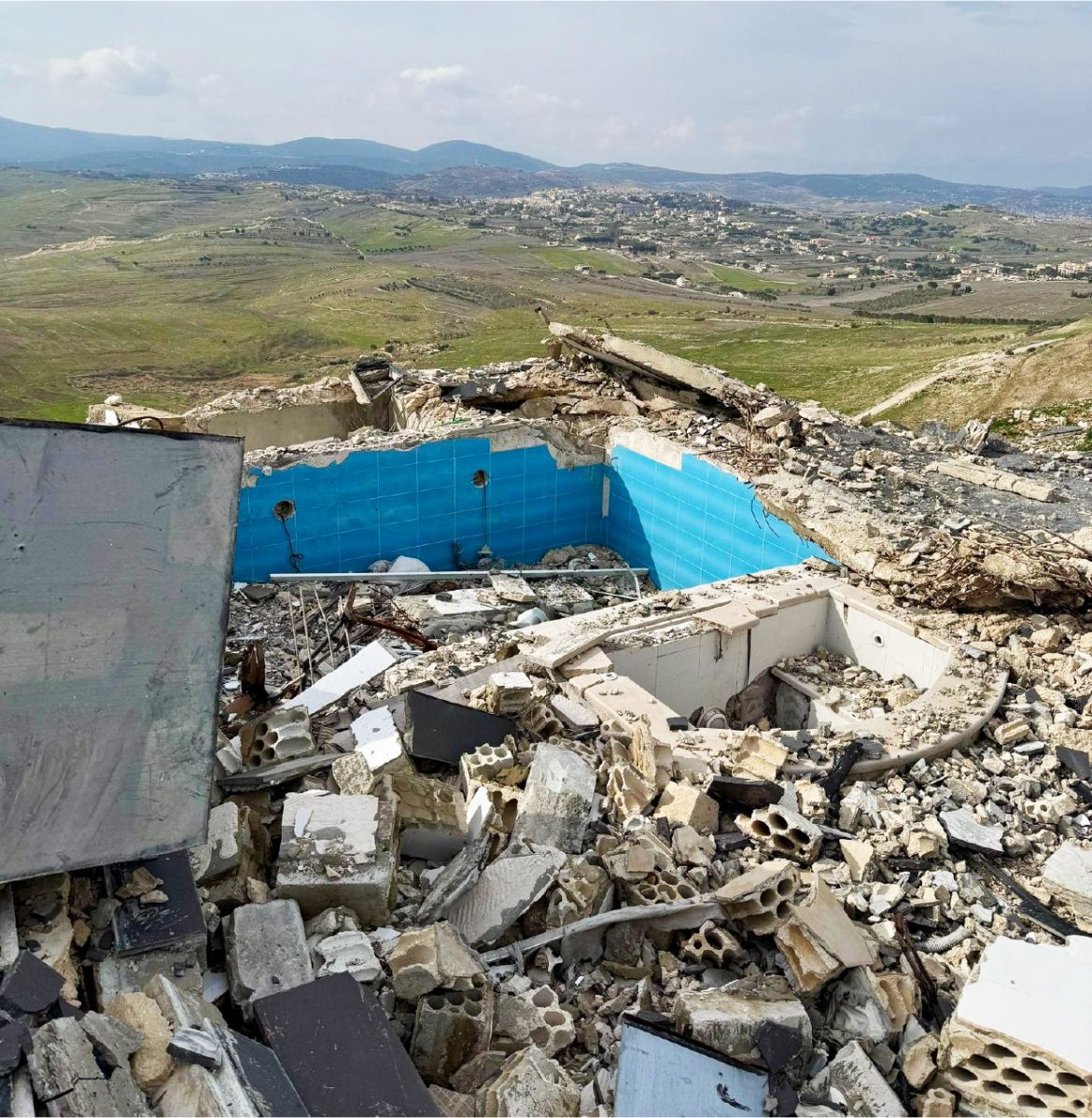
Those fairy tale times lasted for many cycles but one day a big explosion devastated parts of their capital city, not to mention many minds. The little country’s economy—already tanking–sunk badly and the people’s cherished money lost its value. Soon after, the country was overpowered by an especially vicious war that revealed the true depravity and depth of the people’s hostile neighbors’ anachronistic aggressiveness. Thus abruptly ended the time when citizens of the small land lived out their dream of owning homes, however humble, while aspiring investors could freely fulfill their desires for storing wealth in hospitable mansions and building lavish residential towers that made them richer although they added no real value to the country. The property market vanished. 

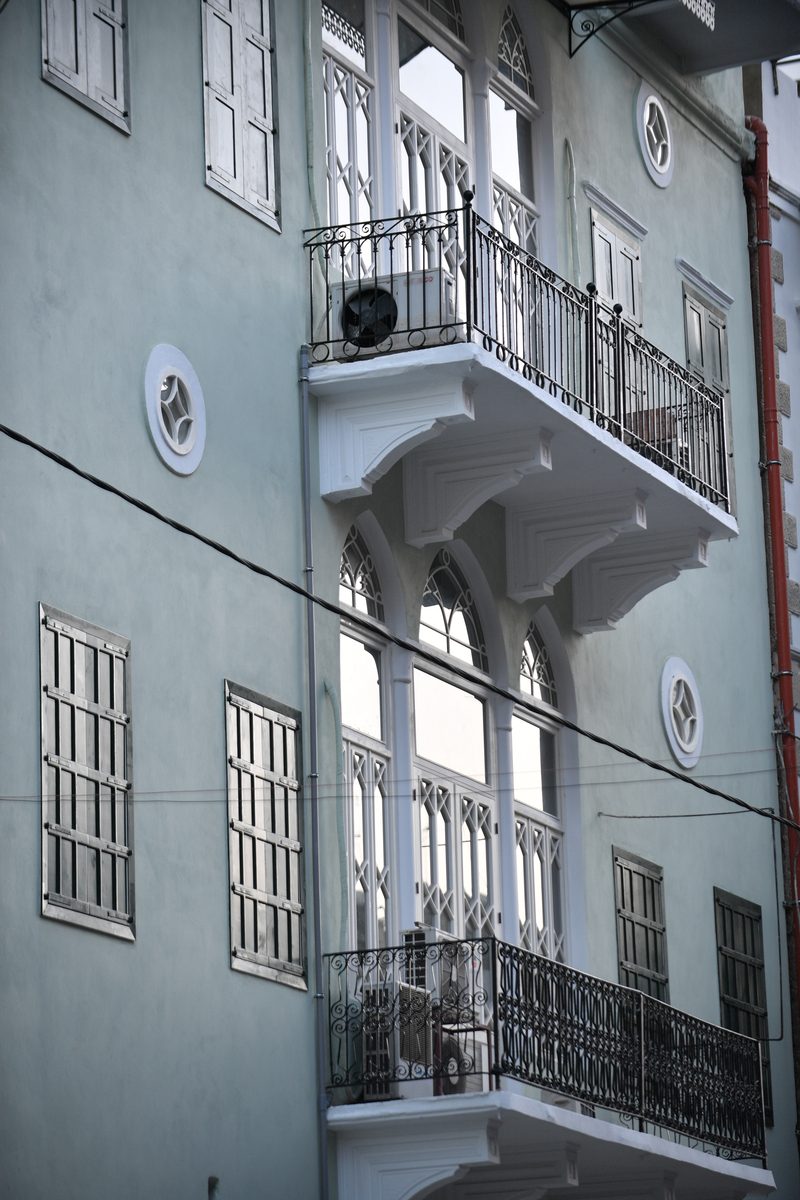
Or did real estate speculation not really end in the small land? In September of 2025, a new Lebanon Real Estate Sector report by the once-prominent local lender Bank Audi, offers a depiction of a gradually recovering property market. The report opens with saying that “demand for real estate [in the first six months of 2025] has recorded a noticeable improvement, returning to levels seen in 2022, albeit weighed down by challenging fundamentals.”

From a conventional economic advisory angle, it bears investigating if and why this statement – ant the entire report – comes with confusing undertones and hidden contradictions. But under a wider discourse on Lebanon’s economic recovery, property angles deserve to be discussed not only as store of value and space for speculation. The prudent approach to property from a macro-social perspective that considers both the Sustainable Development Goals of the United Nations and decades of e economic insights into urbanization, is that sustainable real estate developments are under-discussed, potential levers for uplifting social unity and economic productivity in a needed urban development framework. 

The flat market approach 

Bank Audi’s new report largely adheres to the pre-crisis property narrative that has been the focus of banks, sell-side real estate advisors, and business periodicals for 25 years or more. Replicating this well-known narrative, the report selectively covers demand trends from the angles of transaction numbers and transaction values, and then shifts to discussing current and future supply trends based on data on cement deliveries and building permit issuance. 

The paper concludes with a section that highlights property prices with traditional investor appeal in the downtown of Beirut and nearby districts. It adds an economic-political outlook that in its weighing – between an optimistic, a mid-range middling, and a disadvantageous scenario – favors the optimistic scenario. Under its benign assumptions – stable security with a lasting ceasefire and state “supremacy” over weapons for at least the next 12 months, comprehensive reconstruction efforts, an IMF agreement, and a financial gap resolution law – Lebanon would see GDP growth leap up across the 8 percent threshold. This growth would pull property prices up “by no less than 20 percent”, with a recovery of the housing loan sector acting as “considerable catalyst to the market”.

But is gradual market recovery the core story of real estate in 2025? Property cradles an ambiguous spot in the economic landscape of Lebanon. It is deeply rooted in the nation’s mentality as a store of value and as an investment proposition. Smart urbanity and productive real estate development, on the other hand, are needed for a return to economic vibrancy. Yet, these aspects of the real estate theme are underdeveloped. They have almost never featured in forefront of minds and market reports or led to sincere considerations of social equity and economic productivity. The latest lender report on the real estate market is an illustration of this incongruence. 

Admittedly, all three economic scenarios presented in the market outlook assessment of Bank Audi carry both upside and downside risks. By the bank’s perception, however, the property sector, under all possible scenarios, harbors value in the medium to long term. Moreover, while the report concedes that at time of its publication property prices in Lebanon were still subdued in comparison with the pre-crisis status quo, the analysts interpret this to imply a potential for “substantial capital gains” if and when “politico-economic conditions become fully supportive” of the traditional property value proposition and also cause “a potential noticeable price surge” in real estate. 

A score of open questions

What seems not to be covered under any of the bank’s three scenarios cited above, is actual economic modeling of the impact of sector-specific policies or measures. Such could, for example, be real estate development regulations and social housing development incentives by the Lebanese state. The current, imbalanced regulations on property and urban development, or absence of property tax reforms, are not assessed as impact factors in the middling or negative scenarios. Nor is there any projection on property market developments under the positive scenario if, in addition to national stability and macro-financial efforts, a public national housing strategy were devised and implemented, and urban planning improved. 

It is conceded in the Bank Audi report that the attractive, albeit risky, value proposition of local real estate over recent years has lately been reduced or, for upmarket real estate, already been eroded. But while explicitly acknowledging the need for a new property market approach that emphasizes diversification, improved quality, and increased affordability, the paper does not offer a strategic suggestion on how investment in Lebanese real estate could practically address these three worthy objectives. 

This leaves a bounty of questions. A perspective of two urban development advocates, published late last year by consultancy Badil on the housing crisis after three months of the recent war on Lebanon, argued vehemently for “immediate and sustained action to address short-term humanitarian needs and long-term structural deficiencies.” Does this imply that a new national strategy for housing and real estate by the Lebanese government is needed as cornerstone in the recovery? Or would the opposite be better: should developing a new, smart, and sustainable approach to our dysfunctional property management and development be left to entirely to commercial actors, with society de-facto betting on the learning ability of the private sector players and their agency?

It is obvious that the vulnerability of the Lebanese society to corruption, inefficiency, local and regional crises, and war has also grown to acute danger for its housing market and urban productivity. Shouldn’t the state thus be held to the duty of providing much more than, for example, unspecified incentives for creation of rural jobs? In more positive terms, might the 2025 inflection opportunity provide the golden chance for the government to consult with the business community and local academia to actually design a national strategy for social housing, urban productivity enhancement, and balanced development in this country? 

In the background of this question looms the lamentable fact that even since before independence, reiterative administrative and governmental plans on urban development and real estate organization have gone unimplemented or failed. Flaws in housing policies over the post-1992 decades according to the Badil comment include lack of public housing programs and failure of allocating vacant properties and state-owned urban plots to socially productive use. Additionally, the simultaneous oversupply and artificially high prices of housing units in the conurbation of Beirut point to a distorted market. 

Faced with the post-2024 environment of excessive social inequality and housing supply gaps as well as the country’s huge backlog in economic productivity, Lebanon call ill afford any continuation of the broken housing system. Shouldn’t therefore, a national real estate and environment strategy for protection and best practice be among the urgent priorities of 2025 for the current government? Shouldn’t best use of the country’s one proven natural asset – land – and the associated, man-made assets of urban heritage, be raised as grand themes of awareness building? If so, the society at large and powerful investors in particular can embrace the imperative of a regulatory and fiscal clean up of the property sector.

October 29, 2025 0 comments
0 FacebookTwitterPinterestEmail
Economics & PolicyEducationLast Word

No time to lose

by Atif Rafique October 22, 2025
written by Atif Rafique

Investing in Lebanon’s education system is more urgent than ever, following years of compounding crises that caused a major deterioration in access to learning and forced many families to prioritize basic needs over education.

One in three children is out of school and out of learning; the most marginalized children lag behind their peers; and many teachers are not receiving the support they need.

Strengthening the education sector takes political will, courage and vision, but it will bring significant dividends, helping build a generation that is equipped to contribute to the country’s prosperity and stability.

Education and learning are central to Lebanon’s future. Every child, regardless of nationality, gender or legal status, must have access to a quality, inclusive education.

To achieve this, we need to put children and youth at the centre of reform efforts to improve the public school system, particularly for children who are currently out of school.

We need to ensure schools are building the foundational literacy, numeracy, and life and vocational skills needed for learning, for work and for life.

The Transition and Resilience Education Fund (TREF), an initiative of the Ministry of Education and Higher Education with multination sponsorship and implemented in coordination with UNICEF, is a tool for achieving these goals. Since 2022, TREF has aims to enhance the governance and efficiency of the education system, ultimately ensuring that more children are in school for longer and learning more.

Even during the darkest of times, during economic crisis and the deadly intensification of cross-border conflict in 2024, TREF’s achievements demonstrated that Lebanon has the capacity to deepen reforms on equity and inclusion, teaching and learning, governance and cost-efficiency.

Despite the progress achieved, there is still a severe, but not insurmountable, education and learning crisis. Addressing it will require:

  • Getting all children in school and learning.

We need to reach the estimated half a million children who are out of school and not learning. This involves helping children acquire the literacy and numeracy skills they need for learning, and easing their transition into formal education. It also means ensuring every school is inclusive, especially for children with special needs.

  • Setting a learning target and implementing evidence-based teaching and learning programmes.

We need to measure progress towards improving the education system’s performance. Setting a learning target that all of Lebanon’s children, teachers, schools and partners can support will help ensure success.

  • Defining a vision for Lebanon’s teachers.

Numerous teachers have sought better-paying jobs abroad as the economic crisis drastically reduced their salaries and worsened their living conditions. Teachers who have remained in Lebanon are a cornerstone of society; we must support and motivate them.  

  • Making the case for investment in Lebanon’s public school system.

By increasing its funding for schools and allocating support based on school needs, Lebanon can showcase its commitment to education for children, teachers and schools. Helping schools develop School Improvement Plans, annual budgets, and collect data on attendance and learning outcomes will motivate domestic and international partners to champion the benefits of Lebanon’s public schools for children and for the country’s future.

Failure to properly address Lebanon’s education crisis would have dire consequences, turning today’s children into a ‘lost generation’ with weak earning potential, increasing poverty and inequality, and reducing human capital – which could, in turn, lead to more instability.

In order to succeed, the government must continue to place education at the top of the political agenda and commit the public financing required, so that all children in Lebanon, no matter their circumstances, benefit from quality teaching and learning, imparted by motivated teachers.

UNICEF is determined to continue working with the government to promote quality, inclusive education, and urges all stakeholders to join efforts to bolster the education system.

The future of Lebanon’s children, and of the country itself, is at stake. Failure is not an option.

October 22, 2025 0 comments
0 FacebookTwitterPinterestEmail
Brand Voice

There Are Better Ways Than Burning Leaves

by Philip Morris Management Services October 9, 2025
written by Philip Morris Management Services

Whether yours is a generously sized garden or a petite patio, tending to our outdoor spaces can provide us with some much-needed calm and tranquillity while balancing our busy schedules.

As any keen gardener knows, a verdant space that’s full of life starts from the ground up: good soil is the key to nurture your seedlings into a lush display of flowers and healthy leaves. Good soil contains a wealth of life, in fact, one gram (approximately a quarter of a tablespoon) of soil can contain up to 10 billion organisms.

In a truly beautiful cycle, decomposing matter from past plant life is what fuels the next season of growth. In a bid to be more sustainable, green-fingered folk swear by composting their organic kitchen and garden waste that helps them supercharge their gardens.

Composting is a conscious choice for a multitude of reasons. It’s beneficial for plants, but also for the wider environment. It helps reduce communal waste and in turn, contributes to reducing methane and carbon dioxide emissions from waste treatment. Additionally, soil that has been treated with compost needs less irrigation and no synthetic fertilizer.

Composting is also a far better option than burning leaves and garden waste. When we burn garden waste, we not only sacrifice the nutrient value but also create smoke. The smell is unpleasant for us and for our neighbours besides that burning any organic material produces many harmful and potentially harmful chemicals, whether it’s in the garden or elsewhere.

The best choice is always never to start or to quit cigarettes and nicotine altogether, but the reality is that many don’t. For those who would otherwise continue to smoke, smoke-free alternatives that don’t burn tobacco can significantly reduce harm by eliminating the burning process. These products are not risk-free and deliver nicotine, which is addictive, but they are a better choice than continued smoking.

Gardening is many things to many people. For some it’s about finding a sense of calm

in nature, for others it’s a chance to admire something they’ve grown on their own.

For any gardener who smokes, however, there are always better alternatives to burning.

You may not be aware, but this also applies to the burning of tobacco in cigarettes.

When a cigarette is lit, over 6000 chemicals are released, many of them considered by experts to be harmful. Inhaling these high levels of harmful chemicals with cigarette smoke is the primary cause of smoking-related diseases.

Avoiding burning is a better choice

· Burning garden waste is a missed opportunity to make use of the nutrients in compost, and creates harmful smoke.

· Composting is a good alternative to utilise organic garden and kitchen waste.

· Compost provides nutrients for plants in the coming seasons.

· Compost helps reduce communal waste that ends up in landfills.

Burning organic materials produces smoke

· A burning cigarette releases 1000s of chemicals, many are harmful.

· Never starting or quitting tobacco and nicotine products entirely is the best choice.

· The best choice for adult smokers is to quit entirely.

· For those who don’t quit, smoke-free alternatives that do not burn tobacco, whilst not risk free and addictive, represent a much better choice than continuing to smoke cigarettes.

For more information about smoke-free alternatives, please visit our website.

October 9, 2025 0 comments
0 FacebookTwitterPinterestEmail
CommentEconomics & Policy

Research in crisis:

by Paul Salem October 6, 2025
written by Paul Salem

This is an adapted version of Keynote remarks delivered by Paul Salem on September 24 at the opening of a conference entitled Research in Conflict Settings, hosted by the American University of Beirut, and co-organized with Birzeit University and the Canadian international Development and Research Council.


There is little doubt that the contemporary Middle East is beset by multiple deep and cross-cutting crises.  And indeed, this conference is convened to examine how engaged researchers can forge a path out of this crisis-laden reality. But before delving into our region’s crises, and possible ways out, it is worth pausing to reflect on what we mean when we invoke the concept of ‘crisis’.

Some see crisis as rupture — the sudden interruption of normal life. But as Michel Foucault asked, what exactly is “normal,” and what injustices or exclusions might be hidden beneath it? For Antonio Gramsci, crisis was a time when “the old is dying and the new cannot yet be born” — an interregnum that is dangerous but also one that is full of potential. The Chinese word for crisis combines the characters for danger and opportunity — a reminder that crisis can be a turning point.

More recently, scholars and observers have described our global moment as one of polycrisis or even permacrisis — a convergence of political, economic, security, climatic, and digital shocks that feel less like temporary ruptures and more like a new normal. The danger of this framing is that it encourages resignation — the normalization of conflict and suffering. The challenge is to resist that temptation, to acknowledge the weight of crisis but also to search for a way forward.

The Middle East Today

Nowhere does the sense of polycrisis and permacrisis resonate more acutely than in the Middle East. The region is caught in overlapping geopolitical conflicts, fragile politics, uneven economies, contested social structures, unfinished cultural debates, and severe environmental stress.

Geopolitically, wars have become the new normal, displacing millions, toppling governments, and reshaping alliances between states and armed groups.  The most horrendous and heart rending is the killing and starvation of the Palestinian population of Gaza.

Politically, more than a century after the end of the Ottoman Empire, Arab states are still struggling to establish inclusive and accountable systems of governance. Monarchies remain relatively stable, but most of the revolutionary republics hardened into authoritarian rule. The few democracies have either backslid — as in Tunisia — or remain haunted by sectarianism and corruption, as in Iraq and Lebanon.  Other states have collapsed into state failure and civil war, like Yemen and Libya, and most recently and terribly, Sudan.

Economically, the inequalities are staggering. Gulf economies have harnessed energy wealth to diversify, invest, and increasingly innovate. By contrast, energy-poor states with large populations — Egypt, Jordan, Tunisia — have failed to deliver growth and jobs commensurate with their demographic and educational potential. The promise of the “youth bulge” has too often turned into a source of frustration and unrest. Despite favorable fundamentals, the Arab region has fallen far short of the economic performance of East Asia, where similar challenges were turned into engines of growth.

Socially, questions of public space, women’s rights, youth participation, and minority inclusion remain unresolved and contested. In some societies, space has opened for women and young people; in others, retrenchment and exclusion dominate.

Culturally, the Arab world is still wrestling with issues that have been on the table since the 19th-century Nahda: the relationship between religion and secularism, communal identity and individual rights, faith and reason. These debates remain unfinished, and their outcomes continue to shape politics and society.

Environmentally and technologically, the pressures are profound. Climate change and water scarcity are hitting the region earlier and harder than elsewhere, intensifying competition over resources and fueling migration. At the same time, digital transformation and artificial intelligence are reshaping economies and public spheres. These offer new opportunities for innovation and empowerment, but also new risks — disinformation, cyberwarfare, and technological exclusion.

Yet, despite the darkness, the region is not without sources of hope. Some economies are embracing transformation and finding paths toward diversification and modernity. Countries like Lebanon and Syria are presented with new openings to rebuild sovereignty, governance, and economic vitality. Across the region, brave actors in civil society, the private sector, and some public institutions are working to improve social and political conditions.

History offers perspective. Europe lay in ruins 80 years ago, East Asia 60 years ago. Today both are largely prosperous and peaceful. The only constant in history is change; the challenge is to bend it in a positive direction.

Engaged Research

One might ask, what can engaged researchers do in the face of such daunting realities? But we, like other active and engaged groups within our world, have an important role to play:      in engaging communities to identify agendas and priorities; in undertaking research that not only describes challenges but points to solutions and a way forward; in bringing the force of ideas to impact change in the real world.

For much of the twentieth century, research on crisis settings was largely extractive. Researchers would arrive, collect data, write reports, publish in journals, and move on. Communities under study often saw little benefit from this process. Today, that model is no longer acceptable. Communities in crisis need research that is not just about them, but also for them.

This means moving from passive observation to engaged scholarship. Researchers must become not just chroniclers of tragedy but contributors to recovery and transformation.

But this shift is not easy. It requires balancing scientific rigor with the urgency of action. We must still care about methodology, validity, peer review — but we must also be able to provide insights quickly enough to inform decision-making in real time.

It also requires breaking down silos. A crisis is rarely just a public health problem, or just an economic problem, or just a security problem. It is often all of these at once.  That means researchers must collaborate across disciplines — political scientists with public health experts, economists with sociologists, computer scientists with artists and anthropologists.

And crucially, we must work with communities, not just on them.  Participatory research approaches — co-creating knowledge with affected populations, sharing findings in ways that are accessible, and allowing communities to shape research priorities — are not just ethically sound, they are practically effective.  Research designed with communities in mind is more likely to produce insights that are actionable and relevant.

In the prism of action, we must also take seriously the challenge of moving research findings forward along the path of policy impact and policy making.  Engaged research without impact is of little worth to the communities it seeks to assist.

Looking Ahead

As we look ahead, we know that the polycrises the region is witnessing will not just cease, but will likely evolve and metastasize.   Climate change will reshape agriculture, migration, and conflict patterns. Digital transformation will bring new research tools — real-time data, predictive analytics — but also new risks: surveillance, disinformation, cyberwarfare. Automation will disrupt labor markets, creating new social challenges. Furthermore, regional and global geopolitics will continue to evolve.  Truly, while the old regional and global orders are dead, new ones have not yet emerged.  

While it is not possible, in this complex reality, to predict the future, the methods of strategic foresight can help us describe alternative scenarios for the future, that can serve as a macro guide to the engaged research community, and to all those committed to turning the wheel of history in a more positive direction.

One can imagine three broad scenarios. First, a positive scenario in which the region turns from war to peace, with a two-state solution in Palestine, an Iran that has pulled back from regional ambitions, and a region that has negotiated peace, security, and economic integration on a solid footing.   Within this positive scenario we can’t realistically imagine democracy and good governance breaking out throughout the region but can imagine steady progress in consolidating democracy where it exists; increasing representation and accountability in both monarchies and republics and seeing improvements in political and economic governance that bring wider and more inclusive prosperity.

A second scenario could be a very dark one, where conflict spreads, states collapse, and decades of fragile progress are undone. A middle scenario would be one resembling the pre-2023 status quo — semi-stability with festering crises alongside islands of prosperity.

These thumbnail sketches of possible futures are not presented to indicate any predictive capacity, but rather to indicate that the art and science of strategic foresight is a tool that we can all beneficially use, and to indicate that we have to imagine the outlines of a better future if we want to set our sights on trying to bring it about. 

A resolute determination

The Middle East today is defined not only by polycrisis and permacrisis, but also by resilience and potential. Its challenges are profound, but its future is not foreordained.

Citizens, policymakers, civil society, and researchers alike have roles to play. The more shoulders push against the wheel of history, the more likely it is to turn in a positive direction. The region has known many false dawns, but history teaches us that even prolonged periods of turmoil eventually give way to renewal and transformation. Europe rose from the devastation of two world wars; East Asia emerged from colonial subjugation and conflict to become a hub of prosperity. The Arab world is no less capable of such recovery.

What is required is both vision and persistence: the vision to imagine alternatives to endless conflict, and the persistence to pursue them despite setbacks. We must refuse the temptation of despair and the paralysis of resignation. If we can sketch out futures of just peace, inclusion, and prosperity — even in outline — we can orient policies, social movements, and scholarship toward those ends.

The Middle East’s story is still being written. The question is whether it will be a story of perpetual breakdown, or one of eventual breakthrough. That depends not only on states and leaders, but also on the countless individuals, communities, and institutions that continue to strive, resist, and rebuild. It is to their resilience, and to the possibility of a more peaceful, prosperous, and just region, that we must commit our efforts and our hope.

October 6, 2025 0 comments
0 FacebookTwitterPinterestEmail
Brand Voice

THE DIFFERENCE BETWEEN SMOKE AND AEROSOL

by Philip Morris Management Services October 2, 2025
written by Philip Morris Management Services

IT IS WIDELY KNOWN THAT CIGARETTE SMOKING IS HARMFUL, YET THERE ARE OVER ONE BILLION SMOKERS IN THE WORLD TODAY – A FIGURE THE WORLD HEALTH ORGANIZATION PREDICTS WILL REMAIN CONSTANT COME 2025!

If you hear the word aerosol, you might think of a can of deodorant, but it’s actually much more than that. Aerosol is the scientific, umbrella term for solid and liquid particles suspended in gas – such as a cloud.

Smoke is actually a type of aerosol that is generated during combustion, the scientific name for ‘burning.’ And while smoke is an aerosol, not all aerosols are smoke.

Smoke-free products, while not risk-free—are a better choice for adults who already smoke.

Science and technology have allowed the production of alternative products that don’t burn tobacco, therefore don’t produce smoke—they are in fact, smoke-free.

When scientifically substantiated and subject to appropriate quality and safety requirements, smoke-free products do not create smoke and therefore should not be a source of second-hand smoke or ash. The absence of smoke can significantly reduce the average levels of harmful chemicals compared to cigarettes. Whilst not risk-free and delivering nicotine which is addictive, this makes them a better alternative for adults to continued smoking.

THESE ARE THE FACTS BROUGHT TO YOU BY PHILIP MORRIS LEBANON.

THE DIFFERENCE BETWEEN SMOKE AND AEROSOL

What is Smoke?

Smoke is described as the result of combustion or burning.

 When a cigarette is lit, tobacco burns at temperatures up to 900∘C. This creates smoke which contains approximately 6,000 chemicals, with about 100 of them classified by public health authorities as harmful or potentially harmful.

If the temperature is reduced to a level where tobacco or nicotine-containing liquid is heated instead of being burned, the smoke is removed.

What is Aerosol?

 Aerosol is not associated with combustion. Smoke-free products, while not risk-free, have the potential to significantly reduce the average levels of harmful chemicals compared to cigarette smoke.

 Consumers typically use the term “vapor” to refer to the aerosol generated from heated tobacco products or other nicotine-containing products.

Quitting tobacco and nicotine altogether is the best choice for health. Existing tobacco control measures designed to discourage initiation and encourage cessation should continue.

However, despite these efforts, millions of people continue to smoke. Science-backed, smoke-free products can play a role in moving adults who would otherwise continue to smoke away from cigarettes. With the right regulatory encouragement and support from civil society, together we can deliver a smoke-free future more quickly than relying on traditional measures alone.

  1. https://www.who.int/tobacco/publications/surveillance/trends-tobacco-smoking-second-edition/en/
  2. This should be scientifically substantiated on a product-by-product basis.

THESE ARE THE FACTS. BROUGHT TO YOU BY PHILIP MORRIS LEBANON.

October 2, 2025 0 comments
0 FacebookTwitterPinterestEmail
Beirut Port explosion

Still Standing:

by dana helo September 29, 2025
written by dana helo

On August 4, 2020, Beirut was torn apart. In the historic neighborhoods of Gemmayzeh and Mar Mikhael, life was not just interrupted; it was vaporized. This is an intimate look at the people who lived the nightmare, chose to stay, and are still trying to piece their world back together, five years on.

6:07pm, 4/08/2020

Hassan Hammoud was watering the plants outside his Gemmayzeh restaurant, Dar Beirut, when the explosion happened in a blink. “Everything was suddenly destroyed, and we could not understand.”

The first thing that came to Hammoud’s mind was to make sure he was alive. “I started feeling my whole body until I noticed blood coming out of my eye.”

Walking through Gemmayzeh and Ashrafieh, trying to find a hospital to treat his injury, Hammoud describes the scenes of killed and injured people on the streets as a nightmare seen only in horror movies. 

A few streets away, Rita Nassar was taking out the trash. “I flew and I screamed a lot, there was a lot of dust… I saw everything was destroyed.” Inside her art workshop, prayers continued to play on the radio.

For those who weren’t there, the return was a descent into a nightmare. Elias Mahfouz, whose supermarket in Karantina was obliterated, raced back from the north. “The destruction was awful… I could not access the shop. The entrance was closed, so I entered through a small hole.” His first thought was of his brother and father, who lived upstairs. Both were severely injured.

Photo: Hasan Shaaban

The immediate aftermath was a silent film of horror, dust-choked and bloodied. Patricia Bekhazi, who was in her family home with her mother and sister, described a city in shock: “In one moment, our house turned upside down. The windows and doors were fully destroyed,” she said.

Bekhazi rushed to her balcony in fear, trying to understand the nature of the catastrophe that had knocked down her house in seconds. “What I saw was terrifying. The whole area was shattered, dusty, and in full chaos.” Bekhazi and her mother had to wait for the next day to treat their injuries, as hospitals were either wrecked or unable to receive more casualties.

Bassam Gholam, a lawyer from Mar Mikhael whose family has lived there for 300 years, arrived at his mother’s house in Mar Mikhael at the time of the explosion. “I saw people killed in front of me… buildings that have fallen and gas cylinders that may explode at any time.”

Gholam was devastated to see the roof of his family’s house on the ground, with his mother and uncle injured.

The first responders: A people abandoned

In the vacuum left by an absent government, the first responders were neighbors, strangers, and a generation of young Lebanese who mobilized overnight.

Karantina supermarket owner Mahfouz, surrounded by the ruin of his life’s work, found salvation in them. “After three days, I gathered my employees… Groups of people holding cleaning detergents started coming to my shop to help. They offered support and saved me.”

“They came with brooms and buckets, with nylon sheets to cover shattered windows, and with a fierce, shared purpose.”

Bekhazi remembers them materializing from the dust. “People came to help remove the debris. We used to call them from the roads… They closed our windows with nylon until we fix them again.”

This was not aid from above; it was solidarity from the ground up. It was the only thing that worked. “In big disasters, the Lebanese help each other,” Gholam stated, a simple fact in a country where official institutions have so often failed.

Three days after the explosion, Hammoud visited his Gemmayze restaurant crying, feeling helpless, until passersby offered to help him clear the debris from his shop. “It’s amazing how people rushed to our support,” he said.  

The long, lonely road back to zero

The cleanup was the easy part. The rebuild was a marathon of despair fought against an economic collapse, a pandemic, and a currency in freefall.

For Mahfouz, the hardest moment was not the destruction, but the reconstruction. “I saw that all my efforts were gone. I was throwing the ice cream refrigerators, the air conditioners… How am I going to repeat this?”

With no electricity, Mahfouz lost his dairy business. His solution was solitary, back-breaking labor. “Then came solar energy. I brought the equipment myself to use in my shop. I did it myself to save money.” He found an online job outside Lebanon to get foreign currency that his own bank wouldn’t give him. “I started rising little by little,” he said, but his capital had vanished. “I could not fill more than one-third of the shop.”

The financial calculations became surreal. Hammoud’s restaurant sustained 100,000 U.S. dollars in damage. “I brought an architect, my friend, and told her I have 5,000 U.S. dollars to fix my shop.”

Hammoud began repairing his restaurant with what little cash he had, patching the kitchen and managing deliveries with only a few employees. Clients offered him small donations, NGOs provided support, and eventually the restaurant reopened.

With support from an NGO, Rita Nassar reopened her art space for children who were also affected by the explosion. She still walked cautiously through the streets, but the workshop had become her reason to keep going.

Bekhazi and her family gradually rebuilt their home, securing broken windows with nylon to endure winter nights and repairing walls as they could afford.

Gholam’s family had to wait months before they could restore and then return to their historic Mar Mikhael house with support from NGOs.

The new map of the city: nostalgia and fear

Rita Nassar expresses deep nostalgia and grief for her pre-blast neighborhood. “I do not like the new Gemmayzeh. I love the old one… You had old professions working in the street; it was beautiful here.” The blast accelerated a change she laments: pubs and Airbnb apartments replacing a community of artisans and multi-generational families.

Bassam Gholam looks out at a neighborhood emptied of its soul. “Only 10 percent of the people who lived here before the explosion returned.” A 2023 cluster-based survey by Beirut Urban Lab found that nearly 25 percent of residents in heavily impacted areas had not returned to their homes.

And of course, residual fears remain. Sudden noises, rattling glass, or the sound of planes overhead can trigger panic.
“I have some panic,” admits Hammoud. “Three years ago, the glass behind me started shaking, and we jumped.” Bekhazi doesn’t leave the area. “If I hear the sound of a plane, I get a panic attack. I cannot hear loud sounds.”

Healing and prolonged trauma

So, has Beirut healed? The answer from its residents is a unified, painful no.

“People did not heal. They will not heal properly,” says Mahfouz. “People remember it every day. Especially people who were injured or lost a relative. How can they forget?”

Bekhazi feels the pain sharpen with time. “Every year the pain gets worse… We just don’t like to nag, and nobody listens anyway.” For Gholam, the lack of accountability is the hardest to reckon with.

Yet, within this unresolved grief, a sense of defiance has become a means of recovery. For Hammoud, it is the love for his clients, who became family and then saviors. For Gholam, it is the weight of history in the stones of his family home, built in 1870. “This is the house of our grandparents,” he says.

Mahfouz, surrounded by the shelves he slowly refilled, sees his shop as a child. “It is very precious, just like a son of mine.” He knows another disaster would be the end, but he is still adding capital and hoping for the best.

Dana Helo is a Beirut- based journalist

September 29, 2025 0 comments
0 FacebookTwitterPinterestEmail
AnalysisEconomics & Policy

Ensnared in the social safety net:

by Jamile youssef September 24, 2025
written by Jamile youssef

Lebanon’s End-of-Service Indemnity (EOSI) system—long presented as a pillar of worker protection—has become one of the most pressing and contentious legacies of the country’s economic collapse. Designed to provide employees with a lump-sum payment upon retirement, equal to their final salary multiplied by years of service, the scheme today is strained to the breaking point. With the Lebanese pound having lost over 98 percent of its value, decades of accumulated contributions have been reduced to a fraction of their worth. Employers are now expected to cover massive settlement shortfalls, threatening the survival of compliant businesses and raising questions about the future of social protection in Lebanon.

A defunded fund

The economic collapse of 2019–2020 was devastating for social protection. Contributions that once carried weight are almost completely diminished. “The contribution of employees, accumulating for their retirement phase, has lost its value. For instance, a previous contribution of 100,000 LBP now is worth 2,000 LBP.” says Sabine Hatem, Chief Economist at the Institut des Finances Basil Fuleihan (IOF).

The International Labor Organization (ILO)’s Social Protection team echoes this concern in a written response provided to Executive: “Workers who cashed out their indemnities early in the crisis, received benefits that do not fairly match their career-long contributions. This steep drop in real value hinders EOSI core purpose, which is providing income security in old age.” The ILO team also highlights how the currency collapse demolished the NSSF assets as most of its holdings were in Lebanese pounds, primarily in the form of treasury bills and local deposits. Following the state’s eurobond default, their value now is roughly 20 percent of their nominal worth. While US dollar deposits are legally protected, they remain tied up under banking restrictions and are not fully accessible.

The state itself has been a chronic defaulter. By law, the government must pay NSSF contributions for their public sector employees, but unpaid dues have accumulated for years, and today their real value collapsed. According to a 2020 World Bank report titled ‘Lebanon Public Finance Review: Ponzi Finance?’, the government’s arrears to the NSSF reached around 8,000 billion LBP by 2019 (equivalent to 5.3 billion USD at the official pre-crisis rate). Today, even if the state moved to repay, the real value of these dues has eroded beyond recognition.

Punished for compliance?

The collapse of the Lebanese pound turned the EOSI system upside down and had a huge impact on employers. Employers that always declared salaries correctly, now struggle to cover massive EOSI shortfalls.

Below is a simplified example that uses basic regulations to illustrate what is happening with EOSI in Lebanon. Note that the NSSF has its own detailed formula.

  • Before the crisis, an employee earning 800 USD per month was officially declared as 1,200,000 LBP at the fixed exchange rate at that time of 1,507.5 LBP per one USD. The employer paid an 8.5 percent monthly NSSF contribution, equivalent to 102,000 LBP.
  • Today, the same salary must be declared at the new rate of 89,500 LBP. That means the monthly salary is registered as 71.6 million LBP.
  • If the employee has worked for 20 years, their EOSI is calculated as: 71.6 million LBP × 20 years = 1,432 million LBP.
  • Hence, all past contributions, at the old rate, now add up to almost nothing. If, for example, an employer worked 15 years before the crisis, the EOSI contribution for 15 years is 102,000 LBP x 15 years = 1,530,000 LBP
  • Employers are forced to cover the entire settlement gap, which in these cases is equal to 1,432 million – 1.53 million

The impact on Lebanon’s formal private sector has been severe. Employers who consistently declared salaries and paid contributions find themselves covering colossal gaps. Surprisingly, non-governmental organizations (NGOs) tell Executive that they feel threatened with impossible financial burdens due to their commitment to social justice. NGOs, key providers of social support and of jobs especially in the past five years, have long employed local staff for whom they consistently declared salaries and paid contributions. Unlike private businesses, NGOs do not generate profits and cannot reallocate donor funding to cover liabilities. “It’s not ethical for us to use donations meant for the most vulnerable, and for recovery and reconstruction, to pay for end-of-service liabilities that we had already contributed,” says Cedric Choukeir, Country Representative of Catholic Relief Services and a member of the steering committee for the Lebanon Humanitarian INGO Forum (LHIF). LHIF, an informal and independent coordinating body comprised of 73 international NGOs working to address the needs of vulnerable individuals, families and communities throughout Lebanon, shared a statement with Executive on the precarious state of humanitarian work in Lebanon given the new EOSI burdens and significant decreases in foreign funding. With a 4,000 person staff, 88 percent of whom are Lebanese nationals, LHIF warns there is much at stake for employees as well as those they serve.

Choukeir explains that employers who contributed faithfully throughout an employee’s career are now forced to shoulder the cost of retroactive exchange rate losses. He recalls a case where the EOSI for a single employee reached 180,000 USD. “This isn’t about three years; we’re paying for 20,” he says, explaining that the new system is forcing companies to “pay twice.” In contrast to entities that under-declare salaries or avoid payments, law-abiding employers are carrying the largest burden. “We declare full salaries. We’re fully compliant. Yet we’re the ones punished the most,” Choukeir notes. Many organizations warn they may shut down if no solution is found, and some have even turned to legal action.

The ILO’s Social Protection team estimates that before the crisis, employers’ share of EOSI settlements averaged to about 20 percent of the total benefit. Today, the figure has surged to over 90 percent. Employers are now required to make large lump-sum payments for NSSF within a single fiscal year, straining liquidity and operational budgets.

Employees shortchanged

For many workers, the EOSI has become a source of frustration rather than security. The ILO social protection team warns that “Current EOSI values are insufficient to support a dignified life for retirees. The value of the accumulated contributions, which were not indexed to inflation has been almost completely lost”.

In the public sector, the problem is critical. Following the collapse, employees received new allowances for productivity and perseverance, yet these were never integrated into their official base salaries. As a result, indemnities are calculated only on outdated figures. “Although allowances have significantly boosted public sector real earnings, the state still declares the old base salary, which is very low. Since allowances are not part of the base salary, the calculated EOSI is minimal, even though workers earned more, thanks to these allowances,” says IOF’s Hatem. The situation is even more damaging given that public sector basic salaries continue without any adjustment for inflation. The end result is indemnities that barely cover a month’s living expenses.

The issue is not limited to the public sector. In the private sector, widespread under-declaration of salaries has long been a tactic to reduce contributions, leaving workers with EOSI settlements that reflect outdated figures rather than actual income. It has also deprived the NSSF of resources it desperately needs.

Reform on paper: Law 319

In December 2023, Parliament passed Law 319, a long-awaited reform designed to transform Lebanon’s outdated EOSI system into a modern, inflation-proof monthly pension model that aligns with international social security standards. The law introduces monthly pensions to replace one-off lump sum payouts, individual accounts for employees, a smaller NSSF governance board, and a structure that allows contributions to be invested for sustainability.

The ILO’s Social Protection team explained that the new law creates a hybrid pension model. It combines a Notional Defined Contributions component, where individual accounts are credited annually based on average wage growth and with a component that guarantees a minimum pension. At retirement, the notional balance is not paid out as a lump sum, instead it is converted into a monthly pension, taking into account life expectancy, cost-of-living adjustments, and survivors’ benefits.

In theory, the system is more resilient. As Hatem notes: “Moving from lump-sum payments to monthly indexed pension, protects the value of what retirees receive.” The ILO’s 2024 report on the new pension scheme simulates that after 2 to 7 years, depending on salary and years of services, cumulative pension payouts would surpass the lump-sum alternative.

Yet the reform is not without controversy. Employers face a sharp increase in contribution rates—from 8.5 percent today to as high as 17 or 18 percent. “It’s too heavy. If the contribution rate is too high, employers will stop declaring all employees, or will turn into contractual arrangements instead of full-time,” warns Ibrahim Muhanna of actuarial consultancy Muhanna & Co, predicting that such high rates will drive businesses into informality. “This is a good law for the employee, it acts more of a social welfare than social security, but it is very unfair to the employer.” Muhanna also criticizes the new law’s ‘one size fits all’ design. “The law acts like all employers are the same. But a hotel, a bank, and a school do not operate on the same economic cycle.”

Hatem emphasizes that first of all the government should see itself as an employer and plan accordingly: “The state must ask: How much will it cost us to pass this new law? If we need to go to an affordable solution, then we need to go to an affordable solution. If they cannot pay for that number of employees, maybe we should not have this number of employees in the public sector.”

The way forward

The introduction of Law 319 could mark a turning point for Lebanon’s social protection system, but only if it is implemented with fairness, transparency, and clear financial planning. Any reform must ensure financial sustainability, not just for today, but for decades to come. The ILO’s Social Protection team points out that Lebanon’s system is already marked by major gaps with only around 20 percent of the population enjoying some form of social protection and is far below the global average of 52.4 percent.

From a public finance perspective, reforms cannot be rushed or improvised. The country has shifted dramatically from the pre-2019 framework to today’s post-collapse economy and continues to face uncertainty. That means every decision must be evidence-based backed by solid data, and detailed studies.

Reform requires discipline and should be fiscally sustainable over the medium and long term. Furthermore, public institutions must stop the practice of not settling their dues to the NSSF. “Social protection is a stabilizer. If someday we are not able to fulfill these dues, it is very risky and threatens employees who have no other source of revenue,” says Hatem. Still, the new law is yet to be implemented as the required executive decrees are still pending.

Even before proceeding with the new law, businesses that are the backbone of the economy are facing impossible financial pressures. Employers cannot carry the burden alone. “We need a refinancing solution involving all stakeholders: NSSF, the state, and employers. No one should hold the burden alone. the problem is very big… It has to be an agreement of refinancing, where each part holds the burden,” says Hatem. Muhanna reinforces this point: “You cannot protect employees if you do not protect the employer, as they are the ones offering the jobs.”

Without a fair settlement for compliant employers, whether private sector companies or NGOs, the entire fledgling social security system could soon face another potentially fatal breakdown. Any solution must balance the interests and the benefit of all involved stakeholders: employees, businesses, government, and the NSSF.

September 24, 2025 0 comments
0 FacebookTwitterPinterestEmail
Economics & PolicyQ&A

Ethical Financing of End-of-Service Payments

by Jamile youssef September 23, 2025
written by Jamile youssef

The Lebanese Private Sector Network (LPSN) is a coalition of business leaders, professionals, and organizations committed to safeguard Lebanon’s formal economy and promote sustainable growth. It operates through two main pillars: first, advocacy, which issues policy positions and engages in reform debates. Second a policy-to-action, represented by Lebanon Works, it aims to turn policy ideas into tangible initiatives that promote employment and growth.

In recent years, LPSN in collaboration with other private sector actors, has been actively advocating for reforms and practical solutions to the End-of-Service Indemnities (EOSI), managed by the National Social Security Fund (NSSF).

Following the 2019 economic collapse and the sharp currency devaluation of the Lebanese pound, in February 2024, the NSSF issued memo 740 updating the exchange rate used to calculate EOSI benefits accumulated over a 20-year period. The new calculation now applies an exchange rate of 89,500 LBP. However, throughout most of that period, employers made their contributions based on the official exchange rates at the time, which were first 1,500 LBP and later 15,000 LBP per one USD. This shift has created a significant challenge to Lebanon’s private sector due to the gap between the value of contributions made and the compensation now to employees. Executive spoke with representatives of LPSN to discuss the pressures the formal private sector is currently facing, the risks on businesses, employees, and the whole economy, and the unresolved question of how to finance the gap.

The interview was conducted with the following representatives of the Lebanese Private Sector Network (LPSN):

  • Rima Freiji – LPSN President | Tanmia – Chairwoman
  • Riccardo Hosri – LPSN Treasurer & Economic Security unit lead | SACOTEL – CEO
  • Nay El Hachem – LPSN Board member | El Hachem Law Firm – Managing Partner
  • George Abboud – LPSN Co-lead Economic Security unit | Earth Technologies – CEO & Co-owner
  • Naeim EL Zein – Mira-Clé Training – Founder & Managing Partner

The responses to each of the questions reflect the views and insights shared by the network’s representatives during the interview.

What is the end-of-service indemnity in Lebanon, and what is happening with it today?

The EOSI is a lump sum that employees are entitled to at the end of their service. It is calculated by multiplying an employee’s last monthly salary by the total number of years worked. Employers contribute 8.5 percent of salaries to the NSSF’s EOSI branch, on a monthly basis. When an employee claims their end of service compensation, the last employer is responsible for covering any missing amount between total contribution made and the amount the employee is entitled to.

For decades, contributions were declared in Lebanese lira at the fixed official rate of 1,500 LBP per USD. Today, under NSSF memo 740, settlements are calculated at 89,500 LBP per USD. This change means earlier contributions cover only a fraction of the current required settlement, as there is no acknowledgment of earlier payments made at the old rate. This leaves employers responsible to cover the complete huge missing amount at the new rate.

The fund continued applying the law literally and issuing new memos, disregarding previous paid obligations at the exchange rate at that time and the extraordinary conditions created by the collapse in the country.

For firms with long-serving employees, EOSI settlements may now reach hundreds of thousands of dollars, a severe burden that might threaten companies’ survival. As a private sector, we have already met our obligations in the past, yet are effectively forced to pay again the missing amount which is at inflated exchange rates and ignore the reality of the downturn situation.

Why do you describe this as unfair to the formal private sector? What are the risks if this continues?

The formal private sector is now paying the price for compliance. Companies that consistently declared salaries, paid taxes, and contributed 8.5 percent to the NSSF are now accountable for the full weight of EOSI shortfalls. While in parallel, informal businesses, estimated to represent around 60 percent of Lebanon’s economy, avoid such burdens entirely and remain untouched. This creates unfair competition. Formal companies bear the full cost of compliance, whereas informal businesses carry none of these burdens and dismiss employees without any consequence.

Additionally, by 2024, formal private sectors had systematically worked to restore salaries to their original pre-2019 USD value, despite the economic crisis and currency devaluation. This effort is to retain and shield employees from the unfolding crisis.

The issue is not only seen financially but structurally as well. The NSSF has not conducted regular audits of its accounts, transparency is absent, and the Court of Audit has failed to publish reports. This leaves the fund in a fragile position, with little trust and accountability to contributors or beneficiaries. We have already made our previous contribution at the exchange rate at that time, and it was the state’s role to safeguard those funds. Our conscience is clear. We pay what the law requires, adjusted salaries, and support our staff, yet are treated as though those payments never happened.

In its current form, in case of default to fulfill its financial and legal commitments, which includes covering EOSI shortfall amount, the NSSF can block companies from importing, exporting, or completing corporate procedures through the “disclaimer clearance” (براءة الذمة). Such action paralyzes businesses, even those that have paid their contribution for decades. The company’s activity, operation, and survival are linked to a systemic problem beyond our control.

There will be a lot of risks if continuing down this path. Such overwhelming obligations of this scale threaten the survival of even well-established businesses. This is not a problem limited to one employer or one employee, it is a systemic issue across the entire formal private sector, due to currency devaluation. Companies with staff who have long service records face settlements that can wipe out years of revenue, while smaller firms are at equal risk of collapse under liabilities they could not anticipate or control. The issue of end of service compensation does not apply to a single company, but to the country’s productive formal economy as a whole. If this continues, the result is a wave of bankruptcies and shutdowns in the formal sector, leading to widespread job losses, accelerating informality, and weakening of the social protection system that EOSI is meant to safeguard.

Faced with these risks, who should shoulder responsibility for closing the EOSI gap? Should it fall entirely on compliant employers, or should the cost be shared more fairly across government, businesses, and employees?

The solution cannot be through pushing the entire cost of the shortfall onto employers. The legal private sector has already complied with the law and paid their contribution, but the state failed to safeguard these amounts. Now, those who follow the law and have adjusted their employees’ salaries are penalized, while letting non-compliant sectors escape. Ironically, during the past five years of crisis, the only real safety net employees witnessed came from the formal private sector itself. Businesses continued to support staff and sustain operations at a time when neither the state nor the NSSF provided meaningful protection.

It is the NSSF and the government responsibility to find a solution. We are willing to contribute, but only in a realistic and predictable way that considers previous contributions and does not threaten our survival. A balanced framework, under state oversight and within a response that recognizes the crisis as national rather than individual, could distribute responsibility more equitably and give both employers and employees a degree of security.

How does the new pension law change things? Is the private sector ready to embrace this pension system?

The new pension law, Law 319, passed in late 2023, seeks to replace the lump-sum EOSI with a pension system. Pensions will be paid monthly, rather than in a single lump sum. However, the exact employer contribution rates and the necessary implementation decrees are still very unclear.

On paper, this model addresses several flaws of the EOSI system. Yet for it to become a real solution, it must be implemented effectively, cover both employers and employees in the formal economy, and be paired with genuine reforms to address unresolved EOSI gaps. Without these conditions, the shift risks being another policy without delivering the stability and fairness needed for long-term viability.

Concerns remain. Higher contributions mean higher labor costs, and unless the system is applied nationwide, including to informal businesses, compliant firms will be at a greater disadvantage. Without stronger regulation, monitoring, and enforcement, the gap between the formal and informal sectors will widen further, and businesses will be at risk. They are already at risk. Moreover, pension system implementation decrees have not yet been issued, and the NSSF itself remains financially unstable and administratively weak.

It is unrealistic to move forward with pension reform while the unresolved EOSI gap remains. Switching to the new system without first settling the pre-crisis gap is not reasonable. If firms are forced to absorb the missing amount and then higher future contributions, they will simply collapse, leaving no private sector to fund the new pension scheme. In that case, the very system designed to provide secure retirement benefits would fail before it even begins.

What is your advice to employers, employees and the state?

The formal private sector is the backbone of the economy. Formal firms pay taxes, customs, and NSSF contributions, and provide additional benefits such as medical insurance, if they collapse under impossible obligations, employees will lose their jobs and protections, while also, the state loses a critical source of revenue. Therefore, moving into informality may offer relief to employers and over time this will weaken worker protections and destabilize the economy.

Employers in the formal private sector are committed to formality, and cannot not declare salaries and pay NSSF contributions, and continue to ensure that employees keep their rights. The EOSI missing amounts are systemic and not the fault of individual companies. Hence, NSSF should stop using the disclaimer clearance as a tool to pressure companies. Currently, companies can be blocked from importing, exporting, or carrying out corporate procedures if they cannot cover EOSI gaps from the sharp currency devaluation. You cannot stop a company’s trade activity because of a systematic problem. This practice risks shutting down long-established businesses and will be a back turn to employees as well as employers.

There should be a clear cut-off point between pre and post crisis years, recognizing contributions made before the collapse. It is unreasonable to say everything paid before is now nothing. There must be a legal settlement. Only a government-led framework can restore fairness and protect employers, employees, and the economy.

September 23, 2025 0 comments
0 FacebookTwitterPinterestEmail
CommentReal estate

Lebanon’s Coastal Real Estate

by Massaad fares September 16, 2025
written by Massaad fares

Lebanon’s coastline is one of our greatest assets, but it has also been the scene of decades of neglect, disputes, and short-term exploitation. With over 220 kilometers of Mediterranean shore, it should be a national driver of economic growth, tourism, and public well-being. Instead, we too often see projects that are speculative, unregulated, or closed off from the public. At a time when Lebanon is desperate for growth and stability, the question is whether developers can truly help balance private investment with public interest.

Public Access and Coastal Rights

The tension between public and private rights on the coast is not new. From the Ramlet el Bayda beach in Beirut, where citizens fought to keep the last natural beach accessible, to the Dalieh of Raouche, where access to a heritage site was blocked, people have witnessed how unregulated development can harm the public domain. In Keserwan, long stretches of the shore have been fenced off by resorts that charge entry fees to what should be open coastline.

Developers can change this picture. With clear rules and incentives, projects can reserve space for public boardwalks, promenades, or landscaped areas. The Dbayeh marina, for example, shows how a development can allow the public to walk along the waterfront while also hosting private clubs and restaurants. Byblos has managed to preserve open access around its old harbor while still attracting private investment. These are models that can be applied more widely.

As for reclaimed lands, or projects aimed at improving agricultural productivity and, more controversially, expanding coastal and urban areas, the issue has been left unresolved for too long. Many of these areas are occupied illegally or rented at symbolic rates. If legalized under strict regulation—with fair pricing, defined usage, and revenue directed to jobs and infrastructure—they can become productive assets instead of points of conflict. Otherwise, disputes will only deepen, and the state will continue losing both income and credibility.

Environmental Protections

Pollution is another major challenge. Everyone knows that untreated sewage and industrial waste are still being dumped into the sea along large parts of our coast. This damages not only the environment but also the long-term value of real estate projects themselves.

Developers have an opportunity to lead where the state has failed. By investing in on-site wastewater treatment, solid waste management, and renewable energy, they can ensure their projects are sustainable and attractive to both residents and tourists. Imagine if every new resort or marina on the coast was required to have a proper sewage treatment plant, solar power generation, and waste recycling facilities. The cumulative impact would be enormous.

Globally, investors demand environmental, social, and governance (ESG) standards. Lebanon cannot afford to lag behind. A developer who takes these steps not only does the right thing but also increases the marketability and resilience of their project.

Beyond Pure Investment Value

One of the biggest problems is that coastal real estate is often treated only as a speculative asset. Land is bought, subdivided, and flipped without adding any productive activity. This benefits a few but creates little for the economy.

But the reality is that every hectare of coastal land, if developed with a vision, can generate hundreds of direct and indirect jobs. Projects that include hotels, wellness resorts, marinas, serviced apartments, cultural spaces, or even sports facilities bring in tourists, foreign exchange, and sustainable employment.

Recent numbers confirm that there is still life in the real estate sector. Credit Libanais reported an increase in transaction values in the first half of 2025, despite the broader slowdown. Demand for coastal property remains strong, especially when there is a clear plan for long-term use rather than short-term speculation.

Avoiding Past Mistakes

We cannot ignore the history of disputes. Ramlet el Bayda, Dalieh, the closures of stretches of beach in Keserwan—all of these left scars. If developers want to gain trust, they must actively avoid repeating these mistakes. That means leaving a portion of the waterfront open to the public, coordinating with municipalities on infrastructure, and being transparent about land use.

Some municipalities are already experimenting with public-private partnerships where developers build facilities but also maintain public walkways and lighting. This approach could be replicated elsewhere. The message is simple: development does not have to mean exclusion.

Shared Responsibility

Of course, none of this can happen without the state stepping in. Zoning must be enforced, reclaimed lands legalized transparently, and revenues reinvested in infrastructure. Municipalities should be given more authority to make sure developments serve local communities. Civil society has a role in keeping watch and ensuring access and heritage are respected.

But developers should not always be seen as the enemy. They can be part of the solution if given the right framework. The state must provide the rules, but developers can deliver the projects that balance profit with public value.

Lebanon’s coast does not need to remain a battleground between private interests and public rights. It can become a shared space where investment, environment, and society come together. We already have examples that work on a small scale. What we need is the vision and courage to apply them across the coastline.

The choice is clear. Either we repeat the mistakes of unregulated, exclusive projects that serve a few and exclude the many, or we build a new model where coastal development genuinely supports Lebanon’s future. Developers, the state, and the public all have a role. If we get it right, the coast can once again become one of Lebanon’s greatest strengths.

September 16, 2025 0 comments
0 FacebookTwitterPinterestEmail
Brand VoiceBusiness

Ankr Development Partners with Chaddad Group and RACE Sarl to Realize MONOT 95

by Executive Editors September 2, 2025
written by Executive Editors

Ankr Development is pleased to announce the appointment of Chaddad Group and RACE Sarl on MONOT 95, a landmark residential tower in Achrafieh brought to life by Bejjani Engineering & Contracting (BEC).

Located in the heart of Achrafieh, MONOT 95 represents a bold step forward in redefining urban living in Beirut. Developed by BEC (Bejjani Engineering & Contracting) , in partnership with the MONOT 95 SAL and designed by acclaimed architect Charles Hadife, the tower fuses contemporary design with the soulful elegance of Beirut’s heritage.

MONOT 95 is one of six ongoing residential and commercial projects exclusively managed, marketed, and sold by Ankr Development in Lebanon. It marks the company’s first development of its kind in the area, reflecting a growing commitment to investing in Beirut’s urban renewal through thoughtfully designed, high‑impact spaces.

At the core of this project are trusted partners:

● Chaddad Group, led by Managing Partner Patrick Chaddad, serves as the main contractor, drawing on its record of major developments across Lebanon and Egypt.

● RACE Sarl, led by Founder and Managing Director Roy Akl, brings regional leadership in MEP contracting, ensuring every system, from mechanical to electrical, meets the highest standards of performance and durability.

“MONOT 95 is more than a building, it’s a symbol of resilience, recovery, and the enduring spirit of Beirut,” says Patrick Chaddad.

“We’re proud to support a project that embodies Beirut’s future. Being entrusted with the MEP works for MONOT reflects our team’s commitment, expertise, and the strong partnerships we’ve built,” says Roy Akl.

“MONOT 95 speaks to a new generation. Through design, I want to nurture a deeper sense of community and inspire people to stay because Lebanon is a beautiful place to call home,” adds Charles Hadife.

Founders Kamal Bejjani and Jean Ramia of Ankr Development emphasize the project’s broader impact on job creation, sustainability, and driving forward economic momentum for Lebanon’s ongoing real estate recovery, expressing their enthusiasm for what this partnership means for the future of Beirut and its people.

“We consider this a prime location and are eager to collaborate with Charles on this project and future developments. We have great confidence in Lebanon’s real estate potential as well as its people, and we remain committed to contributing meaningfully to the country’s continued recovery and growth,” said Jean Ramia, co-founder of Ankr Development.

Construction is now underway, and MONOT stands as a testament to “home, heritage, and hope”, an invitation to experience the future of Beirut, rooted in its past and built for tomorrow.

Media Contact:

Ankr Development

📧 [email protected]

📱 +961 71 09 88 88

🌐 www.ankrdevelopment.com

September 2, 2025 0 comments
0 FacebookTwitterPinterestEmail
  • 1
  • …
  • 3
  • 4
  • 5
  • 6
  • 7
  • …
  • 696

Latest Cover

About us

Since its first edition emerged on the newsstands in 1999, Executive Magazine has been dedicated to providing its readers with the most up-to-date local and regional business news. Executive is a monthly business magazine that offers readers in-depth analyses on the Lebanese world of commerce, covering all the major sectors – from banking, finance, and insurance to technology, tourism, hospitality, media, and retail.

  • Donate
  • Our Purpose
  • Contact Us

Sign up for our newsletter

    • Facebook
    • Twitter
    • Instagram
    • Linkedin
    • Youtube
    Executive Magazine
    • ISSUES
      • Current Issue
      • Past issues
    • BUSINESS
    • ECONOMICS & POLICY
    • OPINION
    • SPECIAL REPORTS
    • EXECUTIVE TALKS
    • MOVEMENTS
      • Change the image
      • Cannes lions
      • Transparency & accountability
      • ECONOMIC ROADMAP
      • Say No to Corruption
      • The Lebanon media development initiative
      • LPSN Policy Asks
      • Advocating the preservation of deposits
    • JOIN US
      • Join our movement
      • Attend our events
      • Receive updates
      • Connect with us
    • DONATE