
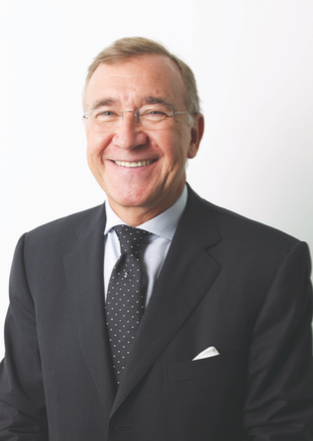
As the president for DDP Middle East and Africa, EVP, COO and chief people officer DDB Europe, Mr. Patrick Ehringer is a man of many hats. Responsible for ensuring that local and senior managers maintain a desired business focus and achieve the network’s objectives, Ehringer is also a strong promoter of DDB Travel & Tourism and DDB Matrix — the DDB tool for measuring marketing mix investment impact on sales. In 2007, the French prime minister appointed him foreign trade counselor of France. Executive had the pleasure of sitting down with Ehringer for a candid discussion about the advertising industry and its role amidst the global financial downturn.
E In your opinion, what constructive role can the advertising industry play in the financial crisis?
I can start with a little example, which will help you understand what kind of role we can play. The crisis is driven by three main activities in this region. The ones who will suffer the most from the crisis are obviously real estate, financial institutions and maybe telecom. The big two are financial institutions and real estate. Before, people were putting real estate products in the market and they were basically pre-sold, because of the speculation. Our role was actually minimal. But now [things] have changed completely, because if they bring the product on the market, they will need communication and need to explain why their product is better than the other one. Then we actually go back to our initial role, which consists of being on the consumer side and explaining to the consumer what is the benefit for them. Now for all the products — whether its FMCG or others — we are back to our role, which consists of providing the communication and the information for the consumer to buy the product. The competition will be higher because the one who will resist the crisis will definitely be stronger. We have to contribute. One of the aspects mentioned in [CEO Chuck Brymer’s book] is the fact that because our world has changed, now we’re in a situation where everything is a beacon for communication, the acceleration of all the phenomena during the past 10 years is amazing. The individual, even if he’s still individualist, he belongs to a community. When he belongs to a community, he belongs because he has common characters or choices and he usually belongs to a community because he loves the same things as other members of the community. If you’re talking about brands — and that’s what we’re doing, we’re building brands — we’re going one step further and are building communities of brand lovers. Now if we, in the crisis, can play a role of putting a little bit of optimism and making the people understand that there are opportunities because now the best will survive, and there are opportunities for the consumer to get the best product among what used to be mass, then we’ll play our role.
E Does it force your agency to become more creative when your clients’ budgets are more restricted? Perhaps the optimism you mentioned is able to shine via creativity in times of financial downturn.
Definitely, yes. A couple of things — first, it is very easy for an advertiser to decide that communication budgets can be cut, because there is no immediate impact except for the PNL. In other words, the first thing you do if you want to match your objectives and you have difficulties because of the crisis, the first reflex — I’m not saying it’s a good one — could easily be cutting the communication budget; it’s like a tanker, the brand will still continue on their values. It is, of course, a mistake because if you do this, the cost to re-launch the process is much higher than the benefit you’re getting on the very short-term, which means that in the middle and long-term you’re losing. The clever advertisers are the ones that are able to keep the budget at the moment the others are cutting because they’re getting a leading position. Now we can help, because we’re supposed to be a business solution provider, we provide creative solutions to business issues our clients may have. We owe our clients more creative ideas on how they can go through this crisis — either on the way they have to communicate or on the way they have to make their product evolve around their own resources. We actually help and one of our processes consists of co-creating together, which means that with their input and our expertise, together we can be on top of the crowd.
Let me give you another example. If we are approached by advertisers to communicate and they have a low budget — now we have a range of vehicles for communication which allows us to become more creative in our recommendation in order to touch the consumer — the net is a less expensive way to approach the consumer and it’s more interactive, one-to-one. We can reach people on a larger scale. This idea of swarming as a herd, like a school of fish — it’s not one fish suddenly telling the fish to go right or left, no. It’s just one that has seen something like food or danger who is reacting and giving the information to the next one and giving the information to the next one. Nowadays, technology allows us to have this kind of application if you want – that’s why there is a similarity between what is happening in a school of fish and what is happening in our world with the Internet. It means that if you are not there, in order to watch what is happening on the net, then you can miss an opportunity or even sometimes be in danger.
“The net is a less expensive way to approach the consumer and it’s more interactive one-to-one”
E Other than FMCG what kind of clients do you have? Do you have financial or real estate clients?
We were not touched at all by the real estate crisis. I know some other networks that had a lot of problems because they have bigger clients, but our clients in the region have not been affected. Honestly, for the moment we’re not concerned by any big crisis among our clients.
E Have the budgets of your clients been affected at all?
Honestly, no. You have to understand… there is a kind of ambiance where most of the companies are actually taking measures in advance and the reason why they’re doing this is because of the uncertainty of the future. It’s natural. It is important to make the people understand — I’m having the same discussion with my team from the Levant later on in order to give my recommendation for 2009. I have no recipe and I am unable to predict what will happen in 2009, but we can make ourselves a bit more prepared in order not to be surprised by the future.
One of the aspects is, of course, that we have to become even more creative and be even closer to our clients and we have to keep some kind of optimism. It’s like the story of the glass — do you see it half full or half empty? Now, I can be prudent, I can anticipate difficulties, uncertainties…I can also decide that instead of being pessimistic, I’ll be optimistic because I trust my people, I trust the team and I trust our ability to fulfill our obligation vis-à-vis the client. To become even more creative, to have more, to provide the client with a solution every time they are in trouble or have an issue. They can count on us to actually think with them about the way to get out of this uncertainty. But I can be optimistic because I know that we all lead the passion we have for the brand of our client and that’s key. It means that overall, we didn’t have big cuts but we have in front of us prudent clients and we have the same attitude and it’s fine. It’s a natural process. The only thing I’m recommending all of us to keep in mind is the fact that if you are pessimistic, you’re not really helping. If you’re overly optimistic you’re not really helping. The only thing I’m asking our troops here is to keep in mind that we must be on alert and take any opportunities for our client and for ourselves. We need to lead the change.
If you want to talk, generally speaking, about the situation it’s very interesting. The situation is very different between what is happening in the Gulf and what is happening in Lebanon. Lebanon benefited from the past years. If you look at the interviews or the press releases made by the people from the communication sector, it’s obvious that Lebanon considers 2008 as a good year. But it was a good year because the past one was not that good. We are in a growing trend here.
E What about the notion of new creative media? Is there a reason that Arab media hasn’t embraced the practice of creative media?
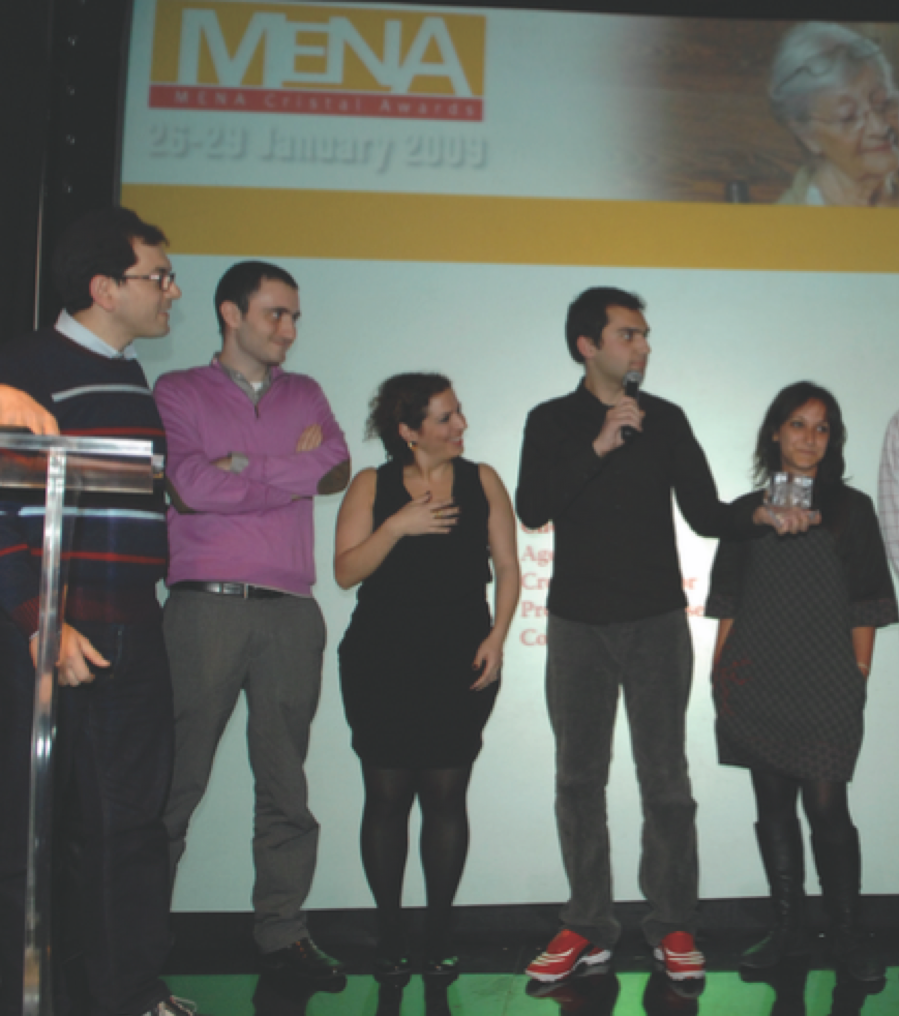
I’m not sure I agree with you that it’s not embraced. It is used. I’m a member of the corporate jury [for the MENA Cristal Awards] and we saw the campaign [for the Gran Prix] and it’s a great cause campaign for women. It’s a very interesting campaign because it’s a real integrated campaign. Now what is interesting is the fact that they’re using new media and it’s not only the web, it’s street marketing. You know what the best medium is now? It’s the consumer. The consumer is the best medium. The consumer is actually the one communicating on the Internet with somebody else, who tells somebody else. It is word of mouth. In one night, you can promote or kill a brand. It is the same thing here in the same way. You may not have the same penetration level, but you have the same use of the new medium. It is definitely something you have to take into account in addition to traditional media, especially here in Lebanon.
E What countries in the MENA region do you think present the most opportunity for growth in 2009?
Most people will answer the countries having money and producing oil or gas: Saudi Arabia, Abu Dhabi and Qatar. The position of Dubai and Beirut will change. Beirut is the experience, the history of having a leading position. It suddenly lost a bit of this position because Dubai took over some of the former role Beirut was playing. It’s interesting to see that if we keep this country stable, some headquarters may come back. Everybody is talking about Coca Cola coming back to Beirut to relocate their headquarters here. It’s interesting because I think we’ll have a more balanced position between three big capitals — Beirut, Dubai and Cairo. The North African countries will come a little bit later. I was talking to somebody over the phone who is close to a real estate company in Saudi Arabia, they make their plans on the basis on around $40-45 per barrel, which is about what the price is now. This is the acceptable range and they are actually building their plans on this basis, which means that if they stay on this range the money will come and they will actually re-build their treasury opportunities. They will be the ones helping the other countries. Dubai is known to be somewhat helped by Abu Dhabi. Qatar has a lot of opportunities.
E In terms of the advertising industry, which countries have the opportunities for growth this year?
Talent is key in our business. We have no assets in our business, we only have people. The values of DDB are creativity and humanity. Humanity just because of the way we look at the consumer and decide that behind the consumer, behind the person you actually want to touch there is a human being. You need to have the proper insight in order to approach him. We consider humanity because we consider ourselves a human network. Now for priorities, we have people, products, performance, ownership…all these in that order. These people will work from Dubai. Most of our agencies do not have any territorial exclusivity anymore. We go where the clients are.
