The world is undergoing a profound reordering, and nowhere is this more visible than in the Middle East. Over the past two and a half years, the region has experienced rapid developments that would normally take decades to unfold. While public discourse often frames these changes in terms of religion, ideology, or terrorism, these factors largely serve as a cover for deeper dynamics: the real struggle revolves around national interests, access to resources, and the ability to build influence. The region can best be understood not only through its political borders but through its position within global connectivity networks. In this context economic and energy corridors are—as perhaps they have always been—instruments of redistribution of influence and power.
To understand this shift, one key moment stands out. In September 2023 during the G20 summit in New Delhi, the India–Middle East–Europe Economic Corridor (IMEC) was launched. This ambitious initiative aims to link India to Europe via the Gulf and the Eastern Mediterranean through an integrated network of ports, railways, and logistics. Beyond its economic significance, the project represents a strategic response by the U.S. to Russia’s north-south transit routes which enables Russia to circumvent Western sanctions, and to the Chinese Belt and Road Initiative (BRI), which seeks to redraw the map of influence in Eurasia. It was in this context that Washington actively pushed for normalization between Israel and the Gulf states, as the corridor’s viability depended on it. Less than a month later, the region was drawn into a new cycle of conflict following the events of October 7. The tensions surrounding Israel appeared not to be entirely disconnected from the corridor announcements, particularly after U.S. President Joe Biden hinted in an October 25th, 2023 press conference that the India–Middle East–Europe Economic Corridor (IMEC) may have been among the factors behind the attack. This comes as Iran and Turkiye continue to view ongoing instability as an opportunity to strengthen alternative transit routes and sideline corridors that bypass their territories.
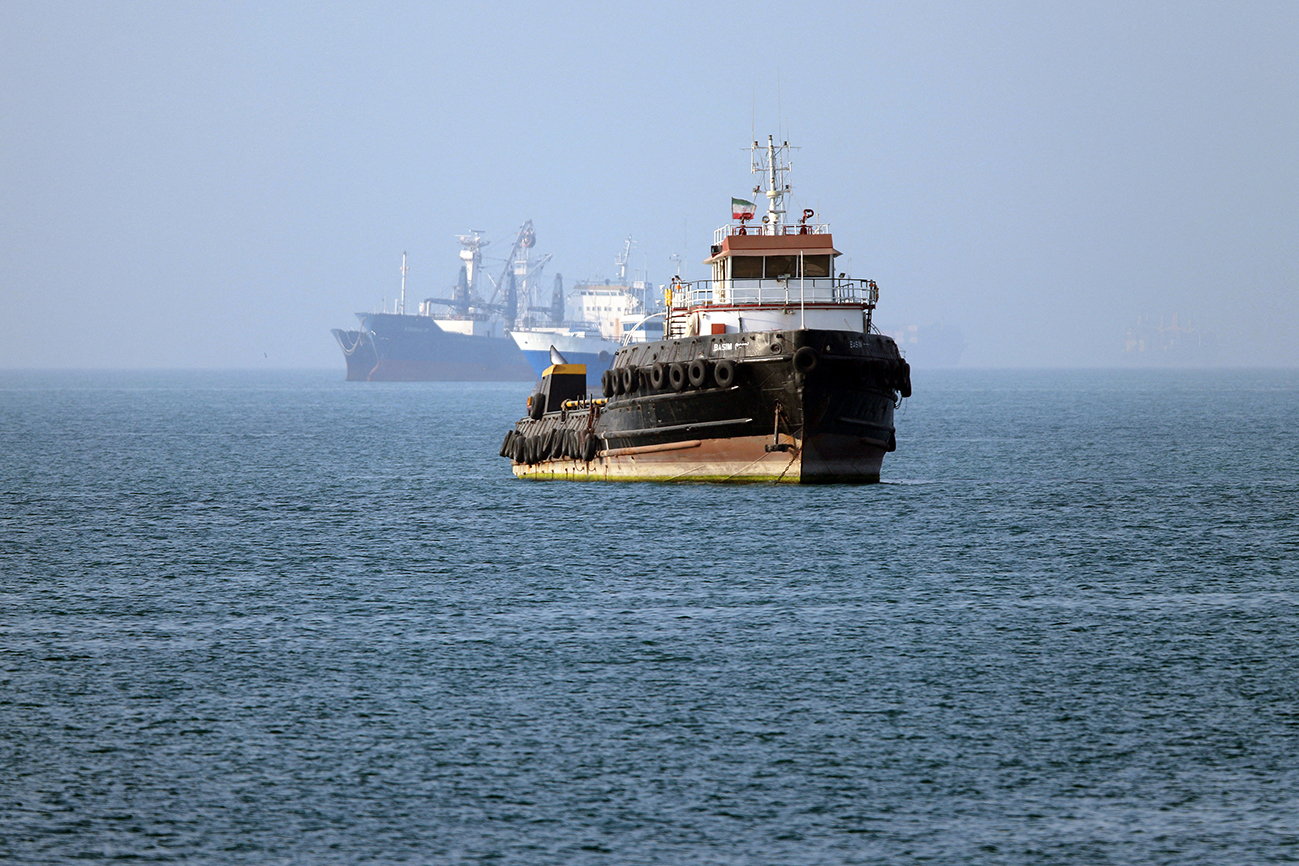
What we are witnessing this spring 2026 is a continuous process of a broader reshaping of the region, where military force is one of several tools used to secure influence, domination and strategic positioning. This reality is particularly visible in the Strait of Hormuz, which the International Energy Agency described in February 2026 as “one of the world’s most critical oil transit chokepoints,” with nearly 25 percent of global seaborne oil trade passing through it and few viable alternatives available in the event of disruption. For Iran, the ability to threaten or disrupt this passage is both a military tool and strategic lever that grants Tehran significant regional influence and ensures it cannot be excluded from any future regional order. At the same time, alternative routes designed to bypass these chokepoints have increasingly emerged. In an interview with Newsmax, an American television channel for political commentary, on March 30, 2026, during the ongoing war, Israeli Prime Minister Benjamin Netanyahu argued that a long-term solution to the Strait of Hormuz crisis would involve rerouting Gulf oil and gas westward through pipelines crossing Saudi Arabia toward the Mediterranean, thereby bypassing Iran’s geographic leverage over Hormuz. If realized, such a corridor would significantly reshape the region’s energy map.
In this environment, smaller countries risk being marginalized. The emerging regional order leaves little room for states without clear strategic relevance or a defined role. Here, the biggest challenge facing Lebanon emerges most clearly. Increasingly, the region is shifting from identity-based alliances to interest-based alliances where leverage is critical. It is not military strength or resources alone that can influence these alliances, but the productive capacity of society and the strength of its economy. And Lebanese geography is no longer sufficient; Beirut no longer enjoys the exclusive transit role it held in the twentieth century when regional rivals were limited and neighboring ports underdeveloped.
In this regard, President Joseph Aoun expressed interest in Lebanon’s inclusion within the IMEC initiative during his meeting on February 25, 2026, with Gérard Mestrallet, the French President’s Special Envoy for the IMEC corridor. According to statements released following the meeting, Aoun affirmed Lebanon’s “readiness to engage within the framework of the initiative, in a manner that serves its national interests and strengthens its logistical position in the region.” Yet a fundamental question remains unanswered: can such integration realistically occur given Israel’s central role in the project, with Haifa serving as its primary logistical hub?
Securing a meaningful role for Lebanon within the region requires mobilizing and strategically employing the country’s available assets and resources. For example, organizing and leveraging Lebanese networks spread across the world could provide Lebanon with a genuine competitive advantage and stronger negotiating leverage with countries seeking access to external markets. However, this alone remains insufficient. A critical priority is limiting the outflow of human capital. Hundreds of thousands of young Lebanese, many highly skilled, have emigrated in recent years. Their retention and productive engagement are essential if Lebanon is to transform into a capable, productivity-driven economy able to claim a seat at the regional table rather than remain a passive observer. At the same time, Lebanon’s ability to become a stronger regional economic actor is increasingly constrained by the economic and social costs resulting from the ongoing destruction in the south. Damage to infrastructure, businesses, agricultural sectors, and local economies weakens national productivity and diverts scarce resources away from development and investment toward reconstruction and crisis response. In many ways, these developments themselves reflect the broader reshaping of the region through Israel’s buffer zone and territorial security/expansionist approach along its northern frontier, making Lebanon’s integration into emerging regional economic corridors significantly more difficult.
Any potential Lebanese role cannot be read independently of Syria, which constitutes a key point in any regional positioning for Beirut. The relationship with Damascus is critically structural, and requires serious negotiation on practical issues, starting with the land border crossings whose status remains ambiguous, as the conditions for their full opening and the mechanisms that will govern the movement of goods through them have not yet become clear, which makes any talk about a Lebanese role in regional trade routes based on unstable foundations. This equation becomes even more complex as Syria itself turns into a new arena for competition over energy corridors. The current American vision relies on a stable Syria functioning as an alternative corridor for regional energy flows that reduces dependence on disputed maritime routes and opens a new phase of regional integration. During the “U.S.-Syria Energy Symposium” organized by the Atlantic Council in Washington on March 26, 2026, U.S. Ambassador to Türkiye and Special Envoy for Syria Tom Barrack emphasized that the region is undergoing major structural transformations in energy and connectivity, with Syria potentially occupying an increasingly important position within this evolving regional framework.
Ultimately, the deeper issue underlying all these transformations is that Lebanon must redefine itself as a fully sovereign state capable of decisive action. Without a functioning state, the country risks continued dependence on external actors, waiting for solutions designed elsewhere rather than shaping its own future. The choice is therefore clear: Lebanon can either become an active participant in the emerging regional order or remain on the margins while others determine its role on its behalf, whether it chooses to or not.