This analysis was written for a Spring 2026 Special Report on the repercussions of conflict on local economies
Lebanon is a country famously burdened by a culture of corruption, financial collapse, institutional paralysis, and years of imported conflict. But entering 2026, there were tentative signs of stabilization: a modest rebound in tourism, some renewed political momentum, and cautious hopes for a new virtuous cycle in the economy.
The escalation of war in April 2026 between Israel and Hezbollah interrupted this fragile recovery, shifting pressure again to the most immediate dimensions of economic life: energy supply, consumer prices, and environmental conditions. Economic pressures in Lebanon never unfold in isolation. But in the unfolding of two overlapping and interrelated conflicts, the first the was between the US/Israel and Iran, the second between Israel and Hezbollah, three intertwined core pillars of the economy were dislocated – energy, agriculture, and the environment.
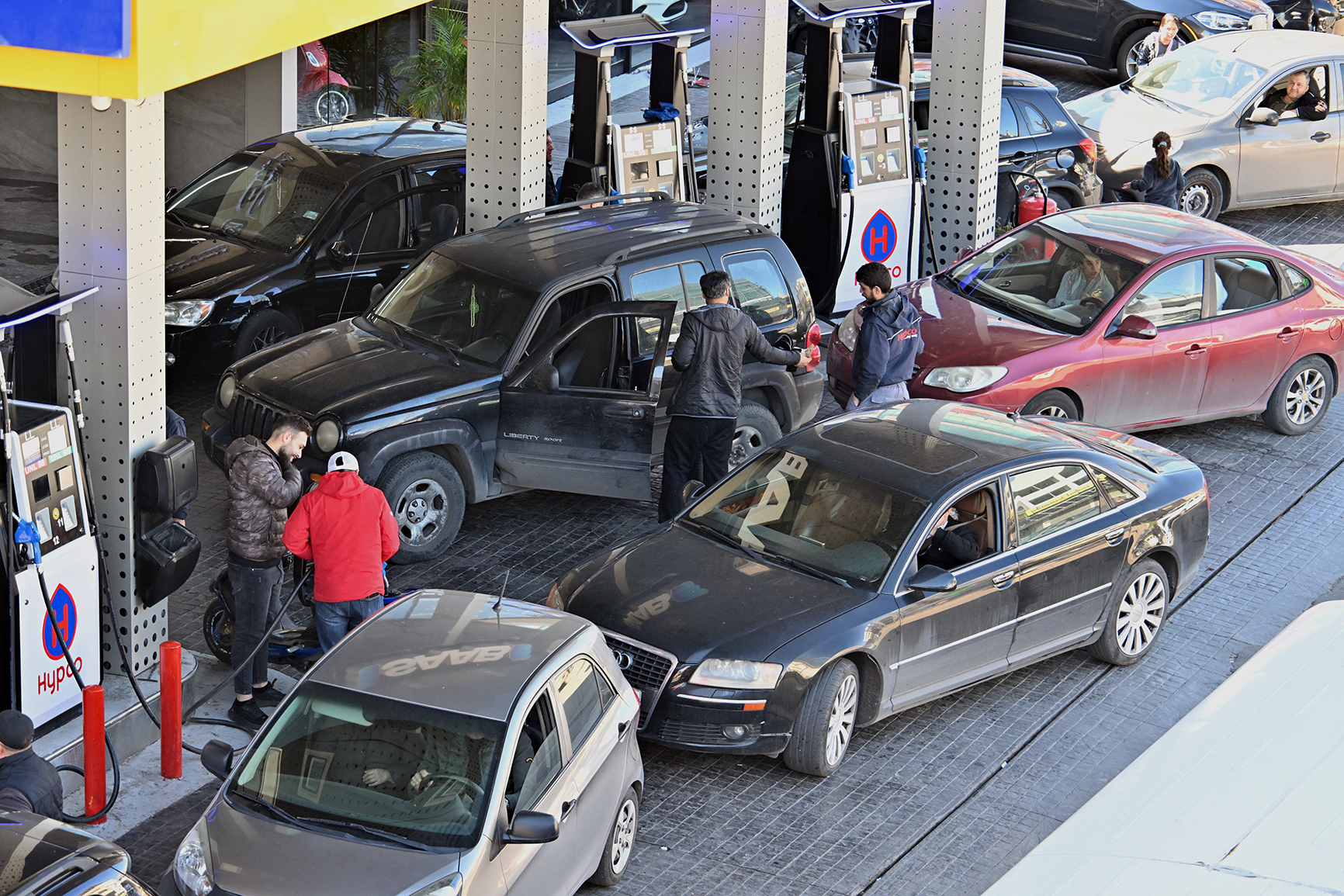
Rising fuel costs increase transportation and operating expenses all along the supply chains. The badly insufficient electricity provision forces households and businesses to heavily rely on private generators which depend on imported, highly polluting fuel. Agricultural producers have to cope with a range of higher costs in conjunction with deliberate destruction of lands. Retail prices increase and inflation hits households from the working poor to a nominal middle class that is barely hanging on. Environmental consequences of two consecutive Lebanese wars waged from the air and on the ground are becoming more pronounced.
Lebanon has become adept, in a manner of speaking, at switching from a marginal peace economy with a high rate of informality to a war economy that survives by merit of informality and ingenuity. The result of the concurrent regional and cross-border wars at this time, however, is not simply a war economy in the abstract, but a spiral of daily deteriorating livelihoods. Economic, social, and environmental conditions are being degraded by a series of multi-source shocks, a chain disruption in which each shock reinforces the other.
Conflict is reshaping daily and future life
Inflation in Lebanon cannot be explained by the current crisis and fuel prices alone. It reflects the interaction of domestic structural weaknesses, global inflationary pressures, and continuous uncertainty. Alissar Nasser, team leader of the Consumer Price Index at the Central Administration of Statistics (CAS), tells Executive that food prices had begun rising already before the regional escalation, driven in part by seasonal demand during Ramadan and Easter.
According to CAS, Lebanon’s Consumer Price Index increased by 6.9 percent between January and March 2026. The sharpest increase was recorded in transportation, which rose by 21.6 percent, reflecting the direct effect of higher fuel costs. Prices for water, electricity, gas, and other fuels increased by 17.6 percent. The index for food and non-alcoholic beverages rose by 8.4 percent. Within food categories, the lowest inflation of 5.1 percent was recorded for bread and cereals, but meat, vegetable, and fruit prices increased by margins of almost 14 to over 16 percent.
Agricultural land under fire
These economic and social pressures are being intensified by conflict damage to the agricultural sector. Southern Lebanon, one of the country’s most important farming regions, has experienced extensive fires, soil degradation, and direct damage to farmland, greenhouses, and irrigation systems. According to the Ministry of Agriculture’s weekly report released on March 27th, 22 percent of the country’s agricultural land has been affected by the bombing, though the report did not specify whether this includes damages accrued since October 2023 or during the current escalation since March 2026.
Both environmental experts interviewed for this article stress that the March 2026 escalation did not create a new environmental crisis; it added to existing environmental degradation. “We barely got out of the [last] war,” says Christina Abi Haidar, a lawyer who is specialized on energy and governance. “We did not recover, and the March escalation increased the burden.”
Beyond agricultural losses, the new war forces the transformation of entire communities. In places such as Bint Jbeil, Abi Haidar says, “you cannot recognize the village at all.” She explains that some areas in South Lebanon have been damaged to the point that familiar landmarks in several municipalities are no longer recognizable.
For farmers, the consequences are both immediate and long term. In addition to direct damage, many were unable to access their land to harvest crops. Olive growers in particular, lost an important production season. Nadim Farajallah, chief sustainability officer at the Lebanese American University, explains that in orchards the loss extends well beyond one year. “It takes four to five years for a tree to resume its production,” he says.
The use of white phosphorus, documented extensively by human rights and aid groups, experts, and international media, has heightened concern about long-term contamination. Farajallah offers an important distinction: “White phosphorus is not an issue in the soil. It is an issue of burning.” In other words, the main damage comes from the immediate destruction of crops, trees, and vegetation rather than persistent soil toxicity.
The economic implications extend beyond agriculture itself. Damage to agricultural land reduces domestic production, increasing Lebanon’s reliance on imports at a time when shipping, insurance, and transportation costs are also rising, according to the World Bank’s 2026 Lebanon Overview. Lebanon’s Central Administration for Statistics (CAS) recorded a 14.19 percent annual inflation, a 24.81 percent jump in transportation costs and a 20 percent rise in energy costs in March 2026. The result is a reinforcing cycle: environmental damage lowers local output, greater dependence on imports raises costs, and higher prices squeeze both households and farmers. With fewer resources to replant, repair infrastructure, or replace lost assets, the capacity to recover becomes increasingly constrained.
In much wider damage impacts, bombing can destroy wells, pumps, reservoirs, and irrigation pipes, preventing cultivation even after the fighting ends. Greenhouses may need to be rebuilt entirely. Livestock and poultry operations are also highly vulnerable. Dairy cows must be milked daily, and poultry are sensitive to stress. “We only think of crops and trees,” Farajallah says. “But we also have dairy production, meat production, and poultry production.”
Water infrastructure and systemic vulnerability
Water systems are among the most structurally fragile components of Lebanon’s economy, and the current conflict has exposed the extent of that vulnerability. Even before the 2026 escalation, the sector was under strain from decades of underinvestment, weak governance, and the financial collapse.
Farajalla notes that the 2019 economic crisis severely weakened the water sector by cutting the value of revenues and reducing the ability of utilities to cover operating costs. “We had to rely on donors just to keep the sector afloat, barely functional,” he says.
The recent conflict has added direct physical damage to an already weakened system. Oxfam International reports that at least seven critical water facilities, including reservoirs, pumping stations, and distribution networks, were damaged in the early days of the escalation in 2026.
Additionally, the significance of this damage lies in the close link between water and energy. Water systems depend heavily on electricity and fuel to operate pumps and treatment facilities. As a result, disruptions to energy supply can interrupt water access even when infrastructure remains physically intact.
Abi Haidar notes that many solar-powered pumping systems installed in recent years were also damaged, particularly in southern Lebanon. These systems had helped municipalities and farmers reduce dependence on diesel generators. For businesses, especially in agriculture, food processing, and small-scale manufacturing, water insecurity directly affects productivity and cost.
Debris, pollution, and long-term health risks
The accumulation of debris and hazardous waste is another major consequence of the conflict for natural environments and human habitats. Airstrikes and widespread destruction generate large amounts of rubble, including broken concrete, metal, dust, and other materials that must be safely managed.
Farajallah emphasizes that Lebanon is still struggling to manage debris from previous crises. Rubble from the 2020 Beirut port explosion remains stored near Electricité du Liban, underscoring the country’s limited capacity to process large volumes of waste. “The problem of the debris is the immense amount of volume that we have,” he says.
The disruption of waste collection adds another layer of strain. As displaced populations move into host communities, the volume of waste can exceed the capacity of municipal contractors, leading to garbage accumulating in public spaces. At the same time, dust generated by damaged buildings and debris can worsen air quality, increasing health risks, particularly for children and older people.
Abi Haidar warns that these environmental effects may have lasting consequences for public health. Lebanon already faces elevated rates of pollution-related illnesses, including respiratory diseases and certain cancers linked to poor air quality, waste mismanagement, and environmental contamination. Additional pollution from debris, damaged infrastructure, and contamination of soil, water, and air could further increase these risks over time. Even after the fighting ends, the health impacts may persist for years, creating a less visible but potentially significant burden on the country’s recovery.
The fiscal cost of energy disruption
The conflict has also exposed other layers of Lebanon’s energy vulnerability. Abi Haidar distinguishes between other layers of losses.
The first is direct physical damage to substations, transformers, transmission lines, and distribution networks. The World Bank estimated that energy sector damage from the previous war reached approximately 200 million U.S. dollars. Because reconstruction has been limited and some facilities that were repaired have since been damaged again, current losses are likely to be substantially higher.
The second is indirect domestic losses, particularly unpaid electricity bills from households that were displaced or can no longer afford to pay. Abi Haidar estimates that unpaid bills linked to the conflict may have reached between 42 million and 45 million U.S. dollars.
“Lebanon had a bouquet of everything,” Abi Haidar says. The country is absorbing the direct costs of bombing, including the destruction of infrastructure and productive assets, while simultaneously facing the inflationary effects of higher global energy prices.
Who bears the cost?
In legal terms, both experts are clear: responsibility rests with the party causing the damage. In practice, however, compensation remains uncertain, and the economic burden is largely absorbed within Lebanon itself.
“Farmers have been bearing the cost,” says Farajallah. For agricultural producers, losses include destroyed crops, damaged orchards, irrigation systems, and farm infrastructure, as well as years of lost income while productive assets recover. Consumers bear the cost as well through higher food, water, and energy prices. Public institutions face rising reconstruction needs at a time when state resources remain severely constrained.
Reconstruction is likely to depend on a combination of donor financing, public borrowing, and private losses, shifting much of the burden to households and future generations.
Both experts emphasize that systematic documentation is essential. Lebanon should quantify agricultural, environmental, and infrastructure losses and formally pursue reparations. Damage to farmland, water systems, electricity infrastructure, and public health should be documented and submitted through international channels, including the United Nations.
Yet this process remains inadequate. Despite repeated cycles of conflict, Lebanon has not consistently documented losses into effective international claims or compensation. Without rigorous documentation and sustained legal follow-up, environmental and economic losses risk becoming another unrecorded cost of conflict, absorbed domestically and financed through debt, aid, and reduced living standards.
A structural dimension of the crisis
The surge in global oil prices is one of the clearest channels through which the regional conflict is affecting Lebanon. In an economy that depends almost entirely on imported fuel, higher oil prices quickly translate into higher transportation costs, more expensive electricity generation, and rising prices for food and other essential goods. According to CAS data from March 2026, transportation prices rose 25 percent year-on-year in March 2026, while housing, water, electricity, gas and other fuels — the largest category in the CPI basket — rose 20 percent over the same period. This pass-through was direct: fuel accounts for roughly 82 percent of private diesel-generation costs in Lebanon, and the official generator tariff jumped from USD 0.34/kWh in February 2026 to USD 0.45/kWh in March 2026 as diesel prices spiked according to an April 2026 report by Arab Reform Initiative.
These effects are amplified by direct damage to agricultural land, water facilities, and energy infrastructure. Lower domestic production increases reliance on imports, while damaged public services raise operating costs for households, farmers, and businesses.
The burden of these shocks is largely absorbed within Lebanon. Farmers lose productive assets that may take years to restore. Public institutions face growing reconstruction needs with limited resources. Households confront higher costs for food, electricity, water, and transportation, while health risks associated with pollution and environmental contamination may persist long after the fighting ends.