
This analysis was written for a Spring 2026 Special Report on the repercussions of conflict on local economies
For a group that is as notoriously divisive in their analyses and divided in their predictions as the global top-gun advisory class of economists, the consensus is glorious. The current global economic climate worries all expert voices into pointing to gathering storms of universal uncertainty. But this unanimity on the global economy in spring of 2026 is nothing glowing. It is only gloriously universal. The analogy? Everyone takes notice of a deliberate mega-truck crash.
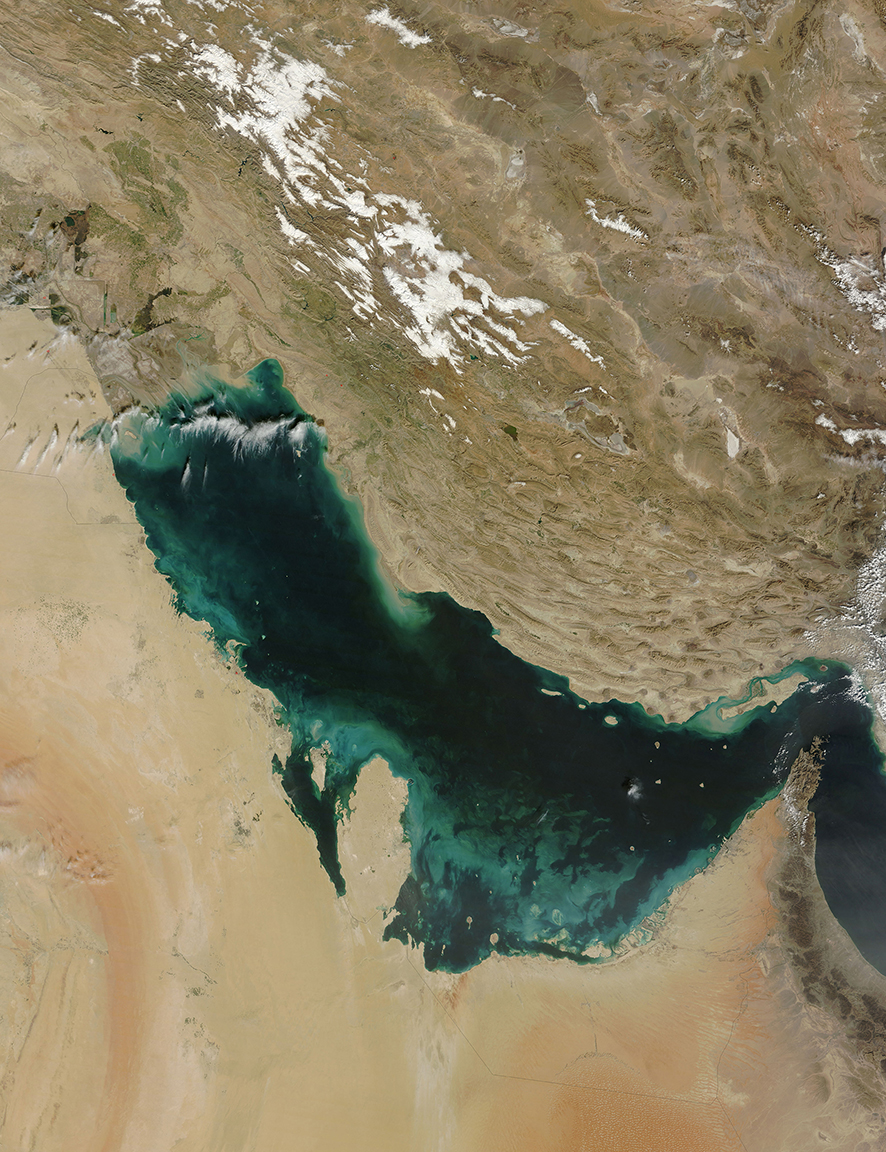
The economic hurricanes of spring 2026 have been attributed overwhelmingly to one pivotal event and a single point of origin: the US-Israeli “preemptive” war on Iran and the resultant and predictable confrontation in Arabian Gulf maritime trade with its bottleneck at the Strait of Hormuz. Beginning with the strike against the Iranian supreme leader and the short-lived justification of targeting regime change for the liberation of the Iranian people, analysts of short-term economic estimations and predictions into a cacophonic chorus chanting “risk”.
Most of these downward risk alerts stem from the underestimated economic impact of war in the Middle East. Some, however, carry over from warnings already raised last year.
In this multi-year context, the outlook carries different weight for different economies. High-income countries — around 65 UN members and 20+ small territories — will feel the strain but are better positioned to cope. For low-income and least-developed nations, the outlook reads like a horror story. And for the more than 100 countries stuck in the ‘Middle Income Trap’ for two decades or more, it is deeply alarming.”
The message for the last group of countries appears to be that their inclement geoeconomic climate outlooks of the 2020s have been further negatively accentuated in March and April of this year by sudden, unpredictable and often contradictory swings of hyper-sensitive economic indicators that will badly affect them. This is the case even though these were distant swings driven by actions and harsh threats entirely out of their control.
The granular picture
In step one of shock impacts from the Iran war, global markets internalized their uncertainty by fluctuating. The first big swings were seen in markets for crude oil and gas, with leading oil prices surging month-on-month from end February to end March by around $35 and $23 for the two benchmark categories Brent & West Texas Intermediary (WTI). By the end of March, and specifically in the wake of political remarks at that time, crude oil prices leapt up about 40 (WTI 30) percent per barrel (bbl).
Moreover, the volatility continued throughout the month of April. Not only were crude oil prices skyrocketing by approximately 20 further percentage points over the course of the full 61 days from Feb 28 to Apr 30, vacuous political and security rhetoric was additionally mirrored in two temporary price drops from more than $100 bbl to less than $90 (and back up again) in March, and two further massive swings in April.
That rigmarole was enough to ring inflation alert bells in global oil markets and it did, loudly. But already before the first bells over the price increases of March 2026 even stopped ringing, international crude prices reverberated in the form of inflationary influences across developing and developed, national energy and transportation sectors. In the developed world, notorious price jumps were flagged by media from gasoline at the pump in the US to heating oil prices predictions for the UK winter that is at least half a year away. Yet, such sensational developed market consumer shocks were just the starting shots of serial worry signals ringing out perhaps more quietly but also more seriously from countries around the world.
Normally attracting at best minor attention in daily reporting, prices for industrial feedstocks and chemicals, as well as the rare gas helium produced as sideline by-product of natural gas extraction, rose at varying speeds and peaks. Apart from helium that is crucially required in medical and technical manufacturing, industrial manufacturing commodities such as ammonium, naphtha and Sulphur, benzene, and styrene, ethylene, propylene and methanol suffered inflationary pressures. All this extreme volatility and peaking of source prices, which occurred in tandem with Strait-of-Hormuz related supply disruptions, continued on international markets through the month of April and into May as of the time of this writing.
National-level repercussions were felt, with wide differences, across countries on all six permanently populated continents, in sectors from travel to healthcare, hospitality to manufacturing, mortgage finance to agriculture. Quickly, international organizations engaged in the fight of improving food security for the global precariat, rang their own alarm bells. International NGO Mercy Corps warned in mid-April “The food security consequences of this war are already written into harvests that have not yet been planted.“
Price inflation in energy markets drew the heaviest attention but price spikes and supply disruptions for commodities swapped further: they surfaced as volatility across equities markets, drove up costly bond yields, impaired mortgage rate outlooks, impacted currency markets and consumer price trends. In the two-month bottom line, inflation pressures and economic demand-supply twists since outbreak of the Iran war have by end of April hurt many economic actors and favored some.
The lesson of it all might forcefully remind the peoples of the world of the intense interdependence and interconnections of the globalized economy. After a month of war, immediate inflationary pressures and turnover contractions were reported from the most ostentatious boudoir of the rich as well as the most private bedrooms. Specifically, the CEO of a leading global market producer of condoms in Malaysia warned in late April of impending 20 to 30 percent price increases for their products that would obstruct household family planning mostly in poor populations. About a week earlier, the head of conglomerate LVMH warned of an impending crisis of the group – under whose umbrella such symbols of wealth as Bulgari, Dior, Givenchy, distillery Hennessy, Kenzo, Louis-Vuitton, winery Moet, Tiffany, etcetera are held – if the Iran war does not find its end quickly.
Profiteers of the Iran conflict include energy companies, defense exporters, stock exchanges, investment banks, financial advisors, management consultants, currency and commodity traders, prediction market platforms, and renewable energy firms — though their gains stem from a mix of causes, not solely the conflict itself.
“It’s clear that artificial intelligence, global fragmentation and inflation will continue to permeate through economies and the markets,” comments financial group JP Morgan, one of the large banks writing extraordinary profits in the first quarter of this year (net income was up 13 percent year-on-year to $16.5 billion), says in its 2026 mid-year outlook. Premiums on security and technology moreover are expected to persist and governments, corporations, and wealthy citizens are demonstrating their willingness to pay extra for being warned against an economic shock, according to JP Morgan’s May 8th statement.
According to Kriti Gupta, global investment strategist at JP Morgan Private Bank, energy risk premiums, unrelenting inflation ranges, and security-driven rerouting of supply chains are likely to sick to markets over long term.
In its dichotomous way, the story of the Middle East 2026 shock thus reiterates how the value of the markets is that of a universal decentralized computer with an operating system coded by utility and profit. Thus, as much as the logic of social values and human priorities has been impaired by all that was instigated by each and every conflict actor, large and small, state and non-state, in the Iran war, the capitalist logic of the markets emerges unscathed.
A strong voice in the midst of even stronger winds
It would be spurious to assume that this narrative unfolded without throwing its shadows ahead. At time of this writing, the assessment of impending risk accumulations of inflation, technology, global competition and even trade wars are confirmed by the International Monetary Fund (IMF), arguably the world’s most vocal and best-reputed public economy powerhouse. But already in advance of the IMF 2026 spring meetings, three international agencies of import – IMF, World Bank, and the International Energy Agency – announced the formation of an action group to monitor developments, align analysis, and coordinate support to policymakers to navigate this crisis.
“At these times of high uncertainty, it is paramount that our institutions join forces to monitor developments, align analysis, and coordinate support to policymakers to navigate this crisis,” a joint statement of IMF, WB, and IEA said on April 1.
The IMF’s latest analysis of the world economy is augmented by a critical term that puts the situation in context of uncertainty. “After withstanding higher trade barriers and elevated uncertainty last year, global activity faces a major test from the outbreak of war in the Middle East,” reads the laconic opening statement of the April 2026 World Economic Outlook (WEO) on the IMF homepage.
Uncertainty is the huge caveat in the IMF’s scenarios for 2026. Even the WEO’s less pessimistic scenario, described as a reference forecast and apparently based on a lot of hopeful assumptions, predicts a slowing of global growth to 3.1 percent – modestly revised downward versus a scenario of 3.3 percent not even six months ago. Twenty basis points may sound inconspicuous but comes to an amount north of $250 billion over a World Bank/IMF global nominal GDP estimate of $126 trillion at the end of this year. Headline inflation is expected to rise to 4.4 percent, in the best case.
On top of representing a lower growth expectation than economies achieved in the past two years, this prediction acknowledges that pressures of inflation and growth constrict loom most painfully over emerging markets and developing economies.
Moreover, this already subdued growth picture is stuffed with massive downside risks, the dominant and most severe risk being a prolonged and/or expanding Middle East war. More intense and longer war could slice between estimated 0.6 and 1.1 percentage points from 2026 growth and speed inflation up by 1 to 1.5 percentage points, the IMF says.
Other looming risks – worsening trade conflicts, increasing geopolitical fragmentation, and disappointing productivity gains from the global AI hype – are in line with consensus views of economists even as they are denied in political discourses. Future disruptions in an increasingly uncertain global environment need to be prepared for, the fund advises. In short, the ominous truth of uncertainty seems to settle in as operative geo-economic term.
In the words of unflappably enthusiastic IMF Executive Director Kristalina Georgieva at her curtain-raiser speech for the 2026 spring meeting, the assembled governments would have to focus on weathering the latest, war-induced shocks to the global economy and ease the pain of the people. She follows this up by warning the 191 IMF member countries to “get their house in good order, because when this shock [of the Iran war] dissipates, there will be another one to come”.
Her cautious note of hope against the miasma of war, trade conflict and uncertainty calls for member countries’ cooperation. Despite all tensions and fragmentation, “there is so much potential in working together within regions, across the globe,” she enthuses.
Shocks, aftershocks and ripples across the region
Across the vast Middle East – Central Asia territory (comprising 32 countries in the Middle East, North Africa, Pakistan, Afghanistan – MENAP – as well as the Caucasus and Central Asia, or CCA), the shock of the Iran war affected Arab countries, especially GCC economies, in vastly divergent ways. GCC member Qatar experienced the largest downward correction for the year, at 14.7 percentage points, whereas GCC peers Saudi Arabia and Oman saw their predictions contract by 1.4 and 0.5 percentage points.
On Lebanon, no comparable numerical impact estimation of the regional downturn is available. “For Lebanon, the ongoing war poses acute risks by intensifying pressures on trade, foreign reserves, and humanitarian conditions, for example, stemming from internally displaced people, while further heightening uncertainty”, is the single whole sentence dedicated to the country in the 22-page update.
In regional terms, the fog of uncertainty was so dense for so many weeks that the leading heads of the IMF’s Middle East and Central Asia department concede at the end of this year’s spring meeting that economic trajectories appear to be vacillating in deeply uncertain territory between the WEO’s “reference” and “adverse” scenarios.
The regional outlook by IMF estimates and projections is now 1.4 percent GDP growth in 2026, says Middle East and Central Asia department head Jihad Azour. According to Azour, this downward adjustment of 2.3 percentage points in the space of only a few months marks a record for such region-wide revisions.
Announcing gravely that “the shock is deep, broad and still unfolding” at time of the discussion with media on April 16, Azour and his deputy Roberto Cardarelli explain that their latest findings’ level of uncertainty is high and tilted towards downside risks. They also argue that non-energy scars left by the war’s disruptions in the regional economy could be bigger and more difficult to read than the scars inflicted on the energy sector.
What they can state with confidence in press briefing on the newly updated regional development report is the very uncomfortable observation that, in the words of Azour, the war outbreak on February 28 “disrupted three pillars of stability” that are vital for the regional and global economy – namely energy markets, trade routes, and business confidence.
A volatile geoeconomic outlook
In sum, the IMF’s expectations for economic growth across the diverse and dichotomous region have been lowered by an astounding two thirds essentially because of the single, but massive, war shock – but even this downward revision is not a confirmed last word on the multi-actor confrontation’s economic fallout. The WEO overall reinforces widely shared expectations in the global mind-spheres are that the tremors will linger, perhaps even for years, and that the global impacts will be worse for the planet’s poorest nations.
The first expectation could become a self-fulfilling prophecy and the second is wholly unsurprising. But in any case, notwithstanding the apparent resilience of the capitalist system under pressures of wars and trade conflicts, the results of the Middle East war appear by May 2026 to be coalescing into a global recession that in opinion of many experts is rivaling the Great Recession of 2007-8.
But reliable analysis is nearly impossible to produce. There have simply been too many reversals or inconsistencies in the war actors’ initiatives and thus too many contradictory signals by respective commanders-in-chief. In the economic realm there is too little reliable data, too little time for reliable analyses, and far too much deliberate opacity.
Without all the needed data, the volatility of political minds and associated propaganda – predominantly in form of ethically uncommitted but vague statements with perfect deniability alongside some VERY BIG LIES – converges with the unpredictability of war and the overwhelming complexity of economic relationships into supply chain disturbances, economic uncertainty and market volatility.
A recession risk is being built from two converging forces: runaway military spending and an AI bubble marked by massive infrastructure investment, workforce upheaval, and valuations not yet backed by real profits. On top of this, trade wars and populist governments redirecting money from social spending into arms races could deepen and spread any downturn, especially in an already fragmented global economy.
The social flip-side of the conflict coin
Ordinary people don’t live in stock markets or tax havens — and for them, the global community created a shared yardstick of progress. First launched at the UN around 2000 as the Millennium Development Goals, and renamed in 2015 the Sustainable Development Goals (SDGs), these frameworks measure how well societies are developing and whether everyday life is becoming more sustainable for the world’s majority.
The SDGs are targeting and measuring sustainability creation. Although the transmission of the SDGs happens largely via measurable economic vectors, the SDGs do not follow the swings of the markets or incorporate the paradigm of creative destructive.
Sustainable development, after generating several decades of encouraging signals, has been hit by a series of regressions. The heaviest impacts of the pandemic of 2020-21, the Ukraine conflict that rages since 2022, the Gaza war and Middle East conflicts of 2023-24, and the ongoing Iran crisis and regional violence can be seen through the SDG lens. And in terms of sustainable development, the impact of the Iran war is the next nail in the coffin of timely realization of SDGs.
This is made crystal clear by studies of the impact of the Iran crisis on first the Gaza strip and secondly African economies. In Palestine, the government’s central bureau of statistics (PCBS) established a directorate of records and statistical monitoring to surveil progress of SDG achievements.
A national review on the implementation of the 2030 SDG agenda was issued in preparation of Palestine’s participation in the UN’s high-level policy forum in 2018. While cautioning that the 2030 agenda slogan to leave no one behind “cannot be realized in a country that the whole world is leaving behind”, the paper reported modest national improvements for several SDGs in the years 2009 to 2017, disclosing that 109 of 244 SDG indicators were being, albeit imperfectly, monitored.
New reports on the situation of all SDGs in the first quarter of 2026 appear unavailable. Yet a 2025 UNDP assessment of Gazan food sustainability in the SDG envelope sees “growing evidence” that reaching the sustainability goals is difficult in circumstances that are “characterized by both unprecedented natural and human-made extraordinary challenges”.
According to the study, 15 SDGs in the social, environmental, and economic sustainability pillars have been damaged across Gaza in the conflicts that started in October of 2023, which contributed to destabilization of neighboring countries and their SDG processes. “The economic collapse in Gaza has far-reaching regional and global implications. Environmental degradation caused by the war, including pollution and soil contamination, does not respect borders and poses significant risks to neighboring regions,” the report elaborates.
On the local SDG front, sustainability achievements have indeed been impeded. “In terms of SDG country positioning, Lebanon as of 2025 was ranked 134th over 167 countries, but I think that we today honestly rank [lower] than that,” Deenah Fakhoury, executive director of Global Compact Network Lebanon, tells Executive.
She explains that SDG impacts of the Iran conflict on Lebanon and the world are two different things. “If I talk globally, the UN is warning that the current war and systemic shock is reversing development gains. We are in reverse action in terms of poverty, we are in slowdown in terms of economic growth, and we have a widening gap in terms of equality,” she says and adds, “In Lebanon, conflict here is damaging the ecosystem, life on land and life under water, and infrastructure. It also is felt in the pillar addressing social cohesion and governance, which means SDGs 10 and 16. “
In evaluating the SDG dimension of Iran war, it must be remembered that the 2030 agenda was a third millennial milestone and focal point of education, promoted proudly by UNICEF as “the world’s largest lesson” to pupils and student cohorts in thousands of schools around the globe. According to the eponymous UNICEF programs home page, from 2015 8 million children in over 13 countries were made familiar with the 2030 SDG agenda each year.
But broken promises and deferred hopes notoriously destroy trust and can even literally sicken mind and body. That unfortunate truth has especially been proven when the trust of young minds in their leaders was turned into disappointment over a fake promise or surreal societal goal.
Young people — the first truly digital generation — are losing faith in global institutions that promised sustainability, democracy, and equality while delivering little. That loss of trust may be the decade’s biggest hidden economic cost: the slow collapse of the United Nations’ credibility and the democratic world order it represents.
Which leaves the central question: Is this just another rough economic cycle? A slow-motion disaster for poorer nations? Or could the collision of so many competing crises finally shake the global system hard enough that a genuinely more sustainable order — environmentally, socially, and economically — actually takes hold?
