• Donate
  • Our Purpose
  • Contact Us
Executive Magazine
  • ISSUES
    • Current Issue
    • Past issues
  • BUSINESS
  • ECONOMICS & POLICY
  • OPINION
  • SPECIAL REPORTS
  • EXECUTIVE TALKS
  • MOVEMENTS
    • Change the image
    • Cannes lions
    • Transparency & accountability
    • ECONOMIC ROADMAP
    • Say No to Corruption
    • The Lebanon media development initiative
    • LPSN Policy Asks
    • Advocating the preservation of deposits
  • JOIN US
    • Join our movement
    • Attend our events
    • Receive updates
    • Connect with us
  • DONATE
InsuranceSpecial Report

A desperate chase for consolidation

by Thomas Schellen April 15, 2017
written by Thomas Schellen

There is no shortage of challenges present or overdue reforms absent in the insurance sector in Lebanon. The backlog of unsolved issues begins with the need to renew the insurance law that was adopted about the time the Chevrolet Camaro was a new automotive design. It has – albeit once facelifted in the 1990s – stayed in power since. Problems do not end there, of course, stretching to absent corporate governance and transparency in sector companies, to underperformance of insurers as institutional investors in the context of Lebanon’s largely dysfunctional capital markets. The legal framework lacks provisions for the proper supervision of mutual societies, for support of life insurance as savings instrument for the masses, and for regulation of distribution channels (such as bancassurance) that were innovative some 30 years ago. The industry faces a future that will be bubbling with new realities, new risks and new distribution channels, but it is still stuck in the past in terms of capital structures and requirements and corporate cultures in many organizations, and  is crowded with inefficient actors.

The insufficiencies of the Lebanese insurance industry cannot be blamed on anyone in particular. As with so many other things in this country, they have resulted from conflicting historic trajectories where the ingenuity of local minds clashed with encrusted structures in politics and society. Even if it were possible to point an accusatory finger at one group of persons or institutions, it would do nothing to solve any problems. The question again coming to the fore is: can consolidation transform the insurance industry?

Observers and insiders of Lebanese insurance have, during the past 20 years, said time and again that the market has too many insurance companies and would benefit from cutting that number down by about half: from 50 to 60 existing insurers to 20 or 30 players. The latest idea, which has been discussed in insurance industry circles and by the regulator, the Insurance Control Commission, is to convince the central bank of Lebanon to provide soft loans as incentives for mergers and acquisitions.

Posing the question about the value of financial merger incentives to a number of industry members put the issue into perspective. No insurance manager told Executive that a push for mergers would be detrimental or that provision of soft loans would be anything but good. However, sector members pointed out a wide range of priorities and factors that would feature more prominently than financial incentives in any M&A. And while the recently finalized acquisition of Lebanese insurance company Al Ittihad al-Watani might stoke new interest in the consolidation topic, it hardly seems able to serve as a model for successful consolidation among local insurers.

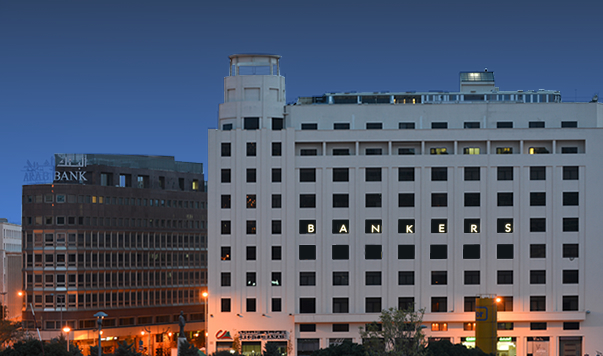
Acquirer NASCO Holding initiated the negotiations for the takeover of Al Ittihad, but not under a rationale of promoting synergies between its Bankers Insurance and Al Ittihad in the Lebanese market. Instead, the move was driven by the potential that NASCO saw for boosting business in the United Arab Emirates, confirms Marc Abi Aad, manager for group corporate development at NASCO. “The acquisition of Al Ittihad al-Watani in Lebanon, which has a branch in the UAE, will enable us to consolidate NASCO’s existing book of business in the UAE at the level of this new vehicle. Instead of fronting it with two third parties, [we can] now capture the whole profitability of the portfolio by underwriting profits in the UAE instead of earning commissions on these premiums. That is one of the main motivations and [an important] driver behind the acquisition,” he tells Executive (see story).

Acquisition rationales

The case of a Lebanese insurer that is attractive for a takeover in the context of an international player’s regional strategy because of its operations outside of Lebanon has been something of a standard scenario in recent years. The existence of licensed branches in GCC countries is presumed to have been the main driver behind the less-than-perfect acquisition of Compagnie Libanaise D’Assurances (CLA) by Zurich Insurance in 2010, which spawned a court confrontation between acquirer and acquiree. Zurich Middle East, according to the annual report of Lebanon’s ICC for 2015, had only a minuscule share of premiums in the local market and did not seem to have an active presence in Beirut. Regional strategy and the aim to leverage a Lebanese insurer human capital for expansion in the Gulf region was also an element in the acquisition of 81 percent of Bank Audi’s LIA Insurance by Casablanca-based Saham Finances in 2012, as the Moroccan company’s CEO told Executive at the time.

[pullquote]

Money and financial incentivization are not the top considerations when thinking about M&A possibilities

[/pullquote]

Even if crowned with success, opportunities to push regional expansion by way of aquiring a Lebanese insurer’s acquisition are rare, and cannot define a pattern for consolidation among local companies in Lebanon’s insurance sector. It may thus be more fruitful to gauge acquisition opportunities on the basis of best practices in corporate behavior as experienced by decision makers who have undergone the exercise in the financial industries of emerging markets. For example, in the experience of regional insurance holding Chedid Capital, which in only the past three years has facilitated the creation of an African insurance joint venture and the acquisition of two broking units (one in Mauritius and one in the UAE), money and financial incentivization is not the top consideration when thinking about M&A possibilities and looking at an acquisition candidate.

Money does not come first

“First and foremost, as rule one, we look at ethics and integrity of owners and managers in the company. Rule number two is that we look at the potential to grow not only its business but also to enhance its systems, processes and corporate governance. We want to make sure that the company will adhere to our level of corporate governance and risk management, and to our standard of internal controls and ethics,” says Farid Chedid, the chairman of Chedid Capital and general manager of multi-country reinsurance brokerage Chedid Re.

When it comes to the acquisition process, money is not Chedid’s first concern. His priority is to have a well-structured framework of detailed merger rules. These should then be accompanied by incentives, he adds, saying, “Soft loans are one aspect. What is required is a clear set of rules to protect both the buyer and the seller during an M&A. Once they are protected by rules, you also need to give incentives. Any M&A has constraints, one of these could be financial. There needs to be a set of rules with duties and obligations for each party [to a merger] and incentives that will push investors to buy or existing shareholders to sell.”

For Chedid, the specificities of the insurance industry in terms of reserves, provisions and regulatory capital requirements warrant special care when it comes to a merger or acquisition. Buying an insurance firm is not like buying any other company, where gaining an understanding of its assets would be the main task. “Assets are easy to figure out in an insurer but reserves are difficult. The difficulty is to assess the reserves and their quality, to see if all data is in the system or if some has been withheld from a potential buyer. One of the worst situations would be that a buyer comes in and finds out later that they were misled or that information was withheld,” he explains.

Therefore, a new insurance law in Lebanon, if it gets adopted, needs to include rules on corporate governance and internal controls, he emphasizes. “Within the law’s rule on corporate governance there needs to be a section on change of control, how it has to be managed, e.g. can sellers sell and be free of [any further] obligation even if they have misled [the buyer in the transaction]? Can buyers withdraw even if they did not perform proper due diligence? Lacking clarity in such rules and subsequent court battles affect the reputation of the Lebanese insurance industry,” he warns, with an unspoken nod to the problems and court arguments which have followed opaque mergers in the recent past.

The problem with the Lebanese governance culture

Indeed, the trajectory of developments in the Lebanese insurance industry in recent years does not bode well for mergers and acquisitions, says Antoine Issa, the MENA CEO and chairman of Allianz SNA (the Lebanese unit of the German insurance multinational and leader by overall written gross premiums in the Lebanese insurance sector). In his view, the infrastructure for successful M&As in Lebanon, in terms of regulation and governance, is “probably the lowest in the Middle East today,” because many other countries in the region have developed stronger frameworks for governance in the past decade, with Saudi Arabia having led the advance. “So far we have not seen real mergers and acquisitions, but [only] changes of shareholding because small companies are reluctant to open their capital. This is a little strange. We [Lebanese] participated in the development of all these markets in the Middle East but today we are lagging behind in terms of governance, risk management and regulation, capital and solvency, etc.,” he tells Executive in an interview to be published online at a later date. To the question of how mergers and acquisitions in Lebanon could be encouraged most effectively, he responds that, in his view, this is very difficult because best governance structures result from the listing of companies, but the appetite for listing companies is lacking in Lebanon, even in the banking sector. “In a listed company, governance is creating transparency for the public and shareholders,” he explains. He advocates that all banks and all insurance companies in Lebanon should be listed and traded on the stock market, but that this cannot be achieved without first instituting a culture of capital markets and transparency in the public sector.

“Capital markets in Lebanon are very weak; we don’t have real capital markets and I think this is bad. We definitely need strong capital markets if we want to develop the economy. To grow a successful family business into an institution, you need capital markets that give access to funding other than having a loan. Unfortunately, we don’t have this culture in Lebanon and this cultural lack begins with  the public sector. If the government does not have governance in its institutions and if we don’t promote governance in public institutions and then in private institutions, nothing will happen,” reasons Issa.

[pullquote]

We [Lebanese] participated in the development of all these markets in the Middle East, but today, we are lagging behind

[/pullquote]

Need for risk-based capital requirements

It seems that the more one asks about M&A prospects in the Lebanese insurance industry, the more alerts to missing requirements one gets. Bernard Sfeir and Charbel Chaanine, heads of the finance and marketing departments at bank-affiliated Lebanese insurance company ADIR, chuckle mysteriously when telling Executive, “We know which insurance companies might be potential acquisitions for us in future.” The two managers confirm that ADIR – thought to be among the top10 in terms of consolidated premiums position in life and non-life in 2016 and the fifth most profitable insurer in Lebanon in 2015 by the bottom-line figures shown in the ICC’s annual report – would by its financial strength be able take its pick among any of 40 smaller insurers for an acquisition, but concede that the number of healthy and realistic takeover candidates would be much smaller.

In the perspective of ADIR’s head of finance Sfeir, an acquisition of a small insurer’s portfolio could be more interesting than an outright corporate takeover. “Why [would you agree to] have the headache of acquiring a whole company and go through the due diligence process and seek if there are any synergies between your company as a well-built organization and another organization that may be smaller or weaker?” he asks rhetorically. In his view, any of the top insurance companies in the Lebanese market would probably benefit more from acquiring a portfolio and could on its own solicit agents or brokers associated with the portfolio, without going through the trouble of assimilating another company with all its possibly hidden skeletons.

Acquisition of a portfolio would be contingent on its quality, its synergies with ADIR’s portfolio and on its acceptance by ADIR’s primary reinsurers, and also necessitate a due diligence process on the technical side as well as an assessment of human resources that might be taken over together with the portfolio, Sfeir adds. The central element in his list of merger incentives would, however, be an increase in minimum capital requirements for insurance companies, preferably in combination with a risk-based capital approach. He thinks Lebanon in this regard should learn from European experiences, for example, the long process of drafting and implementing the Solvency II regulation.

As he sees it, any generic, large hike of minimum capital requirements would promote consolidation but might disproportionately benefit large insurers and hurt small ones. It also would not be as fair and as effective as the implementation of a package emulating the Solvency II evaluation approach, entailing risk-based capital, market conduct, corporate governance and a host of detailed parameters. “A whole concept should be applied to encourage mergers and acquisitions, not only subsidized loans. [Offering] subsidized loans is a good step but only one step. Other steps would be to impose the law, update it when there is a possibility, and most importantly, adopt a risk-based capital approach,” Sfeir explains, elaborating further, “Basically, if [Lebanese regulators] want consolidation through M&A in insurance, they should start by imposing minimum capital requirements that are based on a minimum solvency capital requirement. If there is no risk-based approach, we will not get anywhere with just subsidized loans.”    

[pullquote]

Any generic large hike of minimum capital requirements would promote consolidation but might disproportionately benefit large insurers and hurt small ones

[/pullquote]

Under the ideologies of shareholder value and financial market efficiency, modern concepts of mergers and acquisitions – up to mega-mergers, hostile takeovers or leveraged buyouts – are about as far from the anti-trust and anti-merger concepts of the early 20th century’s as a Tesla Model S or Google’s autonomous Waymo car is from the American muscle cars of old. M&As nonetheless require great care to be able to restructure and redeploy assets and deliver competitive efficiency in an industry that is rife with contenders of varying quality while simultaneously preserving consumer choice in the face of the markets’ perennial gravitation toward economic concentration.

As Lebanon has no real track record of successful M&As in the insurance industry, it seems a valid point raised by some insurance managers such as Allianz SNA’s Issa that the soft infrastructure for such transactions, not only in terms of adequate legislation, but also in term of expert lawyers and investment banks with skill in insurance mergers, has yet to be massively improved. Then there is the need for functioning capital markets, corporate governance structures, and transparency of insurance company balance sheets as the foundation for building a consolidated industry that consists of healthy companies.

On top of all that, the sector’s consolidation may require egos to become more deeply grounded in reality and readiness to realize the benefits of being immersed in a crowd of capable minds. Insurance in Lebanon today does not appear to sport Napoleon or  any other great leader – but that is all the better if one assumes that the task of taking the industry into growth and consolidation needs not bosses but serious group efforts and teamwork. Still, one should not hold their breath waiting to see a wave of successful consolidation moves in Lebanese insurance.

April 15, 2017 0 comments
0 FacebookTwitterPinterestEmail
Cover storyQ&ATaxes

Interview with Georges Corm

by Jeremy Arbid April 14, 2017
written by Jeremy Arbid

Now that the government has approved the 2017 budget, the question remains as to what new taxes or tax increases might be imposed. As Executive goes to print, the indication is that there will be some introduced, but it is not clear which, and Parliament will have to debate the budget before it is ratified into law. There appears to be zero studies by the government (or, at least, none that are public, and officials decline to provide details) of expected revenues, their social impacts or the effects to the economy that new taxes might imply (see cover story). Georges Corm, Lebanon’s minister of finance at the turn of last century, describes to Executive the government and Parliament’s approach to financing public spending as convoluted and misleading. “[It’s] like somebody stumbling through a room without lights,” he says.

E   How do you view the government’s proposal of new taxes or tax increases as a new source of revenue to the state?

The tax system is unfortunately not based on any strategic view of what the needs of the Lebanese economy are. What I’ve said repeatedly is that our tax system is putting a burden on people that are in the productive sector. As soon as you are productive and receive an income from your productive activity you are liable for the income tax. But if you live from your rent revenues, except for the 5 percent tax on interest income from banking deposits, you have no income tax to pay. So this is an unfair system and a system that punishes the productive sectors (industry, trade and services) and encourages Lebanese to go more into rent-type activities that are untapped by the government. When I was minister of finance, I wanted to introduce a general income tax, as our income tax system is fragmented with different tax rates according to different categories of revenues. In addition, taxpayers have to file separate income tax returns for each kind of taxable income so that income from various sources are not accumulated and assessed to be subject to a general income tax according to the same progressive rate of taxation of the overall income. This not only causes the treasury to lose a substantial amount of income tax, but it is also a headache for the taxpayers, as they must presently file many different income tax returns it have revenues from different sources. Therefore, a unified income tax system would make life easier for all taxpayers as many Lebanese have several sources of income that are not taxed together. So having several sources of income that are assessed separately by the tax department is a big headache both for the taxpayers and the tax authority.

E   One local bank said in early March that tax evasion amounted to $4.2 billion. Is this figure anywhere near accurate?

These are guesses, we [don’t have reliable] statistics in Lebanon. What is extremely important is to close the many loopholes in tax legislation that allow revenues to legally escape income tax. Looking at petty trade activities, it is a loss of time for an income tax department to try to tax them, while what is important is to check that tax collection is properly followed by tax authorities as compared to tax assessments. In addition, there are a lot of tax breaks, especially for new investments, but it is not transparent and you do not really know who is getting the tax exemption.

E   In late March the government issued $3 billion in treasury bills which were snapped up by local banks.

The government has no problem in raising the amounts needed to refinance its maturing debt obligations, as a large part of the quite substantial yearly banking profits is due to subscribing and trading T-bills (treasury bills) and Eurobonds issued by the state. This is why I would advise the central bank, the Ministry of Finance and the private banking sector to agree to decrease the average interest rate paid by the state on its public debt by around 1 percent on any new issues. Such a decline in the cost of servicing public debt to the state would save the treasury a yearly amount of $700 million in a few years time.

[pullquote]

One should also mention that Lebanese banks are giving higher interest rates on deposits than anywhere else in the world

[/pullquote]

E   Some of the newly issued debt does replace old debt that was at a higher interest rate. But for Lebanon to get to a more attractive interest rate would that not require a higher sovereign credit rating?

Not necessarily because Lebanon’s public debt is mostly owed domestically, even in respect to dollar denominated debt. This would affect the profit of the banks only a little bit. They have had such huge and continuously increasing annual profits since the nineties, whatever the economic situation of Lebanon, that a reduction in interest rates paid by the state can be bearable without endangering their profitability. Whether there is a 1 percent or an 8 percent growth of the economy, bank profits are unaffected by the variation in economic activity because they have this huge portfolio of treasury bills that secure a steady and increasing flow of banking revenues.

E   The banks always argue that because they are the most transparent sector, they are penalized and targeted to pay more taxes.

I don’t see how they’re penalized, and I don’t think the banking sector drives the economy. Yes, Lebanese banks are very good at serving their affluent clientele both inside or outside Lebanon. This is why this contributes partially to attract the big flow of remittances that are sent from our emigrants, remittances being the biggest source of financing of our huge trade deficit. But, one should also mention that Lebanese banks are giving higher interest rates on deposits than anywhere else in the world, which might be the most important drive for the flow of remittances. This is why I believe that they can decrease them a little bit, instead of these endless discussions on how to tax more the banking system.

E   What effect might the proposed 2 percent tax increase on the interest of deposits (a capital gains tax) mean for the banking sector and for the economy?

I am personally not enthusiastic about raising the tax on the interest of banking deposits. But raising this tax from 5 to 7 percent will probably not produce a decline in the amount of deposits in the banking system. If adopted, this measure should not be repeated. In fact, I believe that a reduction in the average rate of interest paid on public debt would save more money for the treasury than what the increase in the tax would yield as an additional revenue. All these kinds of measures should be studied carefully.

E   Would an increase on the corporate tax from 15 to 17 percent discourage Lebanese banks’ appetite to buy locally issued debt?

Certainly not. But again, I prefer the decline in the average interest rate on the public debt. We have almost 4 or 5 or 6 percent differences according to the maturity of the bonds and treasury bills that the state is issuing. If Lebanese today, because they are the subscribers directly or indirectly want to go to foreign banks abroad to place deposits, they will get what? One percent, maybe 1.5? So you still have quite a margin to have a reasonable decrease. Let’s bring the premium paid on large deposits in Lebanon to 3 or 3.5 percent above average interest rates paid outside Lebanon by international banks on their deposits. Currently, on average, we’re around 6 to 6.5 percent paid on Lebanese pound deposits and 4 to 4.5 percent (or sometimes more) on dollar deposits. For what the state is paying on its debt, if you take out 0.5 or 1 percent it will not be a catastrophe for the banking sector nor for attracting capital from abroad. A decline in interest rates in Lebanon will also be positive for productive activities and new investments as it will also reduce the cost of financing in the economy for the private sector.

E  What might be the effect when taxing consumer behavior by raising the Value Added Tax (VAT)?

Nothing has been studied carefully. For VAT you can have two rates, although I do not like that. You can have a 15 percent tax rate on luxury goods for instance, and keep other goods at 10 percent. There should be a study of the different alternatives to see what  the yield will be to the treasury, but you have a government which did not detail how the proposed 22 new taxes or increases in existing taxes are going to be implemented. Such a proposal in one shot is unreasonable, especially since most of the proposed taxes are fees and excises. For instance, when the government says it is going to double the fees for public notaries, this will affect all the Lebanese population and will constitute quite a burden on the large poor segment of the Lebanese population. The government says they’re going to, and this is a very old issue, tax the resorts along the coast that are not legal, estimating that it will yield 400 billion Lebanese Lira, but how did they arrive at this figure? And what about raising the very low basis for calculating the rent paid to the state on using legally public domain along the sea or the river coasts? Why did the basis of assessment of this tax not change since the early 1990s?

[pullquote]

A decline in interest rates in Lebanon will also be positive for productive activities and new investments

[/pullquote]

E   Are these figures pulled from thin air, or how has the government arrived at its estimates of revenues for these proposed taxes?

You can do it but you need the statistics, but if you don’t have data how can you have an opinion? The minister of finance says this will bring us a certain number of billions of LBP, but I don’t see how the ministry determined its estimate of the additional income that would accrue to the treasury.

E   What effect do you think new or increased taxes might have on consumer behavior?

You have to distinguish between Lebanon’s two separate economies. The economy that is very prosperous – the nice areas of Beirut with the restaurants and hotels and some summer resorts in Mount Lebanon, and where you see luxurious cars and the very affluent part of the population. I don’t know what percent of Lebanese families are affluent, but my guess is that it can’t be more than 6 or 7 percent. Then you have the other economy that is a deprived one, where people are on the level of poverty, sometimes extreme poverty, and these are not the people that should support additional taxes on consumption or on legal documents they need in their daily life. This is why we have to stop going to indirect taxes, and to simplify the tax code through a unified income tax, canceling old dated excise taxes or fees (like the stamp duties). In addition, the government can take some additional income tax measures, so that ultra-luxurious villas or apartments are taxed in accordance with the luxury and quality of the residence. In addition, real estate companies can buy and sell real estate assets just through buying or selling shares, thus escaping the 6.5 percent registration fee. I tried to introduce a 6 percent tax on the selling or buying of shares of real estate companies so that it is the same as the tax burden that is paid by individuals buying a property. This is a legal loophole.

E   So you are in support of some new taxes?

I am not in favor of imposing 22 new tax measures in a haphazard way just to increase treasury revenues. There should be an intelligent and adapted tax policy that will rebalance the sources of tax revenues between productive and non-productive activities on one hand, and between income tax revenues and consumption taxes or excises and fees on the other hand.

E   If the government imposes any of the proposed taxes should projections for economic growth downgrade?

No, because I go back to what I said earlier: we have two economies. A very affluent economy that could support a reasonable increase in the tax burden on income or on luxurious consumption without any problem; and the other which is stagnant where the level of poverty is continuously and dangerously increasing. Of course, a 1 percent increase in VAT for this category of people might affect them. In any case, it is urgent that we have enough studies and statistics to study the impact of additional taxation measures. Today, the staff at the Ministry of Finance is in a black room, pitch black – they act like anybody would in such a case, i.e. behave erratically.

April 14, 2017 0 comments
0 FacebookTwitterPinterestEmail
Cover storyTaxes

Taxing tax reforms

by Raja A. Makarem April 13, 2017
written by Raja A. Makarem

With little official communication about the government’s proposed tax reforms and no public discussions with civil society or concerned professionals, confusion and misinformation about the proposed tax law have run rampant. In an attempt to clarify the debate, we have examined the six proposed tax reforms pertinent to the real estate sector and their possible implications for the industry.

There are two findings: The majority of the proposed taxes are fair and are commonly applied in most developed countries. However, in Lebanon, burdening a stagnating sector with new taxes could risk its collapse.

Taxing sales contracts

The new law proposes a 2 percent tax on the value of any sales contract, whether it is signed privately between the seller and the buyer, or in front of a public notary. Payment is due within five days of the signature of the contract.

The proposed law allows for this tax to be deducted from registration fees, provided the sale is registered within one year of the date of the contract. This new tax will force buyers to register new purchases within a year of acquisition – existing law gives them the right to register the sale up to 10 years from this date.

If the sale is not registered within a year, in effect the buyer pays a penalty of 2 percent, on top of the 5.6 percent in registration fees imposed under current law.

Forcing buyers to register a property within 12 months of its acquisition will have a corrective impact on data available to the government, as transactions and the tax revenue they generate will be reflected in the fiscal year in which deals are concluded.

But the net impact of the tax would be much more damaging, as it forces investors to register the purchases of property they acquire and intend to place on the sales market. Under current law, investors have 10 years to dispose of a property without incurring registration costs, but with the new law, they will have only one. The tax will deter real estate investments, which to date have benefited from the effective exemption of registration fees for intermediaries, as only the end-user registers the property.

Taxing vacant residential apartments

Under current law, apartments that have been officially declared vacant are not counted for the purposes of real estate fiscal tax paid to the Ministry of Finance. The new tax law proposes to tax all residential properties, whether or not they are occupied. Individual owners are exempt for six months from the date of acquisition, after which they must start paying real estate tax. Developers have an exemption period of 18 months from the date apartments are completed and property deeds are issued.

The proposed measure would further deter potential investors looking to place their money in Lebanese real estate, driving capital to international markets, other forms of investment, or cash deposits.

It would be particularly disastrous for developers left with unsold apartments in completed developments. The market has been at a virtual standstill for five consecutive years, and the new tax could potentially bankrupt an incalculable number of professional developers, large and small.

Developers have traditionally been cash-rich, self-financed individuals or companies, with very little leverage. This has so far allowed them to withstand the pressures of the market and avoid a total crash of the real estate sector by absorbing drastic drops in sales ratios.

According to market data collected by the RAMCO Research Department, residential projects post an average sales ratio of 65 percent upon completion across Municipal Beirut, down from near 80 percent during the boom years between 2005 and 2011. This means that of roughly 10,340 residential units under construction at the end of 2016, around 3,620 will still be on the market when the projects are completed.

It is this huge stock of vacant apartments that the new law proposes to tax. The bill would be significant. Real estate fiscal taxes are roughly between $7-15 per square meter, calculated incrementally at between 7-10 percent of the estimated rental value of the property. The above vacant stock would correspond to roughly 780,500 square meter of unsold residential space, resulting in a tax bill of somewhere between $5.4 million and $11.7 million.

Supposing a development company ends up with 4,000 square meter of unsold residential space on its hands after the completion of the building, it has 18 months before it starts paying a tax of around $40,000 per year for the vacant, unsold residential units.

Taxing construction permits

The proposed law would increase the cost of construction permits by around 50 percent. Today, construction permits cost about 1 percent of the estimated fair market value of the land on which the project is developed; the new law proposes to tax it at 1.5 percent.

Construction permits currently account for about 10 percent of the total cost of construction. If this new law is applied, they will account for 15 percent. The additional cost will be reflected in an increase in the asking prices or by shrinking of the developer’s profit margin. Either option is disastrous – a hike in prices would stall an already stagnating market, and developers are already working with very narrow margins and cannot absorb more losses.

Many developers have already begun taking measures to help defuse some of the pressure off the market, cutting a sizeable chunk from their profit margins. Over the past several years, profit margins have dropped significantly, from around 30 percent per year to less than 12 percent in some instances. They have also begun offering larger and larger discounts, as high as 30 percent on certain properties.

Requests for construction permits are already dropping year on year, as per official data published by the Order of Engineers and Architects in Beirut. Imposing higher taxation and driving up construction costs will further shrink the number of new permit applications.

Taxing capital gains

An income tax has also been proposed on the capital gains realized upon the sale of a property. Capital gains are calculated as the difference (increment) between the purchasing price of a property and its selling price. All sellers will be taxed at 15 percent, even individuals who are not registered with the local authorities and those who are normally exempt. Companies will be taxed at 17 percent instead of the current 15 percent income tax rate. Additionally, companies will still be taxed 10 percent upon the distribution of profits to shareholders.  The proposed capital gains tax would be applied across the board, to individuals and companies, on the sale of any property – residential apartments, plots of land, shops, offices, warehouses, buildings, etc. It is payable within two months from the date of sale and would further deter real estate investment.

Additionally, the proposed increase to the value-added tax (VAT) from 10 percent to 11 percent will mean less disposable income for potential real estate buyers, but even higher property costs. Indirect taxes on the sector (such as increased tax on the services of notary publics and a hike in the stamp duty on contracts) will further burden contractors, developers, investors and individual buyers.

Taxing perception

Taxing income and profits is natural and fair. However, introducing new taxes to the real estate sector could threaten one of the last working sectors of the local economy. The market is already burdened by more than 17 different taxes and fees, and corruption traps everyone – from developers to investors to individual buyers – under a very heavy yoke. Real estate investments have traditionally been seen as a safe haven in an otherwise highly volatile, insecure economy. Taxing developers, investors, and buyers – at a time when the entire Lebanese real estate industry is hanging on by the sheer will of these players  – could mean its demise.

The biggest question is how the government will employ the additional tax revenue. Will increased taxation translate into better infrastructure, better quality services, the eradication of corruption, or reduced bureaucracy? Or will it come as yet another burden to be borne by an overwhelmed population?

When will real estate developers, who generate 18 percent of the gross domestic product, according to 2015 figures published by the Central Administration of Statistics, and who employ hundreds of thousands of people, stop being labeled by officials as financial pariahs, amassing fortunes on the backs of unsuspecting customers?

The reality is very different. Developers made good money and sizeable profits when the market was booming – as did everyone else. However, since the economy has stagnated, so have their businesses, their incomes, their profit margins, and their liquidity. If they do not drop their prices further, it is largely because the price of land has remained stable. Many cannot afford to sell at depressed prices because they simply will not be able to afford to buy the next plot of land they need to build a new project.

Developers are part of this economy, and main players behind its growth. Taxing them into bankruptcy can only be detrimental to the economy as a whole. Real estate investments have been a major driver of the local economy, and lenient taxation has attracted investors across property types, from residing locals, the large Lebanese expatriate community, to regional investors, mainly from Saudi Arabia and the Gulf countries. Today, foreign investors are divesting from the market, leaving only local buyers. Further taxation will drain even that last remaining market driver.

April 13, 2017 0 comments
0 FacebookTwitterPinterestEmail
Cover storyOverviewTaxes

Tax squeeze

by Jeremy Arbid April 12, 2017
written by Jeremy Arbid

Lebanon is closer to ratifying a national budget than it has been in recent memory. For the past 12 years, the country has not passed a budget into law. In recent years the roadblock has been, at least publicly, a salary increase for certain public sector workers.

The debate is taking place in a fiscal environment where the money to raise public spending is non-existent, so the revenue needs to be created – through new taxes. To fund the salary increase, some economists and some politicians are arguing for reforming public spending rather than setting new taxes.

Announcing the budget figures at a press conference on the last Thursday of March, Minister of Finance Ali Hassan Khalil provided little by way of details. He laid out spending cuts, and stated that the budget is primarily based on improving tax collection and administration – collecting taxes already on the books, rather than subjecting citizens to new taxes – with the government aiming to address poor collection of revenue from public agencies, including customs. But he did not say what impact these measures would have on public finance.

While there are new taxes in the budget, the minister did not make clear what these were. The government will send an approved budget to Parliament which, it seems, will be tasked with figuring out which taxes to levy – there will almost certainly be new taxes if Parliament ratifies the budget.

Given this debate has been going on since at least 2013, when Najib Mikati was prime minister, there are a few likely candidates for new taxes, including an increase to VAT by a percentage point to 11 percent, a 15 percent tax on capital gains from real estate transactions, an increase of tax on financial institutions’ profits to 17 percent and on interest of deposits to 7 percent.

On taxation, it is difficult to pinpoint with any certainty who has to pay, how much they have to pay, what the expected revenues are, and whether or not there will be an impact on economic growth and gross domestic product (GDP). On the sidelines of the press conference Alain Bifani, the finance ministry’s director general, said the ministry had assessed the budget’s tax measures, but these studies have not been made public. Earlier in March, Executive requested interviews with both Khalil, and Bifani, but did not receive a response. To gain the best available expert assessments of the impacts of proposed taxation under these circumstances, Executive approached economists and stakeholders knowledgeable about various sides of the issue.

The general take

Executive surveyed seven Lebanese economists, including a former minister of finance, individuals from the fields of banking and academia, and one political party (Executive reached out to other political parties to discuss proposed taxation but received no response). This survey resulted in several common themes. First, that public officials have done a very poor job of explaining the new taxes and have not indicated, beyond simple projections, the revenues, social effects or economic impacts of the proposed taxes. Second, that an increase to the Value Added Tax (VAT), one of the proposed measures, could, in the short term, slow economic growth and raise inflation before leveling, and that taxes on the interest of deposits is not a good idea because they could push depositors away from local banks. Third, the economists agree that there is room for a tax increase on corporations, particularly financial institutions, but all pointed out that taxing the profits of last summer’s financial engineering would be a one-time collection noting that a portion of those profits are already committed to government finance. Fourth, those surveyed argue there are alternatives to taxes to finance a salary scale increase, like curtailing wasteful public spending, and concluded that the latest round of street protests in mid-March against a tax hike (plus a carryover effect from 2015’s garbage crisis protests) has probably had some effect toward pushing the government to reform public spending, and may have discouraged imposition of some of the proposed taxes. And lastly, the economists agreed that debate over the salary scale increase, the proposed taxation and the budget approval process were not transparent and discouraged confidence in public financial management.

Impact of tax measures

For real estate, burdening a stagnating sector with new taxes could risk its collapse, argues Raja Makarem, managing director of Ramco, a consultancy catering to the industry, in a contribution to Executive.

For the banking sector, the surveyed economists agreed that there is room for a tax increase on the institutions. “The banks are making profits and could be taxed and incentives for banking in this country is still a lucrative business”, says an economist at the central bank, who did not want to be named, before adding that “You have to estimate [bank profits] in percentages of the return on assets or, better yet, on equity. Is it good or too high? Return on equity in Lebanon for banks is high but not tremendously high when compared to the rest of the world.”

The banks’ position from several years back is that they are penalized because they are the only transparent sector in terms of taxation. The banks are holders of government paper and pay taxes on them, but deduct those taxes from the corporate income tax they pay. What the government is trying to do is prevent the tax deductibility, and the banks are refusing. ((See our 2014 Banking Special Report story: Should our banks pay more?)

While the economists agreed there was room to tax the banks they also expressed reservation. Banks which hold nearly $49 billion (around a third) of the state’s debt, and are known to be the top buyer of government debt in Lebanon, hold more and more paper and experts worried that if tax is increased then their appetite for holding more paper might decrease. But returns on debt holdings compared to the increase in taxation banks would have to pay makes a very big difference because their stock is huge. And, several economists pointed out, the additional tax they would pay is only on new paper they are going to hold. Georges Corm, a former minister of finance, disagreed that a tax hike on the banks would reduce appetite to buy public debt. Instead, he argues for a different approach, “I would advise the central bank, the ministry of finance and the banking sector to agree to decrease the average interest rate paid by the state on its public debt by around 1 percent on any new issues. Such a decline in the cost of servicing public debt to the state would save the treasury a yearly amount of $700 million in a few years’ time”.

The economists cautioned against raising the tax on the interest of deposits. Talk of a tax increase, says the central bank economist, “is very important when it comes to depositors, non-resident depositors, who have a choice [in where they park their money] and who continuously weigh risks.” Corm said he was not in favor of the tax, but downplayed a negative effective if it were a one-time measure. “Raising this tax from 5 to 7 percent will probably not produce a decline in the amount of deposits in the banking system.”

When it comes to an increase of the Value Added Tax (VAT), the International Monetary Fund (IMF), in its January Article IV consultation report, does not spell out how the tax measure would impact growth, but its analysis shows that imposing taxes initially does negatively impact GDP. Through disposable income (income minus the taxes) an individual will spend, consume, and invest. This will lead to GDP growth through a multiplier effect. With an increase of taxes, what is left to be spent and consumed into the economy is going to decrease. On that point the economists Executive spoke to generally agree with the IMF. “Increasing VAT can penalize consumption and demand. We don’t have a detailed idea of the structure of consumption and what can be affected or penalized by the increase to VAT, but at first inflation could spike and then level out. In the medium and long run it can reduce economic growth, but it is a random hypothesis. I’m not sure because we don’t have data to run a simulation,” says Joseph Gemayel, chair of the economics department at Beirut’s Universite Saint Joseph (USJ).

“Nobody in government or any think tank has recently, at least in the past three to four years, done any tax incidence analysis on any fiscal reform, or at least it’s not public,” Jad Chaaban, a professor of economics at the American University of Beirut, told Executive. When posing the question of what might happen to Lebanon’s economy as a result of the new taxes, a lack of information forces the economists to revert back to basic economic theory. Lebanon’s slow economic growth since 2011 suggests that, “In a typical textbook situation you have to decrease taxes. Unless those taxations and a better fiscal consolidation gives confidence to investors then yes, you might increase taxation and at the same time see confidence increasing that the country is better managed and then see investment increasing. But, this is a big if. If you want to increase taxation and other things remain as they are, business as usual, then definitely it would have a negative effect on economic growth,” says the central bank economist.

Lebanon’s productive sectors are suffering from a slowdown of the nation’s economic activity, argues economist Sami Nader, and the effect of taxes could push companies to the brink of closure. Instead he says, Lebanon should grow its way out of the problem. “At this time, you are expected to do the exact opposite, lower some taxes, make some improvements to the private sector, increase the economic activity in order to increase the revenue,” Nader says. Byblos Bank economist, Nassib Ghobril, cautions that taxes will “definitely affect economic activity on the economy overall. When politicians say these taxes will not affect the poor or the middle class, that’s very misleading. [The tax increases will affect the poor] because inflation will increase.”

The International Institute of Finance as late as February forecasted Lebanon’s economic growth at 3 percent for the year, but the economists say this projection is unlikely. “I don’t see 3 percent growth, even if they do not pass the taxes. The debate alone has poisoned the atmosphere. Now we are three months into the year and you do not feel [that] anything tangible on the ground has changed economically. In my opinion, in addition to addressing the business climate and the competitiveness on the economy, the debate should have been which taxes we should decrease,” says Ghobril. Including the tax measures in the budget, the finance minister is projecting a 2 percent growth of GDP for 2017.

No fiscal policy

If the budget’s tax measures are ratified into law by Parliament, how much revenue will be collected and what will be the effect on the economy? The question has no easy answer.  The entire budget approval process has not been transparent, the figures have not been made available for public scrutiny, the government did not make public the assessments on who would be impacted by the tax measures or what would happen to the economy, and officials would not discuss the matter with Executive.

What’s more, this government and previous ones have not clearly articulated an economic vision or fiscal policy, the  economists surveyed point out. The budget should be the document laying out the objectives of the government for public spending and how it will raise revenue to finance that spending. “Lebanon is entering the 12th year without a budget. It is mind blowing, a country without a budget. Is the objective to boost productivity, contain public debt, boost job creation – what is the objective of the government when it comes to public spending?” asks Jean Tawile, an advisor to political party Kataeb.

USJ’s Gemayel says that the lack of transparency diminishes the government’s ability to articulate such a fiscal policy, and points out that flexibility in public spending is nevertheless restricted. “There is no clear vision, whether toward expansive or restrictive fiscal policy. We know that monetary policy is restricted because of the pegging to the USD, and fiscal policy is constrained by public debt and the deficit. There is a need for structural reform, but Lebanon is not able to articulate that reform. The financial needs of the public sector are growing, but the function of the public sector in the economy is too little, in terms of GDP. So it is a paradox.”

Other economists agreed with the notion that the government has not publicly articulated its fiscal priorities, and said that a lack of transparency over the draft budget has confused the process. “Nobody knew what the exact taxes included in the budget were, and that’s because the ministry of finance did not release a draft of the budget, which is not a good sign. The draft budget should be moderately accessible; I don’t understand why they did not make it available to the public. That’s a lack of transparency in my opinion,” Ghobril told Executive.

A better way

The IMF, drawing on consultations with the government plus government data to reach its conclusions, says in its latest Article IV paper that Lebanon should increase some taxes irrespective of the salary scale because of the weight of the country’s public debt, nearly $80 billion at the end of 2016 or 144 percent of gross domestic product (GDP). The IMF’s Article IV paper argues that the public debt is unsustainable so fiscal measures must be adjusted in order to put the debt on a sustainable path regardless of new spending, like the proposed salary scale. The report also “urged passage of a budget” because it is a critical priority, and “stressed the immediate need for reform in the electricity sector, which remains a large drain on the budget and a key bottleneck to improved competitiveness and equity.”

Projections of the increase in salary spending has ranged from $2.1 billion down to $1.1 billion, according to a 2014 report by Al Akhbar English that did not note if those were annual figures or projections for the first year of implementation alone. By removing retroactive pay this government cut $400 million from its salary scale estimate. The government has framed the tax measures this way: It said it would need $800 million in spending on the salary scale, so it would collect $800 million in revenue.

The government does not acknowledge, economists pointed out, that moving forward the salary mass would increase exponentially even without new hiring, and that revenue mass would increase very gradually or even remain unchanged when measured as a percentage of GDP. The “public sector salary increase is not $800 million, nobody knows how much the exact cost of it will be,” says Ghobril.

Assessments by the ministry of finance were not made public, and government officials with knowledge of the matter did not respond to questions seeking clarification. It seems the government believes the salary scale and taxes would be budget neutral. The economists say in general that imposing taxes would negatively impact GDP, at least in the near term, and thereby any generated revenue from a tax increase could decline in the medium to long term.

Economists interviewed agree there are other ways to pay for the salary increase. “The tax approach of the government for the budget is to finance the public sector salary increase. The argument is that there are sources of financing other than taxes,” says Ghobril. The Kataeb party opposed the new taxation to finance a public sector wage increase, according to Tawile. Instead Kataeb has argued that a reduction of government inefficiencies, as Tawile politely put it, must be the source of financing for the wage increase.

To Nader, the government, “officially recognized that there is corruption to the point that they nominated a minister and called it the state ministry for combatting corruption. They recognize they are corrupt, and now want the citizens to finance the corruption?” Saad Hariri, Lebanon’s prime minister, in addressing the March 19 protest against a tax hike, made a big promise to the crowd as they pelted him with water bottles: he and president Michel Aoun would stamp out corruption, inshallah. Hariri, in forming his cabinet in late December, created a ministerial portfolio that would target corruption – but it is unclear what its objectives are or what, if anything, has been accomplished so far (Executive had asked for an interview with the Minister of State for Combating Corruption in January but the request went unanswered).

The government has announced a plan to reform spending in the electricity sector. The ministry of energy was set to lay out the details after Executive went to print, so it is not exactly clear how much money might be saved, but Finance Minister Khalil, in announcing the budget figures, said allocations to cover Electricite du Liban (EDL) deficits would be capped at nearly $1.4 billion. In general, the plan calls for a reduction of the subsidy to EDL and an increase of rates. For EDL the price per barrel at which it will pay for oil – with help from the treasury – to generate electricity will rise from $25 to $60. For customers the plan calls for a tariff increase on electricity bills that is said to be around 40 percent but the details are not yet clear.

At a minimum, the economists say, emphasis on capturing revenue instead of more taxes and reforming electricity spending is probably a reaction to the street protests, political pressure, and acknowledgment of the fiscal advice that the IMF and World Bank, among others, have long advocated. All of it is an embarrassingly loud testimony to Lebanon’s lack of fiscal policy, with neither clear-cut priorities nor a strategic vision guiding how the government manages taxing and spending.

April 12, 2017 0 comments
0 FacebookTwitterPinterestEmail
LeadersOpinion

Taxation without representation

by Executive Editors April 12, 2017
written by Executive Editors

For 12 years running, Lebanon has been without a budget. This does not mean the state hasn’t been collecting revenue and spending it. Rather, it means there have been no clear-cut priorities, nor a strategic vision guiding how the government manages taxing and spending. During the past five years, the problem of finding revenue to finance raising public sector wages has been the only issue discussed in the budget “debate.” While it’s fiscally prudent to consider how to offset increased spending with increased revenue, a laser-focus on this one issue is myopic, and gets us no closer to a sound fiscal policy that would benefit the wider economy.

The fact that three separate governments have spent five years mulling how to raise taxes suggests our lawmakers’ fiscal policy is limited to ensuring minimal government spending needs are met. The state’s continued failure to provide basic, uninterrupted services proves we do not have a fiscal policy focused on meeting the people’s needs. First and foremost, this must change. It won’t be an easy change, but there are a few clear actions that can be taken immediately.

In parallel with imposing new taxes, the state must begin the full collection of taxes already on the books. The International Monetary Fund estimates Lebanon only receives around 50 percent of the revenue from existing taxes. This won’t change overnight, but addressing the shortfall should be an immediate priority. Because talk of state finances is conducted behind closed doors, it is difficult to offer precise recommendations on how to improve tax collection, but global best practice can certainly guide us. Studies of the US economy suggest every $1 invested into the country’s tax authority brings in $4 (possibly more) in tax revenue. A strategic lift on the civil servant hiring freeze would be a good first step toward better collection.

Along with improving collection comes the need to reduce waste. The Ministry of Finance is nearly finished closing state accounts from the past 20 years (i.e., tallying Lira by Lira where state money went, to the extent possible from available documentation). In a 2015 interview, the ministry’s director general told Executive that “anomalies” were found. What this means is that money went missing, and is presumed to have been stolen. Everyone in this country knows corruption is a serious problem. Provided Parliament makes the details of the finalized accounts public, we’re close to a roadmap detailing how much revenue has been lost in the past two decades and from where it disappeared. It is perhaps too much to expect the state to be paid back, but the exercise surely must have provided clear indications of how future theft can be prevented. If the government’s objective in drafting a budget is simply to meet its spending needs, than those of us paying for it must be confident we’re not being swindled.

Building that confidence requires more detailed and public budget discussions. We demand a budget that prioritizes stimulation of the economy and improves the internal distribution of wealth. Options for how to achieve these goals are myriad and should be chosen based on robust national discussion, not dictated by the Minister of Finance, Parliament or cabinet after closed-door meetings. Passing a budget that actually benefits the country and its people, instead of imposing new taxes to meet an immediate need and preserve the status quo, demands careful calibration and communication. Our budget debates must be public, detailed and forward-looking. Civil servants certainly deserve a raise, but the nation also deserves a fair and strategic fiscal policy.

April 12, 2017 0 comments
0 FacebookTwitterPinterestEmail
LeadersOpinion

Stonewalled

by Executive Editors April 11, 2017
written by Executive Editors

Executive didn’t get past security at the Grand Serail. It was March 3. The access to information law was just over a month old, and we were barking excitedly, unsure if whether we were even in front of the right tree. In hand were requests for minutes of cabinet meetings. We were hoping to reach the Office of the Presidency of the Council of Ministers. Our parting advice from the security official acting as gatekeeper was to call back and follow up. Call back we did. Repeatedly. Since then, however, our requests have been ignored.

An attempt to access information from the Ministry of Finance was swifter and more definitive. “No,”  Executive was told by phone (read: no paper trail) within one week of making a request for the Value Added Tax (VAT) and customs revenues from mobile phone imports over the past five years. So far, not so good.

Flood the gates

After it had been sitting in a drawer in Parliament for nearly 10 years, the legislature finally passed the access to information law in January. As Executive noted in a special feature last month, the law mandates the creation of an anti-corruption commission (ACC) that would, among other things, adjudicate appeals when requests for information are denied or ignored. It’s a hopeful sign that Speaker Nabih Berri reiterated the need for the ACC in late March. We stand with the speaker in calling for immediate legislation to create the ACC – not least because we’re unsure of how to proceed with the Ministry of Finance stonewalling access to information that can help highlight just how costly the country’s rampant mobile phone smuggling is for the treasury.

The last week of March brought some more good news. The Council for Development and Reconstruction (which signs large-scale public works contracts on the government’s behalf) has dedicated a staffer to handle information requests, as the law requires. This staffer was welcoming and helpful, even assisting Executive in submitting a request after the president’s office technically closed (full disclosure: it was around 2:30 in the afternoon on a Tuesday). That very same day, Executive received a late email reply from the Ministry of Telecommunications. A faxed request sent March 10 had been received, and the ministry’s lawyer was busy retrieving the requested documents. While we were warned the process “might take some time,” updates, the email promised, would be forthcoming.

We’re cautiously optimistic at this point. While there are indications that recent talk of a “new era” and promises of long-stalled reform will prove hollow, we have witnessed that the access to information law is at least being partially implemented. Law 28 of 2017 is an important tool, and we encourage more individuals and institutions to make use of it, and go public with their experiences. Decision-making in Lebanon far too often happens in a black box. This law is our chance to pry that box open. The more requests pile up – and the more institutions are bombarded with pleas for information – the harder this law will be to ignore. This magazine will keep pressing, but we need all the help we can get both from fellow transparency advocates, and from a properly constituted, functioning, and empowered anti-corruption commission.

April 11, 2017 1 comment
0 FacebookTwitterPinterestEmail
LeadersOpinion

An industry-wide upgrade

by Executive Editors April 6, 2017
written by Executive Editors

Times of change and upgrades of operating systems are confusing events, or, in today’s economic lingo, disruptive. Few things can be more disruptive than the abrupt upgrade of a whole industry to a higher level, forcing it into new ways of doing business and, inevitably, altering its whole identity in the process. That’s what’s currently happening to insurance.

The upgrade of this industry encompasses on one hand the transition into the digital age, with a host of new challenges in distribution, security, consumer behavior, and, perhaps most importantly, new risks, accumulations and synergies of risks. On the other hand, insurance has been deeply affected by the global transformation of the financial economy and the rise of uncertainty and change triggered a decade ago in the Great Recession, which remains far from over.

Since Lebanon’s economic rebirth after the internal warfare of the 1970s and 80s, the insurance industry has made some remarkable strides. Premiums grew almost exponentially and rates of insurance penetration, or percentage of GDP spent on protection, remained at the top among Arab countries.

But one cannot overlook the fact that the Middle East is a global laggard when it comes to insurance penetration, something that is not expected to change radically in the next 10 years. Global insurance group Allianz predicts that the average per capita contribution in the Middle East and Africa will only grow from $139 to $180 from 2016 to 2026, and that the MENA region will account for just 1.8 percent of global premium income in 2026.

Current insurance penetration in Lebanon – estimated by Swiss Re Sigma at 3.42 percent for 2015 – shows the country to be at the forefront of Arab markets, and respectable in comparison with middle income countries from Argentina and Russia to Bulgaria and Iran. But this is not much to write home about when compared to the average global insurance penetration rate of 6.23 percent. In purely domestic terms, the Lebanese insurance sector’s assets, premiums and profits in 2016 (while not yet officially announced) are dwarfed by the assets, deposits and profits in our banking industry.

With change, opportunity

Within the financial landscape, Lebanese insurance stands timidly in a swamp of undeveloped capital markets and foggy legislation. Moreover, when compared with the friendly but boisterous banking ogre and its substantial marketing power, the sector is practically invisible. In Executive’s view, this situation warrants remedy.   

By conventional wisdom, great change is a time of great opportunity. Agility and openness to new ways are a requirement for benefiting from these opportunities. But effective exploitation of change requires legal empowerment. Executive believes that it is not enough to pursue piecemeal improvements in the legal framework for insurance and calls for the adoption of a new insurance law in Parliament. 

With a view to insurance, we reiterate our demand for a supportive framework for growth in the financial markets, and our call for the Capital Markets Authority of Lebanon to focus equally on the regulation and development of our capital markets. The CMA has to step up its efforts and effectiveness to invigorate the markets under its supervision, and the Beirut Stock Exchange has yet to deliver vibrancy to the bourse. We would like to see all local insurance companies listed, and adhere to the corporate governance structures and systems that befit a modern corporation. 

One often encounters the perception that insurance is boring. In truth, it is a complex cog in the financial industry and one with much hidden – or difficult to understand – potential and attraction.

Reporting on these issues in our current issue, Executive endorses the view, expressed by the chairman of the country’s largest insurance provider, Allianz SNA, that an indispensable precondition for successful adoption of corporate governance and transparency in our private industries is public sector leadership by example. We need full and speedy implementation of the new law on access to information, and transparency and accountability in our government institutions before we can realistically hope to see tax compliance, proper reporting, and real transparency in our private sector.

As for insurance stakeholders, we affirm our view that it is time to free industry minds from the last remaining burdens of egoism that symptomized the industry in the past; they must cast off the cloak of invisibility and put on the armor of transparency and good corporate governance. 

April 6, 2017 0 comments
0 FacebookTwitterPinterestEmail
Hospitality & TourismNatural Foods

When snacking becomes healthy

by Nabila Rahhal April 5, 2017
written by Nabila Rahhal

Whether it is quinoa chips or chia seed cookies, snack food products, once dismissed as pure junk, have taken a turn toward the healthy and natural, and it seems the world’s consumers couldn’t be happier.

Globally, consumers are increasingly aware of the importance of a good diet on their health, according to Reema Mansour, founder of Biolicious, a Lebanese company which produces organic and gluten-free snacks and foods. “People are much more aware that what they eat has a direct impact on how they feel. Plus, there has been a large global rise in food sensitivities and allergies,” Mansour explains.

[pullquote]

Major food producers in

Lebanon have woken up to the potential profit in healthy snack foods

[/pullquote]

This increased awareness has come with a splurge in spending, too. According to Euromonitor, a global market research firm, worldwide sales of health food products are estimated to reach $1 trillion by the end of 2017. Between 2015 and 2020, the global organic food market is projected to register a compound annual growth rate of 16 percent, according to a TechSci Research report entitled “Global Organic Food Market Forecast and Opportunities, 2020.”

The agro-industrialists Executive spoke to believe that healthy and natural snack food is not just another passing fad, but a lifestyle change that is here to stay. “I don’t see the health food industry dying any time soon. It’s one of the fastest growing industries in the world, and everything is being switched to something healthy: equipment lines are being redesigned to produce healthier food and chocolate companies, such as Cadbury and Mars, have reduced their portion sizes. Everybody is trying to ride the bandwagon of health. It’s not a trend; it’s a fact and reality,” emphasizes Soumaya Merhi, founder of Lebanese company BreadBasket sal, which produces several varieties of healthy snacks branded Taqa.

The Lebanese scene

Lebanon has only recently hopped on the organic and natural foods bandwagon. Less than 10 years ago, the few brands of natural or health foods available in Lebanon were restricted to a couple of shelves in the corner of the supermarket labeled “diet.” Today, however, many of Beirut’s and Mount Lebanon’s supermarkets have dedicated health food sections, which are awash with imported brands of gluten free and organic items. Moreover, there are at least 20 specialty shops across Lebanon that only sell natural or organic food products.

Although there are no numbers that quantify the market size of healthy snack foods in Lebanon, indicators suggest that it remains a niche, despite its rapid development. This could be due to the price of such products – especially when imported – or the lack of awareness of the importance of healthy eating among many Lebanese. “In Lebanon, there are many locals who lack health awareness. For example, many don’t eat olive oil because they think it’s fattening and they don’t know its health benefits; or they eat gluten free bread since it’s the trend,” says Hill Skaff, processed food value chain leader at the USAID funded Lebanon Industry Value Chain Development (LIVCD).

Made in Lebanon

While snack food production is arguably well-developed in Lebanon, it is no easy task to find locally produced and healthier varieties of savory or sweet treats. Recently, major food producers in Lebanon have woken up to the potential profit in healthy snack foods and have introduced alternative snacks to their existing production lines. Examples include Masters Chips introducing air-popped rice crackers, Al-Oumara bakeries launching rice cakes and oat breads, and Castania Nuts producing trail mixes.

Meanwhile, the past five years have seen an emergence of small-to-medium sized enterprises that solely produce healthy snack foods. Their number, however, remains quite low, and they face numerous challenges.

The most common challenges that companies voiced to Executive were elevated production costs and difficulty in gaining market exposure. “These companies need support to get more exposure and awareness among consumers. On the technical level, in healthy foods production, they need semi or full automated equipment to decrease their cost of production, and standardize products,” says Skaff, giving the example of how LIVCD invested in semi-automated machines to help ready-to-eat kibbeh producers decrease the time spent on producing them manually.

Biolicious

Photo by: Greg Demarque/Executive

In 2013, Reema Mansour found out that the aches in her joints and back were a result of an autoimmune disease, which meant she had a high level of inflammation in her body. To control these pains, she decided to cut all foods from her diet that might cause this inflammation, such as grains and pulses.

This left her with a very narrow list of foods available to eat in the Lebanese market, especially when it came to snacking. “The texture of food available to me was very restricted, and I started craving food with a crunch. What was available in Lebanon in terms of healthy food of that kind was very limited and very expensive. There were a couple of very good shops that were bringing in organic produce of excellent quality, but the tastes of these specific things that I wanted were not very good,” recounts Mansour, adding that the vast majority of the products she found were imported.

So Mansour, who says she has always enjoyed cooking, took matters into her own hands. “I started doing some research and making my own foods. In the meantime, I was doing an online course on holistic food coaching, and that opened my eyes to the possibilities, and how I can make things happen in terms of creating and marketing healthy food,” she explains. Mansour recounts that she started out small by making vegetable crackers, which she distributed to friends and family. Gradually, through word of mouth, the reputation of her products grew and friends in the food industry became interested.

Using an initial investment of $80,000 secured from a personal fund, Mansour was able to officially launch Biolicious in 2015 with a line of vegetable crackers, which she dehydrates at a very low temperature to save the nutrients, a process she describes as lengthy and time-consuming.

Following the positive response to the crackers, Mansour introduced kale chips a year later, and wafers the year after that, translating into a new product line every year, with more to come. “I still have a lot of recipes in my repertoire and want to expand, but [I] have to choose ones which would be viable in the market in terms of shelf-life and demand. It also takes time, so I am growing slowly,” she explains. Biolicious’ products have a shelf life of four to six months.

Biolicious products are certified by Instituto Mediterraneo di Certificazione, an Italian certification body operating in Lebanon, and therefore comply with international standards, such as having completely organic ingredients.

She says that it has not been easy in Lebanon as the market for organic produce is underdeveloped, therefore driving her cost of production up. Whenever possible, Mansour tries to use locally produced organic ingredients in an attempt to lower costs. As such, fresh produce used is grown in certified organic farms in Lebanon, and ingredients such as tahini, molasses, sun-dried tomatoes and apple vinegar are brought from Adonis Valley, a local producer of organic food products.

Still, Mansour believes organic and health food producers like herself would benefit from more support and development for this sector, so they can at least manage costs. “Supporting organic and alternative productions in the agro-industry in general would be a very good step in supporting small producers like me. If there was more organic production in Lebanon, I would buy at a lower cost, and then be able to produce at a lower cost,” she explains, citing Berytech’s Agrytech program as an example of support and funding for the agro-food sector.

Mansour has to import whatever ingredients are not found in Lebanon. This is another challenge, as she has no storage space, and thus, must purchase small quantities – further increasing the cost of production.

Beyond the cost of production, Mansour says that there is the cost of the environmentally friendly packaging and the one employee she recently hired to handle distribution. Otherwise, she works alone in a semi-industrial kitchen. A small box of crackers is $3.50 while a bag of kale chips is $5.67.

[pullquote]

What was available in Lebanon in terms of healthy food was very limited and very expensive

[/pullquote]

While today Biolicious is present at 25 points of sale, concentrated in Beirut and Mount Lebanon, Mansour says she would like to have wider distribution and more exposure. “A challenge is that it is a very niche product, in a niche market. I work with a lot of organic and health shops, delicatessens, specialty stores, high-end supermarkets, diet centers, gyms … but it could be a lot more. I would like to expand on many levels. I tried chain supermarkets, but the payment terms for small producers are very difficult,” she explains.

Mansour first started promoting Biolicious in exhibitions and farmers’ markets in Lebanon. She still sees them as effective tools to reach consumers and give them the chance to try her healthy snacks. “It’s very helpful that I can go to markets and participate in any activity happening by offering samples of my products. That’s what people like. You might have looked at this [box of crackers] for half an hour on the supermarket shelf and not bought it. But when you taste it, and you like it, that’s what matters to me,” enthuses Mansour.

Mansour recognizes the need to be present in regional markets to grow Biolicious, saying she has the facilities to expand production and hire workers, but needs the right opportunities. She would prefer the kind of direct contact she has with the consumer in Lebanon when expanding to international markets and again laments the lack of support for such initiatives. “I want to go to these fairs and exhibitions and take a stand to show my products and get things distributed there, but it’s not an easy task. If you look in other countries, they have systems and bodies that support such industries, and they go together as a country to share new things like this.”

Still, Mansour says she has garnered interest from Singapore, Qatar, United Arab Emirates, and Saudi Arabia; having already shipped small quantities to Singapore. She believes Biolicious’ competitive edge is in its Mediterranean taste and speaks with pride of her products’ reception in these markets. “I went to Dubai to check things out, and I was very proud because these countries have access to similar high-quality items produced in the USA and Europe, but they were interested in Biolicious. So I am very happy,” concludes Mansour.

Eshmoon

Photo by: Greg Demarque/Executive

Samer Tutunji, a chemist and yogi, says he was driven by the holistic health philosophy promoted by yoga to start Eshmoon, a company that develops “products that promote conscious minds.” Eshmoon is named after the Phoenician demigod of health and was established in 2003, with the intention of promoting a natural well-rounded lifestyle for the emerging niche market of health conscious consumers in Lebanon.

While Tutunji originally wanted to make use of his chemistry background to produce natural beauty products and soaps, he felt the Lebanese market would not trust such products just yet and decided to start with food. “We chose to start with food because it is the basis of everything. If you eat healthy, it means your mind is healthy,” he elaborates.

Tutunji decided to start his business with the most universally loved food product, chocolate. “We started with chocolate because it is a tasty treat – and therefore we can sell it – but is usually considered junk. People are addicted to chocolate even though they know it is bad for their health, but now we are giving them an alternative, which is made of all-natural healthy ingredients,” says Tutunji, giving the example of how he uses grape syrup, instead of sugar, for sweetening.

Tutunji launched Eshmoon with an initial investment of $150,000 – from personal funds and family support – which he invested into testing and small-scale equipment. The company gradually grew, securing revenues by producing chocolate for weddings. Tutunji then reinvested another $150,000, from the profits generated, into developing his kitchen and designing a $25,000 outlet in Boushrieh, Metn (adjacent to the industrial kitchen), where Eshmoon products are currently sold.

[pullquote]

We chose to start with food because

it is the basis of everything

[/pullquote]

Eshmoon gradually added more products to its offerings, and Tutunji says this expansion only intensified in 2015. Eshmoon currently produces a variety of chocolate products, organic cereals, honey and molasses. Tutunji adds that he is looking into producing organic nuts next.

Eshmoon’s prices are at least 1.5 times as expensive as the mass produced versions ($7.50 for a box of chocolate cereal, for example), but Tutunji says that his products are both tastier and lighter. He justifies the price as due to the high cost of production since although he tries to use locally produced ingredients, he still has to import many items. “In our choice of ingredients and products, we are aiming toward locally produced, but at the end, there are some products which are simply not grown in Lebanon. Still, we try to promote rural agriculture through the choice of our products whenever possible,” he says, giving the example of the locally produced molasses used as a sweetener, or the locally grown oranges used in the chocolate-coated oranges.

Other costs are relatively low, since many of Eshmoon’s ingredients are locally sourced and Tutunji has a small team (seven employees maximum during peak times such as holidays). “We don’t want to drown in fixed expenses as we need to remain versatile,” he explains, adding that they use recycled material for packaging and the store’s layout to remain cost efficient, and also to be in line with Eshmoon’s minimalist philosophy.

In addition to the store, Eshmoon is present at several points of sale and has gained exposure through social media and its participation in many exhibitions and fairs, such as Souk El Tayeb and Salon Du Chocolat. “In exhibitions, we have the chance to make people taste, so we’re growing through word of mouth, which is proving to be a success,” enthuses Tutunji.

Tutunji acknowledges that there has been a mistrust of locally produced foods, but says this is slowly changing. “The healthy snack foods trend is here, but we imported a lot of products because consumers did not trust locally produced items. This is slowly changing, and there is a niche of consumers who want to buy local to reduce their carbon footprint and eat fresh,” he explains.

While Tutunji says the local market for Eshmoon, and health food in general, is growing in Lebanon, he still sees it as limited. “The market in Lebanon is very narrow in that it is restricted to Beirut and Mount Lebanon. So if we need to grow, we have to start exporting and are aiming for that,” says Tutunji, adding that he would export anywhere health-minded consumers can be found.

Tutunji believes Eshmoon products can compete globally because of locally produced ingredients, such as grape syrup or carob molasses, which are not found internationally. He had considered exporting to the Gulf countries – where according to him, Lebanese foods have acquired a positive reputation – but the high cost of shipping following the closure of land trade routes through Syria has since discouraged him.

Although the desire to export is there, Tutunji says he needs to expand production and work on marketing, which requires time and capital. While Tutunji is satisfied with the organic way Eshmoon has been growing, he is not against bringing in investors at this stage – if they believe in the company’s philosophy and mission. “I am not looking for investors who are just in it for the cash because they see there is money in organic and healthy [products] nowadays. I want an investor who would sacrifice his or her money as part of investing in the cause. Of course, it will bring them back their money, but I want to feel that they are giving it as a donation, not as an investment,” argues Tutunji.

Nature’s heart

Photo by: Greg Demarque/Executive

For Malek Karam – owner of the company United Market Team that produces Nature’s Heart, a line of cookies and crackers – it all began with the natural sweetener stevia.

Karam first learned of stevia when he grew concerned about his health and began researching sugar substitutes. Upon discovering stevia, a natural plant-based sweetener – as opposed to the artificial sweeteners found in the market, such as aspartame whose harmful effects on health are well known – he saw the potential in bringing it to Lebanon.

In 2012, Karam began importing processed stevia, produced in Malaysia, to Lebanon under the brand name Green Light, which he distributed in both bulk form to dessert producers, such as Bachir Ice Cream, and in packaged units to retail spaces.

While Green Light succeeded among Lebanese consumers, Karam observed that it was mainly being used as a sugar substitute in hot drinks; his goal was for it to have wider consumption. “People were mainly using it in their coffee, but I wanted them to use it in their cooking as well and in their cold drinks; in everything that needs a sweet taste,” he says.

Karam tried to promote the varied usages of stevia by giving talks in universities and distributing pamphlets in health stores. But when that did not achieve the desired results, he decided to lead by example and use stevia in a food product. “Because I wanted to grow the market for stevia in Lebanon, I introduced sweet cookies and biscuits under the brand name of Nature’s Heart as a first step to promote stevia as an ingredient. Because of stevia, we became cookie producers,” Karam muses.

Nature’s Heart’s production of wheat cookies began in 2013. Karam invested around $220,000 –  $100,000 of which came from a Kafalat loan, with the remaining amount personally funded – into constructing the factory in the basement of a building he owned and buying the industrial stove needed for production.

The response for the wheat cookies was positive enough that Karam focused his efforts on developing and refining Nature’s Heart. He introduced oat cookies almost six months after establishing the brand to accommodate for those with gluten sensitivities. He also worked on refining the packaging to make it more attractive and to extend shelf life. Because of the vacuum seal bags and air tight plastic containers, Nature’s Heart products currently have a shelf life of six months.

[pullquote]

It all began with the natural sweetener stevia,

which is extracted from the leaves of the plant species

with the same name

[/pullquote]

About a year and a half after establishing the line of cookies, Karam decided to enter the savory snacks market by introducing all-natural oat crackers. As opposed to non-natural crackers, Karam explains, Nature’s Heart’s crackers use real ingredients for flavoring, rather than artificial ones (for example, real black olives are used in the mix of the olive flavored crackers). For him, it was the right time and place to take the step into the savory snacks market. “I noticed that Lebanese like to have a salty snack with their drink and that there are no natural locally produced alternatives to chips and crackers. I already had the industrial stove, so I thought why not?” he recalls, explaining how he developed the recipes for each cracker flavor purely through trial and error. 

Today, Nature’s Heart employs 12 people and produces 40,000 to 50,000 bags of crackers and 6,000 boxes of cookies per month. Karam explains that external distributors take a 20 percent cut, and so, he has an in-house distribution team of five people and is present in over 200 points of sale across Lebanon, including health stores, gyms and major supermarket chains. According to Karam, Nature’s Heart’s selling points in the local market are its flavors, which appeal to the Lebanese, and its affordable price when compared to similar imported goods. A bag of crackers is priced at $2.60; while an eight-piece box of cookies is $2.

The natural flavors of Lebanese cuisine (such as aniseed in cookies, and thyme and white cheese in the crackers) are also a selling point in the countries Nature’s Heart exports to, which are Saudi Arabia (Farm and Panda supermarket chains), Jordan, Kuwait, and France (the Lebanese market in Paris).

Karam explains that his expansion into export markets was possible due to expats and Arab tourists who would try Nature’s Heart on visits to Lebanon and wanted it to be available in their own countries. He has set his eyes on the United Statesas an export market, which he plans to target through the speciality Lebanese markets there. Karam says getting to the US has been his biggest challenge so far, since there is no support system or network in Lebanon that would facilitate reaching that market, although he has tried to communicate with the Lebanese American Chamber of Commerce, to no avail.    

Now that demand is growing in export markets, Karam plans to invest a further $130,000 in an automated production line, which would allow him to cut down on costs and produce larger volumes. He is also considering producing a line of potato chips, made from potato starch, and thus complete his savory snacks line.

Taqa

Photo by: Greg Demarque/Executive

Soumaya Merhi returned to Tripoli, Lebanon from Montreal, Canada in 2013 with the plan to work in organic foods.

Eight months prior to her arrival, her father had started Bread Basket, a brand of oat bread, produced with a single bread machine in Tripoli. Merhi, who describes herself as a “doer,” decided to help expand the brand. “I saw that something was being done, and I had to sell, so I picked up the idea and started selling cookies at Souk El Tayeb. After that, I started to move very fast in the ‘niche market,’ meaning high-end delicatessens, or farmers markets. There were a lot of people doing healthy cookies at that time,” recalls Merhi.

A year and a half after taking over Bread Basket, Merhi created the Taqa bar. Taqa (which means energy in Arabic) is Lebanon’s first locally produced energy bar and is made with Levantine flavors, such as rosewater and orange blossom.

Merhi, a swimmer, says that the idea for Taqa bar came to her when she realized that there was no healthy, locally produced, energy providing snack. “As an athlete, or even if you are just having a busy day, you want energy on the go. We didn’t have something that is easy, quick, healthy and branded in the Lebanese market,” she explains.

Merhi always had big ambitions for her company, and in 2016 she decided to set the path to realizing them. “I am not working in an artisanal mindset, I want to be able to make it (the company) scalable. When you have scalability, then you become a key player in the trade market. It’s been very difficult to get to the point where I am – and it involved a lot of pushing and shoving – but I also work very hard,” says Merhi emphatically.

Driven by the need for scalability and larger consumer demand, Merhi focused on the ability to maintain and increase the company’s level of performance. She upgraded the factory and bought automated equipment, which helped her increase volume and add products to her lines.

She then decided to rebrand, morphing Bread Basket products to Taqa, explaining that it is a catchier name for export markets and is more fitting for the company’s diverse offerings. The Taqa brand will replace Bread Basket in May 2017. Today, Taqa is a confectionery bakery that specializes in off-the-shelf products, such as oat cookies, vegan maamoul, flat bread, buns, and dried fruit and nut bars. According to Merhi, “Bread Basket Square SAL aims to offer and constantly innovate a variety of different product lines, ranging from wheat-free, GMO-free, gluten-free, vegan, vegetarian, [along with] preservative, additive and improver-free, by sourcing premium raw materials.”

[pullquote]

Nobody imposes standards on you, so I impose high standards on myself and the company

[/pullquote]

Merhi also rethought the packaging and design, with the aim of prolonging shelf life and making it competitive with imported products in Lebanon, as well as in the export market. Taqa’s new packaging, which will be introduced to the Lebanese market in May 2017, is simple and clean, with ingredient listings and nutritional facts in both Arabic and English. Products come in individual packets, as well as in single serving packets within boxes, with a shelf life of up to six months, despite having no additives. Merhi says they produced 24 tons of bread and 15 tons of baked goods and nut bars in 2016. 

To be taken seriously among established tradespeople – and because there are no reliable regulatory or certifying bodies in Lebanon – Merhi decided to work toward the ISO 22000 2005, an international food management certification, which she admits is ambitious for a small factory like hers. “In Lebanon, it depends on your tenacity as a business owner to put the regulations in place because you want to grow. Nobody imposes standards on you, so I impose high standards on myself and the company,” Merhi says. As Executive was going to print, Merhi had achieved the certification by SGS (formerly known as Société Générale de Surveillance), making her one of the only three factories in Tripoli which are ISO 22000 certified.

In May, Merhi will also be launching the Taqa coffee shop on Pasteur Street in Gemmayze to bring her products closer to the consumers. “I’ve always loved having a small coffee shop, and it’s a place for people to meet the brand. As a consumer, how often do you get to meet the business behind the food you eat?” she asks.

All these developments and improvements to Taqa required a substantial capital investment, which Merhi raised in 2016 from an angel investor, a venture capitalist and an environmental foundation based in Lebanon. Although she declined to provide the amount raised, she says it was enough to cover the costs of the ISO certification, the rebranding, the upgrading of the factory and the creation of the showcase store on Pasteur Street.

Today, Taqa and Bread Basket products are available at 150 points of sale – mostly within wellness and fitness related spaces. Merhi has also signed with a local distributor to grow the products’ reach further, and be present in chain supermarkets. She explains, “If you really want to grow, you cannot just be in health stores or places that match your image, you have to be in supermarkets to reach the highest number of Lebanese. If this brand is not able to meet the heart of the Lebanese, from the south to the north, I have failed as a business owner, because I will be relying on a very small number of people who would spend on high-end [products].”

While Merhi admits that her offerings are not mass products just yet, she says she is trying to be as cost competitive as possible in order to reach the widest number of consumers. A small packet of cookies sells for $3.50 while a Taqa energy bar is $2.

The local response to Merhi’s products has been favorable, despite the usual preference for imported goods among high-to-medium end Lebanese consumers. “The Lebanese niche who are into health food are starting to become much more open to the idea that there are viable companies in Lebanon trying to do a very good job with their products,” she says. 

Merhi has also signed with a buyer in both Kuwait and Saudi Arabia. She believes her edge over European imported brands in regional export markets is in the flavors of the Taqa bars, and the single serving sizes of favorites such as maamoul.

Although the brand is doing well, Merhi says it has been an uphill struggle. “Small manufacturers, of a sizable potential, in Lebanon need to be catered to because right now we don’t have support. If I continued the way I had started, I could not have sustained myself because I could not have grown to get interest from buyers. The niche market is too small and there is a threshold, but the good news is that it’s definitely growing,” she concludes.

April 5, 2017 1 comment
0 FacebookTwitterPinterestEmail
Economics & PolicyWaste Management

The long goodbye

by Matt Nash April 5, 2017
written by Matt Nash

As could have been expected, chaos is ensuing. While the situation is not as dire as it was in the hectic summer of 2015 – when protests raged and trash burned on the streets of the capital and its environs – waste in Lebanon is still far from well-managed. One full year after Tammam Salam’s government approved a four-year trash plan covering Beirut and most of Mount Lebanon, it remains only partially implemented. And the new government seems in no rush to address the country’s lingering waste crisis. A ministerial committee dedicated to the issue met only once (in early March), according to news reports. Two sources at the meeting (and a representative of a third) ignored requests for information as to which ministry would take the lead in the new cabinet.

From Naameh to the sea

For more than 20 years, most of Lebanon’s garbage (50 percent, according to the Ministry of Environment) has been managed by sister companies Sukleen and Sukomi, children of parent company Averda. From street sweeping and bin collection to transport, treatment and disposal in the Bsalim and Naameh sanitary landfills – the latter permanently closed in May 2016 – Sukleen and Sukomi did it all in Beirut and five of the six districts of Mount Lebanon (excluding Jbeil). The status quo was meant to change in 2015, and the government – through the Council for Development and Reconstruction, a part of the prime minister’s office – tendered new waste management contracts for the entire country. A fully-implemented national plan would have been a first for Lebanon. Bidders had to commit to building modern treatment facilities and more sanitary landfills. Instead, within 24 hours of announcing the tender winners, the contracts were cancelled. Around a year later (in March 2016), the government finally settled on a new plan that – aside from the aforementioned lack of full implementation – seems to be sticking. Treated solid waste from the Metn and Keserwan districts will be landfilled in an offshore facility being built near Bourj Hammoud. Waste from Beirut and Baabda will be landfilled in an offshore facility being built south of the airport (the Costa Brava landfill). According to the cabinet decision announcing the plan, physical space to build a landfill for waste from Aley and Chouf still needs to be found.

Sabine Ghosn, head of the urban environment pollution control department at the Ministry of Environment, confirms that work on the Bourj Hammoud and Costa Brava offshore landfills is ongoing. She has no information on whether progress has been made  on finding a landfill for Chouf and Aley, and explains that Sukleen stopped collecting waste in these districts when the Naameh dump officially closed on May 19, 2016. It’s unclear who, if anyone, stepped in to fill the void created when Sukleen stopped servicing the area. Ghosn says some municipalities or unions of municipalities may be taking matters into their own hands (Executive profiled one such initiative in the higher Chouf last year). She says that while the Ministry of Environment has asked municipalities to report on their waste management plans and practices, only around 10 of more than 1,000 have responded.

New contracts, same foot dragging

In an emailed response to questions, the press bureau of Sukleen and Sukomi explained the company relinquished responsibility for several sites it formerly managed on December 31, 2016. Ghosn confirms press reports that the new contractor is al-Jihad for Commerce and Contracting (JCC), whose majority shareholder is Jihad al-Arab. The company, according to its website, has won several state infrastructure projects in the past, including the sanitary landfilling of waste from the former Normandy dumpsite, which grew into a trash mountain some 12 meters above sea level during the war. JCC is now managing the Karantina and Amrousieh waste sorting plants, a storage facility in Bourj Hammoud, the temporarily-closed Coral composting facility – also near Bourj Hammoud – and the Bsalim sanitary landfill for inert materials, Ghosn says. She explains that the new contract does not stipulate that JCC increase the amount of waste diverted from landfills for recycling. In 2015, former Environment Minister Mohammad Machnouk said Sukomi was recycling just 10 percent of the waste it collected.

According to both Al-Akhbar and the Sukleen/Sukomi press bureau, the CDR announced winners of new contracts for waste management last year. Sukleen’s service area, which formerly stretched from Keserwan in the north to Chouf in the south, was broken into three: Metn and Keserwan; Beirut and some of its immediate suburbs; and Baabda, Aley and Chouf. In their statement, Sukleen and Sukomi explained that, anticipating new contractors taking over street sweeping and collection, they have painted some of their vehicles white as “part of the demobilization plan, making it easier and quicker for us to manage the fleet that belongs to Sukleen after the last day of work.” That day, however, has still not arrived.

The CDR did not respond to an interview request for this article, and Ghosn was unsure why new collection contracts were not being implemented. Al-Akhbar reports the hold-up is related to the plan the United Nations Development Programme (UNDP) is helping draw up for the city of Beirut, which apparently still intends to try managing its own waste. Last year, Executive interviewed UNDP on the subject, and was told the plan would be a look at Beirut’s options rather than a detailed roadmap of what the city should do. Efforts to reach UNDP and the president of Beirut’s municipal council were unsuccessful this time.

Moving forward

The end goal of the current waste management plan is building waste-to-energy plants, which involve incinerating garbage and are strongly opposed by environmental activists. As with every waste management plan devised in the past 10 years, the waste-to-energy idea – which has already been adopted once and subsequently abandoned only to reappear in the March 2016 plan– requires finding land on which to build facilities in a densely populated country, where no one wants to live near a waste management plant. This challenge, coupled with a government that is clearly not prioritizing waste management, suggests we may yet re-live the summer of 2015 in just three short years.

The Costa Brava challenge

Parking baled waste next to the airport (until an offshore sanitary landfill could be completed) predictably attracted hungry birds. Fears for aviation safety led to new bird-repellent equipment being installed near the airport (among other “solutions”), but also resulted in judicial action. In January, a judge ordered the so-called Costa Brava landfill closed within four months. Executive was unable to reach the judge, however Sabine Ghosn from the Ministry of Environment offers some insight as to why there’s no scramble to find a replacement for Costa Brava in the face of the looming closure. “The judgment itself said the closure wasn’t a final decision,” she explains. Ghosn says neither the Bourj Hammoud nor the Costa Brava landfills were subject to legally required environmental impact assessments before construction began. However, she says the ministry is following up with all concerned stakeholders on “environmental management plans” for the two sites, an effort to mitigate environmental damage from the two offshore landfills.

April 5, 2017 2 comments
0 FacebookTwitterPinterestEmail
InsuranceOverviewSpecial Report

Vital and seeking vibrancy

by Thomas Schellen April 5, 2017
written by Thomas Schellen

The numbers for overall premiums growth, penetration and density in the Lebanese insurance market in 2017 may not bring huge surprises. In 2016 the sector delivered 3 percent nominal growth in gross premiums, from $1.52 billion in 2015 to $1.56 billion, according to the latest quarterly report of the Association of Insurance Companies of Lebanon (ACAL). The compounded annual growth rate (CAGR) of written gross premiums for the period 2009 – 2015 was 7.6 percent, according to the latest figures published by the Insurance Control Commission in its annual report for 2015.

The 7.6 percent CAGR of written gross premiums was eclipsed by the CAGR of claims at 15.6 percent, but in line with the 7.1 percent CAGR of the sector’s net income after tax. It also is notable that year-on-year growth for gross written premiums in 2015 was better than in 2014, at 7.8 percent versus 4.3 percent, but that the last three years have witnessed significantly lower annual growth rates than the years 2007-2011. Total premiums were $727.52 million in 2007, roughly half their level in 2015. Total net profit for the sector according to the ICC stood at $93,150 in 2015.

The overall underwriting activity of Lebanese insurers is segmented into three main business lines – life insurance, medical insurance and motor insurance. The percentage split has been grosso modo stable for years, with about 30 percent in life, 30 percent in medical, and 22 – 25 percent in motor insurance. The next business line by volume is fire insurance, which according to ACAL accounted for 6.9 percent of the total market in 2016.

All other non-life specialties contribute less than 3.5, and often less than 1 percent, to the total premiums pie – incluing coverage for workers’ compensation, engineering, contractors’ all risk, cargo, travel and transportation, public liability, and credit insurance, as well as policies against perils such as political risk, hostage and ransom, terrorism, riot and civil unrest, loss of a company’s key person, directors and officers liability, and so forth.

Policies and awareness of coverage for incidents that will define the corporate risk landscape and insurance contracts of future decades, like cyber insurance, seem to still linger beyond the horizon of most companies. It seems one can insure (almost) everything in Lebanon (ironically, the ICC lists no local companies as licensed for the agriculture branch, one of six licensing categories under the regulatory portfolio), but the demand here is focused on mandatory coverage, not on the risks that might have the greatest impact on an economic entity or the whole country.

Untapped potential

The challenges in this situation, where insurance is understood as being vital for the Lebanese economy and society, while awareness of its importance is still focused on basic coverage, were highlighted in the International Monetary Fund’s (IMF) latest evaluation of insurance in context of the national financial sector. The evaluation was published earlier this year under the IMF’s Financial Stability Assessment Program (FSAP) and notes that the Lebanese insurance sector is confronted with “structural challenges” to its development.

The FSAP, research for which was completed last autumn, points to the obvious fact that the total assets in the insurance sector at $4.3 billion, or 8.6 percent of GDP, are “small compared to the banking sector,” (with $150 billion in deposits equaling 280 percent of GDP). It continues, “There might be scope for market expansion and deepening [of insurance], which would help corporates and households better manage risk exposures, support investment, contribute to financial inclusion, and expand contractual savings that could contribute to capital market development.”

The FSAP document describes Lebanon’s Insurance Control Commission positively but notes critically of the insurance sector, “There is a large number of unspecialized companies, including many small, family owned and managed companies, resulting in intense price competition. Many of these firms have made limited investments in risk management and pricing techniques, and the ICC considers some do not have adequate professional capacity, resulting in operational risks and mispricing.”

With regards to the overall financial system of Lebanon, the FSAP sees sovereign and credit concentration risks as potential vulnerabilities in the nation’s banking sector, based on solvency stress tests and sensitivity analysis. It further asserts that neither the capital markets nor the secondary debt markets are well developed. “Capital markets are small and contribute little to the financing of the economy, and expansion prospects for the insurance sector are hindered by a relatively weak regulatory and institutional framework,” concludes the document’s executive summary.

Given the overall state of the financial environment, insurers in Lebanon are facing an economic path that looks mildly challenging, but at the same time slightly promising – more promising the more the economy and regional stability recovers, and the more the Lebanese state overcomes its inefficiencies and inequities. That notwithstanding, to borrow from George Orwell, some insurers appear a bit more equal than others when it comes to thinking about the future and initiating promising new trajectories.

[pullquote]

Some insurers appear

a bit more equal than others when it comes to thinking about the future

[/pullquote]

Hopeful signs

While it is true that some insurers have outperformed the overall sector in 2016, this is not a narrative that will advance the Lebanese insurance industry on a path to new life. The real story is that some of these outperformers are the very companies that have declared themselves adherents to practices and principles which in the past were not common practice in the sector.

The first of these is a commitment to transparency and governance. Nothing currently obliges insurance companies in this country to practice either. And no Lebanese insurance company is listed in the stock market, so even if the Beirut Stock Exchange had much stronger governance requirements, this would not matter for insurers.

In this desert of transparency, void of culture and incentives for governance, it is encouraging to encounter a full and proper board structure in a sizeable Beirut-based group like Chedid Capital Holding, whose bread and butter is insurance, and find that it is indeed possible for such a group to perform well in the current economic environment. According to group chairman Farid Chedid, organic top line growth in the past year was over 30 percent (including the acquisition of Sharjah-based brokerage Al Manara, “we reached growth of over 40 percent in the top line,” he says).

Even more impressive is that the boards of units in the group are not opaque or stuffed with names of only one family, but entail credible Lebanese and foreign names among their independent, non-executive directors. There are other examples of liberated financial thinking in the management strata of local insurance companies, such as an orientation toward competition over quality, solvency and sustainable long-term profitability.           

This contrasts with the lack of a regional or national culture in Middle Eastern insurance sectors, with very poor habits when it comes to annual report writing, communication and general transparency toward analysts and the public. Sector practices have for many years given an uninspiring impression of a field characterized by politicking, narrow interests, undemocratic debate, and horse-trading or influence peddling.   

The second uncommon valor is modern positioning vis-a-vis the customer and an emphasis on employee welfare. In December of last year, Lebanon’s largest insurance company by consolidated premiums undertook its inaugural customer loyalty survey, conducted by a multinational market research company. The survey was focused on customer experiences in life insurance, but there are plans to conduct a second survey on non-life insurance, Allianz SNA’s chief market management officer Raed Labaki tells Executive.   

[pullquote]

It is not only Lebanese units of large foreign insurers but also hometown players

that are betting on customer centricity

[/pullquote]

“It was an external survey to compare the satisfaction of our customers in life insurance with our main peers and with the rest of the life insurance market. We were happy to find that we were the loyalty leaders compared with the average of the market but, most importantly for us, [the survey] helped us to identify our strengths and our weaknesses, both [our customers’] delights and pain points,” he says. According to him, the company will now consult with experts in the global group and develop a customer experience action plan to improve on the pain points that were identified. “Our aim now is to maintain this loyalty leader position,” he enthuses, adding that the group’s lead over the market in terms of loyalty was in double-digit percentages for each measured touch point.

Inspiringly, it is not only the Lebanese units of large foreign insurers but also hometown players that are betting on customer centricity as their new angle. “We decided to become not just customer focused but customer obsessed. Every single client counts enormously for us, because it is an opportunity to make the client our brand ambassador and show people that we value them. This is how we are going to grow our business,” says Anthony Khawam, the company’s 29-year-old deputy CEO and a third generation member of the family that controls Securite Assurance.   

Securite Assurance, which in the past was notable for writing a large part of its portfolio in simple compulsory third-party liability covers against bodily injury in motor insurance, has been shifting out of this market and into more complex businesses, targeting growth of its medical and no-fault motor business as a first step, with plans to focus on developing its term life insurance business.

Next to the emphasis on customer experience and, for distribution of policies, on serving its broker community with high commissions and new digital tools, a third pillar in Khawam’s thinking is employee centricity. “People – this is the most important thing in the company, not the service but the employee, because giving great service and having a great brand is nothing [compared with] having a great culture,” he says.

In his opinion, every employee is a building block of Securite’s corporate culture, and the insurer has therefore contracted employee training consultants and invested in developing a human resources (HR) department led by a chief people officer. “We want to recognize people and make sure that they are rewarded financially and morally; that is the key mandate of this department,” Khawam explains. “The most difficult thing to do is change culture. We read many books and papers about culture; and changing people’s culture takes a lot of time.”

He says the family company has worked for the past three years on building an advanced service infrastructure, and is now in the middle of developing a brand infrastructure. The company took many cues, atypically for a Lebanese insurer, from consumer branding strategies in the Fast Moving Consumer Goods industry. It also is adopting a corporate lingo and communication style that is similar to management consultants.

[pullquote]

In its overall prospects, the Lebanese insurance sector looks better in 2017 and going forward than it has for quite some years

[/pullquote]

Customer relationship management and human capital development have been established practice for years in companies that applied customer and employee retention, development strategies, and had real HR departments instead of personnel departments. But such corporate philosophies are still out of the ordinary in parts of the local economy. Having said that, managers like Arope GM Fateh Bekdache told Executive years ago of their preference for an appreciative pat-on-the-back in employee motivation, just as a handful of other insurance CEOs in Beirut have long stressed upon the importance of corporate governance in their organizations.

Even the office landscapes of some insurers are developing, with some pleasant surprises. A reporter 10 years ago might have left the premises after an interview with memories of claustrophobic dark walls, intimidating fortress-like desks, warrens of corridors and confusing office layouts.

These days, some insurance companies can be found in buildings constructed especially for them, or are engaged in building their own premises, which in the past one would more commonly see with banks (a clustering of insurance companies even seems to be happening in the Hazmieh/Jisr Bacha neighborhood). Alternatively, insurers might reside in the same buildings as a decade ago (with their uninviting lobbies and old elevators), but have invested in creating much more appealing office environments. A major example of a surprising redesign and jump into office contemporariness is the lair of Securite Assurance, where a transformation to literal office transparency is in progress this year, with the implementation of interior glass walls and new staff amenities that seem right out of a manual for achieving better work-life balance.      

Another hopeful sign of soft development in the Lebanese insurance sector is the adoption of new methods, technologies and processes. It goes hand-in-hand with empowerment of the next generation of insurance leaders, in both family-owned and operated firms and in the few corporate insurers on the local scene. For example, one large bank-owned insurer recently hired its first-ever junior digital marketing officer. Another bank-owned provider told Executive it was working on a corporate website that actually deserves to be called functional and would present something other than an online billboard. Overall, while digitization is still in its exploratory stages in the country, many sector companies have committed to or  have already implemented new websites and evidence suggests that insurers are increasingly thinking about how to communicate and live up to the behaviors of the digital age.

Such innovations and changes are part of normal corporate existence anywhere, but it gives hope to see that such things are becoming more visible from insurance companies in the local climate. Just as it takes many drops of rain or grains of sand to make a storm, culture change in an industry can only came to fruition when many small components interact. This observation comes with the caveat that the companies in the Lebanese insurance sector are far too numerous to undertake any exhaustive investigation of their new behaviors and the degree of their seriousness and sustainability, or to say what innovations or best practices may have already quietly been bred at companies years ago.

Equally, it is far from visible today where the Lebanese insurance industry might be 10 years from today. One thing that the numbers do tell is that the industry ridiculously still harbors many companies that have either an annual production of gross premiums below $1 million and/or capital that is below any rational consideration for a modern financial firm, and purely based on the outdated minimum requirement for $1.5 million in capital under the current law. Given the sector’s fragmentation, consolidation remains a key challenge, but there are hopeful signs reaching the public that this could take place. In its overall prospects, the Lebanese insurance sector looks better in 2017 and going forward than it has for quite some years.

April 5, 2017 1 comment
0 FacebookTwitterPinterestEmail
  • 1
  • …
  • 107
  • 108
  • 109
  • 110
  • 111
  • …
  • 691

Latest Cover

About us

Since its first edition emerged on the newsstands in 1999, Executive Magazine has been dedicated to providing its readers with the most up-to-date local and regional business news. Executive is a monthly business magazine that offers readers in-depth analyses on the Lebanese world of commerce, covering all the major sectors – from banking, finance, and insurance to technology, tourism, hospitality, media, and retail.

  • Donate
  • Our Purpose
  • Contact Us

Sign up for our newsletter

    • Facebook
    • Twitter
    • Instagram
    • Linkedin
    • Youtube
    Executive Magazine
    • ISSUES
      • Current Issue
      • Past issues
    • BUSINESS
    • ECONOMICS & POLICY
    • OPINION
    • SPECIAL REPORTS
    • EXECUTIVE TALKS
    • MOVEMENTS
      • Change the image
      • Cannes lions
      • Transparency & accountability
      • ECONOMIC ROADMAP
      • Say No to Corruption
      • The Lebanon media development initiative
      • LPSN Policy Asks
      • Advocating the preservation of deposits
    • JOIN US
      • Join our movement
      • Attend our events
      • Receive updates
      • Connect with us
    • DONATE