• Donate
  • Our Purpose
  • Contact Us
Executive Magazine
  • ISSUES
    • Current Issue
    • Past issues
  • BUSINESS
  • ECONOMICS & POLICY
  • OPINION
  • SPECIAL REPORTS
  • EXECUTIVE TALKS
  • MOVEMENTS
    • Change the image
    • Cannes lions
    • Transparency & accountability
    • ECONOMIC ROADMAP
    • Say No to Corruption
    • The Lebanon media development initiative
    • LPSN Policy Asks
    • Advocating the preservation of deposits
  • JOIN US
    • Join our movement
    • Attend our events
    • Receive updates
    • Connect with us
  • DONATE
Economics & PolicyOil and gas

New strategy needed for Lebanon’s oil and gas

by Sami Atallah January 6, 2017
written by Sami Atallah

One of the key issues that Lebanon’s new government must address – and the list is long – is the two oil and gas-related decrees that have been collecting dust in the Council of Ministers (COM) for more than three years.

Despite a relatively upbeat start, led by the Lebanese Petroleum Administration (LPA) in December 2012, the process of building a domestic oil and gas sector came to a halt once it reached the COM in mid-2013. Upon taking office, then-Prime Minister Tammam Salam established an inter-ministerial oil committee in April 2014 whose job, in retrospect, aimed to stall rather than lead the development of the sector.

Beyond meetings with the LPA, the prime minister and the inter-ministerial committee failed to inform the public about what the body achieved, why the two decrees did not pass, and what plans are in place to move the sector forward.

For there to be any hope of the sector being governed effectively, a number of policies should be adopted beyond the approval of the two outstanding decrees. For one, the government needs to seriously develop a strategy for the energy sector. In other words, we, the Lebanese public, need to know how much energy Lebanon requires in the next decade and beyond, how the government plans to meet that need, and what the role of the offshore oil and gas sector is within that strategy.

When speaking with government officials, it becomes apparent that they have no qualms about telling us that they do indeed have a strategy – though it has little substance that would even classify it as a strategy – which was produced in 2008 when the oil and gas markets were very different than today. Nearly a decade after this strategy was produced, there is little consensus about adhering to it even among elites themselves, not to mention the wider public.

Although the LPA has gone to great lengths to organize and participate in numerous workshops related to the oil and gas sector – including those that were held jointly with the Lebanese Center for Policy Studies (LCPS) – there is a need to institutionalize the participatory process. This entails establishing a formal process by which experts, civil society organizations and think tanks can engage with the LPA, while also ensuring more decision makers are directly participating in this process. Such an arrangement would allow all concerned parties to inform one another about their work, exchange advice and constructive criticism, and ultimately result in building consensus about the sector.

While all eyes are on the two decrees awaiting passage, government agencies need to build capacity so they can better manage upcoming challenges in the sector.

One such example is the Ministry of Environment. A recent LCPS policy paper argues that the responsibilities of the ministry must be better defined, its institutions strengthened, and “the procedures by which third parties are used for inspections and investigations should be developed, new legislation should be passed covering management and disposal of drilling and production wastes, and the provisions under which environmental assessments are carried out and environmental permits are issued must be finalized.”

It must also be ensured that the government’s take of petroleum revenues is maximized. To facilitate this, the government must begin by opening up only a few of the offshore blocks, rather than all of them as desired by some of the political elite, so it can intensify competition.

[pullquote]In the last three years, the parliament has not bothered to hold one oversight session where it could pose questions to the government on where Lebanon stands in relation to the [oil and gas] sector[/pullquote]

However, the number of blocks offered for licensing is only part of the story. Out of 46 pre-qualified firms, 12 of them are well-known large operators and 34 are non-operators. Looking at some of the latter, a worrying sign emerges. Some companies were established a few weeks before the deadline, hence calling into question the credibility of their qualifications. The LPA has already collected information about the beneficial owners of these companies using a 20 percent ownership share as a threshold. However, it is essential that the LPA and other government agencies commit to disclosing information about company ownership shares and lowering the threshold for disclosing this information.

In a related matter, the LPA and the government have expressed serious interest in joining the Extractive Industries Transparency Initiative (EITI) and are even boasting about the fact that Lebanon might become a member before issuing a license. However, as much as EITI can be useful in mitigating the risks of corruption, its usefulness is confined to certain phases in the value chain. In other words, EITI can help identity discrepancies between how much the companies paid the state versus how much the government received from them. But EITI does not tell us whether the government received an optimal deal. Also, it does not monitor the management of oil revenue, where corruption is known to take place.

This does not mean that Lebanon should not join EITI, but relying exclusively on it is not prudent. Lebanon needs to strengthen its own oversight agencies and accountability mechanisms to minimize the risks.

Here, the parliament must play an active role not only in legislation but also in oversight. It is remarkable how ineffective the parliament has been in holding the government accountable for stalling the sector. In the last three years, the parliament has not bothered to hold one oversight session where it could pose questions to the government on where Lebanon stands in relation to the sector.

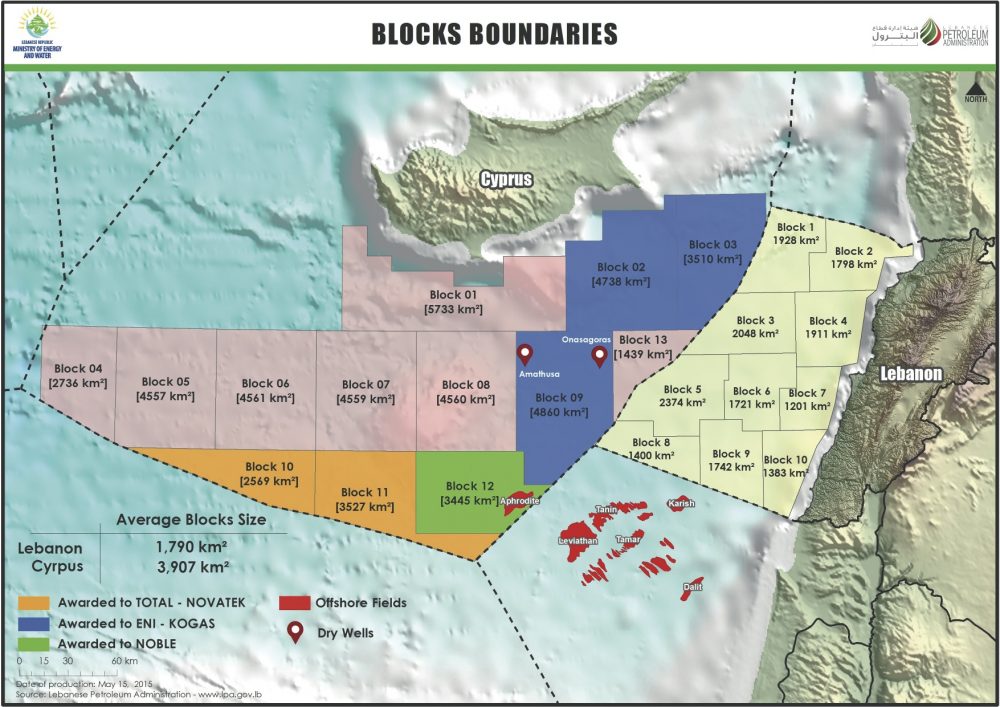
This is not good news for Lebanon, since accountability is a cornerstone of good governance. In fact, in a recent LCPS survey with members of parliament, only 35 out of 65 MPs knew that Lebanon’s economic zone is divided into 10 blocks and only one MP actually knew that there are 46 pre-qualified companies.

Lebanon’s sector is in a precarious situation. If political elites continue to undermine state institutions for their own gain, then it is better that Lebanon’s oil and gas remain buried under the sea, rather than burying us with heightened corruption and exacerbated inequality.

January 6, 2017 0 comments
0 FacebookTwitterPinterestEmail
Economics & Policy

A year toward the recovery of Lebanon

by Dima El Machnouk & Gaelle Kibranian Zavzavadjian January 5, 2017
written by Dima El Machnouk & Gaelle Kibranian Zavzavadjian

“It’s time to change the world” was the new motto embraced by the leaders of 193 countries during the 70th session of the General Assembly of the United Nations in September 2015. They signed off on a set of 17 ambitious goals, along with 169 associated targets, to together end extreme poverty, sustain prosperity, combat climate change and fight inequality and injustice.

“We resolve, between now and 2030, to end poverty and hunger everywhere; to combat inequalities within and among countries; to build peaceful, just and inclusive societies; to protect human rights and promote gender equality and the empowerment of women and girls; and to ensure the lasting protection of the planet and its natural resources. We resolve also to create conditions for sustainable, inclusive and sustained economic growth, shared prosperity and decent work for all, taking into account different levels of national development and capacities.” (UN General Assembly Resolution 70/1).

After almost a year, our own leadership has also been driven by the appetite for change, electing a new president, taking the country out of its comatose condition and delivering promises of economic revival, administrative and electoral reforms, and social resilience.

In this era of global and national transformations, these Sustainable Development Goals (SDGs) set out by the UN offer the solutions to Lebanon’s fundamental development challenges. These range from inadequate infrastructure, transportation and telecommunication networks, provision of commodities, high levels of corruption, mismanagement of environmental catastrophes, brain drain and lack of economic opportunities, to increasing levels of extreme poverty largely resulting from the Syrian conflict, so far the worst humanitarian crisis of the 21st century.

Toward a sustainable growth

As such, SDGs are a unique opportunity for the Lebanese leadership to rise above the phantoms of the past. Lebanon had only partially committed to the Millennium Development Goals – the predecessor of SDGs set to be achieved by 2015 – successfully addressing universal education, reducing child mortality, and improving maternal health. But given the national and regional turmoil, Lebanon lagged behind in terms of gender equality, environmental sustainability and curbing extreme poverty.

[pullquote]It is time for action. It can be as easy as saving electricity, recycling, composting and conserving water.[/pullquote]

Today, if our leaders choose again not to meet the commitments made towards SDGs, the country will be threatened by socio-economic risks, which will compound Lebanon’s current vulnerability and fragility.

The scale of the SDGs’ ambitions might raise concerns; yet, if properly adopted, they provide a realistic roadmap that addresses all areas necessary for our country’s recovery. This is based on three dimensions of development: economic, social and environmental sustainability. They will entail commitments from present and future leadership. If SDGs are adapted to priorities and limitations, they will work for Lebanon. From the plethora of goals and targets, Lebanon can choose a few in the first years, deliver them per primacy sector, and gradually implement them to witness early successes. 

SDGs are a holistic package that will guide policy and funding for the next 15 years. It is therefore time for our leaders to invest in institutional and policy reforms, to bring forward resources, enhance and monitor performance, and most importantly, have the will to do so. The political discourse should also be aligned with the SDGs in order to engage every citizen in the development process.

As such, if development is a right, participation is a duty. As citizens we should have expectations, but we also have the responsibility to partake and observe. A struggling government alone will not be able to reach the objectives. This requires multi-stakeholder concessions for us to all participate in the improvement of our country.

We are all equally responsible. Goal 17 of the SDGs calls for a global partnership for sustainable development. We can undeniably learn from other countries, but we need to ask ourselves what we can internally do to coherently coordinate our efforts for SDGs. How can we, as individuals, companies, NGOs, public officials and university students mobilize all resources, reach our full potential and transform Lebanon?

It is time for action. It can be as easy as saving electricity, recycling, composting and conserving water. It can be steps to boost consumers’ confidence. We can shop local and shop smart. We can help local producers improve the livelihood of their families, which would provide their children with access to quality education and enough food on the table for their next meal. We can establish support chains by donating what we don’t use: clothes, books, furniture and toys that can be given a new life in a family who needs them. We are not alone. We can improve the bottom line through partnerships. We should speak up, lobby, let our leaders know what we care about and, most importantly, support them to achieve results.

Speaking at the Habitat III conference in Ecuador in October 2016, UN Secretary-General Ban Ki-moon said: “Elected officials, mayors, governors and councilors are at the forefront of the battle for sustainable development.” Fortunately, the current Lebanese (caretaker) government has embarked on the process by developing the National Sustainable Development Strategy, a comprehensive plan of concrete actions, based on the SDGs, that will set the framework for development until 2030.

To avoid wasting effort, this can be used as the basic framework, institutionalized and further integrated and aligned with national priorities and the SDGs by succeeding governments. A parliamentary toolkit will be deployed in February 2017 – with the support of the United Nations Development Programme (UNDP) – to assess conformity with SDGs, resulting in the establishment of a working group to identify good practices, gaps and opportunities, and determine what can be done to better engage Parliament in the national development agenda.

Another initiative taken by the government was becoming a signatory to the Paris Agreement at the United Nations Climate Change Conference (COP21) in December 2015. Lebanon publically committed to reducing its greenhouse gas emissions by at least 15 percent, and up to 30 percent conditional to the provision of international support, by 2030. The shift to sustainable energy is not only the responsibility of prominent businesses, but is also a social responsibility for all citizens who want to improve livelihoods and the wellbeing of their community.

Our country today needs social innovators, individuals with an unconventional vision to change the future. It is clear that business as usual will not cut it anymore. The boundaries between government, civil society and the private sector are fading, giving way to more blended enterprises to solve the greatest challenges. Reducing poverty requires financial innovation. One example is the emerging trend of impact investment funds, where investors achieve both impact objectives and commercial returns. The SDGs provide context for investors to fit their strategies and objectives into broader sustainable development efforts. Increasingly, firms are using the SDGs to develop and communicate their Corporate Social Responsibility initiatives and as a framework to measure the social impact of each company. Our aim is that such innovative solutions will see the light in Lebanon and not be blocked by corruption. 

Over the next twelve months, we will introduce the different themes under the SDG spectrum and suggest areas of intervention for different stakeholders. We will leave no one behind. The agenda will be based on concrete information and statistics for informed decision-making. This will be a wish list to address our frustrations as Lebanese citizens. It will make us reconsider actions and consider whether this is the country we want to leave to future generations. It is indeed a time for change.

January 5, 2017 0 comments
0 FacebookTwitterPinterestEmail
Economics & PolicyRefugees

Unemployed and underemployed

by Scott Preston January 4, 2017
written by Scott Preston

Perhaps few issues in Lebanon are cause for more spirited debate than access to employment for Syrian refugees. Yet due to insufficient data, the economics of the issue have only been credibly argued in the most macro of terms. Nevertheless, a series of new development projects and policy reforms could provide more employment opportunities for both displaced Syrians and Lebanese citizens. This was a key theme of an international donor conference held in London in February 2016. Speaking at the end of the event, the UK’s then-International Development Secretary Justine Greening announced, “And today we’ve also made a second critical choice on supporting jobs for refugees and economic growth in the countries hosting them.”

The donor conference – which secured pledges totaling $12 billion in grants and loans aimed mainly at Syria, Jordan, Lebanon and Turkey – also resulted in the creation of the Concessional Financing Facility for the Middle East and North Africa (MENA CFF), which gives the aforementioned middle-income countries access to low-interest, long-term loans that they were previously considered too wealthy to qualify for. One project to be financed via this facility is being proposed by the Council of Reconstruction and Development (CDR) that will be enabled by $200 million in concessional funding, according to a description obtained by Executive. Through the rehabilitation of 500 km of Lebanon’s deteriorating roadways, the Road and Employment Project is expected to create 1.5 million labor days of work, but is not expected to begin issuing contracts before the start of 2018. Supply chain industries and up to 25 contractors are also set to benefit from the project, which is to be conducted in partnership with the World Bank.

[pullquote]Two thirds of those refugees considered as employed worked less than 15 days, and 92 percent earn less than the survival minimum expenditure basket of $435 per month[/pullquote]

Trouble cooperating

Prior to the refugee crisis, Syrians were permitted to work without permits in Lebanon due to a bilateral agreement (the “Treaty of Cooperation”) between the two countries that resulted in an open-border policy. Estimates of how many Syrians were working in Lebanon before the crisis are imprecise (ranging between 300,000 and 600,000). The consensus of several reports on the topic, however, suggests that regardless of the actual number of Syrian workers, they were a source of cheap labor heavily utilized by the construction and agriculture sectors. However, as refugees began streaming across the border, Lebanon began to implement a number of policy shifts that largely reversed this precedent.

In October 2014, the government began a series of legal changes that inhibited refugees’ access to employment. Syrians residing in Lebanon were restricted to working in three sectors where competition with Lebanese counterparts was thought to be low. These sectors are identified as construction, agriculture and cleaning services – and the latter was expanded to ‘environment’ in 2015. In January 2015, a new regulation required refugees registered with UNHCR to sign pledges not to work at all. The government dropped this regulation in mid-2016, enabling UNHCR registered refugees to seek employment within the three preauthorized sectors.

An uncertain impact

Measuring refugees’ impact on the job market, or the efficacy of protectionist restrictions, has proven difficult due to a lack of baseline statistics on the Lebanese workforce. Annabella Skoff, the chief technical advisor to the International Labor Organization (ILO)’s Syrian Crisis Response team, laments: “We don’t have updated data. The latest comprehensive data set is still dating back to 2009 and everything else is computations.”

Reliable figures on Syrian work inclusion have also proven inadequate for similar reasons. Lebanon’s Central Administration of Statistics has not monitored Syrian employment and any other datasets maintained by government ministries have not been released. The Ministry of Labor, which issues work permits, did not respond to interview requests. Without more detailed information on domestic or foreign labor forces, experts have struggled to determine which economic trends are attributable to the refugee crisis and which result from the more general economic problems Lebanon is facing. 

While most economists acknowledge that the refugee crisis has created competition among low-skilled positions – potentially lowering wages in some sectors – displaced Syrians are not thought to have substantially affected Lebanese unemployment. Nisreen Salti, associate professor of economics at the American University of Beirut, says that “It’s mostly the workers in basic occupations that have suffered, and these workers… had a large contingent that was non-Lebanese from even before the crisis; so Syrian, Palestinian, but also Iraqi and South Asian in general.”

Yet, the severe economic downturn that ensued with the outbreak of the Syrian war compounded resentment against refugees in Lebanon. Geopolitical complications, such as reduced trade with and through Syria, exacerbated structural weaknesses within the Lebanese economy, stifling the growth of gross domestic product (GDP) by 7.1 percent in 2011 and increasing local unemployment. Rayan Koteiche, a liaison officer at the UNHCR, says, “Potentially, 30-35 percent of [Lebanese] youth are impacted by unemployment and because [most] refugees reside in areas where poverty is quite high – [in] historically underserved areas – the job issue becomes a real source of tension, and that’s why it’s a really thorny policy matter.”

Best guess

The UN’s International Labour Organization (ILO) is preparing a study on the Syrian labor force in Lebanon (including both those registered as refugees and those not) and shared some findings with Executive prior to publication. According to the upcoming report, the Syrian labour force in Lebanon constitutes an estimated 384,000 people who had worked at least one day in the month prior to the survey. The estimate includes both Syrians registered with UNHRC and those not registered – again based on estimates of population data – of which about 36 percent are thought to be unemployed. The draft report states that two thirds of those refugees considered as employed worked less than 15 days, and 92 percent earn less than the survival minimum expenditure basket of $435 per month (which is therefore lower than the $450 minimum wage in Lebanon), suggesting high rates of underemployment. Furthermore, the labour force participation rate of Syrian females is very low at about 12 percent.

The ILO’s findings on high rates of underemployment correlate with the worsening living conditions Syrian refugees are reporting. As of late 2016, approximately 70 percent of Syrian refugees living in Lebanon have fallen below the poverty line, up from 49 percent in 2014, according to UNHCR research.

Opening up?

In addition to the $200 million infrastructure project the CDR is planning, the ILO is spearheading a major development project focusing on the construction of roads and agriculture-related infrastructure, Skoff says. She explains that details are not yet finalized, but notes the initiative is being developed in line with the Lebanon Crisis Response Plan that prioritizes labor intensive job creation for low skilled workers in sectors that maximize positive impacts for the economy.

Prior to the London Conference, Lebanon drafted a “Statement of Intent.” According to the statement, the Lebanese government will attempt to conduct a “review of existing regulatory frameworks related to residency conditions and work authorizations. It is seeking… ways to facilitate the streamlining of such regulations, including a periodical waiver of residency fees and simplifying documentary requirements such as waiving the ‘pledge not to work’ requirement for Syrians… to ease the access of Syrians to the job market…” The statement also proposes the creation of between 300,000 and 350,000 temporary jobs, of which up to 60 percent, (or 210,000 positions), could be available for Syrian refugees.

However, due to a number of caveats, many remain skeptical of the potential increased Syrian employment.

Existing barriers to legal residency, work permits and even inadequate administrative capacities could severely restrain employment uptake as well. While the ILO’s infrastructure project plans to support the Ministry of Labor in issuing work permits, Risha Jagarnathsingh – a research officer at Lebanon Support, a research and information center – points out that “The Ministry of Labor is underfunded, understaffed and the minister of labor himself has to approve work permits.” As a result, Skoff says the government only issues an average of 2,000 work permits per year, renewals accounting for about half of that number.

The future of Syrian refugees’ right-to-work hinges on the actions of the Lebanese government and the international community. In Jagarnathsingh’s view, the opening of the labor market is a mutually beneficial policy option, and she encourages Lebanon to facilitate refugees’ access to basic services and human rights, among which are decent living conditions. “[Lebanon] has a huge labor force right now that is not very expensive as employers are not obliged to pay taxes or social security for Syrian workers. So if it wants to build a railway or renew the country’s infrastructure, this could also be a chance; it could use this crisis as an opportunity,” she says.

January 4, 2017 0 comments
0 FacebookTwitterPinterestEmail
Climate changeEconomics & Policy

From Paris to Marrakesh and beyond

by Vahakn Kabakian January 3, 2017
written by Vahakn Kabakian

Back in 2015, the world agreed to a new climate regime, dubbed the Paris Agreement. A new order was set, where both rich and less fortunate countries jointly engaged in the fight against climate change. This requires action to reduce greenhouse gases – those behind climate change – as quickly as possible. The agreement came via a document submitted by all countries that detailed their nationally determined contributions (NDC) – the actions they will undertake domestically to reduce their gases and avoid dangerous climate change. For example, Lebanon’s contribution consists of an unconditional greenhouse gas reduction target of 15 percent, raised to as much as 30 percent dependent on the provision of international support, both by 2030, relative to a business-as-usual scenario. Lebanon plans to reach its targets by implementing several policies and actions pertaining to the energy, transport, waste and forestry sectors. The NDC also contains adaptation measures that plan to increase Lebanon’s resilience toward climate change by tackling the water, forestry and agriculture sectors.

These commitments became the aggregate force of action toward lowering greenhouse gas emissions and avoiding the rise of temperatures to  1.5 or two degrees Celsius above pre-industrial levels, as was the objective of the adopted Paris Agreement. This was the pinnacle of the Paris Climate Conference. This year’s climate conference took place from November 7–18 in Marrakesh, Morocco. From the outset, the objective was to operationalize the Paris Agreement, and therefore from a political standpoint the agenda and expectations were modest, despite a growing sense of urgency and alarm among climate scientists that time is running short to prevent extraordinarily dangerous climate change. The only “political” surprise – perhaps the result of the US elections – was the early entry into force of the Paris Agreement (not expected before 2020) on November 4, 2016. As of November 29, 2016, 114 countries out of the 197 had ratified the agreement. During the Marrakesh meeting, with the objective of carrying the Paris momentum through and establishing the way ahead for the Paris Agreement’s effective implementation, the negotiators were able to navigate through the unresolved issues from Paris, which primarily pertained to differences between developed and developing countries. The conference concluded with countries agreeing to finalize the stipulations of the Paris Agreement by 2018 as well as other key decisions to advance implementation of the global pact. The Paris rulebook includes procedures for its implementation to be applied by all parties and will be delivered by 2018. For each item, substantive homework will have to be done by every party.

The national level

At the national level, the past year witnessed the initiation of several actions. On the policy front, the Lebanese government reaffirmed its commitment to the new climate change deal when then Lebanese Prime Minister Tammam Salam signed the Paris Agreement at the UN Headquarters in New York City on April 22, 2016, during a high-level ceremony convened by the outgoing UN Secretary-General Ban Ki-moon. Shortly after, the national process for ratification kicked in, and with the approval of the Council of Ministers in August 2016, the draft law was forwarded to parliament for final ratification (by virtue of Decree 3987). Once parliament ratifies the Paris Agreement, its provisions will become legally binding.

Under the Paris Agreement, the progress on national commitments will have to be reported biennially, while the national targets need to be updated (and ratcheted up) every five years. Therefore, an official NDC committee to follow-up on its implementation has been established by a Council of Ministers decision (in October 2016). The committee is composed of the governmental entities that contributed to the formulation of the NDC and were therefore directly responsible for the actions (as part of their strategies and plans) included as part of Lebanon’s commitments under the Paris Agreement. Foreshadowing this coordination, a mitigation NDC working group meeting took place in July 2016 with the objectives of clarifying the status of the implementation of the Lebanese NDC. This meeting also served as an opportunity to identify sectoral needs and gaps, including financial, capacity-building, regulatory or legal aspects, and shedding light on areas that potentially can be translated into project proposals for international support. In 2017, a roadmap for NDC implementation and reporting will be established to serve both national and international reporting requirements. This requires an overhaul (to say the least) of the existing system. In addition to the aforementioned updating and reporting on the NDC implementation progress, Lebanon will have to improve the quality of its reporting of greenhouse gas inventories, report on its adaptation plans, priorities, progress and projections, and prepare and submit a long-term greenhouse gas emissions development strategy.

[pullquote]The most recent findings foresee a burden of nearly $17 billion from the negative impacts of climate change on the Lebanese economy in 2040 if world temperatures increase beyond two degrees Celsius[/pullquote]

Meanwhile, the Lebanese private sector showed interest in supporting the government toward achieving its NDC target. Therefore, the Lebanon Climate Act was established to have Lebanese companies commit to a practical climate initiative to scale low-carbon solutions pertaining to energy, water, transport, waste, forestry or agriculture, or support NGOs who have similar climate endeavors. A series of quarterly scheduled sessions that aim to enable companies to plan and implement the climate-related projects are underway. The results of their actions, especially if upscaled, will have tremendous impact toward Lebanon’s progress vis-à-vis its international commitments.

Moving forward

It is evident that the international process requirements will benefit domestic goals and enhance institutional arrangements. The Paris Agreement is an opportunity for Lebanon to achieve sustainable development, and the government is gradually understanding the risks of inaction. The most recent findings foresee a burden of nearly $17 billion from the negative impacts of climate change on the Lebanese economy in 2040 if world temperatures increase beyond two degrees Celsius.

The road ahead is clear, and the train has left the station on both the national and international tracks. During the Marrakesh conference, the Lebanese delegation actively participated in negotiations and had the chance to speak on various platforms. One achievement was the launch of the Eurasian Network on Measuring, Reporting and Verification (related to the NDC progress), and Lebanon is set to become the pro-tempore Secretariat for the first year. Moreover, Lebanon became a member of the Climate Vulnerable Forum, a platform for vulnerable developing countries to drive ambition to avoid average global temperatures going beyond 1.5 degrees Celsius, to have one common voice in international negotiations and to share lessons learned on mitigation and adaptation.

At the national level, there needs to be a strong and continuous follow-up, and stronger coordination among all national and international parties involved. This also requires stronger intra-sectoral coordination, especially for the energy sector, where the renewable and thermal electricity agenda should go hand in hand. It might be beneficial to introduce renewable portfolio requirements for independent power producers (IPPs) for the fossil fuel-based electricity power plants, where the share of national renewable energy commitment (15 percent of electricity generation) is embedded and therefore all IPPs are required to source, at minimum, 15 percent of their annual electricity generation from renewable sources. There is also talk of establishing a sovereign wealth fund to manage anticipated hydrocarbon wealth. It might also be useful to explore the idea of earmarking revenues from any future fund to be invested in renewable projects and climate-related action. The cornerstone of the national process toward a greener and low emission economy has started. However, several challenges at the national level remain.

The coming few years will be crucial in laying the strong foundations of a long-term process that will enable Lebanon to comply with the deep decarbonization pathway by the second half of the 21st century (as stipulated by the Paris Agreement). For this to succeed, systemic thinking needs to be incorporated into Lebanese planning, which will inevitably result in more efficient and long-term development.

January 3, 2017 0 comments
0 FacebookTwitterPinterestEmail
Banking & FinanceOverview

An awfully quiet year

by Thomas Schellen January 1, 2017
written by Thomas Schellen

When compared with the banking sector and the initiatives taken by Banque du Liban (BDL), the year was unnervingly quiet for the country’s insurance industry. Preliminary information on the performance of insurance companies suggests that the 4 percent growth in gross premiums to $1.2 billion at the end of the third quarter was low when compared with growth rates achieved in most of the past ten years. However, growth was not devastatingly low when one compares it to the inflation rate in the Lebanese economy, which edged into positive territory this year, but was too small to provide the economy with growth incentives.

According to figures by the Association des Compagnies d’Assurances au Liban (ACAL), premium growth rates in several lines of non-life insurance were negative at end of September 2016. Indications of positive premiums growth came only from two small business lines, miscellaneous and public liability insurance and from motor, medical, and life premiums. Granted, the latter three lines are the high-volume lines and represent some 93 percent of total insurance sector turnover in 2016, but at growth rates of 7 percent for life insurance – which includes savings contracts – and 6 and 3 percent, respectively, in motor and medical premiums, no single coverage line or subsector of insurance was reporting figures that could be described as encouraging. 

The impression of underwhelming growth in the sector and its link to the wider economy was corroborated by Karim Nasrallah, general manager of the Lebanese Credit Insurer (LCI). “The problem with Lebanon in 2016 was that there was no business growth, and [specifically in the area of] Lebanese export insurance because there is really no growth in exports,” he tells Executive on the sidelines of a regional conference.

Notably however, regional export and trade related problems are not limited to this country, and Lebanon in some respects performs well. “The [Lebanese] market behavior in terms of payments, which is what we are exposed to, is actually quite good. There is perhaps some greater delay of payments, but there is no increase in the rate of payment defaults or anything such, unlike some countries in the region. In some Gulf countries, things have been much more volatile and we had more claims due to defaults. Moreover, the business environment is challenging everywhere in the region. In Egypt, you have the currency situation, in the UAE, Qatar, Kuwait and Saudi Arabia you have the problem of commodity prices, which is impacting public spending and liquidity. So Lebanon is not the only country impacted by problems,” he explains.

As an insurer with operations in several Middle Eastern countries, LCI, which is the first non-state affiliated credit insurance provider in the entire region, is taking a more holistic view on regional issues and also can compensate for lack of business growth in one country with acceleration of performance in another. While Nasrallah likens the Lebanese businesses’ need for political stability prior to the presidential elections to a need for oxygen when suffocating, he can afford to be upbeat about the future. “LCI was growing outside of Lebanon in the past two years, underwriting exports and domestic trade in countries such as Jordan, UAE, and Saudi Arabia, but [we] hope that growth will return to Lebanon in 2017. You need stabilization to grow. I am optimistic, otherwise we should pack up and go,” he says.   

Many insurance companies active in other business lines, specifically local companies without global or regional affiliations such as those enjoyed by Allianz SNA or AXA, do not have the option to wait out downturns in the Lebanese economy. By conventional business logic, Lebanon should see a wave of mergers and acquisitions in insurance, including consolidation among local providers with turnovers near the low end of the sector’s income range. However, such moves have still not yet been reported in 2016 and the ACAL, according to its website, continues to have more than 50 member companies.

Besides their regular business activities – subdued as they were because of inertia in Lebanese politics and the economy – insurers mainly stood out through social activities, such as gathering for the 25th anniversary celebrations of GlobeMed Group, a third-party administrator affiliated with several Lebanese insurers. The highlight of the year in this regard was the hosting of the 31st Conference of the General Arab Insurance Federation (GAIF) in Beirut at the end of May.

Topics of interest at the conference were the debate over oil and gas related insurance services by Lebanese providers, which is an ongoing concern in the local insurance industry, the discussion of insurance pools (collective funds for coverage of specific risks) in several fields, including oil and gas, and the exploration of digitization as the main challenge that looms over insurance and reinsurance companies worldwide. A further conference on the digitization issue is planned to be held under GAIF auspices in Beirut in mid-2017. 

January 1, 2017 0 comments
0 FacebookTwitterPinterestEmail
Economics & PolicyEnergy

Outlook brightens for renewables

by Jeremy Arbid December 30, 2016
written by Jeremy Arbid

Renewables are the energy source of the future. Not too many years back it was hard to conceive that the sun’s rays could be harnessed into electricity – those what-will-the-future-look-like Laserdisc videos students were forced to watch when the substitute teacher covered 8th grade Life Science just didn’t seem that realistic. While planet earth may not be the utopian dream thought up then, today renewable energy is more and more the source of power charging our smartphones, lighting our homes and cooling our places of work.

Today the outlook for renewables is promising, linked to international commitments to reduce greenhouse gasses agreed to at the Paris Agreement in December 2015. There, Lebanon committed to reducing gas emissions by up to 15 percent unconditionally and by as much as 30 percent, depending on the provision of international support, both by 2030 (see climate change article). Alongside installing more renewables on the path to achieving emission reduction targets, Lebanon will need to restructure its electricity sector but, as it stands now, there is seemingly no will to reform.

In terms of renewable energy generation Lebanon has made progress. By the end of 2015, Lebanon had installed 9.45 megawatts of solar photovoltaic, according to a September report published by the United Nations Development Programme’s (UNDP) Small Decentralized Renewable Energy Power Generation (DREG) project. The cost of installing solar photovoltaic at factories and commercial facilities has fallen from $5.3 per watt in 2010 to $1.7 per watt in 2015, while operating savings from Lebanon’s photovoltaic installations have risen from $191,000 per year in 2010 to $2 million per year in 2015, according to the DREG report. In terms of climate change, solar installations have a measured carbon reduction, initially removing 351 tons of CO2 in 2010 and increasing to 18,000 tons of CO2 in 2015. The cost of removing one ton of CO2 can thus be calculated at $198, a figure that would dramatically decline were Lebanon able to install utility-scale (20 megawatts or more) solar photovoltaic projects (see The Lebanese solar revolution).

The cost of removing carbon is an important indicator to finance renewables. For international donors it doesn’t matter where in the world the reduction of carbon occurs as long as it’s done at competitive costs – for them. The impact of their funding will be the same globally whether a ton of carbon is no longer emitted in Lebanon or elsewhere.

Despite the obstacles preventing renewables’ scalability, there is local money available to finance installations. Lebanese businesses have the option of subsidized loans for renewables and energy efficiency projects through low interest rate loans distributed by commercial banks – a funding mechanism known as the National Energy Efficiency and Renewable Energy Action (NEEREA). Of the more than $350 million that NEEREA is said to have channeled into renewables and energy efficiency between 2012 and 2015, solar photovoltaic reached only $30.5 million cumulatively since 2010, according to the DREG report. That small chunk put toward solar may be due to the obstacles blocking its scalability and because of the political and financial risks in reforming the electricity sector. But the limited uptake of NEEREA money for solar might suggest that some energy efficiency projects are crowding out more worthy emission reduction investments, Executive has previously reported.

There are legal and technical obstacles preventing the scalability of renewables that will need to be addressed moving forward – namely the lack of a net-metering scheme (a billing mechanism crediting renewable energy providers for feeding electricity into the public grid) and the gap in Electricité du Liban (EDL)-supplied electricity blocking renewables from offsetting carbon emissions from the dirtier electricity produced by private generators that many homes and businesses connect to off-grid. The electricity sector demands reform, but, as it stands now, there is simply no will. Without restructuring, foreign donors will have zero appetite for fixing the grid, and private investors see no upside in pouring money into the bankrupt utility.

But the opportunity for Lebanon to restructure its electricity sector has never been more ripe. The momentum of the climate change agreement and a fall in oil prices provide a unique platform for debate in 2017 on how the country powers itself.

Failed reforms

Imagine investing the $2 billion of annual subsidies to EDL into renewables for one year, a dream scenario that the head of the ministry of environment’s climate change team, Vahakn Kabakian, proposed in an interview to Executive earlier this year.

EDL is a huge drain on the state’s coffers because of the significant subsidy at which electricity is generated and sold to the public. Since 1996, the government has helped cover the cost of generation, capping the purchase of fuel by EDL at $25 per barrel, with the treasury covering the difference. EDL also sells electricity at the fixed rate of 75 LL ($0.05) per kilowatt hour to distributors, while subscribers are charged on average only 133 LL ($0.09). “This decision has to be changed – we are simply unable to continue to subsidize the sector in the same way,” Ministry of Finance Director General Alain Bifani told Executive last year. The treasury was transferring some $2 billion per year until oil prices dropped in 2015 – leading to a decrease in subsidies to EDL from $1.4 billion during January to August 2014 to $520 million over the comparable period for 2016, according to ministry of finance figures (see EDL subsidies chart).

But rather than take advantage of the chance for reform it was, in the past year at least, business as usual in Lebanese politics.

[pullquote]EDL is a huge drain on the state’s coffers because of the significant subsidy at which electricity is generated and sold to the public[/pullquote]

Last fall, the Amal Movement and the Future Movement accused former Minister of Energy and Water Gebran Bassil and his Free Patriotic Movement of incompetence in the tendering and implementation of contracts for electricity projects and of misspending some $1.2 billion. In 2010, everything looked good on paper for the electricity sector. Bassil had put forth a master plan that by now would have delivered 24 hours of uninterrupted electricity generated cheaply by clean burning natural gas.

Ghazi Youssef, a Future Movement parliamentarian, accused Bassil in a September 2015 interview with Executive of focusing on the wrong priorities, incompetence and corruption. He says Bassil focused on rehabilitation projects at the Zouk and Jiyeh power plants, calling them low-hanging fruit, when he should have been focused on big picture projects that would significantly upgrade Lebanon’s generating capacity.

Bassil seemingly did bungle a tendered contract to build a 535 megawatt power plant at Deir Ammar worth $660 million by consortium Abenor-Butec, reneging on the contract when the consortium refused to lower the agreed upon price by $160 million. The project was re-tendered and awarded to a consortium led by Cypriot firm J&P, but a dispute over the payment of the project’s $50 million VAT delayed construction.

Accusations aside, Bassil’s plan to install an additional 1,500 megawatts of electricity generating capacity made no progress, largely because the plans to construct new power plants stipulated public-private partnerships – a scheme requiring legislation that every politician seems to support but that has not been passed into law by the parliament. Lebanon currently has 1,500 megawatts of installed capacity, with that number set to rise as new reciprocating generators were scheduled to come online at the Zouk and Jiyeh power plants in 2016 – sources tell Executive that the Zouk installation is complete but not yet switched on.

Demand, however, continues to exceed production capacity by an average of some 800 megawatts, with the gap being filled by private generators. Every month the Ministry of Energy circulates a list suggesting a price at which private generators should offer 5 and 10 amps to subscribers – and the ministry of economy has a hotline for consumers to report price violations – but it is not clear how well the policy is enforced. The business of private generation is a lucrative one which, according to a 2011 ministry of energy study, was worth $1.7 billion per year.

Progress was made in privatizing some of EDL’s activities – those tasks of network operation and maintenance, metering and bill collection. But the revenues collected by the three main contracted distributors, BUTEC, KVA and NEU, are not published, nor are the financial books of EDL. The only indication is from EDL’s contribution to the bill of oil imports, $25 million in 2015, according to BlomInvest Bank.

Private initiatives

Bickering at the political level has highlighted opportunities for Lebanon’s private sector to step into the business of electricity generation, some with more success than others.

Bassil’s plan for 24 hour electricity has, obviously, not fully materialized. That has left individual areas to come up with their own plans to produce electricity – starting in Zahle in 2015, with plans announced for Jbeil (Byblos) and Tripoli.

[pullquote]Bickering at the political level has highlighted opportunities for Lebanon’s private sector to stepinto the business of electricity generation[/pullquote]

In 2015, Zahle implemented a local plan to bring some 53,000 subscribers 24 hours of electricity by generating 48 megawatts of power. Assaad Nakad, chairman of Electricité de Zahle (EdZ), has not responded to Executive’s requests to fully understand the plan. Byblos Advanced Energy (BAE) has plans to build a 64 megawatt power plant in Jbeil to serve nearly 28,000 customers, a total investment requiring $68.4 million, Executive reported last December. The project is shovel ready but is awaiting license approval by cabinet. Its principal Mario Chelala said that no progress had been made – “from promises to promises, we are still stuck,” he wrote to Executive in an email in December 2016.

For Tripoli there are two plans to supply the city with 24 hour electricity. Najib Mikati, a former prime minister, established Nour al-Fayhaa, but in announcing the new electricity company in September 2015, he offered few details on how the new entity would generate electricity for the some 600,000 customers in Greater Tripoli. The other plan announced this October, by Tripoli businessman Mohammad Adib and EdZ chairman Nakad, would generate 150 megawatts. Representatives for the plans did not respond to Executive’s inquiries to understand the technical details.

Lebanese would welcome 24 hour electricity; in most countries what is a basic public service is in Lebanon a luxury for those who can afford two utility bills. The private sector initiatives are certainly welcome and are not to be discarded if the plans achieve what they promise – around the clock power for homes and businesses. But it may be too much to ask for private sector plans to incorporate renewables in their electricity generation schemes, especially given the legal, technical and political obstacles they face.

December 30, 2016 0 comments
0 FacebookTwitterPinterestEmail
Economics & PolicyOverview

Lebanon’s economy weathers a tough 2016

by Jeremy Arbid December 29, 2016
written by Jeremy Arbid

If there is one resolution Lebanon can commit to this coming new year, it is making good on the opportunity for a fresh start, to restart government institutions and implement sound policies that will guide the country toward a more promising future.

A sputtering Lebanese economy, exasperated by a disruption in regional trading due to the ongoing civil war in neighboring Syria, the refugee crisis it has perpetuated, the deterioration of public services like garbage collection and electricity because of an impotent government and American financial sanctions targeting Hezbollah, among many more crises, brought Lebanon to the brink of state failure in 2016. With the election of a president in October, there could be a way out of the darkness, and if the almost two and a half year political stalemate is nearing an end, then the question on many minds is: what steps can a new government take to right the economic ship? Everyone seems to be wishing for the same thing this holiday season: a better economic outlook in 2017.

For Lebanon, economic growth has slowed dramatically. In 2010 gross domestic product (GDP) growth reached 8 percent. This year, the World Bank estimates the economy might grow by up to 1.8 percent, while the International Monetary Fund (IMF) projects only 1 percent growth in 2016. But, from the point of view of several Western ambassadors that Executive spoke with in November, the hope is that a resolution to the country’s political impasse is in the cards. The election of a president, followed by the appointment of a government, hopefully before the end of 2016, that would oversee parliamentary elections (whose current members were elected in 2009 and extended their terms twice) in late spring 2017, could, depending on its policy priorities, usher in a period of stability encouraging economic growth.

Exports have been one of the clearest indicators of Lebanon’s economic slowdown. In 2012, the country exported almost $4.5 billion worth of Lebanese goods and produce. By 2015, those products had declined to less than $3 billion in value, and so far this year exports totaled almost $2.3 billion by September.

[pullquote]The hope is that by the end of 2017 Lebanon will be able to reorient its exports to new international markets and spur absorption of Lebanese products in the local economy[/pullquote]

The reason for the decline is largely due to the disruption of land routes through war-ravaged Syria to markets in the Gulf and a drop in Lebanese exports to the Syrian market, one of its larger trading partners. Exports to Syria declined from a 2013 high of $500 million to less than $130 million through September of this year. More generally, Lebanon has also witnessed a slowdown in local manufacturing output due to the depressed local and regional economies. The hope is that by the end of 2017 Lebanon will be able to reorient its exports to new international markets and spur absorption of Lebanese products in the local economy (see industry overview).

Lebanon has not been alone in its economic woes. The entire region has been in a recession since the start of the so-called Arab Spring in 2011, compounded more so by the civil war in neighboring Syria. The region’s GDP by 2015 had declined on average to a growth rate of less than 1 percent, a recently published report by the UN Economic and Social Commision for Western Asia (ESCWA) found.

The report cited falling oil prices, slower domestic demand expansion and weaker business confidence for the overall economic slowdown in Gulf countries, as well as knock-on effects from regional conflicts and the refugee crisis from Syria’s civil war.

It is the fall of oil prices that could reshape the political and economic landscape of the Middle East in the coming year, according to energy and political analysts. “Now that oil prices are declining and will likely continue to remain low for several years, if not permanently, the Middle East’s rentier systems face a significant challenge…If Middle Eastern countries do not start making real progress on fundamental political and economic reforms, further regional turmoil is inevitable,” Marwan Muasher, vice president for studies at the Carnegie Endowment for International Peace, deduced in a November 2016 article.

Rentier economies, such as Saudi Arabia, have previously propped up other regional countries with financial support, and the recent shift from grants to investments, Muasher continues, “will put pressure on those governments to pursue private-sector growth to improve their own countries’ economic performance…expect to see further opposition from state bureaucracies, which lack any vision for a transition to an inclusive and sustainable economic model.”

[pullquote]The government and parliament have largely reduced their activity to reactionary decision-making and emergency legislation[/pullquote]

In Lebanon, lower oil prices have provided some flexibility in terms of lower financial transfers from the treasury to the public utility, Electricite du Liban (EDL), because of its shortcomings in bill collection revenue and other inefficiencies in producing and distributing electricity. This has resulted in a decrease in subsidies from some $1.4 billion from January to August 2014, to $520 million over a comparable period for 2016, according to ministry of finance figures.

Last year, Ministry of Finance Director General Alain Bifani told Executive that subsidies to the public utility are not sustainable and that while the fall in oil prices has provided some breathing space in terms of the state’s fiscal situation, this “should be pushing us for immediate action whilst we have this breathing space.”

Taking advantage of the opportunity does not appear likely in the near term, as political and confessional obstacles have continually hindered a restructuring of the electricity sector despite its drain on public finances and have led to a 2010 government plan to reform EDL to be ignored. The accruing debt on investments in and transfers to EDL, according to the World Bank, amounts to 40 percent of Lebanon’s gross public debt – and transfers to EDL now account for over 50 percent of the fiscal deficit.

Deficit grows

Despite smaller allocations to EDL, by August the budget deficit had widened to $2.5 billion, a rise of nearly 27 percent over the same period in 2015, with government expenditures totaling around $9.4 billion so far this year. Public debt is estimated by the World Bank to reach some 149 percent of gross domestic product by the end of the year (the IMF projects the debt-to-GDP ratio to reach 144 percent in 2016), and gross public debt is expected to continue to grow largely due to the servicing of public debt.

It is unlikely, however, that the new government, whenever it is formed, will adopt the budget proposal for 2017 (Lebanon has not ratified a budget since 2005) to reign in public spending because its main priority will be the organization of parliamentary elections sometime next year, despite the urging by economists, bankers and international monetary institutions to pass a budget.

With no fiscal policy in place, Banque du Liban (BDL), Lebanon’s central bank, has stepped in to shore up Lebanon’s sputtering economy. BDL claims that its stimulus packages ($1.46 billion in 2013, increased by $920 million in 2014, an additional $990 million in 2015 and another $1 billion more announced this November), whose primary role has been to spur job creation, have made a “sizeable contribution to GDP.” BDL says that “the stimulus packages of 2013 and 2014 proved to be successful, contributing around 50 percent of real gross domestic product growth,” as Executive has previously reported, but the data to corroborate the claim has not been made available to the public.

In its fall 2016 issue of Lebanon Economic Monitor (LEM) the World Bank, in assessing the efficacy of BDL’s stimulus packages since 2013, points out that “no elaborate studies…of the effects of BDL’s subsidized lending programs on economic growth or job creation exist.” In a 2013 issue of LEM, the World Bank projected that the impact of the first stimulus was expected to be limited: “BDL’s stimulus package could boost GDP growth by 0.2 to 0.3 percentage points.”

Where the stimulus packages have had a large impact is in propping up Lebanon’s real estate sector. Nearly 76 percent of loans subsidized by the stimulus packages have gone to the housing sector between March 2012 and March 2015, according to figures cited by BDL’s director of financial operations, Youssef el Khalil, at an event hosted by the American University of Beirut (AUB) in November, in order to keep the sector afloat (see real estate overview).

Strain on the banks

One of the biggest stories of the year was the implementation in May of an American law targeting Hezbollah – the Hezbollah International Financing Prevention Act (HIFPA). Once again, BDL stepped in to fill the void of foreign policy, financial and economic leadership vacated by an impotent government – issuing circular 137 for Lebanese banks to comply with the US law.

While parliament did pass legislation to patch up anti-money laundering and counter-terrorism financing rules to meet international standards and safeguard Lebanon’s banking sector, it had virtually no leverage to soften the impact of American rules. Remembering the forced closure of the Lebanese Canadian Bank in 2011, local officials earlier this year were concerned that HIFPA would disrupt Lebanon’s banking sector, blowing up the Lebanese economy in the process.

For the most part that didn’t happen. One source familiar with Lebanon’s banking sector told Executive in November that the American legislation has had a significant psychological effect on Lebanon’s banking sector and among the political elite, but the actual impact in terms of the number of bank accounts affected is not clear but probably limited. Of the more than 100 individuals and entities sanctioned due to that law, one might presume the number of accounts and assets frozen are not significant. The source said that there is less concern of money being moved through the banking system, but rather of it being moved through informal cash and goods transfer networks like Hawala. Citing banking secrecy, BDL’s Special Investigation Commission, Lebanon’s anti-money laundering authority, in November would not disclose to Executive the aggregate number of accounts affected by the US law. When reached by telephone in early November, Yassine Jaber, a member of parliament representing the Amal Movement, a Hezbollah ally, said nothing has happened in the interim and that there wasn’t anything to talk about, declining to comment further.

While the American legislation did not blow up the Lebanese economy (the main office of Blom Bank, however, was bombed), it did further emphasize BDL’s role in the absence of real governance and policymaking. The government and parliament have largely reduced their activity to reactionary decision-making and emergency legislation, rather than proactively addressing the many systemic challenges that the country faces.

Speaking generally on policy making, Hiba Khodr, a professor of public policy at AUB, says Lebanon has good policy proposals and policy research. “We just don’t have a policy agenda, and we don’t define our policy interests,” Khodr said at a November panel discussion hosted by AUB’s Issam Fares Institute for Public Policy. Fadia Kiwan, the director of the Institute of Political Science at Beirut’s Université Saint-Joseph, added that political parties do not focus on policymaking because they are mostly concerned with confessional quotas and obtaining ministries that have the most power or resources they can use to benefit their constituencies.

The election of a president was the first step toward defining government priorities and a renewal of state institutions that will give decisionmakers in the private sector, the banking community and other economic stakeholders a sense of direction moving forward. Whether Lebanon’s economy will improve in 2017 is a question that only time can answer.

December 29, 2016 0 comments
0 FacebookTwitterPinterestEmail
EditorialOpinion

Starting afresh

by Yasser Akkaoui December 28, 2016
written by Yasser Akkaoui

While 2016 was full of surprises, in our own backyard the year’s developments simply helped reconfirm what we already know and once again exposed the extent of our vulnerability and dependence. Our region’s fate is in the hands of superpowers, influenced by any number of special interests except, of course, the best interest of local populations. The year proved human life has no value to those who will decide our fate. It proved our lot is not to make decisions, rather to wait until decisions are made for us.

In Lebanon, the effects of this are becoming embarrassing. We have a president now, but it seems that we are still destined to wait for international deals to be struck that will help define our future. In the meantime, gross mismanagement in the public sector deprives us of even the most basic services (electricity, water, garbage collection and disposal). The only functioning institution in this country is Banque du Liban (BDL), the central bank. We cannot prove that the BDL stimulus package contributed to half or more of our GDP growth in each of the past three years, but it’s hard to think of a positive development in Lebanon since 2010 that does not have BDL to thank. Subsidized environmental loans are building a renewable energy industry, subsidized housing loans and other assistance are propping up the real estate sector and guaranteed investments are giving a turbo-charged boost to an entrepreneurship ecosystem, building on over a decade of organic growth. Imagine if our ministries were all as well managed. Imagine the cumulative effect if each minister could say he or she helped contribute half a percentage point to growth in 2016. The more I think about this country, the more I’m convinced that economic independence is a prerequisite for political independence, both locally and internationally.

Individual Lebanese are often as dependent on their local political bosses as those bosses are dependent on their foreign sponsors. If we can’t break the links at the top of the chain, our only hope is to break them at the bottom. It seems clear that spring will bring with it parliamentary elections, albeit with an unfair law. This is not ideal, but it still provides at least an opportunity for liberal-minded candidates with a real vision for this country’s future to succeed.

My hope for 2017 is that at least a few of these candidates can contaminate our corrupt, rotten parliament with new blood and new ideas. We are encouraged by foreign voices, who all expressed their trust in Lebanon on this issue. I hope for members of parliament to be guided by their conscience and love of country, not blinded by political allegiance. I hope for representatives who will alleviate the people’s suffering and mitigate the effects of mismanagement that have been holding Lebanon back for too long. We have to break the chain. In 2017, we start.        

December 28, 2016 0 comments
0 FacebookTwitterPinterestEmail
Climate changeEconomics & Policy

The momentum against deniers

by Talal F. Salman & Vahakn Kabakian December 5, 2016
written by Talal F. Salman & Vahakn Kabakian

The historic Paris Agreement

The international agreement on reducing greenhouse gas emissions that came into place a year ago in Paris was a fruitful outcome of more than two decades of hard work and negotiations by the international community and aims at limiting the increase in the temperature of the planet to 2 degrees Celsius by 2100. Now that there is no dispute scientifically on the impact of human activities on our planet, the very existence of humans and the ecosystem that supports their lives is threatened in the case of inaction, resulting in floods, poverty, diseases, lack of food, lack of water and disappearance of nation states.

The Paris Agreement is supposed to be the beginning of the end of the hydrocarbon age, and the move toward clean energy, in addition to finance and technological support by developed countries to developing countries and, more importantly, to vulnerable countries. A consensus was reached over the years that developed countries are the reason behind the abnormal increase in the temperature of the earth due to industrial activities, and as a result developed countries will collectively commit to financing $100bn per year as of 2020, which would be spent in two areas: 1- adaptation: helping developing and vulnerable countries adapt to the change in climate affecting their livelihood such as water and food security 2- mitigation: helping developing countries reduce their emissions in the future in order to meet their national emission targets, which they need to commit to as part of the agreement.

Marrakech Conference of the Parties (COP) 22

This year’s climate conference, the largest United Nations event on climate change, hosted generously by the king of Morocco in Marrakech, witnessed the first year in preparing for the implementation terms of the Paris agreement, which will take effect in 2020. Shortly before the conference, the threshold required for the agreement to come into force was surpassed, and currently 113 countries out of 197 have ratified it, most importantly the largest emitters, the USA and China.

This year’s conference was trumped (pun intended) by the result of the US presidential election. The entire mood of delegates and negotiators was tilted by rather a trivial question but an important one, what will be Trump‘s influence on climate change? With the election of Donald Trump in the USA, the international community, and at least half of the American population, is afraid that Trump will take action on his campaign rhetoric and back down from the Paris agreement. French President Francois Hollande made his concerns clear in the opening speech at the Marrakech conference reminding the incoming US administration that the agreement is irreversible and that “U.S. citizens are aware that if the level of the Oceans rises, if natural disasters continue, if migrations persist, if crises erupt, then America will necessarily be concerned”. Secretary of State John Kerry reaffirmed the United States’ commitment to the Paris agreement and attacked Trump by saying “no-one has the right to make decisions that affect billions of people based solely on ideology or without proper input”. Moreover, the secretariat of the conference reiterated the irreversibility of the momentum to implement the measures to fight climate change in a statement at the end of the conference. If Trump were to withdraw from the Paris agreement to the pleasure of oil and coal companies, it would indeed pose a drawback on a crucial momentum, but the good news is that this would take it 4 years to do so, by which time the world would hope Trump will not win a second term. 4 years is a rather long period, and several things might happen; already President-elect Donald Trump conceded on Tuesday (November 22, 2016) that there is “some connectivity” between human activity and climate change and wavered on whether he would pull the United States out of international accords aimed at combating the phenomenon, which scientists overwhelmingly agree is caused by human activity. The statements could mark a softening in Trump’s position on US involvement in efforts to fight climate change, although he did not commit to specific action in any direction.

Additionally, there are many states in the US with emission cuts that surpass the requirements of the agreement and can act independently from Washington given the federal system. For example, California, the largest state economy in the US, which is the size of the French economy and double the Russian economy, is aiming to reach 1990 emissions levels by 2020, hence reversing the emissions trend through a bigger share of clean energy use.

Overall, a key outcome of this year’s conference is the agreement of countries to finalize the rules of the Paris Agreement by 2018. Indeed, that agreement was made, ensuring that countries are kept on track to raise the ambition of their national climate plans in 2020 – a crucial part of meeting the goals set out in the Paris Agreement.  Countries also set in motion a process to define the “stocktaking” methodologies in 2018, which is a process that evaluates progress in cutting emissions and ensure the climate action taken is enough to meet the target reduced emissions. The conference also provided an opportunity for cities and businesses to advance climate action plans of their own, covering many sectors including transport, buildings and energy. For example, more than 200 businesses, representing $4.8 trillion in market value, have committed to set Science Based Targets that are scientifically consistent with efforts to limit warming to well below 2 degrees Celsius.

Lebanon’s strategic commitments

Lebanon has committed to a national strategy for cutting emissions by 15 percent in 2030 and by 30 percent if financial support from the available financing schemes within the agreement materialize; Prime Minister Tammam Salam signed the Paris agreement on behalf of the Lebanese Republic, while the Lebanese government has forwarded the draft law to the parliament; and the parliament will need to eventually ratify it. The decrease in number of rain days and the average precipitation per year that Lebanon has been witnessing will create severe water and agricultural challenges that will weaken our food and water security. To commit to its responsibilities, Lebanon will need to commit to mitigation measures in terms of reducing emissions through reforming its energy sector and increasing renewable energy sources, in addition to managing its waste, protecting its environment and enhancing its public transport. Those responsibilities are directly aligned with the country’s interest to improve its infrastructure, improve its environmental standards, and improve its public services, and ultimately support its economic growth. Financing will be available for those mitigation-related projects as well as for adaptation projects mainly related to the water and agriculture sectors. Cognizant of its vulnerability, Lebanon joined the Climate Vulnerable Forum in Marrakesh; this forum is an international partnership of countries which are highly vulnerable to a warming planet. The Forum serves as a South-South cooperation platform for participating governments to act together to deal with global climate change. The forum discusses a vision to reach 100% renewable energy in respective countries, with no commitment on timeline and only according to national circumstances; that doesn’t mean by any measure that Lebanon will be tied in exploring its potential oil and gas industry, like some misinformed analysts stated, but it will only provide support for Lebanon to benefit efficiently from financing and knowledge transfer over the years as it diversifies its energy sources.

Climate change is real and the years to come will present an unprecedented opportunity for small countries to benefit from financing mechanisms to improve their development aspirations, improve their adaptive capacity and reduce their vulnerability, and Lebanon should take advantage through continuous follow-up and strong intra-sectoral coordination by both the public and private sectors.

This article first appeared in the print edition of As Safir, November 29, 2016

December 5, 2016 0 comments
0 FacebookTwitterPinterestEmail
Entrepreneurship

Rafiqi: your new friend

by Jasmina Najjar November 29, 2016
written by Jasmina Najjar

Even the most social of us encounter times when our entourage of friends simply don’t want to go on a Sunday hike or can’t be coaxed into attending cultural events. Instead of missing out on all the activities you enjoy, you can turn to Rafiqi, an interactive mobile app available on Android and iOS that was just launched this September.

Co-founder Rawad Fakhry explains: “Rafiqi is a location-based mobile app that allows users to discover activities around them, or suggest their own, to find new people for their next outing, be it a football match, a dinner or any other activity.” The app’s co-founder, Ahmad Wehbi, adds: “The app covers different stages of the interaction from creation/discovery of activities, all the way through [to] individual/group chat where users can plan their next outing. We focus on turning online connections into real-life interactions.”

The idea was inspired by a friend of the co-founders, who liked unconventional hobbies such as playing the nay (a Persian musical instrument) at dawn, and had a hard time finding people who shared the same interests. They began noticing many others were like their friend. “Many love to go camping, play a ball game, learn dancing or watch a play, but give up on their plan because they can’t convince their friends to join,” says Wehbi. “Rafiqi seeks to connect these people with others interested in their same activity, thereby encouraging them to first do the things they love.” Or, as Fakhry puts it: “Fancy meditation at 5 am? Use Rafiqi and find your partner.”

The app is free to download and activities fall under specific categories: nightlife, sports, outdoor, hangout, culture and dining. You can input details about the activity and express interest in joining activities posted by others. User locations are displayed to show activities within the same vicinity. The concept and ease of use seem to be attracting substantial attention, with 2,700 downloads and 2,200 active users in just September alone.

“Our vision is to let anyone enjoy any activity from anywhere. Whether you’re a man or woman, young or old,” says Fakhry. Wehbi adds that the app is great for activity enthusiasts and “expats, tourists or others interested in discovering new activities and meeting new people around them”.

Rafiqi only exists in Lebanon at the moment, but the plan is to expand to other markets, starting with Dubai. The co-founders aim to stick “as close to users’ [needs] as possible” when updating the app. In fact, it has already changed significantly since its launch and Wehbi promises it “will keep evolving as we continue to grow and learn from our users”.

Wehbi stresses that user safety is important and a key driver for the design of the interaction model the app offers. Fakhry says: “Most apps developed today [include] trust and security issues cannot be 100 percent avoided. However to counter those concerns, Rafiqi users login only through Facebook (so you can check users’ profiles, pics and info) and we will later provide user ratings as an additional layer of security.” The app also encourages group activities in public settings, and a new feature will soon let users report suspicious activity or profiles.

The team behind Rafiqi have complementary skills. Ahmad Wehbi is an ex-consultant for McKinsey & Co. in Dubai, with a degree in entrepreneurship; Rawad Fakhry specializes in tech support and is also a business analyst; co-founders Wael Hourani, an Android developer, and Jad Feitrouni, an iOS developer.

Rafiqi was part of the Speed@BDD accelerator’s first batch of startups and received seed investment from it. An early stage startup, the current focus is to grow the active user base before seeking a second round of funding.

November 29, 2016 0 comments
0 FacebookTwitterPinterestEmail
  • 1
  • …
  • 113
  • 114
  • 115
  • 116
  • 117
  • …
  • 685

Latest Cover

About us

Since its first edition emerged on the newsstands in 1999, Executive Magazine has been dedicated to providing its readers with the most up-to-date local and regional business news. Executive is a monthly business magazine that offers readers in-depth analyses on the Lebanese world of commerce, covering all the major sectors – from banking, finance, and insurance to technology, tourism, hospitality, media, and retail.

  • Donate
  • Our Purpose
  • Contact Us

Sign up for our newsletter

[contact-form-7 id=”27812″ title=”FooterSubscription”]

  • Facebook
  • Twitter
  • Instagram
  • Linkedin
  • Youtube
Executive Magazine
  • ISSUES
    • Current Issue
    • Past issues
  • BUSINESS
  • ECONOMICS & POLICY
  • OPINION
  • SPECIAL REPORTS
  • EXECUTIVE TALKS
  • MOVEMENTS
    • Change the image
    • Cannes lions
    • Transparency & accountability
    • ECONOMIC ROADMAP
    • Say No to Corruption
    • The Lebanon media development initiative
    • LPSN Policy Asks
    • Advocating the preservation of deposits
  • JOIN US
    • Join our movement
    • Attend our events
    • Receive updates
    • Connect with us
  • DONATE