• Donate
  • Our Purpose
  • Contact Us
Executive Magazine
  • ISSUES
    • Current Issue
    • Past issues
  • BUSINESS
  • ECONOMICS & POLICY
  • OPINION
  • SPECIAL REPORTS
  • EXECUTIVE TALKS
  • MOVEMENTS
    • Change the image
    • Cannes lions
    • Transparency & accountability
    • ECONOMIC ROADMAP
    • Say No to Corruption
    • The Lebanon media development initiative
    • LPSN Policy Asks
    • Advocating the preservation of deposits
  • JOIN US
    • Join our movement
    • Attend our events
    • Receive updates
    • Connect with us
  • DONATE
Entrepreneurship

Rafiqi: your new friend

by Jasmina Najjar November 29, 2016
written by Jasmina Najjar

Even the most social of us encounter times when our entourage of friends simply don’t want to go on a Sunday hike or can’t be coaxed into attending cultural events. Instead of missing out on all the activities you enjoy, you can turn to Rafiqi, an interactive mobile app available on Android and iOS that was just launched this September.

Co-founder Rawad Fakhry explains: “Rafiqi is a location-based mobile app that allows users to discover activities around them, or suggest their own, to find new people for their next outing, be it a football match, a dinner or any other activity.” The app’s co-founder, Ahmad Wehbi, adds: “The app covers different stages of the interaction from creation/discovery of activities, all the way through [to] individual/group chat where users can plan their next outing. We focus on turning online connections into real-life interactions.”

The idea was inspired by a friend of the co-founders, who liked unconventional hobbies such as playing the nay (a Persian musical instrument) at dawn, and had a hard time finding people who shared the same interests. They began noticing many others were like their friend. “Many love to go camping, play a ball game, learn dancing or watch a play, but give up on their plan because they can’t convince their friends to join,” says Wehbi. “Rafiqi seeks to connect these people with others interested in their same activity, thereby encouraging them to first do the things they love.” Or, as Fakhry puts it: “Fancy meditation at 5 am? Use Rafiqi and find your partner.”

The app is free to download and activities fall under specific categories: nightlife, sports, outdoor, hangout, culture and dining. You can input details about the activity and express interest in joining activities posted by others. User locations are displayed to show activities within the same vicinity. The concept and ease of use seem to be attracting substantial attention, with 2,700 downloads and 2,200 active users in just September alone.

“Our vision is to let anyone enjoy any activity from anywhere. Whether you’re a man or woman, young or old,” says Fakhry. Wehbi adds that the app is great for activity enthusiasts and “expats, tourists or others interested in discovering new activities and meeting new people around them”.

Rafiqi only exists in Lebanon at the moment, but the plan is to expand to other markets, starting with Dubai. The co-founders aim to stick “as close to users’ [needs] as possible” when updating the app. In fact, it has already changed significantly since its launch and Wehbi promises it “will keep evolving as we continue to grow and learn from our users”.

Wehbi stresses that user safety is important and a key driver for the design of the interaction model the app offers. Fakhry says: “Most apps developed today [include] trust and security issues cannot be 100 percent avoided. However to counter those concerns, Rafiqi users login only through Facebook (so you can check users’ profiles, pics and info) and we will later provide user ratings as an additional layer of security.” The app also encourages group activities in public settings, and a new feature will soon let users report suspicious activity or profiles.

The team behind Rafiqi have complementary skills. Ahmad Wehbi is an ex-consultant for McKinsey & Co. in Dubai, with a degree in entrepreneurship; Rawad Fakhry specializes in tech support and is also a business analyst; co-founders Wael Hourani, an Android developer, and Jad Feitrouni, an iOS developer.

Rafiqi was part of the Speed@BDD accelerator’s first batch of startups and received seed investment from it. An early stage startup, the current focus is to grow the active user base before seeking a second round of funding.

November 29, 2016 0 comments
0 FacebookTwitterPinterestEmail
Auto

A guide to automotive luxury

by Executive Staff November 28, 2016
written by Executive Staff

We’re approaching that time of year when, after having worked hard for the past eleven months, your mind starts to drift to what you will be rewarding yourself with come December. While several options come to mind – perhaps a mini vacation or some special timepiece – none have the same effect as a brand new shiny vehicle. That new car smell, those buttery soft leather seats, the glint of sunlight on chrome, are all hard not to think about as you contemplate a future gift to yourself. To help you make this important decision, Executive Life has rounded up 2017’s top car models; from panther-like SUVs to adventurous sports cars, we’ve got all the advice you need to make the perfect choice.

screen-shot-2016-11-08-at-1-54-04-pmAston Martin DB11

Nothing blends style and power better than an Aston Martin, and no car is more of an elaborate testimonial to this than the DB11, which merges both elements into a sophisticated work of art. Style-wise, the DB11 redefines the relationship between form and function with just a few design signatures, such as the front-hinging clamshell bonnet, the distinctive LED headlights and the accentuated lines of the Aston Martin grille. Its interior features wider door apertures, increased passenger space – especially head and legroom in the rear – fully integrated rear ISOFIX mounting points for a pair of child seats, plus a spacious luggage compartment, making the DB11 a family car with a stylish twist. Powered by a potent new in-house designed 5.2-liter twin-turbocharged V12 engine, the DB11 derives its power from being built on a lighter, stronger and more space-saving bonded aluminum structure. With the DB11, Aston Martin can once again claim its place as a leading brand in the luxury automotive market, and you can claim it for your own if you hurry to the dealership.

screen-shot-2016-11-08-at-1-55-17-pmAudi R8 V10 Plus Coupe  

Audi usually designs everyday cars, the cars you choose to elegantly transport yourself around town. Yet the Audi R8 definitely does not look like your everyday car; more like a powerful super car one would only drive at lightning speed with the engine roaring. With the R8, Audi has managed to design the everyday supercar: a vehicle you would be as comfortable racing as you would be driving to the grocery store. To begin with, the Audi R8, despite its sharp creases, carbon fiber accents and mid-engine layout, is not as flashy as your average supercar, hence the everyday appeal. This is not to say that it doesn’t have a cohesive design (characterized by piercing LED headlights and taillights, a lavish wheel design and an angular body) that makes it instantly recognizable as an Audi. The Audi R8 combines the subtlety and comfort of an Audi with the sheer power and swagger of a supercar, carving its way into the serious and young-at-heart.  

screen-shot-2016-11-08-at-1-55-05-pmBMW X1

The BMW X1 reminds us all that good things can come in small packages. Indeed, there is something charming and endearing about the X1 that no X5 or 6 can deliver. It has all the special features that are expected of BMWs, such as fast, responsive steering and a taut suspension, but on a smaller scale that will make you equally proud of stepping out of the car when you arrive to your dinner. The X1 sees BMW introduce front-wheel drive, freeing up more space in the car’s interior, along with other features such as positioning the engine in an east-west layout. As as result, the backseat gains comfort and legroom, while space in the trunk is also increased, making the BMW X1 a compact car that packs a lot of punch.

screen-shot-2016-11-08-at-1-54-58-pmJaguar F Pace

Jaguar drivers are traditionally the elites of the world. They are the ambassador and the prime minister, the “your highness” and the “your excellency.” The Jaguar F Pace is here to prove that these elites can also have a life beyond their official duties. These officials might be serious people, but seeing them leave their very demanding yet rather stodgy jobs in a dashing F Pace will make you think they might be heading skiing or scuba diving – it’s the car that shows off the wild streak under all that business attire. Whether you are young at heart or simply young, the Jaguar F Pace captures the evolution of a lifestyle from responsible and serious at work to curious and fun-seeking after hours.

screen-shot-2016-11-08-at-1-54-41-pmLexus RX

There’s a new Lexus RX on the block, and a quick look at its daring lines reveals it’s edgier and more focused than ever before. The RX represents the most adventurous Lexus crossover to date. With some noteworthy tech and performance upgrades, the RX 2017 is far more driver-centric than previous models, yet it still provides all the comfort, quiet and versatility that fans of this five-passenger luxury crossover expect. A slightly larger exterior than the previous RX gives this model more interior space, meaning more legroom and an airier feel. Despite its daring looks, the RX’s safety features are as sophisticated as ever, and include a blind spot monitor with rear cross-traffic alert, pre-collision braking with pedestrian detection and lane departure warning with steering assist. The Lexus RX is not only a car that makes you look good, it also has your back. 

screen-shot-2016-11-08-at-1-54-31-pmMaserati Levante

Some people enjoy wearing or driving peu porté, taking pleasure in the knowledge that they are among the select few to enjoy them. If you are one of those people, who don’t want to be mainstream but instead prefer to distinguish yourself through what you drive, then Maserati’s Levante is the car for you. Yet, for all its exclusivity and pedigree (it’s been producing cars for 102 years and counting), the Maserati doesn’t come with a peu porté price tag. This is not to say it’s a cheap car, but considering its sophisticated design, which reveals itself through the tiniest of details such as fine leather seats, wood and carbon fiber trimmings, and its seamless blending of the performance-oriented features of a sports car (50-50 percent weight distribution to name one) with the off-road capabilities of an SUV (electronically controlled Skyhook shock absorbers), you can  rest assured you are getting great value for your big bucks.

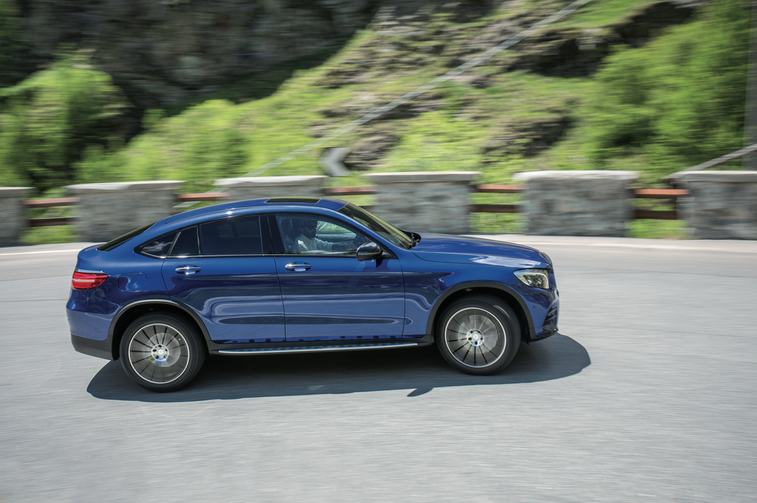
screen-shot-2016-11-08-at-1-54-49-pmMercedes GLC Coupé

Lebanon has a long standing love affair with Mercedes, but when it comes to an affluent young person who’s about to choose their first car, Mercedes isn’t what typically comes to mind. Perhaps it’s too easily associated with their parents’ stately yet sedate model in the garage. It may be time for the statesman model to make way however, because the Mercedes GLC Coupé has arrived and it’s the car that every young person dreams of driving. With a standard-fit sports suspension and more direct sports steering, the GLC Coupé is among the sportiest of the Mercedes Benz SUVs, an element which certainly appeals to the young family man or woman. Design wise, the GLC Coupé also impresses. The harmony between the distinctive design worlds of coupé and SUV is highlighted by the side view of the 1.60 meter-high SUV with its characteristic, stretched roofline of a sports coupé. Visually and functionally, the GLC Coupe may not be your parents’ car, but it might just be the car for you – the dynamic young parent.

screen-shot-2016-11-08-at-1-54-13-pmMINI Clubman

The MINI Cooper is a very personal car, a compact vehicle that you drive around town, rarely taking anyone along for the ride. It is a car you treat yourself with when you are single. But what happens when you start a family, yet still want to enjoy the experience of driving a compact and trendy MINI? You opt for the Clubman. The Clubman is the less selfish version of the MINI. The latest Clubman is 28 centimeters longer than the four-door Cooper hardtop and seven centimeters wider, and, believe us, every one of those extra centimeters matter. There is now room for four to five adults to sit comfortably in the Clubman and to store their luggage as well (in the cargo hold that is double the capacity of the hardtop). While retaining the compact and modern look of the MINI Cooper, the MINI Clubman is a super MINI, a versatile car that the whole family can appreciate, just as they appreciate the super mom or dad driving it.  

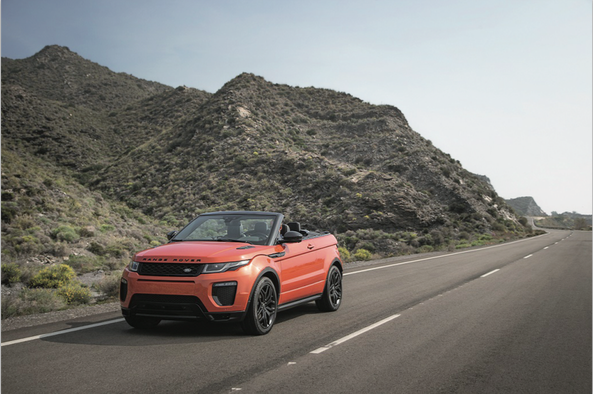
screen-shot-2016-11-08-at-1-53-53-pmRange Rover Evoque Convertible

Not only is it fresh, young, dynamic and sporty, but it’s also a Range Rover and a convertible! The Range Rover Evoque Convertible combines the bold design and elegance of the typical Evoque, with inclusive specifications and a folding roof to create a convertible that takes care of business in all seasons. The Evoque Convertible is a joy to look at. Its funky exterior design is highlighted by a special one-of-a-kind fabric roof shaped to create a crisply defined silhouette that remains faithful to the original design. Its Z-fold mechanism lays flush with the rear bodywork for a sleek, uncluttered appearance when lowered. As the first ever Range Rover convertible, the Evoque Convertible enjoys all the traditional luxury of the Range Rover, along with a distinctive four seat design and versatile storage, giving you enough room to pack all your beach gear. So if you don’t want to give up all the off-road advantages of an SUV, but still want to feel the night air blowing through your hair while you cruise Lebanon’s highways, then look no further than the Range Rover Evoque Convertible.

screen-shot-2016-11-08-at-1-53-30-pmVolvo XC90 Excellence

The Volvo XC90 Excellence is most aptly described as a silent star. Long known as the safest car manufacturer in the world, Volvo has lately significantly invested in design, evolving their image into a trendier, more luxurious brand that would appeal to a younger generation. The XC90 Excellence is the fruit of that labor. The XC90’s design is fresh and dynamic, with features such as super comfortable, individually adjustable rear seats and a Bowers & Wilkins sound system, yet it still maintains Volvo’s impeccable reputation for solidness and safety. These factors make it the obvious choice for young families. The promise of safety and reliability, which all parents look for in the vehicle that will be transporting their children, is there, yet the edginess and features of the new design make it as sexy as the parent driving their children to school. It is an attractive ride that makes heads turn, while making sure yours is safe.

November 28, 2016 0 comments
0 FacebookTwitterPinterestEmail
EntrepreneurshipWine and spirits

209 Lebanese Wine raises the glass

by Jasmina Najjar November 15, 2016
written by Jasmina Najjar

Unwinding at the end of the day with a glass of Chardonnay or enjoying a meal with the perfect Merlot is one of life’s delights. Lebanon is blessed with a vast choice of wines produced by both well-known brands and exquisite boutique wineries. There are many grape varieties and distinct tasting notes worth discovering.

And yet a trip to the supermarket or even to a wine store will present you with only a small selection of local wines. A mere sip that pales in comparison to what’s actually available out there. Selecting the ideal Lebanese wine for your meal, event or night in can also be a challenge without professional advice.

Launched in October 2016, the 209 Lebanese Wine website gives wine lovers the chance to explore the sensational local wines available in Lebanon.

This is not so much a website but more of an indulgent experience dedicated exclusively to Lebanese wine. The platform, which boasts approximately 35 wine brands and 250 wine-related products, acts as the first Lebanese wine club, suggesting useful pairings and tasting notes for each selection, as well as hosting an insightful wine blog. Best of all, your wine selection will be delivered straight to your door. As Selim Yasmine, founder and managing director, explains: “We want to make Lebanese wine available on every table in Lebanon and abroad, through an omnichannel, unique wine experience.”

Summarizing what the platform offers in a bottle, Selim Yasmine highlights “choice, the only place where consumers can find the widest selection of Lebanese wines; reliability, guaranteed freshness and storage conditions; convenience, delivered straight to you by wine-conscious professionals, hassle-free; guidance, a powerful search engine and filtering criteria allowing visitors to find the ultimate selection that suits their food menu, grape selection, taste and budget; personalization, a unique CRM [Customer Relationship Manager] that will recommend wines based on purchase history, as well as special occasions and gift service; rewards, a fidelity program will be developed at a later stage and will offer special incentives to loyal customers; and exclusive promotions”.

Yasmine is more than a passionate wine lover; he holds the Wine and Spirits Education Trust certification with merit. He’s also a marketing professional with proven insight into various industries. His success in wine is notable, having contributed to the success of Chateau St. Thomas and Domaine Wardy in the local market, where he worked as brand manager of wines and spirits. He also has a hand in Vintage Wine Cellar’s initial success when it opened. Now he is pouring all his expertise into this start-up.

Key advisors are helping him provide this refreshing wine experience for users. These include: Elias Ghanem, a resident mentor at the UK Lebanon Tech Hub accelerator and the chairman and co-founder of Telr (online and mobile payment gateway and cash management services); financial expert Paul Eid; Tatiana Nehme, a specialized transaction and wine lawyer from Nehme & Associates; and his own wife Katia Yasmine, the Managing Director of TRACCS Lebanon PR agency.

It’s too early to share figures on deliveries but Selim Yasmine says you can buy your wine at regular retail price and, for now, standard delivery (48 hours) is completely free, while same day express delivery costs $5.

Available only in Lebanon for the time being, the startup plans to launch a wine truck in 2017 and global expansion will kick off in January 2018 with a focus on Europe, Latin America (especially Brazil) and North America. 209 Lebanese Wine is funded by its co-founders’ investments and a Kafalat loan, and is already registered as an sal.

November 15, 2016 0 comments
0 FacebookTwitterPinterestEmail
Test Drives

Let’s go to Mexico

by Yasser Akkaoui November 9, 2016
written by Yasser Akkaoui

The Camaro 2SS Coupe is the car that movie stars drove in the late 1960s, the period when I was born and when Chevrolet brought the world the iconic Camaro. It’s the car that made John Cusack cool in the 1980s classic Better off Dead, and the car that Ron Howard and his girlfriend stole for a wild ride in Eat My Dust.

It’s no surprise that stepping into a Camaro has major significance for people who have grown up dreaming and fantasizing about it.

Therefore, I had a big responsibility. I am not talking about careful driving, which goes without saying and is almost guaranteed considering the traffic on Beirut’s streets – they are certainly no Route 66 or a runaway highway to Mexico (for some reason all the cool Camaro-driving villains had Mexico as their escape route) – but also the responsibility of living up to the coolness and swagger of the American movie stars who drove the Camaro.

screen-shot-2016-11-08-at-1-57-03-pm

The car definitely has an inspiring aura, it is a beast that commands respect. With a 6.2 liter V8 and 455 horsepower, the Camaro 2SS Coupe is literally the muscle car of your dreams.

Although fifty years have passed since the Camaro made its first appearance, it has preserved its aggressive yet elegant lines. By aggressive, I mean that just by glancing at it you sense the beast within, yet its lines are still elegant enough that your girlfriend would be comfortable sitting beside you in her Herve Leger dress and Jimmy Choo shoes while you cruise down the streets of Monaco.

When you are behind the wheel – and especially when you are not the car’s owner but have it on loan for the purpose of the review – you don’t allow yourself to treat the Camaro roughly (not that my driving can ever harm the powerful engine and transition) but, while cruising around the city, you definitely see heads turn. This is not because the car is yellow nor is it because of its beautiful lines or the roar of its powerful engine, it is because they are expecting you to do something heroic.

screen-shot-2016-11-08-at-1-56-39-pm

For the younger generation, they are expecting it to transform into a golden robot a la Transformers and for the slightly older crowd, they are expecting Clint Eastwood’s 44 Magnum revolver to pop out the window. To be honest, you are tempted to do so; this is something you only understand when you gently tap the pedal and realize that the 1960s are alive and kicking.

The car has excellent handling, but when driving it on the double S mode the car devours the asphalt. While I was hoping none of my son’s friends (who are in their early 20s now) would see me driving around in a yellow Camaro, I ended up bumping into them and our relationship will never be the same: we have one more thing in common now – the admiration of the Camaro.

Now that this bond with the Camaro has travelled through time from the late 1960s to 2016, I would gladly ride off into the Mexican sunset with a bag full of cash (or just into my garage).

November 9, 2016 0 comments
0 FacebookTwitterPinterestEmail
Test Drives

A first time exclusive

by Yasser Akkaoui November 9, 2016
written by Yasser Akkaoui

When I first spoke to Lara Faddoul, the marketing manager at Porsche Lebanon, we agreed that I would test drive the Carrera 4S. Then, to my surprise, she called me a few hours before the scheduled drive to inform me that the Porsche 911 Targa 4S had just landed on Lebanese soil: not a soul in Lebanon had driven it yet and Executive and I would be the first. I knew I was in for a treat.

To begin with, there is the sheer beauty of the car. It’s so beautiful and timelessly elegant, with a tamed masculinity that shines through. This is especially true for the color of the car I was driving: a sleek metallic night blue perfectly offset with the bright off-white leather interior.

Its appearance inspires you to drive it elegantly, there is simply no other way. The soft purr of the engine and the way it handles truly differentiates it from any other car. Little do passersby and observers know that behind all this elegance, seriousness and pedigree of the 911, it is really just a marvelous toy.

screen-shot-2016-11-08-at-1-57-44-pmIt’s agile, fun and safe. It can go from 0 to 100 in 4.2 seconds, and you can switch modes of driving from Sport to Super Sport and listen to the noise of the engine change into a throaty hum with a simple move. It has little gadgets and cool accessories that only the driver can appreciate, making them your little secrets. Just keep a smirk on your face and enjoy the ride.

The most beautiful part of the drive comes when you let the roof down. This is by itself something to admire: the roof smoothly and elegantly uncovers in a clockwork-like mechanism that the best Swiss watchmakers would envy.

Once the roof is down, the fun starts. The new design brings back the identity and authenticity of the original Targa through the separation bar at the rear windshield, which is kept intact when the roof is down.

screen-shot-2016-11-08-at-1-58-07-pm

Driving back from Byblos with the wind blowing through Charlize’s dazzling long hair and the clear and beautiful sound from the blaring sound system inspiring her to sing her heart out, you can’t help but push the pedal to the metal. This is when you realize that, despite your excitement, you have to be careful because you don’t want Assaad Raphael (owner of Porsche Center Lebanon) to have to pay your speeding fines; with the tiniest of taps on the gas pedal, you can go from 80 to 150 in a few seconds without even feeling it. The car is sturdy and steady enough that you feel safe speeding or taking the sharpest corners, knowing that it will always respond to your precise maneuvers and maintain its balance.

The one thing that would have made the experience more thrilling would have been to let Charlize drive and sing while I enjoyed the view.

You can contact Assaad or Lara to share my excitement, but as for Charlize, don’t even dare!

November 9, 2016 0 comments
0 FacebookTwitterPinterestEmail
Entrepreneurship

Eddress is the new address

by Jasmina Najjar November 8, 2016
written by Jasmina Najjar

In a world where more than 100 countries don’t have proper postal systems and four billion people lack clear home addresses, giving directions for a simple lunch delivery can be a nightmare.

We know this all too well in Lebanon. It’s not uncommon to get creative, telling people to turn left at Abou Rami’s mini-market before turning right at a white office block and then looking for a building with a red gate and potted plants.

Luckily, eddress simplifies your physical address by turning it into a six character code made up of three letters and three numbers. You can have multiple eddresses (work, home, etc.), and when you move, the same code can be updated to reflect the new location.

Ronny Shibley, co-founder and CEO, says that he first had the idea for eddress a year and a half ago while ordering food through a restaurant’s app. “While I was filling out my address the app crashed,” he says. “I didn’t want to go through the laborious process of typing in all the details again and so I called them to give them directions. Then it struck me, ‘why can’t I just have a six character code?’” He later expanded his idea to work for businesses as well as users.

The app’s user platform went live seven months ago, while its businesses specific platform launched just three months ago. Combined, both applications already have around 10,000 users, and 70,000 eddresses have been created so far. It includes a personal and business address directory, the option of putting contacts on the map, privacy controls (you choose who can see your eddress), and third party integration with the apps Zomato and Uber. Starting in November, users will also be able to place orders through eddress.

Eddress is free for users and requires them to register and pin addresses onto the map. Once a business that uses eddress makes a successful delivery, the address is verified. Shibley envisions “a global verified address system that is accessible on the cloud by users and businesses”.

In reality, eddress offers more than just a verified address: it connects you to the community through its Hyperlocal Services, making it your convenient link to food and beverage options, groceries, ATMs, banks, dry cleaners, the Red Cross, plumbers, electricians and other services in your neighborhood.

The app is already being used by several businesses to streamline deliveries, including local and international brands such as Burger King, Ginger & Co., Le Cid, Grab n’Go, The Malt Gallery, Flowers, delivery and transactions app Wakilni, EasyBites in Abu Dhabi, and BoxBike in Bolivia.

Businesses using the app can transform clients’ delivery addresses into easy-to-find eddresses, as well as assess delivery times, track drivers, optimize routes, engage customers and receive direct feedback online.

After a free trial period, businesses select one of three subscription packages, which start at $59 per month. There’s no limit to the number of users a business can have on their distribution platform, plus certain eddress features are free for businesses that choose to be listed on the app’s marketplace.

Before eddress, Shibley, a computer engineer, worked on several startups, including Codefish, which launched six years ago and offers IT consulting and software development. Eddress is incubated at Codefish with a dedicated team. Co-founders Karim El Khoury (COO) and Emile Harb bring their finance expertise to the table, while Kamel Semakieh works as a computer engineer for the app. Sixteen months ago it had an angel round raising $220,000, and it recently secured another $700,000. Pre-series A, the startup is already generating revenue. While eddress is still being optimized, there are plans to expand further to more countries around the world.

November 8, 2016 0 comments
0 FacebookTwitterPinterestEmail
IssuesNovember 2016

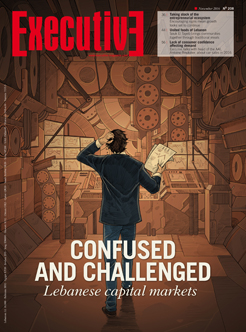
November 2016 table of contents

by Executive Editors November 4, 2016
written by Executive Editors
space

[media-credit id=2635 align=”alignright” width=”246″]cover-november-2016[/media-credit]

EDITORIAL

It’s time for some serious changes

From the Lebanese entrepreneurship ecosystem to capital markets, action needs to be taken

LEADERS

A small matter of perspective

It’s time to break the silence on the CMA

Getting competitive

Circular 331 needs a legal system to back it

Not just the apps

Our non-tech startups need support

COVER STORY

To be or when to be

The CMA faces barriers in the national quest for Lebanese capital markets

A desire to monopolize the Lebanese forex market?

The CMA wishes to curb the long tradition of leverage and speculation in currency trading

A view from the other side

Interview with Firas Safieddine of the Capital Markets Authority (CMA)

ENTREPRENEURSHIP

Taking stock of the entrepreneurial ecosystem

Encouraging signs mean growth looks set to continue

Into a new dimension

Boldly adding academia to the entrepreneurship game plan

The legal building blocks of the ecosystem

The challenges to launching a startup in Lebanon

United foods of Lebanon

Food entrepreneur brings communities together through traditional meals

BANKING & FINANCE

Toward a national strategy

Gone missing: potential stakeholders

AUTOMOTIVE

Lack of consumer confidence affecting demand

Executive talks with head of the AAI, Antoine Boukater, about car sales in 2016

LAST WORD

Convincing the masses

Political outsiders face hurdles in gaining traction
November 4, 2016 0 comments
0 FacebookTwitterPinterestEmail
Economics & Policy

Convincing the masses

by Matt Nash November 4, 2016
written by Matt Nash

Parliamentary elections are coming, and groups of hopeful upstarts are forming (one even financed what must be a rather expensive national billboard campaign) with an eye on defeating as many establishment candidates as possible. The challenges for such an undertaking are many and significant, so an effective strategy is paramount.

The first challenge facing outsiders will be the law governing the election itself. While parliament is currently debating reforms to the law, what exists on the books – and will be used in 2017 unless it’s amended or completely replaced – is the so-called 1960 law. It’s often described as a “winner-takes-all” system. Reformers want Lebanon instead to use proportional representation. There’s an important nuance related to the confessional nature of Lebanon’s system that we can’t forget, however. Parliamentary seats in Lebanon are not only divided by district, they’re divided by sect as well.

It’s easy to look at a district with nine seats and surmise that proportional representation might make it possible for the MPs elected to represent March 14, March 8 and independents (to use simple labels for illustrative purposes only). However, those 9 seats are actually 4 Sunni seats, 3 Shia seats, one Maronite seat and one Greek Orthodox seat (again, illustrative purposes only). So in that district, proportional representation would actually only apply to 7 of the 9 seats (one seat can’t be divided). Getting rid of sectarian seat distributions won’t happen this time around, so we have to recognize this nuance, especially if parliament ends up endorsing a hybrid “winner-takes-all”/proportional representation law. Whether districts are drawn to limit the impact of proportional representation (i.e., having it only apply in contests where it can do the least damage) or parties run multiple lists to drown out candidates they disapprove of, a new law is not a guarantee that non-establishment candidates will win in significant numbers. Activists need to follow this debate closely and exert any influence they can to tip the scales in their favor. Pinning hopes only on the chances of a new law opening up opportunities is nowhere near enough.

Bottom up

Entrenched political parties have created a culture of dependency. Voters don’t choose a parliamentarian because he or she is most qualified or can deliver development projects or economic revitalization to a district. Current MPs and the parties they represent deal more in personal favors than district-wide benefits. This is an exploitable weakness, but it will require serious time and effort by local candidates.

By all accounts, one of Beirut Madinati’s strengths was engaging with residents and finding out what their needs were to develop their electoral platform. Rumors on the street have it that a few parliamentary hopefuls are doing just that in advance of the 2017 polls. This is laudable and must continue. The parties cannot have bought everyone off. We have no public statistics to point to, but reason alone suggests there’s a class of voters who will respond to the argument that eight years after the last parliamentary election, their lives are worse and have been made no better by the district MPs. Here is also where what activists say they can achieve will be essential. Empty electoral promises are meaningless and usually easily identified as such.

Start small, be transparent

A number of this country’s problems are surprisingly easy to solve, if there’s political will to solve them. Executive has been pointing out ways to make Lebanon a better place to live for nearly 20 years now. At the height of anti-establishment protests last summer, we even produced a quick guide to our problems as well as their potential solutions. Elected officials have ignored their duties in the past four years. Wise activists would remind people of this over and over, pointing out how easy it could be to make this country a much better place with the right leaders in place. There’s no need to promise the moon, just to fill a few potholes. And transparency should be a cornerstone of every commitment. Politicians in power love to say they know hidden secrets about corruption and threaten to reveal them time and again. They yell at journalists who question them instead of engaging in real debate. Promises to name names and blow whistles once in power would no doubt go a long way and also set a proper precedent for the whole experiment. If activists end up winning seats, they’ll only have been able to do so by convincing people they deserve them. Once in power, betraying that trust will bring us back to where we are today.

November 4, 2016 0 comments
0 FacebookTwitterPinterestEmail
Automotive

Lack of consumer confidence affecting demand

by Jeremy Arbid November 4, 2016
written by Jeremy Arbid

Fewer new cars will drive onto Lebanon’s streets in 2016 as sales declined slightly from last year. A slower market and tighter profit margins for car dealers have worried some but, like many watchers of the country’s economy, they hope that an election of a president at the end of October will boost consumer confidence, leading to more new car sales.

Last year almost 40,000 new vehicles were sold in the country, concluding a string of small gains starting in 2012 that saw an average annual growth rate of 3.3 percent. This year new car sales are not as strong, down 12 percent year-on-year for the month of August and down eight percent in September. Until 2016, incremental growth in new car sales was driven primarily by demand at the lower spectrum of the market, those entry-segment compact cars priced $15,000 or below. But for the current year the downward trend is universally affecting the sale of compact cars and other inexpensive models. However, slower sales performance of new vehicles in 2016 is not a cause for concern, according to the head of the Association of Automobile Importers, Antoine Boukather.

Boukather says the slowdown in new vehicle sales, after acknowledging the political void, has been largely due to poor confidence of Lebanese consumers, some of whom may not have the income to buy new vehicles and maintain them, putting on hold their appetite for bigger purchases. Consumers with the financial means, Boukather told Executive, simply do not want to spend their money, preferring to wait for a president to be elected and a new government to be installed.

Despite a stagnant economy, new car sales grew incrementally from 2012 to 2015 largely because of attractive financing options. Low interest car loans, Boukather suggests, encouraged vehicle owners to scrap their old clunker for new, cheap compact cars. For the last couple years, as much as 90 percent of all car sales fall in the price segment of $15,000 and below, Boukather told Executive.

The decline in sales in 2016 might reflect a market beginning to catch up to itself, where supply outstrips demand. That aside, the slower sales could also be attributed in part to a measure meant to save the industry from itself. A decision by the central bank meant to avert a collapse of the market required a 25 percent down payment when financing a vehicle purchase. Boukather argues that sales of new vehicles this year might have been higher without the downpayment requirement, but without the more stringent lending requirements in place, some vehicle buyers would be in danger of defaulting on their loans were their incomes to be diminished or otherwise reduced to zero in such trying economic times. Requiring a 25 percent down payment makes sense because all cars depreciate some 20 to 25 percent in the first year, and so if banks were to repossess vehicles after one year because of an inability by the car buyer to make mortgage payments, banks would have a problem recouping their full investment. It could have become a vicious cycle tanking car sales, Boukather says, but instead only slowed them.

According to Boukather’s estimates, of the 1.54 million licensed cars in Lebanon 670,000 are more than 20 years old, and when counting cars that are over 15 years old, the number rises to 896,000 total. Aside from the environmental benefits of getting those older gas guzzlers off the road, replacing them with new vehicles represents a lucrative opportunity moving forward, just one that is not being planned for.

Auto dealers have to make significant investments in diagnostic equipment, tools and training to service late car models; hybrid or electric vehicles can be imported, but there is not much incentive to do so. Autonomous driving is yet a dream in Lebanon, Boukather says, the technology of which is seemingly difficult to adapt to Lebanon’s roadways.

Because sales are not very robust anyway (only 40,000 new vehicles sold last year) it does not make business sense to plan long-term, and the economic cycles simply do not seem to apply. The normal cycles of replacing the lifecycles of older vehicles – meaning the estimate that 60 percent of all cars are older than 15 years and 30 percent of all cars are older than 20 years – in which cars are renewed is disrupted. The disruption is partly happening because there is no enforcement of technical standards via traffic laws and mechanic inspections (Boukather says some 30 percent of registered vehicles forego government-mandated inspections).

An automobile importer operating in any larger market with any planning would have a five year plan of how many vehicles and of what type they’d target for sale. Instead, Lebanon’s automobile importers operate in a sort of gray zone where economic planning does not occur because predictions when cars of a certain type will be replaced cannot be accurately made.

vehicle registrations 2016

November 4, 2016 0 comments
0 FacebookTwitterPinterestEmail
BusinessFinance

Toward a national strategy

by Thomas Schellen November 4, 2016
written by Thomas Schellen

Financial literacy is a hot global policy potato that emerged as the flavor of the month for October 2016, according to the taste buds of the Organization for Economic Development and Co-operation (OECD) and a publication by the Association of Banks (ABL) in Lebanon.

“Financial literacy, financial capability and consumer protection have been in focus for the past few years in most countries around the world,” the ABL said in a recent brochure. While the claim to this topic being hot in “most countries” is a bit daring (there are over 180 member countries in the United Nations), Lebanon is one of over 60 countries around the world that is currently developing or implementing a national strategy for financial education, according to the OECD.

The intent to forge such an initiative under participation of different stakeholders in economics, finance and education was evidenced by ABL’s publication, which was exactly titled “Towards a national strategy for financial education and literacy.” It envisions the development of such a strategy during the years 2016 through 2019, which would suggest that Lebanon is among the five countries out of 64 that are still planning their national strategy (the brochure isn’t clear on this point), but this would still be a timely schedule if any element of credence could be attached.

“Overall levels of financial literacy, indicated by combining scores on knowledge, attitudes and behavior are relatively low,” the OECD concluded in its first multi-national survey of adult financial literacy competency, which was based on surveys commissioned by various national financial authorities over the past few years. The survey results included 30 countries (13 of them non-OECD members) and were published in October 2016.

This conclusion of course begs the question in relation to what standard or historic finding are the overall levels “relatively low,” seeing as a comparable international survey does not exist. This, and the fact that our country is not part of the survey, should not deter policy makers in Lebanon from perusing the study’s detailed findings when designing their own national strategy for boosting financial literacy.

Think long-term

According to views quoted by the OECD study, financial literacy is a complex phenomenon, made up of a combination of knowledge, attitudes and behaviors. The study regards financial well-being as primarily the result of positive (long-term-oriented) behaviors and argues therefore “that financial education needs to ultimately change behavior.”

This contrasts with prevalent behavior found today. “Relatively few people reported that they have long-term financial goals and strive to achieve them, which suggests a tendency to focus on the short term,” the OECD found. This may only come as a surprise to people (like researchers and communications experts based at OECD headquarters) who fall into an income bracket that is more comfortable than 40 to 50 percent of the world population, who have no assets worth mentioning. Nonetheless, financial literacy is an increasingly important issue when one considers that global asset ownership has been on the rise. According to the recently published Global Wealth Report by Allianz Group, the world’s population now holds more than $100 trillion in net financial assets. The Allianz report is not preoccupied with waxing endlessly about the concentration of wealth in the hands of the “one percent.” However, it emphasizes that there is a paradox between excess savings capital on the macroeconomic side and a very different situation on the level of the individual. “Faced with over-indebted governments and aging societies, each individual is being called upon to do more, not less, to make provisions for his or her own future,” Allianz says. This dichotomy between growing aggregate savings and increasingly stressed fortunes for the average man or woman, in conjunction with demographic trends toward increased longevity and the socio-political quest to achieve a lowering of inequality, strongly supports a rising need to move attitudes and behaviors from their focus on the short term towards the long term.

Jordan, the country closest to Lebanon among surveyed economies in geography but perhaps not in terms of financial knowledge, behaviors and attitudes, stood out against other countries described in the OECD survey by having a very strong short-term orientation and aversion to long-term financial planning (i.e. fewer people in Jordan than in any other surveyed country disagreed with the view that they “tend to live for the day”). The Jordanian participants in the survey also showed particularly strong gaps between the two genders (in favor of males over females) in financial knowledge and behaviors thought to be expressions of advanced financial literacy.

Financial literacy, propped up by powerful consumer rights, and financial inclusion, meaning promotion of access to a wide range of financial services and broadening their use by all segments of society, are vital to the overall stability of the financial system. “It is therefore valuable for policy makers to have information about the levels of financial inclusion of consumers alongside a measure of their financial literacy,” the OECD study argues.

The organization – offering a strong dose of patrimonial “nudging” toward the kind of financial literacy that it promotes – suggests starting financial education early and ideally in school, strengthening basic financial knowledge across the population, and encouraging behaviors to improve financial resilience and reap long-term rewards.

These recommendations are indeed applicable to Lebanon, and there is evidence to support this. While the Lebanese authorities did not take part in the surveys that were commissioned by local institutions in the 30 participating countries that were represented in the recent OECD analysis (one wonders whether the local decisionmakers lack the political will and clout or the funds to commission a survey), the country participated in an earlier pilot survey of national financial literacy conducted in 11 countries for OECD’s International Network for Financial Education (INFE), which was sponsored by the World Bank.

According to the results of this pilot survey, as cited in the new ABL brochure, more than one in every five Lebanese are unaware of the fact that state budgets entail both revenues and expenses, whereas one in four hold a savings account and another 23 percent have a current account. However, a majority did not correctly grasp the concepts of inflation and compounded interest. Most concerning, only about one in every ten workers will potentially benefit from a pension, while end-of-service indemnities provided through the National Social Security Fund (NSSF) are “judged not to be sufficient to ensure a decent life for the retiree.”

Widen the net

The draft recommendations for a national strategy for financial education and literacy in the Lebanese brochure are obviously inspired by the OECD points of view. The OECD perspectives are expressed in all descriptions of financial literacy in the brochure and have found entry into the five “priority pillars” that are outlined at the end.

There is nothing to say against these pillars: starting financial education at an early age, improving consumer protection, enhancing the pension system, strengthening citizens’ knowledge of fiscal and tax policies and increasing financial inclusion. Each of these five objectives is indeed commendable. Many of these  financial knowledge and policy targets have been repeatedly called for in this magazine.

What is surprising, however, is that the list of stakeholders (on page 18) for participation in a higher council of financial education – while mentioning institutions such as the Capital Markets Authority, insurance companies and media in passing at different points in the text – puts emphasis on five public sector entities (four ministries and the central bank) and highlights exactly one private sector stakeholder by name – the Association of Banks in Lebanon.   

In Lebanon, the initiative toward creating a higher council for financial education and literacy is clearly a reflection of the international push toward financial literacy, and the welcoming of the initiative of the central bank and the banking industry.

It takes just a few minutes to devise a list of other entities, from the public but especially from the private sector, which should be mentioned as stakeholders or candidates for involvement in a higher council, without giving them the same weight as ABL. Even if one leaves out international electronic payment facilitators such as Visa and MasterCard, the stakeholders to consider would be, besides the CMA and the BSE in the public domain, from the private sector: insurance and pension consultants; the insurance association (ACAL); Fintech companies and entrepreneurs; funds operators; financial intermediaries; experts in compliance; lawyers and specialist media.

The fact that these stakeholders are not included in the top-level list shows that Lebanon has still to cover some distance before one can expect to see a holistic national strategy and an authoritative higher council for financial education that is not biased in favor of the banking industry, at the expense of financial markets. 

November 4, 2016 0 comments
0 FacebookTwitterPinterestEmail
  • 1
  • …
  • 115
  • 116
  • 117
  • 118
  • 119
  • …
  • 698

Latest Cover

About us

Since its first edition emerged on the newsstands in 1999, Executive Magazine has been dedicated to providing its readers with the most up-to-date local and regional business news. Executive is a monthly business magazine that offers readers in-depth analyses on the Lebanese world of commerce, covering all the major sectors – from banking, finance, and insurance to technology, tourism, hospitality, media, and retail.

  • Donate
  • Our Purpose
  • Contact Us

Sign up for our newsletter

    • Facebook
    • Twitter
    • Instagram
    • Linkedin
    • Youtube
    Executive Magazine
    • ISSUES
      • Current Issue
      • Past issues
    • BUSINESS
    • ECONOMICS & POLICY
    • OPINION
    • SPECIAL REPORTS
    • EXECUTIVE TALKS
    • MOVEMENTS
      • Change the image
      • Cannes lions
      • Transparency & accountability
      • ECONOMIC ROADMAP
      • Say No to Corruption
      • The Lebanon media development initiative
      • LPSN Policy Asks
      • Advocating the preservation of deposits
    • JOIN US
      • Join our movement
      • Attend our events
      • Receive updates
      • Connect with us
    • DONATE