• Donate
  • Our Purpose
  • Contact Us
Executive Magazine
  • ISSUES
    • Current Issue
    • Past issues
  • BUSINESS
  • ECONOMICS & POLICY
  • OPINION
  • SPECIAL REPORTS
  • EXECUTIVE TALKS
  • MOVEMENTS
    • Change the image
    • Cannes lions
    • Transparency & accountability
    • ECONOMIC ROADMAP
    • Say No to Corruption
    • The Lebanon media development initiative
    • LPSN Policy Asks
    • Advocating the preservation of deposits
  • JOIN US
    • Join our movement
    • Attend our events
    • Receive updates
    • Connect with us
  • DONATE
EntrepreneurshipEntrepreneurship in Lebanon

Smart city life

by Executive Editors January 22, 2016
written by Executive Editors

This company is part of Executive’s Top 20 for 2015. Read more stories from our entrepreneurship in Lebanon section, for the latest analysis on the country’s ecosystem.

Markelligent

Industry: Technology and analytics

Product: Solutions using IoT sensors and analytics

Product launch: 2015

Established: 2014

Employees: 9

Founders: Elias El-Khoury and Fadwa Mohanna

The Internet of Things (IoT) is a network of connected objects – to the internet and to each other – which through embedded sensors share information across a network and allow for the collection of data, and the ability for those selfsame objects to be controlled remotely. For example, a smart fridge that knows when a door is left ajar, can subsequently be closed through an app after alerting a user.

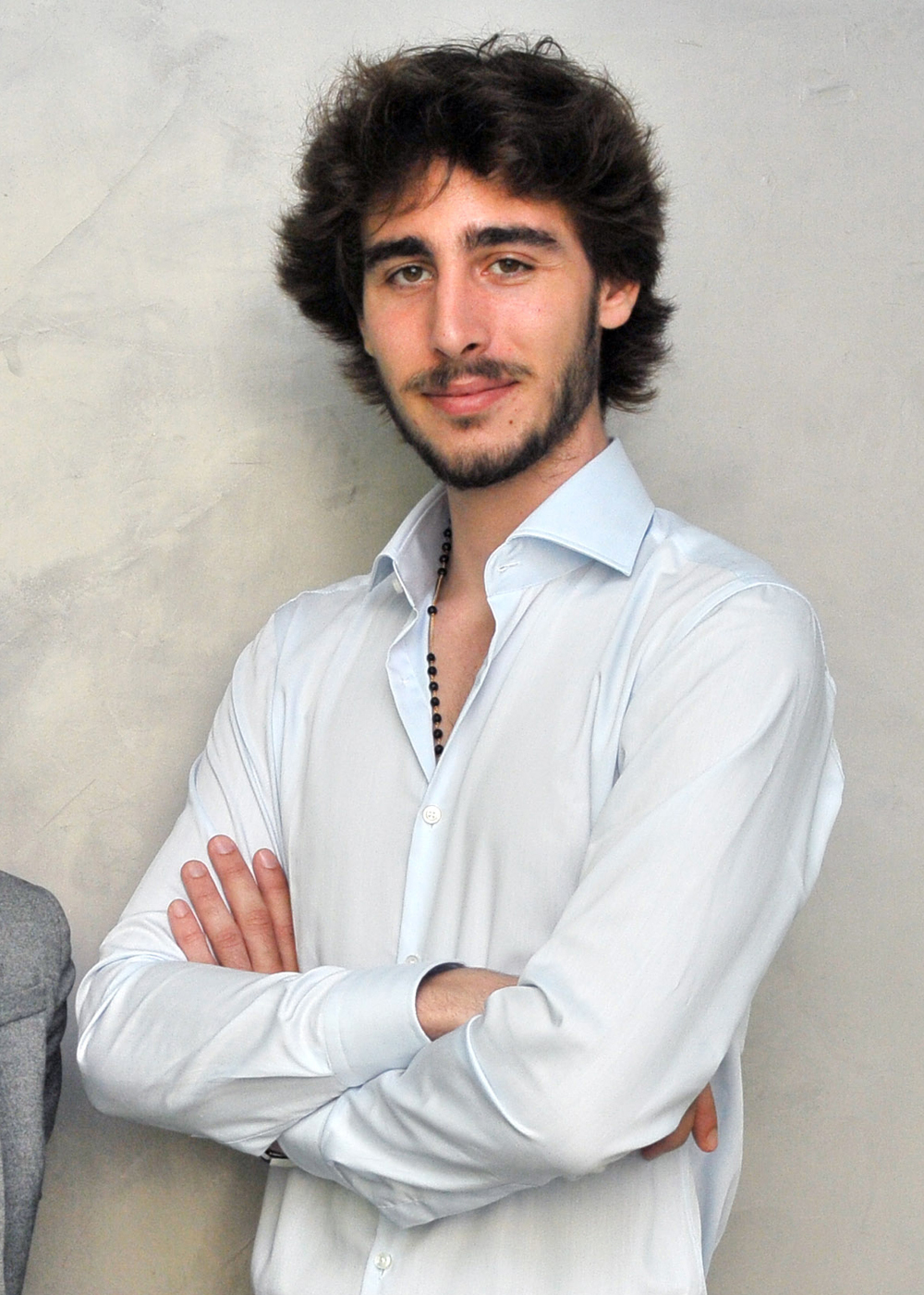
Markelligent, a startup founded at the end of 2014 by Fadwa Mohanna and Elias el-Khoury, aims to harness the IoT through collecting data from the sensors and providing companies with services relating to data analytics. Their intention is to offer IoT solution packages to citizens’ pre-existing problems, generating revenue for Markelligent and improving the quality of collective lives. Once a challenge has been identified, Markelligent develops the needed sensors to measure the readings related to that challenge and start collecting all kinds of data generated by those sensors on their cloud. Then, they start analyzing the data which can be displayed in a dashboard format, enabling the management of the client to track the progress and take the relevant actions accordingly. Their target markets are corporations, municipalities and large entities, and their expansion plans eye the Gulf and Europe as regional areas for future operations. At the end of its first year, Markelligent is cash positive, has organic growth fuelled by customers, has projects on the back of initial self funding, and has seven employees in Lebanon and three outside.

Examples include one of their current projects ‘Smart Parking’, which enables people to find the nearest empty parking location within Riyadh, Saudi Arabia. This IoT implementation is one example of using such innovation in a ‘smart city’ context, which has a wide applicability that extends beyond traffic congestion. These cities have electronic hardware embedded throughout multiple objects, which work to improve city efficiency by connecting the infrastructure to the behaviour of people, and translating it into data analytics, such as notifying councils when garbage bins are overflowing which is currently done in Milton Keynes in the UK. Though the trash analogy will doubtless take time to be rolled out across Lebanon, the wider scalability and applicability is large, especially as cities become more energy aware and environmentally conscious across the globe. Markelligent is working both with Bluetooth and low-power wide-area network (LPWAN) technology for entities with limited connectivity capabilities, thus increasing their market attractiveness.

Markelligent is determined to remain in Lebanon, and ultimately rejected plans to relocate to Dubai. Instead, they have chosen to recruit local talent in Lebanon, with most of their staff located in Beirut. Whilst they cannot release financials, Mohanna stresses that they expect to double in size by mid 2016, and aim to employ individuals in research and development, software and quality control.
January 22, 2016 0 comments
0 FacebookTwitterPinterestEmail
EntrepreneurshipEntrepreneurship in Lebanon

The key code

by Executive Editors January 22, 2016
written by Executive Editors

This company is part of Executive’s Top 20 for 2015. Read more stories from our entrepreneurship in Lebanon section, for the latest analysis on the country’s ecosystem.

Le Wagon

Industry: Education

Product: Coding bootcamp

Product launch: 2015

Established: 2015

Employees: Recruitment on a project basis

When Malik El-Khoury returned to Lebanon in 2014, he was surprised at the lack of appropriate developers he could recruit for the tech startup he wished to establish. After spying a gap in the market, he decided in 2015 to licence the ‘Le Wagon’ program from the French coding school of the same name, which was formed in 2013 by Boris Paillard. Though the program itself is not an original startup, the idea of licensing and hosting such an event displays an entrepreneurial tour de force from El-Khoury, and is worthy of one of Executive’s top 20 places in this year’s startups in Lebanon.

The first coding session, which entailed a 9-week intensive coding bootcamp, offered participants a chance to become a fully fledged junior developer in a comparatively short period of time. The course is conducted in English, is limited to 25 participants per cycle (to ensure a strong coverage by tutors) and costs a subscriber $4,500 for the entire venture, but subsidies of up to $1,000 under certain conditions have been offered. There are no prerequisites to learning to code and thus the bootcamp appeals to anyone who wishes to become a developer even if they have no previous professional or higher educational experience. Participants must, however, complete the Ruby track on the open online educational resource, Code Academy, which gives them the basic building blocks and allows the students from ‘Le Wagon’ to hit the ground running from day one. In terms of speed of education, the students in the bootcamp learn at a much faster rate compared to similar university courses, as the volume of material covered in one day is enormous. El-Khoury invested his own capital to start and maintain the first session, but expects it to become profitable after several cycles, and insists that the focus should be on retaining talent in Lebanon.

While a debate exists over the quality of computer science education in Lebanon, there is no doubt that every startup and company which focuses on tech is in need of developers, and ones which have skills that do not create back end development confusion, or ‘spaghetti’ code. Bootcamps which target this niche in the education sector will surely increase in demand, and the licensed program offers employment as bootcamp teachers to local strong programmers, as four of the tutors of El-Khoury’s first cycle were Lebanese. After the successful completion of the first cycle, ‘Le Wagon’ plans to launch its next session on April 11, 2016.


January 22, 2016 0 comments
0 FacebookTwitterPinterestEmail
EntrepreneurshipEntrepreneurship in Lebanon

Connecting Lebanon

by Executive Editors January 22, 2016
written by Executive Editors

This company is part of Executive’s Top 20 for 2015. Read more stories from our entrepreneurship in Lebanon section, for the latest analysis on the country’s ecosystem.

Lebtivity

Industry: Event management and ICT

Product: Website and web app

Product launch: 2012

Established: 2012

Employees: 3 part-time; 2 interns

Founders: Randa Farah, George Zeenny, Teddy Zeenny, Rana Abou Rjeily, Charbel Jamous

Lebtivity was started in May 2012, after one of the five co-founders realized there was no central page in Lebanon that contained information about future hiking events. After brainstorming, they decided to expand beyond a page dedicated to hiking to include all types of events in Lebanon. Since their inception, the website has grown and people are allowed to add their event to the page for free. Randa Farah, one of the co-founders, has spoken of the positive feedback that Lebtivity has received, with many users remarking how surprised they were at the sheer quantity of events taking place in the country. Sharing events on such a platform is a “win-win” situation for everyone; the event planners, the attendees and ultimately the entertainment industry in Lebanon.

Lebtivity encourages participation in their online social calendar by not charging to upload events to their website. Their business model, however, is based on advertising packages, where individuals can pay for social media exposure with different Lebtivity partners, and adverts publicized on the website. Events are sorted by popularity, granting those with more ‘likes’ or views greater visibility. Lebtivity boosts the events on various platforms. Aside from advertising, Lebtivity also generates revenue by acting as intermediaries for providers selling different services to event organizers at preferential rates. Examples include catering, hostessing, live streaming and photo booth machines.

Thus far, Lebtivity is self-funded, and the five founders have invested their time and money into the platform. While their motivation was borne out of a desire to promote the country and encourage social support to local events, they are now looking for angel investors in order to secure greater funding to the platform. The value Lebtivity adds to the Lebanese economy is on all levels; from small restaurants to large events, adding their details to Lebtivity will boost their visibility through a central page and increase the likelihood of having customers. This is supported by their website traffic, which at time of publishing counted over 1 million unique visitors to the website since its creation. The variety of events also encourages users to attend different events to the ones they originally search for on the platform. While for now Lebtivity is in Lebanon, they wish to expand to other countries regionally and globally, and have conducted small test trials in Canada. Current projects in the pipeline also include improvements to the online platform, and ultimately expanding upon Lebtivity’s own software development team by recruiting local talent. Their philosophy is to promote the positive side of the country – “you have your Lebanon and I have mine” says Farah, quoting Gibran Khalil Gibran and explaining that to her, Lebtivity shows that it is a country of culture and art.

January 22, 2016 1 comment
0 FacebookTwitterPinterestEmail
EntrepreneurshipEntrepreneurship in Lebanon

Dual nature

by Executive Editors January 22, 2016
written by Executive Editors

This company is part of Executive’s Top 20 for 2015. Read more stories from our entrepreneurship in Lebanon section, for the latest analysis on the country’s ecosystem.

Krimston Two

Industry: Telecommunications and technology

Product: Dual SIM appliance

Product Launch: 2016

Established: 2014

Employees: 13 contracted employees worldwide

Founders: Fouad Fattal and Nabil Nasr

Shareholders: Nicolas Sehnaoui, Ghassan Hasbani, Walid Rizk, Bassem Boustany, Walid Hanna, Raja Gedeon

Krimston labels itself as inventing the solution for all Apple lovers who are recurring travellers and tired of having to switch phones when abroad. Co-founders Fouad Fattal and Nabil Nasr have developed a product, due to go live early 2016, that is a new SIM card solution to enable users to operate a cell phone with two SIM cards. The product, which looks like a phone cover, can be understood as a ‘phone without a screen’. A SIM card slots into the cover, and a downloaded app enables the user to interchange between the two SIM cards and use them both, for example, by allowing them to choose between a domestic and foreign line for placing calls and sending messages. The ‘cover’ also offers charging capabilities and is a hotspot that enables 3G usage of the inserted SIM’s data. The IP for the device has been registered in the UK.

Having raised $400,000 by the end of 2014 from angel investors and loans, the co-founders travelled to Silicon Valley to produce a prototype that could be taken to production and specifically appeal to iPhone users. Krimston will be piloting the product in February through a Kickstarter campaign, and will use feedback to improve their product. The target market is the global iPhone usage of 400 million devices worldwide, though their initial production batch will be 10,000 units, which Fattal hopes will be followed by exponential growth upon successful sales, and an injection of at least 150,000 units by the end of 2016 into the market across the globe, with manufacturing done in India and operations conducted in Lebanon. Their target market are dual SIM card users for travelling, and also individuals who wish to cherry-pick the best features of two different line operators.

While Krimston are still finalising the final retail price, current estimates are at $199 per device but subject to the feedback from focus groups. The device is a hybrid that operates as a phone but appears as an accessory, and marketing ploys will need to be implemented carefully so users understand the true value of the device. Fattal and Nasr have secured another loan from Lebanese financial company Kafalat of $400,000, which ensures production will happen, and Fattal estimates that by mid 2016 total expenditure will hover at $800,000, the bulk of which will be on research and development and tooling. Their six-member strategy consultant heavy board also features the familiar faces of Nicolas Sehnaoui, former minister of telecommunications, and Walid Hanna, managing partner at Middle East Venture Partners.

Fattal emphasises that Krimston wishes to operate from Lebanon but has the world as the target market. Since this type of operation requires a lot of different talents, Krimston’s future vision is to create a professional entity where individuals can deploy their knowledge, rather than travelling abroad, and the end goal would be to seek partnership with Apple, pending a Made For iPhone (MFi) certification and licence. To feed back into the ecosystem, Krimston will look to hire developers (specifically iOS), electrical and technological engineers, a sales and in-house marketing team and a logistics and customer service department, and wishes to keep all operations within the country. Fattal has great enthusiasm for employing Lebanese talent, and estimates that their multicultural society and ease of adaptation to environments will allow them to become a strong sales team, which he envisions being online, through distributors (and therefore retailers) and business-to-business. 


January 22, 2016 0 comments
0 FacebookTwitterPinterestEmail
EntrepreneurshipEntrepreneurship in Lebanon

Sweet dreams (are made of this)

by Executive Editors January 22, 2016
written by Executive Editors

This company is part of Executive’s Top 20 for 2015. Read more stories from our entrepreneurship in Lebanon section, for the latest analysis on the country’s ecosystem.

Dream Matcher

Industry: Event management

Product: Networking conference

Product launch: 2012

Established: 2012

Employees: No fixed employees; freelancers

Founders: Ali Chehade

Ali Chehade’s Dream Matcher networking event began as an online startup, inspired by an idea for a television show which subseqently pivoted into an offline company. The  Dream Matcher ‘experience’ is a networking event that lasts for a couple of hours and hosts 50 to 70 people. During the event, participants write their dreams on post-it notes, stick them to a large wall and have them viewed by others. In a bid to help one another achieve their ambitions, participants with relevant skill sets approach the post-it writer during the event to offer their assistance with their ‘dreams’. This can be scaled up to corporate or entrepreneurial oriented spin offs. The former is marketed to small-to-medium enterprises and the latter offers a variety of entrepreneurship prizes (such as co-working spots and advertising space). Since 2012 more than 50 events have been organized inside and outside Lebanon, in places such as the US and Spain. Their pilot corporate event was tested on PricewaterhouseCoopers in Dubai in February 2015, who approached Chehade after hearing about the Dream Matcher. According to Chehade, the experience was well received by the roughly 80 employees who participated, and was followed by discussions with private companies in Lebanon to build up their corporate segment.

While there are no fixed employees, the capacity to create jobs indirectly through its networking event renders it worthy of Executive’s attention. The concept is marketed to young professionals but participants are often drawn from a wider market. With regards to social impact, there have been successful pairings of employee with employers, and the creation of startups through individuals who met through their networking experience at Chehade’s events. Nour Atrissi, for example, secured the entrepreneurship prize of the “How to start your business” course from AMIDEAST Entrepreneur Institute through the 2013 Dream Matcher Entrepreneur edition, which enabled her to co-found another Executive top 20 startup, Teens Who Code.

The scalability factor results from their business model, which identifies licensing of the program as a source of income; the package will be outsourced and licensed worldwide, without the need for physical on-the-ground presence. Ticket sales to individuals for the non-specialized events, which are held every month in Beirut and in various cities across Lebanon over the last year, are also a source of income. With revenues in 2015 standing at $20,000 at time of writing, Chehade has earmarked the corporate events as the main breadwinner in terms of revenue for future financial projections.

As a tool for exposure, Chehade also describes the recent media and corporate partnership with the television show Bala Toul Sireh on the Future TV channel, which will air success stories from the event, in a bid to gain momentum. Chehade’s future growth plan in the long term sees licenses being rolled out worldwide, and wishes to restart the online platform.

January 22, 2016 0 comments
0 FacebookTwitterPinterestEmail
EntrepreneurshipEntrepreneurship in Lebanon

To be heard and not seen

by Executive Editors January 22, 2016
written by Executive Editors

This company is part of Executive’s Top 20 for 2015. Read more stories from our entrepreneurship in Lebanon section, for the latest analysis on the country’s ecosystem.

Fallound

Industry: Technology and social networking

Product: Mobile app

Product launch: Late 2015

Established: 2015

Employees: 4

Founders: Stefano Fallaha and Emad Yehya

Adviser: Habib Haddad

Fallound is a startup founded by Stefano Fallaha and Emad Yehya, a high school student and a computer science undergraduate at AUB respectively, who identified a gap in the social networking and messaging market. Habib Haddad, the chief executive officer of Wamda, serves as their advisor. Their product is a ‘hands-free voice-based’ app which uses 27 second voice notes to create and deliver a stream of online content that forms the base for a social network. Fallaha conducted extensive research into how podcasts, an episodic series of digital media files, could gain greater traction and success, and from this developed the idea of having a short voice clips platform, hot on the heels of the way many users in Lebanon and the wider region send voice notes through the mobile messaging giant WhatsApp, which still predominantly caters for text chat facilities.

The app works by allowing the user to create a profile and upload voice clips which can be adjusted with ‘audio filters’ such as backing music or voice alteration. These clips are tagged for their content, for example ‘science in Lebanon’, and contribute to a news stream of consecutive clips which can be searched for, selected and played by the listener, akin to a playlist on iTunes with skip and other features included. Yehya is the brain behind the construction of an algorithm which automates and selects which clips from which profiles are fed to the user, and in which order. Fallaha also notes that user popularity metrics will be built into the algorithm’s programming. The content is people generated, and can be controlled using voice commands. Their main marketing feature is that Fallound caters for individuals who are occupied by a task, like driving, and can only operate in a hands-free capacity. The ‘voice’ is a traditional method of communication, and Fallound wishes to re-modernise the usage which they believe has the power to outstrip texting on the basis of its simplicity and speed.

Fallound’s main source of revenue will be through radio advertising, an industry which is worth $34 billion per year worldwide according to PricewaterhouseCoopers’ global and media outlook for 2014-2018, as the app itself will be free to download. The project has thus far been self-funded, with estimates around  $15,000 to date. Fallound has scheduled to launch the Android version of their product at BDL Accelerate on December 10, and their iOS version in January 2016. For seed funding, Fallound will seek investment of $100,000 to $150,000 from angel investors. Their future projections are estimates, but they anticipate heavy usage of the app in the first year, as they have entered discussions with Touch, a mobile operator in Lebanon, for future collaboration projects. They have planned for their marketing campaign to include celebrity endorsement, which Fallaha has also approached, and preliminary testing from 200 beta testers of their most viable product has yielded very positive results according to Fallaha. Fallound’s target market is global, as everyone who uses app-based services is considered a part of it, and their current focus is to create a large user base. Their expansion ideas would also bring more developers onto the team, which would provide many needed job opportunities to encourage Lebanon’s programmers to stay in the country with employment.

January 22, 2016 0 comments
0 FacebookTwitterPinterestEmail
Banking 2015Business

The mechanics that keep the boat afloat

by Thomas Schellen January 19, 2016
written by Thomas Schellen

Fear, adoration and envy are emotions with great relevance to human and business relations. If we don’t look at a leader in fear or adoration, we often look at her or him in envy – but usually we keep one eye on the leader. Sometimes the only reason why we don’t look to the leader is because we are too busy trying to become the boss and often it is our biggest loss if we don’t learn from, copy or emulate a relevant leader.

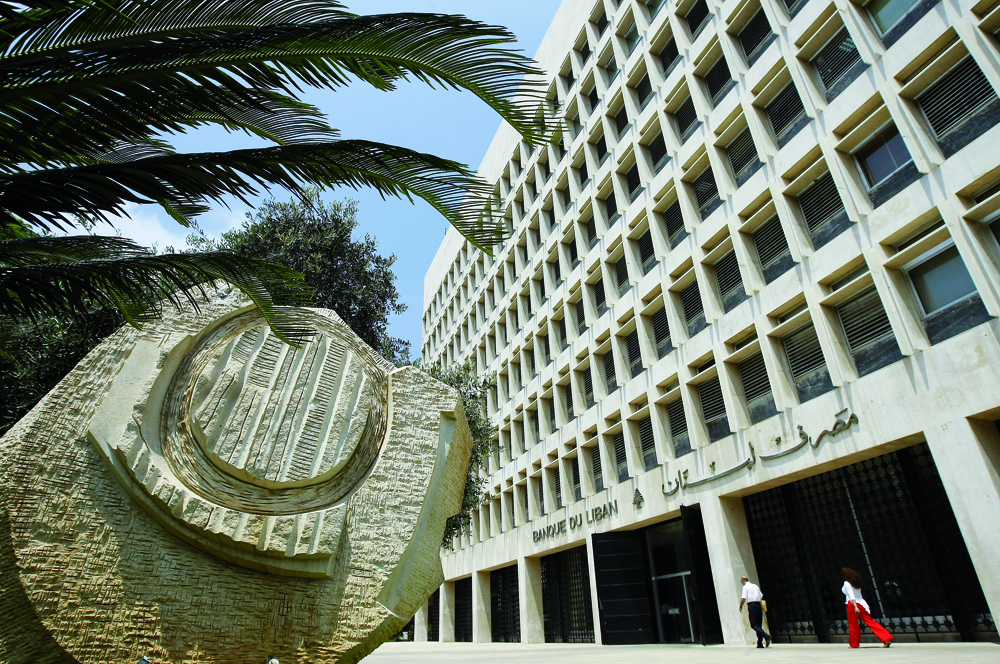
Banks are arguably the businesses that are best positioned for being viewed as leaders in the Lebanese economic context, given their much-larger-than-GDP shares in financial assets and their lifeline function in financing the private and public sectors. In order to gain leader-level perspectives on quantitative and qualitative factors that mattered most in Lebanese banking in 2015, Executive talked to influencers at four banks that between their institutions represent some 53 percent of assets in the Lebanese banking sector, employ nearly 16,000 people in Lebanon and abroad and have networks entailing 300 domestic and 270 foreign branches, demonstrating their strong diversifications and mix of local and global approaches.

[pullquote] Our consolidated balance sheet shows growth of $398 million in assets [/pullquote]

Sector leader Bank Audi ranked first in consolidated net profits but while it increased its assets by 6.2 percent year on year to $42.3 billion, its year-to-date growth in assets, at 0.95 percent, was deceptively low when viewed only in consolidated dollar terms. The background of this dichotomous looking picture resides in the bank’s operations in foreign markets and exchange rate developments between the US dollar and currencies of markets where Audi Group has significant presence, which include the eurozone, Turkey and Egypt, according to Freddie Baz, group strategy director and board member of Bank Audi.  He tells Executive: “Our consolidated balance sheet shows growth of $398 million in assets for the first nine months in 2015. Growth of assets is reported for the year to date, according to the International Financial Reporting Standards. If I consider the constant exchange rate at the beginning of the period, which is end of December [2014] for the year to date, my assets would have grown by $2.4 billion to September.  You have to produce consolidated statements but it is a very conceptual exercise that is done just to give a view how things look if it was one single currency and single entity and single geography. If we apply constant exchange rates, we would have seen a balance sheet not of $42.3 billion but $44.7 billion at end of September.”

Turkish delights

Currency volatility in economies where Audi Group operates was most pronounced in Turkey during the first nine months of 2015, with the Turkish lira weakening by some 30 percent against the dollar, giving up much more of its value when compared with the dollar exchange rate developments of the euro and Egyptian pound in the same period.  Given that Turkey is the most important market after Lebanon for Bank Audi, the reflection of the country’s exchange rate drop in Audi’s consolidated balance sheet would be irksome for presenting results to superficial observers. However, Baz maintains that serious analysts look at results of individual entities and claims that the stability outlook for Turkey has improved due to clear pro-Erdogan election results in early November, and also due to the fact that the lira’s weakening in 2015 was driven by international investors’ anticipations of things that did not come to pass, mainly the increases in benchmark rates in the United States. “Turkey has been affected so far in anticipation of those potential changes in the benchmark rates. If those changes occur [in the near future], Turkey already paid the price in anticipation. [The drop in the lira] was obviously amplified by domestic political tensions but in terms of relative weight, I still believe that two thirds of the currency slip in Turkey was due to international money market considerations, with massive exits among portfolio investors generating this volatility in foreign exchange and in interest rates because the tool [that was available] to the central bank to face the situation was to raise interest rates,” Baz says, with a hidden nod to the positive implications that new growth in the Turkish market has for the performance of Audi Group going forward.

banking sector assets

At BLOM Bank Group, international considerations are no less central but with a focus on foreign subsidiaries that were less or not exposed to the currency turmoils of 2015. Profits for the first nine months in 2015 amounted to $290 million on total assets of $30.7 billion. “We have seen 7 percent increase in profits so far this year and expect to see what happened in the first nine months to continue through the rest of the year. All the growth in our profit was coming from outside, I would say. We had a big improvement especially in the results of our Egyptian subsidiary and also saw good improvements in our Jordanian [unit] and from our presence in the Gulf,” BLOM Group Chairman Saad Azhari tells Executive.

Maintaining the paradigm that conservatism is no contradiction to innovation, Azhari attributes the development of BLOM’s size and performance to a portfolio of conventional sounding initiatives. “BLOM has always been conservative and innovative at the same time. Our expansion in terms of presence in Lebanon is continuing as we are opening new branches in the north and also in the south and in Beirut. We have new products in retail and asset management, [such as] funds, and always try to provide the best service to our customers. We always continue to evolve because without evolving you cannot be a leader in the banking market,” he muses.

Bank of Beirut, the sector’s number three in terms of total profits achieved during the first nine months of 2015, Chairman Salim Sfeir says that his bank reached several milestones and was able to present good growth in the main financial indicators for the first three quarters. Numbers pointed to year-on-year growth above 10 percent in both assets and deposits by the end of September; loan growth was subdued, at 1.6 percent, and the loans to deposits ratio saw a downward variation of 3.17 percentage points, the largest drop by any bank in the alpha group, the tier of Lebanese banks with deposits above $2 billion. Bank of Beirut reported 12 percent growth in net profits when compared with September 2014, ahead of the 9.7 percent increase identified by analyst firm Bankdata as the average for the alpha group. The bank was in a median position for profit growth rates of alpha banks as six lenders showed higher rates of increase, beginning with CreditBank that nearly doubled its net profit year on year.

Highlighting the bank’s activities in asset management – where Bank of Beirut had the alpha group’s second best year-to-date growth in assets under management in the first nine months of 2015 – and trade finance as two areas of special strength, Sfeir explains the importance and scope of trade finance in the context of Bank of Beirut as an activity where the “Lebanese scenario is not really Lebanese” but a regional one. “Trade finance is an international much more than a regional market and we, as Bank of Beirut, are very active in trade finance not only in Lebanon but in the region and in Africa,” Sfeir explains. However, he then goes on to say that trade finance activities have recently been impacted by the weakness of the oil price and related disadvantageous developments in important countries such as Nigeria where the election of the current president was followed by decisions to limit certain trade activities. “The overall situation [for trade finance], be it in the Middle East or in Africa, is regretfully not promising for the near future. So we continue to be very active and continue to look for new opportunities,” Sfeir says.

In addressing the bank’s strategy mix for working in Lebanon versus its expansion steps in other markets, Bank of Beirut’s chairman elaborates: “We are all dependent on Lebanon because Lebanon is our natural market and we have greater room for mobility within our own marketplace. We, meaning the Lebanese entrepreneurs, are not looking to be strong players on the international market because we are fully aware of our dimension. However, we are very active on the international scene insofar as our potential permits. Our role, whether as bankers or traders, is internationally driven by the marginal risk-adjusted returns over and above the returns from our own market. We are, and will remain, heavily invested in Lebanon. Yet within the next 24 months, around 50 percent of our income will be produced outside of Lebanon; mainly in stable A Grade countries.”

Survivor instinct

The long-standing second runner up by assets and deposits in the Lebanese banking sector, Byblos Bank, saw its assets increase to LBP 29.1 trillion, or $19.3 billion, at the end of September 2015 and reported nine-month profits of $113.2 million, almost unchanged from the same period in 2014. Growth in assets was below 2 percent in both year to date and year on year comparisons and the bank slipped one notch in asset rankings, behind relatively stronger gainer Fransabank. Byblos Bank remained in third place for total customer deposits and maintained powerful positions in the domestic market, including leading roles in deposits in Lebanese pounds and in domestic loans, as well as by openings of letters of credit and assets under management.

[pullquote] Without evolving you cannot be a leader in the banking market [/pullquote]

According to Alain Wanna, head of group financial markets and financial institutions and member in the core senior management team at Byblos Bank, 2015 was a year to prove the survivor qualities of Lebanon and Lebanese banks.  “Even with all this uncertainty in Lebanon and the surrounding region and with the drop in oil prices, all of the Lebanese banks are making profits and they might report a slight increase in their profits. Deposits in Lebanon are expected to grow between 5 and 6 percent in 2015 and the assumption for the next year is that it will be the same rate of growth, so I think Lebanese banks know how to manage in difficult and tough times,” he tells Executive.

While Byblos Bank has pioneered expansions into regional and international markets ahead of many of its peers, 2015 continued to be challenging for many of these economies. “The most material subsidiaries that we have are in Syria, Iraq, Sudan [and] Europe, plus different presences on a smaller scale. So these markets are still witnessing tough times, all of them,” Wanna admits and affirms that the bank has no plans to abandon any of them. “When we enter a market, we enter for the long term. It was unfortunate there were unexpected events in several foreign markets that we have entered. But there is no decision at the board level to exit any of these markets. We are downsizing, limiting our exposure. But it is not on the agenda to exit fully from any market,” he says.

He furthermore emphasizes that Byblos is persistent in strategizing for new expansions which could easily boost the bank’s position in the banking sector’s pecking order. In an example cited by Wanna, Byblos Bank had its eyes set on the Egyptian market for a while and placed a bid for Piraeus Bank Egypt early in 2015. However, this did not result in a win; the subsidiary of the Greek Piraeus Bank was acquired by Kuwait’s Al Ahli Bank group. The Gulf lender, which reported assets of 3.82 billion Kuwaiti dinars ($12.55 billion) at end September 2015, paid $149.7 million, representing 1.5 times the book value, for the Egyptian unit, Piraeus Bank said in a November 2015 statement confirming the transaction’s closure.

Interesting narratives

A look across the banking sector’s developments in 2015 beyond the overall numbers and the performances of banks in the top size bracket shows numerous interesting narratives confirming which concerns are current and which have faded or are not yet getting attention. Quite a few of these stories relate to the banking sector’s inner workings and some specifically corroborate that the troubles of the Lebanese economy and state governance from the recent past have not impaired the sector’s appetite for growth and have not deterred aspirations of banks that believe they can mobilize enough competitive energy to push beyond the $2 billion deposits threshold that currently defines the alpha group. 

In one such indication on the sector’s confidence and ruddy health, newcomer Cedrus Bank said in early spring 2015 that it wants to grow into the sector’s top size stratum. The new bank was formed in a collaborative effort between the local Cedrus Invest Bank and emerging markets specialist Standard Chartered which sold its Lebanese operation to Cedrus after trying for about 15 years to make its model succeed in the small market here. Standard Chartered officials did not want to disclose how they priced the sale to Cedrus or how much money they injected into their local adventure over their years of direct presence; both banks emphasized that they would collaborate in future.

private sector deposits in lebanese banking sector

Another bank that voiced its high ambitions in 2015 was Middle East Africa Bank (MEAB). Having just emerged from a succession transfer of ownership and corporate leadership, MEAB’s new chairman, Ali Hejeij, told Executive that it is his declared aim to reach alpha bank status. In response to an interview request for Executive’s year end issue, the bank confirms in a written statement that its goals for 2016 and beyond include “working towards becoming an Alpha bank in Lebanon”. 

“We believe that the stability and notable resilience of the Lebanese market present an opportunity for MEAB to continue to grow in the coming years, both in Lebanon and in foreign markets,” MEAB General Manager Nabih Haddad adds, conceding, however, that it may be “too soon to develop a firm assessment of the bank’s performance” in the short time since the change in leadership in midyear. The transformation at the time had been related to a June 2015 action by the United States’ Office of Foreign Assets Control, which had placed Kassem Hejeij, the father of Ali and the bank’s chairman at the time, on a blacklist of alleged backers of Hezbollah.

Big Brotherism and other foreign ideas

Troubles with US politically-motivated interference in Arab banking have been impacting the operations of regional banks in varied ways since the 9/11 terror attacks against America. More important in 2015 than sanctions against individual businessmen and bankers have been the indirect effects of US policies where international banks tended to cut correspondent banking relationships with Arab banks. This problem had been highlighted by the Union of Arab Banks in several statements and contributions to the international conference in 2015. However, de-risking is a concern for all banks and could even lead to a new banking crisis, comments Bank Audi’s Baz. “By definition, a bank cannot survive if it’s not being provided correspondent banking services. All the global banks have been reducing their number of relationships, leaving medium to small banks without any correspondent relationships; [this] is no prospect for the future. We are talking about thousands of those banks globally,” he explains.

[pullquote] We are all dependent on Lebanon because Lebanon is our natural market [/pullquote]

According to Bank of Beirut’s Sfeir, foreign pressure continues to weigh down banks that are based in the Arab world and a different international leadership paradigm would be more productive. “We are being severely affected by the politically oriented actions of our big brother, the US government, which is being very unfair toward their followers in the region. Our American brothers have to be fair to our markets as much as they are fair to their own market if they are looking for [and maintaining a role of] international leadership. Leadership should be balanced,” he says. 

An existential concern for banking (at least in theory) is the commitment and measurable contribution to society as function of their sound economic performance. More than the charitable engagements and social responsibility undertakings that can be presented in annual CSR reports – but are done so by too few Lebanese banks until now – the core issues in this regard are the governance performances, macroeconomic contributions and model functions vis-a-vis the state and society that banks must have an interest in carrying out, for the sake of their sustainability and long-term profitability.

With respect to governance, banking leaders are rather confident that they have not only come a long way in applying corporate governance standards but also are doing more than complying with the legal minimums that are being raised every now and then by the central bank via new circulars imposing stricter standards. BLOM’s Azhari says that both the Lebanese banking sector and the bank “are definitely improving in terms of governance, [such as] how you manage the bank and how you manage the relations with all stakeholders, in terms of employees, of shareholders and of customers.”

Baz says that for Audi it was a confirmation of extreme validity in the bank’s corporate governance approach when its corporate secretary and “godfather of corporate governance at Bank Audi”, Farid Lahoud, was invited in 2013 and 2014 to first become a member and then the chairperson of the World Health Organization’s audit committee.

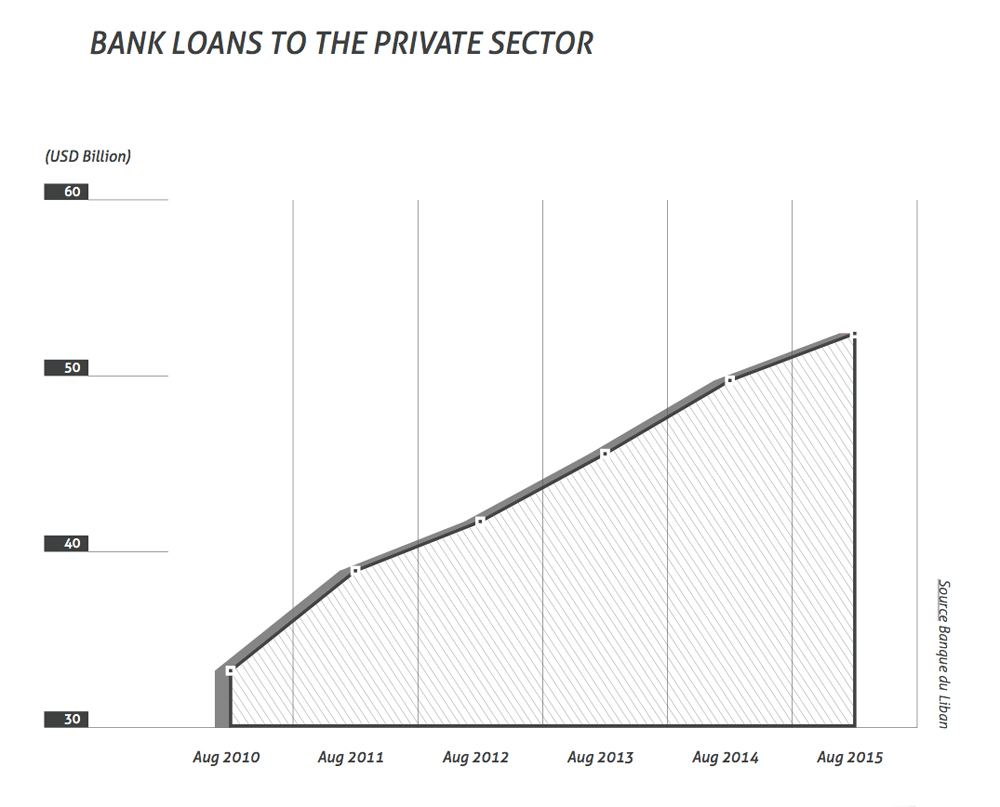
bank loans to private sector

Regarding the cost of corporate governance and increasing compliance regulations, he cites the issuance of a circular by Banque du Liban that required banks to employ a compliance officer in each branch. “We have 82 or 83 branches in Lebanon, [so] we have to have 83 compliance officers, one for each branch, in addition to which a lot of [information technology] systems are required. There is a cost, obviously, and all banks are incurring an additional cost for compliance,” he points out and argues that compliance needs to produce a good balance between certain compliance-induced reductions in the volume of business and improvements in business quality. 

From the cost-benefit perspective, corporate governance is productive in relating to business clients which have stronger sensitivities regarding a bank’s policies that protect clients against information abuses and conflicts of interest but also in interacting with the average retail customer, claims Azhari. According to him the requirement for branch-based compliance officers meant that processes have become “perhaps more regularized” but BLOM could implement the change without direct extra cost to the bank. “But I can tell you that having good governance was always something [that] we felt gave us extra business,” he enthuses.

In the view of Bank of Beirut’s Sfeir, corporate governance in Lebanese banking is indeed on course to a “very positive evolution”. “We are improving yearly and are on the right track,” he says.

About going the macroeconomic mile

Whereas banks have a solid track record of highlighting their vital macroeconomic role of financing the private and public sector needs in Lebanon, 2015 saw some renewed accusations that banks were part of the country’s economic malaise by being in cahoots with political elites in a state of crony capitalism. All bankers in communication with Executive dismissed these accusations outright. Banking and politics don’t mix at Bank of Beirut, argues Sfeir, as each side’s interests conflict fundamentally with the other’s, and “a banker has no advantage to be a politician because he will lose his bank and a politician cannot afford to be a banker because he will lose his market.”

Byblos’ Wanna would not comment on the issue but Azhari says that allegations of mistrust between the Lebanese and their banks are generally unfounded. Pointing to studies on the reputation of different institutions and sectors in Lebanon, he concedes that banks are generally not liked in countries around the world. It may be a universal sentiment that banks are more trusted than liked, “but in Lebanon banks have a good image compared to other industries,” he assures.

[pullquote] The stability and notable resilience of the Lebanese market present an opportunity [/pullquote]

In Baz’s view the tendency to accuse banks of profiteering is in one way still related to times when interest rates on government debt instruments – such as treasury bills and certificates of deposit – were in double digits and ranged during some periods as high as 35 percent. However, this perception is flawed, he reasons, because banks operated with lower interest rate spreads than commonly thought. According to him spreads, which are presently around 2 percent, reached 4 or 4.25 percent “but not 10 or 15 percent” in those days. “I don’t have any respect for those populist messages [accusing banks of crony capitalism] which are not documented and unjustified. If one is professional and technical, one would say that the main suffering of this country entails no implicit or explicit or whatever alliance between banks and any third party, ever,” he exclaims and goes on to say that such accusations fail to address the real problems behind the Lebanese underperformance of many years.    

The problem, he maintains, lies in what he calls the ‘Dutch disease’ of the country’s reliance on recurrent yearly inflows that boosted domestic incomes and triggered household consumption far beyond the domestic output ever since Lebanon’s independence. “This generated very high dependence on imports in order to cover household consumption. At the end of the day [these dependencies] translate into lower potential growth rates in GDP but, more dramatically, it creates not only lower growth rates [in the economy] but also a much lower job component in those lower growth rates,” he reasons.

What is needed for Lebanon in light of this entrenched problem is something that banks cannot produce. “What we need to do – and here our politicians have failed and banks are accused of not helping through inclusion – is initiate a process through a new social contract in Lebanon between politicians, working people and economic associations,” the board member of Lebanon’s top bank advocates with verve. Baz is on a roll and continues “The solution that we need is to shift from a domestic-demand-triggered growth in Lebanon to a foreign-demand-triggered growth, by lowering consumption, [and] by increasing real savings. In order to promote productive investments, to bring back Lebanese labor, to have competitive exports and to lower the dependence toward inflows and inputs, we need a new social contract. Banks can probably speed up the process but we cannot initiate it.”

January 19, 2016 2 comments
0 FacebookTwitterPinterestEmail
Banking 2015Business

Skating on

by Thomas Schellen January 19, 2016
written by Thomas Schellen

It has been documented beyond any question that when it comes to discussions of the outlook for the future, bankers are no more endowed with privileged knowledge or exclusive insights than the next best economist or fortune teller. The caveat against clairvoyance has been enforced in 2015, in no insignificant form, by the frantic performances of analysts and investors in their behavioral reactions to the yearlong grotesque search for the right moment to raise interest rates in the world’s – still – largest economy.

As the fallouts of the global uncertainty over America’s interest rate normalization are tapering out in the year’s waning weeks, Lebanese banks look to the regional future with sanguine humors interspersed with calculated expectations of more-of-the-same-as-2015 for the domestic economy.   

Salim Sfeir, chairman of Bank of Beirut, expects import-boosting impacts on Lebanon to arise from the European setting, which will be tentatively positive for the bank. “The ECB’s quantitative easing will put some downside pressure on the euro. This depreciation in the single currency will lead to increased imports from Europe as Lebanon is essentially an importing country whose economy is dollarized. This is not only true for us, but also for the region whose economies are also dollar-oriented. Thus the decrease in the value of the euro will give Bank of Beirut an advantage for trade finance activities. How much this will act to the benefit of Bank of Beirut’s trade business, we cannot assess for the time being as this will depend [on] if the marginal increase in trade volumes offsets the marginal decrease in the USD value of the transactions,” he says.

In Sfeir’s view, monetary policy in the European Union will have a mixed influence on Bank of Beirut’s business. “The decrease in the value of the currency will certainly affect the trade finance aspect positively; on the other hand, new investment opportunities in Western Europe, as far as banking is concerned, are not on the positive side.  This is why we are now exploring avenues in Eastern Europe and continue to be optimistic for the near future.”

Oil markets effect

Impacts from regional and international developments will be determined not just by interest rate evolutions in global financial markets, but by oil prices that have a cost-mitigating effect on the Lebanese economy when they first unfolded between late 2014 and early 2015, says Alain Wanna, head of international financial markets and institutions at Byblos Bank. The first worry that he sees for Lebanon is, however, political and domestic.

“What will happen in US dollar interest rates is not the main issue for Byblos Bank and for the Lebanese banking sector. It is a factor, but the most important factor is the political uncertainty in Lebanon. Also more important than the dollar interest rates is the oil crisis, because what is the main source of the deposit growth in Lebanon? It’s Lebanese living abroad remitting to Lebanon, and the bulk of these Lebanese who remit to Lebanon live and work in the Gulf. Oil is the main driver for Gulf economies. It provides liquidity, the liquidity is placed with the banks, and the banks lend it to the private sector. Thus if governments [of oil exporting countries in the GCC] start withdrawing money from the banking sector, that means that the banking sector will no longer be lending,” he says.

bank lending to deposits ratios

Reduced spending on infrastructure and restrained lending practices are likely to impact the incomes of Lebanese expatriates across the GCC and not just those working in the energy sector, Wanna adds when explaining why he sees the global oil price environment as a potential critical factor for monetary inflows to Lebanon in 2016.

From the perspective of the banking sector’s earnings, the short-term effect of interest rate normalization in the United States will actually be quite positive, according to views that have prevailed among bank economists for some time. This optimistic expectation from the banks’ perspective is based on a combination of factors, explains Freddie Baz, Bank Audi’s group strategy director. “The deposits in the Lebanese banking sector represent 3.5 times the gross domestic product in Lebanon. This means that we have ample liquidity levels and since we are dollarized; two thirds of this liquidity is in US dollars.” he says.

According to Baz, the placements of this liquidity are normally split between the Lebanese central bank and international correspondent banks. As deposits with either institutions generate interest at rates influenced by the Federal Reserve Bank’s decisions, Lebanese commercial banks stand to reap interest income benefits on both levels. Due to the mechanisms of international financial markets, banks can expect to receive additional basis points in interest “at least for the current year and the next year” when normalization is implemented, says Baz. The impact of normalization will, at some point, reach the Lebanese banking market and clients here will require upward adjustments of their interest receipts on deposits, but Baz does not expect this to occur until US prime rates climb to near the 2 percent mark.

Interest rates

Based on Fed statements that the interest rate normalization will most likely proceed not in regular steps but carefully reviewed small increments, expectations of federal funds rate levels to reach percentages of 1.5, 2, or more  have, from November 2015 onwards, been pointing closer to 2017 than any date in 2016. For average banking customers holding dollar assets, this does not offer great interest income prospects (although better ones than euro assets holders can hope to see in the EU). For Lebanese banks, the picture is better. “It’s easier for banks to manage their spreads in a high interest rate environment than in a low interest rate environment so we always manage to get benefits with time. But [in the near term] we will probably get 100 percent of the improvement in spreads because the interest already paid on our funding is much higher than the benchmark,” Baz suggests. He continues, explaining that “up until rates would reach, in my opinion, close to 2 percent, it won’t trigger in principle any pressure to increase cost of our deposits, so it will be a 100 percent impact. When we get closer to our cost of deposits in US dollars, then our customers will start to require more interest, so [the banks’ advantage from the interest rate developments] will probably be 80 percent [of the total] benefit for us, and then 70 percent, then 60 and 50; but there will always still be a positive carry on our deposits, after all those accumulated negative carries.”

variation in loan to deposit ratios

Looking at strategic opportunities in the settings of 2016, if all regional and national political and security factors were to remain the same, it would be a different form of challenge. Mergers do not necessarily warrant the strongest expectations for 2016, according to Sfeir. Whereas Bank of Beirut advanced by successfully implementing several inorganic acquisitions in the past, he tells Executive that the political environment in Lebanon is not ready and that, in the current environment, it is much better for banks with acquiring potential to use their energies to defend their market positions. He argues that the considerable energy required for combining two banking cultures into one can be used for greater rewards in pursuit of organic growth.

Abroad and at home

As for international expansions, one would err in expecting opportunities to be compelling and the Iranian option is not self-evident for the short term at all, Executive is told. “It is too early for us to speak about Iran. We have yet to see when the sanctions are removed and what sanctions are removed,” explains Saad Azhari, the chairman of Blom Bank. Rather than Iran or any distant country where Blom has no foothold yet, he says that Blom will focus on more familiar territories: “We are looking generally to expand our presence in the countries where we have networks and we are looking at additional countries especially in the Arab world, but there are no immediate plans.”

A solution to the political problems of Lebanon, then, would be the best platform for giving banks their best opportunities in 2016. Any assumption that banks have a benefit from the status quo of a dysfunctional state would be wronger than wrong, says Baz. “Do you think it is [in] the interest of banks to have poor political and economic governance? That this would sustain the good business environment that we need to prosper, to grow? — The answer is no. Everything which translates into improved political and economic governance is welcomed by the business community at large, not only by banks, but by banks more specifically.”

For the Bank of Beirut chairman, human wisdom alone is not what the country should search for in the coming year. In Sfeir’s words, “Our plans for 2016 are directed towards God. We are praying to God to give some wisdom to our politicians; we are praying to God to give some wisdom to our fellow bankers; and we are praying to God to give some wisdom to the players in international politics. There is plenty of room to pray and through prayers, we should be a bit more optimistic.”

January 19, 2016 0 comments
0 FacebookTwitterPinterestEmail
EditorialOpinion

Resolutions for 2016

by Yasser Akkaoui January 15, 2016
written by Yasser Akkaoui

The magazine proposes a few resolutions for 2016. And we’re starting the year by practicing them. First, we call on the best and brightest Lebanese minds to seize the potentially lucrative opportunities that the Paris Agreement on climate change will afford. This is why we’ve put climate change on our cover.

Our second, and most important, resolution is that 2016 will be our year of business ethics. There’s no better place to start than with the worst disaster this country has seen in recent memory: the (mis)handling of waste management. We take an in-depth look at a local company given far more opportunity than international best practice suggests it should have had. We’re setting the stage for a year in which we will take a very hard look at business ethics in this law-ignoring country.

Milton Friedman wrote that a company’s top brass — be they a board of directors or a small number of executives — has only one objective: make more profit year-on-year for the benefit of the company’s most important stakeholder, its shareholders. Of course, the company must obey the law, conduct business in a responsible manner and treat its employees respectfully and well. As we publish our months-long investigation into Averda, parent company of waste managers Sukleen and Sukomi, what we’ve found is plenty of government malpractice. Yet for every rumor we chased, we could not substantiate illegal behavior on the company’s part. Even the notion that the company only received contracts because of its founder’s religion or alleged ties to the late Rafik Hariri is undermined by the fact that each time Sukleen or Sukomi were given a no-bid contract, the entire cabinet approved. The conspiracy to divide the pie is one all of our politicians are in on.

Our system is so broken and the laws and regulations we have on the books are so poorly enforced that it looks perfectly legal for a company to be given not only a monopoly on waste management, but years and years of taxpayer-financed work without having bid on a contract in more than 20 years. In fact, the Shura Council in 2001 gave Averda’s contracting in Lebanon a legal seal of approval. It’s bewildering. No-bid contracts might be legal in Lebanon, but they are neither reflective of international best practice nor of the Lebanon we want to see.

The summer of 2015 saw protests we hoped would achieve more. We published a manifesto to help inform this country’s citizens because we’ve spent nearly 20 years pointing out what’s wrong in Lebanon and what needs to be done to right it. In 2016, you can expect us to name and shame both corporates and government officials. And we won’t be using Lebanese standards. Like the manifesto, our coverage this year is meant to help activists and pressure groups know who is doing wrong and how and what can be done better. We want an inclusive economic system, and the most effective way to get there is by promoting best in class corporate behavior. We’re on a mission, so keep reading.

January 15, 2016 0 comments
0 FacebookTwitterPinterestEmail
LeadersOpinion

Recycling history

by Executive Editors January 15, 2016
written by Executive Editors

We are being governed incompetently. 2015 proved that. Not only did the government’s handling of waste management allow one of the country’s worst environmental disasters to unfold, but it is replicating bad decisions it made nearly 20 years ago. In 1997, the cabinet gave one local company a monopoly on most of the nation’s waste without a competitive tender. As 2015 came to a close, the cabinet was set to simply split that monopoly between two international firms, again without a competitive tender. But for double the price. Worse, the alleged will to let municipalities handle their own garbage announced in September 2015 has yet to translate into action, meaning that if this temporary solution is truly temporary, rotting trash on the streets will be back in fashion for summer 2017.

It’s important to remember that the great “trash crisis” of 2015 actually started with a government decision in early 2014 to close the nation’s largest sanitary landfill. While there was nothing wrong with the decision to shutter the landfill, the blunders soon began piling up like so many uncollected bags of garbage. First and foremost, a ministerial committee tasked in early 2014 with finding a replacement for the Naameh landfill failed spectacularly. The plan this committee eventually settled on consisted of dividing the country into six service zones and tendering waste management in those zones to private companies. Bidding did not open until late in the first quarter of 2015, meaning that even if the tenders were successful, winning companies could not have had replacements for Naameh constructed before the landfill closed. Further, the plan once again would have given one contractor (admittedly a consortia of local and international companies) in each zone full control of waste management, which is not standard international practice and arguably the main grievance against Averda, parent company of waste managers Sukleen and Sukomi.

On top of that, the tender conditions were outrageous. The contracts were slated to last seven years, yet winners were expected to: 1) secure land on which to build waste management facilities; 2) build and operate those facilities; and 3) decrease landfilling from around 80 percent of the total waste stream to 40 percent in the first three years and to 25 percent thereafter. Land in Lebanon is expensive. Capital expenditure on technologies needed to decrease landfilling can cost millions, and resident opposition to waste management facilities “in my backyard” is high. Every private sector player Executive spoke to about the tenders — including those who ultimately submitted offers — said the tenders seemed designed to fail. Executive has not been able to discern exactly how the tender conditions were formulated, but Parliament should do its job and question all involved in an open, televised session. The legislature has this authority, as evidenced by an October committee hearing the press was asked to leave when MPs nearly came to blows.

When the tender winners were finally announced in August — over one month after Naameh closed and trash piles and open burning were common — the contracts were immediately cancelled because of supposedly high costs. As Executive noted at the time, proper waste management is not cheap, and several local politicians are well aware of that. The fall-back plan, formulated in a matter of days and approved by the cabinet in September, had two components: sanitary landfilling for 18 months and devolution of waste management responsibilities to the municipalities. The second part was the more important, as it was envisioned to be long-term and sustainable. Flawed as the reasoning may have been, the idea called for cities and villages to work together, establishing their own service zones and choosing local sites for waste treatment and disposal. While the public generally seems to have no problem littering or despoiling this nation’s natural beauty with festering open trash heaps, the Lebanese have traditionally opposed modern waste management facilities being built anywhere near their homes. The government was supposed to create a committee to build capacities among municipal leaders, getting them ready to handle their own trash — with or without private sector participation. By March 2017, the entirety of Lebanon should have had plans approved, contracts signed and all needed waste management facilities built and ready for operation to accommodate the full devolution of responsibility for this most basic service. While the temporary landfilling component of the plan hit the expected brick wall of public opposition, authorities have done absolutely nothing to prepare for full municipal takeover of waste management. If even one minister who approved the plan took it seriously, he or she should have loudly and frequently called for action on the long-term component. Instead, time has been much better spent bickering over temporary sanitary landfill sites.

[pullquote] The state simply gave the work to Averda instead of going to tender.This is a bad pattern. [/pullquote]

The most confusing part of this saga, however, is the seemingly final chapter. At time of writing, the government says it wants to export the nation’s waste for 18 months at a cost of $212 per ton. Given an average waste generation rate of 3,000 tons per day in the areas that incumbents Sukleen and Sukomi have been servicing, the total bill will be nearly $350 million — more than double the estimated $165 million for 18 months of waste management services the government would have paid Averda, Sukleen and Sukomi’s parent company. And awarding these new contracts without public discussion or competitive bidding is simply a repeat of the worst sin the government committed in dealing with Averda these past two decades.

Executive believes in private enterprise and responsibly earned profit, so we’ve been paying special attention to the so-called “waste file” and have dug deep into allegations of corruption levied against the private company that has been cleaning up after most of us since 1994. We were able to completely debunk some of the accusations against Averda (namely that politicians hold shares in the company and that its prices are extravagant). We could not disprove some of the other allegations against the company (namely that Averda paid bribes to get work, shared profits with the political elite and/or earned profit margins in excess of 30 percent). What is absolutely clear, however, is that Averda’s workload, and thus its revenues, expanded repeatedly without competitive bidding. The tendering process, however, is the government’s responsibility, not the contractor’s.

In dealing with Averda, successive governments seem to have viewed it as the path of least resistance. For example, in 1997 when the government faced a self-imposed deadline to close the open dump in Bourj Hammoud, the cabinet approved an ambitious emergency plan that envisioned the construction of waste sorting and composting facilities as well as a sanitary landfill in around 18 months. The state simply gave the work to Averda instead of going to tender. This is a bad pattern. We should be ashamed of it, not repeating it.

And, while it is uncommon for one company to be offering the full spread of waste management services, what the state pays Averda is not higher than in other countries with Lebanon’s income level for the same range of services. Doubling that cost with no guaranteed long-term benefit, however, is ludicrous and proof our leaders are happy to make incompetent decisions. Everyone loves to hate Averda, but the company did not create the situation in which it works. It should not be demonized for doing its job. That said, more transparency in waste management — as well as all state financed contracts — is long overdue.

Parliament needs to assert itself. If the government awards no-bid contracts, lawmakers should demand answers. In public. The legislature is supposedly the cabinet’s watchdog, and the “waste file” demands immediate action for the greater public good.

And years of accusations against Averda should teach us a few things. Parliament should also develop listing requirements for any company that wins state work of a significant value or duration. The exact requirements are open to debate, but the bottom line is that when public money gets spent, those ultimately footing the bill have the right to a basic level of knowledge and access to information.

January 15, 2016 0 comments
0 FacebookTwitterPinterestEmail
  • 1
  • …
  • 134
  • 135
  • 136
  • 137
  • 138
  • …
  • 685

Latest Cover

About us

Since its first edition emerged on the newsstands in 1999, Executive Magazine has been dedicated to providing its readers with the most up-to-date local and regional business news. Executive is a monthly business magazine that offers readers in-depth analyses on the Lebanese world of commerce, covering all the major sectors – from banking, finance, and insurance to technology, tourism, hospitality, media, and retail.

  • Donate
  • Our Purpose
  • Contact Us

Sign up for our newsletter

[contact-form-7 id=”27812″ title=”FooterSubscription”]

  • Facebook
  • Twitter
  • Instagram
  • Linkedin
  • Youtube
Executive Magazine
  • ISSUES
    • Current Issue
    • Past issues
  • BUSINESS
  • ECONOMICS & POLICY
  • OPINION
  • SPECIAL REPORTS
  • EXECUTIVE TALKS
  • MOVEMENTS
    • Change the image
    • Cannes lions
    • Transparency & accountability
    • ECONOMIC ROADMAP
    • Say No to Corruption
    • The Lebanon media development initiative
    • LPSN Policy Asks
    • Advocating the preservation of deposits
  • JOIN US
    • Join our movement
    • Attend our events
    • Receive updates
    • Connect with us
  • DONATE