• Donate
  • Our Purpose
  • Contact Us
Executive Magazine
  • ISSUES
    • Current Issue
    • Past issues
  • BUSINESS
  • ECONOMICS & POLICY
  • OPINION
  • SPECIAL REPORTS
  • EXECUTIVE TALKS
  • MOVEMENTS
    • Change the image
    • Cannes lions
    • Transparency & accountability
    • ECONOMIC ROADMAP
    • Say No to Corruption
    • The Lebanon media development initiative
    • LPSN Policy Asks
    • Advocating the preservation of deposits
  • JOIN US
    • Join our movement
    • Attend our events
    • Receive updates
    • Connect with us
  • DONATE
Economics & Policy

Shark hunt

by Matt Nash February 5, 2016
written by Matt Nash

Playtime is over. Nearly one year after calling for unregulated lenders to step out of the shadows, Banque du Liban (BDL), Lebanon’s central bank, imposed new restrictions and reporting requirements on what are locally known as comptoir creditors. Until January, articles 183 and 184 of the 1963 Code of Money and Credit – Lebanon’s banking bible – allowed companies to engage in consumer lending absent of any BDL supervision provided they did not accept deposits. While a few of these companies – most notably al-lebananiyeh al-arabieh lil tasleef, which was running television, print media and billboard campaigns to promote its willingness to approve a loan in five minutes – have garnered media attention because of legal trouble in late December and early January, the exact size of this market segment and the overall economic impact of the new rules are difficult to quantify.

Consumer protection?

In early 2015 and again in January 2016, BDL published decisions related to comptoirs (see box). The January 2016 rules set out new regulations for these type of companies. While the central bank refused Executive’s interview requests to discuss this topic, circumstantial evidence suggests consumer protection was at least a partial motivator.

Forced to show their hand

On February 2, 2015, the central bank published two decisions. One of them, basic decision 11947, called on regulated banks and financial institutions to include more financial education in their dealings with clients, and builds on a 2010 decision that called for clearer explanations of loan terms in bank and financial institution advertising. Among other requirements, the 2015 decision demands that banks and financial institutions “provide customers with accurate, clear and ample key information on the conditions, benefits and risks of products and services.” It defines “key information,” in part, as: “the computational method of the actual cost of each product or service (i.e., all expenditure, commissions, expenses, charges and/or any other amounts)” and “the computational method of the lending or deposit interest rate of each product or service.” Basic decision 11948, passed on the same day, calls on what it identifies as “comptoir credit” companies – those operating under articles 183 and 184 of the Code of Money and Credit – to notify the central bank of their existence. On January 21, 2016, the central bank again passed two decisions related to the comptoir lenders: one banned all banks and financial institutions from loaning them money, and the second brought them into the central bank’s regulatory orbit – meaning they must play by the same rules as regulated lenders including 2015’s rules on properly informing customers about the products and services on offer.

Bad reputation

In investigating this story, Executive reached out to other lenders operating without the same supervision as that imposed on banks and financial institutions – microfinance institutions (MFIs). Every MFI Executive spoke with says a comptoir would be called a loan shark in an English-speaking market, meaning their practices are predatory and they charge interest rates in the neighborhood of 30 percent or more per month. According to a report in the local press, two comptoirs were shuttered in late December – Housing Finance for Financial Loans in Hadath and MFD in Jal el-Dib. Both were closed because of consumer complaints about their loan practices, the report said. The comptoir with the most aggressive advertising strategy, al-lebananiyeh al-arabieh lil tasleef, is under scrutiny for allegedly selling collateral before a borrower defaults, a practice now specifically banned by BDL. Local media report that al-lebananiyeh al-arabieh lil tasleef would draft documentation allowing the company’s owner – Fadi Jairo – to sell whatever collateral they offered up in exchange for the loan if the borrower defaulted. One of the company’s print ads specifies that collateral can be property, land or a car or truck title. Customers allege that Jairo tried selling their possessions before they defaulted. Executive contacted al-lebananiyeh al-arabieh lil tasleef for an interview and was originally told a meeting with Jairo would be arranged on January 20. When Executive called on the agreed date, an employee of Jairo said, “He has a problem. He’s not coming.” On January 25, Executive called the company to ask about interest rates on their loans only to be told that it is no longer accepting new borrowers pending clarification of the new central bank rules.

Into the fold

As evidenced by the February 2015 decisions, comptoirs have been on the central bank’s radar for some time. Bachar Kouwatly, general manager of Ibdaa Microfinance, tells Executive that BDL even tried to ascertain their numbers, although he did not have more details. Youssef El Khalil, president of the Microfinance Association – a group of MFIs recognized by the Ministry of Interior in 2015 – tells Executive that, according to figures from the central bank, where he also works, there were “over 1,000” comptoirs prior to 2015, but no more than 40 after the bank began requiring them to register. This does not necessarily mean there are fewer loan sharks in Lebanon, of course, as BDL’s request for information could well have pushed some comptoirs further into the shadows. Each MFI Executive interviewed distinguished between shadow lenders registered as companies (the comptoirs) and village loan sharks operating without any pretense of formality. “The local loan shark has existed forever and a day,” says Youssef Fawaz, executive director of Al Majmoua, an MFI. Some of Al Majmoua’s micro borrowers, he explains, took their first loans from his institution specifically to pay off debt to village loan sharks. That said, he adds that he has noticed some comptoirs – like al-lebananiyeh al-arabieh lil tasleef – being more aggressive in recent years, but notes loan sharking is not something the central bank can eliminate completely. “They’ve been there, and they will always be there,” he says.

The new central bank rules, however, seem aimed at making the comptoir business less lucrative and easy to engage in as well as curbing some of their more unsavory and potentially illegal practices (such as selling collateral before a borrower defaults, which is the subject of a court investigation into al-lebananiyeh al-arabieh lil tasleef). For example, a comptoir must have 2 billion LL (over $1.3 million) in paid-up capital in order to register, and must have the same paid-up capital for every branch it wants to open. Comptoirs must also register all the loans they give at the central bank; their clients cannot be made to pay monthly installments that exceed 35 percent of their household income; loans they give cannot be worth less than 60 percent of the collateral on offer, nor can the loans exceed 5 percent of the comptoir’s capital or $100,000, whichever is less; and they cannot take fees for opening a new file for a client.

Following the money

Requiring comptoirs to report all their loans to the central bank serves two purposes. In the year 2000, the central bank created a Central Office of Credit Risk to keep track of all outstanding loans in the country. The office is a tool to limit over-indebtedness – meaning that it prevents consumers from taking out multiple loans with different banks. Without it, enforcing caps on the percentage of monthly income going toward debt payments would be more complicated if not impossible when a consumer has different loans from different institutions. Requiring comptoirs to register loans with the central office means they will be part of this system. Prior to the central bank’s January decision, comptoirs could theoretically add to a consumer’s debt burden if that consumer had other outstanding loans. This rule therefore helps protect consumers from themselves. However, it also adds a level of control to this previously unregulated market segment by making these loans known to the central bank. Khalil, head of the Microfinance Association who spoke to Executive just days before the new rules were public, likens steps to control comptoirs to central bank moves to crack down on then-unregulated money exchange offices in the wake of US Treasury Department accusations in 2013 of money laundering against the Lebanese Canadian Bank, which supposedly involved exchange offices. “Exchange bureaus in this country were operating [with no regulation beyond registering their names at the central bank prior to 2013], but nowadays with anti-money laundering laws, [the central bank] had to intervene, and now they are very heavily regulated.” The loan registration rule means the central bank will have an idea of the total value of this market segment, information that is lacking until now.

Welcoming the change

One previously unregulated lender that will now have to abide by the central bank’s rules is Money sal. Founder and General Manager Elias Samia tells Executive he welcomes the new rules. Since launching operations in 2012, Samia says his company – which lends at an annual interest rate of 17 percent to salaried employees of what he describes as “top tier” companies – has been fighting perceptions that Money is a loan shark. More regulation, he says, is another weapon in that fight. Money launched an aggressive expansion campaign in October 2015, partnering with retail outlets – mostly cellphone shops – to extend its reach and build a national distribution network. He tells Executive that, as of mid-January, Money had 150 such partnerships with a goal of reaching 700 by the end of 2016.

He describes the company as an “investment vehicle” for sister company UFA Assurances, founded by Henri Chalhoub and focused on insurance, which Samia notes means UFA has plenty of excess liquidity. Money takes no collateral and promises quick and easy loans. It even offers a loan-delivery service, of which Samia is particularly proud. The company caps its loans at $6,000 and Samia says the average ticket size among Money’s 7,000 borrowers is $2,500. He wants to double that portfolio in 2016 and grow by 30 percent in each of the following four years, meaning Money would have around 40,000 clients by 2021 with an average ticket size reaching around $4,500. The company, he says, currently has provisioned for a non-performing loan rate of 1.7 percent but the actual default rate is 0.4 percent.

One risk to his business posed by the new regulations, Samia says, is the loan reporting requirement. He estimates around 15 percent of his clients choose Money specifically because of the anonymity it was able to offer. In an interview before the new rules were made public, Samia says that some clients also come to Money because they have loans from banks but cannot borrow more because they are already spending 35 percent of their household income to service existing debts, yet they have enough disposable income to take on a bit more of a debt burden. Asked after the new rules were made public whether the fact that the cap now also applies to Money will shrink his client base, he denies that the regulation poses a new business risk for the company, saying he is confident that the central bank may waive that requirement in certain cases.

Needed protection

Perhaps the most significant impact of the new central bank rules will be the level of consumer protection that comes with subjecting monthly comptoir loan payments to caps based on household income. Lebanese law, according to Toufic Soudayha – a lawyer with Alem & Associates – puts no interest rate limits on lending. Coupled with the requirements to fully explain to people the loan’s terms when borrowing from a comptoir, the loan-to-income limit will help protect people who might not fully realize what they are getting themselves into.

What effect BDL’s new regulations will have on the wider economy is unclear. As Société Générale de Banque au Liban (SGBL) notes in its January 2016 monthly economic publication, “In late 2014, the Central Bank tightened personal lending requirements in a bid to keep household leverage ratios in check and reduce risk in the financial system.” In the wake of that rule change – which mirrors the monthly payment versus household income cap placed on comptoirs – SGBL notes that the value of consumer loans offered by banks “rose by only 1.84 percent [year-on-year] in the first six months of 2015 to $6.65 [billion], a net production of just $14.3 [million] over the period, down from $325.7 [million] in the first half of 2014.” It seems safe to assume comptoirs will face a similar lending slowdown, meaning consumers will be pumping a little bit less cash into the system.

February 5, 2016 0 comments
0 FacebookTwitterPinterestEmail
Economics & PolicyEnvironment

L’accord de Paris

by Jeremy Arbid February 4, 2016
written by Jeremy Arbid

The recent Paris Agreement is a departure in form and substance from previous climate change accords; it calls for a bottom-up approach to limit greenhouse gas emissions. Unlike the 1997 Kyoto Protocol — a bifurcated approach that legally bound developed countries to reduce their emissions — the Paris accord removes the distinction between developed and developing countries, allocating responsibility, for the most part, to the local level.

At Kyoto developed countries were allotted a target to reduce their emissions, but developing countries like China or Mexico (Lebanon too) were given no target and allowed to let their emissions increase at will. Developed countries with emission reduction targets were meant to ratify the Kyoto Protocol into law, but the United States — then the world’s largest emitter — declined to do so. For much of the 2000s, the agreement was suspended and climate change negotiations ground to a halt.

Then came the 2009 Copenhagen Accord that saw developed countries and the largest developing countries agree to reduce emissions, but not in a legally binding agreement. What had carried over from Kyoto to Copenhagen was a clean development mechanism for carbon trading. The carbon market aimed for cost effectiveness — a reduction of carbon emission per dollar invested. At Copenhagen the failure to fully articulate a legally binding treaty pushed the price of carbon into a global downspin, putting a halt to carbon trading as a mechanism to reduce emissions.

Not all was lost after Copenhagen. Part of what was agreed upon at the 2009 conference made its way into the Paris accord — financing. In Copenhagen there was limited transparency on the issue of funding developing countries; rich countries agreed to provide $100 billion annually starting in 2020 to help poorer countries invest in green technologies to reduce emissions. But in the years since Copenhagen, developed countries have largely held true to their promise: in October 2015 the Organization for Economic Co-operation and Development issued a report showing that close to two-thirds of the required financing was already being supplied.

Targets for Lebanon

The Paris accord stepped away from requiring emission reductions to be legally binding, instead placing responsibility at the local level for reducing emissions through discretionary contributions. This effectively means that countries, such as Lebanon, will voluntarily phase out fossil fuel use.

Lebanon’s contribution to the Paris accord is laid out in its Intended Nationally Determined Contribution (INDC). The INDC sets forth two targets: an unconditional target that Lebanon will contribute to reduce emissions, and a conditional target if Lebanon were to receive international support — mainly financing from the $100 billion yearly fund, but also technical knowhow and technology transfer.

Under a business-as-usual scenario — with no measures taken to reduce greenhouse gases — Lebanon’s emissions would rise to nearly 44,000 million tons CO2 equivalent by 2030. Lebanon, as a low emitter of greenhouse gases, set an economy-wide target because it does not specify which sector of the economy emission reduction must come from, thereby offering greater flexibility. The country will target a 15 percent reduction by 2030 — limiting a rise in greenhouse gases to 37,400 million tons CO2 equivalent — as unconditional, meaning that emissions can be reduced in the economy wherever it is easiest. Lebanon will also produce 15 percent of its power needs through renewables and will aim for a 3 percent reduction in power demand through energy efficiency measures.

Lebanon will set more aggressive targets if it receives financing from the international community. By 2030 the country will aim for a 30 percent reduction in greenhouse gas emissions; renewables will also produce 20 percent of total power demand, while energy efficiency measures will aim to cut power demand by 10 percent. Targeting a 30 percent reduction would see Lebanon limiting the rise of its greenhouse gas emissions to just more than 30,800 million tons CO2 equivalent by 2030.

In 2010, Lebanon’s greenhouse gas emissions totaled 19,139.27 million tons CO2 equivalent, 0.04 percent of global emissions. By 2014, that proportion had risen to 0.07 percent of the global share. With countries voluntarily pledging to reduce the emissions they produce, it is not yet clear how Lebanon’s emissions might rank vis-a-vis other countries moving forward.

February 4, 2016 0 comments
0 FacebookTwitterPinterestEmail
CommentOpinionRefugee Crisis

Syrian crisis: a new approach

by Fabrizio Carboni February 4, 2016
written by Fabrizio Carboni

For nearly five years the conflict has dragged on; yet the world is only more daunted by the magnitude of the humanitarian crisis. Here in Lebanon the challenges are numerous – from the strained economy and infrastructure to health care, education, politics and security. All aspects of life have been affected. But we cannot afford to wait out the crisis; it is time we address the opportunities rather than the challenges, building on our core strengths. Lebanon’s unique style of innovative entrepreneurship has kept the country afloat even through decades of internal violence, and it can continue to do so now.

This year, refugees are facing yet another cold winter living in tents. Dozens of organizations are providing relief. But given the protracted nature of the conflict, we at the International Committee of the Red Cross (ICRC) and other agencies are going back to the drawing board and rethinking how best to provide long-term help to the more than 1.2 million Syrian refugees and the Lebanese host community.

Partnerships with the private sector are key. Lebanese entrepreneurs can develop the innovative technologies and solutions that will revolutionize the way the government and aid agencies provide assistance. Some of these technologies already exist and just need to be adopted: in Kenya, the ICRC uses mobile money transfers to give cash more simply, securely and cost effectively. Other technologies are just emerging, such as the olive-husk generator that the ICRC recently set up in Shebaa. It can heat an entire health-care facility using biodegradable material that is three times cheaper than conventional energy sources. These types of engineering solutions can make a huge difference in getting people the water, energy and shelter they need.

Sustainable business initiatives too are helping people get back on their feet. We recently led a programme that helped Lebanese people coming back from Syria to start their own business raising livestock and selling dairy products. Other such initiatives could help people become more self-sufficient and improve their standard of living. Companies and aid agencies both stand to gain from sharing each other’s perspectives and expertise in logistics, managing large-scale operations, human resources and networking.

The people that we are helping today are those that will one day rebuild Syria. It is in Lebanon’s interest for Syria to be rebuilt by a healthy, educated and skilled workforce. That is why efforts by aid agencies and the private sector to help those in need and bolster the economy should be backed by government policies and regulations. Policies should make it easier and provide incentives for companies and individuals to develop new technologies and solutions. Labour and education laws should be reformed to safeguard the rights of both Lebanese people and refugees and help fill jobs in sectors such as nursing. Legislation should support broad-based growth and improve the stability of the country.

In turn, the Lebanese government needs the full support of the international community. This month, world leaders, international aid agencies, NGOs and members of civil society are meeting in London for the Supporting Syria conference, co-hosted by the UK, Germany, Kuwait, Norway and the United Nations. Its goal is to secure funding to help those most affected by the crisis both inside Syria and in neighbouring countries. Participants will also work on long-term solutions for educating and creating jobs for people who have been forced to flee their homes. Theirs is no easy task: for five years now there has not been enough funding and the conflict has shown no signs of abating.

If efforts at the London conference fail to come up with long-lasting solutions, then next winter, like this one, will be a bleak reminder of the increasingly precarious situation that people are facing. For now we, together with the Lebanese Red Cross, are distributing food and other relief items to Syrian and Palestinian refugees, Lebanese returnees and Lebanese families who are struggling to make ends meet. We have installed insulation in tent settlements and shelters to help with heat retention and made other improvements to prevent flooding during the rainy season. We are also transferring cash to the people in the most precarious situations so that they can purchase much-needed heating fuel. But as the people of Syria and Lebanon wait for a serious political solution that will end their suffering, they cannot simply rely on aid.

It is time for the Lebanese private sector, with the help of the government, to live up to its long-standing reputation of ingenuity and help turn this crisis around – both for the Lebanese people and for those who have fallen victim to the conflict. The ICRC has been in Lebanon for every major conflict since 1967. We have seen first-hand Lebanon’s ability to overcome obstacles and find innovative solutions, even in the darkest of times. It may not be easy, but it is possible.


* A version of this article appeared in Executive’s February issue, #199.

February 4, 2016 0 comments
0 FacebookTwitterPinterestEmail
Leaders

A 5,000-year opportunity

by Executive Editors February 4, 2016
written by Executive Editors

“This Agreement… aims to strengthen the global response to the threat of climate change, in the context of sustainable development and efforts to eradicate poverty, including by:

(a) Holding the increase in the global average temperature to well below 2 °C above pre-industrial levels and to pursue efforts to limit the temperature increase to 1.5 °C above pre-industrial levels, recognizing that this would significantly reduce the risks and impacts of climate change;

(b) Increasing the ability to adapt to the adverse impacts of climate change and foster climate resilience and low greenhouse gas emissions development, in a manner that does not threaten food production;

(c) Making finance flows consistent with a pathway towards low greenhouse gas emissions and climate-resilient development.

This Agreement will be implemented to reflect equity and the principle of common but differentiated responsibilities and respective capabilities, in the light of different national circumstances.”

Article 2, Paris Agreement

When it comes to managing our planet, the human race has finally succeeded in learning a few things. One lesson is that climate is something that we do influence but cannot control. Au contraire, the climate controls us in spite of all our technology. A second lesson is that we have to adapt in order to survive in the third millennium just as Paleolithic humans needed to adapt as groups to survive environmental changes during the Pleistocene era. For modern man, this adaptation is, however, a collective challenge to achieve culture change on a planetary level.

The third insight to ponder is that it is much better to affirm a chance than to obsess on downside risks. Dealing wisely with what we cannot control but are able to influence positively as very large collectives — i.e. humanity, the community of nations, single nations and business enterprises — represents a humongous opportunity with millennial consequences. Not trying to capitalize on the chance to curb climate change would mean to simultaneously fall into an intellectual ice age and invoke a slow meltdown of the global economic core.

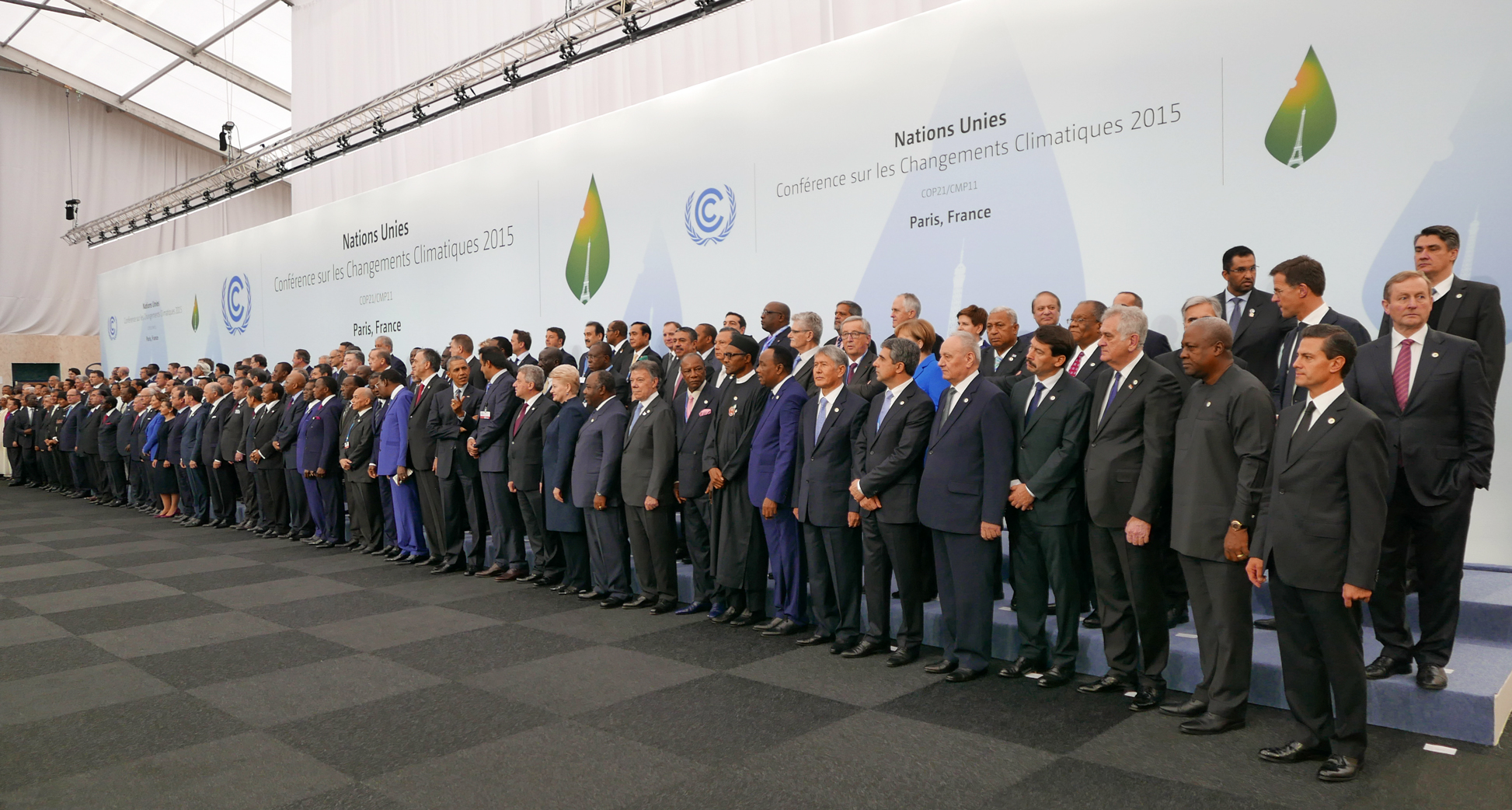
The trigger event for this historic chance is the global agreement on reduction of global warming reached at the United Nations Climate Change Conference in December 2015, the so-called COP21 Paris event. In the best case it will be a tipping point in dealing with the human impacts on our climate, including a very achievable Lebanese contribution to reducing our carbon emissions (see explainer).

From a species perspective, the breakthrough of Paris lies in the declaration of a humanity-wide shared goal and collective affirmation to pursue this goal. One will be hard pressed to find any precedent for such in-principle consensus at historic events of the 20th century — from peace conferences to the founding assemblies of organizations like the League of Nations and the United Nations. The closest examples for similar formulations of a shared global will are probably the UN’s Millennium Development Goals of 2000 and their successor targets, the Sustainable Development Goals.

For implementing the Paris Agreement, national determinations are key. The agreement establishes a positive framework for national contributions. However, realizing and expanding these contributions will be a task for the sovereign institutions of the 195 states that have committed to the Paris Agreement and are expected to ratify it. The process will be complex and arduous but it comes with hope that passions and energies which were in the past wasted on debates over the reality of human climate impacts will now be invested into agreeable and achievable measures.

Bringing the climate chance [intended] process down to national levels, every country is asked to fulfill its responsibility. For countries in the Middle East, climate change-related responsibilities include not only implementation of emission goals but also needed measures for managing scarce and vital natural resources, water being at the top of the list (see comment on water resources).

For Lebanon, the call for action entails two main aspects: private and public. The country will need to continue incentive programs — primarily financed through central bank stimulus — to implement emission reduction measures. To maximize the impact of those measures, Lebanon will need to tap into external financing from donors and international institutions. This is doable (see Lebanon’s implementation of accord) but requires fiscal diligence and something totally new: political self-denial. This means that the next Lebanese government — yes, Executive still insists that we need a full government asap — will have to pass a number of laws, achieve real cooperation between ministries instead of allowing fragmented fiefdoms, and demonstrate to international funders that their money is well and efficiently invested, with the maximum outcome in emissions reductions, when provided to Lebanon.

On the private sector, our call to action is to be smart, decisive and proactive. Known for their adaptability and quickness in engineering practical solutions, various Lebanese entrepreneurs have demonstrated in recent years that they can devise alternative energy answers to problems in markets that face inherent restraints (such as, ahem, frequent interruptions of governmental power supply). As observed and documented by Executive, solar, creative energy storage, and very feasible power management solutions have been innovated by Lebanese companies. With certainty, these can be developed further and put to ecologically responsible profit generation in the growing and decentralizing markets of emerging and frontier economies in decades to come. The shift out of fossil fuels and into alternative energies is a chance for Lebanese entrepreneurs to do good, work economically, create jobs, and reduce our output gap. Unmissable.      

Returning to the global perspective, the climate change chance is a once-for-a-species opportunity that, if missed, may not recur in the next 5,000 years. This quantification is of course totally over the top and completely arbitrary but there is truth in it — and doesn’t it sound impressive?

February 4, 2016 0 comments
0 FacebookTwitterPinterestEmail
CommentOpinion

One drop at a time

by Riad Al-Khouri February 4, 2016
written by Riad Al-Khouri

Growing populations, rising demand on resources and mounting environmental pressures are putting an increasing global strain on water resources. In the Middle East in particular, stressed river basins shared by countries are increasingly experiencing problems, and global climate change will only exacerbate this.

December’s landmark Paris Agreement on climate change was not primarily about water-related issues, but a strong connection exists: climatic change continues to have an impact on many things, including water. Yet how seriously are governments and institutions taking this imminent threat? Some answers have come in a new book, “Transboundary Water Management and the Climate Change Debate”, by a group of international scholars covering global examples as well as ones from the Middle East. The book’s premise is that actors within transboundary water management institutions respond to the climate change debate in three ways: adapting to predicted impacts; resisting them (by ignoring the issues); or subversion (using the climate change debate to fulfill their own agendas). The authors then apply this framework to cases with global repercussions, such as the Jordan River basin.

Further elaborating these themes through an article entitled “Adaptation, Resistance, or Subversion: How Will Water Politics Be Affected by Climate Change?” in the New Security Beat blog of the respected Wilson Center’s Environmental Change and Security Program, three of the book’s co-authors make the interesting point that the hydraulic impacts of climatic changes are quite often deemed to be of such a magnitude that responses are unreasonably crafted in the context of national security. They call this ‘securitization’, and in all of the cases analyzed for “Transboundary Water Management and the Climate Change Debate”, there is evidence of responses to climatic debates becoming subject to such a threat, whereby “impacts are deemed to be of such a magnitude that responses should be crafted in the context of national security”, emphasizing that “this is important because it creates an incentive to close off deliberation to outsiders and makes it less likely decisions will be made in an open, transparent way with multiple stakeholders represented.”

In the case of Jordan and much of the region, problems of securitization are evident in water diplomacy. This entwining of water and national security requires confidentiality, which is a common need in diplomatic or political discussions. However, subjecting vital negotiations on water issues to blanket blackouts for reasons of security is not a good idea. As an antidote to this state of affairs, the authors note that “ultimately, renewed political commitment to open institutional structures will be needed to mitigate these risks.” The key of course is openness: “We need to find ways to bring the fears, hopes and aspirations which basin actors may harbor about climate change into open discussion within joint institutions.” By doing so, these frameworks become more legitimate and resilient, making securitization less likely as they become better at dealing with changing conditions, including climate change, and demands from various parties.

Examples of this problem can be seen in Jordan and its neighbors to the west, who are together trying to implement elaborate water schemes in the Jordan Valley, also extending through the Dead Sea basin to the Gulf of Aqaba. It should be mentioned that water is very scarce in Jordan, where about 9 percent of the land is desert. The kingdom, home to a growing local population as well as a large influx of refugees from Syria, is one of the most water-stressed countries in the world.

Red–Dead Sea Project

Like other water-short countries in the Middle East and elsewhere, Jordan seeks to preserve domestic hydraulic resources through importing water “virtually” through commodities with a relatively high volume of water used for production, such as agricultural products, while exporting those that are less water-intensive. As such, Jordan imports about 7 billion cubic meters (m3) of virtual water annually compared to 1 billion m3 withdrawn from domestic water sources per year.

However, such dependence of Jordan and other water-scarce states on external supplies of water can be exploited politically. In that respect, amid regional disputes and diplomatic tension that increasingly prevail in the Middle East, the pursuit of solutions to hydraulic problems within a classic basin framework may offer the false argument that neighbors sharing the same geo-hydraulics have an interest in cooperating while “setting politics aside”. An example of this came in December 2013 when Israel, Jordan and the Palestinian Authority signed an agreement involving the Jordan River–Wadi Araba area, aimed at constructing in the south of Jordan a plant with a capacity of about 80 million m3 per year to desalinate water from the Red Sea, 30 million m3 of which will be retained by Jordan. The facility will supply the southern Israeli city of Eilat with 50 million m3 of desalinated water at cost value, and Israel will deliver the same amount to central Jordan for JOD 0.27 ($0.38) per m3, to be pumped from the Sea of Galilee in northern Israel, from where Palestine will also receive 30 million m3 of freshwater. In addition, a pipeline will dump brine from desalination into the Dead Sea to mitigate its current annual decline, estimated at one meter.

However, the deal is seen as continuing to ignore riparian rights of Palestinians, meaning their rights to use water that flows through their territories, on the Dead Sea. Additionally, environmental groups have warned that the project could undermine the fragile ecosystem of the Dead Sea, which they fear could be contaminated by Red Sea brine. (The agreement was signed in Washington DC and brokered by the United States under a shroud of secrecy in the name of securitization, a factor that is felt to have contributed to the scheme’s weaknesses and reservations about it.)

Similar issues have arisen in connection with the Red Sea–Dead Sea Conveyance Project, another — albeit much larger — Israeli-Jordanian-Palestinian initiative in the same area seeking to meet increasing water needs while stemming the shrinking of the Dead Sea. For that, Jordan signed an agreement with Israel last February on the first phase of the project’s implementation to build a pipeline linking the Red Sea to the Dead Sea. In December, Jordan issued a call for tenders for the project’s first construction phase. This first phase — at an estimated cost of up to $900 million — involves a transfer of 300 million m3 of seawater each year from the Red Sea to the Dead Sea. In the following phases, the project entails transferring up to 2 billion m3 annually. Jordan has invited private companies to submit prequalification documents for the development and execution of the project’s first phase by the end of March 2016.

However, one of the project’s further shortcomings may be that it does not sufficiently answer to — possibly yet unknown — global climate change factors. Such factors could upset project calculations through, for example, much higher or lower rainfall in the Jordan Valley.

The Politics in Hydraulics

Both of these accords are a continuation of Israel’s policy of “economic peace” which simply means collaboration on various projects without restoring Palestinian and other Arab rights. These basin agreements that the cash-strapped governments of Jordan and Palestine might be pushed to accept would end up undermining rights and, in the longer run, stunt sustainable development. At the same time, secrecy and the culture of securitization in general help to ram such accords through, flouting public and expert opinion.

Israeli governments have taken this approach since the 1993 Israeli-Palestinian Oslo agreement and the 1994 Israel-Jordan Peace Treaty, both of which include water provisions and call for joint hydraulic projects. However, these ideas and plans should contribute towards a just, lasting and comprehensive peace between Israel and the Arab countries, and not as a substitute for it. Meanwhile, regional and global hydraulics have changed dramatically over the past two decades, partly due to climatic changes. In such a context, a narrow basin-based approach can, unwittingly or not, result in false solutions to water problems.

Unless drastic measures are taken, climate change (and the whole issue of a two-degree celsius rise in temperature as debated in Paris at the COP21 conference) will continue to affect our region negatively, particularly when it comes to water scarcity and desertification. Extreme versions of hot, dry summers with record high temperatures in some parts of the region at two degrees celsius or more above previous maxima have become more prevalent in the Middle East. The large temperature spikes that have been seen in the past few decades in Jordan and throughout the Middle East, combined with inadequate systems of land and hydraulic management, are leading to a profound spread of deserts and water shortages.

In this kind of situation, more open debate and transparency are needed, not less. Sadly, the political cultures of Jordan and Palestine largely accept restrictions on public discussion imposed by securitization — restrictions Israel and America largely frown upon at home, despite practicing them abroad. At the same time, as hapless leaders and populaces from Ramallah to Amman look on, Israeli decision-makers can ignore water-related climatic issues to push through regional political agendas based on unsustainable and unjust normalization of relations.

February 4, 2016 0 comments
0 FacebookTwitterPinterestEmail
Illustration by Joseph Kaï
Economics & Policy

A chance for Lebanon

by Jeremy Arbid February 3, 2016
written by Jeremy Arbid

In December Lebanon, alongside 194 other countries, was represented in Paris for what was expected to be another conference promising to mitigate pollution but delivering little in way of curbing the pace of climate change. After high profile conferences in Kyoto in 1997 and Copenhagen in 2009 failed to obligate countries to reduce pollution, the mood leading up to the Paris conference was for more good intentions and empty promises. Yet, surprisingly, after two weeks of talks the 195 countries agreed to reduce carbon emissions — it’s being dubbed the beginning of the end for the fossil fuel era — a move that could alter the economic landscape for fuel importing countries, like Lebanon.

But to reach the goals of the Paris accord, officially referred to as the Paris Agreement, and limit a rise in global temperature levels, political will is required. France’s foreign minister and chair of the Paris conference, Laurent Fabius, called the agreement a “historical turning point”. Other global leaders — United Nations officials and heads of state, even the Pope — have echoed this sentiment. The highest levels of international politics might, hopefully, drive momentum downward to the domestic level. Lebanon is already working to reduce its emissions largely through renewable energy projects, but the country will need various measures of legislation to continue forward. Can political will at the international level trickle down to Lebanon, or will the status quo of local policy making remain?

International financing

Where the Kyoto and Copenhagen conferences failed, Paris succeeded. The overarching result of the accord is an agreement to avert catastrophic climate change by limiting a rise in global temperature levels to no more than 2 degrees Celsius (with wording in the agreement urging the temperature increase to be limited to 1.5 degrees Celsius if possible) by the end of the century. To do so, countries agreed to transparent reporting of their emission reductions, to meet every five years to assess and modify their pledges so that the 2 degree (or 1.5 degree) goal stays within reach, and put forth a notion of collective responsibility — no more is there a stark distinction between rich and poorer nations (see L’accord de Paris explainer).

For the most part, this will require massive investment in renewable energy and energy efficiency projects that, simultaneously, would phase out fossil fuel use and reduce carbon emission. Wealthy economies, like the United States and European Union, have pledged to channel at least $100 billion annually to help poorer economies finance green projects.

Lebanon has already benefited from international financing and more help is expected as the likely momentum established with the Paris accord snowballs moving forward. The European Union granted 11.9 million euros ($13 million) to subsidize interest rates and increase payment periods for projects that fall under Lebanon’s National Energy Efficiency and Renewable Energy Action (NEEREA) plan — a financing mechanism for green energy projects initiated by the central bank. The World Bank channeled a $15 million loan through the International Bank for Reconstruction and Development to help manufacturers reduce emissions. Parliament met for a rare meeting in November 2015 to approve two loans that were set to expire — one from the European Investment Bank and the other from the French Development Agency. The loans account for some $40 million that will be invested in renewable and energy efficiency projects in 2016.

Vahakn Kabakian, climate change project manager at the Ministry of Environment and part of Lebanon’s delegation to the Paris conference, and Pierre el Khoury, director of the Lebanese Center for Energy Conservation at the Ministry of Energy and Water, both agree that international financing will be very important for Lebanon to reach its emission reduction contribution. They say that the availability of international financing will increase, not immediately but moving toward 2020 as momentum picks up. Naming a few donors as examples Khoury says, “We will be moving towards real money — Abu Dhabi Fund for Development, the European Investment Bank, the Asian Development Bank, the Sustainable Energy for All initiatives of the United Nations — will all have money to support and give loans. So, starting from the Paris accord and onward there will be money to be invested.”

Stimulus money

The bottom-up approach agreed upon in Paris to mitigate climate change places countries in the driver’s seat to implement renewable and energy efficiency projects. Kabakian points out that international money will help Lebanon move faster toward installing renewables and energy efficiency projects, but the primary chunk of financing is coming domestically. Available financing via Banque du Liban (BDL), Lebanon’s central bank, both Kabakian and Khoury agree, has made Lebanon a role model in the Middle East. Through several circulars dating back to 2010 and its subsequent stimulus plans the central bank provides, in theory, a $1 billion credit line annually to be invested in green projects through near interest‑free loans.

Since 2011, Khoury says, direct investment in renewables, energy efficiency and green buildings stood at $450 million. In early December 2015 BDL Governor Riad Salameh told a conference audience that the bank’s initiative had created 10,000 jobs and 270 companies, with the credit line financing some 325 projects. While the available credit has not been fully utilized, it is expected in 2016 that another $300–400 million will be injected, says Khoury.

BDL has, essentially, created a niche sustainable energy market. Businesses and factories, for example, have taken advantage of the financing mechanism to install rooftop photovoltaic systems. Some of Lebanon’s biggest banks are already involved in financing sustainable energy projects, Khoury says, and the hope is that more will join. “We still have [several] banks that are not involved yet but they will be in the near future. The culture is there,” he says, adding that “without the Paris accord it would have been tougher [but] now it will be easier for private investors to work with Lebanese banks – whenever they need money to invest in a renewable energy project they will have [more] choices, banks and financial institutions will have the money.”

Market segment

The Paris accord piqued the interest of many an investor at top banks and funds in the world’s financial capitals. The presence of top executives from financial institutions at the climate conference did not go unnoticed and the early indication is investment portfolios will shift toward the growing renewable energy industry. Goldman Sachs, an American multinational investment banking firm, recently said the global market size for renewables plus hybrid and electric vehicles was worth $600 billion last year.

There are both structural and legislative challenges that Lebanon must address to develop renewables and energy efficiency as a market segment. As part of the goal to reduce emissions by installing renewables and limiting dependency on imported fossil fuel, Lebanon will need to restructure its electricity sector. Redirecting the $2 billion that Electricite du Liban (EDL) receives annually to help cover the cost of generation — it pays only $25 per barrel with the treasury covering the difference — is a measure that director general of the Ministry of Finance, Alain Bifani, calls for. In a December interview with Executive, he said the subsidy needs to end because Lebanon can no longer afford it, even with the breathing room that current low oil prices provide.

The view from the Ministry of Environment’s Kabakian differs — removing EDL’s subsidy will make renewables much more cost effective if not cheaper. “We can make [renewables] cheaper and that’s what most developed countries do. If you really want to expand it, you need to make sure that it’s going to cost less.” The goal is to satisfy 12 percent of the country’s electricity needs by 2020 and 15 percent by 2030 through renewable sources — percentages based on Lebanon’s current 2,500 megawatts of EDL production plus private generator production. Khoury says that, so far, Lebanon has installed 21 megawatts of solar energy and expects another 50 megawatts to be installed in 2016. A large measure of Lebanon’s reduction in emissions will come not only from installing the type of megawatts Khoury mentions but also from decentralizing renewable energy production, and installing energy efficiency solutions, at offices and homes. For this, business engagement is key.

Developing a robust market segment will help Lebanon hold up its end of the climate change agreement, but the central bank initiatives are not enough. “[The market] will definitely plateau if the system doesn’t change. It’s a market and you can only sell a certain amount of [photovoltaic cells] that only a certain [number] of people think is beneficial. Some will look at a higher rate of return of income, for example, or less payback period. If you don’t provide that it won’t grow anymore,” Kabakian says. The central bank financing has incentivized the private sector with companies seeing the dollar signs align in their favor when looking at potential returns on investment over the long term. But renewable energy projects, from small to large, do have investment barriers that, even with subsidized loans, can carry an uncomfortable level of risk that might stunt market growth if left unchecked.

“With [the measures] we have currently [the market] will grow a bit — my analysis will be that it will plateau in a couple of years and that will be it. Either you need to have big investments taking place and then help the decentralized systems to grow at the household level, or this is it,” Kabakian says. Installing solar panels on rooftops of buildings is incentivized financially by the central bank but Lebanon needs to legislate a net metering scheme — a billing mechanism crediting renewable energy providers for feeding electricity into the public grid — to scale installation and decentralize small-scale renewable electricity production. Passing net metering legislation, Kabakian says, would exponentially increase the pace of decentralizing renewable energy.

Derisking decentralization is also an issue at the utility level because EDL does not generate enough electricity to provide 24 hours to the public grid. “Even if you have net metering installed, you don’t have electricity on your grid [so] you won’t be able to evacuate electricity to the grid. So not having 24 hours [of supply] hinders your net metering process but that’s also hindering us [from] getting to the 24 hours. This is part of derisking practically,” Kabakian says.

For large-scale renewable energy projects — wind and solar farms, hydroelectric — investors will need reassurance that EDL can uptake the produced electricity. So as long as there is no assurance, investors will calculate a level of risk pushing up the cost for renewables in Lebanon. Lowering the cost of installation and operation is key to attracting financing from foreign investors. It is even more important, says Kabakian, for donors channeling money as per the Paris accord. As Kabakian puts it, “[donors] want to get the most reduction per dollar invested. Reducing a ton of CO2 is cheaper in China than it is in Lebanon [so they will] go to China. [Whether] carbon is reduced in Lebanon or in China, the impact will be the same globally.”

On the side of energy efficiency, reducing Lebanon’s carbon emissions will be accomplished in the construction sector by requiring geo-thermal thresholds for new buildings — encouraged by the central bank initiative — but this necessitates legislation to force builders to meet standards. The environment ministry also has a plan to encourage, by financial incentive, individuals to swap their old gas guzzler for a new fuel efficient vehicle. This too would require legislation, both to regulate vehicle emissions and because the scheme would alter sources of revenue to the public coffer like Customs import and registration fees.

A spoke in the wheel

Meeting Lebanon’s contribution to emission reduction will require the government to approve the technical roadmap that has been prepared and agreed upon in Paris. Lebanon will also need smaller legislative bills to regulate vehicle emissions and require builders to meet green standards in new construction projects. The small incremental legislative changes do not seem to be much of a hurdle moving forward.

But structural changes will be. Years of deferring waste management solutions came to a head in 2015 when the government decided to close the Naameh sanitary landfill with no alternative in place — garbage has since piled up on city streets with the only options to toss it in open air dumps or burn it where it lay. Electricity production, too, is a decades old problem. For years, electricity infrastructure and EDL have been allowed to decay — the country does not generate enough electricity to satisfy demand so businesses and households must turn to private generators that belch toxic fumes into the air.

While these issues do not spell doom for Lebanon’s plan to reduce its emissions, they do demonstrate the country’s leaders’ complete neglect for the environment and disinterest in ventures that do not line their pockets. There is no political will to implement the structural changes needed for clean, sustainable solutions for waste management and electricity production because the financial motivations to do so do not currently align with the interests of Lebanon’s political class.

Lebanon has put the technical preparations to reduce emissions in place, Kabakian says, and when the political will is there, the plan will be implemented. Hopefully the momentum built in Paris will work its way down to the local level, so that Lebanon’s politicians prioritize the environment and ratify the climate change plan into law.

[media-credit name=”Infographic by Joseph Kaï” align=”aligncenter” width=”640″]Emissions-Refugees-(1)-(2)-1[/media-credit]

February 3, 2016 0 comments
0 FacebookTwitterPinterestEmail
EntrepreneurshipEntrepreneurship in Lebanon

Top 20 Entrepreneurs in 2015

by Executive Editors January 22, 2016
written by Executive Editors

Every year Executive highlights 20 of the finest entrepreneurs in Lebanon. For this year, we focused on companies which either had a strong environmental or social impact, and which had a large job creation prospect.

Listed in alphabetical order below, the following entrepreneurs and businesses are those that Executive has chosen as the Top 20 enterprises in the Lebanese ecosystem, which scored highly in the above categories of impact and employment. To see more about the Lebanese ecosystem, and how these companies fit into the sector, visit our entrepreneurship in Lebanon section.


CardioDiagnostics

cardioWhen Ziad Sankari lost his father to a heart attack at the age of 17, the tragic circumstances motivated him to develop tools to monitor cardiac signals from the heart in a bid to catch and prevent life threatening conditions. By 2010, at age 24, he was a biomedical engineer, and in 2012 he founded CardioDiagnostics, a startup which offers wearable hardware and a service package to analyze the data received from the cardiac devices. (Read more)


carpool

Carpolo

Carpolo was started by Ralph Khairallah, a business planning instructor with previous startup experience, and Mohamad Nabaa, a recent graduate in computer science from the Beirut Arab University, in mid 2015. It’s an app dedicated to carpooling and lift sharing for university students in Lebanon. Similar to the European website BlaBlaCar, which offers shared rides to passengers from drivers between cities, Carpolo aims to reduce carbon emissions and congestion through car-sharing in the metropolitan area, and is due to be piloted at AUB. (Read more)


dreammatcher

Dream Matcher

Ali Chehade’s Dream Matcher networking event began as an online startup, inspired by an idea for a television show which subsequently pivoted into an offline company. The  Dream Matcher ‘experience’ is a networking event that lasts for a couple of hours and hosts 50 to 70 people. During the event, participants write their dreams on post-it notes, stick them to a large wall and have them viewed by others. In a bid to help one another achieve their ambitions, participants with relevant skill sets approach the post-it writer during the event to offer their assistance with their ‘dreams’. (Read more)


Fallound

Fallologofalloundtwound is a startup founded by Stefano Fallaha and Emad Yehya, a high school student and a computer science undergraduate at AUB respectively, who identified a gap in the social networking and messaging market. Habib Haddad, the chief executive officer of Wamda, serves as their advisor. Their product is a ‘hands-free voice-based’ app which uses 27 second voice notes to create and deliver a stream of online content that forms the base for a social network. (Read more)


Figurit

figuritreallogoHaramoun Hamieh, a digital content manager with five years experience at Al-Hayat newspaper, and Ahmad Sharif, a senior information management consultant at Layout International, came together to form Figurit after their apparent frustrations with the workflow process within the journalism sector. They have developed an “intelligent data-driven dashboard”, as described by Hamieh, to provide journalists with information and analytics in trending stories. (Read more)


Krimston Two

krimstonlogofinalKrimston labels itself as inventing the solution for all Apple lovers who are recurring travellers and tired of having to switch phones when abroad. Co-founders Fouad Fattal and Nabil Nasr have developed a product, due to go live early 2016, that is a new SIM card solution to enable users to operate a cell phone with two SIM cards. The product, which looks like a phone cover, can be understood as a ‘phone without a screen’. A SIM card slots into the cover, and a downloaded app enables the user to interchange between the two SIM cards and use them both. (Read more)


Le Wagon

lewagonlogoWhen Malik El-Khoury returned to Lebanon in 2014, he was surprised at the lack of appropriate developers he could recruit for the tech startup he wished to establish. After spying a gap in the market, he decided in 2015 to licence the ‘Le Wagon’ program from the French coding school of the same name, which was formed in 2013 by Boris Paillard. Though the program itself is not an original startup, the idea of licensing and hosting such an event displays an entrepreneurial tour de force from El-Khoury, and is worthy of one of Executive’s top 20 places in this year’s startups in Lebanon. (Read more)


Lebtivity

lebtivitylogoLebtivity was started in May 2012, after one of the five co-founders realized there was no central page in Lebanon that contained information about future hiking events. After brainstorming, they decided to expand beyond a page dedicated to hiking to include all types of events in Lebanon. Since their inception, the website has grown and people are allowed to add their event to the page for free. Randa Farah, one of the co-founders, has spoken of the positive feedback that Lebtivity has received, with many users remarking how surprised they were at the sheer quantity of events taking place in the country. (Read more)


Markelligent

marelligentMarkelligent, a startup founded at the end of 2014 by Fadwa Mohanna and Elias el-Khoury, aims to harness the IoT through collecting data from the sensors and providing companies with services relating to data analytics. Their intention is to offer IoT solution packages to citizens’ pre-existing problems, generating revenue for Markelligent and improving the quality of collective lives. Once a challenge has been identified, Markelligent develops the needed sensors to measure the readings related to that challenge and start collecting all kinds of data generated by those sensors on their cloud. (Read more)


Modeo

Modeo is a young startup launched in February 2015 which caters to individuals who wish to try their hand at furniture design. Formed by two working architects, Emile Arayes and Aline Gemayel, who were frustrated by the lack of low-budget  assembly furniture, Modeo allows users to build custom plastic furniture through a mobile app interface, and uses geometric “interlocking modular parts” to assemble a range of pieces. The design can be viewed in a virtual interface before ordering, with sizing and color options, as either a 2D designed image or a 3D projection. (Read more)


MomAdvice

Rita Deek, momadvicea trained psychologist, was continuously approached at children’s birthday parties by mothers anxious about the psychological behavior of their children. After several rounds of questions, examples of which included how parents should deal with child bullying, she and her co-founder, child and youth counsellor Nicholas Chehade, decided to put together MomAdvice. The startup, which was formed in September 2015, is a mobile phone app that connects mothers with a team of 10 specialist child psychologists, who are vetted and have their credentials thoroughly checked by the two co-founders. (Read more)


Moodfit

moodfitlogo

In 2014 Tarek Jaroudi, Mohamed Sabouneh and Ghassan Abi Fadel, students in the American University of Beirut’s (AUB) MBA program, were frustrated with the lack of easy communication between interior designers and potential clients, and came together to form Moodfit. Having conducted extensive research with suppliers, designers and clients, the final product is an online interior design program which enables a user to transform a space with the help of top interior designers, and removes the need for the continuous on-the-ground presence of an interior designer. (Read more)


Next Automated Robots

Nar-240x240What started as a final year university project at the Lebanese American University in Byblos in August 2014 has evolved into Next Automated Robots (NAR), a startup in Speed’s acceleration program that is working to produce a fully-autonomous 24/7 drone called “QuadroFighter”. The aim of the drone is to detect wildfires at an early stage, and target markets are governments and private NGOs, or individuals cultivating wide areas of land. The drone alerts the user through desktop or mobile applications, without piloting, and relays the coordinates of the wildfire. (Read more)


ReAble

reablelogoWhen Emile Sawaya’s younger brother was diagnosed with autism seven years ago, he became aware that the market offered very limited technological tools for independence for those with cognitive difficulties. Fast forward to 2015, Sawaya and his blind co-founder, Paul Saifi, have developed the ‘ReAble wallet’ that focuses on money management and financial transactions for people with autism and eventually for a broader range of people with special needs. Sawaya’s main motivation is that many people with autism have difficulties with the concept of understanding value and the premise of value exchange, especially with monetary difference that is owed to them after a transaction. (Read more)


Sensio AIR

airsensioSensio AIR is the creation of Cyrille Najjar and neuroscientist Eve Tamraz, who founded the White Lab in early 2015 and have recently relocated to London with the second phase of the UK Lebanon Tech Hub acceleration program. Their product centers around a piece of hardware which detects “allergens like pollen, acarids and mold as well as harmful gasses” as quoted by the company, and feeds data on the quality of the air back to an app on a mobile device for analysis and notification. The patent for their device is filed in both the UK and Lebanon, which they have identified as key parts to their main sales market. (Read more)


Taaheel

taheellogo2Taaheel was started in 2005, when Hoda Bibi – chair of the educational department at the Lebanese International University who holds a doctorate in educational counselling – became frustrated at the standardized tools of assessment in schools, which she felt were culturally inappropriate for the MENA region. After three years she and a team developed a battery of tests which can be used to assess children to identify special needs, a first crucial step before any assistance can be offered to the child in question, and subsequently develop an educational course of action. (Read more)


TEDMOB

TEDMOBlogoTEDMOB – Technology Entertainment Development for Mobile – was formed at the end of August 2015 by Mario Hachem and four silent financial backers. The firm offers clients services from three main business avenues: app development, value added service to mobile operators, and offering consulting services to ‘appreneurs’ – startups which are app-based and need support during development and launch. (Read more)


Teens Who Code

teenswhocodeTeens Who Code is the brainchild of co-founders Nour Atrissi and Ziad Alameh, who met in AltCity and decided to form a startup in October 2014 dedicated to teaching young adults how to computer program in different languages in 2014. Aimed at improving computer literacy amongst teenagers, Teens Who Code offers courses and private sessions to individuals in a number of different areas, from web development and Raspberry Pi classes, to android and iOS development. (Read more)


TickleMyBrain

tmblogoTara Nehme, the Lebanese-Canadian founder of TickleMyBrain (TMB), first noticed that people’s resumes needed assistance when a friend asked her to check their CV at the last moment before applying for a job in Dubai. What started as a small career advice blog in 2012 has evolved into an online platform dedicated to improving the presentations of users’ credentials. TMB offers services for improving documents (such as resumes and various applications) uploaded to their website for a minimal fee of $99 for the basic package, and $5,000 for a business plan. (Read more)


Urbacraft

urbacraftlogoSabine de Maussion and Ayssar Arida developed urbacraft in 2014 after identifying a gap in the toy industry for locally appropriate toys. Their main product is a hybrid “customizable building set” which allows individuals of all ages to form buildings out of modular plastic pieces – ‘urbs’ – and other printable materials and elements – ‘kits’ – such as a cardboard façade, which can be added and ‘hacked’ (e.g. ‘colored in’) by the user. Unlike other composite toy creators, urbacraft’s philosophy is rooted in open source construction, and allows the user to add parts they designed themselves. (Read more)

January 22, 2016 1 comment
0 FacebookTwitterPinterestEmail
EntrepreneurshipEntrepreneurship in Lebanon

Mother and child reunion

by Executive Editors January 22, 2016
written by Executive Editors

This company is part of Executive’s Top 20 for 2015. Read more stories from our entrepreneurship in Lebanon section, for the latest analysis on the country’s ecosystem.

MomAdvice

Industry: e-Health

Product: Health care app

Product launch: 2016

Established: 2015

Employees: 3

Founders: Rita Deek and Nicholas Chehade

Rita Deek, a trained psychologist, was continuously approached at children’s birthday parties by mothers anxious about the psychological behavior of their children. After several rounds of questions, examples of which included how parents should deal with child bullying, she and her co-founder, child and youth counsellor Nicholas Chehade, decided to put together MomAdvice. The startup, which was formed in September 2015, is a mobile phone app that connects mothers with a team of 10 specialist child psychologists, who are vetted and have their credentials thoroughly checked by the two co-founders.

The investment in e-health related technology has been earmarked by Lebanon for Entrepreneurs (LFE) and the Investment Development Authority of Lebanon (IDAL)’s joint survey on development opportunities for Lebanon’s ICT subsector. Deek has identified mental health as an area which still attracts social stigma, and has developed an application which she feels provides an important source of support for mothers concerned about openly seeking help for their children. The app provides one-to-one chat features with psychologists who receive queries about users’ children, and respond accordingly, in a WhatsApp-style chat facility. There is no age limit to the child that can be discussed, and the app is currently being developed for both Android and iOS operating systems.

Therapy sessions are often expensive, and in Deek’s experience in Lebanon, mothers are often reluctant to seek crucial support due to financial and social pressure. The revenue model is based on subscriptions, and is currently valued at $15 per week or $50 per month for each user, with an 80:20 revenue split for the psychologists and MomAdvice respectively. While competitors exist in the US, research conducted by Deek identifies that within the region there are no psychological platforms which specifically cater to mothers and children, and she feels this gives MomAdvice an added boost as a startup which solely focuses on a niche market. MomAdvice’s ambitions for expansion stretch far beyond the region. They intend to recruit local psychologists who are certified and legal within their country of operations, and ensure they remain country specific. Currently 50 beta testers (who are mothers based in Lebanon) are giving very positive and helpful feedback. The app is due to be launched in 2016, and MomAdvice has recruited both a business and a software developer after a capital injection of $25,000 from AltCity’s Bootcamp program. According to MomAdvice’s projections, by the third year of operations the company should reach 60,000 users and generate $500,000 in income.

Overcoming the stigma surrounding the discussion of mental health is important, a stigma which is often present in any culture, and Deek hopes that the social impact of her startup will provide vulnerable individuals the chance to discuss anxiety-inducing problems. While she stresses that her team of psychologists will advise users to seek face-to-face counseling for serious issues, she concedes that there is no intermediate support network for mothers looking to receive advice on how to deal with lesser problems, such as continual bedwetting. This is a gap MomAdvice is hoping to fill.

January 22, 2016 0 comments
0 FacebookTwitterPinterestEmail
EntrepreneurshipEntrepreneurship in Lebanon

Educating with intelligence

by Executive Editors January 22, 2016
written by Executive Editors

This company is part of Executive’s Top 20 for 2015. Read more stories from our entrepreneurship in Lebanon section, for the latest analysis on the country’s ecosystem.

Taaheel

(Lebanese Association for Rehabilitation and Development)

Industry: Education

Product: Special educational needs assessment kit

Product launch: 2008

Established: 2008

Employees: 9

Founder: Hoda Bibi

Taaheel was started in 2005, when Hoda Bibi – chair of the educational department at the Lebanese International University who holds a doctorate in educational counselling – became frustrated at the standardized tools of assessment in schools, which she felt were culturally inappropriate for the MENA region. After three years she and a team developed a battery of tests which can be used to assess children to identify special needs, a first crucial step before any assistance can be offered to the child in question, and subsequently develop an educational course of action. This was developed in tandem with training for teachers to administer these tests, which Bibi outlines as a ‘toolkit’ for educational professionals. This operates under the Lebanese Association for Rehabilitation and Development (Taaheel).

The battery enables testing the IQ, mental development, and emotional intelligence of the child, and deducing the academic achievement. Each domain outlined has tests and quantitative and qualitative tools to assess children, and Bibi’s target group is teachers who are working. As many students have learning difficulties, Taaheel’s tool kit enables teachers to assess a child with tools which are more appropriate to the cultural setting, to analyze the development of the child and with the results determine an individual education plan (IEP) for the child in question. The National Council for Scientific Research sponsored the most recent study in Lebanon in 2011-2012, and Bibi has subsequently been training and selling the kit.

Bibi’s intention is to have this tool in each and every school in the Arab world, so that “students will not be victimized, and will continue their education and succeed,” especially in communities which stigmatise those with special needs. In order to expand, she designed the kit with a flexible IEP output, so it can also devise relevant IEPs for highly gifted and talented children within the region who, she describes, so often are categorized with special needs. Indeed, she eyes all children with learning difficulties within the MENA region as the target group for this product, and the ministries of each relevant country is paying for the use of this kit.

Until now, around 15 schools in Saudi Arabia and 200 schools in Lebanon employ these tests, where country-specific curricula are observed and alterations are made so the tests cater to individuals in that country and are purchased by the schools for $1,000 per kit. There is a PR section within the Taaheel team, who markets the tool kit to customers, and the Ministry of Social Affairs in Lebanon has approved the tool for use. Taaheel is now moving into a new phase, however, with developer Ziad Mugraby implementing a new technological system to make the entire kit digital and take the battery of tests online, so that licensing and usage of the tool by practitioners is facilitated in the modern day. This new technological phase began at the end of 2013 and is due to be rolled out in 2016.

January 22, 2016 2 comments
0 FacebookTwitterPinterestEmail
EntrepreneurshipEntrepreneurship in Lebanon

From apps to appreneurship

by Executive Editors January 22, 2016
written by Executive Editors

This company is part of Executive’s Top 20 for 2015. Read more stories from our entrepreneurship in Lebanon section, for the latest analysis on the country’s ecosystem.

TEDMOB

Industry: Technology and apps

Product: Various

Product launch: 2015

Established: 2015

Employees: 14

Founder: Mario Hachem

TEDMOB – Technology Entertainment Development for Mobile – was formed at the end of August 2015 by Mario Hachem and four silent financial backers. The firm offers clients services from three main business avenues: app development, value added service to mobile operators, and offering consulting services to ‘appreneurs’ – startups which are app-based and need support during development and launch.

The target market varies with each service provided. For large scale apps, all manner of entities often need to outsource app development as they do not have the internal manpower, and clients are willing to pay around $20,000 per service. For telecom value added content services, TEDMOB is aimed at mobile operators at the mercy of over-the-top (OTT) services, such as Whatsapp, which create no revenue for the operator while pushing them into becoming internet value providers. Their service offers projects to operators which generate them recurring revenues through subscriptions, such as the music streaming app Anghami, that offers content within an app and marketing through a subscription with a mobile operator. Their final business avenue, ‘appreneurship’, offers far more than the construction of app technology but extends to guidance and advice on monetization of products, and TEDMOB already has seven clients seeking this service.

While TEDMOB is a relatively junior startup, revenues reveal a strong start, with expected revenues of $350,000 in 2015, and projections of over $1 million for 2016. Hachem’s track record of successful app development with previous companies, such as apps2you – which offers app building services to clients – allows him to guide clients through the monetization of app development. His previous apps include “LAF Shield”, which was named 2015 best M-Government app in the Arab level Safety & Security category at the Dubai/Deloitte awards. As Lebanon becomes more connected to a global technological infrastructure, the need for strong app developers becomes ever more apparent, as is providing them with opportunities to use their skills in the country.

With regards to social entrepreneurship and impact, TEDMOB’s appeal goes beyond the obvious employment of his 14 team members. Hachem’s aim is to hire 14 more graduates with minimal experience in 2016, as he argues that TEDMOB has the capacity to train fresh recruits and bring them up to scratch. TEDMOB also has plans to launch an educational academy, which targets universities and offers undergraduates internships within the company, experience that is valuable to potential future employers. Future expansion plans include a foray into the gaming industry, which Hachem hopes will generate strong income through the ‘stickiness’ – the technological term for addictiveness – of their products.

January 22, 2016 0 comments
0 FacebookTwitterPinterestEmail
  • 1
  • …
  • 132
  • 133
  • 134
  • 135
  • 136
  • …
  • 685

Latest Cover

About us

Since its first edition emerged on the newsstands in 1999, Executive Magazine has been dedicated to providing its readers with the most up-to-date local and regional business news. Executive is a monthly business magazine that offers readers in-depth analyses on the Lebanese world of commerce, covering all the major sectors – from banking, finance, and insurance to technology, tourism, hospitality, media, and retail.

  • Donate
  • Our Purpose
  • Contact Us

Sign up for our newsletter

[contact-form-7 id=”27812″ title=”FooterSubscription”]

  • Facebook
  • Twitter
  • Instagram
  • Linkedin
  • Youtube
Executive Magazine
  • ISSUES
    • Current Issue
    • Past issues
  • BUSINESS
  • ECONOMICS & POLICY
  • OPINION
  • SPECIAL REPORTS
  • EXECUTIVE TALKS
  • MOVEMENTS
    • Change the image
    • Cannes lions
    • Transparency & accountability
    • ECONOMIC ROADMAP
    • Say No to Corruption
    • The Lebanon media development initiative
    • LPSN Policy Asks
    • Advocating the preservation of deposits
  • JOIN US
    • Join our movement
    • Attend our events
    • Receive updates
    • Connect with us
  • DONATE