• Donate
  • Our Purpose
  • Contact Us
Executive Magazine
  • ISSUES
    • Current Issue
    • Past issues
  • BUSINESS
  • ECONOMICS & POLICY
  • OPINION
  • SPECIAL REPORTS
  • EXECUTIVE TALKS
  • MOVEMENTS
    • Change the image
    • Cannes lions
    • Transparency & accountability
    • ECONOMIC ROADMAP
    • Say No to Corruption
    • The Lebanon media development initiative
    • LPSN Policy Asks
    • Advocating the preservation of deposits
  • JOIN US
    • Join our movement
    • Attend our events
    • Receive updates
    • Connect with us
  • DONATE
Hospitality & Tourism

Regional expansion

by Sophie Rimingtonpounder January 9, 2016
written by Sophie Rimingtonpounder

The Hilton Group has been busy, particularly in the Middle East, which according to Rudi Jagersbacher, area president for Hilton Worldwide, Middle East and Africa, is the “fastest growing region” for the corporation. He explains how, thanks to this formidable growth, there will be a new Hilton property opening in the region every month for the next five years.

Indeed, Jagersbacher recounts how in 2011, Hilton Worldwide operated 40 hotels in the Middle East and in just four years, by the end of 2015, they now operate 90 hotels with approximately 100 deals signed for the next few years.

Executive sat with Jagersbacher to learn more about what drives the Hilton Group and how Lebanon is positioned in the company’s strategy for the region, especially with the long-awaited opening of their downtown property, set for 2016.

E   Will you be bringing more of your mid-market-focused service hotel brands or your luxury brands to the region?

From a global perspective, there’s a similar type of scenario. It is to do with the economy of the various places, and if you look at the Middle East, for instance, a lot of hotels had their full service luxury brands already rolled out and this inevitably leads to mid-market-focused service hotels being available.

You can only have so many luxury hotels within an area, so we are bringing Waldorf Astorias and Conrads wherever there is a market with sustainable income and a return on investment which are the thresholds.

Clearly, there are opportunities for business people or people who travel for leisure. When you have two or three rooms, [people] want to be in the secure environment of a big brand but with the safety, security and brand standards all reflected in the lowest denominator.

We have 2,000 Hamptons [our three- to four-star brand] globally, and it is highly successful because there are a lot of people who stay overnight for business and all they need is a clean bed and a great shower…they don’t need three restaurants; they just need to go in and do their business and have good value for money.

So bringing that kind of thing to the Middle East was actually a strategy in terms of asking, “What is the next wave? Which countries are able to take these brands into their portfolio? And who are the investors we can attract to these brands?”

E   What are the main markets you are considering for your growth in the region?

We have two or three markets where we know we have a sustainable economic formula where we can roll out 20 or 30 brands across the country or region.

Saudi Arabia and the United Arab Emirates (UAE) traditionally only went for luxury and the big brands. We opened two hotels, Hilton Gardens, the first in the UAE of this type, and we have many more lined up. The same goes for Qatar. 

We also look to Egypt and the Levant which brings us to your area. Egypt has a similar kind of strait although they are still focusing on the full service, which means the Hilton brand, and the same goes for Lebanon.

We also believe that, particularly in the Levant, there is a lot of opportunity in the mid-market-focused service.

E   How about Lebanon?

For Lebanon, obviously the market is a lot smaller. We have been working on a project in Downtown for many years and for lots of different reasons it never went through, but the good news is that we are definitely going to open by 2016.

A lot of work has been done over the last seven years but there have been issues that are out of our hands, mainly owners’ issues.

E   So you still see downtown Beirut as a viable location for a Hilton property, despite the instabilities that are manifest in the area?

Our location is superb; everybody is building around it. I don’t think there is any better location; even if the port develops or the buildings come up, this will be in 10 to 15 years. And even then, the heart of the city is not changing; that will always stay the same. So inevitably, those types of boutique hotels or special destination projects with great restaurants and bars will always remain in that center. 

E   What made Hilton Group decide to take over the management of the two Habtoor properties?

When we looked at this property, Habtoor, we already had Downtown available and we needed to decide what we were going to do. Since the downtown hotel is rather small, particularly from a banqueting point of view, and because we loved the location here, we went with it.

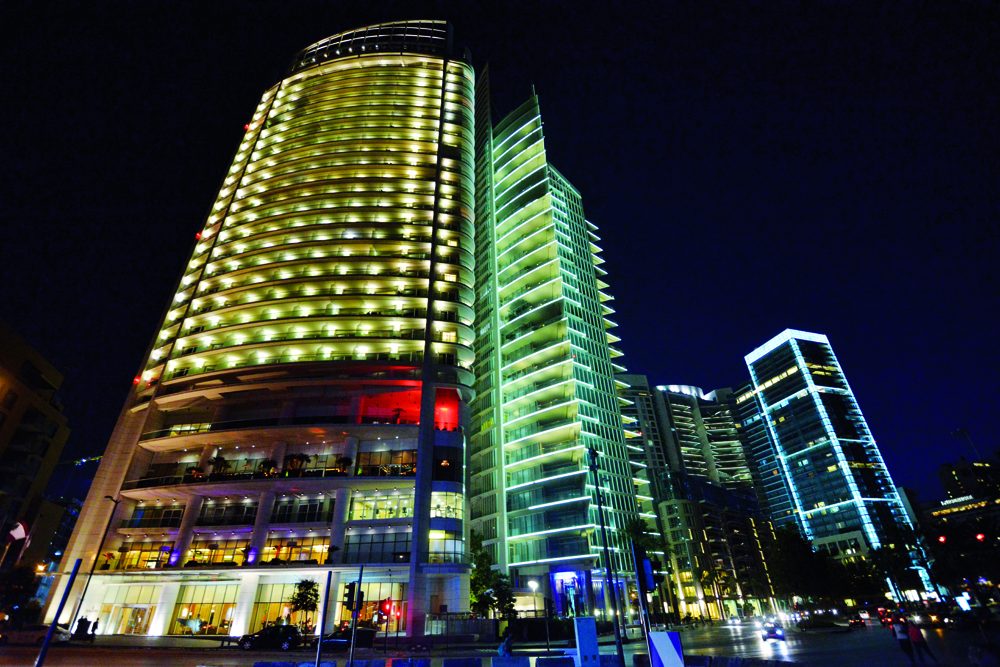
HILTON-9 Photo

E   So it was part of your strategic vision for the Group in Lebanon?

Yes we wanted to be here (Habtoor) because it has the biggest conference and meeting rooms. It’s also in a great location and I don’t have to fight with everybody in Downtown over rates and occupancy. Here, the people who stay have different types of needs, such as big conferences and meetings, so we have a lot of business travellers.  Also, the location which we have here (Habtoor) is going to grow from a corporate point of view with a lot of new businesses moving to the area.

People who want leisure go to Downtown, which is fine, but there are so many hotels there and I think that, in terms of fair share, we at Habtoor are not in the same ballpark. We have our own business model.

The second thing is that it’s a strong residential area with a lot of mid- and upper-class residential units being developed, and then of course you are in the middle between here and the mountains so it also brings a lot of things down here. So strategically, this location is superb.

I think from that point of view, we are settled.

E   Is that it for your growth in Lebanon?

You can never say that. There may be mid-market or focus-service opportunities. We always look at possible opportunities going forward and the criteria for this are really simple: We’re a management company which means we bring in investors to invest. We need to ensure that the financial thresholds have a return on investment and also [establish] the stability of the business environment to ensure we have sustainable profitability and interest payments.

This is really important because once we start employing people, we need to make sure we can grow, develop and train them further so we are not going up and down in the cycles of business which many in the country are experiencing right now.

E   How would you place Lebanon in the overall strategic vision for Hilton Group in the region?

Like we’ve said, we have 600 rooms in three properties in the country which is already a lot. At this stage, we want to make sure that we open our new property in Downtown; that’s our focus for today and for the next couple of years before we look at anything else.

That’s because of the business trends in Lebanon. Five years ago it was booming and look where we are today. But that means the potential is really great and the future is very bright. I think if everybody can get their ducks in a row and the right priorities are taken from all levels of the industries then the investments and developments in Lebanon will be really strong. It’s got a great following and it’s a big brand, not just regionally but globally as well.

E   What is driving your growth in the Middle East?

Investors and demand. Let’s talk about Dubai, the biggest model because, in 15 years, the whole environment there has changed totally.

One of the most important things they did is they were able to create an airline which was bringing customers. Today, they have 55 to 57 million people coming through Dubai, which is huge. Although most of them are in transit, obviously many are staying over in Dubai; this is a huge growth with new builds and destinations.

Creating a safe and secure environment was their key. We always say democracy is a very important feature in our lives but it doesn’t work everywhere as well and hence, in terms of the decision-making process, they have an invigorated leadership with a great strategy which they have followed regardless of comments around the world and I think they are very dedicated. When you look at the growth with Emirates Airlines and at the financial institutions moving in, it’s a great recipe for moving forward.

Now Dubai is only one spearhead, with other areas like Ras Al Khaymah [and] Fujairah.  Abu Dhabi has also developed its own airline, and the same with Qatar.

E   How does outbound tourism from the Middle East and North Africa (MENA) region to other areas affect your business?

The strategic outlook in terms of the outbound strategy from the MENA region is also very important. A lot of people who live in MENA are outbound during holidays and it’s a big piece of business. This is why you have to have good representation in each country in MENA. It all goes back to flight connections; today it is easy to take flights anywhere from the Gulf. Therefore we as a hotel group need to think from a strategic development point of view to help us ensure we can move our customers in a global landscape. We have 42 million Hilton Honors customers across the globe who visit us internationally and therefore new destinations and offers are very important for us to roll out.

January 9, 2016 0 comments
0 FacebookTwitterPinterestEmail
Hospitality & Tourism

Waiting for (President) Godot

by Nabila Rahhal January 9, 2016
written by Nabila Rahhal

Executive met with Pierre Ashkar, head of the Hotel Owners Association in Lebanon, to discuss the hotels’ performance this year as well as the main issues and concerns affecting hotel owners.

E   According to tourist numbers and hotel occupancy rates, it appears that the year 2015 started off well for hotels in Lebanon, correct?

Usually, 60 to 70 percent of tourists in Lebanon are either individuals or corporate travelers. The individual traveler can get corporate rates if they are loyal customers who come frequently. Individuals get rack rates while corporate rates goes down by 15 to 20 percent. Tours and bulks get a completely different deal with lower prices.

The problem started in Lebanon in 2011 when the hotels began to lose guests, and so automatically hotels started lowering their room rates: the rack rate which was $200 went down to $150, a 25 percent decrease. So when my rack rate goes down 25 percent, I have to decrease the price as well for my corporate customers, so that’s another 15 to 20 percent decrease.

So when you hear that the increase in the number of tourists is 16 percent from last year, you have to ask yourself first how many days they stayed in Lebanon because nobody knows. Also, a bigger [number] than before are coming within tour groups, especially Iraqis, and they are getting group rates. So whereas before you would have said no to that, today you take them at group rates because you are hungry. Hotel owners are giving rooms at $60 and $80 just to have liquid money in their hands and make their payments.

I will show you some numbers related to Christmas and New Year’s in 2010. A 100-room hotel had rates of $200, which makes $20,000 per day, and most guests used to stay for 10 days, so the hotel could make $200,000. That same hotel, today, has lowered prices down 40 percent which makes a room $120, totalling $12,000 per day. Since the average stay is down to three days, the total today is only $36,000. Look at the difference, less than a quarter of revenues. Now you see the reality.

E   Were all the areas equally affected by this situation?

No, because some areas rely on local Lebanese as their base clients, and mainly those who are used to spending their summer in the mountains. So these hotels are already seasonal and only work for two months.

E   What about the guesthouses and boutique hotels that were popular this summer and appear to be on the rise?

It’s a different segment and market. They work on weekends and in the summer. These represent a maximum of 10 percent of hotels in Lebanon. Some hotels have the financial means to survive this period because they only have 30 rooms and the whole family runs the hotel but the hotel institutions which employ many people, such as the hotels in Beirut, have to comply with international standards and expectations which are different than those required for guesthouses or hotels in rural areas.

E   You paint a rather bleak picture. From the Association’s perspective, is there a solution to this crisis?

Let us speak honestly. No one can solve the problem entirely. But what could happen that would help many stay on their feet while waiting for better days is financial engineering.

Financial engineering has allowed the Lebanese government, with all its debts, to remain on its feet. Who is behind this financial engineering? The minister of finance, the central bank governor and experts in this field. Just like they found a way to keep the government on its feet, even though it is still accumulating debt, they need to find a solution for hospitality institutions, because each hotel that closes down is letting its employees go, therefore increasing unemployment and making these youths desperate to make some money and [support] their families.

This is my opinion. The day they elect a president, there is an agreement to stabilize Lebanon on a local, regional and international level. Automatically you will see the country prosper. This is what happened after the 2006 war and the same scenario after the Doha Agreement in 2008.

E   So there is still some hope for prosperity in this sector?

The country has not lost its components or the capabilities of its citizens. It did lose the quality of youth who have left the country already but I assure you those will return as soon as they feel the country is stable.

Look at the concepts developed by Lebanese in Africa or the Gulf; why are they so successful? Because those countries offered them stability. This is all we need, stability, and I tell you Lebanon will be full and at a room rate of $200. I repeat, give us stability and take all you want.

January 9, 2016 0 comments
0 FacebookTwitterPinterestEmail
BusinessEconomics & Policy

Export dynamics

by Jeremy Arbid January 9, 2016
written by Jeremy Arbid

2015 has been a tumultuous year for Lebanon’s food industrialists. The Ministry of Public Health’s food safety campaign greatly impacted Lebanese consumables in foreign markets, while the closure of traditional land routes raised the cost of exports. Despite these changes, however, the sub-sector has seen an uptick in investment and potential new markets and trade shows promise an important opportunity to locate new buyers for Lebanon’s food products. Executive sat down with Mounir Bissat – president of the Syndicate of Food Industrialists – to find out more.

E   Obviously the economy in 2015 has not been very good to industry as a whole because of external factors like the Syrian war and the closure of land transit routes, but how has the food manufacturing sector faired?

This year has been [difficult] on the industry as a whole and in particular on the food industry. While it was a good cause, the food safety campaign started the year with big repercussions. It had an impact on our reputation, especially with regard to some of our traditional export markets. The second blow was the troubles we were facing at the port as a result of new procedures and formalities imposed by the Ministry of Finance regarding customs. Many factories did not have enough raw materials while others lost their inventory of packaging material because of the delays. This all led to losses in productivity as well as financial losses. The third blow was the closure of borders – Syrian and Jordanian – which affected a major [portion] of exports to Arab countries. Fortunately, the resilience and flexibility of the industrialists allowed them to bounce back from these three major strikes and we are, I think, back on track. In October we were at the Anuga trade show and I saw my colleagues trying to revive lost relations with some of their clients because of these [problems].

E   In October 2015, Banque du Liban (BDL), Lebanon’s central bank, issued a circular with the aim of easing the financial difficulties and cash flow issues that companies and factories are currently facing – can food industrialists use the circular to their advantage?

The central bank has been in the process of issuing a new bundle of economic stimulus measures offering new lines of credit for banks, in order to encourage consumption and investment by small and medium enterprises (SMEs). I don’t know if this is what you [are referring] to, but it will definitely help. The central bank launched a similar measure at the beginning of 2014 by injecting around 3 percent of GDP – the package was I think $1.5 billion – to stimulate the economy. With this injection the growth was in the range of 1.5 to 2 percent. Imagine what would have happened if the central bank did not [issue the stimulus].

E   Did the stimulus have specific impacts for the food industrialists?

I do not have exact figures on how many industrialists benefited from the [stimulus], but it’s a package for new loans and new lines of credit so if we didn’t benefit directly we definitely benefited indirectly. When you stimulate the economy and encourage the economic cycle, even if I don’t have the money directly in my pocket, others are part of this circulation so it will impact positively on our interests too.

E   In early November 2015 Investment Development Authority of Lebanon (IDAL) said that the agro-industry this year had received applications for new factories and projects – around $70 million in investment.

Yes, this sector is one of the most prominent industrial sub-sectors in Lebanon. It is attracting many investments because of various internal and external factors. Believe it or not, the slogan “Made in Lebanon” for Lebanese food is an added value to the export market for the food sector. The food industrial sector is one of the few that [sources its] raw materials within Lebanon – most of the industries import most of their raw materials from abroad. The availability of skilled labor [is also a positive] factor that will encourage investors to diversify and invest in the agro-industrial sector.

E   The syndicate is a lobby group and one of the successes has been the exemption of tax for exports…

No, this achievement is because of the Association of Lebanese Industrialists – it [benefits] all industry. If we talk about success stories for the food industry, one is our participation in the most important trade fairs in the world – Anuga, SIAL and Gulfood. The enactment of the new food safety law ratified in the most recent Parliament session [on November 12] was the culmination of more than 10 years’ effort. If this law had existed years before it would have saved us the bad repercussions that the food safety campaign witnessed in 2015.

E   On the idea of lobbying and looking forward to next year, are there any issues of concern to the syndicate?

[On November 17], we made a presentation to US Agency for International Development – one of our strategic partners – and we declared that although it is not yet officially drafted, the work of the syndicate in 2016 will [focus] on three pillars. The first [pillar] is the enhancement of the culture of food safety and of ISO certification, the second is the improvement of market penetration by participating in more trade forums and better exposure and image, and the third is to [focus] our efforts on product development. Any sector, or any factory, [that] does not continuously improve and innovate on its product lines, will slowly die. For a sector that is as dynamic as the food [industrial] sector is throughout the world, and considering that we are an export-oriented sector, and are facing competition (not only locally but regionally) from similar industries that, unlike ours, benefit from government support, [this is especially true]. You can tell that many of our traditional industrial [products] are already available in Jordan, Egypt, Saudi Arabia, Turkey and Greece – and formerly in Syria. You can imagine the kind of competition.

E   The Ministry of Industry says that there has been some impediment to the opening up of the Russian market because of sanctions, and also said that Mercosur – the Latin American sub-regional block – could be a potential new market. Were these trade agreements to materialize, do you see those markets providing big growth opportunities for food industrialists?

Definitely. At the beginning of this month we were with the minister for an official visit regarding the Iraq market. [That] market is a huge consumer market for Lebanese imports. During this visit we explored and discussed a lot of pending issues that are hindering growth – we have good exports to Iraq but we remain ambitious to increase the number. As for the Russian market, the Ministry of Economy and the Ministry of Industry visited Moscow last year. It is potentially a very big market but is not easy to penetrate, and we are still working on some pending issues like the payment facilities and shipment to the market. I think the only breakthrough that happened was in the fresh produce sector. But for the industry, it is delayed. Regarding Mercosur, it is definitely a great market, but we have not yet tackled this. We had a meeting at Anuga in 2015 with the trade show representative for Alimentaria – it is a big [food] trade show in Mexico, but also has a subsidiary show in Barcelona and is attracting many Spanish-speaking countries. We are working, but so far have not received good feedback from our industrialists – we will try to have a good Lebanese pavilion there.

January 9, 2016 0 comments
0 FacebookTwitterPinterestEmail
Business

Stepping into the light

by Thomas Schellen January 9, 2016
written by Thomas Schellen

Historically, insurance companies and organizations for mutual protection have originated from taking on roles in the acceptance and coverage of risks that led them in a next step to develop strategies for risk mitigation and, with further passing of time, assume responsibilities to prepare for future risks. With the present era’s accumulations of uncertainties and concentration of both known and yet unknown risks of unprecedented dimension, from climate change to new technologies, the role of insurance companies in preparing for global and local risks is of massively increasing importance in every single economy.

In this global context, Lebanese insurance companies in 2015 served the local economy with a portfolio of services focused on traditional needs for coverage. Of the $1.15 billion in premiums written until the end of September, $352.4 million were in medical insurance, $252.4 million in motor, and $88.8 million in fire.

In the life insurance segment, premiums were reported as $335.9 million at the end of September; life policies were distributed in 60:40 ratio between savings contracts and protection-only covers in terms of value. By volume, life policies numbered roughly four to one in favor of protection-only contracts over contracts with a savings component.

In terms of distribution of gross written premiums between the main segments, the shares of around 30 percent each for life and medical, 22 to 25 percent for motor, and 7 to 9 percent for fire are consistent with market structures of the past five years.   

Emboldened aspirations

The Lebanese insurance sector has, after experiencing the 1975-1990 civil war and subsequently redeveloping its capacities in the 1990s, moved along a steady growth trajectory in the last 15 years. In performance terms, the sector has demonstrated its durability by generating growth in premiums and assets for a third consecutive year in 2015 during a period when the economy at large was faced with external pressures and internal constraints.

As the second-most important constituency of the financial economy after the banking sector, insurance companies have intensified their efforts in 2015 to heighten the standing of insurers vis-a-vis other sectors in the Lebanese economy. An increase in insurance awareness among national policymakers and corporate decision makers has been the pursuit of the Lebanese insurance association for quite a while. The task has proven difficult for all national insurance sectors in the Middle East as a region where insurance density and penetration are among the lowest in the world, even as Lebanon is a regional leader in terms of insurance penetration, or the share of premiums in gross domestic product, with a penetration rate of around 3 percent.

However the domestic slump in several sectors and industries, such as hospitality, trade, and real estate, and the further deterioration of the stock market, where the Beirut Stock Exchange suffered an almost 16 percent drop in its index and was among the three worst performers among the region’s national stock markets, made it easier in 2015 for the insurance sector to present their values and stress their importance to major stakeholders in politics and the business community.      

A highlight in this regard was a regional conference on the Lebanese oil and gas sector, co-hosted by the industry association and by the General Arab Insurance Federation (GAIF) in June 2015. Besides discussions on the regulations for oil and gas insurance that would ascertain a participation of Lebanese providers in covering energy exploration and exploitation ventures, the event’s biggest topic was an endeavor to develop a pool for oil and gas insurance under management of ACAL.

Other initiatives presented by the association for enhancing coverage capabilities for important risks were projects for an aviation pool and for an earthquake pool. As the projects are new, the willingness of providers to collaborate on creating these asset reservoirs for sharing of large risks has yet to be confirmed. Insurance experts expect that these pools, once implemented, will deliver a strong growth impulse to the sector. However, behavioral change of sector members will be needed in order to develop viable business opportunities in the country’s emerging oil and gas business, well-known regional insurance broking specialist George Kabban cautioned during the June 2015 conference. If local companies continue to behave as they did in the past, they will have zero returns from the notedly high risk prone energy business, he said.

Dangers of inertia and regressions

Challenges remain for 2016, and most likely beyond, in the operational and competitive environment, sector and corporate structures, and the governance of insurance companies. The insurance landscape includes providers that operate as mutual organizations for agricultural producers, or members of the public sector that are monitored by ministries but are not under the supervision of insurance regulators. The leeway that these organizations have over fully regulated private sector players is a major distortive factor to the competitive environment. 

In terms of the sector’s structure, consolidation is an unsolved challenge that is intertwined with problems of transparency and lack of corporate governance at insurance companies. Among Lebanon’s more than 50 operational insurance companies, some are subsidiaries of international or regional financial conglomerates, some are owned by Lebanese banks, and some are joint stock companies in private shareholdership. No Lebanese insurance company is traded on the stock market, however, and only very few insurers produce and publish annual reports according to best practices for financial companies that want to be transparent to shareholders and attract investors.

According to numerous comments from analysts and executives at companies within the sector that have expressed interest in making acquisitions, the lack of proper corporate governance and the slowness of reaching needed consolidation are interrelated. Corroborating this further, a successful exit by private equity fund Euromena and new regional equity participation in Lebanese reinsurance player Chedid Re was helped greatly by implementation of corporate governance at Chedid Re. 

Although insurance performance in 2015 was seen as solid by sector leaders, the sector was exposed to the effects of the state’s inertia and administrative limits for making needed decisions that have resulted from the political systems failure in electing a president and legitimizing policy measures. As a change in the leadership of the Insurance Control Commission (ICC), the supervisor of the sector’s compliance with regulatory, market conduct and reserving rules, was instigated in the first quarter of the year, appointment of a new ICC head was on the agenda at the Ministry of Economy and Trade. A successor for the departing commissioner was selected with a lag time of several months but only weeks after sending notes of his appointment, an announcement in the government organ, The Official Gazette, informed the market that the appointment had to be withdrawn because of legality issues.

With no certainty about the further length of the political crisis, no commissioner in place and reversal to an interim holder of the position, the potential for a gap in supervisory effectiveness could not be excluded as the insurance sector moved toward the end of 2015. Moreover, as a long overdue new insurance law is unable to progress into parliamentary approval and ministerial implementation, a number of concerns over implementability of needed systemic improvements exist in the outlook for Lebanon’s insurance sector. In the short term, however, the expectations for 2016 are reasonably positive in terms of performance and insurance leaders are optimistic about hosting the region’s top sector event, the GAIF general conference, in May of 2016.

January 9, 2016 0 comments
0 FacebookTwitterPinterestEmail
Hospitality & Tourism

Blowing in the wind

by Nabila Rahhal January 7, 2016
written by Nabila Rahhal

The prosperity of Beirut’s hotel industry continues to ebb and flow. Room occupancies increase at the earliest signs of stabilization in Beirut’s security situation, only to drop as soon as a bombing or other attacks disturb the peace.

Yet hoteliers in Lebanon refuse to give up, and are targeting different segments of the tourist market while developing creative incentives to make up for the revenue lost in their traditional market segments.

Where are the tourists?

Pierre Ashkar, head of the Hotel Owners Association, pinpoints 2011 as the year in which Lebanon began to lose a large number of its traditional tourists from the Gulf region, as well as those tourists travelling overland.

tourist arrivals to lebanon by month“We used to have 350,000 travelers [per year] who would come by land, of which 70,000 to 80,000 were Jordanians who found this form of travel affordable. We also lost the big families from the Gulf who would come by mini-vans and spend the whole summer in Lebanon. Add to that the political sensitivities which caused tourists from the Gulf to avoid Lebanon due to the travel bans, and certain speeches made by political leaders.” These are the reasons outlined by Ashkar as to why hoteliers continue to call for political stability in Lebanon.

Nazira El Atrache, general manager of Le Bristol hotel, which opened its doors this year following a year and a half of refurbishment, also speaks of the negative effect the travel ban issued by some Arab countries on Lebanon has had on their business. “The market is very hard. You cannot really attract people to a country that is so unstable security-wise … and with so many factors at stake in the international political arena. This is also in addition to the bombing [in Dahieh in November 2015] and the bad publicity the country is receiving.”

Alternatives to tourists from the Gulf

Hoteliers in the country seem to have come to terms with the idea that tourists from the Gulf are no longer their strongest market and are identifying alternatives to this revenue stream. “We cannot sit back and wait for the Saudis to come back; we need to discover new markets, like Iran, for example. There is a massive shift in terms of demographics in Lebanese hotels and the question is – what will the market be like in another five years?” asks Peter Edholm, cluster director of sales and marketing at Le Vendome and Phoenicia Intercontinental Hotels & Resorts. He says that the majority of their hotel guests today are a mix of Europeans, Middle Easterners, residents of the Gulf Cooperation Council (GCC) and some Asians and South Americans.

Atrache says Le Bristol is now targeting tourists from Jordan, Egypt and Iraq through visits from the hotel’s sales teams, adding that it is the Iraqis coming to Lebanon for medical tourism who are the main driving force behind this segment.

Manal Dana, group marketing & communications manager at Achour Holding, has also noticed a decrease in the GCC market but cites “a phenomenal increase of Europeans, Americans and Far East guests coming [to Lebanon] for business, hence booking at Lancaster Tamar.”

Lancaster Tamar in Hadath is described as catering to the business community on its website.

Guesthouses

Lebanon’s small guesthouses, boutique hotels and bed and breakfasts have been a fast growing industry for the past decade. However, according to Orphee Haddad, founder of L’Hote Libanais, a network through which tourists can make reservations for alternative, often rural hotels, their visibility has only really started flourishing over the last few years. In fact, they have become so popular that they have been fully booked throughout the past three summers. This is even more impressive in light of the fact that larger, more traditional hotels have instead been struggling to fill their rooms.

While they still constitute only a small segment of the overall hotel industry – Pierre Ashkar, head of Lebanon’s Hotel Owners Association, places them at around 10 percent of Lebanon’s hospitality offerings, Haddad believes the significance of guesthouses lies in more than just numbers. “Although figures don’t show it, since the market is new and the number of rooms very limited, what’s happening is not just a trend or a marginal phenomenon: it’s the way Lebanon is responding to the contemporary traveler behavior and creating a socially and environmentally responsible market. The issue needs to be examined in terms of influence, vision, and promise, not only in terms of figures.”

Indeed, the Ministry of Tourism has adopted these guesthouses and boutique hotels into their rural tourism campaign, while Tourism Minister Michel Pharaon says they are looking to secure funding for those in rural areas who want to develop such projects.

Haddad goes on to explain how the guesthouse market has grown since L’Hote Libanais began operating, particularly among the local population. “At the beginning, all of them were foreigners, mainly Westerners. Nowadays, half of them are Lebanese people residing in Lebanon. They have booked more than 30 percent of the total number of nights for reservations made through L’Hote Libanais.”

Today, Kanj Hamade, senior consultant at Lebanese Industry Value Chain Development Program, estimates the number of guesthouses in Lebanon to be around 40 (13 of which are in the L’Hote Libanais network) but expects it to increase as investments in the sector continue to rise.

Because of this growth, L’Hote Libanais believes that customers need to be given more clarity as to what defines a guesthouse or a bed and breakfast; as such, they have developed L’Hote Libanais which Haddad says would ensure that the standards of quality are met in each of its guesthouses.

With increasing interest, both locally and abroad, the future can only be bright for this burgeoning, alternative style of lodging in Lebanon.

Indeed, the key driving force behind the performance of Beirut’s hotels this year was the corporate travel segment, known as Meetings, Incentives, Conferences and Exhibitions, or MICE.

Edholm says that “recently, corporate travel grew a lot with several exhibitions and meetings which we were hosting. These are events that go ahead no matter what is happening in the country because they are organized by local banks or regional companies and not international or multinational groups.”

A good year…but…

Despite the seemingly poor state of affairs, the hotels that Executive spoke to report that 2015 was off to a good start – with room occupancy rates generally exceeding those of 2014 – until the end of July, when the combination of the waste management crisis and the demonstrations and closures in Downtown drove tourists away.

“2015 was much stronger than 2014. We were several million ahead in revenue until August, when the garbage crisis really changed things. It wasn’t just the garbage but also the demonstrations, because people in the Gulf especially thought it was another Arab Spring,” says Edholm. He adds that growth for the first three quarters of the year was because of the improvement in the security situation and also because of the lack of negative media.

Director of Sales and Marketing at the Four Seasons Hotel Beirut, Maha Bourachi, also attributes their hotel’s positive performance this year to the increased stability in the country for the first three quarters of the year. “Naturally, [the first quarter], Q1, of 2015 was much better than the Q1 of 2014, where we had explosions randomly in the country. The Q3 of 2015 was also much better, as in 2014 in June there was the explosion of Duroy Hotel which imposed an immediate slowdown in business pick-up levels in the country,” explains Bourachi.

With the suicide bombings in Dahieh in November 2015, Edholm does not expect the year 2015 to end on a positive note for hotels in Lebanon. “With the bombing, we don’t see the year ending better, as Western countries are very sensitive to security issues. I think Jordanians, Egyptians and Iraqis would still come but we need a solid mix of travelers: we need the business travelers, the person coming for weekends or holidays, the suite guests if it’s a big family…”

Hustling for Business

While in previous years, hotels in Beirut may have been flooded with guests, today those in the hospitality industry are having to double their efforts and provide a variety of incentive packages in order to attract clients to their property.

“We are continuing to identify the strong performing key source markets for the hotel, and identify proactive business development initiatives to attract and grow our business levels from these markets. In a market environment as volatile as the Lebanese one, you need to constantly identify opportunities and tackle them proactively to grow your business,” says Bourachi.

Achour Holding’s Dana says they have have had to offer creative promotions to their guests in order to remain competitive. “We have managed [to sustain our business] through our year-round tailor-made promotions for corporate and travel agencies, and the MICE segment, in order to gain our share of business. Not to forget the online packages created for Ramadan and the summer period to attract locals and foreign clients,” she explains.

Edholm says the Phoenicia group chose to be much more present in the market this year from a commercial perspective, with their sales people travelling to Dubai, London and Paris among other cities in order to connect with travel agents and clients in those cities. “Just because you have a [precarious] situation you cannot stop being close to your clients, because when the business is back who will they call? And if the business is limited we should always be the first choice in terms of presence by visiting our key suppliers.”

Le Bristol’s Atrache also speaks of remaining active in foreign markets by participating in several travel fairs this year including ones in Berlin, London and the Gulf. She explains that this is particularly helpful for reversing the negative PR about Lebanon: “We tell [attendees] that we still have the nightlife, and the archeological and cultural sites, and that it’s a good idea to come now and take advantage of the special rates we have since the country is no longer really on the tourist map.”

The modern world and hotels in Lebanon

As part of their strategy to attract customers, more and more hotels are embracing the digital world, with Edholm pushing for more online and social media coverage among other online activities in Phoenicia, and Bourachi says that online digital campaigns to promote Four Season’s food and beverage (F&B) outlets would be part of their plans to grow their business in 2016.

“The market has changed. In the past, you used to get phone calls to book a room; now you have a room management system. You are online and you need to have a solid website and social media presence to be competitive,” says Atrache, recalling the changes in Le Bristol’s hotel market since it opened in 1951.

Dining and wining in a hotel

Hotels in Beirut generally have solid F&B and banquet hall offerings which they can rely on to generate some revenue, to a certain extent, when room bookings are low. The Four Seasons says their F&B offerings are constantly being developed with new menus and creative ideas while Edholm says F&B outlets will also be a key focus of Phoenicia in 2016.

However, Atrache warns against an overreliance on F&B and catering. “At Le Bristol, we are known as the caterers, but it is not enough to keep the payroll of all the services the hotel provides with only the catering department.” She explains that although catering constitutes 60 percent of their revenues at the moment, its cost is much higher than maintaining rooms.

Despite the ever-changing winds, the business of hotels in Lebanon is hanging in there and finding new ways to adapt and grow. As Atrache concludes, rather darkly, “Hospitality needs to keep on going because this is the heartbeat of Lebanon: we have no oil, we have no gas, we have tourism and this is what we are all about.”

Clearly, this is a sector worth fighting for, and if Lebanon loses its grip on it, the future will not be so bright for this small but ambitious country.

January 7, 2016 0 comments
0 FacebookTwitterPinterestEmail
Hospitality & Tourism

A tale of two countries

by Nabila Rahhal January 7, 2016
written by Nabila Rahhal

Addmind is primarily known for creating successful entertainment concepts and venues such as Iris, Indie and White, which was the winner of the 2015 World’s Finest Clubs Award. The year 2015 saw the company re-enter the food and beverage (F&B) domain, following a few unsuccessful ventures 10 years ago. The company took over the La Plage complex in Ain El Mreisseh and reconceived it into the Madame Bleu Beach Club and three restaurants: Popolo, Boulevard Beirut and Sea Salt.

The company also partnered with the restaurant Shogun Downtown over concept design, music and cocktails while its owner Aref Saadeh shared his food expertise.

The company’s growth in Lebanon was coupled with further expansion in the United Arab Emirates. Tony Habre, CEO of Addmind, said Dubai now constitutes 55 percent of the company’s total turnover and estimated growth to 65 percent by the end of 2016.

Executive speaks with Habre about the diversification of Addmind’s portfolio and about the dynamics and challenges of operating in two distinct markets simultaneously. 

E   Can you tell us why Addmind chose to extend its portfolio outside of nightlife?

Yes, we are diversifying into restaurants because it’s a natural and organic growth for us; we’ve been growing steadily as a company and we’ve always followed the trend in Lebanon and what people want. There’s still a big need in Lebanon for restaurants; even with everything happening, people still go out. There are fewer people, but there are still people and not a lot of new restaurants have opened recently so I think in the right place, there is a market for that.

I think La Plage and Shogun are set in great locations; they just needed the right concepts. It was a perfect place to refresh our restaurant concepts and diversify them.

E   And you did not feel that such concepts are changing your brand identity?

No, if you go to Boulevard Beirut you will see that the logo, design and setup look like us. Popolo looks a lot like us and so does Madame Bleu. We are integrating with something that we like and where we would like to go. Honestly, where we failed is in places where we wouldn’t like to go.

E   Can you compare 2014 to 2015 in terms of the overall growth of the company?

Our huge growth is in the UAE. In Lebanon, the nightlife almost stayed the same despite growth at the beginning of the year before the political situation took its toll, but I would say that, overall, the nightlife stayed more or less the same.

Because we started doing restaurants, we had growth at the company level within Lebanon but it’s still a bit early to know how much.

So far the nightlife, including beach clubs, constitutes 70 percent of our company’s businesses, with the restaurants making up the other 30 percent, though by 2017 I think it will be 50-50.

E   How do you manage your staff between Lebanon and the UAE?

We have a lot of common staff between Dubai and Beirut.

We have a big office in Dubai but the top management (global operations director, F&B manager, human resource manager, finance manager, etc.) are the same in both cities. Before, even the general managers (GM) were the same but since we grew a lot in Dubai we had to have separate GMs.

E   Are you facing a shortage of qualified staff? If so, is it more of an issue in Beirut than in Dubai?

It’s a problem everywhere. On the contrary, had we not had this base of people that we employed and trained in Beirut, there was no way we would have accelerated in Dubai. Our strength is in our staff who we were able to bring to Dubai.

By January, we will be around 900 employees of which 250 have been with us for eight years and are considered the pillars of the company, having started as wait staff and gone on to fill management positions.

We are opening our own academy, the Addmind Academy, in 2016 for our own team. The whole idea is to train our existing staff and our future staff in a very professional manner because it’s all about the staff at the end of the day.

Lebanon has a lot of good people and we have the service gene in our blood, but they just need training and language [skills] which is one of the problems we face in getting them to Dubai.

E   What are the major differences you have seen between operating in Lebanon and Dubai?

The cost of doing business in Dubai is the actual cost of doing business. It’s a country with an extremely high barrier to entry; the rents are extremely high, and your cost of business is also very high because you are getting many of your employees from outside and you have to pay for their visas and accommodation. Basically, the setup [cost] of a business is extremely high. It’s good if you are already doing well because as the barrier to entry is so high, it is difficult for competition to enter the market unless it is very strong.

This is the opposite of Lebanon, where you don’t have this high cost at the start, as your employees are already in the country and so are you; you are not mobilizing yourself. Also, [in Dubai] later on the cost is in the rent that is triple that of Beirut and the Lebanese employees who cost you at least double or triple [the amount in Lebanon] there.

This is why I say the revenue percentage is higher in Dubai but the profit percentage is better in Lebanon.

E   What are the rewards of operating in Dubai?

It’s a great country where revenues are really high, it’s stable and the market is there. You have 100,000 Lebanese living in Dubai with a considerable income and another 60,000 in Abu Dhabi. So you are starting with a good share of the market.

The financial risk in Dubai, however, is higher than in Lebanon because the investment there is bigger, but once you do well, you do better.

E   Are your venues in the UAE attracting only Lebanese or has your client base been diversified to include foreign expats?

The Lebanese help you get started but then they all have their cosmopolitan friends so we don’t have more than 30 to 40 percent Lebanese in our places. You have Emiratis, Palestinians, Jordanians, Iraqis [and] Europeans; you really have people from everywhere and since we have different types of places, we attract different nationalities to each.

E   Are you thinking of expanding beyond Dubai?

The Gulf Cooperation Council is going to come organically but in the coming two years it’s about time for a move to Europe. I’m sure it won’t be easy. It wasn’t easy in Dubai but we’ve done it once and we will do it again.

January 7, 2016 0 comments
0 FacebookTwitterPinterestEmail
Hospitality & Tourism

Dancing to a different beat

by Nabila Rahhal January 7, 2016
written by Nabila Rahhal

Among the first things you hear about the Lebanese people is how much they love to party and go out. This reputation still prevails, and although those in the food and beverage (F&B) industry are facing more challenging circumstances by the year, they still say their business is performing a lot better than other sectors of the Lebanese economy.

Lebanese market and expats

The food and beverage (F&B) industry has become reliant on those residing in Lebanon and on the Lebanese expats who visit during the summer or winter holidays, says Toni Rizk, chief executive officer of TRI Concepts, which operates a collection of bar-restaurants across Lebanon, explaining that the tourists Lebanon has been attracting these past few years are not “big spenders”.

As such, continues Rizk, the industry has been able to sustain itself to a greater extent than other, more tourist dependent industries, such as hotels.

Seasons to Party

This decrease in tourists with a high purchasing power, coupled with a market catering heavily to expats on seasonal visits to their homeland, has made summer the coveted season for the nightlife industry. Many operators take advantage of the good weather to open outdoor clubs or bars which cater to the increased demand.

“The summer is generally more happening than winter. Also, there are returning expats [in the summer] so they nourish the activity. We have seen from our existing venues that we achieve higher revenues in summer and that’s why we focused on having an outdoor venue,” says Rabih Fakhreddine, CEO of ‘7 Management’, which launched the successful outdoor lounge bar and restaurant Seven Sisters in summer 2015.

However, without a similar concept for the winter, explains Fakhreddine, they would risk losing the employees they had trained and invested in as well as the client base they had developed over the summer. This is why he says his company is developing a similar concept to Seven Sisters called Black, but for winter and indoors, to be launched by the end of 2015.

Tony Habre, CEO of Addmind, which operates White in the summer and Indie in the winter, both on Dora’s seaside road, also believes in the importance of a winter venue in retaining staff. “We always keep our winter season outlets, even if they are not that profitable, to be able to keep our staff who are our secret and our strength.”

Lower purchasing power

When Lebanese expats return to their adopted countries, the main market for the F&B industry becomes the local Lebanese. With the local economic crisis causing these Lebanese to economize in their spending habits, F&B operators are witnessing a change in trends.

“The affordable concepts are the ones which are working most today while the fine dining segment is suffering because the purchasing power in the country is low,” says Tony Ramy, president of the Syndicate of Owners of Restaurants, Cafés, Nightclubs and Pastry Shops.

Marwan Ayoub, managing partner at Venture Group, says Lebanon’s F&B industry is moving more toward quick service restaurants (QSR) and low entry concepts like snack shops because of the current economic crisis, but adds that it should balance out again into the more expansive concepts (big clubs and restaurants) when the market is back to normal.

Speaking for the nightlife segment, Rizk, who operates The Bohemian in Mar Mikhael, sees that the trend in 2015 was generally geared toward smaller bars, where people can enjoy cocktails and bites, as opposed to big clubs where people usually spend more and go all out.

Indeed, main areas full of 60 to 70 capacity bar-restaurants such as Mar Mikhael, Badaro or Hamra enjoyed more sustainable footfall than many of the city’s nightclubs and large venues which were busy mainly on weekends.

“Even in the Lebanese cuisine industry, you have both restaurants and cafés but you see people gravitating toward cafés more because the average bill there is $20 while in a restaurant it can go up to $60,” analyzes Ramy in light of the public’s decreasing purchasing power in recent years.

Operators Adapting

Faced with this reality, operators in the F&B industry have had to adapt their business models and strategies to accommodate their clients’ needs for affordability.

As such, investors are shying away from the big projects and playing it safe by investing in smaller outlets, explains 7 Management’s Fakhreddine.

[pullquote] The trend in 2015 was generally geared towards smaller bars [/pullquote]

“This is why we are not seeing big nightlife concepts like White or Skybar anymore because this costs real money and it’s not the right time in Lebanon. We no longer have the crowd that can fill a place with a capacity of 1,500 for five days a week,” says Ayoub, explaining that operators in the industry have adapted their business models to go in different directions such as cluster projects or expanding into the region.

Cluster Power

While areas which have grown organically such as Mar Mikhael or Badaro remain Beirut’s nighttime destinations of choice for 2015, many operators are choosing to seek strength in numbers by becoming tenants in a hospitality cluster project.

Hospitality clusters have grown in fame in the F&B industry, with The Courtyard in Hamra opening late 2014, The Village Dbayeh opening in November 2015 and a few other such projects in the final phases of completion.

Rizk, who has recently opened Trumpet, a vintage themed bar-restaurant in The Village Dbayeh and who is finalizing his other outlet, Lily’s Lounge Bar, in another cluster called Blueberry Square, says the cluster model has positive elements. “One benefits from having a variety of pubs next to each other in an organized manner because the project becomes a destination with the potential to attract more footfall than a standalone venue,” he explains, adding that his experience with Trumpet has been favorable in relation to the cluster model and its services such as landscaping, common marketing and a well-structured management body.

Rabih Saba, managing partner of Venture Group, which has developed The Village and is in the final phases of development for Backyard Hazmieh, says that for a cluster model to be successful, it needs to create outlets with similar concepts and average check and a strong marketing campaign concentrating on its target clientele. “Clusters are successful if they reach the target clientele they want to reach; it’s all about positioning.” Saba further explains that clusters don’t need to be aimed at the “trendsetters” to be successful but can be directed towards families or lower income clients as well.

Expanding into the Region

More and more F&B operators are branching out to the neighboring regions, mainly the Gulf, as a means to cope with an unstable security situation in Lebanon.

Interest in regional expansion has gotten to the point where, according to Ramy, many F&B operators are opening their creative concepts in Lebanon solely to register them locally and prove themselves, while developing their franchise manual according to international standards and finally selling their concept to a franchiser.

“When Lebanese are designing new F&B concepts, they are thinking of concepts that would work well outside; hence you see more QSRs opening in Lebanon with the aim of moving abroad,” says Saba, adding that Lebanese operators are speaking of expansion to Europe and the United States, following the successes of Semsom and Classic Burger there, when before they had never dreamed of expanding beyond the Gulf.

Fakhreddine says plans for taking February 30, the company’s first bar in Hamra, and Seven Sisters to the region are in the pipeline. “We are going abroad for two main reasons: first of all, because of the international exposure you get when you move to a city like Dubai and second of all, stability. No one has the vibe Beirut has in terms of nightlife but the political and security situations force you to take a step out of the country to maintain a certain level of stability and to grow our talents,” laments Fakhreddine.

Addmind’s Habre, who has four successful outlets in the United Arab Emirates, supports such expansions but tells his colleagues in the industry to be well prepared. “Dubai looks easy for them [in comparison to the difficulties of operating in Lebanon] but what I say from the bottom of my heart is just be careful; it’s not at all an easy country to operate in and we have a lot of examples of bad luck in this industry.”

Downtown sorrows

Summer 2015 was not a good one for the hospitality outlets in Downtown with Habre reporting a 50 percent loss of business in Iris, their bar on the rooftop of the Annahar building, during the periods of closure and protests in the area.

Rizk says that Uruguay Street, downtown Beirut, had not been performing well from mid-2015 due to chaotic growth of the street and also because other nightlife areas were increasing in popularity and competing with it. While many years have passed since Downtown was really a hub of activity, he continues that the events of the summer – from governmental closures to street protests – hurt the area further.

When the landlord of the Fenicia Bank building which housed Gatsby bar wouldn’t give the tenants payment facilities in light of the difficult situation in the area, Rizk was forced to relocate due to no longer being able to afford the double-digit monthly rent with no footfall in Downtown.

Escaping the city

Their negative experiences in relation to security issues in Beirut coupled with the increasingly high rental fees in the city have encouraged F&B operators to invest in areas outside of Beirut.

“We are expanding regionally, which is economically much healthier than having even the F&B offerings clustered in Beirut and Downtown. You have many benefits when that happens, including creating job opportunities in the area, increasing the value of land and incurring further developments around such projects. Today people have the choice; if they want they can come to Beirut and if not they can go somewhere in their regional neighborhood,” says Sami Hochar, CEO of The Village Dbayeh, speaking of their project’s location in Dbayeh.

Rizk sees that Dbayeh will be the new “Downtown” for the Metn area, attracting people from the immediate vicinities and from Keserwan as well. “Dbayeh is a new market and does not have the security problems of downtown Beirut. It’s a big area with a big demographic and even when new places open there, which they will, it will be a healthy competition and those with the best concepts will prevail,” he says.

Whether expanding locally or abroad, and whether developing snack concepts or little bars, Lebanese F&B operators have learned to dance to a different tune and continue to waltz through it all.

January 7, 2016 0 comments
0 FacebookTwitterPinterestEmail
Business

Make it or break it

by Jeremy Arbid January 3, 2016
written by Jeremy Arbid

With Lebanon’s economy stuck in a rut, only limited options remain available to support the country’s struggling manufacturing sector. Executive sat down with the person at the helm of the sector for an update on industrial and agricultural developments – Minister of Industry Hussein Hajj Hassan, whose long political career as a parliamentarian includes chairmanship of the agriculture and tourism committee, and he was a former minister of agriculture.

E   What can you tell us about the performance of the manufacturing sector in 2015?

Certainly it was not a good year with the war here in our region – in Syria, Iraq and Yemen. The economic crisis, the price of petroleum per barrel and the instability in the whole region led to a period of instability in the economy and in politics. So in this context I think it was a good year.

E   Have manufacturers and industrialists been quite resilient given all the challenges?

We have a small decrease in exports because of transport through Syria and Iraq. The [borders] between Syria and Jordan and between Syria and Iraq are occupied by terrorists, and the authorities in Syria, Iraq and Jordan closed these frontiers. So we’ve had problems with transport but we have another opportunity transporting by sea. We have very important growth transporting by sea.

E   Exporting by sea is a program recently implemented through subsidizing sea transport. Was this only for agricultural products or was the government also subsidizing manufacturing products?

The subsidization was only for agricultural products.

E   Do you have figures for how much money has been deployed until November 2015?

I don’t know; you must ask Nabil Itani [head of Investment Development Authority of Lebanon (IDAL)]. How much money was spent, I don’t know. But the amount is about $20 million.

E   Do you have a sense of how much it has helped?

[The amount is] enough.

E   At least helping in the sense that the farmers aren’t losing so much money or are maintaining their profits – what is the indication so far?

We don’t have indications actually because we are at the beginning. We must wait. But I think it’s very important for transport because we subsidize it by sea to the Gulf and to Jordan. I think that will help enough.

E   How long will the $20 million subsidization program last?

For one year, from the beginning of August [lasting until August 2016].

E   Do you expect the program might be renewed in 2016?

This depends on the decision of the government.

E   Are you lobbying for its continuation?

Certainly. I think this will depend on the results of sea [exports] and the line through Turkey and Erbil in Iraq, and the results on export – agricultural and industrial.

E   Moving from subsidization to the opening of new export markets – have possible markets been opened?

We have a problem with [exporting] to Russia – the transfer of money and the sanctions against Russia.

E   Have you been able to identify other new markets?

We tried actually to enhance our exports to Iraq, to Egypt and with Mercosur – Latin America.

E   What are the expectations – will enhancing exports to those markets help only farmers or manufacturers?

Any kind of product, but certainly some kinds of products have a greater chance [than other products] – especially jewelry, fashion, IT and high technology and finance technology. It depends.

E   In general do these trade agreements remove tariffs?

We’re talking about that. We try to sign new agreements sometimes and we try to change some articles in some agreements. It depends on the country. For example [with] Mercosur, we will sign an agreement. With Russia we have an agreement and we will update it.

E   Which countries did Lebanon sign trade agreements with in 2015?

Our political situation has not been very good in Lebanon. We’ve prepared [an] agreement with Mercosur. Yesterday [on November 10] I received the Brazilian ambassador to talk about the agreement. Last week I was in Iraq; we have two agreements under preparation. With Russia I think we’ll prepare a meeting in Lebanon between the Lebanese and Russian businessmen.

E   What about Iran as sanctions are lifted – as the minister do you view this as a huge market for exports whether agricultural or manufacturing?

No, I think in Iran it is very difficult for us to export agricultural products because they have huge production and low cost of production. I think we can export to Iran some industrial products [but only] few agricultural products.

E   With Lebanese investing in Iraq, and maybe Iran, whether in factories or starting new companies – do you see that as a promising possibility moving forward into 2016?

Some Lebanese are in stages of preparation for investment in Iraq. I discussed this issue with Iraqi ministers and the prime minister and I think they have to resolve some issues and problems.

E    Lebanese have already been quite active in Erbil and the Kurdistan region – what are the largest barriers?

They are active but they can be more active if the Iraqi authorities resolve some issues.

E   Would you mind elaborating on one or two of these issues?

[We need] a new law of investment [and a solution to] the bureaucracy and some problems.

E  For Iran a lot of investors are invested in the energy sector and in oil and gas…

They are in stages of preparing for a big visit to Iran soon.

E   That would be a delegation of businessmen or a government-to-government meeting?

Both, I think. It’s possible to have a visit to Iran as minister with a delegation of businessmen or as businessmen only.

E   Would they only focus on the oil and gas sector?

No, we don’t have a very important [business community] in Lebanon. I think it is possible in the sectors of banking, tourism and industry.

E   You’ve been in support of women’s empowerment but are you working on any practical measures to further their economic participation?

We have an agenda certainly.

E   Can you elaborate?

My duty in this agenda is to support small and medium enterprises (SMEs) for women – also for men – [through] credit financing, and to help promote trade between women, fair trade, and to [reach] markets.

E   Are these programs to be implemented by the Ministry of Industry?

Yes, with [the United Nations Industrial Development Organization] (UNIDO).

E   With what kind of timeframe?

I have a visit with UNIDO [in December 2015] to sign an agreement.

E   What is the proposed program with UNIDO?

We will sign an agreement about our CPF – Country Program Framework. And we’ll sign a program about energy and women and youth, about medicinal herbs and about industrial park zones.

E   Is the budget coming from the ministry or does UNIDO finance them – how do these programs work?

UNIDO is a technical institution; you need help to find funds.

E   Are there many women starting SMEs in the industrial sector?

Certainly. In food products [and handicraft].

E   In terms of helping the manufacturing sector you’ve consistently called for more incentives, whether through tax breaks…

You know we are in a very delicate period. We are in the preparation stage of many projects but there is no government and no Parliament.

E   Are there ways around the obstacles – have you been able to find creative solutions to push new programs?

I hope so. But we are in the preparation stages of many projects of law – reducing or abolishing the value added tax (VAT) for some things like industrial equipment and raw materials, reducing the cost of interest on loans.

E   Has the October 2015 central bank circular that makes corporate debt restructuring easier helped the manufacturing sector?

Yes, certainly, because they are in a period of transition and need help with their loans.

E   The central bank in many different sectors has been stepping in to try and pump life into the economy – what sort of impact do you think this circular might have for the manufacturing sector and did they coordinate with your ministry?

This kind of decision is very important for the economy, not only for industry.

E   So for manufacturers what are the possibilities?

Resistance against the economic situation. They must resist to remain alive.

E   And the loans would allow manufacturers extra capital to pay salaries and keep operations running at a time when revenues are down with the hope that in five years things will get better. Is that at the heart of this circular?

You know, we have a problem in Syria, Iraq, Jordan, Saudi Arabia and Yemen. Some states have a war; some states have a budget problem because of the price of petroleum. We have a recession in the region’s economy so it is certain that Lebanon will [be affected]. In our economy, industry will suffer at some level. This circular will help [the business community] to restructure their debt, to keep [them afloat and avoid bankruptcy].

E   Has the non-delivery of power plants inhibited growth in subsectors of manufacturing, for example the agro-industry?

This kind of industry will always grow because people eat every day.

E   When Lebanon is able to resolve its political crisis, can we expect a brighter future for the manufacturing sector and economy as a whole?

Certainly if we have a stable situation in politics, we will see a good and positive result for the economy and industry.

E   Looking forward to 2016 with the UNIDO programs and your plans for incentivizing industry – what is the outlook for manufacturing; is it going to be another year of maintaining and trying to stay alive?

My target in 2016 is to stabilize the situation. If I am successful in stabilization it will be [my pleasure] in these circumstances.

E   Any specifics to achieve stabilization that you haven’t told us already?

I don’t talk about politics.

E   Right.

I talk about these circumstances in politics, security, war in the region and the price of petroleum if I can.

E   Waste as a raw material for industry – during the 18 month period of the waste management plan, if it is ever in fact enacted, there would not be any sorting of waste. As the ministry are you doing anything…

We will prepare some programs.

E   What?

We will prepare some programs and declare our projects in December 2015.

January 3, 2016 0 comments
0 FacebookTwitterPinterestEmail
Business

Insuring Lebanon

by Thomas Schellen January 3, 2016
written by Thomas Schellen

Executive sits down to talk shop with Max Zaccar, who was elected in May 2015 to be the president of the Association des Compagnies d’Assurances au Liban (ACAL), the association of the Lebanese insurance industry.

E   How do you assess the situation in the insurance sector in the year to date?

The figures show that we had a 6 percent increase in our premium income in the first quarter. It was less in the second quarter and growth dropped back to 1 percent but I believe we will end the year with an increase of at least 3 or 4 percent, as we did in 2014.

E   Did you see any areas where demand or market responsiveness to insurance fluctuated in the economic environment of 2015?

As insurance companies we follow the development of the economy and the economy has been developing in 2015, so in fact we had an increase in all lines of insurance. The only problem is the intensity of competition. Competition has brought rates down and that is why the increase in total premiums is not as much as it should be. If we take for instance the marine business, the results of Port of Beirut were good but the premiums were going down. We also saw a lot of competition on fire insurance and other lines of business. Thus, having a 4 to 5 percent increase in premiums for 2015 will be a very good result.

E   There were signs from the real estate market that transactions and issuance of construction permits were going down again. Did that affect engineering insurance?

I personally have not seen analytics of the figures in the engineering business but when you see all the construction cranes around the city [it’s evident that] there is no crisis. It is possible that many of these are small buildings that do not buy contractors’ all risk (CAR) insurance but building activity is going on and large projects insure for CAR.

E   In 2015, there were a few high-profile fire incidents that were covered by the media, such as the blaze that gutted Skybar. Were there any signs that moral hazard in the fire insurance has been higher than usual in 2015, because of economic difficulties?

First of all, the insured loss at Skybar was not catastrophic according to what I know. There was probably a severe impact [to the company] due to the loss of profit, because it was at the beginning of the summer, but the actual damages were not that large. I don’t think we have any increased moral hazards in the claims that we experience in Lebanon.

E   One of the highlights of the year for the insurance association was the conference you held about oil and gas insurance. Did the event fulfill your expectations?

Definitely, because we showed the authorities that we are serious in thinking about insuring the oil and gas industry. We want to make an insurance pool by the ACAL member companies that will be managed by ACAL. The conference was a good presentation to the Lebanese Petroleum Administration (LPA) and the Ministry of Energy [and Water] that we are serious in doing this.

E   Has progress been made in regard to the legal question of mandating oil companies to rely on local insurers?

We have asked for a change in the [oil exploration] law and this has to be signed by the Council of Ministers. This is not yet finalized but we have the support of the energy ministry and of the LPA.

E   You are preparing to host the General Arab Insurance Federation (GAIF) conference in May 2016. Is that project on course?

Yes. We have a very good team looking after the preparations and wherever we go to conferences abroad, the response is excellent. There is real good interest from international insurance companies to come to Lebanon for the GAIF.

E   What are your expectations as far as overall business development or regulatory developments in 2016?

The problem with all legal statutes is that everything is frozen and so we don’t see any real change. We have a very good minister of economy who comes from the banking sector and understands the need of the insurance market.

E   Any comment on the situation at the Insurance Control Commission (ICC) and the changes in leadership there?

We have an interim head of the ICC. We were expecting a new head but this didn’t happen because the Council of Ministers did not meet [on this appointment] or wasn’t in a position to approve.

E   What are your plans as far as the relationship with the insurance intermediaries goes, especially as the Lebanese Insurance Brokers Syndicate (LIBS) also elected a new president in 2015?

LIBS also changed many of their board members and we welcomed the new board in early November. We have created a joint agenda that we will be working on together, so we hope to develop the relationship with them.

E   The insurance industry has often not been very visible when it comes to corporate social responsibility. Does the association pursue any new initiatives in this regard?

We might be a little bit behind in this regard but I believe that each insurance company has its own CSR policies. We at the association are trying to do our part, especially in environmental issues. We are recycling as much as we can and we are making many changes to our building, to save energy and so forth.

January 3, 2016 0 comments
0 FacebookTwitterPinterestEmail
Business

Speed bumps ahead

by Paul Cochrane January 3, 2016
written by Paul Cochrane

Executive sat with Antoine Boukather, president of the Automobile Importers Association (AIA) of Lebanon, to discuss the industry and regulatory issues in the transport sector.

E   Has it been another difficult year for the sector?

Of course. Lebanon is in political turmoil and we urge the politicians to double their efforts to find a solution to the crisis. The sector is facing increased competition, tougher regulation for bank loan approvals (higher down payments), lower purchasing power of people and many other issues. By electing a president this will give more confidence to the public, and will increase investments as well as consumption.

E   Despite the economic situation, car sales are still up by 2 percent on 2014. Why is that? 

People are switching from the old fuel-hungry vehicles to smaller entry segment cars, while there is no real alternative such as a proper public transport system.

E   What has happened with the government plan for 250 new buses?

Plans are still pending. A good solution would be a PPP (public private partnership) that creates a proper and decent public transport solution.

E   But would 250 public buses really reduce car sales?

Public buses will reduce traffic and congestion and make your daily drive more comfortable with more parking spaces available.

E   What impact has the traffic law, implemented in April, had on the sector?

It is a good law, but has been implemented partially and without consistency until now. There are many factors to address. Look at the number of people paying the annual mechanic test; it is less than 70 percent. In most places in the world you wouldn’t find such a low rate of payment. The National Council for Road Safety that is supposed to follow the implementation of this law should be activated and empowered.

E  Do you foresee small car sales dominating in the foreseeable future?

Definitely, as people can’t afford more expensive cars because income has dropped. Hence 90 percent of sales in the compact category are at less than $15,000, while [sales] above $80,000 are only 3 percent of the market.

E   We are seeing many more sports utility vehicles (SUVs) on the roads. Is that because oil prices are low again?

No, it is mainly about safety, since there are too many accidents, and there is a perception of being better protected in bigger cars. There is also a global trend to move from sedans to SUVs, but those with smaller four-cylinder engines which are more environmentally friendly.

E  The European and Japanese brands have rebounded this year.

Yes, helped by the Japanese yen at 120 to the dollar and the euro at around 1.1. This has been due to Abenomics [economic policies advocated by Japanese prime minister Shinzō Abe] and quantitative easing in Europe, making their currencies more competitive.

E  Are the authorities still removing catalytic converters from imported used cars at the port?

Removing catalytic converters is really bad for the environment and should not be permitted. Reducing carbon emissions and creating a cleaner environment should be a priority.

E   What are the AIA’s major priorities right now?

The association’s role is to advocate sectoral, societal and legislative changes that would benefit both the consumer and the sector as a whole. Our priority is to work closely with all stakeholders, who are concerned with public safety, consumer rights and the preservation of high standards in automotive retail, because these strategic partnerships are the catalyst for continued regulatory progress within the country.

E   What is your outlook for 2016?

Let’s be positive and hope for the election of a president and fair elections.

January 3, 2016 0 comments
0 FacebookTwitterPinterestEmail
  • 1
  • …
  • 136
  • 137
  • 138
  • 139
  • 140
  • …
  • 685

Latest Cover

About us

Since its first edition emerged on the newsstands in 1999, Executive Magazine has been dedicated to providing its readers with the most up-to-date local and regional business news. Executive is a monthly business magazine that offers readers in-depth analyses on the Lebanese world of commerce, covering all the major sectors – from banking, finance, and insurance to technology, tourism, hospitality, media, and retail.

  • Donate
  • Our Purpose
  • Contact Us

Sign up for our newsletter

[contact-form-7 id=”27812″ title=”FooterSubscription”]

  • Facebook
  • Twitter
  • Instagram
  • Linkedin
  • Youtube
Executive Magazine
  • ISSUES
    • Current Issue
    • Past issues
  • BUSINESS
  • ECONOMICS & POLICY
  • OPINION
  • SPECIAL REPORTS
  • EXECUTIVE TALKS
  • MOVEMENTS
    • Change the image
    • Cannes lions
    • Transparency & accountability
    • ECONOMIC ROADMAP
    • Say No to Corruption
    • The Lebanon media development initiative
    • LPSN Policy Asks
    • Advocating the preservation of deposits
  • JOIN US
    • Join our movement
    • Attend our events
    • Receive updates
    • Connect with us
  • DONATE