• Donate
  • Our Purpose
  • Contact Us
Executive Magazine
  • ISSUES
    • Current Issue
    • Past issues
  • BUSINESS
  • ECONOMICS & POLICY
  • OPINION
  • SPECIAL REPORTS
  • EXECUTIVE TALKS
  • MOVEMENTS
    • Change the image
    • Cannes lions
    • Transparency & accountability
    • ECONOMIC ROADMAP
    • Say No to Corruption
    • The Lebanon media development initiative
    • LPSN Policy Asks
    • Advocating the preservation of deposits
  • JOIN US
    • Join our movement
    • Attend our events
    • Receive updates
    • Connect with us
  • DONATE
Finance

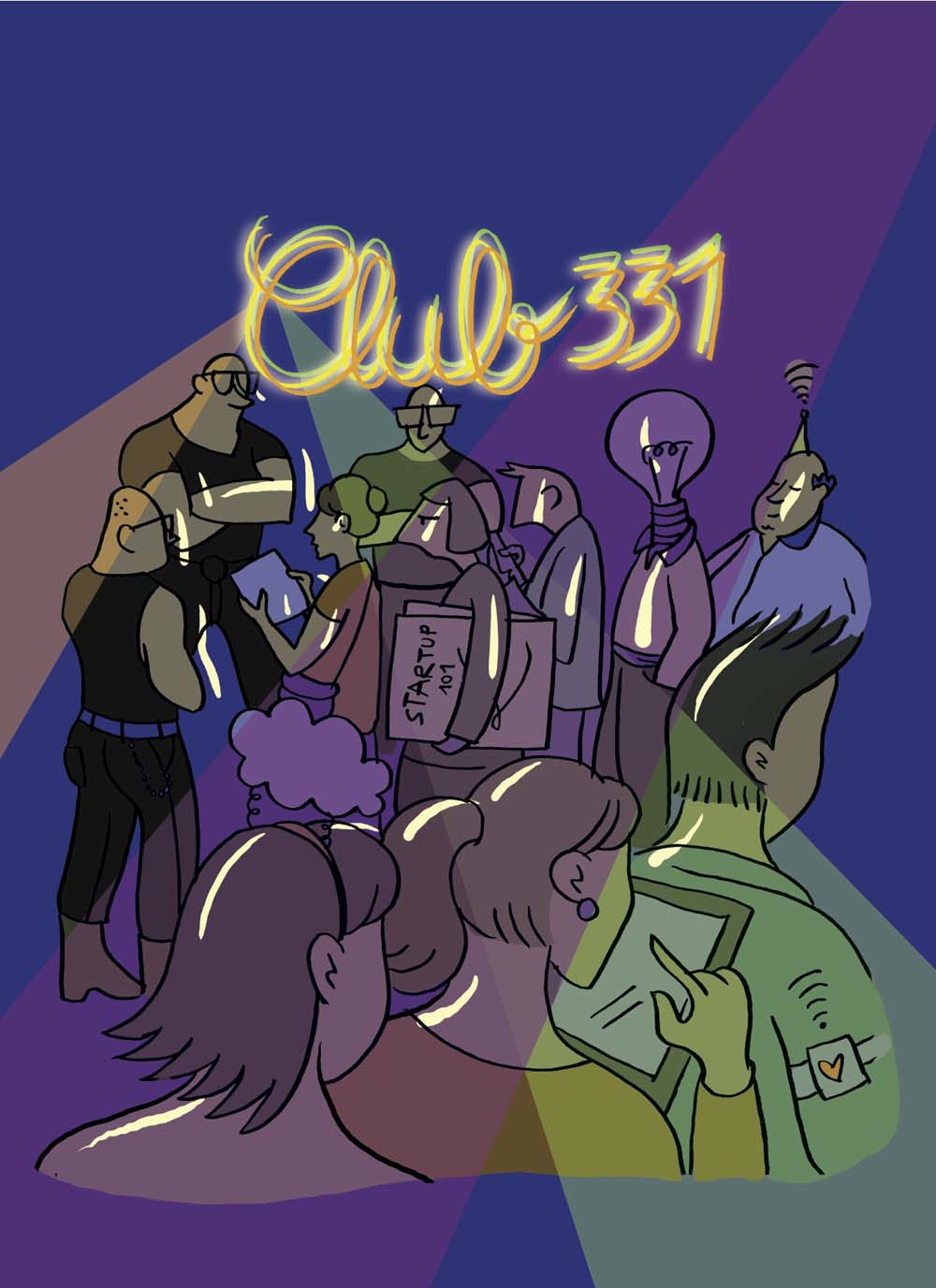
THE 411 ON 331

by Executive Contributor November 15, 2015
written by Executive Contributor

The torrent of “free” money that Banque du Liban (BDL) Circular 331 was expected to release is still but a trickle.

Approved by Lebanon’s central bank in August 2013, the circular allows banks to invest up to three
percent of their tier 1 capital in startup companies, contributing to the so-called “knowledge economy” or venture capital funds focusing on these types of companies.

BDL is guaranteeing 75 percent of these notoriously high-risk investments, and – if every bank in the country participates to the maximum limit – the circular would pump around $400 million
into the local entrepreneurship ecosystem. From an economic perspective, the rationale is simple: create jobs and build up a value-creating new sector. In a best-case scenario, some even hope Lebanon will become a techy, entrepreneurship hub for the region. At this early stage, however, the building blocks for this new sector are only now being put into place.


Marianne Hoayek, one of several BDL officials responsible for monitoring 331’s implementation, tells Executive that the bank has approved $280 million for investment to date. Publicly disclosed transactions – namely 9 venture capital fund investments and one direct bank investment – however, total around $20 million, or roughly 7 percent of the approved $280 million. Fund managers tell Executive they will close more deals by the end of the year, and even if 331 has not massively increased deal flow, it is certainly helping the ecosystem evolve.


PASSING THE BUCK
While BDL Vice Governor Saad Andary told Wamda in 2013 that 331 might push banks to create in-house “specialized units familiar with startups” to follow-up on direct investments with entrepreneurs, the vast majority of 331 money will flow through venture capital funds. “The needed
experience [for a bank] to be able to follow-up [on an investment in a startup] is huge. These are not existing companies,” says Fadi Osseiran, general manager of BlomInvest Bank, which has invested with three existing VC funds and is sponsoring another currently awaiting BDL approval to launch.
“These are entrepreneurs. It’s a whole new area. Banks are lenders. So to become investors already is a major move. To go from investing in an established company to investing in a startup is even harder. There is no way we can do it.” Experience is only one barrier keeping banks from rushing
to invest in and nurture entrepreneurial enterprises. Cost is another, explains Marwan Kheireddine, chairman and general manager of Al-Mawarid Bank and a former minister of state who pushed for the creation of 331 while in office.


“Managing any investment that is less than, let’s say, $500,000 would prove too costly. You need resources to be able to follow- up on those investments. In some cases, we put people
on the board. We assist companies in building their corporate culture to ensure they are adopting best practices in terms of corporate governance. And all of these things cost money. Imagine if we have to do that, as an investor, in a company where we invested $25,000 or $100,000. It becomes
economically not viable. You’d be putting in resources that are costing you by far more than the actual investment itself.”


That said, Al-Mawarid has made direct investments. In fact, it made the first 331-compliant investment of $200,000 in Presella, an online ticketing platform, in June 2014. Kheireddine
admits he’s overworking his staff to keep an eye on thebank’s bets.


Al-Mawarid is not alone as a direct investor, but information n the practice is scant. BDL’s Hoayek says, “now what we’re seeing is that many banks are investing directly in startups.” Asked how many banks have directly invested, she answers “more than 20.” She adds that the bank is considering a public database of direct deals so “everyone knows the names, the numbers and the money allocated, but we’re seeing with the governor how to do it.”

MEET THE MONEY MANAGERS
So far, there are three VC funds operating with 331-backed investments from Lebanese banks. Berytech and Middle East Venture Partners – existing market players – are each running a fund while a third is under the auspices of a new entrant – Leap Ventures.


Berytech Fund II has raised $51.5 million but has approval for $70 million and expects to close between nine and 11 deals soon, says managing director Paul Chucrallah. The fund has not invested yet and is eyeing deals with ticket sizes between $1 and $3 million, although
Chucrallah notes “we can go up to $5 [million], even $7.5 [million]. We do not, however, forbid ourselves from going below that. We like people who have brilliant ideas, even if it’s a very small idea. So we have more than a couple of investments that will be below $1 million. And one or two of those will be significantly below $1 million.” He cautions that seed funding is out of the
picture unless Berytech is really floored by an idea.

The fund charges a 2.5 percent management fee. Middle East Venture Partners (MEVP) Impact Fund has been the most active with eight investments to date and two more in the pipeline says Walid Mansour, an MEVP managing partner. Impact is focused on ticket sizes between $2 and $4 million and charges a 2 percent management fee.


Leap Ventures’ first fund stands at $71 million with plans to close a second round of fundraising in November 2015 with a goal of reaching “north of $80 million,” explains Hala Fadel, a partner at Leap. In August, its first investment of $3 million went to Energy24, which builds a new type of energy storing device to help residents and businesses endure long power cuts. Fadel says two more investments should be made by the end of the year. She says the fund’s management fee is “capped at $2 million, so 2 percent, effectively.” The fund representatives Executive interviewed agreed
they’ve cast their nets quite wide to find good deals and have to fight to defend them in front of internal fund investment committees. MEVP says they met with 215 companies. Leap saw 91 entrepreneurs, and Berytech spoke with 250.


New players should be entering the market soon. The BDL’s Hoayek says three additional VC funds have received BDL approval but are currently raising money before officially launching. She adds two more VC funds are in the approval process. As noted above, BlomInvest’s Osseiran says his bank is sponsoring a new fund, and Khaled Zeidan, executive general manager of MedSecurities Investment, tells Executive his bank is also sponsoring a fund dubbed Azure which will invest in “fashion and design and technology,” he says, admitting it’s a “niche play.” He explains three banks are committed to invest in the fund, but that it will be a “smaller fund” reaching “$30 million at most.”

A MOVING TARGET
An underreported element of 331 is that it also allows both banks and VC funds to invest in infrastructure components needed for a healthy startup ecosystem, such as accelerators. At the earliest stages, an entrepreneur often only has an idea, with no knowledge or experience in writing business plans or running a company. Training and mentorship are arguably as important as access
to capital in helping startups survive and grow. And BDL is actually going a
step further than 331 to help make sure these infrastructure elements are built.


Hoayek explains that, on a case-by-case basis, BDL is actually backing 100 percent of bank investments into ecosystem components. For example, the bank offered this guarantee to two investments made by Al-Mawarid Bank: $7.5 million into the UK Lebanon Tech Hub, an accelerator and training program, and around $2 million into Bootcamp, an idea-stage training program run out of AltCity, the co-working space in Hamra, Beirut, according to Kheireddine. Hoayek confirms the guarantee and that the investment is not counted against Al-Mawarid’s access to 331 funds. Hoayek says BLC Bank also made a 100 percent guaranteed investment into Startup Megaphone, an international roadshow vehicle for local entrepreneurs.

BDL is also backing investments into a coding-focused training program called Torch and part of the financing for Speed at Beirut DigitalDistrict. “[BDL] wanted to go even further [than 331] because we thought that this pipeline should be sustained, sustaining startups and deal flow. So we went beyond the 75 percent and said that [BDL] will guarantee 100 percent [of investments into] accelerators, bootcamps and training centers that will create this deal flow that will keep the ecosystem moving.” Hoayek says that two soon-to-be-announced funds will also focus specifically on small-ticket-size, seed investments, something the market is currently lacking.

RISKY BUSINESS
Berytech’s Chucrallah sums up one of the pitfalls bankers and fund managers need to avoid when investing 331 money. “The onus is on us not to get drunk with valuations,” he says. While everyone Executive spoke with for this article expressed a similar sentiment, only Mansour with MEVP said
he had yet seen a problem with valuations. “We had a case, one case, where we were discussing a valuation with a company, and we got overbid by one of the competing funds who paid
double the valuation we offered. We obviously didn’t pursue the discussion.” Zeidan, from MedSecurities, disagrees that valuations are becoming inflated and adds that the funds are
investing in a way that won’t allow for inflated valuations in the future. “My biggest
concern, previously, was to make sure that we don’t have arbitrage opportunities
starting to arise among the different funds. We’re invested in all three. I sit on
the board of [MEVP’s] Impact [Fund] and have a very close relationship with everyone
else. The bottom line is you have three separate investment committees that are, in my opinion, very independent and quality ICs. There is no way that one fund could sell its assets to another fund. We will not allow secondary placements. It’s only primary money. It’s only cash
injections into a company. You cannot exit from one fund to another. That way you destroy any sort of potential collusion among the different funds. One cannot sell to another, otherwise
they would just do that and we’d all get screwed. They don’t have any interest in creating a little clique.”


That said, Mansour argues that the risk of inflated valuations will increase as more first-time funds come to market with pressure to build portfolios quickly. “Anyone who doesn’t have a portfolio will start acquiring it at a very expensive price, just to show that they have a portfolio. Which means that the returns on these first-time funds will be screwed.”

Of course, not everyone shares this view. Leap’s Fadel argues that new entrants will be good for the whole ecosystem, especially the entrepreneurs. “Especially for early stage [investments,] there were basically only two funds – Berytech and MEVP – and it was almost a monopoly situation.
They could impose terms on entrepreneurs and now that you have, in that stage of funding, another two or three funds [coming to market], there [will be] more competition. I
think this is very good for the entrepreneur, and the competition is really not on valuation. I feel it’s more on the terms.


And I have to say that, at the stage we’re at, we welcome more entrepreneur-friendly terms because some of the deals that would have been obvious deals for us that had been funded by other venture capital firms before us are almost un-fundable because of the terms that came with.” On the subject of terms, Mansour argues almost the opposite. “Many entrepreneurs are now becoming too focused on what valuation and terms they can get upfront as opposed to worrying about building a healthy business.” No one Executive spoke with encountered the problem
of too few deals to pursue.

ATTEMPTED MONKEY BUSINESS
However, fund managers and bankers Executive queried said some of the companies seeking funding did not meet 331 criteria, either because the company was not actually based in Lebanon
or because it did not contribute to the knowledge economy. Al-Mawarid Bank’s Kheireddine says a local bakery approached him to ask for 331 money.


That said, Zeidan from MedSecurities explains that getting his Azure fund –which focuses on fashion, design and technology – approved by BDL was no easy feat as its relationship to the knowledge economy is arguably tenuous. “It took me a year and a half of back and forth and lobbying to convince [Central Bank Governor Riad Salameh] to expand the mandate of 331 to allow me to do this,” he says. (For more on governance of 331 investments, see story page 34).


LOOKING FOR BIG WINS
Zeidan says that with 331, banks and VC funds need to hit “a homerun” by putting Lebanon on the global startup ecosystem map. Berytech’s Chucrallah is more blunt. “First, we have to make sure we don’t mess up and lose everyone’s money.” For him, big wins down the road would be vastly helped by serious infrastructure investments as well. Financing, he says, is only one of the barriers facing startups. “Infrastructure is a massive battleground,” he says. “There’s no way you can fuel the growth of this economy without 24-7 electricity and good internet. There’s no way.”

November 15, 2015 0 comments
0 FacebookTwitterPinterestEmail
Entrepreneurship

THE STARTUP STATE

by Executive Editors November 15, 2015
written by Executive Editors


The plans to create a successful startup and entrepreneurial ecosystem are tentatively falling into place in Lebanon. From Circular 331 to the launch of new accelerators, the sector has changed dramatically over the last five, or even three, years. Executive brings you a small overview of some of the latest developments and challenges to the ecosystem, and future development recommendations from leading figures within the sector.


2015 IN A STARTUP NUTSHELL
2015 saw advances across several stages of start up. Banque du Liban (BDL), Lebanon’s central bank, hosted the first Lebanese international startup conference at the end of November 2014, which preceded a fast paced year. The 2014 conference certainly produced some home truths about the state of the internet and infrastructure, as well as other gruelling realities of startup success in the Lebanese context, with Venture Partner at Golden Gate Ventures Michael Lints describing how “being in a startup is about as romantic as chewing glass.” There was, nonetheless, a sense
of great positivity at the efforts being made by the entrepreneurial community to advance
despite local and regional setbacks.


The theme for the December 2015 conference,‘Emerging Startup Ecosystems’, will aim to attract a wide entrepreneurial audience to their event at Forum de Beyrouth on December 10 and 11, with around fifty local and foreign speakers currently listed on BDL’s event profile.
At seed level, AltCity Bootcamp and Speed@BDD, both profiled in our special report, are accelerators aimed at the idea stages of entrepreneurship, while the UK Lebanon Tech Hub
launched its own accelerator aimed at growth stage scale ups in Lebanon (see story page 40). Other initiatives such as Startup Megaphone, which markets the Lebanese ecosystem worldwide
and organizes events, are also supporting the nascent entrepreneurial ecosystem.

Catherina Ballout, Operations Manager of MIT Enterprise Forum Pan Arab based in Beirut, described these efforts to include growth stage funds as critical to Lebanese
success stories; “during the past year we have had funds focusing on growth stage; Leap Ventures, Wamda and MEVP funds.
This is very important because at a certain stage the entrepreneurs
are growing their startup but aren’t able to grow further and think of selling their startup instead of growing it. The role of the growth stage and VC funds is very essential to this.”


WHERE ARE WE NOW?
Funds are taking advantage of Circular 331, with Leap Ventures expecting to raise more than $80 million by the end of the year, although the money from BDL is having
problems trickling down to the ecosystem (see story page 30). Despite some financial backers’ hesitation, the need for incubators and accelerators is tantamount to developing
Lebanon’s entrepreneurial ecosystem. “The role of the accelerators to prepare the startup to meet investors,” notes Ballout, “and to guide them through the process, identifying
the right time for a particular company, scale up or startup to seek external investment.

Knowledge about how to approach investors is very important.” With the ultimate
aim of so many accelerators to seek successful exits for the
startups within their program, especially if long term sustainability
of the accelerator is dependent on participants’ future profitable exits (see
story page 40), the knowledge imparted to companies at growth stage about seeking
external investment is clearly crucial.


Although others have remarked upon the lack of previous accelerators in Lebanon
to use as a benchmark for the ecosystem (see story page 40), it is worth noting that
of the eight companies which were inaugurated into Seequnce’s 2012 acceleration program,
three (Presella, et3arraf and Med HP now renamed as eTobb) are still up and
running, and continue to seek later stage investment either in Lebanon or abroad.
This crudely represents nearly a 40 percent ‘non-failure’ rate, which is a good benchmark in a market so often dwarfed by larger competitors and regional and local problems.


CHALLENGES AHEAD
So what are the problems facing the Lebanese entrepreneurial ecosystem? “The greatest challenges [are] access to markets and the path to scalability,” says Habib Haddad, founding CEO of Wamda. “Access to markets allows you to sign deals, to break out. The brain drain is definitely a big
issue. The education system is not bad but it does not equip you for the real world,” he adds, noting the uniqueness of certain challenges to the Lebanese ecosystem.

When asked about the exit assumptions that accelerator funds have used to base their future profitability and sustainability on, namely that roughly one in ten startups will succeed and generate future revenue for current funds, Haddad sees no problem with it in terms of applicability for Lebanon. “That’s the name of the game,” he remarks, though speculates that numbers within the model could be adjusted to lower the probability of “rockstar” success and make it Lebanon-orientated. For others, the challenges overlap with Haddad’s and also vary. Infrastructure is high on many lists, with Hala Fadel, partner of Leap Ventures commenting that “I probably use 20 percent of my time lobbying for the internet because it’s just unacceptable.”


Whilst businesses can afford to pay for faster internet, with Wamda paying $200 per month for 18 Gb/s download speed, poor infrastructure often has a greater impact on the psyche of an individual in question. “When you [leave work] and go back home to your family, the infrastructure
[on the streets] impacts what you see as a potential future for the country. [It makes] you decide you want to go somewhere else,” stresses Haddad, who notes that for future innovators
to move into a space it needs to be as accessible as possible – something which Lebanon’s lacking infrastructure does not often help with.

There is also a lack of talent within certain higher tiers, and importing individuals from outside the company is difficult with such poor infrastructure.
For Fadel, recruiting senior level individuals to her companies is proving difficult, as “attracting talent to a place that is called Beirut” is problematic she claims, which is only compounded with growing political instability and governmental paralysis, Although one barrier to capital has all but been removed by BDL, a current lack of an electronic trading platform for SMEs, the launch of which has stagnated and entrepreneurs remain none the wiser about its launch date, presents more
capital hurdles.

The fact that heads of funds also stress that startups cannot afford to focus on Lebanon as their sole market (as with most small countries) also facilitates exiting the country – a global vision promotes the idea of a better life outside of Lebanon. At policy level, the taxation levied on new companies also serves to dissuade budding entrepreneurs. “This is a burden and a long process,” comments Ballout, who notes that “they don’t have access to funds at an early stage so entrepreneurs end up paying [heavy fees] from their own pockets or their family’s pocket to register a company.” Those wishing to register as a Limited Liability company, for example, must pay upfront a capital of 5 million LBP, equivalent to $3,323, which can severely dent the finances of a young startup.


WHAT IS THE FUTURE?
Amongst the accelerators themselves, not all need to survive to produce a flourishing ecosystem. Fadel likens Circular 331 to seed funding for an entire ecosystem, attempting
to build the credibility of an asset class; “this whole startup that is the Lebanese ecosystem will either make it or break it.

After two to three years things will settle down with the long term players staying here, and then in seven to eight years we’ll see the returns on these funds.” Fadel notes that the private sector will only follow up with investment if the ecosystem builds a credible asset class, but “if we fail the private sector will not follow and there will not be another 331.”


The top financial heads of the country clearly pin a major part of the the country’s economy on the entrepreneurship sector. “We believe that this is one of the sectors upon which
Lebanon’s [economic] future will depend, along with the financial sector and the oil and gas sector,” stressed BDL head Riad Salameh when speaking at the launch of phase 2 of the
UK Lebanon Tech Hub. He also noted that the money from Circular 331 would “attract back all Lebanese talents, or most of them, in order to form companies in Lebanon, to create
jobs for the Lebanese and to help this sector startup itself ”.


It is clear that the entrepreneurship industry has the ability to contribute to Lebanon’s economy, although the valuation of such a contribution can hardly be measured without accurate data or a country-suitable economic model to describe the contribution from entrepreneurship, the tech
sector or companies nurtured by startup acceleration programs. “I hope there is more of a collective effort in building the ecosystem,” comments Ballout.

“There are a lot of partners working together, but there are a lot of partners that could have been working together [from before] and having more of an impact, and this is not the case.” By partners, Ballout clarifies that she means institutions or individuals at any stage of the ecosystem, and not just those controlling the funds. The operational system on the ground needs a few years to play out before benefits are truly realized; “you find a lot of reports and plans from here until 2020 [detailing] what the plan is, but on the ground it is still unclear,” comments Ballout, who adds that “Circular [331] is great, a lot of initiatives are great, but let’s wait and see”.

Overview

November 15, 2015 0 comments
0 FacebookTwitterPinterestEmail
Companies & Strategies

Coming Sukleen

by Executive Contributor November 15, 2015
written by Executive Contributor

After protests outside their Lebanon plant and activist allegations of corruption, the CEO of Averda gives his first ever interview to a media organization. Little known by name in Lebanon, Averda
is a waste management company founded in 1993 by Lebanese engineer Maysarah Sukkar. It is the parent company of Sukleen and Sukomi. Maysarah’s son, Malek, has been a top manager since the company’s inception, and today leads the company as it continues an expansion abroad that
began a few years ago. Contracted by the government to collect, treat and dispose of Beirut’s waste in the early 1990s, Sukleen and Sukomi — which even Sukkar refers to collectively as Sukleen, a play on the family name — the companies quickly took on more municipalities in Lebanon and have
been handling waste in the capital and all of the Mount Lebanon governorate (except Jbail) for around 20 years. Previously media shy, Malek Sukkar sits with Executive to talk about the waste crisis and his reaction to Sukleen’s many critics.

Q&A

How do you respond to accusations
that have been leveled recently in Lebanon against Sukleen and your
family in context of the escalating garbage crisis?

The nicest way I can describe this is that we understand the need to find
someone who can be held responsible. We are not responsible, but we
are the easiest people who they can try to [blame]. We understand the
frustration but [what Sukleen is being accused of] is unfair and unfounded.


Have any of the organizations or parties with interests in this
controversy reached out to you asking for your response or comments on this
matter?

No. It is shocking, but no.

Were you surprised that the emergency plan which was announced
on September 9 has not seen the beginning of implementation within
the seven weeks that have passed until the first literal garbage flood on
October 25?

Honestly, I am surprised because I thought that the change of which minister
handled the file would be based on some sort of agreement that had
been reached in the Council of Ministers. I am not privy to what happened
[with regards to] the actual execution but I am surprised by the delay because
this is a critical service. It is not a nice-to-have service like super fast
WiFi versus regular WiFi. Taking care of our garbage is a bare necessity and
this has always been my worry as a human being, not as someone who is
involved in this file.


Can you be more specific about why the situation worries you personally?
I remember a story from Harvard Business Review from some years ago.
It said that there is always a danger that your strength becomes your weakness. The Lebanese government relies on the resilience of the people. Every Lebanese has three different power sources and several different water sources. The resilience that this has built up is what I am afraid
people will develop [because of] the waste issue. The scene that we [saw on October 25] of the floating garbage may become something that we are used to, and that would be the absolute worst outcome. We got used to mobile telephones where calls cut after about 20 seconds or so; we got
used to not having electricity. People still get angry but there is a used-to -it-ness and it is my worry that the longer this thing takes to get sorted out, the more this resilience gene might come out where people would say we can also survive without waste management. That, to me, is the worst possible outcome.


Do you think that the emergency plan has the potential for dealing with the issue at least for a year or two?
The emergency plan is fairly straightforward. What it [calls for] is a development of the waste services [to municipalities] and for doing that over 18 months. That is a wise process because you can’t go from zero to 100 all at once. From a high-level view I think this makes sense. What I think
worries people is the question if there is something that will happen within these 18 months, or will this be a period that will require another 18 months and then another 18 months [of emergency management]. This is probably the tougher question. Only the municipalities know because they will have to pick up the baton and run with it.

November 15, 2015 0 comments
0 FacebookTwitterPinterestEmail
Politics

A river of corruption

by Executive Editors November 15, 2015
written by Executive Editors

In late October the streets of Beirut filled with water. A torrential downpour, common for this time of the year, washed the garbage accumulations on various empty lots and roadside spots onto the city’s streets, turning what was solid waste into a disgusting viscous soup. After six weeks of disagreement over the emergency plan, the garbage crisis is now even more in our streets than ever. This shows how the garbage crisis in its essence always was a political battle between self-interested parties and was impaired by a huge presence of corruption. The same actually is true for the electricity crisis where accusations (see Ghazi Youssef Q&A page 60) and counter-accusations of corruption were exchanged between Speaker of Parliament Nabih Berri’s Amal Movement
and former Prime Minister Saad Hariri’s Future Movement against the Free Patriotic Movement (FPM)’s Gebran Bassil. In short, Amal and Future officials charge Bassil and the FPM of incompetence in the tendering and implementation of contracts for projects from Bassil’s 2010 electricity plan (see table on page 20) and the misspending of some $1.2 billion. For their part, Cesar Abou Khalil – an advisor to the Ministry of Energy and Water and a FPM candidate for parliament in the 2009 elections – said on talk show Kalam el Nas in late October that the Ministry of Finance did not release the needed funds for the projects because special interests wanted to see the electricity sector sink so low so as to force privatization, with plans to manage it with a company similar to Sukleen in the garbage sector. The accusations come after a statement war between the Ministry of Energy and the Ministry of Finance in early September, followed by a squabble and pissing contest over which politician was less corrupt in an October energy
committee meeting in parliament. The entire debacle is not a comedy, and it is not a tragedy in the classic Greek sense of avoiding bad fortune – which politicians are yet to try. It is, instead, downright insanity. The call for action is once again only to cry and say pack up and leave – to the
politicians, not our youth.

CIVIL SOCIETY VS POLITICIANS
The YouStink movement continues its campaign despite a momentum busting month that saw many of its activists facing criminal charges by military tribunal.
Non-governmental organizations – like the Lebanese Transparency Association and Sakker el Dekkane – have helped shed light on illicit activity, but their lobbying efforts to pass legislation – access to information and whistleblower protection laws – to mitigate corruption
have so far not borne fruit. Politically-backed organizations, such as Kataeb’s newly established MALAF, may not support non-partisan headway toward anti-corruption. Unfortunately, civil society’s efforts to cleanse Lebanon have not achieved much in the way of systemic reform.
But will the coalescence of corruption driven crises actually create real change? As Lebanon’s leading political leaders gather in national dialogue, the calls to root out
corruption in delivery of basic public services – including waste management, water, electricity – by civil society and opportunistic politicians seemingly fall on deaf ears. Business will carry on as usual in the parliament as committees re-elected its members in October, despite the legislative body’s inability to elect a president or pass laws to address any one of the numerous economic or social challenges facing the country. At the executive level, the council of ministers remains paralyzed because decision making stipulates a consensus vote – an impossible requirement
given the political polarization. What Lebanon has been facing is a lack of transparency
in political supervision and a lack of accountability to the electorate. The world over,
basic public services are delivered through two models, state-owned
enterprises or privatization, neither being particularly more efficient
than the other and both proven as failed models for Lebanon.
What model is the appropriate vehicle to deliver a given service is an
important debate that should ensue a overhaul of the system of accountability
at three levels: political, institutional and economic. Political accountability
means citizens must have access to elected officials, who need to
be able to answer questions with proof, and all ministry-related institutional accountability
must be transparent. There are various instruments that can be employed – like public hearings and open committee meetings, or at least the full publication of the minutes
of those forums – to make the process more accessible so that the constituency can hold politicians and government officials more accountable. Economic accountability refers to those who have the
authority for economic decision-making. That many of Lebanon’s economic drivers – institutions and business leaders and investors – are co-opted, married to the destiny
of the political class, is concerning. This co-option has gone on far too long, so irrespective of any crony capitalism in banking or other sectors of the economy, the economic decision-
makers have to accept responsibility for having contributed to the disaster we are in and draw the consequences. Moving forward, the economy still needs to be an active
partner of the state and having a public-private partnership law can help further productive collaboration. Not to mention this magazine’s warnings and calls for
reforms, global institutions have pointed out time and again that transparency and accountability are key criterion for efficient functioning of economies, for their growth, and for social well-being. The enduring challenge in Lebanon, however, is that, even with legislation enacted
and coupled with ministerial decrees for implementation, laws do remain unenforced.

November 15, 2015 0 comments
0 FacebookTwitterPinterestEmail
LeadersOpinion

Time to talk it up a notch

by Executive Editors November 12, 2015
written by Executive Editors

Lebanon is at a crossroads. It has been two years since the announcement of Circular 331, and the murmurings of a revitalised golden age brought about by our startup and entrepreneurial system. Whilst it might be too early to speak of the clear tangible benefits to the Lebanese economy, there is obvious traction within the sector which in 2015 witnessed a growth in the number of acceleration programs and non-financial initiatives that complemented the large input from Lebanese venture capital powerhouses. Executive’s special report on the entrepreneurship profiles several of these accelerators, and discusses the current impact circular 331 is having on the ecosystem. Though money is needed and has been well received, deployment has been slow and the central bank should create a centralized database of 331-related investments to keep spending as transparent as possible. How long will entrepreneurs have to wait in line to get the investments and tickets they need, before they gain access to ‘Club 331’?

We stand on the edge of the investment cliff, because the viability and survival of our startup and entrepreneur system in the long run is in question. Though every initiative within the ecosystem need not survive, an overarching sustainability is key, which will see investments feed back into our country to develop a strong and robust asset class which is attractive to the private sector. Whilst the future is bright, and opportunities present themselves with the current financial enthusiasm, it will only remain so if Lebanon as a country chooses to tread the right path, and ensure opportunities are not squandered. This in turn must be coupled with a strong adherence to clear governance that regulates without restricting growth.

Part of the solution

There are many positive initiatives at present to encourage the growth of the Lebanese entrepreneurial ecosystem. The Banque du Liban (BDL) Accelerate conference is one such example of a positive step encouraging collaboration for a more harmonious sector. Lebanon For Entrepreneurs (LFE), an initiative which works both to inform the diaspora on the current status of the Lebanese startup system and to promote sharing of global expertise, is another. However, in order to make this ecosystem successful all players within the sector must contribute and commit themselves to the fullest, which means that whilst competition between funds is beneficial, effective communication across the board is essential to ensure a cohesive ecosystem. More can be done to ensure that all within the ecosystem are in sync with one another, especially here in Lebanon. This is extended to institutions, banks and universities – bodies which are on the periphery and which feed individuals into the Lebanese economy. At time of press there was no unique central portal for the exchange of knowledge, and LFE’s database of private and academic entrepreneurship support organisations was last updated over a year ago. Whilst individual programs are trying to target the gaps within the system, an independently regulated umbrella platform with up-to-date information would undoubtedly facilitate understanding, cooperation and ultimately growth, and potentially promote healthy competition. Though initiatives such as the Global Entrepreneurship Week encourage relations between players, more can be done to improve and centralise collaboration. This includes prioritising the development of an electronic stock market, a central ‘location’ to provide much needed liquidity to companies, and identifying areas in the infrastructure which could be improved and leveraged to attract young talent, such as relaxing required capital for registering companies.

A great deal of money has been poured into, and is earmarked for, the entrepreneurship ecosystem. But if Lebanon wishes Circular 331 to be a success, and ensure the money is not wasted, improvements must be made at the macro and micro level. There is an inherent amount of volatility that cannot be avoided; risks which cannot be mitigated; as our special report will outline, venture capitalists and private equity firms must overcome the steady security of being risk-averse and spend the money raised through Circular 331 without exercising undue caution. We must accept that there is no mathematical financial instrument that can price a startup akin to the way the Black-Scholes equation prices European options; there is no accurate prediction instrument for the future value of a Lebanese startup system. All eyes should be focussed on trying to make the space we have as accessible as possible for the next generation of innovators, improving inter-player communication, and pressurising the government for better infrastructure, internet and entrepreneur-friendly policies is key. Many would argue that this is a fruitless task, seeing as our streets are now swimming with garbage thanks to the rain and the political puppet show playing out in the Grand Serail. However, the beauty of the entrepreneurship sector is its ability to develop solutions which are innovative and effective, which defy imagination even in the face of overwhelming odds, and there is no reason that this cannot extend to macro issues. To ensure our system doesn’t dwindle and fall by the wayside in seven years time, we need to realize that Circular 331 is only part of the framework needed to hold up our ecosystem. The time to act is now, so we ensure that foresight, rather than hindsight, is our ally.

November 12, 2015 0 comments
0 FacebookTwitterPinterestEmail
Hospitality & Tourism

Downtown blues

by Nabila Rahhal November 12, 2015
written by Nabila Rahhal

Beirut Central District (BCD) is home to flagship stores of international high end retail brands such as Armani and Hermes; it is also where five star hotels such as The Four Seasons, Le Gray and Phoenicia are located, and where many restaurants and cafés, whether in Minet el-Hosn, Zaitunay Bay or Uruguay Street, can be found.

And yet, most of BCD has been a ghost town for the past five years, save for a few exceptional months. The inactivity has particularly affected the retail and hospitality sectors, the mainstay of the area, with few going to its restaurants, hotels and shops.

Hospitality Sector Figures

The footfall challenges experienced in BCD are not restricted to the hospitality sector alone, with the retail sector also suffering.

In fact, the entire hospitality sector in Lebanon has witnessed a drastic drop in consumers since 2010, according to Tony Ramy, president of the Syndicate of Owners of Restaurants, Cafes, Night Clubs and Patisseries in Lebanon.

The hospitality sector, a major pillar of the Lebanese economy, with sales reaching a total of $9.8 million in the year 2010, saw that figure drop to barely $4 million so far this year, according to Ramy.

Since 2006, there have been 212 closures of food and beverage (F&B) outlets in Beirut’s downtown area alone. According to Pierre Achkar, head of the Syndicate of Hotel Owners, the majority of Lebanon’s hotels are partially closed, operating at half-capacity only.

Troubling history

When it comes to BCD, the hospitality sector has had its ups and downs, Achkar explains. He goes as far back as a decade, recounting the various security incidents – from the July 2006 War to the 17.5 month long sit-in in Riad El Solh square in 2008 – to explain the factors responsible for the drastically decreased productivity in the sector.

The reasons behind the turmoil in the sector, according to both Ramy and Achkar, can be summarized succinctly: The significant drop in the number of tourists visiting Lebanon ever since the war in Syria started in 2012 led to the sector’s reliance solely on people already residing in Lebanon. Lebanese citizens and residents, in turn, have themselves suffered from low purchasing power causing them to limit their outings and expenses.

Hard to bounce back

In the past, Ramy argues that the F&B industry would always bounce back as soon as security risks receded. Recent years, however, have not offered the sector any respite: “The problem is that typically, in Lebanon, you have a bad year followed by a good year or so and in that way we could always manage to sustain ourselves. But the situation has not improved for four years now, and we are entering a phase in which we will no longer be able to sustain ourselves,” explains Ramy, speaking for the sector as a whole.

Events of summer 2015

The straw that broke the proverbial camel’s back, or in this case BCD’s hospitality sector, came in the summer of 2015, when garbage began accumulating on the streets of Beirut following the closure of the Naameh landfill on July 17. As Achkar puts it: “It is hard to attract tourists to the country when they have to wade through mounds of garbage while sightseeing.”

The crisis was followed by a string of popular protests in downtown Beirut, demanding a solution to the waste management crisis. This, coupled with the heavy security that accompanies political meetings held recurrently to discuss the crisis, which also took place in BCD, led to significantly decreased footfall to both hotels and F&B outlets in the area. “We had people cancelling their reservations because why would they want to stay in downtown when they can’t get to or leave their hotel with ease?” says Achkar, adding that Markazia Monroe Suites, the downtown hotel that he operates, took the decision to close by the end of the year if the situation does not change for the better.

Meanwhile, Ramy reports that seven out of the 19 venues on Uruguay Street, Downtown’s pedestrian pub area, have had to close down since July 2015, with several other venue owners saying they will follow suite if the situation in the area does not improve.

Ramy and Achkar claim they do not blame the situation on the protesters, insisting they support their cause. They are merely against the chaos caused and damage to private property.

While both say that only long-term political stability and security will restore Lebanon as a tourism destination, they are meanwhile asking for immediate and practical solutions. For instance, they would like to see Parliament Speaker Nabih Berri call for an economic round table made up of the key businesses in the hospitality sector to reach a solution to the sector’s economic woes before it’s too late.

November 12, 2015 0 comments
0 FacebookTwitterPinterestEmail
Opinion

Guerilla entrepreneurship

by Yasser Akkaoui November 11, 2015
written by Yasser Akkaoui

That our politicians got us into an absolutely avoidable waste crisis they have been unable to extricate us from for over three months is simply embarrassing. It’s not about garbage any more. It’s about turning Lebanon into a distressed asset.It has become obvious that our institutions, which have been running on an ad hoc basis for 25 years now, are headed for a complete meltdown. The state is not successfully providing even one basic service. Our politicians have made this country a joke, and today it looks like things will only get worse.

Legislative paralysis is putting us at risk of losing much-needed loans for development projects from the World Bank. If we allow this to happen, we’re taking a potentially devastating risk. Other international institutions and past partners could very well reconsider financial facilities earmarked for Lebanon, triggering an isolation of our financial system. Once our uncooperativeness unplugs us from the international system, expect scavengers to impose their rule under the pretext of assistance. Sound familiar?

We can either remember how those who promised Lebanon help in the 1980s only bled us dry, and learn from that experience or keep living in denial, insisting our ever slowing economic pulse is still proof of life until we return to being simply a market for the East, deprived of any ambition or ability to produce. If history does repeat itself, we will have only ourselves to blame. We’ve invested nearly nothing to make this country more productive and are watching the traditional engines of our economy run out of gas while insisting we can make it just a few more kilometers before taking action.

Meanwhile, we have a guerilla army of well educated, creative and innovative individuals able to generate wealth and value in unconventional ways, making markets around the globe a click away. This small, dedicated and focused group has been working hard with few resources for too long. Two years ago, the central bank stepped in with support, and a more vibrant entrepreneurship ecosystem is emerging. Happily, they’re our last link to the productive global economy.   

November 11, 2015 0 comments
0 FacebookTwitterPinterestEmail
Economics & Policy

Less than glossy

by Paul Cochrane November 11, 2015
written by Paul Cochrane

Earlier in the year the American journal Environmental Research ran an article on ‘Total lead concentration in new decorative enamel paints in Lebanon, Paraguay and Russia. It claimed that five leading Lebanese paint manufacturers had products with exceedingly high lead content, and in certain cases had misled customers through erroneously labeling paint as ‘lead free’. Is lead in paint another health worry on top of the garbage crisis and recent food contamination scandals?

White, yellow and red paint from four Lebanese brands – Tinol, Sipes, Noula, Omega as well as the US-affiliated Dutch Boy – were acquired by local activist organization IndyAct and sent to the United States for testing. The results showed that certain paints, particularly yellows and reds, had extremely high levels of lead, in excess of US standards of 90 parts per million (ppm). It stated that two of the brands, Tinol and Dutch Boy, were mislabeling products as ‘free of lead’ or ‘lead free’.

Lead was widely used in paint due to its density – covering more with less paint – durability and resistance to corrosion. However, direct and constant exposure to high levels of lead from paint chippings, contaminated dust and soil is a cause of mental retardation, especially in children. According to the World Health Organization (WHO), exposure to lead during childhood contributes to an estimated 600,000 new cases of intellectual disabilities per year. As a result, restrictions and outright bans on lead in paint have been put in place over the past 40 years, with the US banning lead in decorative paints in 1978. Jordan for example banned lead paint in 2013, while in April, 2015, the Global Alliance to Eliminate Lead Paint, co-led by the United Nations Environment Program (UNEP) and the WHO, announced the goal of eliminating lead paint globally by 2020. In Lebanon, lead in paint is not restricted or banned.

No lead here…

When the named manufacturers were interviewed by Executive (Noula refused) two out of the four were not aware of the study. Wajih Bizri, Chairman of Sipes Paints, was surprised at the article’s finding, and asked for a copy. He says there is no lead in his paint – the report states 135,000 ppm in yellow and 27,700 ppm in red – and that the company was not headquartered or affiliated with Sipes Egypt, as stated in the research. “All of the information is not true. We don’t use lead in our paint. Egypt has nothing to do with our factory and our shareholders are not the same,” he says.

Mohamad Ali Maatouk, Executive Manager of Omega Paints, was equally surprised when shown the results that its yellow paint had 83,800 ppm and the red 131,100 ppm. He also says that no lead was used in decorative paints, as Omega stopped using the ingredient four years ago due to the related health hazards.

That date is significant, as it turns out that despite the article being submitted to Environmental Research in November 2014, and published in 2015, all of the paints were purchased in October 2011. It is a point not lost on the manufacturers.

“This report is not fair to all the (named) manufacturers as it is outdated. It also doesn’t name the products – we have pages of varieties – and where it was bought from. The manufacturing date depends on whether it is from a factory or an agent, as these colors – yellow and red – are not common,” says Chaker Saab, Chairman of Tinol Paints. The report stated that Tinol’s yellow paint had 236,000 ppm and red 101 ppm.

“We never use lead in decorative paint. The test must have been on an industrial paint,” says Saab, adding that the company sourced from Western Europe and would not falsely label paint as lead free, as claimed. Lead is still widely used – and still allowed – globally in industrial paints due to its durability.

While manufacturers pointed out certain discrepancies with Environmental Research’s findings, such research has kept the companies on their toes to ensure they are lead-free. In the case of Dutch Boy, the report prompted the company to re-check the sourcing of raw materials.

On reading that Dutch Boy’s red paint had 32,400 ppm and yellow 1,360 ppm, the US licensor Sherwin-Williams contacted Chemipaint in Beirut to provide samples. “We had to search the market for samples from 2011,” says Chemipaint’s Bassam Bizri. “Tests were then carried out in the US, and the problem was the oxide (used as a pigment). We stopped using lead years ago, but we’d bought a titanium oxide (pigment) from China that was not supposed to have lead. It was contaminated and we didn’t notice. All paints have been re-tested, and have less than 90 ppm.”

The need for regulations

Dr Naji Kodeih, an environmental consultant and volunteer at IndyAct who contributed to the report, says he has prepared a draft proposal for an official standard for lead in paint to not exceed 90 ppm, but his requests for a meeting with the health and industry ministries have been rebuffed.

Sipes’ Bizri, also President of the Syndicate of Paint Manufacturers, says they have also been asking for standards to be adopted. “At meetings with the economy minister we’ve said we’re willing to back any regulatory decision.”

However, there are over 200 paint factories in the country while fewer than 30 are members of the Industrialists Association or the syndicate. “For big companies regulations are not an issue but a lot of smaller companies are unlicensed. Some are under residential buildings, it’s crazy. The government needs to regulate local manufacturers and importers, as nobody is looking at what is coming in. It’s a real problem,” says Bizri.

With no regulatory action expected from the government anytime soon, the larger companies state they are self-regulating by adopting international standards and bringing in external certifiers to ensure consumer confidence, and to have a competitive edge. “It is as if everyone needs a country administration within their company – you have to manage everything, the treatment, the dust collection, cleaning without solvents,” says Wafa Saab, CEO of Tinol.

November 11, 2015 0 comments
0 FacebookTwitterPinterestEmail
Economics & Policy

Industrial recycling

by Matt Nash November 10, 2015
written by Matt Nash

For all the talk of Minister of Agriculture Akram Chehayeb’s waste management plan including robust recycling initiatives, it actually lets municipalities decide how to treat and dispose of their waste with few guidelines and no fixed quotas. That is to say, there is no clear picture of what recycling will look like in Lebanon should the plan – approved by the cabinet on September 9 – actually be implemented. It calls for an 18-month interim period during which municipalities will prepare their waste strategies. During this time, municipalities are to sign any contracts that need signing and build any infrastructure that needs building. As cities and villages ready themselves for garbage duties, waste from Beirut and five surrounding districts will be distributed among newly built sanitary landfills in the northern district of Akkar, the Bekaa Valley and Bourj Hammoud. A small portion of the waste is also supposed to be taken to a new waste treatment facility in the southern city of Saida. During the 18 months, the limited amount of waste sorting done by Sukomi – the Averda company responsible for composting, recycling and landfilling much of the country’s trash – will stop. Neither the company – a sister of the far more well known trash collection firm Sukleen – nor the government have given precise figures on the amount of sorting and recycling Sukomi does. Minister of Environment Mohammad Mashnouk recently said the company landfills around 80 percent of the waste it collects, and an employee tells Executive, on the condition of anonymity because he is not authorized to speak with the press, that Sukomi recycles only the percentage it is contractually obliged to recycle. He declined to provide the percentage.

Prior to the July 17 closure of the Naameh sanitary landfill – which accepted around 50 percent of the country’s waste – the Ministry of Environment maintained Lebanon had a 9 percent recycling rate. Everyone directly involved in recycling Executive has interviewed in the past three months, however, scoffed at the figure as being too low. Several NGOs – including arcenciel and T.E.R.R.E. Liban – and one company – Contra International – have run recycling programs in Lebanon for years. Executive has not been able to ascertain whether the waste they collect and sell for reuse is included in the 9 percent. In late October, Sukleen said in a press release that the company collects recyclables from over 2,300 local businesses. Again, Executive is unsure if this activity is captured in the 9 percent. Finally, the informal network of recyclable material collectors is likely entirely off the radar. All that said, recyclables are a valuable raw material for local industry. Companies in Lebanon transform waste paper, cardboard and plastics into finished and semi-finished products for both the local market and export, explains Fadi Gemayel, president of the Association of Lebanese Industrialists and head of Solicar, a paper and cardboard recycler. Executive sat down with Gemayel to talk about the industry’s need for recyclables.

Fadi Gemayel

Fadi Gemayel

E   Does 9 percent sound like an accurate figure for total recycling in Lebanon?

No. The Lebanese recycling capacity for paper is only 120,000 tons per year. Meaning you need at least 150,000 tons of raw material. That said, we still import 200,000 tons of raw material to make paper locally, so there is plenty of room for growth. Industry is very much aware of the value of waste as a raw material. Paper recycling started in Lebanon in 1929. Worldwide, 70 to 80 percent of all packaging material made of paper or cardboard is made of recycled material. In Lebanon, we are very close to that number. Also, there are targets for recovery, how much are you obliged to recover from your paper you put on the market. That rate is around 60 percent in Europe. We are not at this level yet in Lebanon. But recycling is important for the packaging industry. There are at least five major paper recyclers in Lebanon.

E   Do you have any numbers or studies suggesting what the total industrial demand for recyclables is?

No.

E   But industry does use paper, as you’ve noted, plastics and, to a lesser extent, glass and metal, correct?

Yes. I’ve explained paper. Plastics are also recycled. There are many small companies using scrap and bigger companies that create fiber from recycled plastic and export it to Denmark. For glass, Lebanon has been known for glass work since the Phoenician times. Today, we have sophisticated factories producing glass. We have two. The biggest, however, was bombed in the 2006 war and never rebuilt. I am not sure of our capacity for glass recycling, but glass is used as a raw material in Lebanon.

E   What about metal? You often hear Lebanon has no foundries – which melt scrap metal to repurpose it for reuse. Do we have foundries?

There are two big firms and many smaller, more specialized ones. However, a huge amount of scrap gets exported because of the problems in costs. So the bulk of the raw material is exported. The big foundries have not been able to sustain. Export less and the foundries will be happy. The problem is a foundry is very energy intensive, and in countries around us, they have cheap, subsidized energy. Regional foundries can bid up the price for scrap. Here you are squeezed because of the high energy costs, so local foundries cannot pay as much for the raw material.

E   Where does industry source recyclables?

There are sorting facilities, like the one operated by Sukomi. We, as Solicr, buy from Sukomi. There are also Zero Waste Act, T.E.R.R.E Liban and arcenciel. There is a network.

E   What role does the informal sector play?

Some time ago, the informal sector was very strong. Nowadays it exists, but less and less as people are going and picking through the garbage. Today, supermarkets are selling used cardboard. And the more Sukleen got organized, the more scavenging was reduced from the bin itself.

E   When did that happen?

I don’t have a clear idea of the timeframe, and I don’t know exactly what triggered it. Scavenging exists. The rate of recovery in Lebanon is high, but it is not perfectly organized.

E   If there were to be more formal recycling in Lebanon, could industry absorb the additional volumes of recyclables?

Don’t worry. We have a problem when we don’t have enough recyclables. And we don’t have enough. Now with the crisis, we are very squeezed. Don’t worry about surpluses.

E   Can you put a figure on the cost savings associated with using recyclables as a raw material?

It’s hard to give an exact figure because we’re dealing with a major constraint: the cost of energy. Recycling and the green industry are nice, but they come with a price tag. It is very energy intensive. Very. Energy costs account for as much as 35 percent of the selling price of paper. Energy costs are high for plastics and for glass. We have high energy costs, and we are surrounded with countries that subsidize their energy costs. The fact that Lebanese industry has been enduring for so long means there is an economic reason. But don’t think recycling is a huge money saver.

November 10, 2015 0 comments
0 FacebookTwitterPinterestEmail
Economics & Policy

Blame it on Bassil

by Executive Editors November 10, 2015
written by Executive Editors

E   What was minister Bassil’s plan to reach 24 hours of electricity by 2015?

[Bassil decided] that we needed barges imported from Turkey, a new [power plant to generate] 700 megawatts, to rehab Zouk, Jiyeh, Zehrani, Deir Ammar and Baalbek, and the implementation of 1,500 megawatts from [public-private partnerships]. [Bassil] talked to then prime minister Najib Mikati to send [$1.2 billion] as [a project of law] – from the [council of ministers]. Nabih Berri accepted it and when Nabih Berri accepts something it can [move] super fast – it went straight to the parliament. We said we needed the electricity today better than tomorrow – we have no problem with the politics of it – and it’s costing $6 billion of economic loss per year not having 24 hours of electricity.

E   From your perspective what happened next?

We asked [that] the $1.2 billion [be] allocated to the government. Two, [that] the prime minister seek financing for the $1.2 billion instead of paying it from the treasury – we don’t have [the money and] because we know that donors insist on transparent terms of reference, supervise the spending and supervise [project] implementation. Three, appoint a new board of directors for Electricite du Liban. We cannot have Kamal Hayek who has failed, maybe he is not responsible, but there hasn’t been a board since 1998 – and appoint a regulator. The fourth condition is that the minister will have to show [cabinet] the work that has been done, the terms of reference and how he’ll approach the tender. These were the rules and conditions, [Bassil] got the waste basket and threw them in it.

E   He did not comply with any of the parliament’s stipulations?

[Bassil] did not appoint neither the [ERA regulator] nor a board [EdL], and he came up with terms of reference for a tender for Deir Ammar 2 and for reciprocating engines [diesel engines].

E   So the power plant at Deir Ammar was tendered but has not been built. You allege that contract negotiations were mishandled – what happened?

After opening the bids they found that the cheapest was [Abenor-Butec] – a cost per kilowatt hour of 13.6 cents and on natural gas 9.2 cents. After winning the tender [Bassil] said that Abenor’s offer was too expensive. It was $660 million, [producing] 560 megawatts. The cost per megawatt was $1 million – compared to the reciprocating engines at $1.35 million. [Bassil] said he would negotiate with them to knock off $100 million – they said they could not do that.

E   But then the contract was canceled and retendered.

[Bassil] went back and took off work worth $68 million – the line that connects for gas and the chimney that was 120 meters [in height] became 60 meters. Given these new realities only two companies applied. J&P [a Cypriot company] when it had first applied wrote a letter saying it could not do the job within 30 months, but reapplied for the job that now had to be done in 25 months. Sepco [a Chinese company] refused to sign some of the conditions, saying it could not be done. The envelopes were opened and [the contract awarded] to J&P for $548 million. [Bassil] renegotiated with [J&P] and they accepted for $504 million.

E   And there was also the additional ambiguity over who might be responsible to pay the Value Added Tax in the contract?

The contract did not specify who was to pay the Value Added Tax. We’re talking about $50 million. For a company that won the tender valued at $548 million, accepted at $504 million, it means they’d make some profit. [But] if they have to pay the $50 million [in VAT] they would lose. When this contract was reviewed by the Court of Audit they noticed the $50 million [needed to be paid].

Cesar [Abou Khalil, an advisor to the Ministry of Energy] says that the condition wasn’t placed on the company to pay the $50 million because at that time it was not decided whether or not to seek financing from an international donor. Only [donors] are subject to non-payment of VAT – they’re exempt.

E   The current Minister of Energy Arthur Nazarian recently promised an additional three hours of electricity – is that realistic?

At Jiye the production capacity there is around 350 megawatts [but] actual production is 75 megawatts currently. The reason is that these are all Toshiba [engines] that don’t have spare parts – [staff] have cannibalized old engines [to make repairs]. The reciprocating engines that were put in Jiyeh will be operational by November. [In late September current Minister of Energy Arthur Nazarian] said we’[d] have three more extra hours of production because we’ll have two new productions units – he’s talking about the reciprocating engines, in Zouk and in Jiyeh. In Jiyeh it is true, it will start in a month and a half and will [generate] 84 megawatts. In Zouk, the 260 megawatts will not be ready until May 2016.

E   Your criticism then is that the reciprocating engines were high priced backups that would not actually be as beneficial to the current need as investing the money into new generation capacity?

If Gebran [Bassil] wanted to be transparent he would have started with Deir Ammar 2 and by now we would have had 560 megawatts working. That was the priority and not the reciprocating engines. The engines became the priority because it was easier and more expensive and payoffs were paid out.

E   Is there documentation of these commissions and payouts?

I don’t have anything on the commissions that were paid but one can review the cost per megawatt of reciprocating engines and we find a big difference between $1.35 million that was paid and what could be had for $1.1 – $1.2 million. We’re talking about $60 million.

E   This $60 million, are you saying that Gebran Bassil was distributing it to his own interests – what’s the story?

We should, as politicians, all of us, give our financial bank accounts – everybody close to me [whether] first or second degree – [to show] what I’ve made over the last 10 – 15 years. Gebran ought to do the same, [from] 2005 until now. I know people who have paid him.

E   Suppliers or bidders?

Suppliers who have paid. They’re not going to say it publicly but they’ve told me and they’ve told me how they paid. In cash or to a friend of his.

E   What is the total amount of shady money connected to the electricity file?

I believe it is a minimum of $100 million, around $50–60 million in the reciprocating engines and $40 million for [consulting]. We asked Kamal Hayek [chairman of Electricite du Liban] and the minister to see the accounts – how much and where it was paid out of the $1.2 billion. We haven’t received a document as of today and it’s now been over a month.

E   Are you accusing Gebran Bassil mainly of incompetence, wrong prioritizing, or corruption?

All of the above. First his incompetence because the priorities were not set properly. The notion of corruption is there when you pay more than what you have to pay for in the market. Corruption is when you allow firms to apply and win a tender when they are not supposed to be qualified, when you try to validate a company or lie about whether or not they have to pay the VAT, and when you sign a contract and maneuver the terms of payment after the signature to get preferential treatment for whomever won the tender. All of these combined [show] that there is incompetence and corruption.

E   The United Nations defines corruption as the use of public office or power for private gain. Do you think that Bassil achieved private gain from this endeavor?

I don’t have direct proof of it, but my feeling is he must have.

E   You want to be taken to court by that kind of feeling?

If I’m taken to court I will lift my secrecy and let him lift his. And we’ll let the court decide. I believe he must have had some private gain.

E   Who benefited from the $40 million consultancy fees – do you know who are the consultants?

No. [The ministry must] show us the receipts.

E   Since we also exist within the context of a fragmented political environment do you think that political rivalries and power ambitions play into this?

This is a question I have been asked – why this late in the [process] you come in with the questions? Well we’re not late. First, [the Future Movement] came up with a booklet last year on the electricity. It took us two years to prepare it by looking at where the problems are in terms of the whole sector in energy and specifically in electricity. We said where we are not able to move ahead, how much was spent, the costs and the loss to society, and what has to be done. Even at that time we had questions for Gebran, to the current minister, for EdL – what have you done so far with the $1.2 billion.

E   Are the minister’s advisors accountable to any oversight?

They’re not accountable to anybody, only to the minister. [On September 15] we were supposed to have a parliamentary committee meeting – we asked for the Ministers of Finance and Energy to be present because we wanted to see the results and numbers. He sent us Cesar Abu Khalil who is not an official of the government to represent the minister. So Mohammad Qabbani [chairman of the committee] said go home, there won’t be a meeting until the minister comes.

November 10, 2015 0 comments
0 FacebookTwitterPinterestEmail
  • 1
  • …
  • 141
  • 142
  • 143
  • 144
  • 145
  • …
  • 695

Latest Cover

About us

Since its first edition emerged on the newsstands in 1999, Executive Magazine has been dedicated to providing its readers with the most up-to-date local and regional business news. Executive is a monthly business magazine that offers readers in-depth analyses on the Lebanese world of commerce, covering all the major sectors – from banking, finance, and insurance to technology, tourism, hospitality, media, and retail.

  • Donate
  • Our Purpose
  • Contact Us

Sign up for our newsletter

    • Facebook
    • Twitter
    • Instagram
    • Linkedin
    • Youtube
    Executive Magazine
    • ISSUES
      • Current Issue
      • Past issues
    • BUSINESS
    • ECONOMICS & POLICY
    • OPINION
    • SPECIAL REPORTS
    • EXECUTIVE TALKS
    • MOVEMENTS
      • Change the image
      • Cannes lions
      • Transparency & accountability
      • ECONOMIC ROADMAP
      • Say No to Corruption
      • The Lebanon media development initiative
      • LPSN Policy Asks
      • Advocating the preservation of deposits
    • JOIN US
      • Join our movement
      • Attend our events
      • Receive updates
      • Connect with us
    • DONATE