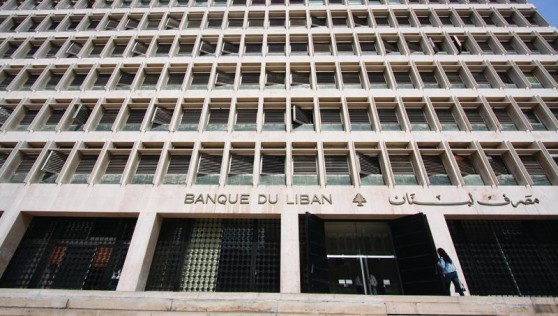


Lebanese bankers are sailing off to foreign shores to generate growth in profits as turbulence rattles their home country and cripples their neighbours next door.
The blood being spilled in Syria is rising daily with no end in sight. The repercussions on government-less Lebanon go beyond an economic suffocation as violent clashes have again taken hold of the northern city of Tripoli. Amid this, Lebanon’s indebted public sector is under pressure and along with it the banking sector — a heavyweight in the country’s economy indeed.
The $40 billion Lebanese economy grew by just 2 percent last year, according to the International Monetary Fund, and is expected to grow by a slightly higher rate of 2.5 percent for 2013, an estimate that seems likely to be reduced if the current situation does not improve. The number of tourists visiting the country in the first quarter was down 12.5 percent on last year and they are unlikely to flock to Lebanon this summer. The United Arab Emirates renewed its travel warning to Lebanon for its citizens last month.
Related article: Credit cards yet to catch on in Lebanon
Why E-Banking is struggling in Lebanon
Despite being almost four times the size of the economy, the banking sector is feeling the pinch. The sector’s size grew by just over 2 percent in the first quarter of the year to stand at $155 billion, 14 percent lower than the growth witnessed in the same period of 2012, a year also marked with significant regional instability. Deposits, on the other hand, were up more than 2 percent to stand at $128 billion, outgrowing last year’s rate by 24 percent with the majority of the growth coming from local residents. This leaves us wondering whether consumers are reducing their spending as they wait and see if darker days lie ahead.
Banks also seem to be cautious to flex their lending muscle, with a three percent growth in loans to consumers in the first quarter of the year, 23 percent lower than the growth witnessed in the same period of last year. Consumers’ debt to the banking sector amounts to $45 billion.
Still funding the government’s coffers
The highly indebted sovereign, $58 billion in debt as of January 2013, continues to knock on bank doors for help in refinancing the country’s debt. And banks are continuing to hand over the cash, most recently subscribing to the $1.1 billion Eurobond issued in April of this year. Banks carry just over 50 percent of the country’s debt as of March 2013, up 1 percent year-on-year, despite the continuous reluctance of senior management of the top banks to increase their sovereign exposure — a sentiment they have expressed to Executive on numerous occasions. With low interest rates on international markets, the lack of lucrative revenue growth opportunities internally and the desperate need for the government to recharge its finances, banks don’t seem to have that much of a choice.

This exposure has led rating agency Moody’s to change its outlook from stable to negative on the deposit ratings of the country’s three biggest banks — Bank Audi, Blom Bank and Byblos Bank — after similarly downgrading their outlook on government bonds. The agency is losing confidence in the government’s ability to fulfill its debt obligations. Are Moody’s concerns reasonable? Yes. The banks are still highly exposed to Lebanon, with domestic assets accounting for more than 80 percent of their total assests and with profits generated from Lebanon amounting to a significant 84 percent of their total profits, according to Bankdata financial services. If the economy’s growth rate stagnates — a highly likely scenario — and if the government is unable to finance its hefty debt at favorable interest rates — another highly likely scenario — then the banks’ exposure to the debt will become even more burdensome.
Foreign activities in trouble
A major part of the assets located outside of the country are in jeopardy too. The chief concern lies in neighboring Syria, a dominant trading partner where six Lebanese banks have established branches. While the banks’ portfolio in Syria stood at $3.7 billion as of the end of 2012, down from $5.4 billion a year earlier, the repercussions on the economy continue to be felt and along with it the backlash on the banking sector. Disorder in Egypt, where several banks have also established branches, continues, with the IMF cutting its 2013 growth forecast for the country to 2 percent.
Cyprus’ request for a bailout from the European Union came at a shocking price: tapping into depositors’ money. While the combined deposit base of the nine Lebanese banks operating in Cyprus account for less than 3 percent of the sector’s total deposits, according to the Association of Banks in Lebanon, these banks had an extra issue to worry about: the Cypriot government tapping into their deposit base.
Aiming to cater to the banking needs of the Lebanese diaspora, banks’ reach abroad is extending, with 16 percent of the alpha banks’ profits coming from offshore lands in 2012, up from 11 percent in 2011. In Iraq, several Lebanese banks have already set up shop and others such as Bank Audi are following this year. Bank Audi and BankMed are eyeing growth in Turkey. In Africa, Lebanese banks are looking at Nigeria, Congo and Sudan, where Byblos Bank has an established presence, and Libya where Byblos plans to expand this year. Further afield in Australia, Bank of Beirut is set up under the recently rebranded Bank of Sydney.
Lebanon’s history is full of instability and chaos, and the banking sector has persevered throughout. With the ongoing turmoil and instability shaking the country’s economy and its banking sector, banks are doing what they do best, wrestling to survive. This time they are betting on far reaching lands to reap higher profits. Whether their bets will bring fruits or not remains to be seen.
Economics and Policy
The World Bank has slashed its projection for Lebanon’s GDP growth in 2013 to 2 percent from 2.8 percent.
Lebanon’s investor risk surged to the highest level in 10 months amid concern that sectarian violence may escalate after Hezbollah openly joined the war in neighboring Syria.
A planned leadership change that could see Qatar's US-allied Emir eventually ceding power to his son is unlikely to change the Gulf state's taste for bold investments overseas, analysts predict.
Egypt’s central bank said it had suspended its Tuesday deposit auction and would hold a repurchase agreement (repo) auction in its place, a move bankers said was designed to give some banks access to more liquidity.
The IMF has warned Dubai's companies over increased borrowing.
Companies and Business
Unatrac Holding, the distributor of Caterpillar equipment in eight mainly African countries, has signed a $700m, three-year loan to fund operations and refinance existing debt.
Online advertising in the Middle East and North Africa region is growing at 37 per cent per year to hit $2.8 billion in 2016.
Abu Dhabi's Aldar Properties and Sorouh Real Estate surged Thursday after the developers said no objections were raised by creditors of Sorouh to a state-backed merger of the two firms set for end of June.
Trying to achieve anything online in Lebanon can be a frustrating ordeal, so perhaps it’s no surprise that real growth of electronic banking has been late to emerge. According to several Lebanese banks surveyed by Executive, e-banking usage by their customers has increased in the past five years to between 25 and 30 percent, roughly on par with the global average as of April 2012 according to ComScore, a digital measuring and analytics firm. However, it is low compared to North America, which has a 40 percent to 50 percent usage rate.
Across the board, the banks told Executive that they offer basic e-banking services such as checking account balances, transferring between one’s own accounts at the same bank and executing standing orders, meaning online transfers to a person or entity which has been registered as a beneficiary through a onetime personal authorization at the bank branch.
The range of e-banking activities in Lebanon is far short of what one finds today in global online consumer banking. However, banks say they can and want to do much better.
“This is only the tip of the iceberg as far as what we can do and what can be done through this channel,” said a Bank of Beirut and the Arab Countries (BBAC) representative, adding, “E-banking will develop to involve new products and services that were not feasible in traditional banking, [such as] new payment methods, new ways of serving customers, etcetera.”
Anthony Ussher, deputy general manager for e-banking at Credit Libanais, shares the optimism. “E-banking in general, mobile and online, has a bright future because the Lebanese are early adopters,” he says. He points to the 1990s, when Lebanon had one of the highest internet rates and cell phone usages in the Middle East. “Lebanese are interested in nifty new technologies and they like the concept.”
While large banks are spearheading a range of innovative moves in online and mobile banking, it is also notable that mid-sized banks are pressing ahead to be among the Middle East’s earliest adopters of new technologies. For example CreditBank inaugurated this spring a mobile banking solution for Microsoft’s Windows 8 platform.
The innovation list of Bank Audi, Lebanon’s largest lender, includes a near field communications-enabled SIM card mobile payment application and an “eMall” platform which will allow participating merchants to offer their products and services online. Merchants will create their own virtual stores to attract domestic and international consumers. Bank Audi say the platform will be launched shortly.
Blom Bank, taking its own approach to what e-banking has to offer, has incorporated “eCash”, whereby a Blom customer can send money to anyone via online or mobile banking. The recipient doesn’t need to have a bank account or a card and is able to withdraw money at any Blom ATM by entering the eCash code, amount and currency.
But while one can argue that banks should put more resources toward building better, faster and smarter mobile applications, some local banks are clearly not yet enthusiastic about the e-banking proposition, possibly because of several barriers that have been restraining the market.
Part of the problem is that it is harder to attract the middle-age generation to take its financial activities and purchasing power online. According to Banque Libano-Francaise, 55 percent of its customers aged 35 years or younger are using e-banking, up from 30 percent three years ago. However, they add that acceptance and usage growth of e-banking by customers in higher age brackets is significantly lower.
Another challenge to increased usage of consumer e-banking is the lack of a law regarding electronic signatures. A draft law to officialize online signatures has been waiting for parliamentary approval since 2005 and is unlikely to be passed soon.
This is a problem felt by all banks. “There is a dire need to promulgate the e-transaction draft law because it would provide investment opportunities and help transform Lebanon into what we guess our country is best suited for: a knowledge economy,” says Joseph Nasr, assistant general manager and head of distribution network at Byblos Bank.
With the e-signature draft law having been stuck for years in the legislative pipeline, banks have found some practical fixes by relying on global standards and Visa and MasterCard rules and regulations. They are also applying standards accepted by Banque du Liban, Lebanon’s central bank.
Moreover, such problems can be seen as interesting challenges. The age component of online literacy is clearly a transitory issue as the young, e-banking-savvy Lebanese students and job starters of today will mature into middle and old-age e-banking clienteles with the associated purchasing power. At the same time, new, younger users will be eager to use their mobiles for their first banking transactions.
This leaves us with two remaining obstacles, namely the legislative issue and the notoriously insufficient infrastructure for both Internet and mobile communications and data.
Assuming for the moment that these very surmountable hurdles will be conquered by the powers that be, Lebanon is poised and ready to both develop and adopt a plethora of innovative e-banking services. “In three to five years, the sophistication of e-banking in Lebanon will be on par with developed countries,” argues Antoine Lawandos, Blom’s assistant general manager and chief information officer.
Away from the geostrategic dramas playing out in the Middle East these days, some Arab-Israelis are seeing quiet progress. The community’s latest success came in late April when Nazareth, Israel’s largest Arab city, opened its first industrial park. Set up by Israeli billionaire Stef Wertheimer — who has built several such projects elsewhere — and with help from the Nazareth municipality, the $22 million park was 12 years in the making because of “bureaucratic difficulties” — deliberate delays by Israeli officials to frustrate the country’s Arab community. Now completed, it aims to host 25 export-oriented companies that could provide 1,000 jobs within a decade.
That goal looks attainable. Three companies already operate in the park: an international telecom firm employing 100 workers; a project founded by a Nazareth couple that manufactures neurosurgery and neurology products; and another Arab-owned facility that provides outsourcing solutions for light manufacturing.
Job creation is a challenge for every growing demographic in the Middle East. For Arab-Israelis, a group of over 1.5 million that is sometimes ignored in debates over the future of the Palestinian people, the challenge is complicated by their economic context. Most are not well off. Although comprising roughly 20 percent of the Israeli population, their contribution to the country’s gross domestic product is only 8 percent. About half of Israel’s Arab families are considered poor by World Bank standards, compared to the national average of 20 percent.
Employment activity is also below par. Only 41 percent of Arab-Israelis participate in the Israeli labor market, compared to 60 percent of Jews. The labor force participation rate of Arab women is particularly low, stuck between 15 and 20 percent over the last four decades.
The Nazareth industrial park also aims to spur entrepreneurship in the Arab community, which suffers from a scarcity of university graduates. Only 70,000 Arab-Israelis have university degrees, less than five percent of the community. That is a vastly smaller ratio than the one for the state’s non-Arab population, 35 percent of which possess a university degree.
The lack of access to higher education impedes the advancement of Arab-Israelis. Only about 10 percent of students pursuing higher education in Israel are Arabs. In part, this is because most universities are located away from Arab population centers. There are other forms of discrimination, as well. Social prejudice continues to discourage Arabs from enrolling and graduating. In addition, less than 1 percent of academic staff in Israeli universities is Arab.
However, in a development that has not been highlighted regionally or otherwise, that bleak picture may now be starting to change. After a struggle over three decades long, Israel finally accredited the Nazareth Academic Institute (NAI) a few years ago as the first official academic institute in the Arab-Israeli sector since the establishment of the Jewish state. A university college with its first batch of students due to graduate soon, NAI is committed to providing equal access to higher education, especially for young, poor Arab men and women, in order to close the education and employment gaps between Arab and Jewish Israelis.
For Arab-Israelis, this is a great leap towards establishing the first full-fledged Arab university in the country. Until then, NAI will be providing Bachelor’s degree programs in chemistry and communication, and it is planning additions in computer science and organic agriculture, among other subjects. NAI is looking to found a medical science faculty, as well, in cooperation with United States-based Cornell University.
There are seven such colleges in the northern Israeli region of Galilee — six of them are in mainly Jewish areas and are state-funded. Only NAI does not receive such financial aid and must depend on private and municipal donations. Although seeking to support Arab areas such as Nazareth, NAI accepts non-Jewish and Jewish students alike.
Of course, NAI and other initiatives do not mean that economic discrimination against Israel’s Arab minority has suddenly disappeared. Peaceful coexistence of different groups within Israel’s 1948 borders will only come when Israeli Arabs and Jews have a similar standard of living derived from the provision of equal opportunity. That, and not separation walls or an Iron Dome, will be the basis of true security for the country and the rest of the region.
Riad al-Khouri id principal at DEA Inc in Washington, DC
Economics and Policy
Caretaker Lebanese Energy and Water Minister Gebran Bassil has promised to supply Lebanon with 16 hours of electricity a day during the summer season despite the mounting consumption.
After several sluggish years, mergers and acquisitions activity within the Middle East is showing signs of revival, giving hope to global banks which scaled back their regional operations because of a dearth of deal flow.
Holidaymakers from the UAE are cancelling summer breaks to traditional destinations such as Turkey and Lebanon due to regional instability.
Oman needs to contain state spending and raise non-oil revenue in the medium term to keep its fiscal balance sustainable, the International Monetary Fund has said.
Companies and Business
Emaar Properties and Kurdish company Faruk Group Holding will soon sign a contract valued at more than US$2 billion to develop a resort in Iraq's oil-rich Kurdish region in the north.
Beirut Port is to be modernized, Lebanon's caretaker Public Works and Transportation Minister has said.
Princess Haya bint Al Hussein, wife of Dubai’s ruler Sheikh Mohammed bin Rashid Al Maktoum, has announced plans for a €100m ($133m) fund to promote entrepreneurship.
Dubai property developer Nakheel has announced that it has made a profit payment of $57.1m against its trade creditor sukuk.
Company: Ounousa.com
Country: Lebanon
Industry: Media
Founder: Elsa Aoun and Wassim Kari
Established in: 2008
Number of employees: 10
Capital raised: Self-financed so far, seeking potential capitalization
Back in 2008, it all seemed simple for Wassim Kari and Elsa Aoun. They were studying business in France, had begun dating and were considering what to do with their lives. Then they attended a talk about making money from the Internet that seemed to offer them a path.
Among the speakers was a French entrepreneur who had designed a website at the height of the 2000 dotcom bubble, ran it for a couple of years and sold her stake for millions of dollars. The largely Western-based bubble had made millionaires of hundreds of entrepreneurs and, the couple reasoned, it was only a matter of time before the Middle East had its own version — bringing with it the opportunity to make big profits in a short time.
“We were always discussing [whether to go] the safest way and do the [stable] career, or try something else. There were some indicators in the region here that were similar to the 2000 Internet bubble. For example, the internet penetration rate [was low but growing rapidly],” Kari said. “In 2008 we saw these ingredients happening in the region and we said ‘okay the bubble will not last long.’”
Seeking to capitalize on this, the couple founded Ounousa (feminine in Arabic), an Arabic-language website whose target clientele is women. Kari designed an initial website — complete, he admits with embarrassment, with “flashy pink colors” — and within a short period traffic was booming. Soon Ounousa had become among the leading spaces online for women’s fashion and lifestyles, with a huge Facebook following (which has now reached 1.3 million) to help drive traffic.

The couple have won a number of awards
Then, in August 2009, online giant Yahoo bought Internet services company Maktoob, leading to predictions of the “start of an era” for online mergers and acquisitions in the Middle East. Shortly after, Ounousa won a prestigious award to celebrate its growth. The company, it seemed, was ripe for a lucrative takeover.
Then, nothing. Three years on there has been no initial public offering, no acquisition. In fact the largest change in the couple’s lives is personal — they are married and now have a baby. But simply put, the dotcom bubble never really came to the Middle East, with venture capitalists reluctant to spend as the market was not liquid. “This is something we did not expect,” Kari admits. “When we started the venture we wanted to be like the [French] girl who sold everything, but this is not the case. There was no bubble in the sense of liquid [mergers and acquisitions].” Aoun is becoming less and less confident that the bubble is coming as, she reasons, the “market is getting mature.”
As such the couple have given up on making a quick buck and are reaching the conclusion that the company, which is still growing rapidly, will be theirs for the long haul. “We are moving from an out-sourcing to an in-sourcing model,” Kari says. “We started because we thought it was an equity game [so] the cash flow is unimportant; let's get a nice position on the market, get good numbers and exit from it. We outsourced everything to arrange it as a good shaped investment. When we saw that the market was not liquid we thought ‘maybe there are cashflows, online advertising is getting bigger by the day.’ So we in-sourced other functions.”
As such, Ounousa, recently selected among the top 500 fastest growing Arab companies, is shifting its strategy to regional dominance. The company has been profitable since 2011, but the couple is aware that the online advertising market saturation is coming in “two to three years,” Kari predicts.
As such, diversification of revenue streams is their next challenge. This, Aoun says, will include branching out into major new projects she is leading — chief among them incorporating e-commerce into the site.
“95 percent of [our] audience are women and a lot of them are interested in fashion, leisure [and] people news,” she says. “So we are planning to develop into e-commerce; especially, we are trying to do something where, for example, I see Kate Middleton wearing this amazing navy dress, and I want her look — so I want to buy the same. The idea is to make kind of a ‘shop the look’ [service]. So you can buy the same outfit or something comparable to it.”
They are well aware that this will put them in direct competition with regional retail giants that are investing online but are hoping the undeveloped nature of the market could enable them to capitalize.
Their already-established niche will certainly help. The website has over five million page views every month, most of which are channeled through their huge Facebook support. Likewise, the brand is now fully regional, with the majority of traffic coming from Saudi Arabia, Egypt and Morocco.
Perhaps the biggest challenge, then, for these two highly driven entrepreneurs is juggling married life with working together. The first tip they offer is to have completely separate spheres of responsibility — Aoun deals primarily with content, while Kari is responsible for traffic and technology.
But, as an hour-long conversation with them attests, they flit comfortably between business and personal conversations, from profit margins to prams. “The problem is we don’t make a distinction [between when we are working and when we are together personally]. We work, then we have a discussion about something else, then we go back to working,” Aoun says.


Thousands of Lebanese are benefiting from microfinance loans.
Whether for the season’s latest couture, that fancy dinner or more significant bills such as our children’s school tuition, plastic cards are popping out of our wallets three times more frequently than they did five years ago.
According to Banque du Liban (BDL), Lebanon’s central bank, there are 600,000 credit cards and more than 1 million debit cards in active use in Lebanon today. While at first glance it might seem Lebanese consumers are drowning in plastic, the main activity for which they use cards is to draw cash from ATMs, making Lebanon far from becoming a cashless country.
Credit cards were first introduced in Lebanon in 1995 and were mainly distributed by banks to their wealthy clients and frequent travelers, according to Mazen Raham, deputy general manager of CSCBank, which specializes in payment services for financial institutions. Around 2002, explains Raham, the concept of the revolving credit card became more accepted and the market opened up to those at the medium income level, creating a spike in credit card issuances through those tempted by the concept of a mini-loan to tide them over until their next paycheck.
Bank officials Executive spoke to reported an average annual growth of 25 percent in the number of credit card users over the past five years.
There are many reasons for consumers to favor credit card usage, say the banks. To begin with, bank conditions for obtaining credit cards have become very easy to meet.
Raham explains that all one needs to be accepted for a credit card is to have proof of a fixed income in order for a bank to set up a credit line compatible with one’s salary.
Randa Bdeir, head of group cards payment and business solutions at Bank Audi, believes consumers prefer using a card as it is less of a hassle and more secure than writing a check or carrying around a wad of cash. With a card, explains Bdeir, customers can also track all their transactions, which allows them to manage their finances better.
All banks interviewed view loyalty and reward programs as major incentives contributing to the increase in credit card usage across the country. Afaf Zeidan, customer service manager at CSCBank, explains that the most successful program is mileage reward points, followed by cash-back rewards — where you get back cash for making purchases with your card — and, finally, loyalty points, which you redeem for gifts.
According to Elias Aractingi, deputy general manager at Blom Bank, people find paying in credit attractive in difficult financial times, such as the ones we are passing through now, as it eases their payment burdens. This is especially true with big payments, in which case credit cards can replace the hassle of applying for a personal loan.
Banks reap rewards if consumers use cards instead of cash at the 21,000 point-of-sale (POS) machines in Lebanon, according to numbers obtained from MasterCard. To begin with, banks charge merchants certain fees. Credit card usage also decreases the security risks and costs that banks incur from storing cash and transporting it to reload ATMs.

Are the Lebanese culturally averse to credit cards?
In terms of credit card usage awareness, banks told Executive that, for the most part, they have few problems with users settling their dues in a responsible manner and they view Lebanon as being far from the debt problems experienced in other economies.
Banks argue that accepting cards can be only good for merchants because they avoid the safety risks of holding cash in the till and are also protected against fraudsters who pass counterfeit money. Merchants in touristic areas, luxury retail environments and shopping malls have a vested interest in accepting cards and may even need plastic to remain competitive, as illustrated by the latest card collaboration of the Beirut Traders’ Association and Blom Bank.
Cash is still king
The situation is not that simple, though. In those rural areas where fewer tourists wave their wallets and in the parts of Beirut’s suburbs where average-income families and small merchants make ends meet, POS terminals are absent from many stores.
Also, since banks charge a fee that ranges between 1.5 to 2 percent of each transaction value when merchants use their POS terminals, small merchants often reject being connected to the system or refuse payments by credit card even if they are hooked up to a network.
Other merchants tell their customers that they don’t accept card payments for minor purchase amounts, while still others will either offer customers small discounts if they pay cash or even charge card-using customers a fee on top of the purchase amount.
Bearing this fact in mind, CSCBank’s Raham agrees that it is difficult to envision Lebanon as a ‘plastic nation’ and that financial transactions in significant parts of the economy will always necessitate the use of cash.
Indeed, Maher Mezher, marketing manager at First National Bank (FNB), says that their statistics, which correlate with those of colleagues in the banking sector with whom he has spoken, show that 50 to 60 percent of Lebanese card usage is to withdraw cash from ATMs, and that people withdraw parts of their salaries from ATMs an average of three times per month. The latest numbers obtained from BDL show that in May 2012, 75 percent of the $675 million worth of transactions by Lebanese residents made through cards were cash withdrawals through ATMs, as opposed to POS payments.
Beware of withdrawal fees
Withdrawing cash from an ATM is only free when one pops a debit card into the issuing bank’s ATM; when using another bank’s ATM, the customer is charged a withdrawal fee.
Due to these fees, which vary between the several national payment processing networks that banks subscribe to, the convenience of pulling cash from an ATM comes with a major inconvenience: fees that are subject to change and nontransparent — banks do anything but highlight them — and that can mount up heftily when consumers are not careful.
For example, a debit card holder at Lebanon’s two largest banks, Audi and Blom, could pay anywhere from $1 to $6.75 for taking out $300 from an ATM not bearing the respective bank’s logo. Neither bank provides this information on its website.
According to a worker at the Audi call center, Bank Audi Visa Electron debit card holders pay $1 for a cash withdrawal from an ATM within the Interbank Payment Network (IPN), Lebanon’s largest ATM network to which 18 banks are connected and whose shareholders include Audi and Blom. However, if they use an out-of-network ATM, Audi cardholders automatically contribute $3.75 to banking sector revenues plus 0.5 percent per transaction, with a minimum fee of $5.
A debit card withdrawal of Lebanese lira from an ATM in the IPN range costs the holder of a Blom Bank Visa Electron card LBP 1,250 ($0.83) or 0.8 percent of the transaction value in US dollars, but the fees for pulling cash from ATMs in other networks currently stand at 2.25 percent, a customer relations agent at the bank’s call center said.
Think credit card instead of debit, and life does not get cheaper. When using a credit card to make cash withdrawals from an ATM, the customer is charged between 1.5 and 2.9 percent, according to numbers published by Bnooki, a Lebanese banking portal. When a credit card is used for deferred payment, the consumer incurs debt and has to pay a monthly interest fee. Under the most extreme rate scheme shown by Bnooki, they can end up paying interest equal to 27.42 percent if calculated annually.
And some Lebanese are unenthusiastic about having their credit card purchases tracked and recorded; they prefer the more untraceable method of cash payment.
This contrasts with the trend in advanced markets which, according to Blom’s Aractingi, are increasingly discouraging cash because governments want to be able to trace people’s financial dealings in the context of fighting tax evasion.
Despite the many users of credit cards, it seems that we Lebanese are still unable to completely give up on cash, and banks feel that we are still far from relying solely on cards in our transactions.
“It is a cultural issue, and Lebanese like the feel of cash in their wallet,” explains FNB’s Mezher.
CSCBank’s Raham speaks eagerly about how credit cards will become extinct in the next 10 years, as we move toward payments through our mobile phones — an easier and more secure way of making payments.
However, considering the limited track record of plastic usage and our mobile phone network issues, it appears unlikely that apps could eradicate our cash habits, and one can bank on it that paper money will continue to have a home in Lebanon when Executive will publish its 2030 special report on banking.
Economics and Policy
Leading Lebanese business leaders have warned of total economic and financial collapse if the tense political and security situation does not end.
Lebanon’s budget deficit in the first two months of 2013 reached 16.05 percent compared to 18.1 percent in the same period of last year.
Southern Libya is rapidly becoming an ungoverned space, home to extremist groups and international smugglers, as a weak government struggles to assert control and overlapping security structures jostle violently for dominance.
Companies and Business
Accor Middle East has announced a new hotel brand for the region, Aparthotels Adagio, which will provide apartments with hotel services to particularly cater for corporate clients on extended stays.
Sales of combat aircraft in the Middle East and Asia will more than compensate for cutbacks in U.S. and European spending, Britain's BAE Systems has said.