• Donate
  • Our Purpose
  • Contact Us
Executive Magazine
  • ISSUES
    • Current Issue
    • Past issues
  • BUSINESS
  • ECONOMICS & POLICY
  • OPINION
  • SPECIAL REPORTS
  • EXECUTIVE TALKS
  • MOVEMENTS
    • Change the image
    • Cannes lions
    • Transparency & accountability
    • ECONOMIC ROADMAP
    • Say No to Corruption
    • The Lebanon media development initiative
    • LPSN Policy Asks
    • Advocating the preservation of deposits
  • JOIN US
    • Join our movement
    • Attend our events
    • Receive updates
    • Connect with us
  • DONATE
The Buzz

Business briefing: 18 June 2013

by Executive Staff June 18, 2013
written by Executive Staff

Economics and Policy

Shoring up the Lebanese industrial sector is key for restoring economic stability, said officials who celebrated the “Lebanese Industry Day” on Monday.

More from The Daily Star

Lebanon’s public debt swelled by nearly $5 billion during the term of former premier Najib Mikati’s Cabinet, the secretary-general of the Association of Banks in Lebanon said.

More from The Daily Star

The United Arab Emirates has revived a proposal to merge its two main stock exchanges in a state-backed deal that could boost trade in the local market and attract more foreign investment to the Gulf state.

More from Reuters

Iran’s newly elected president, Hassan Rouhani, has pledged to follow a “path of moderation” and promised greater openness over the country’s nuclear programme.

More from Associated Press

Companies and Business
Banque Libano-Francaise recorded a net profit of $38.6 million in the first quarter of 2013, up from $8.8 million in the same period of 2012.

More from Reuters

Le Bristol, one of Lebanon’s most famous hotels, is investing up to $30 million in renovations.
More from The Daily Star

June 18, 2013 0 comments
0 FacebookTwitterPinterestEmail
The Buzz

Business briefing: 17 June 2013

by Executive Staff June 17, 2013
written by Executive Staff

Economics and Policy

Iran's newly elected reformist-backed president said Sunday that the country's dire economic problems cannot be solved "overnight," as he took his first steps in consulting with members of the clerically dominated establishment on his new policies.

More from Reuters


Saudi Arabia has cut back the number of pilgrims that may perform Haj this year because of construction work aimed at expanding Mecca, said Bandar Hajjar, the Haj minister.

More from AFP


Elsewhere in Saudi, export revenues fell almost 6 per cent in March compared with the same period a year ago as the cost of imports surged.

More from The National


Tunisia’s fledgling Islamic finance industry could take a 25-40 percent share of the country’s financial sector in five years’ time if necessary rules, consumer education and private investment plans materialize, a new study has found.

More from Reuters


Egyptian President Mohamed Mursi has cut all diplomatic ties with Damascus and backed a no-fly zone over Syria.

More from Reuters


Companies and Business

Capital inflows into markets in the Middle East and North Africa (MENA) reached $655m during May, according to date from Deutsche Bank, marking the biggest monthly flow of capital into the region in five years.

More from Arabian Business

June 17, 2013 0 comments
0 FacebookTwitterPinterestEmail
Economics & Policy

The hard sell

by Zak Brophy June 17, 2013
written by Zak Brophy

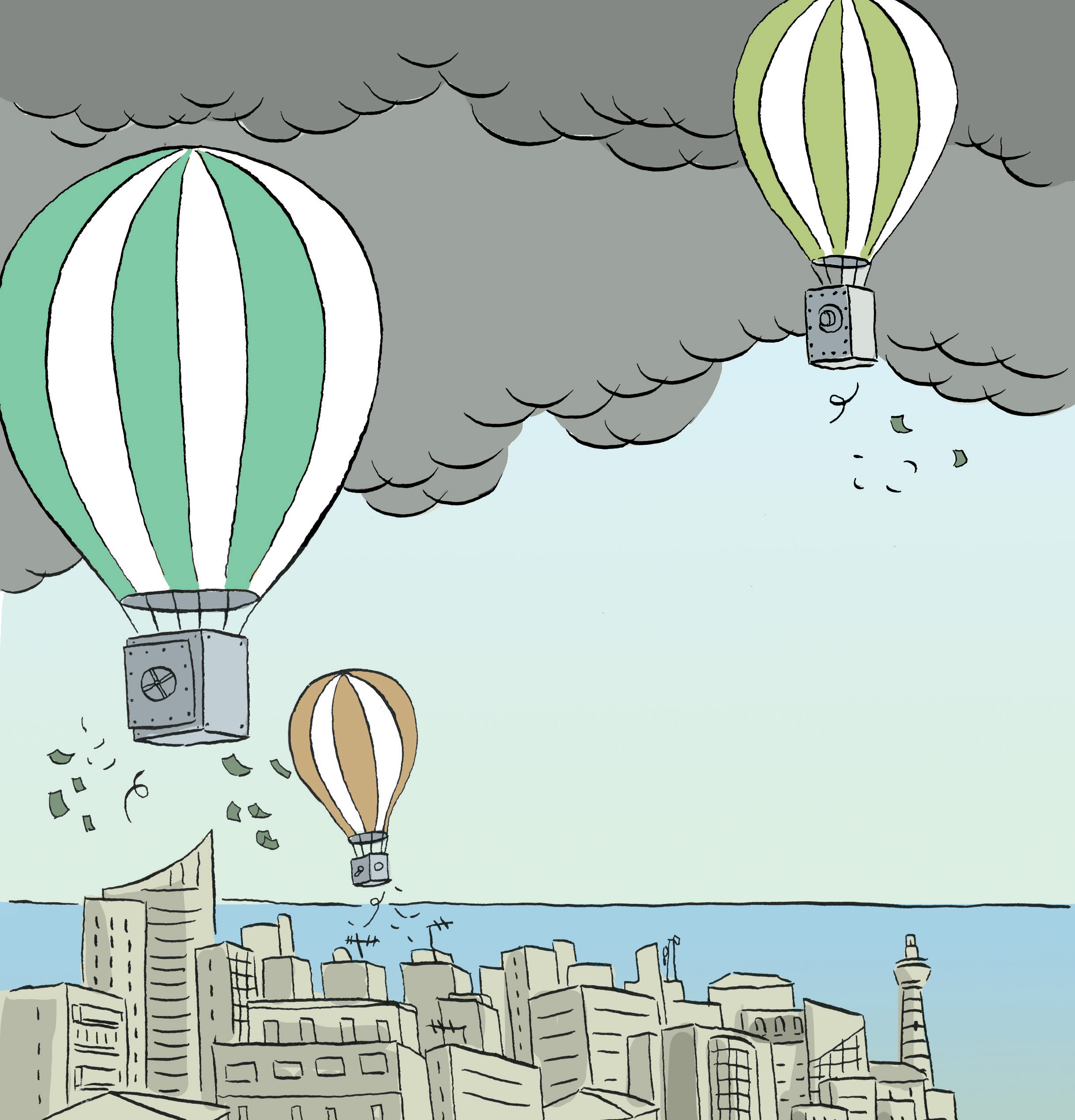
Lebanon’s industrialists have a cordial, even respectful, relationship with the nation’s bankers, but they could never be considered bosom buddies. Not only have trade, tourism and real estate had an easier task in courting the favor of the financiers, but the very fabric of the country is intertwined in a way that hobbles those entrepreneurs who have been prepared to get their hands greasy in the workshop.

“The relationship between the industrialists and the commercial banks in Lebanon did not start on a good foot as they always preferred to do business with the traders,” explains Nazareth Sabounjian, owner and general manager of Georgi Sabounjian sarl and treasurer of the Association of Lebanese Industrialists (ALI).

The Sabounjian business started as a two-room workshop making jewelry boxes in the late 1960s and it is now a modern plant of 12,000 square meters (sqm) with more than 200 staff. A plethora of products from jewelry store stands to ring cases are produced in the Mount Lebanon-based factory for both Lebanese and international markets. Nazareth Sabounjian is the second generation at the helm of the company as well as being the longest serving member of ALI.

“Unlike the commercial traders, in the past, if an industrialist went to the banks he would find it hard to get credit. Industrialists need to buy land, build the factory and bring the machinery, and this all takes time and the commercial banks don’t like this,” says Sabounjian.

In recent years, Banque du Liban (BDL), Lebanon’s central bank, has introduced a number of initiatives to stimulate lending to the productive sectors. Industry accounted for 11.5 percent of the commercial banks’ lending portfolio in 2012, which according to the latest data roughly corresponds to the sector’s contribution to the economy.

“At the end of the day we are not really an industrial country,” explains Ibrahim Salibi, assistant general manager and head of corporate and commercial banking at Bank Audi.

The competitiveness of Lebanon’s industrial base has ebbed away in recent decades. The steadily rising price of non-tradeable goods and services has put upward pressure on the costs of industrial production. Consider this in light of the almost complete abolition early in the last decade of previously significant protective tariffs and you can understand why Lebanon’s industrialists have had such a rough ride of late.

But the steep rise in the costs of production, and hence the falling competitiveness of the productive sectors, is largely due to the huge inflows of capital to Lebanon’s banking sector that have been used to finance the gargantuan lending to both the government and the private sector. “Everything that is tradable has become incredibly uncompetitive for the Lebanese exporter and extremely competitive for the Lebanese importers, and this translates very easily into the size of the balance of trade deficit,” explains Charbel Nahhas, ex-minister of labor and widely published economist.

Not only is the persistent inflow of deposits to the banking sector hurting industrialists by driving up prices for non-tradable goods and services in Lebanon, such as land, but the high rates of interest used to attract this capital are also discouraging investments in the sector. “Potential investors in Lebanon made their studies and found that their expected returns hardly ever exceeded the cost of borrowing and that is why industries in Lebanon collapsed,” reasons Ellie Yachoui, professor and dean of the Faculty of Business Administration and Economics at Notre Dame University-Louaizé.

Financial aid

With a commercial banking sector more inclined towards trade, real estate and tourism and a manufacturing base fighting an uphill battle, it is little wonder why lending to industrialists has been lackluster. In such a climate, it has been BDL that has stepped in to grease the cogs of finance between Lebanon’s manufacturers and bankers.

Lebanon's industrial sector is relatively small


“The central bank did an essential thing for industrialists when they started doing soft loans. If they were not to have these programs, it would be much harder for us industrialists to get credit,” says Sabounjian.

The expansion and upgrade of the Sabounjian factory from 3,000 sqm to its impressive 12,000 sqm replacement in the Mount Lebanon region several kilometers inland from Jbeil was enabled by a $3.5 million loan in 2002 subsidized to 1.5 percent interest by the central bank.

Since 1997, government subsidized loans from commercial banks, investment banks and leasing companies have been made available for the industrial, tourism and agriculture sectors. “For years we have been using the exemption on reserve requirements to allow banks to lend to specific sectors, whether it is housing or the small and medium-sized enterprises (SMEs),” explains Wael Hamdan, executive director and head of BDL’s financing unit. “Over the past 15 years we have subsidized close to $5 billion dollars in loans: 60 percent for industry, 30 percent for tourism and 10 percent  for agriculture.”

BDL has been instrumental in developing a number of different products that carry different conditions and incentives, targeting different sized operations. One such product, the Kafalat scheme, aims to encourage investment by decreasing the cost of medium and long-term financing extended to SMEs in the productive sectors that are unable to provide the guarantee necessary for the loan. A standard Kafalat loan can be up to $200,000 whereas the “Kafalat Plus” can extend up to $400,000. The guarantee ranges from 75 percent for a basic loan to 85 percent for Kafalat Plus.

For larger operations, BDL manages state-subsidized loans for which no commission needs to be paid to cover the guarantee, as is the case with the Kafalat loans. The total outstanding balance of subsidized loans granted to one institution or one economic group should not exceed LL15 billion ($10 million) and BDL applies a flat subsidy rate of 4.5 percent on all of the loans.
The commercial banks are required to reserve 15 percent of their foreign deposits and 25 percent of their domestic lira deposits at the central bank, and these reserves have been the tool by which BDL has encouraged the banks to offer such reduced rate loans. “We gave the banks some exemptions from the reserve requirement to make it more attractive for them to lend into these programs. The banks are encouraged because their clients have [a] better cash flow if the interest rate is subsidized by the government, and they are also exempted to a degree from their exemption requirements,” explains BDL’s Hamdan.

However, according to Hamdan, as the banks were being exempted from their reserve requirements in return for offering the reduced rate loans, these very reserves of the commercial banks started to deplete. What is more, the increased dollarization of the banks’ balance sheets meant that they had less local currency in their reserves, compounding the situation. Consequently, cheap loans on the market started to dry up, as this was the only sweetener BDL had to entice the commercial banks to offer these products.

This compelled BDL to offer the banks loans totaling LL2.2 trillion ($1.46 billion) at 1 percent interest, with a time limit ending December 31 2013, that would enable the banks to keep on putting the products on the market but without having to resort to taking exemptions on their reserves. This initiative, which was launched on January 14 by Circular 318, is what was popularly referred to as the “stimulus package”.

“From that 1 percent, we don’t want to see it translated in the rate the banks give to the customer so they have to keep on pricing the same way they had been as if taken from their reserve,” says Hamdan. Under the previous arrangement of reduced rate loans being enabled by the reserve exemption mechanism, BDL had not stipulated to which sectors the banks should grant the loans. However, with the stimulus package, the amounts that can be lent to different beneficiaries are clearly defined.

The majority of the money has targeted real estate in the belief that this is the most effective driving force for growth in the economy. The productive sectors got a marginal share. The BDL-stipulated credit ceiling for productive sectors under the interest rate subsidy (not including loans granted with a guarantee from Kafalat) was LL140 billion ($93.3 million), or 6 percent of the total. Conversely, housing received LL1 trillion ($666 million).

However, the 15 percent exemption taken against these loans translated the LL140 billion made available from the BDL for the industrial, agricultural and tourism sectors into LL934 billion ($622.6 million) in total loans granted by   the banks.

“So if  [they] can afford LL140 billion, the banks can lend against them LL934 billion as LL140 billion is 15 percent of LL934 billion,” says Hamdan.

Can more be done?

The demand for the loans to the productive sectors outstripped supply. Saad el Zein, head of corporate banking at BankMed, explains, “Everything that was allocated to the productive sectors [within the stimulus package], was consumed and what remains today mostly pertains to the housing loans sector and environmentally friendly businesses.”

Perhaps, if their hand were forced to deal with the more cumbersome productive sectors, the bankers would find that there is indeed greater demand in the market for their services. 

Zein from BankMed and Salibi at Bank Audi both say their banks are willing and able to lend to manufacturers to finance expansion and diversification. There is, after all, opportunity in adversity and both referred to the fact that the proportion of their lending portfolios for the industrial sector was around 20 percent and thus higher than the national average.

However, the balance of the most recent stimulus package shows that manufacturing and other productive sectors, such as agriculture, remain on the fringes of policy makers’ agendas. Add to this the huge amounts of money being pumped into non-tradable goods and services, such as real estate, and it is understandable why Lebanon’s industries are less competitive and coming to represent a smaller portion of the economy.

The central bank’s incentive schemes may keep Lebanon’s industrialists at the table, but they will  have to continue the fight to maintain their cut of the pie.   

June 17, 2013 0 comments
0 FacebookTwitterPinterestEmail
Comment

Building on the hope of Rouhani

by Gareth Smith June 17, 2013
written by Gareth Smith

When I interviewed Hassan Rouhani in Tehran back in 2005, the toughness underneath the white turban was evident. It seems glib now for Iran’s president-elect to be called a ‘moderate’ but he is certainly more pragmatic than the officials that have dominated Mahmoud Ahmadinejad’s presidency.

Probably, the turning point in the 2013 presidential election came in the third televised debate when Ali Akbar Velayati lambasted the lack of flexibility shown by Saeed Jalili in his conduct during talks over the nuclear program since 2007. “You have not gone forward even one step, and the pressure of sanctions still exists,” said Velayati, a long-time senior advisor to Ayatollah Ali Khamenei, the supreme leader.

Related article: Rouhani, the man who could bring peace

Suddenly gone was the consensus that the nuclear program was not an election issue, as Velayati bluntly addressed the realities understood by Iranian voters: that tightening United States-led sanctions over the past year, due to Iran’s disputed nuclear ambitions, have badly squeezed the economy, and that such difficult times require a more measured and informed hand on the diplomatic tiller.

Hassan Rouhani did little to propose specific economic policies, much less any kind of clear plan, but his stress on the importance of a more conciliatory international approach and a more relaxed domestic political atmosphere contrasted sharply with those candidates – especially Jalili – who recited a mantra of “resistance” as the answer to all problems.

The scale of Rouhani’s victory – with over 50 percent on a first ballot with six candidates in the field – was emphatic, as was a voter turnout of around 75 percent, much higher than expected.

Rouhani won the votes of millions of people who backed Mahmoud Ahmadinejad in 2005 and 2009, and this should finally bury the notion beloved by many foreign analysts that voters fit into categories like ‘reformist’ or ‘conservative’. Voters attracted in 2005 by Ahmadinejad’s campaign against corruption and promise to “put the oil money on the sofreh [the square carpet on which poorer Iranians eat meals]” turned away from the follies of populist economics.

Arguably, Ahmadinejad’s replacement of the state subsidies of every day items such as bread and gasoline with cash payments to most Iranians did reduce inequalities. But prices jumped 40 percent last year on official figures, and unemployment has reached 15 percent, with around 30 percent of young people jobless. Many medicines have been in short supply, and the Iranian rial has lost half of its international value in a year.

Whatever steps the Iranian authorities have taken to boost domestic growth have been swamped by reckless economic management and by the effect of tightening sanctions that since early 2012 have halved oil exports to around 1.1 million barrels a day.

Hassan Rouhani’s international credentials are clear. In handling negotiations with the Europeans over the nuclear program back in 2003-2005 as secretary of the Supreme National Security Council (SNSC), he brought Iran closer to a substantial diplomatic agreement with the West than at any time since the 1979 Islamic Revolution.

But the simple fact that Rouhani failed — the 2003 agreement with the European Union broke down — illustrates the mighty challenges he now faces as president in reaching out for understandings, perhaps even a deal, that can reduce international tensions around the nuclear program and around the regional rivalries now centered on Syria.

Firstly, Rouhani was undermined then by domestic critics who asserted he was “selling out” Iran’s interests by suspending uranium enrichment as a “goodwill gesture” during the talks with the Europeans. Interestingly, Rouhani defended himself against such charges in the recent presidential election by saying he successfully gave time for Iran to improve its technology while also avoiding, at that stage, Iran’s referral to the United Nations Security Council.

But Rouhani will again face such criticisms if he reaches out towards Europe and the United States. His electoral mandate will strengthen his hand and we should not forget his close relationship with Ayatollah Khamenei, who appointed him to the SNSC and who personally entrusted him with negotiating with Europe.

Secondly, Rouhani will need to deliver, and this means he will need someone to negotiate with. He will need a United States that recognizes Iran, like any country, has national interests and concerns. As he said when we met in 2005, “a country which expresses interest to hold talks at the same time cannot be working for regime change … so the US must clearly announce its strategy towards my country.” Regionally, Rouhani will need a Saudi Arabia that understands that Shia-Sunni tensions are leading the region ever deeper into battles with no victors.

Rouhani is thick-skinned and intelligent. But just as important will be the “hope” and “prudence” that were the watchwords of his campaign; hope and prudence in Iran, and hope and prudence elsewhere.


Gareth Smyth has reported from around the Middle East for nearly two decades and is the former Financial Times correspondent in Tehran

June 17, 2013 0 comments
0 FacebookTwitterPinterestEmail
Economics & Policy

Death and destruction

by Sam Tarling June 15, 2013
written by Sam Tarling
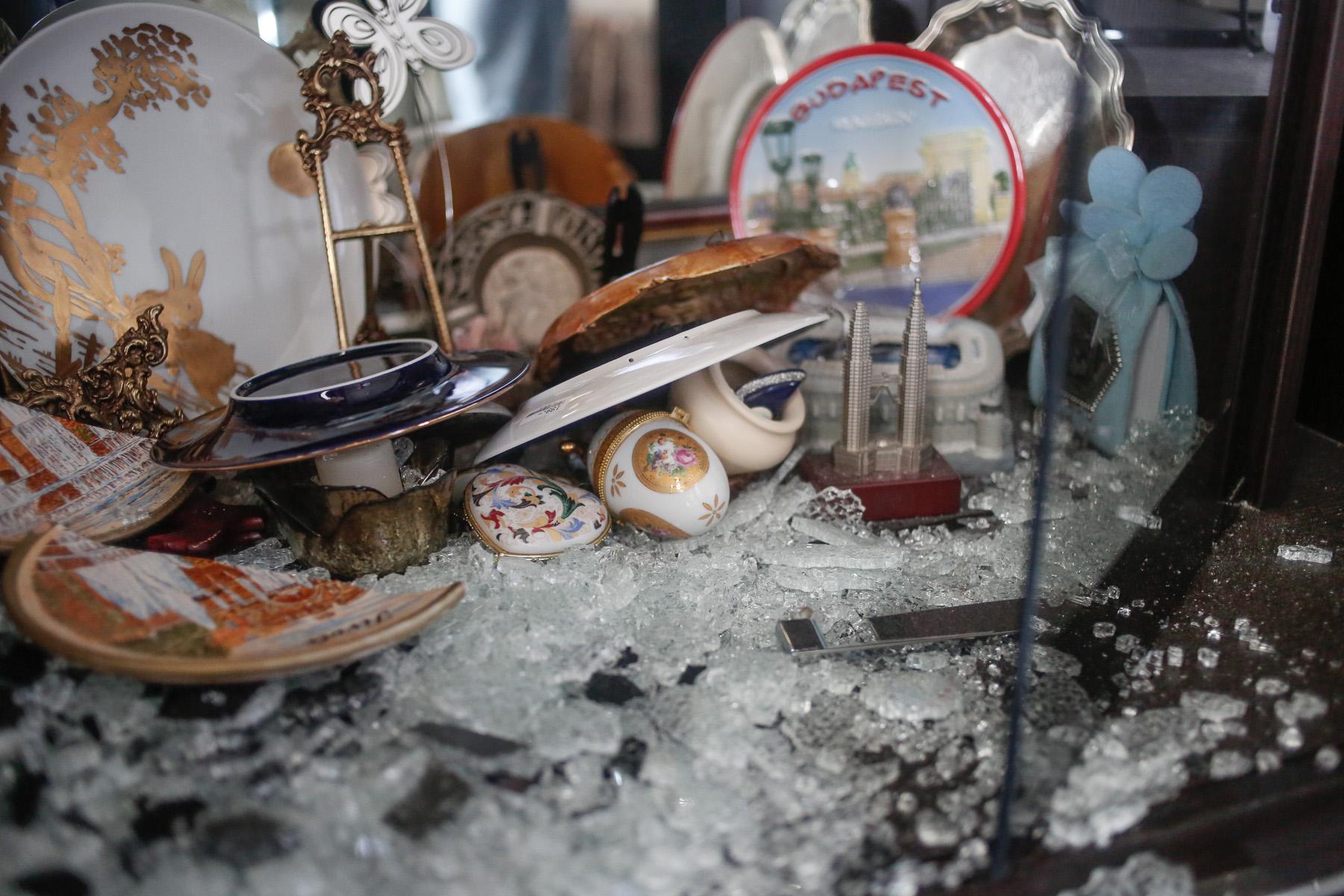
The Abra neighborhood of Saida has been the scene of fierce fighting since Sunday, with supporters of radical Sheik Ahmed al-Assir clashing with members of the Lebanese army and reportedly armed groups allied with Hezbollah. [Photo: Sam Tarling/Executive]
The clashes have left much of the Abra area badly damaged. A resident surveys a barricade erected by Assir's forces, which was shelled by the army. [Photo: Sam Tarling/Executive]
A bullet-scarred building on the southern edge of Abra. [Photo: Sam Tarling/Executive]
An Abra resident takes a cellphone photo of a hole caused by gunfire after soldiers targeted Assir's forces nearby. [Photo: Sam Tarling/Executive]
This large round was found inside the house, seen here next to a .50 caliber casing for comparison. The presence of the casing suggests the house was used as a firing position. [Photo: Sam Tarling/Executive]
Ghada Kassab (second left) and her family survey the damage to their house. [Photo: Sam Tarling/Executive]
Many of her personal belongings have been destroyed. [Photo: Sam Tarling/Executive]
Abra residents survey a building that was set on fire during the fighting. [Photo: Sam Tarling/Executive]
This family were discussing whether to flee the city or stay and hope violence abates. [Photo: Sam Tarling/Executive]
An Abra resident looks out at her balcony, which was damaged by gunfire during the clashes. [Photo: Sam Tarling/Executive]
June 15, 2013 0 comments
0 FacebookTwitterPinterestEmail
Banking 2013: Looking for better horizonsFinance

Banks fleeing the storm

by Maya Sioufi June 14, 2013
written by Maya Sioufi

Lebanese bankers are sailing off to foreign shores to generate growth in profits as turbulence rattles their home country and cripples their neighbours next door.

The blood being spilled in Syria is rising daily with no end in sight. The repercussions on government-less Lebanon go beyond an economic suffocation as violent clashes have again taken hold of the northern city of Tripoli. Amid this, Lebanon’s indebted public sector is under pressure and along with it the banking sector — a heavyweight in the country’s economy indeed.

The $40 billion Lebanese economy grew by just 2 percent last year, according to the International Monetary Fund, and is expected to grow by a slightly higher rate of 2.5 percent for 2013, an estimate that seems likely to be reduced if the current situation does not improve. The number of tourists visiting the country in the first quarter was down 12.5 percent on last year and they are unlikely to flock to Lebanon this summer. The United Arab Emirates renewed its travel warning to Lebanon for its citizens last month.

Related article: Credit cards yet to catch on in Lebanon

Why E-Banking is struggling in Lebanon

Despite being almost four times the size of the economy, the banking sector is feeling the pinch. The sector’s size grew by just over 2 percent in the first quarter of the year to stand at $155 billion, 14 percent lower than the growth witnessed in the same period of 2012, a year also marked with significant regional instability. Deposits, on the other hand, were up more than 2 percent to stand at $128 billion, outgrowing last year’s rate by 24 percent with the majority of the growth coming from local residents. This leaves us wondering whether consumers are reducing their spending as they wait and see if darker days lie ahead.
Banks also seem to be cautious to flex their lending muscle, with a three percent growth in loans to consumers in the first quarter of the year, 23 percent lower than the growth witnessed in the same period of last year. Consumers’ debt to the banking sector amounts to $45 billion.

Still funding the government’s coffers

The highly indebted sovereign, $58 billion in debt as of January 2013, continues to knock on bank doors for help in refinancing the country’s debt. And banks are continuing to hand over the cash, most recently subscribing to the $1.1 billion Eurobond issued in April of this year. Banks carry just over 50 percent of the country’s debt as of March 2013, up 1 percent year-on-year, despite the continuous reluctance of senior management of the top banks to increase their sovereign exposure — a sentiment they have expressed to Executive on numerous  occasions. With low interest rates on international markets, the lack of lucrative revenue growth opportunities internally and the desperate need for the government to recharge its finances, banks don’t seem to have that much of a choice.

This exposure has led rating agency Moody’s to change its outlook from stable to negative on the deposit ratings of the country’s three biggest banks — Bank Audi, Blom Bank and Byblos Bank — after similarly downgrading their outlook on government bonds. The agency is losing confidence in the government’s ability to fulfill its debt obligations. Are Moody’s concerns reasonable? Yes. The banks are still highly exposed to Lebanon, with domestic assets accounting for more than 80 percent of their total assests and with profits generated from Lebanon amounting to a significant 84 percent of their total profits, according to Bankdata financial services. If the economy’s growth rate stagnates — a highly likely scenario — and if the government is unable to finance its hefty debt at favorable interest rates — another highly likely scenario — then the banks’ exposure to the debt will become even more burdensome.

Foreign activities in trouble

A major part of the assets located outside of the country are in jeopardy too. The chief concern lies in neighboring Syria, a dominant trading partner where six Lebanese banks have established branches. While the banks’ portfolio in Syria stood at $3.7 billion as of the end of 2012, down from $5.4 billion a year earlier, the repercussions on the economy continue to be felt and along with it the backlash on the banking sector. Disorder in Egypt, where several banks have also established branches, continues, with the IMF cutting its 2013 growth forecast for the country to 2 percent.

Cyprus’ request for a bailout from the European Union came at a shocking price: tapping into depositors’ money. While the combined deposit base of the nine Lebanese banks operating in Cyprus account for less than 3 percent of the sector’s total deposits, according to the Association of Banks in Lebanon, these banks had an extra issue to worry about: the Cypriot government tapping into their deposit base.

Aiming to cater to the banking needs of the Lebanese diaspora, banks’ reach abroad is extending, with 16 percent of the alpha banks’ profits coming from offshore lands in 2012, up from 11 percent in 2011. In Iraq, several Lebanese banks have already set up shop and others such as Bank Audi are following this year. Bank Audi and BankMed are eyeing growth in Turkey. In Africa, Lebanese banks are looking at Nigeria, Congo and Sudan, where Byblos Bank has an established presence, and Libya where Byblos plans to expand this year. Further afield in Australia, Bank of Beirut is set up under the recently rebranded Bank of Sydney.

Lebanon’s history is full of instability and chaos, and the banking sector has persevered throughout. With the ongoing turmoil and instability shaking the country’s economy and its banking sector, banks are doing what they do best, wrestling to survive. This time they are betting on far reaching lands to reap higher profits. Whether their bets will bring fruits or not remains to be seen.

June 14, 2013 0 comments
0 FacebookTwitterPinterestEmail
The Buzz

Business briefing: 14 June 2013

by Executive Staff June 14, 2013
written by Executive Staff

Economics and Policy

The World Bank has slashed its projection for Lebanon’s GDP growth in 2013 to 2 percent from 2.8 percent.

More from The Daily Star


Lebanon’s investor risk surged to the highest level in 10 months amid concern that sectarian violence may escalate after Hezbollah openly joined the war in neighboring Syria.

More from Bloomberg


A planned leadership change that could see Qatar's US-allied Emir eventually ceding power to his son is unlikely to change the Gulf state's taste for bold investments overseas, analysts predict.

More from Reuters

Egypt’s central bank said it had suspended its Tuesday deposit auction and would hold a repurchase agreement (repo) auction in its place, a move bankers said was designed to give some banks access to more liquidity.

More from Reuters
 

The IMF has warned Dubai's companies over increased borrowing.

More from The National


Companies and Business

Unatrac Holding, the distributor of Caterpillar equipment in eight mainly African countries, has signed a $700m, three-year loan to fund operations and refinance existing debt.

More from Reuters


Online advertising in the Middle East and North Africa region is growing at 37 per cent per year to hit $2.8 billion in 2016.

More from Khaleej Times


Abu Dhabi's Aldar Properties and Sorouh Real Estate surged Thursday after the developers said no objections were raised by creditors of Sorouh to a state-backed merger of the two firms set for end of June.

More from Reuters

June 14, 2013 0 comments
0 FacebookTwitterPinterestEmail
Comment

Result through resolve

by Riad Al-Khouri June 13, 2013
written by Riad Al-Khouri

Away from the geostrategic dramas playing out in the Middle East these days, some Arab-Israelis are seeing quiet progress. The community’s latest success came in late April when Nazareth, Israel’s largest Arab city, opened its first industrial park. Set up by Israeli billionaire Stef Wertheimer — who has built several such projects elsewhere — and with help from the Nazareth municipality, the $22 million park was 12 years in the making because of “bureaucratic difficulties” — deliberate delays by Israeli officials to frustrate the country’s Arab community. Now completed, it aims to host 25 export-oriented companies that could provide 1,000 jobs within a decade.

That goal looks attainable. Three companies already operate in the park: an international telecom firm employing 100 workers; a project founded by a Nazareth couple that manufactures neurosurgery and neurology products; and another Arab-owned facility that provides outsourcing solutions for light manufacturing.

Job creation is a challenge for every growing demographic in the Middle East. For Arab-Israelis, a group of over 1.5 million that is sometimes ignored in debates over the future of the Palestinian people, the challenge is complicated by their economic context. Most are not well off. Although comprising roughly 20 percent of the Israeli population, their contribution to the country’s gross domestic product is only 8 percent. About half of Israel’s Arab families are considered poor by World Bank standards, compared to the national average of 20 percent.

Employment activity is also below par. Only 41 percent of Arab-Israelis participate in the Israeli labor market, compared to 60 percent of Jews. The labor force participation rate of Arab women is particularly low, stuck between 15 and 20 percent over the last four decades.
The Nazareth industrial park also aims to spur entrepreneurship in the Arab community, which suffers from a scarcity of university graduates. Only 70,000 Arab-Israelis have university degrees, less than five percent of the community. That is a vastly smaller ratio than the one for the state’s non-Arab population, 35 percent of which possess a university degree.
The lack of access to higher education impedes the advancement of Arab-Israelis. Only about 10 percent of students pursuing higher education in Israel are Arabs. In part, this is because most universities are located away from Arab population centers. There are other forms of discrimination, as well. Social prejudice continues to discourage Arabs from enrolling and graduating. In addition, less than 1 percent of academic staff in Israeli universities is Arab.

However, in a development that has not been highlighted regionally or otherwise, that bleak picture may now be starting to change. After a struggle over three decades long, Israel finally accredited the Nazareth Academic Institute (NAI) a few years ago as the first official academic institute in the Arab-Israeli sector since the establishment of the Jewish state. A university college with its first batch of students due to graduate soon, NAI is committed to providing equal access to higher education, especially for young, poor Arab men and women, in order to close the education and employment gaps between Arab and Jewish Israelis.
For Arab-Israelis, this is a great leap towards establishing the first full-fledged Arab university in the country. Until then, NAI will be providing Bachelor’s degree programs in chemistry and communication, and it is planning additions in computer science and organic agriculture, among other subjects. NAI is looking to found a medical science faculty, as well, in cooperation with United States-based Cornell University.

There are seven such colleges in the northern Israeli region of Galilee — six of them are in mainly Jewish areas and are state-funded. Only NAI does not receive such financial aid and must depend on private and municipal donations. Although seeking to support Arab areas such as Nazareth, NAI accepts non-Jewish and Jewish students alike.

Of course, NAI and other initiatives do not mean that economic discrimination against Israel’s Arab minority has suddenly disappeared. Peaceful coexistence of different groups within Israel’s 1948 borders will only come when Israeli Arabs and Jews have a similar standard of living derived from the provision of equal opportunity. That, and not separation walls or an Iron Dome, will be the basis of true security for the country and the rest of the region.


Riad al-Khouri id principal at DEA Inc in Washington, DC

June 13, 2013 0 comments
0 FacebookTwitterPinterestEmail
The Buzz

Business briefing: 13 June 2013

by Executive Staff June 13, 2013
written by Executive Staff

Economics and Policy

Caretaker Lebanese Energy and Water Minister Gebran Bassil has promised  to supply Lebanon with 16 hours of electricity a day during the summer season despite the mounting consumption.

More from The Daily Star


After several sluggish years, mergers and acquisitions activity within the Middle East is showing signs of revival, giving hope to global banks which scaled back their regional operations because of a dearth of deal flow.

More from Reuters


Holidaymakers from the UAE are cancelling summer breaks to traditional destinations such as Turkey and Lebanon due to regional instability.

More from The National


Oman needs to contain state spending and raise non-oil revenue in the medium term to keep its fiscal balance sustainable, the International Monetary Fund has said.

More from Reuters


Companies and Business

Emaar Properties and Kurdish company Faruk Group Holding will soon sign a contract valued at more than US$2 billion to develop a resort in Iraq's oil-rich Kurdish region in the north.

More from Bloomberg


Beirut Port is to be modernized, Lebanon's caretaker Public Works and Transportation Minister has said.

More from The Daily Star


Princess Haya bint Al Hussein, wife of Dubai’s ruler Sheikh Mohammed bin Rashid Al Maktoum, has announced plans for a €100m ($133m) fund to promote entrepreneurship.

More from Arabian Business


Dubai property developer Nakheel has announced that it has made a profit payment of $57.1m against its trade creditor sukuk.

More from Arabian Business

June 13, 2013 0 comments
0 FacebookTwitterPinterestEmail
Business

Giving up on the quick buck

by Joe Dyke June 13, 2013
written by Joe Dyke

Company: Ounousa.com

Country: Lebanon

Industry: Media

Founder: Elsa Aoun and Wassim Kari

Established in: 2008

Number of employees: 10

Capital raised: Self-financed so far, seeking potential capitalization


Back in 2008, it all seemed simple for Wassim Kari and Elsa Aoun. They were studying business in France, had begun dating and were considering what to do with their lives. Then they attended a talk about making money from the Internet that seemed to offer them a path.

Among the speakers was a French entrepreneur who had designed a website at the height of the 2000 dotcom bubble, ran it for a couple of years and sold her stake for millions of dollars. The largely Western-based bubble had made millionaires of hundreds of entrepreneurs and, the couple reasoned, it was only a matter of time before the Middle East had its own version — bringing with it the opportunity to make big profits in a short time.

“We were always discussing [whether to go] the safest way and do the [stable] career, or try something else. There were some indicators in the region here that were similar to the 2000 Internet bubble. For example, the internet penetration rate [was low but growing rapidly],” Kari said. “In 2008 we saw these ingredients happening in the region and we said ‘okay the bubble will not last long.’”

Seeking to capitalize on this, the couple founded Ounousa (feminine in Arabic), an Arabic-language website whose target clientele is women. Kari designed an initial website — complete, he admits with embarrassment, with “flashy pink colors” — and within a short period traffic was booming. Soon Ounousa had become among the leading spaces online for women’s fashion and lifestyles, with a huge Facebook following (which has now reached 1.3 million) to help drive traffic.

The couple have won a number of awards


Then, in August 2009, online giant Yahoo bought Internet services company Maktoob, leading to predictions of the “start of an era” for online mergers and acquisitions in the Middle East. Shortly after, Ounousa won a prestigious award to celebrate its growth. The company, it seemed, was ripe for a lucrative takeover.

Then, nothing. Three years on there has been no initial public offering, no acquisition. In fact the largest change in the couple’s lives is personal — they are married and now have a baby. But simply put, the dotcom bubble never really came to the Middle East, with venture capitalists reluctant to spend as the market was not liquid. “This is something we did not expect,” Kari admits. “When we started the venture we wanted to be like the [French] girl who sold everything, but this is not the case. There was no bubble in the sense of liquid [mergers and acquisitions].” Aoun is becoming less and less confident that the bubble is coming as, she reasons, the “market is getting mature.”

As such the couple have given up on making a quick buck and are reaching the conclusion that the company, which is still growing rapidly, will be theirs for the long haul. “We are moving from an out-sourcing to an in-sourcing model,” Kari says. “We started because we thought it was an equity game [so] the cash flow is unimportant; let's get a nice position on the market, get good numbers and exit from it. We outsourced everything to arrange it as a good shaped investment. When we saw that the market was not liquid we thought ‘maybe there are cashflows, online advertising is getting bigger by the day.’ So we in-sourced other functions.”

As such, Ounousa, recently selected among the top 500 fastest growing Arab companies, is shifting its strategy to regional dominance. The company has been profitable since 2011, but the couple is aware that the online advertising market saturation is coming in “two to three years,” Kari predicts.

As such, diversification of revenue streams is their next challenge. This, Aoun says, will include branching out into major new projects she is leading — chief among them incorporating e-commerce into the site.

“95 percent of [our] audience are women and a lot of them are interested in fashion, leisure [and] people news,” she says. “So we are planning to develop into e-commerce; especially, we are trying to do something where, for example, I see Kate Middleton wearing this amazing navy dress, and I want her look — so I want to buy the same. The idea is to make kind of a ‘shop the look’ [service]. So you can buy the same outfit or something comparable to it.”

They are well aware that this will put them in direct competition with regional retail giants that are investing online but are hoping the undeveloped nature of the market could enable them to capitalize.

Their already-established niche will certainly help. The website has over five million page views every month, most of which are channeled through their huge Facebook support. Likewise, the brand is now fully regional, with the majority of traffic coming from Saudi Arabia, Egypt and Morocco.

Perhaps the biggest challenge, then, for these two highly driven entrepreneurs is juggling married life with working together. The first tip they offer is to have completely separate spheres of responsibility — Aoun deals primarily with content, while Kari is responsible for traffic and technology.

But, as an hour-long conversation with them attests, they flit comfortably between business and personal conversations, from profit margins to prams. “The problem is we don’t make a distinction [between when we are working and when we are together personally]. We work, then we have a discussion about something else, then we go back to working,” Aoun says.

June 13, 2013 0 comments
0 FacebookTwitterPinterestEmail
  • 1
  • …
  • 252
  • 253
  • 254
  • 255
  • 256
  • …
  • 695

Latest Cover

About us

Since its first edition emerged on the newsstands in 1999, Executive Magazine has been dedicated to providing its readers with the most up-to-date local and regional business news. Executive is a monthly business magazine that offers readers in-depth analyses on the Lebanese world of commerce, covering all the major sectors – from banking, finance, and insurance to technology, tourism, hospitality, media, and retail.

  • Donate
  • Our Purpose
  • Contact Us

Sign up for our newsletter

    • Facebook
    • Twitter
    • Instagram
    • Linkedin
    • Youtube
    Executive Magazine
    • ISSUES
      • Current Issue
      • Past issues
    • BUSINESS
    • ECONOMICS & POLICY
    • OPINION
    • SPECIAL REPORTS
    • EXECUTIVE TALKS
    • MOVEMENTS
      • Change the image
      • Cannes lions
      • Transparency & accountability
      • ECONOMIC ROADMAP
      • Say No to Corruption
      • The Lebanon media development initiative
      • LPSN Policy Asks
      • Advocating the preservation of deposits
    • JOIN US
      • Join our movement
      • Attend our events
      • Receive updates
      • Connect with us
    • DONATE