• Donate
  • Our Purpose
  • Contact Us
Executive Magazine
  • ISSUES
    • Current Issue
    • Past issues
  • BUSINESS
  • ECONOMICS & POLICY
  • OPINION
  • SPECIAL REPORTS
  • EXECUTIVE TALKS
  • MOVEMENTS
    • Change the image
    • Cannes lions
    • Transparency & accountability
    • ECONOMIC ROADMAP
    • Say No to Corruption
    • The Lebanon media development initiative
    • LPSN Policy Asks
    • Advocating the preservation of deposits
  • JOIN US
    • Join our movement
    • Attend our events
    • Receive updates
    • Connect with us
  • DONATE
Special Report

Lending Hope

by Sam Tarling June 25, 2013
written by Sam Tarling

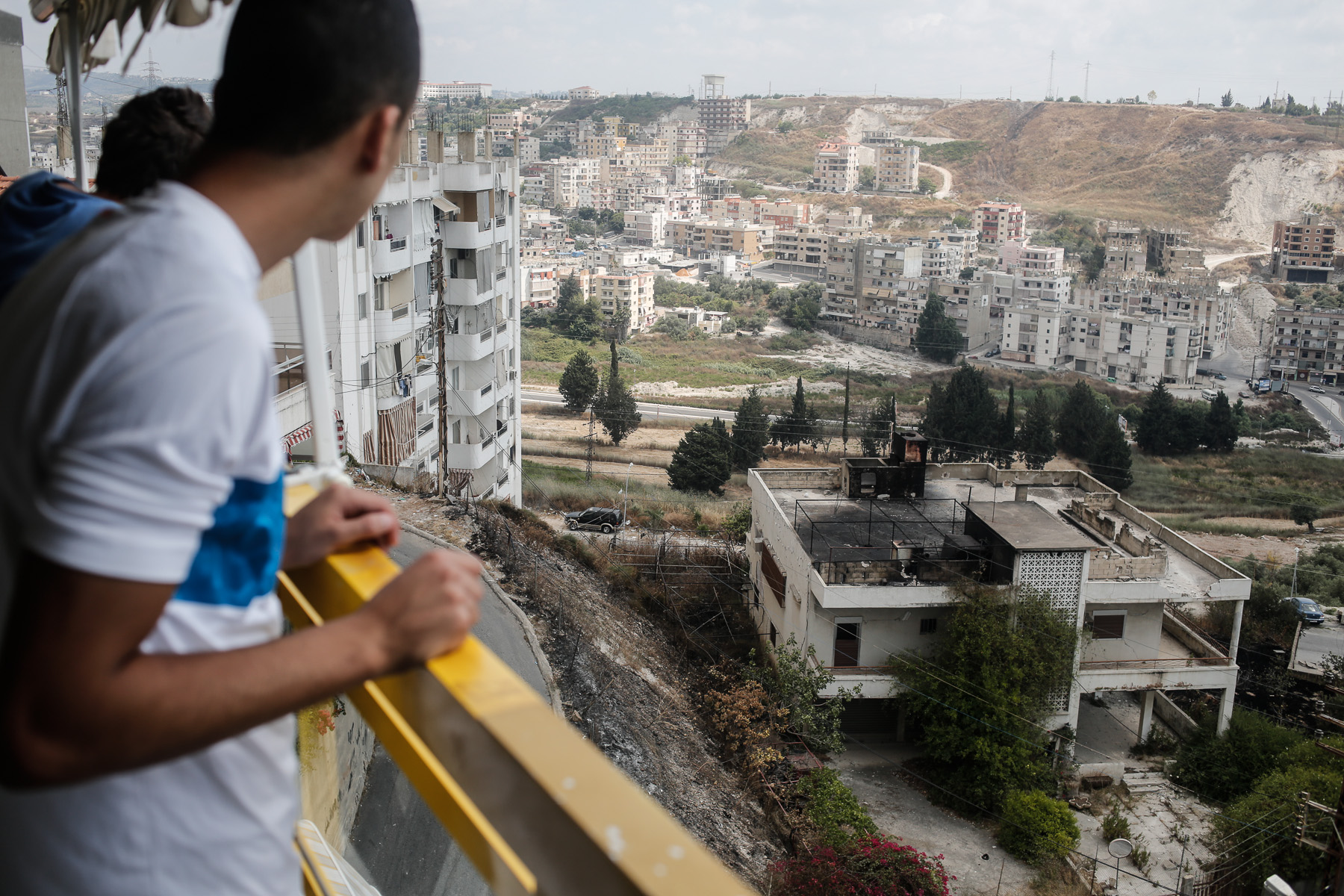
To follow a microfinance loan officer around for a day is somewhat akin to taking a ride with Robin Hood, albeit one that operates well within the law. It seems the officer knows almost everyone, and everyone knows him. “I’m famous around here!” exclaims Ismael Jaouni, a loan officer for non-profit microfinance institution (MFI) Al Majmoua as he shows Executive around the working class streets in the Beirut suburb of Jnah.

Despite usually carrying higher interest rates than commercial bank loans, it’s no wonder that microfinance loans are popular. They don’t require collateral, they offer smaller sums than most bankers keep in their wallets and they are convenient, especially for clients in remote locations.

“It’s easy because when I have to repay, I don’t have to go to the bank. It’s like the bank paid me a visit,” said sculptor and artist Elias Khalife. After a lightning strike destroyed his business premises, he got a loan in just a few days and was soon back up and running. The loan officer he contacted at MFI Vitas was a friend of his wife’s.

While product promotion is almost exclusively based on word of mouth and personal relations between loan officers and the communities they serve, microloans seem to be making an impact on the grassroots of Lebanon’s economy.

More than $14 million in loans have been given out over the last four years alone through the USAID-funded Lebanese Investment in Microfinance (LIM) program, according to Joanna Naccouzi, communications and coordination manager at the International Executive Service Corps, which facilitates funding and development for MFIs. This, she claims, has saved over 11,000 jobs, especially in rural areas. It’s empowering less-enfranchised segments of society too, as some 42 percent of the program’s 8,000 loans were granted to women and 41 percent of them to clients between the ages of 18 and 35. And LIM’s efforts make up just a fraction of the nationwide cumulative portfolio of some $120 million to $150 million [see page 26].

Beekeeper

Estephan Badawy, a former Middle East Airlines pilot, started producing honey 13 years ago on the hillsides of the village of Lehfed in Lebanon.

Badawy took a $30,000 Kafalat loan to start his project and recently took a $5,000 USAID-financed microloan from Association d’Entraide Professionnelle (AEP) to buy and fill 40 more hives, bringing his total to 280.

Although he only sells to friends and family, Badawy is confident he’ll find a home for the extra 400 kilograms his hives should yield once they reach full capacity. “Pure honey is like when a man has a beautiful daughter at home; he’s not worried about when she’ll get married,” said Badawy.

His investment should increase his production from 1,600 kg to 2,000 kg per year.Badawy sells his product for around $23 per kilogram and expects to pay off the loan in two and a half years. He is paying annual interest of 10 percent.

Chef

When an industrial accident nearly blinded Jihad Saadeh, he was forced to close his successful car repair business. Saadeh had 12 employees on his payroll, and his children were enrolled at the American University of Beirut.

To provide for his family, Saadeh opened a small restaurant in Lehfed with his wife Raymonda. His four children help out in the summer, and every year he expands the premises.

Today, Saadeh’s labour of love can seat some 700 diners. He recently took a $5,000 USAID-financed microloan from AEP in order to buy a new generator to supply sufficient electricity to cater for a full house. Saadeh said with just a few large events he could repay the debt.

However, Saadeh is a reluctant microborrower: he was persuaded to take the loan by his children but remains wary of debt, an attitude one industry insider said was common among the older generation.

“I don’t like to have a debt,” he said. “If something happens to me today, I don’t want my children to be indebted.”

Sculptor

Sculptor and artist Elias Khalife took a $15,000 USAID-funded microloan from Vitas after his atelier in Ehmej, Lebanon was destroyed in a lighting strike. 

Three weeks after the fire, the charred remains are still visible as Khalife works beside a hastily erected structure. Khalife was able to get back up and running quickly, after receiving the money in just 15 days.

“If I hadn’t been able to take out the loan, I would have had to sell some land and would have been unable to fill my monthly orders,” said Khalife, who is the sole producer of statues for the nearby St. Charbel monastery.

Khalife said that despite good access to finance, small rural businesses such as his struggled to find outlets for their products.

Baker

Lucia Saab has been running a humble mana’ish bakery in Chekaa since 2000. She took a $2,000 USAID-funded microloan from Al Majmoua two years ago to expand the premises, create a seating area, and to rebrand her business as Gusto, a full fledged cafe, that she runs with her son, Chalita.

“There’s no other way I could have expanded,” said Lucia, adding that taking a microfinance loan was “a simple procedure. It’s easier than going to the bank, all you need is a guarantor.”

Dekanjia

Majida Moqdad, a mother of three and grandmother of seven, used to clean houses. She desperately wanted to leave her job and set up her own business, but unable to find a source of capital to get started, her project seemed doomed from the start.

“When I was trying to open the shop, I felt suicidal. Then someone told me about Al Majmoua. I called them; Ismael [a loan officer] came here and he helped me,” she said.

In 2010, Moqdad took a microloan of $1,000 to equip and stock her shop. Since then, she’s taken a second loan to pay for a heart operation for her father and a third loan to increase her stock. As each was repaid as scheduled, her interest rates for subsequent loans dropped from 1.5 percent of the principal per month to 1.4 percent and then 1.3 percent.

Saleswoman

Clothing-store owner Layla Jouni was Al Majmoua’s first client in the Jnah area of Beirut, taking her first loan of $1,000 11 years ago.

“When I took the first loan, I bought stock for my shop. Each time I take a loan, I make my stock bigger and bigger,” said Jouni, who said she appreciates the independence these loans have given her. “I didn’t need to get help from anyone,” she said.

Jouni has also borrowed from Al Majmoua to fix up her house and is planning to take out a loan to finance a Hajj pilgrimage next year.

Shopkeeper

Hayat Kheir Imriri recently took a microloan of $800 dollars to buy stock for her store in the Sabra Palestinian refugee camp. The loan was taken from Al Majmoua. She is shown here holding a receipt of repayment.

Mechanic

Mechanic Jihad Rashid has taken six microloans from Al Majmoua over the last 6 years in order to pay for his children’s education.

This has allowed Rashid to pay the school fees annually; if he paid monthly, he says, the school would charge him three times more interest than that offered by Majmoua, which began at 1.5 percent of the principal per month. Due to successful repayments Rashid now pays a lower monthly rate of 1.3 percent.

June 25, 2013 0 comments
0 FacebookTwitterPinterestEmail
The Buzz

Business briefing: 25 June 2013

by Executive Staff June 25, 2013
written by Executive Staff

Economics and Policy

Qatar's emir Sheikh Hamad bin Khalifa al-Thani confirmed on Tuesday he was transferring power to his son, Crown Prince Sheikh Tamim, taking the rare step for a Gulf Arab ruler of voluntarily ceding power to try to ensure a smooth succesion.

More from Reuters


The cost of doing business in Saudi Arabia for multinational companies could be cut as much as half by the kingdom's weekend change, an economist has estimated.

More from The National


Regional bourses fell Monday as renewed selling pressure on global shares sparked a profit-taking spree.

More from Reuters


Companies and Business
 

Profits of Lebanese banks operating in Syria in the first three months of 2013 fell by 98.2 percent to $640,000 from $49.8 million in the same period of 2012.

More from The Daily Star


Technology giant Lenovo is aiming to be among the Middle East’s top three smartphone vendors by market share within three years.

More from Arabian Business


Taiwan's largest listed property developer Farglory has become the first overseas developer to break ground on Abu Dhabi's Al Maryah island, whose master planner is Mubadala Real Estate.

More from The National


June 25, 2013 0 comments
0 FacebookTwitterPinterestEmail
Society

Lebanon’s answer to eBay?

by Executive Staff June 25, 2013
written by Executive Staff

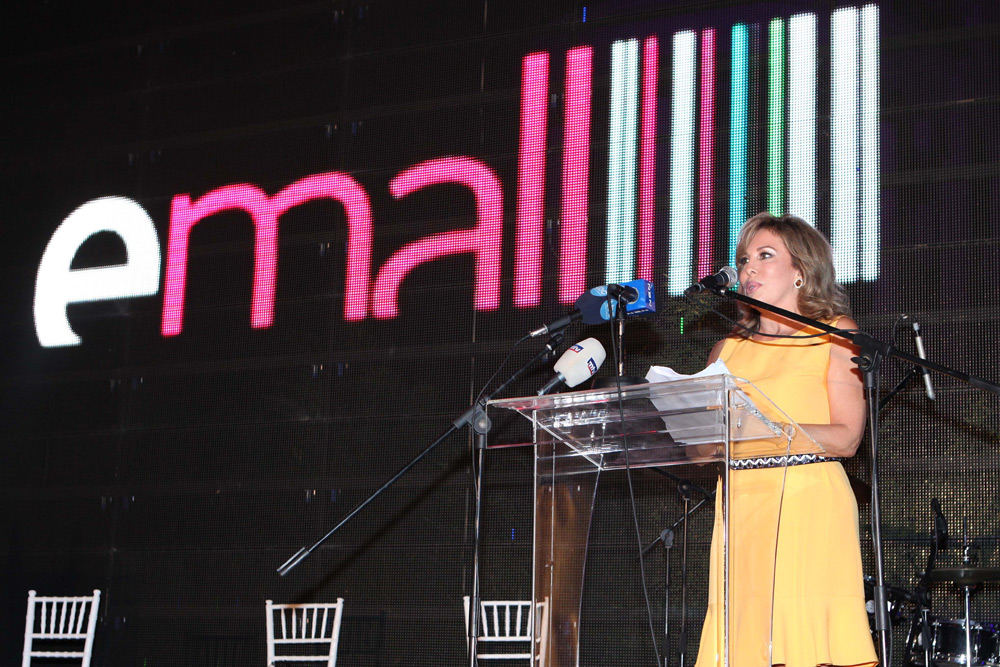
The eBay of Lebanon – that’s what Samir Hanna, CEO of Bank Audi, called their new innovative online shopping platform eMall. Launched on Sunday night at a glitzy cocktail reception held on Bab Idriss Street in downtown Beirut (blocked from public use for the occasion) the event was well-attended – with over 200 attendees including senior bank managers, company directors and media figures – despite the ongoing clashes in the southern city of Saida.

With a violinist and a pianist in the background, Randa Bdeir, head of electronic banking and card services at the bank and the driving force behind the initiative, presented the platform. eMall allows merchants registered with Bank Audi to sell their products online and have the items delivered to consumers’ households by shipping provider Aramex. So far over 90 stores have signed up, including those selling designer items, food and beverage, and electronics.

In Lebanon e-Commerce is in its infancy, with a recent poll putting the percentage of people regularly shopping online at less than one percent. As such Bank Audi are seeking to capitalize on a burgeoning market.

Audi’s profits are to be derived from the stores rather than the customers. eMall charges a 3 percent rate on products sold through its site, in addition to a set up fee and a monthly maintenance fee which vary on the category of microsite chosen. For the consumers, anyone can buy products from the platform but Bank Audi’s clients will have access to special deals and discounts. As such, expect the bank to bite into other local banks’ market share.

eMall also provides shoppers with additional features such as ordering items from the United States shipped to their homes in Lebanon and donating to non-governmental organizations such as the Red Cross and the United Nations Development Program. The US service seeks to bypass the problem many Lebanese face as their cards are not accepted by American firms through a partnership with the website MyUS.com.

To launch the new eMall site, an indoor space on the corner of the banks’ headquarters is presenting a simulation of the site – on laptops, iPads and iPhones – and of other payment technologies, for a period of one week. The highlight of Sunday’s event was the mind-blowing 3D display, which brought to life Bank Audi’s main headquarters.

June 25, 2013 0 comments
0 FacebookTwitterPinterestEmail
Comment

Precious little solace

by Joe Dyke June 25, 2013
written by Joe Dyke

Even as Eric Le Borgne, lead economist at the World Bank, presented the body’s latest report on the Lebanese economy yesterday, he knew facts on the ground were already making it out of date. In the southern city of Saida, at least 17 Lebanese army soldiers had been killed by forces loyal to the fundamentalist Sheikh Ahmed al-Assir while sporadic clashes have been reported in recent days in southern Beirut, Tripoli and the eastern Bekaa region.

In these circumstances, Borgne appeared hesitant to back one key part of the body’s findings. The report, optimistically titled “Growing tensions in a resilient economy”, predicted GDP growth at 2.3 percent in 2013, up from 1.4 percent in 2012. But Borgne knew the Bank would almost certainly downgrade this figure later in the year as it was on an optimistic assessment of the country’s political trends. He said the prediction was made earlier in the year on the “assumption there would be elections for June and increased security in the second half” [of the year]. “Clearly this isn’t true,” he added. A slight understatement, perhaps.

The report makes depressing reading for all but the most blindly optimistic. In essence it describes a perfect storm of factors undermining the economy. Apart from the dubious GDP prediction, most major economic trends are going the wrong way, including, but not limited to, expenditures, consumer confidence and spending, the fiscal deficit, gross public debt and inflation.

In fact, the only thing keeping the economy afloat is increased government spending. The central government posted a fiscal balance deficit of 9.4 percent of GDP in 2012, up by 3.7 percentage points on 2011. This was partly due to slightly declining revenues, but more to increased spending – largely on servicing the losses of the deeply indebted and inefficient Electricite du Liban and paying higher wages due to a public sector pay rise.

Indeed, Borgne went as far as to say that it was only government spending preventing growth dropping below zero. “Were it not for the expansion of fiscal policy, the country would have been in a recession,” he said. But this spending, he pointed out, was deeply unsustainable due to the country’s spiraling debt, with the country’s debt to GDP ratio predicted to arrest its recent decline and grow again.

The primary causes are well known to anyone in the country – Syria and the subsequent deteriorating security trends. The Bank’s figures show that trade has been severely hit as transit routes have been disrupted, tourism has been devastated – with hotel occupancy rates falling to their lowest figure since 2007 – while inflation is being pushed upwards.

The refugee crisis is also undermining unskilled laborers – both Lebanese and other nationalities. There are now nearly half a million Syrian refugees fleeing the country’s civil war registered in Lebanon, with over one million estimated to be living in the country. While Syrians have long formed much of Lebanon’s unskilled workforce, the increased numbers searching for any work they can get are creating “significant downward pressure on wages in the short-term,” the report said. “The comparative advantage of these Syrian activities in terms of prices disfavors local businesses and workers, thereby creating potential tension with local hosting communities,” it added.

A lack of options

Depressingly lacking from the 45-page paper, however, are any realistic policy proposals for dealing with the country’s woes. The Bank is emphatic in its criticism of the status quo, but its few suggestions for growth were roundly lambasted by Lebanon’s most senior economists in the debate that followed Borgne’s talk.

While the wise heads of the economy each took turns to suggest their own proposals, the depressing fact remains that the time for economic policy-making may already be passing. 1,000 well-meaning policy papers cannot prevent Assir’s men from further destroying confidence.

Until the security and political situation improves, economists can do little to help the country grow. Hezbollah and other groups’ increasing involvement in Syria, the crisis in Saida, the cancelled elections – all are increasingly drawing the country into a spiral it is hard to get out of. For policy-makers right now, the best they can hope for is to slow the decline.

After the event, Executive asked Borgne to make a prediction how much they would reduce their GDP prediction by. He politely declined, but said it would be above zero due to ongoing government spending. Precious little solace for a weary nation.

June 25, 2013 0 comments
0 FacebookTwitterPinterestEmail
Economics & Policy

Profits for the public

by Gabriel Chahine, Gabriel Chahine & Gabriel Chahine June 24, 2013
written by Gabriel Chahine, Gabriel Chahine & Gabriel Chahine

The region’s healthcare sector currently faces several pressing priorities, including rising rates of lifestyle ailments such as diabetes and heart disease, a growing population and problems of accessibility and quality of care. In addition, the predominant financial model, in which the state assumes most of the financial burden of care, is unsustainable. Both factors have led private equity (PE) firms in other markets to invest into healthcare infrastructure and the delivery of services, thus addressing societal needs while generating attractive returns.
Yet, PE investors in the Middle East and North Africa have made only minimal contributions to the reshaping of the healthcare sectors in the countries of the Gulf Cooperation Council (GCC) and elsewhere in the region.

During a recent roundtable discussion organized by the Middle East and North Africa Private Equity Association (MENA PEA) for PE firms, consultants and healthcare practitioners, four factors were named to explain the lack of industry investments in healthcare projects: mismatched investment horizons, state involvement, regulatory surprises and a lack of clarity about exit strategies. This notwithstanding, MENA PEA members affirmed that private equity can and should be a key contributor as GCC countries seek to improve healthcare and bring better services to their populations.  

Patience is a virtue

Before advocating stronger PE involvement in Arab healthcare, there are barriers that need to be addressed. First, most PE investors seek deals with a short timeline and a high rate of return. The ideal scenario is to make an investment, improve operational efficiency and then exit the investment after three to four years while aiming for a high return. Healthcare deals, in contrast, often take far longer to pay off, and returns are not necessarily as attractive. Greenfield projects offer potentially higher returns, but require a longer timeline. One rule of thumb is that PE investments in healthcare require a minimum of five years to ensure proper returns.
The second barrier to PE investments is the large presence of GCC governments in healthcare. In many markets, the state remains the primary healthcare player, regulating the industry and operating most hospitals and care facilities. Many governments have publicly stated that they want private companies to enter the healthcare sector, but at the same time are increasing their own role — which sends a mixed message.

For example, the Saudi Health Ministry recently announced the launch of 420 health projects, including the construction of 127 hospitals, in addition to the 259 it already operates, at a cost of $3.2 billion. Such moves in effect “flood the market”, leaving little room for PE investors. These measures also put the public sector into competition with the private sector for scarce resources, such as talent.

Third, a lack of clarity on regulations — both new rules and enforcement — also makes investors cautious. “We don’t necessarily dislike regulations per se,” said Nicolas Murat, a partner at Dubai-based Levant Capital. “What we dislike are surprises: new rules that we didn’t anticipate, or an unexpected application of the rules.”

Last, many participants in the MENA PEA roundtable were hesitant about healthcare investments because they do not offer a clear “exit strategy”, a path to divest investments once they have achieved their target returns. Only a handful have successfully launched initial public offerings, such as Dallah Healthcare Holding Co. on the Saudi Stock Exchange last November, or Abu Dhabi-based NMC Health Plc on the London Stock Exchange in August 2012.

Remedies, opportunities

To overcome these obstacles and engage in the healthcare sector, PE firms can deploy several solutions. One promising approach is public-private partnerships (PPPs), or collaboration arrangements between governments and private companies. These arrangements have already been used in the GCC for building such infrastructure as airports and power plants. They are a potential stepping stone for the state-operated healthcare segment to attract more private-sector players such as PE firms.

Under a typical healthcare PPP, the government reduces its involvement and no longer operates facilities or delivers care. Instead, the government exercises an oversight role, identifying gaps in accessibility and quality, regulating the market and offering incentives to attract commercial players.  PE investors inject capital into profitable opportunities — such as promising for-profit companies — and contribute their expertise in clinical, administrative or support services to improve performance.

There are several successful healthcare PPPs already under development in the region. Egypt last year signed PPP deals for the construction of a 200-bed gynecology and obstetrics university hospital, a new general hospital and a blood bank and pediatric and emergency-care ward at an existing facility, all in Alexandria.

While the tendering of these healthcare projects was disrupted two years ago in the wake of the Arab uprisings, the contracts are now ongoing, according to the information available from Egypt’s PPP central unit, notably with the participation of the Cairo-based PE firm, Bareeq Capital.  

The Saudi Health Ministry is currently investigating several PPP opportunities, and there is an established track record of successful healthcare PPPs in the EU, including Spain and several Scandinavian countries. These examples provide guidance for structuring the PPP mechanism.

A second avenue is for PE firms to look beyond hospitals and clinical operations. While the most obvious components of healthcare, they are also complex and require specific expertise. More accessible opportunities for PE investors exist in adjacent categories, such as medical supplies, pharmaceuticals and laboratory and diagnostic services.

For example, Gulf Capital, a PE house, acquired a diagnostic imaging company in Egypt with 13 centers in 2009 and then made add-on acquisitions in Saudi Arabia, Jordan and Turkey.  The company expects to run 37 centers by the end of this year, making it by far the biggest diagnostic imaging chain in the region. The company can now use its bargaining power to secure good pricing deals and financing on equipment. “It’s possible to add value in the sector by improving the quality of operations and implementing standardized procedures, and, via tele-radiology, provide specialized services in more remote areas that would otherwise not be available,” said Jonas Voelker, vice president of Gulf Capital.

PE houses can also move one degree away from clinical care by building administrative, finance and support capabilities for healthcare operators. Or they can take over some service elements from governments that are too busy building and operating hospitals. Such ventures would allow PE investors to tap into the expertise they have already built up in areas such as software, equipment and human capital through their investments in other industries.

Last, PE houses must recalibrate the expectations of their investors by clearly communicating that healthcare is not like other industries. Investments take longer to pay off and often have complex exit strategies, thus requiring greater patience. One investment house, ReAya Holding, keeps its investments as long as it takes — including some greenfield investments such as a vaccine production plant — giving them time to mature.

Following Dubai’s lead

Healthcare investment is more difficult than other industries where PE investors have succeeded in the past. Yet the opportunities are compelling. Given the scope of the region’s healthcare challenge over the coming decades, PE firms that choose their strategies and targets carefully — in markets where the government has established clear expectations, as has occurred in Dubai — will find success. They will generate attractive returns for their investors, and they will help build a stronger and healthier GCC overall.

June 24, 2013 0 comments
0 FacebookTwitterPinterestEmail
The Buzz

The drone that brought it home

by Farea al-Muslimi June 24, 2013
written by Farea al-Muslimi

The drone debate in America has become depressingly polarized. While critics point to the civilians killed and argue that most of the suspects could be captured, proponents counter that the targets are legitimate, that there are checks and balances and that, unfortunately, some level of ‘collateral damage’ is inevitable. That’s how things look from Washington — or even Yemen’s capital Sana’a — and that’s why many in the West welcomed Obama’s speech last month in which he suggested new limits on the use of drones.

But this debate becomes increasingly irrelevant if one considers how such policies have created complex realities on the ground in remote areas across Yemen. Crucially, drone strikes are counter-productive for both the governments of Yemen and the US. They cost Yemen monetarily, have destroyed social cohesion, created local conflicts, deter humanitarian work and, for the US, help fuel the forces that Obama and others claim to be fighting. A few examples may help illustrate my case.

In May 2010, Jaber al-Shabwani, deputy governor of the tribal province Mareb and a high-level security official, was tasked by the central government with negotiating the handover of some militants to security forces. Instead, he was accidentally killed by what was believed to be an American strike. The next day, his powerful Al-Shabwani tribe, which resides in an oil-rich governorate, attacked the local capital and bombed oil pipelines. The attacks devastated Yemen’s oil output, with losses of millions of dollars, while the tribe took control of the governorate by force and had armed clashes with security for days.

See Farea al-Muslimi discussing drones at the US Senate

Related article: America’s killing machines


On another occasion, June 2012, Hussein Saleh — a humanitarian worker with the International Committee of the Red Cross — was on a mission in the southern province of Abyan — an area targeted by many drone strikes. He was working to give humanitarian assistance when an alleged US strike killed him.

Bringing it all back home

Yet few cases emphasize the counterproductive and self-defeating nature of US drone policy better than the killing of Hameed al-Radmi in the village of Wessab — my home — in central Yemen this past April. Wessab was killed in the early evening by a suspected US drone strike, with Yemeni officials later alleging that he was affiliated with Al-Qaeda in the Arabian Peninsula (AQAP).

In the village, however, many treat these claims with suspicion. Radmi was known to lead a very normal life — dedicating his energy to helping people in the area. Unlike Yemen’s powerful sheikhs and other stakeholders, he was not perceived to be greedy and did much of his work for no personal financial gain. In recent months he had become a major force in the region: enforcing the law, demanding development projects from the government, speaking on behalf of villagers and standing up to corrupt sheikhs.

Among the projects he was actively engaged in was a new road for the area, which would make a big difference in connecting Wessab to the outside world. The government had started to develop the road, after decades of false promises, and Radmi was playing an effective role in holding local officials to account. Two days before he was killed, he personally went around Wessab asking people to sign a petition stating that anyone making trouble for the company building the road should be forced to pay a $2,500 penalty. Compare this to Wessab’s current members of Parliament, who rarely visit and have done little to improve infrastructure in recent years, and you can see why many in the area mourn his passing.

Fueling the conspiracies

His death has created hostility towards the US and left locals with more questions than answers. Clearly it was possible to capture and question him — everyone in the area knew where he was and he was not known to travel heavily armed.

Strangely, for some members of the village the killing has changed their perceptions of Al-Qaeda. If Radmi was involved, they reason, AQAP could not be the dangerous organization they hated, but is perhaps a better alternative to their government officials and sheikhs.

Others have come to the conclusion that Radmi was killed not because he was Al-Qaeda but because he had angered powerful stakeholders in the area. Parliamentary elections are less than a year away and Radmi was being tipped to run — especially with his increasing popularity. His challenge to the established order made him a threat.

“Hameed al-Radmi was killed because the election date is soon”, says Wadah Al-Qadhi, chairman of Wessab’s regional branch of the coalition for change movement during the 2011 uprising. Qadhi, who knew Radmi well, points fingers at some of those security figures who were previously Radmi’s allies. He alleges that local stakeholders are using the US to take out regional rivals.

About an hour before Radmi was killed, the head of the local government was riding with him in his car. Rumors circulate that he put a tracking system in the vehicle, allowing the US drone to locate him. Despite the fact that there is no concrete evidence for these claims, the official was afraid to leave his house for days after the bombing in fear of angry locals.

No cause for optimism

The only thing that is clear is the real reasons for Radmi’s killing are unknown and are likely to remain so. But the allegations raise serious questions about whether US officials are being played by local stakeholders to engage in local conflicts.

When asked whether I was optimistic about the recent Obama speech, in which he claimed that all the targets could not be captured and are a threat to US national security, I said no. Clearly the debate they in the US were having was not the same one that Yemenis affected by drones were engaged in.

America’s policymakers may continue to debate the effectiveness of the drones based on their accuracy and “casualty-free” operations or even based on the legality and “procedures”. But until the scope of the arguments in the West more accurately reflects the local complexities and the carnage being wrought on our lives, the decisions they make will end up justifying the unjustifiable.


Farea al-Muslimi is Executive’s Yemen correspondent

June 24, 2013 0 comments
0 FacebookTwitterPinterestEmail
Banking 2013: Looking for better horizonsFinance

New banks on the block

by Maya Sioufi June 24, 2013
written by Maya Sioufi

Political turbulence and economic uncertainty have not stopped new banks from opening their doors in Lebanon. For this month’s special report on the banking sector, Executive spoke to the general managers of four debutante institutions — Cedrus Invest, LiBank, Lucid Investment and Optimum Invest — with an aim to assess their performance, strategies, goals and concerns.

The founders of Cedrus and LiBank described Lebanon as the optimal location for their clients and their operations. “We decided [to set up] in Lebanon because of our Lebanese and Arab client base, the banking sector’s good reputation and conservative regulator, the lighter cost structure relative to London and Geneva and because it is convenient to have a base in Lebanon,” says Raed Khoury, co-general manager of Cedrus.

Lucid Investment and Optimum Invest are not exactly new — they were established nearly ten years ago — but a management overhaul at each encouraged Banque du Liban, Lebanon’s central bank, to upgrade their licenses to match their diversified portfolios of services.

The four banks profiled share a focus on private equity (PE). Whether pursuing opportunities in London, like LiBank and Cedrus; in Ghana, like Optimum Invest; in Lebanon, like Lucid Investment or in the Middle East, these bankers are rolling up their sleeves to find promising companies for their investors’ capital.

The banks are betting on PE opportunities to provide them with an edge in the aggressive world of finance. “Large investment banks are not interested in small [PE] projects in Africa, so there is scope for our size of companies,” says Albert Letayf, chief executive of Optimum Invest.

Corporate strategy, management and financial advice will all feature in the banks’ menus of products. They offer consulting services for business strategy, capital fundraising through equity or debt, financial management and the implementation of corporate governance frameworks.

As offerings vary from one institution to another, the types of clients that the banks target differ, too. Cedrus and Optimum Invest cater to the private banking needs of high net worth individuals in Lebanon and the Middle East. LiBank will look more widely, from the region to Brazil and Asia.

Lucid Investment’s target clientele is Lebanese companies. “Our main focus is on investment banking as there is high demand for this and [corporations] are highly underserved in Lebanon,” says Wael Zein, CEO of Lucid.

While it is still too early to judge their performance after a year or less in operation, one promising sign is that the banks seem to have taken into serious consideration the importance of solid corporate governance standards, such as the establishment of boards of directors that include independent members.

The main concern for these new banks remains the political instability in Lebanon, forcing them to look abroad to hedge themselves. LiBank is considering opening an office in London to cater to its expatriate Lebanese clients. Cedrus, too, has an operational presence in the city, where it is developing a real estate investment opportunity for its clients. Optimum is focusing on private equity deals in Africa, and Lucid Investment aims to develop a roster of clients that includes Middle Eastern corporations headquartered outside Lebanon.“We are managing our business on a day-to-day basis, and that is very difficult for a bank. We have to follow our clients and make sure [that] if they are doubtful about Lebanon and the banking sector, we can render the services they are expecting in connection with Lebanon from outside Lebanon,” says Tony Ghorayeb, chairman of LiBank.

Meet the banks in-depth below


1.  Cedrus Invest Bank

Armed with a lucrative address book after 15 years of working at Barclays in Dubai, Raed Khoury and Fadi Osseili returned home to Beirut to set up Cedrus Invest Bank, which began operations in February 2012.

With the majority of their clients from the Middle East, the bankers voted for Beirut to be their base. Besides the fact that it is home, the country’s solid banking sector, conservative regulator and lighter cost structure — compared to heavier cost structures in major financial centers such as London and Geneva — tipped the balance in favor of Lebanon’s capital.

Khoury and Osseili, who together own 8 percent of the bank, invited clients whose wealth they had managed for years to own a stake of the new financial institution. More than 25 shareholders took up the opportunity to invest in the bank — 75 percent from Lebanon and the remainder from Saudi Arabia — and open an account with the new Beirut-based private bank. Cedrus currently has $400 million in assets under management.

With 25 employees, Cedrus Invest is offering wealth management for the affluent with a minimum deposit requirement of $1 million, as well as family office and corporate advisory services for companies with at least $15 million in assets. The wide scope of services brought about $2.4 million of profits last year, the firm’s first year of operation.

With 11 family offices in its roster of clients, this business accounts for 30 percent of the bank’s overall profits. Having focused on the financial wealth of companies last year, the Lebanese bankers have expanded family office services in 2013 by adding corporate governance offerings such as succession planning and board nominations. The bank itself has two independent board members —  Ghazi Youssef, an economist and member of parliament, and Assaad Razzouk, a clean energy entrepreneur — on its board of directors.

To stand out among local competition, Cedrus is offering its clients regional private equity (PE) opportunities through direct investments in companies and not through funds. With an average investment of $30 million per company, the bank is currently offering its clients two opportunities in this area: a healthcare company in Saudi Arabia and an industrial company in the United Arab Emirates. It is also considering PE opportunities in Lebanon for smaller sized deals of up to $10 million.

Beyond the region, Cedrus and a Lebanese family office are in final negotiations to acquire a real estate development project in Belgravia, a prime location in London, for $90 million. Cedrus will own 25 percent of the development in London and the Lebanese family, whose name wasn’t disclosed, will own 75.

The aim is to transform the development into serviced apartments with a target internal rate of return north of 18 percent. Cedrus intends to offer this investment opportunity to its clients as soon as it guarantees the loan for the development from credit-wary banks, an exasperating task in a downturn.
Looking ahead, Cedrus anticipates growth across its line of businesses and expects to generate profits of $5 million in three years. The main challenge will be to maintain a steadily positive income, despite the lack of stability in Lebanon and the region. “Our clients are from the region so we would like to see stability; we need the Arabs to come to Lebanon and the Lebanese expatriates to come too,” says Khoury.


2. Levant Invest Bank

What do the Harris School of Public Policy, the Levant Business Union, Brazil and Hong Kong have in common? Levant Invest Bank (LiBank), the newest financial institution to set up
in Lebanon. Having opened its doors in January 2013 in Beirut, LiBank aspires to be the boutique investment bank of choice for the diaspora of the Levant region.

With $30 million of paid-in capital, LiBank plans to become a profitable but low-key advisory investment bank, something akin to the Lazard Bank of the Middle East. Set up by Tony Ghorayeb, who is also the co-chairman of the Dean International Council at the University of Chicago’s Harris School  of Public Policy, and his colleague Salim Chaar, the idea for the establishment of this financial institution came out  of the Levant Business Union ­­— an association of which Ghorayeb is the secretary general.

Between Ghorayeb and Chaar,  their previous experience working in Latin America and in Asia respectively reflects the aims they hold to establish a global clientele. When he worked in Brazil, Ghorayeb developed and maintained solid relationships with the Lebanese diaspora of South America.  Chaar was on the other side of the globe, serving as the head of Indosuez in Hong Kong and Singapore for over 12 years.

Ghorayeb’s Latin American connection extends from LiBank’s client base to its shareholder structure.  A group of Lebanese Brazilian businessmen including David el-Etter, founder of Nicoboco, one of most successful producers of sportswear in Latin America, and Jamal Fatah, the agent of electronics company Olympus in Brazil, together own 12.5 percent of the bank.

LiBank’s diverse shareholder base also features the Qatari group Al Salam International, which own 15 percent, a Saudi Syrian group with a 10 percent stake, a Syrian Turkish group holding 5 percent ownership and the Lebanese real estate brokers Care Group, owned by Victor Najarian, with a 10 percent stake. Ghorayeb and Chaar own 20 percent of the bank together.

By the end of next year, the founders plan to have $50 million to $100 million of assets under management. Their ultimate objective is to provide their clients with specific projects to invest in. That’s where Ghorayeb’s son Kayssar comes in. With a background in banking in London and management consultancy in Chicago, he is developing the private equity side of the bank and is currently working on several regional deals over $50 million in size.

Their other main area of focus is on services for family offices, and they intend to open a branch in London to cater to this market. LiBank is also geared to offer their clients a palette of corporate governance services, an issue the bank has taken seriously by electing three independent directors to their board: Patrick Zurstrassen, former chief executive of Indosuez, Graham Wisner, a lawyer at American law firm Patton Boggs, and Andre Bandali, the Central Bank-appointed interim chairman of the now liquidated Al Madina Bank. 

With 17 employees on board, the founders are hoping to be profitable by the end of this year. In the immediate term, they are researching private equity opportunities on a project-by-project basis to provide their clients with the highest returns. But they are concerned that new regulations — from the increase in capital requirements to the additional scrutiny of banks — may place a costly burden on the nascent bank, especially during a time of regional and domestic uncertainty.

Whether it will develop its platform in Beirut or elsewhere, LiBank aims to become the investment banker for the growing Middle Eastern diaspora.


<
3. Lucid Investment

After operating for eight years under the name Addima as a corporate finance, strategy and management-consulting firm with offices in Beirut, London and Riyadh, a change in ownership of the firm compelled the company to become a financial institution under the new name Lucid Investment. Becoming the bank of choice for corporate Lebanon is what this newly restructured financial institution aims to accomplish.

The founders of the new financial institution, Samir Taleb, Wael El Zein and Kamel Abdallah together own the vast majority of the firm, which was granted its financial institution license from the central bank in 2011 and kicked off operations in 2012. While the last two founders were also behind Addima, Taleb joined from Optimum Invest where he owned a minority stake. Trained as a civil engineer, Taleb worked in the family business at Dar Al Handassah as well as in investment banking in a private family holding.

The remaining three shareholders joined last year and are of Lebanese origin: Wael Sinioura, a former senior banker at Arab Bank and son of former prime minister Fouad Sinioura, Joseph Raad, former banker at Credit Libanais, and Habib Jaafar, a Nigeria-based businessman.

With an initial paid-in capital of $5 million, the objective of the founders is to increase the capital of Lucid to $20 million by the end of the year by gradually taking on new shareholders and upgrading the license to an investment bank.

The firm’s main focus is advise Lebanese companies and regional firms, from startups to well-established businesses. Its services include assisting companies with their capital needs and advising about potential merger and acquisition targets. Lucid will maintain some of Addima’s prior offerings as well, such as strategy consulting and corporate finance services. Its roster of clients features Lebanese companies such as the food chain Kabab-ji and Internet service provider Terranet.

As the owners of the companies they serve could also happen to be high net-worth individuals, Lucid is catering to their personal wealth management needs. It has set up a capital markets division, but it stresses that private banking is not its area of focus for revenue.

Their core activity remains corporate advisory. And when a company they are advising needs capital, the firm seeks external investors. Currently they are working on two Lebanon-based private equity deals. It has structured a $25 million fund that acquired 70 percent of a Lebanon-based hospitality business with worldwide operations. The second equity deal that the firm is working on is for a Lebanon-based conglomerate valued at around $150 million and looking to raise $25 million.

With 15 employees on board and a 2013 revenue target of $2 million, Lucid Investment aims to be profitable by the end of this year, its second year in operation. For future growth, it is focusing on providing corporate advisory and investment banking services to medium-sized corporations in Lebanon and the region, especially to companies owned by the Lebanese diaspora. “Financing the company with equity means opening your books to someone new, and this was a major issue in the past. Now we are starting to feel that [families and corporations] are more open to having partners with them,” says Wael El Zein, chief executive of Lucid Investment.
4. Optimum Invest

Optimum Invest has been around since 2004, so why does it feature among the new financial houses on the block? Because it was only at the end of last year that it officially became a financial institution, after Banque du Liban, Lebanon’s central bank, upgraded its license. Along with the new status came a new shareholder base, a new management and a new strategy.

The main business of Optimum Invest used to be fixed-income brokerage for banks in Lebanon and the Middle East. With a majority stake owned by Antoine Salame and two Lebanese partners, the financial institution wanted to diversify its services. That’s when Albert Letayf came in. With a background in private banking at Saradar and Banque Libano-Francaise, among others, he bought out one partner ­— Samir Taleb, who went on to found Lucid Invest — and is now the chief executive of Optimum Invest.

With a paid-in capital of $5 million, Optimum expanded its services and grew its revenues by 20 percent in 2012. Its most prominent achievement was establishing a fixed-income fund that invests in Lebanese Eurobonds in partnership with Beirut-based Arab Reinsurance Company. The fund is entirely seeded by local insurance companies. Launched in January 2012, the Caerus Lebanon Debt Fund has raised $20 million and generated a net return of 6.65 percent in its first year of operation ­— better than the Blom Bond Index, a tracker of Lebanese Eurobonds, that ended the year down 1.7 percent.

With 17 employees on board, Optimum’s ultimate objective is to offer its clients hand-picked investment opportunities. In partnership with Los Angeles-based real estate investment firm Colony Capital, headed by Lebanese-American businessman Tom Barrack, Optimum set up a $10 million feeder fund that offered an opportunity for its clients to invest in real estate in the United States.

But it’s in Africa where the founders have placed their biggest bets on future growth. Investing part of their own money to align with the interests of their investors, Optimum is eying the world’s second most populous continent for lucrative returns with current projects including a real estate fund and an education fund that aims to establish universities, both in Ghana. “[Ghana] is more politically stable and one of the less corrupt countries in sub-Saharan Africa,” says Letayf. Optimum is also looking to launch a power fund in Africa but would not disclose more.

The company’s offerings include corporate advisory services as well as wealth management services, but it is the asset management arm, with its private equity (PE) offerings, that will be its main focus.

“In Lebanon, we signed the Foreign Account Tax Compliance Act (more commonly known as FATCA) so there is no more banking secrecy with the US. We are in a world where everything that is opaque and muddy will disappear,” says Letayf as he explains his preference for PE opportunities over private banking business.

To comply with the trend towards transparency and accountability, Optimum has set up a board of directors with one independent member: Pierre Gaspard, advisor to the chairman of Saradar Group. There are plans to elect a second independent board member, but a deadline is yet to be set.

As Optimum works to establish itself as a boutique, asset-management investment bank for the Middle East and Europe, it’s toward the world’s poorest continent that the firm is seeking the most lucrative returns to offer to its investors.

June 24, 2013 0 comments
0 FacebookTwitterPinterestEmail
The Buzz

Business briefing: 24 June 2013

by Executive Staff June 24, 2013
written by Executive Staff

Economics and Policy

Saudi Arabia has switched its weekend to Friday-Saturday, bringing the kingdom into line with the other Arabian Gulf states.

More from The National

The Iranian rial has strengthened by more than 15 percent against the dollar since the victory of moderate Hassan Rouhani who was elected president more than a week ago.

More from AFP

France and Qatar have launched a mixed Franco-Qatari fund Sunday to invest 300 million euros in small and medium-sized French companies.

More from Reuters

Dubai’s benchmark stock index tumbled the most in more than a year as concern the US may reduce fiscal stimulus prompted a sell-off in emerging markets.

More from Bloomberg

Companies and Business

Lebanese real estate activity slowed in the first five months of 2013 with both the number of transactions and value dropping around 8 percent year-on-year.

More from The Daily Star

Dubai builder Arabtec, part-owned by Abu Dhabi state fund Aabar, has extended the subscription period for its $650 million rights share issue.

More from Reuters


A Kuwaiti sheikh is suing UBS AG for $21.4 million, alleging the Swiss bank failed to pay him for helping it become lead arranger on a $9 billion asset sale by the Kuwaiti telecommunications operator Zain.

More from Reuters

June 24, 2013 0 comments
0 FacebookTwitterPinterestEmail
Economics & PolicyInsurance in Lebanon

Covering the net

by Robert Biddle June 21, 2013
written by Robert Biddle

Good role models are hard to find. Thus insurers on a quest for new business lines would do well to pay close attention to Estonia, the small Baltic republic where cyber security is writ larger than anywhere. 

In April, Estonian President Toomas Hendrik Ilves highlighted his country’s success in safeguarding Internet freedom and implementing cyber-security measures. In an opinion piece in the International Herald Tribune, Ilves explained that  Estonia’s cyber-security achievements came on the tails of a countrywide cyber attack five years earlier that targeted government websites, newspapers and banks and overloaded servers to the point of shutting down the country’s digital infrastructure for days. 

While the attacks on Estonia were harsh, they were just part of a rising tide. As consumers, corporations and small businesses have moved onto the net, criminals and online mercenaries have followed. This, in turn, has created a huge need for online actors to protect individual and group rights of market participants. The situation today has reached the point where this protection system is moving beyond the need for technical and legal measures to a need for online insurance — not as a channel for marketing standard products such as a life plan, but as cyber insurance, such as corporate covers of financial liabilities related to data breaches. 

In coverage terms, cyber insurance is a wide term for first-party and third-party liability protections. First-party policies can reimburse companies, for example, for the direct and indirect economic damage of having data destroyed by a malware (malicious software) attack. Third-party cover could be vital for companies that host online debates where hosts may be held accountable for libel found on their sites, or it may jump in when data hosting companies are held liable for exploitation of credit card numbers that were hacked from their servers. 

Related articles: Lebanon’s insurance industry dead in the water

Insurers’ thankless task

The United States Department of Commerce describes cyber-insurance as potentially an “effective, market-driven way of increasing cyber security.” This is a reference to the value that insurers can add to the expanding web economy by identifying market needs of customers and researching what areas of business are most vulnerable, while advocating for cyber-security solutions.

Estonian President Ilves called the attacks on his nation a “blessing”, because they inspired Estonia’s commitment to cyber security and pushed the government and private sector to invest in better protection at a time when cyber assaults were nowhere near as threatening as attacks can be today. As further sophistication of malware comes in tandem with the increasing breadth of services the Internet has to offer, cyber-security solutions help in preventing such attacks. 

But these methods cannot be relied on as the only defense, and here is the point where insurance companies, with their sound commercial interest in prevention,  can step in to compel clients to greater preparedness and at the same time provide the security that they need if they fall prey to an attack. 

Even with our terrible connection speeds…

Lebanon is a country where e-banking is slowly reaching a threshold of prevalence and this means that cyber insurance is something that providers and commercial clients need to be aware of, ideally without suffering direct wake-up calls akin to the pre-paid card fleecing that two banks in the Gulf suffered earlier this year.

The expansion of cyber insurance into the Lebanese market is inevitable, according to Roger Zaccar, director of Commercial Insurance, who told Executive, “People are going to come to realize how important Internet security is, and how to buy insurance.” 

But Zaccar sees a misconception among customers that insurance takes the place of cyber security. “No one can insure them if we don’t have a certificate from a company that says [their security systems] are up-to-date.”

According to computer security software corporation Symantec, global cyber attacks surged 42 percent in 2012 from 2011, and of those targeted, 31 percent were small businesses. Without risk management or an IT department, Zaccar explains, small firms try to take security measures into their own hands.

Given that 90 percent of Lebanon’s firms are small and medium-sized enterprises that likely don’t have the means to understand and mitigate risk, many Lebanese businessmen could be vulnerable.  

Even so, Zaccar believes the Lebanese market is not quite ready yet. “We are starting to have small stories [of cyber attacks] here and there, but I think in a year and a half, we are going to see a bigger movement [towards cyber-insurance policies],” he says. 

A nascent niche

There are also fundamental challenges that limit the growth of this new line of products and these apply to Lebanon as to every other market. Even conceptually, while some risks are easier to define and therefore easier to insure, such as loss of finance, income and information, there are others, such as reputational damage, that are more difficult to define.

Compounded on this wide range of vulnerabilities is the lack of actuarial data to assess security products, leading to insurance policies that are often more generally inclusive, meaning higher premiums for businesses, which might prefer to bear the risk instead.

More specific to Lebanon is the lack of national awareness of the importance of cyber security. Zaccar says, “There is no cyber-insurance culture… because there is no cyber-security culture.” 

So far banks, for example, have experienced petty fraud — think stolen credit cards. These losses amount to little and can be covered by the banks themselves. Unless a business or bank has been hit hard by cyber crime, similar to the case of Estonia, industry experts agree that most firms will overlook the need for proper cyber security.

As Lebanon’s market for cyber insurance and cyber security unfolds, these factors will need to be addressed and, as Zaccar puts it, “tailored” to the country’s needs. 

While cyber-security firms continue to find solutions to battle cyber crime, insurers must prepare their underwriting capacities in anticipation of the certain growth of demand for this new business specialty. This could include operations such as designing transparent policies and determining which security products Lebanese companies need in order to be granted coverage for eventualities ranging from downtime caused by data theft, to liability cases from people whose privileged information has been stolen from a cyber-insured corporation.

June 21, 2013 0 comments
0 FacebookTwitterPinterestEmail
Society

Carsten Schaeffer

by Thomas Schellen June 21, 2013
written by Thomas Schellen

Ferrying about 1 million passengers from the Middle East to Germany and onward in 2012, Lufthansa continues to make its mark on a region that aviation giants such as Emirates and Etihad call home. Executive sat with Lufthansa’s Carsten Schaeffer, vice president of sales and services in Southeast Europe, Middle East and Africa, to talk about Lufthansa’s success in the region.

What is the size of Lufthansa as we speak at the end of April 2013?

To do our numbers justice, I should talk about the full year 2012 in which we had 75 million passengers in Lufthansa Passenger Airlines and 103 million in the whole group, which includes Swiss International Airlines, Austrian, Air Brussels and German Wings.

If we talk about flights that originate from the Middle East and Africa, who do you see as your biggest competitors?

In Africa, Air France is our biggest competitor, mainly in the French-speaking countries. There is a bit of competition from the [United Kingdom] carriers in Nigeria, which is one of our key markets in Africa. In the Middle East region, obviously the Gulf carriers are very active. As much as we enjoy a big chunk of the traffic to the North Atlantic, they do to Asia. In Lebanon we are not necessarily in direct competition. The big-source markets in the   [Gulf Cooperation Council] countries are the ones that we    focus on.

Some of the region’s big carriers of today are very young airlines by comparison. Lufthansa has a long history and has operated a service to Beirut as far back as 1956. Where is Lufthansa located today in the age mix of aviation identities?

Mentally, I think we are a young airline. We keep reinventing ourselves, trying to maintain the heritage that we have and which works to our favor, and also adapting to the ever-changing aviation environment. With the challenges of the low-cost carriers in Europe and the rise of the Gulf carriers, we have to stay young. We are forced to stay on our feet and are forced to stay young. For that we are [currently] going through another reshaping and redesign of the way we do business and also the way we sell our product.

Carsten Schaeffer was in Beirut to gain an impression of the city


What is the main aspect of this redesign?

[The question is] how can we be leaner and faster in decision making and how can we adapt to the new ways of selling which are much more technology-driven? Sales in the past were often relationship-oriented. Since more and more people buy through systems, the web — our own and other websites — the technology that we apply to sales has to be as convenient and as competitive as possible — this is one of the key aspects that we focus on.

Are you working on any new additions to the selection criteria offered to online customers?

We want to change it into more of an ‘Amazon’ idea where, in a central European environment, people want to go on a city break vacation and have the desire to spend some nice time. They don’t come with a predetermined mindset as to which city they want to visit — it can [for example] be Barcelona, Stockholm or Prague — and ask for some ideas.

Would it ever be possible to have short trips to Beirut included in the suggestions for city breaks to Europeans?

One of the reasons why I am here was that I wanted to gain a first impression of Beirut. Beirut still has an image issue and I think it takes your work, my work and the work of others to educate the world about what this city has to offer. And what we know also from portals such as TripAdvisor is that nothing works better than a recommendation by somebody you trust. I personally love to eat; I love wines, and if I start recommending restaurants in Beirut and go to Beirut for dining out, friends who have similar requirements will start following that advice.

What do you see as your competitive edge in appealing to international passengers?

We will never be Asians in the way we perform service but what I always enjoy when I fly Lufthansa is the way in which the crew treats me as an individual, holds a conversation and presents a European lifestyle when it comes to knowledge of the wines they are serving or the kinds of foods. Other companies in our field struggle with not having a heritage and infuse little things to create something like a heritage through the look and feel [of their products]. Let’s say we are intrinsically German and we don’t need an additional list of languages that we offer. We offer English, German [and other languages], but that is something that you can always rely on.

When it comes to onward passengers, transit visa requirements in Germany have always struck me as obsolete and perhaps uselessly stringent. Is that an issue for your Middle Eastern business?

We wish that European governments would create friendlier environments for the airlines and the transit visa issue is very close to our hearts because it restricts our capabilities in the market. As we discussed this here earlier [in today’s staff meeting], I realize how difficult it can be if you need a visa. In the markets that I am responsible for here in the region, a lot of nationals have these kinds of problems.

But why is it that Lebanese need a transit visa when flying via Frankfurt for example to the United States? In other European airports, such as Amsterdam, London or Paris, they don’t need a transit visa.

I don’t understand the logic behind it but we have to abide by the local rules. We talk to the German government and the response is that there is a persistent procedure in all the Schengen countries. That is not necessarily our experience, and we would love to change that.

How about long-term labor costs? Do you feel disadvantaged vis-à-vis Gulf carriers?

We work in a different environment when it comes to labor; unionized and non-unionized is a different equation. At the same time, Lufthansa has always enjoyed very loyal staff, which is to our benefit because we believe in experience and practice in the servicing field. It is part of our success model over time. Since we are going through structural changes, there will be situations where it will be more difficult to explain to the staff in which direction we are going, but that is only a phase in time and I am not concerned in the long run.

Did the mess surrounding the Berlin Brandenburg Airport and the extreme delay in its opening cause a headache for you?

We built our schedule around the capacity of the new airport and started a lot of new destinations where we are also depending on transferring traffic. Berlin’s Tegel Airport is great for local traffic but it is definitely not the gateway where you can transit. We have operational issues in Tegel and we don’t have the transfer passengers, which affects our bottom line tremendously.

Berlin to Beirut was one of the new routes that you created in time for the new airport’s expected opening in June 2012. Was there an impact on Beirut traffic and what is your ambition for the connection between the two cities?

We saw an impact on Beirut [traffic] but even more so in central European flights that now connect through Tegel instead of the new airport. For now, we rely more on the Lebanese market to Berlin than the Berlin market to Lebanon but with more good news in German and central European media about Lebanon, we would love to have a more balanced exchange on both ends, and that is what we are fighting for on all levels.

June 21, 2013 2 comments
0 FacebookTwitterPinterestEmail
  • 1
  • …
  • 250
  • 251
  • 252
  • 253
  • 254
  • …
  • 695

Latest Cover

About us

Since its first edition emerged on the newsstands in 1999, Executive Magazine has been dedicated to providing its readers with the most up-to-date local and regional business news. Executive is a monthly business magazine that offers readers in-depth analyses on the Lebanese world of commerce, covering all the major sectors – from banking, finance, and insurance to technology, tourism, hospitality, media, and retail.

  • Donate
  • Our Purpose
  • Contact Us

Sign up for our newsletter

    • Facebook
    • Twitter
    • Instagram
    • Linkedin
    • Youtube
    Executive Magazine
    • ISSUES
      • Current Issue
      • Past issues
    • BUSINESS
    • ECONOMICS & POLICY
    • OPINION
    • SPECIAL REPORTS
    • EXECUTIVE TALKS
    • MOVEMENTS
      • Change the image
      • Cannes lions
      • Transparency & accountability
      • ECONOMIC ROADMAP
      • Say No to Corruption
      • The Lebanon media development initiative
      • LPSN Policy Asks
      • Advocating the preservation of deposits
    • JOIN US
      • Join our movement
      • Attend our events
      • Receive updates
      • Connect with us
    • DONATE