• Donate
  • Our Purpose
  • Contact Us
Executive Magazine
  • ISSUES
    • Current Issue
    • Past issues
  • BUSINESS
  • ECONOMICS & POLICY
  • OPINION
  • SPECIAL REPORTS
  • EXECUTIVE TALKS
  • MOVEMENTS
    • Change the image
    • Cannes lions
    • Transparency & accountability
    • ECONOMIC ROADMAP
    • Say No to Corruption
    • The Lebanon media development initiative
    • LPSN Policy Asks
    • Advocating the preservation of deposits
  • JOIN US
    • Join our movement
    • Attend our events
    • Receive updates
    • Connect with us
  • DONATE
The Buzz

Business briefing: 3 July 2013

by Executive Staff July 3, 2013
written by Executive Staff

Economics and Policy

Egypt's Mohammed Morsi has insisted he remains the country's legitimate president, as mass protests claimed more lives in the capital, Cairo.

More from the BBC


The Lebanese economy contracted between 0.5 and 1 percent in the first half of the year, a senior economist at the Institute of International Finance has said.

More from The Daily Star


Two lawmakers in Kuwait have defended any military dealings between Israel and the Gulf state, with one claiming that he will “love the Israelis” if they can aid in providing greater security for his country.

More from Arabian Business


Companies and Business

Qatar's former prime minister, Sheikh Hamad bin Jassim al-Thani, has been replaced as deputy head of the country's powerful sovereign wealth fund in a restructuring move ordered by the country's new emir, the state news agency reported.

More from Reuters


Abu Dhabi International Airport’s new AED11.7bn ($3.2bn) midfield terminal complex will become operational in the third quarter of 2017.

More from Arabian Business


The government contracts of Lebanese telecommunication giants Touch and MTC have been extended by three months.

More from The Daily Star


Lebanon's renowned Baalbek International Festival, normally held in the town's spectacular Roman ruins, will move to a venue near Beirut amid security fears linked to the Syrian conflict.

More from AFP

July 3, 2013 0 comments
0 FacebookTwitterPinterestEmail
Economy & Finance

It’s the economy, stupid

by Tamara Rasamny July 3, 2013
written by Tamara Rasamny

After overthrowing the dictator Hosni Mubarak in 2011, the hopeful Egyptian people held their first democratic elections — eventually leading to Muslim Brotherhood-backed Mohammed Morsi becoming president.

But now, one year after taking over, he faces an ongoing uprising against his rule, with the military setting him an ultimatum to reach a deal with the protesters.

Much of the reason for his historic unpopularity has been Morsi's inability to improve the economy. GDP growth has remained at a disappointing two percent and most other indices are going the wrong way — unemployment has risen, as has debt, while foreign reserves have collapsed. Meanwhile the government has been negotiating an International Monetary Fund loan — which could provide the country with much needed boost — for over a year.

Click here or on the graph below for the interactive guide to Morsi's economic record.

July 3, 2013 0 comments
0 FacebookTwitterPinterestEmail
The Buzz

Paradiso reconstructed

by Zak Brophy July 3, 2013
written by Zak Brophy

British artist Tom Young and his wife were taking a stroll through Gemmayze’s back streets when he caught a whiff of the sweet scent of jasmine. As he stopped to smell the flowers, he was struck by an “absolutely beautiful” villa that stood before him. Jaded by the traditional white cube galleries in which he was exhibiting his work, he had been looking for a new space to hang his art, and he knew this building was it.

From that New Year’s day five months ago, the long neglected “Villa Paradiso” was given a breath of new life due to an uncanny confluence of Young’s inspiration and a family’s vision. The classic villa dates back to the turn of the last century, though it was a dilapidated façade forgotten under the shadows of surrounding tower blocks in the heart of Gemmayze until recently. It opened its doors on May 30 as a thriving arts and cultural center that tells of Beirut’s eras past.

A match made in heritage

“Our heritage is [like] our skin; we don’t want to peel it off and replace it with a new skin. It is very important that these elements of our culture are shown to the public and not left to disappear or even be sold away,” said Remi Feghali, a member of the family that owns the building. He is the architect overseeing its restoration and renovation.

When Young contacted the Feghali family, a relationship was forged that, in the words of Remi Feghali, “we… completed one another’s vision.” The Feghalis are active in preservation and own a handful of heritage properties.

They bought Villa Paradiso — a name bestowed by the family — seven years ago for a “six-digit figure” from a successful Armenian family, the Baloumians. The last person to live in the house was the family patriarch, Mardiros, who had escaped the Armenian genocide in 1915, fled slavery and gone on to become a successful contractor, tradesman, philosopher, photographer, actor and writer; he refused to flee to the United States with the rest of his family in 1975 and died in Beirut, aged 88 in 1983.

Video: Turning Lebanon's heritage into art

Initial renovations were done to the roof, which had been damaged by shelling in the war, but beyond that the building was left dormant.

The villa is a weathered reflection of Beirut’s past. It was built over several stages stretching from the late 1800s to the late 1920s. The building carries typical features from this period, such as a beautiful, triple-arched window on the first floor, lofty ceilings and classic tiled floors in the style of Beirut’s late Ottoman era. The mixture of the European and Ottoman influences that pervaded Lebanese life in this period define the architectural style; the aspirations of the thriving merchants that lived here are almost palpable.

As the Feghalis and Young fleshed out their vision for the building’s restoration and the art exhibition, they preserved the character and identity of the building with only modest renovations. Young, who is a trained architect and craftsman as well as an artist, served as the liaison between Remi Feghali, the architect, and the tradesmen who carried out the work.

It was not just the physical structure that inspired the artist’s project but also the artifacts of the Baloumians. Musical scores, photo albums, an Armenian typewriter and vintage furniture told of lives that had long since departed the building. Young took a sunny front room on the first floor of the building as a studio to work among the relics and artifacts from those forgotten days.

“When I moved into that room, with all of the history and memories that it holds, my work went to a completely different level,” he said. Young adorned the walls of the Baloumians’ past home with his interpretations of the faded, sepia-hued memories of their lives in Lebanon, such as summer lounging on Ramlet el Bayda beach and footloose frivolities at Beirut dancehalls.

A future in the past

“It is a combination of nostalgia and somehow looking into the future. A kind of tension between the past and the future, because a lot of the pieces call you to reflect on what could be — at least for me. But I am thinking a lot about that these days: what Lebanon could be, what it was, its potential,” said local resident Edward Stockman-Allen at the opening.

The Feghalis hope that the transformation of Villa Paradiso into a cultural space will serve as an inspiration to other investors to see the value in similar properties and to think creatively about potential uses that not only preserve but also revive heritage. “What we try to convey through Villa Paradiso for those who don’t know what to do with these houses is that they can be used in plenty of ways; museums, galleries, hotels, residences, restaurants, you name it,” said Remi Feghali.

Despite the damage to the roof from the war, Villa Paradiso had by and large been well preserved, with the original windows and door frames and tiled floors still in place. “I have been amazed by the selling off of heritage through the black market. Houses are literally having their organs ripped out to be sold everywhere, so identity is ultimately lost. We want to keep the DNA of this house,” explained Feghali.

The resurrection of Villa Paradiso is not merely about a passion for heritage but also a calculated business investment. The new cultural center will generate revenue by hosting art exhibitions, and the restoration of the property will at least maintain its value, if not significantly increase it. “We are doing this both as an investment and out of our love of heritage. The love of heritage does not stop at looking at a ruin; you have to maintain it so that it doesn’t disappear,” said Feghali. 

July 3, 2013 0 comments
0 FacebookTwitterPinterestEmail
Comment

A challenge to connect

by Thomas Schellen July 3, 2013
written by Thomas Schellen

An anchor of the Dubai-based television program Emirates News started her daily run through of the headlines one recent evening by reporting that Sheikh Mohammed bin Rashid al-Maktoum, the ruler of Dubai, was on his way to Paris. That the state-affirming Dubai One TV cites Sheikh Mohammed’s activity at the top of its program is nothing out of the ordinary. But this particular newscast piqued my interest because the trip was linked to Dubai’s bid to host the World Expo 2020 fair.

Dubai is one of four cities competing to host the event, and the contenders last month made their penultimate presentations at the annual convention of the Paris-headquartered Bureau International des Expositions (BIE), an intergovernmental organization of 167 member countries. The final vote of BIE members, including Lebanon, is due in November after another round of symposiums in candidate cities Yekaterinburg, Russia in July; Sao Paulo, Brazil in September; Izmir, Turkey in early October; and Dubai on October 22-24.

One can trust the United Arab Emirates to carry good pecuniary messages, and its high-powered delegation announced a 250 million euro ($328 million) gift package, 150 million euros ($197 million) of aid to support the participation of emerging economies in Expo 2020 and 100 million euros ($131 million) for a multi-year, international brainstorming project on critical global issues, called Expo Live. Another unsurprisingly cash-rich announcement in the UAE presentation was that if awarded the fair, Dubai would fast-track the AED 5 billion ($1.36 billion) infrastructure investment to extend the city’s Metro to the expo site in the area of Al Maktoum Airport.

Dubai has been drumming up its campaign to host Expo 2020 with a steadily increasing beat since first submitting its bid in November 2011. The event has a planned duration of six months, with 25 million expected visitors, 70 percent of them regional and international. According to an Oxford Economics study commissioned for the bid, the event will create some 280,000 jobs, a third of them on a regional level. The opportunities are many, and members of Dubai’s marketing communications industry, most of whom are Lebanese, all had the hots for the business that the Expo would bring when I interviewed them in January.

But the vote for Dubai is not a no-brainer for Lebanon. Izmir is a city with a large trade and exhibition industry, and Turkey can appeal to many commercial interests in the Eastern Mediterranean. A Turkish government minister polished door handles in Amman and Beirut this spring on a tour to promote Izmir. Strong links and shared interests exist also between Beirut and Brazil’s largest city. Note that the mayor of Sao Paulo is Fernando Haddad: he is one of Lebanon’s own. And while Dubai is where the Lebanese commute to work, there is the thorny issue of the UAE’s travel warnings that have punished Lebanon’s economy.

Viewing Lebanon’s Expo 2020 voting decision from the perspective of economic self-interest and emotional appeal, strong entreaties thus beckon from three of the four candidates. To get an edge, Dubai would be well advised to show more understanding of Lebanon’s vital tourism needs and to take the coming weeks and months to elaborate on what Sheikh Mohammed said last month that one of the three core reasons for inviting Expo 2020 to Jebel Ali Trade Center is to show the world that “the Middle East is not a region of conflict, war and tension” and that the expo’s motto of connecting minds also means “to communicate and interact positively within our region.”

Another vantage point is the one of “building the future”, as the second half of Dubai’s expo motto says. London’s Great Exhibition of 1851, often hailed as the first world fair, was a pivotal step in the United States’ ascension as a global manufacturing leader. The year 2020, when China is forecast to surpass the US in headline gross domestic product, could be recorded in history as a similar hallmark in the transition from the American century to a human capital-driven global economy of increasingly interdependent co-creators of wealth beyond nations.

The protests for social justice and dignity that swept the two contender countries Turkey and Brazil so very recently are a reminder that all nations have much to ponder in order to manage the international socioeconomic balance sheet in the 21st century. Dubai, whose corporate environment leads the world in internalizing the human capital success formula of building United Nations within your enterprise, appeals to me as suitable to host a world fair that takes a shot at connecting minds.     
 

Thomas Schellen is Executive’s business editor

July 3, 2013 0 comments
0 FacebookTwitterPinterestEmail
Society

A city run by kids

by Maya Sioufi July 2, 2013
written by Maya Sioufi

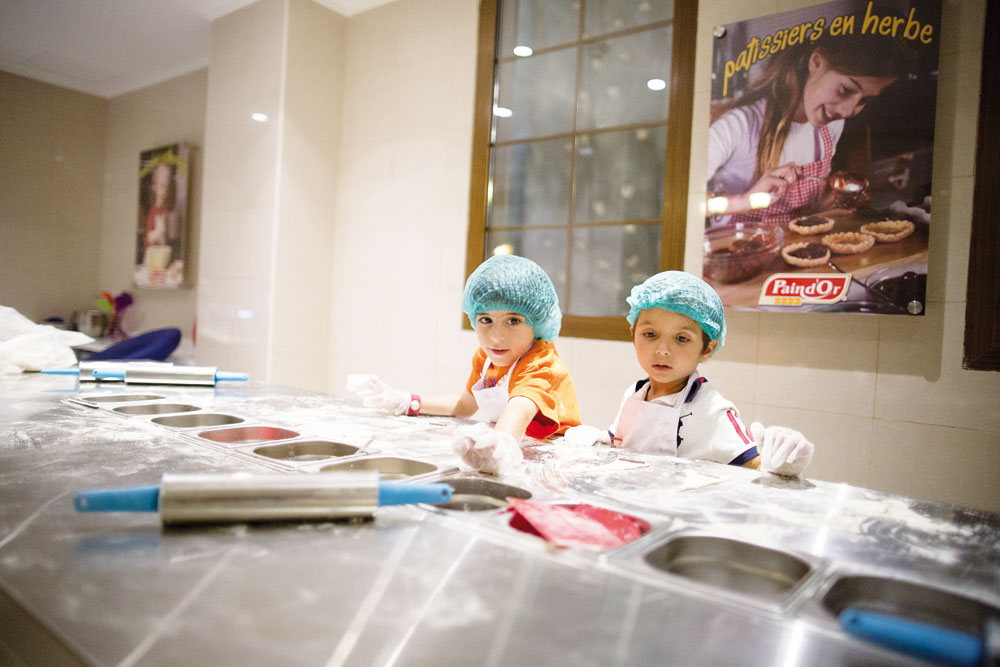
With school out for the summer, parents return to the task of planning their childrens’ daily activities. For those that did not schedule a babysitter or summer camp, KidzMondo, a mini city for children that opened its doors last month, could provide respite. Located in Beirut’s Waterfront area, the 10,300 square meter (sqm) indoor children’s amusement center allows youngsters to play at real life professions such as postman, cook or even pest control officer. And in imitation of real-life wages, kids earn points — in Kidlar currency — for each profession which they can spend on toys. “The harder you work, the more points you earn,” says Ali Kazma, chairman of the new mini city. 

Children can try out a range of professions, including being a doctor


While new to Lebanon, the concept of a city for children has been around for over a decade. It came to prominence about 14 years ago in Santa Fe, a suburb of Mexico City. The invention of Mexican entrepreneur Xavier Lopez Ancona, KidZania opened in 1999 and started franchising shortly after. Its first franchise in the Middle East, a 7,400 sqm amusement park, was launched in Dubai in January 2010 in partnership with United Arab Emirates’ Emaar Retail, an entertainment and leisure developer, and plans are under way this year to establish KidZania in Kuwait, Egypt, Saudi Arabia and Qatar by 2015. 

For Lebanon’s mini city, Kazma partnered with his old university friend Hind Berri, daughter of Parliament Speaker Nabih Berri, and kicked off the construction of the theme park in May 2011. Initially called KidzMania then KidzVille, KidzMondo was finally settled on because of trademark issues with prior names; it is now registered in 32 countries and the corporate website, copyrighted to Kidz Holding sal, invites franchise seekers. 

Majority owned by Kazma and Berri, the ambitious project cost $25 million. The rent of the 4,300 sqm land — secured for nine years from Lebanon’s behemoth real estate developer Solidere — came at a “low price” says Kazma, while refusing to disclose the exact amount. He is targeting annual sales of 400,000 tickets and hopes to break even by the fourth year of operation.

Entry to the amusement playground is set at LL40,000  ($26) per child and LL20,000 ($13) per adult, and kids under the age of eight must be accompanied by an adult. A family of four is therefore looking at paying LL120,000 ($80) for a day out at KidzMondo. The ticket price gives points — similar to cash — that can be stored in an account at Bank Audi’s KidzMondo branch. As professions are learnt throughout the center, further points can be earned. A hi-tech bracelet given to each child upon entry tracks their location and monitors their activities so parents need not worry about losing them in the large center or wonder whether they are participating in the activities.


Go-karting is popular with many of the children


For the training of its 300 employees, 220 of whom work directly with the children, KidzMondo partnered with Canada-based Kidproof Safety, a worldwide provider of child safety education as well as Beirut-based MCA People Solutions, a training, consulting and recruiting firm. While the center lacks sunlight and, like Beirut generally, green spaces, it has a wealth of activities. This includes up to 40 earning professions — such as how to be a fireman— and 40 spending professions — Burger King, for instance, lets children make their own burger, but they still have to pay.  

As for sponsorship, the center hosts 55 establishments with exclusive sponsorship per category. For instance, Bank Audi is the only bank, MTV the only television broadcaster and Hypco the only gas station. The prices paid for this exclusivity, which vary depending on the type of contract signed — its duration, level of exposure, etc. — are expected to rack up to 30 percent of the total revenues, with annual fees ranging from $75,000 up to $250,000. With a capacity to host up to 1,500 people at once, the bulk of the revenues will come from ticket sales and other items such as food and beverage.

The mini city opened its doors in the midst of political instability and a distressed economy that has decreased spending power, and it remains to be seen whether it will face difficult times generating hard currency. Kazma doesn’t seem too worried, though: “I believe in the project. I am afraid, but I believe in it.” 

July 2, 2013 0 comments
0 FacebookTwitterPinterestEmail
The Buzz

Business briefing: 2 July 2013

by Executive Staff July 2, 2013
written by Executive Staff

Economics and Policy

Egyptian President Mohammed Morsi has rejected the army's 48-hour ultimatum to resolve the country's deadly crisis, saying it will only sow confusion.

More from the BBC


New protests have shut down several Libyan oil fields, cutting output by around a third, industry sources said.

More from Reuters


Kurdistan's ruling coalition has postponed key elections and granted a two-year extension to the term of President Massoud Barzani, sparking a mass brawl in Parliament.

More from Iraq Oil Report


Companies and Business

Google has launched a dedicated Arabic TV hub on YouTube that will broadcast more than 500 shows from the top 20 Arabic entertainment channels.

More from Arabian Business


LNG shipper Maran Nakilat Co. Ltd has sealed a loan refinancing deal worth $662.4 million, allowing it to proceed with an expansion of its LNG carrier fleet to six ships from four.

More from Reuters


Beirut Stock Exchange activity fell 33 percent in the first six months of the year, mainly due to the political standstill and the volatile situation in Syria.

More from The Daily Star

 
July 2, 2013 0 comments
0 FacebookTwitterPinterestEmail
Editorial

Saving the next generation

by Yasser Akkaoui July 1, 2013
written by Yasser Akkaoui

My son recently turned 15 and is considering his future. There are perhaps fewer reasons than ever for him to stay in school in Lebanon. We have an education system that systematically fails to prepare our youth for the job market, economic stagnation and a deteriorating security picture. Worse still, it is often not what you know, but rather who that determines your chances in the job market.

Luckily my son wants to keep studying, but perhaps this paralysis is why so many of our youth are dropping out in their early teens. Families desperate for income cannot be convinced that if their children study hard they will get the rewards they deserve, so they allow them to quit. A vicious circle has developed.

When eventually my son does finish his education, one institution I would be increasingly wary of him enrolling into is the Lebanese Armed Forces. Since the 1970s, we have been waiting for the army to serve as protector of our little nation. Time and again, we find ourselves worried about its well-being.

This month was no different. First there was the battle with loyalists of fundamentalist Sheikh Ahmed al-Assir that left 18 soldiers dead. The attacks were clearly egregious and condemnable, but while the common response has been to rally around the army, questions must be asked about the operation.

That a high-profile figure in a public place was able to kill so many of our troops with a largely untrained group of thugs suggests that either the intelligence was poor, the instructions were wrong or the troops not properly trained. The army must do a little soul-searching, perhaps starting with a public inquiry.

Another incident that deserves scrutiny is the video that emerged shortly after the Assir battle.  Soldiers surrounded a bound man, kicking him repeatedly — a vicious abuse of basic human rights. The army is the one body we hope stands above the fray in Lebanon, so its failings are all the more shocking.

For our sons to stay in this country, we want to have our faith in the institutions strengthened, and its dignity restored.

July 1, 2013 0 comments
0 FacebookTwitterPinterestEmail
The Buzz

Business briefing: 1 July 2013

by Executive Staff July 1, 2013
written by Executive Staff

Economics and Policy

Millions of Egyptians have taken to the streets across the country to demand the resignation of President Morsi.

More from The National


Bahrain’s economic growth accelerated strongly in the first quarter of 2013, helped by a revival of oil output, official data shows.

More from The Daily Star


Syria's pharmaceutical sector is collapsing due to the country's ongoing civil war, exacerbating the country's health crisis.

More from The Daily Star


Business and Companies

Saudi Arabia's Mobily has signed memorandum of understandings with Nokia Siemens Networks and Ericsson to fund the purchase of $650m of equipment from the firms.

More from Reuters


Kuwait family conglomerate the Kharafi Group, which has an annual turnover of around $5bn and is already active in 25 countries, is looking to Asia as its next target for investment.

More from Arabian Business

July 1, 2013 0 comments
0 FacebookTwitterPinterestEmail
Comment

The army’s leadership troubles

by Nicholas Blanford July 1, 2013
written by Nicholas Blanford

The battle last month in Saida in which extremist, Sunni cleric Sheikh Ahmad al-Assir was dispatched from his mosque was a moment of triumph for the Lebanese army.

The country by and large rallied behind the army, which is regarded as the paramount symbol of national unity and a force for stability. However, no sooner had the army’s Maghawir, the Rangers Regiment, departed the battlefield in Abra on the outskirts of Saida than troops were rushing to stamp out another “fire” in the Tariq al Jedideh district of Beirut where Amal Movement partisans and Sunni gunmen briefly clashed.

Indeed, it has been a busy six months for the army, deploying to Arsal in the northern Bekaa and Tripoli in attempts to contain sporadic bouts of violence. It has also come under routine Syrian artillery fire in the northern Akkar district.

While the army has coped so far, it could face difficulties in the future because of a freeze in administrative appointments in the top military command and the likelihood that the summer months will see repeated spells of violence, especially in mixed Sunni-Shia areas. Army Commander General Jean Kahwaji reaches mandatory retirement age in September and three members of the six-man Military Council, the army’s top decision-making body, officially “retired” in May even though they continue to hold their posts for now.

The caretaker status of Prime Minister Najib Mikati’s government will complicate attempts to fill the potential vacuum at the head of the army. Saad Hariri, the former prime minister, has called for Kahwaji’s term to be extended, a proposition that has been rejected by Michel Aoun, leader of the Free Patriotic Movement and a former army commander himself. Aoun suggested that the appointment of an army commander (a role reserved for Maronites) should be the prerogative of Christians in the government. The true reason may well lie in the fact that he would prefer to see one of his sons-in-law, Brigadier General Chamel Roukoz, commander of the Rangers Regiment, appointed as army commander.

However, the Saida conflict could complicate Roukoz’s chances of reaching the top army post. On the one hand, he reaped the plaudits of a successful campaign, even though it cost the army the lives of 18 soldiers, most of them from the Rangers Regiment. On the other hand, the fact that the Rangers Regiment was the force that crushed Assir and his supporters will make Roukoz a potential target in the eyes of Sunni radicals across the country. The radicals already view the army — especially the special forces regiments — as an enemy and collaborator with Hezbollah. It was soldiers from the Air Assault Regiment, another special forces unit, that were involved in the fatal shooting of Sheikh Ahmad Abdel-Wahed at a checkpoint near Halba in Akkar in May last year. It was also Air Assault troops who sealed off Arsal in the wake of the clash in February between regular soldiers and gunmen, which left one resident of the town and two soldiers dead.

If no fresh appointments are made or the terms of the existing army commander and Military Council members are not extended, it leaves open the question of how the army can plan for and respond to any future unrest in the country. The army has already quietly withdrawn troops from south Lebanon. There were supposed to be some 15,000 troops deployed across the south in the wake of the month-long war between Hezbollah and Israel in 2006, but the figure never reached more than 8,000. United Nations Security Council Resolution 1701 calls on the army to take control of the southern border district, with UNIFIL playing a support role. If anything, the situation today is reversed, with an estimated 3,000 soldiers in the south and UNIFIL conducting around 90 percent of its patrols unaccompanied by Lebanese troops. The downturn is not the army’s fault, as soldiers are needed in more troublesome areas. For now, at least, the south is, ironically, perhaps the calmest spot in the country.

The capabilities of the army — and the special forces regiments in particular — are steadily improving, largely due to foreign military assistance for equipment and training. But if the army is going to continue to play the essential role of maintaining stability in Lebanon during a period of regional turbulence, the country’s leaders will have to find a formula that provides continuity at the top of the command.


Nicholas Blanford is the Beirut-based correspondent for The Christian Science Monitor and The Times of London

July 1, 2013 0 comments
0 FacebookTwitterPinterestEmail
The Buzz

Business briefing: 28 June 2013

by Executive Staff June 28, 2013
written by Executive Staff

Economics and Policy

Corruption in Lebanon has increased over the last year, a survey says, with 66 percent of Lebanese believing confirming that the level of exploitation and bribery in the country is the highest it has ever been.

More from The Daily Star


Syria has nearly doubled the price of diesel fuel to cut back on the cost of maintaining generous subsidies to the population after more than two years of war that crippled its economy.

More from Reuters


More measured spending has helped to bring down the Abu Dhabi Government's fiscal oil break-even price to $95 per barrel this year, estimates Bank of America Merrill Lynch.

More from The National


Companies and Strategies
 

Real estate giant Solidere's shares could rebound by up to 20 percent despite declining profits in 2012 if Lebanese parties reach a deal over the Cabinet formation.

More from The Daily Star


Growing turmoil in Egypt is threatening to disrupt shipments through the Suez Canal and increase the costs for shipping lines.

More from Reuters

June 28, 2013 0 comments
0 FacebookTwitterPinterestEmail
  • 1
  • …
  • 248
  • 249
  • 250
  • 251
  • 252
  • …
  • 695

Latest Cover

About us

Since its first edition emerged on the newsstands in 1999, Executive Magazine has been dedicated to providing its readers with the most up-to-date local and regional business news. Executive is a monthly business magazine that offers readers in-depth analyses on the Lebanese world of commerce, covering all the major sectors – from banking, finance, and insurance to technology, tourism, hospitality, media, and retail.

  • Donate
  • Our Purpose
  • Contact Us

Sign up for our newsletter

    • Facebook
    • Twitter
    • Instagram
    • Linkedin
    • Youtube
    Executive Magazine
    • ISSUES
      • Current Issue
      • Past issues
    • BUSINESS
    • ECONOMICS & POLICY
    • OPINION
    • SPECIAL REPORTS
    • EXECUTIVE TALKS
    • MOVEMENTS
      • Change the image
      • Cannes lions
      • Transparency & accountability
      • ECONOMIC ROADMAP
      • Say No to Corruption
      • The Lebanon media development initiative
      • LPSN Policy Asks
      • Advocating the preservation of deposits
    • JOIN US
      • Join our movement
      • Attend our events
      • Receive updates
      • Connect with us
    • DONATE