• Donate
  • Our Purpose
  • Contact Us
Executive Magazine
  • ISSUES
    • Current Issue
    • Past issues
  • BUSINESS
  • ECONOMICS & POLICY
  • OPINION
  • SPECIAL REPORTS
  • EXECUTIVE TALKS
  • MOVEMENTS
    • Change the image
    • Cannes lions
    • Transparency & accountability
    • ECONOMIC ROADMAP
    • Say No to Corruption
    • The Lebanon media development initiative
    • LPSN Policy Asks
    • Advocating the preservation of deposits
  • JOIN US
    • Join our movement
    • Attend our events
    • Receive updates
    • Connect with us
  • DONATE
Business

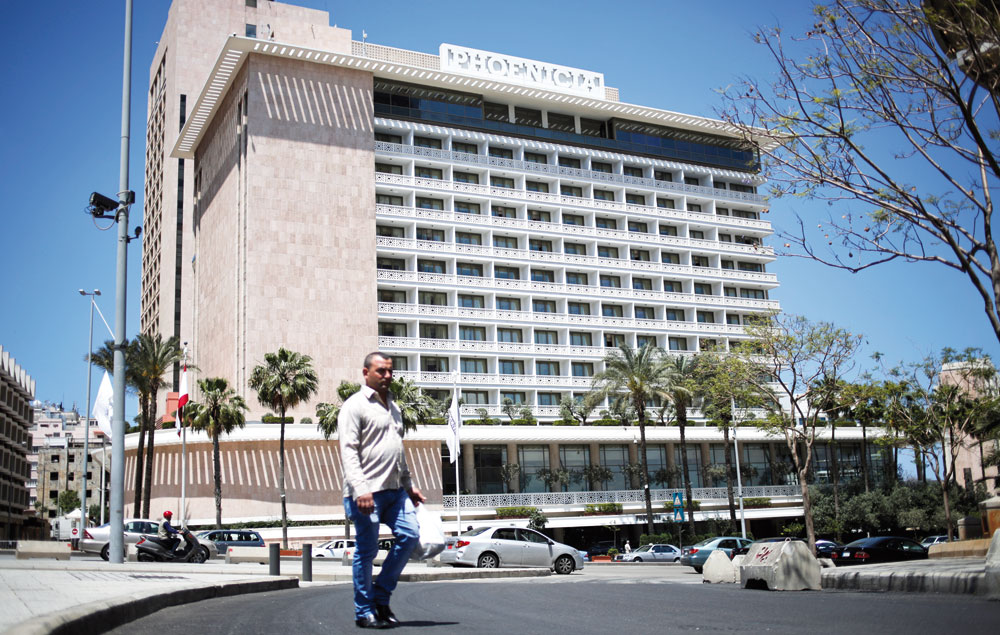
Chat in the Phoenicia

by Thomas Schellen June 5, 2013
written by Thomas Schellen

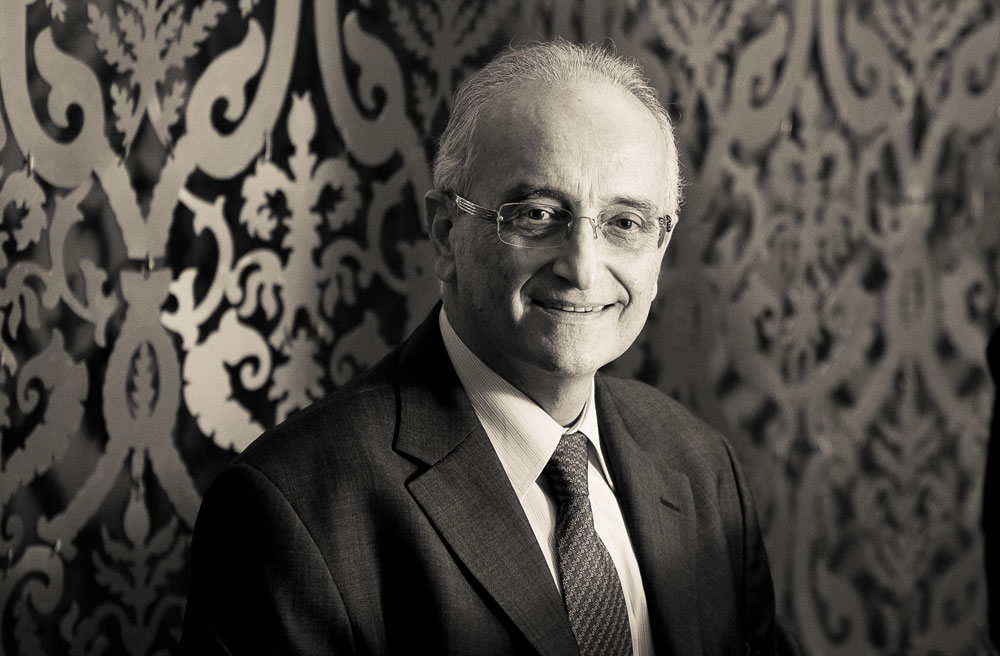
While Arab countries have recently upheld their warnings against travel to Lebanon, there is still hope that friendlier political winds from the Gulf will allow for a good summer for tourism. Still, the past year has shown that resistance to business crises is a must for a Lebanese hospitality venture. As hotels emerge from this survival test, Executive sits down with Mazen Salha, chairman of Societe des Grand Hotels Du Liban, which owns the Phoenicia and Le Vendome hotels, to discuss the realities, challenges and enduring qualities of the business.


Given your extensive experience in the hospitality sector in Lebanon, what are your thoughts on the climate that is currently dominating the hospitality sector in Lebanon? Is it the worst we have seen?

It has been a rollercoaster ride ever since we have opened; we’ve become used to it and we adjust our operations accordingly. This time, however, it really was a long stretch since it started in April 2012 and all through the summer until now. With this long stretch, we had to take a lot of measures to survive. 

Related article: Phoenicia's empire on hold

Hopefully we are getting over it and we are starting to see some [Gulf] Arabs coming back. Bookings for June are starting to look good, though we don’t want to be over-optimistic. There will be a natural drop with Ramadan but the good thing is that Eid El Fitr is at the beginning of August so we will see another summer season then, if things remain as they are.  

Why was the impact of Gulf countries’ advisories against travel to Lebanon so severe?

Regardless of what anyone may say, this is predominantly an Arab market, and mainly a Saudi one. I asked our operations manager to look back at the last three months to see which nationalities make up the majority of our clients, and the Saudis are still the largest group, [even with] the ban and despite everything. It is really a huge market, bigger than all the other Gulf states together, and their decision to stay away from Lebanon hurt us a lot as a country. 

While executing investments to improve the SGHL properties a couple of years ago, you have also spent money to exhibit a collection of international art. Was that a financial investment? 

We, my wife and I, wanted to give the Phoenicia a cultural element because we are interested in art. We have a small, nice collection. The most valuable piece of art we have in the Phoenicia is the one above the staircase made by Richard Long but it is painted on the wall and so, as an investment, it loses its value. The other pieces we house have appreciated in value.

How do you view the level of the human capital and the quality of training provided in Lebanon for those who want to join the hotel industry?

There is a lot of interest in joining this industry but the problem is that everyone wants to be a manager. They spend a year in a hotel and then expect to move to a higher level, which is not always feasible, and so they move somewhere else; some succeed and advance in their career but others don’t. 

On the training and production level, we are doing well but could be doing better. There is a limited capacity for hotel management training in Lebanon. Only La Sagesse University has an internationally accredited hotel management school but they can only take 50 students, and I am currently working with them to increase this number to 150. 

You represent the second generation in owning the Phoenicia. Is the succession clear? Will the next generation of Salhas be involved in the business?

We really don’t know about the succession at this point. My eldest son has chosen to live in England where he heads his own hotel consultancy business. My brother’s daughter is very much involved in the hotel and is a high-ranking executive but we don’t know what her future plans are. My daughter was in the business and doing very well but since she got married she is now more a homemaker than a hotelier. 

Isn’t it very similar to take care of guests as a hotelier when compared with fulfilling the role of a homemaker and full-time mom?

Believe me, it is not. This is a very hard business; people don’t realize how much time you have to invest in it and how stressful it is. You get all sorts of complaints and all sorts of issues and all the team puts in long hours. You really have to devote yourself to it.

June 5, 2013 0 comments
0 FacebookTwitterPinterestEmail
The Buzz

Business briefing: 5 June 2013

by Executive Staff June 5, 2013
written by Executive Staff

Economics and Policy

Gold prices recovered on Wednesday from a near one per cent fall in the previous session as investors’ hopes of the US bond-buying program staying intact.

More from Reuters


Lebanese mobile phone shop owners have held a protest outside a branch of Alfa in the northern city of Tripoli, demanding that the Telecommunications Ministry suspend its crackdown on cellular phone smuggling that went into effect on June 1.

More from The Daily Star


Abu Dhabi has completed a $11 billion project to process and bring to land offshore gas to meet burgeoning domestic demand.

More from The National


The Turkish power-generating ship Fatmagül Sultan, moored off the coast of Lebanon, has become operational again after a delay, a statement said.

More from The Daily Star


Companies and Business

Michael Wright, the CEO of Lebanon-based retail chain Spinneys, is due to appear in court on Wednesday over allegations that employees were fired from the grocer for being members of its trade union.

More from Arabian Business


The Iraq unit of the Kuwaiti telecoms company Zain has moved closer to launching its mandatory initial public offering.

More from The National


Ford Middle East has confirmed an estimated 3,305 vehicles in the UAE are to be recalled for servicing as part of a global move to check certain 2013 models for fuel tank leaks that could result in a fire.

More from Arabian Business


Petrofac Emirates has won a US$500 million contract to expand gas compression facilities at the Bab field in Abu Dhabi.

More from The National

June 5, 2013 0 comments
0 FacebookTwitterPinterestEmail
Economics & Policy

Cut the factory fat

by Samer Tabbal June 4, 2013
written by Samer Tabbal

Lebanese industries face stiff competition in their main market, the Gulf. Their competitors, Gulf companies themselves, have the advantage of proximity to the marketplace and lower manufacturing costs.

Therefore it is upon Lebanese manufacturers to deliver, on very short notice, differentiated and customized products. To do so, they have to apply time-based management. One such approach is “Lean” manufacturing. Lean, which originated in Japan, is now widely applied and has become a staple for many successful industries.

Lean is a production management system based on waste reduction and continuous improvement, aiming at safely applying the “Just-In-Time” concept, or aligning production with customer needs. While it offers a well-known toolkit of principles and techniques, knowing how to apply them and in what order is a constant challenge for manufacturers.  

Lean implementation applies its different tools in parallel so they all reinforce and synergize. During the whole process, through every action, the end goal is always to eliminate wasteful activities that customers are not willing to pay for. In fact, waste elimination is the concept underlying continuous improvement; it is an ongoing and never-ending effort.  

Going against instinct

Lean manufacturing is a corporate cultural revolution. Its application requires a change in our mindset, a reversal in our way of thinking, shifts in our professional paradigms and changes to some principles that we have imbued throughout our education. As such, Lean principles may sometimes feel counter-intuitive.

For example, when I started to work in a factory as a fresh graduate engineer, my boss taught me that a factory in which one or several machines are not running is an inefficient factory. I lived by this principle until I was trained on Lean. In Lean, the new rule that governs this domain dictates that any factory in which all the machines are running all the time is an inefficient factory; the complete opposite to my supervisor’s earlier teachings. 

The reason is simple: A manufacturing process cannot be balanced all the time, for all product types. Consequently, if all the machines are running all the time, they will build an inventory of work-in-process. This is a sure-fire recipe for failure. We can deduce from the above that the difficulty in implementing Lean will be to get employees, employers and customers committed to this change. 

Convincing staff

Most employees I have worked with in Lebanon are smart and open-minded people. Furthermore, while cooperation may not be a trait us Lebanese are famous for, I am regularly surprised by how well employees work as a team when necessary. When they meet in quality circles, they are able to come up with proposals for improvements that are simple, cheap and efficient. 

However, in the presence of technical or managerial staff, they are often reluctant to participate for fear of making blunders or being ridiculed in front of their superiors or colleagues. As such I have learned to give them sufficient autonomy to unleash their creativity. The management facilitates from the sidelines, scheduling meetings, encouraging participation and perhaps most importantly, executing the proposed improvements. 

A problem I regularly face that undermines the Lean process is a lack of discipline. Without discipline, all improvement will vanish in a short period, and things will slip back to their original state. Unfortunately, in Lebanon people are not properly educated in respecting the rules and regulations in force, and this often carries into the workplace. This invariably leads to mediocre results that can discourage the workers from persisting with the Lean implementation program.

The individual egos of staff can also interfere with what is essentially a finely tuned team process. Workers often start testing improvement ideas without following the established procedures, hoping to take credit for them. To avoid this problem, it is important to equally reward the team when they come up with a bright idea. Teamwork should be promoted through training. 

Change starts at the top

Management also plays an integral role in ensuring the success of Lean. Negative vibes propagate very rapidly within the company when management falters in the enforcement of Lean application. Managers should be trained on their leadership role in Lean implementation, and they should sponsor Lean culture, deploy a communication strategy, review application progress, motivate their teams, solve conflicts and hold      people accountable. 

Even when committed to Lean, executive managers, chief executive officers and other senior managers oftentimes do not feel comfortable with the initial changes on the work floor. They are accustomed to seeing piles of accumulated work-in-process and subassemblies lying idle on the shop floor between machines. The sight comforts them, as it gives the illusion that the factory is adequately loaded with orders and consequently production output is high. 

However, with the application of one-piece flow, products after processing are directly sent from one machine to the next instead of being loaded into boxes or on pallets. This dramatically reduces the amount of work-in-process, giving the impression that capacity utilization is much lower than its optimal value. In my experience it often takes them quite some time to get used to the new panorama and to overcome their initial negative reaction. 

The customer leans, too

Bringing the customer on board is essential to the successful adoption of the new Lean production system. If customers can be convinced to break down their monthly orders into smaller, weekly ones, they will enable the producer to balance load and capacity more finely.

In my experience, distributors almost always reject this proposal out of hand, even though it is to their full advantage. Segmenting orders allows them to reduce the volume of their stocks, be more flexible and maintain a streamlined cash flow. The reason for their reticence is that they are afraid they would not deliver within shorter periods of time; instead of having one late delivery per month, they would end up with four late deliveries. 

Moreover, instead of running an inventory analysis once per month, they would now have to do it weekly. However, by highlighting the advantages, stringently committing to delivery dates with a penalty clause, and moving progressively by increasing order frequency step-by-step, customers would come to accept the win-win scenario of adapting to the Lean processes.

Lean forward, not back

Applying Lean manufacturing is a time-proven model that consistently delivers results. Within the parameters and principles it lays down, there is flexibility for innovation and development, and, as such, it can be applied to any manufacturing process.

While Lean may require a change in mentality, sustained training and close follow-up under strong leadership, the outcome makes it a worthwhile endeavor — essential, even. The only alternative is to watch the competition steal the market and wither away into yesteryear’s realm.


Samer Tabbal is a partner at Takt Consulting

June 4, 2013 0 comments
0 FacebookTwitterPinterestEmail
Comment

Dolma at every meal

by Gareth Smith June 4, 2013
written by Gareth Smith

Despite all the political maneuvering, recent presidential elections in Iran have hinged on the economy. But winning votes and delivering economic growth are hardly the same.

Candidates have criticized the management of Mahmoud Ahmadinejad, the outgoing president who is ineligible under the constitution for a third consecutive term. No wonder. Since the last election in 2009, growth has vanished, the currency has lost over half its international value and official figures put unemployment at 13 percent and inflation at 32 percent. 

Not all can be blamed on Ahmadinejad’s populist policies — crucially, cash handouts and subsidized bank lending — as sanctions have tightened, especially in the past year. But the president’s critics have ample evidence that his approach has failed.

But what is the alternative, and is it being aired in the election? The central challenge of economic policy in Iran will persist whoever replaces Ahmadinejad, and candidates have been reluctant to confront it. Like many energy-rich states, Iran faces a tension between spending revenue for short-term consumption and investing it productively for long-term growth.  

Elections are part of the reason, as popular pressure goads politicians into making promises about the here-and-now rather than designing and presenting policies for the long term. It was a reformist candidate, Mehdi Karrubi, who in the 2005 election promised that if elected president he would dole out 500,000 rials monthly (then around $57) from energy sales to every Iranian over 18.

Many in Iran’s political class scoffed, but Karrubi won 17.2 percent of first-ballot votes ­— not far behind Akbar Hashemi Rafsanjani’s 21 percent and eventual winner Ahmadinejad’s 19.5 percent, and ahead of the main reformist candidate Mostafa Moein’s 13.8 percent, who fought on the typical reformist themes of social and political freedoms.

Nor was Karrubi alone in 2005 in a straight appeal to voters’ wallets. In defeating Rafsanjani in the run-off ballot, Ahmadinejad said he would “put oil money on the sofreh”, the carpet or cloth placed on the floor on which poorer Iranians sit for dinner. Again in 2009, the economy was the major issue as Mir-Hossein Musavi, another reformist, fought a skillful campaign blending day-to-day issues with a call for civil and political rights.

A mechanism for ringfencing windfall oil revenue — the Oil Stabilization Fund — was established in 2000 by the reformist government of Mohammad Khatami partly in order to finance private-sector investment. But political pressures led both parliament and government to raid the fund even before Ahmadinejad replaced Khatami in 2005. The fund was first shrouded in secrecy and then replaced by another fund which seems to have become dormant. 

Ahmadinejad delighted the International Monetary Fund with a scheme phasing out state subsidies of everyday items like gasoline, electricity and bread. But wary of political fallout, he replaced them with cash handouts, adding $15 billion to the annual budget rather than yielding the savings that abolishing subsidies was supposed to produce. His $40 billion lending program for small enterprises, plus a low-cost housing scheme, added liquidity to the economy but put the state banks further in debt.

Ahmadinejad continued his course even in the past year as tightening Western sanctions have halved Iran’s oil sales, with the government admitting that revenue for the Iranian year ending in March was at $77 billion, well below the budgeted $117 billion. With sanctions squeezing the private sector and the state short of development resources, the International Monetary Fund projects a contraction of 1.3 percent in 2013, making nonsense of the 8 percent annual growth target set by the fifth Five-Year Plan guiding government policies from 2010 to 2015.

In this year’s election, candidates have been reluctant to condemn Ahmadinejad’s cash handouts, which have amounted to 450,000 rials per person monthly since January 2011. The dollar equivalent has slipped from about $45 to $22, but this is still significant for the poorest among the 70 million population, and around half of Iranians are net beneficiaries of cash transfers compared to the subsidies they replaced. 

Rather than explaining the real issues Iran faces, the politicians have been extolling the country’s alleged successes. One candidate — Saeed Jalili, who once led negotiators in talks over the nuclear program — spoke last month of “Iran’s eye-catching progress, thanks to resistance”. 

But even without the likelihood of the United States further tightening sanctions and squeezing others into following suit, Iran’s new president will face some hard choices. And they may well not be popular. 


Gareth Smyth has reported from around the Middle East for nearly two decades and is the former Financial Times correspondent in Tehran

June 4, 2013 0 comments
0 FacebookTwitterPinterestEmail
The Buzz

Business briefing: 4 June 2013

by Executive Staff June 4, 2013
written by Executive Staff

Economics and Policy

The United States has unveiled aggressive new sanctions against Iran, directly targeting the rial currency for the first time and also the auto sector, a key source of jobs and revenue.

More from AFP

Offshore oil and gas prospects are improving for Lebanon, with analysis of seismic data foretells a high chance of successful drilling.

More from The Daily Star

 
There remains a high risk of social unrest in the Middle East due to lack of economic reforms, the International Labour Organization has said.
 
More from Reuters
 

A standard contract template for Islamic inter-bank transactions has been launched, as the industry works to diversify the range of liquidity management solutions available.

More from Reuters


Companies and Business

The United Arab Emirates is merging its two flagship state aluminium firms to create the world’s fifth largest aluminium company with an enterprise value of $15 billion.

More from Reuters

Middle East carriers are expected to show a profit of $1.5bn this year, slightly improved from a previous projection by the International Air Transport Association (IATA).

More from Arabian Business

Saudi Binladin Group, one of the largest construction firms in the kingdom, is meeting investors over a potential local currency Islamic bond sale, two banking sources aware of the deal have said.

More from Reuters

June 4, 2013 0 comments
0 FacebookTwitterPinterestEmail
Real Estate

Cranes over Beirut

by Sam Tarling, Benjamin ReddStephanie Naddaf & Joe Dyke June 4, 2013
written by Sam Tarling, Benjamin ReddStephanie Naddaf & Joe Dyke

At any given time, Beirut’s skyline is a kaleidoscope of chaos. While the economy may be struggling, in the city center luxury developments rise up with mesmeric frequency. In a country where long-term urban planning is woefully lacking, dozens of skyscrapers emerge every year — towering over the city’s ancient buildings.

We decided to capture the madness. First our photographer went to the Biel waterfront area of the city to take the image. Then we set about documenting each development — visiting each site to get details.

Click here to see the full image.

June 4, 2013 0 comments
0 FacebookTwitterPinterestEmail
The Buzz

Business briefing: 3 June 2013

by Executive Staff June 3, 2013
written by Executive Staff

Economics and Policy

Gulf Arab countries are considering taking action against Hezbollah if the Lebanese movement continues its involvement in Syria’s civil war or interferes in Gulf Arab affairs, Bahrain’s deputy foreign minister said on Sunday.

More from Reuters


The news came after Hezbollah was accused of killing at least 12 Syrian rebels inside Lebanese territory.

More from The Daily Star


A group of Kuwaiti legislators have agreed to scrap a law enforcing gender segregation at schools and universities, although males and females would still have to be separated within the same classroom.

More from Arabian Business


Authorities in Jordan have issued orders to the country’s internet services providers (ISPs) to block access to more than 200 websites including Al Jazeera.

More from Arabian Business


Companies and Business

Hydra Properties is still $100 million short on its outstanding payments owed to homeowners who won legal cases against the developer for delayed and cancelled real estate projects in Abu Dhabi.

More from Arabian Business


Kuwait Finance House (KFH), the Gulf Arab state's largest Islamic bank, will begin a $223.9m capital increase program this week to fund the bank's expansion and strengthen its balance sheet.

More from Reuters


Property investors snapped up 350 newly-launched villas from Nakheel in five hours on Sunday, bringing in sales values in excess of $381m.

More from Arabian Business


Dubai mall developer Majid Al Futtaim (MAF), has delayed plans to raise at least $500m from a hybrid bond sale to fund its recent buyout of Carrefour's stake in a joint venture.

More from Reuters

June 3, 2013 0 comments
0 FacebookTwitterPinterestEmail
Comment

Hezbollah’s shifting battlefield

by Nicholas Blanford June 3, 2013
written by Nicholas Blanford

The evolution of Hezbollah’s public discourse on its emerging role in Syria over the past year illustrates the organization’s deft ability to shape a narrative acceptable to its core Shia constituency to ensure its continued loyalty. Despite Hezbollah’s ideological and logistical ties to Iran, the party understood long ago that its survival as a powerful player in Lebanon was dependent on retaining the support of Lebanon’s Shia community. 

When the uprising against Syrian President Bashar al-Assad broke out in March 2011, Hezbollah officials were initially dismissive and expected it to end quickly. By September 2011, rumors were beginning to circulate that Hezbollah fighters were operating in Syria and that slain combatants were being buried quietly in Lebanon. Hezbollah officials said that the accusations were “completely baseless” and an “attempt to incite political strife”. In November 2011, Hassan Nasrallah, Hezbollah’s leader, articulated the party’s position more clearly, saying that the Assad regime was deserving of support — compared to the doomed regimes of Egypt, Libya and Tunisia — because of its stand against the United States and Israel. In February 2012, Nasrallah softened his tone, calling for dialogue between the Assad regime and the opposition.

However, in the summer of 2012 it became increasingly evident that Hezbollah fighters were beginning to play a larger role in Syria. Furthermore, there were whispers of unease from some Hezbollah cadres at why they were fighting fellow Arabs and Muslims on behalf of Assad.

Related articles: A border erased

The EU's pointless Syrian oil gesture

In October 2012, following the death of veteran Hezbollah combatant Ali Nassif in Qusayr, Syria, Nasrallah admitted that some party members were fighting in Syria but under their own volition. He referred to the presence of some 30,000 Lebanese Shias living in a cluster of villages north of the Bekaa valley inside Syria who were coming under attack by Syrian rebel groups.

However, that did not explain why funerals for dead fighters were occurring in the Bekaa valley and south Lebanon, far removed from the Shia villages in Syria.

The months ticked by, and more anecdotal evidence emerged of Hezbollah combatants serving inside Syria. In December, videos began circulating purportedly showing Hezbollah fighters deployed in southern Damascus around the prominent Shia shrine of Sayyida Zeinab, the daughter of Imam Ali.

Meanwhile, the Syrian rebel groups were beginning to display the traits of barbarity previously the prerogative of the Assad regime. Shooting captives and barbecuing the heads of dead soldiers or eating their lungs were hardly going to win friends and influence people.

The rise of Sunni jihadist factions such as Jabhat al-Nusra helped harden the views of many Lebanese Shias against the Syrian opposition. The Shias arguably constitute the largest sect in Lebanon, and they are certainly the most militarily and politically powerful, yet they are a minority in the Levant.

In April, Nasrallah took another step toward confessing Hezbollah’s role in Syria by stating that it was a duty for Shias to protect the shrine of Sayyida Zeinab from the destructive ambitions of the “takfiris”, a reference to Sunni extremists who view as apostates those that do not follow their interpretation of Islam.

On May 19, the Syrian army and Hezbollah launched a major offensive against Qusayr, an act that spiked Hezbollah fatalities in the days ahead. But far from holding low-key funerals, Hezbollah turned them into community events, closing off villages and neighborhoods and decorating the streets with pictures of each new martyr. The message was clear: martyrs falling in Syria are just as sacred as those who fell fighting Israelis. The cause is the same.

Nasrallah came clean on this in a speech on May 25 when he declared that Hezbollah had a duty to defend Assad’s Syria, “the backbone of the resistance”. If Hezbollah ignored this duty, the “takfiris” would come to Lebanon. Better to fight them there than here, he said. 

Rhetoric aside, there is, of course, a cold, political logic in play that has Hezbollah, Iran and the Assad regime fighting in Syria for their collective survival and the sustenance of the “axis of resistance”. But Hezbollah’s leaders have carefully crafted a narrative in response to unfolding circumstances in Syria, which for now appears to have secured the understanding of most Lebanese Shia. However, they may find it a challenge to continue winning the benefit of the doubt as the conflict in Syria worsens in the months ahead and more martyrs are returned to the villages of the Bekaa and South Lebanon.


Nicholas Blanford is the Beirut-based correspondent for The Christian Science Monitor and The Times of London

June 3, 2013 0 comments
0 FacebookTwitterPinterestEmail
Society

Beaching on a budget

by Nabila Rahhal May 31, 2013
written by Nabila Rahhal

As the weather heats up, Lebanese traditionally head to the beach to cool down in one of the many private resorts along the Mediterranean. In the past few years, however, entry fees to such resorts have spiked to such an extent that for some, the idea of heading there is not so cooling any more.

Many still enjoy the luxury offered at the more expensive resorts and gladly pay up the average entry fee of $26 and whatever their food and drinks cost — a big bottle of water will set you back $6 so you can imagine the rest. “I consider a day at the beach akin to a night out partying so I don’t mind paying what amounts to the same fee to have a good time during the day. I then stay home at night because I am too tired from my day anyway,” says Hazem, a resort-style beach enthusiast.

Others go to the high-end resorts because they believe there are no cheaper options that are clean and well maintained. “I see these public beaches on my way to Lazy B or Orchid and I am shocked by the garbage and general dirtiness there,” says Nadine, a beach goer, who adds that while she would like to go to more affordable beaches, she doesn’t believe that Lebanon has any with high standards.

This view is common among the Lebanese middle-class but there are many decent quality cheaper options, including free beaches. Executive took the challenge of pinpointing a collection of good beaches where one can pay the entry fee, enjoy a bite to eat and a drink all for less than LL50,000 ($33).

In Beirut itself, this challenge proved very difficult as the only non-free beach in the city that met our criteria was the Bain Militaire (Officers’ Resort) — which is only accessible for military officers and their contacts (who then have to pay a $10 entry fee). So we headed to Beirut’s northern and southern suburbs, and the further we went, the nicer and more affordable the beaches became.

Just south of Beirut in Jiyeh is Jonas Beach & Resort, a basic but clean strip with quality food to match. Entry to access Jonas is $20 on the weekend and a sandwich with a drink will cost you around $10.

North of Beirut also boasts some interesting and affordable options, ranging from rocky to sandy. Cyan Beach in Kaslik is among the closest to Beirut and, with an entry fee of $23 during the weekend, you will have just enough of the $33 budget for a sandwich and drink. Pierre and Friends, a restaurant and bar on the rocks of Batroun, is another option, particularly favored by foreigners for its free entry combined with loud music and drinks. But while cash-free at the door, beware that the food doesn’t come cheap. Further north, closer to Tripoli are the sandy beaches of Al Harreh and Chekkah where some affordable, though more populated, resorts can be found.

But perhaps the most endearing option is the cheapest of all. For beautiful and clean sandy shores with crystal clear water at no cost at all, go further south to Tyre — where the beaches garner more international acclaim every year and tourists bask in the sun. All the beaches in the city are free and there are little huts along the shore for food and drinks — Cloud 59 being the most visited for its good food and affordable prices. Some complain about the distance (an hour from Beirut on a clear day), the traffic, and the fact that some of the money you save is spent on gas. But the beach is clean and relaxed ambiance makes it worth the trip.

With the collection listed above, one can still enjoy a decent day on the beach without spending too much.


Know of another good beach where you can spend a day for under $33? Tell us in the comments below.


May 31, 2013 0 comments
0 FacebookTwitterPinterestEmail
Finance

Investment ideas: June 2013

by Maya Sioufi May 31, 2013
written by Maya Sioufi

The Standard and Poor’s 500 Index reached an all-time high last month, surging past its previous record reached in October 2007. It was up 11 percent as of April 25 as investors continue to deploy cash in risky asset classes. The key market concerns have not abated though: the European sovereign debt crisis is still making headlines and the United States’ debt continues to balloon unabated. This month Executive takes investment recommendations from Samer Kanafani, senior equity analyst at MedSecurities, a BankMed subsidiary, and Amin el-Kholy, head of asset management at Arqaam Capital. 


Samer Kanafani 

Recent rally overdone? While Kanafani is bullish in the long term on US equity markets, he anticipates a correction soon and expects the markets to end around the same level, or slightly higher, by year end. “The world is not yet a happy place,” says Kanafani, adding that the markets are being “injected with steroids”, mainly due to the US and Japanese central banks continuing to print money. Combined with a lack of fundamental economic growth, he remains cautious in the short term. 

How should investors position themselves? Kanafani recommends switching out of US cyclical names — which he favored at the beginning of the year — into defensive American sectors such as utilities. He also favors US companies with exposure to emerging markets. His other theme would be to invest in dividend plays, mainly companies with growing yields and buyback programs. In the US, he flags investment bank JP Morgan, fast food restaurant company Yum! Brands and conglomerate General Electric. In the region, he recommends Saudi telecommunication company       Etihad Etisalat.  

Thoughts on Middle East markets? Kanafani recommends investing in Turkey and Saudi Arabia because of the relative liquidity and transparency of their equity markets. Given Turkey’s equity markets’ recent strong run — up 54 percent last year — he prefers Saudi Arabia, which has less volatility. As for Lebanese securities, he doesn’t see value in the current risk-reward environment due to a lack of liquidity and because “they are very much politicized.”

Top investment recommendations? In the US, he recommends Yum! Brands for their solid portfolio of eateries such as Pizza Hut, Kentucky Fried Chicken and Taco Bell, as well as for their emerging markets exposure contributing to around 50 percent of their sales. He also highlights utilities company Exelon for their defensive nature. As for the region, he favors Dubai-based real estate developer Emaar,  given the ongoing recovery of the real estate market, and for its exposure to the retail sector, with more than 50 percent of revenues generated from hotels and mall rentals. 


Amin el-Kholy 

Confidence in the markets on the rise? Kholy sees confidence gradually returning in Middle East and North African markets — his area of focus — from both institutions in the region and foreign institutional investors, which are showing some early signs of interest.

Favorite asset class and countries in the MENA region? He expects equities to outperform fixed income in the future, given the recent solid performance of fixed income. As for his favorite countries in the MENA markets, he is bullish on Saudi Arabia, the United Arab Emirates and Qatar. Despite the strong run in Turkish equity markets, he would also consider selective opportunities in this country. As for sectors, he recommends investing in the consumer sector for the increase in economic activity and government spending — which he expects to result in more disposable income — as well as for the level of innovation being seen at several of the publicly listed companies. He also recommends investing in reasonably priced banks that came off the financial crisis with repaired balance sheets and are growing again. 

Interest in riskier markets such as Iraq and Egypt? Kholy is cautious when it comes to Egypt, as it is “still unclear when things will turn around.” He expects more bad economic news from there in the near future. Regarding Iraq, Kholy expects the country to present a “phenomenal investment opportunity in the next decade.” The only issue for now is that the equity markets are relatively small, but he expects that situation to change as more companies list on the exchange.

Top investment ideas? He recommends sticking to stable, high-dividend paying equities in the MENA region. Outside of the region, keep an eye on African markets: “They are somewhat risky and small but offer potentially attractive returns for people who have an appetite for risk,” says Kholy.

May 31, 2013 0 comments
0 FacebookTwitterPinterestEmail
  • 1
  • …
  • 256
  • 257
  • 258
  • 259
  • 260
  • …
  • 704

Latest Cover

About us

Since its first edition emerged on the newsstands in 1999, Executive Magazine has been dedicated to providing its readers with the most up-to-date local and regional business news. Executive is a monthly business magazine that offers readers in-depth analyses on the Lebanese world of commerce, covering all the major sectors – from banking, finance, and insurance to technology, tourism, hospitality, media, and retail.

  • Donate
  • Our Purpose
  • Contact Us

Sign up for our newsletter

    • Facebook
    • Twitter
    • Instagram
    • Linkedin
    • Youtube
    Executive Magazine
    • ISSUES
      • Current Issue
      • Past issues
    • BUSINESS
    • ECONOMICS & POLICY
    • OPINION
    • SPECIAL REPORTS
    • EXECUTIVE TALKS
    • MOVEMENTS
      • Change the image
      • Cannes lions
      • Transparency & accountability
      • ECONOMIC ROADMAP
      • Say No to Corruption
      • The Lebanon media development initiative
      • LPSN Policy Asks
      • Advocating the preservation of deposits
    • JOIN US
      • Join our movement
      • Attend our events
      • Receive updates
      • Connect with us
    • DONATE