• Donate
  • Our Purpose
  • Contact Us
Executive Magazine
  • ISSUES
    • Current Issue
    • Past issues
  • BUSINESS
  • ECONOMICS & POLICY
  • OPINION
  • SPECIAL REPORTS
  • EXECUTIVE TALKS
  • MOVEMENTS
    • Change the image
    • Cannes lions
    • Transparency & accountability
    • ECONOMIC ROADMAP
    • Say No to Corruption
    • The Lebanon media development initiative
    • LPSN Policy Asks
    • Advocating the preservation of deposits
  • JOIN US
    • Join our movement
    • Attend our events
    • Receive updates
    • Connect with us
  • DONATE
Economics & PolicyQ&A

Putin’s aggression and its local impacts

by Thomas Schellen April 5, 2022
written by Thomas Schellen

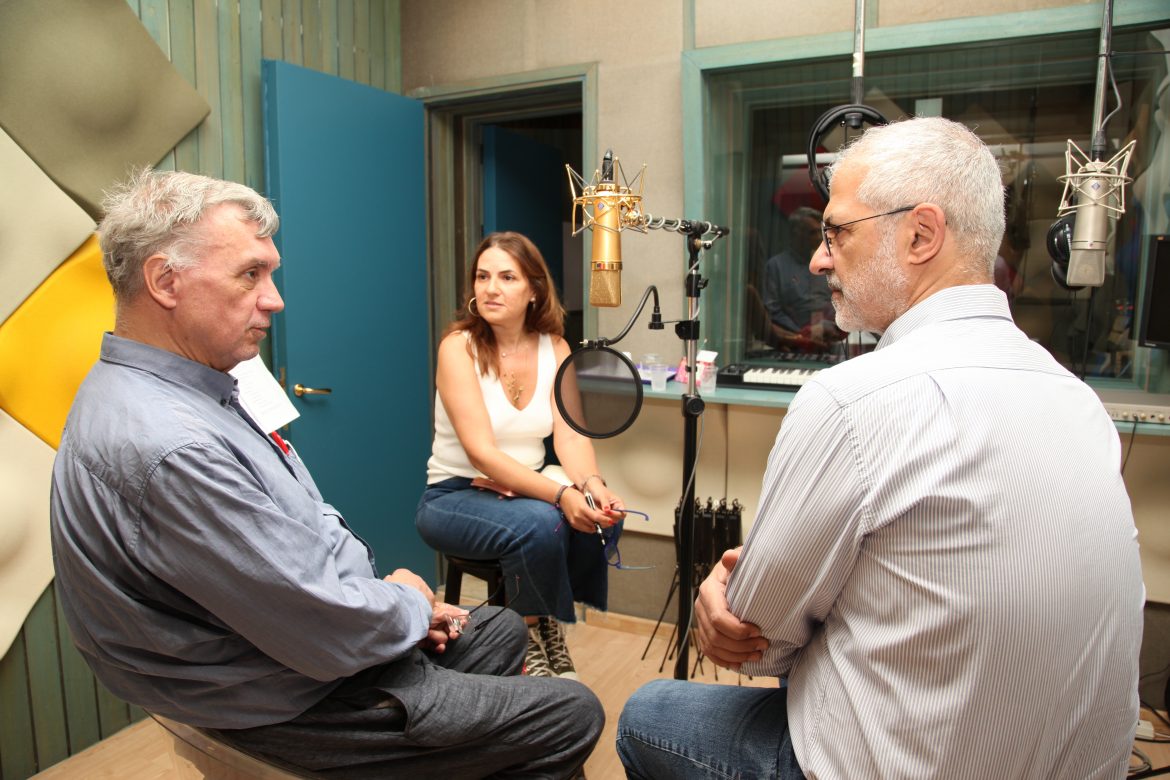
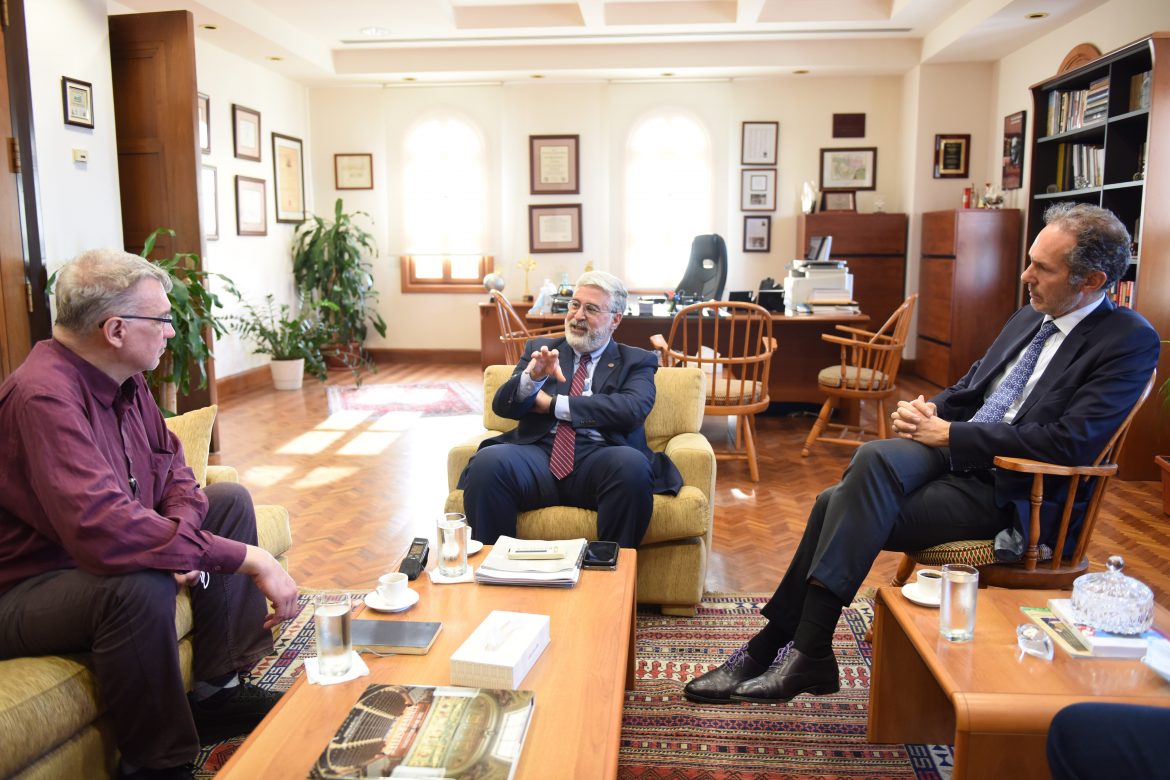
The invasion of Ukraine by Russia has shocked the world into fears of nuclear war, famine, and energy crises. With war ravaging Ukraine and sending millions of refugees into Eastern and Western Europe and beyond, the conflict’s immense global repercussions include new political and economic impacts on Middle Eastern countries in general and Lebanon in particular. Executive sat down with Ihor Ostash, the ambassador of Ukraine, to discuss relationships between smaller countries and their belligerent neighbors, assess regional responses to the Russian aggression and chart how “Putin’s war” might alter the region’s political circumstances and in the long term even create new opportunities for Lebanon. We bring you central excerpts from the extensive conversation that was conducted in Executive’s offices one month after the invasion was first unleashed.

From the average person’s perspective, the war between Russia and Ukraine came as a tremendous shock. It reveals the fallacy, widely held by Europeans for almost 70 years, that a violent cross-border attack in Europe was a sad but overcome reality in our history. One month into the war, this shock is still far from being digested and its unfolding traumas must be expected to impact European and global perceptions for years to come. But from international and regional perspective in the Middle East and from the vantage point of Executive as a publication that advocates for political accountability, free elections, peaceful development and economic democracy in Lebanon, the war between Russsia and Ukraine is also an economically and politically highly relevant topic.  Mr. Ambassador, let us thank you agian for visiting the Executive offices and say that the shock of the development is still with us because we know that the impact of conflict upon lives is incalculable.

Once, when I was a very young politician after I became a member of parliament in Ukraine in 1990, I visited a memorial in Washington where I saw the inscription “Freedom is not free” (on the Korean War Memorial; editors). I was surprised about this statement, which for me was very linguistic, because in 1991, Ukraine redeemed our independence without a single shot. It was peaceful. But now, I understand why freedom is not free and now we pay a very high price for [our freedom]. You said that this invasion was a surprise, as it was for all of us, but we are already eight years in this war. The war started in 2014, not as real war but as one of [President Vladimir] Putin’s battles against Ukraine. I cannot say that this is Putin’s war. It is not Putin’s war but it is [the war by] Putin’s Russia.

(Ostash explains Russian attempts and Western mistakes in the lead-up to the outbreak of the Crimean crisis in 2014).

How do you see the referendum in which people in Crimea supposedly said they wanted to return to the embrace of mother Russia?

[inlinetweet prefix=”” tweeter=”” suffix=””]We have a saying in Ukraine that with a lie you can cross the whole world but you never will get back home.[/inlinetweet] [Lying] is a one-way [route]. Putin is a liar. All his explanation of Crimea and Donbas is a total lie. He alleged that it was a coup d’état in Kiev, not a revolution of a million people. But we had two elections after this, in 2015 and 2019, and we had different presidents. In Ukraine, in the past 30 years, we had six different presidents. In Russia, we had Yeltsin, Putin, and Putin, and Medvedev. It is an important issue in discussing democracy and autocracy.

How do you then comment on the De-Nazification issue being raised by Mr. Putin?

It is a mythic claim. There are no Nazis in Ukraine. Most Ukrainians vote for centrist parties. All our presidents were not from the far right or far left. [President Vlodymyr] Zelensky even does not have political background, which is impossible in a country such as Russia. So concerning the referendum on [inlinetweet prefix=”” tweeter=”” suffix=””]Crimea: the referendum was scheduled for May 2014 but it was done in March with Kalashnikovs, with invasion, total military control, and total fraud.[/inlinetweet] Nobody knows how many people came to vote but it was a very low percentage. It was like in Stalin’s time and not about democracy.

But do you concede that that there are some people in Crimea who would prefer to be part of Russia?

Yes, of course. Crimea has a complex situation of different nationalities. Historically for me it is very clear that Crimea belongs to the Crimean Tatars who have a long history and rich culture. The part [of the Crimean peninsula] that is next to Ukraine is mostly Ukrainian people. Russians came to Crimea only after the Russian-Turkish war and were guests in this territory. But Russia deported Crimean Tatars three times. Tsar Katharina started this and the last [mass deportations took place] in 1944 when they sent 300,000 Crimean Tatars to Kazakhstan, Eastern Siberia, and different places in the Russian Federation. Upon independence in 1991, the Ukrainian government declared that we should take back [repatriate] all Crimean Tatars and this was an important democratic step by the Ukrainian government. You have this mix of Ukrainians, Crimean Tatars, and Russians and a majority, although not very clear one, is Russian. And [inlinetweet prefix=”” tweeter=”” suffix=””]the Ukrainian parliament has now declared that Crimea in near future will be an autonomous republic.[/inlinetweet]

How would an autonomous Crimean republic work in the context of Ukraine? Would it be comparable to the Kurdistan region under the autonomous regional government (KRG) in Iraq or perhaps like the Basque region in Spain?

Crimea is a very organic part of Ukraine and there is no comparison. This is because there is natural unity. The situation is that without Ukrainians, the Crimean [people] are not so good, and vice versa. The relationship is very close despite the fact that the Crimean Tatars are Sunni and the Ukrainians are Greek Orthodox and Melkites. Another very serious fake is about Donbas. It started with the same scenario as Crimea. ‘Green men’ [soldiers without insignia that might as well have been aliens from Mars] came to Ukraine. These green men made the invasion, and at least half of Donbas is now under Russian control. But the main fake [claim] is that Ukrainians committed genocide against Ukrainians in Donbas. It is fake claim that Ukrainians killed Ukrainians. It is unbelievable. The Ukrainian government made an appeal to the International Court of Justice two days after the beginning of the invasion and this appeal is based on the convention against genocide. It was very important for us to show that this crazy fake is not the truth, and functioned as trigger to start this war.

Now the war has been going on for more than a month, there are daily news of atrocities and the media are full of human interest stories of victims of the Ukrainian war. The UNHCR said at the end of March that there are more than 3.6 million refugees from Ukraine and in total about ten million people, or almost one fourth of the population has been displaced. Every man in Ukraine who is not too old or young is bearing weapons and there has been an influx of volunteer fighters and mercenaries on the Ukrainian and the Russian side. What is you best-case and what your worst-case scenario for this invasion after one month of fighting?

It is a humanitarian catastrophe in Ukraine, and [inlinetweet prefix=”” tweeter=”” suffix=””]over ten million people are now temporarily displaced persons. Four million children are displaced. Three and a half million Ukrainians are abroad. [/inlinetweet]The infrastructure of schools, universities, maternity hospitals has very seriously been damaged. Over 5,000 apartment building have been destroyed.

How much in percent of the approximate building stock is that?

It is not a very high percentage but it is very serious damage because[inlinetweet prefix=”” tweeter=”” suffix=””] the total cost is now over 600 million dollars in damages. This is a very preliminary assessment. [/inlinetweet]From my point of view, we can thank Putin for some very important things. First of all, Ukrainians are united and consolidated to almost 100 percent. It does not matter if they are Ukrainians that speak Russian, or Polish, Hungarian etcetera. We are one nation. It is today, very rare to find a person who lives in Ukraine and is Russian speaking or Russian and does not hate Putin.

Are you saying that the sense of unity of the Ukrainian people has become strong in ways that did not even exist at any previous time in Ukrainian history?

Yes, absolutely. Also, suddenly, the whole world has discovered this Ukrainian nation which is able to be very well organized against an invasion by the second largest army in the world. And it is a heroic nation, a nation of heroes. And they are fighting to the end because of freedom and for their families and land. So, it is very important that[inlinetweet prefix=”” tweeter=”” suffix=””] this is the rebirth of the Ukrainian nation and that we have one of the most professional armies.[/inlinetweet]

It must have been an enormous rebuilt of security forces over just eight years since, as you mentioned earlier, President Viktor Yanukovych had practically dismantled the capacity of the Ukrainian military.

This [development of military capacity] was not occasional. There were eight years of war and many of the military [were shifted] back and forth to Donbas as they were fighting there. [inlinetweet prefix=”” tweeter=”” suffix=””]Ukraine debunked the myth of the greatness of the Russian army.[/inlinetweet] In Ukraine, Russia showed that there is no Russian Army. They are very bad [in terms of] being connected and communication, have very bad supply [lines], can fight only on major roads and have no serious experience. They clearly try to avoid direct confrontation and many are not motivated. We have almost 1,000 young Russian soldiers that we have captured and put into a camp that is set up according to the Geneva Convention. The Ukrainians have shown how to fight against such an army.

Twenty-five years after the initial Orange Revolution in 1991 had been very peaceful, Ukraine, as you are saying, has reinforced the message that freedom is not free with a high price of blood by resisting the aggressions in Donbas and Luhansk. How do you see the Russians as people today?

From the beginning, it was my opinion that this is Putin’s war. [I thought that] once very serious sanctions are brought against Russia, people will feel the pressure and [protest against the invasion]. But then, in monitoring Russian mass media, I was shocked by surveys that showed 60 percent, 70 percent of support [for Mr. Putin]. When you hear interviews in Russian TV, even with independent mass media, the answer from 70 percent or more will be “Putin is right.” [Putin’s] message of “you should fight these Nazis” is the message that is repeated at least by one in two people. And then, you understand that this is a zombie nation. There is this one-channel TV where every day there are these messages: ‘We are strong, we fight against America, we fight against NATO, and we have very serious enemies.’ [inlinetweet prefix=”” tweeter=”” suffix=””]Ukraine became enemy number one for Russia, despite being the neighboring country with almost the same religion.[/inlinetweet]

Weren’t they saying on both sides for a long time that this is our brother nation?

Yes. But[inlinetweet prefix=”” tweeter=”” suffix=””] over 70 percent of Russians say today that Ukrainians are their enemy. It is unbelievable. From this, I discovered that I was wrong. It is not Putin’s war. I came to say this is Putin’s Russia, it is a zombie nation with an authoritarian leader, who is Hitler number two. [/inlinetweet][When Russia] went to fight against Ukraine, a Slavic nation with thousand years of shared history and culture, and when Putin is talking about Nazis, you should understand that the number one Nazi in the world today is Putin. He made a clear claim even before the war, saying ‘Ukrainia is a failed state, there is no Ukrainian nation and no Ukrainian language. We are one nation.’ This means that his main goal is to clear away the Ukrainian nation, this is real genocide. 

If we turn to the situation in Lebanon with relation to Ukraine, 80 percent of the Lebanese present at our Executive editorial meeting this week agreed that the relationship between Russia and Ukraine was parallel to the relationship between Lebanon and Syria in the past. The experience of Lebanon was the same as that of Ukraine and Russia, they said, with many Syrians in their perception opining that Lebanon is not really an independent nation but should come back to greater Syria. What do you see as the best way for negotiating in such a relationship, when one country is much larger, far more populous and militarily better endowed than you as their neighbor? How can you assert independence against a neighbor who thinks you are his junior appendage? How do you deal with big brother?

You [in Lebanon] are lucky that you at least speak one language; there is no danger that you will be forced to speak the Syriac language. Our Ukrainian-Russian coexistence started many centuries in the past, when Russia was [the Grand Duchy of] Moscow and Kiev was what was called the Kievan Rus’. In the 17th century, then there were very serious battles between on one side the Moscow army – because Russia came into existence from 1721 when [Tsar] Peter I issued the decree to introduce a new name, of the Russian empire [as successor to the Tsardom of Russia]. Before that we called Moscow the Cossack state, because it was a state with very democratic rules and the hetman in Cossack Ukraine was an elected man. Tsar Peter I was very aggressive and killed many Ukrainians before and after a key battle in Politava that involved a famous Ukrainian, Ivan Mazepa. There are stories of Mazepa that relate to Cesar Debbas.

The following 300 years was what we call the time of ruin. We regained our independence in 1918 but after three years became part of the Soviet Union after another, communist Russian, invasion. In 1991, again we declared independence. It is a very long story of battles and I can say it was our fight for independence, to have our own Ukrainian state. During the 300 years, [use of] Ukrainian language for publishing was forbidden, and all this time Russians were saying that they were our big brothers. But today things look a bit different. Ukraine showed this experience of democracy – we started a new style democracy and now understand what it means to have democracy and all Ukrainians are now fighting for democracy. It is about values and about our lives. We cannot come back to this Soviet Union. Russia today is a clear [mirror image] of the Soviet Union, with Gulags and camps, etcetera. It means the younger brother has become much more progressive, much closer to European values and this was one of the major triggers for Putin. He tries to tell Russians, ‘we are a great country, we are the best country’. But Ukraine is next door to Russia and it has real freedom of expression and many possibilities of travel and of exchange with global life.

Do you think Putin could bring Gulags, the Soviet era “corrective labor camps” and forced mass internments, back in Russia?

[This danger] is very close. It is a very serious signal for me when they took part of Mariupol that they sent 20,000 or 30,000 Ukrainians and forced them to go to Russia. Now they are trying to make some camps for these people, because the majority of these people want to come back to Ukraine. For Putin, it is no problem to make one more Gulag.

That would mean we are talking about totalitarianism and state terrorism.

Absolutely, it is a terrorist [path].

We have now seen one month of war and Lebanese fears over food and energy supplies have been exacerbated by the Ukrainian war. What do you hear from Lebanese people when they talk to you? What comments did you get at the embassy from the Lebanese people, outside of the political responses?

In the first days of this war, I received a lot of messages at the embassy, from ordinary people. They wrote that they would like to help Ukraine, would like to fight for Ukraine – but this is a very delicate matter. Then, we started to collect humanitarian aid, and a lot of ordinary people gave us boxes. I then asked our friends, [Lebanese people and businesses with relations to Ukraine], to support Ukraine. The embassy now looks like a [warehouse]. We already sent one shipment by plane via Poland into Ukraine, ten tons.

Ten tons in aid were collected by the people here and delivered to the embassy and shipped from Lebanon to Ukraine?

Yes. (Cites donations of foodstuff from several Lebanese producers.) I was proud when I received boxes with hummus. This is given with great love, I said, because the best of Lebanon, hummus and moutabbal, duck meat and pasta, is given to Ukraine. I can now say this about Lebanon what I call ‘To Ukraine with love’. You understand that I was surprised because they brought the best. It is really amazing, and I would like to express great gratitude. Ukraine is a very serious supplier of food to Lebanon, 60 to 70 percent of sunflower oil is coming from Ukraine, the same with wheat and flour. Currently there is a shortage of Ukrainian products; [however] I understand that when war will stop, our seaports will be open and the first ships will sail to the Mediterranean, Lebanon will be one of the first [destinations].

And take a look, there are 1,175 students from Lebanon in Ukraine. When the war started, they were mostly in Kharkiv. Even Kherson, Dnejpro, etcetera. I received many messages that these young Lebanese were sheltering underground, in metro [stations] in a situation that you cannot imagine. They spent a week or two underground and then we organized a special operation to take them to Kyiv and from Kyiv to Bucharest and Warsaw, Lebanon and Ukraine worked together on that.

(Refers to Russian shelling forcing students to shelter in subway stations and quotes recent Russian propaganda offering stipendiums to resume their education in Russia to Lebanese students displaced from Ukraine.) But my point on that is very simple: I am not sure that Russian universities will now be recognized in other European countries, for example. But [this issue] is about moral [behavior], and I said the war will be over one day and we will try to help young Lebanese. We will find some partners, Europeans, and will find scholarships for them, etcetera. We will find a solution for this problem. It is about the moral image of the people, of the country.

So you feel that morally, Ukraine will commit to helping those students who were hit by the war, and Ukraine will make sure that they can continue their education in Ukraine with the Ukrainian government’s support?

Yes, of course. It should be a special cooperation. I don’t know but perhaps we can talk about a special fund for that, etcetera.

Lebanese have for many years gone to study in Ukraine, right? Lebanese students going to Ukraine is not something that happened just for the past five or ten years.

It started in the late seventies and the lowest estimate is that it was around 12,000 Lebanese students, but the real number looks to be higher. And I also like the fact that 40 to 50 percent of Lebanese students have married Ukrainians. I can say that there are at least 5,000 [binational Ukrainian and Lebanese] families, 1,000 in Ukraine and around 4,000 in Lebanon. In each and every village in Lebanon you can find an architect or medical professional who studied in Ukraine. Also in construction. There is a long story and many connections between Lebanon and Ukraine. And in these days, these very good doctors and architects try to support Ukraine and some of the doctors are going to Ukraine, as well as other volunteers [from Lebanon].

It appears that there is no public sector and governmental capacity in Lebanon for bringing humanitarian support to Ukraine at this time. Is there something specific on the interpersonal level that the Lebanese can do for Ukraine?

During the time of the Beirut Blast, in August 2020, and August 4 is my own birthday, many binational families moved to Ukraine. After the start of the war, they have moved back to Beirut. This means it is one house, one family. For me, as ambassador, I feel that there is such a deep interconnection between the two nations. You mentioned that there is no government capacity for Lebanon to help Ukraine, but, my friend, when Lebanon as a state declared and the Lebanese government condemned the Russian aggression, it brought tears to my eyes, because I never expected this and that it will be such a strong wording.

After the Lebanese statement, which was the first statement in the Arab bloc with such wording, condemning the Russian aggression, the Lebanese government decided upon a coordinated decision on voting in UN with the Arab League. I was worried at the time and the expectation was tragic for me. But when the decision was to [adopt the Lebanese wording], by almost all Arab countries, except for Morocco, Algeria, and UAE, it was major. What does it mean? Maybe I am wrong but in the final result, the small Lebanese country looks as the most influential country for this purpose [of making a joint statement] when there were several positions on the table.

Talking about Russian-Ukrainian negotiations, several countries in the Middle East, beginning with Turkey, seem to have found a place as intermediaries. From the Mediterranean axis, where we have many confrontations and tensions, suddenly seems to emerge the idea that this region is a good place to negotiate between the two warring parties of Ukraine and Russia in Europe. How do you see the role of the Middle East in relation to the European conflict?

Turkey is a country that is very important for Ukraine with relation to the dossier of the Crimean Tatars, because many Crimean Tatars now live in Turkey. Turkey played very important role in Crimean history, helped us to free some Crimean Tatars who were under arrest in Russia. Due to Turkish influence, they came free and many of them are my friends by the way. Turkey was already part of this intermediation process between Ukraine and Russia, and we are also thankful to Turkey for the Bayraktar [drone] the special weapons that we bought from Turkey two years ago.

Do you expect quick results from negotiations between Ukraine and Russia?

There are different scenarios. If we are talking about the possibility of finding some solution, it will be not easy. From one side, the Russian side, there is only one decision maker. That means it is easy to sign everything from the Russian side. On the Ukrainian side, we have a democratic country and some procedures in parliament and the constitution. Russia is demanding things from the Ukrainian side that are [involving] the constitution, for example, a neutral status. This is a demand that requires amending the Ukrainian constitution. This means the procedures will require at least two sessions that will take at least half a year, or even more. There are some democratic procedures which [President] Zelensky cannot guarantee [the outcome of] and this might even help him to negotiate.

In principle, the concept of neutrality for Ukraine could be agreed to?

If it involves the withdrawal of Russia from our territory, we can agree on such a status. Russia’s conditions – to recognize Crimea and Donbas, demilitarize and De-Nazification etcetera – are many and very tough. But the Ukrainian position is our territorial integrity, including Crimea and Donbas, and the neutral status. This is our main principle. But what does the so-called neutral status mean for us? In 1994, the Budapest memorandum [on security assurances for Ukraine, Belorussia and Kazakhstan] was actually about the same [issue], the security of Ukraine with five guarantor [states]. But this memorandum failed and such a situation cannot be repeated one more time. We can talk about guarantees. But with a very strong legal wording of [legal obligations].

Countries like France, Germany, Britain, the United States, and Turkey are ready to be part of this process. However, if we are talking about these guarantees, the bilateral discussion becomes a multi-lateral one, and each player can influence the process. For us, this may be very good because we have one more possibility to be protected. You understand. But there is a chance that the negotiations will take a very long time, because of their multi-lateral nature.

From what you are saying and what I see happening in Europe it looks like the situation today could bring a new spark of greater cohesion and unity to the project of European unity which has for years seemed to move day-by-day politically and economically, rather than advance strategically to a stronger union in constitutional, and security terms. Would you agree to this view?

Yes. If we are discussing the neutral status, for Russia, this should be a non-NATO status but Ukraine is now talking about a new umbrella of security for Ukraine, involving the mentioned five countries. For me, it is very clear that Ukraine will, after the war, become one of the Eastern European leaders which very seriously will influence security and I do not exclude that Ukraine will try to establish a new body around the situation. We already have this triangle of Poland, Great Britain, and Ukraine which will be a base for this new configuration.

That would be a security alliance and umbrella for Central and Eastern Europe?

It will be centered in Central and Eastern Europe but with Great Britain.

So if Ukraine now were to become the linchpin of European security, couldn’t this mean that the future of Europe, which has struggled for 60 years with the concept of its own security alliance, will be reshaped in a way that Putin’s Russia never was gambling on?

Absolutely. And Ukraine will be a very important part of reshaped European security in this case. From this point of view, I can say – speaking as a politician, not a diplomat – that Putin’s [descent] has started. The era of Putin is ending and this [invasion of Ukraine] is the beginning of the end. For me, it is now the question of how long he will stay in power in [Russia], which is a zombie country from which already all brains have left, all opposition has been killed, and all oligarchs are also out[side] of the country and lost everything. It is a question of time how long Putin will last.

Right after Putin, there will be another possibility to rethink the situation with the Ukrainian territory and integrity. In this case, we will still seek very strong support from Western countries, from Europe and our partners, and there will be another chance to talk about Crimea, with what I call the Russia after Putin. And this relates to your earlier questions about Lebanon and Ukraine [refers to importance of Helsinki Process as process that facilitated trade and security for big and small countries since latter days of Cold War]. The list of Russia’s external pursuits of power and influence is very long, including Syria. Helsinki was a very good international security configuration but Russia made every effort to destroy this process, which albeit imperfect, allowed small and big countries to coexist in a type of peace and find peaceful solutions for many types of problems. But we now should try to make a new solution.

I mentioned in my press conference [to Beirut media shortly after the start of the Russian invasion] that the Middle East will play a much more important role after this war. It is my prognosis that Europe now will make a turn to the Middle East, the first sign of which was the German-Qatar linkage and German-Saudi negotiations on energy. When Europe is getting closer to the Middle East economically, the second echelon will be political. Europe will now play a different role in the Syrian conflict, which means that Russia will be very weak. Russia was main intermediator between Syria and the Western world, and the resolution will be reshaped with more powerful influences of European countries. For Lebanon in this situation a serious chance will open up with regard to Mediterranean gas and oil – upon one single condition: throw out Russia and make a European consortium for Lebanon [offshore oil and gas]. This will be a rebirth of Lebanon in modern energy policy. 

To add another remark about Lebanon and Ukraine, Lebanon has suffered a lot from neighboring countries and Ukraine has suffered a lot. But now there is a new chance for Ukrainian-Lebanese relations and trade relations beyond commodities such as wheat, oil, and steel that was the top Ukrainian export to Lebanon before 2014.

One of the large economic problems of Lebanon has historically been the massively negative trade balances. Could Lebanese exports of goods, such as agro and agro-industrial products, but especially services, such as IT and digital economy services, grow in a post-war scenario?

Steel and food are important but the future is for new IT technologies. When I checked Lebanese exports to Ukraine, in the first place was – tobacco for shisha. Ukraine suddenly became shisha country, due to Lebanon. Everybody in cafes and restaurants and these exports went up. The second top export after tobacco for shisha was hummus. There was significant increase of Lebanese restaurants in Ukraine that buy canned food such as hummus and moutabbal from Lebanon. Also, in restaurants that especially serve fusion foods, hummus was a top ingredient. But the Ukrainians are very smart, they started to help Lebanese to make hummus. And then there is avocado. Ukrainians like avocados very much and in the past two years, we bought a lot of avocados from Lebanon.

What is the embassy doing most right now? Other than talking to Executive magazine, what keeps you busy every day?

Every day the number one [activity] is the hybrid war, the information war. We should fight from the morning to the end of the day because it is unbelievable [what you see written in Russian embassy statements and Russian mass media]. [Recently] there was an international marathon in support of Ukraine and it was broadcast on LBC, two hours live from Warsaw. We worked on that and it was a very good result for us to see that this was covered live for the first time in the Arab world by Al Jazeera and LBC. We also help Ukrainian-Lebanese families who recently arrived from Ukraine and sought refuge in Lebanon. They are, of course, in turbulence now. They come to the embassy and need help with food and services such as payments related to their homes and possessions that they left in Ukraine.

April 5, 2022 0 comments
1 FacebookTwitterPinterestEmail
Brand Voice

The worldwide success story of heated tobacco products

by Philip Morris Lebanon March 21, 2022
written by Philip Morris Lebanon

More than 15 million adult smokers around the world have switched to smoke-free products

US study confirms 10% annual decline in traditional smoking rates after using heated tobacco products

For a very long time, looking for mechanisms to reduce the risks of tobacco has not been of interest to smokers or cigarettes producers. However, this has begun to change gradually, especially in light of the scientific and technological progress that the world is witnessing now, notably in medical field – among others – where talk about the harms of smoking, and diseases affecting the smoker, which may lead to death, has become commonplace.

As a result of taking into consideration the dangers of smoking, during the past 30 years, a number of policies and procedures has been launched, all aimed at directing towards the necessity of quitting smoking.

The internationally renowned Professor of Oncology, David Khayat, the former President of the National Cancer Institute of France, has declared during his participation in the international conference to discuss the concept of reducing the risk of smoking in Africa, that smoking has been the most important cause of cancer around the world for the past 30 years, from 1990 to 2019. This means that all strategies and policies developed and implemented throughout that period to reduce smoking have failed completely. Therefore, according to Professor Khayat, we must strive to minimize the damage resulting from smoking behavior, and hope less harmful alternative products will play a role in reducing the harm caused by consuming traditional tobacco products, especially cancer caused by smoking.

Philip Moris International became aware of the key hopeful takeaways by Professor Khayat over 14 years ago, when it led the biggest transformation in its history and developed a long-term business strategy through which it moved from one of the largest tobacco manufacturers around the world to a company that embraces science and technology as a key approach to creating and developing smoke-free electronic products that are less harmful, especially after experts agreed that the main cause of harm caused by smoking are the toxic chemicals found in cigarette smoke resulting from tobacco burning – and not the nicotine, although it is inherently addictive.

Thus the world witnessed the advent of heated tobacco technology, the new innovation that has succeeded in switching more than 15 million adult smokers to smoke-free products with the potential to reduce the risks of traditional smoking. These products have gained the trust of millions of adult smokers around the world, who do not want to  quit smoking, however, seek to reduce the risk, as heated tobacco products are available in 71 countries around the world, including England, Australia, Spain, New Zealand, and Japan, as well as a large number of Arab markets.

The Japanese market is a unique example of these products success story, especially if taking into account that Japan is one of the most advanced and concerned countries for consumer health. It imposes strict rules on trading various products in its markets, in order to preserve the health of its citizens, which has boosted adult consumers trust in heated tobacco devices, after the Japanese government authorized the commercialization of these innovative products for their ability to reduce the harms of traditional smoking.

A recent study, conducted by the American Cancer Society, monitored the Japanese experience with heated tobacco products, which began in 2015 when these products obtained initial approval in 12 Japanese prefectures out of 47, and soon the rest of the prefectures agreed to use and commercialize these products to spread throughout Japan as of April 2016.

The American study highlighted the rates of selling traditional cigarettes and the number of smokers during the last ten years. It revealed that thanks to heated tobacco products, the number of people who quit smoking has increased. Sales of heated products increased to 17.4% of Japan’s market (cigarettes/heated tobacco) by 2019. The consumption of traditional cigarettes in Japan has also declined sharply after the introduction of heated tobacco devices, as nearly 10% of the adult population of smokers switched annually to using modern devices, stressing that what these products have achieved is unprecedented and unmatched by any other government tobacco control program, in addition to enhancing the chances of completely quitting smoking, even though they are not completely risk-free.

The success story of heated tobacco products around the world proves conclusively that the shift towards science and innovation, in order to provide low-risk products, can make the difference that all policies and measures taken over the past 30 years, to reduce the harms of smoking, have failed.

However, this major step still needs further support at the governmental and institutional level, particularly with regard to raising awareness of the importance of these products and their ability to reduce risks, as well as allowing the circulation of relevant scientific and research information.  Moreover, a legislative and legal environment should be created, that allows the circulation of these products and ensures their access to adult smokers, given the real opportunities they provide to reduce the harms of traditional smoking.

This article was provided by Philip Morris Lebanon.

March 21, 2022 0 comments
1 FacebookTwitterPinterestEmail
CommentEconomics & PolicySpecial Report

Arab listed Companies: A New Emphasis on ESG Investing Through a Gender-Based Lens

by Zeina Zeidan March 9, 2022
written by Zeina Zeidan

In the recent decade, Arab-listed companies have been aiming to achieve the correct implication of gender-lens investing (GLI) by tackling significant and vast opportunities on the rise. So, what do we mean when talking about GLI from a socially responsible perspective? Let’s start by introducing the most common and communicated definition and necessity of GLI. Some would describe it as a strategy to consider gender-based factors across the investment process. This can translate into a plethora of opportunities, from investing in women-led enterprises to investing in those that already possess policies on gender equality, reaching products that bolster the lives of many women and girls. GLI has to be considered today as a new building block in the Middle Eastern realm of investing and social entrepreneurship, bringing us back to my understanding that GLI must be regarded as exclusive rather than inclusive.

For instance, taking into consideration the Lebanese Woman Angel Fund (LWAF) that advocates to serve and encourage successful women entrepreneurs, while also investing in female-led or female-co-founded enterprises. In, parallel, it further sets out to “turn angel investing into an asset class for businesswomen.” But with these two ambitions, LWAF took great care in defining qualified start-ups as those with female participation in more than the narrow definition of 100 percent female-owned and operated.

When addressing GLI and related broader investment approaches such as socially responsible investing (SRI), environmental, social, and governance (ESG) investing, and impact investing, one can come across several meanings and definitions. Yet, are those measures relevant in the Arab world? Many factors are evaluated when launching GLI and ESG investing as a means to incorporate and increase success and relevance of female-led enterprises in the Arab world. This brings us back to the importance of diversification on the effectiveness of ESG and GLI.

Diversification and GLI

Whenever investing comes to mind, the notions of wealth and attitude are brought to the forefront. When addressing wealth, people usually link the type and amount of assets they own to everyday terminologies such as “net worth,” “disposable income,” and economic comfort.

On the other hand, investing has another factor linked to attitude. Most wealth managers, fund managers, or even private bankers while dealing with high net worth clients, examine the type of attitude to be used while managing that same specific wealth: Aggressive, defensive, or a balanced approach?”

It’s pretty optimal to combine those two key factors regardless of the region implemented. That’s where wealth experts usually bring forward the necessity of including diversification to manage and increase one’s wealth. Diversification is the art of investing your wealth. Here is the distinction. Similarly, in gender lens investing, the question is not about diversification of financial assets but diversity. Bringing this back to our main topic, most, if not all, MENA-based firms are striving to enhance their wealth while reaping the benefits of a balanced approach through diversification. In the realm of Arab-listed companies, much can be done from a managerial perspective, for female inclusion on board level, senior management level, employee policies level, and examination of supply chain and product compliance with gender equality standards.  These measures will inevitably boost an entity’s diversification and lead  to wealth expansion.

A broader look at ESG

On another note, ESG investing does not revolve around the old theory that individual investment choices in their aggregate will be naturally conducive to economic growth, or – saying it more pointedly – that the pursuit of private interests will generally lead to public benefits. This is to say that socially responsible investing, including ESG investing and GLI, is another and perhaps the most decisive step from shareholder capitalism to stakeholder capitalism. Looking at this from our Arab world perspective, investors and employers across the MENA region have an opportunity to enhance SRI, GLI, and ESG investing and accelerate women’s inclusive participation in the economy. GLI has a strong record of success in solidifying woman’s presence in the workforce while contributing to business and wealth growth.

Under paradigms of all forms of social and impact investing, diversity and inclusion of human capital are, in economic terms, substituting for diversification and optimization of financial assets that have been the ultima ratio of wealth management. But very significantly, the traditional approach of diversification in investment and the approach of responsible investment are both based of wealth preservation and wealth generation. SRI is enlightened investment altruism, profitable to the investor with risk as acceptable as, or better than, the risks of conventional portfolio strategies.  

In this sense, ESG investing is a mindset for future-proof investments. The World Inequality Report of 2021 (released last December by the World Inequality Lab) indicates that the female share of global labour income in the early 2020s is about 35 percent, which marks a five percentage point increase from 30 percent in the early 1990s, one whole generation ago.  Such indicators evaluate how woman’s inclusiveness in the workplace can have drastic global changes and implications, which is why we should ralley behind these applications in our MENA region.

Researchers state that in the Middle East and North Africa region, the female income share was 15 percent in 2019. Only 15. It measured about ten percentage points below population-weighed female income share in Asia (excluding China) and less than half of what was achieved in other regions. Whatever way one looks at it, MENA was the lowest of all areas in terms of women’s share hold in national income statistics. It is an empty spot on the fair income distribution world map. So, how can we overcome these challenges presented?

Managing the Challenging

As discussed and proved by numerical evidence, the MENA region lags behind compared to other surrounding regions, but that doesn’t stop it from managing all the presented challenges to succeed. To do so, Arab-listed companies in specific, depending on their nature of business, can elevate and uplift the progression of woman diversity through various applications. Investing in the dignified economic empowerment of women can drive progress while providing greater opportunities for investors and organizations who look to contribute to sustainable development goals. From a business perspective, applying gender-based investing focuses on the necessity of family businesses – where female succession and ownership issues must be addressed – as well as entrepreneurship –where investments are still globally imbalanced – which favours male networks of investors and entrepreneurs. In other words, giving women the chances and opportunities they deserve, regardless of the pressure embedded by the surrounding Arab culture.

Moreover, restructuring how most of these firms operate is a key and essential factor moving forward. Investing in structural changes that lead to more gender-equitable recruitment, retention, and promotion in the workplace; providing financial support to advance more sustainable economic development models through women empowerment and dignified access to financial tools.

Future of GLI

The real challenge behind the new wave of gender-based factors and socially responsible investing is identifying the barriers that hinder its progression and prosperity in the MENA region. Arab-listed companies have a great chance of becoming renowned globally due to women’s robust capabilities and skills by eliminating all imbalances and unequal measures will boost economic growth and firm wealth. Supposing that GLI and impact funds continue to grow in prominence and general acceptance because of their good returns. In that case, we, without a doubt, will see outstanding consulting and advisory opportunities for GLI specialists in the MENA region, unlike the current and ongoing scenery, where very few listed companies are applying inclusive policies on several levels of the organization. Women’s roles in the top layers of the financial industry in MENA will increase, from board to managerial to professional positions. With fairer remuneration packages, we will be able to see an increase in high-level career opportunities opening up for highly qualified, ambitious, and socially enterprising women in the top layers listed corporations, but also in SOE management, as well as in family businesses seeking equity from local capital markets, and more contributions of entrepreneurial disruptors to the national economy. When given the right tools and prospects, women and girls, whether at an educational, financial, or even a managerial level, can succeed immensely. So, now is the time to start and implement the change for equitable competency and qualification!

March 9, 2022 0 comments
3 FacebookTwitterPinterestEmail
Economics & PolicyQ&ASpecial Report

Cultivating capacity through greater solidarity

by Thomas Schellen March 5, 2022
written by Thomas Schellen

The Lebanese League of Women in Business (LLWB) carries the mantle of empowering women on all levels of the economy. Executive inquired about LLWB’s perspective on the situation of female employees and all economically active women in Lebanon with LLWB President Yusr Sabra. 

How did LLWB as organization experience the crisis and how do you see the situation of women in the business realm at the end of this turbulent year? 

As you know, Lebanon has never been very stable. With all the ups and downs, the crisis for us really started in October 2019. So many things were shut down. Around that same time, LLWB decided to shift gears and focus more on understanding what the community’s direct needs are. We created different task forces, for example one task force covering SME businesses, one focusing on mental health, [and] one focusing on medicine. We had four or five task forces that would see many women get together, brainstorm initiatives and [then] take the lead on these initiatives. 

So we basically approach crises at LLWB by going close to the members and the community and developing the solutions that they help us come up with and then we support them in [carrying them out]. For example after the Beirut Blast, the first thing we did was to get in touch with everyone and survey them to check who is here, who isn’t, who was injured, who had losses to their homes and offices. Out of this survey we collected information about the needs of members, did fundraising based on this, and then distributed the funds directly to the members. 

This is the operational side of how you dealt with the crisis as LLWB. With regard to mitigating the crisis impacts on women, is it correct that you have members on the levels of business ownership, managers, and professionals or employees? 

Yes. We have all types of women in our community. We have employees, we have board members, employees in management positions, business owners, freelancers, etc. What we are now doing is looking at the different types of members. For the prevailing time we are focusing a lot on business owners who are women and supporting them through funds and training programs. We also focus on women in rural areas that don’t have the same kind of access that we have and we collaborate with partners in programs for upskilling. We have [recently] decided that we will also be focusing on the freelancers and consultants. This was based on feedback from the members. We have for sure noticed that there is a lot of stress on women during crises. Women are the ones on the frontline. You find them the most emotionally tired and stressed. Thus the trend that we see is that for the mental and emotional support that they need, many women look [towards] the work that they are doing.

If one takes the role of women from the top of the labor market, would you agree that the role of women on boards has been researched quite extensively and discussed in regional context but it is perhaps not so much of an issue in Lebanon now as there are no capital markets? By comparison, how do you assess the roles of women in management and the whole issue of female employees when seen from the question if Lebanese companies have specific strategies for female employees and their job security or if employers tend to put the burden of the crisis onto women? 

First I would like to answer about the women on board issues. A law proposal on this was not adopted and we are now writing our own draft, based on laws in EU countries, to encourage women on boards. We have drafted this law and work with companies on how to incorporate women on boards. When women are in leadership positions this trickles down, hopefully, to create different policies that are applied within companies. [As to the question of policies for female employees], I think that you will find two types of companies here: [the first type] are the ones that have awareness of this. Perhaps they are not applying everything today but they have the awareness and are working towards it. And then you have a lot of companies that need a lot of additional awareness and open mindedness, etc. The crisis is transitional and it becomes unfortunately a secondary priority [of companies] to be thinking of [women in the workforce] while thinking about the bottom line and how to sustain the business. And yes, by nature, women tend to carry the burden and say “give me the responsibility, I can handle it, I can do it. I have seen this.” [inlinetweet prefix=”” tweeter=”” suffix=””]A lot of companies, when they let go of employees, they keep the most hard working and would let go of two or three [before they] say we are hiring someone new. [/inlinetweet]You see this in many places that companies let go of many people because they can’t afford them anymore and [rely on] a few remaining people without [them] being properly compensated for the [extra] work. 

Is there a tendency for struggling Lebanese companies to first let go of women and then of men?

I don’t think so. I don’t have data on this but I have seen several cases where the ones that are left but carry loads that [they are] not being compensated for, tend to be women.

Would you agree that the distribution of work burdens in Lebanon is still disadvantaging women? 

Many studies show this. They show that they are paid less, promoted less, and even when they are promoted, the increase in the salary is not the same. These are like givens here. 

LLWB seems to have come a long way, despite barriers that exist in Lebanon and are far too strong even in Europe, by all data indications on the roles of women in management and the gender gap in pay and similar things. In what year did you start as organization? 

The organization started officially in 2006 but it was revived around 2014 when Mrs. [Asmahan] Zein took over. She revitalized everything, built a new board, changed the bylaws of the organization, and they started to build many partnerships with international NGOs. I personally joined LLWB as a member in 2016. Asma is a person who pushes the women members, especially of the younger generation, to be active. She does this in a very smart way. She puts them in the spotlight and she invited me in 2019 to join the board, and I got elected as board member [and later became the default candidate for being the president]. 

From this experience, how would you compare leadership succession and board election at LLWB with those of older organizations that are perhaps more established but also have been politicized, shaped by long-standing communal interests and typically male heritage in leadership positions, organizations in areas such as finance and enterprises but also including specialized areas such as publishing and media where organizational leadership positions tended to be rotated among small circles of male office holders?

Under the bylaws of LLWB, the same board cannot [extend] their term beyond the period of office and the president cannot be president for more than two terms. That in itself is revolutionary. To think that someone is willing to step down and hand over [the leadership] to allow the sustainability of the organization. We have a lot of awareness of [risks of rotational leadership in a small circle] and you will discover that this board has two people who were present on previous boards or were advisors to the board. We asked Mrs. Asma Zein to stay on with the official title of advisor to the board, to make sure that we are continuing the work. We cannot switch strategies every two years with a new board, so we have a main strategy that we are abiding by and we check in with the advisors or board members that were here from previous terms. So we are introducing new initiatives and new ideas, but we also remain true to our identity. I think this is unique about LLWB. 

Are you talking about an institutional DNA here that is different from that of “masculine type” business groups and industrial entities where political and communal alignments and positional thinking all too often appear to be dominant in the institutional DNA? 

You know we have one male on the board but the board is in majority women. I cannot support this with any studies but I do find that [inlinetweet prefix=”” tweeter=”” suffix=””]women are able to let go of their egos, much more than men do.[/inlinetweet] There is a level of communication and conflict resolution that I see as stronger when [the organization] is [composed of] women. You obviously have conflicts when you have different backgrounds and different ideas, but the way that conflicts get resolved, this is special when [you deal with] women.

So can you confirm from your personal experience that the organization remains on a growth trajectory in continuation of a development whereby LLWB, although before 2014 not a very strong force in the development of business in Lebanon, gained many new members in 2016 and 2017?

Yes. [LLWB] started to be active when Asma Zein came on board, with no political background, [and] no other interest [than] to support women in business. This is what she did. The networking that she has built is very organic and natural. It has become a very large network. We currently have 460 members. We do not see each other always but there is a kind of support system that exists. This is the spirit of it. 

And the networking has become institutionalized on the level of LLWB? 

Yes, you see a lot of members who pursue the same kind of activities. I learned that I could get several opportunities because of this kind of support [as given by Mrs. Zein] and I am doing the same for members within my circle.

How large do you see your addressable market in terms of women-led enterprises and SME businesses in Lebanon? 

We have a lot of outreach. We have offices in the North and the Bekaa region and we might [open] one in the south. We are interested in covering all of Lebanon, not just to be centralized in Beirut, and I think we can grow the community even further than what we have reached. But again, the focus is not just on the growth of it but to make sure that we remain providing quality support to this network. More than just in numbers.

Do you have any numbers in terms of how many commercial establishments are women-led?

I am sure you know that these numbers are not easy [to come by] and depend on which statistics you are looking at but I can tell you that there is actually a very large parallel economy that exists in the form of unregistered businesses. I don’t have statistics on it but I know from LLWB and from my work in logistics that it is very substantial. We work with a lot of unregistered businesses and a majority are women-led. I am now personally working to create this kind of database from the different sources that I have access to, through the company and through LLWB. 

Would you agree that the intensity of work involvement of women in Lebanon is not adequately captured in international reports by the International Labor Organization and the likes of such global entities? 

I think that [inlinetweet prefix=”” tweeter=”” suffix=””][Lebanese women] are much more active than represented in the numbers[/inlinetweet], yes. 

Do you have an annual goal for increasing your membership by a certain ratio?

It is not a [key performance indicator] KPI. We look more at how many beneficiaries we are supporting and we have direct targets to make sure that we can sustain the NGO in terms of number of projects and in the funding that we are able to secure, and then the number of beneficiaries that we are able to support. 

What is your personal vision for the role of LLWB, let’s say, seven years from now? 

First I would say governance. [My vision is to do] more work on the governance aspect. And I know this is a long shot, but [I dream of] pushing more women into the public sector. Because we need women there also. For the growth of the members, having all types of programs that we talked about previously, [we are] focusing on the different kind of women backgrounds that we have among our members. That’s about it right now. One thing on the institutional level that we did and that I would like to see grow further is to clean up our house internally. When Asma [assumed office] she was responsible for fixing up the bylaws, structuring the board, etc. As the [current] board, we are focusing on developing the operational side. We now have an operational team with an executive director that runs the day-to-day activity, where previously we needed to depend on the free time of the board members. This is another type of succession planning, if you want. 

Are you pursuing expansion on the level of networking with organizations both inside and outside of Lebanon?

Yes. Anything that LLWB does is always in partnership. Personally this is something I have to learn, how to reach out to the different organizations that are out there, [such as] different international NGOs. I would [add that we are working on] securing funding for projects which we did previously and which proved to be successful. One example is the program called “Girls got IT,” which we won an award for recently. We now are looking to fund this program again. Finally we want to develop programs by LLWB.  

If I hypothesize that you were to come in contact with an impact investment program that is not applying the gender lens but instead focuses on rural populations or refugees, how would you interact with such a program? 

I would make sure that women are not excluded from it. LLWB was for example [involved with] the Lebanese Women Angel Fund [LWAF], which provided funding to startups. It did not give funding [only] to startups that were women-led, but [the startups] had to have a certain percentage of representation of women [in ownership]; this is I think how we would look at [a program that does not explicitly prioritize women].

It was my impression that LWAF is currently not active. Are you planning to activate it again?

It is currently not active but it stays in our [sights] because it was definitely one of the very successful and impactful projects that we have done. 

How many members do you see LLWB as having by end of next year, 2022? 

I am happy with our growth and that we are continuing to grow. It is not about a target number for the end of the year. Not about the members, not at all. I would put a different target and say that by the end of the year we want to have secured at least three funded projects that are women based. I would obsess over this more than over the network [size]. You see, a lot of the work that we do is not directed to the members. We have a lot of beneficiaries that are not members and [the number of beneficiaries] is the number I would care more about.

March 5, 2022 0 comments
3 FacebookTwitterPinterestEmail
AnalysisEconomics & PolicySpecial Report

The feminine solution

by Thomas Schellen March 4, 2022
written by Thomas Schellen

Impetuous, daring, nimble. Business-smart and diversity embracing. Team builder; one who is able to discover hidden opportunities and eager to disrupt old commercial orders but flexible and ready to pivot – there are plenty of gender-transcending epithets that one can seek when trying to characterize a successful knowledge entrepreneur in the digital age, beyond the Harvard-classic (and white male originated but no less correct) definition of entrepreneurship as the pursuit of economic opportunity without regard for the resources at hand. 

From this academic perspective of striving with a business vision beyond the resources which an entrepreneur has under their control, [inlinetweet prefix=”” tweeter=”” suffix=””]female entrepreneurship in the digital age should be a gender-lens transcending proposition[/inlinetweet]. Tech entrepreneurship, at least conceptually, is carried out in a gender-neutral digital sphere of online enterprises and based on individual qualities which are wholly independent from previous stereotypes about male and female work-related talents and proclivities. And notably, in Executive’s conversations with female tech entrepreneurs in Lebanon for this report, the question of gender equity, meaning the inquiry if gender translated into a clear advantage or disadvantage in operating an online business and tech startup, was not the main topic of concern – even to the point of disdain. 

“When it comes to running a business digitally, from my own experience [the gender issue] is neutral,” says Rafa Hojeij, founder and CEO of Lebanese organic beauty company Potion Kitchen. “For me, with access to the online universe, it really makes no difference if you are a female entrepreneur,” says female entrepreneur and founder of an online coaching platform Lara Shabb. And Vanessa Zuaibi, founder and CEO of natural products themed online marketplace Mint Basil simply disfavors gender-lens entrepreneurship questions. “Generally I do not like to use the term women-led or female-led or female entrepreneur. I don’t want female entrepreneurs to be some kind of minority subcategory, or to be treated as a quota that needs to be filled,” she tells Executive. (Side note: All three of these female entrepreneurs are at different stages in their journeys and have been profiled in the past by Executive Magazine.) 

So conceptually and also by way of first responses from several female entrepreneurs in Lebanon, [inlinetweet prefix=”” tweeter=”” suffix=””]the opportunities for digital entrepreneurs should be equal or at least more equal than they were in the pre-digital interactions of a capitalist economy.[/inlinetweet] But strangely, when examining the most gigantic and investor-attracting fruits of tech entrepreneurship in this digital age, whether the big listed tech firms that comprise the group once known as GAFAM (Google, Apple, Facebook, Amazon and Microsoft), or the Chinese-origin tech titans of Alibaba, Baidu, Tencent, Xiaomi, and most recently TikTok fame, their founders and head honchos are males. 

It is astounding that the biggest and scariest tech enterprises (and never mind that the group abbreviation of the five Big Tech is now the deceptively feminine MAMAA owing to two corporate name changes) of our digital era don’t show female-male balance and strong gender equity at the level of founders. Given the abominable history of “muscular” and predatory corporations in the annals of Western capitalism, it is moreover far more than frightening that end-of-century and younger tech startups turned super-capitalist market power monsters – which have in their dominance and behaviors already been compared to the earliest capitalist horror houses such as the colonial East India Company of British fame – are 20th and 21st century, male-founded behemoths. 

Indubitably, after discounting the tragically failed entrepreneurship outlier of Elizabeth Holmes’ self-destroyed Theranos healthtech unicorn, many successful women-led startups remain and thrive in the global entrepreneurship ecosystems. But are there equitable shares of women-led startups if one were to venture checking for female-led tech enterprises down the lines of entrepreneurial tech unicorns (or, if one wishes to emphasize optimum diversity, of uni-camels, uni-tigers, unipandas, uni-koalas, uni-lions, uni-hippos, and unijaguars) in all cultures and on all continents?

Making a spot check on the French entrepreneurship ecosystem in this regard seems like a logical choice from a Beirut vantage point, given the many historic and current interactions in all tech startup matters between Francophile Lebanon and the much adored European neighbor. The overall picture of Trench Tech is currently mouthwatering from the investor perspective. The market has just scored a remarkable win on the unicorn breeding front, by surpassing a goal of having 25 tech companies with valuation above $1 billion each, and doing so three years ahead of a goal that President Emmanuel Macron had set in 2019. And according to a France24 report, five different startups have raised an aggregate 1.7 billion euros in the first few weeks of 2022, continuing the startup rally year of 2021 which saw French tech companies raking in a record 11.6 billion euros in funds, an increase of 115 percent on 2020. 

The thriving French tech startups in the unicorn list range in age up to several decades. They work in areas such as cloud infrastructure, fintech, manufacturing, online marketplaces, edutech, healthtech, adtech, and gaming –sectors where also one or several Lebanese startups have over the years entered the fray and been covered by this magazine, including female-led startups. However, when this writer did search each company’s profile in the French list of by end of January 26 reported unicorns for founders or co-founders – the result was 100 percent male in founders’ names and pictures.

Gender equality among French tech unicorn founders? Hardly. Also, in the famed Silicon Valley, the mother of all entrepreneurship ecosystems, the numbers are not indications of equal opportunity, achieved organically or else how. “Women simply don’t get the financial backing that men do. Women head about 17 percent of the startups in Silicon Valley,” emphasizes American journalist Stacey Vanek Smith in Machiavelli for Women, a recent book of stories and advice for women in the economic realm, and adds that this “alarmingly low number” is even overshadowed by a much lower ratio of venture capital funding allocated to women-led startups. 

But as with all business matters, the picture of female led entrepreneurship is full of gray scales, or if you want, nuances and nano-size juxtapositions of black and white. On a first level of nuances, behaviors of humans are bound to past experiences, consciously or not. This is to say that female entrepreneurs in any country are not just part of a tech ecosystem but also enmeshed in their country’s cultural context. Thus in the wider context of the globalized digital economy, where name and perceived gender should not make a difference for a tech startup’s business success, deep-seated old patterns suddenly surface to play immense roles – according to some studies even influencing the work performance and time needed to new communicate a concept to a client if a Joseph experimentally signs his emails with Josephine, and vice versa. 

THE LEBANON CASE FILE

When drilling deeper into the experiences of female Lebanese entrepreneurs, the neutral perception of her female entrepreneurship experience by Hojeij for example shows itself as the result of a balance between contradictory perceptions, a balance whose creation entailed quite some battling against a prejudiced maletoxic business realm. “Customers perceive [a female-led online enterprise] in a nice way. They appreciate and over appreciate that a business is led by a woman and that the team is all women,” she says. Weighing on the other side of the scale, however, is the perception that she encounters on Potion Kitchen’s manufacturing side, where she is dealing with suppliers and companies that have a very male corporate self-perception. 

“At the first moment when dealing with a retailer or supplier, I can say they hesitate to trust [me] not only because I am a women but a young woman,” Hojeij says. Stepping up against perceptions by business counterparts not trusting her or treating her as “little girl” under a variety of misperceptions was a struggle from the day she become managing director of a new family business upon having graduated from university. But despite still being confronted with male stereotypes and thinking, she has found herself assured as business woman after breaking those early perception barriers. “On one side there is support and appreciation that you feel and on the other side the hesitation and lack of trust. I found myself in the balance in the middle. I am good with this,” she explains. 

[inlinetweet prefix=”” tweeter=”” suffix=””]Female entrepreneurs appear to have discovered and mastered the skill of flipping their seeming advantageous of still being exceptions in a still male-dominated Lebanese business environment into an advantage, claiming it as mark of distinction.[/inlinetweet] For Shabb, a female entrepreneur in the digital economy has to use the tools that the digital realm provides for building a strong personal brand. “If you are a female entrepreneur, [who is] building a personal brand identity for your services, you are at an advantage to the market, depending on how you present yourself to the market. However, if you are a female entrepreneur in a field that is not based on a personal brand, you will see the same obstacles that you face in the corporate world, because you still have [to deal with] investor bias, industry bias, and all the traditional biases that are set against you,” she says. 

UPPING THE EQUITY 

Yusr Sabra, the new president of the Lebanese League of Women in Business has similar experiences of using her status as female entrepreneur in a male themed business world. An electrical engineer by training, she moved into the logistics sector for ecommerce enterprises with the startup Wakilni that she co-founded with her brother Omar. “Logistics deals with a lot of drivers and is generally perceived as a male industry,” she says. But according to her what is easily seen as a disadvantage of being a female entrepreneur in a male industry was “never a disadvantage”. 

She tells her personal story of how she handled the regular occurrence that she got the attention of everyone in the room for a decisive few seconds when walking in unexpectedly as the rare female engineer and logistics expert. “It is up to you how to use this attention, and I have been using it to my advantage throughout, to get people to listen,” she explains. 

Sabra and Hojeij in their explanations also emphasize how important it has been for them to demonstrate top entrepreneurial skills and prove themselves by both being experts in their fields and by their business sense, underscoring with their examples the – according to a plethora of women’s studies and stories, universal – notion of how vital it is for female entrepreneurs in any industry and business culture around the world to prove themselves and excel in commanding respect among co-workers and business associates without falling into behavior and perception traps of personages that in colloquial lingo, as cited by Vanek Smith, are labeled with terms such as “dragon lady” or “queen bee”.

As successful entrepreneur and active member of LLWB, Sabra has no doubt that women in Lebanon are vastly underappreciated, under-compensated and under-promoted in the average Lebanese workplace, calling these factual discriminations “givens” in the country. But it appears from the words of the female entrepreneurs who conversed with Executive that by the acknowledgment of the factual gender inequality and without the ideological pretense of an egalitarian equality playing a visible role in Lebanese female thought, avenues have opened for increasing gender equity – female entrepreneurs can play out their strengths in settings were traditional male styles of leadership have proven limited and increasingly counterproductive. 

In this sense, Sabra speaks enthusiastically of how she personally witnesses women at LLWB achieving great outcomes in practicing the art of letting go of egos and resolving the usual conflicts that arise in an organization whose members have diverse backgrounds and interests. These requisite qualities in a 21st century entrepreneurial and growth minded enterprise – irrespective of the size or the tech and online angles – may be intuitive in a female entrepreneur’s personal experience but they also have been academically confirmed in a just published study of female-led Lebanese micro and small to medium businesses (from sole proprietor operations to 55 employees). 

Rayan Fawaz, a Lebanese scholar at King’s College in London, together with colleagues conducted the study, which comprised two sets of focus group discussions and 17 in-depth interviews with female entrepreneurs – including some 40 participants in total – to assess the situation of female-led businesses in context of Lebanon’s business environment in the aftermath of the August 4, 2020 Beirut port explosion. 

By her findings, women that were leading companies within the researched frame of micro and small to medium enterprises (MSMEs), spent less time wondering and despairing about what to do next but instead sprang into action faster, the larger their number of employees was, and they did so despite the shock and destruction their enterprises experienced. “This was a point of difference,” Fawaz tells Executive. “What was common across the 17 women-led MS MEs was that they were not relying on external factors or governmental help but relying on their own network of people and other entrepreneurs to get up with the business and find solutions. They have created and depend on a parallel ecosystem that is purely one of their own making”, she adds. 

While the study did not conduct research on the post-catastrophe performance of male-led MSMEs in comparison to the women-led ones, another common response that Fawaz observed among female entrepreneurs – namely a complete absence of positive expectations of governmental (“what government?”) aid and support – can safely be assumed to be the default approach of Lebanese entrepreneurs irrespective of gender, given the vast majority’s unequivocal expression of governmental distrust in the population. 

But this problem of asymmetry between state and business community made the fact only more interesting that the female-led enterprises formed an organic ecosystem across industries where they found mutual support that was independent from formal structures of organization. “It was fascinating to see how informal and organic this relationship becomes in this ecosystem where one bloc builds on the other,” says Fawaz. 

Remarkably, 15 of 17 interviewed female entrepreneurs associated negative connotations with word resilience. According to Fawaz, these business women exhibited superior flexibility and preparedness to achieve business survival by rapid contingency planning but talked of resilience as moving forward, changing, creating solutions and making collective efforts, rather than in terms of coping strategies or the familiar meme of ‘rising from the ashes’. Instead of musing about resilience, their focus was to act, adapt, and get back on their feet so that things move somehow while at the same time not accepting the things as they are. 

Comparing what one might see as disturbance of normal life and business in a metropolis like London with the ever-present myriad vagaries and distortion factors in Lebanon, Fawaz emphasizes the astounding degree to which female entrepreneurs in Lebanon have been maintaining dynamic mindsets of survival in crisis. “We have multiple plans from A to Z, at all times. These women were heroes in terms of leading their businesses with their personal lives,” she says. And in this context of rebuilding and continuing with their businesses, her focus group studies and interviews applied the gender perspective when discussing how their businesses would have emerged from the economic shocks of 2020 if they had been male-led. 

“Although this might be a generalization, the common denominator that emerged from the discussion was that most men are very logic-oriented and very rational, and differ from women in that they don’t want to incorporate the aspect of emotion in their business,” Fawaz reports. With the caution that in reality the picture will be more nuanced, she explains how the majority perspective of her interlocutors was that men are too focused on obvious business logic while the female entrepreneurs in their self-perception were better in combining logic and emotion in developing creative and dynamic solutions and ways of moving forward from the crisis. 

THINKING FROM DIFFERENT ANGLES

The emotion and logic, or left brain – right brain track of thinking is certainly worth regarding from the two, practically divergent but fundamentally inseparable perspectives of global entrepreneurship developments on one hand and the peculiar struggles of entrepreneurship and digital era businesses in Lebanon after the 2020 crisis of everything on the other. 

From the global perspective, the good news of tech startups, female founders and women-led entrepreneurship in the top-tier ecosystem of the US shows that over the term of the past few decades, the number of women-led startups have grown massively when see in percentages of all startups, from low single digits to the high tens. Reports at the start of this year further show that the allocations of venture capital and recorded equity deals for female-led tech startups surged to new records in 2021, after they had suffered a notable drop in 2020 from a relative record year in 2019 in terms of venture capital allocations amounting to 2.9 percent of the total such VC funding. 

Similarly, on relative terms of notable female entrepreneurial contributions to the progress of the tech entrepreneurship ecosystem in Lebanon, female founders and women-led or partially women-led startups have been present – some of them succeeding, some pivoting, some folding, and some turning predatory and addicted to profit, some pivoting – over more than a decade of startups that have been tracked by this magazine. The ratio of women led to male founded startups at various demo days and competitions which Executive observed over the years were somewhat in line with situations in other ecosystems, meaning they were always in a minority but always present and the ideas and team integrities of the ventures were always more important for assessing them than the gender lens. 

Also in the area of venture capital and startup funding, female angel investor structures have been developed in collaboration between LLWB and company IM Capital in the (although currently not active) Lebanese Women Angel Fund, allowing for funding flows to female-involved startups to be amplified in the last few years before the crisis of everything. 

Beyond the similarities of the Lebanese tech entrepreneurship ecosystem with the global situation, however, the most impressive thing about Lebanon’s female-led startups was how they were adding to the diversity of the ecosystem, adding things that male entrepreneurs could not deliver, perhaps not in a million years. Whether or not 100 percent gender equality in any country’s business culture is a realistic expectation for the second half of this century, the next century, or ever – what matters for Lebanon’s economic rebirth prospects today are the dreams of female entrepreneurs and the reality of female entrepreneurship, which provides substantive gender equity in helping the country find a new economic footing and constructive paradigm. 

In an example of the importance to dream of a future, and confessing her conviction that there is an ideal and desirable balance of masculine and feminine energies on universal scale, Potion Kitchen’s Hojeij emphasizes that to her the central issue in entrepreneurship is a dream not of gender quotas or programs that are designed exclusively for female entrepreneurs and their advancements. “I do not believe in a quota of gender equality. The ideal theme for me is to have opportunities for everyone and live in an inclusive economy and society. The opportunities should be available to everyone,” she confides. 

A to the practical importance of the work of women-led MSMEs in the humongous job of building a better economy from this time on, Fawaz offers her view with conviction, answering Executive’s question about the ability of the female entrepreneurs she interviewed to save Lebanon by saying, “I believe if we have more women with a mindset like those women, we are on the right track to [do] something that can keep the country afloat. These women’s mentality was absolutely heartwarming to see. They still have trust in the country but not in the government.”

March 4, 2022 0 comments
2 FacebookTwitterPinterestEmail
CommentEconomics & PolicySpecial Report

A man’s world?

by Josiane Fahed-Sreih March 3, 2022
written by Josiane Fahed-Sreih

[inlinetweet prefix=”” tweeter=”” suffix=””]As an area of study, family business has progressed from poor beginnings to a considerable conceptual and theoretical body of knowledge around the turn of the twenty-first century. [/inlinetweet]Nonetheless, different definitions of “family business” continue to be used as the foundation for study in this sector. Some definitions emphasize the degree of family ownership, while others emphasize the degree of family involvement in the firm’s management operations. For example, a “family firm” is one in which owner-managers perceive their company to be a “family business” and consciously support this perception by including family benefits as major components of the firm’s performance objectives (such as tax benefits for the family above and beyond simple profit maximization).

 Family businesses has notably contributed to several innovations that are beneficial to humans and societies, and such businesses tend to be longterm in order to give the children and grandchildren of the family a healthy growing business. For instance, the banking and international trade industries and practices have been revolutionized by the Medici family since they had the ability to promote double-entry accounting and credit letters. Family businesses constitute an important component in many countries, to be more precise, in the USA, it contributes to around 80 percent of the 15 million businesses, and globally, family businesses contribute to around “70 percent of the world’s GDP and 60 percent of its employment.” Therefore, although they play a huge part, gender bias is still there and equality is far from being obtained. 

“For any business to thrive and prosper, it needs a balance of men and women. Now’s the time for family firms to seize the opportunity,” says Renate Lange, the board of management and markets leaders in PwC Netherlands. Women, for example, have been reported to be more dependent and concerned about others, whilst men have been described as more independent. In their positions as family business owners and administrators, women have been described as “peacemakers,” “mediators,” and “nurturers.”1 In the past, and still in many countries today, women were also given characteristics that do not go with businesses, such as nurturing, caring and sensitive. And this gave societies and businesses a view that women cannot be part of a business and cannot lead a business. Besides that, in many men-dominated organizations, gender bias occurs in large amounts in many countries around the world, which have been leading women to accept traditional jobs only, rather than taking crucial jobs in businesses. Gender equality in leadership and managerial positions has many implications on the company and on the society as a whole, which is why some European countries have started working on having minimum quotas for female presence in companies and in the board of directors, although equality is still not perfectly reached. [inlinetweet prefix=”” tweeter=”” suffix=””]The United Nations have classified gender equality in the 2030 Agenda for the Sustainable Development as a priority, and will continuously work on it to reach the intended goal of gender equality in the workplace. [/inlinetweet]

CULTURAL HANG-UPS 

Going deeper into family businesses, studies show that women are accepted in some family companies, are able to reach managerial positions, and can lead the business. Yet, in other family businesses women do not have this right, and they are prevented from reaching high positions, even though they have the needed competencies. As a matter of fact, in the Netherlands five different companies owned by the same family were handed down to the male heir, leaving his sister without any family business inheritance which created a lot of tension in the family. 

A study in the UK regarding daughter succession in family farm businesses showed that in most cases, the two-generation farm family succession consisted of the father and the mother, who are involved with their adult children. Little was devoted to daughter succession, and literature about this topic suggests that there is gender bias, where men are more valued and women are not seen as potential successors. In addition to that, the study showed that daughters are only considered when sons are absent. Gender has an impact on the process of succession planning in a family business since it is linked to the family’s culture. Gender is a non-genetic distinction between men and women. The differences are not inherent, such as the many jobs, duties, functions, and even the physical location where human activity takes place. 

This shows that the priority remains for the sons and men, and not equally for men and women, sons and daughters. 

In terms of entrepreneurship development, chances can be identified at both the macro and micro levels. At the macro level, China’s recent and ongoing economic reforms have created enormous opportunities for entrepreneurs, resulting in the continued rise of family companies. Despite its downsides, the one-child policy has offered a unique chance for women to defy tradition and become family business leaders. On a micro level, Chinese family business culture favors transgenerational entrepreneurship, with elder family members mentoring and nurturing entrepreneurial behavior in the younger generation. This includes strategic education in areas relevant to the family business, entrepreneurial bridging activities that provide positions and opportunities for the younger generation to apply their education, and strategic familial succession, in which elder leaders protect the business and maintain its integrity during the transition to the designated successor. 

On the bright side, much research is recently being made around this topic, and specifically around gender-balanced workforce and its importance. 

KPMG was one of many companies who started researching more family businesses, and started with The Successful Transgenerational Entrepreneurship Practices (STEP). The STEP 2019 Project Global Family Business report studied more than 1,800 family business leaders around many countries from Europe, the Middle East, Africa, and other parts of the world. This study showed that women leaders in family businesses reached 18 percent globally. The percentages are highest in Europe and Central Asia, and lowest in North America. In addition to that, this study showed that in many cases in many countries women worked behind the scenes, doing basic administrative tasks. Some wives, especially in Russia, of the family businesses’ CEOs were leaders in the family business, however, they did not advertise to any stakeholder that they were the CEOs’ wives, and they used different family names, mainly to remain seen as potential leaders and to remain as leaders who can handle employee and customer issues, and not only be seen as CEO wives. 

On another side, [inlinetweet prefix=”” tweeter=”” suffix=””]women in family enterprises are sometimes being given new roles and possibilities as a result of changing demographics. External variables such as social prejudice, unconscious gender bias, and family traditions[/inlinetweet], as well as stereotypes that need to be confronted, are evaluated alongside these opportunities to give a roadmap for future women family business leaders. According to one study, the numbers and percentages of women in family businesses worldwide are relatively small. For instance, in family firms around the world, women only made up 21 percent of board members on average, with 36 percent having no women on their boards. Moreover, women made up only 24 percent of management teams, while 19 percent of companies had no female executives. One in seven companies, which is around 14 percent, had no women on the board of directors and no female managers. 

GENES OVER COMPETENCIES 

Taking a more precise example in Lebanon. Although the number of Lebanese women in senior decision-making positions is increasing, the implication is that these appointments are more often based on heredity than on aptitude. 

Family enterprises are especially important in Lebanon, as they are throughout the Middle East. 

Over 80 percent of the Middle Eastern workforce is employed by such companies, which provide an estimated 60 percent of regional GDP. Nearly 60 percent of business firms in Lebanon are family-owned. Many of these corporations appoint female members of the owning family to the board ing inheritance. As a result, despite their titles, these women rarely have a role in board discussions or decisions. Female board members are also not given the opportunity to demonstrate their expertise, according to survey participants, and they are not respected as they should be respected by their male colleagues. 

[inlinetweet prefix=”” tweeter=”” suffix=””]In the case of Middle Eastern family businesses, there has been a noticeable increase in the number of gender equality programs in the region:[/inlinetweet] 25 percent of respondents in one survey claimed they have such a program in place. Some nations throughout the world have legislation supporting gender equality and the role of women in business, but in the Middle East, such initiatives are typically left to individual organizations. As a result, firms in the region that conduct equality programs do so on principle rather than necessity, and in acknowledgment of the fact that women represent a tremendous and under-utilized source of talent, passion, and innovative ideas. 

Another study showed that women’s talent is frequently recognized by controlling proprietors, who help them financially and morally in their pursuit of education in Western countries. Women are encouraged to take on leadership roles in the family business, particularly if they are family members. However, women’s ability to actively serve in management teams is still conditional upon their ability to perform their household responsibilities, and upon explicit authorization from powerful male family members. In terms of women’s roles and perceptions, studies have focused on the ceremonial appointment of female family members, who are given limited administrative roles beyond what the male patriarch allows. In this dimension, the spouse’s values, family tradition, and educational and social background can all have a role in how women in family businesses are treated.

ECONOMICS OF EQUALITY 

Many considerations are driving family businesses to care more and to start putting bigger efforts into gender equality. First, not considering women in family businesses jobs removes half of the talent pool and makes it limited, which is counter-productive. Second, women are part of the society, they are related to the outside world, and can develop needed connections. Having a diverse leadership team will lead to many benefits in family businesses such as higher employee retention, greater business development, and better customer relations. Third, women care about family and collaboration which will positively affect the performance in the family business. 

How can families, men and women work to remove stereotypes and promote gender diversity in their businesses? 

According to a study done by KPMG in 2020, all family members can work together to answer the above question. And this can be done through many ways. 

First, men and women should both work together on defining their exact roles and responsibilities. After that, they should communicate them to all stakeholders ranging from employees, customers, and everyone related to the company. 

Second, families should involve both men and women in the business from an early age in order to determine the education and training needs. 

Third, while quotas aren’t the answer to more gender diversity, they can be a good place to start when it comes to developing new female role models. Fourth, gender-equality and fairness practices, laws, and policies are required in the family business to start reducing gender gaps and biases. 

Regardless of the multiple benefits, some will still find reasons to decrease the female presence in their companies for many causes. A main cause is that some men find the industry that they work in as “dirty and manly industry”, where the type of the work does not suit feminine characteristics. For instance, the CEO of a scrap metal family business gave the nature of the industry as a reason for not having females in the company, citing that hiring a female for a finance role is still difficult to him, although he thought that a female for this role can lead to long term benefits. 

Family companies do, in fact, provide a more favorable and encouraging environment for women to exercise their roles. While research shows that family firms with female board members outperform non-family businesses, research also shows that female board members are more valuable to the performance of family enterprises. Nevertheless, gender equality in family businesses is not totally achieved due to many reasons ranging from education, family responsibilities (such as raising children), the priority of succession to men rather than women, characteristics that are assigned and viewed as negative ones to lead a family business. etc.

March 3, 2022 0 comments
3 FacebookTwitterPinterestEmail
AnalysisEconomics & PolicySpecial Report

Luck (in business) be a lady

by Ruth Brännvall March 2, 2022
written by Ruth Brännvall

Exactly a year ago, my organization Impact Invest Scandinavia was one of those who responded to the invitation of the International Trade Center and the International Organization for Standardization (ISO) to help reach a global definition of what a “woman-owned business” means.

Firstly, as an impact investor we are concerned about the inequality of capital directed to startups and private companies ending up disproportionately in favor of male founder teams. This is not news to you, as readers of Executive Magazine, you know that about 10 percent of businesses in Lebanon are run by women, but only a fraction of them have received external investments beyond family and friends. As a female founder myself I have to admit that I react emotionally to such statistics (“This is unfair!”), but as an investor and economic scientist I also want to find the logical argument to why this is a problem. Luckily, we do not need to search for long; There is more and more evidence showing that diverse teams in executive management and board of directors in general make better decisions, leading to better acquisition and investment decisions and less aggressive risk-taking. This in turn leads to better profit margins for owners and other stakeholders. 

Research studies, such the one published by a team of British scientists provide interesting insights into why this happens; Having female board members helps balance the overconfidence that male CEOs often display, improving overall decision making for the company. Overconfidence is a problem as it leads to overestimation of growth and return and underestimates competition and other risks, which destroys shareholder value. (I am quite sure that we can see the parallels of such alpha male behavior to other parts of society as well, not just business, when we see non-equal political leadership and underrepresentation of women in power). 

The McKinsey report “Diversity Matters”, which looked at gender and ethnic diversity, came to the same conclusion when studying the performance of 366 large public companies. In this study, [inlinetweet prefix=”” tweeter=”” suffix=””]ethnic diversity stood out as an even stronger factor to explain greater performance compared to industry peers, which should be quite expected from companies that serve clients in many different markets[/inlinetweet], but is still far from standard Human Resources practice when recruiting and advancing people on the career ladder. 

Secondly, the reason I spent time contributing to the global definition of “women-owned business” is that I believe that it will allow us to advance women’s economic empowerment and the overall achievements of the global Sustainable Development Goals (SDGs). There are over 50 SDG indicators that are gender-related and 20 of those specifically focus on women empowerment, such as one of the indicators of Goal 17 focused on an “open, non-discriminatory, and equitable multilateral trading system.” Several countries have stated that a business which is 51 percent, or more, owned by a woman can be considered a women-owned business, and is therefore used as the definition when putting initiatives in place to promote or to invest in diversity. 

Those of you who run a family business will probably immediately see the problem of too simplistic definitions – what if you share the company 50/50 with your husband or own part of the company together with other family members? Or what if you are a female CEO who has successfully managed to get investors on board and your ownership is therefore diluted to below 51 percent? 

When the end-goal is to promote equality from a performance based perspective (per the logic above that this will lead to more profitable and sustainable businesses), as an investor, I want to be able to identify those types of businesses that are a) majority owned by women, but also b) led by a woman with a slightly lower ownership share. When an investor (or business promoter) can identify both of these women-owned business types, then they can define how the investment strategy will apply the gender lens, i.e. whether to invest in women founders, in women-owned or women-led businesses, or in diverse teams of both women and men. At Impact Invest Scandinavia, we do not have the scope of investing in female-owned companies only and so we started applying the consequence of a gender-aware investment criteria as a red flag:[inlinetweet prefix=”” tweeter=”” suffix=””] Never invest in businesses with male only executive management teams and boards – or women only ones[/inlinetweet], for that matter.

Can gender-based criteria compensate for other criteria?

A question that I have received from many entrepreneurs whom I work with, is whether investors would give more importance and weight to the gender perspective (or some other positive social aspect), so that other factors that affect the judgment of what is an investable business carry less weight. 

Since many factors make up the collective assessment of what is investable – and criteria differ between investors – the answer needs to be the classic “it depends.” If an investor is focused mainly on social returns, rather than financial returns, then this is probably true. Examples in Lebanon of such investors include Alfanar [Editor’s note: See the comment piece by Michelle Mouracade, Could social enterprises lead Lebanon’s economic recovery?], who therefore define themselves as a venture philanthropist, or international donors such as UK Aid through its LEEP programme. 

For investors focused also on financial returns, the basic criteria will be that the business shall have a good value proposition for its clients and an appropriate business model that can help create a competitive advantage. If this is not the case, then it does not matter who is running this business or whether they show fantastic inclusion in their workforce. If the business cannot grow, there simply will be no potential return from an investment. 

If the factors that relate to the market economics are detrimental, such as the situation in Lebanon today, then such risks could possibly be mitigated with a combination of actions taken by the business and actions taken by the investor. For the past ten years, I have been engaged with equipping women entrepreneurs in Lebanon with skills to grow their operations and to lead. In the past two years, the question instead became “How do we survive?” The power cuts affected all, but in particular businesses like the women-owned health food service Green Junkie, that need electricity to be in production every day and to preserve food ingredients. Founder Angela Sawan is just one of many restaurant owners who went from optimistic expansion plans for her restaurant in Downtown Beirut to temporary closure. For Sawan, it is not just about her own team, but the business has a mission of collaborating with local farmers to grow sustainable, nutritious food ingredients. At the point where Green Junkie was about a year ago, it would not have been investable. In the programme that Sawan participated in, we encouraged all entrepreneurs to (re)consider their business models, pivot in what, how and to whom something is delivered. Green Junkie has done just that, and now sells healthy meal plans, which to a great extent are based on raw food. In combination with a number of other changes that the team could implement and keep the business afloat. Examples of persistence and agility like this can convince an investor that the founder is well equipped to handle risk and macroeconomic shocks. 

[inlinetweet prefix=”” tweeter=”” suffix=””]A common way for investors to fund businesses in countries that suffer from political and economic instability is to partner with international donors that have instruments that help offset some of the risks[/inlinetweet]; the use of so called guarantee-instruments works as a kind of insurance against potential financial losses in an investment that are not directly the fault of the business. 

The World Bank, the United Nations and the European Union pledged new funding a year ago to support the recovery of the Lebanese economy (first of all addressing corruption and mismanagement in the public sector) that is starting to channel investments into micro-businesses via micro-credit institutions. They are likely to lower normal requirements on loans to provide so called “concessional loans,” but if a business cannot put up sufficient security for the loan, then guarantees shall also be made available. A key criterion for businesses to receive international donor funding is that they can display mixed teams, in management as well as in the workforce. 

To thrive in times of crisis can also be possible thanks to the strategy that some other entrepreneurs applied – to set up part of the business abroad, if the business can serve international clients. This strategy has for example worked well for startup entrepreneur Laura Jardine Paterson as she founded the web development agency Concat, which hires female and refugee developers to serve clients in the UK and elsewhere. After all, the best investment a business can get is the money from clients.

March 2, 2022 0 comments
3 FacebookTwitterPinterestEmail
AnalysisEconomics & PolicySpecial Report

Reaping windfalls of inclusion

by Thomas Schellen February 28, 2022
written by Thomas Schellen

Once upon a time in the North – before conflicts in the hills of this country were fought to the point of slaughter among cousins – a young women of high social standing announced to her father and her peers that she was going to be a serious journalist. Shock. Her social circles were aghast. The erstwhile journalist, who today is an octogenarian lady of renown, wistfully explains to this unbelieving writer over a cup of coffee how her aspiration to undertake such a “mud raking” work was anathema her social class in the early 1960s, scandalous to her student peers, and worrying to her father. 

As news of her career dream was racing along the grapevine in a proud Lebanese mountain town, it took a visit by the newspaper’s editor-in-chief from Beirut to reassure her father and placate his fears before he allowed his daughter to pursue this unladylike endeavor. To his credit, he did. It also took quite a few blunt displays of her confidence and determination in the faces of her, perhaps somewhat jealous, peers before the young lady’s life choices would be accepted by her female age mates. 

She embarked on writing and later on pursued even more daring public ambitions where she competed against the views of many men of power. She launched an NGO despite being resisted by women caught in the old status quo of social behaviors, the lady (whose name does not matter in this context and shall not be revealed) explains. Then she goes on to reflect on the great strides that today’s female professionals have made in Lebanon, and the many more strides that are still needed before true equality will be a thing in the country’s civil society, in the workplaces, and, most difficult of all, in the political arena. 

One morale of the story: [inlinetweet prefix=”” tweeter=”” suffix=””]gender gaps are glaring facts of economic life for women in every existing society today but also indisputably a matter of perspective, in as much that their present severity and extent tend to become infinitesimal when compared to the historical experiences of earlier generations of women.[/inlinetweet] This factoid, however, does not change the need to reduce the gender gap that exists in the average Lebanese workplace and that is far too large and daunting from the vantage point of many a digital native or millennial who is thinking about her dream career or starting her enterprise. 

Questions beyond advocacy

It is not that there is a blatant lack of advocacy for gender equality, diversity, and the rights of women in Lebanese society. If one were to speak of society’s great and shameful deficiency, it wouldn’t be absence of advocacy but the failing transmission of female rage and skills into the political arena and the blockage of female opportunities in elections. Women’s participation in the economy, however, is another and perhaps more urgent issue. 

On this front of workplace inclusion, diversity, assurance of freedom from harassment, defense of dignity of female labor, and the need to reduce the gender gap in pay and career opportunities, it is firstly notable that there are purely local as well as globally rooted action groups that are at time of this writing stepping up their efforts of building a more gender-equitable economy. 

Of course, the complexity of Lebanon’s economy (one of this country’s intangible and important assets) means that there is not one single path to greater gender equity. Female-led enterprises are found in all categories of enterprises, from single proprietor and operator nano ventures over family businesses and private partnerships to listed corporations of any size. 

However, [inlinetweet prefix=”” tweeter=”” suffix=””]women-led entrepreneurial and small companies face specific hurdles such as especially difficult access to finance and distrust from established “male” counterparts in their supply chains, family owned businesses have to conquer cultural hurdles of traditional patriarchic orientation[/inlinetweet] (this report entails stories on the challenges of female-led entrepreneurial and family companies). Large state-affiliate or privately held corporations are by all evidence not exactly part of the business and shareholder participation experience and scrutiny of their behaviors under environmental, social, and governance (ESG) principles that defines the goals and behaviors of stock-exchange listed companies. 

Complicating the task of promoting female businesses and gender equality in workplaces further is the fact that some industries are still farther away from achieving inclusion than others. In the MENA region, the female labor participation rate varies in different industries, says Lama Moussawi, the director of the Center for Inclusive Business Leadership (CIBL) at the American University of Beirut. Among six sectors or industries researched previously by CIBL – healthcare, education, financial services, STEM (science, technology, engineering, and mathematics), professional services, and other services – women’s participation is highest in healthcare and lowest in STEM, she explains.

CIBL has embarked in the past year on a project that is known by the abbreviation SAWI, short for Support and Accelerate Women’s Inclusion. In its first phase, the project targeted a broad selection of companies in eight MENA countries for developing and eventually practicing policies that govern and will improve inclusion of women in the sectors of recruitment, promotion, and retention. Working with country partners, between eight and ten companies joined the project in each included country. “We were so far able to implement 80 policies by working with employers in the region,” Moussawi says. 

In addition, the SAWI project entails a genderlens investment component that measures listed companies in the eight countries (Algeria, Bahrain, Iraq, Jordan, Lebanon, Libya, Morocco, and Tunisia) where SAWI has been allowed to operate. According to Moussawi the component’s approach is somewhat digressing from conventional narrow gender lens focus in that it seeks to direct investments to “companies that are inclusive or are investing efforts towards becoming inclusive.” Nonetheless, the effort which looked at 515 listed companies (notably not including the regionally important stock exchanges of Saudi Arabia, the United Arab Emirates, or Egypt) only found 12 companies that fulfilled three or four categories of inclusive organizational behavior. 

Asked if the SAWI project and the existence of CIBL is in itself secure in the torrents of the Lebanese crisis, Moussawi explains that the team of CIBL is highly committed and has withstood the outward migration pressures that Lebanese professionals and high achievers have been exposed to. She adds that CIBL also benefits from strong support by the leadership of AUB and the Olayan School of Business. Although the initially expected endowment type funding has been redirected to the benefit of AUB students that are in greater need of aid, Moussawi says that several unsolicited international funding offers have been made to CIBL. “The outlook for funding is good because what we are doing is very important for the region,” she enthuses.

In a separate conversation, Olfat Khattar, regional project manager of the SAWI project, confirms that the CIBL team is highly committed to its task. Describing her work as something that is “more than a job”, she says, “We feel that there is harmony between us and the work that we do. We belong to this CIBL and feel very happy with the work and I feel that this was the main reason for continuing the work. We are very excited about the target of the SAWI project, working on making policies making it more inclusive to help women to contribute and be part of formal business.” 

With CIBL declaring to have mastered challenges of access to financing and preservation of human capital that ring familiar in the context of the Lebanese crisis, two other inclusion-minded organizations – the female-majority Lebanese League of Women in Business (LLWB) and the Sustainable Development Goals (SDG) oriented Global Compact Network Lebanon (GCNL) – concede to Executive in conversations for this report that they have stumbled in their membership growth, had to interrupt programming, or have suffered some depletion of human capital.

But against the ill winds of the economic crisis and the pandemic, these organizations have proved their mettle; instead of curbing, they are continuing and expanding, all three having recently ignited new growth and new programs. 

[inlinetweet prefix=”” tweeter=”” suffix=””]In another notable distinction of the three values inspired and female managed organizations, they are collaborative and actively reaching out across boundaries of industries, language, sectopolitics, religion, or gender.[/inlinetweet] In this they are juxtaposing their conciliatory approaches and factual collaborations to the fateful heritage that more traditional business organizations have exhibited in communal fragmentation of allegiances. 

To cite one person demonstrating this behavior, Cynthia Haddad Abi Khater is an industrialist and part-owner of engineering solutions and automation company Technica International, an enterprise with about 200 employees and three international locations that are currently operating or being set up. She is invested into the company’s participation in the SAWI program and also board member of the LLWB organization. “As organization, we have always reached out to other NGOs and other platforms. We have always called for closing ranks and said together we will be able to achieve more impact. All LLWB projects tried to rope in other NGOs and organizations,” she says and tells Executive about the collaboration philosophy practiced by LLWB that there are two models, one of collaboration and one where an organization will many times be talking about the same issues as another organization but both are talking in isolation from each other. 

“At other times we feel, no, there is a true consortium of efforts working towards a common goal. It is this option when we are working as a consortium that we are more effective. We and other organizations working in this field are doing our best to share the knowledge and change the mentality of employers, show the positive side and the better future for employers if they improve their policies and make them more inclusive.” 

The GCNL organization is one of 70 national networks worldwide that are associated with the United Nations Global Compact, the set of business principles first pronounced in the year 2000 by then UN Secretary General Kofi Annan, and with the promulgation of the UN’s 17 sustainable Development Goals, the famous SDRs. 

Deenah Fakhoury, the executive director of GCNL admits that the network had to re-dynamize in 2021 after being impacted by the Lebanese crisis and has adopted two main targets of awareness generation and membership expansion for 2022. ““The ten Principles [of the Global Compact] are part of the way we work and the SDGs are the targets that we want to reach. Our mandate is to work with businesses on the sustainability term. We are there to be able to guide them to meet the 2030 agenda each one at their own scale and within the scope of work that they do. We do this through training, programs, accelerators, webinars, meetings and roundtables,” she says. 

However, while the entire SDR spectrum is driving the GCNL agenda, Fakhoury holds one SDG as especially dear. “There are one or two SDGs, which relate to economic empowerment, that are in my humble opinion extremely important today. Once you have economic empowerment, all the rest will fall in. If you have education and economic empowerment, these two elements will affect life on land, life under water, poverty, hunger, [and] gender equality, because at the end of the day, because at the end of the day these are the two main [SDG targets] where in my opinion the focus should be.” 

Female empowerment and gender equality is the SDG 5, and it is the SDG that Lebanese companies according to Fakhoury have in recent years shown the greatest interest in learning about, ticking it as their top choice for workshops and program participation, despite the many challenges that they face in their daily operations. 

The interviewees of the three organizations are in strong agreement that Lebanon today has something good going for itself, namely its female human capital, and that the quality of both young university students and graduates but also the commitments of large business organizations and individual corporate leaders are things that make it worth being in the country. 

“We have reached a point where one cannot ignore the percentage of women in your company and organization. We and definitely other organizations working in this field are doing our best to share the knowledge and change the mentality of employers, to show the positive side and the better future for employers if they improve their policies and make it more inclusive,” says CIBL’s Khattar. 

”Even If you live in unstable environment, you can have stable growth of awareness. We consistently and constantly [encounter] companies that are eager to sign up to our programs,” GCNL’s Fakhoury and senior GCNL programs manager Susu Smaili concur in one voice. 

DRIVING PROFITS WITH INCLUSIVE AND DIVERSE CORPORATE CULTURES

Avenues of building valuable and inclusive companies of purpose can be many but where can companies in the Middle East start this journey? Answers for the regional road to gender equity and inclusiveness are offered by Lama Moussawi, director at the Center for Inclusive Business Leadership (CIBL) at the American University of Beirut (AUB). CIBL is a regionally leading facilitator of gender equity through the Knowledge is Power (KIP), KIP Index, and Support and Accelerate Women’s Inclusion (SAWI) projects.

Will we see an increase in the number of CIBL project on regional and Lebanese scale in 2022?

To me it is not about the number of projects that we take but about the impact. We recently were invited to submit two proposals to get funding, but it is about the impact. We cannot take on a lot of projects, we need to prioritize. At the core of what we do is change the structures.

You said we cannot measure the impacts of the regional economic turmoil of the past two years but do you expect women in the workplace to be winners or losers of the changing economic situation in Middle Eastern economies?

We worked with 80 companies across the region to implement inclusive policies and this means that 175,000 female employees were directly affected by the policies that were implemented. We trained 500 plus executives [in virtual workshops attached to AUB executive education program] and we have more training modules that we are going to launch. We collected data from 1,700 employers, 550 [of them] women. These are impacting numbers. With respect to Lebanon, we are working on creating more inclusive workplaces and have been able to implement inclusive policies in Lebanese companies. This for sure will have an impact. But things need time to happen and for the impact to show. We want to promote women’s participation in the economic workforce in Lebanon and across the MENA region. That is the objective of everything we do.

Lebanon today looks to the least predictable economy out of almost all countries around the world. Under those highly uncertain conditions, do you see the role of women in the economy as increasing, decreasing, or unchanged?

This is an important question. I don’t know and will be able to get back to you once we have the data that we are collecting from the Lebanese workplace [as part of the regional SAWI project and KIP follow-up].

So I am asking for some prophecy, but what is your vision for the role of women in the Lebanese workplace?

I want women to be involved in all aspects of the Lebanese economy, in the workplace, in the political area. In everything, women need to be given the opportunity to prove themselves and take us to a better [place], working hand in hand with their male counterparts.

Do you see a better chance to achieve this role of women in the economic sphere, in the political sphere, or is it all the same?

I think in Lebanon we can start with the economic sphere. I try not to watch the news because we lost hope [in the political sphere].

Businesses everywhere want even playing fields and don’t want uncertainty but Lebanese politics seems to be based on factors one cannot be certain of. Do you see the role of the economy for bringing overall change in Lebanon today as more important than it was ten years ago?

I think if we build inclusive and equitable workplaces, this can have a good impact on the entire country. My only other message would be that we welcome at CIBL any employers and investors and are happy to partner with them to drive [the development of] more inclusive workplaces.

When teaming up with investors in the development of more inclusive workplaces, would you favor impact investors or would that be all types of investors?

We like to work with all investors, including impact investors. It could be financial institutions like banks, because banks are investors. Investors could be anybody, international or local, who invest in the Middle East.

February 28, 2022 0 comments
2 FacebookTwitterPinterestEmail
Brand Voice

Philip Morris International introduces lil SOLID 2.0 by IQOS, in Lebanon

by Philip Morris International February 28, 2022
written by Philip Morris International
  • Collaboration broadens the company’s portfolio of smoke-free products intended for adult smokers who would otherwise continue to smoke. 
  • Philip Morris will commercialize lil SOLID 2.0 device and its accompanying Fiit consumables in the Lebanese market. 
  • With this launch Philip Morris accelerates the achievement of a Smoke Free Future in Lebanon. 

Beirut, Lebanon – February 28, 2022—Philip Morris International (PMI) announced today it will begin commercialization of KT&G’s smoke-free alternative, lil SOLID 2.0 introduced by IQOS, in Lebanon. The announcement follows an agreement signed in January 2020 between PMI and KT&G, the leading South Korean tobacco and nicotine Company. PMI will launch KT&G’s lil SOLID 2.0 device and its accompanying Fiit consumables in Lebanon. 

Lil SOLID 2.0 heats real tobacco with a stainless-steel pin to generate an aerosol without smoke, ash, or fire. The device allows three consecutive uses and up to 25 uses with a single charge1. The lil SOLID device will be introduced by IQOS and enriches PMI’s existing portfolio of smoke-free alternatives in Lebanon, which includes the IQOS tobacco heating system that has been available in the market since February 2020.

“Our ambition is that all those adults who would otherwise continue to smoke switch as soon as possible to better alternatives and abandon cigarettes to the benefit of their health, public health and society at large,” said Taylan Suer, General Manager for Philip Morris Lebanon. “The ongoing expansion of KT&G’s products outside of South Korea will complement our already strong smoke-free portfolio, providing adult smokers with an even broader range of taste, price and technology options.” 

KT&G products to be distributed by PMI outside of South Korea, such as lil SOLID 2.0 and Fiit, are subject to a careful assessment prior to commercialization to ensure they meet the applicable regulatory requirements in the markets where they are launched, as well as PMI’s high standards of scientific substantiation to confirm the absence of combustion and significant reductions in emissions of harmful chemicals compared to cigarettes.

This in an important milestone toward delivering a smoke-free future where cigarettes are replaced by smoke-free alternatives that are a better choice than cigarettes for those adult smokers who would otherwise continue to smoke. While IQOS continues to be the leading brand in PMI’s smoke-free category, this collaboration can further benefit adult smokers by providing greater choice and driving accelerated adoption of smoke-free products for those adults who would otherwise continue smoking.

 Number of uses can vary according to the use environment and the battery status.

Philip Morris International: Delivering a Smoke-Free Future

Philip Morris International: Delivering a Smoke-Free Future Philip Morris International (PMI) is leading a transformation in the tobacco industry to create a smokefree future and ultimately replace cigarettes with smoke-free products to the benefit of adults who would otherwise continue to smoke, society, the company, its shareholders and other stakeholders. PMI is a leading international tobacco company engaged in the manufacture and sale of cigarettes, as well as smoke-free products, associated electronic devices and accessories, and other nicotine-containing products in markets outside the U.S. In addition, versions of PMI’s IQOS Platform 1 device and consumables have received marketing authorizations from the U.S. Food and Drug Administration (FDA) under the premarket tobacco product application (PMTA) pathway; the FDA has also authorized the marketing of a version of IQOS and its consumables as a Modified Risk Tobacco Product (MRTP), finding that an exposure modification order for these products is appropriate to promote the public health. PMI is building a future on a new category of smoke-free products that, while not risk-free, are a much better choice than continuing to smoke. Through multidisciplinary capabilities in product development, state-of-the-art facilities and scientific substantiation, PMI aims to ensure that its smoke-free products meet adult consumer preferences and rigorous regulatory requirements. PMI’s smoke-free product portfolio includes heat-not-burn products, nicotine-containing vapor products and oral nicotine products. As of September 30, 2021, PMI’s smoke-free products are available for sale in 70 markets in key cities or nationwide, and PMI estimates that approximately 14.9 million adults around the world have already switched to IQOS and stopped smoking. For more information, please visit www.pmi.com and www.pmiscience.com.

February 28, 2022 0 comments
0 FacebookTwitterPinterestEmail
Economics & PolicyOverviewSpecial Report

Valuing Pandora

by Thomas Schellen February 23, 2022
written by Thomas Schellen

When looking through history, the most equitable balance of male and female powers is found in pantheons, antiquity’s cultural projections of superpowers onto goddesses and gods. Take Concordia and Justitia, Hera and Aphrodite. Romans and Greeks had powerful women in their pantheons, deities personifying justice, agreement, motherly care, and beauty. Even better, some important versions of the flexible Roman and Greek divinity circles were almost perfectly gender-balanced, entailing top six gods and top six goddesses. My own favorite always was Pallas Athena, whom I like to liberally describe as the Greek city-goddess of brains, brawn, and domestic industry. 

And then comes the shocking turn: enter Pandora. It seems that the first created woman always gets a disastrous reputation. Pandora and the box. Eve and the apple. But honestly, can one deny that these archetypes of women were set up in those narratives (by all means, guess by whom) to look like the root of every trouble and pain, while they really were personifications of adorable traits? Consider the name: Pandora combines the ancient Greek words “all” and “gift.” It can be read as all-giving or all-gifted – either way a highly positive connotation. 

Anyway, the problem of restoring gender equity in the real, financialized, or impending virtual world economy is not about solving the question of how mythologies at the base of Western civilization could have lost their way and turned from lauding female deities to denouncing fallen women, or even how women have been exploited and objectified as male property throughout decidedly non-mythological millennia. 

The problem of the economy, and specifically that of the Lebanese one today, is that this society will likely deteriorate even further into a state of failure in every respect, unless there are gigantic turnabouts, most, if not all of which, will require women to assume much greater roles in politics and economy.

But before this increased role of women will become workplace reality, many things have yet to happen. One such thing, according to international research, is the needed reversal in the deterioration of women’s incomes and economic benefits. This deIn collaboration with destructive deterioration has been linked to the pandemic of the past two years. Since the declaration of the pandemic, commercial studies and humanitarian evaluations have called global attention to disproportionate downturns in women’s employment, career options, and mental health, including increased burnout rates among women in senior management positions.

Women in emerging economies were affected, especially hard, during the coronavirus recession and were forced to cope with a combination of lower incomes, increased work pressures along with increasing childcare and domestic pressures, among which an upsurge in domestic violence has been most revolting. In terms of global economic outcomes, [inlinetweet prefix=”” tweeter=”” suffix=””]a study by consultancy McKinsey in mid-2020, even modeled worst and best-case scenarios that theorized a $14 trillion global GDP gap by the year 2030 between doing nothing and doing everything for the improvement of gender parity in a post-Covid global economy.[/inlinetweet]

 While it is known only too well that Lebanon suffered one of the worst rates of GDP deterioration in the world during the pandemic recession’s first year, and another severe deterioration – estimated by the World Bank as a 10.5 GDP percent contraction – in 2021 due to multiple reasons, it is not quite a simple undertaking to assess the compounded impact of the Lebanese crisis on women. 

Lama Moussawi, the director of the Center of Inclusive Business Leadership (CIBL), emphasizes that the participation of women in the Middle East and North Africa region’s economy is below 20 percent, falling far short of the global average of 40 percent. However, she also says that local research efforts on the situation of Lebanese women in the past two years – such as inquiries on the numbers and ratios of female and male job losses and company policies for the safeguarding of jobs by gender – have yet to yield results. According to Moussawi, such research has been initiated, but publication of findings is not to be expected for a few more months. 

Anecdotal evidence from everyday encounters and from the opinions of people with whom Executive spoke with during research for this gender equity report indicated that women were not suffering greater job losses than men in an economy where everyone was fighting for survival. Simple observations at places such as banks as well as survey findings and impressions of persons in the financial industry and the tech sector suggested that men, especially mid-career individuals holding degrees and work experience, have been more likely than female professionals to seek employment opportunities outside of Lebanon due to the crisis in living conditions, and the destruction of domestic career options. 

According to this journalist’s conversations, the relative female and male majority view – which is in line with descriptions of common challenges for career-seeking women in other developed or developing workplace cultures – is that employed Lebanese women are more likely than their male counterparts to feel the need to prove themselves, more likely to stay with their jobs, and more willing to shoulder combined work and home pressures; but instead of vigorously negotiating better remunerations for themselves, they get short shrift on compensation. 

Women keep going

Notably, women that Executive asked about the roles of women in the national economy and female approaches to their economic lives expressed a wide spectrum of views that included what the interlocutors called natural traits and strengths of women. Saying that they have not noticed large differences in employers’ behavior vis-a-vis female employees as far as terminations during the crisis, the female researchers and advocates of gender equality pointed out, however, that many Lebanese employers appeared to take advantage of female employees by burdening them with extra work but failed in offering compensations that would be commensurate with the workloads that they shouldered after coworkers had departed or been laid off. 

Whereas perceptions and self-perceptions of women in the context of the country’s prevalent culture might constitute a mix between gender-transcending assurances of their economic rights and competencies and biological views that could have been held by their forebears. The consensus view of female experts and advocates was that women work harder than ever, adapt to the new challenges of the crisis, and are keeping the country afloat. 

Industrialist Cynthia Haddad Abi Khater, and her colleague Iman Kharrat, at engineering and robotics specialist manufacturer Technica tell it this way: “As women, Iman and I can tell you that women worked perhaps three times [harder] during the Covid situation, whether on a personal or performance levels.” Olfat Khattar, regional manager of the Support and Accelerate Women’s Inclusion (SAWI) project at CIBL, asked if women will help save Lebanon’s economy, she says with conviction, and worthy of several exclamation marks: “Will Lebanese women save the economy of this country? Lebanese women will save this country.”

A truth that needs attention

[inlinetweet prefix=”” tweeter=”” suffix=””]The obvious, but too rarely acknowledged truth, role of women in Lebanon’s economy, a truth that deserves immense attention in the current situation, is that the paradigm of economic growth is, and always has been, unachievable without women’s contributions.[/inlinetweet] In the industrial age, around the start of the 20th century, many of today’s world leading corporations could without female work contributions never have grown as they did. From the formation of the first secretarial pools and the labor of women in wartime economies of the world war era to the rise of the consumer economy, the information and knowledge economy, the parallels between economic growth and women’s economic liberation cannot but convince of this interdependence between female work and economic growth. 

Thus, the issues of female participation and need for inclusion and greater economic justice for women, the problem of the crisis’ inordinate pressures on resources and productivity in general and the entrenched disadvantaging of women in the workplace, in particular, converge into questions, not of if, but when and how much improving inclusion and diversity and solving problems of gender equality will help in creating a better and sustainable Lebanese economy. 

The all-important goal of sustainable economic growth in what aspires to be a Lebanese variant of a transitional economy – a bit of an oxymoron because economies are always in transition from something to something other and hopefully better – necessitates moving from the previous economy’s part fiefdom, part anarchic paradigms to sustainability and inclusiveness. It cannot be achieved without addressing gender gaps in pay and opportunity. 

One big deception in past economic growth and attempts of building the wealth of societies was not recognizing or concealing that economic growth and liberty of economies is fundamentally tied to the participation and liberation of women. In terms of the philosophy of money, the link between women’s independence and emergence from feudal and familial barriers has first been traced over a century ago by German economic sociologist Georg Simmel. It was not until growing industrialization that money incrementally entered the hands of most women, with liberating effects. 

The rise of money as a tool but also a problem of industrial and post-industrial identity is thus intertwined with the economic activities of women – consequently, one can surmise that the economic contribution of women to a nation’s wealth and GDP should be captured in much larger equity building under both, concepts of economic justice, and market logic. 

Equity in economics stands for the value that is left when a venture is resolved. Adding equity or building equity in the context of the listed corporation is the process of issuing shares that increase a company’s residual value for shareholders after settlement of all liabilities. This very successful process of profit maximization and financialization of the economy has, however, not adequately included the contributions of key stakeholders, namely the male and female employees in the companies. 

[inlinetweet prefix=”” tweeter=”” suffix=””]Gender equity has, in a general way, been understood as a target in improving imbalanced social systems. In an economic sense, one could seek to improve gender equity by understanding and accounting for human capital investments that increase the value of the enterprise and constitute moral and legal assets. [/inlinetweet]These assets are attributable to the women and men who invest their talents and skills in diverse and inclusive ways into an enterprise, thus enhancing its societal and economic value beyond that of a company that is only driven by a financial profit motive. 

This approach, one can presume, will work well in the rising tradition of economic thought that highlights the extraordinary capacity of purposeful companies to create value. For this valorization (in a new human capital sense) to manifest, employees need “to align their performance with the broader goals of the corporation” (economist, impact investment guru and former central banker Mark Carney), which is easiest in companies that offer fair compensation, job advancement opportunities, adequate resources, and a fair working environment. The latter, Carney points out, “will look different for every company and position, but the basics will not; all employees should be treated with dignity and respect and be free from intimidation and harassment.”

 In summary, fair treatment and work connected to meaningful purpose, create equity, regardless of gender, age, or any other self-chosen or seen as fated identity factor. Freedom from harassment, equality of opportunity, and chances of advancement are further building blocks of equity in a purposeful company, and in a 21st century workplace inseparable from diversity, inclusiveness, and gender equality. 

In the midst of all the shifts and rethinking of economic and human capital basics built over recent years, where gig and circular economy patterns have started moving the workplace away from the firm as monolithic concept towards a collaborative platform, more fluidity has been introduced into the concept of the office and workplace through the corona pandemic experience, together with technological innovations in computing, automation, and communication. The Lebanese work sphere by virtue of the crisis comes to terms with the equality and diversity paradigms that play a crucial role for maximizing economic productivity.

February 23, 2022 0 comments
2 FacebookTwitterPinterestEmail
  • 1
  • …
  • 24
  • 25
  • 26
  • 27
  • 28
  • …
  • 685

Latest Cover

About us

Since its first edition emerged on the newsstands in 1999, Executive Magazine has been dedicated to providing its readers with the most up-to-date local and regional business news. Executive is a monthly business magazine that offers readers in-depth analyses on the Lebanese world of commerce, covering all the major sectors – from banking, finance, and insurance to technology, tourism, hospitality, media, and retail.

  • Donate
  • Our Purpose
  • Contact Us

Sign up for our newsletter

[contact-form-7 id=”27812″ title=”FooterSubscription”]

  • Facebook
  • Twitter
  • Instagram
  • Linkedin
  • Youtube
Executive Magazine
  • ISSUES
    • Current Issue
    • Past issues
  • BUSINESS
  • ECONOMICS & POLICY
  • OPINION
  • SPECIAL REPORTS
  • EXECUTIVE TALKS
  • MOVEMENTS
    • Change the image
    • Cannes lions
    • Transparency & accountability
    • ECONOMIC ROADMAP
    • Say No to Corruption
    • The Lebanon media development initiative
    • LPSN Policy Asks
    • Advocating the preservation of deposits
  • JOIN US
    • Join our movement
    • Attend our events
    • Receive updates
    • Connect with us
  • DONATE