• Donate
  • Our Purpose
  • Contact Us
Executive Magazine
  • ISSUES
    • Current Issue
    • Past issues
  • BUSINESS
  • ECONOMICS & POLICY
  • OPINION
  • SPECIAL REPORTS
  • EXECUTIVE TALKS
  • MOVEMENTS
    • Change the image
    • Cannes lions
    • Transparency & accountability
    • ECONOMIC ROADMAP
    • Say No to Corruption
    • The Lebanon media development initiative
    • LPSN Policy Asks
    • Advocating the preservation of deposits
  • JOIN US
    • Join our movement
    • Attend our events
    • Receive updates
    • Connect with us
  • DONATE
Brand Voice

Migrating with Investment: The time is now

by Passport Legacy January 19, 2022
written by Passport Legacy

The investment migration industry, which is a form of legal migration used by over 80 sovereign states globally, consists of various citizenship and residence by investment programs that allow individuals to gain citizenship or residence rights in return for investments in their host countries.
Passport Legacy is a Swiss advisory boutique firm with over 22 years of combined experience in the residence and citizenship by investment programs. Our highly knowledgeable client advisors provide professional guidance towards the best strategic investments for global citizenships.

Jose Charo is a managing partner of Passport Legacy based in Beirut, Lebanon-, where we have one of our global offices. He graduated from the Lebanese American University with a degree in Banking, Corporate Finance and Securities Law. Charo shares his thoughts on the industry in a short Q&A below.

1) It’s interesting how big the investment migration industry is. Over the past few years, we have seen a rising number of investors from countries such as Nigeria, Lebanon, Egypt, and Pakistan. Could you tell our readers more about the industry especially the Caribbean investment programs?

Let me tell you a brief history about investment migration. It started in 1984 and the first country to offer citizenship by investment was a small island country in the Caribbean called St. Kitts and Nevis. It was followed by Dominica in 1993. Antigua and Barbuda followed more than a decade later in 2013 and this is the reason why the Caribbean is famous for these citizenship by investment programs, aside from their sandy beaches and azure waters. By investing in the country and being granted their passports, the investors or holders are entitled the freedom of traveling visa-free to more than 140 countries including the United Kingdom, the Schengen space, Hong Kong, Russia, and Singapore. The passport of Grenada allows visa-free access to China and an opportunity to obtain an E2-visa to the United States.

In addition to the freedom of travelling, investors also benefit from additional opportunities such as emigrating to another country as a security due to unforeseen circumstances, optimizing taxes, opening accounts with international banks, and giving their children a prestigious British education.

2) Thank you for sharing with our readers the benefits of getting a second passport. What are the most popular citizenship by investment programs in your industry?

I can speak on behalf of Passport Legacy. We have observed that St. Kitts and Nevis is the most popular program because of its efficient process, great reputation, and visa-free travel to over 161 countries. The second most popular is Grenada because it is the only country to offer visa-free travel to China and, for business investors, this benefit is quite important. Grenada also avails its citizens the opportunity to invest in an E-2 visa to the United States. The third most popular is Vanuatu, the island nation from the South Pacific. Vanuatu offers the fastest and quickest way to get a second passport – two months only! Holding a Vanuatu passport also allows you to travel to 130+ countries and you do not need to reside nor visit the country at the time of application.

3) There are several citizenship by investment companies in the region. Can you tell our readers why Passport Legacy is the best company to deliver and execute citizenship by investment programs?

At Passport Legacy, we aim to help our international clients acquire their dual citizenship with the highest level of professionalism and strict confidentiality. With over 22 years of combined experience, our knowledgeable client advisors are available 24/7 worldwide.

We are also one of the few advisory firms worldwide authorized by the governments offering a citizenship by investment program in the Caribbean.

With our global offices in Lagos, Beirut, Lahore and Dubai as our Head Office, our team of professional experts and consultants is growing day by day and is committed to providing on-the-ground support and a smooth and efficient application process.

4) Where can interested parties find Passport Legacy?

Our Beirut office is based in Hamra. We are in Sharing 321, Serhal Building, Makdessi Street. You can contact us for a private and confidential consultation on +961 71 407 407.

Our head office is based in Dubai. We are in Jumeirah Lake Towers, Suite 3106 and 3107 in JBC 2 Building, Cluster V. You can contact and send Benjamin, our director for Client Services, a WhatsApp message at +971 50 139 5377.

5) With COVID-19 closing borders and adding more restrictions, what do you think are the challenges your company will be facing?

With COViD-19, I have seen an impact and change in the industry. In the space of almost two years, we have seen how investors have changed their narrative. Either they acknowledge the change and fully embrace their business and life, or they want to perpetually work from home and be with their families. Today’s citizenship by investment has become a vital insurance policy for stable governance and healthcare. There is also so much more information now available, and the market is getting very well educated in most parts of the world. Their research is no longer about the choice of program but about finding a well-experienced and knowledgeable firm that is accountable and legally liable.

At Passport Legacy, our capable team ensures we help you choose the right citizenship by investment program that will last for future generations.

January 19, 2022 0 comments
0 FacebookTwitterPinterestEmail
AnalysisBanking & FinanceEconomySpecial Report

What was wrong with the 2020 Lazard Plan?

by Mounir Rached December 29, 2021
written by Mounir Rached

Introduction by Executive Editors When the Council of Ministers approved an economic reform program at the end of April, 2020, then-Prime Minister Hassan Diab hailed the plan with the epithet that ”the State has in its possession, for the first time in history, a complete and integrated financial plan.”

However, Diab’s optimistic assurance that this document, based on a study prepared for the Lebanese government by US-headquartered financial advisory firm Lazard, would “put an end to floundering financial policies that brought the country to the current state of collapse” was disputed long before the cabinet’s resignation in the aftermath of the August 4, 2020 Beirut Port explosion. 

Diverse voices, from the banking industry to economists, academics, and economic media, offered critical responses, amendments, and counter proposals to the government rescue plan from the moment of its release. In one, from today’s vantage point ironic, example, a document by various authors at the American University of Beirut (AUB) asked if the government’s financial recovery plan was a “Rescue or Jeopardizing Plan.” The introduction to the document noted that the plan does not call for celebration but rather “generates valid concerns about its directions and goals.” This introduction was penned by Nasser Yassin, then director of the American University of Beirut’s Issam Fares Institute and today minister of environment in Prime Minister Najib Mikati’s cabinet. 

Other criticisms and counterproposals to the plan were listed on a webpage of the library of finance at the Institut des Finances Bassil Fuleihan. Issues of Executive Magazine that contain comment and analysis pieces on the numerous rescue proposals under discussion at the time include the February, March/April, and June/July issues of 2020. Given that a new rescue plan for the much worsened Lebanese economy is a matter of high importance, and that there have been references to Lazard in remarks by Prime Minister Mikati, Executive aspires to inform the debate by publishing, for the first time in an English-language magazine, the detailed critique of the Lazard plan by Mounir Rashed. 

In his introduction to his critique of the Lazard plan, Rashed noted “several gaps” in the so-called reform agenda adopted by the former Lebanese Government. “Reviewing the government’s plan makes it evident that the plan sets the stage for further restrictions on the Lebanese economy while dismantling its vital private institutions, including banks, which may cause a rift between the country’s social classes,” Rashed wrote in an assessment that is as concerning today as it was then. He elaborated further that the plan in his analysis represents, among several erroneous assumptions on the economic structure of Lebanon, a blatant violation of the Lebanese constitution, submission to foreign interests, and is apt to further corrode citizens’ trust in the state.

The following article has been adapted from a confidential report written in May 2020. Most references in the text below are to the 2020 plan and the cabinet of Hassan Diab. The author has updated the text in November 2021 after Prime Minister Mikati started negotiations with the International Monetary Fund (IMF) and the Cabinet presented a revised financial recovery plan in end-November. Material changes in the updated text are italicized in the text. 

[inlinetweet prefix=”” tweeter=”” suffix=””]In general, the Lazard plan’s framework displays a clear confusion between instruments and objectives, failing to differentiate between these two fundamentally different paths. [/inlinetweet]Likewise, several of the proposed remedies are not expected to yield any short-term results in addressing the current crisis, such as fostering good governance and repatriating looted funds. Their proposals do not offer current solutions for the current bottlenecks, as they do not differentiate between immediate and long-term measures as demonstrated in the program’s main list of pillars.

The purpose of these pillars is also not evident. It appears that the first objective consists of securing a financial recovery plan from the international community, thus perpetuating the crisis and the suffering of the Lebanese people, rather than adopting immediately effective measures with quick wins that would alleviate the burden befalling the Lebanese citizens. The plan solicits the assistance of foreign institutions, which are oblivious to the Lebanese economic and social context. It also clearly does not take into account the recommendations of direct stakeholders, including the Lebanese central bank, Banque du Liban (BDL), banks, depositors, and the business community. Apparently, the plan assumes these interests have no role to play in the reform process.

The plan fails to indicate that resorting to foreign institutions for funding will come at a hefty price, as it entails several conditions that will undermine governance and the State’s ability to fulfill its obligations towards the Lebanese citizens. This will also perpetuate, and increase foreign debt servicing, and will weaken the resilience of reserve management and of the exchange rate. 

It is important to note that the IMF’s funding will be part of the overall debt plan and that its debt service will be due in only a few years. In contrast, given that the interest of Lebanese citizens is directly aligned with that of the state, the plan could have resorted to generating domestic savings for funding, without resorting to a deposit “haircut.” Above all, deposits should be safeguarded. The prevailing circumstances in Lebanon do not call for foreign funding. The current account of the Balance of Payments witnessed a significant drop in 2020 and was absorbed by BDL. As such, the Balance of Payments can still secure sufficient self-financing without having to resort to BDL’s reserves.

On the other hand, according to US investment bank Lazard Ltd., the “godfather” of the original financial recovery plan, foreign funding is estimated at a staggering amount of $27 billion for the period of 2020-2024, meaning that in the next five years foreign debt will go from about $8 billion to $35 billion in the least, and to $45 billion if we add the expected CEDRE loans, the majority of which will be classified either as bilateral debt or debt to international institutions.

Exchange rate

The plan suggests a gradual ending the Lebanese pound peg to the US dollar at the official rate of 1,507 Lebanese pounds per $1. [inlinetweet prefix=”” tweeter=”” suffix=””]It stipulates that such a decision falls within BDL’s competence, even though the decision has always been in the hand of the cabinet and Central Monetary Council.[/inlinetweet]

Since 1997, successive cabinets pegged the Lebanese pound to the dollar, with BDL’s Central Monetary Agency’s approval. Therefore, it is recommended to inform citizens of the entity responsible for setting the exchange rate policy. The decision to unpeg the exchange rate and its subsequent depreciation were the outcome of the government’s unsound fiscal policy. The accumulation of financial deficits, particularly in the electricity sector, have weakened the state’s Balance of Payments and depleted a substantial chunk of BDL and the commercial banks’ foreign currency reserves. The total debt in US dollar indicates that net foreign reserves were exhausted years ago. Additionally, the adoption of the previous cabinet’s budget by the new government has also contributed to weakening the Lebanese pound further.

The government’s and Lazard agenda suppose that the exchange rate is set at 3,500 Lebanese pounds per $1 in 2020. Yet we are well aware that the current rate has exceeded 4,000 Lebanese pounds per $1 when the plan was formulated. This implies continuing to have multiple exchange rates practice, even though the government aware of the repercussions this will entail. The current system of multiple rates engenders substantial untargeted subsidies and weakens the balance of payments. 

Furthermore, the plan of 2020 had set the target exchange rate at 4,297 Lebanese pounds per $1 by 2024, but the free market’s exchange rate has escalated to over 27,000 Lebanese pounds per $1 at the date of publishing this article.

Capital control

The government’s policy on capital control is yet to be announced. With the unpegging of the exchange rate, it is recommended that banks remove all discretionary controls on capital transactions for current account financing and transferring capital. Additionally, any restrictions imposed by banks in this regard must be governed through clear laws. Even the IMF has announced that reform should precede imposing capital control measures. As evidenced over the past 18 months, banks’ foreign exchange has been depleted.

Monetary policies

It is recommended that the government set objectives for its monetary policy in consultation with the BDL. The plan called on BDL to gradually eliminate monetary funding to purchase treasury bonds. This proposal supposes that the government’s fiscal policy will generate surpluses throughout the plan’s duration, allowing BDL to retrieve treasury bonds, while the overall fiscal deficit will likely remain at an average of 4 percent of GDP throughout the plan’s duration.

Balance of payments

In this context, the plan indicates that it would be unrealistic to think that the deposit flow will change direction in the near future, or that international markets will open their doors to Lebanon once again without a clear blueprint; the plan assumes that it will succeed in redirecting the money flow back into the country. However, assuming that the plan will generate a flow of foreign aid to Lebanon once it is adopted, constitutes an oversimplification of reality. 

Donors usually provide gradual support based on the progress of reforms and the fulfillment of performance criteria. However, the latter will not necessarily be to the government’s expectation as they are not a mere set of measures. Instead, the state must prepare a roadmap for implementation, which is likely to encounter several hurdles, including the restructuring of debt and banks.

Furthermore, the state’s calculations of foreign aid are highly far-fetched. The plan estimated the government’s needed support to be equivalent to $28 billion over five years (Table 1). Following the drop in the foreign exchange rate and bank restrictions on foreign transactions payment, it cannot be expected that the cumulative deficit will settle at this level. It is also likely that the debt service account will be slashed by half for the same reasons. The current account is expected to shrink by $10 billion per annum, starting 2020. As such it will be difficult for Lebanon to secure the aforementioned amount in foreign aid, given its low quota at the IMF, amounting to only $850 million (SDR633 million).. Donor countries may not rely on the Lebanese state’s estimations and its plan of providing foreign funding. Foreign funding estimations also take into consideration the country’s total reserves which currently amounts to around $14 billion (excluding gold), and its ability to service its foreign debt and its amortization. 

Moreover, the CEDRE-related funding mentioned in the plan does not aim to restructure the debt and banking system, but rather to implement a development program. The plan further assumes that Lebanon cannot undertake a self-reform scheme, an unrealistic assumption, especially that the road towards reform is quite clear. The question then is why the Lebanese government is waiting for the IMF’s approval. Lebanon undoubtedly harbors substantial potential that has not been utilized. Instead, the government resorted to foreign entities to chart the course towards reform, without realizing the cost of such interference, primarily in delaying reform until an agreement with donors has been reached.

Fiscal policies

The Ministry of Finance has devised most fiscal reform proposals in the plan, the most realistic of which are those that limit spending. However, it is recommended at this junction that taxes be deferred until the economy recovers, while spending increases can be deferred and consequently could be decreased as a percent of GDP, with the exception of capital expenditures. Increasing, locally funded capital expenditures boosts economic growth. Likewise, resorting to funding through CEDRE requires local counterpart funding of at least 25 percent, which in turn calls for increasing locally funded capital spending, while the plan suggests otherwise.

The plan aims to bring Lebanon’s financial deficit down to 1 percent by 2024. However, it is recommended that the country’s public finance achieve a balance within a shorter period of time. A persisting financial deficit for another multi-year period (either the five years from 2020 to 24 in the original plan or the three years from 2022 to 24) will weaken the state’s current account balance and continue to put pressure on the exchange rate. It is unlikely that the plan will succeed in bridging the aforementioned deficit, while at the same time propose public wage increases, whereas the revenue outcome is uncertain.

Debt restructuring

[inlinetweet prefix=”” tweeter=”” suffix=””]The debt restructuring policy was not built on sound foundations, but rather consisted of defaulting on the payment of foreign currency (Eurobonds) in March 2020, and local currency debt, without consulting with local and international creditors. [/inlinetweet]As a result, Lebanon’s credit rating fell to a junk rating, and private banks’ finances were exhausted, making it increasingly difficult for the private sector to secure foreign funding.

The unilateral decision proposed by Lazard made to deduct local debt has deepened the gap between the assets and liabilities of banks along with BDL. It undermined BDL’s ability to continue implementing its monetary policy of alleviating the pressure on the exchange rate. As such, the government’s decision to default on its debt payments has contributed to the collapse of the currency, although at that time the BDL didn’t support such a measure.

The Lebanese state was able to service debt until then. Defaulting on payment and classifying government bonds as distressed assets was an unsound measure and led to further economic collapse.

The state’s compliance with the Lazard proposals, which suggested defaulting on payment, was devoid of logic and did not serve the public interest. The state had better service the due debt and then consult with financial institutions on debt restructuring, noting that international financial institutions’ share of the debt in US dollars did not exceed $5 billion until the end of February 2020, according to Bloomberg figures.

Restructuring the financial sector

The scale of financial losses estimated by Lazard consisted of fictitious and overstated losses, which have primarily resulted from the State’s unnecessary decision to default on debt payment. The reform program also called for deducting most of the principal of the local debt, to restore it to a sustainable level. Therefore, based on the default in payments, the government assumed that banks were bankrupt, rather than admit their own bankruptcy.

This uncalled-for decision led to an acceleration of the economy’s regression, and deterioration in local and international trust. In fact, the aftermath has started to burden the poor predominantly, while claiming to protect them.

Restructuring the central bank (BDL)

BDL’s losses were inaccurately estimated and overstated. Pumping liquidity through seigniorage was BDL’s response to the government’s flawed fiscal policies, which exacerbated debt, increased interest rates, and contributed to the economic recession.

The government’s decision to peg the Lebanese pound to the dollar has also played a role in this regard, leading to the subsidization of imports, causing acceleration of deficits in the Current Account. The plan, meanwhile, admits that seigniorage cannot be considered a loss. “Transfer of losses through seigniorage is a common practice widely practiced by central banks around the world during crises.” (See: The Lebanese Government’s Financial Recovery Plan, p. 40).

Why does the plan, then, assume that Lebanon’s situation is different? Why are seigniorage costs considered as a loss of $40 billion? The plan suggests these losses are the outcome of the Lebanese pound/US dollar peg policy, approved by successive cabinets to safeguard the currency exchange rate.

The government also assumed that the central bank was subjected to additional losses, resulting from Treasury bond holdings amounting to $20.8 billion, raising the total losses to $61.8 billion. The plan stipulates that compensating for these losses must come from bank deposits. In other words both resident and non-resident Lebanese citizens have to absorb these losses along with bank deposits at BDL. And while the government’s justification does not align with BDL’s view, the latter reserves the right to ask the government to settle all dues, including deposits and bonds, which would be the right measure to take instead to having depositors and BDL carry the entire cost. The central bank can adopt this measure as it is an institution with an independent policy, while the funding provided to the Lebanese state exceeds the ceilings set forth by the Code of Money and Credit. As such, depositors (particularly non-resident ones) are willing to resort to legal measures, disabling the state both internally and externally, in case the government fails to carry its responsibility towards depleted banks’ deposits at BDL.

Restructuring the banks

Both the Lebanese Government’s Financial Recovery Plan and the earlier Lazard plan assume that banks have incurred losses amounting to $20.6 billion, for owning Lebanese State bonds, Eurobonds and Lebanese pound bonds, as well as non-performing private sector loans. As such, the banking system’s overall losses amounted to $84 billion, according to Lazard calculations. The plan further assumes that the Lebanese economy will not recover unless banks are restructured, making all losses incumbent on bank depositors. Is liquidating banks the ultimate objective? The plan adds, “Authorities are convinced that law-abiding citizens should not bear the brunt of these measures.” But where will the Lebanese state possibly acquire the bail-in sums needed for its law-abiding depositors?

Issuing licenses for new banks, as the plan suggests, is by no means easy at a time of economic recession. How would these banks secure deposits, especially foreign currency deposits? Therefore, it is recommended to coordinate and consult with the central bank, as it is directly responsible for issuing licenses and assessing the need for new banks.

Conclusion

The alleged losses of the banking and financial sector mentioned in the Lazard plan were fictitious. As mentioned earlier, seigniorage cannot be considered a loss, as it is the result of measures taken to secure monetary stability. Likewise, one cannot assume that some of the state’s bonds now have no value (40 percent of state-issued bonds) and are considered total losses. Does this mean that the remaining bonds are of value?

The banks’ actual losses only amount to 47 trillion Lebanese pounds ($13.3 billion) and primarily consist of private-sector loans. However, the net value of losses must be calculated, as most loans are approved against collaterals that compensate for such losses. The government predicts that it will be able to retrieve $10 billion of looted funds over the next five years (See: The Lebanese Government’s Financial Recovery Plan, p.32). If this is the case, why rush to secure foreign loans? After all, this is the sum needed to bridge the gap with foreign funding.

The plan also seeks to cover losses by deducting most of them from client deposits in banks by resorting to a bail-out measures and replacing deposits with bonds and assets in the Deposit Recovery Fund, the fate of which is uncertain. In principle, these measures fall short of a haircut and will cause an endless confrontation with depositors that could end tragically in total economic collapse. It is inevitable that many depositors will resort to local and international justice to resolve the issue.

On the other hand, establishing a Public Asset Management Company to compensate for deposit losses will not succeed in addressing the issue, as it will take decades to do so, while the state lacks the resources needed to manage it.

As such, the plan will likely yield the following outcomes:

  • A continued drop of the Lebanese pound rate against the US dollar;
  • Undermining trust in the banking system;
  • Reducing consumption, production, and investment due to shrinking individual wealth;
  • Discouraging foreign investment;
  • Curbing foreign remittances;
  • Increasing financial deficit; and
  • Exacerbating poverty

The banking system will be unable to retrieve billions of dollars’ worth of locally saved cash in foreign currency stashed outside banks.

Therefore, the agenda, which is extensively based on fictitious assumptions, will yield severe repercussions. It harbors unfair practices towards both wealthy and poor citizens and seeks to destroy the Lebanese economy, oftentimes to the ignorance of those responsible for it. The plan was built on wrong foundations, including the alleged state bankruptcy, inflated foreign aid, and the assumption that Lebanon cannot overcome the crisis alone without dependence on the IMF.

According to Lazard, the IMF had initially had a similar position, estimating that losses were tragic and called for an $80.7 billion bail-in and a 79 percent deduction from deposits. 

From a financial standpoint, the plan misleads citizens into believing that deficits are substantial and cannot be resolved without external support. 

The government can actually overcome obstacles and address the high demand on the US dollar through taking the following steps:

  1. Fully unpegging the exchange rate and making all current transactions at the current market rate. In this context, BDL can be in charge of announcing the official rate on daily basis;
  2. Liberalizing Current Account transactions;
  3. Reducing the fiscal deficit to 1 percent of GDP by consolidating the state’s debt in local currency at BDL and lifting subsidies on the electricity and other sector. These two measures will secure over 6 trillion Lebanese pounds to the Lebanese Treasury;
  4. Decreasing compulsory US dollar reserves on deposits;
  5. Providing liquidity through the gold reserves, which falls under the competence of BDL pursuant to the Code of Money and Credit;
  6. Liberalizing interest rates on all deposits immediately and allowing the restructuring of debt and deposits, under these exceptional circumstances;
  7. Gradually transforming money supply into the local currency through trust-building measures. 

As such, Lebanon’s President, PM, and Speaker must announce that the state is keen on preserving citizens’ deposits in the deposited currency and that compromising the deposits of residents and non-residents is a breach of the Lebanese constitution and a threat to civil security. The very mention of the term “haircut” has terrified Lebanese citizens whether locally or abroad, noting that an important share of deposits belongs to the Lebanese diaspora.

December 29, 2021 0 comments
1 FacebookTwitterPinterestEmail
Brand Voice

Free Zones in Lebanon… More than a need… A necessity

by Firas El Husseini December 29, 2021
written by Firas El Husseini

Most countries in the world seek to attract investments as a dynamic driver of their economies. The establishment of free zones is one of the factors that countries, especially developing countries, resort to in order to attract and encourage foreign and national investments, due to the facilities and privileges offered by these areas such as tax and customs incentives and relatively cheap labor that enables investing companies to increase competitiveness and thus achieving a higher ROI (return on investment). The increase in the number of free zones in various countries of the world is one of the phenomena that caught the attention of researchers and specialized economic scholars to look for the motives and effects of these areas and the possibility of economic progress for the country that established them.

In the case of Lebanon, with the deteriorating economic situation that the country has never witnessed before in its history, the need is crucial for elements enabling the economy to restructure itself from within, instead of banking on the international community and entities to come up with a plan of action for the Lebanese to implement; with an appropriate vision and the decision taken, the country can regain its previous status as the Switzerland of the East.

A flashback on Free Zones

Since the time when the concept of free zones emerged, it was intended to attract part of the volume of international trade. Historically, the idea of ​​free zones dates back to about two thousand years ago, since the era of the Roman Empire. It was the first region in the Aegean Sea, where the free Delos were known islands that applied the idea of ​​re-shipment, storage and re-export of goods crossing the borders of the empire.

The countries located in the Mediterranean basin depended on commercial activity using the system of free zones in the Middle Ages, and with the emergence of colonies, European countries established small areas for them in cities with ports to facilitate the movement of trade between Europe and its colonies. Examples of the free zones that were established in that period are the Gibraltar region 1704, Singapore 1819 and Hong Kong 1842. These regions practiced re-export activities, providing shipping and establishing special warehouses for that. With the second half of the 19th century and the beginning of the 20th century, the idea of ​​free ports began to grow rapidly in Europe, and after the Second World War, when international trade began to grow again at a rapid pace in important strategic locations on the international trade lines, and the predominant use of free zones at this time was in the form of storage and re-export centers.

One of the successful examples of free zones during this period is the Colon region in Panama and in the late fifties and early sixties a new form of commercial free zones began to emerge that does not depend on commercial activity only, but depends on export industries, that is, it is part of the attraction planning for the international investment flows to industrial investment in the host country.

“Free Zones are responsible for exports worth at least 3,500 billion a year, equivalent to around 20 percent of global trade in goods”

The Shannon free zone in 1959 began to change the prevailing pattern of commercial free zones in the world from commercial activity to industrial activity, as it focused on establishing industrial projects that could absorb large numbers of workers and focused on the country’s exports to the outside world. During the sixties and the beginning of the seventies, several countries began to endorse the idea of ​​establishing industrial export zones in order to create an advanced export sector in those areas. Examples of the free zones that the Philippines and Bataan established in this period are: Bataan Malaysia, as well as Bayan Lepas and Japan Masan. Some countries have established free zones to serve both goals at the same time, to be free commercial and industrial zones, like the Egyptian free zones. Free zones have developed over time and the nature of their work has evolved. Export free zones for “exports” represent at the present time the prevailing pattern of free zones. According to the Kiel institute for the world economy, there are more than 5,000 Special Economic Zones worldwide, and the trend is rising, while the OECD (The Organisation for Economic Co-operation and Development) states that the so-called Free Zones are responsible for exports worth at least 3,500 billion a year, equivalent to around 20 percent of global trade in goods. 

The concept of Free Zones by definition

Considering the various legislations regulating the work in free zones around the world, we find that they did not set a specific definition of a free zone, but rather set a specification for its boundaries or for the customs’ procedures and regulations under which the system works within such areas, and some have designated the fields of activity that can be practiced within its boundaries. As the definitions varied according to the different “political, social and economic” goals in each country, those zones have developed along with the development of the nature of activities therein. They are a form of national and foreign investment; and from the customs’ viewpoint, they are considered an extension of the outside, but they are subject to national sovereignty from the political point of view.

Some define the free zone in a simplified definition as “the part of the state’s territory in which commercial, industrial and current operations are allowed in between countries free from customs, import and export restrictions and cash, hence the name free zone”, and it is “the closed space under guard where goods are stored, whether they are that space in a sea or airport, inland or on the coast, where goods of foreign origin are received with the intention of re-export, display, or the introduction of some additional operations therein.

“Direct job positions were estimated at 26,000 jobs in Jbeil”

The concept of Free Zones by objectives 

By establishing free zones in their territories, the host countries aim to achieve one or more of the following objectives:

1- Establishing industrial productive projects whose main objective is export.

2- Increasing the country’s foreign exchange earnings.

3- Establishing productive projects that meet the needs of local consumption instead of imports for both consumer and producer of goods.

4- Attracting foreign capital, which brings with it modern technologies in production and management.

5- Contribute to the revitalization of the internal and external trade movement.

6- Reducing the problem of population pressure in some large cities.

7- Reconstruction and development of some regions or increasing the urban growth of some relatively backward regions in order to find a kind of social and economic balance between them.

8- Finding and creating new employment opportunities, raising the level of technical and administrative skills, including modern technical knowledge and advanced technology developed by the free zone projects, and reducing the problem of unemployment.

9 – Attracting backward integration projects and creating forward linkages with the two sectors of the local economy, industrial and commercial.

10- Increasing the national income and redistributing it, increasing the net capital formation and bridging the gap between saving and investment.

11- Finding a productive industry that is a model for the local industry that is trying to join the foreign market.

12- Creating new knowledge that is fused with the skill of national institutions, i.e. management methods, financial techniques and marketing, all of this in order to improve the economic entity… 

In general, governments aim to establish free zones for economic development, and achieving these goals depends on the ability of the regions to bring some institutions onboard, on the quality of the polarized institutions and the nature of the activities they practice, and this in turn depends on the guarantees, facilities and incentives offered by those zones.

Factors controlling the success of Free Zones

The success of the free zones in attracting and encouraging foreign investments and achieving the desired goals and positive results on the economies of developing countries is associated to several basic factors, the most important of which are:

1- Carrying out preliminary studies before establishing free zones, including:

a.  Detecting potential opportunities to establish free zones in several districts;

b. Inspecting economic resources.

c. Studying global markets to find out the most important investment opportunities that can be promoted.

2- Choosing the locations of the free zones and planning them well in terms of:

a. Communication services.

b. Roads and mode of transportation.

c. Securing infrastructure.

d. The environmental and topographical suitability of the site with the type of activities intended.

e. Determining the appropriate size of the free zone, taking into account future expansions.

3- Political and economic stability and appropriate investment climate:

The most prominent obstacles to attracting investments in any country are the existence of disputes, internal disturbances, labor strikes, continuous change of governments, wars, and permanent change of economic policies related to investment activity, as all of this leads to negative effects on the general economic activity and the failure to attract foreign investments and capital escape.

4- Availability of labor at low cost.

5- Linking the objectives of the licensed projects to the general objectives of the government.

6- The administrative efficiency of the management of free zones: creating the conditions for the establishment of projects, simplifying the procedures, providing the necessary services, and facilitating the trade of projects with various authorities.

7- Benefits and incentives granted: 

a. Material incentives

b. Material incentives, including customs incentives

c. Tax exemption incentives

d. Other incentives, such as the none-restrictions on dealing in foreign exchange or money transfers and profits.

Byblos and the Beqaa Valley: Two locations… Two Hubbs

Establishing two free zones, one in Byblos (Jbeil) and another in the Beqaa Valley is one of the key measures if one can foresee the opportunities in these two locations. 

Mostly, the expected positive effects if such a project takes place can be summarized in the following points:

1- Employment: direct job opportunities can be created through companies and institutions investing within the region and indirectly, due to the backend links with the national economy. Direct job positions were estimated at 26,000 jobs in Jbeil (20% of 130K inhabitants).

2- Increasing the inflow of foreign currencies, the source of which is the wages paid to workers.

3- The rent value of buildings, land, electricity, gas and communications.

4- Importing raw materials, equipment and all projects’ needs from the local markets, pre-determined at a certain rate (most of the countries adopt the 20% rate).

5- Integrating the production of national institutions with the production of local institutions.

6- The development and sustainability of services.

7- Contributing to the improvement and development of training in vocational training centers and scientific centers.

8- Developing the areas surrounding the free zones and improving the yield of local energies.

To conclude, despite the darkness seen in the current situation in Lebanon, a lot can be done to alleviate this dark cloud from above the country, with a little vision and a lot of willingness. It is true that this project is seen to be implemented in the Byblos and Beqaa regions due to the adequacy of these locations, and it can contribute to achieving the goals of social and economic development provided that these areas should be included in the priorities of the economic recovery program, and a lot of opportunities can be found on the other sides of the country; another opportunity with another vision.

December 29, 2021 0 comments
0 FacebookTwitterPinterestEmail
Brand VoiceQ&A

Perseverance: The Key to OLX’s Success

by Maria Nehme December 27, 2021
written by Maria Nehme

OLX started in Lebanon in 2015 and witnessed tremendous adoption from the Lebanese population at a very quick pace. “During the early days when we first launched, OLX Lebanon was always mentioned within our group as the Star Country because the Lebanese population showed a real hunger for innovation and an adaptability to new methods of transacting more than any other country in the region”, shares Maria Nehme, OLX Lebanon’s recently appointed Country Manager when discussing with us the company’s vision for Lebanon. Because of this, the Group decided to open the office in Lebanon in 2017, in Beirut Digital District.

Since then, OLX has gone through so much, as have most of companies in the country like the flourishing of the real estate market, the growth of the cars’ market, the 2019 revolution, the COVID pandemic, the 4th of August explosion and Lebanon’s most acute economic crisis in its history. With these ups and downs, OLX Lebanon has not stopped fighting, not even for a day. “During the pandemic days, we really pushed to keep operating normally. As a team, we used to meet on a daily basis through videoconferencing in the morning for the “Daily Morning Coffee”. This helped us in keeping everyone’s spirits up and the momentum going. Some days, because of the revolution or the lockdown, our commercial team could not circulate to meet their clients; that did not stop them. They started working on long term projects to strengthen the company’s core and develop new services”, Maria tells us. 

During the pandemic and crisis, we learned that the company witnessed a very paradoxical effect: on one hand, there was a full lockdown and a lot of businesses were freezing their activities. On the other hand, the traffic on the OLX website and app almost doubled across categories, especially on the Goods categories including Mobiles, Electronics, Furniture and Fashion.

Maria continues: With consumers locked in their home for several months, we noticed a need to facilitate remote transactions. From these pain points came the idea of our new baby: OLX Store, OLX’s end-to-end E-commerce platform allowing you to order any item from the comfort of your home. 

The group noticed a lot of shifting and reinventing across industries and they couldn’t be watching the train. This is where they took control of the train across their verticals and drew the road for OLX in Lebanon. In Real Estate, they introduced Virtual Reality where they were the first platform offering users the ability to visit houses through 3D tours and from the comfort of their homes.

In Autos, they were betting on “convenience” by revolutionizing the car selling experience. Maria elaborates: “Our users now have a choice to make: they can either list their car on OLX Autos and negotiate directly with buyers or they can benefit from our free Car Selling Experts service; this service allows them to schedule an inspection for their car at home and receive an offer within 48 hours. The service also includes facilitating the entire process through the property transfer.”

In the Goods category, OLX is building an ecosystem that will create value across the economy. “First, we believe it should all start with nurturing the private sector and the businesses. At OLX, we want to be next to all businesses including start-ups, SMEs, medium and large-scale enterprises. We help businesses in creating their brands, advertising them, advocating for them and multiplying their sales. Our business services include advertising packages, sales consultancy, value-added services and so much more. At the end of the day, all we care about is creating value”, Maria explained. 

In parallel to businesses, Maria further expanded on how they want to facilitate transactions for individuals through a Circular Economy. In our vision of the future, individuals will be purchasing new items from OLX Store, once purchased and received, as a buyer and as a consumer, they will use the item and extract the most value out of it. However, when the time comes, and when they don’t need this item anymore, instead of disposing of it, they can recycle it. This is where our OLX Classifieds app would come into play: at this stage, OLX will be next to the user turning them into sellers to make sure someone else in the ecosystem can benefit from the same item that is now obsolete for one but, precious for another; “New is in the eye of the beholder”.

And with this the entire ecosystem is geared toward value creation, not to mention how meaningful this is for our environment. 

We asked Maria, “What is OLX’s Vision for Lebanon?”

“Despite all of what is happening in Lebanon,” Maria says, “we have a deep and honest belief in the country’s potential and capabilities. Our team of 70 highly educated and driven individuals is a sample of these capabilities and a real pride for us. This is why we are still investing resources in the country; we see ourselves continuing to grow across all of the industries with 3 obsessions in mind: Multiplying transactions across industries and regions, improving customers’ daily lives through technology and convenience and constantly finding new opportunities and new markets.”

December 27, 2021 0 comments
0 FacebookTwitterPinterestEmail
AnalysisEconomyFinanceSpecial Report

Reforms and the fate of deposits

by Mounir Rached December 13, 2021
written by Mounir Rached

A key driver of the Lebanese economic crisis has been the losses incurred by the public sector. These losses have impaired the banking sector and through it the deposits of many citizens. Banks had committed the bulk of client deposits in the central bank, Banque du Liban (BDL), which in turn had used them to finance the expenses of the government and public institutions.[inlinetweet prefix=”” tweeter=”” suffix=””] In relying on Lebanese citizens’ deposits to cover public deficits, Lebanese authorities have abused trust and failed to ensure the effective and transparent management of the economy.[/inlinetweet] Prior to the meltdown, the government had tried to placate citizens with the help of subsidies. Since 2019, citizens have borne the brunt of the crisis, reflected in rising unemployment rates, increased poverty, inflation, and degradation of deposits. With the beginning of the crisis, the politically divisive debates raged over the right strategy to address the progressing degradation of deposits. Both the subsidy policies and attempts to stop the degradation by measures forced upon the banking sector have failed in fulfilling the hopes of citizens and wishes of the government. After two years of financial disarray, priority should be given to compensating for US dollar deposits that banks have placed in BDL, as these make up more than 60 percent of total deposits and are not backed up by any guarantees.

For citizens, freeing their deposits is the top concern. The current government statement of policy in September 2021 has responded to this issue by emphasizing that the reform plan for the banking sector will be “prioritizing the safeguarding of depositor rights and funds.” The public sector is responsible for depleting the citizens’ funds and must shoulder the consequences. The private sector has endured enough. A haircut on deposits or a distribution of losses between the private and the public sectors might be the simplest, but also the worst solution. It could be challenged constitutionally and judicially. Moreover, a haircut has already been applied on depositor withdrawals. It has cost citizens an estimated $5 billion in losses. In total, measures taken by the government and BDL since the beginning of the crisis have accelerated, rather than resolved, the economic and financial freefall. The government has not even shown interest in addressing the matter. Therefore, how can the State really commit to restoring citizens’ savings and rebuilding trust?

First: Reforms

The first step to restoring trust is adopting monetary, financial, and structural reforms; namely the immediate unpegging and standardization of the exchange rate for all transactions, given the serious damage that multiple exchange rates can have on the economy.

It has been argued that unpegging of the exchange rate from the previous low rate of 1,500 Lebanese pounds on the dollar would further increase inflation. By that reasoning, [inlinetweet prefix=”” tweeter=”” suffix=””]if one believes that the added liquidity would be detrimental to the economy, one must first recognize that the damage from multiple exchange rates and the freezing of deposits has been and will be far more disastrous than the damage of adding liquidity.[/inlinetweet] Unpegging the exchange rate and operating deposit withdrawals at the unpegged rate may alone provide an important solution to the deposit access dilemma. 

Under this solution, depositors would be content with cashing their US dollar deposits in Lebanese pounds at the market rate. As such, they would cease making cash transactions that have flooded the economy with liquidity and accelerated the collapse of the Lebanese pound. Unpegging the exchange rate is inevitable. It is better to adopt it immediately rather than pay the far higher cost of delaying it. 

Second: A self-bailout by BDL

As a second step, or simultaneously, the matter of deposits in US dollars in BDL must be addressed. These deposits, without backing of guarantees, amount to around $65 billion, out of a total of $106 billion of deposits as at end June 2021. The remaining 39 percent of deposits are invested in the private sector and bonds, and are backed by guarantees.

The $106 billion deposits were deployed by banks as follows:

  * Deposits in BDL amounting to around $65 billion (an estimate, since BDL does not disclose this figure). 

 * Investments in Eurobonds payable by the Lebanese State ($8 billion).

 * Lebanese pound and US dollar denominated loans to the resident and non-resident private sector in US dollars ($23 billion).

 * Other bank assets in foreign currencies, including holdings of equity (shares) in branches abroad ($10 billion). These shares are considered foreign assets. 

To compensate depositors for their deposits that have been invested by banks in BDL, the public sector’s real and monetary assets must be used. Deposits at BDL have been drained, are supposedly unavailable, marked as losses (in the electricity sector and other dossiers), and are not guaranteed. The public sector as a whole carries the blame of squandering these funds. This devastating practice has been facilitated by the indifference or inability of oversight bodies, namely the legislative and executive authorities, to ensure effective monitoring of banking sector performance, despite decades-long warnings by experts and international financial institutions about risks of exceeding the solvency. 

The simplest and most effective method by which the public sector can take responsibility for restitution of squandered funds is first to restore depositors’ funds by using the remaining BDL cash assets in foreign currencies, similarly to when the private sector defaults on obligations. It is still possible to restore $14 billion in cash to banks from the remaining mandatory reserves.

Moreover, the government may reconsider liquidating part of the gold reserves and depositing the amount in banks in order to compensate depositors for the funds. [inlinetweet prefix=”” tweeter=”” suffix=””]Believing that gold is a bond of trust is indeed wrong. It gives false trust in economic performance. It is widely known that gold is considered worldwide as part of monetary reserves and is used as such. [/inlinetweet]

Once the exchange rate is unpegged and BDL ceases to supply foreign currency to the market, management becomes more effective and will focus by default on the management of liquidity in the national currency.

Secondly, state-owned real assets should be used through privatization to compensate depositors for the remaining $51 billion. The total value of state institutions subject to privatization as a first stage (telecommunication-OGERO, aviation-Middle East Airlines, electricity, port operation contracts, real estate companies, airport and marine blocs – gas, oil, etc.) is estimated at no less than $50 billion, based on projected profit under private administration. 

Filling the $51 billion gap

Establish individual joint stock companies for each basic public sector institution, place them under private management as soon as possible, and issue shares denominated in US dollars, similarly to other companies listed on the Beirut Stock Exchange (such as Solidere and others). This requires seeking out local and international expertise to form a commission in charge of achieving this goal and issuing new securities. These shares would be gradually offered through the Beirut Stock Exchange and be made available to those interested, including resident and non-resident depositors. A sizeable portion of these shares would be bought by depositors through their bank accounts. As a result, deposits would be replaced with real assets, thereby reducing bank balance sheets by the corresponding amount. A reminder, the 2003 government reform plan for the electricity sector was based on the privatization of the power company, Electricité du Liban (EDL).

Furthermore, shares in the privatized companies purchased through new accounts and international transfers would provide revenue in US dollars, which then would feed into the remaining bank deposits in US dollars. For depositors who do not wish to buy the new shares in the privatized companies, their deposits will remain in banks and these depositors will now have cash assets in foreign currency, proportionately to the level of subscription to these new shares by resident and non-resident investors.

In other words, the State would not be squandering public resources, but rather transferring ownership of public assets to citizens, while maintaining fair distribution by limiting individual ownership. Therefore, remaining non-liquid deposits will be exchanged for real shares from privatized state assets such as Middle East Airlines. 

The resolution of state-owned assets would result in restoring the real monetary value of deposits that were dissipated in BDL. Deposits would either be in foreign currency, or consist of a mix of shares and deposits with long maturity dates of foreign currency and real assets. Part of the population who do not own bank deposits, would benefit from reforms, better management of the economy, and restoration of economic growth and job opportunities.

Those who oppose privatization, such as foreign consulting firms, aim at having Lebanon continue depending on foreign financing and depleting deposits, despite great risks.

Privatization and compensation for deposits are the optimal solution. Anti-privatization rationale argues that the public sector belongs to everyone, not only to depositors. This logic can be challenged by the very fact that the public sector’s administration has made everyone go bankrupt, the rich, the poor, people who own deposits and people who do not. The alternative to privatization is to let the State continue with poor management of public sector institutions or rob citizens’ deposits. 

Moreover, privatization would enhance economic performance and improve the standard of living of Lebanese people of all classes. Thinking that selling state-owned institutions in the current situation would be selling them cheap is a flawed analysis because real assets are valued based on projected potential performance. 

Accounts in banks and in BDL would be adjusted to reflect these transactions: bank deposits and the corresponding assets in BDL will decrease proportionately to the value of shares purchased in the new companies using frozen deposits. The BDL budget, meaning the BDL balance sheet, will be reduced by the parallel $14 billion, representing the reserves returned to depositors as well as by the extent of compensation for the remaining bank deposits in US dollars through privatization. To avoid bank runs on cash withdrawals from the remaining deposits, banks would restructure the deposits in a multi-term plan; over sequential short- to medium-term maturity. 

There have been previous calls for the establishment of a sovereign fund for state institutions with the aim of using its profit to compensate for deposits. This is a futile proposition considering that the fund would still be managed by the incapable State, and compensation will take generations.

Finally, with regard to deposits in Lebanese pounds, these are guaranteed by secured loans and state bonds, and must be subject to a clear restructuring. Solving the dilemma of deposits and the availability of liquidity (in addition to other reforms) is necessary to restore trust and foster economic growth. Solving the overall deposit crisis will be the cornerstone of reforms and rebuilding trust.

December 13, 2021 0 comments
0 FacebookTwitterPinterestEmail
BankingBusinessQ&A

Rebuilding trust with expatriates and depositors

by Thomas Schellen December 2, 2021
written by Thomas Schellen

According to stakeholders in the renewable energy (RE) field, Lebanon’s banking sector is largely and conspicuously still absent in meeting the current needs of RE finance. At the time when we were writing our energy special report, bank BEMO drummed for a new initiative that, in the widest sense, looked relevant under the fight against deforestation. We got curious and sat down with Riad Obegi, chairman and general manager of BEMO, to talk about the cedar tree initiative, CSR, forestation, and RE finance. 

What is the purpose of the “back to our cedar roots” initiative that BEMO first announced in October? 

Many Lebanese today agree on an idea, to which I personally do not agree, that Lebanon is broke, that there is no money, and that we therefore need to ask money from outside. This is not correct. Our first idea behind this initiative was based on the conviction that, before asking somebody to do something for you, [you should] do something for her or him. To whom should I be give something first? I think these are the people who are closest to Lebanon. The people of Lebanese origin are the people who are closest to Lebanon. 

[Our wealth] is not the oil or gas that is under the Mediterranean. It is the fact that there are Lebanese people everywhere, which creates a natural network. But in order for this network to be efficient, you need to have exchanges. We are going to offer them something, so that we are not beggars. We are trying to establish a connection and this is idea number one. 

Idea number two [is based on the fact] that there is a law in Lebanon that is very old. This is the law that men can pass on the nationality but not women. Personally I feel that this is very unfair. Thus we added a little twist [to our initiative] and said we will do a lottery but we will do it for people who do not have a Lebanese father. 

Everybody agrees that the wealth of a company or a nation is the people. The capital of this nation is the people. [With the law on patrilineal nationality] you are eliminating in every generation 50 percent of your capital. This is absurd. Why would you want to eliminate 50 percent of your capital in every generation? If you consider this your capital, you want, on the contrary, to see that your capital increases. Here, by a stupid law that is outdated, we are eliminating half [of this human capital]. 

So the first idea is to offer something, with nothing asked in return, to people of Lebanese origin, because they are the closest to us. We need a relationship that is closer. And [also] we are sending a message, not being very loud about it, that we should not eliminate half of our [closest people] in every generation. 

How does this initiative work in practice? 

It is a lottery. We have to offer something that is symbolic and what is offered is a cedar tree that will be planted in Lebanon. If you win, you have a cedar planted for you somewhere and you have its location. And hopefully, if you are perhaps in Brazil, you will come to Lebanon one day and will visit your little cedar. We created a very simple website where you could enlist for the lottery that we [held on] November 22, because this is Independence Day. 

Is the financing of this initiative entirely by the bank, or is it from other private sources?

It is financed by the bank. 

At first glimpse, this sounds like planting trees, which is a PR activity that has been done before by many companies, I believe, including your bank. Is this initiative part of a wider strategy, and what activities are you pursuing under the bank’s corporate social responsibility [CSR] framework? 

Yes, we did that already before. We did several activities during the last two years that were inspired by CSR. Actually we did a lot of them. Here I want to mention something that is a little different, which is the Art Blessé, injured art.  After the explosion of Beirut Port we did this initiative because it has three elements to it. One is the artistic element. We think that the art which has been damaged (Obegi points to several paintings that are leaning against the wall in the bank’s executive conference room), can find a new life. There is an artistic aspect that we can think of as new art form, injured art, because there is injured art everywhere.

There also is the humanist aspect. If it is possible to [bring new life to] a piece of art that was damaged, then a person who has been damaged psychologically or physically can also transform themselves and become better. [Under this] humanist aspect of healing, you are telling people: “Look, if the painting can be healed in this way, you can heal yourself as well. You have to depend on someone else, or work with someone else, and you transform yourself. Become better.” This is the second aspect. 

The third aspect is a financial aspect. We bought paintings just after the blast. Because they were damaged, we bought them at perhaps 60 percent of their value. After we did the restorations, we tried to buy [more paintings], and prices went up. People told themselves that an injured piece might become more expensive than it was initially. Therefore, prices go up. 

We also intend to do a salon for humanitarian [dialog]. We think that the dialog among communities is easier in Lebanon [and] is also easier to launch from Lebanon. So we are thinking of doing those three things. 

Is art then the main focus of the bank’s various CSR activities, and does BEMO currently have other, perhaps commercial, activities that relate to renewable energy and climate issues? 

Our communication is based mostly on art. But we also wanted to talk about renewable energy. Here we also think that solar energy is certainly an important part for the future of Lebanon and we want to finance and we want to subsidize this financing. One problem that we have, as all banks, is the lack of “fresh” [money]. Most of our deposits, all banks, are with the central bank, and the central bank has according to the figures 15 billion dollars outside that are not used for the economy. 

For solar energy, if you want to buy [photovoltaic] panels, you have to buy them with fresh [dollars]. If you want to buy inverters, batteries; everything is in fresh. We have allocated an amount for [financing] this. Unfortunately, [this is] short term because for the time being we cannot give long-term [facilities]. But in the short term we are able.

What is the maximum tenor of the facilities?

Six months. We are giving this financing [facility] to importers. Importers have to pay their supplier, they bring the goods, install, and get the money. In this period of time they are able to bring more if you give finance. This accelerates the process. 

We are talking about importers of solar photovoltaic panels?

Solar panels, batteries, and inverters. 

Can you tell us when you started offering this financing and disclose the size of the overall envelope of this lending facility?

We are beginning now, just [a few] weeks ago, and the immediate envelope that we are putting is $3 million dollars. It is not a huge amount but we think it will increase little by little. The next stage will be to finance the [acquisition of solar PV systems by] users but this has to be longer term. If you are a user, you may have some money at home or remittances from outside, but you don’t want to pay everything immediately. 

Could lending for solar system installations by end users include mechanisms that would assure quality of the financed hardware so that systems on household level are not only bought based on low price? Industry sources tell Executive that price has recently been the main factor in solar PV purchase decisions by households but that we need higher quality systems as to avoid recurrent issues such as batteries having too short a lifespan? 

In our first step now, we are financing importers and the importers whom we are financing are of good quality. If they are selling bad things to clients, it will be felt quickly enough and [these importers] will become bad and we will stop financing them. From this angle, I don’t think that we have a big problem. 

Later on, [in financing of solar PV systems] for the users our role is not to check whether the user is making the right decision or not. Our role is to check if he is able to pay and if the supplier is a good supplier. On the day that the Banque du Liban decides that in order to [qualify for] this financing, the [solar loans] need to meet xyz [requirements], we will of course abide by whatever the central bank is going to tell us. But presently we are doing it in the way capitalist companies do. People need to decide for themselves. 

Have you already decided on a starting point of a program that will offer solar financing for end users or is this as yet undetermined?

We have plans to start it at the beginning of next year. I don’t know if we will be able to [meet this target].

Is it then correct to think that no financial envelope has yet been determined for financing solar on household level?

Not yet. It will fully depend on how much we can get from our clients. 

In our recent energy special report, Executive has a comment that proposes crowdfunding from depositors as a way in which depositors could convert their Libano-dollar bank deposits into shares of new companies in the electricity sector and ultimately renewable energy production. Do you see such a mechanism as an option for solar finance that banks could use?

We are talking [in our own program] about fresh dollars, not about local dollars. We have to find people who have money outside Lebanon and tell them: “What do you think? Would you like to put part of this money for financing of solar energy systems?” This is what we intend to do. But we have to give them reassurances. When the situation was getting bad in 2015, 16, 17, [these people] were taking money out of Lebanon or not bringing money to Lebanon, which I think was the biggest part. Now we have to ask them: “What do you say [if] we take your money and put it in[to financing of solar PV]? It is very good for Lebanon.” But they will say, “Very good for Lebanon is okay but I have to think about myself as well”. So we have to give them a few reassurances that if the end we will pay them if the bottom line does not pay. They have to trust us. At the end, we are a bank. 

What would be a good tool to attract such investments? Could it be a bond or a Special Purpose Vehicle, a SPV, where you attract investments from outside or might one perhaps dedicate such SPV to impact investing into small solar? 

I think that a bond would not fly. Who would buy a bond on a Lebanese bank today? Nobody. An SPV would fly, and we have different forms of SPVs. If you tell people that the bank would be the administering unit, which would guarantee the payment and structure all this, but that [they] are putting [their] money into a SPV and not in a bank, it might work. 

Advocates of renewable energy have talked about the International Monetary Fund’s Special Drawing Rights (SDRs) and demanded that the central bank would use SDRs to guarantee finance to lenders who would invest in solar. Would that be feasible in your eyes? 

The central bank has means that commercial banks don’t have. I don’t know exactly what the central bank wants to do, so I would not be able to comment on this. They now have $1 billion and something in SDRs. What they are going to do with this, I have no idea. 

A follow-up question from the climate angle, specifically on the subject of trees. In your press release announcing the “back to our cedar roots” initiative, you mentioned how nice it would be to have a lot of trees  around the entire Mediterranean, and that all of Lebanon and perhaps a large part of the Middle East would be covered by cedars if one were to plant one new tree for each person of Lebanese origin. But would it not take a very long time to plant trees on all the mountains in Lebanon? 

I don’t think so. Planting 10,000 trees is something you can do relatively easily. 

So you are not just planning for the 100 trees that are in the lottery this year?

No, we will do more in the next year. But it is [finding] the space that is the difficulty. How much cedars can you plant in Lebanon? You need to plant [these trees] in the mountains. 

Do you have a target number of how many trees you want to plant next year in this initiative? 

I thought it should be 10,452 because of the symbolic number but I doubt it will be possible. I don’t know if there is enough land for that. 

And what do you tell people who say, “Before you plant cedars, give us back our deposits”? 

I cannot give your deposits to you today. So should I do nothing in the meantime? 

You have emphasized the importance of trust as the essence of banking in an earlier interview with Executive and in announcing the lottery for the cedar trees, the bank also noted that 2021 is “a year of faith.” Do you see the rebuilding of trust between the Lebanese people and their banking sector as making progress? 

I have the personal experience that if I tell a client, “Would you put 500,000 dollars in ‘fresh’ with me?”, he will tell me “I am not crazy, sorry.” We still have a branch in Cyprus and at this branch we had $120 million in deposits, all in “fresh.” We decided to reduce the size of the branch and told our clients that we can transfer the funds to our bank in Lebanon. They clients told us: “We trust you and the proof is that we have our money with you, but we neither trust the government in Lebanon nor the central bank. Why would we transfer to Lebanon?” So we had to give them some assurances. The problem is the government and central bank. I think trust will come quickly if [people] come to trust the government and if they come to trust the central bank. Which is not the case today. 

December 2, 2021 0 comments
0 FacebookTwitterPinterestEmail
Brand Voice

Heated Tobacco products emit on average 90% lower levels of harmful chemicals compared to cigarette smoke.

by Philip Morris Management Services November 29, 2021
written by Philip Morris Management Services

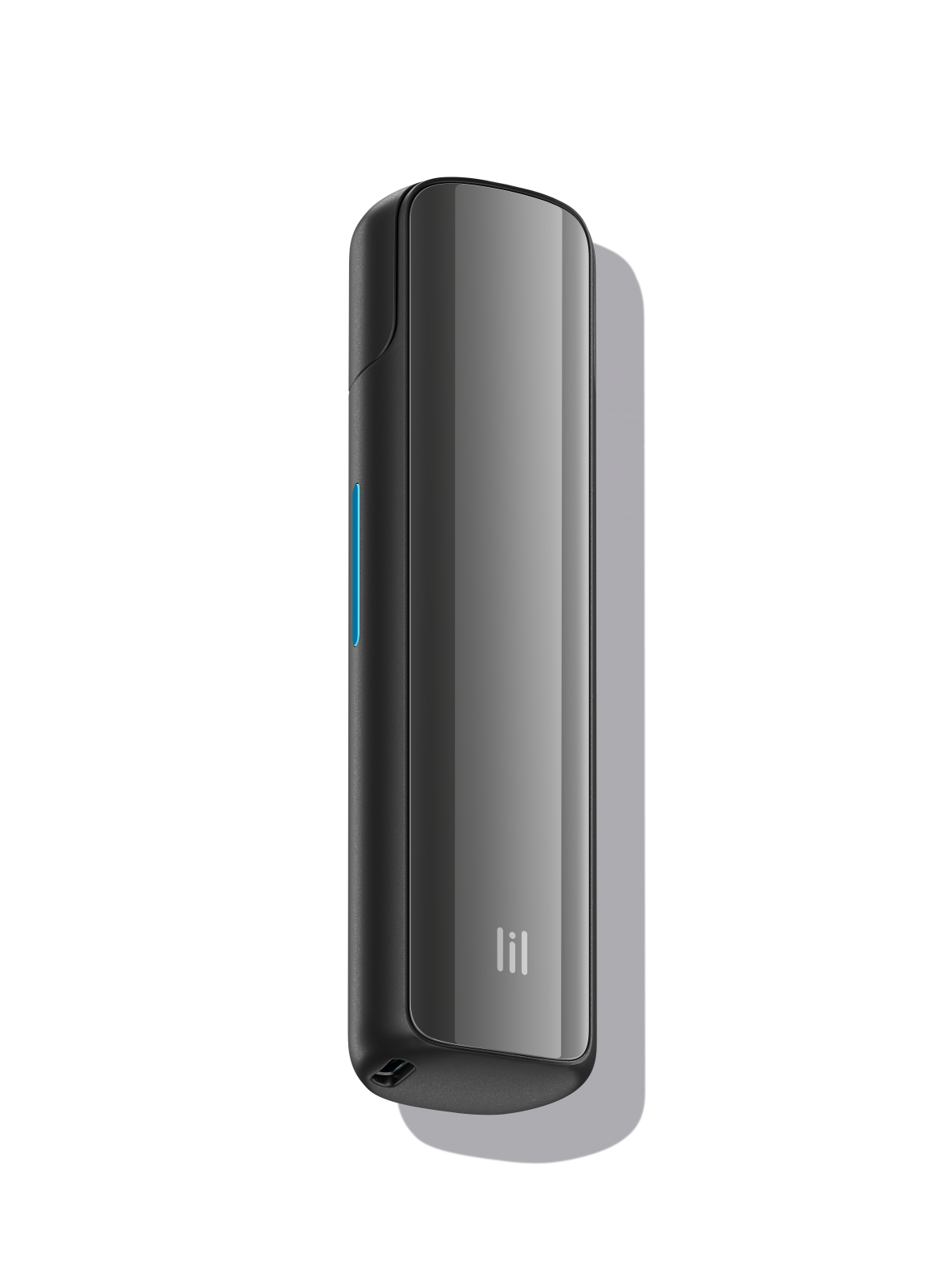
It is widely known that smoking is harmful to health, yet despite its well-known risks there are millions who decide to continue smoking. Quitting, or better yet never starting, is without a doubt the best choice. However, for those smokers who would otherwise continue to smoke, switching to scientifically substantiated smoke-free products is a better option. With an array of novel tobacco products reaching the market, there is an opportunity to make key distinctions between cigarettes and smoke free products. 

The leading cause of smoking-related diseases is cigarette smoke, which contains dozens of toxic chemicals, the majority of which are generated when the tobacco in a cigarette is burnt. When tobacco is ignited by a heat source, such as the flame from a match or a lighter, it reaches temperatures in excess of 600 C. As a consequence of the burning of the tobacco,  ash and smoke are generated. Cigarette smoke contains more than 6,000 chemicals and around 100 of them have been identified as leading causes of smoking related diseases. 

The variety of smoke free products that have reached the market share a common similarity; they are designed to eliminate the burning process and therefore generate no ash, and no smoke, therefore reducing the exposure to harmful toxicants compared to the smoke of a cigarette. When scientifically substantiated, smoke free products are a better alternative than continued smoking. 

In the specific case of heated tobacco products – a type of smoke free product – tobacco is heated at a controlled temperature without burning the tobacco, in order to release a nicotine containing aerosol. The composition of the aerosol produced by heated tobacco products is different to the smoke produced by cigarettes. In the case of cigarettes, water and glycerine form 50% of the smoke mass, together with high levels of toxicants and also solid carbon-based particles. By contrast, scientific studies show that in the aerosol of a heated tobacco product water and glycerine form approximately 90% of the aerosol mass, there are no solid particles and the levels of toxicants are reduced on average by 90% compared to cigarette smoke. It’s important to note that these products are not risk free as they contain nicotine which is addictive. 

Gizelle Baker, VP Global  Scientific Engagement for Philip Morris International states, “the best way to prevent smoking-related diseases is to quit cigarettes and nicotine completely, or to never start in the first place. However, we recognize that many adults don’t quit, and that’s where smoke-free alternatives can complement existing measures designed to discourage initiation and encourage cessation. These smoke-free alternatives are a much better choice for adult smokers who would otherwise continue smoking. That’s because although they are not risk-free, they don’t burn the tobacco. Science shows us that it’s the chemicals produced by combustion that are the primary cause of smoking-related diseases. If we want to achieve the public health breakthroughs that society demands and deserves, we must follow the science.” 

This article is brought to you by Philip Morris Management Services- Lebanon

November 29, 2021 0 comments
0 FacebookTwitterPinterestEmail
PodcastsSpecial Report

Financing renewable energy

by Thomas Schellen, Carol Ayat & Joe Hawi November 29, 2021
written by Thomas Schellen, Carol Ayat & Joe Hawi

In the financial crisis, renewable energy has emerged as both a great need and important solution for Lebanese households and enterprises.

Executive Magazine talks to Carol Ayat, the energy finance expert, and to Joe Hawi, the managing director of systems supplier Nova Energia, about the challenges in the adoption of renewable energy, particularly regarding financing and quality guarantees.

November 29, 2021 0 comments
0 FacebookTwitterPinterestEmail
Brand Voice

A glimpse of hope…

by Firas El Husseini November 21, 2021
written by Firas El Husseini

There is a wide debate in Lebanon about economic eform in the context of the implementation of the decisions of the CEDRE conference and the conditions set by donor countries. The economic reform program suggested by the government of former Prime Minister Hassan Diab addressed a series of measures aimed at modernizing the economy and stimulating growth, including privatization and market liberalization. The new government formed by Prime Minister Najib Mikati is promising to involve the private sector in the services previously led by the public sector, to include electricity, telecommunication, and the likes.

Privatization aims to reduce the cost of services, improve their quality, expand their scope, increase
investments, give impetus to economic growth and stimulate the participation of citizens and the private sector through ownership of shares in privatized services’ sectors.

Of course, raising the issue provokes different reactions in political, economic, trade union, and popular circles. From welcoming and supportive, to conservative and opposing. If business circles declare their absolute support for such proposals, for example, some components of civil society may openly declare their opposition and rejection of any privatization process, and demand the restoration of previously privatized economic sectors that could provide large revenues to the state, calling for absolute adherence to the role of the public sector as a pioneer and guarantor of justice and conditions necessary for economic and social advancement. What are the reasons for raising the issue of privatization in Lebanon? What are the expected results of the privatization of some sectors?

PRINCIPLES AND OBJECTIVES OF PRIVATIZATION
The main objectives of privatization go beyond providing income to the treasury to deal with the public debt and, in our present case, contribute to securing the funds needed to rebuild what was destroyed. Experts unanimously agree to position the consumer’s interest and the necessity to secure public service to its best terms at the top of the pyramid of privatization goals. Most of the countries that adopted privatization aimed, in the first place, to improve the level of services provided by a publicutility or to try to address what was tainting this utility as a result of its mismanagement by the public sector. In this context, we can cite the successful experience of LibanPost, which brought about a qualitative revolution in the field of postal services
in Lebanon, yet did not bring in any direct income to the Lebanese Treasury. A public utility has exceptional powers as it is owned by the state and managed by its institutions. In most cases, these powers are monopolistic, leaving the consumer with no choice but to comply with the conditions set by the utility. In such cases, if service delivery is insufficient or unsatisfactory, privatization comes in to allow legitimate competition in the field of those services, thus giving consumers the benefit of choosing reduced costs or improved services. In the US electricity market, for example, consumers – especially industrialists – are able to choose their electricity provider (state-owned or private) based on prices traded in the Electricity Exchange. Answering most of the questions related to privatization must be done for each utility separately, in a way that dispels the fears of both citizens and experts. The ideal approach is to examine the required legal frameworks and mechanisms in order to guarantee simultaneously the interests of the state and those of consumers, in addition to determining the economic feasibility of the privatization process.


REGULATORY AUTHORITIES

Any privatization process imposes high financial burdens on the state, especially in the preparatory stage. These expenses are often consultative and non-refundable, and aim at setting up the necessary mechanisms and legal frameworks as well as ensuring the feasibility of the privatization process. The use of some of these funds to establish regulatory bodies (a regulatory authority or committee) constitutes a smart investment for the state, whereby these bodies can advise the privatization process, in addition to monitoring the proper functioning of the public utility and taking up various other technical and administrative roles. Conferring the appropriate authority to these regulatory bodies is essential; regulators should operate according to high transparency standards and enjoy the necessary autonomy to carry out the expected work in a serious and effective manner. Therefore, securing strict legal and administrative bases are vital. These foundations should be comprehensive and cover all angles, from the mechanisms of appointing the members of these regulatory bodies to defining their powers, in order to ensure the greatest degree of impartiality and to guarantee the continuity of their operation. Protecting those bodies from any interference should start with the process of appointing its members, all the way to granting them the power of decision-making and the ability to carry out their duties in the face of opposition from partisan politics, as long as they act in compliance with the law. Determining the role of these bodies, whether advisory or supervisory, is a key factor in the stability of the privatization process and an important incentive to attract serious investors. The main role of regulatory bodies remains monitoring the operation of the privatized facilities, especially ensuring compliance with the terms of reference and securing healthy competition and preventing monopolistic activities. These bodies also help establish a financial monitoring mechanism to maintain the flow of the state’s sporadic resources. Most countries have adopted the “quality-of-service” criterion as a basis for evaluating the work of the public utility and the services provided. However, this criterion must be based on specific, clear, and precise points to avoid negligence in this area, which is often at the expense of the economically weaker party, i.e. the consumer.

Some may view the establishment of regulatory bodies for all sectors intended to be privatized as a costly and futile endeavor, since the advisory role can be assigned to private bodies, and over- sight remains in the hands of the guardianship authority, i.e. the responsible ministry. The role of control as part of tasks inserted to the regulatory body has several benefits, whether in terms of the experience of its members, or in terms of ensuring the integrity of the institution, with all due respect to successive ministers. Virtually all the necessary paperwork and studies have been prepared to establish three essential regulatory bodies for Lebanon (See box ), yet partisan political interference still prevent them from starting operations or engaging in the process of appointing members.

In order to reduce expenses, several countries have adopted the so-called “unified regulatory authority”, meaning that the regulatory powers of different sectors are entrusted to a single administration. In the case of Lebanon, however, the best solution seems to lie in the establishment of three regulatory bodies:
A Telecommunications Regulatory Authority will supervise any privatization step in the telecommunications sector, including cellular and international communications.
An Energy Regulatory Authority, whose powers include electricity, water and oil, will draw the main lines for privatizing electricity production, including electricity from renewable energies.
A Transportation Regulatory Authority, whose mandate includes transport, roads, and public works. This authority is entitled to look into the feasibility of constructing some highways or bypasses, regulate shared transportation, and study the possibility of privatizing the Beirut Port and other ports in whole or in part.

There can be no privatization without the appropriate regulatory body. The Lebanese have paid the price of haste and demagoguery in the telecommunications sector twice, the first time when cell phone licenses were granted in Lebanon, and the second time when these licenses were with- drawn. The management contracts in that case lacked any vision for the future and did not solve the problem of the monopoly of telecommunications by a few players who dictated their conditions to the Lebanese for almost two decades and wasted large amounts of money that our economy desperately needed.

November 21, 2021 0 comments
0 FacebookTwitterPinterestEmail
EventsExecutive newsExecutive Roundtables

Roundtable on renewable energy in Lebanon

by Executive Editors November 19, 2021
written by Executive Editors

A discussion with experts in electricity, fuel, and renewable energy organized by Executive Magazine In partnership with Konrad-Adenauer-Stiftung. The roundtable focused on Lebanon’s energy crisis, sustainable solutions and recommendations to reform the sector and achieve national commitments to reduce emissions.

November 19, 2021 0 comments
0 FacebookTwitterPinterestEmail
  • 1
  • …
  • 26
  • 27
  • 28
  • 29
  • 30
  • …
  • 685

Latest Cover

About us

Since its first edition emerged on the newsstands in 1999, Executive Magazine has been dedicated to providing its readers with the most up-to-date local and regional business news. Executive is a monthly business magazine that offers readers in-depth analyses on the Lebanese world of commerce, covering all the major sectors – from banking, finance, and insurance to technology, tourism, hospitality, media, and retail.

  • Donate
  • Our Purpose
  • Contact Us

Sign up for our newsletter

[contact-form-7 id=”27812″ title=”FooterSubscription”]

  • Facebook
  • Twitter
  • Instagram
  • Linkedin
  • Youtube
Executive Magazine
  • ISSUES
    • Current Issue
    • Past issues
  • BUSINESS
  • ECONOMICS & POLICY
  • OPINION
  • SPECIAL REPORTS
  • EXECUTIVE TALKS
  • MOVEMENTS
    • Change the image
    • Cannes lions
    • Transparency & accountability
    • ECONOMIC ROADMAP
    • Say No to Corruption
    • The Lebanon media development initiative
    • LPSN Policy Asks
    • Advocating the preservation of deposits
  • JOIN US
    • Join our movement
    • Attend our events
    • Receive updates
    • Connect with us
  • DONATE