• Donate
  • Our Purpose
  • Contact Us
Executive Magazine
  • ISSUES
    • Current Issue
    • Past issues
  • BUSINESS
  • ECONOMICS & POLICY
  • OPINION
  • SPECIAL REPORTS
  • EXECUTIVE TALKS
  • MOVEMENTS
    • Change the image
    • Cannes lions
    • Transparency & accountability
    • ECONOMIC ROADMAP
    • Say No to Corruption
    • The Lebanon media development initiative
    • LPSN Policy Asks
    • Advocating the preservation of deposits
  • JOIN US
    • Join our movement
    • Attend our events
    • Receive updates
    • Connect with us
  • DONATE
Economics & PolicyLebanon 2013: The big ideas

Making the most of our energy wealth

by Roudi Baroudi December 11, 2012
written by Roudi Baroudi

Lebanon is presented with the most serious challenges it has faced in the past decade. The economy is struggling, the internal security situation is deteriorating and the country’s neighbors pose real threats. In these circumstances the very fact that the country continues to operate can be seen as a success. And amidst everything, there are opportunities — not just in newfound offshore oil and gas but also within the country's ingenious population.

As we head into 2013, what can be done to help the country unite, to overcome its challenges and ultimately to grow? Over the course of this week, eight influential figures will address seven important topics, each suggesting one proposal to help the country move forward. In this article, the World Energy Council's Roudi Baroudi calls for measures to protect the country's offshore oil and gas from corruption.

My one hope for Lebanon in 2013 is that all of its various political leaders and factions take and/or allow the necessary steps for sound and sustainable development of the country’s newly promising energy sector.

Why? Because virtually all of the measures involved a) are just common sense; b) require little or no investment of scarce public resources; and c) happen to be the same changes required to reform, rebuild and genuinely reconcile Lebanon as a whole.

On the overall energy front, the first change would have to be one of mindset. For too long, the sector has been treated by officials, their relatives and their cronies as a cash-cow for themselves rather than as an essential ingredient in building and operating a modern nation-state. From heavy industry to the average family, everyone is affected by the chronic power shortfall. We are more than a decade into the 21st century: doing homework by candlelight should be the stuff of tales told by grandparents, not the current experiences of schoolchildren also learning to use computers. Imagine if those tasked with formulating and implementing energy policy were concerned at last with basic public goals: namely, how best to deliver affordable, reliable and sustainable energy (electricity, LPG “cooking gas”, gasoline, diesel oil, fuel oil) to all Lebanese.

See also: Former Labor Minister Charbel Nahas on rethinking the economy

British Ambassador Tom Fletcher on foreign interference

Hicham Safieddine on the Syria spillover

Saleh Machnouk on disarming Hezbollah

In turn, this new attitude could quickly convince Lebanese politicians of the need to follow the law by forming a regulatory authority for electricity, and one for the nascent oil and gas industry as well. This would go hand in hand with a government newly determined to ensure transparency, for instance by disseminating all available general information and specific knowledge about the process(es) by which the future of the oil and gas sector is being planned and managed.

The same enlightened leadership would seek out and adopt the best practices at every stage of its oil and gas venture, starting at the beginning. For example, Lebanon should spend its taxpayers’ money wisely by restricting its paid advertising to globally recognized industry publications and highly regarded professional and financial publications like the Economist and the Financial Times,  and using the websites of the World Bank and the European Commission – for free – in order to ensure the broadest possible international awareness of the country’s hydrocarbon potential. The government could then consult the latter two bodies and other reputable institutions to help understand the experiences of other emerging energy powers and avoid making the same costly mistakes.   

Thus animated, not just by the need to closely monitor oil and gas developments, but also by its duty to keep the public informed, the Ministry of Energy and Water would secure timely and professional analysis of the seismic studies immediately following their completion – then, based on these findings, publish the next steps approved by the government in order to pursue development of the fields.

In addition, with the seismic results in hand, the ministry could commission a well-known and qualified international consulting firm to prepare a comprehensive energy master-plan encompassing the entire industry and each of its sub-sectors. The electricity subsector component would be based on a long-term, least-cost expansion of generation and transmission which would take into account feasible grid interconnections with other countries in the region, the role of renewable energy, and integration of the environmental and climate change dimensions to demonstrate Lebanon’s strategy for reducing its carbon footprints in its production and use of energy.

When it comes to the implementation of specific projects, the ministry would act diligently to ensure not only that all necessary environmental impact studies were being carried out, but also that the implementation of mitigating measures was done in accordance with both international best practice and the requisite environmental and social guidelines applicable in Lebanon.

The same spirit of respecting the law and pursuing the national interest also would cause Lebanese politicians, whatever their party loyalties, to avidly support the continued reform of the judiciary, an acceleration of nominations to fill judicial vacancies, and other measures designed to strengthen the rule of law. All of these steps would magnify the impact of the others by helping to ensure that pieces of legislation passed by Lebanon’s Parliament are no longer regarded as idle suggestions to be ignored at will.

All of the foregoing – flowing from the original wish that Lebanon’s main political actors would stop obstructing oil and gas progress – would ensure a dynamic and profitable energy sector capable of alleviating many national problems, especially poverty. Properly managed, oil and gas would supply ample revenues for decades to come, providing the Lebanese state and Lebanese society with the resources they need to finally end the twin evils of systematic inequality and sectarian resentment.

If we really want our grandchildren not to be doing their homework by candlelight, then real change is needed. With simple steps and more enlightened leadership, we can start to make it happen in 2013.

Roudi E. Baroudi is an independent energy and environmental consultant and Secretary General of the World Energy Council – Lebanon Member Committee


December 11, 2012 0 comments
0 FacebookTwitterPinterestEmail
The Buzz

Morning briefing: 11 Dec 2012

by Executive Staff December 11, 2012
written by Executive Staff

Economics

Gold inched lower on Tuesday but sentiment was underpinned ahead of a US Federal Reserve meeting where policy makers are expected to announce more stimulus measures, a move that would support gold's appeal as a hedge against inflation.

More from Arabian Business


Egyptian President Mohammed Morsi has suspended planned tax increases, hours after they were formally announced, in a policy swivel that might complicate Egypt's efforts to secure a $4.8 billion loan from the IMF.

More from The Daily Star


The Lebanese Cabinet again failed to pass the controversial salary scale on Monday as the private sector and labor groups remained deeply divided on whether to raise the salaries of civil servants and teachers substantially.

More from The Daily Star


Companies

Dana Gas, the first UAE group to default on an Islamic bond, is offering bondholders $70 million in cash and an average eight per cent coupon on the remaining $850 million of debt in a move to buy time to fix its finances.

More from Gulf Business


Qatar Telecom, which is majority state-owned, plans to issue a long ten-year bond after investor meetings conclude, arranging banks said on Tuesday.

More from Gulf Business


Gulf carrier Etihad Airways is close to buying a 48 per cent stake in debt-ridden Indian carrier Kingfisher Airlines for a little over 30 billion rupees ($550.3 million), the Mumbai Mirror reported on Tuesday.

More from Gulf Business


Samsung Engineering Co Ltd has announced its consortium with China's Shanghai Electric and Saudi Arabia's Al Toukhi was awarded a $3 billion order to build a power and desalination plant in Yanbu, Saudi Arabia.

More from Reuters


Morgan Stanley's head of mergers and acquisitions for the Middle East and North Africa (Mena) is leaving the bank, three sources said, the latest in a string of high-level banking departures from the Gulf region.

More from The National

December 11, 2012 0 comments
0 FacebookTwitterPinterestEmail
Economics & PolicyLebanon 2013: The big ideas

Time to rethink our economy

by Charbel Nahas December 10, 2012
written by Charbel Nahas

Lebanon is presented with the most serious challenges it has faced in the past decade. The economy is struggling, the internal security situation is deteriorating and the country’s neighbors pose real threats. In these circumstances the very fact that the country continues to operate can be seen as a success. And amidst everything, there are opportunities — not just in newfound offshore oil and gas but also within the country’s ingenious population.

As we head into 2013, what can be done to help the country unite, to overcome its challenges and ultimately to grow? Over the course of this week, eight influential figures will address seven important topics, each suggesting one proposal to help the country move forward. In this first article, former Labor Minister Charbel Nahas argues that the country’s economy needs fundamental reform.


In 2013, I believe it is time to fundamentally reassess the way our economy works.

The Lebanese, all of them, independent from the political discourse, are overwhelmingly supportive of a modern system of management of the economy that is built on two basic principles: (1) A very large reliance on the influence of capital inflows to finance consumption that goes far beyond domestic production. (2) A very attentive management of channels of redistribution of this inflow of capital through the financial system, through public expenditure and through private lending so that these funds do not remain deposits in the banks held by a small number of wealthy people but are recycled to appear as if they were income. This inevitably leads to a huge deficit in our trade balance.

This clientelistic management of the channels of distribution is at the core of our socio-political system. It forms the base of a political system that forces the people to recognize leaders who defend the interests of each sectarian group in order to grasp what they feel is their fair share of the pie. In this sense the notion of production, of social partners, is absolutely absent. It is a predatory system.

This status quo is deeply unstable in the sense that major, vital functions of the economy and of the state have been allocated to each of the groups to give them the power to veto the others. This leaves very little room to address structural economic issues: the equilibrium of such a system is very precarious. It used to work until 2005 because the arbitrator — Syria — was agreed upon. After 2005, when the Syrians were pushed out, the system became blocked and it is still completely blocked.

Second, it is a system very low in economic efficiency. The effect of these inflows of capital are very deep on the economy, in the sense that they favor non-tradable services. It pushes the available resources in capital and labor to services that are linked to the final stages of distribution — commerce, domestic intermediation, education, health, construction — where the openness to international competition is very limited and therefore the potential productivity gains are almost zero. This leads to a stable equilibrium of low productivity and helps increase prices of domestic goods in a systematic manner.

Thirdly, the system is destructive, as it consumes the cohorts of young Lebanese and forces them to emigrate to provide capital for the economy. In their place foreign workers come and are often exploited. Human capital is thus wasted.

Time for change

Most of the debates you hear about the Lebanese economy are linked to the fine-tuning of this system. Fundamentally questioning it is deemed unthinkable. But I believe we are faced with a basic choice: either you think that this system suits Lebanon in the long-term or you do not. Simply, if you do not believe in it then making the system function better is a major error — you give it more chance to deepen its impact.

I deeply believe that this system is absolutely perverse both morally and economically. It generates a type of society where the values of production are absolutely secondary to the predatory attitudes. That predatory attitude cannot continue without strict fidelity to the clientelistic system.

It is not an easy bind to get out of, but we must start with a reallocation of resources. At every element of the chain the choices are not complicated — using an increasing part of capital as investment rather than consumption. This would be the trigger to get out of this scheme by influencing the allocation of these resources. Banks and services would become less profitable, but exporters and industry would be more so. The level of wages would increase in Lebanon, the reliance on poor labor decrease.

To be frank, I tried to do this as a minister — as others did before me — with little success. You are stepping on the toes of large and influential groups — politicians, businessmen and others — who are accustomed to the existing system and have strong interests in preserving it. Trying to force change is a major disturbance and they will oppose it.

But if you are talking about the possibility of changing the DNA of the system, 2013 could present opportunities. Firstly, there has been an increase in alternative movements and social forces. Moreover the fact that the system is blocked makes adjustments more difficult so a moment of truth could appear, meaning we have to make difficult decisions.

If we take, for example, the government’s current predicament over the proposed wage rise, this could prove some kind of trigger. The government essentially sought to increase wages without any meaningful reform and now they have found they cannot afford it. They are faced with three options: renege on the promised wage rise and lose some political credit, do it without serious change in the fiscal basics and risk the financial system, or make serious fiscal changes — but this will require them to hurt their powerful allies.

But more fundamentally, change has to come from the Lebanese people; a major public decision to change public intervention in the economy, instead of favoring the perpetuation of this bizarre system that we have all become so used to.

Charbel Nahas was Lebanon’s Labor Minister until February 2012

December 10, 2012 0 comments
0 FacebookTwitterPinterestEmail
Comment

The dollar’s the boss

by Paul Cochrane December 10, 2012
written by Paul Cochrane

Lebanon first fell into the crosshairs of the United States Department of the Treasury’s Office of Foreign Assets Control (OFAC) in 2011. Pressure from OFAC — effectively the world’s anti-money laundering (AML) and counterterrorist financing (CTF) enforcer — saw one Lebanese bank go under for money laundering charges in the first quarter of 2011, and by the second quarter, Lebanese banks were having to deal with US-imposed sanctions on Syria. The heat did not let up in 2012, with the banking sector continuing to deal with the aftershocks and new regulations.

The first shoe fell in February 2011, when OFAC labelled the Lebanese Canadian Bank (LCB) a “financial institution of prime money laundering concern” over transactions involving Hezbollah and drug dealers, with LCB’s assets later taken over by Société Générale de Banque au Liban. The US move was a harsh wake up call for the banks, with due diligence quickly becoming a top priority, while the Treasury pushed Banque du Liban (BDL), Lebanon’s central bank, to address AML and CTF shortcomings. BDL has stepped up to the plate, issuing circulars regulating foreign exchange bureaus – which were a link in the chain in the LCB case – limiting bureaus to one major bank account, and not allowing transfers to third parties.

The major move this year was issuing Circular 126 on May 24, requiring banks and financial institutions to “implement strictly” AML and CTF regulations. The circular extends to the US sanctions on Syria as well as Iran, with the financial sector having to be in “conformity with the laws, regulations, procedures, sanctions and restrictions adopted by international legal organizations or by the sovereign authorities in the correspondents’ home countries.” This means that banks are not allowed to have any dealings with, for instance, Syrian individuals and entities sanctioned by the US and European Union, while Syrians are not allowed to open accounts (those opened prior to the 2011 sanctions are still operational).

This circular has placed banks in a tricky position, especially the seven Lebanese banks with operations in Syria, and particularly those with sanctioned individuals that are shareholders. As Executive revealed in June, Rami Makhlouf, a cousin of President Bashar al-Assad, has a 4.9 percent stake in Bank Byblos Syria, and Ahmad al-Kuzbari, the former chairman of Makhlouf venture Cham Holding, is a shareholder in Banque Libano-Française’s Bank Al Sharq. While the banks are not in breach of the sanctions, as these are legal shareholders in a Syrian registered bank not operating beyond its borders, the banks are walking a fine line regarding reputational risk.

These recent regulations — in addition to OFAC sanctioning two Lebanon-based charities “controlled by Hamas” in October — have, in the words of a senior BDL source, “made the banks paranoid and they are missing out on a lot of opportunities as a result.”

Although it is not clear where Syrian cash is going, Turkey, the United Arab Emirates, Jordan and Egypt appear to be major beneficiaries, yet none seem to be getting the same attention as Beirut is from the US or the media. Indeed, in November the Financial Action Task Force (FATF), the international policy-making body, gave Turkey four months to clean up its AML system.

 A question then is why should Lebanese banks be so paranoid and rigidly follow OFAC’s diktats? The answer is surprisingly straightforward, and follows the investigative practice of “follow the money” — Lebanon’s fiscal tie to the US. Two thirds of the money in Lebanon is in US dollars, 85 percent of loans are in dollars and significant amounts of the banks’ money, in dollars, is sitting in New York bank accounts. As the BDL source put it, “by default Lebanese banks are part of the US banking system. Therefore our banks must comply with US regulations.”

Lebanon really has no choice in these matters, unless it wants to decouple from the greenback and de-dollarize the economy, something that is not impossible, but is certainly problematic, and it is definitely not the right time when banks’ bottom lines are under pressure and the Lebanese economy itself is flat-lining, with the source saying BDL is internally forecasting zero to 1 percent growth. 

So, tied to the US Lebanon will remain. It is a good thing then that BDL and the US Treasury get along “beautifully”, as the BDL source put it.


Paul Cochrane is the Middle East correspondent for International News Services

December 10, 2012 0 comments
0 FacebookTwitterPinterestEmail
Finance

Banks vie for the deposit pie

by Maya Sioufi December 10, 2012
written by Maya Sioufi

If there is one figure that summarizes the significance of the banking sector in Lebanon, it is that total assets stood at $148 billion as of the end of September 2012. That’s a 5 percent increase so far for the year, despite Lebanon’s dreary economy, and means that Lebanon’s 71 commercial banks control assets worth 3.5 times the country’s gross domestic product.

What is less cheerful for bankers this year is the declining growth rate in assets and deposits, with profitability also expected to be down by the end of the year. Scenarios range from Byblos Bank chairman François Bassil expecting profits to drop 25 percent, to Blom Bank chairman Saad Azhari’s more optimistic scenario for flat profits this year.

For the first nine months of the year, alpha banks — the 12 largest with deposits in excess of $2 billion — reported total net profits of $1.2 billion, a 5 percent increase on the same period last year, which was marked by a domestic political vacuum and the beginning of the Syrian uprising. This is in contrast to the years prior to 2011, when banking sector profits were growing at double-digit rates. This year’s drop in profitability comes alongside an increase in provisioning, as alpha banks set aside $293 million for bad loans in the first nine months of the year, 3.5 times the amount allotted over the same period last year, according to Bankdata financial services.

Shrinking growth

In a year stacked with challenges — from turmoil in neighboring Syria, to increased international scrutiny, among others — the 5 percent growth in commercial bank assets in the first nine months of 2012 is down only two percentage points from 7 percent growth in the same period of 2011. But the rate is less than half the 11 percent average growth for the past five years. Deposits, standing at $121 billion as of the end of September, also grew by just more than 5 percent, a slight decrease on 2011’s growth rate of 5.6 percent, but a more significant decrease when compared to the average 10 percent growth rate of the past five years.

“We are watching the trend. If it continues then it could be a concern” says Pik Yee Foong, chief executive of Standard Chartered Bank Lebanon.

Jean Riachi, chairman of FFA Private Bank, notes that, “The new normal is to have a growth rate in deposits in the single digits as remittances are not as strong as before, given the worldwide recession and the Arab turmoil hitting Gulf countries.”

Slower deposit growth is occurring in tandem with a slower local economic growth. The International Monetary Fund’s most recent estimate put Lebanon’s growth at 2 percent for 2012, in line with Egypt and Bahrain.


“If you want to be optimistic, you can say for sure deposit growth is at a much lower rate than before, but it is still much above the minimum needed to support a 4 to 5 to even 6 percent GDP growth in Lebanon, and finance the public and private sectors,” says Freddie Baz, chief financial officer of Bank Audi.

Both the public and private sector are highly dependent on the banks to meet their funding needs. At $42 billion, banks increased their lending to the private sector by 6 percent in the first eight months of the year, versus only 2 percent for the public sector, which reached $30 billion on commercial bank loan books.
“With lower growth in deposits, the government cannot expect to keep on relying on the banking sector to fuel expenditures and will need to cut the budget deficit,” warns Riachi.

With the economic pie no longer growing at the same rate as in previous years, competition is bound to get fiercer. “We witnessed more cutthroat pricing from the competition and banks fighting over clients that are not worth fighting over,” says Tarek Khalife, chairman of Credit Bank.

Back to the basics

Compounding this is the fact that Lebanon has the 13th highest bank penetration rate worldwide, with 97 branches per 1,000 square kilometers according to the International Monetary Fund.

With pressures on profitability this year, several banking leaders told Executive they have tried to focus more on improving services and reassessing their cost structure, with the sector’s overall cost-to-income ratio dropping 1.6 percent in the first six months of the year to stand at just under 47 percent. “Most banks are following austere operating expenses policies,” says Baz. Standard Chartered Lebanon’s Foong added, “We are using this time to reevaluate our competitiveness and at the same time we are investing in improving customer service, systems and processes, compliance, etcetera.” 

All in all, however, Lebanese commercial banks continued to enjoy solid fundamentals throughout 2012, largely thanks to the usual suspects: a regulator that has remained staunchly conservative through the years, forbidding bankers from engaging in risky activities, as well as the banks’ assets being predominately owned by local players who remained disinclined to cash out and flee.
 

December 10, 2012 0 comments
0 FacebookTwitterPinterestEmail
The Buzz

Morning briefing: 10 Dec 2012

by Executive Staff December 10, 2012
written by Executive Staff

Economy

Gold traded steady above US$1,700 an ounce on Monday, as a drop in the US unemployment rate did little to dampen the outlook for easy monetary policy, which is expected to be reaffirmed at a Federal Reserve meeting later this week.

More from Reuters


Brent crude held above US$107 a barrel on Monday, snapping five straight days of losses, as promising data from the world's top two oil consumers revived hopes for growth in demand in a well-supplied market.

More from Reuters


The Lebanese economy grew by just 1 percent in 2012, a leading bank has said. BlomBank predicted a fall from the 2.1 percent reached in 2010, to just 1 percent, and expected just 1.9 percent growth in 2013. The government has previously forecast slightly higher growth figures.

More from Blom Invest


Lebanese banks’ Syrian subsidiaries recorded a sharp 69.42% annual drop in net profits to around SYP 526.14 million ($7.59 million) in the first three quarters of 2012 comparing to SYP 1.72 billion up to September 2011, according to a new report by Credit Libanais.

More from Credit Libanais


Ecuador has quietly withdrawn its candidacy for the post of OPEC secretary general, a decision that leaves OPEC’s top three producers–Saudi Arabia, Iraq and Iran – fighting for the role.

More from Platts


Iraq is planning to increase its crude oil production to 3.7 million barrels a day next year from current production capacity of 3.4 million barrels a day, the country's oil minister has said.

More from Zawya


Arab states agreed to provide the Palestinian Authority with a US$100m monthly "financial safety net" to help President Mahmoud Abbas's government cope with an economic crisis after the United Nations granted de facto statehood to Palestine.

More from Arabian Business


UAE nationals in Dubai will be given access to social benefits under a new law passed by the emirate’s ruler, the latest step by authorities to help citizens’ deal with their debts.

More from Arabian Business


Companies

Bahrain's Shura Council has announced plans to spend BD580m ($1.54bn) over two years to building 16,000 residential units in the kingdom.

More from AME Info


Rental rates in Dubai rose by an average of 17 percent over the last 12 months, with some of the most popular areas rising by nearly a quarter, according to research by real estate consultancy CBRE.

More from Arabian Business

December 10, 2012 0 comments
0 FacebookTwitterPinterestEmail
Comment

No longer quiet

by Peter Speetjens December 7, 2012
written by Peter Speetjens

Nothing ever happens in Jordan, it is often said, yet 2012 has been an altogether eventful year, which prompted some pundits to wonder if the country could be the next Arab state to fall. That, for now, seems a little far-fetched, although it is clear not all is well in the Hashemite Kingdom —  neither economically, nor politically.

Tensions most recently boiled over when the government of newly-elected Prime Minister Abdullah Ensour in November announced a series of price hikes for, among other things, household gas, fuel and public transport. Jordan is facing a $5 billion budget deficit and strict austerity is required to secure a $2 billion loan from the International Monetary Fund.

Following the cabinet’s decision, thousands of people hit the streets to protest. In violent clashes in the north of the country, dozens of police officers were wounded and a demonstrator was shot dead. In May, similar measures were met with a comparable wave of protests, which forced King Abdullah II to “freeze” the fuel price increase introduced by Jordan’s previous government.

Keeping an eye on Jordanian politics is like watching a Mexican soap opera, as ministers and prime ministers roll on and off the screen like bad lovers. The latest power shuffle took place in October when King Abdullah replaced Fayez al-Tarawneh with Ensour, the country’s second prime minister in 2012 and its fifth since the first Arab uprising started in Tunisia in late 2010. 

The change was triggered by the “Friday to Rescue the Nation” rally organized by the country’s main opposition group, the Islamic Action Front (IAF), the Muslim Brotherhood’s political wing. Some 20,000 people called for freedom and “real” reform in what is now known as the biggest public manifestation in the history of Jordan. Sure, 20,000 does not seem an awful lot, but Jordan started from scratch: until early 2011, all public gatherings and demonstrations were banned.

Meanwhile, change at the top is unlikely to impress anyone. King Abdullah has played this joker a bit too often during his 13-year reign, with disappointingly little result. What is more, nearly all top officials stem from a tiny inner circle of tribal elite. Often they have been in the driver’s seat before.  

Take “newcomer” Ensour. The 73-year-old previously was, among other functions, minister of planning, minister of education, minister of foreign affairs and minister of industry and trade. His 63-year-old predecessor, Tarawneh, had already been prime minister in the late 1990s, and twice served as chief of the royal court. No one, certainly not the IAF, expects these dinosaurs to herald a new dawn for Jordan, even though Ensour during his inauguration appeared a man of good intentions. “The main challenge is holding free and fair elections,” he said. 

Easier said than done, and his words did not impress the IAF, which immediately reinstated its intention to boycott the elections scheduled for January 2013. The same is true for several leftist and pan-Arab parties. And who can blame them? The new election law, adopted last summer, did introduce some cosmetic changes but is still tainted by the same old ills. In short, voting districts greatly vary in size, and favor rural areas to guarantee the tribes a parliamentary majority over the, predominantly Palestinian, urban masses. For example, Kerak, with a population of 200,000 is entitled to 10 seats, while Zarqa, with a population of one million, gets 11. In addition, the first is divided into six voting districts, the latter into only four. “If nothing changes, the new parliament will simply institutionalize polarization and political crisis rather than offering a mediating role and way out,” American scholar Curtis R. Ryan wrote in Jordan Business. 

And if that is not enough, Jordan has other concerns. With its northern neighbor Syria in turmoil, the country has already accepted more than 100,000 Syrian refugees, some 40,000 of whom live in Camp Zaatari. Finally, the kingdom detained 11 Jordanian Islamists in October, allegedly for plotting to bomb Western targets in Amman.

Shortly after, Washington sent some 100 military advisers to Jordan.With their help, the Jordanian army and security forces, regarded among the region’s best, will do whatever it takes to keep the region’s ultimate buffer state afloat. However, it remains to be seen for just how long the way of the gun will be able to keep increasingly restless Jordanians in line.


Peter Speetjens is a Beirut-based journalist currently on assignment in Jordan


December 7, 2012 0 comments
0 FacebookTwitterPinterestEmail
Hospitality & Tourism

Off the flight path

by Nabila Rahhal December 7, 2012
written by Nabila Rahhal

Famed in the region as a holiday reprieve and named one of the top 10 cities in the world to visit by the New York Times in 2010 — the same year that more than 2.1 million visitors came to Lebanon — business in Beirut’s economy has always relied heavily on its hospitality and tourism sectors.

The drawback of a hospitality-driven economy is that even soft blows can do much damage. As Rabih Saba, managing and founding partner in Venture Hospitality, explains, “Security is the key word for hospitality. It is not the regional insecurities or even the internal politicians’ conflicts that hurt our sector the most. What people ultimately care for is their personal safety — so as long as the streets are safe, our business will be relatively unaffected. The danger to us is when the conflicts influence the streets.”

Food and beverage sector left hungry

The conflicts certainly hit the street this year, with protests blocking roads, mass kidnappings and sporadic armed clashes, among other things, which all helped contribute to Gulf states issuing warnings against travel to Lebanon.

“2012 started even better than the previous year until May, when the drop kick-started with the closures of the airport road,” says Mario Haddad Junior, owner of Sushi Bar and Falamanki, among other establishments. “Depending on the outlet, we are somewhere between 11 percent and 19 percent below last year, which constitutes a substantial decrease, but not a major loss.” 
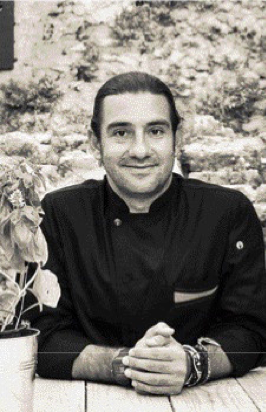
While there are no official numbers regarding revenues for this sector, those in the field estimate losses in revenue to be around 30 percent, across the board, when compared to last year. A significant number of venues closed down, including the world-renowned Buddha Bar and Duo in Downtown.

The reason? Simple. The almost total absence of tourists and expats this summer. According to Hady Fadel, corporate marketing manager at Boubess Group, which incorporates leisure industry companies such as spas, restaurants and hotels, the group’s venues in locations more reliant on tourists saw less activity and profits than those frequented by local residents. “Our restaurants in Ma’arad Street [Downtown Beirut] depend to some extent on the Arab tourists, and these were more affected by their absence this summer than our other outlets such as the ones in Zaitunay Bay or Hamra Street, which generated major profits,” says Fadel.

Haddad adds that, “It is not only the absence of the Arabs’ personal spending in the restaurants that caused our losses; it is their general spending in the country and those people benefiting from them and in turn spending in restaurants. Because of this lack of income this summer, Lebanese who went out spent less. This shows you how much the hospitality industry relies on tourists and specifically the Arabs.”

Toni Rizk, managing partner at TRI Food and Beverage, also pointed to internal unrest as a contributing factor to losses in the sector: “There were many nights where people were scared to go out because of the internal skirmishes. The losses in profit incurred then cannot be made up for, since what’s gone is gone. The biggest example of this scenario is the bombing in Ashrafieh and the events that followed, which pretty much diminished the Adha break activity we were expecting.”

And, even if profits are made during the winter festivities, they will not be enough to make up for losses amassed throughout the year, says Marwan Ayoub, founding and managing partner at Venture Hospitality.

The smoking ban

The third quarter of the year saw the introduction of the smoking ban in all indoor venues, which many in the hospitality sector see as the straw that broke the camel’s back. While it is too early to tell the exact effect of the ban, many operators view the timing of its implementation at the end of an already weak year as ill advised. They also object to the lack of exceptions made to venues which are smoking based.

“The smoking ban also hit a lot of people hard, namely those who recently invested in nightlife venues or cigar and nargileh [water pipe] lounges, and are now being asked to change their entire concept,” says Haddad. “Exceptions exist even in Europe and the United States; for example in Las Vegas you can smoke in the casinos, but here you can’t. In the end, restaurants will adjust but it is mainly the little bars, the cigar lounges and nargileh places that will suffer under this ban.”

Leftovers of 2012

This year the food and beverages sector in Lebanon was kicked in the teeth. “Today, the broad title for the industry is ‘survival of the fittest’,” says Ayoub. “Starting a couple of years after the [2006] war and until the year 2010 there was a boom in this business where the demand was bigger than the supply, and so almost all venues worked. These days are gone and nowadays if you don’t do your research well and open the right concept in the right area you will not last.”

Haddad also believes that those who entered this business in an immature manner will be naturally selected for extinction. “In this business, you have to love it and have a passion for food to stand out from the rest. Otherwise, and especially in these tough times, you will not last,” he says.

Boubess Group, for example, is a multi-branded and multi-regional hospitality company and so, according to Fadel, it was still able to record growth this year. Zaitunay Bay restaurant owners who have other venues in the country say they have recorded profits this year in comparison to their other venues, though they had forecasted much better for such a project.


Cautiously optimistic for 2013

Despite the tough times, all operators interviewed by Executive have plans to open new venues in 2013, though they appear to be proceeding with caution and are not as aggressive as previous years. “With the current climate, I am not comfortable spending so much money on the originally planned Italian restaurant in Mar Mikhael and we will work to make permanent the market food concept that is there now [where the Junkyard pop-up restaurant was located],” says Haddad.

According to Rizk, “If the regional situation continues like this, we will be facing a bigger crisis as tourists continue to avoid Lebanon and overseas expats fear visiting. Already, the high tourist season in Lebanon is shrinking with barely a productive week of festivities in the winter and a month in the summer, especially with Ramadan now in it.” Yet Rizk says his company will continue with its expansion plans, though with caution, as to not expand means “being left behind and having others take over our market share.”
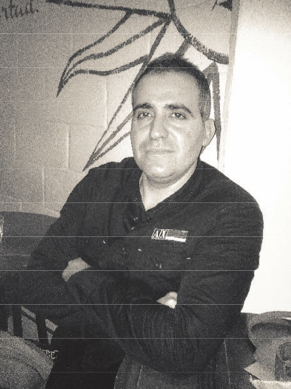
Some operators have plans to venture out of Beirut to areas such as Dbayeh or Antelias as the rent in the capital has become too high. Others are working on innovative concepts that will coax the Beirut residents out once again.
Fadel sums up Boubess Group’s outlook for 2013, and that of the food and beverage sector: “The situation around us will not stop us from further diversifying our portfolios because throughout the country’s history there has been turmoil, and things have reached rock bottom often.”

“But sooner or later, things get back to normal and so we use this downtime to find good opportunities and when the market picks up, we will be ready,” he adds. “We need to be positive and move on with our expansion strategy.”

Hotels in 2012

Hotels are another arm of the hospitality sector which has witnessed one of the worst declines in their business in years, with the number of tourists entering the country at 1.18 million as of October 2012, down by roughly 16 percent from the first 10 months in 2011, an already weak year for the sector.

According to an Ernst and Young study, room occupancy in Lebanese hotels in the first two quarters of 2012 saw an increase of 11 percent as compared to the same period in 2011. Pierre Achkar, head of the Syndicate of Hotel Owners in Lebanon, explains that, “The first six months of 2012 did indeed see an occupancy increase in comparison to the same period in 2011 but this does not mean hotels were performing that well. The first half of 2011 was a bad period in that year, before our government was formed, and we had internal instabilities.”

Achkar adds that this increased occupancy in the first half of the year is only true for hotels in Beirut, as the city has managed to position itself as a corporate tourism destination for international conferences and general business events. “Hotels outside of Beirut did not see any of their customary activity in the first six months of 2012 because these hotels usually fill up with tourists from neighboring countries who find them cheaper than Beirut hotels, and are more likely to have vacant rooms,” he says. “These tourists, who are mainly Jordanians, Syrians, Iraqis and Iranians, did not come this year. Seventy-five percent of Jordanians usually come here by car and this was impossible in 2012, and the Iranians come here as part of their religious pilgrimage to Syria which they obviously did not do this year,” continues Achkar.

Gulf Arab countries warning their citizens against visiting Lebanon was considered the final blow for the hotel industry. “Saudi Arabians are the biggest spenders in Lebanon and losing them, and the Arab Gulf tourists in general, impacts our entire economy,” says Achkar, adding that due to their proximity to Lebanon and their love for it, Arab tourists are irreplaceable in Lebanon, as was proven this year. 

The toll till today

“Hotel occupancy has been going down since the Arab tourists’ ban, and we were hoping for increased activity during Adha, but the bombing destroyed the season. The situation is very bad now, and Beirut hotels are running at 32 percent room occupancy. This leads to a hungry competitive market which decreases room prices to attract guests, but the whole situation is a losing one,” explains Achkar.

Amidst these dismal times, it is the low budget and boutique hotels that crept ahead. While representatives from higher-end hotels interviewed mostly admitted to a drop in room occupancy, those from lower-budget establishments said they were working at an average of 60 percent occupancy this year, and were generally satisfied with their activity, compared to other hotels. “We mainly get European and American tourists who want to explore the country on a budget and though we did have a lower occupancy than last year, we are still performing relatively well compared to the pricier hotels that cater more [to] the Gulf tours,” said a manager from Napoleon Hotel in Hamra.

With the overall significant decrease in visitors, hotels in the country have developed crisis management plans to cope with the situation which include closing down floors or their less popular restaurants, giving their employees unpaid days off and not hiring any new staff.

The future’s uneasy occupancy

Rana el-Khoury, general manager of Le Gray Hotel, describes this challenging period as one of survival, yet she says she still harbors hope for the future, based on the complex Lebanese market. “It is necessary to reduce costs to cope with the consequences of such a delicate situation we are currently experiencing,” says Khoury. “In the meantime, maintaining a superior service quality and competitiveness are key to meet any sudden improvement in the market. Given the complexity of the Lebanese market, improvement can occur overnight, as seen in May 2008 with the Doha Agreement; occupancy rates jumped back then from 30 percent to 90 percent within one week.”

She adds that another challenge is maintaining and keeping ready their trained employees who are getting discouraged by the current situation: “The departure of such skilled talents, increasingly discouraged by the lack of prospects, could cost the tourism sector in Lebanon. Consequences are difficult to turn around.”
If regional trends persist, 2013 does not promise to be a better year and hotels may be looking at an even bigger crisis than they are facing now: “If the situation stays like it is, especially with the Gulf Arab tourists’ ban, then we have no hope,” says Achkar. “While hotels will not completely close down, due to their inherent land value and such, they will continue to run at low occupancy, and return no profits.”

December 7, 2012 0 comments
0 FacebookTwitterPinterestEmail
Economics & Policy

So many options, so little growth

by Thomas Schellen December 7, 2012
written by Thomas Schellen

The global disaster count was going so well. Throughout the first 10 months of 2012, the financial tally of natural catastrophes for international reinsurers and insurers was a fraction of the horrors of 2011. Even a tsunami alert that had reporters spending anxious hours watching the beaches of Waikiki in late October 2012 turned out to offer doomsday journalism nothing more exciting than a 2.5-foot (0.76 meters) wave after sunset, with less insured damages than a major highway crash.

But then, within 48 hours after the Hawaiian micro-tsunami, Hurricane Sandy rolled in and CNN audiences were treated to hours of live reporting by rain-drenched ‘global news leaders’.

With this tropical storm came a big wave of insurance claims, first estimated at $6 billion, but those assessments were upped to $20 billion to $25 billion within one month. By December 2012, the insurance industry was yet to have the final insured cost of Sandy because of overlapping damage events. What was clear by that time, however, was that Sandy’s freakish convergence of weather patterns into a catastrophe for the immensely populated Eastern Seaboard of the United States was not enough to make insurance giants stumble on their profits path.

According to numbers for the first nine months of 2012, published by the world’s two largest reinsurers in November, profit expectations for the full year represent strong increases from 2011 due to a combination of better investment performances and lower catastrophe counts. Munich Re, the world’s largest reinsurance firm, surpassed its 2012 profit expectation of 2.5 billion euros ($3.2 billion) by end of the third quarter. The company revised its full year net profit expectation to 3 billion euros ($3.84 billion).

Swiss Re, the world’s second-largest reinsurer, reported a 68 percent year-on-year profit leap to $2.18 billion in the third quarter of 2012 alone, though this included a $626 million one-off gain related to the sale of the US business of Admin Re, a Swiss Re unit. Evaluating 2012 until November, Swiss Re Group Chief Executive Michel M. Liès boasted of “very good financial results in a volatile environment” and “excellent performance in [property and casualty] reinsurance”. The company said in the same statement that it was ahead of its return-on-equity targets for the first nine months of 2012.

The relevance for the Middle East, and for Lebanon, in the natural catastrophe story of Sandy is the insurance industry’s ability to handle it. This story draws attention to the business and economic importance of insurance, and that’s difficult in Lebanon — while the region saw a new generation of gripping industry headlines, the insurance sector’s year in Lebanon was frankly described as “dull” by the country’s insurance commissioner.

Disaster management

One lesson to remember on natural catastrophe insurance after the experiences of 2012 and 2011 is that the very nature of disasters precludes short-term expectations. Natural perils as well as man-made catastrophes are the biggest challenge the insurance industry has to deal with, said Farid Chedid, chief executive of regional reinsurance brokerage, Chedid Re. Reinsurers take these risks carefully into account in pricing the covers they offer insurance companies for assuming parts of their risks from catastrophe underwriting.

“The problem is how to open the client for taking into consideration that this has to be priced in. You can have 10 years of no losses and the client is saying, ‘I am spending too much money on insurance, what am I getting in return?’ But the idea is that you accumulate premiums over 10, 20, 30 years to compensate for a major loss. If these companies [were struck by a disaster and did] not have insurance, they would be wiped out,” Chedid said.   

“The insurance industry, as well as the governments, have not done enough to create the real need and awareness for insurance,” commented Fady Shammas, chief executive of Arabia Insurance. “Insurance awareness is non-existent in some Arab countries and in some circles in the Arab world, insurance is even considered haram, or wrong.”

The negotiations with reinsurers have been getting more complicated for Lebanese insurance companies, confirmed Fateh Bekdache, chief executive of Arope Insurance. Everybody in 2012 showed more concern about the possibility of a major earthquake affecting Lebanon, he said, but potentials of social unrest and labor turmoil — subject to insurance clauses known as ‘SR&CC’ for strikes, riots and civil commotion — also became a big issue in the region and were of much larger concern than ever before in reinsurance negotiations in preparation for 2013.

Political perils

The worst 2012 surprise for the Lebanese insurance industry and especially for Beirut-based regional companies with subsidiaries operating in Syria, however, was the conflict that ravished Lebanon’s eastern neighbor. On the business side, revenues contracted significantly. Arabia Insurance, one of the few truly regional players in the Middle East, witnessed a 25 percent drop of premiums written by its Syrian unit, according to Shammas.

Yet even as premiums contracted sharply, the group’s profitability in Syria edged higher.  Apart from that, the company’s main concerns in 2012 were not the numbers. “Our fears are over the physical security of our employees,” said Shammas. “We are concerned about our branches and our head office and also about the cash we carry in the banks in case there is devaluation of the Syrian pound.” 

Arope, which followed its parent Blom Bank into the Syrian and Egyptian markets, also had to wrestle with a backlash from the Syrian crisis. The company was not yet ready to disclose annual results on Syria. “We hopefully will not have losses in Syria but we have to wait and see,” said Bekdache.
However, both companies told Executive that their business in Egypt was regaining momentum. “Egypt is definitely looking up,” Bekdache said and Shammas said that Arabia’s premiums in Egypt rose 13 percent in the first nine months of 2012.

Woes of sanctions

A second unwelcome implication of the Syrian crisis for Lebanese insurers in 2012, and one which is likely to be obstructing business flows even more in the coming year, is the need to comply with a vast array of international sanctions against Syria.

The same business barrier of course applies to interaction with Iran. Cargo insurers, for example, do not normally have all the information available to them that the sanctions regimes require, and could unwittingly be subject to repercussions if those they insured violated the sanctions and the insurers were unable to prove they had made reasonable efforts to comply. According to Malek Costa, the head of group compliance at Blom Bank, Lebanese insurers should urgently invest in a compliance department, even if it is a one-person operation.

The third negative impact of the Syrian crisis is on the sale of cross-border covers for motor vehicles, the so-called ‘Orange Card’. Demand for the Orange Card dried up in 2012 and while representing a small portion of the motor insurance business, the revenues drop cut deeply into the cash flow of the scheme’s manager in Lebanon, the insurance association Association des Compagnies d’Assurances au Liban (ACAL). In planning for 2013, the association announced that it would have to tighten its belt on projects, such as helping to sponsor insurance practitioners for professional qualification programs.


All three impacts of the Syrian crisis on Lebanon-based insurers in 2012 did not translate into huge cuts in corporate bottom lines — Arope is expecting another record year in net profits and Arabia is looking at 10 to 15 percent growth in 2012 net profits. But the Syrian spillovers do increase costs and could be harbingers of more detrimental impacts in 2013, especially in indirect repercussions if the Lebanese economy suffers from further slowdown next year.

On the other hand, a recovery of business activity in Syria would mean that insurers will see their business scale up very quickly. Shammas said, “If Syria sees more imports or exports, the insurers will issue more policies immediately. Insurance providers are very closely linked to the economic cycle; if there is more banking activity, we will sell more. As soon as there is a positive change in the Syrian economy, we will benefit.”

The divisions of mandatory

Across the Middle East region, the experience of the past few years has proven that the only way to increase insurance in wider populations is to introduce compulsory insurance schemes, such as mandating employers to register their staff with a health insurance scheme.

The introduction of compulsory lines in Saudi Arabia, and regulations requiring Shariah compliance of all insurance companies, have expanded the kingdom’s insurance market and played a large role in enhancing the Islamic insurance practice, takaful.

However, according to Chedid Re’s Farid Chedid, the sword of mandatory insurance is double-edged. “Motor and medical across the region today represent 60 to 70 percent of the business. These are the two most challenging lines of business and the most volatile. Having the two most difficult lines of insurance as compulsory and leaving the rest apart — is that to the benefit of the industry? I don’t know,” he said.    

A minor boon for Lebanese insurance in 2012 was based on a new compulsory insurance requirement. Ministry of Industry regulation, phased in mid-year, that all industrial establishments have to show proof of a fire insurance package when renewing their annual licenses played out promisingly, said Abdo el-Khoury, executive board member at United Commercial Insurance (UCA), which according to him is the third-largest provider of fire policies in Lebanon.
“Fire insurance will advance further due to the Ministry of Industry’s decision to force factories to have obligatory insurance against fire and liability,” he told Executive, “but as things have just started moving in this regard, it will need at least two years to show good results on fire risks.”

Cranking up the engine of motor

A much weightier, and riskier, field of mandatory insurance in Lebanon will have to be ploughed and planted in the motor business line. In late October 2012, a new traffic safety law went into effect in Lebanon including a clause that motor vehicles must be insured, not only for third-party liability (TPL) against causing bodily injury but also against material damages.

Whereas insurance motor premiums underperformed both the market and historic trends in 2012, the coming year could therefore see a bloom of a thousand new TPL products. It could. But as things look at the end of November 2012, the issue could also reveal itself to be a field infested with sickly tumbleweeds.

Running a sustainable scheme of compulsory TPL for material damages will require providers, intermediaries and supervisors to improve aspects of the business that have been fraught with remarkable dysfunctionalities this past decade. “We must not repeat the mistakes,” insurance commissioner Walid Genadry told Executive. 

The opportunity for fraud was demonstrated in a case uncovered not long ago: the supervisors and the National Bureau for Compulsory Insurance (NBCI) caught on to a practice where apparently four providers, or some of their agents, took to the blatantly criminal practice of faking Mecanique vignettes and selling these fakes to motorists to display in their vehicles. Genadry said, “After the withdrawal of the license of American Underwriters Group insurance company, we noticed a marked increase in declared and legally bought compulsory car insurance vignettes.”

The insurance industry has made efforts to install technical tools to eliminate cheats on TPL policies and vignettes at the points of issuance, through a control system using online linkages between the Mecanique inspection stations, the relevant ministerial departments and insurance providers.

Other efforts are ongoing to more effectively combat motor insurance fraud by policy owners and identify drivers with extreme risk profiles. The tool for this is the Motor Risk Center (MRC) project, a database where insurers can share and access the relevant information. When and with what degree of voluntary participation this MRC will be running is a different question.       

Perhaps quite fortunately from the insurance industry’s perspective, the implementation of the compulsory TPL scheme for material damages is a Lebanese process. It has specificities. The traffic safety law acknowledges that design of the TPL scheme is the domain of the Ministry of Economy and Trade (MoET). The ministry logically empowers the NBCI to propose tight or broad policy options and prepare the needed sets of tariffs, coverage terms and ceilings and standard policy documents.

“It will be a good step for the assured parties to have material damages cover but we still need ACAL and all insurance companies to put up criteria and facts based on the statistics on hand,” commented UCA’s Khoury. He emphasized that the scheme will not represent completely new ground as Lebanese insurers have been underwriting material damages covers since many years, albeit not in a compulsory setting. “If we can study the risks well, it will be a plus and provide premium income to the insurance companies,” he added.

As the new reality will require motorists to have covers for bodily injury TPL and material damages TPL, another question is if the new TPL should come as one uniform policy, a policy package with two sections or two wholly separate policies that motorists will need to buy.

The NBCI has a lot on its plate. According to Arope’s Bekdache, who was reelected in October to another three-year term as the NBCI head, it asked the motor committee of the insurance association immediately after the traffic safety law’s coming into effect to work on all the issues that need to be solved in devising the new compulsory scheme.

In conclusion, the signing of the traffic safety law signifies no automatism in the implementation of the new compulsory TPL. However, as all insurance stakeholders Executive queried affirmed, there is now a real push to get to the new reality.

No deadline for the implementation of compulsory material damages TPL seems to have been set under the framework of the traffic safety legislation, or by the MoET, and Executive found no evidence of a schedule for the scheme’s finalization. It is certain that, after agreements are reached by concerned parties, NBCI will submit the scheme to the minister of economy, whose simple signature then will put the new rules into effect. Stante pede. Immediately.   

December 7, 2012 0 comments
0 FacebookTwitterPinterestEmail
Last Word

Endangered prospects

by Sami Halabi December 7, 2012
written by Sami Halabi

The Lebanese proverb probably most apt for doing a good business deal roughly translates as follows: Always give your bread to the baker, even if he eats half of it. That’s because bakers know what they are doing with bread; someone else will probably just burn it. So when the Lebanese cabinet finally formed the Petroleum Administration last month, many feared the bread was toast before it even began to bake. 

There is no doubt the appointment of the Petroleum Administration by the cabinet is, in theory, a welcome measure. If our country is to ever reap the rewards of what hydrocarbon riches likely lie below our seabed, the Petroleum Administration will be needed, not only to negotiate with international oil companies (IOCs), but also to provide policy continuity when governments and ministers play musical chairs, as they so often do. 

The manner in which the energy minister and affiliates of the parliamentary speaker pushed confirmation of the makeup of the board through cabinet in the waning minutes of a cabinet meeting last month — offering almost no time for the prime minister and other participants to scrutinize the list — is not reassuring. Nor is the fact that, after nearly an 11-month delay in appointing the Petroleum Administration, the names on the final list largely lack the international clout called for in the job descriptions for the different board posts. 

Lamentably, this kind of behavior can be expected of politicians who barely bother to read or debate most policy issues that are pushed through the executive or the legislature. In due course, government (both the opposition and the governing majority who voted for the petroleum law) managed to make sure that the fate of the Petroleum Administration will likely follow the course of the other so-called independent regulatory bodies that were intended to provide policy continuity. Take, for instance, the Telecommunications Regulatory Authority (TRA), finally appointed in 2007. It is in contravention of the law that actually created it (in 2002) because it is still financially dependent on the telecommunications ministry, and the tenure of its board (from which two of five members have already resigned) is long up. Today, the TRA is little more than an “advisory body” to the minister by the admission of its own board members. 

Perhaps thankfully, that may not be a problem for the Petroleum Administration since it is not even nearly as independent as the TRA. While it enjoys “financial and administrative independence from the minister” the latter also “provides oversight for the body,” according to law. A quick read through the law reveals that the body is beholden to the minister first and the cabinet second to organize the “essentials of its work, its organization, its hierarchy and its salaries.” And it is the minister’s signature that is needed on any exploration and production contracts, not the Petroleum Administration’s or the cabinet’s. 

The much-heralded achievement of reaching a consensus on rotating presidency for the board is hardly cause for cheer. While it may mean that no single party can consolidate power over the administration, it also means that each politically affiliated board member (which they all are) may easily come to loggerheads with the minister if their bosses don’t agree. 

To boot, there is no historical precedent to show this has worked to the benefit of any nation pursuing such a policy. In an industry such as oil and gas where procedures can span years and exploration and extraction can take decades, an annual rotating presidency will likely mean the opposite of the much needed policy continuity, not to mention the influence IOCs will be able to bring to bear on the disempowered Petroleum Administration members. And given that IOCs will have around six months to prepare their bids once, or if the cabinet passes several implementation decrees, it is almost certain that no bidding round will occur until after the next elections. That means the possibility of a new minister in town, with which the Petroleum Administration might not find itself in such good standing. 

Finally, the Petroleum Administration will have no authority over the areas that are in dispute with Israel in the south, nor the sovereign wealth fund that is legally mandated to be set up in one year, when the first bidding round is tipped to launch. Both issues have the potential to derail the entire process and transform any discovery of oil into an unmitigated disaster, both politically      and economically. 

So, before we lick our lips in anticipation of untold wealth being served up to us, we may want to have a good think about who’s baking up the deal, and what’s going to happen to all    that bread.

December 7, 2012 0 comments
0 FacebookTwitterPinterestEmail
  • 1
  • …
  • 294
  • 295
  • 296
  • 297
  • 298
  • …
  • 686

Latest Cover

About us

Since its first edition emerged on the newsstands in 1999, Executive Magazine has been dedicated to providing its readers with the most up-to-date local and regional business news. Executive is a monthly business magazine that offers readers in-depth analyses on the Lebanese world of commerce, covering all the major sectors – from banking, finance, and insurance to technology, tourism, hospitality, media, and retail.

  • Donate
  • Our Purpose
  • Contact Us

Sign up for our newsletter

[contact-form-7 id=”27812″ title=”FooterSubscription”]

  • Facebook
  • Twitter
  • Instagram
  • Linkedin
  • Youtube
Executive Magazine
  • ISSUES
    • Current Issue
    • Past issues
  • BUSINESS
  • ECONOMICS & POLICY
  • OPINION
  • SPECIAL REPORTS
  • EXECUTIVE TALKS
  • MOVEMENTS
    • Change the image
    • Cannes lions
    • Transparency & accountability
    • ECONOMIC ROADMAP
    • Say No to Corruption
    • The Lebanon media development initiative
    • LPSN Policy Asks
    • Advocating the preservation of deposits
  • JOIN US
    • Join our movement
    • Attend our events
    • Receive updates
    • Connect with us
  • DONATE