• Donate
  • Our Purpose
  • Contact Us
Executive Magazine
  • ISSUES
    • Current Issue
    • Past issues
  • BUSINESS
  • ECONOMICS & POLICY
  • OPINION
  • SPECIAL REPORTS
  • EXECUTIVE TALKS
  • MOVEMENTS
    • Change the image
    • Cannes lions
    • Transparency & accountability
    • ECONOMIC ROADMAP
    • Say No to Corruption
    • The Lebanon media development initiative
    • LPSN Policy Asks
    • Advocating the preservation of deposits
  • JOIN US
    • Join our movement
    • Attend our events
    • Receive updates
    • Connect with us
  • DONATE
Economics & PolicyLebanon 2013: The big ideas

Regional councils can help Lebanon grow

by Sami Atallah December 15, 2012
written by Sami Atallah

Lebanon is presented with the most serious challenges it has faced in the past decade. The economy is struggling, the internal security situation deteriorating and the country’s neighbors pose real threats. But amidst everything, there are opportunities — not just in newfound offshore oil and gas but also within the country’s ingenious population.

As we head into 2013, what can be done to help the country unite, to overcome its challenges and ultimately to grow? Over the course of this week, eight influential figures will address seven important topics, each suggesting one proposal to help the country move forward. 

Today, Sami Atallah makes the case for regional councils.


To improve Lebanon’s democracy, we need to rethink our system of devolved government. Right now we have regional municipalities and municipal unions, but neither of them function properly. Instead I propose the introduction of regional councils to connect the country along non-sectarian lines and help it grow.

Municipalities and municipal unions: Failing us all.

Since municipal elections were reinstalled in 1998, they have no doubt reinvigorated local democracy, and provided an impetus for decentralization. However, municipalities remain administratively and fiscally constrained, limiting their service delivery to a fraction of their supposed responsibilities. The number of municipalities in Lebanon, which has mushroomed from 718 in 1998 to 985 in 2012, is too high for 4.5 million people in a tiny country. Croatia, for example, has the same population as Lebanon but five times the surface area, yet it only needs 429 municipalities.

Furthermore, 70 percent of Lebanese municipalities have a registered population of less than 4,000. Almost 400 municipalities do not have a single employee and another 400 have very weak municipal administration. The few municipalities that have the fiscal resources to hire qualified staff face bureaucratic hurdles in their hiring procedures. For instance, it took the municipality of Ba’aklin three years, 73 referrals, and up to 15 signatures to hire a treasurer.

On top of this, they simply do not have the financial ability to do their jobs. The total amount of spending by the municipal sector amounted 6.3 percent of central government expenditure (excluding debt), while their revenue was almost 9 percent. Both of these are significantly lower than the 12 to 15 percent found in many comparable countries.

In effect, municipalities have fallen into a vicious cycle: many of them have no staff to collect fees and taxes and without municipal revenue they are unable to hire staff. Consequently, many are unable to provide services despite the wide range of competencies given to them by law.

On top of these, there are municipal unions, which have become important stakeholders in the context of decentralization. Today, there are 48 unions, of which 35 were established in the last decade. These unions include a total of 680 municipalities as members and are responsible for two-thirds of the population of the country.

Municipal unions are supposed to provide public projects of common interest including roads, sewerage, garbage, slaughterhouses,firefighting, organization of transportation, co-operatives, and markets. Although some have been able to provide services and undertake development projects, their work is constrained by overlapping competencies between municipalities and unions, weak administrative capabilities, excessive procedures to hire municipal staff, and low fiscal resources to undertake developmental projects.

Time for a rethink

I believe it is time to rethink our system of local government. There is a need to redesign the system in an integrated way — helping poorer areas become better-linked to richer ones. This requires a new tier of government on a regional level.

Under such a plan, the central government would be responsible for functions of national concern — such as trade, defense, foreign affairs, criminal and civil law, and industrial policy — while municipalities would focus on hyper-local issues such as street-cleaning and garbage collection. In between, the newly-formed regional administrations would help ensure integrated development.

These councils would be given the responsibility for applying national laws to the regions, thus redistributing the competencies and responsibilities of municipalities, unions, regional councils, and the central government.

More importantly, these councils should be directly elected by citizens. This would enhance democracy, help us move away from sectarianism and break the stranglehold on power of the traditional political groups.

One of the major problems in Lebanon is the inability to directly elect the head of the major political institutions, meaning deals are made behind closed doors. If the heads of these councils were directly elected along non-sectarian lines, they would have a mandate to bring about change.

For these new councils to be effective, they must have the fiscal authority to set the tax rate as well as collect it. Hence there is a need to reallocate some of the taxes and fees currently collected directly by municipalities to regional councils where economies of scale are possible. Regional councils must be endowed with the tax administration to ef?ciently and effectively collect these taxes.

Although direct taxes and fees ensure a degree of ?scal independence, they are unlikely to cover the spending needed for regional administrations. Two additional sources of revenues must be channeled towards them: the first is from the Independent Municipal Fund (composed of 11 taxes which are used to finance municipalities) where a significant portion of its revenue could be transferred to regional administrations rather than spent by the central government on items that do not benefit smaller regions of the country. Second, there is estimated to be at least $1 billion in revenues collected over the years by the Ministry of Telecommunication that was not distributed to municipalities.

Although direct taxes and fees ensure a degree of fiscal independence, they will unlikely cover the spending needed for regional administrations. Two additional sources of revenues must be channeled towards them: The first is from the Independent Municipal Fund (composed of 11 taxes which are used to finance municipalities) where a significant portion of its revenue could be transferred to regional administrations rather than spent by the central government on items that do not benefit smaller regions of the country. Second, there is at least an estimated $1 billion of revenues collected over the years by the Ministry of Telecommunication that was not distributed to municipalities.

The Lebanese often bemoan the state of their democracy, but many feel powerless to help change it. These proposals could make a real difference to all our lives.

Sami Atallah is Director of the Lebanese Center for Policy Studies

December 15, 2012 0 comments
0 FacebookTwitterPinterestEmail
Economics & PolicyLebanon 2013: The big ideas

A green economy could work

by Nada Zaarour December 14, 2012
written by Nada Zaarour

Lebanon is presented with the most serious challenges it has faced in the past decade. The economy is struggling, the internal security situation deteriorating and the country’s neighbors pose real threats. But amidst everything, there are opportunities — not just in newfound offshore oil and gas but also within the country’s ingenious population.

As we head into 2013, what can be done to help the country unite, to overcome its challenges and ultimately to grow? Over the course of this week, eight influential figures will address seven important topics, each suggesting one proposal to help the country move forward. 

Today, Nada Zaarour makes the case for taking the environment more seriously.

A decade into the 21st century, it is about time our citizens and politicians realized the economic, environmental and social benefits to be achieved from moving towards a low-carbon future.

Just mentioning the word ‘green’ brings to the minds of many Lebanese mistaken clichés of tree huggers, reduced economic growth, expensive products and unfeasible styles of living. But to meet the needs of the new technology-driven world, Lebanon has little option but to transform its economy and society into a green one.

It is increasingly clear that escalating climate change is destroying the globe’s natural ecosystem, with forests ravaged and rivers poisoned. Exacerbating the crisis, especially in cities like Beirut, is rapid population growth — not merely in terms of resource use, but also in terms of services and infrastructure. It is hard to avoid the basic conclusion that the ecosystem which underpins the Lebanese economy is shrinking at a rapid pace, leaving the poor particularly vulnerable.

Eventually, Lebanon’s economic development requires a list of financial and government policy-guiding mechanisms to ensure that ample investments are made into crucial areas. These would be tailored to embellish existing natural capital while simultaneously minimizing environmental risks. For these changes to happen, Lebanon will undoubtedly need fundamental reform, and I believe that there are four main steps to doing so.

See also:

Former Labor Minister Charbel Nahas on rethinking the economy

Roudi Baroudi on the country’s oil and gas

British Ambassador Tom Fletcher on foreign interference

Hicham Safieddine on the Syria spillover

Saleh Machnouk on disarming Hezbollah

First, we must develop and promote an efficient and fair transition to a green economy, including establishing fully-fledged fiscal and economic policy measures where market infrastructures encourage new investment. Second, tax reforms that encourage environmental sustainability should be proposed, along with a definite revision of the current inflated taxing measures. Third, we must drive market change through public expenditure, including at an individual level spending our money on environmentally friendly goods, and at a larger level encouraging the government to invest in cleaner infrastructure provisions and sustainable procurement.

Finally, and crucially, we need to foster a new awareness that while reforming the country’s unsustainable economic activity might be politically difficult in the short-term, moving towards a green economy in the longer-term is fiscally advantageous in every way.

Such moves require serious changes to the decision-making processes within institutions like the Ministry of Finance. The many governments that we have had in Lebanon since the civil war have tended to favor short-term, financial crisis strategies, supporting non-renewable energy at the expense of other sectors while continuing to exploit our natural capital. Yet the upcoming challenges are far too big to be dealt with by such short-sighted strategies and we must consider beyond the next few years.

There are benefits to be made as well. Globally, renewable energy investments are expected to reach $630 billion by 2030, up from $162 billion in 2009, and are expected to create an additional 20 million jobs worldwide. What might seem surprising is that many emerging and developing economies are already reaping the benefits of moving towards a green economy. One example, which demonstrates the multiple benefits that can be realized from promoting new green sectors — in addition to greening the traditional brown sectors — is the expected growth of certified biodiversity-friendly agricultural products from $40 billion in 2008 to $21 billion by 2020.

Lebanon must accelerate efforts to shift from this unsustainable ‘brown’ economic system to a low-carbon, resource-rich green economy. A country like Lebanon, blessed with the natural resources of wind and water, could easily lessen excessive dependence on fossil fuels, such as oil, gas and coal. We must not use the very new findings of offshore oil and gas to ignore this issue, as if we do, later generations will have no choices left.

Nada Zaarour is the vice-president of Lebanon’s Green Party

The opinions expressed in this article are the views of the author and not of Executive Magazine

Contribute to the Twitter debate using the hashtag #Leb2013

December 14, 2012 0 comments
0 FacebookTwitterPinterestEmail
The Buzz

Morning briefing: 14 Dec 2012

by Executive Staff December 14, 2012
written by Executive Staff

Economics

Brent crude rose above $108 a barrel on Friday on a brighter outlook for China's economy, the world's second largest oil consumer, but worries about the impact of a possible US fiscal crisis capped price gains.

More from Reuters


Oman is interested in buying weapons systems from the United States in a deal worth $117m.

More from Arabian Business


The Iraqi committee charged with investigation the cancelled Russian arms deal has confirmed that the contract was rife with corruption. However, it will not announce its findings “as it still lacks evidence that is not yet available.”

More from Al-Monitor


Spanish police say they have seized some €28 million ($36.5 million) of assets linked to deposed Egyptian President Hosni Mubarak.

More from Associated Press


The prospects of a lucrative shopping season in Lebanon are better than last year’s poor holiday period, but some businesses have taken pre-emptive measures, cutting prices early, to ensure they meet their targets.

More from The Daily Star


Companies

A Saudi Arabian investment company has set up a joint venture with SAHO, a Siberian grain producer, to ship Russian wheat and barley to the Middle East and North Africa, the two companies have said.

More from Arabian Business


Abu Dhabi National Energy Company (TAQA) has signed a $2.5bn syndicated loan after launching the deal at $2bn in October, the 10 arranging banks have said in a statement.

More from Arabian Business


Qatar Telecom, also known as Qtel, has tapped capital markets with a US$1billion (Dh3.67bn) 10-year bond as it considers expansion in North Africa.

More from The National

December 14, 2012 0 comments
0 FacebookTwitterPinterestEmail
Economics & PolicyLebanon 2013: The big ideas

Disarm Hezbollah to restore state authority

by Saleh El-Machnouk December 13, 2012
written by Saleh El-Machnouk

Lebanon is presented with the most serious challenges it has faced in the past decade. The economy is struggling, the internal security situation deteriorating and the country’s neighbors pose real threats. But amidst everything, there are opportunities — not just in newfound offshore oil and gas but also within the country's ingenious population.

As we head into 2013, what can be done to help the country unite, to overcome its challenges and ultimately to grow? Over the course of this week, eight influential figures will address seven important topics, each suggesting one proposal to help the country move forward. 

Today, two leading writers with diametrically opposed views suggest ways to improve Lebanon’s security. Here Saleh El-Machnouk calls for disarming Hezbollah, while Hicham Safieddine calls for a security pact to prevent the Syria spillover.


Of all the problems we suffer from in Lebanon today, one is not only at the root of most of our other problems, but also stands in the way of our ability to move forward and help resolve the major socio-economic difficulties with which we struggle every day. That problem is Hezbollah’s arsenal of weapons. From allegedly assassinating former premier Rafik al-Hariri, to militarily invading west Beirut, and later enforcing the overthrow of the ‘national unity’ government; these weapons have turned into Lebanon’s cancerous disease, spreading fast and ensuring that no part of our nation remains unharmed.

We cannot survive as a country unless this problem is resolved. And any attempt to resolve other pending issues is hardly fruitful as long as our sovereignty is violated, our security threatened, our stability endangered, and our democratic system in shatters. I am fully aware that a solid majority of our educated elite has grown allergic to repeated, yet unfulfilled, calls by politicians for disarming illegal militias, especially given the endless disappointments caused by the March 14 coalition's retractions and deal-makings over the past several years.

As a young Lebanese citizen, I would have much preferred to speak of improvements such as rethinking our constitution, rewriting our electoral laws, developing our tourism industry, and growing our economy. But what purpose would that accomplish given that our constitution is disregarded, the identity of who wins the elections is rendered insignificant, one bomb could nullify years of effort in our tourist sector, and no Lebanese or foreign entity is willing to seriously consider investing significant sums of money in a country governed by little more than the laws of nature.

See also: Former Labor Minister Charbel Nahas on rethinking the economy

Roudi Baroudi on the country's oil and gas

British Ambassador Tom Fletcher on foreign interference

We now live in a quasi-failed state. Hezbollah’s weapons have given rise to an unbelievable degree of lawlessness. Tribal militias kidnap foreigners and appear live in a press conference on national television to discuss the terms of negotiations, and fundamentalist religious groups are on their way to building military capacities in order to balance those of Hezbollah. If we do not solve this problem through a firm willingness to consolidate and strengthen the state’s authority in 2013, we very likely might find ourselves once again engulfed in civil war, as the breakdown of the state reaches its final stages.

Going forward

Disarming Hezbollah, however, is not all talk. We need a plan, and as the Arab Spring continues to unfold and the murderous Syrian dictator approaches his inevitable downfall, it is time to develop a concrete strategy to put an end to the predicament hindering our national progress. What I suggest here is a four-point plan to move forward on the disarmament of Hezbollah and the restoration of state authority in 2013.

Reform March 14:  There is very little chance that we can make progress on any vital national issues if the political movement which once embodied the dreams of most Lebanese in a sovereign state remains the way it is today. The movement has lost its soul, its independents, its credibility and its ability to inspire and lead. Its leadership should clearly acknowledge that it has been on a disastrous path for five years now, and that it is time for real change. It must also recognize that confronting Hezbollah requires sacrifices and that the approach prioritizing short-term artificial stability and unity has failed miserably.

Stop undermining liberal Shias: The fact that Hezbollah and Amal terrorize their political opponents notwithstanding, the March 14 coalition has since 2005 greatly undermined the power and influence of what was then a sizeable Shia minority of dissidents. It did so because it foolishly believed (and still does) that Speaker of Parliament Nabih Berri is its real ally in eventually defeating Hezbollah. This behavior has not only been immoral, it has transformed the battle into a largely Sunni-Shia confrontation whereas it really is one between state sovereignty and militias. Without the support of an empowered Shia coalition of allies, the battle against Hezbollah will continue to be framed as a sectarian conflict, and is doomed to fail.

Strengthen the Lebanese Army and believe in it: It is important to come to the realization that Hezbollah’s weapons are first and foremost a military problem, and that although political efforts are necessary, it is simplistic to assume that we can solve this problem without a considerable role for the Lebanese Army in an eventual confrontation. The army, however, needs to be supported and equipped in kind, and also needs to have confident and able political leadership guiding its missions.

Win the elections and form a pro-sovereignty government: March 14 can very well win the upcoming elections, and with a solid majority. But in order to do that it must make a clear, irrevocable pledge to its people that this time things are going to be different. Nabih Berri will not be elected as speaker, a March 14 government will be formed, and this government will move forward in dealing with illegitimate militias. And as it wins the elections, it should form a government that will unmistakably delegitimize Hezbollah’s weapons in its ministerial statement, courageously order the army to use force if necessary to disallow the carrying or transport of any weaponry on Lebanese territory, and unambiguously order the armed forces arrest the assassins of former Premier Hariri no matter the costs. While complete disarmament might not be feasible at first, containment is definitely the right step in the right direction.

We had big dreams in 2005. Seven years later, we find ourselves struggling in a country where there is no hope for young men and women to have a better future. 2013 is a defining year. The entire region is changing, and we have reached a crossroads where we need to make difficult decisions about our future. We have an abundance of problems in our country we need to work on — from health care to education and jobs — but if we don’t restore state authority and legitimize the rule of law this coming year, there might not be much of Lebanon left for us to fix.

Saleh El Machnouk is a Lebanese activist and a former lecturer in politics at the Lebanese American University. He is currently pursuing his graduate studies at Harvard University.

The opinions expressed in this article are the views of the author and not of Executive Magazine

Contribute to the Twitter debate using the hashtag #Leb2013 

December 13, 2012 0 comments
0 FacebookTwitterPinterestEmail
Economics & PolicyLebanon 2013: The big ideas

Stop the Syria spillover: towards a security pact

by Hicham Safieddine December 13, 2012
written by Hicham Safieddine

Lebanon is presented with the most serious challenges it has faced in the past decade. The economy is struggling, the internal security situation deteriorating and the country’s neighbors pose real threats. But amidst everything, there are opportunities — not just in newfound offshore oil and gas but also within the country's ingenious population.

As we head into 2013, what can be done to help the country unite, to overcome its challenges and ultimately to grow? Over the course of this week, eight influential figures will address seven important topics, each suggesting one proposal to help the country move forward. 

Today, two leading writers with diametrically opposed views suggest ways to improve Lebanon’s security. Here Hicham Safieddine calls for a security pact to end the Syria spillover, while Saleh el-Machnouk demands Hezbollah be disarmed.


Between 1990 and 2005, Lebanon’s main security threat was Israel. The end of the civil war largely restricted the use of arms to liberating South Lebanon from Israeli occupation, a task that came to be dominated by Hezbollah. A quasi-national consensus regarding this role — consolidated under Syrian tutelage — retrieved a semblance of order and control for Lebanese society. The assassination of Rafik Hariri in 2005 did not eliminate Israel as a primary threat, but it ended the already emaciated national consensus around Hezbollah’s right to bear arms. It also reduced Syrian influence in Lebanon, which in turn, for better or for worse, weakened state authority. From 2005 till 2011, an Israeli war, a week-long civil war, the destruction of a Palestinian camp, and a string of assassinations, further eroded any sense of daily security among the population.

In 2011 and 2012, the threats of foreign aggression and domestic strife have been compounded by a third major destabilizing factor: the Syrian uprising. It is likely that Syria (and the sprouting of armed groups in Lebanon linked to the conflict), rather than Hezbollah’s arms, will be the major source of Lebanon’s instability in 2013. A quick visit to Hezbollah-dominated southern Lebanon and another to the Salafi-friendly north confirms this claim. While the south has witnessed very few incidents of domestic insecurity, there is hardly a day in the north where pro and anti-regime militias don’t clash and ordinary people pay the price. Sections of the northern city of Tripoli have been rendered largely uninhabitable while almost the entire border with Syria is off limits.

The stark difference between the security situation in the south and that in the north is due to the differing political agendas of Hezbollah and the Salafi groups respectively. Contrary to worn-out polemics by March 14 coalition pundits, as well as Israeli and US government spokespeople, Hezbollah has proven to be an extremely rational and largely reactive rather than active actor when it comes to its arms. As far back as the 1990s, Hezbollah called for rules of engagement with the occupation forces to save civilian lives and reached such an understanding in 1996. Four years later, following the Israeli withdrawal from most of South Lebanon, the party behaved with restraint that is hard to match in the modern history of revolutionary or resistance movements. It did not conduct a single summary execution against suspected agents of the occupation, but handed them over for trial. Hezbollah has also struck and followed up on prisoner deals with Israel and accepted the presence of 15,000 United Nations Interim Force in Lebanon troops in southern Lebanon to monitor the borders. Even in May 2008, when Hezbollah broke its oath of restricting its weapons use to fighting Israel, its armed offensive against March 14 posts was very limited and a response to a very concrete threat to its land communications network — an indispensable weapon in its long time war with Israel.

A force for stability

More than five years after the 2006 war, Hezbollah in fact has proved a force of stability and deterrence; Israel now thinks twice before any large-scale military aggression. Therefore as long as there is no international will to tackle ongoing Israeli violations of Lebanese security and unless the Lebanese army becomes capable of providing a sustainable and credible alternative of deterrence, talk of disarming Hezbollah is either naïve or misleading.

See also: Former Labor Minister Charbel Nahas on rethinking the economy

Roudi Baroudi on the country's oil and gas

British Ambassador Tom Fletcher on foreign interference

The irony of these calls is exposed when these same voices turn a blind eye or justify the increased militarization of Salafi militias. Unlike Hezbollah, these militias have very loose hierarchical structures and have proven to be trigger-happy. Their deep involvement in the Syrian crisis has led to a mounting spill-over of fighting into Lebanon. The backdoor support of March 14 groups and their arming of rebels inside Syria, now an open secret, has further inflamed tension. Trying to topple the Damascus regime from Lebanon has historically been a dangerous and foolish endeavour with grave consequences to Lebanon’s security in the long run. March 14 politicians' involvement in the armed struggle against the Assad regime is utterly hypocritical, given their calls for restraint regarding Lebanon being used as a base for armed struggle against Israel, and their incessant complaints of Syrian intervention in Lebanon.

Hezbollah is not free of blame either. The party’s role in the Syrian conflict, the extent of which remains unclear, has also had a detrimental effect on internal security. While cognizant of the role Damascus plays in supporting the Resistance, any military support for a regime that has oppressed and bombed its people is hard to justify. Hezbollah should not be expected to shoulder any of the dirty work, and if Damascus is incapable of maintaining its own security it is not clear how it can continue to back the Resistance beyond its borders.

Ending Syria involvement

As the political schism widens and grows more violent, a sustainable solution would entail agreeing to a security pact or understanding on how to deal with the Syrian crisis. An ideal arrangement would be a holistic one. Both factions, March 14 and March 8, would commit to ending any military involvement in Syria and the Lebanese army would see to it that this policy is enforced. March 14 would drop the dubious call for disarming Hezbollah while the latter would reassert and guarantee its restricted use to fighting Israel. A national policy of aiding all Syrian civilian refugees without discrimination would be implemented, while political activism at the grassroots level would be tolerated and protected from sabotage.

All of that may not be enough. A contextualized security strategy dealing with non-state weapons in the country will remain inadequate if economic insecurity is not addressed. Basic economic and social needs from food security to clean water to electric power provision are being ignored by the political elites, loyal to March 8 and March 14. Any remaining integrity of state authority is eroding, thereby creating a vacuum filled by the political factions and their military arms. Tensions will reach a boiling point as the country edges closer towards parliamentary elections slated for the upcoming spring. A security pact could help Lebanon avoid strife in 2013; the status-quo could destroy it.


Hicham Safieddine is a Lebanese journalist and researcher

The opinions expressed in this article are the views of the author and not of Executive Magazine

Contribute to the Twitter debate using the hashtag #Leb2013 

December 13, 2012 0 comments
0 FacebookTwitterPinterestEmail
The Buzz

Morning briefing: 13 Dec 2012

by Executive Staff December 13, 2012
written by Executive Staff

Economics

Brent crude slipped toward US$109 a barrel on Thursday, on rising oil stockpiles and weaker fuel demand in the United States, while fears that the world's largest economy might miss a deadline for next year's budget kept bulls in check.

More from Reuters


Gold dropped about 1 percent on Thursday after the Federal Reserve linked its monetary policy to unemployment, raising concerns that future economic stimulus could be limited.

More from Reuters


Lebanon's Higher Council for Urban Planning has expressed deep reservations about Prime Minister Najib Mikati’s proposal to introduce taxes on the cost of newly constructed apartments.

More from The Daily Star


The delay of a crucial International Monetary Fund loan amid widening political turmoil is a major blow to Egypt's teetering economy. It is also a sign of the enormous difficulties ahead for reforms that experts say are necessary for a democratic transition.

More from The National


Tunisia's main labor union, the General Union of Tunisian Workers (UGTT), has called off a nationwide general strike convened to protest against what it said had been an attack on its offices by allies of the ruling Ennahda party.

More from The National


Companies

Saudi Arabian budget carrier Nas Air will be profitable next year for the first time since it started operations in 2007, the CEO of parent company National Air Services (Nas Holding) has said.

More from Arabian Business


A joint venture between a Saudi-based construction firm and a unit of Drake & Scull has been awarded a SR2.7bn ($720m) contract to build the next phase of a mega project in Mecca.

More from Arabian Business

December 13, 2012 0 comments
0 FacebookTwitterPinterestEmail
Business

Finding a fair price

by Elie Habib December 12, 2012
written by Elie Habib

Private equity (PE) financing for small and medium enterprises (SMEs) is a fairly nascent industry in the Middle East and North Africa (MENA) region, but it is increasingly being accepted as SMEs seek financing to grow and expand. In Lebanon, awareness in the business community of PE financing, with an emphasis on providing value-added services as well as capital, has been increasing in 2011 and 2012, promising a deep and exciting deal flow in 2013.

PE firms tend to invest in companies that have validated their value propositions, acquired a customer base, identified target markets and are ready for accelerated growth and expansion. While PE firms have extensive expertise in various sectors, they approach every deal as a unique opportunity and agreeing on a “fair price” for each target company is one of the key challenges. While the metrics and methods used in valuing companies are relatively standardized globally, Lebanese and MENA companies have their own unique regional characteristics, limited target markets and challenges with efficiencies that make the valuation and investment process more complicated and open the door for lengthy negotiations. As new deals are being completed in Lebanon, they become benchmark references, creating a localized valuable deal model for upcoming opportunities.

In the family

In the MENA region, around 75 percent of the companies operating in the private sector are family businesses whose owners tend to place higher sentimental values and have greater attachment to their firms, which often results in a prolonged decision-making process related to relinquishing full control of their companies. Historically, small and medium family businesses are characterized by their high reliance on loans, weak management structure and being under-leveraged, which usually hinders them from achieving their full potential. As these companies seek faster growth, they could approach PE firms to invest in them and provide access to growth capital and various value-creation services, such as institutionalizing their businesses, formulating strategies, bringing exposure to foreign markets, developing financial plans, etcetera. In these cases, the founder’s own valuation of the company can be subjective and emotionally driven, seeking to be compensated for past struggles or to secure the future livelihood of the family.

As for companies established and run by individual entrepreneurs, they tend to be more flexible, as their founders realize the necessity of bringing in seasoned partners to support their growth in a competitive environment. However, we have noticed that despite their strong entrepreneurial skills and knowledge of the business environment, they face the same difficulties as family businesses, placing a high value on ‘sentimental’ factors that cannot be priced while still having a hard time accepting the proposed fair price. For instance, during the negotiations that took place to acquire a minority stake in a promising company that operates in Lebanon and has regional exposure, we were unable to agree on a price for no rational reason: the founders believed that their company will outperform some of the perceived competitors being launched in the United States and written about in digital trade press such as TechCrunch and GigaOM —  and as result, they demanded price parity for their company.

Country and business environments, as well as local realities factor substantially into lowering the fair price of a company relative to international ones. However, regardless of methods used, good faith negotiations have to take place to reach a specific price that satisfies all parties and to establish good grounds for a strong relationship to take place in the future.

In almost every country in the MENA region, several funds running tens of millions of dollars of capital are ready to be deployed, opportunities are waiting to be tapped and business professionals are available to provide their support; however, investment barriers still exist, mostly due to valuation conflicts. During negotiations, founders should be more flexible and minimize the sentimental factors arising from selling equity in their company that, otherwise, would have potentially never reached its optimal growth.


December 12, 2012 0 comments
0 FacebookTwitterPinterestEmail
The Buzz

Morning briefing: 12 Dec 2012

by Executive Staff December 12, 2012
written by Executive Staff


Economics

Kuwait's prime minister reappointed oil minister Hani Hussein in his new cabinet and brought back veteran policymaker Mustapha al-Shamali as finance minister, state news agency KUNA reported on Tuesday.

More from Reuters


Petroleb, a closely held Lebanese company, said it intended to hire Lebanese oil and gas professionals as it plans to form partnerships with companies to bid for offshore petroleum exploration and production contracts in Lebanon

More from Bloomberg


The UAE's jobs minister has promised to force Emiratis into work, as unemployment reached over 20 percent. “The problem we face is not that there are no jobs,” the minister said. “There are jobs, but Emiratis don’t accept these jobs. This is the challenge we face.”

More from The National
 

Companies

Prominent UAE group Al Ghurair said it had no intention yet of selling its half ownership of Ras Lanuf, Libya’s biggest refinery, but also had not decided whether to go ahead with investing another $2 billion.

More from Gulf Business


Qatar Airways is interested in the privatisation of Czech Airlines (CSA), but has not taken a decision on whether to participate in it, the chief executive of the Gulf carrier has said.

More from Gulf Business


December 12, 2012 0 comments
0 FacebookTwitterPinterestEmail
Economics & PolicyLebanon 2013: The big ideas

Making the most of our energy wealth

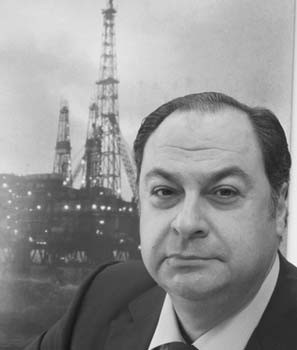
by Roudi Baroudi December 11, 2012
written by Roudi Baroudi

Lebanon is presented with the most serious challenges it has faced in the past decade. The economy is struggling, the internal security situation is deteriorating and the country’s neighbors pose real threats. In these circumstances the very fact that the country continues to operate can be seen as a success. And amidst everything, there are opportunities — not just in newfound offshore oil and gas but also within the country's ingenious population.

As we head into 2013, what can be done to help the country unite, to overcome its challenges and ultimately to grow? Over the course of this week, eight influential figures will address seven important topics, each suggesting one proposal to help the country move forward. In this article, the World Energy Council's Roudi Baroudi calls for measures to protect the country's offshore oil and gas from corruption.

My one hope for Lebanon in 2013 is that all of its various political leaders and factions take and/or allow the necessary steps for sound and sustainable development of the country’s newly promising energy sector.

Why? Because virtually all of the measures involved a) are just common sense; b) require little or no investment of scarce public resources; and c) happen to be the same changes required to reform, rebuild and genuinely reconcile Lebanon as a whole.

On the overall energy front, the first change would have to be one of mindset. For too long, the sector has been treated by officials, their relatives and their cronies as a cash-cow for themselves rather than as an essential ingredient in building and operating a modern nation-state. From heavy industry to the average family, everyone is affected by the chronic power shortfall. We are more than a decade into the 21st century: doing homework by candlelight should be the stuff of tales told by grandparents, not the current experiences of schoolchildren also learning to use computers. Imagine if those tasked with formulating and implementing energy policy were concerned at last with basic public goals: namely, how best to deliver affordable, reliable and sustainable energy (electricity, LPG “cooking gas”, gasoline, diesel oil, fuel oil) to all Lebanese.

See also: Former Labor Minister Charbel Nahas on rethinking the economy

British Ambassador Tom Fletcher on foreign interference

Hicham Safieddine on the Syria spillover

Saleh Machnouk on disarming Hezbollah

In turn, this new attitude could quickly convince Lebanese politicians of the need to follow the law by forming a regulatory authority for electricity, and one for the nascent oil and gas industry as well. This would go hand in hand with a government newly determined to ensure transparency, for instance by disseminating all available general information and specific knowledge about the process(es) by which the future of the oil and gas sector is being planned and managed.

The same enlightened leadership would seek out and adopt the best practices at every stage of its oil and gas venture, starting at the beginning. For example, Lebanon should spend its taxpayers’ money wisely by restricting its paid advertising to globally recognized industry publications and highly regarded professional and financial publications like the Economist and the Financial Times,  and using the websites of the World Bank and the European Commission – for free – in order to ensure the broadest possible international awareness of the country’s hydrocarbon potential. The government could then consult the latter two bodies and other reputable institutions to help understand the experiences of other emerging energy powers and avoid making the same costly mistakes.   

Thus animated, not just by the need to closely monitor oil and gas developments, but also by its duty to keep the public informed, the Ministry of Energy and Water would secure timely and professional analysis of the seismic studies immediately following their completion – then, based on these findings, publish the next steps approved by the government in order to pursue development of the fields.

In addition, with the seismic results in hand, the ministry could commission a well-known and qualified international consulting firm to prepare a comprehensive energy master-plan encompassing the entire industry and each of its sub-sectors. The electricity subsector component would be based on a long-term, least-cost expansion of generation and transmission which would take into account feasible grid interconnections with other countries in the region, the role of renewable energy, and integration of the environmental and climate change dimensions to demonstrate Lebanon’s strategy for reducing its carbon footprints in its production and use of energy.

When it comes to the implementation of specific projects, the ministry would act diligently to ensure not only that all necessary environmental impact studies were being carried out, but also that the implementation of mitigating measures was done in accordance with both international best practice and the requisite environmental and social guidelines applicable in Lebanon.

The same spirit of respecting the law and pursuing the national interest also would cause Lebanese politicians, whatever their party loyalties, to avidly support the continued reform of the judiciary, an acceleration of nominations to fill judicial vacancies, and other measures designed to strengthen the rule of law. All of these steps would magnify the impact of the others by helping to ensure that pieces of legislation passed by Lebanon’s Parliament are no longer regarded as idle suggestions to be ignored at will.

All of the foregoing – flowing from the original wish that Lebanon’s main political actors would stop obstructing oil and gas progress – would ensure a dynamic and profitable energy sector capable of alleviating many national problems, especially poverty. Properly managed, oil and gas would supply ample revenues for decades to come, providing the Lebanese state and Lebanese society with the resources they need to finally end the twin evils of systematic inequality and sectarian resentment.

If we really want our grandchildren not to be doing their homework by candlelight, then real change is needed. With simple steps and more enlightened leadership, we can start to make it happen in 2013.

Roudi E. Baroudi is an independent energy and environmental consultant and Secretary General of the World Energy Council – Lebanon Member Committee


December 11, 2012 0 comments
0 FacebookTwitterPinterestEmail
The Buzz

Morning briefing: 11 Dec 2012

by Executive Staff December 11, 2012
written by Executive Staff

Economics

Gold inched lower on Tuesday but sentiment was underpinned ahead of a US Federal Reserve meeting where policy makers are expected to announce more stimulus measures, a move that would support gold's appeal as a hedge against inflation.

More from Arabian Business


Egyptian President Mohammed Morsi has suspended planned tax increases, hours after they were formally announced, in a policy swivel that might complicate Egypt's efforts to secure a $4.8 billion loan from the IMF.

More from The Daily Star


The Lebanese Cabinet again failed to pass the controversial salary scale on Monday as the private sector and labor groups remained deeply divided on whether to raise the salaries of civil servants and teachers substantially.

More from The Daily Star


Companies

Dana Gas, the first UAE group to default on an Islamic bond, is offering bondholders $70 million in cash and an average eight per cent coupon on the remaining $850 million of debt in a move to buy time to fix its finances.

More from Gulf Business


Qatar Telecom, which is majority state-owned, plans to issue a long ten-year bond after investor meetings conclude, arranging banks said on Tuesday.

More from Gulf Business


Gulf carrier Etihad Airways is close to buying a 48 per cent stake in debt-ridden Indian carrier Kingfisher Airlines for a little over 30 billion rupees ($550.3 million), the Mumbai Mirror reported on Tuesday.

More from Gulf Business


Samsung Engineering Co Ltd has announced its consortium with China's Shanghai Electric and Saudi Arabia's Al Toukhi was awarded a $3 billion order to build a power and desalination plant in Yanbu, Saudi Arabia.

More from Reuters


Morgan Stanley's head of mergers and acquisitions for the Middle East and North Africa (Mena) is leaving the bank, three sources said, the latest in a string of high-level banking departures from the Gulf region.

More from The National

December 11, 2012 0 comments
0 FacebookTwitterPinterestEmail
  • 1
  • …
  • 294
  • 295
  • 296
  • 297
  • 298
  • …
  • 696

Latest Cover

About us

Since its first edition emerged on the newsstands in 1999, Executive Magazine has been dedicated to providing its readers with the most up-to-date local and regional business news. Executive is a monthly business magazine that offers readers in-depth analyses on the Lebanese world of commerce, covering all the major sectors – from banking, finance, and insurance to technology, tourism, hospitality, media, and retail.

  • Donate
  • Our Purpose
  • Contact Us

Sign up for our newsletter

    • Facebook
    • Twitter
    • Instagram
    • Linkedin
    • Youtube
    Executive Magazine
    • ISSUES
      • Current Issue
      • Past issues
    • BUSINESS
    • ECONOMICS & POLICY
    • OPINION
    • SPECIAL REPORTS
    • EXECUTIVE TALKS
    • MOVEMENTS
      • Change the image
      • Cannes lions
      • Transparency & accountability
      • ECONOMIC ROADMAP
      • Say No to Corruption
      • The Lebanon media development initiative
      • LPSN Policy Asks
      • Advocating the preservation of deposits
    • JOIN US
      • Join our movement
      • Attend our events
      • Receive updates
      • Connect with us
    • DONATE