• Donate
  • Our Purpose
  • Contact Us
Executive Magazine
  • ISSUES
    • Current Issue
    • Past issues
  • BUSINESS
  • ECONOMICS & POLICY
  • OPINION
  • SPECIAL REPORTS
  • EXECUTIVE TALKS
  • MOVEMENTS
    • Change the image
    • Cannes lions
    • Transparency & accountability
    • ECONOMIC ROADMAP
    • Say No to Corruption
    • The Lebanon media development initiative
    • LPSN Policy Asks
    • Advocating the preservation of deposits
  • JOIN US
    • Join our movement
    • Attend our events
    • Receive updates
    • Connect with us
  • DONATE
The Buzz

Morning briefing: 17 Dec 2012

by Executive Staff December 17, 2012
written by Executive Staff

Economics

Brent crude held steady above US$108 a barrel on Monday, drawing support from a brighter economic outlook for top energy consumer China, although investors remained skittish as US talks to avert a year-end "fiscal cliff" dragged on.

More from Reuters


Gold edged lower on Monday, extending losses to a third straight session, as slowing trade ahead of the year-end holidays responded little to the latest progress in the US budget talks.

More from Reuters


Iran's oil revenues have been cut in half this year compared with last year, a newspaper quoted Iran's economic minister as saying, an admission of how deeply Western sanctions are cutting Tehran's chief source of funds.

More from Arabian Business


Kuwait's index is seen steady on Monday despite demonstrations against the new parliament.

More from Arabian Business


Palestinian Prime Minister Salam Fayyad urged his compatriots in the occupied West Bank on Sunday to boycott all Israeli products, upping the ante in a standoff with the Jewish state.

More from Arabian Business


Salaries increased by 11 percent in Lebanon in 2012, said a report by international management consultancy Hay Group, which forecasted a further increase of 8 percent in 2013.

More from The Daily Star


The tentative oil cooperation between Baghdad and the semi-autonomous Kurdistan region, which was reached three months ago, has suffered a series of political setbacks as the two governments remain locked in a military standoff in Iraq's disputed territories.

More from Iraq Oil Report


Companies

Dubai’s Gloria Hotels has opened the largest hotel property in the Middle East in terms of number of rooms, the operator announced.

More from Arabian Business


Subsidized loans extended to small-and medium-size companies declined 15.5 percent in the first 11 months of 2012 compared to last year, Kafalat SAL said in a statement.

More from The Daily Star


Saudi Arabia’s HRH Prince Alwaleed bin Talal has topped the Arabian Business Rich List for the ninth year in succession, with his current wealth now standing at US$25.9bn.

More from Arabian Business

December 17, 2012 0 comments
0 FacebookTwitterPinterestEmail
Economics & PolicyLebanon 2013: The big ideas

Unbinding sectarianism

by Nadim Houry December 16, 2012
written by Nadim Houry

Lebanon is presented with the most serious challenges it has faced in the past decade. The economy is struggling, the internal security situation  deteriorating and the country’s neighbors pose real threats. Yet amidst everything, there are opportunities — not just in newfound offshore oil and gas but also within the country’s ingenious population.
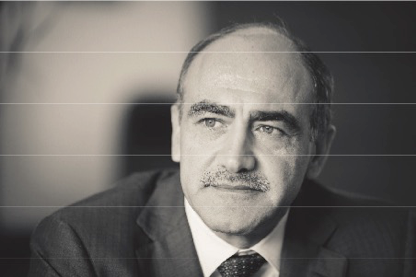
As we head into 2013, what can be done to help the country unite, to overcome its challenges and ultimately to grow? Over the course of this week, eight influential figures will address seven important topics, each suggesting one proposal to help the country move forward. In this final article, Nadim Houry from Human Rights Watch makes the case for an anti-discrimination law.
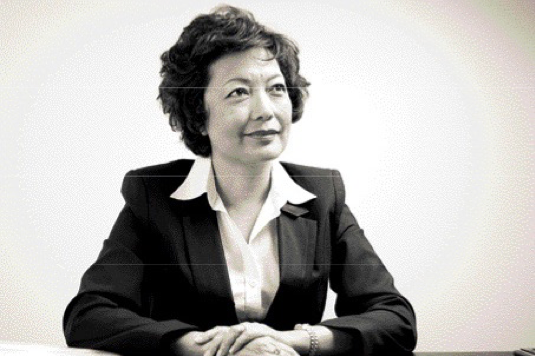
 

Buried deep in Lebanon’s Constitution is an often-neglected provision that was inserted at the end of the civil war in 1989. Article 95 called for a transitional period to abolish political sectarianism and cancel confessional representation in public service jobs, the judiciary, and security institutions. And yet, nearly a quarter-century later, not only has Lebanon failed to begin this transitional period but the confessional allocation of jobs has increased across all levels of public administration. Sectarian considerations have also become more common in private sector employment and in private dealings, such as real estate transactions.

Given the current level of political deadlock and sectarian tension, it is unlikely there will be any breakthrough during 2013 in terms of reforming or abolishing political sectarianism. But Lebanon could try to stem the sectarian drift in day-to-day life by adopting an anti-discrimination law requiring equal treatment of  all Lebanese in employment and in private transactions such as rental or purchase of homes. A temporary exception could be made in the law for the allocation of parliamentary seats and the highest-ranking positions in the state to take into account existing power-sharing arrangements in the Constitution.

Left unchecked, Lebanon’s sectarian dynamics have spread like a cancer across public administrations. Today, the simplest public appointment is subject to sectarian horse-trading with the predictable outcome that qualifications are rarely the main selection factor. Take the recent appointment of a six-member committee to oversee and regulate the oil and gas sector. Instead of focusing on expertise, the government focused on ensuring that the appointees came from the following six communities: Shia, Sunni, Druze, Maronite, Greek Catholic, and Greek Orthodox. Tough luck for any oil expert who may belong to the other 12 religious communities recognized in Lebanon.

See also: Former Labor Minister Charbel Nahas on rethinking the economy

Roudi Baroudi on the country’s oil and gas

British Ambassador Tom Fletcher on foreign interference

Hicham Safieddine on the Syria spillover

Saleh Machnouk on disarming Hezbollah

Sami Atallah on regional councils

Nada Zaarour on the green economy

Some municipalities have announced that they will prevent the sale of land and houses from Christians to Muslims in their areas by refusing to approve the transactions – a necessary condition for the new owner to be able to register the property. In July 2011, the Hadath municipality in Mount Lebanon even put up posters telling people not to sell their land or homes because the municipality would not approve the transactions. Not specified on the posters, but evident to local residents, the municipality was trying to stem the sale by local Christians to Shias, whose numbers in the area had increased.

These municipalities justify such discriminatory behavior by contending that it is essential to protect the community’s interests and that they want to preserve the “character” of the area. Landlords and employers often repeat such justifications when discriminating in their choices of tenants or employees. Many landlords prefer to rent to tenants from the same religious group. While they rarely express this outright, usually such landlords manage to ask a few questions at the onset to determine a potential tenant’s sect. The answer often affects the willingness of the landlord to rent to that tenant.

Such dynamics regularly are in play in the job market. While no statistics exist, anecdotes abound of employers rejecting applicants because of their religious background.

Regardless of their motivation, such practices have a real cost: they discriminate against citizens and contribute to the further ghettoization of Lebanon. The outcome is an increasingly divided population that interacts less and less across communal boundaries. Today, if you are a Christian, you will probably live, work, shop and dine in mostly Christian areas. The same can be said about Sunnis or Shias. The civil war may have ended but many front lines still exist.

Lebanon needs to start tackling this increasing ghettoization, which is directly contributing to divisions in the country. A new equilibrium is needed between promoting the interests of each religious community and  everyone’s right  to be treated equally. Pushing for equality for all is not just about individual rights, it is essential to building a state that is more than the sum of its religious communities. 

This is why I hope that in 2013 Lebanon will adopt an anti-discrimination law. Such a law would not resolve sectarian problems on its own. But it would challenge the norm that it is acceptable for citizens to be treated differently based on their religious background. It would also provide a tool for a few dedicated lawyers to use the judiciary to start chipping at the walls of the ghettos that each community has built around itself. It may even begin to give meaning to another important part of Lebanon’s constitution, its preamble, which affirms equality of rights and duties among all Lebanese citizens without discrimination. 


Nadim Houry is deputy Middle East and North Africa director at Human Rights Watch. He runs the organization’s Beirut office.

December 16, 2012 0 comments
0 FacebookTwitterPinterestEmail
InsuranceVoices

Premium insight

by Thomas Schellen December 16, 2012
written by Thomas Schellen

“The insurance industry has shown its resilience, because it is growing. When we drill down, we see that we have some very good professional companies that have good returns on equity and others that are losing a lot of money. On a strategic level, we have to consider recent acquisitions of [two Lebanese insurers by international companies.] So the industry is still attractive to outside players and Lebanon is attractive to be used as a jumping board into the rest of the region. This definitely shows how the insurance industry in Lebanon remains very resilient despite all the [country’s] problems.”

Farid Chedid, Chairman of Chedid Re

“Competition is one of the factors that have increased among insurers in the region, but instead of competing by offering good services, competition is focused on dropping prices with no justification. Unless there are mergers and acquisitions and incentives to consolidate, I don’t see a very bright future in the next three years for the regional industry and this includes Lebanon. Lebanon has a very large number of insurers and although the country has high insurance penetration and density when compared with the regional average, it is very low when compared with Western averages. We still have a long way to go and many brokers and insurance companies still have to learn how to do the business in an ethical and professional way.”

Fady Shammas, Chief Executive of Arabia Insurance

“The biggest worries that everybody has -— the rich and the not so rich — are to guarantee schooling for their kids, care in case of hospitalization and a decent retirement. This important segment of insurance demand is covered by the personal lines and this is the space where we are trying to do something. We have already been working for a while with education and retirement personal plans. These products are doing quite fine, with very acceptable results and I see the future here and with other personal plans.”

Fateh Bekdache, Chief Executive of Arope Insurance

“Marine insurance in Lebanon is developing in step with the economy, based on imports and exports.  It is not a good sign for the market that one is not able to insure business in Syria. For Lebanese cargo insurers the problem of sanctions against Syria, Iran and other countries is that it is not a clear-cut situation. You can insure many shipments while there is no claim. But it is not enough to [have an exclusionary clause in the policy and] say ‘under my policy I don’t pay a claim to a sanctioned party.’ It is also not sufficient to say ‘I will use Lebanese pounds to price a policy in insuring cargo to Iran’ because the US dollar cannot be used.”

Max Zaccar, Chairman of Commercial Insurance 

“The Motor Risk Center is a good idea as it makes it possible to block the bad risks and drivers with bad profiles, like in other countries where high frequencies and severities of claims by certain drivers result in a malus. Having such a database in which all sector companies in Lebanon bring together the relevant information will help insurers to select proper risks and penalize bad ones through additional premiums or deductibles. I have urged my colleagues in the local insurance sector to join the Motor Risk Center by submitting their data.”

Abdo el-Khoury, executive board member at UCA Insurance

“There is a need to further develop professional insurance education in Lebanon. The overall level of insurance qualification is still quite poor, although it is better than in other countries of the region. There is a framework from the (United Kingdom-based) Chartered Insurance Institute and it is internationally recognized. We have been offering CII qualification programs with sponsorship from the Lebanese insurance association for three years and what has happened so far in this professional qualification has been quite fine. The number of companies who sent their employees has increased and the number of CII graduates has more than doubled since 2010. One can estimate that each insurance company has on average at least 10 persons working in middle management and senior staff positions where CII qualification offers a great advantage. If we multiply this number by 50 insurance companies, there is space for something like 500 people to qualify. We now have about 8 to 10 percent of these [who have enrolled in professional education] and there is still a big need.”

Joseph Adaime, Assistant General Manager at Al Ittihad Al Watani
December 16, 2012 0 comments
0 FacebookTwitterPinterestEmail
AutomotiveVoices

Motor mouths

by Paul Cochrane December 16, 2012
written by Paul Cochrane

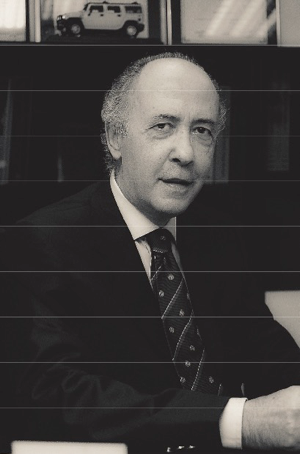
“There is a crisis when the market is up 6 percent but the luxury sector is down by over 10 percent.”

Pierre Heneine, Financial Manager at Bassoul-Heneine, dealer for Renault and Dacia

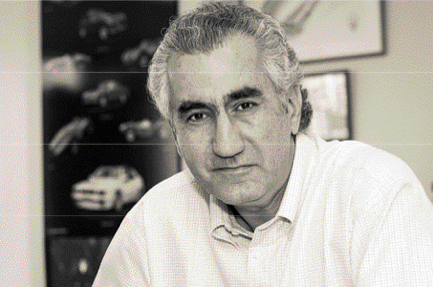
“There is competition in the luxury segment and it is affecting margins.”

Cesar Aoun, General Manager of Gargour and Fils, distributor of Mercedes, Smart, Jeep, Chrysler and Dodge

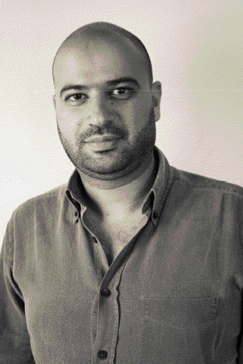
“It would be stupid to raise VAT as it would kill the market completely, which is already going through a very severe crisis.”

Samir Homsi, President of the Automobile Importers Association (AIA)

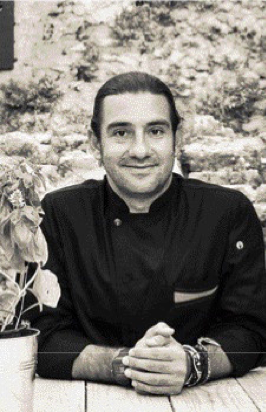
“The downturn could’ve been countered if the Beirut Motor Show had not been canceled. The majority of the members of AIA claimed unrest in Lebanon and the economic crisis. My point of view is it was a big mistake. When you have an agenda you follow it, whether it is a success or a flop.”

Nabil Bazerji, Managing Director at G.A. Bazerji & Sons, dealer for Suzuki, Lancia and Maserati
December 16, 2012 0 comments
0 FacebookTwitterPinterestEmail
IndustryVoices

Made in Lebanon

by Zak Brophy December 16, 2012
written by Zak Brophy

“We need to be more realistic and enjoy life a little bit. We don’t have to make money every year; there are many nice things to be done in the country.”

Vrej Sbounjian, Minister of Industry

“We are picking up slack not because of Syria so much but due to Turkish suppliers being out of the market. They are now being restricted due to logistics and political reasons, and that trade link has been broken.”

Nizar Raad, General Manager of Universal Metal Products

“We are selling more but there is the problem of cash flow. People are afraid of spending money in the current environment… We are selling for cash not credit as the currency is fluctuating a lot. We sell in Syrian pounds and then transfer on the spot.”

Asaad Saccal, General Manager of generator manufacturers, Saccal Industries, on trade with Syria

“There is a lot more research and development in Lebanon than elsewhere in the region. In Saudi Arabia, Syria, the Emirates, they just copy others.”

Daniel Abboud, General Manager of Lebanese trailer and automotive add-ons manufacturers, Carosserie Abillama

“I am personally worried, not only for the situation of industrialists but also because of the condition of public finance and its impact on the economy and the pressure it puts on the private sector. Our indicators are not good, to say the least.”

Neemat Frem, President of the Association of Lebanese Industrialists

“Before the Syrian crisis, Lebanon was a good transit point for cargo to Iraq. Now there are a lot of doubts. Traders are asking what will happen to their cargo if it gets stuck due to a crisis during transportation in Lebanon or elsewhere.”

Fadi Hadad, General Manager of shipping and logistics firm Masafat International

“I think Lebanese industry is going through its worst period since the end of the civil war. We have never had this agglomeration of domestic, regional and global factors affecting supply and demand.”

Mazen Soueid, economic advisor to former Prime Minister Foud Siniora
December 16, 2012 0 comments
0 FacebookTwitterPinterestEmail
RetailVoices

Shop talk

by Nabila Rahhal December 16, 2012
written by Nabila Rahhal

“Planning in Lebanon has become very difficult. All our brands expect plans and targets from us for next year and the reality is that plans are meaningless when one political incident can alter your course. Realistically, we expect 2013 to be the same as 2012, if the situation remains the same internally and does not escalate. We are saying this because, at the end, Lebanon is affected by the conflict in Syria and it does not seem like it will be resolved in the near future. Again, planning for 2013 therefore becomes difficult in these circumstances.”

Mher Atamian, Managing Director at Atamian

“The number of Arab tourists decreased significantly this summer and the retail sector certainly suffered from this loss of revenues, but we have to deal with it and move on. The more aware and responsible Lebanese are, the more we will be able to have some damage control.”

Sophie Salameh, owner of Sophie’s Choice Boutique in Beirut Souks

“Despite the tough times the country is facing both locally and because of regional spillover, our Lebanese customers remained loyal to our brand. This is mainly thanks to the portfolio of Vertu smartphones, which we launched two years ago and which enjoyed great success among the young clientele, leading to double-digit growth for our business year on year since their launch in 2009.”

Hassan Moustapha, Regional Manager for the Middle East and Africa at Vertu

“Since the launch of the Slowear project a year ago, I certainly had concerns with the overall economic situation and I still have. But we decided to move on, confident in the brand and in our market. 2013 will certainly not be an easy year for the retail industry in general. However, the opening of the new malls around Beirut should bring some dynamism to the market. As for Slowear, we are working on openings in Dubai and Qatar planned for the second quarter of 2013. KSA and Kuwait will follow in 2014.”

Nadim Chammas, Chief Executive of Menawear, distributor of Slowear in the MENA region  

“We rely on our longstanding experience, our know-how, as well as our invested internal strategies for the marketing and development of our luxury division. We will keep on investing professionally regardless of what happens around us. Keeping the crisis in mind, we will continue investing adequately to maintain the proper service to our partners and customers.”

Nadim Chammas, Chief Executive of Menawear, distributor of Slowear in the MENA region  

“The outlook for 2013 is quite challenging as we are facing reduced consumer spending and weak economic conditions. These harsh economic realities are compelling retailers to be more cautious and prudent in their forecasts and local development plans and to seek new paths to stay competitive. Embracing the opportunities offered by the Internet and social media platforms, as well as exploring new and innovative marketing tools, is an essential strategic orientation that retailers need to pursue in order to create more personalized relationships with their customers in 2013.”

Jamil Rayess, General Manager at Hamra Shopping and Trading Company
December 16, 2012 0 comments
0 FacebookTwitterPinterestEmail
Hospitality & TourismVoices

Singing the blues

by Nabila Rahhal December 16, 2012
written by Nabila Rahhal

“We will keep witnessing closures of venues and bankruptcies every month, especially the small, less established outlets. This has always been the case, but [in 2013] the rate of these closures will increase and profitability will drop across the sector.”

Marwan Ayoub, Managing and Founding Partners at Venture Hospitality

“2011 was a very good year for us, one of the best years ever for Sushi Bar. 2012 started well, even better than the previous year, up until May when the drop was kick-started. Depending on the outlet, we are somewhere between 11 percent and 19 percent below last year, which constitutes a substantial decrease, but not a major loss.”

Mario Haddad Junior, owner of Sushi Bar, Falamanki and Jasmine Room

“If the regional situation continues like this, we will be facing a bigger crisis as tourists continue to avoid Lebanon, and overseas expats fear visiting. Already, the high tourist season in Lebanon is getting smaller with barely a productive week of festivities in the winter and a month in the summer, especially with Ramadan now in it.”

Toni Rizk, Managing Partner at TRI Food & Beverage

“The situation around us will not stop us from further diversifying our portfolios because throughout the country’s history there has been turmoil, and things have reached rock bottom often… we use this down time to find good opportunities and when the market picks up we will be ready.”

Hady Fadel, Corporate Marketing Manager at Boubess Group

“The best way to describe the coming period, which actually started a few months ago, is “challenging” — a challenge that could be called survival until we see better days. It is necessary to reduce costs to cope with the consequences of such a delicate situation we are currently experiencing.”

Rana el-Khoury, General Manager at Le Gray Hotel
December 16, 2012 0 comments
0 FacebookTwitterPinterestEmail
Real estateVoices

The crème of ‘concretization’

by Thomas Schellen December 16, 2012
written by Thomas Schellen

“[For the real estate market overall], 2012 was one of the most difficult years since 2005. People are used to ups and downs in this country and have learned to disassociate the political developments from real estate. However, we felt that the recession in the sector was the harshest in a long time, and the harshest on many fronts. Capstone is a different story. We just recently closed a very big deal in real estate, probably the biggest deal in the market in many years. We purchased a plot of 2,500 square meters in a very prime location of Beirut: Sursock, Ashrafieh. Capital in this transaction was two times oversubscribed. This story tells you that there is still appetite in the market for a good product where investors can go in not for the short term but the long term, four or five years. People have hope for the future.”

Ziad Maalouf, Chief Executive of Capstone Investment Group

“Because of the size of Beirut, which is small, and because of the high prices demanded for properties, especially in prime areas, the only way to go [for developers] is vertically. There is very little room to grow laterally and it is very expensive to grow laterally. The issue then becomes how do you do it without terribly impacting the heritage. We have taken the view that heritage to the extent that it is genuine heritage, not just any old building, should be preserved at any price. So we have never attempted to build in areas where there are heritage houses that would have to be demolished for the development. In Sursock we built alongside the Linda Sursock Villa in a way that we have allowed its visibility from all angles and we have intended to wed the new structure to the old structure. Some people obviously like that, some don’t. Some developers have not been conscious enough and have demolished old houses that are of character. That is unfortunate.”

Nabil Sawabini, Chairman and Chief Executive of MENA Capital

“The economy has been really affected by the regional crisis and I think 2013 will be a little quiet, but we are doing fine. In the company we still have three projects [with deliveries] for three years to come and I have told my investors that we will take it easy. We will maintain our clientele, provide all the services and make sure that we will provide [our buyers with] whatever is required. We are not going to be aggressive. We are working on a few new projects that will be something really different in Beirut but we are not actually in a hurry. If we don’t do it next year, we will do it the year after.”

 Ayad Nasser, Chief Executive of Loft Investments

“On the side of sales, the office market will follow the market situation, which is a slowdown on basically everything. However, there is a niche that can be satisfied, which is a luxury office product in a key location with good accessibility and visibility. I believe that there is a market for it and it will endure in 2013. The same goes for office rentals. A lot of supply is coming. Projects in grade ‘A-plus’ office space are usually for larger companies who come here to open regional offices, and the political situation will not be suitable for such projects. But there is a niche for luxury offices of grade ‘A’ or ‘B-plus’; the local Lebanese market will need to buy or rent [such spaces] because Lebanon is where their business is and they believe in the market.”

Houssam Batal, Chief Executive of Premium Projects

“The idea for the association of developers is based on the fact that real estate development today is one of the most important sectors of the economy in Lebanon. We believe that development deserves to have an association. You need to negotiate with the banks, with the central bank about interest rates and with the ministries and municipalities. I also believe that one of the missions of this association should be to secure statistics. If I want to start a new project today in Sin El Fil or Ashrafieh, a good association and secretariat will provide us with some statistics, obtain information from the syndicate of engineers and act as the link between all stakeholders. It must be a professional association, having nothing to do with political [interests] but only defend the interests of developers.”

 George Chehwane, Chairman and Chief Executive of Plus Properties
December 16, 2012 0 comments
0 FacebookTwitterPinterestEmail
Banking & FinanceVoices

Words from the vault

by Maya Sioufi December 16, 2012
written by Maya Sioufi

“Everything else being equal, I don’t foresee better economic conditions than the ones prevailing in Lebanon. If we can sustain the current levels it’s a positive thing. We need to see transformational changes in the region.”

Freddie Baz, Chief Financial Officer of Bank Audi

“We are in Syria for the long term. We see in the medium-to-long term a lot of potential. We expect like everyone else that events will still be very bad and we have no expectations for things to improve in the short term. It will take several years probably before things improve.”

Saad Azhari, Chairman and General Manager of Blom Bank

“Regarding the Financial Markets Authority, of course we need better rules and regulation to avoid further stock manipulation but at the end of the day, we need more companies to list on the exchange.”

Jean Riachi, Chief Executive and Chairman of FFA Private Bank

“I think the government should not be interfering with wages across the board but only ensure the minimum wage rate. For them to be involved in my or your salary is none of their business. At end of the day, businesses will pay what they feel is the market price for X, Y, Z because if you are not paying it [people] will move somewhere else.” 

Anwar Jammal, Chief Executive and Chairman of Jammal Trust Bank

“The biggest challenge this year was the external environment. It was not forecast. The geopolitics of Lebanon this year was worse than we expected. I think despite that we are very positive about the resilience of the economy because history has shown that the banking sector is very resilient.”

Pik Yee Foong, Chief Executive of Standard Chartered Bank Lebanon

“The banks are in a Maronite marriage with the government in terms of financing [the public sector]. Banks have to refrain from being open to new increases in treasury bills. They are happy to continue supporting the government with the current level of debt and refinancing maturing Eurobonds but not to [increase their exposure] significantly.”

Ghassan Assaf, Chairman and General Manager of BBAC

“It’s a love-hate relationship with the private sector for two reasons: it is a small sector with competitive pricing and it [requires] a very time-intensive service. For instance, you service [the chief executive] of a small [or] medium enterprise for $15,000 and you have to see him every couple of days to service him. It’s not like putting that amount in a T-bill and getting the interest once a year from the central bank. This has to do with your readiness to service the private sector. Doing it and saying it are two different things.”

Tarek Khalife, Chairman of Credit Bank

“We are paying very high indirect taxes. The war has been over for more than 20 years now and we still don’t have proper electricity. It’s the biggest bill we are paying. Companies are paying a hell of a lot of money. This is murder; it is a crime for the country. With all our pride of being innovative etcetera, and we can’t solve electricity. It’s a disaster.”

Rami el-Nemr, Chairman and General Manager of First National Bank
December 16, 2012 0 comments
0 FacebookTwitterPinterestEmail
Economics & PolicyVoices

Remarks from the top

by Zak Brophy December 16, 2012
written by Zak Brophy

“We are all one family at MEA but everyone must know that I am the father of the family.”

Mohammad Hout, Chairman of Middle East Airlines, after a strike by pilots

“There is no dispute, we will not compromise on our right to the full 860 square kilometers.”

Gebran Bassil, Minister of Energy and Water, on the contested maritime Exclusive Economic Zone between Lebanon and Israe

“Concerning the election, we are awaiting the law. We can’t say anything before the law. But electorally speaking, everything is possible.”

Ghazi Aridi, Minister of Public Works and Transport, on the potential of Walid Jumblatt breaking the government coalition

“There is oil and gas five kilometers south of our borders — do we think God created a wall  between us and Palestine? All of this area is rich in the Levantine basin.”

Mohammad Qabbani, Head of the Parliamentary Energy and Public Works Committee

“We have reached an economic situation where we are stranded in the middle of a tunnel and there is no end in sight. We are seeing bankruptcies and lots of companies closing down.”

Mohammad Choucair, President of the Lebanese Chamber of Commerce

“We need to work more and produce more and spend less. We need to move away from this culture of debt. This simply isn’t working anymore.”

Charles Arbid, President of the Lebanese Franchisers Association

“There are different sovereign funds and Arab Development Funds that came to the government to fund developments in the electricity sector.  They said, ‘no we don’t need them’. Honestly, they don’t know their ass from their elbow.”

Roudi Baroudi, independent energy consultant and secretary general of the World Energy Council’s Lebanon member committee

“We need a master plan and we need the national accounts on regular terms and clear terms so we can assess our economy on reliable figures and trends and criteria. This is an important place where real change needs to happen.”

Nicolas Nahas, Minister of Economy and Trade
December 16, 2012 0 comments
0 FacebookTwitterPinterestEmail
  • 1
  • …
  • 293
  • 294
  • 295
  • 296
  • 297
  • …
  • 696

Latest Cover

About us

Since its first edition emerged on the newsstands in 1999, Executive Magazine has been dedicated to providing its readers with the most up-to-date local and regional business news. Executive is a monthly business magazine that offers readers in-depth analyses on the Lebanese world of commerce, covering all the major sectors – from banking, finance, and insurance to technology, tourism, hospitality, media, and retail.

  • Donate
  • Our Purpose
  • Contact Us

Sign up for our newsletter

    • Facebook
    • Twitter
    • Instagram
    • Linkedin
    • Youtube
    Executive Magazine
    • ISSUES
      • Current Issue
      • Past issues
    • BUSINESS
    • ECONOMICS & POLICY
    • OPINION
    • SPECIAL REPORTS
    • EXECUTIVE TALKS
    • MOVEMENTS
      • Change the image
      • Cannes lions
      • Transparency & accountability
      • ECONOMIC ROADMAP
      • Say No to Corruption
      • The Lebanon media development initiative
      • LPSN Policy Asks
      • Advocating the preservation of deposits
    • JOIN US
      • Join our movement
      • Attend our events
      • Receive updates
      • Connect with us
    • DONATE