• Donate
  • Our Purpose
  • Contact Us
Executive Magazine
  • ISSUES
    • Current Issue
    • Past issues
  • BUSINESS
  • ECONOMICS & POLICY
  • OPINION
  • SPECIAL REPORTS
  • EXECUTIVE TALKS
  • MOVEMENTS
    • Change the image
    • Cannes lions
    • Transparency & accountability
    • ECONOMIC ROADMAP
    • Say No to Corruption
    • The Lebanon media development initiative
    • LPSN Policy Asks
    • Advocating the preservation of deposits
  • JOIN US
    • Join our movement
    • Attend our events
    • Receive updates
    • Connect with us
  • DONATE
AutomobilesEconomics & Policy

Big sales for small cars

by Paul Cochrane November 2, 2012
written by Paul Cochrane

If you go by the headlines in financial reports, the car market is doing surprisingly well given the staid economic climate;  growth of 7.6 percent was registered in the first eight months of the year, relative to 2011, and up 2.1 percent on the same period in 2010. But delve further into the Automobile Importers Association (AIA) monthly reports and all is not well, certainly for most dealerships, with just three brands accounting for 61.37 percent of sales this year.

“The market is very bad. People feel all is well as volumes are up but turnover is much lower than last year,” said Samir Homsi, president of the AIA. “Only baby cars are selling, in the $10,000 to $12,000 range. The situation is very lousy and profit margins are down.”

Brands which have had strong sales this year all have compact models in the A, B and C categories, which have steadily grown in recent years, with low horsepower vehicles currently accounting for an estimated 80 to 90 percent of sales. For Rymco, dealer of Nissan, the A category (think of the Micra) has gone from 18 percent of sales in 2010 to 21 percent this year, and the B category (the Sunny) from 15 percent to 20 percent, while other categories have contracted by 10 percent.

“We are seeing a trend where nearly every household has a small car now; it is a must,” said Farid Homsi, general manager of IMPEX, distributor for GM, Chevrolet, Cadillac, Hummer and Isuzu. “The Chevrolet Spark is by far our number one seller, by a big, big margin.”

Kia, Hyundai and Nissan are the top three sellers, with the next leading four brands — Toyota, Chevrolet, Renault and Volkswagen — accounting for 15.21 percent. Out of some 70 car brands available in the market, these seven account for 76.58 percent of sales.

“It is amazing if you look at the sales results that three brands control around 60 percent of the market and all the others share the rest. There is something wrong. Consumers are being followers rather than choice makers,” said Nabil Bazerji, managing director of G.A Bazerji and Sons, distributor of Suzuki, Lancia and Maserati.

The shift toward smaller vehicles is driven primarily by rising fuel costs, the lack of public transport and financial constraints. “People don’t have the budget anymore, fighting to get $4,000 for a down payment, and some distributors are even selling without a down payment,” said Samir Homsi. “People are only buying because there is a need, not to put a key holder on the table to say I own X or Y. It is for commuting, so they want a small, economical car.”

With dealerships offering warranties and free servicing deals for up to five years, and banks aggressively financing loans, this has helped drive the surge in sales of lower-end models. For market leader Kia for instance, 60 percent of sales are through financing. 

On the positive side, demand for more fuel efficient vehicles has resulted in a drop in sales of used cars — in addition to individuals banned from importing second-hand cars — which plunged 28.89 percent last year on 2010, and year-to-date down 17 percent on 2011, from 25,281 cars to 21,424 in 2012.

Asian invasion

The biggest gainers from the shift to smaller cars and new vehicles, over buying that long popular second-hand choice of a Mercedes or BMW, are the Korean brands, which have a staggering 44.81 percent of the market — Kia with 26.88 percent and Hyundai with 17.92 percent. Cheap Chinese brands have also made gains this year, up 85 percent, albeit only selling 308 cars and accounting for just 1.18 percent of the market, indicative of how price sensitive consumers are. 

Kia has been number one for three consecutive years since knocking Nissan from the top spot, and sales are up 13 percent this year. “Lebanon is the only country in the world where Kia is number one, everywhere else it’s Hyundai,” said Dayala Dagher Hayeck, general manager of NATCO, distributor of Kia. “We’ll be number one again next year and in the coming years. The challenge is to remain there. As long as there’s no public transport it’s good for sales.” 


Korean cars have been popular in the Lebanese market before, when in 1995 five brands were available (including the now defunct Daewoo, which was absorbed by Hyundai) with 43 percent of the market share. The share steadily dropped to 18 percent in 1999, to 7 percent in 2003, and then started to steadily rise from 2008 with a 19.3 percent share until the current new peak. The rise in Korean sales correlates to an exchange rate change in the Japanese yen to the dollar, from over 100 yen to the dollar for a decade until late 2008, when the yen’s value rose. As of the end of October, the exchange rate was around 80 yen to the dollar, and sales of Japanese cars were down 1.8 percent on last year.

Bazerji argues that the exchange rate has made Japanese cars uncompetitive versus Korean brands, as Japanese vehicles would be on par price-wise if not actually cheaper. “Japanese cars are cheaper than Korean cars. If you take for example a Toyota Rav 4, Honda CRV or Suzuki Grand Vitara versus the Kia Sportage, with the exchange rate at 78 yen it is $34,000, whereas at 110 yen it is $24,400,” said Bazerji. “Koreans are taking advantage of the yen’s appreciation to sell cars for more than they should be, but the consumer is not looking at this; they should bargain for Korean products and not accept the prices.”

If the yen managed to trade at over 100 to the dollar again — and there is a lot of pressure on Tokyo to do so to bolster exports — Japanese brands might regain some of the ground lost to the Koreans. “From my experience automotive sales are cyclical. Nobody stays at the top,” said Bazerji. “Till 2009 the Japanese were market leaders then they lost ground. But if the yen improves they [the Koreans] will be killed in the market as they were unable to sell in 2008 when the yen was at 110.”

Manufacturers, however, are not banking on a weaker yen. “It would be fantastic as it is a head wound at 79 yen to the dollar, but you can’t run a company on hope,” said Trevor Mann, senior vice president of Nissan, at the launch of the new Altima in Beirut. 

What may impact on Korean brands’ competitive pricing is the recent decision by Hyundai and Kia to scrap overnight shifts at manufacturing facilities, replacing two 10-hour shifts with an eight to nine hour workday, while wages have also been increased.

But it is not just pricing that has made Korean brands cars of choice in the Lebanese market. The improvements in Korean car quality, design and re-salability over the past decade have made it harder for Japanese, as well as European and American brands, to tout their advantages of heritage, safety, reliability and so on. In global brand recognition for instance, Koreans are on the up. Interbrand’s survey of brand values for 2012 showed Hyundai and Kia’s respective brand worth improve 24.4 percent and 50 percent, respectively, with Kia in the survey’s top 100 for the first time, ranked 87th. Among automotive brands, Toyota remained on top (ranked number 10 among all brands), followed by Mercedes in 11th place, BMW (12), Honda (21), Volkswagen (39), Ford (45), Hyundai (53), Audi (55), Porsche (72), Nissan (73), and Ferrari (99).

The Koreans are equally upping their game, bringing out hybrids, and Kia is soon launching a new sedan, the Quoris. “In 2013 we’ll launch a new model that’ll compete with BMW and Mercedes, a high class luxury sedan to attract a new category. This will be a big challenge to make people buy Kia at a high price,” said Dagher Hayeck. 

Middling along

The bulk of automotive sales, some 65 percent, used to be in the $22,000 to $90,000 price bracket, but with an increasingly financially squeezed middle class, brands selling in that range are having to go the extra mile to generate sales. Extended warranties and competitive pricing are major tactics, with a shift over the past year toward advertising the cost, which used to be primarily in the lower price segment. “You used to advertise to emphasize the brand image. Now it is what GM calls ‘bretail’ — a focus on retail with some branding,” said Farid Homsi.

Price wars between dealers are also generating sales, enabling certain luxury European and American brands to have had a relatively good year. As of the end of September, BMW has sold 524 units compared to 396 in the same period last year, while for Audi it was 422 compared to 462 last year, and Mercedes 514 compared to 616 units.

“Everyone says business is bad but when I see the figures it is not too bad, and there’s been growth. It is a bit weird,” said Cesar Aoun, general manager at Gargour & Fils, dealership of Mercedes, Smart, Jeep, Chrysler and Dodge. “In general, consumers are getting good deals due to price wars          between dealers.”


Gargour arranged with Mercedes-Benz to only buy cars in dollars to avoid price fluctuations in the euro and remain competitive, as the brand can oly offer incentives by way of free optional extras; price discounts are only allowed for year-end specials. Instead, Gargour is planning to introduce securitization to self-finance sales, working on improved customer service and building a new showroom in Doura. 

Volvo is also banking on financing to bolster sales. “We want to double sales in the next few years through financing, to 200 to 300 cars a year,” said Marwan Naffi, general manager of Gabriel Abou Adal and Partners, distributor of Volvo. 

Building new showrooms is a recent strategy among dealers. Volvo plans to build a flagship showroom in Ashrafieh, while Mazda and Nissan look to new showrooms on the coastal road north of Beirut. Impex plans to build a new one in Beirut, and dealerships are going more regional in outlets rather than being focused on the capital. 

While such a move is considered necessary to bolster sales and retain customers in the lucrative after-sales market, some dealerships are not happy about it due to the current tight margins, as the new spaces are being forced on them by regional headquarters in the Gulf. 

“We wouldn’t have invested now due to the situation, but regional management is based in Dubai where it is stable and there is the mood for branding. If the region were broken down, to Syria, Lebanon and Jordan, they wouldn’t have asked for expansion but we’re included in their Middle East plans,” said one dealer.

Optional extras

With the market extremely competitive, as it is around the world with car sales projected to grow by just 5 percent this year, from 75.69 million cars in 2011 to 79.70 million, it is optional extras and new technologies that are setting brands apart in the higher end categories. Volvo is to introduce its Polestar technology — similar to Mercedes’ AMG — which is a chip that boosts engine power by up to a fifth, and next year will launch the V40, which will have a pedestrian airbag, a global first as part of its 2020 strategy to have no mortalities connected with a Volvo, whether inside or outside the vehicle. 

sMeanwhile Cadillac is to launch a new compact luxury model, the ATS, to tap into the trend for smaller vehicles, and in other models introducing its CUE technology, a combination of intuitive control, like smart phones and tablets within the car, with the US brand having patented the technology for two years. 

Such extras are expected to bolster sales in what has been a poor year for sales of luxury and premium vehicles. No Ferraris, Lamorghinis, Rolls Royce or Maybach have been sold so far, and just two Aston Martins and eight Bentleys, whereas by the same time last year 10 Aston Martins, nine Bentleys, and one Lamborghini were sold. Maserati, however, is up by two units on last year to 17.

As we move into the last two months of the year, dealers are hoping that the government does not decide to reintroduce diesel for passenger cars or increase value added tax from the current 10 percent. “It would be stupid to raise VAT as it would kill the market completely, which is already going through a very severe crisis,” said Samir Homsi.

November 2, 2012 0 comments
0 FacebookTwitterPinterestEmail
The Buzz

Morning briefing: 2 Nov 2012

by Executive Staff November 2, 2012
written by Executive Staff

Economics

Brent crude slipped below $108 a barrel on Friday as investors look ahead to key jobs data from the United States for more signs of economic recovery, which would boost fuel demand.

More from Arabian Business


Intensifying political turmoil in Kuwait, where police used teargas to disperse protesters a day earlier, triggered another sell-off on the country's main index on Thursday, dragging it down to its lowest level since August 2004.

More from Arabian Business


The Lebanese Energy Ministry said on Thursday the fair price of electricity provided by private generators in November is LL410 for every hour of power supply for customers who receive 5 amperes and LL820 for those who receive 10 amperes.

More from The Daily Star


Iraq opened on Thursday its biggest trade fair in more than 20 years in the latest step to rebuild an economy battered by decades of conflict and sanctions.

More than 1,500 companies from Iraq and 21 other countries are taking part in the Baghdad International Fair.

More from The Daily Star


Almost three quarters of a million commuters in the UAE travelled for free on the Metro, buses and water taxis to mark Public Transport Day on Thursday. The Roads and Transport Authority (RTA) estimates that 739,000 passengers took advantage of the waived fees, an increase of more than 42,000 from last year.

More from The National


Companies

UAE-based Dana Gas failed to repay a $920m Islamic bond on maturity, prompting a source close to holders of the bond to say they will stake claim to the natural gas producer's extensive Egyptian assets.

More from Arabian Business


More than 60 percent of internet users in the GCC are unable of recognizing a basic phishing message or forged website, a new survey has found.

More from AME Info


The world's most expensive real estate development – part owned by Qatar's Prime Minister – has completed sales worth £1.7bn ($2.7bn), it has been announced.

More from Arabian Business


November 2, 2012 0 comments
0 FacebookTwitterPinterestEmail
Society

Dealing with trauma and depression

by Nabila Rahhal November 2, 2012
written by Nabila Rahhal

Life in Lebanon means regularly dealing with the unexpected, and often the unpleasant. From the civil war in 1975 and moving to the consistent bouts of armed conflict that strike the country every now and then, the Lebanese have become accustomed to living with the unacceptable. Less dramatic, though also stress-inducing, are how simple acts such as trying to turn on the lights, taking a shower or even driving your car to work can have uncertain outcomes in this country. With all this stress surrounding us on a daily basis, one has to wonder: are the Lebanese still sane? What do the experts, and the numbers, have to say about the mental health of the Lebanese population?

Between 2002 and 2003, the Institute for Development, Research, Advocacy and Applied Care (IDRAAC) embarked on the first nationwide survey on mental disorders in Lebanon (the Lebanese Evaluation of the Burden of Ailments and Needs Of the Nation – ‘LEBANON’). The sample — 2,857 people over eighteen years old selected from the five different regions in the country — was subjected to extensive one-to-one household interviews based on the World Mental Health Composite International Diagnostic Interview. The participants were also asked about their level of exposure to the civil war. 

Results showed the majority of mental disorders prevalent in Lebanon fall under the broad category of anxiety disorders, such as post-traumatic stress disorder (PTSD) and generalized anxiety disorder, and are followed by mood disorders such as chronic depression and bipolar disorder. According to the survey, 25.8 percent had at least one mental disorder, a percentage similar to that in Western Europe. 

The survey’s findings are in line with the figures from the Lebanese Syndicate of Pharmacies, which show the largest number of mental health medications sold in 2011 were tranquilizers, or anti-anxiety pills, of which just under one million were bought. This was followed by 642,000 boxes of antidepressants sold last year. According to a representative from the syndicate, these numbers are expected to rise by 15 percent this year. 

‘There’s a pill for that’

Doctor Antoine Harb, head of the Ministry of Public Health’s chronic medication distribution center in Karantina, explains that, in the area of mental health, the ministry provides medication for chronic or manic depression and for psychotic disorders, such as schizophrenia. Anti-anxiety medications are not covered by the ministry due to the high prevalence of such disorders, and also because they are cheap and easily available. “Approximately 22 percent of the patients who visit the center come for psychiatric medication. In fact, the majority of patients seeking medication from us are either cancer patients or mental health ones,” says Harb. He adds that since the year 2005, they have been seeing a yearly increase of around 15 percent in mental health patients seeking medication. 


“The most prevalent mental health issue we have witnessed in the areas we have previously served, and are serving in Lebanon, is chronic depression. This is actually a global problem and the proof is that the theme for this year’s Mental Health Day revolves around it,” says Hala Yahfoufi, the psychologist advisor for Médecins Sans Frontières (MSF), a nonprofit organization providing, among other services, free mental health awareness and treatment in underserved communities around the world.

The Society psyche

In trying to explain the causes of these mental health problems, doctors interviewed agreed that susceptibility to mental disorders is equally due to the person’s genetic makeup and to his or her innate level of resiliency. “Two brothers, raised in the same manner and exposed to the same environment, can have different psychological responses to the same triggers,” explains Yahfoufi. She is reluctant to attribute Lebanon’s mental health problems solely to the war, saying that there are other every day triggers we are struggling with which also account for these problems. According to her, one of the main triggers for mental health issues in Lebanon, though not necessarily ones leading to psychiatric visits, is repression brought on by societal pressures and traditions. 

Harb says that they see a lot of PTSD in the center, and that this is caused by exposure to war traumas. The LEBANON study revealed that almost half the sample interviewed was exposed to war-related events, such as being a civilian in a war zone or being a refugee. According to the study, this exposure increases the risk of developing a mental disorder for the first time. 

Doctor Elias Karam, psychiatrist and member of IDRAAC, explains that globally and in Lebanon, it is the younger generation which is suffering more from mental illnesses, which cannot be attributed to the civil war as those most exposed to it are adults by now. Referring to IDRAAC’s studies, Karam attributes the prevalence of mental health problems in youth to various conjectural factors, including different and faster paced lifestyles than their predecessors that include more competition and less social cohesiveness. “With the advances in technology, and the extreme mobility taking place all over, the youth have lost access to a real and comforting social network, and this causes feelings of stress and loneliness,” says Karam. 

Though mental health problems are prevalent in Lebanon, only 10 percent of those with moderate to severe mental illnesses are treated, according to Karam. “This may be due to a lack of knowledge on the patient’s part, or because they don’t realize they have an illness and think they can overcome their emotions by themselves,” explains Karam. In contrast to chronic depression, according to Karam, 50 percent of those who suffer from panic disorders do receive some sort of treatment — though maybe not from a trained mental health professional — and this is because symptoms of such disorders are physical and difficult to ignore. If there are no physical symptoms, however, mental disorders seem to be considered part of daily life.

Improving Mental awareness

This is an issue that MSF is earnestly working at through raising awareness about mental disorders in Lebanon. “After three years of working in the Burj Al Brajneh refugee community, people were more comfortable with visiting psychologists and would voluntarily seek sessions with our mental health professionals. This was achieved through a strong awareness campaign which even targeted people’s homes,” says Yahfoufi, who says she hopes to achieve the same level of awareness in Tripoli through the work they are currently doing with the government hospital there.  

Though the National Social Security Fund does cover psychiatric medications, only three or four private insurances cover such medications at the moment, according to Karam. Yahfoufi believes that while it is easier for public hospitals to consider taking psychiatrists, physicians that specialize in mental health, on board as part of their medical team, psychologists are still not as readily accepted in public hospitals. Given the pervasiveness of mental health problems in the country, and the ongoing stress we are subjected to on a daily basis, we look forward to the day when mental health intervention and awareness are taken more seriously. 

November 2, 2012 0 comments
0 FacebookTwitterPinterestEmail
Companies & Strategies

Fortune in the tube

by Thomas Schellen November 2, 2012
written by Thomas Schellen


Most manufacturers of widely used products vie for the attention of the masses, doing everything they can to promote their products and identities into the center of public awareness. Some other businesses fly under the public radar, whether by desire or because their products just don’t engender affection. For some of these manufacturers and the entrepreneurs running them, their media exposure is as low as their business growth is high. 

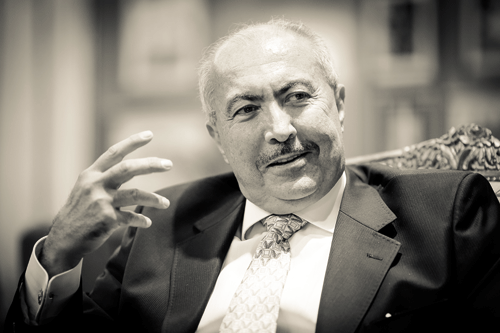
One such company is Future Pipe Industries, built and run by Lebanese businessman Fouad Makhzoumi. The company grew from a $100-million-a-year business around the turn of the century into a billion-dollar conglomerate with global reach in the course of the past 10 years.

“We represent 16 percent of the world market for fiberglass pipes and are the largest manufacturer; the world market for these pipes is $117 billion annually,” says Makhzoumi.

Future Pipe Industries (FPI) is the centerpiece of Future Group, a family holding that also includes an investment arm, ventures in real estate, engineering and business development as well as an organization dedicated to philanthropy. While the group is headquartered in Dubai and the philanthropic Makhzoumi Foundation is focused on Lebanon, FPI has operating manufacturing plants in seven countries, which distribute their goods across the globe.

In terms of economic contribution, FPI accounts for about 80 percent of Future Group’s activities. The corporate story entails several narratives of the self-made Arab man: A family-rooted individual, who had the fortune of seeing an opportunity and the flexibility to respond to it, plus the passion and power to capitalize on the initial fortune and expand it over decades. 

Fortune’s seeds of chance

As he recalls his entry into pipe making in conversation with Executive, Makhzoumi says he was a hot-headed 20-something who decided to drop the pursuit of a PhD at the Massachusetts Institute of Technology in 1974 when his doctoral advisor insinuated that his Lebanese homeland might no longer be around as a country by the time the young man received the degree. 

The young Arab took his Masters degree in chemical engineering and in 1975 moved to Saudi Arabia, where a chance encounter at a future inlaw’s house led to a job offer by Amiantit, a pipe making company that was at the time linked to the Swiss cement dynasty, the Schmidheiny family, and is still a major Saudi manufacturer today. To Makhzoumi’s question as to why he, a chemical engineer, should be interested in such things as asbestos cement pipes, the answer was “Try it for a month”.

Jump forward through about seven years of laboring for the Amiantit Company and Makhzoumi put together an investment offer to acquire the non-Saudi pipe making ventures in the region from Schmidheiny Group. “With Stefan Schmidheiny not too keen to stay in the business after his father’s death, I was able to obtain a syndicated loan and buy all the business in the Middle East outside Saudi Arabia, except for Lebanon, which in 1984 was very difficult to access.” FPI was born, the manufacturing process was altered to use fiberglass instead of the perilous asbestos and the company grew into a Middle Eastern fiberglass pipe manufacturer of note.


Playing back to Lebanon

The story could settle here into a routine tale of industrial growth in the 90s, were it not for some interesting decisions and Makhzoumi’s knack of seeing economic pictures in wider terms, a geostrategic gene that he may have in common with other billionaires with Lebanese DNA. In one interesting decision, Makhzoumi moved back to Lebanon in 1992 and in 1993 established one of his FPI plants in Akkar, the country’s deprived northern region. “Akkar was an ideal place,” he says. “Lebanon’s majority of export business is construction materials and food, which require road transportation. In the north, you are very close to the Syrian border which means you can export your products.”

Although he built the plant near the [dormant] regional airport, then touted loudly as investment project by the government’s IDAL agency, he never got a power line from the electricity grid or even a landline phone until he closed the plant 17 years later, Makhzoumi says. 

The plant’s 2010 shuttering was not because of missing national demand for pipes — public water infrastructure projects could have taken around two years worth of output, according to the entrepreneur — nor the deficient physical infrastructure, although he laments, “If you look at Lebanon anywhere north of Tripoli, it is like Somalia. There is nothing being done there.” 

What he says made the plant economically unfeasible was that Lebanese politicians made every effort to put obstacles in the company’s way, such as blocking the sale of pipes made by FPI in Akkar to national infrastructure projects. The exercise deeply expanded Makhzoumi’s knowledge of the Lebanese political approach to industrial needs. “By default, if you disagree with a [Lebanese] politician, he will give instructions to the government to fight local industry,” he claims. 

Instead of waiting any longer for answers from Lebanese political players, Future Group pulled the plug on the Akkar plant and is currently expanding in Spain, buying factories in the country seen widely as being one of Europe’s embattled economies. Makhzoumi’s rationale for the anti-cyclical step is that he anticipates a new trend for 2013 that will bring new opportunities. “For me, market collapse is an opportunity. I don’t look at it as a disaster as long as you have managed your core business in such a way that you can sustain and bridge the cycles,” he says. 

Under the public radar

Neither he nor FPI are very visible in international or regional media. Even though the company was valued at $1.6 billion when it was preparing for an initial public offering on Nasdaq Dubai in 2008, and his personal net worth must be assumed to be considerably above that mark today, Makhzoumi has never appeared in the Forbes’ list of billionaires. In international media, he was dragged into British headlines in connection with a scandal over a former United Kingdom minister, Jonathan Aitken, but vigorously rebutted the allegations that he himself was implicated in any wrong conduct. 

Makhzoumi has a bone to pick with local media in Lebanon, accusing them of not covering his philanthropy and the work of the Makhzoumi Foundation, because these media are affiliated with political camps that dislike him. His rare mentions in media notwithstanding, Makhzoumi appears as a skilled manipulator and someone who communicates with a keen sense of effect. When he lambasts what he sees as the failings of the Lebanese political class, he does not seem prone to thoughtless outbreaks of criticism, but rather as someone who uses candor with a great sense of impact and otherwise always says the right things with natural conviction, such as explaining his drive for business success with his passion. “You should enjoy what you are doing. If you enjoy what you are doing you can be innovative all of the time. If you think it is a job, you get bored.” 

One suspects that it is easy to be bored with pipe making. Pipes and pipe systems are an ancient technology that has been upgraded tremendously through modern engineering and manufacturing processes. They come in a surprising variety of metal, cement and plastic pipes for an extensive range of uses from the kitchen to intercontinental transport. Various lobby groups and industry associations promote the advantages of the respective materials and numerous companies claim to be world leaders in producing basic types and sub-categories. 

Pipes and geopolitics

Makhzoumi sees pipes with different eyes and listening to him, the humble pipe takes on strategy dimensions in regional and global security-economic contexts. In the Far East, for example, he says specialty pipes in marine applications will be needed for enabling the navies of Korea and Japan to build vessels that can counterbalance the expansionary naval presence of China. Developing a joint venture with Korea’s SK Chemicals, Future Group will play a part in delivering pipes for use in naval vessels.

A broad geostrategic aspect of piping is the transport and distribution of vital materials, control of which Makhzoumi sees as today being more important than their production. Oil and gas pipelines that traverse the Middle East or link Asian producers to Europe are well-known for their strategic importance, but China also provides a hot current example. 

According to Chinese state television reports, the country last month started construction of its third pipeline in an extensive internal gas transportation network. China’s latest West-East pipeline construction project is projected to cost $19.9 billion and cover a distance of 7,300 kilometers, the state media said, adding that the first two pipelines of the West-East network were realized between 2002 and this year with an investment of $46 billion. 

Pipelines of intercontinental length already are tools of geopolitics and will assume increasing importance in the competition of nations for economic leadership. No wonder then that the FPI founder regards business leadership as inseparable from engaging in politics. “You cannot be a global player by trying to be only a businessman,” he says. “I play regional power and politics to try to understand the trends that are arising and this is how you position your business in order to be part of the change.” 

The pipe maker also sets his sights on countries where he anticipates broad-based infrastructure development needs to meet high population pressure and social development demand. Indonesia, for example, will need to start spending on amenities for its citizens and invest in infrastructure such as pipe-based utilities. “We believe Indonesia is moving. It is becoming one of the largest Muslim countries. They have to start spending in order to avoid falling into the Arab Spring,” Makhzoumi says. 

And there will be no end to piping needs. Global demand will burgeon because higher population densities and scarcer resources will mandate development of pipelines. For every person born on earth, two meters of pipe are needed, he cites. 

The Syria-Russia puzzle through pipes

Even the puzzle of why Russia is not joining the rush to change the regime in Syria can, from the geopolitical entrepreneur’s perspective, be understood by examining the angle of gas transportation. Russian self-interest is to keep control over the price of gas deliveries to Europe via the pipelines that allowed it to develop this crucial revenue stream after the end of the Cold War and the breakup of the Soviet empire. If gas from exploitation of newly discovered finds in the Eastern Mediterranean were to be delivered to Europe at reduced prices, when compared with Russia’s, it would break Russia’s back, Makhzoumi reasons. “That is why Russia invested billions of dollars over the past seven, eight years in Cyprus, against which they have the right to set up their LNG (Liquefied Natural Gas) plant,” he says. “If they control it, they will make sure that this gas will not be delivered to Europe at a lower price than what they are delivering. To be able to do that, you need the LNG plant and you need the military base, which is what Syria has.” 

Makhzoumi’s socio-political power base in Lebanon includes his philanthropic foundation and a political party, both of which he says are wholly self-funded and do not expose him to the levers of influence and the strings that other political players are pulled by. He claims he is a player in Lebanese politics “because this is my country and I am not happy about the way that our people are living”, and when asked if he wants to be prime minister, answers “Yes, why not.” 

Looking East

In the meanwhile, he is positioning FPI for greater global reach. The company, according to Makhzoumi, today has a built-in production capacity of some $4.5 billion, of which the Middle East represents about 60 percent. Besides developing the group’s engineering and procurement capacities, entering Spain as springboard for dealing with Latin America, investing in the marine pipe venture in South Korea and a deep-well equipment venture in Indonesia, the Future Group is also building a $100 million facility in Myanmar. Three to five years from today, the IPO that was first planned for 2008 will likely be on the books again, with a valuation of the company that Makhzoumi expects to be between $4 billion and $5 billion. As to the location of the primary listing, he says, “my feeling is Singapore because the market is moving this way.”   

November 2, 2012 1 comment
0 FacebookTwitterPinterestEmail
Last Word

Smiling through our pain

by Sami Halabi November 1, 2012
written by Sami Halabi

An economy that can serve the interests of all our people requires confidence. The necessary conditions for that economic confidence are both security and straight talk from those who are entrusted to protect our nation’s growth. That is why it is so damaging that no one called out the president or the prime minister for inflating Lebanon’s economic progress to the public and international community last month.

According to our Prime Minister Najib Mikati’s office, “estimated results” for last year’s economic growth have come to 5 percent and growth in the first quarter of this year increased by “leaps and bounds”. If that makes you think that one of his speechwriters has a substance abuse problem, you are not alone. No one — from the international financial institutions, to local academics, or even the humble journalists who monitor our economy — thinks growth last year exceeded 1.5 percent, not to mention those who believe the economy has been contracting since the third quarter of 2011.

Not to be outdone, at a United Nations conference last month President Michel Sleiman heralded the achievements of the agricultural sector, claiming it now makes up 6.5 percent of the economy while it had previously made up 5 percent. Of course, he neglected to mention that value added in the sector fell in 2010. There are no national accounts for 2011 and certainly not for 2012.

The relatively productive agriculture minister, Hussein Hajj Hassan, who flanked the president at the conference last month also trumpeted his ministry’s development platform for the sector, issued in 2009. A paper was issued in 2009 that contains a laundry list of issues facing the sector, followed by bullet points and badly drawn Microsoft Word Tables stuffed with the keywords governments love to use: “enhance” this, “develop” that, “reduce costs”, “create jobs”. Naturally, the only real targets in the document are those aimed at increasing staff (read: patronage) within the ministry. Since then none of the laws he proposed have passed parliament and the strategy ends next year anyway.

Instead of trumpeting overly rosy figures and touting their outstanding visions, perhaps some more humility would befit a political class that has not managed to have a census in more than 80 years, or even knows what the country’s gross domestic product, employment or inflation rates really are. The statistical, administrative and monitoring frameworks needed to accurately calculate these things are still some way off. In the meantime, there are real indicators that can be monitored in a much easier fashion to appraise the government.
Take, for instance, another half-nation of around five million hard-nosed people with limited government ability to make decisions: Scotland. In a surprisingly successful effort to reform government, the Scots have come up with a system that, on the surface, reads very much like the agriculture ministry’s ‘strategy’. Their ‘National Performance Framework’ starts with a purpose (basically ‘increasing sustainable economic growth’), drills down into five purposes of equally loose language: ‘safer & stronger’, ‘healthier’, ‘smarter’, ‘greener’, ‘wealthier & fairer’. Each category then has indicators (such as improved levels of educational attainment) and measurement criteria (such as gaps in student performance between Scotland and countries from the Organization for Economic Cooperation and Development), with progress reports posted online and updated regularly. The government doesn’t meet all of its targets, in fact they maintain the status quo much of the time, but people believe them when they succeed and listen to them when they explain why they fail. This approach to governance was a contributing factor to ruling Scottish National Party winning an outright majority in 2011 in an electoral system that was designed not to allow that to happen.

Lebanese politicians should take heed: honesty and transparency in governance builds confidence — from international institutions and partners, from the business community, and from those who are supposed to be paramount in all this, the Lebanese. When our economy is suffering, smiling to us and telling us everything is fine will not make it easier to pay rent or get a decent job. Rather, what is needed is an honest appraisal of where things are failing and what is lacking — at least then we will know where to begin to fix things.

Sami Halabi is a Masters of Public Policy candidate at the University of Edinburgh and former managing editor of Executive


November 1, 2012 0 comments
0 FacebookTwitterPinterestEmail
Society

Presidential beyond words

by Line Tabet, Zeina Loutfi & Ramsay G. Najjar November 1, 2012
written by Line Tabet, Zeina Loutfi & Ramsay G. Najjar

“Obama’s weaknesses on full display in debate”; “Obama admits debate performance a flop”; “In debate style and body language, Romney trumps Obama”.

These have been the sort of remarks making headlines since the first of the three United States presidential debates in the run-up to the vote between Democratic incumbent, President Barack Obama, and Republican candidate Governor Mitt Romney. As expected, the debate has been extensively analyzed in the hopes of predicting who might become the next American president. What was especially striking about the media coverage this time was the excessive attention given to the candidates’ physical language, across both serious and comedic media, which seems to have played a major role in their proclamation of the first debate’s winner.

While the analysis of body language might seem trivial to many, becoming the preferred subject of comedy and spoof shows, some studies have shown that only 7 percent of communication is conveyed through actual words, whereas 93 percent is nonverbal communication. The most telling and over-used example of this is the first American televised presidential debate: The 1960 Richard Nixon versus John F. Kennedy debate. It has become a popular reference that Nixon, the accomplished politician, failed to impress in the face of a young and novice candidate, mainly because he refused to wear makeup.  

Whether the above percentages are accurate or whether we agree or not with the analysis of the Nixon debate, one cannot discount the importance of body language in a public or media setting, whereby posture, facial expressions, hand gestures, voice and dress code have become key components to be taken into account, alongside messaging and content. Trying to predict the winner of the American elections through body language is no doubt a fortune telling assignment. However, given that the whole world is closely watching this event, and that all eyes are riveted on American media screens, we cannot but stop and examine the presidential and vice-presidential debates to illustrate the basics of body language and extract key takeaways, as well as some ‘Dos’ and ‘Don’ts’. Furthermore, keeping in mind that the victor of the elections may well be known by the time you read this article, it is worthwhile exploring whether all this hype about the two candidates’ nonverbal performance had any real value.

Posture: the manifestation of confidence

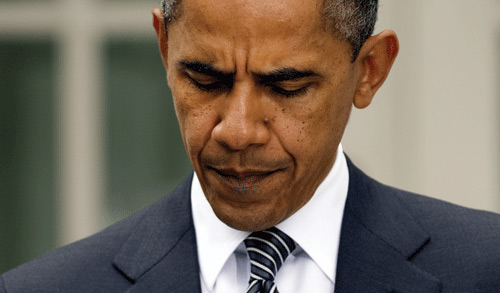
The reason some viewers may have confused Obama’s first presidential debate with that of a daily press briefing is because of his perceived “defeatist” attitude and posture. His body language communicated stress and anxiety: leaning on one foot, tilting his head to the side and slouching his shoulders. He came across as unsure of himself, lacking energy and outright bored. On the other hand, Romney seemed calm, projecting passion and motivation, whereby his overall posture was straight and upright, conveying confidence and poise, all of which translated into positive energy.  

Facial Expressions: telling it all at a glance

A month prior to election day with polls providing all kinds of forecasts as to voter intentions, candidates need to speak to voters and rally them, be they supporters or opponents, and especially the undecided ones they are trying to win over. Therein lies the importance of appearing to address each and every one of them. And what better way to do so than establishing eye contact so as to give every viewer the impression of being spoken to directly. Both Romney and current Vice President Joe Biden played this card successfully, as they stared straight at the camera to address voters, conveying both candor and caring. 

On the other hand, Obama’s genuine smile, one that has become his trademark over the years, looked dull and faded because of the negative energy he exuded. He was often seen pursing his lips, especially when listening to Romney’s arguments. This brings us to one of the main challenges that face incumbents during such debates: to avoid appearing condescending and patronizing or looking at their opponents with disdain and arrogance. A challenge both men failed to meet. 

Hand gestures: adding punch through motion

The art of hand gestures may seem like a secondary element of body language, one that comes naturally and spontaneously. However, it can strongly affect the image of any politician or public figure, either by making them appear tense or agitated or by adding emphasis and impact to their messages. Indeed, those with overly animated hand gestures often distract viewers, as their attention is drawn to the hand rather than the content and messages. As such, the “Golden Rule” when it comes to hand gestures is to avoid excessiveness. When it came to persuading voters with gestures, Romney outdid Obama in the first debate. Indeed, they were in sync with his speech, reaching out to his audience, creating a feeling of openness, and ultimately making some messages more memorable to the audience.

Voice: conveying impactful messages through delivery 

Recent award-winning movies, including The Iron Lady and The King’s Speech, have shown the importance of voice in conveying leadership: Margaret Thatcher in the midst of vocal training, working on the pitch of her voice to project power and authority, and the lessons of King George VI with his speech therapist to cope with his stammer. These have become iconic scenes that support the claim that voice can accentuate leadership attributes and is an effective means to influence and impact the audience. During election time, the debate’s objectives are to inspire people and mobilize them to vote. Hence the importance of one’s voice, as it transforms lexis into impactful messages and memorable sound bites through the appropriate use of pitch, tone, volume, rate and articulation. Varying the tone of voice allows one to convey dynamism and enthusiasm, which are key to emphasizing pivotal ideas.

Whereas Romney was confident in delivering his messages, speaking eloquently and clearly, Obama had a slower delivery, resorting to verbal fillers, and making long pauses. This did not play to his favor, despite succeeding in projecting empathy and compassion when he softened his tone of voice to mention his grandmother in the context of social security and his fight for the American middle class.

Dress code: the clothes that make the man

Red is typically the color of the power tie, a memo that Romney received and understood, with his dark red striped tie popping on screen during the debate, compared to Obama’s royal blue tie which blended in with the purple background and reinforced his sense of fatigue. The specific choice of color is of course not the point here; what is important to remember is that speakers must always choose attire that accentuates their presence and aura. This example confirms that dress code goes beyond style and can actually influence the image of a public figure, clearly helping to make a strong and positive impact.

Everything comes 

in pairs 

Jon Stewart dedicated an episode of his satirical show, “The Daily Show” to the exaggerated hype given to the candidates’ body language after the first debate, with some media going to extremes by counting the number of blinks for each candidate. However, this definitely subsided following the second debate, with the focus shifting toward content, arguments and promises made by each.

With the parliamentary elections in Lebanon, Jordan, Qatar and Egypt “theoretically” around the corner, potential candidates can stand to learn a lot from the US elections’ experience when it comes to polishing their body language in the hope of possibly compensating for the huge gap in their rhetoric, which remains sorely lacking. When it comes to media performance, and as the saying “everything comes in pairs” goes, it boils down to content and physical language, two ingredients that need to complement each other in order to ensure a successful recipe.

November 1, 2012 0 comments
0 FacebookTwitterPinterestEmail
Society

Szechuan in style

by Nabila Rahhal November 1, 2012
written by Nabila Rahhal

Driving down the highway from Antelias into downtown Beirut, one cannot but notice several huge billboards advertising the latest Asian cuisine restaurant, Chenbao — the Chinese word for castle. Curiosity aroused, Executive decided to pay a visit.

Chenbao is the newest conception of the Kazzami group, which brought us the high-end sushi restaurant Osaka and is planning for the opening of the Italian garden restaurant Villagio on Kantari Street, Beirut. Since Chenbao is also promoted as luxurious dining, expectations were high. Situated on the main road in Saifi Village II, with glass panels allowing diners to see the streets outside and be seen themselves by passersby, glamor is projected before you take your first step inside. 

At the entrance, Executive’s party of two is greeted by an Asian hostess wearing a Chinese-style dress, who escorts us to our table and offers us the traditional wet and warm hand towels. The restaurant’s glossy granite flooring and black and gold trimming gives off a subtly luxurious vibe, though the excessive use of dark wood finishing on the walls, perhaps meant to accentuate the Asian feel, lends a somber and somewhat heavy feel to the place. The tables and chairs are placed at such angles so as to allow enough privacy for the diners’ conversations while at the same time allowing them to see most everyone in the spacious setting. The dark wood tables themselves are artfully set with little flowers on the chopsticks holders and upholstered, cream-white chairs prove comfortable for the meal. (An interesting feature of Chenbao, showing particular sensitivity on the owner’s part, is the electric sliding chair attached to the stairs leading to the bathroom — a facility for the disabled, the elderly and those too full to walk down the stairs.)
Menus are provided minutes after we’re seated by another Asian waitress who remains attentive throughout the dining experience, refilling water glasses and removing empty plates almost as soon as the last bite is taken.

sweet and sour
Prepared by the experienced Malaysian chef Eddie Chua, the menu offers traditional Chinese fare, from Szechuan-flavored stir fried meats to rice and noodles, as well as Thai fusion dishes. Matching the high-end image of the restaurant are the prices. A single serving of vegetable noodles costs $11, appetizers are between $20 and $25, and main dishes are as much as $40 if one orders seafood. Upon the waitress’s recommendation, we ordered the wasabi prawns as appetizers, the chicken cashew nuts with vegetables noodles for the main course and finished up with jasmine flavored macaroons — totalling $85 for two, drinks excluded. The artistically arranged dishes of generous portions arrive in perfect sequence, one after the other — the wasabi prawns drizzled in cream sauce offered a unique, harmonious blend between the spicy and sweet adjuncts to the shellfish; the chicken a light and pleasant, if somewhat uninspired, main dish in terms of Chinese cuisine, while the jasmine macaroons were the highlight of the meal, a bouquet of the sweet and the bitter to wrap up the flavor experience.

Having arrived at 9 pm, new customers were still coming in two hours later when we left, keeping the place half full at all times. The clientèle were mainly young professionals, between the ages of 30 and 40, who, according to those who sat around us, were also prompted by the billboard advertisements. 

In the months to come, the tables at Chenbao will likely continue to be filled with inquisitive patrons out to see what all the fuss is about, and while they will certainly not be disappointed by the ambiance and the service, some dishes will have to find a stronger identity to pull their weight in an establishment banking its reputation on high-end and original cuisine.
 

November 1, 2012 0 comments
0 FacebookTwitterPinterestEmail
Comment

Battle of the drones

by Nicholas Blanford November 1, 2012
written by Nicholas Blanford

The unmanned aerial vehicle (UAV), or drone, Hezbollah dispatched to fly over southern Israel in October carried a couple of messages.

First, it was intended to remind Lebanon and Israel that Hezbollah’s main focus remains the confrontation with the Jewish state and not the conflict in Syria. The drone’s flight occurred amid increased reports of Hezbollah’s alleged assistance to the regime of President Bashar al-Assad, including sending fighters to Syria to fight the rebel Free Syrian Army (FSA) and train the regular Syrian army in urban warfare. This assistance would contradict the Lebanese government’s policy of disassociation with the war in Syria, though Hezbollah is not the only Lebanese faction operating there — several hundred Sunni Lebanese have reportedly joined the FSA and there are logistical support networks for the Syrian rebels in parts of the northern Bekaa and Akkar regions of Lebanon.

Still, amid such controversy, Hezbollah appears to have decided to switch attention away from Syria and redirect it toward Israel. It worked, at least in the sense that the drone captured headlines for a few days.

The drone’s flight over southern Israel was also a demonstration of Hezbollah’s evolving technical capabilities. It flew a drone for the first time in Israeli airspace in November 2004. That drone, an Iranian Ababil-T, was launched near Naqoura, crossed undetected into Israel and reached near Haifa during its 18-minute flight before returning to Lebanon. The Israelis never spotted it.

Hezbollah sent a second drone over Israel six months later; it also used them in the 2006 war with one drone shot down off the Israeli coast and another off the Tyre peninsula.

However, the drone that ploughed the skies above southern Israel was far more sophisticated than the Ababil-T, which lacks the range to reach the Negev desert from Lebanon — if indeed that was the origin of the UAV. Although Sayyed Hassan Nasrallah, Hezbollah’s secretary-general, admitted that his group was responsible for the flight and Hezbollah-affiliated Al Manar broadcast graphics indicating part of the flight path, the incident remains dogged by uncertainty. Nasrallah said that the drone was launched from Lebanon but did not pinpoint the precise location. The United Nations Interim Force in Lebanon (UNIFIL) said it did not detect the drone, neither on its ground radars in south Lebanon nor on the shipboard radars of the Maritime Task Force, the naval component of the peacekeeping force. That suggests that the drone was small enough or flying low enough to avoid detection. Alternatively, it never flew from Lebanon in the first place.

The guidance system remains unknown as well. Drones are usually controlled by one of two means: either by an operator using radio or satellite signals to directly steer the UAV on its course or by installing a preprogrammed flight plan. The UAV, if launched from Lebanon, was operating beyond the range of radio control, suggesting it was following an autonomous preprogrammed flight plan or it was being guided by satellite signals. If the latter, that would suggest a whole new level of technological advancement for Hezbollah and Iran.

The Israelis said that they picked up the drone when it was still flying over the Mediterranean but decided to tail it until it crossed over empty terrain before shooting it down. Iran and Hezbollah claimed that the drone in fact slipped into Israeli airspace undetected, thus proving the inadequacy of Israel’s air defense systems. As usual, it is difficult to be certain which version is correct. If Israel really detected the drone over the sea and chose to follow it, that would be a first. Usually, Israel shoots down unauthorized aircraft.

It has been speculated, however, that the Israelis attempted to interfere electronically with the UAV to bring it down safely so that it could be examined. Hezbollah is believed to have done something similar a year ago when an Israeli drone mysteriously vanished over south Lebanon after UNIFIL radars saw it floating to the ground. The Israelis appear to have been not so lucky as their Hezbollah foes. When the Israeli cyber interception failed, the drone was shot down so that at least the debris could be salvaged for inspection.

The unusual incident goes to show that even though the Lebanon-Israel border has remained relatively calm for more than six years, the conflict between Hezbollah and the Jewish state continues to rage on the technological front of cyber-warfare and signals intelligence.


Nicholas Blanford  is the Beirut-based correspondent for The Christian Science Monitor and The Times of London

 
November 1, 2012 0 comments
0 FacebookTwitterPinterestEmail
Comment

Tweeted into shame

by Paul Cochrane November 1, 2012
written by Paul Cochrane

Social media’s role in bringing about progressive change is a hot topic in the Middle East as much as, if not more than, elsewhere given the ongoing debate about its use in the Arab uprisings. On a collective level it is hard to gauge due to the multitude of factors that contribute to people taking to the streets —  mass demonstrations can and of course have happened without any social media — but when it comes to smaller, localized events social media’s power is clear. The online exposure last month of a Middle East Airlines (MEA) employee’s racist remarks toward Asian passengers is a clear case, and one that other companies should take heed of if they don’t want their name or brand dragged through the mud. 

In early October, passengers were waiting in Rafiq Hariri International Airport at a departure gate for a flight to Dubai, including a group of Nepalese women, when a MEA employee got on the public announcement system and said, “Filipino people, stop talking.” The woman told the “Filipinos” to stop talking twice more, giggling as she did so and goaded on by a male colleague. 

The incident outraged fellow passenger Abed Shaheen, who tried unsuccessfully to make a complaint. In the past Shaheen might have told just family, friends and colleagues about the incident, and his complaints would have had minimal if any effect. In our new world of social media, Shaheen wrote about the experience on Facebook and Twitter. The story was quickly shared and within three days 1,600 people had signed a petition on change.org, calling for “MEA to apologize publicly for their staff’s behavior.” 

The media promptly picked up the story as well, initially in Lebanon and then abroad. Under fire, MEA eventually came out to say they had launched an investigation, and the employee was first “disciplined,” then reportedly fired.

While justice has arguably been done, and a strong message sent to MEA staff to think before they speak, MEA’s reputation has been negatively impacted. A scroll through the 200 plus comments following the airline’s apology on its Facebook page shows a great deal of animosity toward MEA: “service sucks,”  “airline crew impolite” and, more worryingly for the carrier in these difficult financial times, is the number of people that wrote they would “vote with their feet” by no longer flying with MEA. Judging from the comments, many Lebanese opt for MEA out of solidarity with the nation’s carrier, despite its invariably higher ticket price. But patriotism only goes so far, and this incident will no doubt lose the airline old as well as potentially new passengers. 

MEA, and subsidiary MEAG that runs the airport, say they have gone beyond “damage control” mode and made effective changes that can be immediately seen; this includes mandating that staff be trained to treat everyone equally and respectfully, as paying customers. Numerous times on flights to the Gulf and East Africa, acquaintances and I have seen African and Asian passengers seated together at the back of the plane away from passengers despite numerous seats being available. This happens too often to be coincidence and the check-in staff, by designating seats in this way, creates segregation. Such a policy is racist, and even more insulting when it occurs on the national airline of the segregated passengers, such as Ethiopian Airlines. This has to change.

Then there is the small boxy room that domestic workers are forced to wait in upon arrival at Beirut airport until their new employers come to collect them, rather than being met like everybody else in the arrivals lounge. It is reminiscent of a prison with inmates awaiting bail. For many of these women, it is the first time out of their country; they are unsure, scared perhaps about what’s next, and they should be treated in a more dignified manner. Both MEA and the airport are, after all, people’s first impressions of the country, no matter where a passenger is from, and customer service should reflect that. 

Ultimately, MEA has now put itself under the spotlight of social media, and activists will be on the lookout for further misdemeanors. It is a useful lesson for MEA to change its policies and better manage employee behavior, as well as for other companies to realize the power of social media to hold them to account.


Paul Cochrane is the Middle East correspondent for International News Services


November 1, 2012 0 comments
0 FacebookTwitterPinterestEmail
Comment

An offer they can’t refuse

by Farea al-Muslimi November 1, 2012
written by Farea al-Muslimi


In gangster movies, a classic scene is for a mafia boss to greet someone warmly with his right hand, then wink to one of his bodyguards on the side and say “kill him”. Minus the cinematography, this is how many Yemenis perceive the international community’s role in the transition of their country today. 

Earlier this year, Yemenis generally welcomed the role of the international community — via the Gulf Cooperation Council (GCC) sponsored deal that saw former President Ali Abdullah Saleh exit power and thereby avert an imminent civil war — because they thought it paralleled their national interest. Since then, however, the realization has come for many that the international community’s commitment to Yemen’s interests, unity, democratic development and prosperity does not extend beyond press releases; rather, foreign powers now seem to be paralyzing progress and hijacking Yemen’s nation building. 

Publicly, Western countries, the GCC and others have voiced much hope — as have Yemenis — in the country’s National Dialogue conference, which is meant to bring together representatives from all of Yemen’s various groups and factions to come up with a road map for the country’s future. To this end the international community has provided political and technical support, mainly through United Nations agencies, to prepare for the conference (previously scheduled for mid-November, but now postponed to a later date). However, other actions (and inactions) by foreign powers are at the same time sabotaging this attempt at national reconciliation.  

Powerful local stakeholders — including former President Saleh himself, the influential Ahmar tribe, and others — remain able to hinder the country’s transition in order to preserve their own power, and while the United Nations Security Council (UNSC) has threatened them with sanctions, none have been forthcoming. In fact, member countries of the UNSC continue to actively deal with these sorts of local players. The GCC-sponsored agreement this year also succeeded, in large part, because it went out of its way to address the concerns of powerful local players, rather than the concerns of average Yemenis; this had the effect of empowering these divisive groups with local clout that they will be able to exercise at the upcoming national dialogue. 

One of the Yemeni revolution’s core goals was the restructuring of the military, which became a key article in the GCC deal. The United States has taken a lead role in this task, but in such a way that the Yemeni military is looking more like an extension of the US army in Yemen. This is both because of an intense American public relations campaign, as well as the Yemeni military’s facilitation of un-manned American drone strikes and US and British special operations in parts of Yemen under the guise of ‘counter-terrorism’. 

Whatever the military justification, American drone strikes have killed hundreds of civilians and injured many more. Yemen’s new president, Abdu Rabbu Mansour Hadi, rather than condemn the strikes has in fact endorsed them, marring his legitimacy amongst Yemenis and making him look like an American puppet. That he reports to the ‘international community’ that brought him to power, rather than his citizenry, is a definite problem. Hadi remains, however, generally favored among the population relative to possible alternatives; his presidency, along with the appointment of Morocco’s Jamal Benomar, a former human rights campaigner, as UN envoy to Yemen, constitute the most positive initiatives of the international community to date.  

US support for the “Public Committees”, or civilian militias, in South Yemen, is also dangerously shortsighted. While America’s aim is to enlist local help in the battle against Al Qaeda in the Arabian Peninsula, supporting powerful non-state actors and armies implicitly undermines the state, especially in South Yemen where there is a fervent secessionist movement that will turn that same support against the central government. 

South Yemen is also now a battleground in a wider geopolitical struggle. The frequency of sectarian clashes — mainly between Houthi groups and the Islah (or Muslim Brotherhood) — have been on the upswing as Iran and Saudi Arabia escalate their proxy war through local tribal and political groups, each offering cash, support and media backing.

With all this foreign money flowing in, one has to wonder why humanitarian aid organizations in Yemen are still suffering a funding crisis, reporting that cumulatively they have less than 50 percent of the cash they need to run their operations; this leaves, among other things, 10 million Yemenis going to bed hungry every night.

There is little wonder why then, when the international community comes with its hand extended, Yemen braces for the wink. 


Farea al-Muslimi is a Yemeni activist and writer for Almasdar

November 1, 2012 0 comments
0 FacebookTwitterPinterestEmail
  • 1
  • …
  • 303
  • 304
  • 305
  • 306
  • 307
  • …
  • 685

Latest Cover

About us

Since its first edition emerged on the newsstands in 1999, Executive Magazine has been dedicated to providing its readers with the most up-to-date local and regional business news. Executive is a monthly business magazine that offers readers in-depth analyses on the Lebanese world of commerce, covering all the major sectors – from banking, finance, and insurance to technology, tourism, hospitality, media, and retail.

  • Donate
  • Our Purpose
  • Contact Us

Sign up for our newsletter

[contact-form-7 id=”27812″ title=”FooterSubscription”]

  • Facebook
  • Twitter
  • Instagram
  • Linkedin
  • Youtube
Executive Magazine
  • ISSUES
    • Current Issue
    • Past issues
  • BUSINESS
  • ECONOMICS & POLICY
  • OPINION
  • SPECIAL REPORTS
  • EXECUTIVE TALKS
  • MOVEMENTS
    • Change the image
    • Cannes lions
    • Transparency & accountability
    • ECONOMIC ROADMAP
    • Say No to Corruption
    • The Lebanon media development initiative
    • LPSN Policy Asks
    • Advocating the preservation of deposits
  • JOIN US
    • Join our movement
    • Attend our events
    • Receive updates
    • Connect with us
  • DONATE