• Donate
  • Our Purpose
  • Contact Us
Executive Magazine
  • ISSUES
    • Current Issue
    • Past issues
  • BUSINESS
  • ECONOMICS & POLICY
  • OPINION
  • SPECIAL REPORTS
  • EXECUTIVE TALKS
  • MOVEMENTS
    • Change the image
    • Cannes lions
    • Transparency & accountability
    • ECONOMIC ROADMAP
    • Say No to Corruption
    • The Lebanon media development initiative
    • LPSN Policy Asks
    • Advocating the preservation of deposits
  • JOIN US
    • Join our movement
    • Attend our events
    • Receive updates
    • Connect with us
  • DONATE
AutomobilesEconomics & Policy

A potentially disastrous diesel plan

by Paul Cochrane November 2, 2012
written by Paul Cochrane


In March this year the government drafted a law for the importation and use of cars that run on ultralow-sulfur diesel, also known as “green” diesel, in compliance with the European Union’s Euro 5 emissions standards. Though the law is still awaiting ratification, dealerships are up in arms about the plan, describing it as “stupid,” “nonsensical,” “not feasible” and “only in the personal interest of politicians.”

The rationale behind the law is that, in the words of the Ministry of Justice, it “will contribute to preserving the environment as green diesel is free of sulfur and the percentage of tar is 50 percent less than [in] the diesel that is currently       being used.”

While importing cleaner diesel would be far better than the currently used Euro 3 diesel, with 350 parts per million (PPM) of sulfur, or the red diesel with 5,000 PPM, Euro 5 diesel is not sulfur free – it has 10 PPM. What is more, the draft law comes at a time when Europe is mulling banning diesel vehicles outright in cities due to its health risks. In June the World Health Organization decreed that inhaling diesel fumes can cause lung cancer, adding diesel fumes to its list of Group 1 Carcinogens alongside arsenic, strontium-90 and neutron radiation. 

While dealers are concerned about the environmental consequences if diesel cars are allowed, they are wary of a repeat of 2001, when law 341 amended a 1995 law that restricted the use of diesel to trucks and busses by banning vehicles with engines smaller than 3,500cc from running on diesel. As a result dealers and drivers had to convert engines, at an estimated cost of $6,000 for a mini van. 

If the law is passed, dealers are worried that it may be overturned just years later, which would have a negative effect on inventory and after-sales, as well as cause expenses due to the importation of specialized equipment needed to service diesel cars. Furthermore, certain manufacturers are planning to stop producing diesel vehicles altogether, including Ford, BMW and Nissan, to focus on hybrid and electric cars instead.

“I don’t understand the objective of the government — to reduce fuel costs or save the environment? Diesel may be cheaper but if it is taxed like petrol it is the same price, especially ‘green’ diesel, and the cars are more expensive,” said Cesar Aoun, general manager of Gargour & Fils, distributor of Mercedes. “And will we reach the Euro 5 level? Come on. We need to stop the import of cars older than five years.”

Old cars emit more pollution than newer models and their prevalence on Lebanon’s roads is an environmental problem. Some 52.5 percent of registered cars currently on the roads are older than 15 years, and 29 percent between nine and 15 years old, according to the Automobile Importers Association (AIA). A further argument against importing green diesel cars is the price of high-level filters that limit nitrogen oxide (NOX) particles from entering the air, at between $1,300 to $2,600. As the Ministry of Environment has noted, cars that run on Euro 5 diesel “are equipped with a special filter that is installed in the car exhaust, and this filter should be maintained, cleaned and emptied regularly.” The big question here is whether there would be actual checking of filters by the authorities, as well as proper storage of Euro 5 diesel at gas stations.

After all, enforcement is not a strong attribute of the state when it comes to vehicles, as some statistics show. According to the AIA, out of the 1.3 million cars registered in the country, approximately half a million did not go for the annual “mechanique” road test last year, and some 30,000 cars are illegally running on natural gas. There are some 33,000 registered red license plate taxis whereas 55,000 are actually plying the roads; 4,000 red plate mini-buses registered but more than 6,000 in operation; and 2,000 red plate buses while 6,500 are on the roads. At the gas station level, out of 3,250 in the country only 1,450 are actually licensed by the government, according to the Ministry of Energy and Water.

Marwan Naffi, general manager of Gabriel Abou Adal and Partners, distributor of Volvo, believes a solution would be taxing vehicles that have higher carbon dioxide emissions and giving tax breaks for vehicles with lower emissions instead of introducing “green” diesel. 

“Today you can’t sell a car because of its lower emissions whereas elsewhere you get tax incentives,” said Naffi. “If you look at our Volvo T4 with 180 horsepower (HP) and the T5 with 250 HP, they would be the same price in Lebanon whereas the T5 in Europe is more expensive. We will not import the T4 for the Lebanese market as there is no incentive to do so.”

November 2, 2012 0 comments
0 FacebookTwitterPinterestEmail
AutomobilesEconomics & Policy

Big sales for small cars

by Paul Cochrane November 2, 2012
written by Paul Cochrane

If you go by the headlines in financial reports, the car market is doing surprisingly well given the staid economic climate;  growth of 7.6 percent was registered in the first eight months of the year, relative to 2011, and up 2.1 percent on the same period in 2010. But delve further into the Automobile Importers Association (AIA) monthly reports and all is not well, certainly for most dealerships, with just three brands accounting for 61.37 percent of sales this year.

“The market is very bad. People feel all is well as volumes are up but turnover is much lower than last year,” said Samir Homsi, president of the AIA. “Only baby cars are selling, in the $10,000 to $12,000 range. The situation is very lousy and profit margins are down.”

Brands which have had strong sales this year all have compact models in the A, B and C categories, which have steadily grown in recent years, with low horsepower vehicles currently accounting for an estimated 80 to 90 percent of sales. For Rymco, dealer of Nissan, the A category (think of the Micra) has gone from 18 percent of sales in 2010 to 21 percent this year, and the B category (the Sunny) from 15 percent to 20 percent, while other categories have contracted by 10 percent.

“We are seeing a trend where nearly every household has a small car now; it is a must,” said Farid Homsi, general manager of IMPEX, distributor for GM, Chevrolet, Cadillac, Hummer and Isuzu. “The Chevrolet Spark is by far our number one seller, by a big, big margin.”

Kia, Hyundai and Nissan are the top three sellers, with the next leading four brands — Toyota, Chevrolet, Renault and Volkswagen — accounting for 15.21 percent. Out of some 70 car brands available in the market, these seven account for 76.58 percent of sales.

“It is amazing if you look at the sales results that three brands control around 60 percent of the market and all the others share the rest. There is something wrong. Consumers are being followers rather than choice makers,” said Nabil Bazerji, managing director of G.A Bazerji and Sons, distributor of Suzuki, Lancia and Maserati.

The shift toward smaller vehicles is driven primarily by rising fuel costs, the lack of public transport and financial constraints. “People don’t have the budget anymore, fighting to get $4,000 for a down payment, and some distributors are even selling without a down payment,” said Samir Homsi. “People are only buying because there is a need, not to put a key holder on the table to say I own X or Y. It is for commuting, so they want a small, economical car.”

With dealerships offering warranties and free servicing deals for up to five years, and banks aggressively financing loans, this has helped drive the surge in sales of lower-end models. For market leader Kia for instance, 60 percent of sales are through financing. 

On the positive side, demand for more fuel efficient vehicles has resulted in a drop in sales of used cars — in addition to individuals banned from importing second-hand cars — which plunged 28.89 percent last year on 2010, and year-to-date down 17 percent on 2011, from 25,281 cars to 21,424 in 2012.

Asian invasion

The biggest gainers from the shift to smaller cars and new vehicles, over buying that long popular second-hand choice of a Mercedes or BMW, are the Korean brands, which have a staggering 44.81 percent of the market — Kia with 26.88 percent and Hyundai with 17.92 percent. Cheap Chinese brands have also made gains this year, up 85 percent, albeit only selling 308 cars and accounting for just 1.18 percent of the market, indicative of how price sensitive consumers are. 

Kia has been number one for three consecutive years since knocking Nissan from the top spot, and sales are up 13 percent this year. “Lebanon is the only country in the world where Kia is number one, everywhere else it’s Hyundai,” said Dayala Dagher Hayeck, general manager of NATCO, distributor of Kia. “We’ll be number one again next year and in the coming years. The challenge is to remain there. As long as there’s no public transport it’s good for sales.” 


Korean cars have been popular in the Lebanese market before, when in 1995 five brands were available (including the now defunct Daewoo, which was absorbed by Hyundai) with 43 percent of the market share. The share steadily dropped to 18 percent in 1999, to 7 percent in 2003, and then started to steadily rise from 2008 with a 19.3 percent share until the current new peak. The rise in Korean sales correlates to an exchange rate change in the Japanese yen to the dollar, from over 100 yen to the dollar for a decade until late 2008, when the yen’s value rose. As of the end of October, the exchange rate was around 80 yen to the dollar, and sales of Japanese cars were down 1.8 percent on last year.

Bazerji argues that the exchange rate has made Japanese cars uncompetitive versus Korean brands, as Japanese vehicles would be on par price-wise if not actually cheaper. “Japanese cars are cheaper than Korean cars. If you take for example a Toyota Rav 4, Honda CRV or Suzuki Grand Vitara versus the Kia Sportage, with the exchange rate at 78 yen it is $34,000, whereas at 110 yen it is $24,400,” said Bazerji. “Koreans are taking advantage of the yen’s appreciation to sell cars for more than they should be, but the consumer is not looking at this; they should bargain for Korean products and not accept the prices.”

If the yen managed to trade at over 100 to the dollar again — and there is a lot of pressure on Tokyo to do so to bolster exports — Japanese brands might regain some of the ground lost to the Koreans. “From my experience automotive sales are cyclical. Nobody stays at the top,” said Bazerji. “Till 2009 the Japanese were market leaders then they lost ground. But if the yen improves they [the Koreans] will be killed in the market as they were unable to sell in 2008 when the yen was at 110.”

Manufacturers, however, are not banking on a weaker yen. “It would be fantastic as it is a head wound at 79 yen to the dollar, but you can’t run a company on hope,” said Trevor Mann, senior vice president of Nissan, at the launch of the new Altima in Beirut. 

What may impact on Korean brands’ competitive pricing is the recent decision by Hyundai and Kia to scrap overnight shifts at manufacturing facilities, replacing two 10-hour shifts with an eight to nine hour workday, while wages have also been increased.

But it is not just pricing that has made Korean brands cars of choice in the Lebanese market. The improvements in Korean car quality, design and re-salability over the past decade have made it harder for Japanese, as well as European and American brands, to tout their advantages of heritage, safety, reliability and so on. In global brand recognition for instance, Koreans are on the up. Interbrand’s survey of brand values for 2012 showed Hyundai and Kia’s respective brand worth improve 24.4 percent and 50 percent, respectively, with Kia in the survey’s top 100 for the first time, ranked 87th. Among automotive brands, Toyota remained on top (ranked number 10 among all brands), followed by Mercedes in 11th place, BMW (12), Honda (21), Volkswagen (39), Ford (45), Hyundai (53), Audi (55), Porsche (72), Nissan (73), and Ferrari (99).

The Koreans are equally upping their game, bringing out hybrids, and Kia is soon launching a new sedan, the Quoris. “In 2013 we’ll launch a new model that’ll compete with BMW and Mercedes, a high class luxury sedan to attract a new category. This will be a big challenge to make people buy Kia at a high price,” said Dagher Hayeck. 

Middling along

The bulk of automotive sales, some 65 percent, used to be in the $22,000 to $90,000 price bracket, but with an increasingly financially squeezed middle class, brands selling in that range are having to go the extra mile to generate sales. Extended warranties and competitive pricing are major tactics, with a shift over the past year toward advertising the cost, which used to be primarily in the lower price segment. “You used to advertise to emphasize the brand image. Now it is what GM calls ‘bretail’ — a focus on retail with some branding,” said Farid Homsi.

Price wars between dealers are also generating sales, enabling certain luxury European and American brands to have had a relatively good year. As of the end of September, BMW has sold 524 units compared to 396 in the same period last year, while for Audi it was 422 compared to 462 last year, and Mercedes 514 compared to 616 units.

“Everyone says business is bad but when I see the figures it is not too bad, and there’s been growth. It is a bit weird,” said Cesar Aoun, general manager at Gargour & Fils, dealership of Mercedes, Smart, Jeep, Chrysler and Dodge. “In general, consumers are getting good deals due to price wars          between dealers.”


Gargour arranged with Mercedes-Benz to only buy cars in dollars to avoid price fluctuations in the euro and remain competitive, as the brand can oly offer incentives by way of free optional extras; price discounts are only allowed for year-end specials. Instead, Gargour is planning to introduce securitization to self-finance sales, working on improved customer service and building a new showroom in Doura. 

Volvo is also banking on financing to bolster sales. “We want to double sales in the next few years through financing, to 200 to 300 cars a year,” said Marwan Naffi, general manager of Gabriel Abou Adal and Partners, distributor of Volvo. 

Building new showrooms is a recent strategy among dealers. Volvo plans to build a flagship showroom in Ashrafieh, while Mazda and Nissan look to new showrooms on the coastal road north of Beirut. Impex plans to build a new one in Beirut, and dealerships are going more regional in outlets rather than being focused on the capital. 

While such a move is considered necessary to bolster sales and retain customers in the lucrative after-sales market, some dealerships are not happy about it due to the current tight margins, as the new spaces are being forced on them by regional headquarters in the Gulf. 

“We wouldn’t have invested now due to the situation, but regional management is based in Dubai where it is stable and there is the mood for branding. If the region were broken down, to Syria, Lebanon and Jordan, they wouldn’t have asked for expansion but we’re included in their Middle East plans,” said one dealer.

Optional extras

With the market extremely competitive, as it is around the world with car sales projected to grow by just 5 percent this year, from 75.69 million cars in 2011 to 79.70 million, it is optional extras and new technologies that are setting brands apart in the higher end categories. Volvo is to introduce its Polestar technology — similar to Mercedes’ AMG — which is a chip that boosts engine power by up to a fifth, and next year will launch the V40, which will have a pedestrian airbag, a global first as part of its 2020 strategy to have no mortalities connected with a Volvo, whether inside or outside the vehicle. 

sMeanwhile Cadillac is to launch a new compact luxury model, the ATS, to tap into the trend for smaller vehicles, and in other models introducing its CUE technology, a combination of intuitive control, like smart phones and tablets within the car, with the US brand having patented the technology for two years. 

Such extras are expected to bolster sales in what has been a poor year for sales of luxury and premium vehicles. No Ferraris, Lamorghinis, Rolls Royce or Maybach have been sold so far, and just two Aston Martins and eight Bentleys, whereas by the same time last year 10 Aston Martins, nine Bentleys, and one Lamborghini were sold. Maserati, however, is up by two units on last year to 17.

As we move into the last two months of the year, dealers are hoping that the government does not decide to reintroduce diesel for passenger cars or increase value added tax from the current 10 percent. “It would be stupid to raise VAT as it would kill the market completely, which is already going through a very severe crisis,” said Samir Homsi.

November 2, 2012 0 comments
0 FacebookTwitterPinterestEmail
Society

Dealing with trauma and depression

by Nabila Rahhal November 2, 2012
written by Nabila Rahhal

Life in Lebanon means regularly dealing with the unexpected, and often the unpleasant. From the civil war in 1975 and moving to the consistent bouts of armed conflict that strike the country every now and then, the Lebanese have become accustomed to living with the unacceptable. Less dramatic, though also stress-inducing, are how simple acts such as trying to turn on the lights, taking a shower or even driving your car to work can have uncertain outcomes in this country. With all this stress surrounding us on a daily basis, one has to wonder: are the Lebanese still sane? What do the experts, and the numbers, have to say about the mental health of the Lebanese population?

Between 2002 and 2003, the Institute for Development, Research, Advocacy and Applied Care (IDRAAC) embarked on the first nationwide survey on mental disorders in Lebanon (the Lebanese Evaluation of the Burden of Ailments and Needs Of the Nation – ‘LEBANON’). The sample — 2,857 people over eighteen years old selected from the five different regions in the country — was subjected to extensive one-to-one household interviews based on the World Mental Health Composite International Diagnostic Interview. The participants were also asked about their level of exposure to the civil war. 

Results showed the majority of mental disorders prevalent in Lebanon fall under the broad category of anxiety disorders, such as post-traumatic stress disorder (PTSD) and generalized anxiety disorder, and are followed by mood disorders such as chronic depression and bipolar disorder. According to the survey, 25.8 percent had at least one mental disorder, a percentage similar to that in Western Europe. 

The survey’s findings are in line with the figures from the Lebanese Syndicate of Pharmacies, which show the largest number of mental health medications sold in 2011 were tranquilizers, or anti-anxiety pills, of which just under one million were bought. This was followed by 642,000 boxes of antidepressants sold last year. According to a representative from the syndicate, these numbers are expected to rise by 15 percent this year. 

‘There’s a pill for that’

Doctor Antoine Harb, head of the Ministry of Public Health’s chronic medication distribution center in Karantina, explains that, in the area of mental health, the ministry provides medication for chronic or manic depression and for psychotic disorders, such as schizophrenia. Anti-anxiety medications are not covered by the ministry due to the high prevalence of such disorders, and also because they are cheap and easily available. “Approximately 22 percent of the patients who visit the center come for psychiatric medication. In fact, the majority of patients seeking medication from us are either cancer patients or mental health ones,” says Harb. He adds that since the year 2005, they have been seeing a yearly increase of around 15 percent in mental health patients seeking medication. 


“The most prevalent mental health issue we have witnessed in the areas we have previously served, and are serving in Lebanon, is chronic depression. This is actually a global problem and the proof is that the theme for this year’s Mental Health Day revolves around it,” says Hala Yahfoufi, the psychologist advisor for Médecins Sans Frontières (MSF), a nonprofit organization providing, among other services, free mental health awareness and treatment in underserved communities around the world.

The Society psyche

In trying to explain the causes of these mental health problems, doctors interviewed agreed that susceptibility to mental disorders is equally due to the person’s genetic makeup and to his or her innate level of resiliency. “Two brothers, raised in the same manner and exposed to the same environment, can have different psychological responses to the same triggers,” explains Yahfoufi. She is reluctant to attribute Lebanon’s mental health problems solely to the war, saying that there are other every day triggers we are struggling with which also account for these problems. According to her, one of the main triggers for mental health issues in Lebanon, though not necessarily ones leading to psychiatric visits, is repression brought on by societal pressures and traditions. 

Harb says that they see a lot of PTSD in the center, and that this is caused by exposure to war traumas. The LEBANON study revealed that almost half the sample interviewed was exposed to war-related events, such as being a civilian in a war zone or being a refugee. According to the study, this exposure increases the risk of developing a mental disorder for the first time. 

Doctor Elias Karam, psychiatrist and member of IDRAAC, explains that globally and in Lebanon, it is the younger generation which is suffering more from mental illnesses, which cannot be attributed to the civil war as those most exposed to it are adults by now. Referring to IDRAAC’s studies, Karam attributes the prevalence of mental health problems in youth to various conjectural factors, including different and faster paced lifestyles than their predecessors that include more competition and less social cohesiveness. “With the advances in technology, and the extreme mobility taking place all over, the youth have lost access to a real and comforting social network, and this causes feelings of stress and loneliness,” says Karam. 

Though mental health problems are prevalent in Lebanon, only 10 percent of those with moderate to severe mental illnesses are treated, according to Karam. “This may be due to a lack of knowledge on the patient’s part, or because they don’t realize they have an illness and think they can overcome their emotions by themselves,” explains Karam. In contrast to chronic depression, according to Karam, 50 percent of those who suffer from panic disorders do receive some sort of treatment — though maybe not from a trained mental health professional — and this is because symptoms of such disorders are physical and difficult to ignore. If there are no physical symptoms, however, mental disorders seem to be considered part of daily life.

Improving Mental awareness

This is an issue that MSF is earnestly working at through raising awareness about mental disorders in Lebanon. “After three years of working in the Burj Al Brajneh refugee community, people were more comfortable with visiting psychologists and would voluntarily seek sessions with our mental health professionals. This was achieved through a strong awareness campaign which even targeted people’s homes,” says Yahfoufi, who says she hopes to achieve the same level of awareness in Tripoli through the work they are currently doing with the government hospital there.  

Though the National Social Security Fund does cover psychiatric medications, only three or four private insurances cover such medications at the moment, according to Karam. Yahfoufi believes that while it is easier for public hospitals to consider taking psychiatrists, physicians that specialize in mental health, on board as part of their medical team, psychologists are still not as readily accepted in public hospitals. Given the pervasiveness of mental health problems in the country, and the ongoing stress we are subjected to on a daily basis, we look forward to the day when mental health intervention and awareness are taken more seriously. 

November 2, 2012 0 comments
0 FacebookTwitterPinterestEmail
Companies & Strategies

Fortune in the tube

by Thomas Schellen November 2, 2012
written by Thomas Schellen


Most manufacturers of widely used products vie for the attention of the masses, doing everything they can to promote their products and identities into the center of public awareness. Some other businesses fly under the public radar, whether by desire or because their products just don’t engender affection. For some of these manufacturers and the entrepreneurs running them, their media exposure is as low as their business growth is high. 

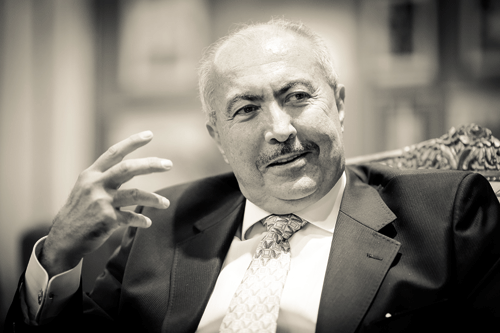
One such company is Future Pipe Industries, built and run by Lebanese businessman Fouad Makhzoumi. The company grew from a $100-million-a-year business around the turn of the century into a billion-dollar conglomerate with global reach in the course of the past 10 years.

“We represent 16 percent of the world market for fiberglass pipes and are the largest manufacturer; the world market for these pipes is $117 billion annually,” says Makhzoumi.

Future Pipe Industries (FPI) is the centerpiece of Future Group, a family holding that also includes an investment arm, ventures in real estate, engineering and business development as well as an organization dedicated to philanthropy. While the group is headquartered in Dubai and the philanthropic Makhzoumi Foundation is focused on Lebanon, FPI has operating manufacturing plants in seven countries, which distribute their goods across the globe.

In terms of economic contribution, FPI accounts for about 80 percent of Future Group’s activities. The corporate story entails several narratives of the self-made Arab man: A family-rooted individual, who had the fortune of seeing an opportunity and the flexibility to respond to it, plus the passion and power to capitalize on the initial fortune and expand it over decades. 

Fortune’s seeds of chance

As he recalls his entry into pipe making in conversation with Executive, Makhzoumi says he was a hot-headed 20-something who decided to drop the pursuit of a PhD at the Massachusetts Institute of Technology in 1974 when his doctoral advisor insinuated that his Lebanese homeland might no longer be around as a country by the time the young man received the degree. 

The young Arab took his Masters degree in chemical engineering and in 1975 moved to Saudi Arabia, where a chance encounter at a future inlaw’s house led to a job offer by Amiantit, a pipe making company that was at the time linked to the Swiss cement dynasty, the Schmidheiny family, and is still a major Saudi manufacturer today. To Makhzoumi’s question as to why he, a chemical engineer, should be interested in such things as asbestos cement pipes, the answer was “Try it for a month”.

Jump forward through about seven years of laboring for the Amiantit Company and Makhzoumi put together an investment offer to acquire the non-Saudi pipe making ventures in the region from Schmidheiny Group. “With Stefan Schmidheiny not too keen to stay in the business after his father’s death, I was able to obtain a syndicated loan and buy all the business in the Middle East outside Saudi Arabia, except for Lebanon, which in 1984 was very difficult to access.” FPI was born, the manufacturing process was altered to use fiberglass instead of the perilous asbestos and the company grew into a Middle Eastern fiberglass pipe manufacturer of note.


Playing back to Lebanon

The story could settle here into a routine tale of industrial growth in the 90s, were it not for some interesting decisions and Makhzoumi’s knack of seeing economic pictures in wider terms, a geostrategic gene that he may have in common with other billionaires with Lebanese DNA. In one interesting decision, Makhzoumi moved back to Lebanon in 1992 and in 1993 established one of his FPI plants in Akkar, the country’s deprived northern region. “Akkar was an ideal place,” he says. “Lebanon’s majority of export business is construction materials and food, which require road transportation. In the north, you are very close to the Syrian border which means you can export your products.”

Although he built the plant near the [dormant] regional airport, then touted loudly as investment project by the government’s IDAL agency, he never got a power line from the electricity grid or even a landline phone until he closed the plant 17 years later, Makhzoumi says. 

The plant’s 2010 shuttering was not because of missing national demand for pipes — public water infrastructure projects could have taken around two years worth of output, according to the entrepreneur — nor the deficient physical infrastructure, although he laments, “If you look at Lebanon anywhere north of Tripoli, it is like Somalia. There is nothing being done there.” 

What he says made the plant economically unfeasible was that Lebanese politicians made every effort to put obstacles in the company’s way, such as blocking the sale of pipes made by FPI in Akkar to national infrastructure projects. The exercise deeply expanded Makhzoumi’s knowledge of the Lebanese political approach to industrial needs. “By default, if you disagree with a [Lebanese] politician, he will give instructions to the government to fight local industry,” he claims. 

Instead of waiting any longer for answers from Lebanese political players, Future Group pulled the plug on the Akkar plant and is currently expanding in Spain, buying factories in the country seen widely as being one of Europe’s embattled economies. Makhzoumi’s rationale for the anti-cyclical step is that he anticipates a new trend for 2013 that will bring new opportunities. “For me, market collapse is an opportunity. I don’t look at it as a disaster as long as you have managed your core business in such a way that you can sustain and bridge the cycles,” he says. 

Under the public radar

Neither he nor FPI are very visible in international or regional media. Even though the company was valued at $1.6 billion when it was preparing for an initial public offering on Nasdaq Dubai in 2008, and his personal net worth must be assumed to be considerably above that mark today, Makhzoumi has never appeared in the Forbes’ list of billionaires. In international media, he was dragged into British headlines in connection with a scandal over a former United Kingdom minister, Jonathan Aitken, but vigorously rebutted the allegations that he himself was implicated in any wrong conduct. 

Makhzoumi has a bone to pick with local media in Lebanon, accusing them of not covering his philanthropy and the work of the Makhzoumi Foundation, because these media are affiliated with political camps that dislike him. His rare mentions in media notwithstanding, Makhzoumi appears as a skilled manipulator and someone who communicates with a keen sense of effect. When he lambasts what he sees as the failings of the Lebanese political class, he does not seem prone to thoughtless outbreaks of criticism, but rather as someone who uses candor with a great sense of impact and otherwise always says the right things with natural conviction, such as explaining his drive for business success with his passion. “You should enjoy what you are doing. If you enjoy what you are doing you can be innovative all of the time. If you think it is a job, you get bored.” 

One suspects that it is easy to be bored with pipe making. Pipes and pipe systems are an ancient technology that has been upgraded tremendously through modern engineering and manufacturing processes. They come in a surprising variety of metal, cement and plastic pipes for an extensive range of uses from the kitchen to intercontinental transport. Various lobby groups and industry associations promote the advantages of the respective materials and numerous companies claim to be world leaders in producing basic types and sub-categories. 

Pipes and geopolitics

Makhzoumi sees pipes with different eyes and listening to him, the humble pipe takes on strategy dimensions in regional and global security-economic contexts. In the Far East, for example, he says specialty pipes in marine applications will be needed for enabling the navies of Korea and Japan to build vessels that can counterbalance the expansionary naval presence of China. Developing a joint venture with Korea’s SK Chemicals, Future Group will play a part in delivering pipes for use in naval vessels.

A broad geostrategic aspect of piping is the transport and distribution of vital materials, control of which Makhzoumi sees as today being more important than their production. Oil and gas pipelines that traverse the Middle East or link Asian producers to Europe are well-known for their strategic importance, but China also provides a hot current example. 

According to Chinese state television reports, the country last month started construction of its third pipeline in an extensive internal gas transportation network. China’s latest West-East pipeline construction project is projected to cost $19.9 billion and cover a distance of 7,300 kilometers, the state media said, adding that the first two pipelines of the West-East network were realized between 2002 and this year with an investment of $46 billion. 

Pipelines of intercontinental length already are tools of geopolitics and will assume increasing importance in the competition of nations for economic leadership. No wonder then that the FPI founder regards business leadership as inseparable from engaging in politics. “You cannot be a global player by trying to be only a businessman,” he says. “I play regional power and politics to try to understand the trends that are arising and this is how you position your business in order to be part of the change.” 

The pipe maker also sets his sights on countries where he anticipates broad-based infrastructure development needs to meet high population pressure and social development demand. Indonesia, for example, will need to start spending on amenities for its citizens and invest in infrastructure such as pipe-based utilities. “We believe Indonesia is moving. It is becoming one of the largest Muslim countries. They have to start spending in order to avoid falling into the Arab Spring,” Makhzoumi says. 

And there will be no end to piping needs. Global demand will burgeon because higher population densities and scarcer resources will mandate development of pipelines. For every person born on earth, two meters of pipe are needed, he cites. 

The Syria-Russia puzzle through pipes

Even the puzzle of why Russia is not joining the rush to change the regime in Syria can, from the geopolitical entrepreneur’s perspective, be understood by examining the angle of gas transportation. Russian self-interest is to keep control over the price of gas deliveries to Europe via the pipelines that allowed it to develop this crucial revenue stream after the end of the Cold War and the breakup of the Soviet empire. If gas from exploitation of newly discovered finds in the Eastern Mediterranean were to be delivered to Europe at reduced prices, when compared with Russia’s, it would break Russia’s back, Makhzoumi reasons. “That is why Russia invested billions of dollars over the past seven, eight years in Cyprus, against which they have the right to set up their LNG (Liquefied Natural Gas) plant,” he says. “If they control it, they will make sure that this gas will not be delivered to Europe at a lower price than what they are delivering. To be able to do that, you need the LNG plant and you need the military base, which is what Syria has.” 

Makhzoumi’s socio-political power base in Lebanon includes his philanthropic foundation and a political party, both of which he says are wholly self-funded and do not expose him to the levers of influence and the strings that other political players are pulled by. He claims he is a player in Lebanese politics “because this is my country and I am not happy about the way that our people are living”, and when asked if he wants to be prime minister, answers “Yes, why not.” 

Looking East

In the meanwhile, he is positioning FPI for greater global reach. The company, according to Makhzoumi, today has a built-in production capacity of some $4.5 billion, of which the Middle East represents about 60 percent. Besides developing the group’s engineering and procurement capacities, entering Spain as springboard for dealing with Latin America, investing in the marine pipe venture in South Korea and a deep-well equipment venture in Indonesia, the Future Group is also building a $100 million facility in Myanmar. Three to five years from today, the IPO that was first planned for 2008 will likely be on the books again, with a valuation of the company that Makhzoumi expects to be between $4 billion and $5 billion. As to the location of the primary listing, he says, “my feeling is Singapore because the market is moving this way.”   

November 2, 2012 1 comment
0 FacebookTwitterPinterestEmail
The Buzz

Morning briefing: 2 Nov 2012

by Executive Staff November 2, 2012
written by Executive Staff

Economics

Brent crude slipped below $108 a barrel on Friday as investors look ahead to key jobs data from the United States for more signs of economic recovery, which would boost fuel demand.

More from Arabian Business


Intensifying political turmoil in Kuwait, where police used teargas to disperse protesters a day earlier, triggered another sell-off on the country's main index on Thursday, dragging it down to its lowest level since August 2004.

More from Arabian Business


The Lebanese Energy Ministry said on Thursday the fair price of electricity provided by private generators in November is LL410 for every hour of power supply for customers who receive 5 amperes and LL820 for those who receive 10 amperes.

More from The Daily Star


Iraq opened on Thursday its biggest trade fair in more than 20 years in the latest step to rebuild an economy battered by decades of conflict and sanctions.

More than 1,500 companies from Iraq and 21 other countries are taking part in the Baghdad International Fair.

More from The Daily Star


Almost three quarters of a million commuters in the UAE travelled for free on the Metro, buses and water taxis to mark Public Transport Day on Thursday. The Roads and Transport Authority (RTA) estimates that 739,000 passengers took advantage of the waived fees, an increase of more than 42,000 from last year.

More from The National


Companies

UAE-based Dana Gas failed to repay a $920m Islamic bond on maturity, prompting a source close to holders of the bond to say they will stake claim to the natural gas producer's extensive Egyptian assets.

More from Arabian Business


More than 60 percent of internet users in the GCC are unable of recognizing a basic phishing message or forged website, a new survey has found.

More from AME Info


The world's most expensive real estate development – part owned by Qatar's Prime Minister – has completed sales worth £1.7bn ($2.7bn), it has been announced.

More from Arabian Business


November 2, 2012 0 comments
0 FacebookTwitterPinterestEmail
Economics & Policy

Everyone’s watching the dollar

by Natacha Tannous November 1, 2012
written by Natacha Tannous


United States currency policy concerns almost everyone: the Chinese, who hold some $876 billion in US treasury bills; the Middle East and North Africa, where nearly every nation’s currency is pegged to the dollar; and financial markets the world over. But only one of these concerned parties from around the globe is actually responsible for setting US currency policy: The US Federal Reserve (Fed).

Lately there has been speculation in global markets that a hike in the Fed funds rate is imminent — talk from which the Fed itself is remaining aloof. 

“The Federal Reserve Bank extended the low borrowing costs period after looking at the state of the economy and the [9.7 percent] unemployment rate,” said the chairman of the Federal Reserve Bank of Chicago, Charles Evans, to Executive at the 2010 Summit on Financial Literacy & Education in Chicago, Illinois, hosted by Visa.

Fed funds rate and inflation

Given the prevailing winds the economy is weathering, rates are likely to remain in the zero to 0.25 percent range — a world of zero interest-rate policy or “ZIRP” in Fed-speak — which the US has been in since December 2008.

Inflation, an appealing tool but no solution
Because it would lead to a higher nominal GDP while keeping the same level of debt, inflation can actually help temper the urgency of America’s debt-to-GDP ratio, likely to “balloon to more than 100 percent of GDP” by the end of 2020, as Fed chief Ben Bernanke told the US Congress’ Joint Economic Committee. But even if it were desirable to inflate in the short-term, such a policy would also harm the economy down the road. After monetizing the debt, returning to an acceptable level of inflation is not easy and might initiate a problematic economic spiral with downside risks of escalating the debt when the central bank raises interest rates (increasing debt interest payments), while slowing GDP growth.

“There isn’t much inflationary pressure [with inflation at 2.3 percent], hence we can afford that monetary policy,” indicated Evans. “However, if economic conditions change quickly, we will respond appropriately.”

The last time inflation was a major concern to the US economy was in the early 1980s; the Keynesian model, which predicted alarming inflation resulting from such a low Fed funds rate, is not in use today because demand has not yet rebounded, as the US moved from a consumer society to a savings one after the global economic crisis.

“Although the Fed added $1.5 trillion…to the economy by freeing up some money to the banks or through large-scale asset purchases, it did not trigger inflation, just as Chairman Ben Bernanke expected, because real estate prices went down, along with the stock market,” explained Yervant Demirjian, managing director and board member of Interaudi Bank in New York.

Inflation therefore remained contained as a result of a fall in prices, low consumption levels and limited economic growth. Nevertheless, markets currently expect an increase in inflationary pressure by September, along with a change in the state of the economy.

Backing the Benjamins 

In the 1980s, the dollar only regained its strength when inflation declined. But today, although it’s a ZIRP world, we have not attained the kind of inflationary pressure that could be bearish for the dollar.

Bearish euro
Various factors weigh on the euro, which reached a one-year low of 1.32 against the dollar on April 23. In addition to a restrictive European fiscal policy, the Greek debacle and its contagion effect on other European countries are also having an adverse effect on the euro. Greece asked the European Central Bank, the European Union and the International Monetary Fund to activate a bail-out as the five-year Greek credit-default swap spread reached a record high of 650 basis points on April 22, increasing borrowing costs and working against Greece’s efforts to reduce its budget deficit. Hence, the euro will probably not gain momentum in the short-term. According to Makram Abboud, managing director at Nomura Holdings in London, the euro even “appears overvalued… considering the macroeconomic situation of some EU members, or to a smaller extent, the European air travel disruption following Iceland’s volcano eruption… the airlines will possibly need a bail-out at a moment where governments are already over-leveraged.” This is in line with Morgan Stanley Research’s estimate of the euro dropping to 1.24 by year’s end, a lower forecast compared to other brokers.

First, the relative strengthening of the dollar stems from the diverse roles of the currency. It is not only a medium of exchange but, most importantly, a reserve currency, a safe haven through US Treasuries, a unit of account for commodities and trades, an anchor for pegging currencies and a carry trade currency (previously limited to the yen), given its low interest rates.

Secondly, economies in 2008 did not want to increase their US dollar exposure, placing a stronger interest in the euro and the British pound as oil prices and commodity prices were peaking. But this tend reversed at the end of 2009, when portfolios had to re-align their investment strategy and currency positions due to lower commodity prices and a more complex correlation between the dollar and oil prices (as opposed to a purely negative correlation). Finally, the US labor market is showing relative growth prospects and improving productivity, thus the overall market sentiment is positive toward the dollar.

GCC rides greenback

From a pure trading perspective within the Gulf Cooperation Council’s dollar-pegged economies, goods imported in currencies other than dollars became more expensive as the dollar weakened in the last five years.

But today, the relatively resurgent greenback – with a 5 percent to 6 percent increase year-to-date against the euro and British pound – translates positively because imports of, for example, European goods and services, as well as workforces, become cheaper. Meanwhile the main GCC exports, oil and gas, are denominated in dollars the world over (except for Iran,) meaning that despite the fact that they will be more expensive for consumers, they will be more expensive everywhere they shop, so there is no loss of competitive advantage.

Where things are not so rosy is in areas with an increasingly diversified economy that have exports paid in a cheaper currency, or non-oil economies such as Dubai. The Emirate will see a decrease in both real estate buyers and tourists whose home currency is not dollars and a stronger dollar will reduce competitiveness.

 Economically, the GCC was growing so fast in 2007 and 2008 that the double-digit growth, along with the increase in commodity prices and the cheap dollar, fueled an “oil bubble” and created uncomfortable levels of inflation. Qatar and the United Arab Emirates even reached consumer price index inflation levels of 15 percent and 12.3 percent respectively in 2008.

“Problems started to occur because the GCC was compelled to follow relatively low Fed funds rates while meanwhile, inflation was skyrocketing,” said Florence Eid, founder and chief executive officer of Arabia Monitor research and advisory firm. “Whereas in 2009, the Gulf entered a deflationary period, today the dollar peg — coupled with current low interest rates — is no longer a drawback for the GCC economy.”

These things are all cyclical of course, and they will change again,” she added. 

However, the relative strengthening of the dollar against the euro has two major economic advantages. It is, first, an effective tool for inflation stabilization in the Gulf area, which, as mentioned above, is extremely important for the state of the economy. Furthermore, it eliminated concerns surrounding the dollar peg.

“GCC countries, with 95 percent of assets in dollars, would have suffered from de-pegging from a weak dollar, running high risks of weakening their own currencies even further,” said Makram Abboud, managing director at Nomura Holdings in London. “Now with a stronger dollar that discussion [of de-pegging] has gone away.”

On the monetary front, the peg to the dollar “implies that, by design, the GCC interbank rates should not diverge,” as stated by an IMF paper on regional financial integration. Consequently, the region responded fast to Fed discount rate cuts as GCC central banks also reduced their borrowing rates, with cuts of 250 basis points in Bahrain and 175 basis points in Saudi Arabia. Such monetary policy is a useful tool to push demand, along with pumping money into local banks, encouraging citizens to borrow again, while governments continued to spend in key areas such as infrastructure.

In Saudi Arabia, the 2010 budget will likely reach $144 billion, and “even though main growth drivers in the Gulf are government expenditures [highly related to the level of oil prices], all things being equal, an appreciation of the US currency will tend to improve local purchasing power, fueling consumer demand and investment with a positive impact on growth” said Michel Cordahi, head of Capital Markets at Gazprombank Invest (MENA).

JP Morgan effective exchange rate indices

Thus, a stronger dollar will, overall, improve economic conditions already facilitated by monetary policies and will directly lead to a rebound in consumption, fostering a positive economic spiral. Such assumptions led the International Monetary Fund to forecast a real gross domestic product growth of 4.5 percent in the MENA region for 2010, doubling 2009 growth.

Some warning signs

However dollar bullish one may be in the short-to-medium term, the situation is perhaps less that of a stronger dollar than a cheaper Euro, all the more since the dollar has weakened against most emerging market currencies in the last six months. Moreover, “with a US deficit worsened by the healthcare bill, a high level of federal debt and a renminbi [yuan] revaluation likely to redirect capital inflows to Asia and cause sells on the USD, the dollar might lose its temporary bullish tone,” forecasts Stefan Teufer, coverage director at Deutsche Bank.

True, Bernanke’s Fed has saved the US economy from a depression, sparing a global financial Armageddon in the world’s interconnected economies, but the GCC should neither be blinded by what may be a short-term resurgence in the greenback, nor neglect monitoring closely their inflationary pressure.

Even if they are committed to the dollar peg, central banks should be cautious when aligning their monetary policies to future Fed hikes, especially for countries that have not reached their desired inflation rates, or if an interest rate hike would risk a relapse into a credit crunch. In the short term, it may be a wise idea to count their lucky stars — or dollars.


November 1, 2012 0 comments
0 FacebookTwitterPinterestEmail
The Buzz

Morning briefing: 1 Nov 2012

by Executive Staff November 1, 2012
written by Executive Staff

Oil and gold

Gold traded flat on Thursday, shrugging off data showing China's economy was perking up, as investors waited on the sidelines of the market for US employment data due on Friday.

More from Arabian Business


Brent crude edged down toward US$108 a barrel on Thursday as investors focused on concerns that storm Sandy's rampage across the US East Coast could reduce fuel demand and shrugged off data pointing to a recovery in China.

More from Arabian Business


Economics

The European Investment Bank and the French Development Agency are interested in funding natural gas pipelines in Lebanon, Finance Minister Mohammad Safadi said on Wednesday following a meeting with European officials.

More from The Daily Star


Iranians can no longer export gold without approval by the central bank, an official was quoted as saying on Wednesday, in a new effort by the government to restrict outflows of wealth.

More from Arabian Business


Companies

Dana Gas shares jumped 4.8 per cent as markets began trading after the company said it had missed a payment deadline for a $920m bond.

The sukuk matured at midnight on Tuesday, but Dana Gas remains in negotiations with creditors.

More from The National


Qatar-based Al Ijarah Holding Co has become the second private company in the country to operate taxis, after Al Million launched its first fleet of 300 taxis earlier in July.

More from AME Info


US-based Emerson has announced it is investing $33m to expand its Middle East and Africa headquarters campus in the Jebel Ali Free Zone in Dubai.

More from Arabian Business

November 1, 2012 0 comments
0 FacebookTwitterPinterestEmail
Comment

A third way

by Moe Ali Nayel November 1, 2012
written by Moe Ali Nayel

Armed thugs attacking demonstrators protesting against the regime was a hallmark of the early months of the Syrian revolution. The thugs were at it again early this fall in the Syrian city of Homs; this time, however, the demonstration was in the opposition stronghold of Wa’ar, and the armed men who roughed up the crowd and yelled at people to go home were Islamist rebel fighters who were provoked by protesters’ chants for a peaceful and secular future for their country. 

“It felt as if our revolution was stolen,” said a friend who was there. In the beginning it was simple enough to say you were against the regime, it was the people against their oppressor — in the suburbs of Damascus, in downtown Homs and elsewhere people were demanding freedom, reforms, an end to corruption and a united Syria for all sects. The Syrian people were the ones who sparked their own peaceful revolution, without any support from the world’s so-called champions of freedom and democracy. Now, however, the intensity of foreign meddling has fragmented the unity around their cause.

Syria has become an arena for a geopolitical battle of global proportions: on the one hand there is the Syrian regime backed by Russia, China and Iran, and on the other hand we have the various insurgent groups being armed, aided and inflated by Saudi Arabia, Qatar, Turkey and Western nations. The Syrian people, by and large, have been forced to choose between supporting the regime or partisans of the revolution. In this game of thrones, those who actually started the revolution, and their message, have been largely swept aside. Some of those supposedly fighting for Syrian freedom also seem to be adopting the same practices as the regime they are trying to topple. 

Ghaith Abdul Ahad recently reported in The Guardian about a young man who was stopped at a checkpoint in Aleppo manned by the Free Syrian Army (FSA). He was taken by the FSA for a torture and interrogation session; when he offered them nothing of value he was taken by “the Islamists” who didn’t allow anyone to see him after. How dissimilar is that to stories one hears of regime practices? Had it been the regular Syrian army who stopped the young man, he would have likely been interrogated and tortured on the spot, and later transferred to the dark cells of the mukhabarat (secret service), where he would vanish. The Guardian story shows revolutionaries, supposedly the fighters for change, mimicking age-old regime practices.

Twenty months into the uprising and Syrian society is splitting in many ways — between the religious and secular; deepening divisions between sects and communities; rich and poor; even men and women. With the raging internal conflict and greater geopolitical battle clearly polarizing the country, the need for the emergence of a khat thaleth, — a ‘third line’ or a ‘third way’ — is paramount, and indeed, these voices do exist. They are people who are trying to awaken the public consciousness and bring the essence of the revolution back to its early stages, when the quest for a better life for all was the hope.

Concerned Syrians — average citizens, activists, artists, journalists and others — are trying to open a window, a space for a third line to grow, though their efforts up to this point have been scattered. An image from an opposition protest, widely circulated on Facebook, sums up the situation; in it there is a placard depicting a man with the Syrian revolutionary flag on his chest being torn to pieces from all directions by hands holding dollar bills; at the top it reads: “Support for loyalty.” The awareness that Syria is being fragmented by external forces is clear. Another sign at a protest last month in the city of Kafr Nabl called for “the support of the revolution to get back on track”, while another stated: “To the opposition: Do not tire yourself, our revolution will produce its own leaders”, as opposed to foreign support choosing who has the power to lead. 

Until now, outside intervention in Syria — from all sides — has amounted to dumping huge amounts of arms into the fray to fuel the bloodshed while outside powers bicker over a political settlement. This situation is reminiscent of Lebanon’s civil war — a war Lebanon has yet to recover from — that left the country with a divided society, a dysfunctional government and ultimately a monopoly on power for local elites backed by foreign powers. Neither this, nor a new regime in old clothes, will justify the sacrifices Syrians have endured, and have yet to endure. A third line must be taken.


Moe Ali Nayel is a freelance journalist based in Beirut

November 1, 2012 0 comments
0 FacebookTwitterPinterestEmail
Economics & Policy

Governing our oil

by Valerie Marcel November 1, 2012
written by Valerie Marcel

Following the recent gas discoveries off shore from Israel and Cyprus, Lebanon is keen to kick off exploration activities in its waters. Like many other prospective oil and gas producers around the world, it must draft contract terms, regulations and laws to direct investment behavior in the country and set up institutions that effectively control the actors involved in its nascent petroleum sector. Of course, it will want to do it right.

Successful governance of the petroleum sector is only possible with capacity. The state needs qualified people and competent institutions to design the terms of oil and gas investment and to steer the petroleum sector according to the government’s broader resource development plan. Capacity is also critical for monitoring the performance of oil companies, assessing their development plans, auditing costs and collecting revenues from the sector.

Prospective petroleum producers must focus on building this capacity. But the hitch is that they must do so at a minimal cost. After all, their resource base is still unknown. They do not yet have an accurate picture of their reserves to know whether, how much, when and for how long oil revenues will flow to the treasury.

If general state institutional capacity is high enough, they can draw on these people and processes to build up an existing ministry of natural resources. The experience of countries like Trinidad and Tobago show that in countries where state and human capacity were relatively high at the beginning of petroleum development, the ministry of petroleum has successfully managed the sector.

Conversely, in countries where state institutions are weak, concentrating power in the ministry has not brought about successful governance. For instance, in Gabon, the Democratic Republic of Congo and Sierra Leone, accountability has been poor and the technical and financial performance of the sector has also been low.

The World Bank’s Governance Indicators rank Lebanon in a somewhat similar position to Uganda, a new African oil producer. Both countries rank in the mid-range percentile globally for government effectiveness (Lebanon 43rd and Uganda 37th,) and regulatory capacity (53rd and 49th), but they score a low 19th percentile for control of corruption. In such a context, Uganda’s major discoveries and new production justify — and even require it — to build up its petroleum, legal and accounting capacity. In contrast, in Lebanon, building administrative and regulatory capacity is desirable, but significant investments will only be warranted when discoveries are made.

The existing state institutions are capable enough to devise the terms of exploration activities, with select inputs from sector experts. Clearly, in the immediate term, Lebanon’s strongest efforts in terms of capacity building will have to be focused on establishing strong processes of transparency and accountability. An oil sector in which decision-making and executive bodies are accountable, both to the country’s leadership and to the public, is most likely to promote broad-based national development and avoid some of the most serious governance maladies that often stem from oil.

Accountability is strengthened by a clear, formal delineation of roles and responsibilities among actors involved in the sector, with  strong processes for data collection, auditing and public disclosure; and the ability of government institutions to exercise effective control over the activities of public officials and other actors with responsibility for the sector.

As was Uganda’s experience, the interest of both government and the public in the governance of the sector rises exponentially with the size of discoveries made. Strong accountability processes are best implemented before discoveries. A political commitment to getting it right sets the tone for the future.
At the beginning of 2012, Lebanon’s Minister of Energy and Water Gebran Bassil promised the appointment of the board for the Petroleum Administration (PA) within a month, the beginning of the tender process within three months and for the first contracts for exploration to be enacted within the year. 

As yet, come November, the sector is stuck in a stasis without the PA; due to political bickering and horse-trading, Lebanon’s political oligarchy is yet to name the board. This does not bode well for the future of this nascent sector.
 

Valerie Marcel is an Associate Fellow at Chatham House, where she leads a project on Governance Challenges for Emerging Oil and Gas Producers. She is also the author of ‘Oil Titans: National Oil Companies in the Middle East’

November 1, 2012 0 comments
0 FacebookTwitterPinterestEmail
Economics & Policy

A decline into uprising

by Jihad Yazigi November 1, 2012
written by Jihad Yazigi

While there is a general consensus that the uprising gripping Syria since March 2011 is part of the broader regional movement for better governance and more freedoms, there has been little debate as to the extent to which the economic and social conditions prevailing in the country contributed to the uprising. The question of whether Syrians revolted because of their thirst for freedom, justice and dignity or whether they did so because of their poor economic and social conditions remains, however, important if one wants to understand the reasons that led to the uprising and produce viable economic reconstruction plans.

At the beginning of 2011, Syria had been witnessing for several consecutive years an average annual growth in its gross domestic product (GDP) of between 4 and 5 percent, limited current account, trade and fiscal deficits, a stable foreign exchange rate, rising foreign investments and a curtailed inflation rate. These positive macroeconomic data hid, however, many imbalances that lay behind them, and other longer-term trends must be taken into account in order to better understand the dynamics of the revolution.

The level of GDP growth, for instance, may be high by Western standards but is wholly inadequate by Syrian ones. Indeed, according to most analysts, an average growth of 8 percent is required to generate enough jobs for new labor-market entrants. For more than three decades GDP growth has fallen short of that level, meaning an uninterrupted increase in unemployment for some 30 years in a row.

The fiscal deficit may be limited but this is largely a result of government investment expenditures lagging, thereby contributing to long-term infrastructural shortfalls. As for the trade balance, it remains highly dependent on oil exports, which, in 2010, represented 46 percent of Syria’s total exports. With the volume of crude reserves rapidly declining, there are serious longer-term concerns. Meanwhile, private sector investment is largely geared toward real estate and the services sector, away from more long-term labor-intensive industries such as textiles, which has seen the closure of scores of factories in the last decade. Finally, the foreign direct investment Syria attracts every year may be on the rise but it remains below Jordan’s, a country with a population a fifth of the size as Syria’s,  and none of its vast natural resources.

Booms and busts

A look at longer-term trends helps puts things in perspective. In 1946 Syria was a founding member of the General Agreement on Tariffs and Trade (GATT), the predecessor of the World Trade Organization — out of only 23 countries in the world. In the 1950s, when Algeria was still under French rule and the majority of ‘third world’ countries were still fighting for independence, Syria had a buoyant economy and a vibrant political life. Then, three decades of strong state investment in the country’s physical infrastructure and in its health and education services helped boost the country’s development indicators. In the 1970s, Syria’s Human Development Index — a composite statistic of life expectancy, education and income calculated by the United Nations — was growing at a rate among the highest in the world. In 1983, Syria’s per capita GDP, at $1,901, was higher than that of Turkey — $1,753 — and almost on par with that of South Korea ($2,187). That was only 30 years ago.

Surveying what followed in the 1980s is important in order to trace back the economic challenges the country now faces. At the beginning of that decade the Syrian economy contracted sharply, partly as a consequence of the fall in global oil prices and the decline in remittances and aid from Gulf countries. The foreign currency reserves dried up, leading to a rapid devaluation in the value of the Syrian Pound starting in 1986; this year marked the beginning of the implosion of Syria’s middle class. This was only further compounded by a rapid decrease in spending and investment by the government, which, at the time, played an overwhelming role in the economy. The country never fully recovered.

In the last part of the decade oil began to be extracted from new fields in the country’s northeast, around the city of Deir-ez-Zor. A short boom followed, fueling hopes that the state would lead the recovery by investing in infrastructure and by opening up the economy. The opposite came to bear: revenues from oil income gave new fiscal margins of maneuver for the government as well as a new source of foreign currency earnings, and as a consequence reduced the pressure on the authorities to open up — Syrian economists call the 1990s the lost decade.

Starting in the 2000s, and coinciding with Bashar al-Assad succeeding his father as president, the decline in oil production again threatened the government’s fiscal position and serious economic reforms finally began. Geared toward the services sector, the gradual liberalization of Syria’s economy improved with a modernized legislative framework for investment, reduced taxation on private corporations, an unfencing of trade borders and increased private sector investments in new industries.

These developments spurred the creation of modern and relatively sophisticated banking and insurance sectors with the entry of some two dozen regional banks and financial institutions in the market. The expansion of retail trade and of the tourism industry was evidenced with the construction of large malls and the entry of global hotel operators. What is more, concessions were awarded to private international companies for the management of the country’s two ports of Tartous and Lattakia and there was a general boom in the services sector.

However, this policy of economic liberalization was marred with mistakes typical of similar processes in other developing countries. 


The downside of opening up

The free trade agreements signed with Turkey and Arab countries, for instance, were implemented with little safeguards to protect or promote Syrian manufacturers. The reduction in customs tariffs led to an invasion of foreign products that put countless industrial plants and workshops out of business and, consequently, thousands of people out of work, while only limited mechanisms were established to promote exports and improve competitiveness.

More significant is the divestment of the state from the agricultural sector. While the sector had for decades been a major contributor to economic output and to the labor market, it had to face a steep decline in subsidies at the worst of times — amid a severe drought.

In 2008, after three consecutive years of drought, the government announced a threefold increase in the price of gasoil — which is used by farmers to fuel their irrigation pumps — and an increase in the prices of fertilizers to world market levels. The combination of these factors — a drought and poor policy decisions — played a major role in the staggering decline in the share of agriculture in the economy, from 25 percent of GDP in 2003 to 16 percent in 2010, or a decline of a third in its contribution to the country’s economic output in some seven years. At one point, the production of wheat, a major staple food for the population, fell by half.

The crisis of Syria’s agricultural sector led to the migration of hundreds of thousands of people from eastern parts of the country, in particular around the city of Deir-ez-Zor, to the working suburbs of cities located further west, including Damascus, Daraa and Homs.

These twin crises in the agriculture and industrial sectors — or the crisis of the “working world” as one Syrian intellectual put it — converged in many of Syria’s rural and suburban areas; the geographical roots of the current uprising very much mirror the impact. Protests began in the city of Daraa, which lies at the center of a large farming area to which fled many of the people living in the drought-affected northeast. The wildfire of popular discontent soon spread to the rural areas of Idlib and Aleppo provinces, where livelihoods depend largely on agriculture, and to the working suburbs of Homs and Damascus — home to many of the artisans who lost out from the process of trade liberalization. 

But the state divestment from this “working world” is also a reflection of a more subtle generational change in the composition of the governing elite in Damascus. While farmers, for instance, historically represented a pillar of the ruling Baath Party and a large share of its rank and file — Bashar’s father, President Hafez al-Assad, called himself a peasant — the current generation of Syrian officials were largely born and raised in the cities, disconnected and therefore insensitive to the plight of rural areas.

While there is little doubt that the struggle of Syrians for a better life was driven, before anything else, by their thirst for dignity, justice and freedom, one should make no mistake: The dispossession and injustice felt by large segments of the population cannot be understood without taking into account their economic shades. Poverty, forced displacement, loss of assets and property, and gradual deterioration of living conditions are all major contributing factors to the sense of lost dignity and justice, and hence, in the eruption of the Syrian revolt.

November 1, 2012 0 comments
0 FacebookTwitterPinterestEmail
  • 1
  • …
  • 303
  • 304
  • 305
  • 306
  • 307
  • …
  • 686

Latest Cover

About us

Since its first edition emerged on the newsstands in 1999, Executive Magazine has been dedicated to providing its readers with the most up-to-date local and regional business news. Executive is a monthly business magazine that offers readers in-depth analyses on the Lebanese world of commerce, covering all the major sectors – from banking, finance, and insurance to technology, tourism, hospitality, media, and retail.

  • Donate
  • Our Purpose
  • Contact Us

Sign up for our newsletter

    • Facebook
    • Twitter
    • Instagram
    • Linkedin
    • Youtube
    Executive Magazine
    • ISSUES
      • Current Issue
      • Past issues
    • BUSINESS
    • ECONOMICS & POLICY
    • OPINION
    • SPECIAL REPORTS
    • EXECUTIVE TALKS
    • MOVEMENTS
      • Change the image
      • Cannes lions
      • Transparency & accountability
      • ECONOMIC ROADMAP
      • Say No to Corruption
      • The Lebanon media development initiative
      • LPSN Policy Asks
      • Advocating the preservation of deposits
    • JOIN US
      • Join our movement
      • Attend our events
      • Receive updates
      • Connect with us
    • DONATE