• Donate
  • Our Purpose
  • Contact Us
Executive Magazine
  • ISSUES
    • Current Issue
    • Past issues
  • BUSINESS
  • ECONOMICS & POLICY
  • OPINION
  • SPECIAL REPORTS
  • EXECUTIVE TALKS
  • MOVEMENTS
    • Change the image
    • Cannes lions
    • Transparency & accountability
    • ECONOMIC ROADMAP
    • Say No to Corruption
    • The Lebanon media development initiative
    • LPSN Policy Asks
    • Advocating the preservation of deposits
  • JOIN US
    • Join our movement
    • Attend our events
    • Receive updates
    • Connect with us
  • DONATE
AnalysisEconomyEntrepreneurshipSpecial Report

Contrarianism squared

by Thomas Schellen September 6, 2021
written by Thomas Schellen

After nearly two years of a state in turmoil, the tide of bad news in Lebanon has reached the point where everything appears broken and almost nothing looks like it would ever function again. And it is true. To a point. Nothing in Lebanon is fully functional today, for example the entrepreneurship ecosystem. 

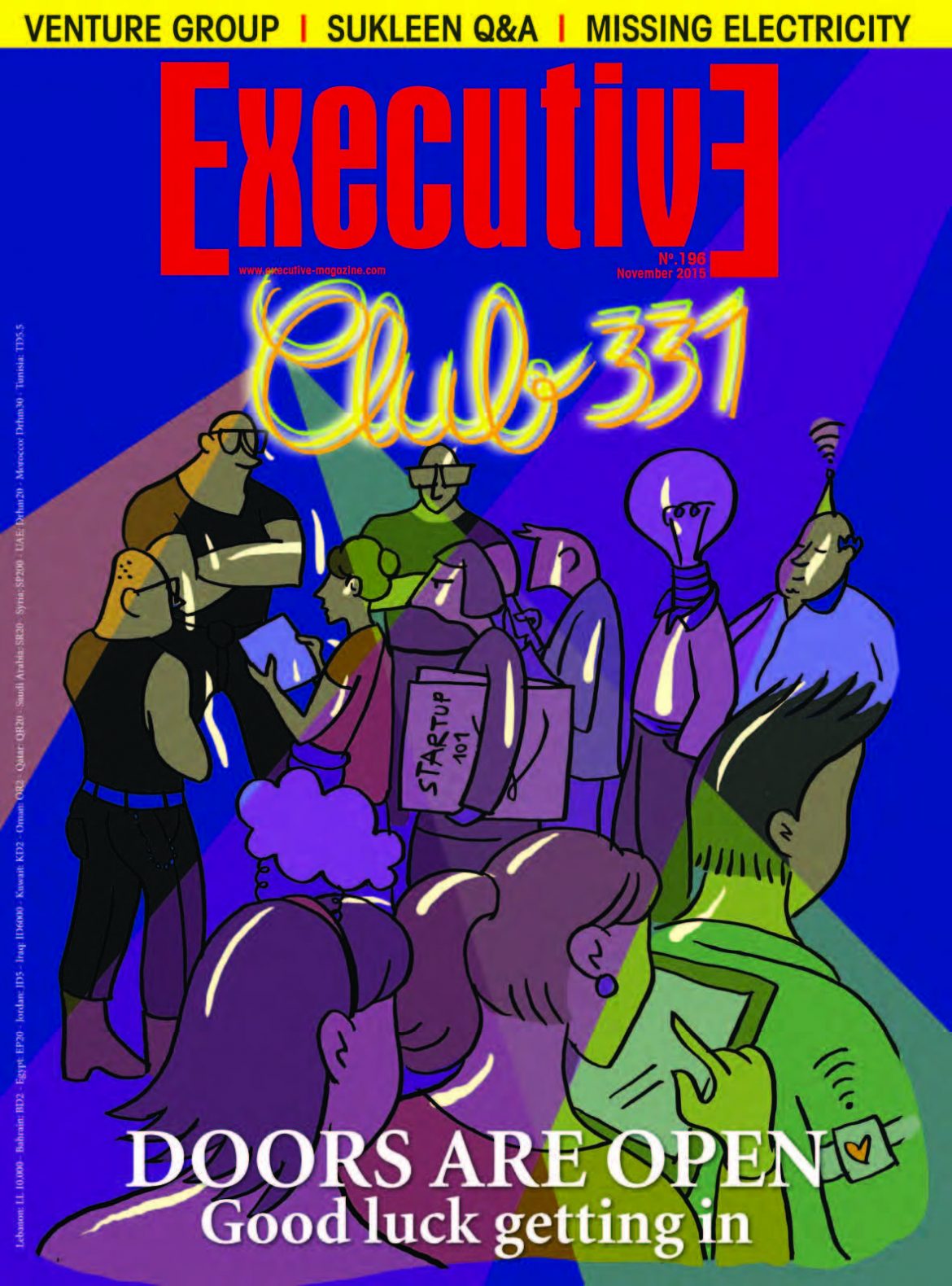
This system, which has for the last decade been hailed as one of Lebanon’s biggest economic options, has been thrown back to where it was before 2013, sighs Nicolas Rouhana, general manager of IM Capital. 2012-13 was the time when the ecosystem was kicked into rapid formation by what Rouhana describes as a shock of half a billion dollars, namely the issuance of Circular 331 by Banque du Liban (BDL), the central bank of Lebanon, which set the stage for practically all investments into the entrepreneurship ecosystem over the following years.

Stripping down the pillars

However, the ecosystem that formed under the curating values of guaranteed funds and rational looking financing risks, was not driven equally well by policy and legal infrastructures as it should have been. This hints at the oddity of the system.

IM Capital, a key player in the financing of promising startups for as long as the ecosystem has existed, remains a pillar of its financial infrastructure because of its broad support mandate and nourishment with hard cash (both courtesy of the United States Agency for International Development, USAID), as well as its integrity and independence from the Lebanese public sector and banking. But it has lately been confronted with gaping holes in what used to be an imperfect but nicely growing landscape of fellow financial players, venture capital (VC) organizations, startup programs, accelerators and incubators, ancillary services providers, etc. 

Of those, many noted actors such as the Hult Prize and the Flat6 Labs accelerator have exited the Lebanese stage. Such demises – and the host of incomparably graver national misfortunes which are so well known that repeating them would be an exercise in dullness – have left the remaining entrepreneurship ecosystem entities at times in situations where they feel that parts of the system have been amputated, to the point of it no longer making sense to act “because one cannot clap with one hand,” Rouhana says. He notes for example that startups face immense problems because of disruptions in the administration and the banking sector, creating insurmountable barriers against basic business acts such as registering companies and opening bank accounts.

The disassembly of systemic components in the public and finance sectors was exacerbated by disruptions of funding flows or invested companies and new restraints on the financing of startups. Again, no need to reiterate what the monetary disaster of 2019-21 to date did to the accessible bank balances of those enterprises. This has led IM Capital and other members of Lebanon’s VC Association to last year set up an “SOS Fund” under a paradigm of rapid fundraising. “The SOS Fund has fresh dollars and lollars and we invest directly,” Rouhana explains, meaning that the SOS Fund, capitalized by the participating limited partners, made one-shot investments into the most promising startups in the portfolios of participating VCs. 

Deployment issues were, according to Rouhana, also encountered by angel investors, where investment opportunities in advanced startups with larger financing needs were hit by currency restraints of angel funds. In response to this challenge, the angel funds that have been created in collaboration with IM Capital were pivoted into an angel accelerator fund for early startups.

In retrospect analysis, the financial hopes for funds that had been fueled under the regime of the BDL’s Circular 331 could not but vanish with the financial instability phenomena and loss of investor trust in late 2019. “After the crisis. there were reputation issues with 331 funds because they all were based on banks that had blocked depositors’ funds and because capital calls were done in LBP on the 1,500 rate, meaning they could not produce anything useful in terms of real cash,” explains Rouhana.

But reorganization and reform of the financing layer of entrepreneurship was not the only struggle that was cast upon financial stakeholders. The climate in the national economy, and with it the atmospheric pressure in the entrepreneurship ecosystem, has had other repercussions according to ecosystem stalwart Rouhana who more than once in his interview with Executive resorts to terms like “back to square one” and “firefighting.” 

Acknowledging that the current period is a hard time for anyone to be active in the entrepreneurship ecosystem and that people just want to escape from the political environment, Rouhana says this makes it even harder for the remaining ecosystem players to operate. “All these support structures disappeared. There are few, us and others, who remain, but you need deal flow and people to do all these things. We are really back to square one,” he says, adding, “Today, what makes a difference, is what you did post October 2019. Everything is recent. We are firefighting and we will see if we can rebuild.” 

Other stakeholders at the ecosystem’s backbone share the pain of working, in a political economy context that takes the concepts of uncertainty and unreliability of everything (and of political promises specially) to heights never seen before, with an entrepreneurship development line that has been degraded from a sophisticated ecosystem into a disjointed assemblage of stuttering bits and pieces. But like Rouhana, they also display a sort of contrarian determination to keep going, for the hope of rebuilding and the sake of the many stakeholders that rely on them. 

Thus exerting herculean efforts in nurture of endangered green shoots in finance, startup acceleration and the likes, these ecosystem stakeholders all the while also exude peculiar emotional or spiritual vibes. One such notion is that confidence – an overused and empty term in many mouths today – is today still a tiny bud with a long and difficult journey of recovery still to come; another that a professed and fake resilience – meaning a malpractice of adapting to keep operational in the face of ever more political evil – has to pivot to true resilience of demanding economic and social rights for one and all.

For Nadim Zaazaa, managing partner in entrepreneurship-themed multi-tasking enterprise Nucleus Ventures, the pain is undeniable. “I think the short term prospects are very dark – we are minimizing losses and have a huge talent drain. More importantly, we have what you call the stay-drain, the fact that a lot of talent that remains in the country, is working remotely for foreign employers. There is income in the country but the value creation is taking place outside,” he tells Executive. 

In Zaazaa’s view, the single remaining advantage of Lebanese entrepreneurship is the improved competitiveness in terms of labor pricing. Even then, he sees scant light at the end of the financing tunnel or in terms of existing good entrepreneurship initiatives. “I think rebuilding an investment landscape in Lebanon requires a reset of the regulatory environment and getting investor confidence back, which we are lacking. We don’t have the banking sector and the basic infrastructure for [winning investor confidence back], so realistically speaking I think the investment landscape has been rubbled. There are deals but they are not concerted and it will take time to rebuild that landscape. And a lot of painful changes,” he says. 

Although he asserts that human capital who remain in Lebanon under these circumstances are not necessarily contributing greatly to value creation in the country, he still sees a narrow path of opportunities. “There are three to four universities who are going to be Noah’s arch for entrepreneurs – they will be what remains [of the ecosystem] and what can be nurtured. This Noah’s arch will in my opinion be the only viable reset of Lebanon’s economy,” he says, adding that this assessment has motivated Nucleus Ventures to shift from being governmentally funded to partnering with university innovation systems. 

New acceleration prototypes 

The perhaps second-most prominent layer of ecosystem components, after the financing players with their eternal lure of presumedly (but never really) easy money, were the incubators and accelerators. The impact on these engines of entrepreneurial contents was no less severe than the impact on the financing pillar. However, the withdrawal and retrenching of some well-known entities was juxtaposed with the entry of players of a different type. 

“There is a change in the ecosystem in terms of accelerators and startups. You have new accelerators popping up,” says Jihad Bitar, CEO of academically aligned acceleration program Smart ESA, which in 2017 (late in comparison to other accelerators in the old ecosystem) was established in association with the École Supérieure des Affieres (ESA) business school and has since grown notably in terms of both facilities and programs. 

Yet instead of funding that was enticed into the ecosystem under Circular 331, the new accelerators are equipped with monies by international development agencies and donors, and operate with a model of grants. “Donors are seeing that entrepreneurship is one way to help Lebanon rebuild. Big organizations want to go beyond humanitarian help to Lebanon into rebuilding an economy and see entrepreneurship as part of this,” Bitar explains.

Munir Nabti, co-working veteran and long-time advocate of social enterprises, is one of the exponents of the new type of acceleration that has come to the Lebanese (and regional, see interview page XXXX) ecosystem. More than a mere executive at the helm of new accelerator Bloom, he is his ever-optimistic self. Asked about his evaluation on the ecosystem today, he aims at putting the latest troubles into some perspective by telling Executive that the system’s stakeholders have seen cycles of ups and downs, including the establishment and closures of systemic entities over the past 13, 14 years. 

While he agrees that there are plenty of new barriers and challenges to work through, he emphasizes that he sees new efforts for growth and collaboration in terms of accelerators, and elsewhere. “We are working on fostering the collaboration of accelerators and had several sessions that we want to keep expanding and have more ecosystem discussions. So I think there is definitely opportunity to build a really thriving ecosystem that not just helps keep people here and supports enterprises but that also helps to launch enterprises and attract enterprises from abroad to Lebanon,” Nabti enthuses. 

Building block by bock

Ralph Khairallah, the chief growth officer of the Beirut Digital District (BDD) – the central real estate cluster and community hub that provides tech enterprises and ecosystem stakeholders with many increasingly scarce services – sees Lebanon’s entrepreneurship environment in transition from ecosystem 1.0 to 2.0.

In his opinion, the ecosystem 1.0 was in many regards a trial version, or trial experience, from which operators as well as startups could learn. “Everybody was learning. We as startups were learning and even the investors and mentors were learning along with the first batches of startups. Eventually everyone has matured and we now know better how to place our bets,” says Khairallah, who before joining BDD had gained experience as co-founder of a startup. 

Instead of the previous system that had bubble aspects and might have attracted minds into entrepreneurial gambles, operators under ecosystem 2.0 are fated to build on solid grounds and manifest as profitable industry for bringing fresh investments from abroad. “Innovation and digitization is the future. This was not a wrong bet for BDD, and today is the time to get the most out of this bet,” he adds. 

According to Khairallah the performances of successful investors, startups, SMEs and even NGOs in Lebanon during the crisis reflect globally very favorable economics for the digital sector, an impact that is visible in the high demand for co-working spaces in Lebanon that has improved in 2021 to date. 

Interacting with ecosystem stakeholders in this summer of 2021, Executive actually found the number of viable appearing startup companies and exorbitantly dynamic founders (which are not by default the same things) to be surprisingly large. 

From manufacturing startups and an online media startup to regrettably nontransparent and communication-averse e-commerce mall operators (too many of which declined Executive’s requests for information and interviews to allow for writing of a viable story), new social enterprises and some very intriguing edutech startups (see story page XXXX), the magazine’s team found more, and more diverse, reasons for profiling of startups – and editorial excitement in doing so – than in several preceding investigations of the respective years’ latest entrepreneurship novelties. 

Viable old recipes, spun anew 

This impression actually jibes with what Smart ESA’s Bitar observed when he describes a trend among applicants for acceleration programs and startup competitions. “Fewer entrepreneurs are left but those that remain are more serious. The average age is higher, many being experienced people who lost their jobs or quit their jobs and see this as the right time to create something. This brings a bunch of experienced people to the market,” Bitar notes, audibly glowing about the good assessments that Lebanese startups received in June at the awards ceremony of a startup competition by name of Prix Entrepreneur ESA-HEC Paris, on which Smart ESA worked in the first half of 2021 in collaboration with French business school HEC Paris.

Judging from remarks that Bitar made in earlier interviews with Executive, the experience of seeing improved commitments and better drives in overall shrinking numbers of startups, and ergo a gradual increase of quality in ecosystem beneficiaries, seems to be a trend that has begun already before the crises of 2019 and the following years struck Lebanon’s entrepreneurship aspirants.

The insight that longer-term trends in the Lebanese entrepreneurship annals have not actually been totally altered but at most further accentuated over the past two years of serial crises, however, should not astound. Other trends that have been highlighted in the recent past, have similarly been in existence before the crisis. Particularly the idea that Lebanese startups are well advised to maintain their “kitchen,” development, and back office activities in the country of their origin but cannot sustain an optimal trajectory of growth by focusing on the local market and therefore should from inception prepare and seek access to capacious and stable markets in the region or elsewhere, is not really new. 

Still, it is indubitable that Lebanese startups – with some very specific and rare exceptions – today have not only every incentive but almost an obligation to start their market journeys by immediately going abroad and hopefully generate income that will flow back to Lebanon. Owing to the entrepreneurial ingenuity and adaptability of locally incepted startups that are not afraid to jump abroad, maker and manufacturing startups thus represent good hopes even if any wishes must be abandoned to see such companies serve firstly the Lebanese market or be listed on an electronic financial market in Beirut. 

Among the other bits and pieces that are momentarily working and being developed in the entrepreneurship ecosystem, those deserving most attention appear once again to be based in the financial realm. On the investability level, the comparative advantage of having discounted valuations in terms of talent-power intensive startups for example in edutech has the ability – nicely demonstrated by the acquisition of tutoring marketplace Synkers – of reeling in foreign strategic investors to viable Lebanese companies. 

On the access-to-finance level, the paradigms of impact investing and development investing, with all the inherent self-interests that such paradigms entail, offer what ecosystem stakeholders Nabti and Rouhana perceive as unused potentials. Nabti suggests that by working together, highly reputed funds and impact-themed operators in the ecosystem, could mobilize “substantially more funding than what has already come to Beirut” from potent investor groups, including diaspora groups. 

“I think a lot of funding doesn’t come to Lebanon because there aren’t enough groups that can easily deploy money. If we can figure out a model of having 10 accelerators work together with aligned basics, methods of approaches, we [as unified stakeholders] can go to a donor and say: Hey, we want to support 1,000 companies over the coming five years, 1,000 startups in Lebanon, and have proper accounting and proper mechanisms for collaboration, etc.,” Nabti proposes as method which could tap into funding levels from donors and impact investors that are not in the thousands and hundred thousands of dollars but in the hundreds and thousands of millions. 

Such pathways of thinking audaciously and big might seem theoretical to some who have lost every ounce of trust that the future can hold good news for this country but in fact, there are funding activities already underway in the ecosystem and plans for more funds. IM Capital’s Rouhana discloses that his team, which has been very busy with implementing the SOS Fund and angel accelerator fund, is preparing the launch of a new fund towards the end of this year. This fund is expected to have a life cycle of five to six years and include a share of fresh dollars, aiming for fast delivery and total size similar to that of the (not yet fully revealed) $12 million SOS Fund. “We will look at companies and their investment readiness. Investment criteria will be export potential and growth potential of SMEs,” Rouhana says.

Funding sage Rouhana, having been able with IM Capital to convince USAID of the need for a new fresh-dollar fund of $20 million, a big step up from a previous first funding of $15 million in the context of the previous ecosystem, concurs that a new and much larger series of positive financial shocks might be in order. “What is needed is perhaps $40 or 100 million per year in order to make a difference and shake the system and bring back what was lost in terms of confidence,” he says. 

But any assessment of the entrepreneurship ecosystem’s realistic new investment paradigms and need for a systemic pivot, while an obvious necessity for more reasons than one wants to count, also today highlights again that the ecosystem’s first incarnation had aspects of a prefab structure that came into being in one concerted rush under the impetus of the central bank’s Circular 331. 

Any ecosystem fully deserves this name only if is something organic. Also, it will be more resilient, the more organic it is. In one of Executive’s many musings on the entrepreneurship ecosystem during the past eight years, our then colleague Matt Nash, in an article published five years ago, argued that most natural ecosystem disruptions are fast and furious but that the impact of Circular 331 by contrast was more comparable to climate change. 

The BDL-approving metaphor may raise some eyebrows today, on several fronts. One, the ecosystem’s disruption over the past two years, and the role of the Lebanese financial sector in it, was anything if not fast, furious, and debilitatingly painful. The second protest note might say that reliance on one-sided and distortive intervention at the start, however well-meaning, brings immense risk at the next inflection point where it then can occur and become, as Rouhana stresses, more of a curse than an asset. 

But the country’s entrepreneurship ecosystem also shows the truth that the creation of the ecosystem by push from the central bank was at the time one of the best things that could happen in the Lebanese economy and that what is dysfunctional or disassembled today is not in all cases completely dysfunctional, or broken beyond repair and systemic redemption.

Both realities – the dismal situation of everything economic and the remnants of preserved functionality – apply to the entrepreneurship ecosystem. This piece of jewelry of the Lebanese economy, quasi its diadem of innovation, is partly broken, partly disassembled, and in many respects dysfunctional. It cannot escape from being part of this country. But at the same time, the entrepreneurship ecosystem in this dismal summer of ‘21 retains key characteristics of what it was from 2013 to ‘18 and early 19: a system of more – more hope and vigor than some other segments of the economy – and a system of new beginnings. 

September 6, 2021 0 comments
1 FacebookTwitterPinterestEmail
AnalysisEconomy

Between a rock and a hard dollar

by Diala Ghalayini September 3, 2021
written by Diala Ghalayini

Lebanon, the country once known as “The Switzerland of the Middle East” for being a prosperous banking hub with the only secrecy laws in the region, is now in the midst of a financial crisis that is inextricably entwined with the fate of its banking sector. A liquidity and financial crisis erupted in 2019 after years of mismanaged, ad hoc fixes to deeply-rooted economic, social, and political plights. As ruling elites abandoned their feeble and fake solution attempts, the crisis was compounded by the COVID-19 pandemic and the Beirut port explosion, further aggravating the already chaotic scenario. To date, the state has not yet managed to pass on a feasible, full-on restructuring program with long-term efficacy, and the many prevailing crises, namely economic and financial, continue to spur in the absence of capable leadership. 

Trial and error

In what were supposed to be efforts to appreciate or even stabilize the Lebanese pound against the dollar, on May 10, 2021, Banque du Liban (BDL), the Lebanese central bank, launched “Sayrafa”, an electronic currency exchange platform. Law firm Melki & Associates, in an internal translation that explains the content of basic circular 157 on Sayrafa to English- speaking audiences, says that “the purpose of this platform is to identify the exchange rates at any point in time and to allow the BDL to supervise and intervene when needed.” Its debut rate on May 17 was 12,000 Lebanese pounds to $1. “The Sayrafa platform was supposed to bring down the FX rate. In fact, it had an adverse effect, the reason probably being some abuse, some arbitrage in the market,” says Khaled Zeidan, an expert in investment advisory and financial markets. Whenever there is more than one exchange rate for a currency in one market, this creates room for manipulation, with people buying and selling to benefit from the discrepancy between the rates. In Lebanon, there are four rates for the dollar: the official 1,515 Lebanese pounds peg, the 3,900 Lebanese pounds bank exchange rate; the 12,000 Lebanese pounds rate on Sayrafa; and the black market rate which had been fluctuating between 17,000 and 22,000 Lebanese pounds in the month of July 2021. This creates room for extensive arbitrage by buying at the lowest possible price and selling at the highest. 

The most recent of the BDL’s extemporary solutions, followed by basic circulars 151 and 157, is basic circular 158, issued on June 8, which allows depositors who have foreign currency creditor accounts opened before October 31, 2019 to withdraw a monthly amount of $400 in so-called fresh dollars (dollar bank notes), and another $400 in Lebanese pounds converted at the exchange rate of the Sayrafa platform, only half of which can be withdrawn in Lebanese pounds from the account, with the other half is reserved for credit or debit card transactions. The central bank has defined the eligibility of depositors, by setting strict limitations not only on accounts, but also on depositors. Only natural persons, excluding those who have transferred an amount exceeding $500,000 abroad between July 1, 2017 and August 27, 2020 without repatriating 15 percent of the amount and depositing it in a special account blocked for five years, are allowed to benefit from the circular. This stipulation has the effect of reducing the number of beneficiaries by a non-disclosed percentage. If they wish to benefit from circular 158, however, qualified depositors should forsake their right to benefit from basic circular 151, which allows depositors to withdraw cash from their foreign currency account in LBP at the market exchange rate which is currently 3,900 Lebanese pounds to $1, compared to the black market exchange rate which varied between 17,000 and 22,000 Lebanese pounds in the month of July, thus instigating a haircut above 75 percent. Zeidan tells Executive that according to his friends and associates from different banks, there has not been much demand on circular 158. Depositors don’t want to lose access to 151 given that the latter is more comprehensible and user-friendly in terms of restrictions. He adds, depositors do not believe that banks will be capable of honoring it for too long, and this is where the psychological barrier kicks in.

Questions that breed more questions

[inlinetweet prefix=”” tweeter=”” suffix=””]Every Lebanese depositor has the right to know the fate of their deposits. Whether they choose to benefit from the BDL’s circulars or keep their deposits in their bank accounts, a clear identification of what the future holds for their life savings would go a long way[/inlinetweet]. Depositors are not well informed about their legal rights in relation to the circulars, confirmed a random sample of depositors approached by Executive for this story. Their unified opinion implies that they do not know what is best for them, as they think they are incurring huge losses no matter the scenario they choose to go by. With confidence going further down the drain in the government and the banking system, depositors cannot choose their way to go, but they are definitely inclined towards exiting the financial system in the least loss incurring method.

Paradoxically, the BDL issued circular 158 while the government was drafting a capital control law to legitimize and organize the capital controls enacted by the banks. Paul Morcos, founder of JUSTICIABeirutConsult law firm, remarks that whenever the law is issued, it will prevail over any administrative decision including that of the BDL. “This is when the latter has to issue new circulars abiding by the course of law and amending circular 158,” says Morcos. The real question now becomes, what is the reason behind the law delay, or in other words, why was it replaced by a tentative circular? Is the issuance of the law undesirable by the state officials and bank shareholders in first place to move on with their illegal capital controls? Is it realistic as some business experts alleged? Or are they distracting depositors from their iniquitous deeds – namely the subsidy lifts, electricity cuts, fuel shortages, etc. – with the hassle of setting a contract with Lebanese banks that are further complicating the process by limiting the benefits of depositors even more? Or should we instead choose to go in good faith, as Zeidan opines, settling for the idea that the institutions of the country are trying to come up with the best they can to alleviate the situation of the general public? The answer remains hazy. 

“Basic circular 158 could be challenged before the administrative court for not having guaranteed equal chances for citizens by virtue of article 7 of the Lebanese Constitution that clearly stipulates that all citizens have to be equal under the law,” says Morcos. To challenge a law, you need a specific number of parliament members to present a formal challenge; a circular on the other hand can be challenged by a single natural person before the administrative court. “In order to challenge it you need to have an interest and a standing,” states William Melki, partner at Melki & Associates. There are two ways in which a citizen can go forward with the process; a depositor’s first option would be to start benefitting from the circular and then challenging it for not reaping benefits to the extent that he/she wishes. Otherwise, a depositor has to take a written statement by the bank to the court stating why he/she does not benefit, and would challenge it accordingly. However, as per Melki, banks are not giving out such statements, making it even a more strenuous of a process. 

The options for ill-fated Lebanese depositors amount to four. Initially, they can choose to settle for the $800/month of circular 158, or more precisely the variations of 158 under bank contracts.

Another option would be disregarding 158 for the sake of 151, meaning depositors can withdraw cash from their foreign currency account in Lebanese pounds at the exchange rate (bank rate) set by the BDL which is currently 3,900 Lebanese pounds to $1 compared to the black market exchange rate. Banks are also allowed to set their own limitations; they can apply the circular at their own pace; “The ‘limits and procedures set by the bank,’ referred to in this circular, are similar to those imposed by banks on the cash withdrawal of US dollars. Lebanese banks will therefore have significant flexibility in the application of this circular,” states the internal translation of circular 151 by Melki & Associates. 

A depositor can also opt for buying valuable assets using checks, also at 3,900 Lebanese pounds to $1 – that is if the buyer does not insist on fresh dollars. The haircut on the dollar amount in such transactions exceeds 80 percent as at end-July 2021. 

The fourth and last option would be to keep their money at the bank, taking into account the expected haircut and accepting the future risk that is disputed in the framework of a capital control law, although the Association of Banks in Lebanon states otherwise. However, the BDL cannot decree a mandatory haircut, it can only lay down the conditions of a contractual voluntary haircut, just as it does with its circulars 151 and 158. Parliament legislation is the precondition for imposing a legal haircut on large – or, much more unlikely, all – deposits at banks, but one must not forget that there also is a loss of purchase power attributable to raging inflation. 

Aside from adopting one of these not very remunerative options, depositors might choose to utilize two or more of them together, in efforts to recoup the utmost possible under their varied needs. As Zeidan advises, one should keep a small amount of cash at home to increase preparedness for any shock in a disruptive environment such as that of Lebanon. In his longer-term view, he says that as the size of total liabilities of the BDL shrinks, and if banks are successfully able to maintain the asset side, meaning the reserves and the gold, intact, any form of haircut will be dramatically reduced with time. On that account, depositors can keep some liquidity in their bank accounts for future gain, or more accurately, for loss compensation. Lastly, Zeidan affirms: “I would highly recommend that if you find valuable assets that you can buy with local dollars, do so, because medium to long term, I think that financial assets will fare less well in general than hard assets.” 

Financial exclusion

Zeidan asserts that the global language of the past 5-10 years has been financial inclusion. It promotes bank stability by keeping the state abreast with the flow of money according to Zeidan, and by increasing economic activity along with the velocity of money according to the Center for Financial Inclusion. The Lebanese banking practice of the last two years since the 2019 liquidity crisis has been the diametrical opposite of the worldwide sought-after. Whoever managed to draw money out of the system has them sitting in a safe, inviting troubles. Not only does it affect the country socially, but inert money also does not interest the economy, as it might eventually find its way out of the country. Our financial tools are also contracting, with credit cards being denied by most of retail stores, restaurants, etc., and that constitutes another obstacle to financial inclusion. 

Melki agrees that currently operating or at least semi-operating banks are under the risk of bankruptcy. However, he predicts the expansion of branches of foreign banks in Lebanon as well as the merging of Lebanese banks with one another to meet the capital requirements enacted upon them by the BDL, otherwise the situation will result in bank bail-ins. Melki contends that BDL governor Riad Salameh is good at matching investors so he will probably find banks a way out of bankruptcy. The tough part however is reengaging previous depositors in the financial system, and this will definitely not happen overnight. Confidence needs to be restored by a competent leadership that is transparent and willing to undertake a tough restructuring journey. 

A vision forward 

Many experts and advisors are coming up with rescue plans for Lebanon, and banking sector restructuring hits the headlines. Distributing the losses is part of the process, but the focus needs to be shed on the importance of rebuilding new sectors or enhancing already existent ones, competitive enough to spread out in the region. Once we ideate and define our role, setting up our various policies – economic, social, political, financial, etc. – becomes easier and much more effective, says Zeidan. 

Confidence is a major part of the narrative; it is an essential cornerstone at the basis of Lebanese relations with the international community as well as with the public. And even if confidence is restored, the banking sector’s standing in the country will differ, affirms Zeidan: “I do have a theory that the banking sector will no longer be the sole gatekeeper of the finances of the country, nor the economy of the country. I think the banks at best will be one of many other gatekeepers.” He adds: “You need fresh equity and capital from overseas, you need new management and banks, you need stability, and again, confidence.” If the International Monetary Fund were to be part of the process, we need it most for the discipline and due diligence. We need to embark on risk capital with the inert money and initiate businesses that generate value through exports and allow room for self-sufficiency to decrease imports. But more and most importantly, we need to establish a well-structured, comprehensive plan excluding contradicting and overlapping decisions by the various institutions of the state.

September 3, 2021 0 comments
1 FacebookTwitterPinterestEmail
Brand VoiceBusinessHealthcare

In light of global changes, will experts succeed in acknowledging the low-risk smoking alternatives?

by Philip Morris Lebanon August 30, 2021
written by Philip Morris Lebanon

Smokers smoke cigarettes for the sake of nicotine, but by doing so, they are putting their lives at risk. Over eight million people lose their lives yearly to illnesses caused by tobacco, causing an economic burden on health care of $1.4 trillion in addition to productivity loss.

Global organizations have long been teaming up with traditional nicotine replacement methodologies to organize various global awareness campaigns that aims to reduce the number of smokers. But alas, the number of smokers has remained over a billion since 2000. According to National Cancer Registry Program in India, the use of tobacco led to over 27 percent of cancer cases in the country in 2020, and the number is expected to increase by 12 percent by the year 2025.

Combustible cigarettes have been considered the most harmful products because more than 7000 chemicals are present in cigarette smoke, of which more than 70 are linked to cancer. Experts from several countries are working on a simple practical formula to provide a less harmful substitute for tobacco, thus helping individuals to quit smoking and build a smoke-free future. They are calling for the adoption of the approach that consumes alternatives like using e-cigarettes and devices that heat and not burn the tobacco, since eliminating smoking using traditional methods is nearly impossible. 

The majority of smokers would have quit if it weren’t for the addictive nicotine, therefore, it has become an integral part of the solution, by offering it in smoke-free products to mitigate the harm. Among those products, emerged the IQOS that heats tobacco instead of burning it, which has become the most popular and most effective alternative to cigarettes and the first of its kind to be approved by the FDA to license its sale in USA. It is a pioneering innovation from Philip Morris, the world’s largest cigarette producer, which has joined forces with various smoke-reduction forces to strive for a smoke-free future.

Since smoking related diseases are caused by the process of burning tobacco and not due to nicotine, or in other terms from the smoke emitted from a cigarette, which contains more than 6,000 harmful chemicals, the company worked on creating an innovation that heats tobacco instead of burning it at a maximum temperature of 350 degrees Celsius instead of the 800 degrees found in conventional cigarettes. It emits nicotine-containing vapor instead of smoke and reduces the emission of harmful chemicals by 95 percent compared to cigarettes. However, It does not necessarily equal a 95% reduction in risk and is not risk free.

A recent clinical trial conducted in the UK showed that e-cigarettes are more effective than nicotine replacement treatments in achieving long-term smoking reduction and cessation. A survey undertaken in India found that after initiating e-cigarette use, 30 percent of participants quit smoking and 38.8 percent quit using smokeless tobacco products. Another 41 percent of participants reported reduced smoking while 30 percent reported that they reduced their smokeless tobacco use.

More than 11.7 million adult smokers have given up on conventional smoking,  replacing them with the revolutionary tobacco heating device and Philip Morris expects this number exceed 40 million by 2025. By mid-2021, the company estimated that, out of 20.1 million total IQOS users, 14.7 million had switched to IQOS and stopped smoking. Of them, 4.3 million live in non-OECD countries. 

In many developed countries, the large-scale implementation of smokeless tobacco has helped in replacing cigarettes and contributed to the decline in their sales, thus reducing the number of smokers. 

Countries which have successfully embraced THR strategies have met their tobacco control goals. For example, the UK has taken a compassionate approach to safer alternatives and products with reduced risks – including groups with high smoking prevalence. Sweden, on the other hand, has the lowest rate of adult smoking found anywhere in the developed world (7 percent), due to the large-scale implementation of smokeless tobacco instead of smoking, while Japan saw an accelerated decline in cigarette numbers in the five last years, since the introduction of HnB products.

This product is not risk free and provides nicotine, which is addictive. Only for use by adults.

This article is brought to you by Philip Morris International

August 30, 2021 0 comments
1 FacebookTwitterPinterestEmail
BusinessEconomyEntrepreneurshipSpecial Report

The pathways of new Lebanese makers

by Thomas Schellen August 26, 2021
written by Thomas Schellen

Once upon a time of apparent – but as has been shown with overwhelming force, fake – stability in the Lebanese macroeconomic and entrepreneurship framework, the promulgated and immensely hyped dream declared the rising power of the local knowledge enterprise and tech entrepreneurship ecosystem. A large part of that dream has dissolved. It evaporated along with the illusion of a currency that could be the guarantor of startups, both makers and services providers, who would first prove themselves in the Lebanese test market, create jobs and achieve profits, and then venture into region and beyond. 

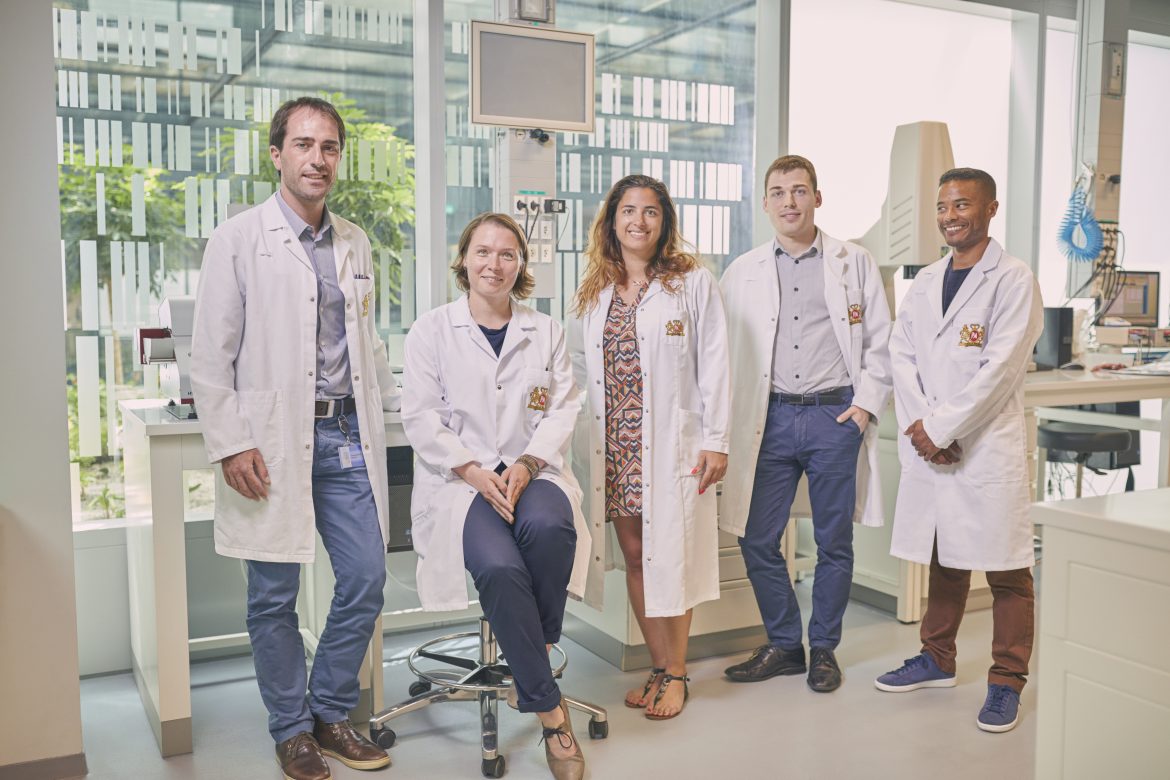
Basma and Hexafresh are maker startups. They impersonate the Lebanese entrepreneurial dream in its latest incarnation. Today this means they are Lebanese tech ventures with manufacturing focus that have export potentials but no significant prospects to find clients in the country. 

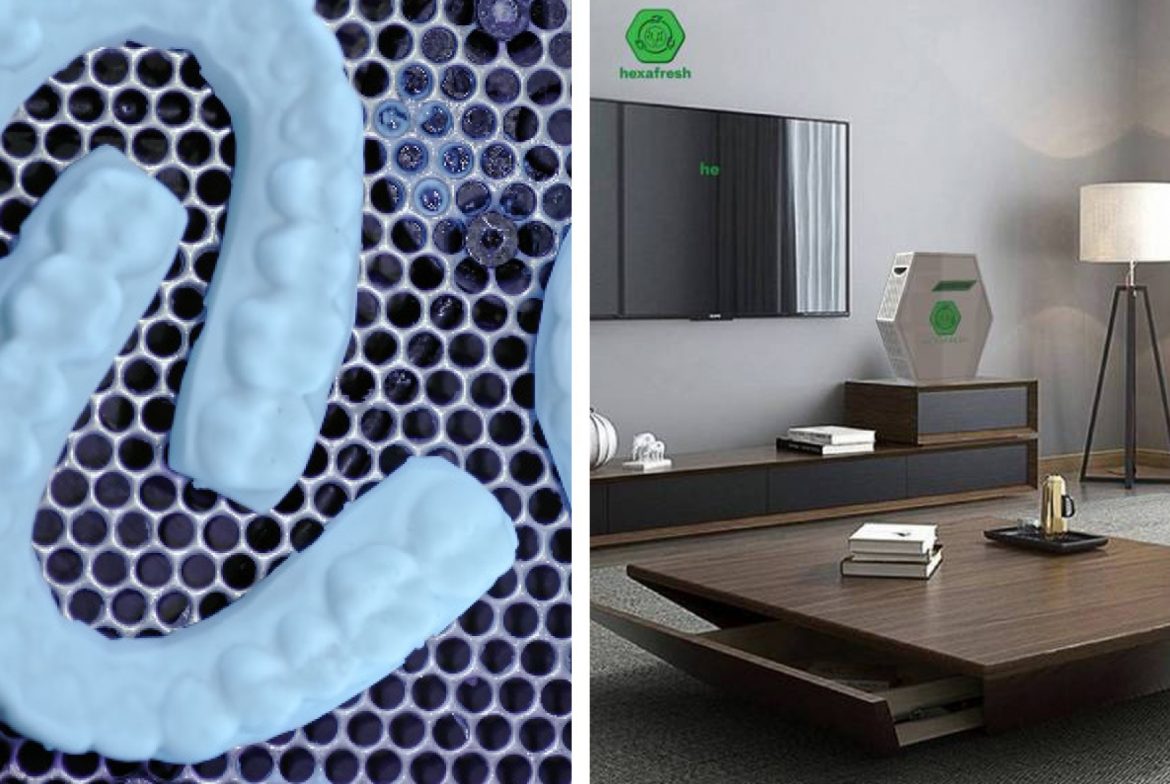
Hexafresh is a climate-wise compatible, zero-emission and low power consumption engineering solution for cooling needs in small spaces, like a home office. Basma combines the digital era technology of 3-D printing with the provision of a comparatively painless correction of a deeply rooted human problem: crooked teeth and imperfect smiles. 

Both solutions saw the light in the past few years. Basma, which was created in 2018 with investments from founders, family, and friends, saw a first non-family funding round between the fourth quarter of 2019 and first quarter of 2020. Hexafresh, which is still in the prototyping phase of manufacture, was established in July 2020 with support from Berytech Fund’s Cleanenergy program. 

Both startups thus were immediately confronted with the financial barriers and market access hurdles that have sprung up in Lebanon after the stumble and fall of the lira some two years back. The worst thing about them, from a local market perspective, is that they have given up on the idea of local sales for the foreseeable future.  The best thing, form a local labor and talent perspective, is that their vision remains alive for job creation in Lebanon. 

Name: Basma
Date founded: 2018
Founders: Dr. Cherif Massoud
Industry: Healthcare device manufacturing (dental aligners)
Business Model: B2B2C, B2C
Incorporation status: Incorporated in UK, Applying for incorporation in UAE
Number of employees: 40
Latest funding received: A series investment round of $3 million was completed in June 2021

Basma is an example for adaptiveness and quick thinking in inspired innovativeness, meaning that founder Dr. Cherif Massoud did not shy away from jumping onto a winning idea that had been making inroads in developed markets but had no champion yet in the Middle East and North Africa (MENA) region. As he tells Executive, Dr. Massoud had practiced as an orthodontist in Lebanon for several years but saw his profession move into new and rising technologies of dental aligners that could for certain patient profiles substitute older corrective devices, such as orthodontic braces and retainers. “Change was happening and I had two options. I could either lead the change in our region or [see my business] die slowly,” he says. 

Lebanon-born, overseas-based

As aligner technology was seeing growth in developed markets, Dr. Massoud saw an opportunity in bringing the new dental devices to markets in the MENA region, even as he and a business partner with engineering background dismissed, from the get-go, the idea of registering their enterprise in Lebanon. 

Moreover, when preparing to conduct a first funding round in late 2019, Basma deliberately did not seek any funding that was guaranteed under the Lebanese central bank Circular 331. In the seed round, which was completed in January 2020, the investing funds nonetheless were local, including angels and noted Lebanese venture capital players B&Y and Cedar Mundi, along with the Kafalat-affiliated iSME. Following this $1.2 million round, a $3 million series A round was completed in June 2021. It was led by Middle East Venture Partners (MEVP) and involved iSME, Cedar Mundi, IM Capital, a fund called SOSF, and one by name of IFA capital.

Based on the venture’s dismissal of Lebanon as legal base, Dr. Massoud moved to the UK. He explains that the entrepreneurship environment there is very accommodating, making it easier to get started, in addition to having a “potent market” for Basma’s products. The prospective loss of the Lebanese market, however, would not deter him because it did figure in operations but not market terms. “From day one, we were physically operating in Lebanon but mentally operating in the region, and we see ourselves in the coming five years as having 50 percent of our revenue from the [MENA] region and the other 50 percent from Europe,” he says. 

The team of Basma has grown to 40 persons who are located in Beirut, the startup’s headquarters in the UK, Riyadh, and Dubai, where the company recently set up an office. With an aim to grow its teams in all four locations, the largest cohort of Basma’s employees by job description is the customer relationship management and customer support team. It is followed in size by the engineering team, developers, and three marketing teams. According to Dr. Massoud, 20 percent of employees are healthcare professionals and technicians. Most importantly for Lebanese stakeholders, he says that all employee specializations are present in the startup’s Lebanon team which accounts for 75 percent of Basma’s workforce and is envisioned to expand from 30 to about 100 persons by end of 2021 or early 2022. 

The company’s business model is informed on one hand by its manufacture of healthcare devices, which make partnerships with clinics and medical practitioners in its main target markets – currently Saudi Arabia and United Arab Emirates – a prime market access conduit. From this perspective, Basma’s recently obtained funding will be dedicated largely to the development of its partnerships with dental clinics in the Gulf, where its infrastructure is designed to involve medical practitioners. “We are a healthtech startup but this is still a medical device and you need the follow up of a doctor. We thus need to increase touch points with healthcare industry on the ground and online,” explains Dr. Massoud. 

On the other hand, however, Basma was not deterred from operations during the 2020 lockdowns in target countries, because the business to consumer (B2C) channel of its online reach was impervious to the lockdown restrictions that many dental clinics were faced with (numerous surveys last summer mentioned dentistry related professions as the most exposed to coronavirus risk). To the contrary of being hurt by the pandemic, the startup’s portal Basma.com was launched as digital native brand in March 2020, as first and only company to offer orthodontic digital end-to-end service in the region. “We are able to deliver our treatments fully online, this is our edge,” Dr. Massoud enthuses. According to him, Basma followed the direct to consumer success of its portal by developing the additional support offering of connecting patients’ to medical practitioners who are not far from their physical location. 

Leading in the region

Partner clinics will not need to be equipped with an own 3-D printer but rather with a digital scanner for dental impressions. For development of its partner network with local clinics in the immediate main target markets such as the UAE, the company is engaged with aligning clinics digitally by either integrating an existing digital scanner or providing a scanners to clinics who do not have this equipment. Additionally, given that the method of dental aligners is new and may not be known to all partner practitioners, the startup created a “Basma academy” for delivering training – by video tutorials or in-person sessions – to doctors over a short term. 

The overall aim is a good customer experience. “We try to make it an easy and nice experience for our users by minimizing the number of clinic visits and doing most of the work ahead of time, thus decreasing the chair time with the doctor and just making the necessary things happen in the clinic, with all the rest digital,” Dr. Massoud emphasizes, adding that by not outsourcing any part of its aligner production, the startup was able to create a strong customer support infrastructure and feedback loop with customers.  

Among what he says is a $4 billion dollar addressable market in region, Basma’s prime target group are younger adults above 18 who either had had prior braces – 40 percent of customers – or had not previously had the chance to align their teeth because of financial or other reasons. The main selling points for Basma’s dental aligners according to Dr. Massoud thus are convenience, moderate costs and digital payment options, and the customer’s retained confidence because the product is discreet – the aligners are not as visible as braces. 

Despite the impassive rise of this Lebanese-born dental startup, however, persons in Lebanon who would like to rely on Basma to improve their smiles, should not expect that the company’s growing MENA network will reach here any time soon. “We don’t view Lebanon as market at all. We view Lebanon as place for us to work, to operate, to produce and to export. We don’t look at Lebanon as a market because in the financial collapse, it cannot be a market. It is a driver and place where we can operate and attract talent, provide jobs and serve the region because we can speak the language,” Dr. Massoud explains. 

The company – whose plans already envision a Series B funding round in 18 to 24 months – wants to remain independent in the short to medium term but possible exits beyond consolidating its aimed-for MENA and European market positions, could well include an acquisition by a strategic partner. 

In the same breath by which he concurs that the best way to put shining smiles on the faces of residents who remain in Lebanon today would not be a dental correction but reforms and economic policy, the expatriate founder of Basma confirms, “Lebanon is in our hearts and the best way how we can focus on helping the economy is by focusing on a very smart end product that we can produce in Lebanon and export to anywhere in the region.” 

Name: Hexafresh
Date founded: July 2020
Founders: Mohamad Chaaban, Mohamed Ibrahim, Riwa Matar, Rodolphe Salem
Industry: Manufacturing (HVAC)
Business Model: B2C
Incorporation status: Applying for incorporation in France
Number of employees: 5
Funding received: Seed funding (USD 17,000) through the Berytech Cleanergy Program

[Editor’s note: The Hexafresh profile was researched and written by Alexis Baghdadi, Executive’s managing editor].

By this time next year, Lebanese startup Hexafresh aims to start rolling out the first prototypes of its flagship environment-friendly cooling solution “made in Lebanon” to the French market. With the proviso that most materials for its units will consist of imports, Mohamed Ibrahim, Hexafresh co-founder and chief technological officer, assures us that the company’s product and future ones will be assembled in Lebanon and presented as Lebanese in both concept and design, following the strategy adopted by an increasing number of European and international companies. The promise is clear: a zonal air conditioning unit that really cools and really produces zero emissions.

How ironic is it that electrical appliances designed to cool temperatures actually contribute to rising global temperatures? With a growing world population, air conditioning units are becoming increasingly essential to ensure indoor comfort in hot and humid regions, not least so in our part of the world. But such cooling devices are also becoming necessary in regions previously considered temperate but now experiencing the effects of global warming on fauna, flora, and human life. It seems the higher temperature rise, the more air conditioning units will be in demand, producing more emissions that contribute to heating the planet and locking this vicious circle in motion. With a growing demand and need, even so-called energy-efficient air conditioning units and their reduced emissions cannot offset the seemingly inexorable temperature rise. Simply put, emissions are still produced by the compressor components of air conditioners, and “energy-efficiency” only denotes savings in electrical input as a ratio of a unit’s cooling capacity. 

Seeking the best high-efficiency and environment-friendliness alternative to conventional air conditioners, Hexafresh opted for thermoelectric coolers. These devices cool air and diffuse it through a fan, making them more attractive than regular fans that only displace air. They also lack a compressor unit and therefore produce no emissions. Thermoelectric coolers function according to the Peltier principle whereby an electrical current passing between two dissimilar metals can produce a cooling effect going one way, and a reverse heating effect going the other way. The only input is electricity, the only output is cooled or heated air, with zero emissions. While studying at Rafic Hariri University, Ibrahim was first exposed to this technology and he put together a handmade prototype with a team of friends who would eventually become co-founders of Hexafresh. Later while pursuing advanced studies at HEC Paris university, this technology materialized into an application and business concept.

The trigger for Ibrahim were the heat waves France experiences every year. Recently, France has been recording an increasing number of deaths from heat waves year-on-year, marking a high of 1,924 casualties in 2020 according to French public health services (up from 1,500 in 2019). Factors affecting this increase include an ageing population and, as of last year, additional complications related to the COVID-19 pandemic, but the real killer remains global warming. Even as temperatures continue to rise, cooling solutions are not evident in the country: the installation of many conventional air conditioning units is banned in many residential areas in France because of their emissions, the noise they produce, or simply because they are seen as an aesthetic blight on certain neighborhoods’ architecture. 

And so in July 2020, Ibrahim and his co-founders applied for the Berytech Cleanergy Program and one of their concepts was selected and became Hexafresh. With USD 17,000 in seed funding from the Netherlands, the team was able to produce a minimum viable product (MVP), the eponymous Hexafresh unit, assembled in Lebanon from electrical parts, fiberglass, and aluminum. In the future, the unit’s body will be 3D-printed, rendering it more lightweight and affordable. Part of the seed funding also went into running an Ansys simulation on the prototype to maximize its efficiency. “Depending on conditions, we can safely say today that Hexafresh can produce a temperature of eight to 10 degrees lower or higher than the room temperature,” Ibrahim affirms. As a way of saving costs for consumers, Hexafresh designed their unit as portable and zonal. According to Ibrahim, the Hexafresh unit consumes only about 300 watts to heat or cool the air by eight to 10 degrees inside a volume of 1.3 m3, consecrating it for personal use. Being this energy-efficient, effective, portable, and sold for a fraction of the price of other alternatives, makes it an attractive value proposition for individuals at home; almost as if it was intended for the elderly in France. As added benefits, the Hexafresh unit acts as an air freshener and dehumidifier.

Midway between France and the GCC

For the near future, Hexafresh will seek to secure $50,000 in angel investments. After incorporation in France, this fund will be used to obtain the CE certification for their product and manufacture 300 air conditioning units that will be rolled out for user-testing in France in the summer of 2022. “We sought to incorporate in France because it makes things so much easier for us financially right now. Our main market is France and our brand identity is based on the French market and we are looking for funding opportunities and partners in France,” Ibrahim says, explaining that “Hexa” is a direct reference to the roughly hexagonal outline of mainland France that earned the country its nickname “L’Hexagone,” and can be seen in the shape of the Hexafresh unit. “While the economic situation in Lebanon poses many problems, it has benefited us in terms of reduced labor costs. Hopefully we can maintain our design and assembly operations in Lebanon and once the situation improves, we can contribute to better job creation.” Feedback gathered from testers will serve to prepare the final consumer product that should be set for mass production in 2023. 

Of course, France isn’t the only target market for Hexafresh but it is an ideal testing ground. “The need for a viable air conditioning solution is a real pain in France, and it could save lives among the elderly” Ibrahim comments, adding that other countries at high risk of casualties caused by heat waves include Belgium, the Netherlands, Germany, the United Kingdom, among others. Hexafresh units could also be purchased as casual personal air conditioners in less life-threatening settings. Asked about the Lebanese market, Ibrahim admits that hyperinflation, coupled with erratic fuel and electricity provision may not put their product within easy reach of many Lebanese residents, unfortunately. Hexafresh have their sights set on penetrating GCC markets with versions of their product intended for outdoor use. “Lifestyles have started to change in the GCC,” explains Ibrahim, “with the COVID-19 pandemic and confinement, people have started seeking to spend time on their balcony or in their garden, and this is the growing niche we are targeting.” Currently, the only cooling solutions for limited outdoor activities in GCC markets consist of large fans with misters, which are bulky and require maintenance. Ibrahim sees virtually no competition for Hexafresh once they introduce an adapted version of their personal air conditioners equipped with batteries. According to Hexafresh’s financial model, the company will be valued at $1.2 million within five years.

August 26, 2021 0 comments
2 FacebookTwitterPinterestEmail
Brand VoiceTechnology

Bayer introduces digital ophthalmology in Lebanon through its Alleye home-monitoring sponsorship program

by Bayer August 25, 2021
written by Bayer

As more and more of the way we receive healthcare shifts towards online, Bayer Middle East looks to utilize digital health to provide better eye care for local patients and support doctors through the launch of the Alleye Home Monitoring Sponsorship Program.

Dr. Samer Al Faqih, managing director and commercial area head at Bayer Levant, shares how Bayer are innovating virtual care.

Courtesy of Zaven’s program “Bala tool Sira”

What is Alleye and how will it improve the patient experience?

“Alleye” is a mobile medical software application that helps detect and characterize visual distortion in patients with retinal diseases like Age-related Macular Degeneration, a moderate or severe distance vision impairment or blindness. What makes it such a revelation in terms of eye care is that patients can now check their condition by themselves at home and it is also very user friendly and simple to navigate. Patients will be able to send their vision scan results to their ophthalmologist who will, in turn, analyze their results to determine if the patient’s condition is stable or has improved or progressed in a way that requires intervention.

In sum, Alleye means that patients can manage their condition from the safety of their home and therefore giving them the peace of mind they need.

What is the current landscape in terms of retinal diseases and eye care in Lebanon and the region?

As we all know, the COVID-19 pandemic caused massive disruptions in the healthcare industry, requiring professionals to re-examine the traditional face-to-face patient-physician care model. It also highlighted the need to incorporate new models of digital healthcare solutions in ophthalmology, such as home-monitoring, to meet this challenge.

Diabetic Retinopathy, a complication of diabetes, is the leading cause of preventable blindness in adults. A recent study also showed that 24.6 percent of Type 2 diabetes patients in Lebanon suffered from Diabetic Retinopathy, and diabetics with a more severe Diabetic Retinopathy condition presented late to ophthalmology clinics.

In addition, diabetes as a disease is estimated to become even more prevalent than it is in the region during the next two decades, with data from the International Diabetes Federation Diabetes Atlas revealing that diabetes cases in the Middle East are set to rise by 110 percent by 2045.

In terms of eye care, there really isn’t anything like Alleye in Lebanon or the region, so this will be a revolutionary tool to help address the needs of patients and doctors when it comes to disease management.

How will the program help in this regard?

The sponsorship program enables ophthalmologists of partnering hospitals across Lebanon to keep a regular track on the vision of their retinal disease patients, with the aim of limiting deterioration linked to diabetes and aging as well as optimizing in-person ophthalmology visits. Additionally, ophthalmologists will also be able use Alleye to observe their patients’ conditions, monitor disease progress, and allocate needs more closely than ever before.

Another huge benefit of Alleye, and this program in particular, is that it will also help us to detect signs of early disease before the patient is truly aware of it, giving us a chance to prevent long term and irreversible damage. A recent study showed that Alleye can detect the progression in macular disease with an accuracy of 93.8 percent and a false alarm rate of only 6.1 percent, which means that false alarm rates for the detection of progression in macular disease via home monitoring is low.

About Bayer

Bayer is a global enterprise with core competencies in the life science fields of health care and nutrition. Its products and services are designed to help people and planet thrive by supporting efforts to master the major challenges presented by a growing and aging global population. Bayer is committed to drive sustainable development and generate a positive impact with its businesses. At the same time, the Group aims to increase its earning power and create value through innovation and growth. The Bayer brand stands for trust, reliability and quality throughout the world. In fiscal 2020, the Group employed around 100,000 people and had sales of 41.4 billion euros. R&D expenses before special items amounted to 4.9 billion euros. For more information, go to www.bayer.com.

CF Approval Code (MA-M_AFL-LB-0010-1)

August 25, 2021 0 comments
0 FacebookTwitterPinterestEmail
BusinessProfilesSpecial Report

Content and satisfaction

by Alexis Baghdadi August 23, 2021
written by Alexis Baghdadi

Beirut-born podcast app aims to increase its MENA expansion and leadership

Name: Podeo
Date founded: 2019
Founders: Stefano Fallaha
Industry: Technology and Media (Podcasts)
Incorporation status: Incorporated as a US holding (owner of Podeo FZ-LLC, Podeo Inc., and Podeo SAL)
Number of employees: 22
Funding received: Seed funding through Razor Capital with co-investments from Globivest VC and other investors
Awards and accolades: Grant from the Supreme Committee for Delivery & Legacy

Podcast hosting platforms have been around for a while, with global leaders like Buzzsprout, Podbean, and Libsyn (the pioneer in the field since 2004) serving as both content aggregators and creators, but until 2019, the Arab World market was still underserved in terms of localization. Founded by Stefano Fallaha, Podeo deserves recognition for being among the first podcast platforms from and for this region, as well as for successfully managing its rapid growth. Until it raised its first seed investment round in March 2021, Podeo had been entirely bootstrapped, generating basic revenue from its content, as well as a grant from the Supreme Committee for Delivery & Legacy in preparation for the upcoming World Cup. Today, the platform hosts the largest catalog in the region with over three million podcasts In Arabic and English, including hundreds of exclusive podcasts. 

A community-based approach

So what sets Podeo apart? “We want to push the audio culture in our part of the world,” says Fallaha. A number of factors played into that equation, based on Podeo’s learnings from audio user behaviors. First among those is the app’s extensive library. In addition to curated and tailored aggregated content, available for free on the Podeo app, the company not only began creating its own high-quality exclusive content, but also opened the door for podcasters from the region to to start their podcast with Podeo, thereby launching a rapid multiplier effect that contributed to the rapid growth of its catalog. The cost of producing exclusive content depends on the type of content itself (documentary, interview, solo, cast production) and the amount of research and production that goes into it. This content is not limited in type or scope, the same as other aggregated or user-generated content, and covers anything from entertainment to politics and sociology.

Second, the platform analyzes and responds to each user’s activity (searching, downloading, listening) to highlight and suggest content suited to their preferences, while of course showcasing new content, be it Podeo exclusives or brand-sponsored content.

In that same vein, a third factor crucial to Podeo’s rapid growth was the platform’s AI tools that allows it to analyze listener engagement and behavior. For example, whereas most platforms provide only download numbers by region, Podeo delves deeper to examine listenership behavior, providing a holistic understanding of their audience preferences and better tailor their content to meet demand.

When asked about content appropriateness and censorship, Fallaha concedes that this issue was always in the back of the platform creators’ minds, but major concerns have been successfully avoided thanks to self-policing by the content team. “Content is a huge world, and being independent comes with a huge set of challenges. We are not biased against any content, as long as it does not violate community guidelines. Instead, we take a community management approach to such issues,” he states. For Podeo’s own exclusive podcasts, an editorial team ensures the content meets these standards and also performs the necessary research and fact-checking. However, when it comes to aggregated content, it is impossible to review millions of hours of podcasts to ensure all their content is appropriate. “Our listeners act as the community watchdogs and alert us to potentially offensive or abusive content so we can investigate and take appropriate action.”

Fifth, Podeo is experimenting with a revenue-sharing model from advertising income and brand sponsorship, the details of which are not yet shared publicly. The idea would is to provide a strong incentive for content creators to produce and distribute more quality podcasts through the platform, driven by the promise of financial reward and based on the performance of their content through an algorithm.

Expansion and localization

Podeo is incorporated as a US holding company, one of its offices operating out of Beirut, Podeo SAL, located in Lebanon. Despite the severe economic downturn in recent months, and even after their offices were damaged in the August 4, 2020 Beirut Port explosion, he considers Beirut as a good choice for Podeo’s operations. “There is a great added value to working in Lebanon: We have access to a huge pool of readily available creativity and talent here,” he says. The company’s UAE arm, Podeo inc., comprises a much smaller team, focused mostly on sales and content.

Podeo aims to use its recent seed funding to grow its team and resources in the region, betting on localization to accelerate uptake and contribute to the development of more communities. For the fourth quarter of 2021, Fallaha hints that the platform will partner with a global player and will also be rolled out with operators based in the UAE and Saudi Arabia. “We are able to localize and restrict or highlight content by region as well as by user,” he mentions. As part of that growth strategy, he tells Executive that the platform is currently working on simplifying and streamlining its internal hosting dashboard to draw in more users and generate more content, at no extra cost.

August 23, 2021 0 comments
2 FacebookTwitterPinterestEmail
AgricultureAnalysisBusinessEconomics & PolicySpecial Report

Neither wanting nor wasting

by Alexis Baghdadi August 17, 2021
written by Alexis Baghdadi

The new social enterprises in Lebanon’s entrepreneurial landscape

Lebanese industries have not been able to take part in the post-COVID-19 global recovery and accelerated reopening; already severely crippled by limited access to financing and the loss of a sizeable portion of their imports, they also have to contend with the surge in prices of commodities worldwide, making it ever more difficult for them to maintain productivity, much less profitability and job creation. With this upward price trajectory showing no signs of slowing down so far, the trend is toward adopting lean manufacturing principles, exploring new investment vistas, particularly the growing number of social and impact investment funds for enterprises that implement environmental, social, and governance (ESG) principles, focusing on exports, and rethinking raw materials from a local sourcing perspective.[inlinetweet prefix=”” tweeter=”” suffix=””] For budding social entrepreneurs, the last point present interesting opportunities that could eventually translate into profitable business models, create jobs, and even alleviate some pains in the local market.[/inlinetweet]

Thinking outside the norms

Taking a step back is necessary to start understanding the landscape in terms of local and sustainable raw materials. The list isn’t very long and consists mainly of agricultural produce and limited construction materials (think cement). The first category can easily meet environmental and social standards, being local, necessary for food safety, job-creating, and requiring limited imports and inputs – or almost none in the case of organic or fair-trade crops so attractive for export markets and able to bring in “fresh” US currency. It also aptly supplies growing domestic demand, exacerbated by the dearth of imports and their rising costs. Construction materials, on the other hand, do provide jobs and may generate income from exports, but they are a long way from meeting ESG standards; the main three companies in Lebanon hardly give anything back to the community and their production processes are hungry for imports of fuel and equipment, not to mention they are not exactly environment-friendly. While these producers await positive political and economic developments to resume their exports to Syria and Iraq, they will also have to contend with regional giants in Iran and Turkey, according to International Cement Review, one of the leading publications in the global cement industry. A more sustainable long-term strategy would be investing in research and development of cleaner alternatives and production chains. 

In both sectors, Executive looked at a few promising examples of social entrepreneurs already actively working towards viable alternatives and models. On the more business side of things, [inlinetweet prefix=”” tweeter=”” suffix=””]local startup Plastc Lab, the brainchild of brothers Rami and Ralph Sbeih, is developing specialized construction materials from an unexpected and environment-friendly local source: plastic waste.[/inlinetweet] Taking a less profit-oriented approach, locally-based US-born entrepreneur Brant Stewart is working on repurposing and revaluing the production, processing, and distribution chain of local wheat and other agricultural products by operating as a social enterprise.

Life-size Legos

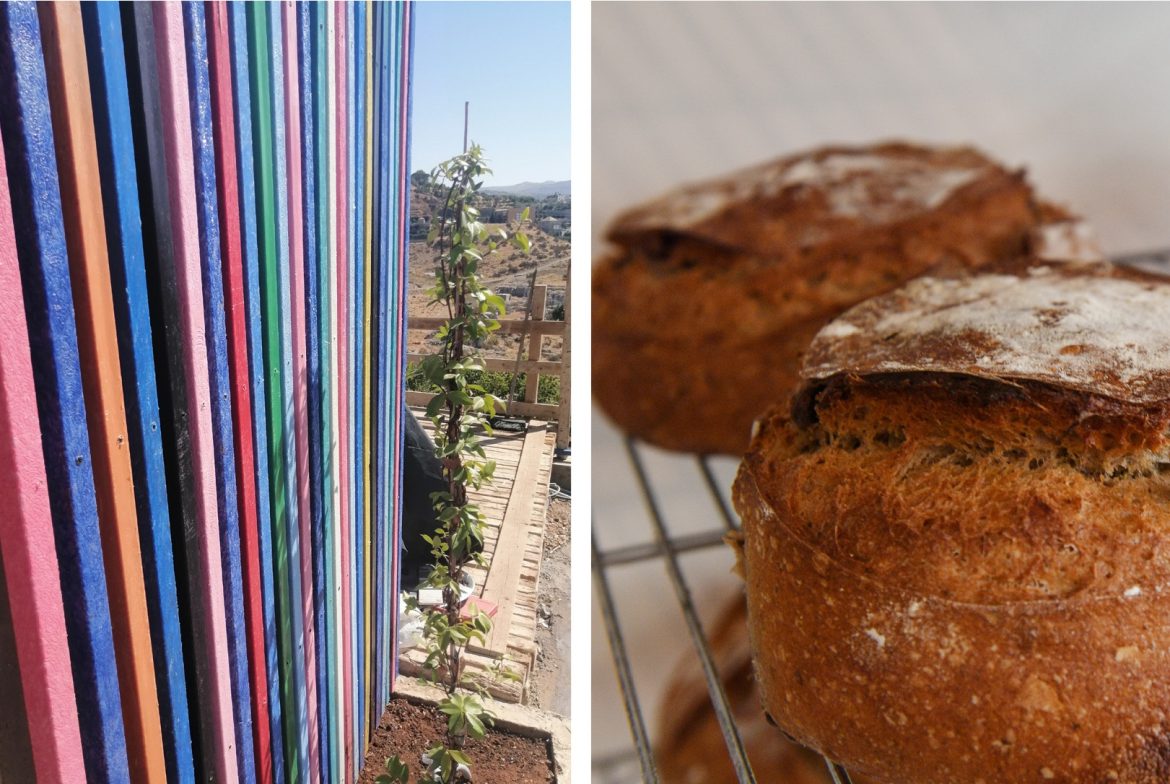
In 2019, Rami Sbeih, a biochemist by education, and his brother Ralph, a civil engineer, were introduced to preciousplastic.com, an open source of courses and diagrams for alternative plastic recycling systems, encouraging more individuals to build new products from this resource and even start businesses. The most commercial applications involve pressing plastic waste into sheets, extruding it into beams and bricks, or injecting in free-form for more customization. The brothers were immediately won over by the idea and saw the environmental benefits in it, as well as its business applications. “We have the opportunity to create a product that is 100 percent locally sourced and high in quality, and we are well-positioned to do so,” says Rami. While there is no accurate data about waste in Lebanon, he estimates that plastic accounts for a large portion of that waste and that less than 10 percent of that plastic is not recycled. The brothers began experimenting in their family home, and eventually launched Plastc Lab in July 2020 after receiving $17,000 in support from Omdi, a program financed by the French Institute and French Embassy in Lebanon, in partnership with the makesense incubator. The cash was used to order a shredder, a sheet press, and an extruder from Europe in order to produce sheets, beams, and blocks that could be used in outdoor structures and interior design. While dealing with unexpected shipping delays, Plastc Lab applied for and received support from Berytech’s Cleanergy Accelerator Program, which allowed them to develop the business side of their idea but also to locally assemble their own shredder and sheet press, and rent a 1,500 m2 warehouse in Halat to start research and development. Recently, Plastc Lab won a competition organized by Seeders, a group of angel investors and part of the IM Capital investment fund, receiving financial and in-kind support that will go towards further bootstrapping their operation.

In addition to the Sbeih brothers, Plastc Lab currently employs up to 3 workers on a part-time basis. The current operating model will serve as a blueprint for future large-scale production when a larger team will be necessary. First, the company buys plastic waste from local recyclers such as Live Love Recycle and Arcenciel. Rami explains this choice: “We are not interested in collecting our own waste, although we do have a small collection point outside our warehouse where friends and neighbors drop their waste. What matters to us is integrating the existing ecosystem of recyclers. By buying from them, we are validating their work and helping maintain their operations. In addition, some recyclers sort their plastic waste by type, which facilitates our job.” Even so, the second step in the process involves hand sorting on-site by type and color of plastic. There are seven types (numbers) of plastic used in different products, and most fit the bill for Plastc Lab, except type 1 (polyethylene terephthalate or PET, used in water bottles but not ideal as a resistant material) and type 3 (polyvinyl chloride or PVC, used mostly in water pipes and considered toxic to foods). Apart from type 1, the most common plastic products are type 2 and 5 (both used in food, shampoo, and other liquid containers and caps). The process could be mechanized with sophisticated infrared-equipped sorting machines but this is not on Plastc Lab’s radar for now. “Taking time to sort by hand is an added value for our products, and it guarantees its composition and quality,” says Rami. The plastic is then shredded and pressed into sheets at 200 degrees Celsius, or processed through and extruder to produce beams. Once Plastc Lab receives delivery of its block mold, it will also be able to produce construction blocks.

In the coming months, Plastc Lab s.a.l. will be incorporated in Lebanon while the Sbeih brothers will complete enhancing the physical characteristics of their product and acquiring all the necessary quality certifications to market their product. Once everything is set up, the company will seek Series A funding from local and international sources. Both envision maintaining their operation in Lebanon despite the country’s decline. Their products will be targeted directly to contractors, architects, and interior designers, and will priced competitively according to Rami: A 1m x 1m recycled plastic sheet will cost around $15, almost the same as other materials, but with the added feature that it requires no maintenance and can be recycled over and over. They have notably developed interesting synergies with Modeo Systems, a Lebanese designer and manufacturer of modular furniture also interested in sustainable locally sourced materials. “We want to show people that plastic can be recycled well and that it is a valuable resource. Even people who sort their waste do not know what becomes of it after they drop it off. It could end up in landfills or be recycled as cheap plastic products. We want to raise awareness and show how the loop can be closed with zero waste,” Rami says. To that end, part of their warehouse space will also eventually be dedicated to holding awareness sessions. 

From field to table

Near a trending corner of Gemmayzeh, Mavia Bakery is known to its customers and followers on Instagram for baking sourdough bread and other goods using locally grown wheat and other ingredients. Behind this seemingly innocuous operation is a growing network of local and international individual partners and donors concerned with revaluing local produce and also providing free food to needy Syrian and Lebanese families in Lebanon. The operation is headed by Brant Stewart, a documentarian and baker who has been seeking ways to help vulnerable demographics since he first visited the country in 2013. Initially, Stewart registered a non-profit public charity in the US under the name “Sadalsuud” (the conventional transcription of the Arabic name “luck of lucks” for a group of stars in the Aquarius constellation) and collected donations to facilitate access to education for families in Tripoli. In 2017, his operation was hosted by the Shift Social Innovation Hub in the city, and it is there that he began hobby-baking in the center’s shared kitchen and teaching local women about sourdough, eventually creating a buzz. He was also introduced to local wheat varieties such as “salamouni” and “bekaai” and was surprised to learn that these were not held in high regard by local producers, as commercial bakeries and wheat mills prefer imported hybrid varieties. This set the wheels in motion and by the summer of 2019 Stewart shifted his organization’s main focus to building a model full-circle operation around local wheat, from growing to harvesting, milling, baking, and even free distribution for the needy. [inlinetweet prefix=”” tweeter=”” suffix=””]“I believe in local wheat, and I think it is unhealthy for a country to depend so much on imports when it can grow a perfectly good alternative,”[/inlinetweet] he comments.

Despite the unfortunate timing, by May 2020, Stewart had managed through donations to rent and equip a location in Gemmayzeh, even employing a number of women from Tripoli. “Bringing people from different backgrounds together was always at the heart of what we wanted to do, but we realized Beirut was more cosmopolitan and it was easier to bring the country to Beirut than the other way around,” he explains. In efforts to provide women from underprivileged backgrounds to generate their own income and take pride in their work, the name “Mavia” harks back to a fourth-century warrior queen who ruled over Tanukhid semi-nomadic tribes in southern Syria. By Stewart’s account, the bakery’s customer base was growing steadily, a chef was brought on board to develop a lunch menu, and a number of local farmers and landowners showed interest in planting or donating land to grow local wheat varieties. August 4, 2020 put a temporary halt to this, with the bakery taking its share of the heavy damage from the explosion. But one month later, the bakery raised $2,000 through crowdfunding and donations from different parts of the world to rebuild and was soon back in business. In the immediate aftermath of the explosion, it served as a soup kitchen providing meals for residents of the most hard-hit areas, in collaboration with the Basmeh & Zeitooneh NGO, and the Nation Station initiative.

One year on, things are back on track for Stewart, with operational growth still rooted in donations. As at July 2021, he had managed to bring in his first harvest of wheat from Lebanese varieties, grown in different plots in the Bekaa, including in collaboration with a local seed-preserving NGO named Buzuruna Juzuruna. A state-of-the-art stone mill is on its way from Austria, which will produce whole-wheat flour for the bakery, but also for sale at a subsidized price to partner bakers, bankrolled by donations at first. As it stands, the price of wheat from local flour hovers above 10,000 Lebanese pounds per kilo, compared to 1,400 Lebanese pounds per kilo for mass-market commodity flour. The mill will also service small growers and their wheat harvests, in an effort to generate better interest in local varieties. The third component in his growth plan is the establishment of a free, subscription-based bakery in the Bekaa, serving the families most in need. From a business and logistics perspective, this plan will require partnerships. “There is much unused or mismanaged land, and we want to make it clear to landowners that they can turn a profit and contribute to improving food security simply by growing wheat conscientiously and reviving local varieties. Oversight will be necessary every step of the way,” he says. Closing the loop, will be individual consumers who will drive demand. “We want to take deliberate and intentional steps to encourage people to consume better quality local products, whether through our own customer base, or through select partner bakeries buying flour from our mill at subsidized prices so their products stand out among the competition,” he says. A vast program for which Stewart is currently considering incorporation, either as an NGO, or as a business, unless opportunities arise for partnering with existing entities. He admits that sales of his baked goods, while reasonably priced, are not close to generating profits at present. Current gross income stands at around 660,000 Lebanese pounds per day, but this needs to rise to 2,300,000 per day to break even. “The sad current reality is that it’s easier to raise funds from donations in the US than from sales in Lebanon,” he says.

August 17, 2021 0 comments
4 FacebookTwitterPinterestEmail
Last WordOpinion

Housing rights after the Beirut port explosion

by Public Works Studio August 10, 2021
written by Public Works Studio

Heightening violations

In addition to its tragic toll on human lives, the August 4, 2020 Beirut Port explosion intensified existing injustices and threats of permanent displacement to tenants. A survey by the Order of Engineers and Architects shows at least 1,120 buildings are in need of repair in the neighborhoods closest to the explosion, consisting largely of old or historical buildings densely inhabited by tenants. The official response to one of the biggest explosions in history came in October 2020, in the form of a law meant to protect the damaged and affected areas and support their reconstruction. However, the main motivation behind the law is to protect real estate interests, while only 30 percent of the affected neighborhoods’ residents have indeed returned to their homes to date, according to CARE figures.

The law once again stresses the sanctity of individual property rights and the freedom of contract within the framework of free market economics, while ignoring the fundamental right of housing. Moreover, and in clear disregard for the concept of social justice, the law deprives residents from agency in the rapid restoration of their damaged buildings and fails to stipulate criteria and priorities for the recovery of the most affected neighborhoods. Although it provides for the extension of residential and non-residential lease contracts in damaged properties for a period of one year, preventing evictions in that period, most residents are unaware of their rights and there have been no official attempts to enforce the law. Additionally, the extension period is clearly insufficient amid the stifling economic, financial, and social crises plaguing the country, especially considering that building restoration is a lengthy process and compensation distribution is slow.

Tallying violations

As at end-June 2021, the Housing Monitor had recorded 127 eviction threats from the most damaged areas. Over half of those came from Rmeil, Mdawar, and Saifi, the cadastral sectors protected by the law; other threats came from Bachoura, Karm el Zaytoun, and Burj Hammoud, which were heavily affected, yet not included by the law. Based on the above reports and further fieldwork, we can summarize housing rights violations as follows:

The failure to provide alternative housing while repairs are pending. The state has left the most vulnerable groups exposed to homelessness and obliged to bear the burden of securing housing within a context lacking social policies that produce affordable and decent housing. 

The failure to provide a clear plan for renovation. The rapid, temporary relocation necessitated by the blast risks turning into permanent displacement. According to a survey Public Works conducted on a sample residential neighborhood between Armenia Street and Al Khazinein Street in October 2020, 42 percent of apartments were permanently vacated, compared to 58 percent classified as temporarily vacated until the completion of repairs. Many tenants were evicted or permanently relocated. Some of them left permanently before the end of their written or oral contract, unable to bear the costs of renovation or the psychological trauma, or unable to wait for hypothetical repairs. Many were unwilling to front repairs, given that the legal framework does not protect tenants but allows owners to increase rents or simply refuse to renew the lease. The Directorate of General Antiquities is the only official body undertaking renovations, but its selection of historical buildings is not based on an occupancy study that understands the socio-economic background of the residents, and therefore does not prioritize the return of the most vulnerable. 

The failure to remove obstacles pertaining to renovation permits. The bureaucratic pathways for obtaining such permits that are solely granted to the total shareholders of a property, have not been waved despite the catastrophic blast, and have consequently compromised the right of tenants and residing small property shareholders to renovate their homes or places of work. Indeed, property owners have exploited the explosion to prevent renovations and evict tenants.

The failure to protect tenants from evictions despite article 5 of Law 194. Eviction threats come in many forms: Owners increasing rent upon the completion of repairs paid for by NGOs; attempting to confiscate allocated aid before it reaches tenants; refusing to repair or allow tenants to repair themselves; attempting to terminate leases or refusing to renew them. 

The rising threat of abusive behavior and inadequate housing conditions. Eviction threats were not only verbal but involved physical violence and forced evictions that have been carried out, exacerbating the suffering of residents who survived the horrific blast. Moreover, many previous and new residents of affected neighborhoods reside in damaged houses with inadequate living conditions. These neighborhoods have become a main destination for the socioeconomically vulnerable because they host aid-providing NGOs and offer social protection for the LGBTIQ community.

True justice entails the right to housing for all, the protection from permanent displacement, and an uncompromising zero evictions policy.

August 10, 2021 0 comments
1 FacebookTwitterPinterestEmail
Economics & PolicyPoliticsSocial

Use that rage

by Thomas Schellen August 6, 2021
written by Thomas Schellen

It was such a normal day. Hot, but not unbearable. Beirut was plastered and yet void. Plastered with cars and bad drivers, plastered with hot air from air conditioning units and hotter air from empty political promises. Plastered with inflation, escalating inequality, and economic depression. The city and the country were plastered with work for the lucky and void of work for too many. Plastered with corruption but void of civil and political sanity. Void of certainty, void of equality, void of water and electricity. No mind. After regular working hours there was food shopping to be done. It was such a normal day.

Until right after 6:00 p.m. when the signs of the catastrophe announced themselves in an alleyway halfway up the hill of Achrafieh with a roaring noise that this writer’s heuristic had never known and thus misidentified as the noise of jets breaking the sound barrier. Something that he had witnessed a couple of times in his life.

Memories that shape collective memes of human groups and entire societies, informing and altering their behaviors, are tied to dates. In this young century alone, there are the dates of natural disasters such as the Indonesian tsunami on December 26, 2004, the Haitian earthquake on January 12, 2010, and the Japanese Tohoku earthquake and tsunami on March 11, 2011. Those disasters, killing tens of thousands or even hundreds of thousands and destroying countless further livelihoods, became memes of human impotence in the face of forces beyond their control. Irrespective of the question to what extent the human species was involved in whatever caused those “natural” disasters, these respective dates make us remember our limits.

Then there are the dates of disasters wrought upon us by our fellow beings with full intention, culprits whom their victims are tempted to call human animals. These dates of terrorism, murder, invasion, and mass destruction turn into memes of a different sort, of calls for justice, sometimes revenge, but also of forgiveness and new beginnings. 9-11 marked the most paradigmatic and global of those memories in our 21st century experience thus far, but Lebanon experienced its own such date on February 14, 2005 as the day when the murder of Rafik Hariri became the inflection point that altered the country’s post-civil-war trajectory. Most probably nothing that politically did happen, and more often did not, in Lebanon since that day (like reforms), can be comprehended without recognition of this horrible meme day.

And then came August 4, 2020, the fateful day when a humongous disaster, the largest non-nuclear explosion in an urban setting, brought about destruction of lives and livelihoods that, despite the city’s many fairly recent experiences – that is experiences of living memory – with invasions, terrorism, armed conflict and internal war, had previously been unimaginable to the people of Beirut. Irrespective of the supposed non-intendedness of the Beirut Port explosion, this disaster was anything but natural. It marked a previously unscaled height of criminal negligence. 

In a fellowship of suffering

On this day, one year on, together with the people of Lebanon and all the world, Executive gratefully remembers the martyrs of the first hour, the saviors of the wounded, and the countless selfless helpers who made lives of average August 4 survivors more bearable in the days and weeks that followed. Executive in the full sympathy of a fellow sufferer commemorates the hundreds of dead, the thousands of maimed and displaced, and honors all the living victims of the Beirut Blast on this day, recognizing the sad, absurd reality that one year after the catastrophe it is still far too early to reach any emotional closure and approach forgiveness. [inlinetweet prefix=”” tweeter=”” suffix=””]There especially cannot be institutional forgiveness today because there has been no justice [/inlinetweet] and no, personal and institutional, accountability on the highest levels of responsibility for the horrors that struck the people of Beirut in both the most affected neighborhoods and the luckier areas (most of the city) that saw less severe or no damages.

Even if the ever optimistic and altruistic human mind today were inclined, or eager, to seek closure and talk forgiveness, the social and political catastrophe that Lebanon has become, is not over. There is no evil wind of physical destruction blowing today but the disaster is still in its worst, and fullest, swings of tumbling from one empty political promise into the next economic hole. All that can build in this desolate wasteland, is rage.

(One can discern and discover that there have been and are constructive efforts, inspiring economic initiatives, and heroines and heroes of social entrepreneurship at any point in the past 12 months. But whenever the mind turns to the macro environment and issues of positive and accountable leadership, all that can be mustered is righteous rage over the hundreds of procrastinations, the costs of missed reform opportunities, and other unforced failures of leaders who remunerated themselves with spoils in the true fashion of war and feudal lords while performing like the most pathetic clowns, entrenched in denial even as world media outlets call them out on their responsibilities.)

On berserkers

[inlinetweet prefix=”” tweeter=”” suffix=””]If there is no counter-party willing to engage with the sacrificial and resilient citizen, resilience can be an obstacle to change. Rage tends to solve this problem.[/inlinetweet]
Rage is the driver of human action that is fundamentally associated with mad and violent behavior outcomes. Both are destructive impulses. But rage has other aspects that have to be considered today. One aspect is that rage is accumulative. It builds into a reservoir of tremendous mental energy. The other aspect that could aid the Lebanese at this time is that rage is an antidote to longsuffering resilience. The resilience of bending and not breaking has been an asset to the country’s entrepreneurs and stakeholders on every level but it cannot fulfill any purpose on its own. 

[inlinetweet prefix=”” tweeter=”” suffix=””]The rage that is manifest on and around the first anniversary of the Beirut Blast is just one, albeit very clear, popular response to the callous injustices that have been inflicted upon the Lebanese people in the recent past.[/inlinetweet]
This aggregate rage will not cease just the next day even if there were to be those improbable government reforms and electoral resets that are on constructive minds.

A well-known myth about the power of rage is the narrative of the berserker, the bearskin-clad warrior who enters a state of bloodthirsty, feverish madness. But people who “go berserk” can, according to the same myth, accomplish impossible feats. A rage of masculine blood-lust will not guide Lebanon out of its homemade abyss. This polity instead deserves a controlled, righteous and inclusive rage for justice and accountability, a righteous rage for recovery of Lebanese dignity. It needs actions that direct the tremendous energy of aggregate rage to raze the instituted bastions of dysfunctionality and self-interests. It deserves rage like an irresistible flower.    

August 6, 2021 0 comments
1 FacebookTwitterPinterestEmail
Editorial

Cry Treason

by Yasser Akkaoui August 5, 2021
written by Yasser Akkaoui

The wound is still bleeding and the pain even more agonizing. Look at the mortified fury in the eyes of all those whose lives got affected by the blast.  Their eyes, and their voices, are asking for justice. Their wound is open until justice is not a slogan but reality. Justice has not been delivered to this day. Are we surprised? We knew that there was nothing to expect from the criminals that allowed this explosion to happen. Perhaps we shouldn’t be shocked then. But the question left to ask is this: Who but ourselves shall we turn to when all evidence points at those who were entrusted with protecting us?

[inlinetweet prefix=”” tweeter=”” suffix=””]Justice is a long and painful process especially when those who were busy facilitating and covering up for this mass murder rather than preventing it are roaming free.[/inlinetweet] Adding to the wound is the fact that they are appearing on media insulting our intelligence with their deceitful empty words. We know the truth, thanks to the collective 46-year-old familiarity with the ways that our warlords of any color have treated us. You deprived us of our dignity – justice will be served. 

It is figuring out how to effect change and justice that is keeping us busy. Our home-grown elites who never learned about the nature of their sovereignty, have become the criminals who never fail in one single thing alone: cheating the citizens. Year in and year out they have conspired criminally and obscurely while we were busy creating, innovating, growing value, and creating jobs, all while enduring against all the worst odds that they wreaked on us. 

One year ago on this day, Beirut was presented with the final bill of their corruption. Today we wish to inform them: More than ever, we are determined to hold you responsible to your criminal actions.

And we will. 

August 5, 2021 0 comments
2 FacebookTwitterPinterestEmail
  • 1
  • …
  • 30
  • 31
  • 32
  • 33
  • 34
  • …
  • 689

Latest Cover

About us

Since its first edition emerged on the newsstands in 1999, Executive Magazine has been dedicated to providing its readers with the most up-to-date local and regional business news. Executive is a monthly business magazine that offers readers in-depth analyses on the Lebanese world of commerce, covering all the major sectors – from banking, finance, and insurance to technology, tourism, hospitality, media, and retail.

  • Donate
  • Our Purpose
  • Contact Us

Sign up for our newsletter

    • Facebook
    • Twitter
    • Instagram
    • Linkedin
    • Youtube
    Executive Magazine
    • ISSUES
      • Current Issue
      • Past issues
    • BUSINESS
    • ECONOMICS & POLICY
    • OPINION
    • SPECIAL REPORTS
    • EXECUTIVE TALKS
    • MOVEMENTS
      • Change the image
      • Cannes lions
      • Transparency & accountability
      • ECONOMIC ROADMAP
      • Say No to Corruption
      • The Lebanon media development initiative
      • LPSN Policy Asks
      • Advocating the preservation of deposits
    • JOIN US
      • Join our movement
      • Attend our events
      • Receive updates
      • Connect with us
    • DONATE