• Donate
  • Our Purpose
  • Contact Us
Executive Magazine
  • ISSUES
    • Current Issue
    • Past issues
  • BUSINESS
  • ECONOMICS & POLICY
  • OPINION
  • SPECIAL REPORTS
  • EXECUTIVE TALKS
  • MOVEMENTS
    • Change the image
    • Cannes lions
    • Transparency & accountability
    • ECONOMIC ROADMAP
    • Say No to Corruption
    • The Lebanon media development initiative
    • LPSN Policy Asks
    • Advocating the preservation of deposits
  • JOIN US
    • Join our movement
    • Attend our events
    • Receive updates
    • Connect with us
  • DONATE
CancerEconomics & Policy

Fighting the ‘Big C’

by Maya Sioufi April 3, 2012
written by Maya Sioufi

“Do I look like someone who has cancer?” 

That was what my 23-year-old brother said when ‘The Big C’ took a hold of him. He was diagnosed in November 2011 with anaplastic large cell lymphoma (ALCL), an aggressive and rare type of cancer of the immune system with an estimated 7 per million new reported cases in the United States in 2011. ALCL has recently received more media attention, as it is the cancer linked to the breast implant scandal associated with the French company Poly Implant Prothèse (PIP), forcing women in several countries to have their implants removed. 

A healthy and active young man, my brother started developing symptoms, such as continuous coughing, night fevers and weight loss. He eventually received medical examination at a renowned hospital in Beirut, and the results confirmed he had stage four ALCL. He was advised to seek medical care immediately, as his malignant cells were aggressive and growing rapidly. To fight this foreign invader, he had to undergo a grueling treatment involving several cycles of a combination of toxic chemotherapy drugs followed by a stem cell transplant — a transfusion of healthy stem cells, which are the parent cells of all our blood cells. Not only did he have to combat the uncontrolled growth of malignant cells, which drained him both physically and emotionally, he also had to stress about the medical system in Lebanon making his life-threatening disease all the more arduous. 

On one instance, at the emergency unit of the hospital, he was asked for his allergies and was provided with a red bracelet stating his allergy to Penicillin. Despite this measure, he was still injected intravenously with an antibiotic containing the drug. Had he not asked the nurse beforehand about the drug’s composition, the consequences would have been traumatic. 

On another instance and on the day of his scheduled chemotherapy treatment, the cancer unit shockingly asked him to provide them with Vindesine, one of the chemotherapy drugs, as they had run out. He was compelled to call pharmacies throughout the city to find the required drug for his treatment and provide it to the hospital. 

For the final step of his treatment, he felt more confident in being treated in Paris for the challenging stem cell transplant. Once in Paris, his oncologist was surprised to learn that he did not have a catheter — a tube allowing the withdrawal and passage of fluids — implanted near his upper chest and had instead been receiving the toxic drugs through the veins in his arms, which caused severe damage and pain to his veins. This also led to a very distressing stem cell collection, a procedure involving the withdrawal of stem cells from the veins in the arms, which are then frozen and injected back during the transplant. Doctors in Paris confirmed he would eventually need surgery for the damaged veins in his left arm. 

Fighting the uncontrolled growth of abnormal cells wears out the body, as the current treatments available kill both the rebellious cells and the healthy ones. It demands strength and robustness. The battle is also an emotional roller coaster causing all types of reactions from fear and sorrow to motivation and a willingness to persevere. When combined with the blunders of the medical system in Lebanon, the battle is all the more frightening and exhausting. 

From his room in a Paris hospital, having completed his stem cell transplant, my brother said: “I feel the monster has now left my body.” He looks forward to returning home to Lebanon soon cancer-free — Lebanon’s cancer, however, remains just as malignant.
April 3, 2012 0 comments
0 FacebookTwitterPinterestEmail
CancerEconomics & Policy

No pill for the hole in the pocket

by Thomas Schellen April 3, 2012
written by Thomas Schellen

Between rising air pollution, contaminated food, and indoor smoking, cancer in Lebanon is becoming  more common and more expensive. While consolidated numbers do not exist, there are some good signposts that point to the direction we are heading. 

MedNet, a leading third-party administrator (TPA) of medical insurance services in Lebanon, offers perhaps the best possible view of the industry. Sarkis el-Zein, vice president of actuarial and reinsurance services at GlobeMed, a unit of MedNet, says that the company serves some 250,000 people in Lebanon, and that its figures cover more than 15 medical insurance providers, including self-insured schemes, mutual societies, and commercial insurance companies. 

Adjusted for inflation, the annual cost of cancer treatment per MedNet member has doubled from 1995 to 2010, while cancer now also has a heavy share of overall healthcare costs for MedNet clients. “Out of each five dollars you are paying, one dollar goes to cancer. This is very significant,” said Zein. 

By his estimates, the share in the Lebanese population that receives some form of healthcare benefits via any provider is about 70 percent. But the coverage blanket for financing treatments of cancer in Lebanon is a badly sown quilt of part overlapping, part contradictory social contracts that originate from a vague mixture of private sector and public sector medical care formulas. 

The insurance net

The National Social Security Fund (NSSF) is the primary — though overly bureaucratic and financially dysfunctional — safety net for Lebanese citizens. It has been augmented in the dispensation of medical care payments by the services of the Ministry of Public Health (MoPH), especially for costly treatments and chronic ailments, such as cancer. According to Zein, even the MoPH cannot provide information on what share of treatment costs their beneficiaries have to pay “because each hospital sets a different share. It is chaotic.”

The country has more than 50 insurance companies that form one part of the provider scene. The other part comprises mutual societies, cooperatives and self-financed insurance schemes of large public sector employers, such as civil servants and branches of security and military forces, or private sector entities such as banks or professional syndicates.  

According to a World Health Organization report, there are an estimated 500,000 owners of health policies issued by insurance companies. This includes people who are entitled to NSSF medical benefits but have bought private insurance to cover the 15 percent portion of treatment costs that the NSSF, as a rule, does not pay. 

What is, and is not, covered

Holders of medical policies from insurance companies using MedNet as a TPA are covered for financial costs of cancer treatment as they are for all other diseases, Zein said. Some 89 percent of owners of individual and family medical policies have “guaranteed renewability” (GR) and policies do not impose financial limits on annual or lifetime coverage, with the exception of a 720-day cap on overnight stays in a hospital during the life of the insurance contract.

Insurance companies holding ownership stakes in MedNet, namely Axa Middle East and Libano-Suisse, market their health insurance products as providing “unlimited financial coverage” and GR from the first day for persons under 46 who buy the in-hospital policy.

However, a view into the market of health policies offered by Lebanese insurance companies overall shows a picture of “many different contracts and different conditions,” said Salim Yared, general manager of Sloop Insurance brokerage and former president of the Lebanese Insurance Brokers Syndicate. 

Several companies that outline the terms of their medical plans on their websites state coverage ceilings. Whereas ceilings on covered in-hospital costs are frequently cited in similar ranges from $50,000 to $200,000, depending on the class of service, the information is anything but straightforward. Some ceilings are described as “per case” or “per medical case” or “per case per year.” Other companies ask prospective clients to call them or use entirely nondescript terminology such as “insured amount” or “hospitalization expenses up to x.” 

While the paucity of online medical policy marketing by Lebanese insurers speaks to the fact that the local health insurance market is not web savvy, the more important cautionary note is that all such ceilings require clearer and more detailed definitions. A small textual difference between contracts can mean that a chronic disease under ‘Contract A’ will be covered without financial cut off; under ‘Contract B’, it will not be covered beyond $100,000 in hospitalization costs in the current year but will be covered to the same ceiling in the following year, provided that the contract includes GR; ‘Contract C’, even with GR, may limit the $100,000 amount to the lifetime of the contract and will not pay another dime beyond the guaranteed amount. 

The central dilemma is that no standard contracts for health insurance exist in the Lebanese market. Whereas providers have agreed on sample contracts with reference characters for most insurance lines, discussions of a model document for medical policies were abandoned years ago due to irreconcilable views among companies, according to an industry executive who spoke off the record. 

No standards or standardization

Medical insurance contracts are not standardized and providers use a very wide range of policy forms that differ from one company to the next, confirmed Paula Abdel Massih, the head of the medical committee at Lebanon’s insurance collective Association des Compagnies d’Assurances au Liban (ACAL).    

Different contract conditions usually translate into different policy pricing. This is problematic for individual buyers because their focus on price often trumps choosing a policy that actually fulfills their needs. As some Lebanese insurance companies do not specify upfront the risks for policyholders, such as if and when the coverage would actually cut off during treatment of a chronic condition such as cancer, insurance policy holders all too often find out about stress points in their contracts only when they need their insurance most badly. 

On the side of limiting their risks, Lebanese insurance companies uniformly demand that prospective clients disclose medical conditions that have been diagnosed or treated previously. Insurers may decline inclusion of those conditions in a new contract and will refuse payment of claims on recurring diseases where policyholders have falsely stated to have no pre-existing condition in their coverage application.

Zein acknowledged that disputes due to allegedly false statements or treatments also exist in the client base of MedNet, but he described the numbers as “very low” without giving a specific count. This speaks to the question of insurance disputes and arbitration where some mechanisms are in place but transparency regarding the frequency and targets of complaints leaves much to be desired. 

Once upon a time, about 1998, an insurance commissioner at the Lebanese Ministry of Economy and Trade (MoET) said she wanted to introduce a white book on insurance companies, where consumers can see which providers have a track record of high client satisfaction and low rates of complaints and disputes. As with many fairy tale endings in the Lebanese Republic, the commissioner soon moved to another country. 

The current website of the insurance control commission hosts a helpful (Arabic) text on rules for insurance arbitration at the MoET, called article 48. Among the ideas Economy and Trade Minister Nicolas Nahas circulated this year are plans to elevate Lebanon’s capacity on insurance arbitration to regional leadership. That may prove difficult.    

When premiums jump

Besides disputes over coverage exclusions and payment cutoffs, another risk for the insured is that while the GR component of insurance policies provides security on continuous coverage for individual and family policy owners, it does not guarantee affordability over time. Besides premiums adjustments because of cyclical cost increases in the health care sector, the annual renewal schedules of premiums mean that the insured have to pay more when they enter a higher age group. In one example where Capital Insurance Co made its premiums schedule visible online, the premiums of an individual in first, second, and third hospitalization classes would jump by 20, 30 and 35 percent, respectively, once they moved from the 56-to-60-year-old age group to the 61-to-65 bracket.  

Premium costs and age-related increases of premiums for the privately insured are not set on a social need basis but on actuarial indicators. “If I see that the whole individual and family portfolio needs a rate adjustment by 15 percent, we adjust the rates by 15 percent for all members. We do not single out those that have diseases,” Zein said.

Buyers beware

While the bulk of Lebanese insurance companies offer contracts that neither cover all imaginable health risks nor meet societal needs of specific income and age groups, the companies will generally promise tangible and clearly quantified benefits and provide accordingly, or even a bit better. But some providers promise less. According to Sloop’s Yared, some insurers write exclusions of cancer and cardiovascular diseases into their contracts, with the reasoning that the MoPH is assuming responsibility for the treatment of Lebanese citizens.  

Insurance companies that put exclusions on cancer treatment into their contracts do not actually sell them at a discount, but rather bet on the sales talks and the lack of diligence by policy buyers to get away with evading risks they should provide for. The reason why customers let themselves be talked into buying questionable policies is insufficient diligence. “People have a blurry image of what they are buying,” Yared said. 

Compliance of policy contracts with best practices is not enforced by the government or under any self-regulatory initiative, meaning that it is up to the customers to verify that their policies provide for their needs. The problem is that insurance buyers rely mainly on the word of the sales person and trust in what they want to believe rather than what the contract says. Also in Zein’s experience, “people do not read their policies.” 

But when it comes to insurance claims, here is where the buck stops. If claimants think they are covered because they failed to read their policy, Zein proffers: “That is their problem.” 

April 3, 2012 0 comments
0 FacebookTwitterPinterestEmail
CancerEconomics & Policy

Treatment costs a pot of gold

by Peter Speetjens April 3, 2012
written by Peter Speetjens

On the occasion of Mother’s Day last month, the Ministry of Public Health (MoPH) launched a campaign to encourage Lebanese women to check for cervical cancer. Easily treatable when detected early, cervical cancer affects the uterus and is the third most common cancer among women worldwide. In the United States however, the disease is much less prevalent due to the well-established practice of annual pap smear tests; an example showing the importance of awareness and early detection campaigns. 

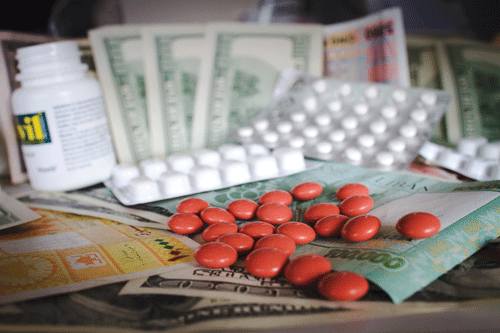
According to the World Health Organization, the global burden of cancer can be reduced and controlled by implementing three strategies: prevention, early detection, and “managing” patients with cancer. The latter however, is a complicated and extremely costly affair as cancer requires a lengthy multidisciplinary treatment — often a combination of surgery, chemo and radiotherapy. Hospitals need to invest millions in the latest technology and patients need to cough up tens of thousands of dollars per treatment per year. 

“Suppose you got an inheritance and decide to invest $100 million in a medical center,” said Professor Marwan Ghosn, head of the Hematology and Oncology Department at the St. Joseph University’s Faculty of Medicine. “A noble initiative, of course, but do not think you will make any money,” he asks rhetorically. 

He explained that, in Lebanon, there are challenges for hospitals related to how they get paid for their services, where most bills are covered by either the MoPH or the National Social Security Fund (NSSF), with a smaller number covered by private insurers.  

“In general, the MoPH pays years late, while the NSSF pays years late with cuts,” said Ghosn. “These days even private insurance companies pay late and will bargain for a package deal.”

He noted that payments suffice to keep management and doctors in a job, but hardly to invest in the latest medical equipment. 

Finding the funds

Nearly all hospitals in Lebanon are facing financing shortfalls. The result is that many are  inking alliances with foreign hospitals, while philanthropy is also on the increase, said Ghosn: “We never saw much philanthropy in Lebanon, but these days it is common practice.” 

One medical institution familiar with sponsorship and fundraising is the Children’s Cancer Center Lebanon (CCCL). “We operate on an annual budget of some $12 million, some 80 percent of which is generated through fund raising, which varies from corporate funding and sponsoring of a single patient to our annual gala dinner the proceeds of which go to the center,” said CCCL General Manager Hana Chaar Choueib. “The remaining 20 percent comes in the ‘normal’ way by means of the MoPH, the NSSF, and private insurance companies.”   

Affiliated with the St. Jude Children’s Research Hospital in Memphis, the CCCL opened its doors in 2002 and has since treated a total of some 800 patients below the age of fifteen. Every year the CCCL accepts some 70 to 80 new patients, yet on average it treats some 250 patients a year, as the treatment of leukemia takes some 2.5 to 3 years to complete. About a third of pediatric oncology cases in Lebanon concerns leukemia. 

According to Choueib, the average cost of treating a child with cancer amounts to some $50,000 per year. More complicated and rarer cases however, such as bone marrow transplants and lymph salvage, cost up to $250,000 a year. “We particularly depend on third party generosity as it is our policy to accept children without discrimination,” said Choueib. “No parent should be worried about what and how to pay. They should only worry about the health of their child.”

Affiliated with Johns Hopkins International, the Clemenceau Medical Center (CMC) is arguably one of the few Lebanese hospitals that need not rely on sponsoring and fund raising to make ends meet. Currently, the hospital is set to invest $35 million in a special cancer center. 

“The lion’s share of the $35 million dollar budget is to be spent on medical equipment. Our objective is to offer all the latest technologies under one roof to avoid people traveling from hospital to hospital, or even abroad,” said CMC’s chief executive Dr. Mounes Kalaawi. “We aim to attract patients to Lebanon.” 

Progress at a price

Delete the cliché image of a doctor with stethoscope. Enter that of an engineer behind a computer screen handling a mouse. Today, even in the operating theater a single robot and controller can do what a dozen people did a decade ago. The technological revolution in the medical world however, comes with a hefty price tag and newly improved models and machines enter the market almost every year. 

“We have pretty much replaced all imaging equipment since the CMC first opened its doors in 2006,” said Kalaawi. 

Medical imaging has come a long way since scientists first detected the X-ray in 1895. Today, a hospital also uses computerized tomography (CT) scans, a combination of X-rays taken from different angles with which a computer produces a cross-sectional image. Magnetic resonance imaging (MRI) is a technique used in radiology to create images of organs and the body’s internal structures, while a positron emission tomography (PET) scanner is a nuclear imaging device producing a three-dimensional image of the internal body. 

Yet progress has its price. While you can buy a simple X-ray machine for a few thousand dollars, a CT scanner costs over $100,000 and a medium-sized MRI scanner and PET scanner cost some $1.5 million and $2.5 million, respectively. And that is not all. 

“In order to produce the radioactive material needed for a PET scanner, you need a lab and a cyclotron, which cost some $1.2 million and $2 million respectively,” said Wassim Boustany, sales manager at General Medical Equipment (GME), the authorized distributor of General Electric Healthcare in Lebanon. “There is only one such system at the Mount Lebanon Hospital, yet that is enough to provide the whole country.”

A complete oncology center furthermore needs two linear accelerators and bunkers (to avoid radiation spreading) for the radiotherapy unit. Total cost: some $4 million. Until recently, an analog mammogram system cost some $50,000 to $60,000. These days however, there is a digital variety on the market that is more precise with less radiation. Cost: some $350,000. 

“From a personal experience I can say that most Lebanese hospitals used to be financially healthy, would make a profit even,” said Boustany. “Yet today some cannot even pay for maintenance cost and spare parts, as the end user simply cannot pay for the technological advancements. A PET scan costs about $1,000 in Lebanon. In the US it can amount up to $10,000.”

Nevertheless, there is generally no shortage of equipment in Lebanon. For example, the country has five of the latest PET/CT scanners, while GME is currently installing a combined PET/MRI device at Rizk Hospital, of which there are only 10 in the entire world. 

Medication’s massive costs 

“The cost of cancer treatment is determined by three components: the cost of medical equipment, the cost of medication and doctors and hospital fees,” said Ghosn who is also head of the CMC’s Hematology and Oncology Division. “In the diagnostic phase the patient pays mainly for the equipment. In the treatment phase, he or she mainly pays for medication. The new generation of chemotherapy drugs, for example, may cost some $4,000 to $6,000 per session, while in all stages the patient pays but a few hundred dollars on hospital and doctor’s fees.”

His view was confirmed by Rahif Jalloul, president of the Lebanese Society of Medical Oncology. “A six-month breast cancer treatment on average costs some $50,000, some $30,000 of which is spent on drugs,” he said. “The average patient would spend some $3,000 to $4,000 on X-rays and biopsies and, if needed, some $2,000 to $3,000 on surgery. In addition, a patient needs six sessions of medication [one every three weeks], which may cost up to $8,000 per session and I would not be surprised if one session soon costs $9,000 to $10,000. Radio therapy, if needed, costs some $5,000.” 

Surgery, chemo and radiotherapy are the most common ways of treating cancer. Radiotherapy uses radiation to control or kill malignant cells. While it may prove a cure for some tumors, it is mostly used in combination with chemotherapy to prevent tumor growth or recurrence after surgery. Chemotherapy refers to the use of a cocktail of chemicals aimed at destroying cancer cells. 

There are currently some 250 identified cancers and 50 commonly used chemotherapy drugs in the $1 trillion dollar industry. Last year, Hoffman-La Roche (Roche) spent 8 billion Swiss francs ($8.75 billion), or 22 percent of its global turnover, on research and development. According to a company brochure, it takes an average of $1 billion, 7 million work hours, 423 researchers and 6,587 experiments to produce one drug. The company then earns back such astronomical investments by being able to exclusively market the drug under patent. 

“Research and innovation are at the heart of what we do,” said Abed Rahman Sabra, Lebanon Country Manager of Swiss pharmaceutical giant Hoffman-La Roche (Roche). “A certain minimum has to be set or else we will not be able to sustain our practices. You should know that we have hundreds of molecules under investigation, of which one or two will eventually make it to the market.”

Patented drugs generally enjoy a monopoly for 15 to 20 years, after which they can be produced by anyone. Yet often companies file patent upon patent in an attempt to extend the life of a drug patent and stop or delay generic drugs from entering the market. 

As a result, as Matthew Herper wrote in Forbes last November, generic companies are constantly suing to invalidate extra patents, while brand name drug makers sue to keep generic versions off the market. “In theory, we pay more for branded drugs to finance the massive research needed to develop them,” he wrote. “But long battles over dozens of patents can simply distract pharmaceutical companies from their job: making new medicines.”

One such legal battle, which recently took place in India, could have global repercussions. On March 12, the Indian Controller General of Patents Designs and Trademarks ruled that the anti-cancer drug Nexavar was so beyond reach of ordinary Indians that he decided to sign a compulsory licensing order. 

The German pharmaceutical giant Bayer that produces the drug had set a price of 280,000 Indian rupees or $5,448, which meant an Indian civil servant would have to work more than 3 years to pay for one month’s dosage of the drug. Based on the ruling, Indian firm Natco Pharma will now produce the drug for $172, while paying Bayer a 6 percent royalty on sales. 

The case is already starting to shake the pharmaceutical industry. A few days after the ruling, Tuygan Goeker, head of Middle East and Asian markets at Hoffman-La Roche announced it would cut the prices of two cancer drugs, Herceptin and MabThera, starting in 2013. The wholesale price of the two drugs is currently $3,000 and $4,500, respectively.

Looking ahead

While the advancements in medical technology and chemotherapy drugs have led to improved cancer treatment and a cure rate of some 50 percent, the cost of battling cancer and other diseases is imposing an ever-higher burden on society as a whole. Between 2008 and 2010, the MoPH’s annual drugs bill increased 73 percent to more than $60 million, most of which was due to ever more expensive cancer drugs.

In order to effectively deal with cancer, more emphasis needs to be placed on prevention and early detection. Measures such as an affordable check-up for cervical cancer, the annual breast cancer awareness campaign, and the announced ban on smoking are thereby but a start. 

“To start with, eat less meat, avoid the intake of high-energy food and drinks, avoid food colorants, avoid smoked foods and eat more fresh fruits and vegetables,” said Dr. Jamil Halabi, Secretary General at the Lebanese Cancer Society. “And in the near future we must, for example, discuss the use of pesticides and insecticides.”

The bottom line is that without a fundamental change in the way our society operates, the number of cancer patients will only rise, and the costs of their care with it.

Childhood cure rate at risk

This year the Children’s Cancer Center Lebanon (CCCL) celebrates its 10-year-jubilee, and the institute has every reason to celebrate. “The cancer rate among Lebanese children has remained more or less stable since the 1960s, yet their survival rate for cancer has increased exponentially,” said Dr. Samar Muwakkit, associate professor of Pediatrics at the American University of Beirut and a leading doctor at CCCL. 

Childhood cancer is not a common disease. Every year, less than 280 of Lebanon’s some 2 million inhabitants below the age of 15 are diagnosed with the disease. The most common childhood cancer is leukemia (one third), followed by brain tumors and lymphoma.

In the early 1960s, the survival rate of childhood cancer was a mere 20 percent, while 10 years ago 53 percent of Lebanese patients survived the ordeal. Today, the CCCL has achieved a cure rate of some 88 percent. Interestingly, it has largely managed to do so using the same drugs that were used in the 1960s.

“We achieved our cure rate by remaining extremely disciplined on protocol, constantly evaluating each dose and each patient, thus gradually advancing,” said Muwakkit. “It shows that, at least in treating leukemia, new technology and new, more expensive drugs are not necessarily the way forward. You do not always need to invest to advance.”

One might think that adult oncology (and the pharmaceutical industry) could learn something from its pediatric counterpart, yet some caution is necessary. “Firstly, cancer in children is easier to treat, as they are stronger and healthier than adults and react better on chemo therapy,” said Muwakkit. “Secondly, what is true for leukemia is not necessarily the case for solid tumors, which concerns the vast majority of cancers among adults.”

Today CCCL’s impressive cure-rates are under threat as a supply of the injectable, preservative-free drug imported from the US is fast running out. First developed in 1956, methotrexate is regarded as a lifesaver for children with Acute Lymphoblastic Leukemia (ALL), the most common childhood leukemia.

The acute cause of the shortage is that one of the largest producers of the drug, Ben Venue Laboratories, stopped production in late 2011 due to quality concerns. A more fundamental cause however, is the fact that a total of only five pharmaceutical companies in the US produce the drug and in February reports emerged that only a few weeks of supply were left.

Pharmaceutical companies make little profit on generic drugs like methotrexate, which costs $1.58 per vial. Compare that to the $6,000 paid for a single injection of the latest (patented) chemotherapy drugs. The issue of shortage in generic drugs has prompted US President Barack Obama to sign an executive order strengthening the FDA’s power to predict and tackle shortages of prescription drugs and halt overcharging in times of scarcity. On February 20, the US Food and Drug Administration announced the immediate availability of relief supplies of methotrexate and also agreed with another manufacturer, Hospira, to immediately distribute 31,000 vials of the drug, which would meet nationwide demand for about a month. As for Lebanon and the rest of the world, the cost of curing childhood cancer may soon become a burden the youngest among us will have to bear even more.

April 3, 2012 0 comments
0 FacebookTwitterPinterestEmail
CancerEconomics & Policy

Healthcare’s disease

by Zak Brophy April 3, 2012
written by Zak Brophy

Cancer rates in Lebanon are rising and the illness has, or will, touch the lives of virtually everyone in the country. They are a lucky few that do not have a friend or family member that has had to tackle the disease. However, as treatments and awareness improve, people are increasingly coming to realize that cancer is not necessarily a death sentence, but is in a great number of cases a treatable disease like most others. 

As the discussion moves from awkward whispers to confident debate there is a need to look at the role of the state in this national affliction. For thousands of cancer patients every year the treasury is the purse from which their treatments are purchased. However, a combination of weak government, pernicious corporate influence and slack policy are impeding the state from fulfilling its obligations. 

Over the years a system of laws has been enacted that obligates the government to provide coverage for a number of “catastrophic” illnesses, the term the government uses on the basis of the financial burden of their treatment. The original ailments to fall in this category were dialysis and open-heart surgery, but as the net of state support has widened, cancer treatment has entered into this fold of government activity. 

In theory, the state is now committed to providing support for the costs of cancer treatment for anyone who does not have a third party payer. Dr. Rahif Jalloul, president of the Lebanese Society of Medical Oncology, has recently compiled a data analysis of trends among cancer patients in Lebanon and he calculates that some 45 percent of cancer patients go to the ministry of health to fund their treatment, around 35 percent are funded from social security and the remainder are covered by professional or governmental cooperatives, or private insurance. 

Even in cases where patients have a third party payer they can turn to the Ministry of Public Health (MoPH) for assistance if the cost of their treatment exceeds the limit of their coverage. In addition to having to cover 100 percent of the cost of chemotherapy treatment, Dr. Walid Ammar, director general of the ministry of public health, says, “The government covers 95 percent of costs for public hospitals and 85 percent in private hospitals, and we have a wavering system for the very poor who get 100 percent… What’s more, we cover radiotherapy when it is necessary.”

A disease in the dark

There is a general consensus that the incidence of cancer is on the rise in the country, but making an accurate assessment of the situation has been hindered by a lack of coherent and comprehensive data. In 2002 the national cancer registry (NCR) was launched in a collaboration between the MoPH and the World Health Organization (WHO), but was hampered by financial, bureaucratic and political impasses. In 2005 the NCR was relaunched as an institution of the MoPH. “The [national] cancer registry is your eyes. Without your eyes you don’t know what to do,” says Michel Daher, professor of clinical surgery at the University of Balamand and president of the Lebanese cancer society.  

However, the nation’s vision has been somewhat obscured by the reluctance of hospitals to cooperate with the ministry. 

“We are in a country where every hospital thinks they are an empire by themselves,” says Salim Adib, professor of epidemiology and public health at the University of Saint Joseph, and a key player in the development of the registry. “We can pretend to demand [data] but in reality we are just asking because we can’t force them.” 

Dr. Ammar at the MoPH admits that initially there were big gaps in the statistics because physicians did not want to cooperate. However, by combining the figures with records kept at the central drug distribution center in the Karantina district of Beirut, the ministry has been able to build a more detailed assessment of the situation, even if it is far from an exact science. 

Between 1998 and 2004 there was a sharp rise in the age-standardized rates of cancer in Lebanon, with an increase of around 60 percent in reported cases. According to Professor Marwan Ghosn, head of the hematology and oncology department within the faculty of medicine at the University of Saint Joseph, one of the main reasons behind the rising incidence of cancer in Lebanon is the nation’s aging population. However, he also warns that the figures should be interpreted with some caution. 

“We think there is a real increase in the numbers but the data does not represent the real increase,” he reasons, on the basis that with improved detection and data collection systems the increases are exaggerated. 

According to Ghosn, the cancers most prevalent in Lebanon — such as breast, lung, prostate and colorectal — reflect trends seen in the developed world (see chart). Between 7,000 to 8,000 new cancer cases are recorded every year in Lebanon, meaning there is an annual incidence rate of between 175 and 200 cases per every 100,000 people. Ghosn says this falls roughly between what is common in the developed world — 400 to 500 recorded cases per 100,000 people — and the lower rates in the developing world — of around 100 cases per 100,000 people.

The growing incidence of cancer in Lebanon is stretching the government’s ability to provide the coverage it is mandated to offer. This reality is compounded by the inexorable rise in the cost of newer and more advanced treatments.

From 2008 to 2010 the MoPH bill for drugs rose from LL52.5 trillion ($35 million) to LL91 trillion ($60.6 million), an increase of some 73 percent in just two years, the lion’s share of which is swallowed up to pay for cancer treatments. Of all MoPH spending on drugs in 2007 (the most recent figure published by the MoPH), 63.6 percent was for cancer treatments, and a source within the MoPH told Executive that data from the Karantina dispensing center suggest that proportion is now likely to exceed 80 percent. 

Doctor deals with Big Pharma 

“It is not sustainable,” concedes the MoPH’s Dr. Ammar. “We have major problems with some physicians who are prescribing drugs which are very, very expensive and they are putting pressure on the Ministry of Health to purchase them. We know that the pharmaceutical firms are behind them.”

To have the director general accusing the pharmaceutical companies of actively lobbying and influencing physicians’ prescriptions is a damning reflection of the profession in Lebanon. Whilst a number of the doctors interviewed for this report denied this was the case, one senior oncologist told Executive, on condition of anonymity that, “Some doctors have got into a position of a conflict of interest whereby they have been co-opted by pharmaceutical companies to buy the more expensive medicines.”

Under the current system there is a “gentlemen’s agreement” between the doctors, pharmaceutical companies and the government, but the concern is that economic prejudices are too often overriding ethical imperatives. By Dr. Ammar’s own admission, “I can’t enforce [the agreement].”

With regards to which drugs can be administered in Lebanon, the government is the standard setting authority. 

A registration board under the MoPH — including members from the order of physicians, the order of pharmacists and the universities — must give the green light to any drug before it can legally enter the Lebanese market. However, beyond this stage the government has virtually no control over what physicians are prescribing on their tab. 

“The political aspect is that the government likes to be generous and there is a political commitment to cover the expensive drugs for the population for which they don’t have the resources,” explains Dr. Ammar.  

There is no coherent system within the ministry to direct what drugs are being prescribed for what cancers at their different stages of development. 

“They are buying more expensive products that are not more effective on the collective level, and there are no standards to say lets move from drug A to drug B,” says Dr. Adib of Saint Joseph. “We don’t have any standard operation approaches to doing things so it is whoever shouts the loudest that gets the money.” 

Dr. Ammar at the ministry glumly agrees: “The health authority should have the authority to say ‘no’, but it doesn’t. The authorities in Lebanon do not actually have enough authority.” He cites an example whereby the ministry agreed to cover a prescription for the drug Gleevec at $4,000 a box, whilst “It wasn’t even being covered by the national [social] security in France.”

The impacts of excessive expense 

There are two major consequences of this crippling expenditure on drugs. The first is a tragic reality encountered by many cancer patients when the stocks of the drugs they need run out and the government has no more money to buy the necessary medication. 

“We give until it is gone, and when it is gone it is gone,” complains Dr. Adib. “So if you are sick in the second half of the year the chances are you won’t be able to get your medication from the drug dispensing center.” 

At the ministry Dr. Ammar admitted that this was sometimes the case and that come the end of the year he simply does not have the money to keep the medication stocks replenished. Unlucky patients who get ill at the wrong time are forced to shop on the market themselves, where they may or may not find the medication they need let alone afford it.

In the second strain of the medication tab is that the government is unable to dedicate a sufficient amount of resources to prevention and early detection. 

“Of course it is much more cost effective to invest in early detection and prevention — this is where we need to spend our money,” says Dr. Amaar, before adding, “If there is a politician and there is someone saying I am dying I need such and such a drug, yet on the other hand you have the director general telling him ‘please don’t put your money there and put it somewhere more cost affective and after a few years you will get results.’ He will not listen to me. He will listen to the patient who is crying.”

It is stated in the ‘Country Cooperation Strategy for WHO and Lebanon 2010 to 2015’ that, “The current financing structure, with the fragmentation of public funds, tends to focus more on curative care and gives relatively less focus to areas such as disease prevention and public health management in primary care.”

The killer of women

Of all the forms of the disease, breast cancer kills more women than any other, and Lebanon ranks fifth in the world on the basis of the age standardized death rate for the disease. As such there has been a concerted effort to develop the infrastructure, practice and awareness for early detection in screening for breast cancer. The 2010 statistics from the MoPH show that 38.3 percent of cancer cases among women were breast cancer. Based on data accumulated since the early 1990s there are now national guidelines for women over the age of 20 to have a clinical breast examination performed by a physician every three years, and annually after the age of 40. In a 2008 study, a sample of 2653 women aged 35 or over, 77.7 percent said they had a clinical breast exam in the last 12 months. 

“[The guidelines] are being implemented more and more,” says Dr. Adib, who is a member of the Breast Cancer National Task Force. “It has all been voluntary but increasingly there is more and more use of mammography as a screening tool.” 

In most cases the government will only provide support in funding a mammography if it is prescribed as a diagnosis tool. However, for the month of October, breast cancer month, the MoPH works in conjunction with the nearly one hundred centers that offer mammographies to ensure the price is kept below LL40,000 ($26.7), whereas it would normally cost around LL150,000 ($100) or more.

However, Dr. Jalloul acknowledges that the country is not reaching its targets: “You have to push people to do this screening. We notice last year only around 10,000 did the screening and yet there are around 800,000 [susceptible] women. We are not hitting the target. We should have around 50 percent of our active females doing this mammography every year. Now it is closer to 10 percent.” 

Less than the minimum

While the government now plays a minimal role in either prevention or early detection of cancers, Dr. Adib frets that in the future the ministry will be able to do less and not more in this area: “We are not going to be starting anything new in our current financial situation. We are all aware that if you invest in prevention it will give a return on investment but there is not the money there in the first place.”    

One area where the government hopes to bring about a change in both culture and practice, while freeing up resources, is within palliative care. As defined by the WHO, palliative care “focuses on improving the quality of life and relieving suffering in patients with progressive chronic illnesses,” in other words, those cases where the illness will almost certainly be fatal. The understanding and provision of this kind of care remains very limited in Lebanon and its development has been identified as a priority for the WHO throughout the whole of the Eastern Mediterranean.

The reasons for the near non-existence of palliative care in Lebanon are several. “Lebanese patients and their families don’t like the idea of palliative care because they have misconceptions about it,” says Dr. Ghosn. “This is important because it means a lot of patients are not really aware of their real diagnosis or their real prognosis. You may have a very advanced cancer case where the patient believes he is going to be cured.”

Further to this, the MoPH’s Dr. Ammar argues there is a problem within the medical establishment itself: “The physicians don’t have the right training. They are trained to prescribe drugs. They are trained to prolong the life as much as they can, but they are not trained to look at the quality of life, at the dignity of the patient.” 

Once again he points the finger at the pharmaceutical firms for influencing physicians’ decisions with “their bullshit evidence” to prescribe prolonged and often very costly treatments when patients should have moved onto palliative care, even if cheaper generic drugs do exist [see page 34].

In May 2011 the MoPH launched the National Committee on Palliative Care and the ministry’s Dr. Ammar says development of policy in this field is essential.  

“We are working on making [palliative care] drugs more easily available,” he said. “Then to make reimbursement mechanisms for this kind of care, which currently does not exist, and thirdly to create awareness among physicians and the population at large.”

The Lebanese Cancer Society’s Dr. Daher argues that the reasons for developing palliative care are not just moral or clinical, but that there is also a financial rationale. 

“Now you have a patient with advanced cancer so why spend thousands on every session of costly treatment?” he asks. “This is the way to ensure better quality of life, with less expense under the coverage of the government… [The savings] can be spent on prevention campaigns of screening campaigns. This is where you need to spend money.” 

That the Lebanese government at least strives to provide coverage for the fundamental treatments of cancer patients is perhaps commendable. But as Dr. Adib warns, “There is no holistic strategy.  We are working on a case-by-case basis.” Consequently, and by the admission of the director general of the MoPH, under the current system the government will not be able to continue fulfilling its mandate.  

A ballooning bill for expensive drugs, lax oversight of which treatments to fund and a political unwillingness to tackle thorny issues of what the government can realistically offer have left the MoPH functioning as little more than a drug dispensing counter, and a failing one at that.

April 3, 2012 0 comments
0 FacebookTwitterPinterestEmail
CancerEconomics & Policy

Everyone’s disease

by Rayya Salem April 3, 2012
written by Rayya Salem

Cancer is everyone’s disease. At some point or another it enters nearly every home society. It can devastate patients and their families, not just emotionally, but financially as well.  It also lays a heavy burden on the government which bears a significant amount of the treatment costs. But research shows that the disease does not have to be so chilling, if  prevention were maximized. According to the World Health Organization (WHO), 30 percent of cancers are highly preventable through lifestyle choices relating to diet and avoidance of toxins. Common cancers like breast, colorectal and even lymphomas in children actually have high cure rates, if caught early. 

The most recent breakdown in figures regarding cancer in Lebanon are from 2007, something that in itself shows how little the government acts to stay on top of the problem. The most common cancer among women is breast cancer and for men it is lung cancer, both of which mirror global trends. But factors known to cause cancer such as environmental carcinogens have all been on the rise, not to mention smoking rates. Thus, it’s little wonder that since figures began to be compiled in 2002, official cancer rates have increased around 5 percent every year.  

If an ounce of prevention is better than a pound of cure then we are on the heavier side of the problem. A lack of policy to push preventative measures means the focus is on the provision of medicine, while more often than not, cancer is diagnosed at an advanced stage. A nation-wide survey conducted by the health ministry in 2007 showed that only 12 percent of women in Beirut had had a mammography in the past year, though the ministry has been campaigning to increase awareness for more than 10 years, while offering a cut in the price of mammograms.

Cervical cancer in women, mostly caused by the HPV virus, is a leading cause of death in low-income countries, even though it is highly preventable. In Lebanon, estimates show there are up to 270 cases annually, but only 10 percent of women have annual pap smear tests at their gynecologists’ clinic, and (although there are no official figures) even less are thought to have been vaccinated for HPV infection. 

What is even more alarming is that some cancers affect different groups in a much higher proportion compared to figures from the United States and Europe. Breast cancer among young women under 40 years old is higher in Lebanon than in western countries, though it is partly due to the high proportion of young people compared to demographics in other countries.

Indeed, many fear a higher risk of developing cancer in Lebanon because of a number of factors within concentrated urban areas, such as war residue, pollution, toxins, low-quality diesel fuel toxins, forest fires, poor urban planning, contaminated food products and toxic pesticides used on farms. Though no figures directly correlate pollution levels to cancer rates in Lebanon, pollution levels exceeded the norms set by the World Health Organization, with many of the contaminants being carcinogens. 

Little has been achieved in terms of curbing this pollution. Thus, costs related to treating cancer patients, both for government and insurance companies, will also rise. While two-thirds of the population is covered by health insurance from employers, the National Social Security Fund or through private insurance companies, that leaves the financial fate of around a third of the population at the mercy of government, whose financial resources often run short.

After the shock of being diagnosed with cancer, patients have to run the gauntlet of choosing between treatment options, or lack of options, at various and sometimes competing hospitals. Even if one is insured, there are also ample cases where private coverage will not keep the cost of combating the ‘Big C’ at bay. 

This Executive special report helps untangle the complex web of costs and treatments, reveals strategic operations and financial data from hospitals and insurers, and offers in-depth testimonials and exclusive insights to sort the truth from fiction in relation to cancer treatment in Lebanon.

April 3, 2012 0 comments
0 FacebookTwitterPinterestEmail
AdvertisingEconomics & Policy

Jean-Claude Boulos

by Thomas Schellen April 3, 2012
written by Thomas Schellen

As his first project, Jean-Claude Boulos put up a building for the first television station in the Middle East, Tele Liban. In his last, he ran a television station in Iraq. He established his own advertising company and led it to prominence.  

Over a career spanning 54 years, Jean-Claude was a shaper of television and advertising in Lebanon. Starting out as engineer who helped construct Tele Liban in 1958 he rose to become the station’s program director and a presenter until 1970. 

The climax of his TV role was being appointed chief executive of Tele Liban in 1996. It also turned out to be his biggest disappointment, as he saw the station collapse from political infighting in the highest echelons of Lebanon’s government. Jean-Claude left Tele Liban for good in 1999. 

His other big passion was advertising. He started his advertising career in 1970 and in 1973 built an agency from scratch that was merged in 2003 into the Memac Ogilvy network. 

Since 1977 he was committed to global advertising communications with the International Advertising Association (IAA). The pinnacle of his involvement saw him as worldwide president of the IAA from 2002 to 2004. He led the Lebanese IAA chapter four times. 

Despite his international affiliations, Jean-Claude remained in Lebanon out of a sense of duty to the struggling country and the Maronite community that he was part of.

“He had many visions. He was very patriotic and wanted Lebanon to shine. One of his visions was that he wanted the Lebanese to export their advertising services outside of Lebanon and I think he succeeded in doing that,” says his son, Naji Boulos.  

“He impacted so many people in his life. Even when you rode with him for 30 seconds in the elevator, he found the time to make a joke, or say a nice thing about you. What characterized my dad was that he, all the time, did something creative and was creating until the last day of his life. He was full of ideas, had a lot of energy and a lot of humility,” says Naji.

His latest and sadly final professional achievement was getting the Al Sumaria television station in Iraq off the ground, a task he accepted in the summer of 2004. “It was the last big challenge for my father and really a success story because it is today among the favorite TV stations in Iraq,” says Naji.

Jean-Claude was intellectually at home in the Francophonie and loved the French language and literature. He authored four books and received numerous honors and accolades. He was a rock ‘n’ roll singer in the 1960s during Lebanon’s golden years and he loved to dance. He married at age 26, and on March 5, 2011, he and his beloved Blanche celebrated their golden wedding anniversary. 

When he was diagnosed with cancer his family was hopeful of his recovery, he had beaten the disease before. But it was not to be. He leaves behind his wife, his two daughters and one son, his six grandchildren and a huge legacy of media passion. 

Jean-Claude, you will be missed.

April 3, 2012 0 comments
0 FacebookTwitterPinterestEmail
AdvertisingEconomics & Policy

More public than relations

by Thomas Schellen April 3, 2012
written by Thomas Schellen

Public relations — or simply ‘PR’ — in the Middle East reminds one of New York’s Madison Avenue on Friday afternoon: a one-way artery pushing traffic north with no escape from the congestion. 

Like traffic in Manhattan, PR in the Middle East is a choking congestion of information flows. Managed mainly from Dubai by a number of multinational communications firms and directed into the inboxes of information multipliers — meaning mainly publishers, journalists, and editors across the region — the production of what passes itself off as PR in this part of the world has been swelling into a relentless torrent of product announcements and event promotions.  The stream of information pollution may have helped some PR clients boost visibility or even reputation, but what it  did was raise the question: is PR just another imported scourge on the region or does it have a useful purpose?

When Dubai hosted an international PR industry gathering in the middle of last month, the event’s promotional material trumpeted that the Middle East PR industry “is worth $500 million” and that the market in the Gulf Cooperation Council (GCC) is the world’s “fastest growing and arguably the only high-growth market for the PR industry today.”

While it could be impressive, one can also easily read this sort of self-promotion from the opposite end: the PR industry in most regions of the world has somehow failed to convince audiences of its value. It is expanding strongly only in the Middle East, where PR has been shunned by public and private sectors until 10 years ago or less, and has been growing from a low base in the recent past — or is that assumption correct?  

Separating fact from fallacy 

According to Majdi al-Ayad, vice president of network affairs and United Arab Emirates managing director at TRACCS, a Saudi Arabia-based PR network, Saudi Arabia and the UAE lead the region with 30 to 35 percent annual growth while other GCC markets are experiencing “a steady 15 to 20 percent,” adding, “We have experienced first hand the exponential growth of our business, which has, ironically, accelerated since the onset of the global recession.”

International PR industry performance shows that these numbers are indeed far above global rates but also that growth has not only been happening in Dhammam and Dubai. According to research published last September by an industry resource called The Holmes Report, worldwide revenues in the PR industry stood at $8.8 billion in 2010, representing an 8 percent increase of fee incomes. 

The Holmes Report presents two other aspects. First, the worldwide industry growth came as a turnaround from a 7.5 percent contraction in 2009. Secondly, the split of revenues between PR units of global conglomerates and independent PR agencies is roughly even at $3.75 billion versus $3.85 billion, with another $350 million weighing in for the independents in results not reported by the companies directly. By these headline numbers, independent agencies and units of global advertising conglomerates dominate the world market for PR, taking to 85 to 90 percent of market share. 

When considering that the big four communications conglomerates in 2010 reported gross revenues approaching $40 billion between them, and that their PR units were clocked by The Holmes Report at $3.85 billion within those results, it seems not outlandish to assume, as many in the industry do, a rule-of-thumb business size ratio of eight or nine to one between advertising agencies and PR firms. 

Trying to correlate these global results with the PR industry size estimates in the Middle East and North Africa, however, and attempting to find corresponding ratios between PR and advertising industries on global and regional scales, would lead deep into fruit market territory, way beyond apples and oranges.

Yet, according to Ayad, the PR industry estimate for the Middle East of $500 million is reasonable when including agencies and in-house budgets. The $9 billion global figure on the other hand does not represent the huge in-house budgets allocated in public and private sectors to PR departments. 

With very little quantitative data on hand,  gauging the quality of regional and international PR requires perspective rather than exact science. Regional leaders affiliated with the global communications conglomerates see no lag in the quality of PR agency work here. Raja Trad, chief executive for agency Leo Burnett in the Middle East, told Executive that he sees the quality of PR on the regional level as “not at all inferior to advertising.” PR has “come a long way in the region in the past 10 years and there are PR agencies today that are talking the same language that you find in Europe and America,” said Trad, adding that a high level of strategic thinking exists in both PR and ad agencies of the Middle East. 

As to the overproduction of press releases in the regional markets, he blamed some clients who “judge PR by the number of press releases and amount of coverage they get in news media and across all channels, without examining if there is strategic thinking behind this.”

While such problems of the PR industry in the Middle East can be seen as those of a fairly young practice when compared to the regional advertising industry, the contentious and interrelated issues of bossy clients and the poor reputation of PR are not specific to the region. An international PR industry veteran, Harold Burson of Burson-Marstaller (the world’s number four PR agency by revenue) told participants at the Dubai Public Relations World Congress last month that the top PR people have to hold their own when dealing “with the toughest, most-demanding, and smartest CEOs,” according to a report by the online-only Dubai Chronicle. The Holmes Report cited British PR personality Lord Bell as saying in Dubai that the PR industry has to learn to live with being “a lightning rod for distrust.” 

Still, Bell and Burson told their audiences that they see a great future for PR. The optimism is shared by Mark Daou of young regional PR firm Rizk Public Relations. “From what I am seeing now, PR is gaining much more speed not only in terms of growth but also in terms of the necessity for companies,” he told Executive, after confessing he had converted from advertising to PR. “PR builds the reputation whereas advertising serves immediate business purposes.”

April 3, 2012 0 comments
0 FacebookTwitterPinterestEmail
AdvertisingEconomics & Policy

Sibling rivalry

by Thomas Schellen April 3, 2012
written by Thomas Schellen

Each time the editorial calendar calls for coverage of the advertising industry, the same question pushes itself to my frontal lobe; it is not who, what, where, when, or even how that pains the mind but rather why journalists detest writing stories about advertising so instinctively and harbor such an intense dislike of the industry. It is a fundamental challenge. Whenever I access the finest international business publications I am dissatisfied with the quality of pieces on the advertising agencies, as if an undercurrent of derision runs invisibly through editorial departments. 

The first barrier against a professional treatment of the industry may be the fact that our profession can never quite shed the notion of its unhappy dependency. Ever since the income stream and economic viability of print journals shifted to advertising over readership, writers have worked under the bane that their job security is but a function of advertising sales. Worse, this perception of fiscal servitude can drive one to think that even top quality journalism is worth less than a nod from the ad department.

The best codes of journalistic conduct until now call for an impenetrable wall between the newsroom and the sales department to protect editorial freedom and objectivity. But even if that wall existed it would not solve the larger issue of economic dependency. On the other side, commercial media agencies need journalistic coverage, but often fail to appreciate where journalists do not see the story from the agency’s point of view.  

Against this background of unwelcome co-dependencies, it appears that hardnosed journalists and hardboiled ad people have another major barrier in, of all things, communications. The fuddle begins with overlapping words and concepts. When advertising leaders, or journalists, speak of media as their respective professional environments, they are talking about two very different things. They don’t often realize they are conversing about different fields using the same terms: miscommunication is inevitably the result. 

As advertising and marketing communications developed over the decades, public relations agencies have adopted the practice of producing texts that appear print ready for journalistic use — otherwise know as ‘press releases’. This almost naturally helped to proliferate the gutter press — the laziest of all professionals — with bottom-feeding journalists repeating these ready-made statements unquestioned. Advertising professionals, public relations practitioners and journalists all vie for attention of audiences using the same instruments of communication. All communications crafts seek to convey information and stir emotions. But journalists are prone to think that commercial media are driven by vulgar financial motives whereas we see journalism (other than the gutter variety) as being all about the noble hunt for hidden truths. Be that as it may, as commercial communicators and journalists are trying to occupy the same space in human minds using the same techniques, their ambitions and perceptions clash. 

At this point, a check of perceptions is in order. Ad industry leaders tell you that creativity is the backbone of what they do and that they like doing more meaningful things than selling soap. 

Public relations experts will tout that they don’t want to churn out press releases, explaining that the soul of their business is long-term conversations and strategic thinking. Journalists strive to get to the bottom of things, want to be concise and clear, to be relevant, impartial and independent. After meeting the same people every year for more than a decade, advertising professionals keep making soap commercials, PR agencies are still blasting useless product announcements into my inbox and I still fail to be as concise as I want to be. 

The communications profession is still an uncomfortable ménage a trois where everyone can stand in everybody’s way, or benefit the others. In my view, the future of quality journalism will be written with the approach of an honest stakeholder. If we are worth our salt as ad and PR people and journalists, it will be clear to us that we are all on the same wagon; a wagon we ought to begin steering from mutual deception toward constructive interdependence. Executive is committed to this approach in communicating our stories on the advertising industry.

April 3, 2012 0 comments
0 FacebookTwitterPinterestEmail
AdvertisingEconomics & Policy

A revolution’s commercial openings

by Rayya Salem April 3, 2012
written by Rayya Salem

Following the global economic crisis, the Arab uprisings of last year have been felt like a body-shot combination in the solar plexus for the advertising industry in the Middle East and North Africa (MENA). Though winded by the beating, the industry is still on its feet, and is exploring new opportunities the turmoil has created to get moving again.  

Take Egypt for example, the regions’s fifth largest market, where ad spending fell 37 percent in 2011; that belies an impressive recovery in the second half of the year after declines of more than 50 percent year-on-year in the first and second quarter, according to Neilsen Global Adview Pulse data and the Pan Arab Research Center respectively.

“The problem is this [‘Arab Spring’] came in the wake of the remnants of financial struggle,” said Roy Haddad, chairman of JWT Mena. “The environment is not conducive to a high level of investments. Clients are maintaining their strategies rather than implementing aggressive ones.” 

Although most mediums of ad space in countries hit by civil unrest experienced a fall in revenues, the bright spot is that advertisers found a new pool of energetic customers to target — internet users, many of whom are seeking fresh information regarding their countries’ vulnerable conditions. Rayan Karaky, managing director at Vivaki Digital, confirmed that there was an enormous drop in spending  in countries like Egypt, but that recovery has been quick, partly due to robust ad budgets of some of its larger clients like Samsung and Coca Cola, while Procter & Gamble have increased their budgets. 

New horizons

Thanks to Egypt’s development of its internet infrastructure, which had progressed in the lead up to the civil unrest, capacity was able to expand greatly when the revolution encouraged many first-time users to log on. By the end of 2011, Internet penetration grew to 25 percent, according to the Egyptian arm of the global research firm TNS. The Internet remains the second most-used media source in Egypt after television, where about 15 new TV stations popped up last year, creating more ad space. 

“Usage exploded in Egypt and we have seen an increase in advertising related to that,” said Ari Kesisoglu, regional director for Google in the MENA, who added that the online advertising market in the region has grown to some $170 million, exhibiting 40 percent growth year-on-year, a rate he expects to continue. According to Ipsos Stat, a regional research firm, $70 million of that online spending was funneled into Google’s online ad platform AdWords. 

Google searches increased by roughly 30 percent and advertising revenues shot up by 118 percent in 2011, according to Carlo D’Asaro Biondo, Google’s president for Southern and Eastern Europe as well as the MENA, who made the remarks at a November 23 press conference.  Hussein Freijeh, commercial director at Yahoo Middle East, says long-term prospects for ad revenue are good, given Egypt’s rapidly increasing usage. “Over the first three to nine months, of course, there was a freeze of spending in Egypt and some of the pan regional spending because the consumption of media was focused on news and not sports and entertainment.” But in the long term, its users increased, and its news destination experienced double the traffic, mainly in markets where there was unrest like Egypt, he said. As nearly 36 million people visit Yahoo’s homepage in Arabic, that makes it the third most visited of all 22 Yahoo homepages after the US and Taiwan.

Diverted spending

Tourism took the hardest fall in countries like Tunisia and Egypt, with the latter’s visitors down by roughly a third and thus ad spending for related sectors almost vanished, with other industries also blindsided by the after effects of the Arab uprisings. 

“Real estate has disappeared in Egypt, the banking sector has reduced its spending, and Syria has stopped spending,” said Haddad. JWT Cairo’s country client officer, Mohammed Sabry, added that spending also decreased in the automotive sector but is stable in the telecommunications industry as more Arab countries open their markets to private competitors. 

The United Arab Emirates has received a lot of the tourism that these countries have lost, where some airlines created new routing destinations and budget airlines also increased their ad spending.

“Egypt’s tourism board stopped spending as much, but Etihad and Gulf airlines have increased online ad spending, as did the Abu Dhabi Tourism Board and Qatar Airways,” said Yahoo’s Freijeh, who pointed out that they had all increased their ad spending on Yahoo by 100 percent.

While in times of crisis it is common to have a growth in promotions rather than traditional brand-building, according to Haddad, some big name brands took the risk and used revolution-inspired images to redefine their brand. 

Vodaphone, Mobinil and Coca Cola are among those that began using ads that incorporated emotional attachment to patriotism. 

Still costs to incur

Since revenue predictions still have a ways to go in terms of recovery, the smaller income pool means competition between agencies and media companies is more fierce. Therefore, executives affirmed that talent, training, and research would play a larger role in their internal strategies.

“Things that add a real added value to our clients, like reinvestment in research to know how effective the advertisement is, or like training budget, we don’t touch,” said Haddad, adding, “We look at savings in other areas.” Media sites like Yahoo and Google are also sharpening their products and expanding their MENA staff, to serve both their consumers and their advertising clients alike. 

“We are hiring at a significant pace — last year we more than doubled our headcount for MENA operations, including people working outside the region,” said Kesisoglu. In regards to Yahoo, which currently has 97 people on its ad team, Freijeh said, “This year, the big investment is 47 open headcounts in Yahoo in the Middle East. Egypt will be a big focus for us.” 

To kick start ad revenue five months after the crisis while implementing a long-term approach, Yahoo created a market development team in November that works with agencies and major clients to try to help them understand the gaps in their strategy. 

Still, Haddad points out that in this tough environment, the only way forward is to diversify. “We are more and more telling our clients that one channel is not enough to access your consumer. Look at multiple channel approach and be more effective.”

Looking ahead

2012 will likely be a recovery year for Egypt, assuming things stay stable, according to the experts Executive spoke to. The hope is that a booming digital market will carry things forward and Vivaci’s Karaky thinks Egypt’s market will grow in the double digits, albeit out of the doldrums of 2011. He’s also betting that the fastest growing markets in MENA will be Iraq and Kuwait, where telecoms are the biggest advertisers and will fight for media space as the private market opens up.

Yahoo’s Hussein predicts a 25 percent year-on-year growth in 2012 in terms of ad spending online, while forecasting a 5 percent growth in spending in the overall advertising industry, of which the online share is 2 to 4 percent.

Thus, the future will undoubtedly see companies continue to expand their marketing and imaging campaigns through digital and social media. “The Vodafone/Facebook page has just under 1.2 million likes. Nokia Egypt has almost 900,000 likes on its Facebook page and integrates changes based on the comments,” JWT’s Sabry says. “More and more clients want that.”

April 3, 2012 0 comments
0 FacebookTwitterPinterestEmail
AdvertisingEconomics & Policy

The mechanics of creativity

by Thomas Schellen April 3, 2012
written by Thomas Schellen

A starving artist is a good artist. That romantic but ludicrous notion has been retired in the last century, but the view that harsh times bring more creativity in business may still ring true. The Middle East advertising industry, which has experienced a range of economic challenges since 2008, has started 2012 on quite humble footing. 

In February 2011, regional advertising leaders told Executive that they were expecting a growth year in 2011 despite sharing their uncertainty over how the Egyptian uprising would play out, yet the voices this year are very solemn when it comes to business performance.

Hard knocks in 2011  

“Some of us hate to admit it but the reality is that the business is facing challenges. Our memories tend to be short but the reality is that the Middle East advertising industry went through one exodus after the other,” said Ramzi Raad, chairman and chief executive of TBWA/Raad, an affiliate of New York-based Omnicom Group, which in 2011 reported almost $14 billion in global revenue, one of  highest turnovers in the world of marketing communications conglomerates. “In 2011, the [so called] Arab Spring brought a new reality to the Arab world which people tend to underplay but whenever the brand product was affected, so was the business.” 

Joe Ghossoub, the chairman and chief executive of Menacom Group, which is affiliated with WPP, agreed. “This thing [the Arab uprisings] has not settled yet and my prediction for 2012 is that there will also be extra pressures on revenues and at the same time on performance.” 

Others take a graver view of the year to come. “There was no growth in 2011 — if we take the MENA region as a whole, drops were more acute in some markets than in others but there was an overall drop,” said Raja Trad, chief executive for Leo Burnett’s MENA branch. “All the projections for 2012 also suggest that there will be no growth,” he added, citing reports by regional firm Pan Arab Research Center (PARC) and by Zenith Optimedia, an international reference on advertising industry performance and projection. Leo Burnett and Zenith Optimedia are both members of Paris-based Publicis Group, the world’s third largest advertising conglomerate by 2011 turnover, reported at $7.6 billion.

The tenor of the regional industry leaders carries over at DDB Gulf, an agency formed in February 2011 in Dubai with a lot of fanfare in an internal consolidation under the DDB network, which is also part of Omnicom. Business wise, the agency’s road last year was “financially very challenging” even as the internal integration of the merged units was smooth, conceded DDB’s chief executive Ajay Shrikhande. Pointing to regional factors, he said, “2011 was challenging for all in the industry and the events of the [so called] Arab Spring impacted marketing budgets and marketing expenditures.”

A different Dubai

Dubai, of course, is not quite what it used to be a few years ago for the regional advertising industry. In a few gold rush years from about 2005 to 2008, business growth for marketing communications groups in the Gulf Cooperation Council, and especially in Dubai, was so heated that headcounts grew much faster than what was good for quality. 

That expansion stopped cold when marketing budgets of property developers were hit by the implosion of the United Arab Emirates real estate bubble. In 2009-10, signs stood on regrouping, weeding out the overgrown departments, and building new enthusiasm. Then came 2011 and new business woes, mixing regional and international uncertainties into a year where, according to Trad, advertising companies “are still living in turbulence and need to pass through the difficult times… to see how things are going to settle.”

However, industry leaders express enthusiastic remarks rather than grave concerns when it comes to describing the quality of their industry’s labors in 2011. And they are even more hopeful for 2012, as they show praise for creative teams instead of looking bleakly on the dark projections for this year. 

Speaking on the sidelines of the MENA Cristal advertising awards, Tarek Miknas, chief executive of Promoseven Group, which is affiliated with the fourth-largest global advertising conglomerate by turnover, Interpublic, said: “Year after year, the work coming from our region is getting better. And that’s great for all of us in the industry.” 

Christian Crappe, chief executive of the Cristal Festival Network and organizer of the MENA Cristal, concurred. “Over the last years,  creativity has been improving every year. If you review the last five years, you can be sure that the creativity has improved a lot,” he said. 

Menacom Chairman Ghossoub argued that the economic pressures, as much as they press down on the industry, are good for discerning the most creative people. “Definitely the pressure is on the ‘creatives’ today to deliver immediate or short-term results. This is where you can pick out the good creatives, because from my point of view a creative has to be able to work in any environment,” he said. 

Commercial Darwinism 

The crisis could thus facilitate more positive growth in the region’s advertising and communication industry, creating something more impressive than ever. According to what advertising leaders told Executive, the rise in quality is going to continue on the strength of two factors. 

The first is that the Arab uprisings, while accounting for a big part of the industry’s economic worries in 2011 and 2012, has liberated creative flows, and the second is the growth of digital advertising, the use of online space that has finally started happening in the MENA region.  

The latter expectation has been voiced at every advertising conference in the past few years, only to be followed until now by embarrassingly low actual allocations of advertising budgets to digital in each of the past five years. While online marketing options were compelling, for example, in Europe, they accounted still for less than five percent of budgets in MENA last year.

This time, the industry members talk as if they are convinced that digital growth is happening, especially if they say, as Shrikhande did, that the shift to online will not necessarily increase industry revenues. “I expect that the initial part of the shift into digital media will be reducing the total marketing expenditure,” he told Executive.  

According to Trad, Ghossoub, Miknas, and Raad, the combined experiences of economic hardship and the outpouring of the Arab uprisings are guarantors of a more creative future in the region’s advertising industry. 

In Raad’s view, the creativity is now in the hands of a new generation of advertisers and what is needed most at this time is for decision makers and their clients, the advertisers, to catch the new spirit. As creativity has been liberated, he said, “Nothing is going to stop it except the disappointments when you develop great campaigns and clients do not buy them.”

April 3, 2012 0 comments
0 FacebookTwitterPinterestEmail
  • 1
  • …
  • 336
  • 337
  • 338
  • 339
  • 340
  • …
  • 707

Latest Cover

About us

Since its first edition emerged on the newsstands in 1999, Executive Magazine has been dedicated to providing its readers with the most up-to-date local and regional business news. Executive is a monthly business magazine that offers readers in-depth analyses on the Lebanese world of commerce, covering all the major sectors – from banking, finance, and insurance to technology, tourism, hospitality, media, and retail.

  • Donate
  • Our Purpose
  • Contact Us

Sign up for our newsletter

    • Facebook
    • Twitter
    • Instagram
    • Linkedin
    • Youtube
    Executive Magazine
    • ISSUES
      • Current Issue
      • Past issues
    • BUSINESS
    • ECONOMICS & POLICY
    • OPINION
    • SPECIAL REPORTS
    • EXECUTIVE TALKS
    • MOVEMENTS
      • Change the image
      • Cannes lions
      • Transparency & accountability
      • ECONOMIC ROADMAP
      • Say No to Corruption
      • The Lebanon media development initiative
      • LPSN Policy Asks
      • Advocating the preservation of deposits
    • JOIN US
      • Join our movement
      • Attend our events
      • Receive updates
      • Connect with us
    • DONATE